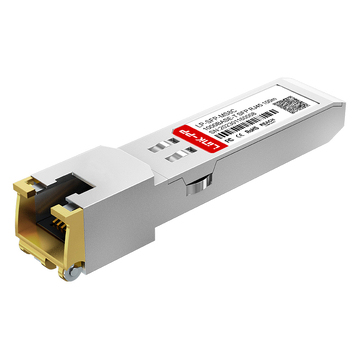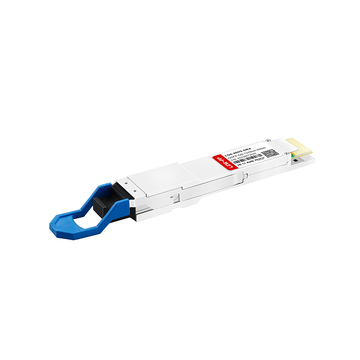
Data center managers frequently face a balancing act when scaling their infrastructure with the Q6M30A transceiver, balancing the need for reliable 10G connectivity against high OEM costs. While this 850nm multi-mode SFP+ module is essential for HPE ProLiant servers and Aruba switches, relying solely on original equipment manufacturers can heavily strain IT budgets. As network demands grow, finding ways to maintain performance without overspending becomes a top priority.
Beyond high pricing, rigid supply chains and long lead times often stall critical network upgrades and maintenance. This pressure forces engineering teams to look outside traditional procurement channels for third-party alternatives that offer the same hardware compatibility. Fortunately, opting for high-quality compatible modules allows enterprises to bypass OEM premiums while ensuring seamless, plug-and-play interoperability.
❇️ Understanding the HPE Q6M30A Transceiver Technical Specifications
Deploying reliable third-party alternatives begins with a comprehensive technical evaluation of the original hardware baseline. Analyzing the precise optical and electrical parameters of the HPE Q6M30A ensures that any compatible optical module can deliver identical performance characteristics. Matching these exact specifications is crucial for maintaining signal integrity and achieving zero-downtime deployment across mission-critical networks.
Data Rate and Form Factor: 10G SFP+ Architecture
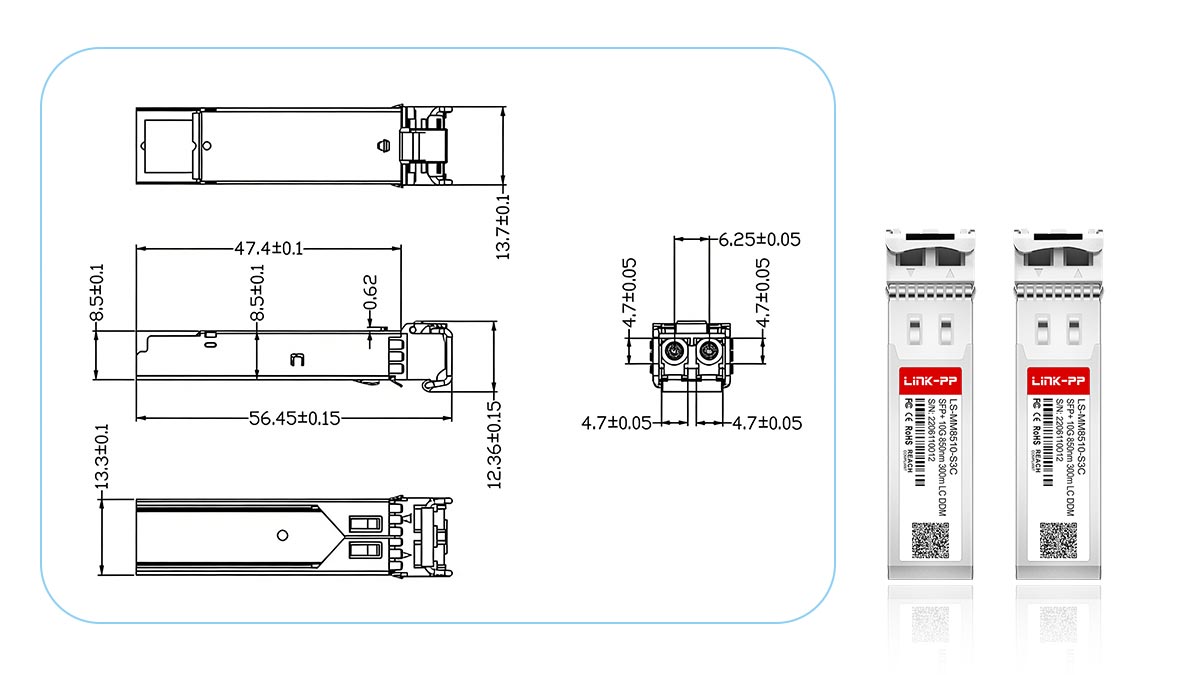
The Q6M30A transceiver operates at a nominal data rate of 10.3125Gbps, leveraging the highly efficient and industry-standard SFP+ (Small Form-factor Pluggable Plus) architecture. This electrical-to-optical interface is governed by SFF Committee specifications, which define both the mechanical dimensions and electrical pinouts to ensure high port density. By replacing older, bulkier XFP modules, this low-latency architecture maximizes valuable rack space in enterprise switches and routers.
Furthermore, the hot-pluggable design allows network technicians to perform upgrades or maintenance without powering down the host infrastructure. The physical layer compliance ensures minimal power dissipation, typically keeping consumption under 1W per port. This thermal efficiency minimizes cooling requirements, significantly lowering the overall operational expenditure of high-density server racks.
Media Type and Wavelength: 850nm Multi-Mode Fiber
Engineered specifically for short-range data transmission, this transceiver utilizes an 850nm Vertical-Cavity Surface-Emitting Laser (VCSEL) as its optical source. The choice of an 850nm wavelength allows the hardware to utilize cost-effective semiconductor components while maintaining excellent signal modulation characteristics. The optical transmitter couples seamlessly with standard duplex LC connectors, forming a secure and stable physical connection.
By operating over multi-mode fiber, the optical signal propagates through multiple paths within the fiber core, which is ideal for localized enterprise environments. The receiver side features a high-sensitivity PIN photodiode that ensures accurate photon-to-electron conversion with an extremely low Bit Error Rate (BER). This precise optical pairing delivers robust performance and solid noise immunity within EMI-heavy data center environments.
Link Distance Capabilities: OM3 vs. OM4 Reach Limits
When designing structured cabling topologies, understanding how different multi-mode fiber grades restrict the optical reach of the module is essential. The transmission distance is primarily governed by modal dispersion, where light pulses spread out as they travel along the fiber core. Higher-grade optical fibers mitigate this effect by providing greater effective modal bandwidth, directly extending the reliable link distance.
The following detailed matrix contrasts the mechanical and operational characteristics of OM3 and OM4 cables to help you calculate your optical power budget accurately:
| Fiber Classification | Core / Cladding Diameter | Effective Modal Bandwidth (EMB) | Maximum Link Distance (10G) | Attenuation (at 850nm) |
| OM3 Multi-Mode Fiber | 50/125µm | 2000MHz·km | Up to 300m | ≤ 3.0dB/km |
| OM4 Multimode Fiber | 50/125µm | 4700MHz·km | Up to 400m | ≤ 3.0dB/km |
Digital Optical Monitoring Support in Core Hardware
Integrated Digital Optical Monitoring (DOM) support allows network administrators to track the health of the transceiver in real time. This vital diagnostic subsystem complies with the SFF-8472 industry standard, providing continuous visibility into the internal operating conditions of the optical module. Because it uses a non-disruptive internal telemetry layout, it gathers diagnostics without impacting active data traffic.
Through the host system's management interface, engineering teams can monitor critical parameters such as laser bias current, supply voltage, internal temperature, and real-time TX/RX optical power levels. Each parameter features factory-set alarm and warning thresholds that trigger system alerts before an optical degradation causes a total link failure. This proactive telemetry framework transforms network maintenance from a reactive task into a predictable, manageable process.
❇️ Why Network Managers Seek Reliable Q6M30A Alternatives
The decision to transition away from original equipment manufacturer (OEM) optics is driven by strategic operational and financial goals. Evaluating alternative modules allows infrastructure teams to reclaim control over their hardware deployment timelines and budget allocations. By analyzing the core market pressures, it becomes clear why shifting to third-party optics is standard practice for modern data centers.
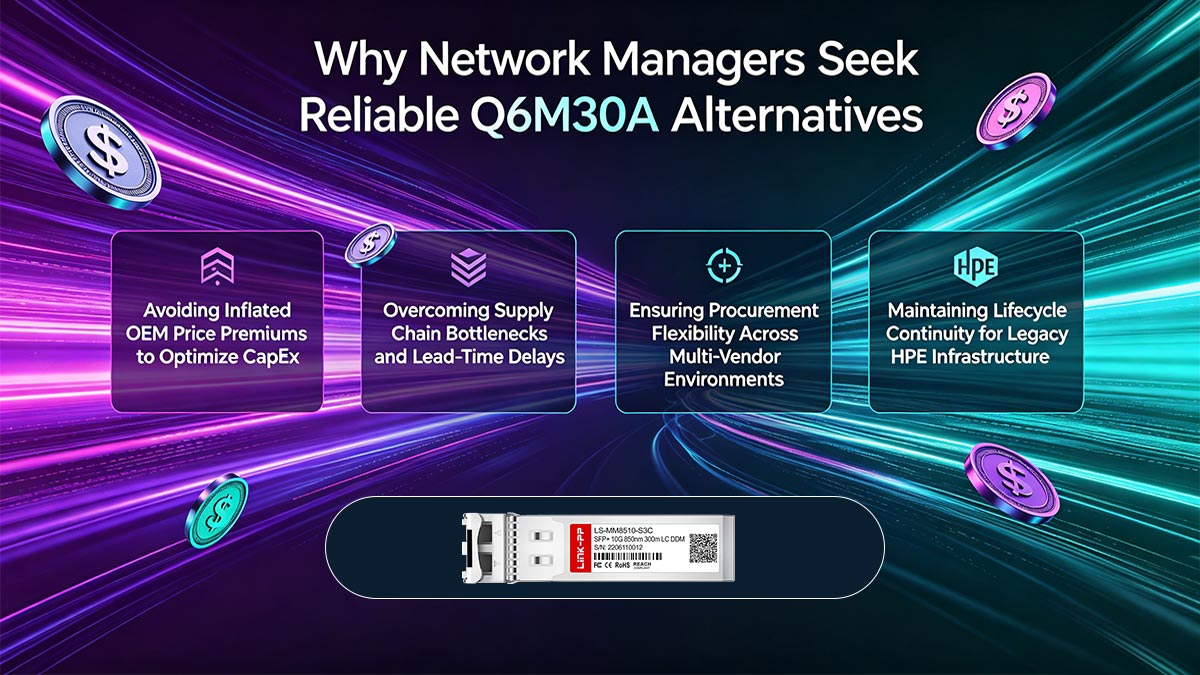
Avoiding Inflated OEM Price Premiums to Optimize CapEx
Original equipment brands often charge steep, artificial markups on standard hardware components like optical transceivers. By adopting qualified third-party Q6M30A alternatives, network managers can reduce capital expenditure (CapEx) on optics by up to 40% or more. These substantial savings free up crucial budget space that can be redirected toward critical infrastructure projects, software licensing, or core network expansions.
Overcoming Supply Chain Bottlenecks and Lead-Time Delays
Strict OEM procurement channels often suffer from severe logistics delays, leaving critical data center upgrades stalled for weeks or months. Third-party manufacturers bypass these rigid distribution networks by maintaining highly agile production cycles and broader component sourcing pipelines. This operational flexibility helps engineering teams keep their deployment schedules on track and avoid the project stagnation caused by vendor backlogs.
Ensuring Procurement Flexibility Across Multi-Vendor Environments
Modern data centers rarely rely on a single hardware vendor, often mixing HPE servers with switches and routers from various other brands. Utilizing independent optic providers allows engineering teams to source universally compatible modules programmed for multiple host systems from a single vendor. This unified sourcing strategy simplifies inventory management, streamlines tech support contacts, and eliminates restrictive vendor lock-in.
Maintaining Lifecycle Continuity for Legacy HPE Infrastructure
As OEM platforms evolve, original vendors frequently discontinue support or stop manufacturing parts for perfectly functional, older generations of hardware. Third-party providers fill this critical gap by continuing to manufacture high-quality compatible modules for legacy systems long after the OEM lifecycle ends. This extended support protects initial capital investments, allowing enterprises to keep reliable legacy hardware in active service without risking network downtime.
❇️ Hardware Compatibility: Where is the Q6M30A Commonly Deployed?
Identifying where the Q6M30A transceiver connects across the enterprise landscape is essential for planning seamless network expansions. This specific module serves as a versatile connectivity standard, anchoring high-speed links across various core IT segments. Mapping out its primary deployment environments highlights the critical hardware targets that any third-party alternative must fully support.
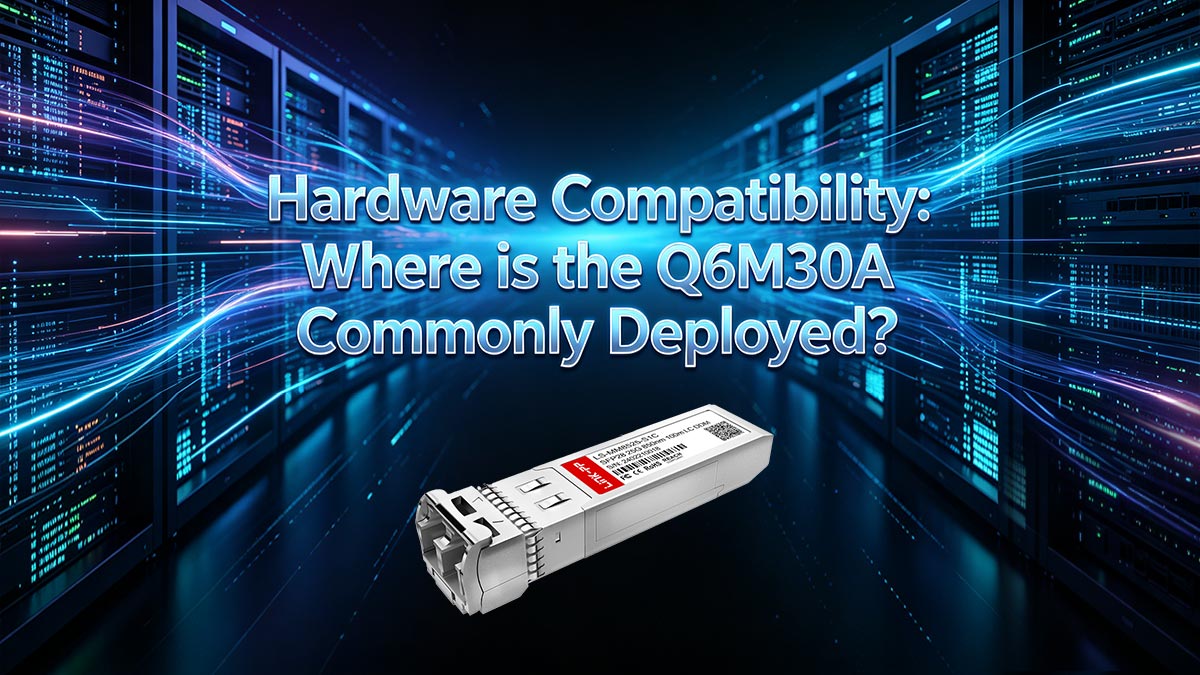
HPE ProLiant Gen9, Gen10, and Gen11 Server Integration
In the compute layer, the Q6M30A is extensively deployed within PCIe network interface cards (NICs) across multiple generations of HPE ProLiant servers. It provides the high-bandwidth 10G pipe required to handle data-heavy virtualization, cloud computing workloads, and high-frequency database queries. Third-party alternatives must match the exact EEPROM code required by these diverse server generations to ensure immediate host recognition and error-free booting.
Aruba CX Series Top-of-Rack (ToR) Switch Interoperability
Within modern data center switching fabrics, this transceiver frequently populates high-density access ports on Aruba CX series Top-of-Rack switches. It serves as the primary downlink interface that aggregates traffic from surrounding server enclosures directly into the broader network core. Achieving flawless software interoperability here is critical, as third-party modules must pass strict OS validation checks to prevent port-blocking or OS warning flags.
Storage Area Network (SAN) Deployments via HPE StoreFabric
For data storage and backup infrastructure, the module plays a vital role in connecting high-speed storage arrays via HPE StoreFabric host bus adapters (HBAs). It facilitates low-latency, short-range data transfers between flash storage pools and backup arrays over local multi-mode fiber runs. Ensuring that third-party alternatives offer highly stable optical power levels is paramount in these setups to prevent packet drops and maintain absolute storage data integrity.
❇️ Critical Interoperability Factors for Third-Party Q6M30A Optics
Selecting functional third-party Q6M30A optical modules requires a deep look into how they interface with host networking equipment. Minor deviations in programming or internal hardware tolerances can lead to system rejection or inconsistent link stability. Understanding these technical benchmarks ensures that alternative transceivers deliver seamless, plug-and-play operation in production environments.
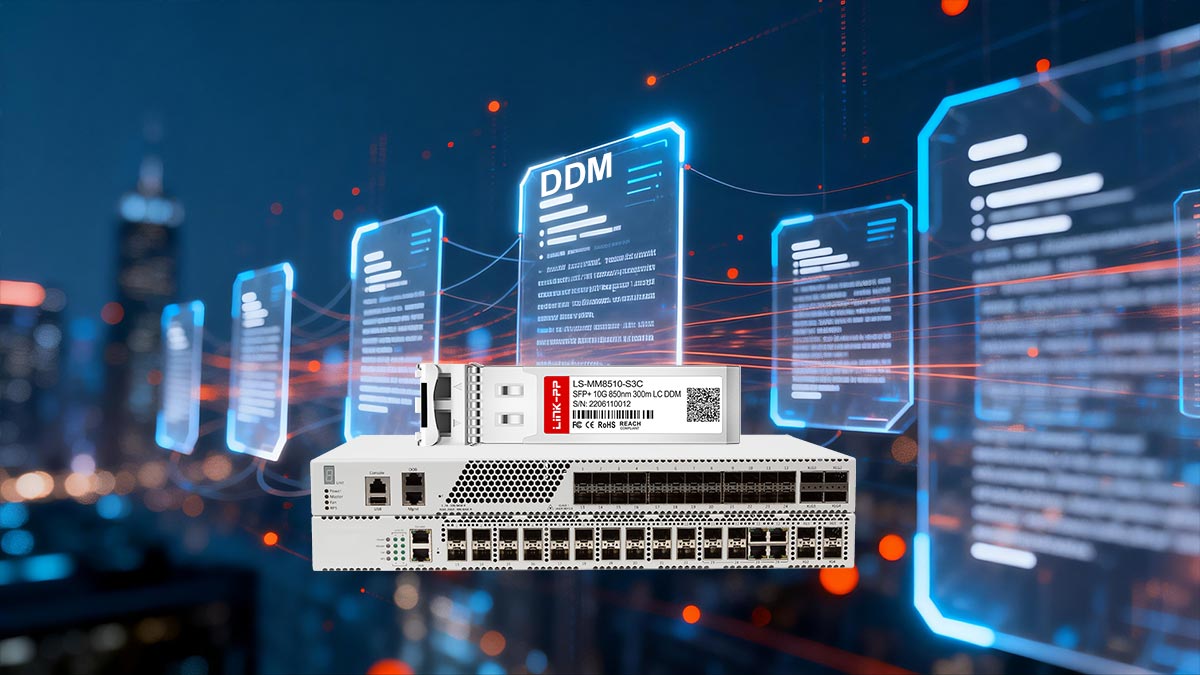
EEPROM Data Integrity and Host System Recognition
The host operating system relies on the transceiver’s internal EEPROM chip to read specific vendor configuration codes upon insertion. If the programmed data layout does not perfectly mimic the original HPE architecture, the switch or server will immediately flag the module as unsupported and disable the port. High-quality alternatives utilize precision coding to bypass these rigid security checks smoothly.
The module must accurately present several key data registers to the host system:
- Vendor Name: Must match specific OEM strings exactly.
- Part Number Alignment: Must reflect correct Q6M30A identification codes.
- Correct Checksum Values: Prevents boot-time initialization errors.
- Unique Serial Numbers: Avoids duplicate hardware alerts in the OS tracking log.
SFF-8472 Digital Diagnostic Monitoring Interoperability
The SFF-8472 industry specification defines the memory map used for real-time diagnostic reporting, commonly known as DOM. Third-party transceivers must translate internal sensor readings into a format that the host system's management software can easily interpret. Without proper calibration, the host may read incorrect data or display false warning alerts.
Reliable modules must communicate specific diagnostic metrics continuously to the host:
- Real-time TX/RX Power: Shows actual optical signal strength.
- Internal Module Temperature: Prevents overheating through early alerts.
- Laser Bias Current: Monitors the health of the transmitter laser.
- Supply Voltage Levels: Tracks electrical stability inside the port.
Verifying Laser Transmitter and Receiver Sensitivity Thresholds
Achieving a stable physical connection requires strict alignment between the transceiver's optical components and industry standards. The internal 850nm VCSEL laser must output light within a specific power range to prevent oversaturating or starving the connecting hardware. Similarly, the receiving photodiode must feature excellent sensitivity to catch weak signals over maximum distances.
Maintaining appropriate optical margins protects the network link against several common issues:
- Bit Error Rate (BER): High sensitivity prevents packet drops.
- Receiver Saturation: Keeps strong, short-range signals from damaging components.
- Signal Attenuation: Overcomes natural light loss over longer cable runs.
- Optical Power Budget: Ensures a stable margin for aging fiber patches.
Physical Layer Compliance with SFP+ MSA Guidelines
The Multi-Source Agreement (MSA) outlines the universal physical, mechanical, and electrical boundaries for all SFP+ hardware. Adhering to these standards ensures that a third-party module physically fits into any standard slot and interfaces correctly with the system board. This strict compliance guarantees wide hardware cross-compatibility and structural safety.
Meeting these global standards ensures uniform performance through several critical design factors:
- Mechanical Dimensions: Guarantees a smooth slide fit into standard cages.
- LC Duplex Connector Fit: Ensures a tight, latching fiber patch connection.
- 20-Pin Electrical Interface: Delivers solid, reliable contact with the host motherboard.
- Low EMI Shielding: Minimizes cross-port electromagnetic interference in high-density racks.
❇️ Step-by-Step Interoperability Testing for Q6M30A Third-Party Modules
Validating third-party Q6M30A optical modules through a structured testing protocol is the best way to ensure long-term network stability. Running these systematic hardware checks allows engineering teams to catch potential configuration or signaling issues before deploying modules in live production environments. Following a precise testing framework guarantees that your compatible optics behave exactly like genuine OEM modules.
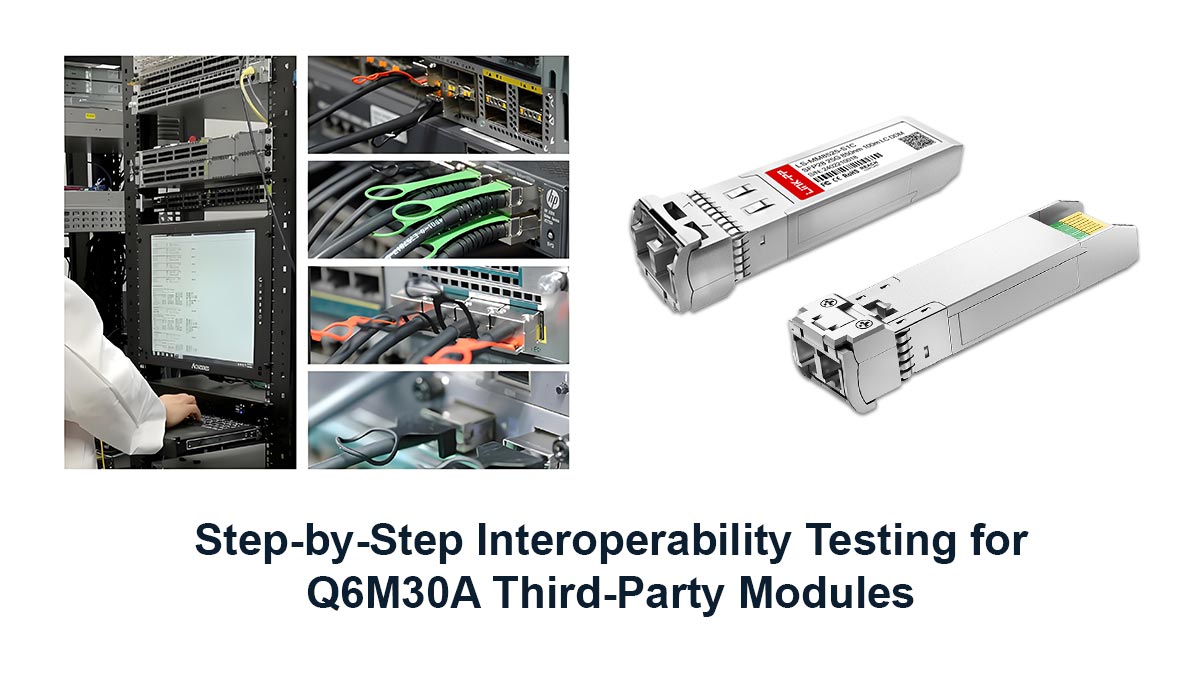
Initial Physical Interface and Connector Verification
Before powering up any system, technicians must confirm that the mechanical and physical attributes of the third-party compatible module meet exact specification standards. A minor physical defect or a loose connection can damage delicate port pins or cause intermittent loss of link. Ensuring a perfect physical fit lays the foundation for all subsequent electronic and optical tests.
Technicians should focus on verifying several essential mechanical checkpoints during this initial phase:
- Slide Fit and Latching: The module must slide smoothly into the SFP+ slot.
- Ejection Lever Integrity: The bail latch must lock securely and release easily.
- LC Duplex Port Cleanliness: Optical bores must be completely free of dust.
- Pin Contact Alignment: Gold finger contacts must be straight and clean.
Optical Power Budget and Wavelength Validation
Once the module is securely inserted, engineers must verify that its optical emissions match the precise standards required by the 10G infrastructure. Testing the actual light output ensures the transceiver will not over-saturate a short cable run or starve a longer one. Measuring these optical values confirms that the hardware operates safely within safe design margins.
The following optical parameters must be measured using a calibrated optical power meter:
- Center Wavelength: Must sit strictly within the 850nm range.
- Transmit (TX) Power: Light output must fall within standard limits.
- Receive (RX) Sensitivity: The module must detect faint incoming light.
- Link Loss Margin: Total attenuation must support the planned distance.
Data Integrity and Traffic Load Stress Testing
Passing static physical and optical checks does not guarantee that a module can handle the intense traffic bursts of a busy data center. Passing full-line-rate traffic through the link under simulated peak conditions helps uncover hidden packet errors or latency spikes. This heavy stress testing is vital for confirming long-term operational reliability.
Engineers must monitor the link during stress tests for several critical data metrics:
- Bit Error Rate (BER): Must remain at zero during the test window.
- Frame Loss Count: No data packets should be dropped under full load.
- Latency Stability: Transit times must remain low and uniform.
- Jitter Tolerance: Signal timing must remain steady under stress.
Continuous Runtime Telemetry Auditing
The final testing phase requires monitoring the transceiver over an extended period to observe how it handles shifting temperature and power conditions. Continuous auditing ensures that the module's DOM tracking chip communicates flawlessly with the host system's OS over time. This long-term evaluation proves that the alternative hardware can safely sustain everyday operation.
System logs should be audited during extended runs to track several vital parameters:
- DOM Update Frequency: Telemetry data must refresh at consistent intervals.
- Operating Temperature Trends: Heat dissipation must remain stable under load.
- Host OS Log Integrity: No unsupported hardware warnings should trigger.
- Voltage Fluctuations: Internal power draw must stay within safe limits.
❇️ Structural Network Topologies Optimized for Q6M30A Compatible Modules
Designing an efficient data center framework requires a strategic layout of short-range optical connections. Utilizing Q6M30A compatible modules allows network architects to build high-density, low-latency pathways without overspending on infrastructure. Mapping these transceivers to specific structural arrangements ensures maximum data throughput across enterprise network layouts.
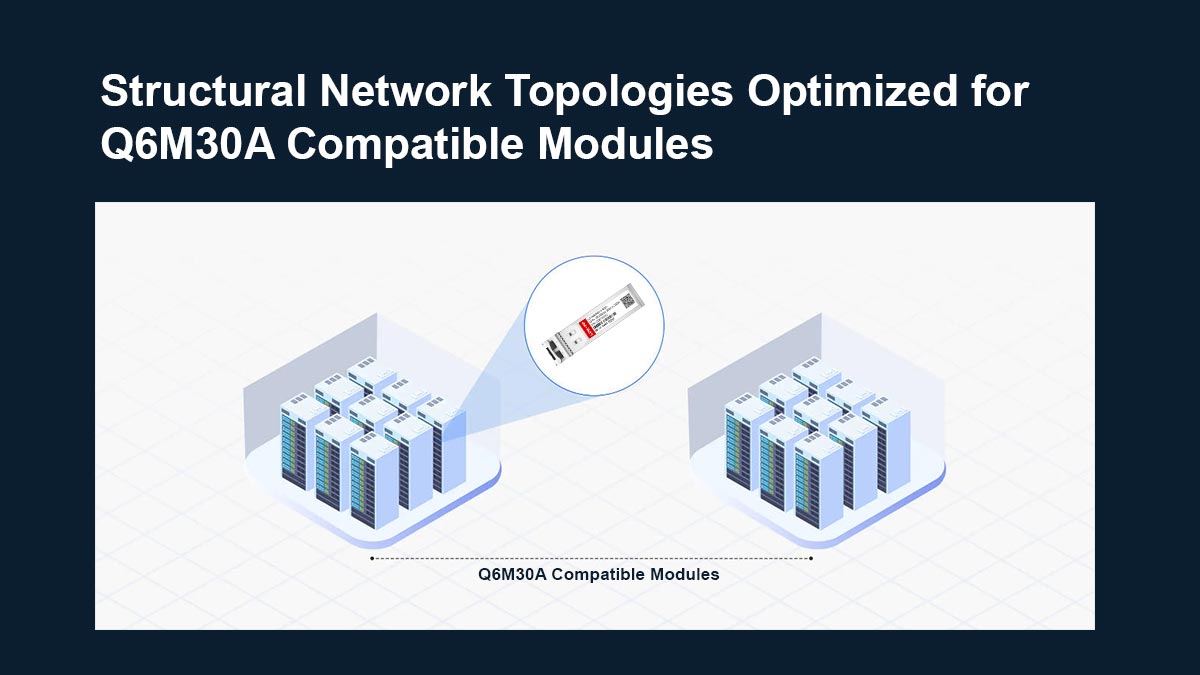
Standardizing Short-Range Leaf-to-Server Downlinks in Enterprise Data Centers
In modern spine-leaf architectures, establishing reliable downlinks from top-of-rack switches to individual server chassis is essential. Deploying these cost-effective 10G compatible modules across hundreds of server ports allows enterprises to standardize their compute layer connections. This layout provides the dedicated, low-latency bandwidth needed to handle intense virtualization workloads effortlessly.
By utilizing short multi-mode fiber patches for these leaf-to-server runs, data centers can keep structural cabling highly organized. The low power consumption of these 10G SFP+ modules also reduces thermal loads within crowded server enclosures. This combination creates an energy-efficient and highly scalable environment for expanding computing clusters.
Engineering High-Bandwidth Cross-Connects Between Server Racks and Core Nodes
Connecting adjacent server racks or linking them to centralized distribution switches requires robust and reliable pathways. Q6M30A alternative modules excel in these horizontal cross-connect arrangements over existing multimode cable plants. They deliver a highly dependable 10G data stream that prevents performance bottlenecks between major computing rows.
When routed through structured patch panels, these 850nm optical links maintain excellent signal integrity across short data center distances. Network teams can easily scale aggregate bandwidth by grouping multiple modules together into functional port clusters. This approach ensures that data transitions smoothly between specialized storage units and core compute nodes.
Building Resilient Multi-Chassis Link Aggregation (M-LAG) Uplinks
Network reliability depends heavily on hardware redundancy, making resilient uplink design a top priority for system architects. Q6M30A compatible transceivers are ideal for configuring Multi-Chassis Link Aggregation (M-LAG) groups across dual switch topologies. This arrangement combines multiple physical interfaces into a single logical connection to ensure uninterrupted data paths.
If a single switch or cable path experiences an unexpected hardware failure, traffic instantly shifts to the remaining link. This automated protection prevents costly network downtime and maintains continuous access to mission-critical applications. Using cost-effective alternative modules makes deploying this full-mesh redundancy across all equipment racks highly affordable.
Consolidating High-Density Access Layer Distribution Points Over Multi-Mode Fiber
At the enterprise access layer, aggregating traffic from various office floors or department hubs requires clean distribution strategies. Compatible 10G SFP+ modules allow network engineers to consolidate multiple slow access links into centralized high-speed distribution switches. This consolidation drastically simplifies network management by reducing the total number of logical nodes.
Operating over OM3 or OM4 multi-mode fiber runs allows these access layer links to span across building floors efficiently. This setup provides plenty of bandwidth for high-density workspaces, campus wireless access points, and localized security systems. Utilizing third-party modules for this extensive distribution ensures a highly economical rollout across the entire corporate campus.
❇️ Choosing LINK-PP as Your Trusted Q6M30A Alternative Provider
Selecting a dependable manufacturing partner is the final step in successfully moving away from restrictive OEM pricing structures. LINK-PP stands out as an industry leader, delivering top-tier optical components engineered specifically to replace original hardware. By choosing their proven transceiver solutions, enterprise networks achieve the perfect balance of fiscal responsibility and technical excellence.
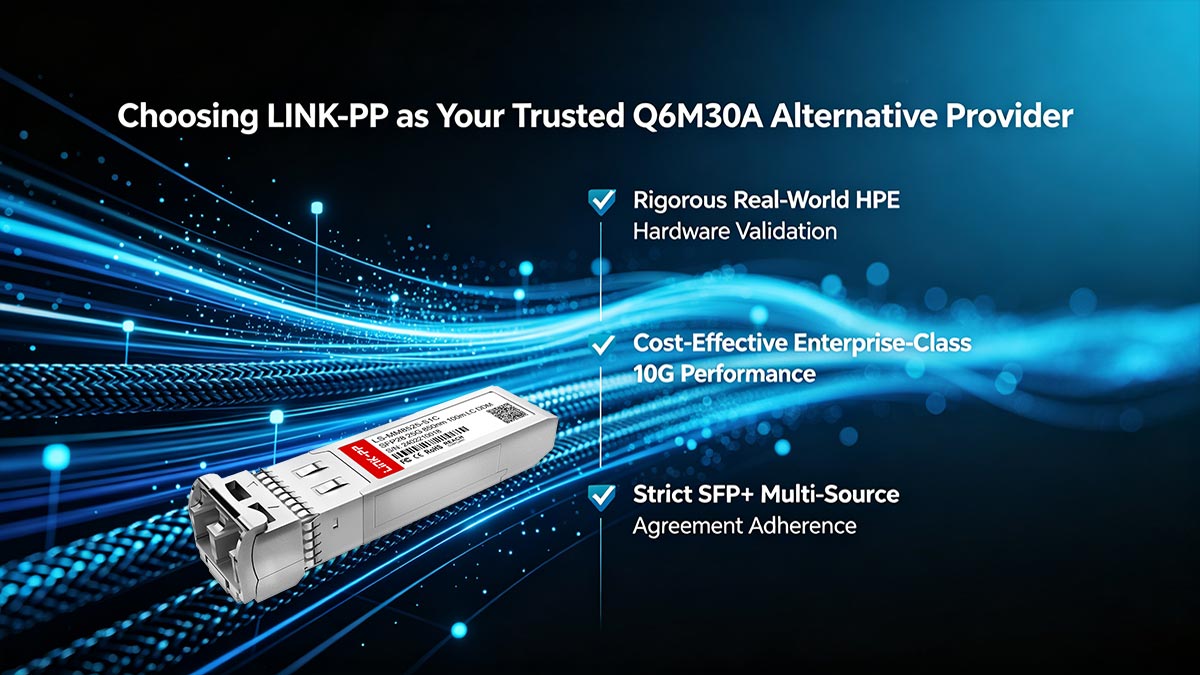
Rigorous Real-World HPE Hardware Validation
LINK-PP ensures absolute system compatibility by testing its transceiver modules in actual production environments before they leave the factory floor. The LINK-PP LS-MM8510-S3C 10GBASE-SR module undergoes explicit testing inside genuine HPE ProLiant servers and Aruba switches.
This hands-on validation guarantees that the host operating system instantly recognizes the transceiver code upon insertion. By checking electrical and optical data lines in real time, LINK-PP guarantees that the LS-MM8510-S3C delivers a stable link without throwing OS errors.
Cost-Effective Enterprise-Class 10G Performance
Choosing the LINK-PP LS-MM8510-S3C 10GBASE-SR module provides a direct path to reducing capital expenditures across high-density data center rollouts. This alternative transceiver provides identical 850nm short-range performance to the OEM part at a fraction of the cost.
These massive per-port cost reductions allow procurement managers to optimize their strict IT equipment budgets more effectively. Saved capital can then be reinvested into expanding storage nodes or upgrading core campus routing backbones.
Strict SFP+ Multi-Source Agreement Adherence
LINK-PP designs every LS-MM8510-S3C 10GBASE-SR module to conform completely to universal physical and mechanical SFP+ MSA standards. This strict manufacturing compliance ensures that each transceiver fits smoothly into any standard port cage without damaging delicate connectors.
Furthermore, full adherence guarantees stable interoperability in complex, multi-vendor environments that mix various hardware brands. Network engineers can confidently deploy these standardized components to safeguard transmission quality and physical system security.
❇️ Conclusion: Balancing Budget and 10G Interoperability with Premium Q6M30A Alternatives
Embracing high-quality third-party Q6M30A compatible transceivers allows enterprises to break free from inflated OEM price structures without sacrificing network reliability. By understanding core architectural standards and implementing structured validation testing, network managers can seamlessly integrate compatible modules into their existing HPE environments. This balanced approach drastically reduces capital expenditures while keeping critical short-range data pathways operating at peak performance.
Partnering with a proven manufacturer like LINK-PP ensures your hardware investment remains protected through strict MSA compliance and rigorous interoperability auditing. Ready to scale your infrastructure and optimize your procurement budget with reliable 10G optical solutions? Explore premium compatible transceivers by visiting the LINK-PP Official Store today.