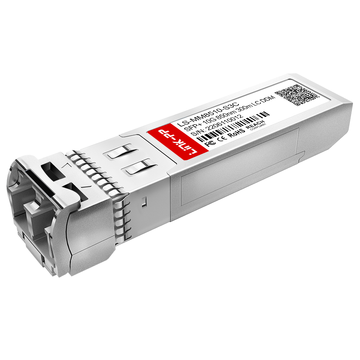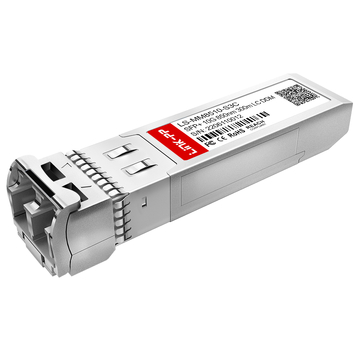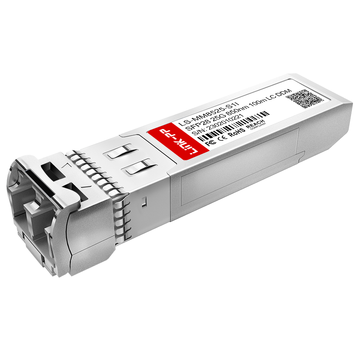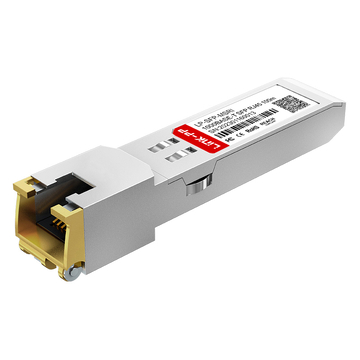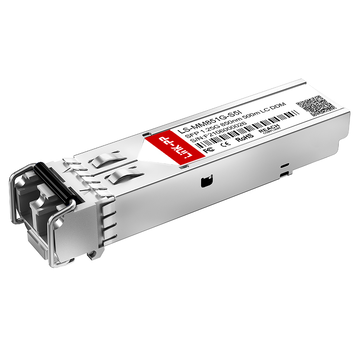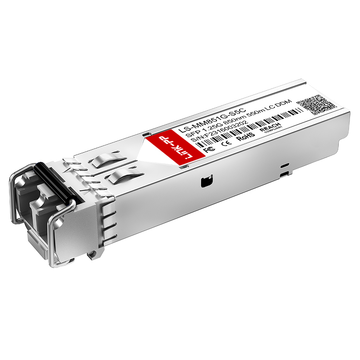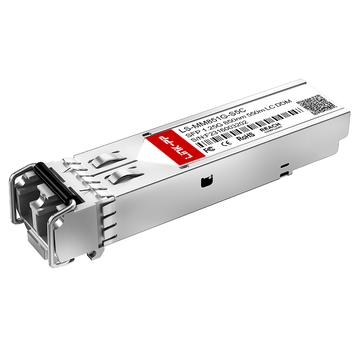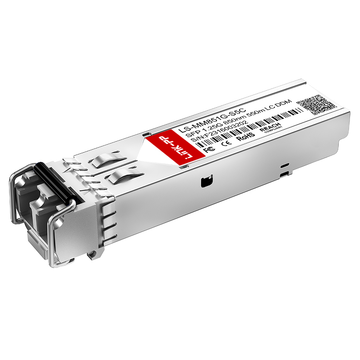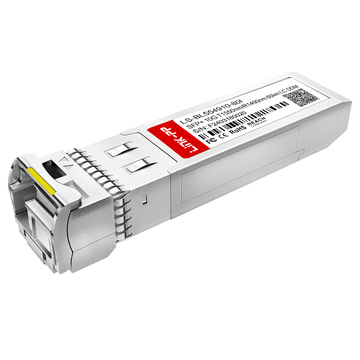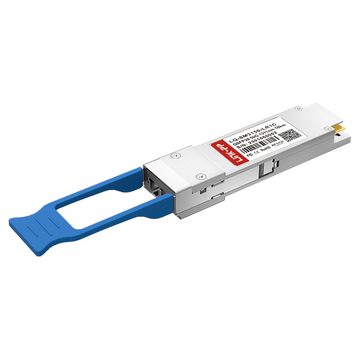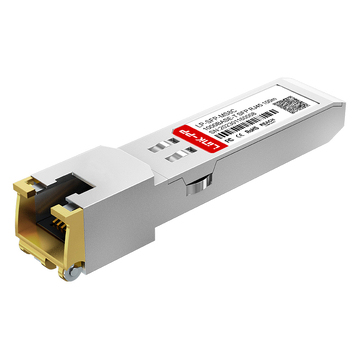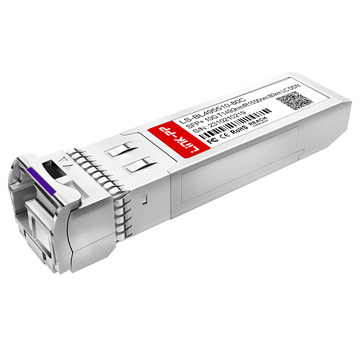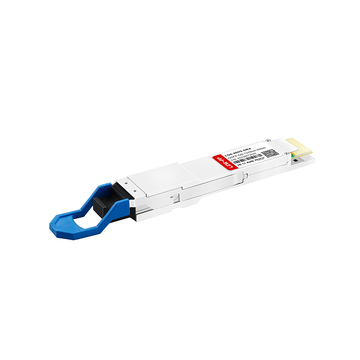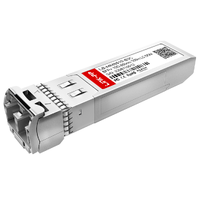




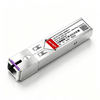
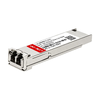

























Short-range optical connectivity remains a foundational requirement in modern network environments, especially within data centers, enterprise campuses, and high-density computing infrastructures. Among the available optical options, SX fiber transceivers are widely used for their ability to deliver high-speed data transmission over multimode fiber within limited distances.
In practical deployments, selecting the right SX optical transceiver involves more than matching a data rate. Factors such as transmission distance, fiber type compatibility, interface selection, and platform interoperability all influence overall network performance and stability. These considerations become increasingly important as networks scale in port density and bandwidth demand.
This guide explores how SX modules function in short-range links, what specifications matter most, and how to align module selection with real-world deployment scenarios. By understanding these aspects, network designers and operators can make more informed decisions when planning or upgrading short-distance optical connections.
✅ What Is an SX Fiber Transceiver?
SX fiber transceivers are short-wavelength optical modules designed for high-speed data transmission over multimode fiber, typically within distances up to 550m. They operate at 850nm and are widely used in short-range environments such as data centers, enterprise networks, and storage systems where reliable, low-latency connectivity is required.

Definition of SX Fiber Optics
SX fiber refers to short-wavelength optical transmission optimized for multimode fiber infrastructure. It is primarily used in scenarios where link distances are limited but bandwidth demand is high.
-
Operates at 850nm wavelength
-
Designed for multimode fiber types such as OM1, OM2, OM3, and OM4
-
Commonly associated with Ethernet standards like 1000BASE-SX and 10GBASE-SR
-
Suitable for intra-building and intra-data center connections
This approach enables efficient use of existing multimode cabling while supporting high-speed network performance.
Core Components of SX Fiber Transceivers
SX fiber transceivers integrate optical and electrical subsystems to enable signal conversion between network equipment and fiber infrastructure.
-
VCSEL laser for transmitting optical signals
-
Photodiode receiver for signal detection
-
Laser driver and receiver amplifier circuits
-
Electrical interface for connection to switches or servers
These components ensure stable short-range transmission with relatively low power consumption and high port density.
Typical Transmission Characteristics
SX fiber transceivers are defined by predictable short-range performance across different multimode fiber types.
SX module supports varying transmission distances depending on fiber grade:
| Fiber Type | Maximum Distance | Typical Deployment |
|---|---|---|
| OM1 | up to 220m | Legacy systems |
| OM2 | up to 275m | Gradual upgrades |
| OM3 | up to 300m | Standard data centers |
| OM4 | up to 400–550m | High-performance environments |
Higher-grade fibers such as OM3 and OM4 are commonly preferred in modern deployments to support higher data rates and improved link stability.
In terms of speed, SX fiber transceivers span multiple generations, from 1Gbps SFP modules to 10Gbps SFP+, and up to 25G, 40G, and 100G SR module. This scalability allows consistent deployment across different network layers while maintaining optimized performance for short-range links.
✅ Why SX Fiber Is Ideal for Short-Range Network Links
SX transceivers are well-suited for short-range network links because they combine high bandwidth, stable performance, and efficient use of multimode fiber infrastructure within distances typically under 550m. This makes them a practical choice for environments where large volumes of data need to move quickly across relatively short physical spans.

Performance Advantages in Local Network Environments
SX fiber delivers consistent high-speed performance in localized network architectures such as data centers and campus networks, where link distances are predictable and controlled.
-
Supports high data rates from 1Gbps to 100Gbps across different module types
-
Low signal attenuation over short distances ensures stable transmission
-
Reduced latency compared to longer-reach optical solutions
-
Optimized for high-density switch and server interconnections
These characteristics make SX optics particularly effective in environments with heavy east-west traffic, such as server clusters and storage systems.
Cost Efficiency for Short Distances
For short-range deployments, SX fiber provides a balanced approach between performance and infrastructure cost, especially when multimode fiber is already in place.
A key advantage is that SX solutions reduce overall deployment complexity while maintaining high throughput:
| Factor | SX Fiber (Multimode) | Long-Range Transceivers (Single-Mode) |
|---|---|---|
| Fiber Cost | Lower | Higher |
| Optical Power Needs | Lower | Higher |
| Typical Distance | Up to 550m | Several kilometers |
| Deployment Scope | Localized networks | Metro or long-distance links |
Because SX optical modules operate with lower optical power and leverage widely available multimode fiber, they are well-suited for large-scale, short-distance network rollouts.
Common Short-Range Deployment Scenarios
SX fiber transceivers are widely used in scenarios where high-speed connectivity is required within limited physical areas.
-
Data center switch-to-switch connectivity (leaf-spine architecture)
-
Server-to-switch links within racks or rows
-
Enterprise campus aggregation networks
-
Storage area network (SAN) environments requiring low latency
These deployment scenarios share a common requirement: reliable, high-bandwidth connectivity over short distances. SX fiber aligns well with these needs, providing predictable performance and scalability without the overhead associated with long-range optical technologies.
✅ Key Specifications to Evaluate When Selecting SX Fiber Transceivers
Selecting an SX transceiver requires aligning module specifications with actual network requirements, including speed, distance, fiber type, and interface compatibility. Mismatched specifications can lead to reduced link performance or interoperability issues, especially in high-density environments.

Supported Data Rate and Form Factor
The first step is determining the required data rate and matching it with the appropriate transceivers form factor. Different network layers and devices support different module types.
SX fiber transceivers are available across multiple speed generations:
| Data Rate | Common Form Factor | Typical Use Case |
|---|---|---|
| 1Gbps | SFP | Legacy access networks |
| 10Gbps | SFP+ | Data center access layer |
| 25Gbps | SFP28 | High-density server connectivity |
| 40/100Gbps | QSFP+ / QSFP28 | Spine and aggregation layers |
Higher data rates often require greater port density and more advanced switch hardware. Selecting the correct form factor ensures compatibility with existing equipment and future scalability.
Transmission Distance and Fiber Compatibility
SX fiber transceivers are designed specifically for multimode fiber, but performance varies depending on fiber grade and link conditions.
Choosing the correct fiber type directly impacts achievable distance:
-
OM1 / OM2: suitable for shorter distances and legacy systems
-
OM3: optimized for laser-based transmission with improved reach
-
OM4: supports extended distances and higher bandwidth
-
OM5: designed for wideband applications, though less common for standard SX use
In addition to fiber type, factors such as patch panel quality, connector cleanliness, and cable routing can influence overall link performance. Ensuring alignment between transceiver specifications and installed fiber infrastructure is essential.
Optical Interface and Connector Types
The optical interface determines how the transceiver connects to the fiber cabling system and plays a key role in deployment flexibility.
SX fiber transceivers typically use the following connector types:
-
LC duplex connectors for most 1G, 10G, and 25G links
-
MPO/MTP connectors for parallel optics in 40G and 100G deployments
Each connector type supports different cabling architectures:
| Connector Type | Fiber Configuration | Typical Application |
|---|---|---|
| LC Duplex | 2 fibers (Tx/Rx) | Standard point-to-point links |
| MPO/MTP | 8–24 fibers | High-speed parallel links |
LC connectors are commonly used for simplicity and widespread compatibility, while MPO/MTP connectors are preferred in high-bandwidth environments where multiple lanes are required.
Understanding these interface differences helps ensure that the selected SX fiber transceiver integrates smoothly into the existing cabling system without additional complexity.
✅ SX Fiber Transceiver Compatibility Considerations
Compatibility is a critical factor when selecting SX fiber transceivers, as mismatches between modules and network equipment can lead to link failures, limited functionality, or unstable performance. Ensuring alignment across vendor platforms, standards, and real-world interoperability helps maintain reliable short-range connections.

Vendor Platform Compatibility
SX fiber transceivers must be recognized and supported by the target network device, such as switches, routers, or servers. Many vendors implement specific coding or validation mechanisms that affect module acceptance.
Different platforms may handle transceiver compatibility in distinct ways:
| Compatibility Aspect | Description | Impact on Deployment |
|---|---|---|
| Vendor Coding | EEPROM coding aligned with specific brands | Determines module recognition |
| Firmware Support | Device OS validation of transceivers | May restrict unsupported modules |
| Port Type Matching | SFP/SFP+/QSFP compatibility | Ensures physical and electrical fit |
In practice, selecting modules encoded for the target platform helps avoid issues such as port shutdowns or warning messages. It also ensures that all diagnostic and monitoring features function correctly.
Standards and Compliance
Compliance with industry standards ensures that SX fiber transceivers operate reliably across different environments and meet expected performance benchmarks.
Key standards and agreements define how these modules behave:
-
Multi-Source Agreement (MSA) specifications for mechanical and electrical compatibility
-
Digital Diagnostic Monitoring (DDM) for real-time performance visibility
Standards-compliant modules are more likely to deliver predictable behavior and simplify integration into mixed-vendor environments.
Interoperability Across Network Environments
Even when modules meet standards and vendor requirements, interoperability between different transceivers and devices should still be validated in real deployments.
Several factors influence interoperability:
-
Cross-vendor link establishment between different optical transceivers
-
Consistency in transmit power and receiver sensitivity
-
Stability under varying environmental conditions
-
Firmware differences across network devices
To reduce risk, common validation approaches include:
-
Pre-deployment compatibility testing in lab environments
-
Verifying link performance using optical diagnostics
-
Standardizing on a limited set of qualified modules
By addressing interoperability early, network operators can avoid unexpected issues and ensure consistent performance across all short-range SX fiber links.
✅ Deployment Best Practices for SX Fiber Links
Reliable SX fiber link performance depends not only on transceiver specifications but also on how the physical infrastructure is designed, installed, and maintained. Proper deployment practices help ensure stable signal transmission, reduce link failures, and extend the lifecycle of short-range optical networks.

Selecting the Right Multimode Fiber Type
Choosing the appropriate multimode fiber is essential for achieving the expected transmission distance and bandwidth performance.
Higher-grade multimode fiber enables better signal integrity and longer reach:
| Fiber Type | Bandwidth Capability | Recommended Use Case |
|---|---|---|
| OM1 | Low | Legacy systems only |
| OM2 | Moderate | Transitional upgrades |
| OM3 | High | Standard data centers |
| OM4 | Very High | High-density, high-speed environments |
OM3 and OM4 fibers are typically preferred in modern deployments because they support higher data rates and provide better scalability for future upgrades. Selecting fiber that aligns with both current and anticipated network speeds helps avoid costly re-cabling.
Managing Optical Budget and Link Quality
Maintaining a proper optical link budget ensures that transmitted signals arrive at the receiver within acceptable power levels, preventing errors or link instability.
Key factors that influence link quality include:
-
Total link loss from fiber attenuation, connectors, and splices
-
Transmitter output power and receiver sensitivity
-
Cleanliness of connectors and patch panels
-
Number of intermediate connections along the link
To maintain optimal performance:
-
Keep connector end faces clean and free from contamination
-
Minimize unnecessary patch points and cable bends
-
Use certified fiber and components with known performance characteristics
-
Verify link loss using optical testing tools before deployment
Consistent monitoring of optical power levels can help identify degradation early and prevent unexpected downtime.
Monitoring and Maintenance
Ongoing monitoring and maintenance are essential for sustaining stable SX fiber link performance over time.
SX fiber transceivers typically support diagnostic features that provide real-time visibility into link conditions:
| Monitoring Parameter | Purpose | Operational Benefit |
|---|---|---|
| Transmit Power | Output signal level | Detect transmitter issues |
| Receive Power | Incoming signal strength | Identify link loss or degradation |
| Temperature | Module operating condition | Prevent overheating-related failures |
| Voltage | Electrical stability | Ensure proper module operation |
Using these diagnostic metrics, network operators can proactively detect issues such as signal degradation, fiber damage, or component aging.
In addition to monitoring, routine maintenance practices include:
-
Periodic inspection and cleaning of fiber connectors
-
Replacing damaged or aging cables
-
Verifying firmware compatibility after system upgrades
-
Documenting link configurations for easier troubleshooting
By combining proper fiber selection, controlled link budgeting, and continuous monitoring, SX fiber deployments can achieve consistent and predictable performance in short-range network environments.
✅ Comparing SX Fiber with Other Short-Reach Optical Options
SX fiber transceivers are one of several technologies used for short-distance connectivity. While they are widely deployed, alternatives such as LX fiber, DAC, and AOC may be more suitable depending on distance, flexibility, and infrastructure requirements. Understanding the differences helps determine the most appropriate solution for each scenario.

SX Fiber vs LX Fiber
SX and LX fiber transceivers differ primarily in wavelength, fiber type, and transmission distance. SX is optimized for short-range multimode applications, while LX is designed for longer distances over single-mode fiber.
The key distinction lies in deployment scope:
| Parameter | SX Fiber (850nm) | LX Fiber (1310nm) |
|---|---|---|
| Fiber Type | Multimode | Single-mode |
| Typical Distance | Up to 550m | Up to 10km or more |
| Deployment Area | Data centers, campuses | Metro and long-distance |
| Cost Structure | Lower for short links | Higher but longer reach |
SX fiber is generally preferred when distances are limited and multimode infrastructure is available, while LX becomes necessary for extended reach beyond the limits of multimode fiber.
SX Fiber vs DAC and AOC
For very short distances, especially within racks, copper and active cable solutions can be alternatives to SX fiber transceivers.
Each option serves a different range and deployment model:
| Technology | Medium | Typical Distance | Flexibility |
|---|---|---|---|
| DAC | Copper cable | Up to 5–7m | Limited |
| AOC | Optical cable | Up to 100m | Moderate |
| SX Fiber | MMF + optics | Up to 550m | High |
DAC (Direct Attach Cable) is typically used for ultra-short connections due to its simplicity and low latency, but it lacks flexibility and scalability. AOC (Active Optical Cable) extends reach while maintaining ease of deployment, but it is less modular than pluggable transceivers.
SX fiber transceivers, combined with separate multimode fiber, provide greater flexibility in structured cabling environments, especially when connections need to be reconfigured or scaled.
Choosing the Right Short-Range Technology
Selecting between SX fiber and other short-reach options depends on several practical factors related to distance, architecture, and operational requirements.
Key decision points include:
-
Link distance:
-
Less than 5m: DAC is typically sufficient
-
5m to 100m: AOC may be suitable
-
100m to 550m: SX fiber is generally preferred
-
-
Infrastructure type:
-
Existing multimode fiber favors SX deployment
-
Pre-terminated cable environments may favor AOC
-
-
Flexibility requirements:
-
Modular optics (SX) allow easier upgrades and replacements
-
Fixed cables (DAC/AOC) simplify installation but limit reconfiguration
-
-
Scalability:
-
SX fiber supports structured cabling and future expansion
-
DAC and AOC are more suitable for fixed, short-term configurations
-
By aligning these factors with actual deployment needs, network designers can select the most efficient and reliable short-range connectivity solution without overengineering or limiting future growth.
✅ Typical Use Cases for SX Fiber Transceivers
SX fiber transceivers are primarily deployed in environments where high-speed data transmission is required over short distances with predictable performance. Their compatibility with multimode fiber and support for various data rates make them suitable across multiple layers of modern network architectures.

Data Center Access Layer
SX fiber transceivers are widely used in data center access layers, where large numbers of servers connect to top-of-rack or leaf switches within relatively short distances.
These environments require high port density and consistent low-latency communication:
| Application Area | Link Type | Typical Distance |
|---|---|---|
| Top-of-Rack (ToR) | Server to switch | 1m to 30m |
| Leaf to Spine | Switch to switch | 30m to 300m |
| Rack Interconnect | Row to row connections | 50m to 200m |
SX fiber enables scalable connectivity across racks and rows while maintaining efficient bandwidth utilization. It is particularly effective in supporting east-west traffic patterns common in virtualized and cloud environments.
Enterprise Network Infrastructure
In enterprise campus networks, SX fiber transceivers are used to interconnect switches within buildings or across nearby facilities.
They provide reliable short-range optical links for aggregation and distribution layers:
-
Building-to-building connections within campus distances
-
Aggregation of access switches to distribution switches
-
High-speed backbone links within office complexes
These deployments benefit from the widespread availability of multimode fiber in enterprise environments, allowing upgrades to higher speeds without replacing the entire cabling system.
Storage Area Networks
Storage environments require stable, low-latency connections to ensure consistent data access and transfer performance. SX fiber transceivers are commonly used in storage area networks (SANs) for this purpose.
Typical characteristics of these deployments include:
| Requirement | Role of SX Fiber | Benefit |
|---|---|---|
| Low Latency | Short optical paths | Faster data access |
| High Throughput | Multi-gigabit support | Efficient data transfer |
| Reliability | Stable signal quality | Reduced transmission errors |
SX fiber supports protocols such as Fibre Channel and Ethernet-based storage networking, making it suitable for connecting storage arrays, switches, and servers within data centers.
Across these use cases, the common requirement is high-speed, short-distance connectivity with predictable performance. SX fiber transceivers meet these needs by providing a balance of efficiency, scalability, and compatibility with existing multimode fiber infrastructure.
✅ Future Trends in SX Fiber Technology
SX fiber technology continues to evolve to meet increasing demands for higher bandwidth, greater port density, and more efficient data center architectures. While the fundamental short-range nature of SX optics remains unchanged, advancements in speed, fiber performance, and application scenarios are shaping how these transceivers are used in modern networks.

Evolution Toward Higher Speeds
SX fiber transceivers are progressively supporting higher data rates to accommodate growing traffic within data centers and enterprise networks.
The transition toward higher-speed SR transceiver is driven by increasing workload demands:
| Generation | Data Rate | Typical Application |
|---|---|---|
| 1G SX | 1Gbps | Legacy access networks |
| 10G SR | 10Gbps | Standard data center links |
| 25G SR | 25Gbps | Server connectivity |
| 40 SR/100G SR | 40–100Gbps | Spine and aggregation layers |
As networks scale, higher-speed modules enable more efficient bandwidth utilization without increasing physical footprint. This trend also supports higher port density in switches and reduces the number of required physical links.
Improved Multimode Fiber Performance
Advancements in multimode fiber technology are enhancing the performance and flexibility of SX-based deployments.
Newer fiber types offer improved bandwidth and extended reach:
-
OM4 fiber provides better modal bandwidth than OM3, supporting longer distances at higher speeds
-
OM5 fiber introduces wideband capabilities, enabling more efficient wavelength usage
-
Enhanced manufacturing processes reduce signal distortion and attenuation
These improvements allow SX fiber to remain relevant even as data rates increase, helping extend the usable lifecycle of multimode infrastructure.
Role of SX Fiber in Next-Generation Data Centers
SX fiber continues to play a key role in next-generation data center environments, particularly where short-range, high-capacity connectivity is required.
Emerging deployment trends include:
-
High-performance computing clusters requiring fast node-to-node communication
-
AI and machine learning workloads generating significant east-west traffic
-
Leaf-spine architectures with increasing interconnect density
-
Modular data center designs emphasizing scalability and flexibility
In these scenarios, SX fiber provides a balance between performance and efficiency, supporting high-speed communication within confined physical spaces.
As data center architectures evolve, SX fiber is expected to remain a foundational technology for short-range optical links, particularly in environments where multimode fiber infrastructure and high-density connectivity are critical.
✅ FAQs
What is the wavelength used in SX fiber transceivers?
SX fiber transceivers typically operate at an 850nm wavelength, which is optimized for short-range transmission over multimode fiber.
What is the difference between SX and SR transceivers?
SX is commonly used to describe 1Gbps short-wavelength optics, while SR is the term used in higher-speed standards such as 10Gbps, 25Gbps, and beyond, though both operate at 850nm over multimode fiber.
Can SX fiber transceivers support high-density deployments?
Yes, SX transceivers are well-suited for high-density environments because they offer low power consumption and are available in compact form factors like SFP and QSFP.
What type of fiber connectors are used with SX modules?
SX transceivers typically use LC duplex connectors for lower-speed links and MPO/MTP connectors for higher-speed parallel optical applications.
Are SX fiber transceivers affected by fiber quality?
Yes, the performance and maximum transmission distance of SX modules depend on the quality and type of multimode fiber, as well as installation conditions.
Do SX fiber transceivers require special cooling or power considerations?
SX modules generally have lower power consumption compared to long-range optics, so they do not require special cooling beyond standard device specifications.
✅ Conclusion
SX fiber transceivers remain a practical and efficient solution for short-range optical connectivity, particularly in environments where high bandwidth, low latency, and scalable infrastructure are required. By aligning key factors such as data rate, fiber type, connector interface, and platform compatibility, it is possible to achieve stable and predictable performance across a wide range of deployment scenarios.
As network architectures continue to evolve toward higher speeds and greater density, SX fiber maintains its relevance through compatibility with multimode fiber and support for modern SR-based standards. Whether used in data centers, enterprise networks, or storage environments, it provides a balanced approach to short-distance optical transmission without unnecessary complexity.
For those evaluating SX fiber transceivers for current or upcoming projects, exploring reliable and well-tested options can help streamline deployment and ensure long-term performance. You can review a range of compatible optical modules and solutions through the LINK-PP Official Store to better match your network requirements.