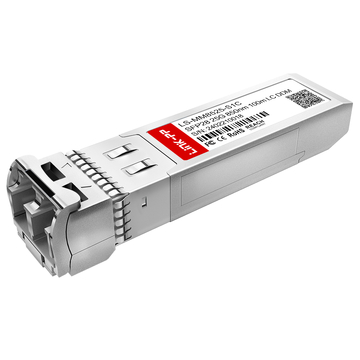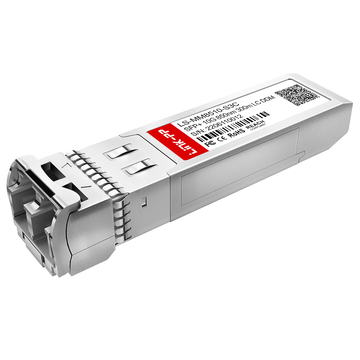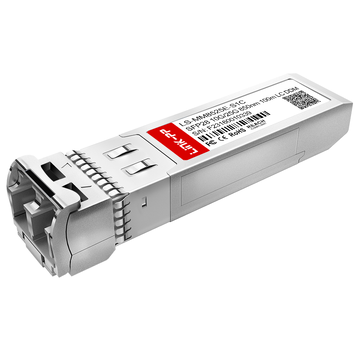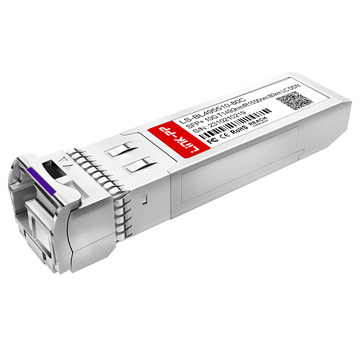

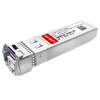

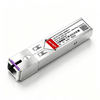
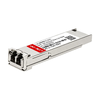






The SFP-25G-MR-SR is a multi-rate (MR) short-reach optical transceiver designed to operate natively at both 10 Gbps and 25 Gbps. Primarily engineered for Arista switch environments, it enables seamless data center migration by supporting up to 100 meters over OM4 MMF at 25G, while maintaining backward optical interoperability with legacy SFP 10G SR modules up to 400 meters.
For data center architects and network procurement managers, migrating from legacy SFP+ 10G infrastructures to 25G Ethernet (defined by the IEEE 802.3by standard) presents a significant CapEx and logistical challenge. Upgrading spine-leaf switches, server Network Interface Cards (NICs), and the physical fiber plant simultaneously is rarely feasible.
This is where the strategic value of the SFP-25G-MR-SR dual-rate transceiver becomes apparent. Unlike standard single-rate 25GBASE-SR optics, the "MR" (Multi-Rate) designation indicates a dual-rate architecture. It allows engineers to upgrade core network hardware to 25G today, while keeping switch ports configured at 10G to interoperate perfectly with existing servers. When the server hardware is eventually refreshed, the network link can be upgraded to 25G via a simple Command Line Interface (CLI) configuration—without ripping and replacing the optical modules or the existing multimode fiber (MMF).
Before committing to a large-scale procurement, it is critical to understand the precise physical constraints and technical parameters of this module. Below is the baseline technical profile of the SFP-25G-MR-SR:
- Supported Data Rates: Dual-Rate 10.3125 Gbps (10G) and 25.78 Gbps (25G)
- Form Factor & Connector: SFP28 / Duplex LC
- Maximum Power Consumption: ≤ 1.5W (Critical for high-density switch thermal planning)
- Wavelength: 850nm VCSEL transmitter
- Optical Interoperability: Fully interoperable with standard 10GBASE-SR (IEEE 802.3ae) when operated at 10G.
Expert Insight: While the hardware specifications suggest plug-and-play simplicity, real-world deployment—particularly in Arista EOS environments—requires precise configuration. The most common point of failure in 10/25G mixed environments is Forward Error Correction (FEC) mismatch. 25G relies heavily on FEC to ensure data integrity, whereas legacy 10G-SR does not. Bridging these two generations requires strict CLI management, which we will detail in the deployment section of this guide.
In this investment guide, we will break down the exact OM3/OM4 distance limitations, analyze real-world troubleshooting scenarios, and compare OEM versus third-party procurement strategies to maximize your IT budget.
🌐 What is the SFP-25G-MR-SR Dual-Rate Transceiver?
The SFP-25G-MR-SR is a versatile, dual-rate optical transceiver built on the SFP28 form factor. It supports native 10 Gbps and 25 Gbps Ethernet transmission over Multimode Fiber (MMF). By utilizing an 850nm VCSEL transmitter and a standard Duplex LC interface, it allows data centers to seamlessly bridge legacy 10GBASE-SR edge devices with modern 25GBASE-SR core architectures using a single, unified optical module.
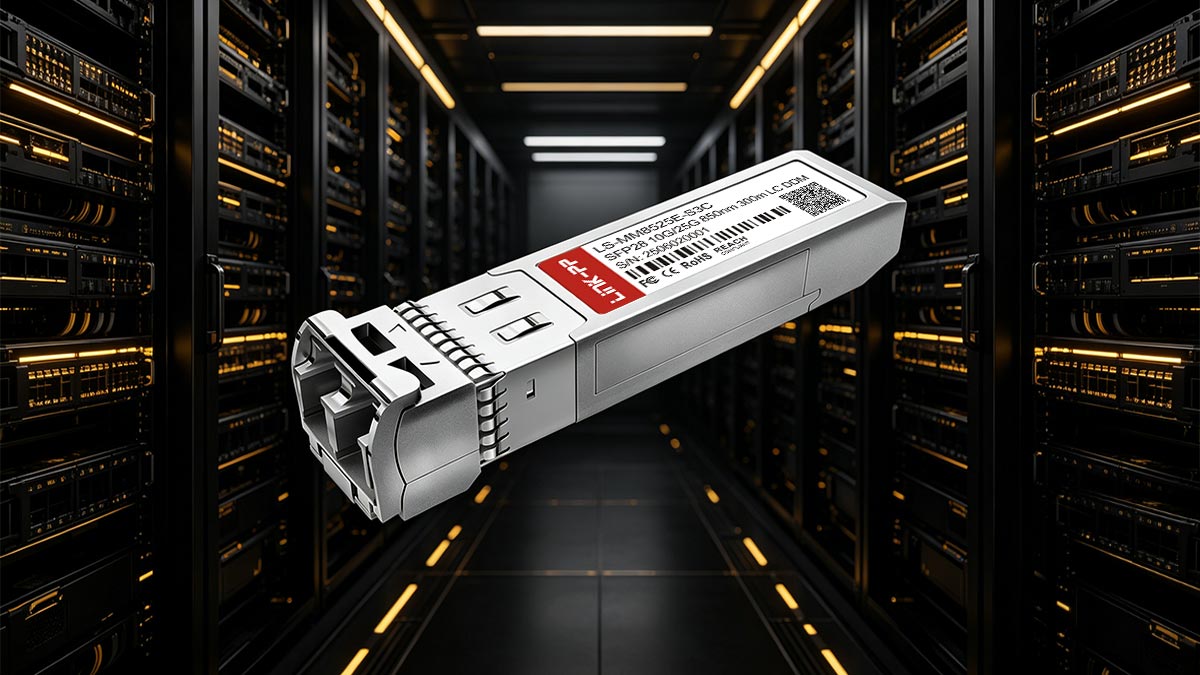
To fully understand the technical positioning of this module, it is helpful to decode its specific SKU nomenclature. Each segment of "SFP-25G-MR-SR" represents a specific hardware capability designed for enterprise networking:
- SFP-25G (Small Form-factor Pluggable 28): Although labeled "25G," the module utilizes the standard SFP28 form factor. It shares the same physical dimensions as legacy 10G SFP+ modules but features upgraded electrical lanes capable of handling 25.78 Gbps of bandwidth.
- MR (Multi-Rate): This is the defining characteristic of the transceiver. Unlike standard single-rate optics, an "MR" module features a dual-rate Clock and Data Recovery (CDR) architecture. It can lock onto both 10.3125 Gbps (10G) and 25.78 Gbps (25G) signals without requiring hardware swapping.
- SR (Short Reach): This indicates the module is designed for short-haul, intra-rack, or inter-rack data center connections. It relies on an 850nm Vertical-Cavity Surface-Emitting Laser (VCSEL) optimized for OM3 and OM4 Multimode Fiber (MMF).
From a standards perspective, the SFP-25G-MR-SR is highly compliant. It bridges two distinct generations of Ethernet protocols. When operating at 25G, it complies with the IEEE 802.3by (25GBASE-SR) standard. When forced into 10G mode via switch configuration, it shifts to comply with the older IEEE 802.3ae (10GBASE-SR) standard, ensuring flawless optical interoperability with existing 10G network interface cards (NICs) and legacy switches.
For network engineers verifying hardware compatibility, the detailed baseline specifications are as follows:
| Technical Parameter | Specification |
|---|---|
| Form Factor | SFP28 (Pluggable) |
| Data Rates Supported | 10.3125 Gbps / 25.78 Gbps |
| Wavelength | 850nm |
| Transmitter / Receiver | VCSEL / PIN Photodetector |
| Physical Interface | Duplex LC Connector |
| Max Power Consumption | ≤ 1.5 Watts |
| IEEE Compliance | 802.3by, 802.3ae |
Entity Context: While "SFP-25G-MR-SR" is specifically recognized as an Arista Networks OEM part number, the dual-rate 10/25G technology it represents is a fundamental building block in modern data center design. Proper deployment of this module, particularly within the Arista Extensible Operating System (EOS), provides a highly cost-effective migration path, preventing the dreaded "forklift upgrade" of ripping out existing fiber infrastructure.
🌐 Core Specifications: OM3/OM4 Distance Limits and Power Consumption
What is the maximum distance of the SFP-25G-MR-SR?
The maximum transmission distance of the SFP-25G-MR-SR depends strictly on the operating speed and the grade of Multimode Fiber (MMF) deployed. At 25 Gbps, it reaches up to 70 meters over OM3 and 100 meters over OM4. At 10 Gbps, the reach extends significantly to 300 meters over OM3 and 400 meters over OM4. The module operates with a strict maximum power consumption of 1.5W.
When planning a data center upgrade, evaluating the existing fiber plant is the most critical step. The physical limitations of fiber optic cables dictate whether an organization can utilize its existing infrastructure or must invest heavily in new cabling. Because the SFP-25G-MR-SR utilizes an 850nm VCSEL transmitter, it is designed exclusively for Laser-Optimized Multimode Fiber (LOMMF)—specifically OM3 and OM4 classifications.
OM3 and OM4 fibers differ primarily in their Effective Modal Bandwidth (EMB). OM3 provides an EMB of 2000 MHz·km, whereas OM4 offers a significantly higher 4700 MHz·km, allowing for less signal dispersion and longer reach at higher data rates.
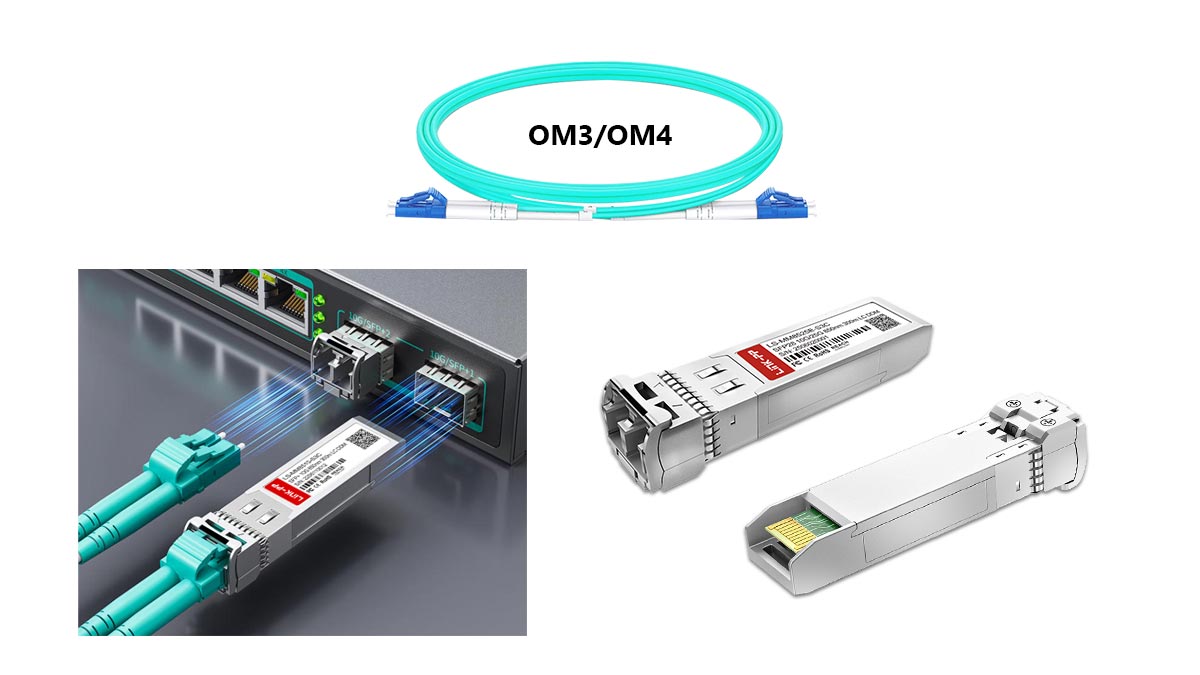
For network architects calculating link budgets, the exact distance capabilities of the 10/25GBASE-MR-SR are outlined below:
| Operating Speed | Fiber Grade | Effective Modal Bandwidth (EMB) | Maximum Supported Distance |
|---|---|---|---|
| 25 Gbps | OM3 MMF | 2000 MHz·km | 70 meters |
| 25 Gbps | OM4 MMF | 4700 MHz·km | 100 meters |
| 10 Gbps | OM3 MMF | 2000 MHz·km | 300 meters |
| 10 Gbps | OM4 MMF | 4700 MHz·km | 400 meters |
Expert Insight on Cabling Strategy: If your current data center architecture relies on OM3 fiber drops that exceed 70 meters, upgrading those specific links to 25G using this transceiver will result in uncorrectable bit errors or link failure. In such scenarios, engineers must either run new OM4 fiber or transition to single mode transceivers (such as 25GBASE-LR).
Thermal Planning: The Importance of 1.5W Max Power
While optical reach dictates the physical layout, power consumption dictates the environmental design. The SFP-25G-MR-SR is rated for a Maximum Power Consumption of 1.5 Watts.
In isolation, 1.5W is negligible. However, modern Top-of-Rack (ToR) switches, such as the Arista 7050X3 or 7280R series, often feature 48 high-density SFP28 ports. A fully populated 48-port switch utilizing these MR-SR modules will generate up to 72 Watts of heat solely from the optical transceiver modules.
Data center HVAC engineers must factor this localized thermal dissipation into their calculations. Exceeding the thermal design power (TDP) of the switch chassis can lead to premature laser degradation within the VCSEL component, directly impacting the transceiver's MTBF (Mean Time Between Failures). Fortunately, the 1.5W rating falls well within the standard cooling capacity of enterprise-grade switches utilizing standard Front-to-Back or Back-to-Front airflow configurations.
🌐 The "MR" Advantage: Why Dual-Rate 10/25G is a Smart Investment
What is the advantage of a multi-rate (MR) transceiver?
The "MR" (Multi-Rate) advantage lies in its dual Clock and Data Recovery (CDR) architecture, allowing it to operate seamlessly at both 10 Gbps and 25 Gbps. This enables network architects to connect modern 25G Top-of-Rack (ToR) switches to legacy 10G server NICs. It maximizes ROI by eliminating the need to purchase temporary 10G optics, facilitating a phased, budget-friendly migration to a pure 25G environment.

In enterprise networking, infrastructure upgrades are rarely executed as a complete "rip-and-replace." Servers, storage arrays, and network switches operate on different depreciation schedules. A common scenario involves an organization upgrading its core and Top-of-Rack (ToR) switches to 25G (e.g., deploying Arista 7050X3 series switches) while the underlying compute nodes are still equipped with legacy 10G Network Interface Cards (like the widely used Intel X710).
Standard 25GBASE-SR optics are strictly single-rate; they cannot downshift to 10G. Without a multi-rate solution, IT procurement teams are forced into a costly compromise: buying hundreds of older 10G-SR optics for the new 25G switches, only to discard and replace them with SFP 25G SR optics when the servers are eventually refreshed a year later.
The SFP-25G-MR-SR eliminates this redundant CapEx cycle. By investing in dual-rate modules from day one, organizations secure a highly strategic migration path.
- CapEx Reduction (Zero Redundant Purchasing): You purchase the optic once. It acts as a 10GBASE-SR module today and instantly becomes a 25GBASE-SR module tomorrow, effectively cutting optical procurement costs in half over a 3-year migration cycle.
- Operational Continuity (Phased Migration): Network engineers can migrate individual racks or even specific servers at their own pace. A single 48-port switch can host a mix of 10G and 25G links using the exact same transceiver SKU, simplifying inventory management.
- Spine-Leaf Optimization: In modern spine-leaf topologies, oversubscription ratios are critical. The MR optic allows engineers to carefully manage uplink and downlink bandwidth allocations without being constrained by hardware-locked single-speed transceivers.
Clock and Data Recovery (CDR) is the internal circuitry within high-speed transceivers that mitigates signal jitter. The SFP-25G-MR-SR contains dual-rate CDRs, bypassing the 25G CDR and engaging the 10G CDR when configured for lower-speed operation, ensuring absolute signal integrity at both speeds.
Pros & Cons: 25G-MR-SR vs. Standard 10G-SR
To provide clear decision support for IT directors weighing their options, here is the comparative advantage of deploying the MR transceiver versus relying on legacy optics during a transition:
- Standard 10G-SR: Pros: Lower initial unit cost. Cons: Becomes e-waste the moment the server is upgraded to 25G; requires a second procurement cycle.
- SFP-25G-MR-SR: Pros: Future-proofs the switch port; eliminates dual-purchasing; simplifies RMA and spare-parts inventory. Cons: Marginally higher initial unit cost compared to legacy 10G optics.
Ultimately, the SFP-25G-MR-SR is not just a physical component; it is an OpEx and CapEx mitigation strategy. However, realizing this ROI requires precise execution at the software level. Bridging these two generations of Ethernet protocols requires specific network operating system configurations, particularly regarding error correction protocols.
🌐 Real-World Deployment: Arista CLI, FEC, and 10G-SR Interoperability
How do you configure the SFP-25G-MR-SR for 10G?
To successfully link an SFP-25G-MR-SR with a legacy 10G-SR transceiver, you must manually force the switch port speed and disable Forward Error Correction (FEC). In Arista EOS, navigate to the specific interface and execute the commands: speed forced 10000full followed by error-correction none. Failure to disable FEC will result in a link failure.
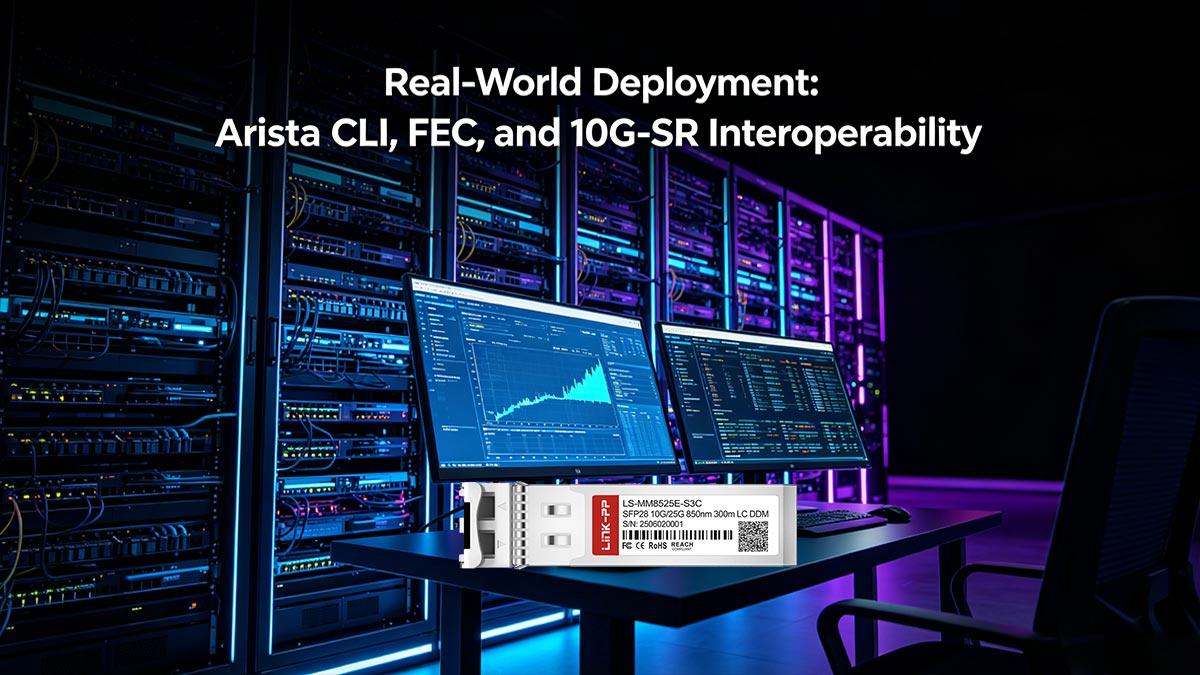
While the hardware specifications of the SFP-25G-MR-SR guarantee optical interoperability with legacy 10GBASE-SR modules, achieving a functional link in the real world is rarely "plug-and-play." A recurring pain point observed across enterprise networking forums—such as Reddit’s r/networking and r/Arista communities—is the frustration of engineers who connect an SFP-25G-MR-SR to a 10G server NIC (like an Intel X710 or Broadcom equivalent), only to find the port status stuck in a "down" or "notconnected" state.
The root cause of this failure almost always boils down to two protocol mismatches: Auto-Negotiation (AN) and Forward Error Correction (FEC).
The FEC Mismatch Problem
Forward Error Correction (FEC) is a digital signal processing technique used to detect and correct bit errors in high-speed transmissions.
At 25 Gbps, the IEEE 802.3by standard mandates the use of FEC (specifically RS-FEC or Base-R FEC) to maintain signal integrity over MMF. However, the legacy 10GBASE-SR (IEEE 802.3ae) standard was designed before FEC was necessary for short-reach optics; 10G-SR modules simply do not understand FEC data frames.
When an Arista switch detects a 25G-capable transceiver, its default behavior is to enable FEC and attempt to auto-negotiate the speed. If the 10G NIC on the other end cannot respond to the FEC handshake, the link fails.
Arista EOS Configuration Guide
Expert Experience: To establish a stable connection between the SFP-25G-MR-SR and a legacy 10G-SR optic, you must override the switch's default behavior. You must manually hardcode the port speed to 10G and explicitly disable error correction.
Below is the standard Command Line Interface (CLI) configuration required within Arista Extensible Operating System (EOS) to force the MR transceiver into 10G backward-compatibility mode:
Switch# configure terminal
Switch(config)# interface ethernet 1/1
! Force the port speed to 10 Gbps Full Duplex
Switch(config-if-Et1/1)# speed forced 10000full
! Disable Forward Error Correction (Crucial for 10G-SR interoperability)
Switch(config-if-Et1/1)# error-correction none
Switch(config-if-Et1/1)# end
Switch# write memory
Verifying the Link
Once the configuration is applied, it is best practice to verify the transceiver’s operational status and ensure the Digital Optical Monitoring (DOM) metrics are within acceptable thresholds. Use the following command to verify the link and power levels:
- show interfaces ethernet 1/1 transceiver
This command will confirm that the module is recognized as an SFP-25G-MR-SR, that the Tx/Rx optical power levels are healthy (typically between -8 dBm and +2 dBm for short reaches), and that the port is actively forwarding traffic at 10 Gbps without FEC-induced frame drops.
By mastering these specific CLI commands, network engineers can confidently deploy the SFP-25G-MR-SR as a true dual-role asset, avoiding the configuration nightmares that frequently stall data center migration projects.
🌐 OEM vs. Third-Party SFP-25G-MR-SR: Maximizing Your IT Budget
Can I use third-party compatible SFP-25G-MR-SR optics?
Yes, third-party SFP-25G-MR-SR transceivers can be safely deployed in enterprise networks, provided they feature exact EEPROM coding for your specific switch vendor (e.g., Arista EOS). High-quality compatibles match the OEM's 1.5W power draw and optical specifications, offering identical performance while significantly reducing CapEx—often saving 60% to 80% compared to official OEM pricing.
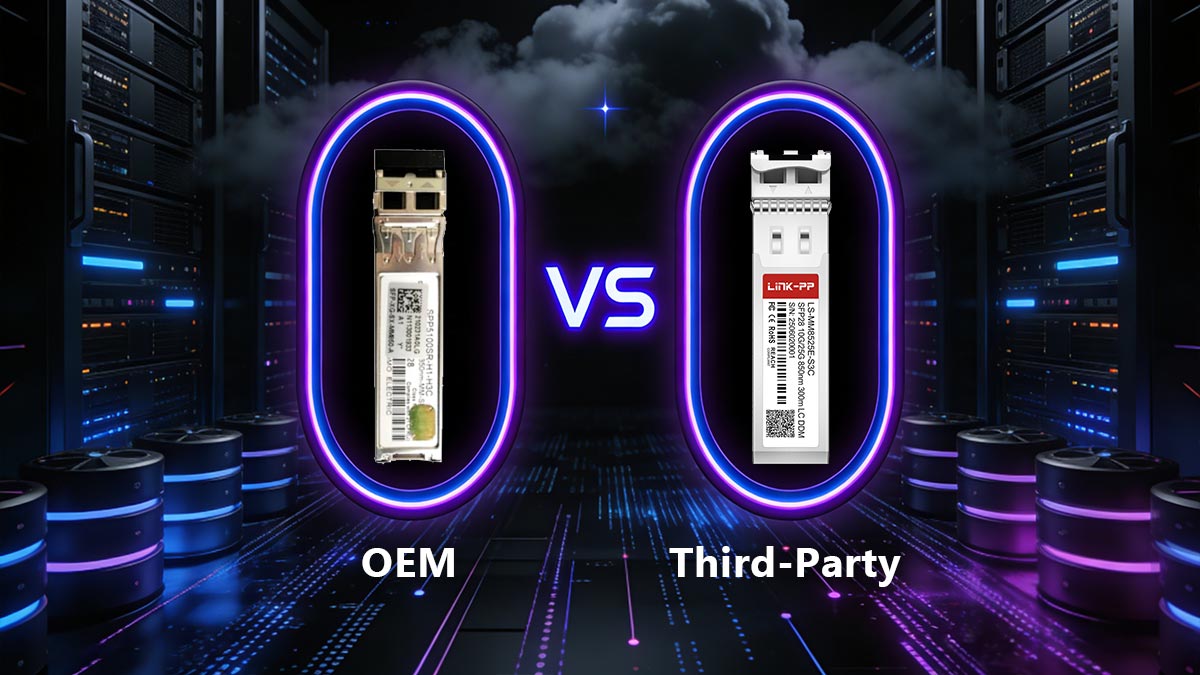
When executing a data center upgrade, the cost of optical transceivers frequently rivals—or even exceeds—the cost of the network switches themselves. For IT procurement managers, the debate between purchasing official Original Equipment Manufacturer (OEM) modules versus third-party compatible optics is the most critical financial decision of the project.
The Arista-branded SFP-25G-MR-SR commands a premium price point, justified by guaranteed vendor support and rigorous quality assurance. However, actual user feedback from procurement teams and industry surveys reveals a massive, industry-wide shift toward third-party optical manufacturers (such as FS, Flexoptix, or ProLabs) to maximize tight IT budgets.
The EEPROM Coding Requirement
The primary concern network architects have when investigating third-party optics is the dreaded "vendor lockout" or "unsupported transceiver" error. Network Operating Systems, including Arista EOS, interrogate the transceiver upon insertion.
The EEPROM (Electrically Erasable Programmable Read-Only Memory) is a small memory chip within the transceiver that stores its serial number, vendor ID, and hardware specifications.
If a switch reads an EEPROM that is not coded correctly for its specific ecosystem, it may disable the port or generate persistent syslogs. Therefore, when sourcing a third-party SFP-25G-MR-SR, it is imperative to ensure the vendor guarantees 100% Arista-compatible EEPROM coding. Reputable third-party vendors flash their modules to perfectly mimic the OEM handshake, ensuring seamless plug-and-play recognition without triggering warning flags.
Pros & Cons: OEM vs. Third-Party Procurement
To provide clear decision support for your procurement strategy, here is a comparative breakdown:
- Official OEM (e.g., Arista) SFP-25G-MR-SR:
- Pros: Guaranteed support; single-vendor throat to choke; zero risk of EEPROM mismatch.
- Cons: Exorbitant unit cost; longer lead times during supply chain disruptions.
- Third-Party Compatible SFP-25G-MR-SR:
- Pros: Massive CapEx reduction (often 60-80% cheaper); high availability and fast shipping; identical physical performance (uses the same underlying VCSEL and CDR components).
- Cons: Requires vetting the vendor for coding accuracy; may complicate support tickets if the switch vendor blames the optic for a layer-1 issue.
Expert Insight on Hardware Parity: It is a well-documented industry reality that major switch vendors do not manufacture their own optics. They source the bare modules from massive optical foundries (like Finisar or Avago), flash them with proprietary EEPROM codes, and apply a significant markup. A high-quality third-party SFP-25G-MR-SR is often physically identical to the OEM version, adhering to the same IEEE 802.3by standards and maintaining the critical ≤ 1.5W Max Power Consumption required for thermal stability.
For organizations deploying hundreds of dual-rate SFP transceivers across multiple spine-leaf fabrics, leveraging rigorously tested, Arista-compatible third-party optics is not just a budget optimization tactic—it is a standard, enterprise-proven procurement strategy.
🌐 FAQ About SFP-25G-MR-SR: Technical & Deployment Queries
To assist network engineers and procurement teams in rapid decision-making, we have compiled the most frequently asked questions regarding the technical parameters, optical reach, and interoperability of the SFP-25G-MR-SR dual-rate transceiver. These answers are structured for quick reference and technical accuracy.
Q1: What does the "MR" stand for in the SFP-25G-MR-SR part number?
A: "MR" stands for Multi-Rate. It indicates that the transceiver is equipped with a dual Clock and Data Recovery (CDR) architecture, allowing it to operate natively at both 10.3125 Gbps (10G) and 25.78 Gbps (25G) without requiring any physical hardware modifications.
Q2: How far can the SFP-25G-MR-SR transmit over OM3 versus OM4 multimode fiber?
A: The maximum transmission distance is dictated by both the operating speed and the fiber grade. At 25 Gbps, the module supports up to 70 meters over OM3 and 100 meters over OM4. When operating at 10 Gbps, the reach extends significantly to 300 meters over OM3 and 400 meters over OM4.
Q3: Will an Arista SFP-25G-MR-SR optic link with a standard 10GBASE-SR transceiver?
A: Yes. The SFP-25G-MR-SR is fully backwards compatible and optically interoperable with standard IEEE 802.3ae 10GBASE-SR transceivers. However, to establish the link, the 25G switch port must be manually configured to operate at 10 Gbps.
Q4: Why is my SFP-25G-MR-SR failing to connect to a legacy 10G server NIC?
A: The most common cause for a failed link is a Forward Error Correction (FEC) mismatch. 25G optics default to requiring FEC, while legacy 10G NICs do not support it. To resolve this in Arista EOS, you must apply the CLI commands speed forced 10000full and error-correction none to the specific interface.
Q5: What is the maximum power consumption of the SFP-25G-MR-SR, and why does it matter?
A: The module has a strict maximum power consumption of ≤ 1.5 Watts. This metric is critical for data center thermal planning. A fully populated 48-port high-density switch will generate up to 72 Watts of localized heat strictly from the transceivers, which must be accounted for in HVAC and airflow calculations.
Q6: Does the SFP-25G-MR-SR require specialized MPO cabling or standard LC connectors?
A: The SFP-25G-MR-SR utilizes a standard Duplex LC connector. It does not require specialized multi-fiber MTP/MPO breakout cables, allowing organizations to reuse their existing dual-strand multimode fiber patch cables and panels during a network upgrade.
🌐 Final Verdict: Planning Your SFP-25G-MR-SR Procurement
The SFP-25G-MR-SR 10/25G dual-rate transceiver is more than just a physical networking component; it is a strategic asset for data center lifecycle management. By supporting both legacy 10GBASE-SR and modern 25GBASE-SR standards over existing OM3 and OM4 fiber plants, it provides a seamless, budget-friendly migration path that eliminates the need for redundant hardware purchases.
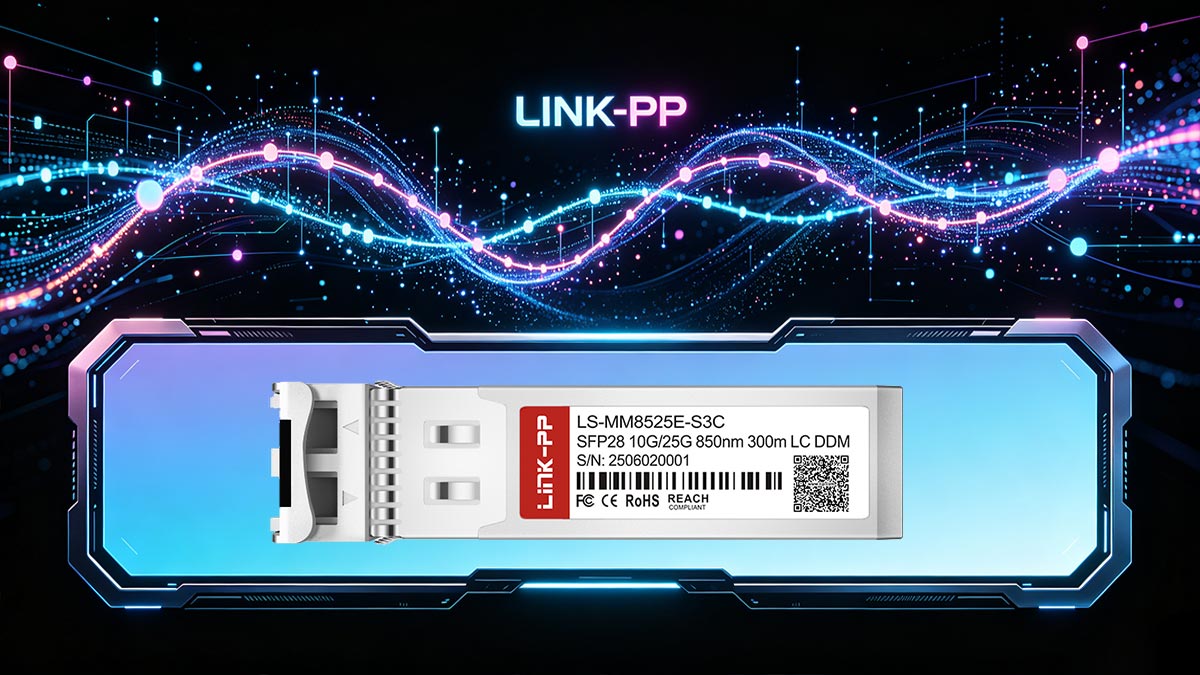
Whether you choose to procure official OEM Arista optics or rigorously tested third-party compatibles, understanding the 1.5W thermal constraints, strict distance limitations, and necessary CLI FEC configurations will ensure your transition from 10G to 25G is executed flawlessly.
Executive Summary:
The SFP-25G-MR-SR is the definitive optical solution for phased 10G to 25G data center migrations. By providing backward optical interoperability with legacy 10GBASE-SR equipment and utilizing existing OM3/OM4 duplex fiber, it eliminates redundant hardware cycles and maximizes CapEx efficiency without compromising network performance.
Upgrading a spine-leaf architecture or core network fabric does not require a disruptive "rip-and-replace" methodology. As established throughout this guide, the technical profile of the SFP-25G-MR-SR dual-rate transceiver provides network architects with unparalleled flexibility. By deploying these modules in modern 25G Top-of-Rack (ToR) switches, engineers can maintain stable 10 Gbps uplinks to legacy servers today, and execute a zero-hardware 25 Gbps upgrade tomorrow via a simple CLI reconfiguration.
For IT procurement managers, finalizing the Bill of Materials (BoM) requires balancing strict technical requirements—such as the 1.5W maximum power consumption and precise EEPROM coding—against allocated budget constraints. Relying exclusively on OEM-branded optics can quickly drain project funds, making high-quality, third-party compatible optics the strategic choice for large-scale deployments.
When sourcing third-party modules, the vendor must guarantee exact hardware parity and flawless network operating system integration to prevent costly deployment delays or vendor-lockout errors.
Ready to Execute Your 25G Network Upgrade?
Secure 100% compatible, rigorously tested optical modules designed to meet strict IEEE 802.3by and 802.3ae standards. Bypass the exorbitant OEM markups without sacrificing reliability or performance.
Explore enterprise-grade 10/25G optics directly at the LINK-PP Official Store. Equip your network with verified SFP-25G-MR-SR transceivers engineered for exact EEPROM coding, optimal thermal efficiency, and seamless Arista EOS interoperability.
About the Technical Reviewer
This investment guide was compiled by enterprise network hardware specialists focusing on data center optical interconnects, IEEE Ethernet standards, and CapEx optimization strategies. Configuration guidelines are validated against real-world deployment data within high-density switch fabrics.