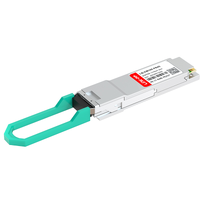





























As data centers race to handle skyrocketing traffic, upgrading network infrastructure without breaking the bank has become a top priority. Regular 100G QSFP28 optical modules rely on complex multi-lane architectures that increase both manufacturing costs and power consumption. Enter the QSFP28 FR module, a game-changing solution that leverages innovative "Single-Lambda" technology to transmit data more efficiently.
By condensing the network traffic onto a single optical wavelength using advanced PAM4 signaling, the QSFP28 FR significantly simplifies hardware design. For procurement teams and network architects, this shift translates directly into lower upfront hardware costs and drastically reduced energy consumption. This blog post will break down the economics of Single-Lambda 100G technology, showing you how it optimizes both CapEx and OpEx while paving a seamless path toward future 400G upgrades.
📬 Understanding QSFP28 FR: Technical Foundations of Single-Lambda 100G
To fully grasp the economic advantages of modern optical networks, it is essential to explore the underlying technology that drives these cost savings. The shifting landscape of data center architecture relies heavily on smarter, more streamlined hardware solutions to handle massive data throughput. Exploring the technical pillars of Single-Lambda technology reveals exactly why this specific standard has become the new benchmark for high-speed connectivity.
What Is Single-Lambda 100G and How Does It Work?
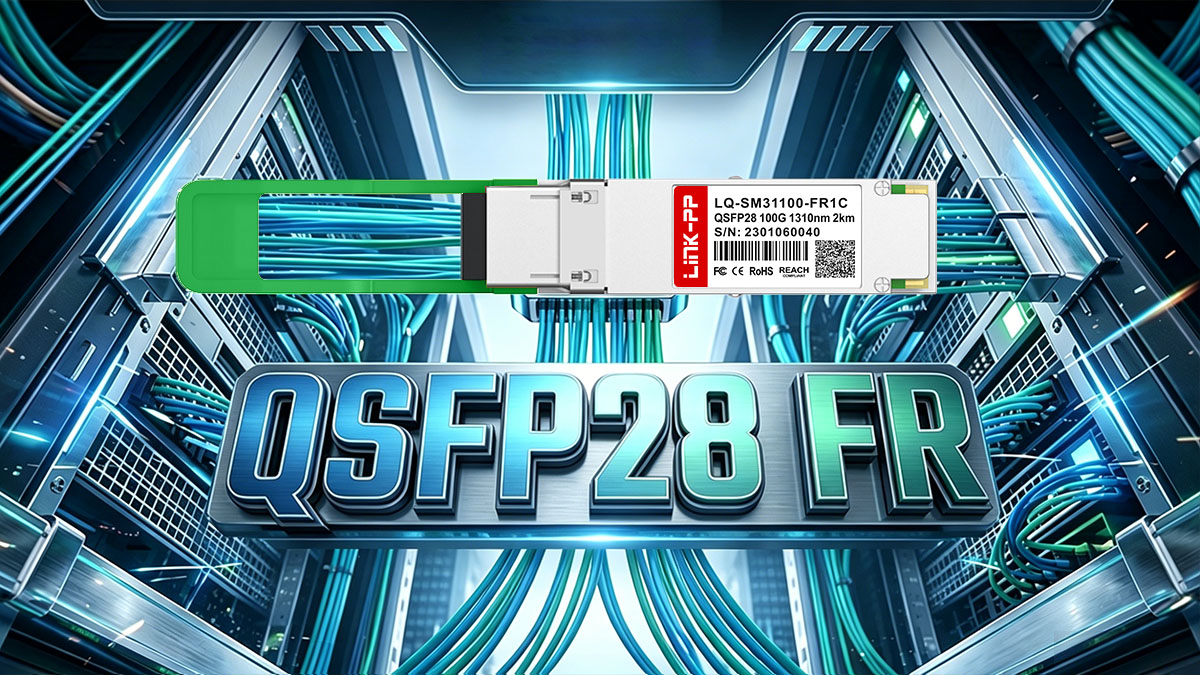
Regular 100G QSFP optical transceivers rely on splitting data into four separate lanes, each carrying 25Gbps of data simultaneously. In contrast, Single-Lambda 100G compresses the entire 100Gbps capacity onto a single optical wavelength, or "lambda." This means a single laser can transmit what used to require four separate optical setups, drastically simplifying the internal design of the transceiver.
To achieve this massive throughput on a single lane, the module uses an advanced digital signal processor (DSP) to manage data encoding. This streamlined approach minimizes optical complexity and eliminates the risk of lane misalignment, ensuring a highly reliable data stream over single-mode fiber.
The Evolution from 4-Lane (NRZ) to Single-Lane (PAM4) Optics
The breakthrough behind Single-Lambda technology lies in the evolution from Non-Return-to-Zero (NRZ) modulation to Pulse Amplitude Modulation 4-Level (PAM4). Legacy 100G transceiver modules, such as the QSFP28 100GBASE-LR4, use NRZ signaling, which transmits only one bit of data per optical pulse. Because NRZ requires four separate 25Gbps lanes to reach 100G, it demands more lasers and complex optical multiplexers inside the module.
By switching to PAM4 signaling, the transceiver can transmit two bits of data per pulse, effectively doubling the data density. This allows a single 50Gbaud lane to achieve a full 100Gbps data rate on just one wavelength. This allows hardware manufacturers to bypass complex multi-laser configurations, which simplifies production and yields significant manufacturing cost savings.
Key Hardware Specifications of QSFP28 FR Modules
Evaluating the precise electrical and optical boundaries of these modules ensures seamless integration into high-density routing platforms. Operating under the IEEE 802.3cd standard (100GBASE-FR1), these transceivers utilize an internal DSP gearbox to convert four lanes of 25G NRZ electrical signals into a single 100G PAM4 optical signal. This architecture relies on a highly stable Electro-absorption Modulated Laser (EML) to maintain superior signal integrity over intermediate distances.
To help technical infrastructure managers verify power budgets, thermal tolerances, and link distances, the critical engineering metrics are detailed in the comprehensive profile below.
| Parameter | Technical Specification |
| Form Factor & Electrical Interface | QSFP28 / 4x25G NRZ (CAUI-4 Host Interface) |
| Optical Signaling & Modulation | 100Gbps / Single-Lane PAM4 |
| Standard Compliance | IEEE 802.3cd (100GBASE-FR1) & 100G Lambda MSA |
| Optical Wavelength | 1310nm |
| Maximum Reach | 2km |
| Fiber Medium & Connector | Single-Mode Fiber (SMF) via Duplex LC Connector |
| Receiver Type | PIN Photodiode with integrated TIA |
Why Procurement Teams Must Care About the "FR" Specification
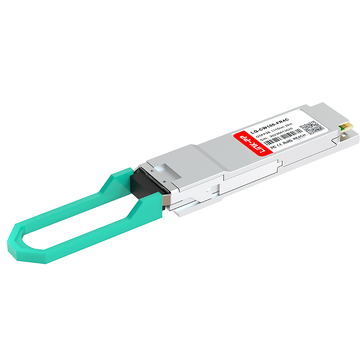
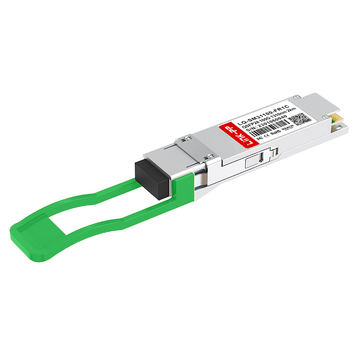
In optical networking terminology, the "FR" designation specifically refers to a standardized reach of up to 2 kilometers over single-mode fiber. For procurement professionals, this specification represents a sweet spot between short-reach "DR" modules (500m) and expensive long-reach "LR" modules (10km). Choosing an "FR" module (such as the QSFP-100G-FR-S) avoids paying a premium for unnecessary distance capabilities when connecting switches within or between adjacent data center halls.
Furthermore, because the QSFP28 FR standard adheres to the strict guidelines of the 100G Lambda MSA (Multi-Source Agreement), it ensures multi-vendor interoperability. Procurement teams can confidently source these modules from various trusted suppliers without worrying about compatibility issues or vendor lock-in. Ultimately, focusing on the "FR" specification helps sourcing managers optimize hardware budgets while perfectly matching the physical layout of modern data centers.
📬 Capital Expenditure (CapEx) Breakdown for QSFP28 FR Deployments
Optimizing upfront investments is a critical factor when engineering next-generation data center networks. Evaluating capital expenditure requires a deep dive into how specific component choices impact the overall hardware acquisition budget. By analyzing these initial procurement dynamics, organizations can make highly strategic purchasing decisions that maximize every dollar spent.
Initial Per-Port Purchase Cost Comparison
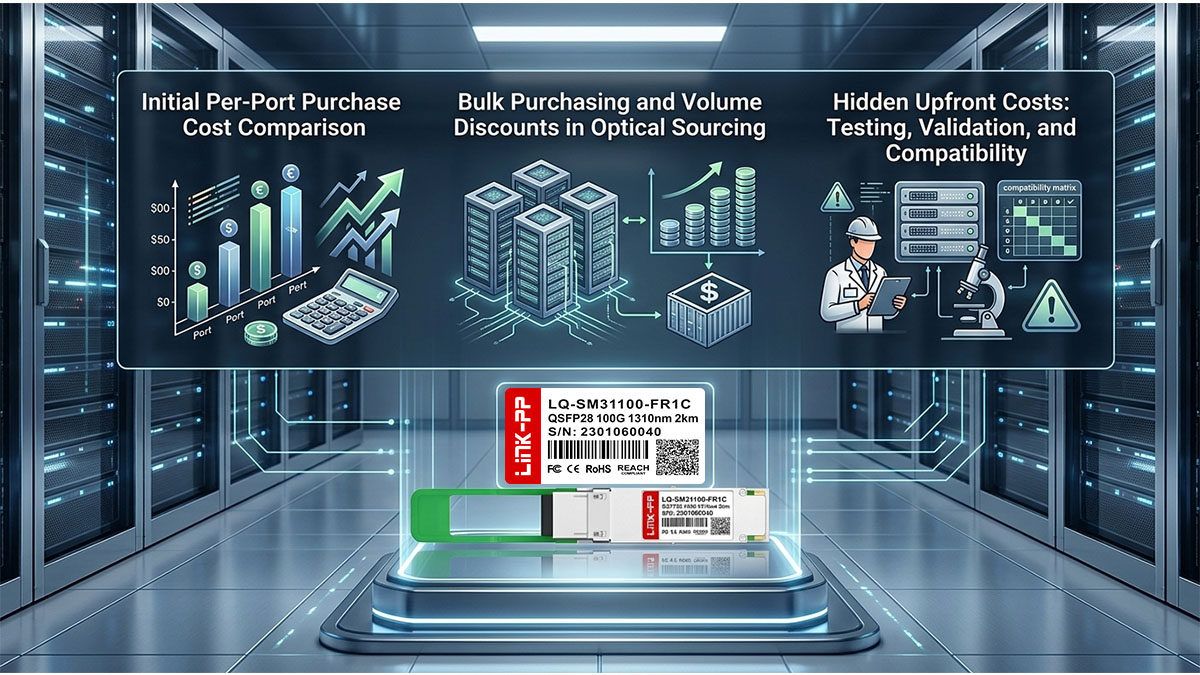
Deploying network hardware requires a careful balance between individual port costs and total budget limitations. Single-Lambda QSFP28 FR optics change this dynamic favorably because their streamlined design requires fewer internal optical components. By integrating a single-laser system, manufacturers can produce these units more efficiently, which directly lowers the initial price tag for the end user.
When calculating the total upfront cost of a network refresh, per-port savings quickly multiply across high-density switch fabrics. Choosing a simpler optical design allows organizations to allocate capital to other critical infrastructure needs. This initial affordability makes a massive difference for expanding facilities that must deploy hundreds of ports simultaneously.
Comparing QSFP28 FR with QSFP28 LR4 and CWDM4 Pricing
When stacked against regular 100G modules, the fiscal advantages of the QSFP28 FR standard become incredibly clear. QSFP28 LR4 modules require four separate lasers and a complex optical multiplexer to reach a 10km distance, making them highly expensive to manufacture. Similarly, CWDM4 modules (such as the QSFP-100G-CWDM4) use four distinct wavelengths, which keeps their material costs noticeably higher than a single-wavelength alternative.
By compressing the data path into one 1310nm wavelength, the QSFP28 FR module slashes manufacturing complexity. Network planners can secure a 2km reach capability at a fraction of the cost of a 10km 100GBASE-LR4 module. This targeted pricing structure ensures that operators do not overpay for excessive distance capabilities they simply do not need.
Bulk Purchasing and Volume Discounts in Optical Sourcing
Sourcing optical transceivers at scale opens up massive opportunities for volume discounts and enhanced procurement leverage. Because the QSFP28 FR standard is widely adopted across the industry, manufacturers produce these units in massive quantities. This high-volume production creates a highly competitive market where enterprise buyers can negotiate substantial price cuts.
When procurement teams commit to bulk orders for large-scale data center rollouts, the per-unit cost drops even further. Sourcing a uniform, mass-produced module makes it much easier to secure stable, long-term pricing contracts with suppliers. This predictable pricing structure helps finance departments accurately forecast capital expenditures for future network expansions.
Hidden Upfront Costs: Testing, Validation, and Compatibility
Beyond the base purchase price, infrastructure teams must always account for the hidden costs of testing and validation. Integrating new optical modules into a legacy network ecosystem frequently requires extensive engineering hours to ensure host compatibility. If an optic requires proprietary firmware or specific switch configurations, validation costs can quickly spiral out of control.
Fortunately, the QSFP28 FR module utilizes the standard CAUI-4 electrical host interface, allowing it to fit seamlessly into existing 100G slots. This universal compatibility minimizes the need for specialized testing equipment or lengthy lab evaluation cycles before deployment. By drastically reducing the time required for qualification, network operators can significantly lower their upfront engineering and integration expenses.
📬 Operational Expenditure (OpEx) Efficiency of QSFP28 FR Modules
Managing day-to-day data center expenses requires a sharp focus on power, cooling, and long-term maintenance costs. While upfront hardware savings are beneficial, the ongoing expenses of running high-density networks often represent a much larger financial burden over time. Choosing highly optimized optical components can dramatically lower these running costs and drive sustainable operational efficiency.
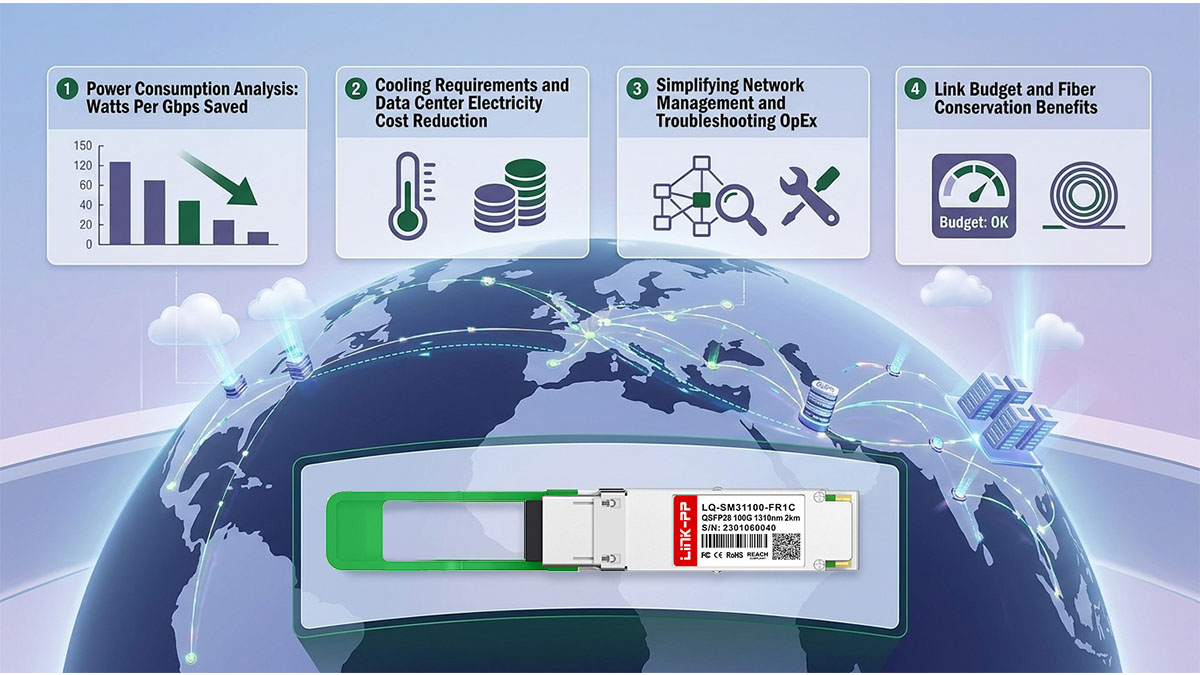
Power Consumption Analysis: Watts Per Gbps Saved
Energy efficiency has become a foundational metric for evaluating modern network hardware performance. Traditional 100G modules require running four individual optical lanes simultaneously, which consumes a significant amount of electricity. By consolidating network traffic onto a single wavelength, the QSFP28 FR module slashes the power required to transmit data over the network.
When calculating efficiency on a per-gigabit basis, Single-Lambda optics offer a much lower power profile than legacy multi-lane transceivers. Scaling these individual wattage savings across thousands of active ports results in massive utility bill reductions over the hardware lifecycle. This structural advantage helps data center operators meet strict sustainability targets while lowering overhead.
Cooling Requirements and Data Center Electricity Cost Reduction
High power consumption in network switches always translates directly into excess heat generation inside server racks. This thermal output forces facility air conditioning systems to work much harder to maintain safe operating temperatures. Because the QSFP28 FR module runs cooler than regular 100G alternatives, it reduces the overall thermal load on the data center floor.
Lowering the heat output per port creates a highly beneficial compounding effect on total facility electricity usage. Facilities can optimize their power usage effectiveness metrics by diverting less energy toward heavy-duty cooling fans and chillers. These long-term utility savings directly improve the bottom line for dense cloud computing environments.
Simplifying Network Management and Troubleshooting OpEx
Maintaining a complex multi-lane optical network often requires extensive engineering resources and specialized troubleshooting tools. Legacy modules that use four separate optical channels present four potential points of failure for every link. A single misaligned lane or a faulty laser can bring down an entire 100G connection, complicating the diagnostic process for field technicians.
The single-lane architecture of the QSFP28 FR module eliminates the headache of optical lane deskew and misalignments entirely. Network monitoring teams can isolate connection issues much faster because the optical path is vastly simplified. This streamlined design reduces the time spent on network maintenance, driving down operational labor costs.
Link Budget and Fiber Conservation Benefits
Operating data center interconnects requires maximizing the utility of existing single-mode fiber infrastructure. The QSFP28 FR module offers a robust optical link budget that ensures reliable data transmission over distances up to 2km. This optimized signal budget tolerates standard fiber splices and patch panel connections without requiring expensive inline optical amplifiers.
Additionally, using a single wavelength over standard duplex single-mode fiber helps organizations conserve valuable strand capacity. By avoiding complex wavelength management systems, operators keep their cabling architecture simple and clean. This long-term fiber conservation prevents the premature need to lease or install expensive new fiber runs.
📬 QSFP28 FR Compatibility and Legacy Network Integration Economics
Integrating new optical technology into an existing data center environment requires a careful balance between innovation and backward compatibility. Upgrading network speeds should never force an organization to prematurely scrap functional legacy hardware. Evaluating the financial impact of how seamlessly new modules blend with older switches is vital for protecting past infrastructure investments.
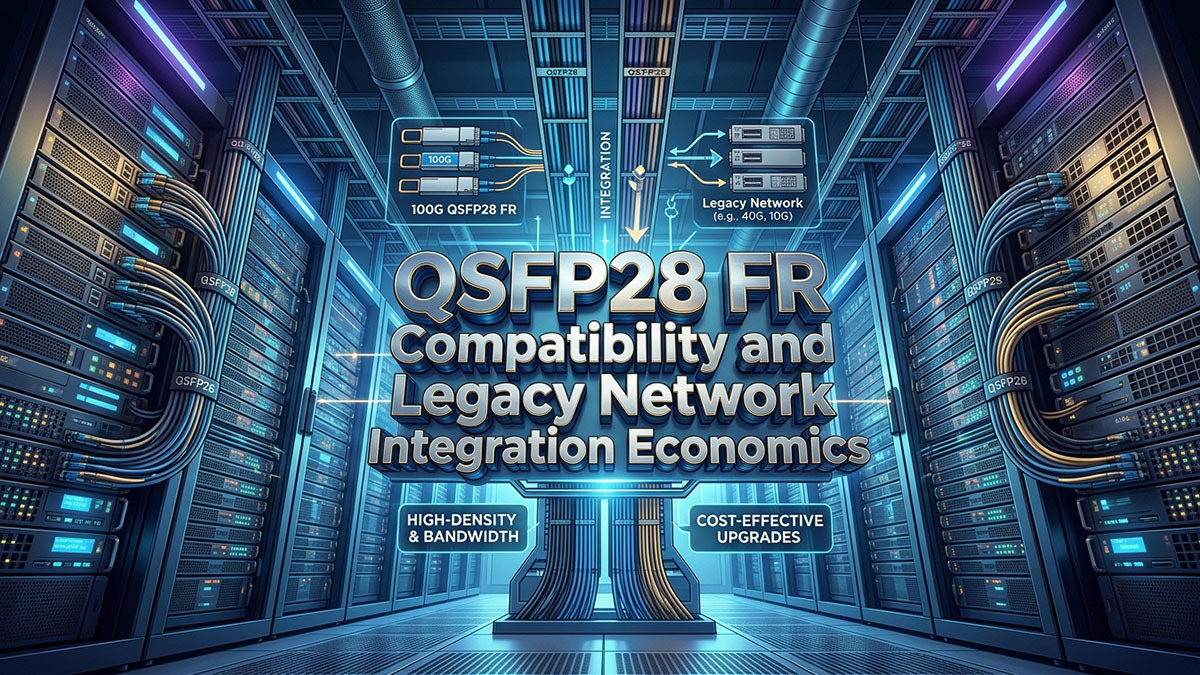
Backward Compatibility with Existing 100G Switches and Routers
Maintaining compatibility with current networking hardware is a primary concern for engineering teams planning upgrades. The QSFP28 FR module utilizes the standard QSFP28 form factor, allowing it to slide directly into existing legacy switch slots. This physical uniformity ensures that data center managers can adopt Single-Lambda technology without purchasing entirely new chassis systems.
On the software side, major equipment manufacturers widely support the standard configuration parameters required by these modules. This seamless plug-and-play capability prevents costly network downtime during hardware integration phases. By fitting effortlessly into current infrastructures, the module provides an immediate performance boost while maximizing the lifespan of existing routers.
The Cost of Interoperability: Using Gearboxes vs. Native Support
Connecting a Single-Lambda 100G optic to a legacy multi-lane 100G optic requires translating two completely different signaling formats. Older switches use four lanes of 25G NRZ signals, while the QSFP28 FR module relies on a single lane of 100G PAM4 optics. To bridge this gap, the module features an internal electronic "gearbox" chip that handles this complex signal conversion automatically.
Relying on this integrated hardware feature eliminates the need to buy external, standalone conversion equipment. Newer switches with native PAM4 support can communicate with these optics even more efficiently by bypassing extra processing steps. Understanding where your hardware sits on this technical curve helps you accurately forecast potential deployment costs.
Reusing Existing Single-Mode Fiber (SMF) Cabling Plants
Replacing physical fiber optic cabling throughout a massive facility is an incredibly labor-intensive and expensive undertaking. Fortunately, the QSFP28 FR standard is engineered to run over standard duplex single-mode fiber (SMF) infrastructure. This allows network operators to reuse the exact same yellow fiber patch cords already running through their cable trays.
By utilizing the 1310nm wavelength band, these modules match the optical characteristics of existing fiber installations perfectly. There is absolutely no need to re-splice connections or modify the underlying physical plant layout to achieve peak performance. This direct reuse of physical assets saves companies thousands of dollars in material and installation labor costs.
Avoiding "Vendor Lock-In" with Third-Party Compatible Optics
Relying on proprietary optical modules from original equipment manufacturers can drastically inflate a company's technology budget. Because the QSFP28 FR specification is governed by the strict guidelines of the 100G Lambda MSA (Multi-Source Agreement), it establishes a standardized framework across the entire industry. Network operators can easily source fully compliant, highly reliable modules from a diverse market of third-party vendors at a fraction of the cost of branded equivalents.
This universal standard empowers procurement teams to negotiate better pricing and avoid being tied to a single hardware manufacturer's price sheet. It also strengthens supply chain resilience, ensuring that a production delay at one supplier will not halt an entire network expansion project. By opting for MSA-compliant, third-party compatible optics transceivers, organizations break free from restrictive vendor ecosystems and regain complete control over their hardware budgets.
📬 Scaling for the Future: How QSFP28 FR Eases the 400G Transition
Planning for long-term network growth requires infrastructure choices that seamlessly align with next-generation speeds. As bandwidth demands escalate, data centers must build a clear and cost-effective migration path toward higher throughput. Choosing technology that shares a technical foundation with next-generation platforms ensures smooth scalability and protects current investments.
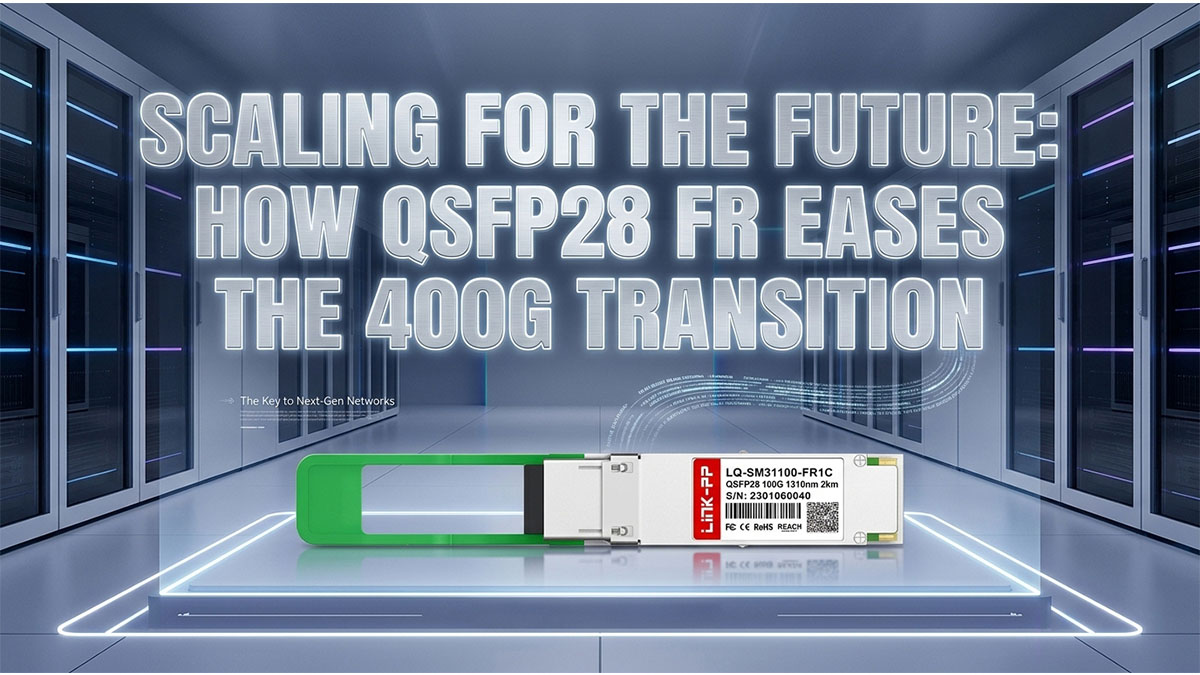
The Economic Link Between 100G Single-Lambda and 400G DR4/FR4
Migrating a network to higher speeds is significantly less expensive when the underlying signaling technologies match perfectly. Because the QSFP28 FR module utilizes the same 100G PAM4 optical lane standard as modern QSFP-DD 400G transceivers, it bridges the gap between different hardware generations. This shared architecture allows legacy 100G equipment to interact directly with high-density 400G switch ports.
This shared signaling approach delivers several specific economic advantages to expanding data centers:
- Shared Modulation: Eliminates the need for expensive optical conversion hardware between generations.
- Design Uniformity: Lowers manufacturing costs for vendors, which drives down retail pricing.
- Longer Lifecycles: Extends the usefulness of existing 100G switch chassis during 400G rollouts.
Breakout Cabling Economics: Connecting 400G Ports to 100G QSFP28 FR
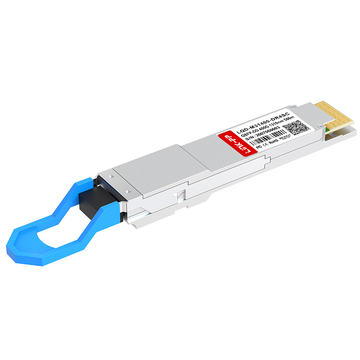
High-density networking environments frequently rely on breakout configurations to maximize port utilization and save space. A single 400G DR4 or FR4 port (such as the QDD-400G-DR4) can be split into four separate optical lanes, with each lane carrying a 100G stream. The QSFP28 FR module is uniquely suited to accept these individual breakouts because it processes data on a single 100G wavelength.
Implementing this layout offers clear financial and logistical benefits across the network fabric:
- Higher Port Density: Packs four times as much data capacity into a single 400G switch slot.
- Fewer Switch Upgrades: Postpones the immediate need to purchase new 100G access switches.
- Reduced Cable Clutter: Decreases the total physical volume of fiber cords inside server racks.
Future-Proofing Data Center Architecture Without Wasting Capital
Building a scalable infrastructure requires investing in hardware that remains useful as performance standards change. Deploying QSFP28 FR modules allows data centers to upgrade their core switching fabrics to 400G in logical, budget-friendly phases. This strategic approach prevents organizations from overhauling their entire physical infrastructure all at once.
Phased upgrades deliver a highly predictable framework for managing long-term capital investments:
- Strategic CapEx Spending: Spreads heavy infrastructure acquisition costs over multiple fiscal quarters.
- Zero Optical Stranding: Ensures purchased 100G optics remain completely viable in hybrid layouts.
- Asset Protection: Guarantees physical single-mode fiber systems support higher speeds for years.
📬 Procurement Risk Management and QSFP28 FR Supply Chain Stability
Securing a reliable stream of optical components is just as vital as analyzing their direct performance metrics. Unpredictable market availability and vendor complications can easily stall critical data center expansion timelines and inflate projected budgets. Establishing a proactive risk management framework around the sourcing process protects organizations from costly infrastructure delays.
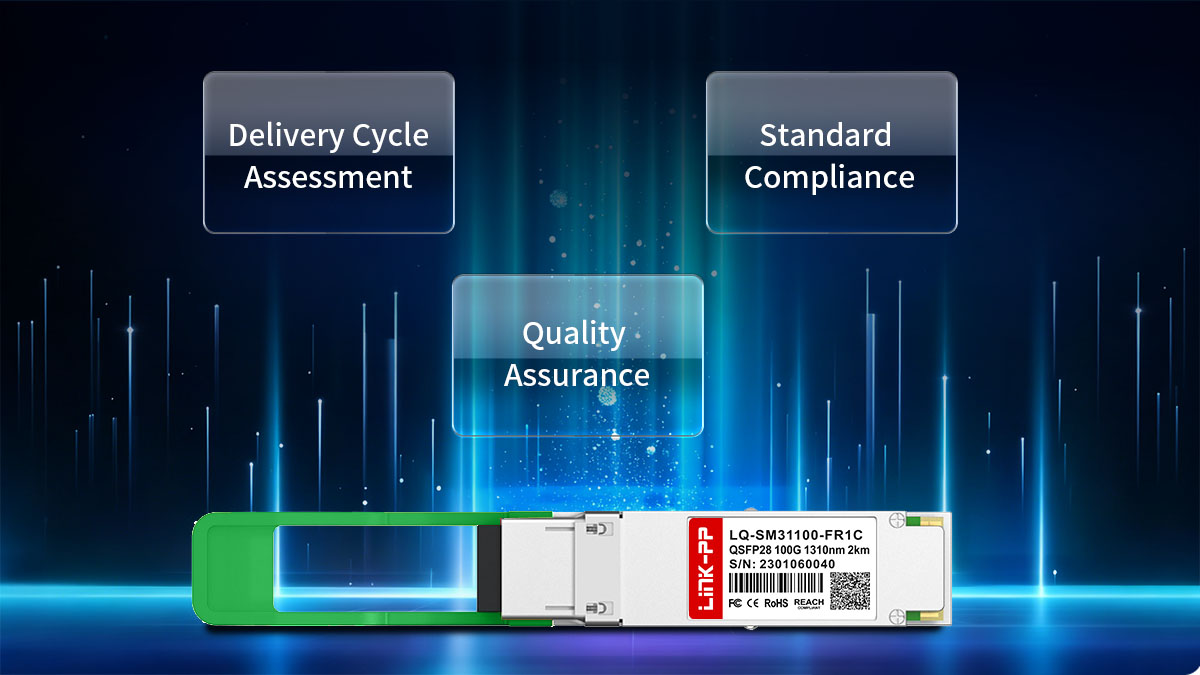
Assessing Market Availability and Lead Times for Single-Lambda Optics
The global supply chain for Single-Lambda transceivers has stabilized significantly due to widespread industry adoption. Because component manufacturers prioritize high-volume production lines for this standard, factory output remains consistently high. This massive scale ensures that technology teams can secure large shipments with highly predictable delivery windows, avoiding the severe multi-month lead times that frequently plague low-volume legacy designs.
Standard Compliance (100G Lambda MSA) and Multi-Vendor Sourcing
Adhering strictly to the 100G Lambda Multi-Source Agreement guarantees that these modules meet precise design and manufacturing benchmarks across different brands. This strict specification baseline means that optics from various certified suppliers will interact flawlessly with the exact same host equipment. Consequently, purchasing channels can seamlessly shift orders between multiple trusted vendors to secure the best pricing and delivery windows.
Quality Assurance: Balancing Low-Cost Third-Party Optics with Reliability
Sourcing budget-friendly third-party optical hardware requires a rigorous validation and quality control protocol. While alternative modules offer incredible upfront cost reductions, choosing unverified vendors can increase the risk of unexpected field failures. Partnering with top-tier third-party suppliers like LINK-PP, who conduct 100% compatibility testing in original host switches protects network uptime without inflating equipment budgets.
Mitigating Inflation and Semiconductor Shortage Risks
The simplified internal structure of the QSFP28 FR module makes it far less vulnerable to global semiconductor supply shocks. Because it relies on fewer optical lasers and a streamlined internal architecture, it uses fewer raw materials than complex legacy modules. This reduced material dependency protects buyers from sudden inflationary price spikes and stabilizes hardware availability during broader economic downturns.
📬 Application-Specific Cost Analysis for QSFP28 FR in Modern Data Centers
The financial impact of implementing new optical modules varies significantly depending on the specific network architecture in use. Different data center environments face unique scaling challenges, traffic patterns, and budgetary constraints. Analyzing how Single-Lambda technology performs across distinct use cases helps organizations pinpoint exactly where they can maximize their return on investment.
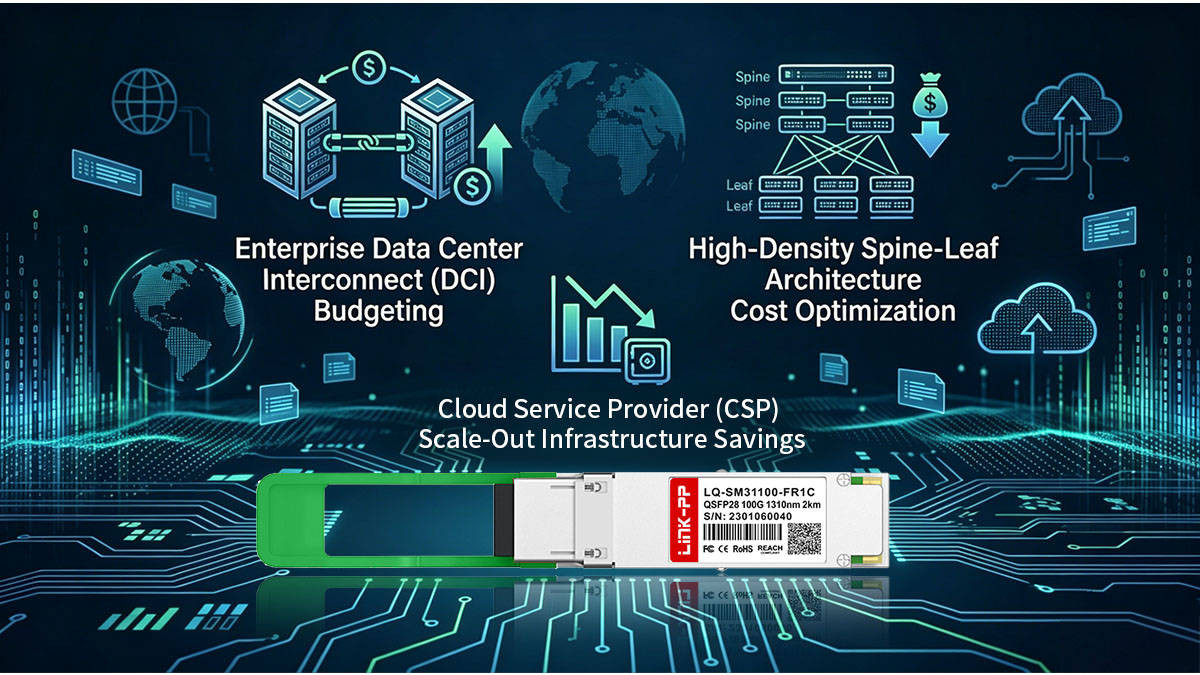
Enterprise Data Center Interconnect (DCI) Budgeting
Enterprise organizations frequently need to bridge data networks between adjacent campus buildings or nearby co-location facilities. The QSFP28 FR module provides a highly reliable, cost-effective link for these intermediate-distance runs without requiring premium long-reach hardware. Reusing existing single-mode fiber infrastructure over these 2-kilometer spans keeps deployment costs incredibly low.
The following factors highlight how these modules optimize standard campus budgeting:
- Eliminates Premium Fees: Bypasses the high cost of buying 10-kilometer LR4 optics.
- Maximizes Fiber Assets: Uses standard duplex fiber cabling already laid underground.
- Lowers Maintenance Overhead: Simplifies the physical network layer to reduce long-term care costs.
High-Density Spine-Leaf Architecture Cost Optimization
Modern data center networks heavily utilize spine-leaf topologies to ensure fast, predictable East-West traffic performance. Because this architecture requires a massive number of active interconnections between switch tiers, the total cost of optics can escalate rapidly. Deploying Single-Lambda modules across these dense internal fabrics directly controls hardware costs while maintaining peak performance.
Implementing this standard across the switching fabric delivers immediate financial advantages:
- Slashes Interconnect Expenses: Lowers the total cost of hundreds of internal switch links.
- Reduces Rack Heat: Decreases the thermal load generated within crowded network rows.
- Eases Cable Routing: Avoids the bulk of multi-fiber ribbon cables by using standard duplex paths.
Cloud Service Provider (CSP) Scale-Out Infrastructure Savings
Cloud service providers operate at a massive hyper-scale level where even minor component inefficiencies can impact millions of dollars in profit. These massive facilities rely on relentless standardization to streamline operations, maximize space, and minimize power draw. The structural efficiency of Single-Lambda technology perfectly matches the aggressive scale-out strategies of modern cloud infrastructure.
For hyper-scale operators, adopting this hardware standard drives major operational improvements:
- Massive Power Reductions: Saves significant electricity costs across tens of thousands of ports.
- Improves Facility PUE: Reduces overall cooling demands to lower data center energy metrics.
- Streamlines Bulk Sourcing: Utilizes mass-market availability to secure steep volume discounts.
Edge Computing and Telecom Central Office Deployments
Edge data centers and telecom central offices operate under strict physical limitations, including tight space constraints and restricted power budgets. These compact environments require highly efficient networking components that do not demand extensive cooling infrastructure. The low power profile and simplified design of the QSFP28 FR module make it an ideal choice for these remote locations.
Deploying these modules at the network edge offers distinct spatial and financial benefits:
- Fits Compact Budgets: Minimizes power consumption in remote facilities with strict limits.
- Resists Thermal Stress: Runs cooler in confined spaces with limited air-cooling setups.
- Enables Easy Upgrades: Seamlessly connects remote edge links directly to incoming 400G backbones.
📬 Summary of the Single-Lambda 100G QSFP28 FR Cost Analysis
Ultimately, the transition to Single-Lambda 100G technology represents a massive shift in data center economics. By consolidating network traffic onto a single wavelength, the QSFP28 FR module successfully minimizes hardware complexity while maximizing structural efficiency. This streamlined design delivers immediate financial relief, drastically lowering initial CapEx budgets and cutting long-term operational costs like power and cooling.
Embracing this standard not only protects your current hardware investments but also builds a highly predictable migration path toward future 400G upgrades. If you are ready to optimize your network infrastructure with reliable, high-performance optical solutions, exploring industry-certified hardware is the perfect next step. Visit the LINK-PP Official Store today to browse our premium selection of MSA-compliant optical transceivers and secure the best value for your upcoming deployment.