The Juniper SFP-25G-SR-C has become a widely referenced 25Gbps optical transceiver in modern high-speed network deployments, especially within data center and enterprise switching environments. From a pricing perspective, it is not just a hardware component but also a cost-sensitive procurement decision that directly impacts overall network budget planning and scalability strategy.
Before evaluating detailed price structures, it is important to understand that the cost of the Juniper SFP-25G-SR-C is influenced by more than just the module itself. Factors such as OEM branding, compatibility certification, supply chain availability, and alternative compatible options all play a significant role in determining the final market price. This makes it essential for IT procurement teams and network architects to approach pricing from a total value perspective rather than a unit-cost-only perspective.
In practical deployment scenarios, organizations often compare original Juniper modules with third-party compatible alternatives to optimize cost efficiency while maintaining performance stability. As a result, pricing discussions around the Juniper SFP-25G-SR-C are closely tied to broader decisions such as lifecycle cost management, interoperability assurance, and large-scale infrastructure planning.
This article will break down the pricing landscape of the Juniper SFP-25G-SR-C in detail, focusing on market price ranges, influencing cost factors, OEM vs compatible trade-offs, and strategic considerations for cost optimization in real-world deployments.
🧽 Overview of Juniper SFP-25G-SR-C
The Juniper SFP-25G-SR-C is a 25Gbps short-range optical transceiver designed for high-speed Ethernet connectivity in modern data center environments. From a functional perspective, it serves as a critical link between switches and servers, enabling stable and high-bandwidth data transmission over multimode fiber. In pricing discussions, its technical positioning directly explains why it is considered a premium-grade networking component.
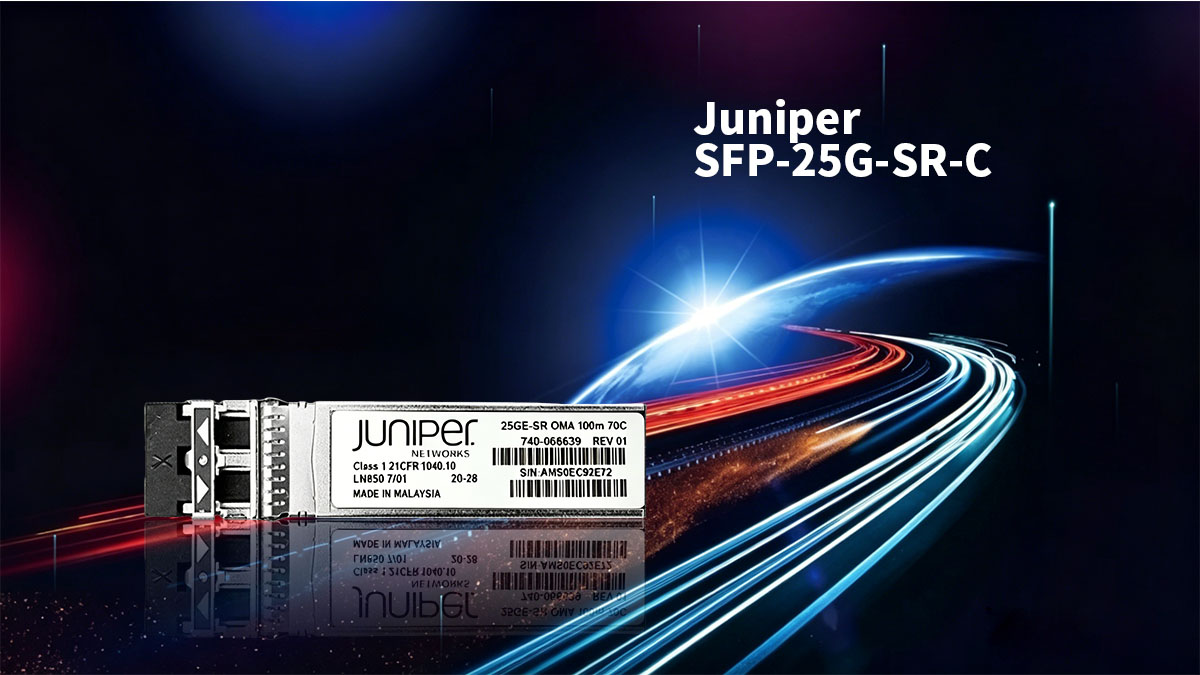
To better understand its market value and cost structure, it is necessary to first break down its core specifications and real-world deployment role. These elements strongly influence both OEM pricing and compatible module alternatives.
Core Specifications and Functional Role
The Juniper SFP-25G-SR-C is engineered to meet 25GbE standards with optimized performance for short-distance optical transmission. Its specifications define not only its technical capability but also its baseline pricing level in the market.
Before listing the key specifications, it is important to note that these parameters directly affect interoperability, deployment distance, and compatibility with Juniper switching platforms.
- Data rate: 25Gbps (25 Gigabit Ethernet compliant)
- Form factor: SFP28 hot-pluggable optical module
- Transmission medium: Multimode fiber (MMF)
- Typical reach: up to 70m on OM3 fiber, up to 100m on OM4 fiber
- Wavelength: 850nm VCSEL-based transmission technology
- Interface: Duplex LC connector
These specifications explain why the module is widely used in high-density switching environments. After understanding the technical baseline, it becomes easier to see how pricing is influenced by optical component quality, certification requirements, and OEM validation processes.
In addition, the reliance on VCSEL laser technology and strict compatibility alignment with Juniper platforms adds to its production and validation cost, which is often reflected in its higher OEM pricing compared to generic alternatives.
Typical Deployment Scenarios
The Juniper SFP-25G-SR-C is primarily deployed in environments where high bandwidth, low latency, and scalable architecture are required. Its pricing is also indirectly shaped by these enterprise-grade use cases, as demand is driven by data center expansion and cloud infrastructure growth.
Before listing typical applications, it is important to highlight that this module is not designed for long-distance transmission, but rather optimized for intra-rack or inter-rack connectivity.
Common deployment scenarios include:
- Data center leaf-spine network architectures
- Server-to-switch connectivity in virtualization environments
- High-performance computing (HPC) clusters
- Enterprise aggregation and access layer upgrades
- Cloud infrastructure interconnects requiring dense 25G links
These use cases demonstrate that the Juniper SFP-25G-SR-C is not a generic optical module but a specialized component in high-performance networking environments. This specialization contributes to its stable demand and relatively premium pricing structure.
From a cost perspective, deployment scale also plays a key role. Large-scale data center rollouts typically require bulk procurement, which directly influences negotiation leverage, pricing variability, and total cost optimization strategies discussed later in this article.
🧽 Current Price Range and Market Positioning
The Juniper SFP-25G-SR-C sits in a clearly segmented pricing tier within the 25G optical transceiver market, where cost differences are primarily driven by OEM branding, compatibility assurance, and certification requirements. From a market perspective, its pricing is positioned as a premium OEM reference point, while compatible alternatives create a wide cost-performance spectrum below it.
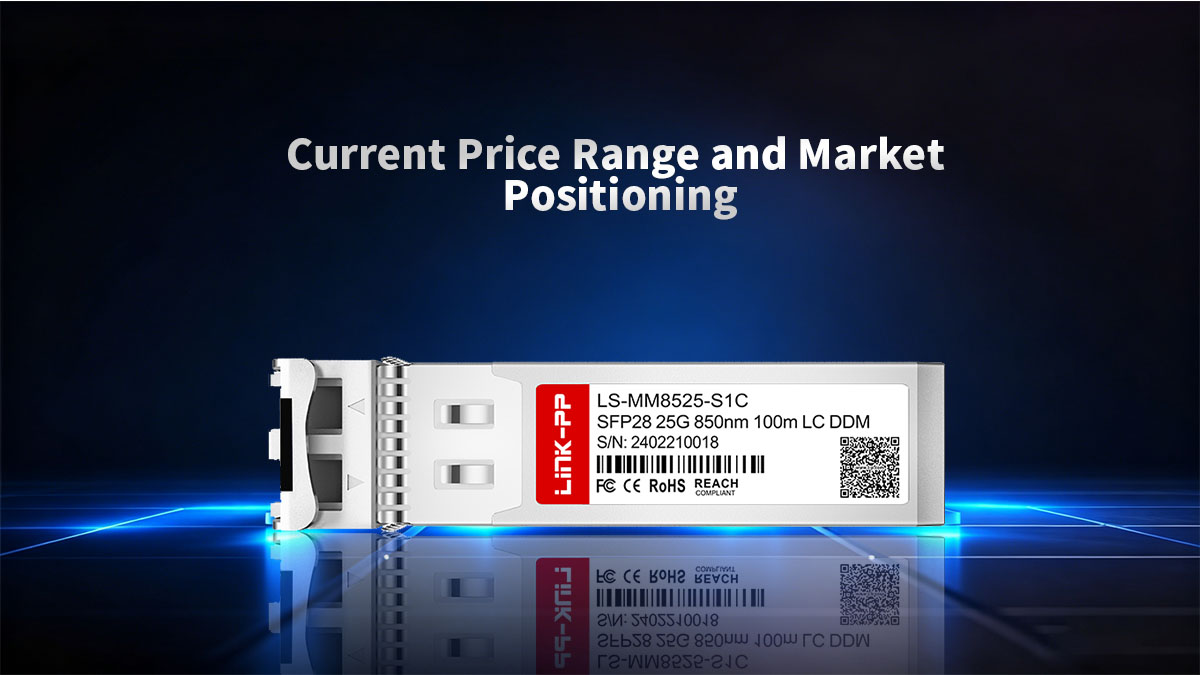
To understand its real market positioning, it is necessary to separate OEM pricing benchmarks from third-party compatible module pricing, as both coexist in the same deployment ecosystems but serve different procurement strategies.
OEM Pricing Benchmarks
The original Juniper SFP-25G-SR-C is generally positioned in the upper pricing tier of 25G SFP28 optics due to strict validation and vendor certification requirements. Its pricing reflects not only hardware cost but also ecosystem assurance within Juniper networks.
Before listing typical price characteristics, it is important to note that OEM pricing is often influenced by enterprise support agreements and channel distribution models rather than raw component cost.
Common pricing characteristics of OEM modules include:
- Premium unit cost compared to multi-vendor optics
- Pricing variability depending on region and authorized reseller
- Higher cost bundled with support, warranty, and firmware assurance
- Stable pricing structure with limited discount flexibility
These factors explain why OEM modules are often selected in environments where vendor support contracts and strict interoperability guarantees are prioritized over cost efficiency. As a result, OEM pricing serves as the benchmark ceiling for the broader market.
Third-Party Compatible Pricing Trends
Compatible versions of the Juniper SFP-25G-SR-C significantly reshape the market price landscape by offering lower-cost alternatives while maintaining functional equivalence in many deployments. These modules are widely used in cost-optimized data center expansions.
Before listing pricing trends, it is important to highlight that compatible modules vary in quality tiers, which directly affects pricing dispersion.
Typical pricing trends for compatible modules include:
- Substantially lower unit cost compared to OEM (often 50–80% lower)
- Bulk pricing discounts for large-scale deployments
- Price variation depending on coding, certification, and vendor testing level
- Competitive pressure among third-party optical manufacturers
These pricing dynamics make compatible modules particularly attractive for hyperscale and enterprise environments focused on cost optimization, especially in large 25G rollouts where per-port savings scale significantly.
Price Fluctuation Factors
The market price of both OEM and compatible Juniper SFP-25G-SR-C modules is not static and is influenced by several external and structural factors. Understanding these variables is essential for accurate procurement forecasting and budgeting.
Before listing key drivers, it is important to recognize that optical transceiver pricing is highly sensitive to global supply chain and demand cycles.
Key factors influencing price fluctuations include:
- Semiconductor and VCSEL component supply constraints
- Demand cycles driven by cloud data center expansion
- Regional distribution and logistics costs
- Inventory availability across authorized and third-party channels
- Currency exchange rate fluctuations impacting global sourcing
These factors collectively create periodic price volatility, especially during periods of accelerated infrastructure upgrades or supply chain disruptions. As a result, organizations often monitor both OEM and compatible market segments to optimize procurement timing and cost efficiency.
🧽 Key Factors Influencing Juniper SFP-25G-SR-C Price
The pricing of the Juniper SFP-25G-SR-C is not determined by a single cost element but by a combination of hardware engineering, certification requirements, brand ecosystem value, and global supply chain dynamics. From a procurement perspective, understanding these factors is essential to explain why prices vary significantly between OEM and compatible markets.
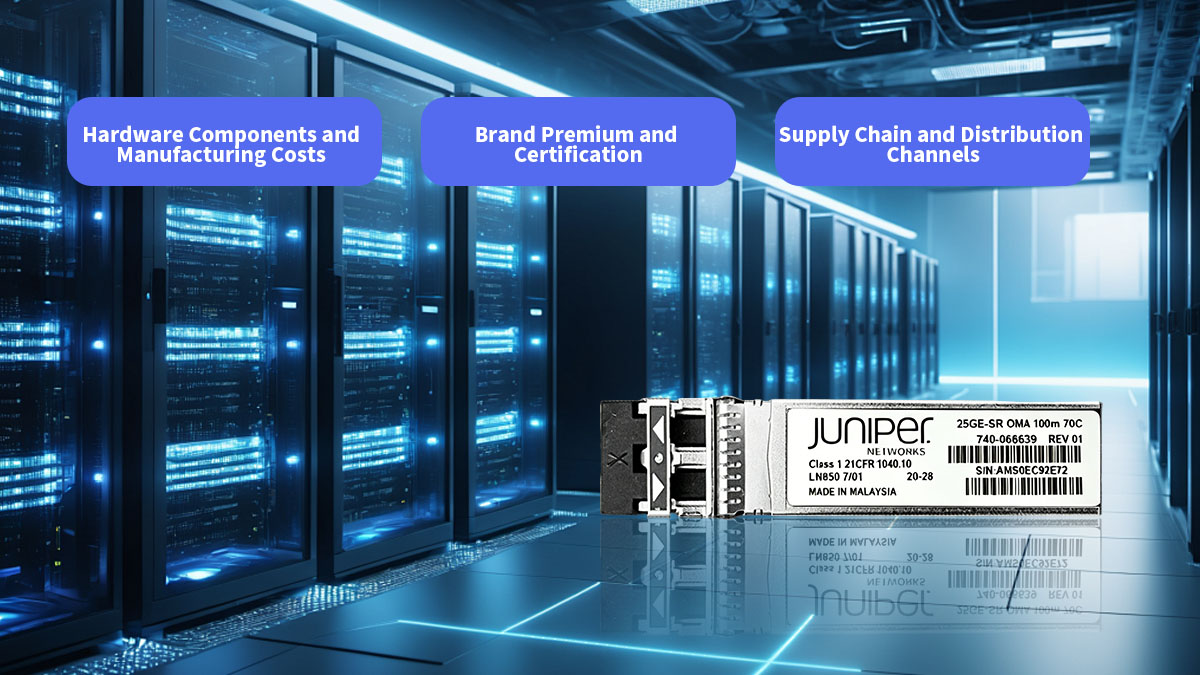
Before breaking down each factor, it is important to emphasize that optical transceiver pricing is fundamentally a multi-layer cost structure rather than a fixed manufacturing cost plus margin model.
Hardware Components and Manufacturing Costs
The core physical components inside the Juniper SFP-25G-SR-C directly define its baseline production cost, which forms the foundation of its market pricing. These components are highly sensitive to precision manufacturing and optical performance requirements.
Before listing the key cost drivers, it is important to note that even minor variations in optical quality can significantly affect yield rates and final unit pricing.
Key hardware cost drivers include:
- VCSEL laser diode quality and wavelength stability
- Optical sub-assembly precision and alignment process
- High-speed signal processing components
- PCB design complexity for 25Gbps signal integrity
- Yield loss during manufacturing and testing
These elements increase production complexity, especially at 25Gbps speeds where signal integrity tolerances are much tighter than lower-speed modules. As a result, manufacturing cost efficiency plays a major role in final pricing differences between OEM and compatible products.
Brand Premium and Certification
Beyond physical hardware, a significant portion of the Juniper SFP-25G-SR-C price is attributed to its brand ecosystem value and certification assurance. This is particularly important in enterprise environments where network stability is mission-critical.
Before listing the specific pricing impacts, it is important to understand that certification ensures guaranteed interoperability within Juniper networking systems.
Key pricing influences from branding and certification include:
- Juniper platform validation and interoperability testing
- Firmware compatibility assurance with Juniper switches
- Enterprise-grade warranty and support coverage
- Reduced operational risk in production environments
- Higher trust value in mission-critical deployments
These factors create a pricing premium compared to non-branded alternatives, as organizations are effectively paying for reduced integration risk and vendor-backed reliability guarantees.
Supply Chain and Distribution Channels
The final major pricing driver for the Juniper SFP-25G-SR-C is the structure of its global supply chain and distribution ecosystem. This factor introduces variability in pricing even for identical hardware.
Before outlining key influences, it is important to recognize that optical transceivers often pass through multiple distribution layers before reaching end users.
Key supply chain factors include:
- Authorized distributor pricing structures vs independent channels
- Regional inventory availability and stock pressure
- Cross-border logistics and import/export costs
- Lead time variability impacting urgent procurement pricing
- Channel margin stacking across resellers
These distribution dynamics explain why the same module can have different price points across regions and suppliers. In tight supply conditions, pricing can also temporarily increase due to limited availability, while stable inventory environments often lead to more competitive pricing.
🧽 Original vs Compatible Modules: Price-to-Value Analysis
The comparison between original Juniper SFP-25G-SR-C modules and compatible alternatives is a core decision point in procurement strategy, especially when organizations try to balance upfront cost reduction with long-term network stability. From a pricing perspective, the key difference is not only unit cost but also how value is distributed across reliability, support, and lifecycle risk.
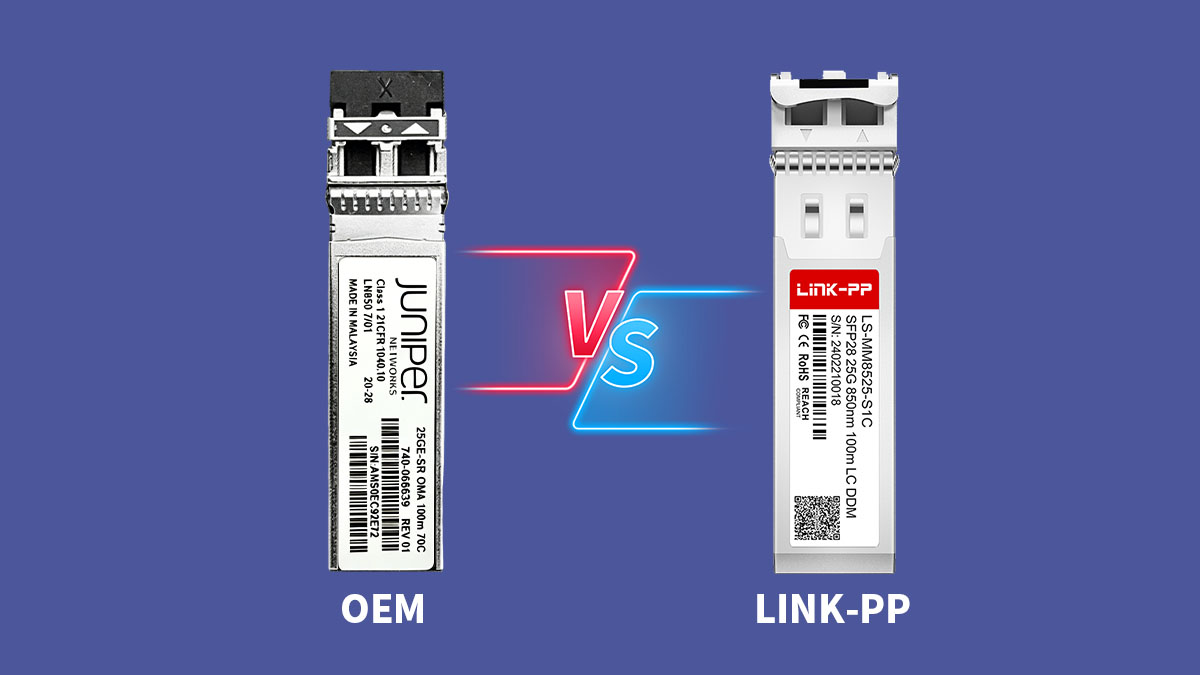
Before introducing detailed comparisons, it is important to note that both original and compatible modules generally meet 25GbE transmission requirements. The divergence appears mainly in validation depth, ecosystem integration, and operational assurance.
Cost Comparison Breakdown
The most direct and visible difference between original and compatible modules is pricing. However, cost evaluation should also include scalability effects in large deployments, where small per-unit differences become significant at scale.
Before viewing the comparison table, it is useful to understand that OEM pricing reflects vendor assurance and ecosystem certification, while compatible pricing focuses on cost efficiency and broader market availability.
| Comparison Dimension |
Original Juniper SFP-25G-SR-C |
Compatible Modules |
| Unit Price Level |
Higher, premium positioning |
Lower, cost-optimized |
| Bulk Deployment Cost |
Higher total investment |
Significant cost savings at scale |
| Pricing Flexibility |
Limited discount range |
Highly competitive pricing options |
| Supply Sources |
Authorized channels only |
Multiple global suppliers |
After reviewing these differences, it becomes clear that compatible modules provide strong cost advantages, especially in large-scale data center deployments. However, OEM modules maintain a stable premium due to controlled distribution and validated ecosystem integration.
Performance and Reliability Considerations
While pricing is a key factor, performance consistency and reliability often determine the real economic value of optical modules over time. Even small differences in stability can lead to different maintenance and operational costs.
Before comparing in detail, it is important to recognize that both module types are designed to support the same 25GbE standard, but validation and testing depth differ significantly.
| Performance Dimension |
Original Juniper SFP-25G-SR-C |
Compatible Modules |
| Interoperability Testing |
Fully validated by Juniper |
Vendor-dependent testing |
| Firmware Compatibility |
Guaranteed within Juniper ecosystem |
May vary by supplier coding |
| Failure Rate Consistency |
Lower variability |
Depends on manufacturing quality |
| Network Stability |
High consistency in enterprise environments |
Varies by brand and batch |
These differences show that original modules prioritize predictable performance in mission-critical environments, while compatible modules may introduce variability depending on vendor quality control. As a result, reliability considerations often influence whether cost savings are justified in specific deployment layers.
Risk Assessment and Trade-offs
Choosing between original and compatible modules ultimately involves balancing financial savings against operational risk exposure. This trade-off becomes especially important in large-scale or highly sensitive network infrastructures.
Before reviewing the comparison table, it is important to understand that risk is often not immediate but accumulates over the lifecycle of deployment through maintenance, troubleshooting, and downtime impact.
| Risk Dimension |
Original Juniper SFP-25G-SR-C |
Compatible Modules |
| Operational Risk |
Very low due to full validation |
Moderate, varies by vendor |
| Support Coverage |
Full Juniper ecosystem support |
Limited or third-party support |
| Troubleshooting Complexity |
Lower, standardized behavior |
Higher variability in diagnostics |
| Lifecycle Predictability |
High stability over time |
Dependent on supplier consistency |
After analyzing these trade-offs, it becomes clear that OEM modules are typically favored in core network layers where downtime cost is high, while compatible modules are often used in access or large-scale expansion layers to optimize budget efficiency.
🧽 How to Evaluate Cost Efficiency Beyond Price
Evaluating the Juniper SFP-25G-SR-C purely based on unit price often leads to incomplete procurement decisions. In real network environments, true cost efficiency is determined by a combination of lifecycle performance, operational stability, and infrastructure scalability. Therefore, a broader evaluation framework is necessary to understand the real economic impact of optical module selection.
Before breaking down the evaluation dimensions, it is important to emphasize that cost efficiency in networking is typically measured over time, not at the point of purchase.
Total Cost of Ownership (TCO)
Total cost of ownership is the most comprehensive method to evaluate whether a module is truly cost-efficient. It considers not only acquisition cost but also operational expenses across the entire deployment lifecycle.
Before reviewing the key elements, it is important to understand that low upfront pricing does not always translate into lower long-term costs.
Key components of TCO evaluation include:
- Initial purchase cost per transceiver
- Maintenance and replacement frequency over time
- Downtime costs caused by potential module failure
- Operational labor cost for troubleshooting and replacement
- Network upgrade and scalability expenses
After considering these factors, it becomes clear that modules with higher upfront pricing may still offer better long-term value if they reduce failure rates and maintenance overhead. Conversely, lower-cost modules may increase hidden operational expenses if reliability is inconsistent.
Compatibility and Integration Efficiency
Another important dimension of cost efficiency is how smoothly the module integrates into the existing network environment. Poor compatibility can lead to additional engineering effort and increased operational cost.
Before listing key evaluation points, it is important to note that compatibility is not only about physical connectivity but also about system-level recognition and firmware alignment.
Key compatibility factors include:
- Seamless recognition by Juniper switching platforms
- Accurate vendor coding and EEPROM configuration
- Absence of system alarms or compatibility warnings
- Stability under firmware upgrades and system changes
- Interoperability in mixed-vendor network environments
When compatibility is high, deployment becomes faster and less labor-intensive, reducing both initial setup cost and long-term maintenance complexity. Poor compatibility, on the other hand, can introduce hidden engineering overhead that offsets initial price savings.
Supplier Reliability and Quality Assurance
Supplier reliability plays a critical role in determining whether a lower-priced module truly delivers cost efficiency. A stable supply chain reduces operational risk and ensures consistent performance across deployments.
Before reviewing the evaluation criteria, it is important to highlight that procurement risk often originates from inconsistent supplier quality rather than the product itself.
Key supplier evaluation factors include:
- Quality assurance and production testing standards
- Warranty coverage and replacement policies
- Consistency of product batches across orders
- Industry certifications such as ISO or RoHS compliance
- Responsiveness of technical and after-sales support
Reliable suppliers reduce hidden costs associated with defective units, troubleshooting delays, and inconsistent performance. In contrast, unstable supply sources may introduce variability that increases long-term operational risk and total cost.
🧽 Market Availability and Sourcing Insights
The availability of the Juniper SFP-25G-SR-C in the global market directly impacts pricing stability, procurement flexibility, and deployment timelines. From a sourcing perspective, understanding where and how these modules are supplied helps organizations reduce lead time, control costs, and avoid supply chain risks.
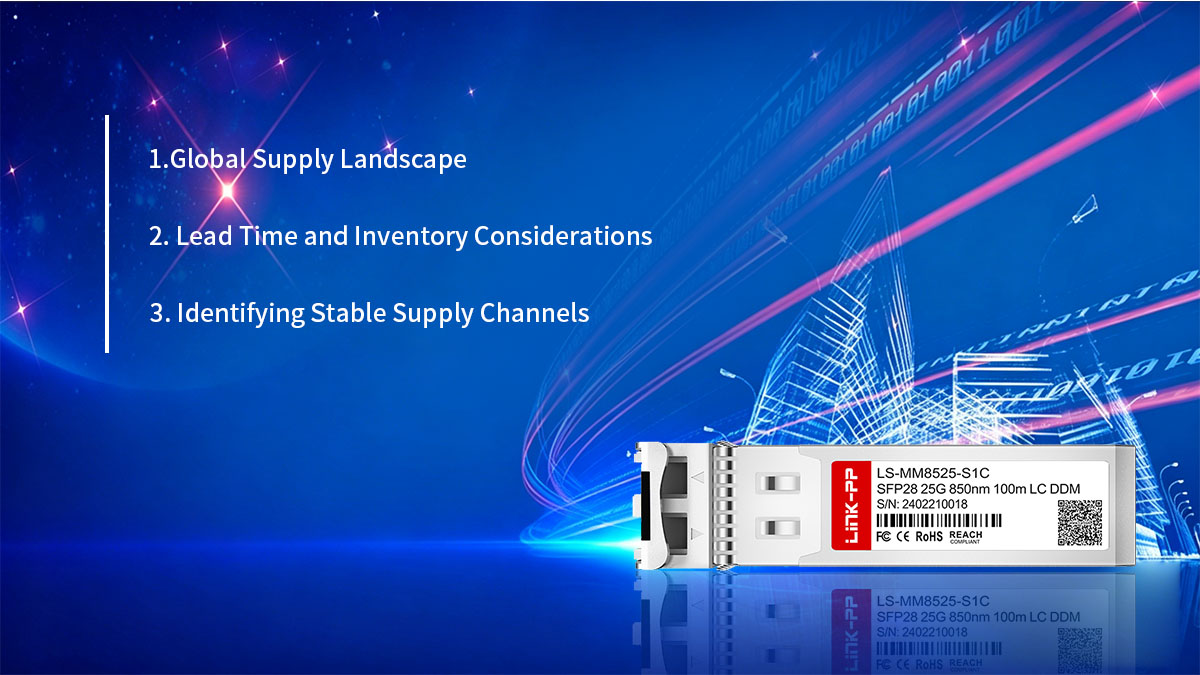
Before diving into specific factors, it is important to recognize that optical transceivers are part of a globally distributed supply ecosystem, where manufacturing, inventory, and distribution are often separated across regions.
Global Supply Landscape
The Juniper SFP-25G-SR-C is supported by a mature global supply network that includes both OEM distribution channels and third-party manufacturing ecosystems. This dual supply structure plays a major role in price diversity and availability.
Before listing the key supply characteristics, it is important to note that production is typically concentrated in specific regions, while demand is globally distributed.
Key aspects of the global supply landscape include:
- Manufacturing primarily concentrated in Asia, especially in established optical component hubs
- OEM modules distributed through authorized regional partners
- Compatible modules supplied by a wide range of global manufacturers
- Strong demand driven by cloud computing and data center expansion
- Mature logistics networks enabling international distribution
This global structure ensures that the Juniper SFP-25G-SR-C remains widely available, but it also introduces pricing variation depending on sourcing region and supplier type.
In practice, organizations sourcing from global suppliers can benefit from competitive pricing, but must also evaluate logistics, import costs, and delivery timelines.
Lead Time and Inventory Considerations
Lead time is a critical factor in procurement planning, especially for large-scale or time-sensitive deployments. Even when pricing is favorable, delays in availability can impact project timelines and overall cost efficiency.
Before reviewing key considerations, it is important to understand that lead time is closely tied to inventory levels and production capacity.
Key factors affecting lead time and inventory include:
- Stock availability in local vs international warehouses
- OEM production cycles and order fulfillment timelines
- Ready-to-ship inventory from compatible suppliers
- Urgent demand spikes causing temporary shortages
- Custom coding or configuration requirements
Short lead times are typically associated with in-stock compatible modules, while OEM modules may require longer fulfillment cycles depending on distribution channels. This difference can influence sourcing decisions when deployment speed is a priority.
Identifying Stable Supply Channels
Selecting a reliable supply channel is essential for maintaining consistent pricing, product quality, and delivery performance. Not all suppliers provide the same level of stability, even if the product specifications appear identical.
Before listing evaluation criteria, it is important to emphasize that supply stability directly affects long-term procurement efficiency and risk management.
Key indicators of stable supply channels include:
- Consistent inventory availability across multiple procurement cycles
- Transparent pricing structures without extreme fluctuations
- Proven track record in optical transceiver supply
- Clear warranty and return policies
- Ability to support large-volume and repeat orders
Stable supply channels reduce the risk of unexpected shortages, inconsistent product quality, and pricing volatility. In contrast, unreliable suppliers may introduce hidden costs through delays, replacements, and operational disruptions.
🧽 Cost Optimization Strategies for Bulk Deployment
For large-scale deployments of the Juniper SFP-25G-SR-C, cost optimization is not achieved through single-unit price reduction alone, but through strategic planning across procurement, standardization, and inventory management. In high-density environments such as data centers, even small per-unit savings can translate into substantial overall budget impact.
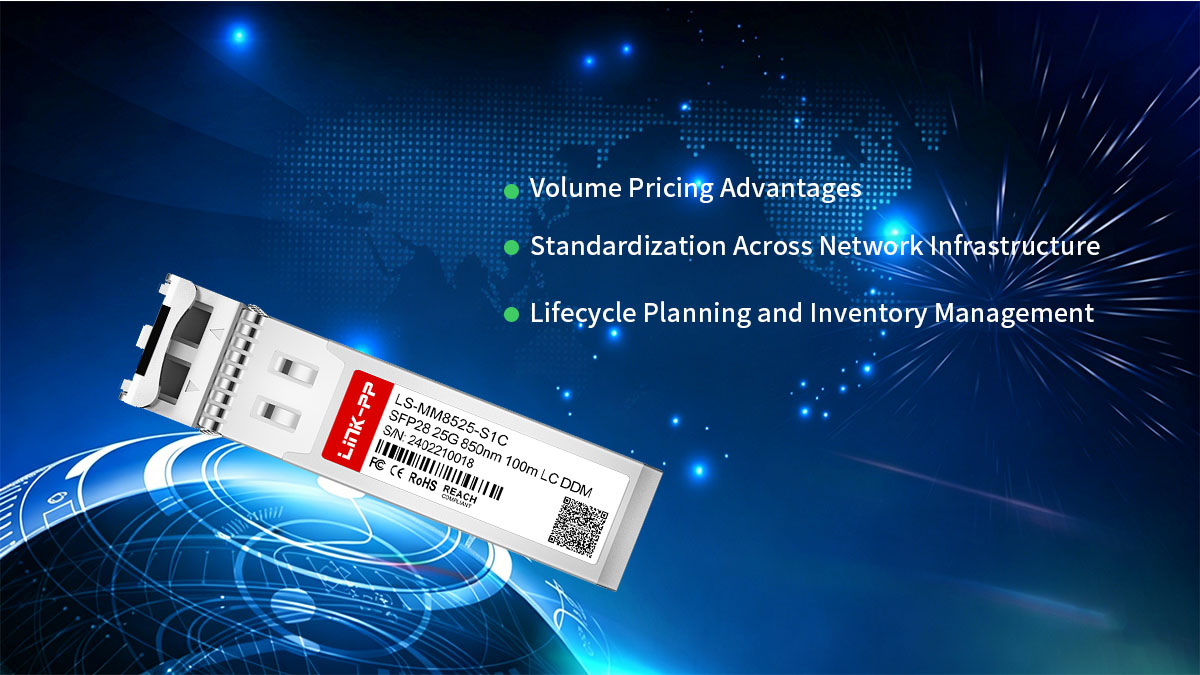
Before exploring specific strategies, it is important to understand that bulk deployment introduces both opportunities for cost reduction and risks related to over-purchasing or inconsistent supply.
Volume Pricing Advantages
One of the most direct ways to optimize cost in bulk deployment is leveraging volume-based pricing. Suppliers typically offer more competitive rates when order quantities increase, especially in large infrastructure projects.
Before outlining key approaches, it is important to recognize that pricing flexibility varies significantly between OEM vendors and third-party suppliers.
Key volume pricing strategies include:
- Negotiating tiered discounts based on order quantity
- Leveraging long-term procurement agreements for better pricing stability
- Consolidating orders to increase bargaining power
- Comparing multiple suppliers to identify competitive pricing ranges
- Aligning procurement cycles with supplier inventory availability
These strategies help reduce the average cost per unit, especially in deployments involving hundreds or thousands of transceivers. However, pricing advantages should always be balanced with supplier reliability and product consistency.
Standardization Across Network Infrastructure
Standardizing optical modules across the network is another key strategy for improving cost efficiency in bulk deployments. A unified approach reduces complexity and improves operational consistency.
Before listing the benefits, it is important to note that excessive variation in module types can increase both procurement and maintenance costs.
Key standardization benefits include:
- Reduced SKU diversity simplifying procurement processes
- Improved compatibility across network devices
- Easier spare part management and inventory control
- Lower training and operational complexity for IT teams
- Increased purchasing volume for specific models, enabling better pricing
By minimizing variation in transceiver models, organizations can streamline both deployment and maintenance, which contributes to long-term cost savings beyond initial procurement.
Additionally, standardization enhances scalability, making future network expansion more predictable and cost-efficient.
Lifecycle Planning and Inventory Management
Effective lifecycle planning is essential to avoid unnecessary costs associated with overstocking, shortages, or unplanned replacements. Bulk deployment requires a forward-looking approach to inventory and usage patterns.
Before outlining key practices, it is important to understand that poor inventory planning can negate any upfront cost savings achieved during procurement.
Key lifecycle and inventory strategies include:
- Forecasting demand based on network growth projections
- Maintaining optimal spare inventory levels to reduce downtime risk
- Avoiding excessive stock that may become obsolete
- Aligning procurement with upgrade cycles and technology transitions
- Tracking module performance and failure rates for better planning
These practices help ensure that resources are used efficiently while minimizing waste and operational disruption. Proper lifecycle management also supports better budgeting and long-term financial planning.
🧽 Common Pricing Pitfalls and How to Avoid Them
When evaluating the price of the Juniper SFP-25G-SR-C, many organizations focus heavily on upfront cost and overlook hidden risks that can increase total expenditure over time. In practice, pricing pitfalls often arise from incomplete evaluation criteria, leading to higher long-term costs despite initial savings.
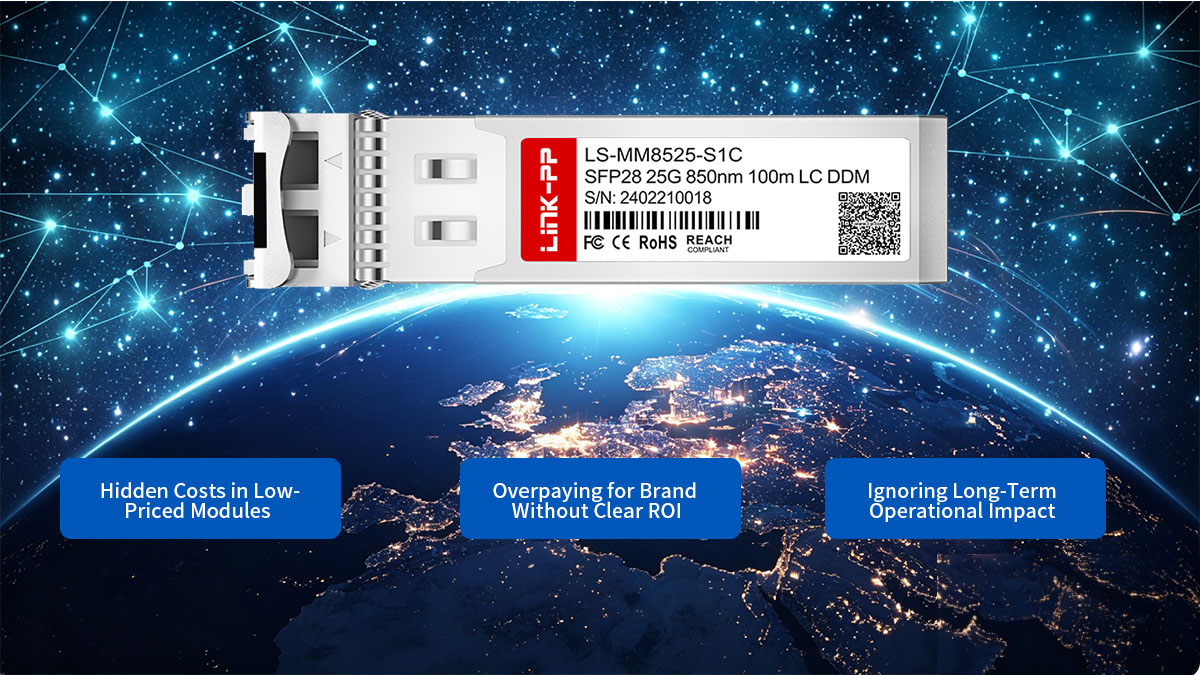
Before examining specific pitfalls, it is important to understand that cost optimization requires balancing price, reliability, and operational impact rather than prioritizing the lowest available offer.
Hidden Costs in Low-Priced Modules
Low-priced modules may appear attractive at first glance, but they can introduce indirect costs that are not immediately visible during procurement. These hidden costs often emerge during deployment and operation.
Before listing the common hidden risks, it is important to recognize that price alone does not reflect product quality or long-term stability.
Common hidden cost factors include:
- Higher failure rates leading to frequent replacements
- Limited or unclear warranty coverage
- Inconsistent performance across different batches
- Compatibility issues causing deployment delays
- Increased troubleshooting and maintenance effort
These issues can significantly increase operational expenses, offsetting any initial savings from lower pricing. In high-density environments, even a small increase in failure rate can lead to noticeable cost escalation.
To avoid these pitfalls, organizations should evaluate product quality and supplier reliability alongside pricing, ensuring that cost savings do not compromise network stability.
Overpaying for Brand Without Clear ROI
While OEM modules provide strong assurance in terms of compatibility and support, not all deployments require the same level of vendor-backed validation. In some cases, organizations may pay a premium without realizing proportional value.
Before listing key considerations, it is important to emphasize that pricing should align with actual network requirements rather than defaulting to brand preference.
Common scenarios of overpayment include:
- Deploying OEM modules in non-critical network layers
- Paying for support features that are not actively utilized
- Ignoring high-quality compatible alternatives with proven performance
- Applying uniform procurement strategy across all network segments
- Overestimating risk in controlled or well-tested environments
These situations lead to unnecessary budget allocation without delivering measurable operational benefits. A more balanced approach involves matching module type to deployment criticality.
By aligning purchasing decisions with real performance requirements, organizations can avoid excessive spending while maintaining necessary reliability levels.
Ignoring Long-Term Operational Impact
A common pricing mistake is focusing solely on initial acquisition cost while ignoring long-term operational implications. This approach can result in higher total cost of ownership over the lifecycle of the network.
Before outlining the key risks, it is important to understand that operational impact often accumulates gradually rather than appearing immediately.
Key long-term considerations include:
- Downtime costs associated with module instability
- Labor costs for maintenance and replacement
- Impact on network performance and service quality
- Scalability limitations affecting future expansion
- Compatibility issues during firmware or infrastructure upgrades
Ignoring these factors can lead to higher cumulative costs than anticipated, especially in large-scale deployments. Short-term savings may be outweighed by ongoing operational inefficiencies.
To mitigate these risks, organizations should incorporate lifecycle evaluation into their pricing analysis, ensuring that procurement decisions support both immediate and long-term network objectives.
🧽 Conclusion
When evaluating the Juniper SFP-25G-SR-C price, the key takeaway is that cost should never be assessed in isolation. A well-informed decision requires balancing OEM pricing benchmarks, compatible module alternatives, performance reliability, and total cost of ownership across real deployment scenarios. By understanding how pricing is shaped and what drives value, organizations can make more strategic and cost-efficient choices in 25G network infrastructure planning.
To summarize the most important insights from this guide, the following points provide a clear and actionable reference:
- Juniper SFP-25G-SR-C pricing is influenced by hardware quality, certification, and supply chain dynamics
- OEM modules offer maximum compatibility and stability but come at a premium cost
- Compatible modules provide significant cost savings, especially in large-scale deployments
- Total cost of ownership, not just unit price, determines real cost efficiency
- Supplier reliability and inventory stability are critical for long-term procurement success
- A hybrid deployment strategy often delivers the best balance between cost and performance
These key points highlight that effective cost optimization is achieved through structured evaluation rather than simply choosing the lowest-priced option. Aligning module selection with network requirements and deployment scale is essential for maximizing return on investment.
For organizations looking to streamline procurement while maintaining high performance and compatibility standards, sourcing from a reliable and experienced supplier is equally important. The LINK-PP Official Store provides a wide range of tested optical transceiver solutions, including compatible options for Juniper SFP-25G-SR-C, helping enterprises achieve both cost efficiency and deployment confidence in modern high-speed networks.