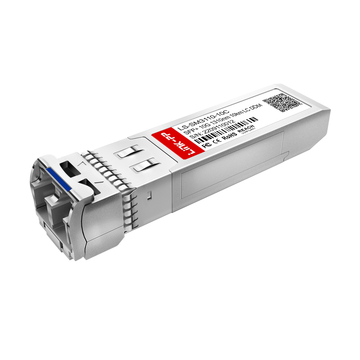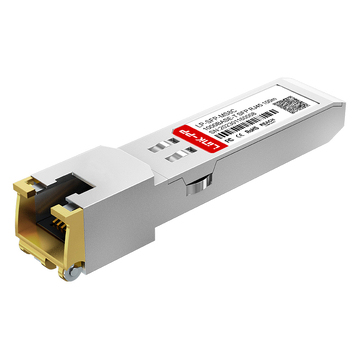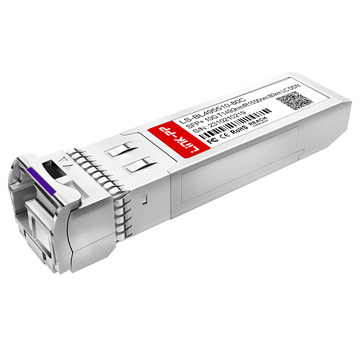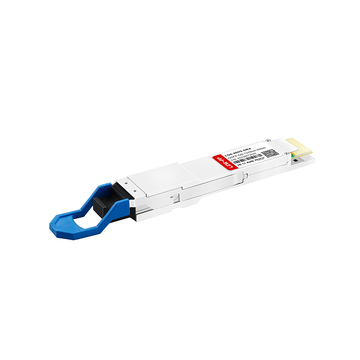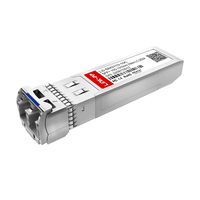
The Ruijie XG-SFP-LR-SM1310 datasheet provides a concise yet critical overview of this 10G SFP+ optical transceiver, helping users quickly determine whether it meets their network requirements. For engineers and IT planners, understanding the datasheet is not just about reading specifications—it directly impacts deployment success, link stability, and long-term network performance.
At its core, this module is designed for 10GBASE-LR single-mode fiber transmission at 1310nm, supporting distances of up to 10km. However, beyond these headline specs, the datasheet also reveals key details such as optical power ranges, receiver sensitivity, interface standards, and environmental limits—all of which influence real-world compatibility and reliability.
In practice, many network issues—such as link failure, unexpected attenuation, or interoperability problems—can often be traced back to misinterpreting datasheet parameters. This makes it essential to go beyond surface-level specs and understand how each parameter translates into deployment decisions.
This guide is structured to break down the Ruijie XG-SFP-LR-SM1310 datasheet into clear, actionable insights. It explains not only what each specification means, but also how to apply that information in enterprise networks, data centers, and fiber infrastructure planning scenarios.
🏴 Overview of Ruijie XG-SFP-LR-SM1310 Datasheet
The Ruijie XG-SFP-LR-SM1310 datasheet provides a high-level definition of the module’s role, standards compliance, and core capabilities, helping users quickly determine its suitability for 10G single-mode deployments. It acts as the foundation for understanding both technical specifications and real-world application scenarios.
Product Definition and Positioning
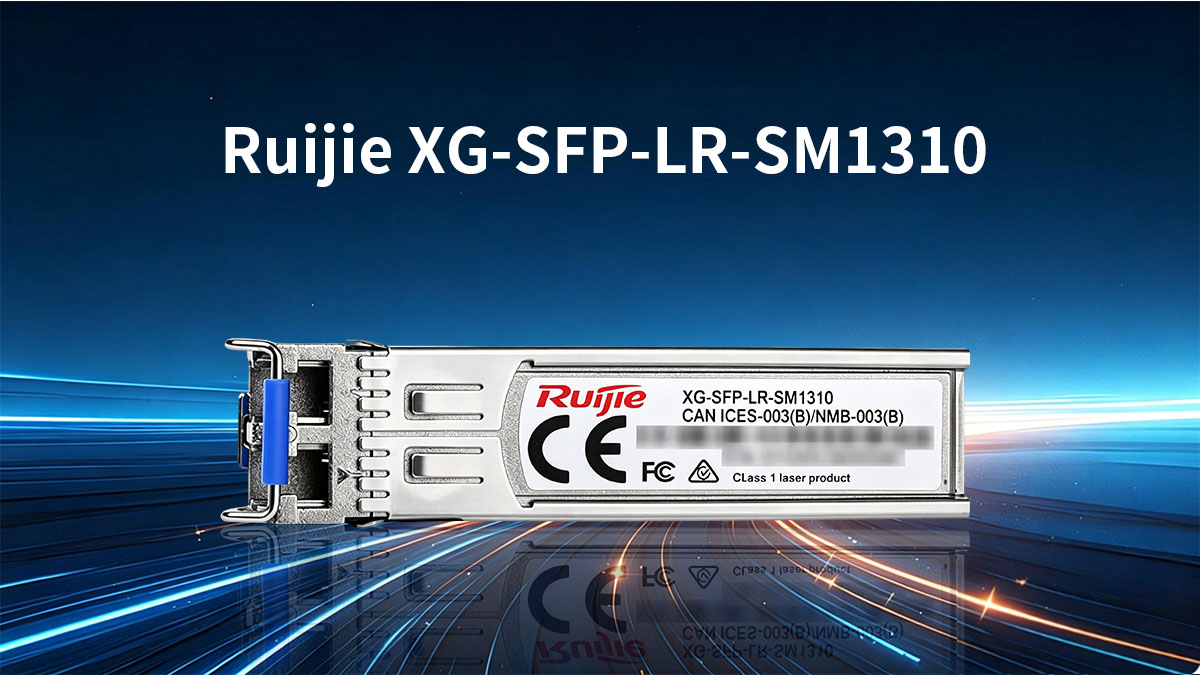
The Ruijie XG-SFP-LR-SM1310 is positioned as a 10G long-range optical transceiver designed for stable data transmission over single-mode fiber, making it suitable for enterprise and data center environments.
- Designed for 10G Ethernet applications using SFP+ form factor
- Supports long-distance transmission up to 10km over single-mode fiber (SMF)
- Operates at a 1310nm wavelength, optimized for low attenuation over long distances
- Commonly deployed in aggregation, core, and interconnection layers
- Aligns with industry-standard LR (Long Reach) optical module classification
This positioning highlights that the module is not intended for multimode short-range optics use cases, but rather for scenarios where distance and signal integrity over SMF are critical factors.
Key Standards and Protocol Compliance
The datasheet confirms that the module adheres to widely accepted industry standards, ensuring interoperability and predictable performance across different network environments.
- Complies with IEEE 802.3ae 10GBASE-LR standard for 10Gbps transmission
- Supports SFP+ Multi-Source Agreement (MSA), enabling multi-vendor compatibility
- Includes Digital Diagnostic Monitoring (DDM) for real-time operational insights
- Meets standard electrical interface specifications for SFP+ modules
- Compatible with typical network operating systems that support DOM/DDM features
These standards are essential because they ensure the module can integrate seamlessly with switches, routers, and network devices from different vendors without requiring proprietary adaptations.
🏴 Core Technical Specifications Explained
The core technical specifications in the Ruijie XG-SFP-LR-SM1310 datasheet define how the module performs in real-world networks, including transmission distance, signal quality, power usage, and environmental tolerance. Understanding these parameters is essential for ensuring stable 10G connectivity over single-mode fiber.
Optical Performance Parameters
The optical specifications determine how far and how reliably the module can transmit data, making them the most critical part of the datasheet for network planning.
| Parameter | Typical Value | Description |
|---|---|---|
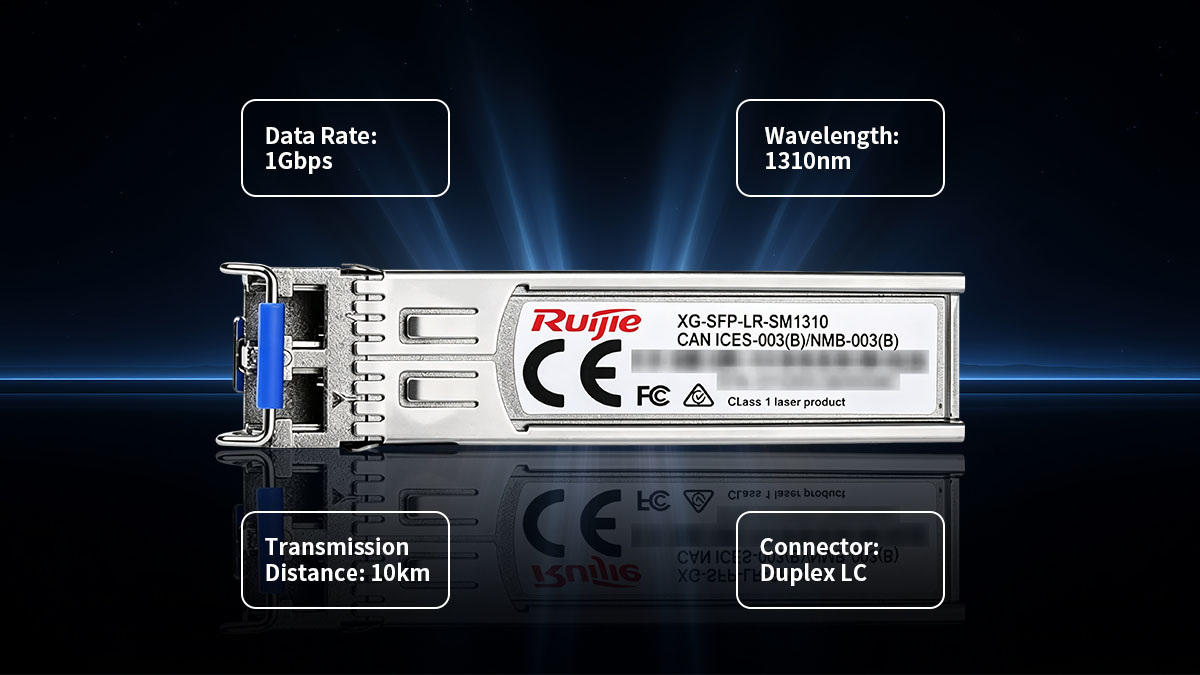
| Wavelength | 1310nm | Optimized for single-mode fiber transmission |
| Transmission Distance | Up to 10km | Depends on fiber quality and link conditions |
| TX Output Power | -8.2 to 0.5dBm | Defines signal strength at transmitter |
| RX Sensitivity | ≤ -14.4dBm | Minimum detectable signal at receiver |
| Link Budget | ~6–8dB | Determines allowable signal loss |
These values indicate that the module is designed for medium-range optical links where signal attenuation must be carefully managed. In practice, connectors, splicing loss, and fiber quality will directly impact whether the full 10km distance can be achieved.
Electrical and Interface Characteristics
The electrical and interface specifications define how the module connects to network hardware and how efficiently it operates within a system.
- SFP+ hot-pluggable form factor for flexible deployment
- LC duplex connector supporting standard single-mode fiber cabling
- Operates at 10Gbps data rate aligned with 10G Ethernet standards
- Low power consumption, typically below 1W per module
- Supports high-speed serial electrical interface for stable data transmission
These characteristics ensure that the module can be easily integrated into modern switches and routers without requiring additional configuration complexity, while also maintaining energy efficiency in high-density environments.
Environmental and Operating Conditions
The environmental specifications define the conditions under which the module can operate reliably, which is critical for long-term stability.
- Operating temperature range: typically 0°C to 70°C (commercial grade)
- Storage temperature range: wider tolerance for non-operational conditions
- Relative humidity tolerance to support standard data center environments
- Designed for stable operation under continuous workload
These limits indicate that the module is best suited for controlled environments such as data centers or enterprise wiring closets. Deployments in harsh or outdoor conditions may require industrial-grade alternatives with extended temperature support.
🏴 Functional Features and Capabilities
The functional features of the Ruijie XG-SFP-LR-SM1310 go beyond basic transmission, providing visibility, flexibility, and interoperability that are essential for modern network operations. These capabilities directly impact maintenance efficiency, uptime, and cross-platform compatibility.
Digital Diagnostics Monitoring (DDM)
Digital Diagnostics Monitoring enables real-time visibility into the module’s operating status, making it a critical feature for proactive network management.
- Monitors key parameters such as temperature, voltage, TX optical power, and RX optical power
- Provides real-time data accessible via network management systems (NMS) or CLI
- Helps detect early signs of degradation, such as signal loss or overheating
- Supports SNMP based monitoring for centralized network visibility
- Improves troubleshooting efficiency by isolating physical layer issues
This feature is particularly valuable in large-scale deployments, where manual inspection is impractical and early fault detection can prevent downtime.
Hot-Swappable Design
The hot-swappable capability allows the module to be inserted or removed without shutting down the network device, ensuring operational continuity.
- Enables live replacement without interrupting network traffic
- Reduces maintenance windows and operational risk
- Simplifies hardware upgrades and scaling
- Supports high-availability (HA) network architectures
- Minimizes service disruption in critical environments
This design is essential for data centers and enterprise networks where uptime is a priority and maintenance must be performed without impacting services.
Interoperability Advantages
Interoperability ensures that the module can function across different vendors’ equipment, which is crucial in multi-vendor network environments.
- Compatible with Ruijie switches and a wide range of third-party devices
- Based on SFP+ MSA standards for broad hardware support
- Supports vendor coding that aligns with platform requirements
- Reduces dependency on single-vendor ecosystems
- Facilitates flexible network design and future upgrades
While interoperability is generally strong, actual compatibility may still depend on device firmware and vendor-specific restrictions, making validation an important step before deployment.
🏴 Application Scenarios and Use Cases
The Ruijie XG-SFP-LR-SM1310 is widely used in 10G optical networks where stable long-distance transmission over single-mode fiber is required. Its datasheet specifications make it suitable for enterprise, data center, and carrier-level environments that demand reliable backbone connectivity.
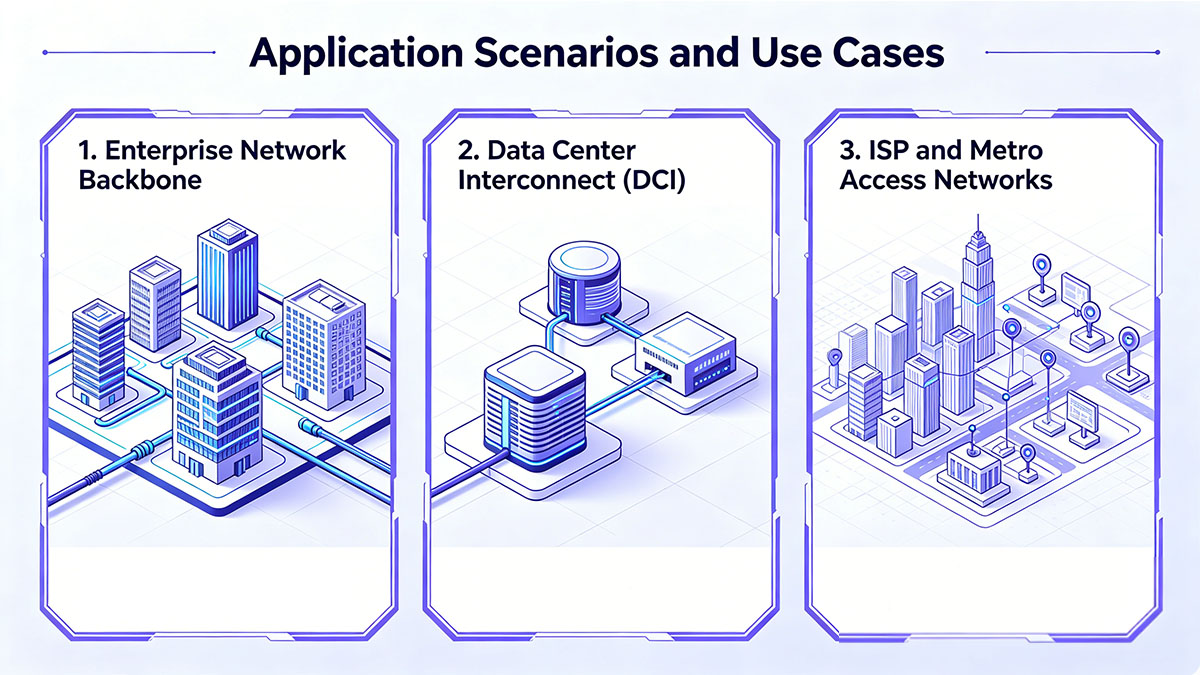
Enterprise Network Backbone
In enterprise environments, this module is commonly deployed as part of the core or aggregation network to connect switches across buildings or floors. Its 10km reach makes it a practical choice for campus-scale infrastructures.
- Connects core switches across different office buildings
- Supports high-speed uplinks between distribution layers
- Ensures stable 10Gbps backbone connectivity for business applications
- Reduces latency in inter-department data communication
- Enables scalable network expansion without redesigning fiber layout
This use case is particularly important for organizations with distributed campuses, where consistent high-speed connectivity is required across physical distances.
Data Center Interconnect (DCI)
In data center environments, the module is used for short-to-medium range interconnection between racks, zones, or even separate facilities. Its optical stability ensures consistent performance in high-density traffic scenarios.
- Links top-of-rack (ToR) and aggregation switches
- Supports inter-rack and inter-row connectivity within data centers
- Enables synchronization between distributed data center sites
- Maintains low-latency transmission for virtualization workloads
- Works effectively in structured fiber cabling systems
This makes it a practical solution for environments where bandwidth demand is high and downtime is not acceptable.
ISP and Metro Access Networks
Internet service providers and metro network operators use this module in access and aggregation layers where reliable fiber transmission is required over medium distances.
- Supports last-mile and metro aggregation connectivity
- Provides stable 10Gbps transmission for subscriber services
- Used in backbone links between access nodes and central offices
- Helps maintain service quality in high-traffic ISP environments
- Integrates into existing single-mode fiber infrastructure
These characteristics make it suitable for service providers that need cost-efficient yet stable optical connectivity across urban network zones.
🏴 How to Read and Interpret the Datasheet
The Ruijie XG-SFP-LR-SM1310 datasheet is more than a specification sheet; it is a technical decision-making tool. Proper interpretation helps ensure compatibility, prevents link failures, and improves long-term network stability. Each section of the datasheet corresponds directly to a real deployment consideration in 10G optical networks.
Understanding Optical Metrics
Optical parameters in the datasheet define how the module behaves in a fiber link, and they are the most critical indicators for deployment planning.
To interpret these values correctly, focus on how signal strength and loss interact within a fiber link:
- TX optical power indicates how strong the outgoing signal is
- RX sensitivity defines the weakest signal the receiver can still detect
- Link budget represents the total allowable loss in the fiber path
- Wavelength (1310nm) determines fiber compatibility and attenuation behavior
- Transmission distance (10km) assumes ideal fiber conditions without excessive loss
These parameters should always be evaluated together rather than individually. For example, even if the module supports 10km, poor fiber quality or excessive connector loss can significantly reduce effective reach.
To better understand their relationship in real deployments, consider the link budget equation:
Link Budget = P_{TX} - P_{RX(sensitivity)}
This simplified relationship helps engineers estimate whether a fiber link can operate reliably under given conditions.
Decoding Compatibility Information
Compatibility data in the datasheet ensures that the module can function correctly with target network devices, especially in multi-vendor environments.
To interpret compatibility correctly, focus on platform and firmware dependencies:
- SFP+ MSA compliance ensures baseline interoperability
- Vendor coding may restrict or enable device recognition
- Supported switch/router models define physical compatibility boundaries
- Firmware versions may affect module detection or DDM functionality
- Cross-vendor usage may require validation testing
These factors are important because physical compatibility does not always guarantee logical or firmware-level acceptance in network equipment.
Identifying Performance Limitations
Performance limitations in the datasheet define the practical boundaries of the module under real-world conditions. Understanding these helps prevent overestimating its capabilities.
Key limitations to consider include:
- 10km distance is based on ideal single-mode fiber conditions
- Excessive connector or splice loss reduces effective transmission range
- Temperature variations can slightly affect optical performance stability
- Signal degradation increases with poor fiber quality or aging infrastructure
- Environmental factors may require additional margin in link planning
In practical deployment, engineers should always include a safety margin below the theoretical maximum distance to ensure stable long-term operation.
🏴 Comparison with Similar 10G SFP+ LR Modules
The Ruijie XG-SFP-LR-SM1310 belongs to the 10GBASE-LR category of SFP+ optical transceivers, which means it shares a common design goal with many industry-standard optical transceiver modules: reliable 10km transmission over single-mode fiber at 1310nm. However, differences in power budget, interoperability behavior, and vendor implementation can significantly affect real-world deployment choices.
Understanding how it compares with similar LR optics helps network engineers evaluate compatibility, performance margins, and long-term flexibility.
Key Differences in Specifications
Although most 10G SFP+ LR transceiver modules follow IEEE 10GBASE-LR standards, variations still exist in optical budget, power consumption, and sensitivity thresholds.
- All LR modules typically operate at 1310nm wavelength for SMF transmission
- Standard transmission distance is generally up to 10km across vendors
- Differences often appear in:
- TX optical power range (signal strength output differences)
- RX sensitivity (how weak a signal can be received reliably)
- Power consumption efficiency
- Temperature grading (commercial vs industrial versions)
- Some vendors optimize modules for lower heat generation or broader switch compatibility
These variations may seem minor, but they directly impact link stability in marginal fiber conditions or high-density switch environments.
Vendor Ecosystem Considerations
Beyond raw specifications, vendor ecosystem behavior is one of the most important differentiators between Ruijie and other 10G LR modules.
- Ruijie modules are optimized for Ruijie switching platforms
- Third-party LR modules may offer broader cross-vendor compatibility
- Some switches enforce vendor coding or firmware validation
- Multi-vendor environments may require compatibility testing before deployment
- Support for Digital Diagnostic Monitoring (DDM/DOM) can vary in detail and accuracy
In practice, compatibility is not only about physical standards (SFP+ MSA), but also how strictly a switch ecosystem enforces module identification and operational restrictions.
Performance and Deployment Behavior Differences
Even when specifications appear identical, real-world performance can differ depending on implementation quality and network conditions.
- Signal stability may vary under long-distance or high-loss fiber links
- Heat output differs between module designs, affecting high-density deployments
- Link negotiation behavior can vary across switch vendors
- Some modules maintain better performance margins under suboptimal cabling conditions
- Firmware updates may improve or restrict compatibility over time
These factors make it important to evaluate not only datasheet numbers, but also operational behavior in the target network environment.
🏴 Deployment and Configuration Considerations
Proper deployment and configuration of the Ruijie XG-SFP-LR-SM1310 is essential to ensure stable 10G connectivity, optimal optical performance, and long-term network reliability. While the module is designed to be plug-and-play in most SFP+ environments, real-world performance still depends heavily on installation practices, fiber quality, and device configuration.
Installation Best Practices
Correct physical installation is the foundation of stable optical performance. Even minor handling errors can significantly affect signal quality in single-mode fiber links.
- Always verify that LC connectors are clean before insertion to prevent signal loss
- Ensure proper alignment when inserting the SFP+ module into the port
- Avoid bending fiber cables beyond the recommended minimum bend radius
- Use single-mode OS2 fiber for full 10km performance capability
- Confirm that both ends of the link use compatible 1310nm LR modules
These practices help maintain optimal optical power levels and reduce unnecessary attenuation that could shorten effective transmission distance.
Network Configuration Tips
After physical installation, correct switch and router configuration ensures that the module operates at its intended performance level.
- Ensure the port is configured for 10Gbps operation (no auto-speed mismatch)
- Enable Digital Diagnostic Monitoring (DDM/DOM) where supported
- Match duplex and link settings according to device requirements
- Verify module recognition in system logs or interface status
- Update device firmware if compatibility or detection issues occur
In many deployments, incorrect speed negotiation or disabled DDM monitoring can lead to misleading link instability or incomplete diagnostics.
Compatibility and Vendor Validation
Even though the module follows SFP+ MSA standards, compatibility validation remains a critical step in mixed-vendor environments.
- Some switches enforce vendor coding restrictions for optical modules
- Ruijie-native devices generally provide full compatibility without configuration changes
- Third-party platforms may require manual “unsupported transceiver” enablement
- Firmware versions can impact module recognition behavior
- Cross-vendor testing is recommended before large-scale deployment
This step is particularly important in heterogeneous networks where switches, routers, and NICs come from different manufacturers.
Troubleshooting Common Issues
When deployment issues occur, most problems can be traced back to physical layer or configuration mismatches rather than module failure.
- No link detected: check fiber polarity and TX/RX alignment
- Intermittent connection: inspect fiber cleanliness and bending stress
- Low optical power: verify connector quality and link budget margin
- Module not recognized: check vendor compatibility or firmware version
- High error rate: review fiber attenuation and signal degradation
Using DDM data is one of the most effective ways to isolate faults, as it provides real-time visibility into optical power and temperature conditions.
🏴 Advantages and Limitations
The Ruijie XG-SFP-LR-SM1310 offers a balanced combination of long-distance 10G performance, standardized interoperability, and stable optical design. However, like any optical transceiver, it also has defined boundaries that determine where it performs best and where alternative modules may be more suitable. Understanding both sides helps ensure correct deployment decisions.

Key Advantages
The main strengths of the Ruijie XG-SFP-LR-SM1310 come from its adherence to 10GBASE-LR standards and its optimized design for single-mode fiber transmission.
- Supports stable 10Gbps transmission over single-mode fiber up to 10km
- Operates at 1310nm wavelength, ensuring low attenuation over distance
- Complies with IEEE 802.3ae and SFP+ MSA standards for broad compatibility
- Includes Digital Diagnostic Monitoring (DDM) for real-time optical visibility
- Hot-swappable design allows maintenance without network downtime
- Low power consumption supports energy-efficient deployments in dense environments
- Suitable for enterprise backbone, data center, and metro network scenarios
These advantages make it a reliable choice for organizations that require predictable performance in structured fiber environments without introducing unnecessary complexity.
Potential Limitations
Despite its strong capabilities, the module is designed within specific operational constraints that must be considered during network planning.
- Limited to 10km reach, making it unsuitable for long-haul or extended metro networks
- Requires high-quality single-mode fiber to achieve maximum transmission distance
- Commercial temperature range may not support harsh outdoor or industrial environments
- Compatibility may vary in strict vendor-locked switch ecosystems
- Performance can degrade if link budget is not carefully calculated
- Not designed for multimode fiber (MMF) infrastructure
These limitations do not reduce its effectiveness within its intended scope but highlight the importance of matching the module to the correct deployment environment.
🏴 Conclusion
The Ruijie XG-SFP-LR-SM1310 datasheet clearly shows that this 10G SFP+ LR optical transceiver is designed for reliable long-distance single-mode fiber transmission up to 10km at 1310nm. By interpreting its datasheet parameters—such as optical power, receiver sensitivity, link budget, and DDM support—users can accurately assess deployment feasibility and ensure stable network performance across enterprise, data center, and metro environments.
Understanding the Ruijie XG-SFP-LR-SM1310 datasheet is therefore not just a technical exercise, but a practical requirement for building predictable and scalable 10G optical networks.
To simplify the core insights from this guide, the most important points can be summarized as follows:
- Designed for 10GBASE-LR single-mode fiber transmission at 1310nm
- Supports up to 10km reach under standard fiber conditions
- Requires proper link budget planning to ensure stable performance
- Includes DDM functionality for real-time optical monitoring
- Fully compliant with SFP+ MSA and IEEE 802.3ae standards
- Best suited for enterprise backbone, data center, and metro access networks
- Performance depends heavily on fiber quality and deployment practices
These points highlight that successful deployment depends on both datasheet interpretation and real-world installation conditions.
Selecting and deploying a 10G optical module is ultimately about balancing compatibility, distance requirements, and network stability. The Ruijie XG-SFP-LR-SM1310 is a strong option for standardized 10km single-mode fiber environments, but ensuring long-term reliability still requires careful evaluation of specifications and infrastructure conditions.
For users planning large-scale deployments or exploring compatible optical transceivers with consistent quality and performance, exploring professional optical module resources such as the LINK-PP Official Store can provide additional options aligned with different network architectures and compatibility needs.