

























The demand for high-capacity optical transport infrastructure continues to grow as carriers, cloud providers, and enterprise networks expand bandwidth-intensive services such as cloud computing, video delivery, and data center interconnect. In this environment, coherent optical modules play a critical role in ensuring stable and scalable backbone performance across metro and long-haul networks.
Within this context, the Ciena 160 9600 900 has become a frequently referenced component in optical network planning and equipment evaluation. It is typically associated with high-performance transport systems where reliability, compatibility, and long-distance signal integrity are essential. As operators evaluate optical modules for new deployments or network upgrades, understanding the technical role and integration requirements of this model becomes increasingly important.
This article provides a structured overview of the Ciena 160 9600 900, focusing on its technical positioning and procurement considerations. It will cover:
- Core functional role and system placement in optical networks
- Key technical specifications and performance characteristics
- Compatibility requirements across Ciena platforms and multi-vendor environments
- Deployment planning factors including link budget and scalability considerations
- Lifecycle, reliability, and alternative solution evaluation criteria
Together, these sections help clarify how this module fits into modern optical transport architectures and support more informed infrastructure planning decisions in carrier and enterprise environments.
💮 What Is Ciena 160 9600 900?
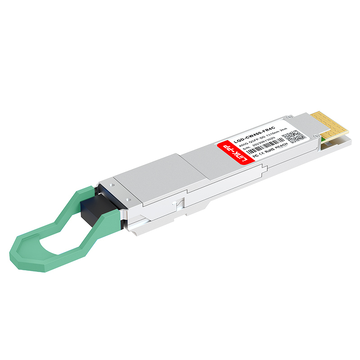
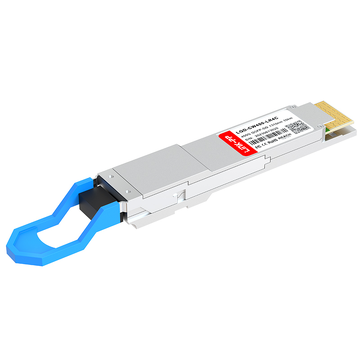
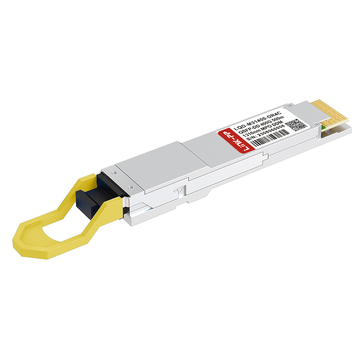
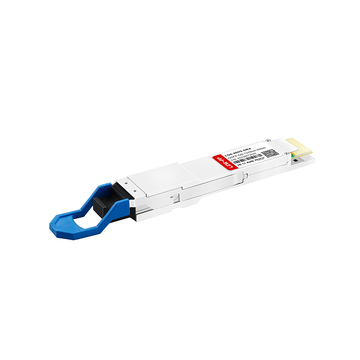
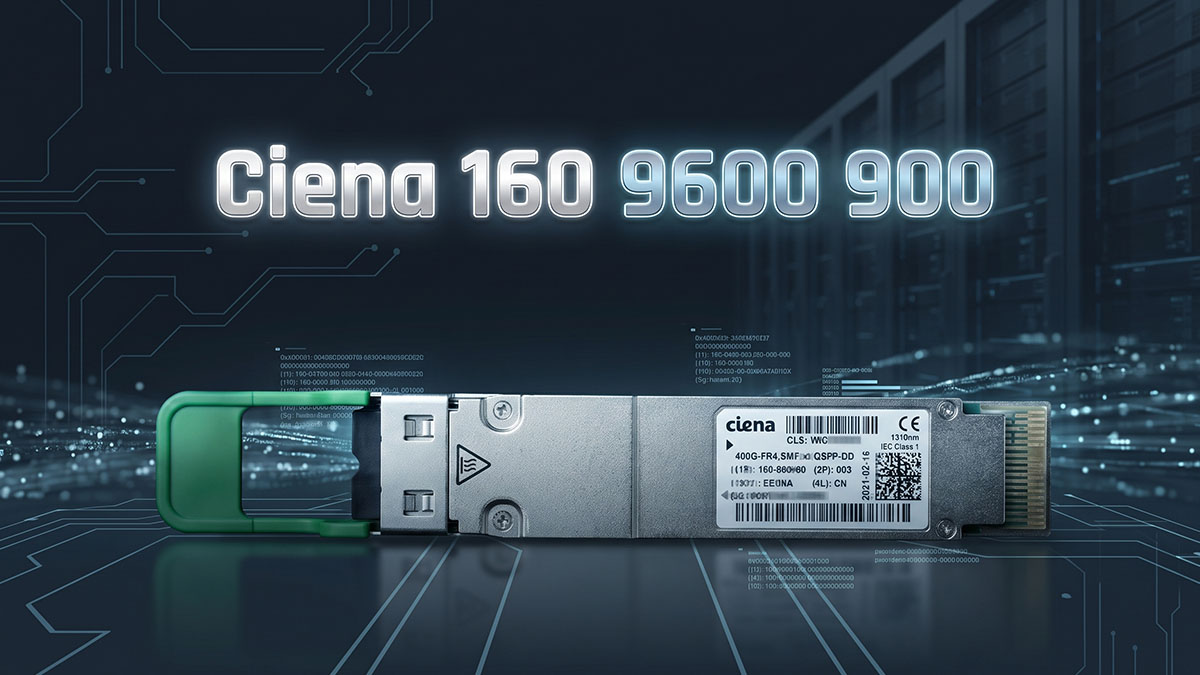
The Ciena 160-9600-900 is a 400GBASE-FR4 QSFP-DD optical transceiver designed for high-speed data transmission over single-mode fiber (SMF) up to 2km. It is built for high-capacity data center interconnect and backbone network applications where ultra-high bandwidth, low latency, and stable optical performance are required.
In modern optical architectures, this module is typically deployed in 400G Ethernet environments where scalability and fiber efficiency are critical. Its FR4 architecture enables parallel wavelength transmission within a single fiber pair, significantly improving bandwidth density while maintaining compatibility with QSFP-DD port infrastructures.
Product Overview and Primary Function
The primary function of the Ciena 160-9600-900 is to enable 400G optical transmission between high-speed switching platforms over single-mode fiber links. It converts high-speed electrical signals into four parallel optical lanes and transmits them using wavelength division multiplexing technology.
In practical network deployments, it is commonly used for:
- 400G data center interconnect (DCI) links
- High-capacity spine-leaf architecture connections
- Core-to-core routing in metro and backbone networks
- Cloud infrastructure high-bandwidth aggregation layers
This makes it a key enabling component for next-generation 400G Ethernet infrastructure, especially in environments requiring compact port density and high throughput efficiency.
Key Technical Characteristics
The Ciena 160-9600-900 is defined by its 400GBASE-FR4 architecture and QSFP-DD form factor, which together determine its performance envelope and integration requirements.
Core technical characteristics include:
- Data rate: 400Gbps aggregated throughput
- Form factor: QSFP-DD (Quad Small Form-factor Pluggable Double Density)
- Transmission standard: 400GBASE-FR4 Ethernet
- Fiber type: Single-mode fiber (SMF)
- Maximum reach: up to 2km
- Wavelength structure: 4-channel WDM optical transmission
These parameters position the module as a short-reach 400G optical solution optimized for intra-data center and closely located interconnection scenarios.
Where Ciena 160-9600-900 Fits in Network Architectures
The Ciena 160-9600-900 is primarily deployed in high-density 400G optical networks where short-reach but high-bandwidth connectivity is required. Its design supports modern disaggregated network architectures that prioritize scalability and port efficiency.
Typical deployment environments include:
- Hyperscale data center spine-leaf fabrics
- 400G metro aggregation networks
- High-speed inter-switch fabric connections
- Cloud provider backbone interconnect layers
In these architectures, the module acts as a high-capacity transport interface that enables efficient bandwidth scaling without increasing physical fiber complexity, making it particularly valuable in space-constrained and high-throughput network designs.
💮 Technical Specifications of Ciena 160-9600-900
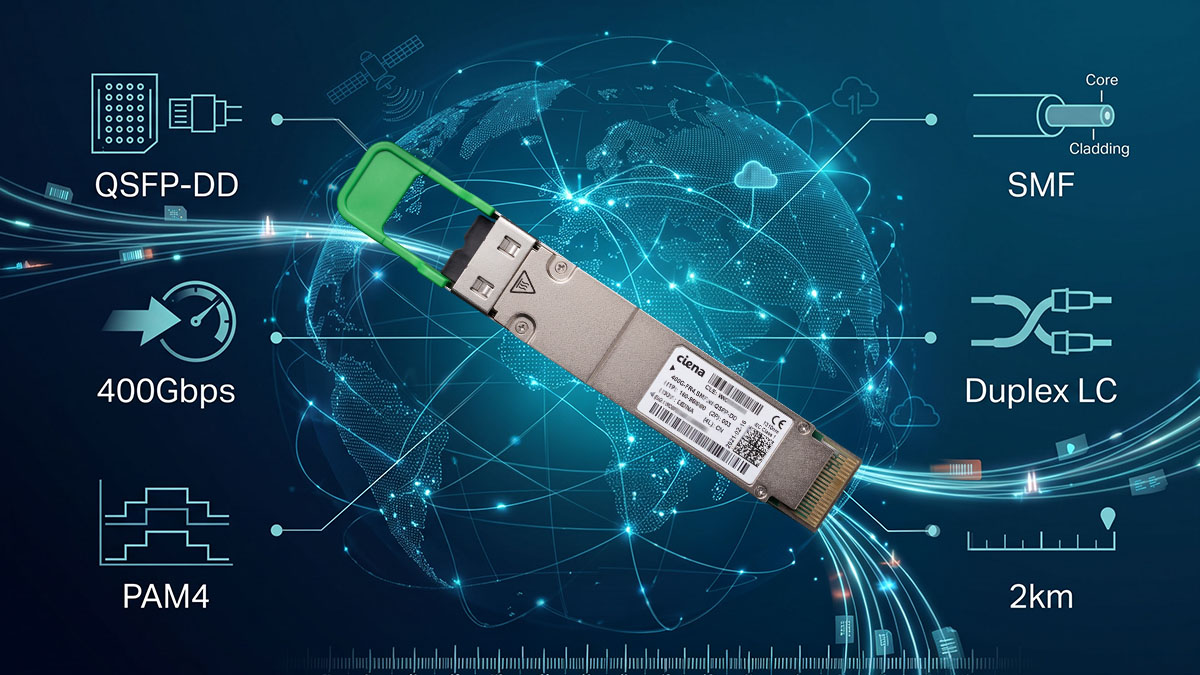
The Ciena 160-9600-900 is a 400GBASE-FR4 QSFP-DD optical transceiver designed for 400G Ethernet transmission over single-mode fiber (SMF) up to 2km. It is based on a CWDM4 wavelength grid architecture operating in the 1310nm band, using four wavelength channels to achieve high-density 400G data transmission in data center and metro interconnect environments.
Hardware and Optical Specification Breakdown
The module integrates high-speed optical and electrical components optimized for short-reach 400G transmission. Its hardware configuration is aligned with IEEE 802.3cu and 100G Lambda MSA standards, ensuring structured interoperability in modern 400G Ethernet networks.
Key hardware and optical parameters include:
- Form factor: QSFP-DD (Double Density pluggable module)
- Data rate: 400Gbps aggregate (4 × 100G lanes)
- Modulation: PAM4 (Pulse Amplitude Modulation 4-level)
- Fiber type: Single-mode fiber (SMF)
- Connector type: Duplex LC interface
- Transmission reach: Up to 2km
- Power supply: 3.3V typical host system voltage
- Maximum power consumption: approximately 10W–12W (depending on implementation)
- Operating temperature: 0°C to 70°C (commercial grade)
These parameters confirm its positioning as a high-density short-reach optical interconnect solution for intra-data center and campus-scale deployments.
Optical Performance and CWDM4 Wavelength Structure
The Ciena 160-9600-900 operates using a CWDM4-based wavelength architecture within the 1310nm transmission window. This structure enables four independent optical channels to be multiplexed over a single duplex fiber pair, significantly improving fiber utilization efficiency.
The wavelength configuration is defined as:
- Lane 1: 1271nm
- Lane 2: 1291nm
- Lane 3: 1311nm
- Lane 4: 1331nm
Each channel carries a 100G PAM4 signal, which is then combined into a single 400G aggregate stream through internal MUX/DEMUX optics. This CWDM4 structure is optimized for low-loss transmission over standard SMF links up to 2km, making it suitable for high-density interconnect topologies where fiber resources are constrained.
Electrical Interface and Signal Processing Characteristics
On the electrical side, the module uses a QSFP-DD interface that supports eight high-speed electrical lanes aggregated into a 400G signal path. The host system typically applies Forward Error Correction (FEC) to maintain signal integrity across PAM4 transmission.
Key signal processing characteristics include:
- Electrical interface: 8 × 50G PAM4 lanes (host side aggregation)
- Optical mapping: 4 × 100G optical lanes (CWDM4 structure)
- Required FEC: KP4 RS-FEC (host-side implementation)
- Management interface: CMIS-based module monitoring support
- Digital diagnostics: DOM support for real-time optical monitoring (Tx power, Rx power, temperature, voltage)
This architecture ensures stable operation under high-bandwidth conditions while maintaining error performance within IEEE-defined thresholds.
Link Budget and Transmission Performance Table
The performance envelope of the Ciena 160-9600-900 is largely determined by its optical power budget and receiver sensitivity, which define the usable transmission range under real-world conditions.
| Parameter | Value |
|---|---|
| 400GBASE-FR4 Wavelength | 1271 / 1291 / 1311 / 1331 nm |
| Data Rate | 400Gbps |
| Modulation | PAM4 |
| Fiber Type | SMF (Single-mode fiber) |
| Maximum Reach | 2km |
| Optical Link Budget | ~4 dB (typical implementation range) |
| Transmit Power | -3.3 to +3.5 dBm per lane |
| Receiver Sensitivity | approx. -7.3 dBm |
This combination of parameters supports reliable 2km-class interconnects in controlled data center environments, where fiber quality, connector loss, and patch panel design are tightly managed.
💮 Compatibility Considerations Before Deployment
The Ciena 160-9600-900, as a 400GBASE-FR4 QSFP-DD optical transceiver, requires careful compatibility validation before deployment in any production network. Although it follows standardized 400G Ethernet and CWDM4 optical specifications, its performance and operability still depend on host platform support, firmware alignment, and optical system integration conditions. Ensuring compatibility at multiple layers helps avoid link failures, reduced throughput, or module recognition issues in 400G environments.
Supported Ciena Platforms
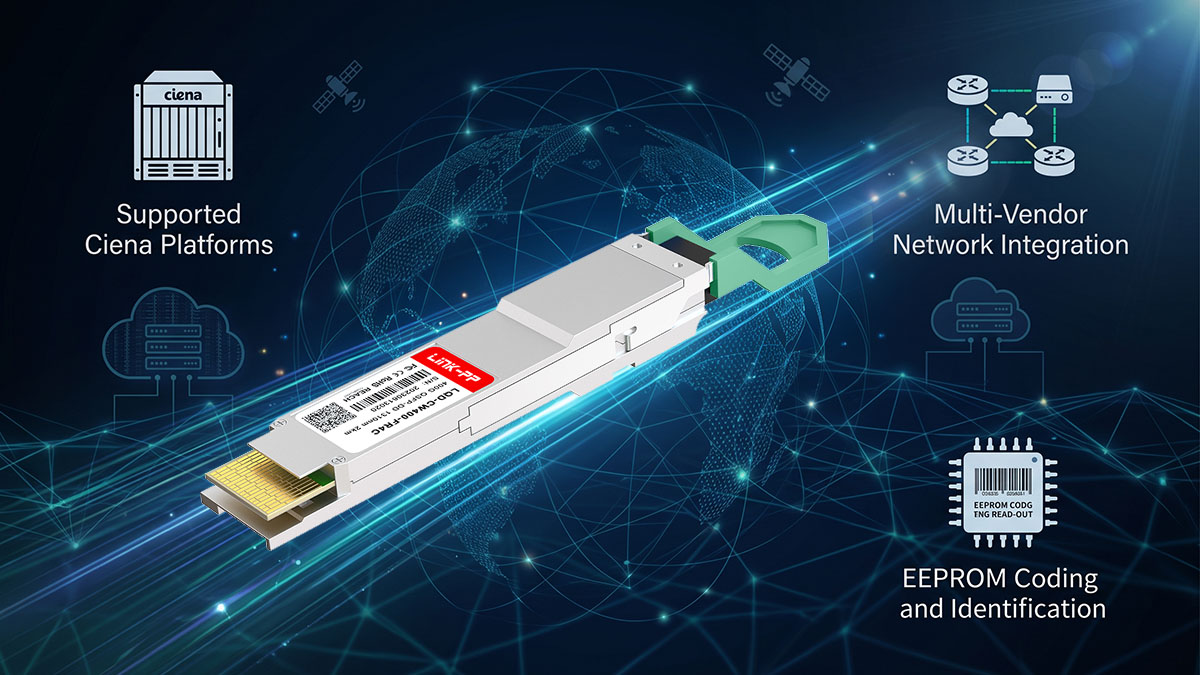
The Ciena 160-9600-900 is primarily designed for use within Ciena’s 400G-capable optical switching and routing ecosystems. Its operation depends on correct platform support at both hardware and software levels, particularly in QSFP-DD-enabled systems.
A proper compatibility assessment typically includes:
- Compatible Ciena systems supporting QSFP-DD 400G ports
- Platforms with native support for 400GBASE-FR4 optics
- Switches or transport equipment with 1310nm CWDM4 lane support
- Hardware line cards designed for high-density 400G Ethernet interfaces
In addition to physical port compatibility, interoperability at the chassis and line-card level is critical. Even when the form factor matches, the system must explicitly support FR4/CWDM4 optical coding profiles to ensure stable operation.
Multi-Vendor Network Integration
In heterogeneous network environments, the Ciena 160-9600-900 may be evaluated for use alongside non-Ciena switching platforms that support QSFP-DD 400G interfaces. While it is based on IEEE 802.3cu and CWDM4 standards, interoperability is not guaranteed without proper validation.
Key interoperability considerations include:
- Alignment with IEEE 400GBASE-FR4 standards for electrical and optical signaling
- Consistency in PAM4 signal processing and FEC implementation (typically KP4 RS-FEC)
- Compatibility of CMIS management interface interpretation across vendors
- Matching optical budget and link engineering parameters
Standards compliance provides a baseline for compatibility, but real-world interoperability depends heavily on how each vendor implements firmware logic, optical power thresholds, and error handling behavior.
Optical link validation practices are therefore essential before full-scale deployment. These typically include:
- End-to-end fiber continuity testing
- Optical power level verification per lane
- Bit error rate (BER) testing under load conditions
- FEC correction margin evaluation in live traffic scenarios
These validation steps help ensure that the module performs reliably across different switching environments and optical infrastructures.
EEPROM Coding and Identification
The Ciena 160-9600-900 relies on EEPROM-based module identification to ensure correct recognition by the host system. This coding structure defines how the transceiver is identified, configured, and managed within the network device.
Vendor coding mechanisms typically include:
- Manufacturer ID encoding (Ciena-specific identification data)
- Module type classification (400GBASE-FR4 QSFP-DD profile)
- Wavelength and optical configuration descriptors
- Compliance and revision-level metadata
During initialization, the host system reads EEPROM data via the CMIS interface to determine whether the module is supported and to apply the correct operational profile. If the coding is not recognized, the module may be blocked, limited in functionality, or reported as unsupported.
The module recognition process generally follows these steps:
- Host system detects QSFP-DD insertion event
- EEPROM data is queried via I2C/CMIS interface
- Firmware validates module type and vendor coding
- Optical profile (FR4/CWDM4) is assigned
- Digital diagnostics and monitoring functions are activated
To ensure stable deployment, compatibility verification methods are commonly applied before scaling into production environments. These include:
- Checking vendor whitelist or platform support matrix
- Verifying firmware version alignment with 400G FR4 optics
- Conducting lab-level interoperability testing
- Reviewing DOM (Digital Optical Monitoring) parameter consistency
Proper EEPROM recognition and firmware alignment are critical to avoiding “unknown transceiver” errors and ensuring full 400G functionality across the network.
💮 Evaluating Ciena 160-9600-900 for Network Expansion Projects
The Ciena 160-9600-900 is well-suited for organizations expanding 400G network infrastructure within data centers, campus environments, and metro interconnection networks. However, selecting a 400GBASE-FR4 QSFP-DD transceiver should involve more than matching port speeds. Network planners must evaluate bandwidth growth, optical link requirements, and deployment conditions to ensure the module aligns with both current and future infrastructure objectives.

A comprehensive assessment helps reduce upgrade risks, optimize resource utilization, and improve long-term network scalability.
Capacity Planning Requirements
The Ciena 160-9600-900 is best suited for environments experiencing rapid traffic growth and increasing demand for 400G connectivity. Before deploying this module, network planners should determine whether existing infrastructure and future business requirements justify a transition to 400G Ethernet.
Several capacity-related factors should be evaluated:
- Current utilization levels of 100G and 200G network links
- Expected traffic growth over the next three to five years
- Increasing east-west traffic within data center environments
- Expansion of cloud services, virtualization, and AI workloads
- Availability of 400G-capable switch and router ports
- Future migration strategies toward 800G networking
A network that is already approaching capacity limits on multiple 100G links may benefit from consolidating bandwidth into fewer 400G connections. This approach can simplify network architecture, improve port utilization efficiency, and reduce operational complexity.
Link Budget Assessment
For the Ciena 160-9600-900 to achieve reliable performance over its specified 2km reach, the optical link budget must be carefully evaluated before deployment. Even though FR4 technology is designed for relatively short-distance transmission, excessive loss can still impact signal quality and error rates.
A successful link budget assessment should account for:
- Total fiber distance
- Fiber attenuation characteristics
- Connector insertion loss
- Patch panel loss accumulation
- Splice loss within the optical path
- Operational safety margin
The table below illustrates common contributors to optical loss in a typical single-mode fiber deployment.
| Link Component | Typical Loss |
|---|---|
| Single-mode Fiber | ~0.4 dB/km |
| LC Connector Pair | 0.2–0.5 dB |
| Fusion Splice | 0.05–0.1 dB |
| Patch Panel | 0.3–0.7 dB |
| Engineering Margin | 1–2 dB |
By calculating total expected attenuation before deployment, network engineers can verify that the available optical budget remains sufficient to support stable operation throughout the link lifecycle.
In practice, maintaining a reasonable safety margin helps accommodate future maintenance activities and gradual optical degradation over time.
Environmental Deployment Factors
The deployment environment can significantly influence the long-term reliability of any 400G optical transceiver. Although the Ciena 160-9600-900 is designed for commercial networking environments, thermal and operational conditions should be evaluated during project planning.
Key environmental considerations include:
- Ambient operating temperature
- Rack airflow efficiency
- Equipment cabinet density
- Power consumption per switch chassis
- Dust and contamination control
- Cable management practices
High-density 400G deployments often introduce additional thermal challenges because multiple QSFP-DD modules can generate substantial heat within a compact switching platform.
The following environmental checklist can assist with deployment planning:
- Verify adequate front-to-back airflow
- Confirm switch cooling capacity under full port utilization
- Maintain clean fiber connector interfaces
- Monitor module temperature through digital diagnostics
- Avoid excessive fiber bending near high-density panels
- Reserve thermal headroom for future port activation
Proper environmental management not only improves module longevity but also contributes to consistent optical performance across large-scale 400G network deployments.
💮 Reliability, Compliance, and Lifecycle Management
For a 400G optical transceiver, performance specifications alone do not determine long-term value. Reliability, standards compliance, and lifecycle management are equally important because they influence network uptime, maintenance requirements, operational risk, and future scalability. When evaluating the Ciena 160-9600-900 for enterprise, cloud, or data center deployments, organizations should assess not only how the module performs today but also how it will support the network throughout its operational lifespan.
Industry Standards and Certifications
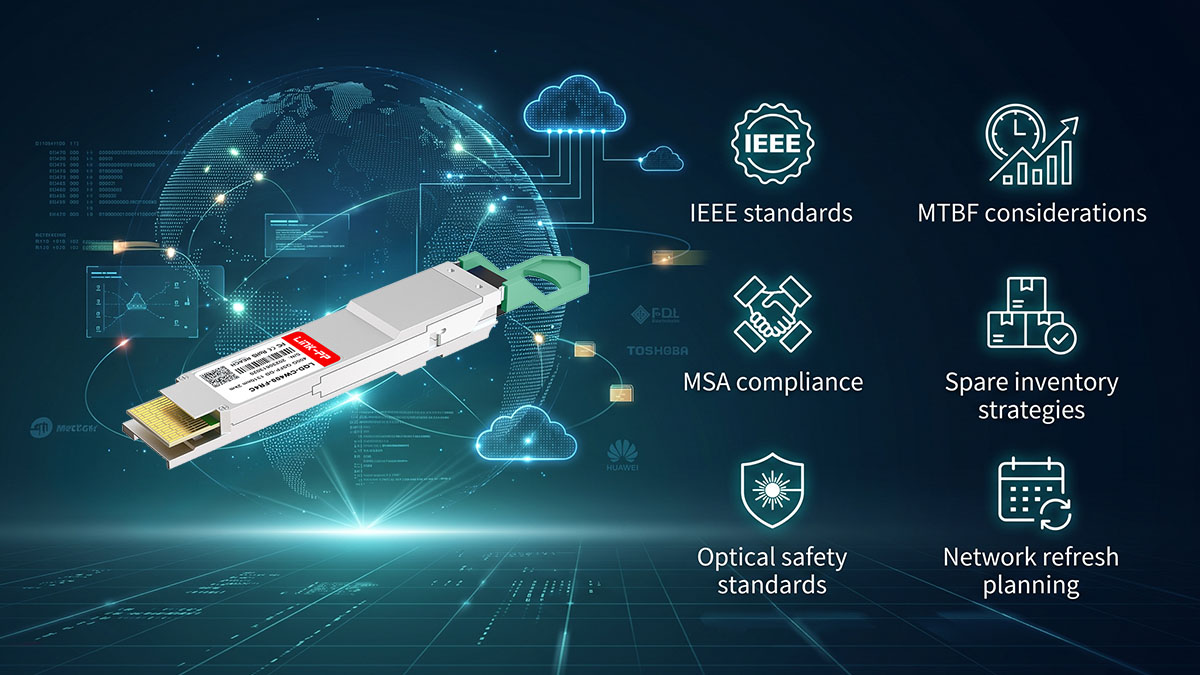
The Ciena 160-9600-900 is built around industry-standard 400G Ethernet technologies, which helps simplify integration into modern network environments. Compliance with recognized specifications improves interoperability, supports predictable performance, and reduces deployment uncertainty.
Key standards and certifications commonly associated with a 400GBASE-FR4 QSFP-DD transceiver include:
| Standard | Purpose |
|---|---|
| IEEE 802.3cu | Defines 400GBASE-FR4 optical transmission requirements |
| QSFP-DD MSA | Standardizes mechanical and electrical module interfaces |
| CMIS | Supports module management and digital diagnostics |
| 100G Lambda MSA | Defines interoperability for 100G optical lanes used in FR4 architectures |
| IEC 60825 | Establishes laser safety requirements |
| RoHS | Ensures compliance with environmental regulations |
These standards work together to create a common framework for interoperability across optical modules, switches, routers, and transport equipment. As a result, organizations can deploy 400G infrastructure with greater confidence that equipment from different vendors will operate according to established industry expectations.
Long-Term Operational Reliability
The Ciena 160-9600-900 is designed for continuous operation in high-density networking environments where reliability is essential. In large-scale deployments, even a small reduction in transceiver failure rates can have a meaningful impact on maintenance costs and network availability.
Several factors contribute to long-term reliability:
- Laser transmitter stability over extended operating periods
- Consistent performance of optical receiver components
- Effective thermal management within the QSFP-DD housing
- Stable PAM4 signal processing under varying traffic loads
- Manufacturing quality control and component selection
- Resistance to environmental fluctuations
Network operators typically evaluate reliability through a combination of laboratory testing, field deployment experience, and operational monitoring. Important indicators often include:
- Mean Time Between Failures (MTBF)
- Historical deployment records
- Return and failure rate statistics
- Digital Optical Monitoring (DOM) capabilities
- Thermal performance under full port utilization
Reliability is particularly important in 400G environments because higher data rates concentrate more traffic onto fewer links. A single transceiver failure may affect significantly more bandwidth than in lower-speed network architectures.
Product Lifecycle and Availability Planning
Lifecycle management plays a significant role in long-term network planning. While a transceiver may meet current technical requirements, organizations should also consider product availability, support continuity, and future replacement strategies.
A proactive lifecycle management approach generally includes:
- Monitoring product lifecycle announcements
- Evaluating long-term supply availability
- Maintaining strategic spare inventory
- Planning replacement procedures
- Establishing upgrade roadmaps
- Assessing future technology migration paths
Several questions should be addressed before large-scale deployment:
- Will the module remain available throughout the planned network lifecycle?
- Are replacement units expected to be accessible in the future?
- Is there a defined migration path toward higher-speed technologies such as 800G?
- Can inventory be standardized across multiple network locations?
- Are firmware updates and technical support expected to remain available over time?
Organizations that proactively address these considerations are better positioned to avoid supply disruptions and reduce operational risk. This is especially important for large data center operators and enterprises that manage hundreds or thousands of optical interfaces across multiple facilities.
💮 Cost Factors Influencing Procurement Decisions
When evaluating the Ciena 160-9600-900 for a 400G network deployment, acquisition cost should be viewed as only one part of the overall decision-making process. The true financial impact of a transceiver extends beyond the initial purchase and includes operational efficiency, compatibility requirements, maintenance considerations, and long-term infrastructure planning. Organizations that evaluate total deployment costs rather than focusing solely on unit pricing are often better positioned to achieve sustainable network performance and cost efficiency.
Elements Affecting Total Deployment Cost
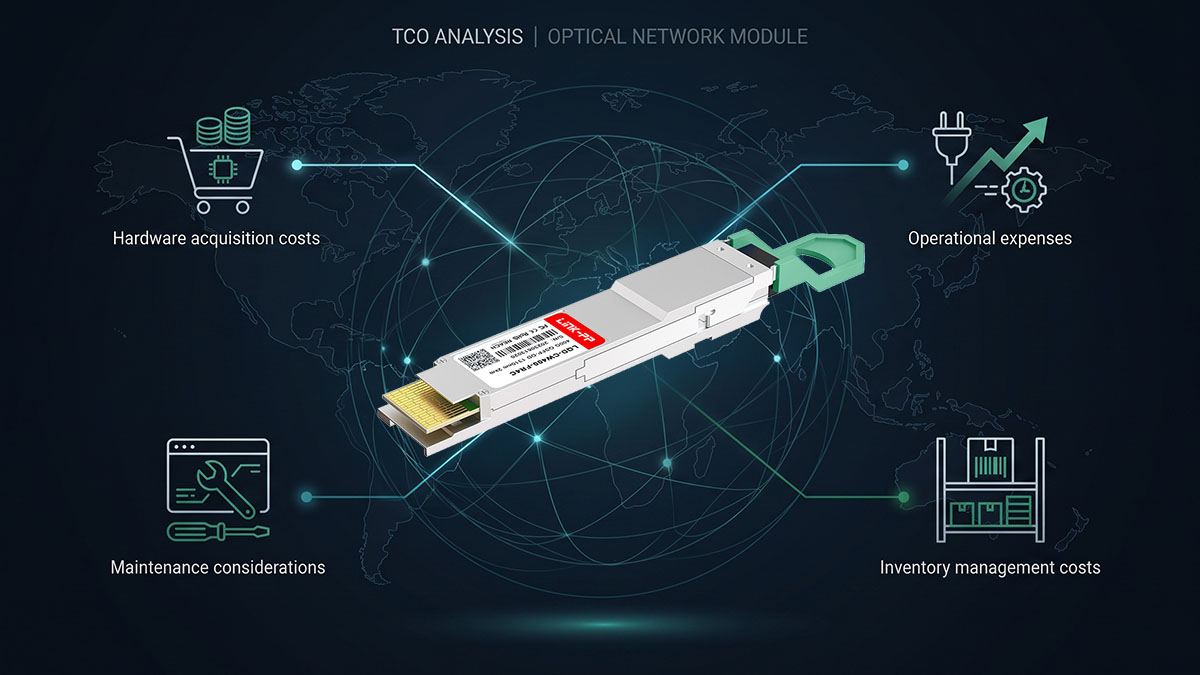
The total cost associated with deploying the Ciena 160-9600-900 is influenced by multiple technical and operational factors. Understanding these elements helps organizations accurately estimate project expenses and avoid unexpected costs after deployment.
Several components contribute to overall deployment expenditure:
- Optical transceiver acquisition costs
- Switch and router platform compatibility requirements
- Fiber infrastructure readiness
- Installation and testing labor
- Network validation and certification procedures
- Spare inventory planning
- Ongoing maintenance and operational support
In addition to direct hardware expenses, infrastructure efficiency can significantly affect long-term costs. For example, the 400GBASE-FR4 architecture enables 400Gbps transmission over a duplex single-mode fiber pair, which can reduce fiber utilization compared to parallel optics solutions that require multiple fiber strands.
Original Equipment vs Compatible Alternatives
Many organizations evaluating the Ciena 160-9600-900 compare original equipment modules with compatible third-party alternatives. Both approaches can support 400GBASE-FR4 networking environments, but the evaluation process should extend beyond simple pricing comparisons.
Several areas should be examined when comparing available options:
- Compliance with IEEE 802.3cu and QSFP-DD standards
- Support for CWDM4 wavelength architecture
- Compatibility with target network platforms
- Digital diagnostics and monitoring capabilities
- Manufacturing quality control procedures
- Product testing and validation processes
- Warranty and technical support availability
Original equipment modules are often selected in environments where strict vendor alignment and established support channels are priorities. Compatible alternatives may be considered when organizations seek greater sourcing flexibility or cost optimization while maintaining equivalent technical specifications.
Cost Comparison Framework
A successful procurement strategy should balance technical requirements with financial objectives. Rather than focusing on a single cost metric, organizations can evaluate optical transceivers across several operational dimensions.
Key evaluation criteria commonly include:
- Initial hardware investment
- Expected operational lifespan
- Network reliability requirements
- Maintenance and replacement expectations
- Inventory management complexity
- Technical support availability
- Future scalability potential
Each organization may assign different priorities depending on its deployment model. For example:
- Data center operators may prioritize scalability and density.
- Enterprise networks may emphasize interoperability and operational simplicity.
- Service providers may focus on long-term lifecycle consistency and inventory standardization.
- Multi-site organizations may prioritize supply continuity and replacement availability.
By assessing cost within the broader context of network performance, reliability, and lifecycle management, organizations can make more informed decisions regarding the deployment of the Ciena 160-9600-900 and other 400G optical transceiver solutions.
💮 Alternative Solutions to Ciena 160-9600-900
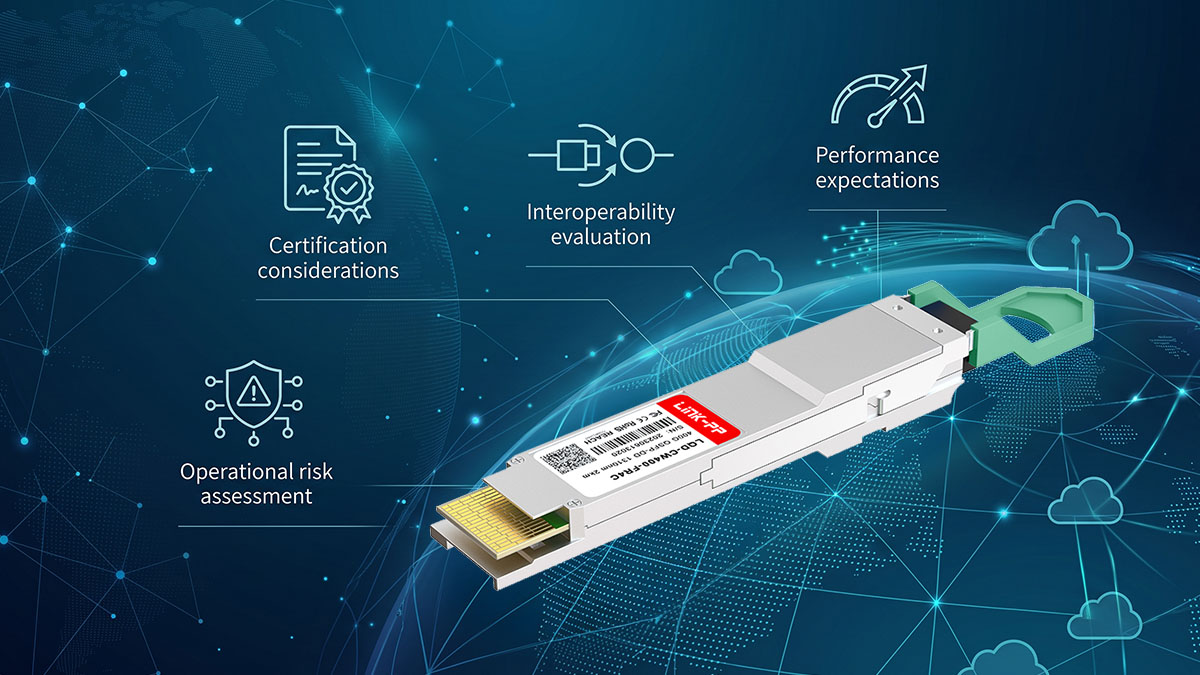
The Ciena 160-9600-900 is a 400GBASE-FR4 QSFP-DD optical transceiver designed for transmission over single-mode fiber up to 2km using a CWDM4 wavelength architecture. While it is widely deployed in 400G Ethernet environments, many organizations also evaluate equivalent compatible alternatives when planning network expansions, managing inventory strategies, or diversifying supply sources.
A suitable alternative should provide the same core technical specifications, interoperability characteristics, and operational reliability as the original module. Therefore, the evaluation process should focus on technical equivalency rather than simply comparing product names or suppliers.
Comparable Optical Modules
A true alternative to the Ciena 160-9600-900 should match the original module's essential specifications and support the same deployment scenarios. This allows organizations to maintain consistent network performance while introducing greater sourcing flexibility.
The following table highlights the key attributes that should be matched when evaluating an equivalent optical transceiver.
| Specification | Ciena 160-9600-900 | Equivalent Compatible Alternative |
|---|---|---|
| Form Factor | QSFP-DD | QSFP-DD |
| Ethernet Standard | 400GBASE-FR4 | 400GBASE-FR4 |
| Fiber Type | Single-Mode Fiber (SMF) | Single-Mode Fiber (SMF) |
| Reach | 2km | 2km |
| Wavelength Architecture | CWDM4 | CWDM4 |
| Connector | Duplex LC | Duplex LC |
| Modulation | PAM4 | PAM4 |
| Management Interface | CMIS | CMIS |
| Optical Monitoring | Supported | Supported |
When these parameters are aligned, the alternative module can generally support the same network architecture and optical link design as the original transceiver.
When an Alternative May Be Appropriate
Compatible alternatives are commonly evaluated in situations where organizations seek additional flexibility in procurement planning, inventory management, or project deployment schedules.
Several scenarios may justify considering an equivalent module:
- Large-scale 400G data center expansion projects
- Multi-site enterprise deployments requiring standardized optics
- Strategic spare inventory programs
- Projects with strict deployment timelines
- Supply chain diversification initiatives
- Network environments utilizing multiple equipment vendors
For example, organizations deploying hundreds of 400G interfaces across multiple facilities may prefer to avoid dependence on a single sourcing channel. In these cases, technically equivalent alternatives can help improve operational flexibility while maintaining a consistent optical infrastructure.
Compatible alternatives may also simplify inventory management by enabling organizations to maintain a unified stock of 400GBASE-FR4 transceivers for multiple deployment locations.
The suitability of an alternative should always be verified through compatibility testing and validation within the target networking environment.
Selection Criteria Comparison Table
Choosing between an original module and an equivalent compatible alternative should be based on measurable technical and operational criteria. The objective is to ensure that the selected transceiver can deliver the required performance, interoperability, and long-term reliability for the intended application.
The following comparison framework highlights common evaluation factors.
| Evaluation Criteria | Original Ciena Module | Compatible Alternative |
|---|---|---|
| IEEE 802.3cu Compliance | Yes | Should Match |
| 400GBASE-FR4 Support | Yes | Should Match |
| CWDM4 Optical Architecture | Yes | Should Match |
| QSFP-DD Form Factor | Yes | Should Match |
| 2km SMF Reach | Yes | Should Match |
| CMIS Support | Yes | Should Match |
| Platform Compatibility Validation | Required | Required |
| Optical Performance Testing | Required | Required |
| Inventory Flexibility | Limited to Original Source | Multiple Source Options |
| Supply Chain Diversity | Single-Vendor Dependent | Potentially Broader |
While technical equivalence is the primary requirement, organizations should also evaluate factors such as quality assurance procedures, interoperability testing practices, manufacturing consistency, and long-term product availability.
💮 Best Practices for Sourcing and Validation
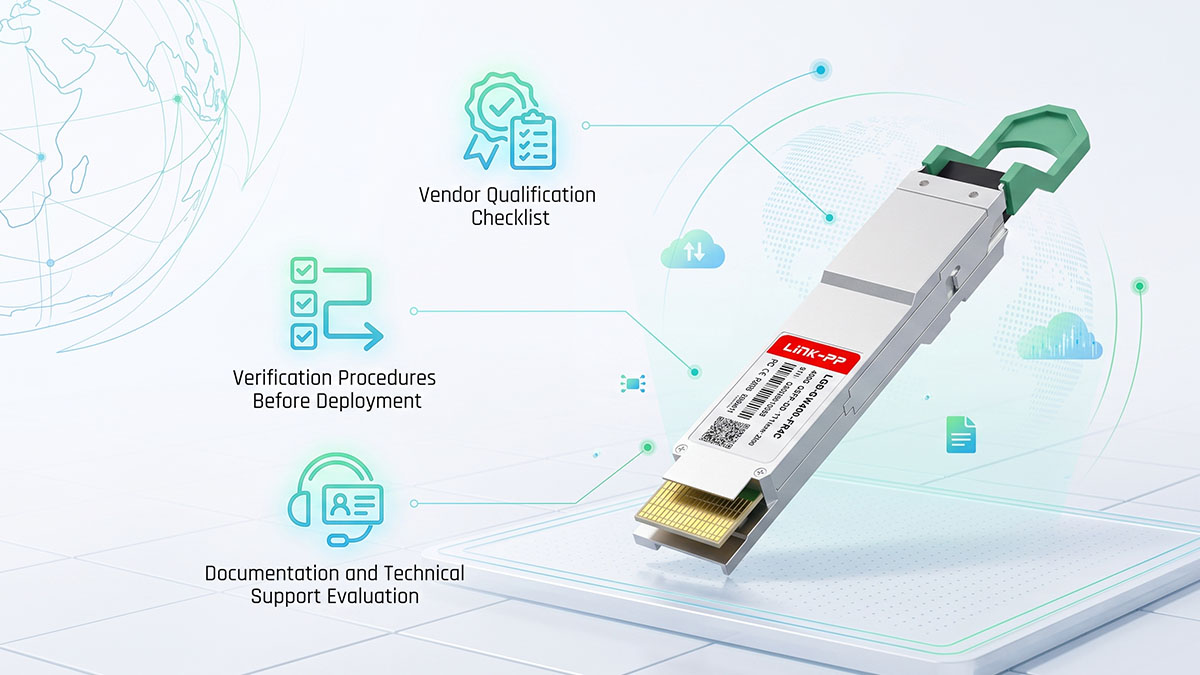
Selecting a Ciena 160-9600-900 or an equivalent 400GBASE-FR4 QSFP-DD transceiver involves more than matching technical specifications. Long-term network performance depends on the quality of the sourcing process and the thoroughness of validation procedures. Organizations that establish structured qualification and testing workflows are more likely to achieve stable interoperability, predictable performance, and lower operational risk throughout the deployment lifecycle.
Vendor Qualification Checklist
The quality of an optical transceiver is heavily influenced by the manufacturing processes, testing standards, and quality assurance systems behind it. Before selecting a supplier, organizations should evaluate whether the vendor can consistently deliver products that meet enterprise and data center deployment requirements.
Important vendor qualification criteria include:
- Documented quality management processes
- Traceability of critical optical components
- Consistent manufacturing and assembly procedures
- Comprehensive product testing methodologies
- Compatibility validation capabilities
- Technical documentation availability
- Product warranty coverage
- Supply chain stability and inventory management practices
A qualified supplier should be able to provide clear information regarding product specifications, testing procedures, and compatibility validation results. Transparency in these areas often indicates a mature manufacturing and support process.
Verification Procedures Before Deployment
Even when a transceiver matches all required specifications, technical validation should be performed before widespread deployment. Laboratory testing helps confirm interoperability and identifies potential issues before they affect production services.
A structured verification process typically includes:
- Physical inspection of module labeling and specifications
- EEPROM and coding verification
- Platform recognition testing
- Optical power measurements
- Digital diagnostics validation
- Link establishment testing
- Error rate monitoring under load conditions
- Environmental stability verification
For the Ciena 160-9600-900 and compatible alternatives, special attention should be given to:
- 400GBASE-FR4 compliance
- CWDM4 wavelength operation
- QSFP-DD interface compatibility
- CMIS management functionality
- KP4 FEC interoperability
Validation should ideally be conducted using the same switch, router, or transport platform that will be used in production. This approach provides a more accurate representation of real-world operating conditions.
Completing these verification steps before deployment can significantly reduce troubleshooting efforts and minimize service disruption risks during network expansion projects.
Documentation and Technical Support Evaluation
Technical documentation and support resources are often overlooked during product evaluation, yet they can play a critical role in long-term operational success. Well-documented products simplify deployment, accelerate troubleshooting, and improve overall network maintainability.
When assessing documentation and support capabilities, organizations should review:
- Product datasheets and technical specifications
- Compatibility documentation
- Installation guidelines
- Digital diagnostics references
- Firmware and coding information
- Testing and qualification reports
- Warranty terms and support policies
In addition to documentation quality, support responsiveness should also be considered. Key areas of evaluation may include:
- Availability of pre-deployment technical assistance
- Response times for technical inquiries
- Troubleshooting expertise
- RMA and replacement procedures
- Support for compatibility validation requests
Strong documentation and technical support can reduce operational complexity throughout the lifecycle of a 400G optical deployment. This becomes particularly important for organizations managing large-scale networks where rapid issue resolution and consistent technical guidance contribute directly to network availability and operational efficiency.
💮 Conclusion
The Ciena 160-9600-900 is a 400GBASE-FR4 QSFP-DD optical transceiver designed for 400G Ethernet transmission over single-mode fiber up to 2km using a CWDM4 wavelength architecture. In modern high-density data center and metro interconnect environments, it plays a critical role in enabling scalable 400G network expansion, while compatible equivalent modules also provide flexible sourcing options without compromising key technical requirements.
To support efficient planning, deployment, and procurement decisions, the key insights from this guide can be summarized as follows:
- The module is built for 400GBASE-FR4 QSFP-DD short-reach transmission over SMF up to 2km using CWDM4 wavelengths
- Compatibility depends on QSFP-DD platform support, CMIS compliance, and proper firmware alignment
- Deployment success requires validated link budgets, environmental readiness, and FEC stability checks
- Equivalent compatible solutions can provide similar specifications while improving supply flexibility
- Long-term performance depends on reliability testing, standards compliance, and structured lifecycle management
As 400G networks continue to scale across data center and enterprise environments, selecting the right optical transceiver becomes a strategic infrastructure decision rather than a simple hardware choice. Evaluating both original and compatible solutions with a structured validation approach helps ensure stable performance, reduced operational risk, and long-term network scalability.
For organizations seeking technically verified 400GBASE-FR4 QSFP-DD optical solutions, LINK-PP Official Store provides a broad range of compatible transceiver options designed to support high-performance optical networking deployments across diverse infrastructure environments.