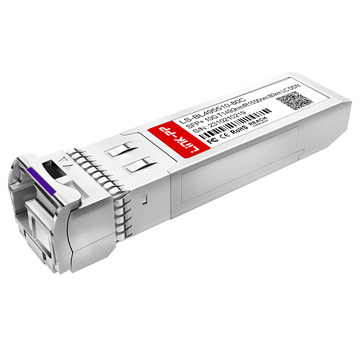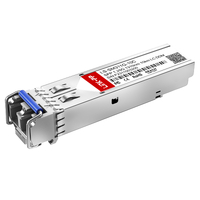






























In rugged industrial networking, the Moxa SFP-1GLXLC transceiver is a trusted staple for reliable single-mode fiber connectivity. However, when these modules reach their end-of-life or require immediate field swaps, finding a precise alternative that matches Moxa's strict performance standards can be a challenge.
Deploying network hardware in harsh environments — like power substations or roadside enclosures — leaves zero room for error. A successful Moxa SFP-1GLXLC replacement requires a deep understanding of optical link budgets, industrial-grade temperature ratings, and hardware compatibility to prevent costly network downtime.
🔶 Understanding Core Specs of a Moxa SFP-1GLXLC Replacement
Before sourcing a Moxa SFP-1GLXLC compatible replacement module, you must thoroughly understand the technical baseline of the original equipment. Choosing an alternative isn't just about finding a plug that fits; it requires matching precise optical and electronic parameters. Missing even one core specification can lead to dropped packets, poor signal strength, or complete link failure in the field.
Form Factor and Data Rate Standards
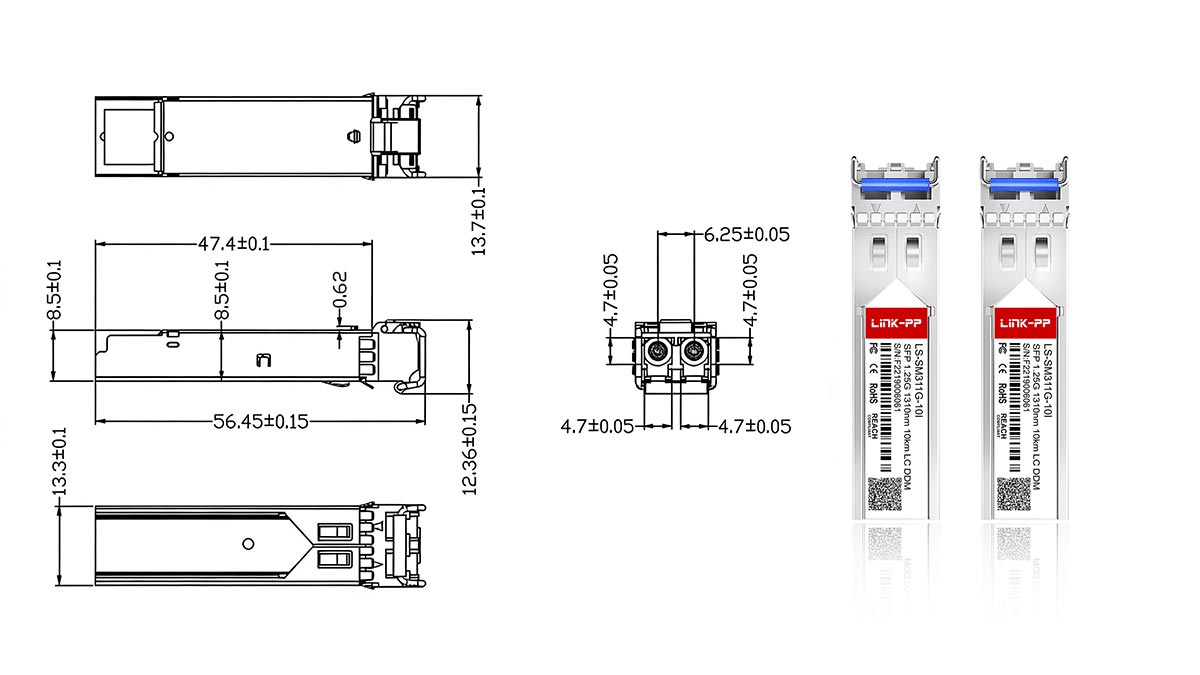
The Moxa SFP-1GLXLC utilizes the industry-standard Small Form-factor Pluggable (SFP) design, often referred to as a mini-GBIC. This hot-swappable transceiver is engineered specifically for Gigabit Ethernet applications, delivering a data rate of 1Gbps.
When selecting a replacement, ensuring exact compliance with the Multi-Source Agreement (MSA) standards is critical for physical and electrical fit. The new module must support a matching line rate of 1.25Gbps to ensure seamless synchronization with the host industrial switch.
Wavelength and Single-Mode Fiber (SMF) Reach
This specific Moxa module operates at a nominal wavelength of 1310nm, which is optimized for long-distance data transmission. It is designed to run over single-mode fiber cabling, which features a narrow core that minimizes signal distortion over long distances.
A Moxa SFP-1GLXLC compatible 1G SFP module must match this 1310nm wavelength to successfully communicate with the equipment at the other end of the fiber link. It must also support the standard maximum transmission distance of up to 10km without requiring inline signal boosters.
Optical Link Budget and Receiver Sensitivity
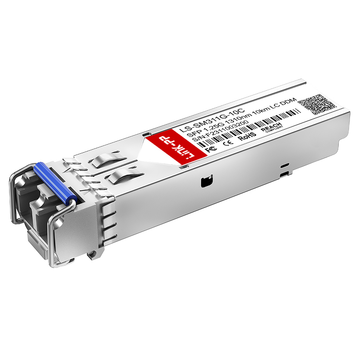
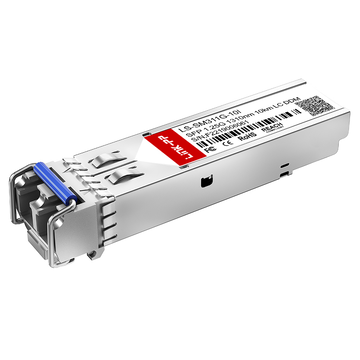
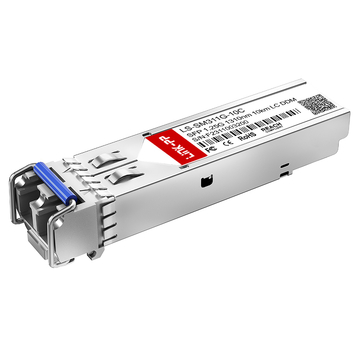
The optical link budget represents the maximum amount of power loss a signal can tolerate while traveling from the transmitter to the receiver. A dependable Moxa SFP-1GLXLC alternative like the LINK-PP LS-SM311G-10C 1000BASE-LX SFP transceiver satisfies this criteria by delivering a transmission (TX) power range of -9 to 0dBm and a receiver (RX) power range of -23 to -1dBm. This configuration yields a robust 14dB optical link budget, ensuring the signal remains strong across the entire fiber span.
With a receiver sensitivity rated at -23dBm, this replacement module can reliably detect faint light signals that have been degraded by fiber patches or splices. Matching these precise power levels prevents the data signal from dropping out over the 10km run. Conversely, it also ensures the transmitter does not overpower and blind the receiver at shorter distances.
The Standard Operating Temperature Range vs. Wide Temperature Needs
Standard commercial transceivers are built to operate only in climate-controlled environments ranging from 0°C to 70°C (32°F to 158°F). However, the Moxa SFP-1GLXLC series includes wide-temperature models (often designated with a "-T" suffix) built to survive extreme industrial conditions.
For unconditioned enclosures or outdoor deployments, the replacement module must support a hardened operating range of -40°C to 85°C (-40°F to 185°F). Using a standard-grade module in these settings will lead to rapid thermal degradation, laser failure, and unpredictable network drops.
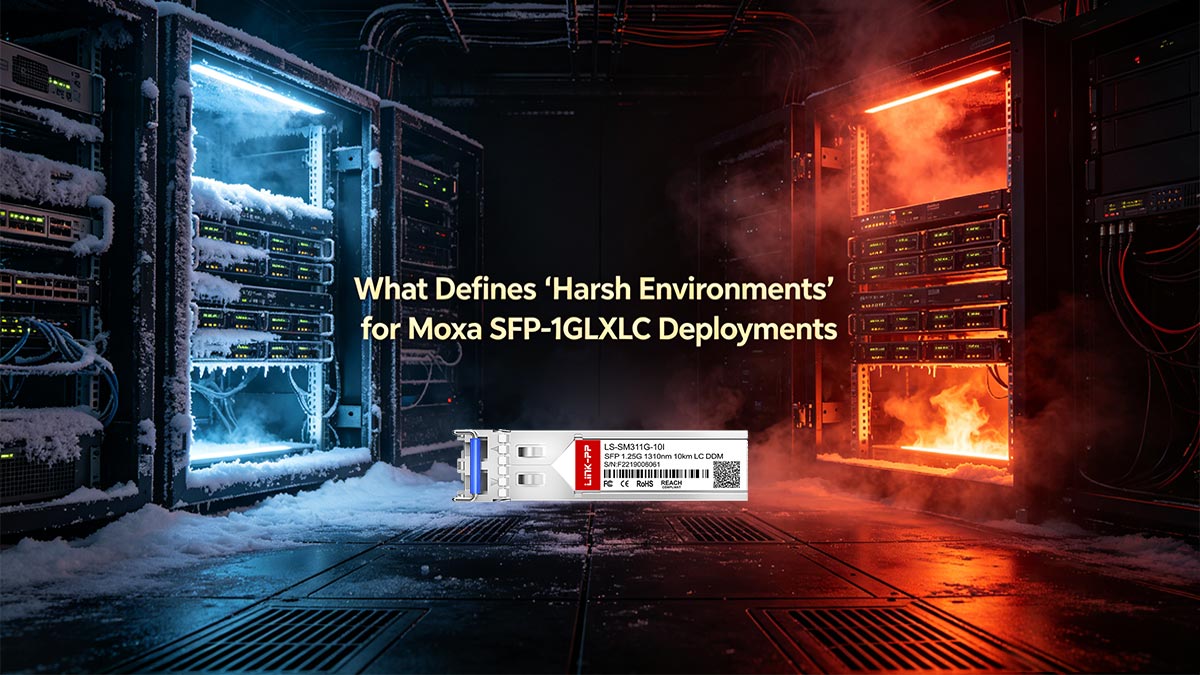
🔶 What Defines "Harsh Environments" for Moxa SFP-1GLXLC Deployments
Industrial networks are often deployed in locations that would quickly destroy standard commercial hardware. In these edge deployments, a transceiver must survive punishing physical and environmental conditions while maintaining a stable data link. Understanding these specific field challenges helps explain why a ruggedized replacement module is absolutely mandatory.
Extreme Temperature Fluctuations in Substation and Roadside Enclosures
Outdoor roadside cabinets and electrical substations are subject to intense environmental thermal stress. Without active climate control, internal enclosure temperatures can plummet below freezing at night and soar well past 70°C (158°F) under direct summer sunlight.
These rapid temperature swings cause materials inside a standard transceiver to expand and contract, leading to optical misalignment. A rugged alternative must tolerate these extreme shifts to prevent the laser transmitter from drifting off its required 1310nm wavelength.
High Electromagnetic Interference (EMI) and RFI Challenges
Industrial environments are filled with heavy electrical machinery, power lines, and wireless communication systems that generate massive fields of interference. High electromagnetic interference (EMI) and radio frequency interference (RFI) can easily penetrate poorly shielded network components, corrupting data packets as they travel.
To prevent this data corruption, optical transceivers rely on robust internal shielding and metal housings to isolate sensitive laser diodes from ambient electrical noise. The table below outlines the primary sources of electromagnetic disruption and their direct impact on transceiver performance:
| Source of Interference | Impact on Transceiver Performance |
| High-Voltage Transformers & Switchgear | Induces electrical noise, potentially causing frame drops on the host switch. |
| Variable Frequency Drives (VFDs) | Generates high-frequency harmonics that disrupt internal power regulation. |
| Heavy-Duty Motors & Generators | Causes voltage spikes capable of damaging unshielded transceiver circuitry. |
Shock, Vibration, and Mechanical Stress in Industrial Automation
Factory floors, assembly lines, and heavy machinery installations subject networking hardware to constant physical movement. This continuous mechanical stress can range from the low-frequency rumble of nearby engines to sudden, high-impact shocks from heavy equipment operation.
Standard transceivers are prone to shifting inside their slots when subjected to this constant shaking, which can interrupt physical contact. Over time, severe vibration can even crack internal solder joints or misalign the delicate internal lenses responsible for focusing the fiber-optic beam.
Humidity, Dust, and Corrosive Atmosphere Risks
Many industrial networks operate in coastal areas, wastewater plants, or chemical processing facilities where the air is highly corrosive. High humidity combined with airborne salt, moisture, or chemical vapors can accelerate the oxidation of exposed metal components.
Additionally, fine dust particles can settle into unsealed port connections, blocking the optical path between the fiber patch cable and the transceiver lens. Without proper environmental sealing and corrosion-resistant plating, a replacement module will suffer from rapid signal degradation and premature hardware failure.
🔶 Critical Selection Criteria for a Moxa SFP-1GLXLC Replacement
Choosing the right Moxa SFP-1GLXLC replacement module requires looking beyond basic compatibility to evaluate its structural and operational integrity. In industrial settings, a substitute transceiver must meet strict physical and electrical benchmarks to ensure long-term reliability. Focus on these critical vetting criteria to guarantee your chosen alternative can withstand demanding field conditions.
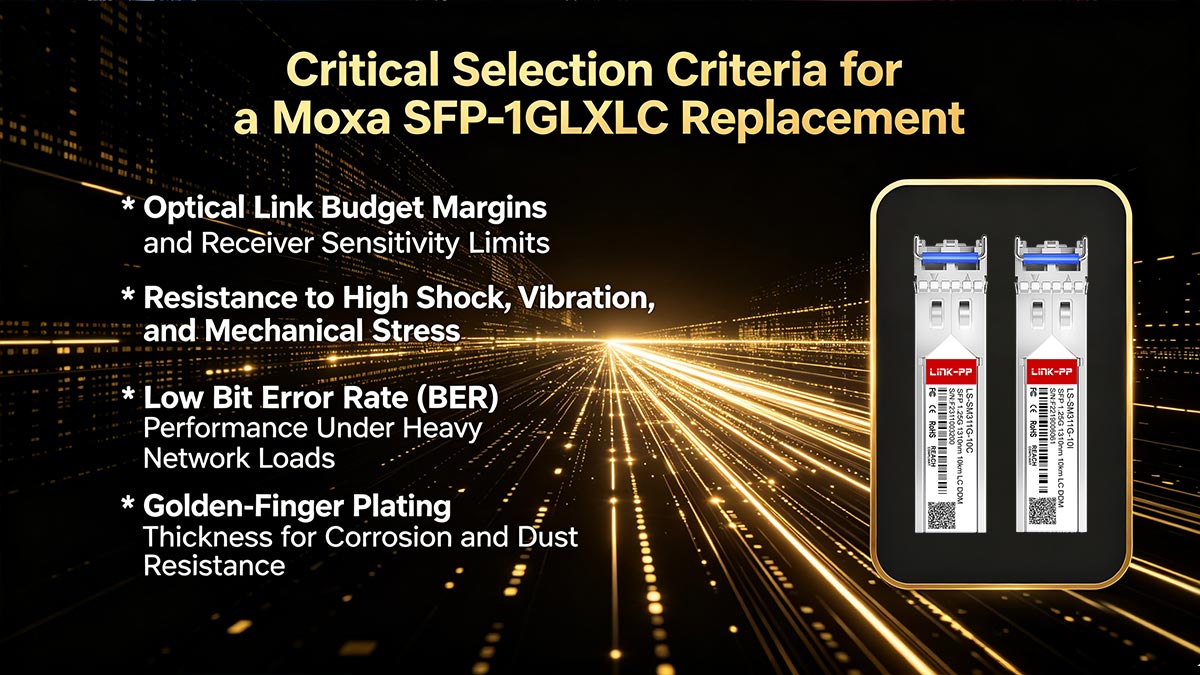
Optical Link Budget Margins and Receiver Sensitivity Limits
When selecting a replacement, it is vital to choose a module that offers a comfortable safety margin within its optical link budget. Harsh environments often introduce unpredictable signal attenuation due to micro-bends in the fiber or slightly dirty connections. A module with a robust link budget ensures that minor power losses along the fiber span will not cause the link to drop entirely.
Furthermore, the receiver sensitivity limit must be low enough to detect weakened signals without introducing data corruption. Evaluating these optical limits ensures the replacement can maintain a rock-solid connection even as the physical fiber plant ages. This safeguarding prevents intermittent connectivity issues that are notoriously difficult to troubleshoot in remote locations.
Resistance to High Shock, Vibration, and Mechanical Stress
Industrial applications demand a transceiver with superior mechanical construction to survive constant physical movement. The alternative module should feature a reinforced locking latch mechanism that prevents it from backing out of the switch port when shaken. Internal components must also be securely anchored or encapsulated to protect delicate laser alignments from sudden impacts.
Before deployment, verify that the third-party compatible module complies with recognized industrial shock and vibration standards, such as IEC 60068-2. This compliance guarantees that the internal optical alignment will remain intact despite heavy machinery rumblings or trackside jolts. Investing in mechanically hardened hardware eliminates physical displacement as a potential point of network failure.
Low Bit Error Rate (BER) Performance Under Heavy Network Loads
A reliable Moxa SFP-1GLXLC replacement must maintain an exceptionally low Bit Error Rate (BER) when handling high-density industrial data traffic. In automation networks, continuous streams of critical telemetry and control commands leave no room for delayed or corrupted packets. A high-quality module uses premium internal timing clocks and laser drivers to ensure precise bit delivery.
If a substitute module suffers from high jitter or poor signal processing, the BER will spike under heavy network loads. This leads to frequent packet retransmissions, which degrade overall network throughput and introduce hazardous latency into real-time control systems. Prioritizing low BER performance ensures smooth, uninterrupted data transmission when the network is maxed out.
Golden-Finger Plating Thickness for Corrosion and Dust Resistance
The electrical interface of the SFP, known as the "golden fingers," relies on a thin layer of gold plating to ensure clean contact with the host switch board. For harsh environment deployments, the thickness of this gold plating is a critical indicator of long-term durability. Thicker plating provides a much stronger defense against fretting corrosion caused by microscopic vibrations rubbing the contacts together.
Additionally, robust plating resists the chemical oxidation caused by humid, salty, or sulfur-rich atmospheres found in heavy industries. A cheaply made module with thin plating will quickly corrode, resulting in intermittent electrical contact and eventual port failure. Ensuring a high specification for connector plating thickness is essential for maintaining electrical continuity over years of service.
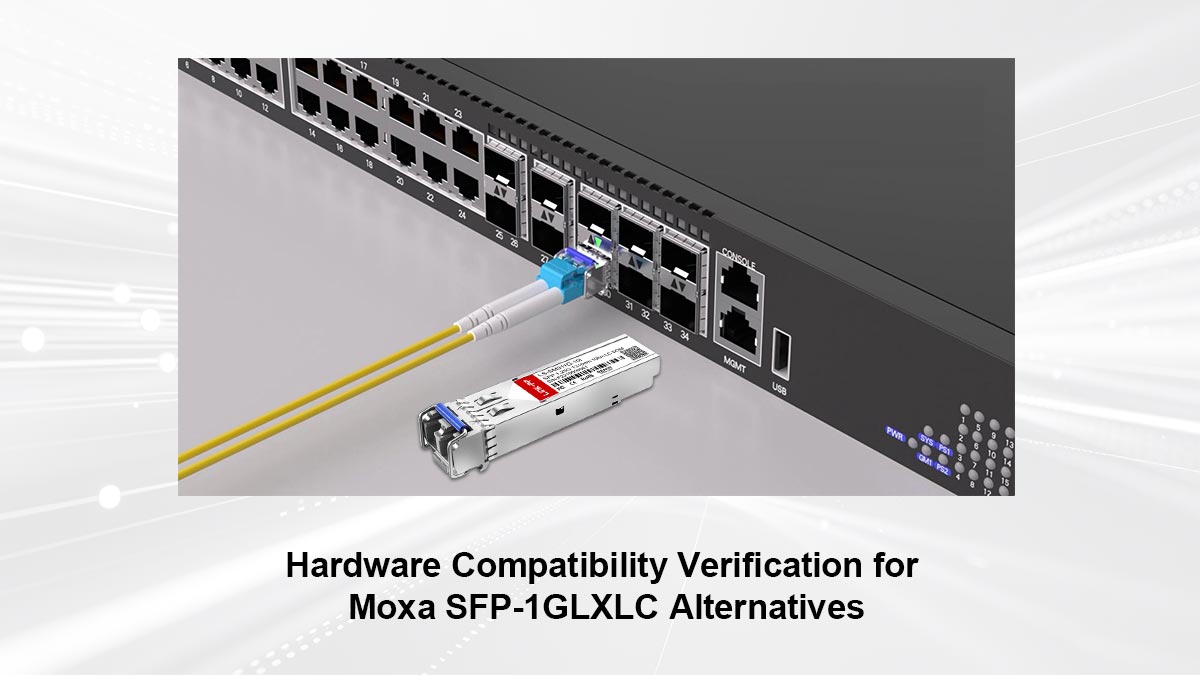
🔶 Hardware Compatibility Verification for Moxa SFP-1GLXLC Alternatives
Verifying hardware compatibility is a vital step before deploying any third-party compatible transceiver into a live production switch. Even if a replacement module matches every physical and optical specification, software or structural mismatches can still prevent the link from coming online. Taking the time to validate these compatibility factors ensures a smooth installation without unexpected software lockouts.
Firmware EEPROM Coding and Host Board Recognition
Industrial switches read a specialized, non-volatile EEPROM chip embedded inside the transceiver to verify its identity and operational parameters. If this internal firmware does not contain the specific vendor coding required by the host switch, the device may reject the module entirely. This mismatch often triggers an "unsupported transceiver" error in the switch operating system, disabling the port.
To prevent this issue, a high-quality Moxa SFP-1GLXLC alternative must be correctly coded and tested to mimic the original Moxa firmware profile. This precise software emulation guarantees that the host board immediately recognizes the new module upon insertion. Proper firmware alignment also ensures that Digital Diagnostic Monitoring (DDM) data can be read accurately by the switch CLI.
Hot-Pluggable Form Factor Slot Alignment
While all standard SFPs share a similar shape, slight manufacturing variations in the outer housing can lead to physical installation difficulties. A compatible module must strictly adhere to the Multi-Source Agreement (MSA) physical dimensions to guarantee a clean glide into the switch SFP cage. Poorly manufactured shells can get jammed or fail to engage the electrical pins on the backplane.
Proper slot alignment ensures that the transceiver securely clicks into place without requiring excessive force, which could damage the host board. The locking bale or latch must also align perfectly with the switch cage mechanism to allow for easy removal during future maintenance. Verifying these minor physical tolerances prevents hardware damage and saves valuable time during field swaps.
LC Duplex Connector Engagement and Optical Realignment
The physical interface where the optical patch cable meets the transceiver requires absolute precision to avoid signal loss. The replacement module must feature a precisely molded LC duplex receptacle that securely locks the fiber connectors into place. Any microscopic wobble or loose engagement inside the bore can cause the fiber cores to misalign, leading to immediate optical attenuation.
When the LC connector engages properly, the fiber face sits perfectly flush against the transceiver’s internal lenses for optimal light transmission. A high-quality alternative ensures this mechanical alignment is maintained even when the fiber cables are accidentally tugged or moved. This stable connection is essential for keeping insertion loss to an absolute minimum in rugged environments.
Avoiding Vendor Lock-In via Third-Party Transceiver Interoperability
Many network operators mistakenly believe they must purchase expensive proprietary modules to guarantee network stability and hardware support. However, choosing fully compatible, high-quality alternative transceivers breaks this vendor lock-in and offers massive cost savings for large-scale deployments. These open-standard alternatives provide identical performance metrics while giving network managers greater supply chain flexibility.
Furthermore, third-party alternatives can be precisely configured to match the specific cryptographic and firmware requirements of the host industrial switch. This direct interoperability eliminates the artificial software barriers often imposed by main equipment manufacturers. Embracing reliable independent alternatives ultimately enhances procurement agility without sacrificing industrial-grade reliability.
🔶 Step-by-Step Replacement Procedure for Moxa SFP-1GLXLC in the Field
Replacing a transceiver in an active industrial setting requires a careful balance of speed and precision. Following a structured installation protocol minimizes the risk of damaging sensitive electronics or accidentally extending network downtime. By executing each step methodically, field technicians can ensure a seamless transition and immediate link restoration.
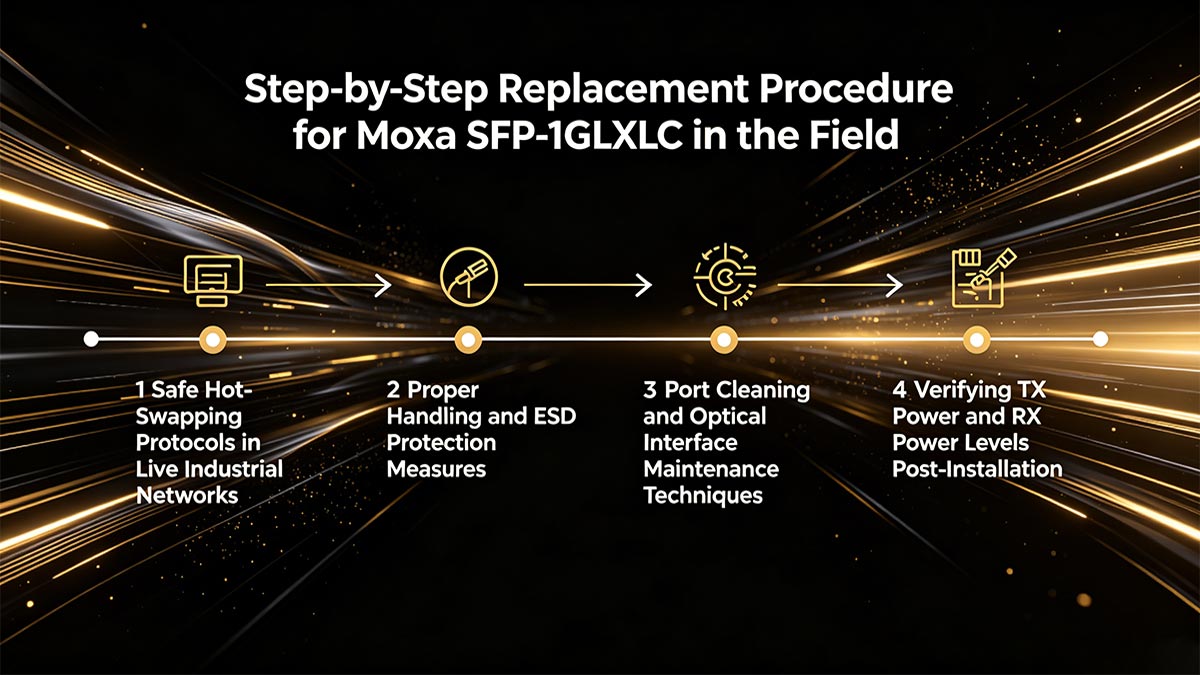
Safe Hot-Swapping Protocols in Live Industrial Networks
Although the Moxa SFP-1GLXLC supports hot-swapping, unguided removal can still disrupt surrounding network traffic or cause software glitches on the host switch. Technicians must strictly follow proper administrative and physical sequence protocols before pulling a live module.
- Check Network Redundancy: Verify that backup links or RSTP paths are active to handle traffic.
- Disconnect Fiber Cables First: Gently unplug the LC duplex patch cord before touching the SFP.
- Unlock the Bale Latch: Flip down the integrated wire clip to release the module from the slot.
- Pull Straight Out: Slide the transceiver out smoothly without twisting or forcing it.
Proper Handling and ESD Protection Measures
Electrostatic discharge (ESD) is a silent killer of delicate laser components and internal microchips. Even a minor static shock that a human cannot feel can permanently degrade a transceiver's performance or cause immediate failure.
- Wear an ESD Wrist Strap: Connect the grounded strap to the switch chassis before handling hardware.
- Hold by the Metal Housing: Keep your fingers away from the exposed rear electrical contacts.
- Use Anti-Static Packaging: Keep the replacement module in its protective bag until installation.
- Install Dust Caps Immediately: Keep protective covers on any ports or cables that are not actively in use.
Port Cleaning and Optical Interface Maintenance Techniques
Microscopic dust particles are the leading cause of signal loss and high bit error rates in single-mode fiber systems. Cleaning both the transceiver optical bore and the fiber connector ferrule is an absolute requirement before mating the connection.
- Inspect the Fiber Ends: Use a specialized fiber inspection scope to check for dirt or scratches.
- Use Click-Style Cleaners: Insert a dry fiber optic cleaning pen into the SFP optical bore.
- Wipe the LC Patch Cord: Clean the male connector tip using an optical lint-free cleaning cassette.
- Avoid Wet Cleaning Solutions: Do not use unapproved isopropyl alcohol, which can leave residue behind.
Verifying TX Power and RX Power Levels Post-Installation
Once the physical installation is complete, the final step is to verify that the light levels fall safely within the required specifications. Technicians must check these metrics to confirm that the replacement transceiver is operating efficiently and reliably.
- Check the Link LED: Confirm that the port status indicator turns solid green on the switch panel.
- Access the Switch CLI: Log into the management console to view Digital Diagnostic Monitoring (DDM).
- Verify TX Output Power: Ensure the transmitted light power matches the nominal module specifications.
- Verify RX Input Power: Check that the received signal strength sits safely above the receiver sensitivity limit.
🔶 Troubleshooting Link Failures After Replacing a Moxa SFP-1GLXLC Compatible Module
Even with meticulous field installation, post-replacement link failures can occasionally happen due to hidden hardware or configuration mismatches. When a newly installed module fails to bring the network connection online, a systematic troubleshooting approach is essential. Isolating whether the breakdown is physical, optical, or logical helps technicians restore operations without wasting valuable time.
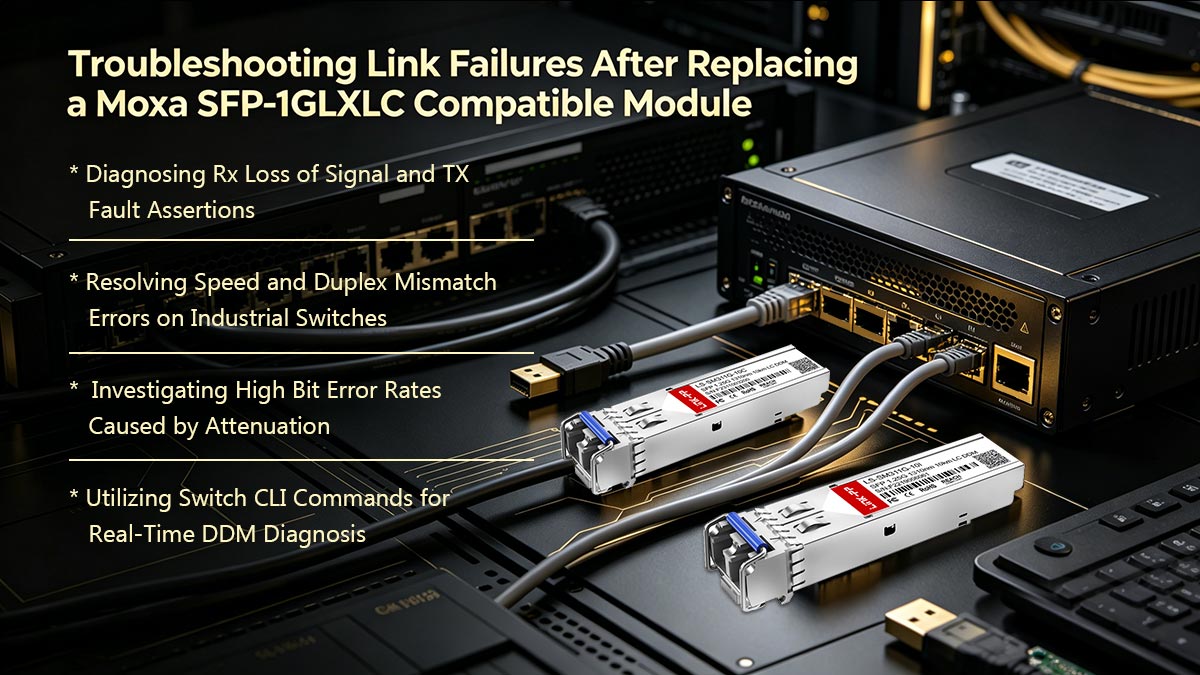
Diagnosing Rx Loss of Signal (LOS) and TX Fault Assertions
An Rx Loss of Signal (LOS) alarm means the host switch detects no incoming light on the optical port. This issue is usually caused by a broken patch cord, mismatched TX/RX fiber polarity, or a dirty fiber ferrule. Swapping the fiber strands or testing the line with a standard optical power meter will quickly isolate where the light path is broken.
Conversely, a TX Fault assertion points directly to an internal hardware issue within the newly installed transceiver itself. This error indicates that the transmitter laser is failing to emit light or is drawing improper voltage from the host board. Replacing the faulty module with a verified spare is typically the fastest way to resolve a stubborn TX Fault status.
Resolving Speed and Duplex Mismatch Errors on Industrial Switches
Industrial Ethernet switches often require explicit port configurations to communicate reliably with new third-party modules. A speed or duplex mismatch occurs when one end of the fiber link is set to auto-negotiate while the other is locked to a fixed speed. This logical error prevents the Moxa SFP-1GLXLC alternative from establishing a stable handshake with the host board.
To resolve this issue, access the management interface of both switches and manually hardcode the ports to 1000Mbps Full Duplex. Disabling auto-negotiation forces both hardware interfaces to synchronize on the exact same transmission parameters instantly. This minor software adjustment often clears up intermittent link flapping and restores immediate data flow.
Investigating High Bit Error Rates (BER) Caused by Attenuation
A high Bit Error Rate (BER) means that data packets are getting corrupted during transmission, causing frequent packet drops and retransmissions. In single-mode fiber runs, this performance degradation is almost always caused by severe optical attenuation. Excessively sharp bends in the fiber cable or contaminated connector faces are the primary culprits behind this signal loss.
Technicians should use an Optical Time-Domain Reflectometer (OTDR) to pinpoint the exact location of any physical stress or macro-bends along the fiber span. Cleaning the optical connectors once more and rerouting pinched cables will generally bring the attenuation back within the target 14dB link budget. Eliminating these physical barriers stabilizes the light path and drops the BER back to acceptable levels.
Utilizing Switch CLI Commands for Real-Time DDM Diagnosis
Modern industrial managed switches provide powerful built-in diagnostic tools through their Command Line Interface (CLI). By executing manufacturer-specific commands, technicians can view real-time Digital Diagnostic Monitoring (DDM) telemetry from the transceiver. This interface provides instant readouts of internal operating metrics like temperature, voltage, TX bias current, and optical power.
Analyzing these live values allows technicians to diagnose whether the replacement transceiver is operating within its safe limits. For instance, if the RX power reading is far below -23dBm, the CLI immediately flags an under-voltage or weak signal warning. Leveraging these precise digital analytics removes the guesswork from field troubleshooting and speeds up root-cause resolution.
🔶 Deploying Moxa SFP-1GLXLC Alternatives in Specific Harsh Environments
Deploying a transceiver alternative successfully depends entirely on matching the hardware to the unique challenges of the specific industry vertical. Every field application presents a distinct combination of environmental threats that can compromise network performance if left unaddressed. Selecting a properly hardened module ensures maximum survivability and consistent data transmission across diverse industrial landscapes.
Temperature Considerations for Moxa SFP-1GLXLC Replacements
In unventilated roadside cabinets and electrical power substations, a Moxa SFP-1GLXLC replacement must be selected according to the actual environmental conditions. Since the SFP-1GLXLC is a commercial-grade module designed for a standard operating temperature range, it may not be suitable for deployments exposed to extreme temperature fluctuations. For harsh outdoor or industrial environments, the replacement module (such as SFP-1GLXLC-T) should provide an operating temperature range appropriate for the site, such as -40°C to 85°C, to maintain reliable performance and protect internal components from excessive heat or cold. This temperature compatibility helps reduce the risk of thermal-related signal degradation and unexpected link interruptions.
High-Vibration Tracking in Rail Transit and Trackside Infrastructure
Rail transit and trackside networks are subject to continuous, high-impact mechanical shaking from passing trains. To survive this mechanical stress, the chosen alternative module must feature a heavy-duty locking latch that ensures it remains firmly seated in the switch cage. This robust mechanical stability prevents microscopic contact shifting, keeping the single-mode fiber cores perfectly aligned despite non-stop rail vibrations.
Severe Electromagnetic Interference (EMI) in Factory Automation
Factory floors filled with welding robots, heavy motors, and high-voltage machinery create intense fields of electromagnetic noise. A reliable alternative transceiver must be built with premium metal housings and enhanced internal shielding to block out high EMI and radio frequency threats. This superior isolation ensures that the sensitive internal circuitry can transmit data flawlessly without dropping packets or generating transmission errors.
Corrosive and Humid Atmospheres in Offshore Oil & Gas Pipelines
Offshore oil platforms and marine pipeline systems expose networking hardware to high humidity, salty air, and hazardous corrosive gases. A high-quality replacement transceiver utilizes extra-thick gold plating on its connector pins to stop chemical oxidation before it can start. This specialized anti-corrosion defense preserves electrical integrity at the contact points, keeping vital data flowing smoothly in salt-spray environments.
🔶 Conclusion: Securing Harsh Environment Network Uptime with a Reliable Moxa SFP-1GLXLC Alternative
Maintaining maximum network uptime in punishing industrial conditions requires a strategic approach to selecting your hardware replacements. By matching the precise optical budgets, physical standards, and firmware requirements of the original Moxa SFP-1GLXLC transceiver, you ensure your network remains resilient against extreme temperatures, heavy vibrations, and intense electrical noise. Investing in verified, ruggedized alternatives ultimately protects your operations from costly and unpredictable field failures.
Ready to upgrade your industrial network infrastructure with high-performance, fully compatible transceivers? Visit the LINK-PP Official Store to explore a comprehensive range of premium optical modules designed to withstand the world's most demanding environments. Our specialized solutions deliver the exact reliability and seamless interoperability your mission-critical systems need to keep data flowing safely.