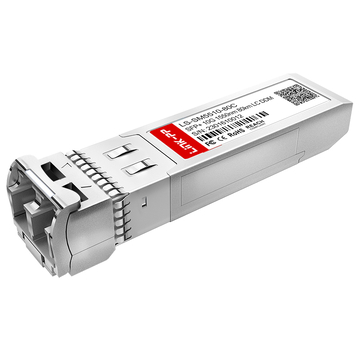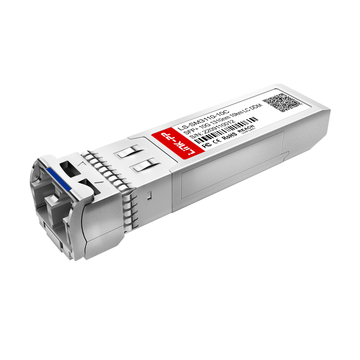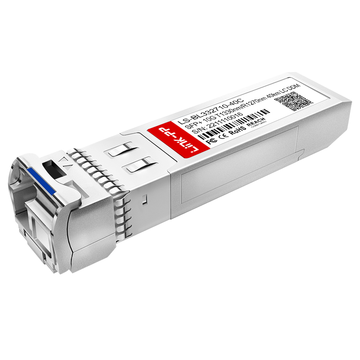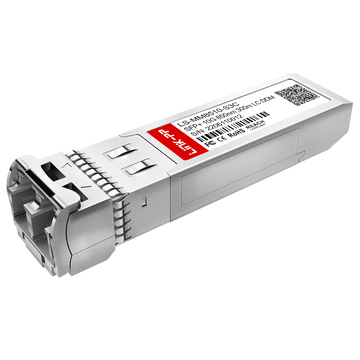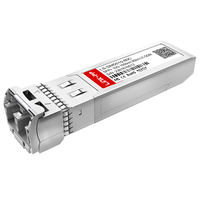
The rapid growth of ISP and enterprise network traffic has pushed 10Gbps connectivity into a standard requirement rather than an upgrade option. In modern MikroTik-based infrastructures, especially deployments using CRS and CCR series devices, 10G SFP+ optical modules play a critical role in ensuring stable, high-speed data transmission across backbone, aggregation, and access layers. As network architectures scale, the demand for consistent optical performance, supply stability, and cost-efficient procurement becomes increasingly important for long-term infrastructure planning.
Within this context, MikroTik 10GB SFP+ modules are widely used for short-reach, long-haul, and metropolitan fiber connections, covering a broad range of deployment scenarios such as ISP backbones, data center interconnects, and wireless backhaul networks. However, as deployment scale increases, many ISPs begin to evaluate alternative optical transceiver modules that maintain full compatibility with MikroTik systems while offering improved procurement flexibility and more predictable bulk deployment economics. This shift is driven by practical operational needs rather than performance limitations.
This article provides a structured guide to MikroTik 10GB SFP+ alternatives from an ISP bulk discount perspective. It will break down module types, key technical selection factors, compatibility considerations, cost optimization strategies, and deployment best practices. By the end, you will have a clear framework for evaluating optical transceiver modules in large-scale MikroTik networks, enabling more efficient procurement decisions and more stable long-term network operations.
🚀 Understanding MikroTik 10GB SFP+ Modules
MikroTik 10GB SFP+ modules are hot-swappable optical transceivers designed to deliver 10Gbps Ethernet connectivity over fiber or copper-based infrastructures in MikroTik networking devices. In practical ISP and enterprise deployments, they serve as the physical layer interface that enables high-speed data transmission between routers, switches, and upstream network nodes. Understanding how these modules work and where they are applied is essential for building stable, scalable MikroTik-based network architectures.
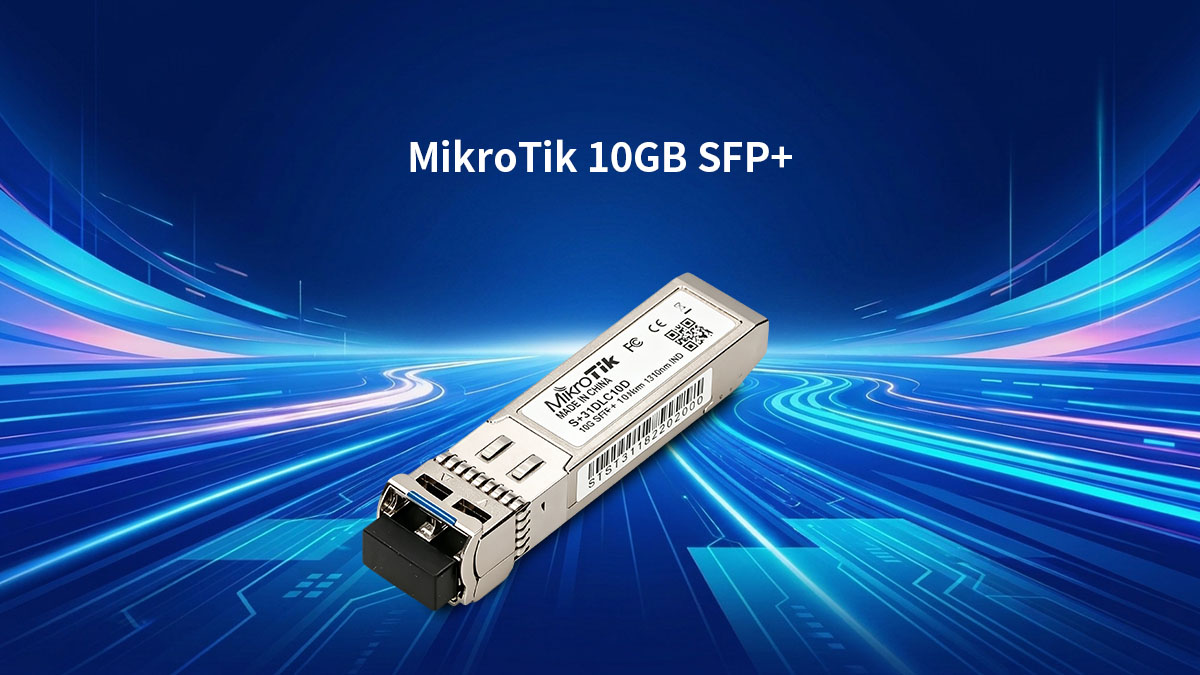
What Is a MikroTik 10GB SFP+ Module?
A MikroTik 10GB SFP+ transceiver is a compact pluggable transceiver that converts electrical signals from MikroTik routers or switches into optical signals for fiber transmission, supporting 10Gbps Ethernet standards.
From a deployment perspective, these modules are widely used in MikroTik CRS and CCR series devices to enable high-speed uplinks and backbone connections across ISP and enterprise environments.
Key functional characteristics include:
- Support for 10 Gigabit Ethernet transmission over fiber infrastructure
- Hot-swappable design for fast deployment and maintenance
- Compatibility with standardized SFP+ ports on MikroTik devices
- Use in both short-range and long-range optical networking scenarios
After defining the basic concept, it is important to understand that these modules are not uniform in design but instead follow different optical standards based on distance and infrastructure requirements.
Common MikroTik 10G SFP+ Module Types
MikroTik 10G SFP+ modules are categorized based on optical standards, transmission distance, and fiber type. Each module type is designed for a specific network environment, ranging from short-range data center links to ultra-long-distance ISP backbone connections.
Typical types include the following:
- 10GBASE-SR for short-distance multimode fiber connections (commonly used in data centers and campus networks)
- 10GBASE-LR for long-distance single-mode fiber links (standard choice for ISP access and aggregation layers)
- 10GBASE-ER for extended metropolitan fiber connections requiring higher reach than LR
- 10GBASE-ZR for ultra-long-distance transmission across regional or inter-city backbone networks
- CWDM transceivers for wavelength-division multiplexing environments where fiber resources are optimized
- Industrial-grade SFP+ modules designed for harsh environments with wider temperature tolerance
These module types differ significantly in transmission distance, optical wavelength, and application scenarios, which makes proper selection critical for ensuring stable network performance.
| Module Type | Typical Distance | Fiber Type | Primary Use Case |
|---|---|---|---|
| 10GBASE-SR (S+85DLC03D) | Up to 300m | Multimode (OM3/OM4) | Data center / campus |
| 10GBASE-LR (S+31DLC10D) | Up to 10km | Single-mode (OS2) | ISP access / aggregation |
| 10GBASE-ER (S+32LC40D) | Up to 40km | Single-mode (OS2) | Metropolitan networks |
| 10GBASE-ZR (MikroTik compatible LS-SM5510-80C) | Up to 80km+ | Single-mode (OS2) | Regional backbone links |
Before moving into deployment scenarios, it is important to recognize that these module types form the foundation of nearly all MikroTik 10Gbps fiber deployments, and selecting the correct standard directly impacts both network stability and long-term scalability.
Typical ISP and Enterprise Deployment Scenarios
In real-world networking environments, MikroTik 10GB SFP+ modules are deployed across multiple layers of ISP and enterprise infrastructure, supporting both core and edge connectivity requirements.
From a deployment standpoint, their flexibility allows them to be used in a wide range of network architectures where stable 10Gbps transmission is required.
Common application scenarios include:
- ISP aggregation networks connecting access nodes to core routers
- Fiber-to-the-home (FTTH) backbone transport between distribution points
- Data center interconnect (DCI) links for server and storage clusters
- Wireless ISP backhaul connections linking base stations to core networks
- Enterprise campus backbone switching for high-speed internal routing
Each of these scenarios places different demands on optical performance, particularly in terms of distance, signal stability, and environmental conditions. As a result, MikroTik 10GB SFP+ modules are selected not only based on speed requirements but also on deployment topology and infrastructure design constraints.
🚀 Why ISPs Explore MikroTik 10GB SFP+ Alternatives
ISPs increasingly evaluate MikroTik 10GB SFP+ alternatives because large-scale fiber deployments demand more than basic optical functionality. In real-world network expansion projects, factors such as procurement cost, supply continuity, and cross-platform compatibility often become just as important as optical performance. As ISP networks grow in scale and complexity, reliance on a single-source optical module strategy can introduce operational constraints that affect deployment speed and long-term planning.
Scaling Infrastructure While Controlling Deployment Costs
The primary reason ISPs consider MikroTik 10GB SFP+ alternatives is the need to balance network expansion with predictable infrastructure costs. In high-volume deployments, optical transceivers represent a recurring expenditure across every switch, router, and aggregation point, making unit cost optimization a key factor in project economics.
From a practical ISP perspective, cost pressure typically arises in the following ways:
- Large-scale rollouts requiring hundreds or thousands of optical modules
- Continuous expansion of FTTH and metro fiber networks
- Multi-site deployments that must remain financially consistent
- Long-term infrastructure scaling that requires controlled CAPEX planning
When viewed at network scale, even small per-unit cost differences can significantly impact total deployment budgets, especially in phased ISP expansion programs.
Supply Chain Stability and Procurement Flexibility
Another major driver is supply chain unpredictability, which can directly affect ISP deployment schedules. Optical modules are subject to global manufacturing cycles, inventory fluctuations, and logistics constraints, which may result in delays during critical rollout phases.
ISPs typically encounter the following operational challenges:
- Variable stock availability during large project execution phases
- Delays caused by global semiconductor and optics supply constraints
- Dependence on single-source procurement channels
- Difficulty maintaining consistent inventory across multiple regions
As a result, many operators adopt multi-source procurement strategies, where MikroTik-compatible alternatives help ensure that deployment timelines remain stable even under supply pressure.
Multi-Vendor Compatibility Requirements
Modern ISP networks rarely rely on a single vendor ecosystem, which makes interoperability a key requirement when selecting optical transceivers. MikroTik devices are often deployed alongside switches and routers from other manufacturers, requiring optical modules that function consistently across mixed environments.
Key compatibility considerations include:
- Operation across heterogeneous network infrastructures
- Reliable detection in MikroTik RouterOS environments
- Consistent EEPROM identification behavior across platforms
- Seamless integration with multi-vendor switching architectures
In this context, MikroTik 10GB SFP+ alternatives are evaluated not only for compatibility with MikroTik hardware but also for broader interoperability across the entire ISP network stack.
Operational Efficiency in Large-Scale ISP Networks
At scale, operational efficiency becomes a critical factor influencing optical module selection. ISPs managing distributed infrastructure often prioritize standardization and simplified logistics over single-brand dependency.
This operational focus typically includes:
- Reducing SKU complexity across network deployments
- Standardizing optical modules for faster provisioning
- Streamlining spare part inventory management
- Improving maintenance and replacement workflows
By adopting compatible alternatives, ISPs can create more uniform deployment models that reduce operational overhead and improve long-term maintainability of large optical networks.
🚀 Key Technical Factors When Evaluating MikroTik 10GB SFP+ Alternatives
When ISPs evaluate MikroTik 10GB SFP+ alternatives, the decision is fundamentally driven by technical performance consistency rather than basic connectivity. At scale, even minor deviations in optical characteristics can lead to packet loss, link instability, or maintenance overhead across distributed networks. Therefore, evaluation must focus on measurable optical parameters, system compatibility behavior, and real-world deployment reliability under continuous load conditions.
Optical Performance Specifications
Optical performance is the core technical foundation of any 10G SFP+ alternative, as it directly determines transmission stability, distance accuracy, and signal integrity across fiber links.
Before selecting a module, ISPs typically validate key optical parameters that define whether a transceiver can reliably operate within their network design constraints.
Common evaluation criteria include:
- Wavelength stability (ensuring correct transmission window alignment)
- Supported transmission distance matching SR, LR, ER, or ZR standards
- Optical power output consistency under continuous operation
- Receiver sensitivity for stable signal acquisition in long-haul links
- Digital Optical Monitoring (DOM/DDM) support for real-time diagnostics
These parameters ensure that the module behaves predictably under both short-range and long-distance deployment scenarios, especially in ISP backbone environments where signal degradation tolerance is minimal.
Compatibility Validation with MikroTik Systems
Beyond optical performance, compatibility with MikroTik hardware and RouterOS behavior is a critical selection factor. Even technically compliant modules may fail in practice if system-level recognition or coding behavior is inconsistent.
ISPs typically evaluate compatibility across multiple operational layers:
- Detection stability in MikroTik CRS and CCR series devices
- RouterOS module recognition without manual intervention
- EEPROM coding accuracy for vendor identification consistency
- Hot-plug behavior under live network conditions
- Firmware version sensitivity and upgrade impact
In large-scale deployments, consistent compatibility behavior is essential to avoid intermittent link failures, misidentification issues, or unnecessary manual configuration during rollout and maintenance cycles.
Environmental and Reliability Requirements
Network reliability is not only defined by optical performance but also by how modules behave under real-world environmental conditions. ISP infrastructures often operate in distributed and sometimes non-ideal environments, including outdoor cabinets, edge aggregation sites, and high-density racks.
Key reliability factors include:
- Operating temperature range suitable for telecom-grade environments
- Long-term stability under continuous 24/7 traffic loads
- Resistance to electromagnetic interference (EMI) in dense deployments
- Protection against electrostatic discharge (ESD) during handling and installation
- Consistent performance across extended operational lifecycles
These characteristics ensure that modules remain stable even in challenging physical environments where heat, dust, or electrical noise may otherwise degrade optical performance.
Fiber Infrastructure Compatibility
Fiber compatibility determines how effectively a MikroTik 10GB SFP+ alternative integrates into existing ISP physical infrastructure without requiring redesign or costly upgrades.
Proper evaluation ensures seamless alignment with installed cabling systems and planned network expansion paths.
Important considerations include:
- LC connector standard compliance for interoperability
- Compatibility with OM3 and OM4 multimode fiber in SR deployments
- OS2 single-mode fiber support for LR, ER, and ZR applications
- Fiber link budget alignment with existing attenuation profiles
- Integration with legacy and mixed-generation fiber infrastructures
By ensuring infrastructure-level compatibility, ISPs can deploy alternative modules without disrupting existing fiber layouts, reducing both installation complexity and migration costs.
🚀 MikroTik 10GB SFP+ Alternatives vs Original Modules
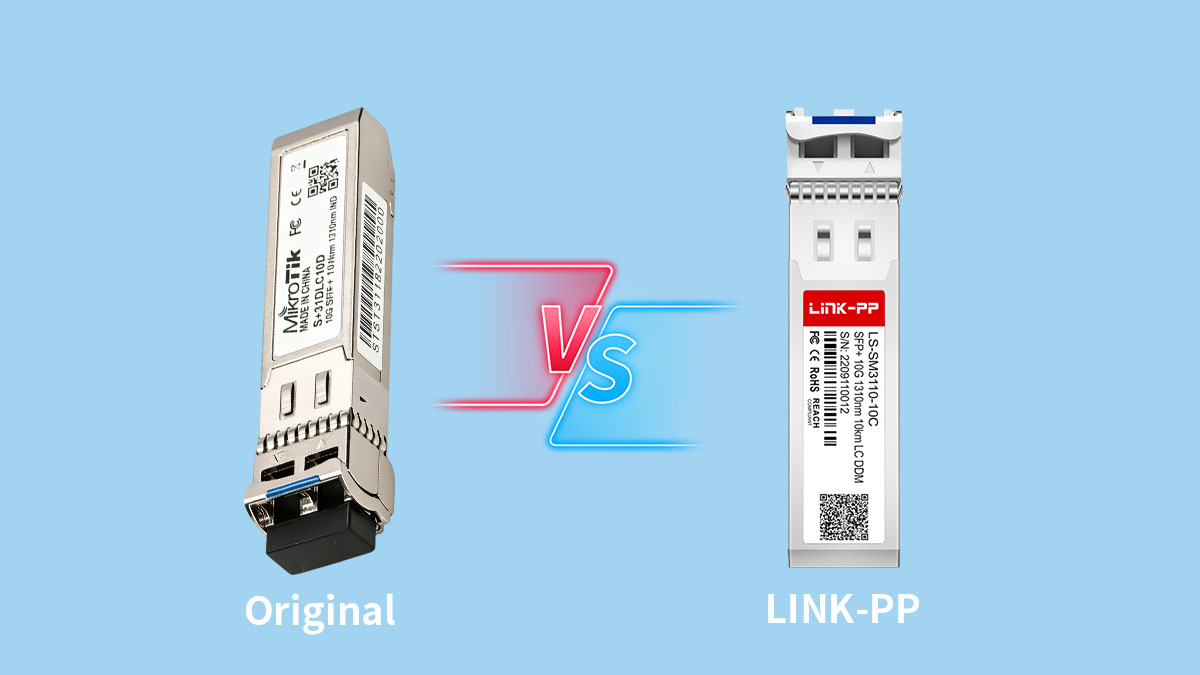
When comparing MikroTik 10GB SFP+ alternatives with original modules, ISPs and network operators primarily focus on operational behavior in real network environments rather than theoretical specifications. Both options are designed to support 10Gbps Ethernet connectivity, but differences emerge in procurement economics, deployment flexibility, and consistency at scale. Understanding these distinctions helps operators make more informed decisions for large ISP and enterprise networks.
Performance and Signal Stability Comparison
From a technical standpoint, both original and compatible modules can deliver compliant 10Gbps transmission when properly matched to the correct optical standard. However, long-term stability under sustained traffic load is a key differentiator in large-scale deployments.
Performance evaluation typically focuses on:
- Signal integrity under continuous 24/7 operation
- Bit error rate (BER) consistency across long fiber runs
- Optical power stability over temperature variations
- Latency consistency in high-throughput backbone links
| Evaluation Dimension | Original Modules | Alternative Modules |
|---|---|---|
| Signal Stability | High and standardized | High when properly validated |
| Thermal Behavior | Optimized for MikroTik ecosystem | Varies by manufacturer design |
| Long-Term Consistency | Strong baseline reliability | Dependent on quality control |
| Deployment Scalability | Limited by sourcing | Flexible in bulk deployment |
In practice, well-qualified alternatives can deliver comparable performance in ISP environments, provided they undergo proper validation and meet optical compliance standards.
Cost Efficiency in ISP Deployment Models
Cost structure is one of the most significant differences when scaling MikroTik-based networks. Original modules are typically positioned within a fixed ecosystem pricing model, while alternatives introduce more flexible procurement strategies for large deployments.
Key cost-related considerations include:
- High-volume deployment cost reduction per optical node
- Budget predictability across multi-phase ISP expansion projects
- Reduced financial pressure on spare inventory allocation
- Improved total cost of ownership (TCO) over multi-year lifecycles
For ISPs managing hundreds or thousands of network endpoints, even marginal per-unit cost differences can translate into substantial infrastructure savings over time, especially in metro and access-layer expansion projects.
Compatibility and System Behavior
System-level compatibility plays a critical role in determining whether a module can be seamlessly integrated into MikroTik environments without operational disruption. While both original and alternative modules adhere to IEEE 10G standards, system recognition behavior may differ depending on EEPROM coding and firmware interaction.
Important compatibility aspects include:
- Plug-and-play detection in MikroTik RouterOS environments
- Consistent identification across CRS and CCR platforms
- Firmware update resilience and behavior stability
- Vendor coding influence on module recognition
- Reduced need for manual configuration during deployment
In ISP environments, predictable system behavior is often more important than marginal technical differences, as it directly affects deployment speed and operational workload.
Reliability in High-Density Network Environments
At scale, network reliability is determined not only by individual module quality but also by how consistently devices perform across dense deployments. This is especially important in ISP aggregation layers and data center environments where failure rates must remain extremely low.
Reliability considerations include:
- Thermal performance under high port-density conditions
- Failure rate consistency across batch deployments
- Uptime stability in backbone and aggregation layers
- Maintenance frequency and replacement cycles
- Behavior under sustained peak traffic loads
Original modules typically provide standardized baseline reliability, while high-quality alternatives can achieve similar operational stability when sourced from controlled manufacturing processes and validated deployment testing.
🚀 ISP Bulk Discount Strategies for MikroTik 10GB SFP+ Alternatives
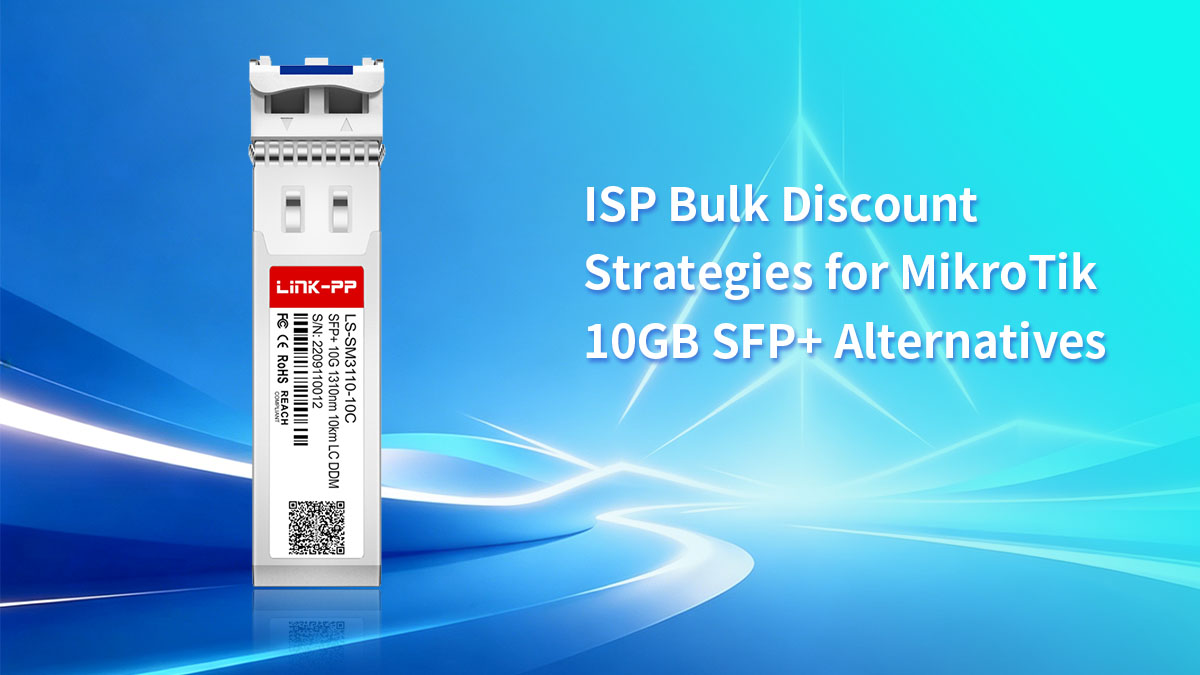
In large-scale ISP deployments, MikroTik 10GB SFP+ alternatives are often evaluated not only from a technical standpoint but also from a procurement optimization perspective. When optical modules are deployed across hundreds or thousands of network nodes, even small improvements in unit cost, logistics efficiency, and supply stability can significantly impact overall project economics. As a result, ISPs increasingly adopt structured bulk procurement strategies to improve cost predictability while maintaining network consistency.
Volume-Based Procurement Models
Volume-based procurement is the most direct and commonly used strategy for reducing overall deployment costs in ISP optical networks. Instead of purchasing in small batches, ISPs consolidate demand into larger orders aligned with network expansion phases.
Before implementing a volume strategy, operators typically analyze deployment forecasts and network rollout schedules to align procurement with actual infrastructure needs.
Common approaches include:
- Tiered pricing structures based on order quantity
- Consolidated purchasing across multiple regional deployments
- Annual forecasting aligned with network expansion roadmaps
- Centralized procurement for multi-site ISP infrastructure
These models help stabilize unit pricing and reduce procurement variability, especially in long-term fiber rollout projects where consistency is critical.
Standardizing Optical Modules Across Networks
Standardization plays a critical role in simplifying ISP operations and reducing hidden operational costs. By limiting the number of optical module variants used across the network, ISPs can significantly improve inventory control and deployment efficiency.
Standardization strategies typically include:
- Reducing the number of SFP+ variants used in production networks
- Aligning module types with core fiber standards (SR, LR, ER, ZR)
- Establishing uniform deployment rules across regions
- Simplifying spare part stocking and replacement procedures
A standardized optical environment not only reduces operational complexity but also improves troubleshooting speed and minimizes configuration inconsistencies across distributed network sites.
Long-Term Supplier Collaboration Models
For ISPs operating continuous expansion cycles, long-term supplier collaboration is often more effective than one-time procurement decisions. Stable supplier relationships help ensure predictable availability, consistent quality, and coordinated logistics across multiple deployment phases.
Key elements of long-term collaboration include:
- Guaranteed supply continuity for ongoing ISP expansion projects
- Consistent batch quality across multiple production cycles
- Technical support alignment for deployment and troubleshooting
- Coordinated logistics planning for regional network rollouts
This approach allows ISPs to reduce procurement uncertainty while maintaining stable optical performance across all deployed infrastructure layers.
Quality Assurance and Manufacturing Control
Quality assurance becomes increasingly important in bulk procurement scenarios because even small manufacturing inconsistencies can scale into significant network issues. ISPs typically prioritize suppliers that demonstrate strong production control and testing discipline.
Core quality control practices include:
- Optical performance testing before shipment
- Burn-in testing for long-term stability validation
- Interoperability testing with MikroTik systems
- Batch traceability for deployment accountability
- Compliance verification with 10GBASE optical standards
Strong manufacturing control ensures that large-volume deployments maintain consistent performance characteristics, reducing long-term maintenance costs and improving overall network reliability.
🚀 Best Practices for Deploying MikroTik 10GB SFP+ Alternatives
Deploying MikroTik 10GB SFP+ alternatives in ISP and enterprise networks requires more than simple plug-and-play installation. In large-scale environments, deployment discipline directly determines long-term network stability, troubleshooting efficiency, and maintenance cost. By following structured best practices, operators can significantly reduce risk while maintaining consistent 10Gbps performance across distributed infrastructure.

Pre-Deployment Compatibility Testing
Before rolling out optical modules at scale, controlled testing is essential to ensure stable behavior across MikroTik hardware and RouterOS environments. This step helps identify potential compatibility issues early, preventing widespread deployment failures.
A structured validation process typically includes:
- Lab testing with MikroTik CRS and CCR devices under real traffic conditions
- Verification of link stability under sustained 10Gbps load
- RouterOS recognition and module detection consistency checks
- Firmware version compatibility testing across multiple software builds
- Stress testing under temperature variation and continuous operation
This phase ensures that only validated modules enter production networks, reducing the likelihood of unexpected failures during ISP rollout stages.
Optical Network Monitoring and Maintenance
Once deployed, continuous monitoring becomes critical for maintaining long-term stability of MikroTik-based optical networks. Unlike initial installation testing, real-world traffic conditions can introduce gradual degradation that must be detected early.
Key monitoring practices include:
- Regular use of DOM/DDM diagnostics for optical health tracking
- Continuous observation of TX/RX power levels for anomaly detection
- Early identification of fiber degradation or contamination issues
- Logging and analysis of link flapping or intermittent disconnections
- Scheduled preventive maintenance based on performance trends
By actively monitoring optical performance, ISPs can address potential issues before they escalate into service-impacting failures.
Proper Fiber Management Practices
Physical fiber handling plays a major role in ensuring stable 10Gbps transmission performance. Even high-quality SFP+ modules can experience degraded performance if fiber infrastructure is improperly managed.
Effective fiber management includes:
- Regular cleaning of LC connectors to prevent signal loss
- Maintaining proper bend radius to avoid micro-bending attenuation
- Organizing structured cabling to reduce physical stress on fibers
- Avoiding unnecessary patching that increases insertion loss
- Ensuring secure and stable fiber routing in rack environments
These practices help preserve optical signal integrity and reduce avoidable transmission issues in both core and edge network deployments.
ISP-Level Redundancy Planning
In large ISP infrastructures, redundancy is essential to ensure uninterrupted service availability even in the event of module or link failure. MikroTik 10GB SFP+ alternatives should be integrated into broader resilience strategies rather than treated as isolated components.
Key redundancy strategies include:
- Maintaining spare optical modules for rapid replacement
- Designing redundant uplink paths across aggregation layers
- Implementing failover routing for critical network segments
- Establishing fast swap procedures for field technicians
- Planning geographic redundancy for backbone resilience
By integrating redundancy at both hardware and network architecture levels, ISPs can significantly reduce downtime risk and ensure stable service delivery across all operational conditions.
🚀 FAQs About MikroTik 10GB SFP+ Alternatives
Are MikroTik 10GB SFP+ alternatives compatible with all MikroTik devices?
Yes, most alternatives are compatible with MikroTik CRS and CCR series devices, provided they follow IEEE 10G standards and use correct EEPROM coding. Compatibility should always be verified with RouterOS version in use.
Do MikroTik 10GB SFP+ alternatives require configuration changes?
No. In most cases, they operate in plug-and-play mode. However, monitoring settings may need to be enabled to access DOM/DDM optical diagnostics.
What is the main technical difference between SR, LR, ER, and ZR modules?
The main difference is transmission distance and fiber type. SR is used for short-range multimode links, LR for standard single-mode, ER for extended reach, and ZR for ultra-long-distance backbone connections.
Can MikroTik 10GB SFP+ alternatives be mixed with original modules in the same network?
Yes, they can operate together in the same network as long as both ends of the link use compatible optical standards and fiber types.
What causes most compatibility issues in MikroTik SFP+ deployments?
Most issues come from incorrect EEPROM coding, firmware mismatch, or mismatch between optical standard and fiber infrastructure rather than hardware incompatibility.
Are MikroTik 10GB SFP+ alternatives suitable for long-term ISP backbone use?
Yes, if they are properly tested for stability, thermal performance, and optical consistency under continuous 24/7 operation conditions.
How can ISPs verify optical module quality before large-scale deployment?
ISPs typically verify quality through lab testing, optical power monitoring (DOM/DDM), stress testing under load, and RouterOS compatibility checks before mass rollout.
🚀 Conclusion
MikroTik 10GB SFP+ modules remain a foundational component in ISP and enterprise fiber networks, supporting critical roles in aggregation, backbone, and data center connectivity. As network scale increases, the focus gradually shifts from individual module selection to broader considerations such as compatibility stability, procurement efficiency, and long-term operational consistency. In this context, well-qualified MikroTik 10GB SFP+ alternatives have become an important option for maintaining scalable and cost-efficient optical infrastructure without compromising deployment reliability.
From a practical deployment perspective, the most important factors include adherence to 10G optical standards (SR, LR, ER, ZR), verified compatibility with MikroTik RouterOS environments, and consistent performance across bulk deployments. When these conditions are met, alternative optical modules can support the same level of network stability required in ISP backbone and access-layer architectures, while offering improved flexibility in large-scale procurement planning.
For ISPs and network integrators evaluating stable optical sourcing options, structured suppliers with consistent manufacturing control and deployment-tested product lines play a key role in reducing operational risk. In this regard, LINK-PP Official Store provides a professional reference point for MikroTik-compatible 10G optical solutions designed for ISP-scale deployment scenarios, helping operators maintain balanced performance, compatibility, and procurement efficiency in evolving network environments.