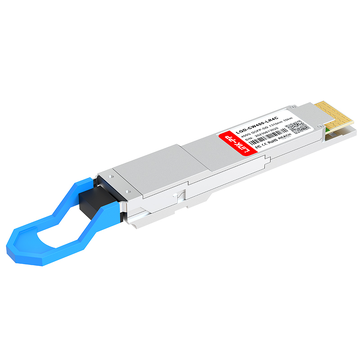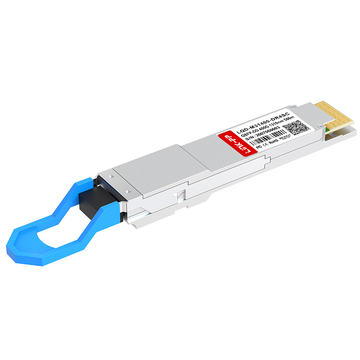
As 400G Ethernet becomes the standard backbone for modern AI clusters, cloud computing, and hyperscale data centers, demand for cost-effective and interoperable optical transceiver modules continues to rise. Among the most widely deployed options, the Arista QDD-400G-DR4 stands out for its support of high-density 400G connectivity, low-latency performance, and flexible 4×100G breakout capability over parallel single-mode fiber.
However, many network operators eventually encounter the same challenge: original vendor optics are expensive, procurement cycles can be slow, and mixed-vendor environments often require more deployment flexibility than OEM-only ecosystems provide. As a result, searches for reliable third-party alternates to Arista QDD-400G-DR4 have increased significantly across enterprise, colocation, and hyperscale networking projects.
This guide explains what the Arista QDD-400G-DR4 module is, how it works in real-world 400G architectures, and what buyers should evaluate before selecting a compatible alternative. We will also cover critical topics such as:
- 400GBASE-DR4 technical specifications
- QSFP-DD compatibility considerations
- MPO-12 APC fiber requirements
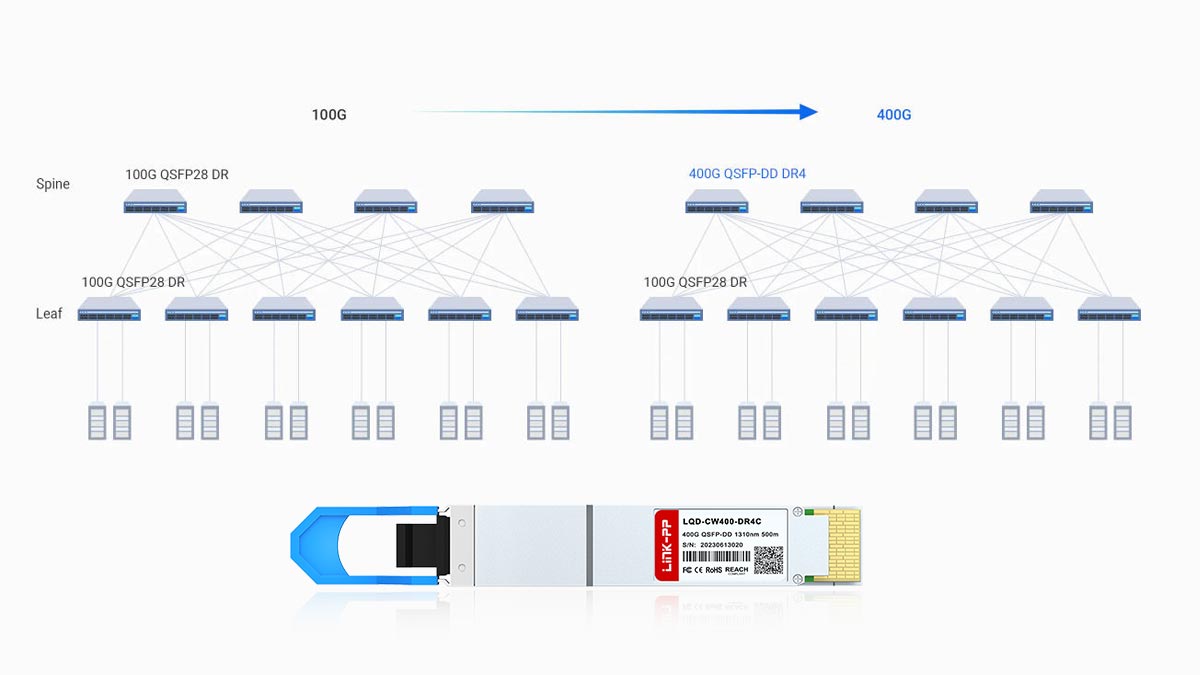
- 4×100G breakout deployment scenarios
- Vendor coding and interoperability risks
- Common failures reported in mixed-vendor networks
- How to identify stable third-party optical modules
Unlike generic transceiver summaries, this article is designed specifically around real search intent from engineers, procurement teams, and data center operators researching Arista-compatible 400G optics. It combines official specification analysis with actual deployment concerns frequently discussed in networking communities and operational environments.
Whether you are upgrading a spine-leaf architecture, expanding AI infrastructure, or trying to reduce optical networking costs without sacrificing reliability, understanding the strengths and limitations of third-party QDD-400G-DR4 alternatives is essential before deployment.
🔄 What Is Arista QDD-400G-DR4?
As 400G Ethernet becomes the standard for AI infrastructure, hyperscale data centers, and spine-leaf architectures, the Arista QDD-400G-DR4 has become one of the most widely deployed short-reach 400G optical modules. Understanding its specifications, breakout capabilities, and deployment role is essential before selecting a reliable third-party compatible alternative.
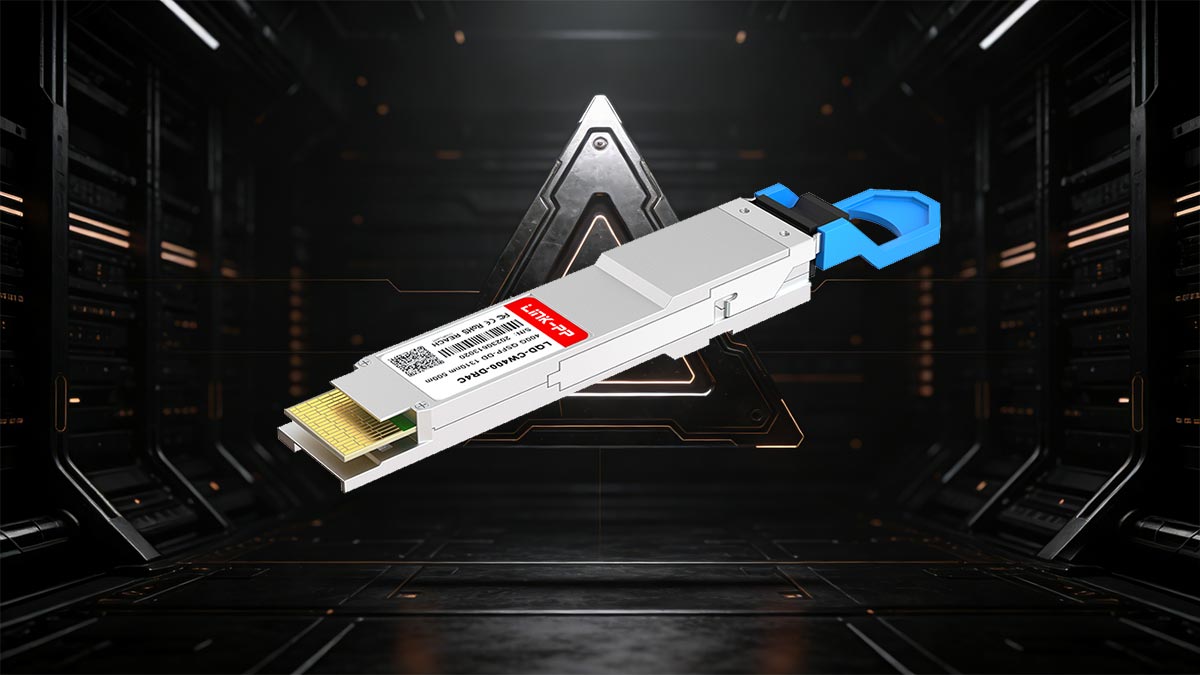
Quick Definition
The Arista QDD-400G-DR4 is a 400GBASE-DR4 QSFP-DD optical transceiver designed for high-speed Ethernet connections over parallel single-mode fiber (SMF). It supports transmission distances up to 500 meters using an MPO-12 APC connector and operates with four independent 100G optical lanes.
One of its biggest advantages is support for 4×100G breakout, allowing a single 400G port to connect to four separate 100G links. This makes the module highly popular in modern data center migration projects.
Official Specs That Matter Most
Below are the core specifications users should verify before deployment:
| Specification | Details |
|---|---|
| Form Factor | QSFP-DD |
| Ethernet Standard | 400GBASE-DR4 |
| Total Data Rate | 400Gbps |
| Optical Lanes | 4×100G PAM4 |
| Fiber Type | Parallel SMF |
| Connector | MPO-12 APC |
| Maximum Reach | 500m |
| Breakout Support | 4×100G |
The most important compatibility factors are the QSFP-DD form factor, MPO-12 APC cabling, and proper support for PAM4 signaling. Incorrect fiber polarity, dirty MPO connectors, or unsupported vendor coding are common causes of deployment issues.
Where This Optic Fits in a 400G Network
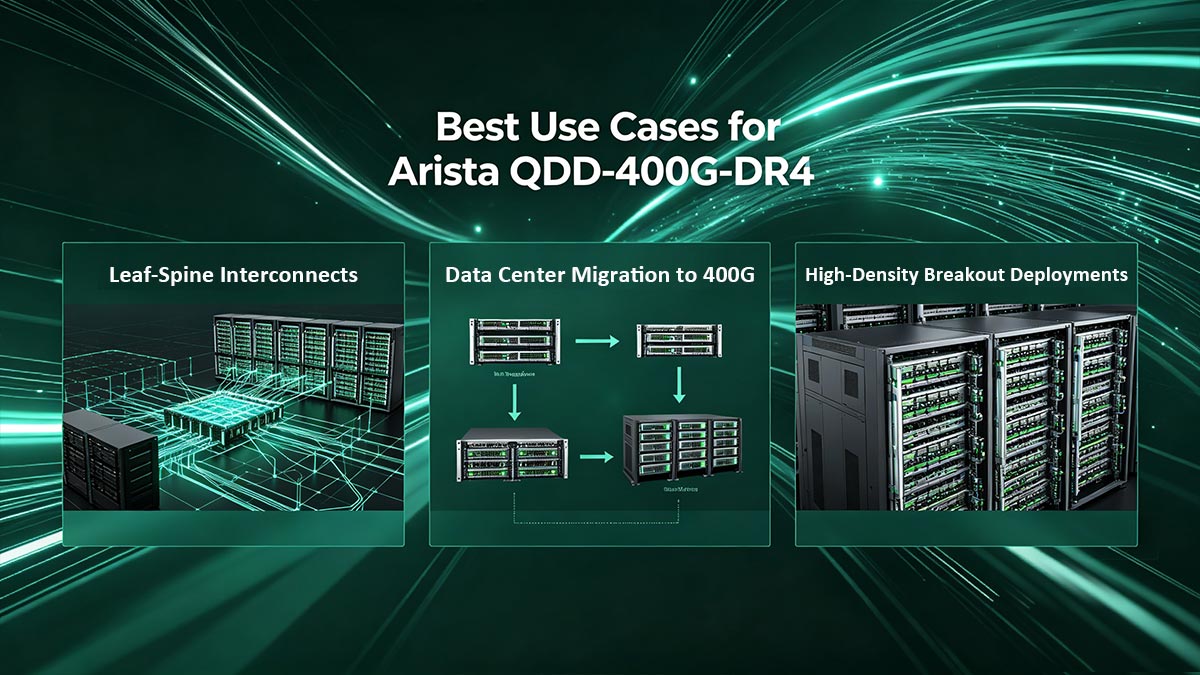
The Arista QDD-400G-DR4 is mainly used inside high-density data centers for:
- Spine-to-leaf interconnects
- AI and GPU cluster networking
- 400G aggregation layers
- 4×100G breakout deployments
- High-speed east-west traffic
Compared with longer-reach optics like 400GBASE-FR4 or 400GBASE-LR4, 400GBASE-DR is optimized for short-to-medium range intra-data-center links with lower latency, lower power consumption, and higher port density.
In many modern deployments, DR4 optics are preferred over large 400G DAC cables because they provide cleaner cabling, easier scaling, and better flexibility for future network upgrades.
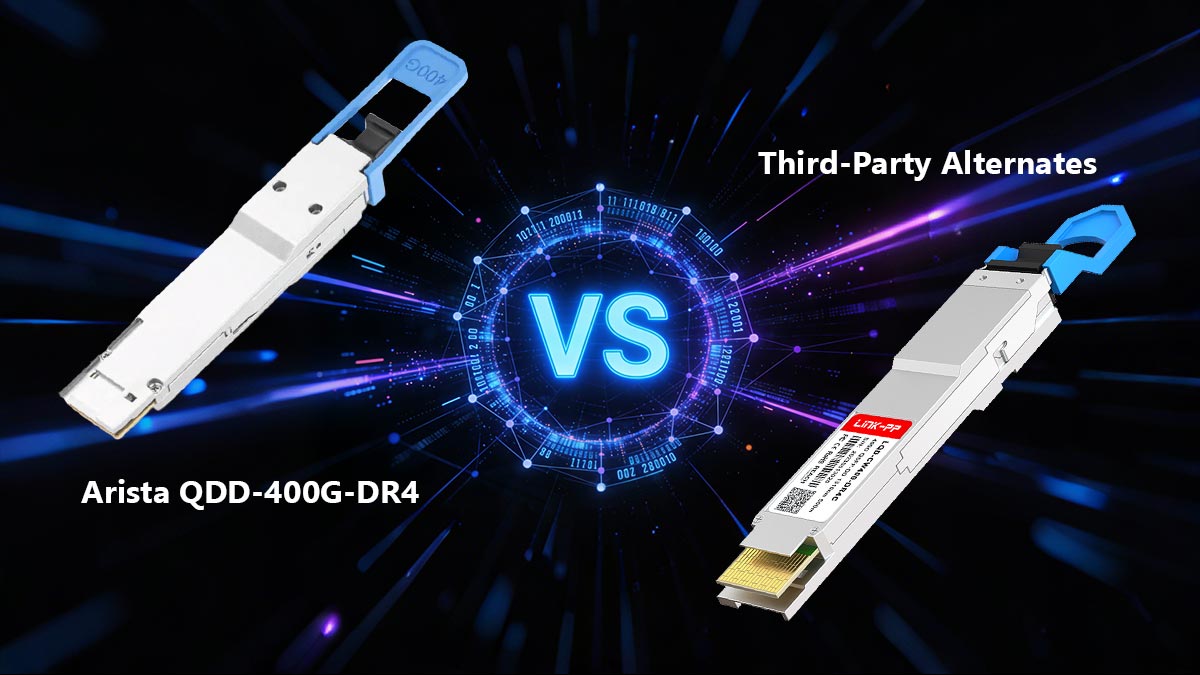
🔄 Arista QDD-400G-DR4 vs. Third-Party Alternates
As 400G deployments continue to expand, many enterprises and data center operators are evaluating whether OEM optics are the best long-term option. While the original Arista QDD-400G-DR4 module offers validated compatibility and vendor-backed support, reliable third-party alternates have become increasingly popular due to lower costs and faster procurement.
However, not all “compatible” optics deliver the same stability. Understanding the difference between standards compliance and real-world interoperability is critical before deployment.
Why Choose Third-Party Alternates
The biggest reason organizations search for Arista QDD-400G-DR4 compatible alternatives is cost reduction. In large-scale 400G environments, optical transceivers can represent a major percentage of network infrastructure spending.
Third-party modules are commonly chosen for:
- Lower cost per 400G port
- Faster inventory availability
- Easier global sourcing
- Reduced vendor lock-in
- Flexible mixed-vendor deployments
- Lower expansion costs during network scaling
In AI clusters and hyperscale environments where hundreds or thousands of 400G ports may be deployed simultaneously, the savings from compatible optics can become substantial.
Another important factor is operational flexibility. Some operators prefer maintaining a standardized optical platform across different switch vendors instead of relying entirely on OEM-coded optics.
What “Compatible” Really Means
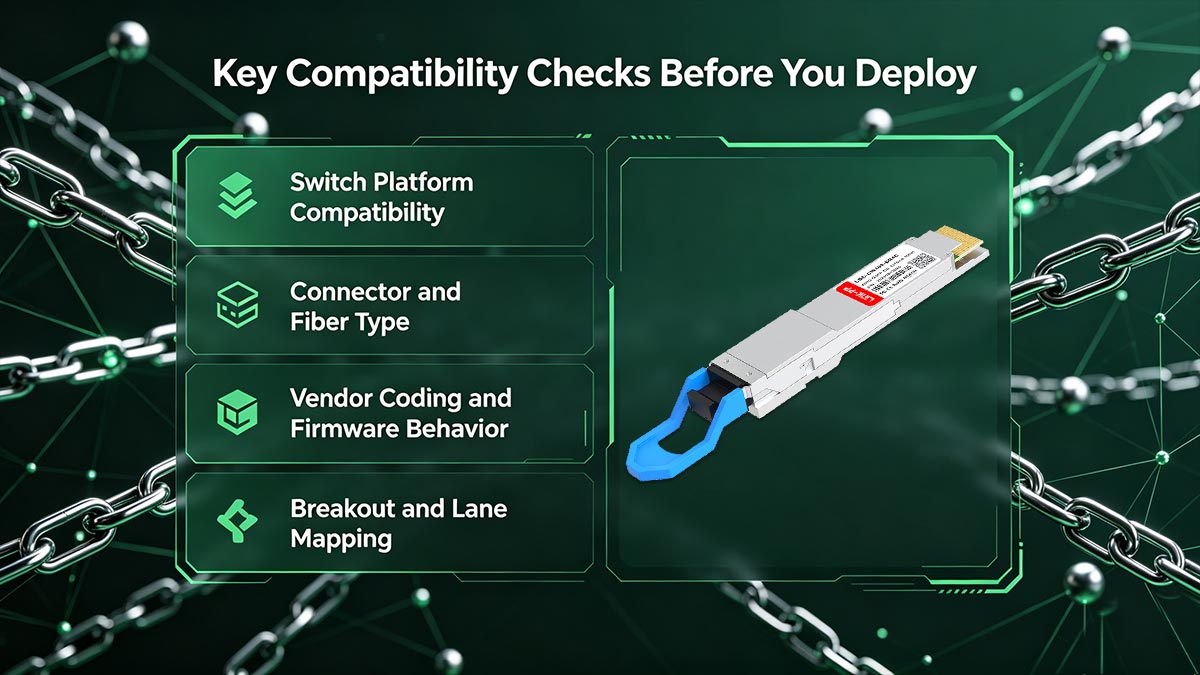
In the optical networking industry, “compatible” does not simply mean the module physically fits into the switch. A true Arista-compatible QDD-400G-DR4 must meet several requirements simultaneously:
| Compatibility Area | Why It Matters |
|---|---|
| EEPROM Coding | Ensures the switch recognizes the module |
| Optical Power Levels | Prevents unstable links and signal loss |
| PAM4 Signal Integrity | Critical for 400G transmission stability |
| Thermal Performance | Avoids overheating in dense switches |
| DOM/DDM Support | Enables monitoring and diagnostics |
| Breakout Compatibility | Required for stable 4×100G operation |
A high-quality third-party optic is usually programmed specifically for Arista platforms and tested under real switch operating conditions. Reliable vendors also perform interoperability validation for breakout mode, firmware behavior, and long-duration traffic loads.
This is especially important at 400G speeds, where PAM4 signaling is far more sensitive than older SFP+ 10G or SFP28 25G optical standards.
Where Low-Cost Modules Can Fail
Although many third-party modules perform extremely well, very low-cost optics often introduce risks that may not appear during initial installation.
Common failure points include:
Unstable EEPROM Coding
Some low-cost modules are incorrectly coded or use generic firmware, causing intermittent detection problems after switch reboots or firmware upgrades.
Thermal Instability
400G optics generate significantly more heat than lower-speed modules. Poor thermal design can lead to overheating, signal degradation, or unexpected shutdowns in high-density switch environments.
Weak Optical Calibration
Inconsistent transmit power or receiver sensitivity may cause packet loss, CRC errors, or unstable breakout links—especially near the maximum 500m DR4 distance.
Breakout Compatibility Problems
Certain inexpensive modules work in native 400G mode but fail during 4×100G breakout operation because lane mapping and firmware behavior are not fully validated.
Poor Manufacturing Quality
Dirty MPO interfaces, weak internal components, or poor assembly tolerances can dramatically affect PAM4 signal quality at 400G speeds.
For this reason, experienced network engineers usually prioritize vendors that provide:
- Arista-specific compatibility testing
- Performance validation reports
- DOM/DDM monitoring support
- Warranty coverage
- Technical support for interoperability troubleshooting
In real-world 400G deployments, reliability and interoperability often matter far more than achieving the absolute lowest purchase price.
🔄 How to Evaluate a Third-Party SFP Alternates
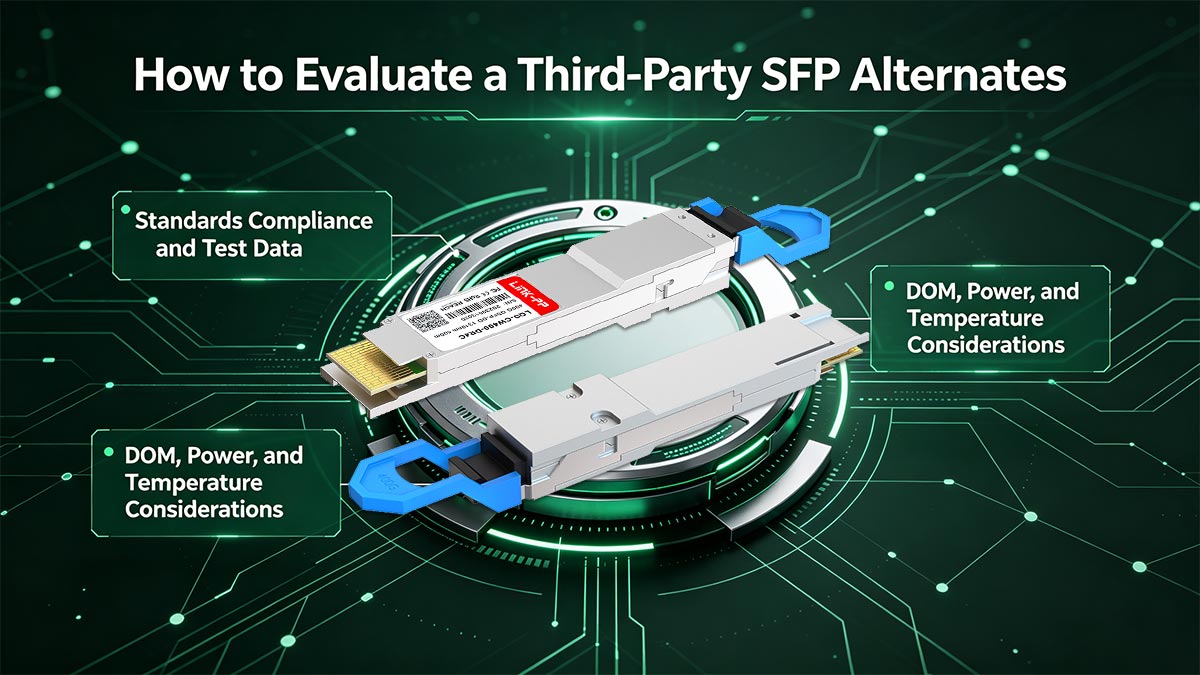
Not all third-party optical modules deliver the same reliability. While many compatible transceivers work extremely well in modern networks, others may introduce interoperability issues, unstable links, or thermal problems—especially at 400G speeds.
For this reason, evaluating a third-party alternate should involve more than simply comparing prices. Network engineers should verify compatibility validation, manufacturing quality, monitoring support, and long-term operational stability before deployment.
Standards Compliance and Test Data
The first thing to verify is whether the module fully complies with relevant industry standards.
For Arista QDD-400G-DR4 alternates, this typically includes:
- QSFP-DD MSA compliance
- 400GBASE-DR4 specification support
- PAM4 signaling compatibility
- MPO-12 APC optical requirements
- 4×100G breakout validation
A reliable vendor should also provide real interoperability testing data rather than generic compatibility claims.
Important validation indicators include:
| Validation Area | Why It Matters |
|---|---|
| Arista switch testing | Confirms real platform interoperability |
| BER testing | Measures signal integrity |
| Optical power validation | Ensures stable transmission |
| Breakout testing | Verifies 4×100G operation |
| Burn-in testing | Improves long-term reliability |
High-quality suppliers often test optics under real traffic loads and across multiple firmware versions to reduce deployment risk.
In contrast, low-cost generic modules may only undergo minimal functional testing before shipment.
DOM, Power, and Temperature Considerations
At 400G speeds, thermal behavior and power stability become much more important than in lower-speed optical networks.
A reliable compatible module should fully support:
- DOM/DDM monitoring
- Stable power consumption
- Accurate temperature reporting
- Real-time optical diagnostics
DOM (Digital Optical Monitoring) allows engineers to monitor critical operating parameters such as:
- TX optical power
- RX optical power
- Internal module temperature
- Supply voltage
- Laser bias current
Without proper DOM support, troubleshooting becomes much more difficult in large-scale deployments.
Temperature management is especially critical in high-density switches where many 400G optics operate simultaneously. Poor thermal design can lead to:
- Link instability
- Increased bit error rates
- Unexpected shutdowns
- Reduced optic lifespan
Before purchasing third-party modules, verify:
| Technical Factor | Recommended Check |
|---|---|
| DOM support | Full monitoring compatibility |
| Power consumption | Within switch limits |
| Operating temperature | Matches deployment environment |
| Thermal design | Suitable for dense chassis |
| Optical stability | Verified under sustained traffic |
At 400G, stable thermal performance is often a stronger indicator of module quality than price alone.
Warranty, Support, and Return Policy
Technical support quality becomes extremely important when deploying compatible optics in production environments.
Even standards-compliant modules may occasionally encounter interoperability problems related to:
- Switch firmware changes
- Breakout configurations
- Mixed-vendor networking
- EOS updates
- MPO cabling environments
A reliable supplier should provide:
- Compatibility assistance
- Technical troubleshooting support
- Firmware guidance
- Fast replacement service
- Clear return policies
For enterprise and AI infrastructure deployments, long-term vendor support is often more valuable than achieving the absolute lowest upfront cost.
When evaluating Arista QDD-400G-DR4 alternates, the safest approach is usually selecting vendors that combine proven interoperability testing, strong thermal performance, and responsive post-sales support.
🔄 Common Problems Users Report With 400G DR4 Modules
Although 400G DR4 optics are widely deployed in modern data centers, real-world installations can still encounter interoperability and physical-layer issues. Many reported problems are not caused by defective optics alone, but by firmware mismatches, MPO cabling errors, or incompatible breakout configurations.
Understanding the most common failure scenarios can significantly reduce troubleshooting time during deployment.
Link-Up Failures
One of the most common issues with 400G DR4 modules is a complete failure to establish a link.
Typical symptoms include:
- Port remains down after insertion
- Optic detected but no traffic passes
- Intermittent link activation
- Link flaps after reboot or firmware upgrade
In most cases, link-up failures are related to one of the following:
| Common Cause | Description |
|---|---|
| Incorrect MPO polarity | TX and RX lanes do not align |
| Unsupported vendor coding | Switch rejects or limits the module |
| Dirty MPO connectors | Causes severe optical loss |
| Breakout misconfiguration | Port mode does not match topology |
| Firmware incompatibility | EOS behavior mismatch |
At 400G speeds, PAM4 signaling is highly sensitive to insertion loss and optical reflection. Even minor contamination on MPO interfaces can prevent stable link initialization.
Many engineers now treat MPO inspection and cleaning as mandatory before every DR4 deployment.
TX/RX Mismatch Symptoms
Another frequently reported issue involves abnormal transmit (TX) and receive (RX) behavior.
Common symptoms include:
- Strong RX signal but no TX output
- One-way traffic flow
- CRC or FCS errors
- Packet drops under heavy load
- Unstable BER performance
These problems are often caused by lane-level mismatches inside parallel fiber connections.
Potential root causes include:
- Incorrect breakout harness wiring
- Improper lane mapping
- Asymmetric optical power levels
- Poor-quality MPO trunk cables
- Firmware-related lane training problems
Because DR4 optics use four parallel 100G optical lanes simultaneously, even one unstable lane can affect the entire 400G link.
In breakout environments, lane alignment becomes even more important. A module may appear operational in native 400G mode but fail during 4×100G breakout due to incorrect lane mapping or unsupported firmware behavior.
For troubleshooting, engineers commonly verify:
| Diagnostic Check | Purpose |
|---|---|
| DOM optical power readings | Identifies weak lanes |
| BER statistics | Detects signal degradation |
| MPO polarity | Confirms TX/RX alignment |
| Lane mapping configuration | Validates breakout operation |
| EOS log messages | Reveals firmware issues |
Interop Issues in Mixed-Vendor Environments
Mixed-vendor deployments are another major source of 400G DR4 compatibility problems.
Although DR4 optics follow industry standards, vendors may still differ in areas such as:
- EEPROM coding behavior
- DOM implementation
- Thermal thresholds
- Breakout handling
- Firmware interpretation
As a result, two standards-compliant DR4 modules may still behave differently when connected across different switch platforms.
Common mixed-vendor issues include:
- Compatibility warnings
- Disabled DOM monitoring
- Unstable breakout links
- Intermittent packet loss
- Link instability after software upgrades
These problems are especially common when using low-cost generic optics with limited interoperability validation.
In enterprise and AI networking environments, operators often reduce risk by selecting vendors that provide:
- Arista-specific compatibility coding
- Real switch interoperability testing
- Multi-platform validation reports
- Firmware update support
- Breakout configuration guidance
At 400G speeds, standards compliance alone is not always enough. Real-world interoperability testing is often the key factor that separates stable deployments from ongoing troubleshooting.