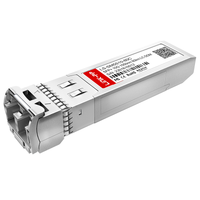






























The rapid expansion of enterprise networks, cloud computing environments, and virtualization workloads has significantly increased the demand for stable and high-speed 10Gbps optical connectivity. In modern IT infrastructure, short-range fiber links are widely deployed to support data-intensive applications, reduce latency, and ensure consistent performance across distributed systems. As a result, optical transceivers have become a critical component in maintaining network efficiency and scalability.
Within this context, HPE 10GB SR SFP+ modules play a key role in enabling short-range 10Gbps data transmission over multimode fiber. These modules are commonly used in HPE switching and server environments to support high-bandwidth internal communication between racks, aggregation layers, and access switches. However, selecting and deploying the right optical modules is not only a technical decision but also a strategic procurement consideration that affects compatibility, stability, and long-term operational performance.
This article provides a structured overview of HPE 10GB SR SFP+ from a procurement strategy perspective. It covers technical fundamentals, compatibility requirements, infrastructure planning considerations, supplier evaluation factors, and deployment best practices. The goal is to help you understand how to build a more reliable and scalable 10G optical network while optimizing long-term operational efficiency and reducing deployment risks.
↪️ Understanding HPE 10GB SR SFP+ Modules
HPE 10GB SR SFP+ transceivers are short-range 10Gbps optical transceivers designed for high-speed data transmission over multimode fiber in enterprise and data center environments. The key point is that they provide a standardized and reliable way to connect HPE networking equipment at 10Gbps within relatively short distances, typically inside racks or between nearby switches. Their role is foundational in 10G Ethernet deployments where low latency and stable throughput are required.
What Is an HPE 10GB SR SFP+ Module
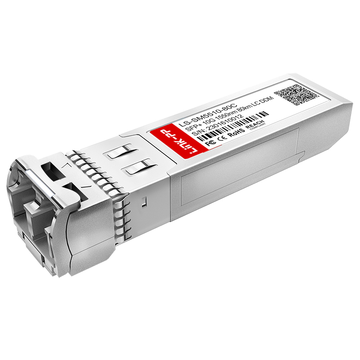
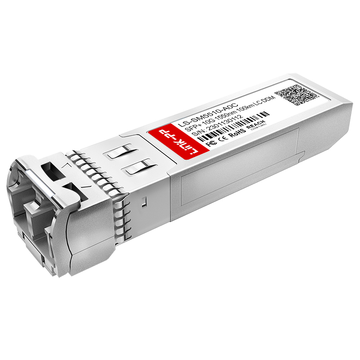
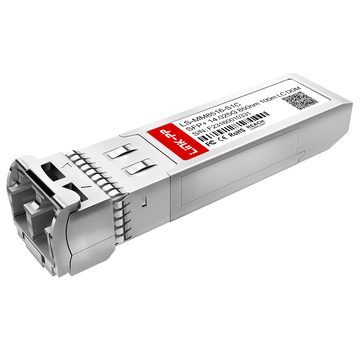
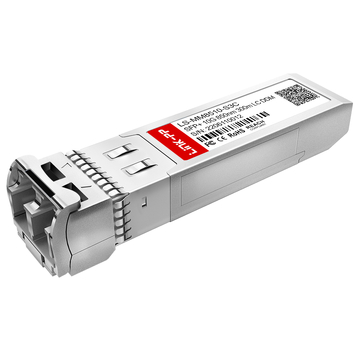
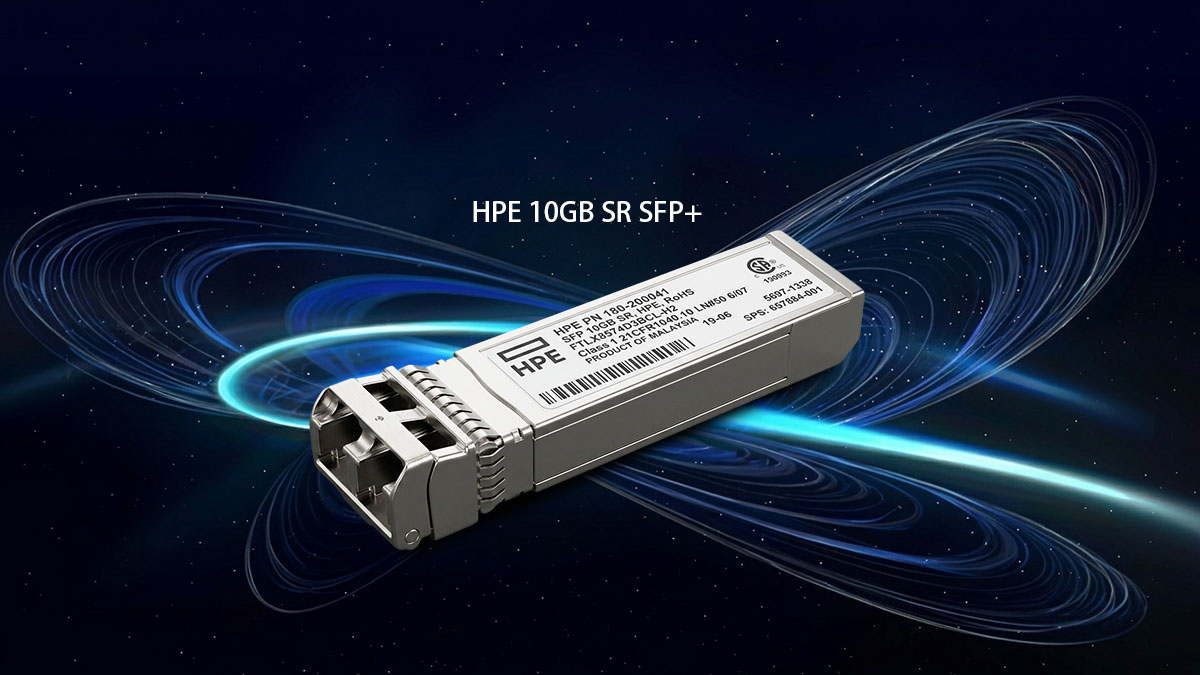
An HPE 10GB SR SFP+ module is a 10GBASE-SR optical transceiver used in SFP+ slots to transmit data over short distances using 850nm wavelength light. It is primarily designed for multimode fiber environments and is widely deployed in enterprise switching and server connectivity scenarios.
To better understand its function in real-world networks, the key characteristics can be summarized as follows:
- Operates under the 10GBASE-SR standard for 10Gbps Ethernet
- Uses 850nm VCSEL laser technology for short-range transmission
- Supports multimode fiber (MMF), typically OM3 and OM4
- Designed for LC duplex connector interfaces
These characteristics make it suitable for high-density, short-distance connectivity where cost efficiency and performance stability are both required. It is not intended for long-haul transmission, but rather for optimized intra-data center links.
Core Technical Specifications
The technical specifications of HPE short-range 10G SFP+ modules define their performance limits and deployment scenarios. These parameters directly influence compatibility, cabling design, and network planning decisions.
The key specifications include:
- Data rate: 10Gbps full-duplex transmission
- Wavelength: 850nm optimized for multimode fiber
- Maximum transmission distance: up to 300m over OM3 and up to 400m over OM4 fiber
- Connector type: LC duplex interface for standardized optical connections
These specifications ensure predictable performance in controlled short-range environments. Among them, transmission distance is the most critical planning factor, as fiber type selection (OM3 vs OM4) directly impacts achievable reach.
For quick comparison of fiber performance impact, the key distance differences are summarized below:
| Fiber Type | Maximum Distance | Typical Use Case |
|---|---|---|
| OM3 | Up to 300m | Standard enterprise data center links |
| OM4 | Up to 400m | High-density or extended short-range links |
This comparison highlights why fiber infrastructure planning must align with module specifications to ensure stable 10G operation without signal degradation.
Typical Deployment Environments
HPE 10GB SR SFP+ modules are widely used in environments where high-speed, low-latency communication is required over short distances. They are especially common in structured enterprise and data center architectures.
Typical deployment scenarios include:
- Top-of-rack (ToR) switch connections within data centers
- Server-to-switch links in virtualization clusters
- Aggregation layer connectivity in enterprise LAN backbones
- High-density rack interconnects in cloud infrastructure
- Campus network distribution layer connections
These environments share a common requirement: fast and reliable intra-facility communication without the complexity of long-range optical design. In such cases, SR SFP+ modules provide a balanced combination of performance stability and deployment simplicity.
↪️ Why Procurement Strategy Matters for HPE 10GB SR SFP+
Procurement strategy for HPE 10GB SR SFP+ modules is critical because it directly affects network stability, long-term scalability, and operational cost control. In 10G optical environments, performance is not only determined by hardware specifications but also by consistency across deployed transceivers. A well-planned procurement approach helps ensure compatibility, reduces operational risks, and supports predictable network expansion.
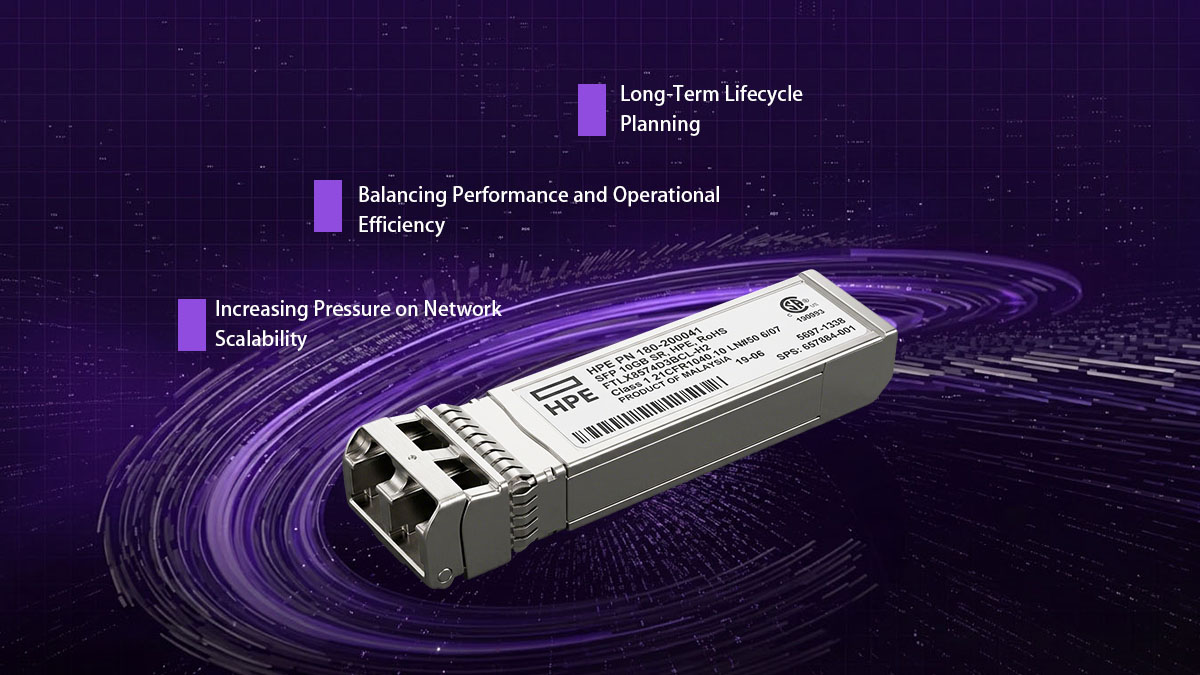
Increasing Pressure on Network Scalability
Modern enterprise networks are under continuous pressure to handle rapidly growing data traffic driven by virtualization, cloud services, and distributed applications. The key implication is that 10G infrastructure is no longer a luxury but a baseline requirement in many environments.
From a procurement perspective, this pressure translates into several practical considerations:
- Network traffic growth requires scalable 10G port expansion
- Migration from legacy SFP 1G environments increases demand for SR SFP+ modules
- Virtualized workloads create higher east-west traffic inside data centers
- Hybrid cloud architectures increase interconnect density requirements
These factors make it essential to plan optical module procurement in alignment with future network expansion, rather than focusing only on immediate deployment needs. Without this foresight, infrastructure can quickly become fragmented and difficult to scale efficiently.
Balancing Performance and Operational Efficiency
Procurement decisions for HPE 10GB SR SFP+ modules must balance consistent optical performance with overall operational efficiency. The key point is that stable network behavior depends on uniform module quality and predictable optical characteristics.
To achieve this balance, organizations typically focus on:
- Ensuring consistent link stability across all switch ports
- Reducing packet loss caused by optical inconsistencies
- Minimizing troubleshooting time in mixed deployment environments
- Maintaining predictable performance under sustained traffic loads
When optical modules vary in quality or compatibility, even small inconsistencies can lead to intermittent link issues or degraded throughput. This increases operational overhead and reduces network reliability. Therefore, procurement strategy plays a direct role in maintaining day-to-day network efficiency.
Long-Term Lifecycle Planning
A structured procurement strategy is also essential for aligning optical module usage with long-term infrastructure lifecycle planning. HPE 10GB SR SFP+ modules are often deployed in large quantities, meaning replacement cycles and expansion planning must be carefully coordinated.
Key lifecycle considerations include:
- Aligning optical module lifecycles with switch and server refresh cycles
- Ensuring spare inventory availability for critical infrastructure
- Maintaining compatibility across different hardware generations
- Supporting phased network expansion without re-architecture
A lack of lifecycle planning can lead to inconsistent deployments, increased maintenance complexity, and unnecessary operational disruptions. In contrast, a well-managed procurement approach ensures continuity, reduces long-term risk, and supports smoother infrastructure evolution over time.
↪️ Key Technical Factors to Evaluate Before Deployment
Selecting and deploying HPE 10GB SR SFP+ modules requires careful technical evaluation because performance in real environments depends not only on the module itself but also on compatibility, cabling, and operating conditions. A structured assessment before deployment helps prevent link instability, reduce troubleshooting effort, and ensure consistent 10G network behavior across the infrastructure.
Compatibility With HPE Networking Platforms
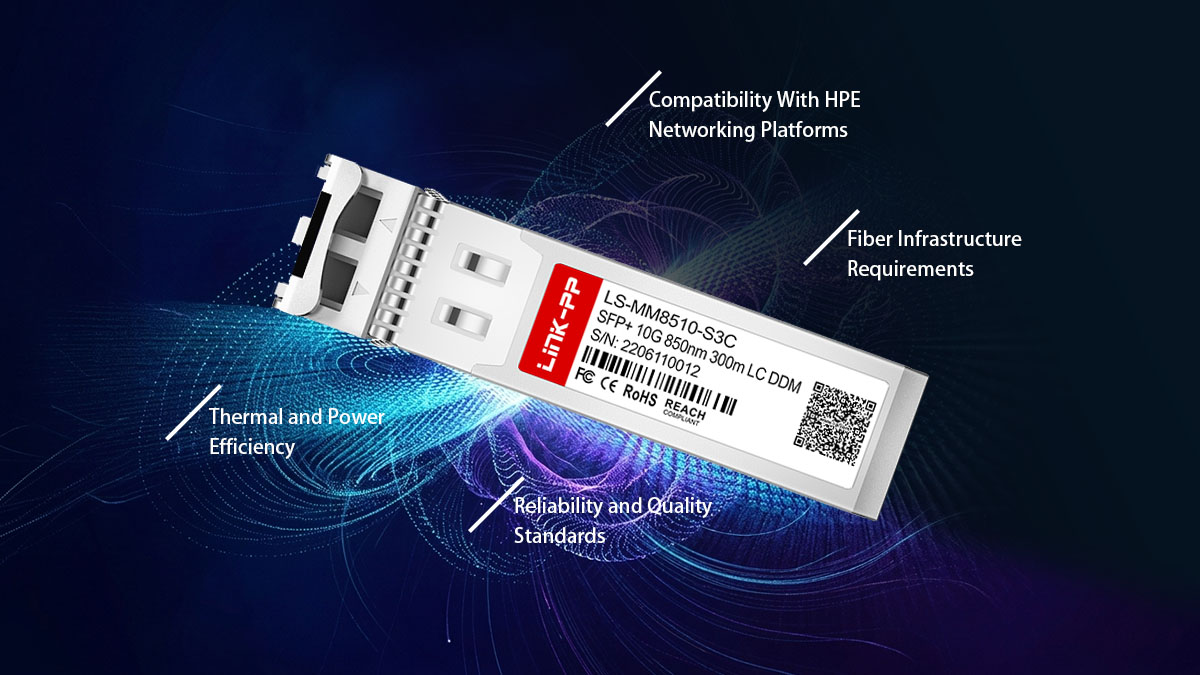
Compatibility with HPE switches and servers is one of the most critical technical factors because optical modules must be correctly recognized and supported by the hardware and firmware environment. Even when specifications match, compatibility differences can still affect link initialization and stability.
Before deployment, the following aspects should be carefully verified:
- Whether the module is recognized by the specific HPE switch or server model
- Firmware version requirements for proper optical module identification
- Interoperability behavior in mixed module environments
- Port-level compatibility across different hardware generations
These checks are essential because inconsistent compatibility can result in link failure, reduced performance, or intermittent connectivity issues that are difficult to diagnose in production environments. Proper validation ensures predictable behavior across all deployed ports.
Fiber Infrastructure Requirements
Fiber infrastructure plays a direct role in determining the actual performance of HPE 10GB SR SFP+ modules because transmission quality depends heavily on cable type, distance, and installation quality. Even a fully compatible module may underperform if the fiber environment is not properly designed.
Key planning considerations include:
- Use of OM3 or OM4 multimode fiber for 10Gbps SR transmission
- Maximum supported distance based on fiber grade and link design
- Cleanliness and condition of LC duplex connectors
- Proper management of patch panels and fiber routing paths
These factors collectively influence signal integrity and link stability. In practice, poorly maintained connectors or incorrect fiber selection can lead to attenuation issues and reduced effective transmission distance, even within standard specifications.
To clarify fiber performance expectations, the following comparison is useful:
| Fiber Type | Recommended Use Case | Impact on 10G SR Performance |
|---|---|---|
| OM3 | Standard enterprise links | Supports typical short-range 10G deployment |
| OM4 | Higher-density or extended short-range links | Provides improved distance and signal margin |
This comparison highlights how infrastructure decisions directly affect module performance and overall network reliability.
Thermal and Power Efficiency
Thermal behavior and power consumption are important considerations in high-density switching environments where many optical modules operate simultaneously. While each HPE 10GB SR SFP+ module consumes relatively low power individually, cumulative heat output can become significant at scale.
Key factors to evaluate include:
- Power consumption per module under sustained traffic load
- Heat accumulation in high-port-density switch environments
- Airflow design within rack and data center layouts
- Impact of ambient temperature on optical stability
Effective thermal planning ensures that modules operate within safe temperature ranges, which helps maintain stable optical performance and reduces the risk of unexpected link degradation. Poor thermal conditions can gradually impact signal quality and overall network reliability.
Reliability and Quality Standards
Reliability and quality assurance are essential because optical modules operate continuously in mission-critical environments where even minor instability can affect network performance. Ensuring consistent quality across all deployed units is key to maintaining predictable behavior.
Important quality factors include:
- Compliance with industry optical standards such as MSA specifications
- Stability of optical output power and receiver sensitivity
- Error rate performance under continuous data transmission
- Environmental resistance under varying operating conditions
When these quality standards are consistently met, networks benefit from lower failure rates, reduced maintenance overhead, and improved long-term stability. In contrast, inconsistent quality can introduce unpredictable behavior that increases operational risk and troubleshooting complexity.
↪️ Procurement Challenges in the 10G Optical Market
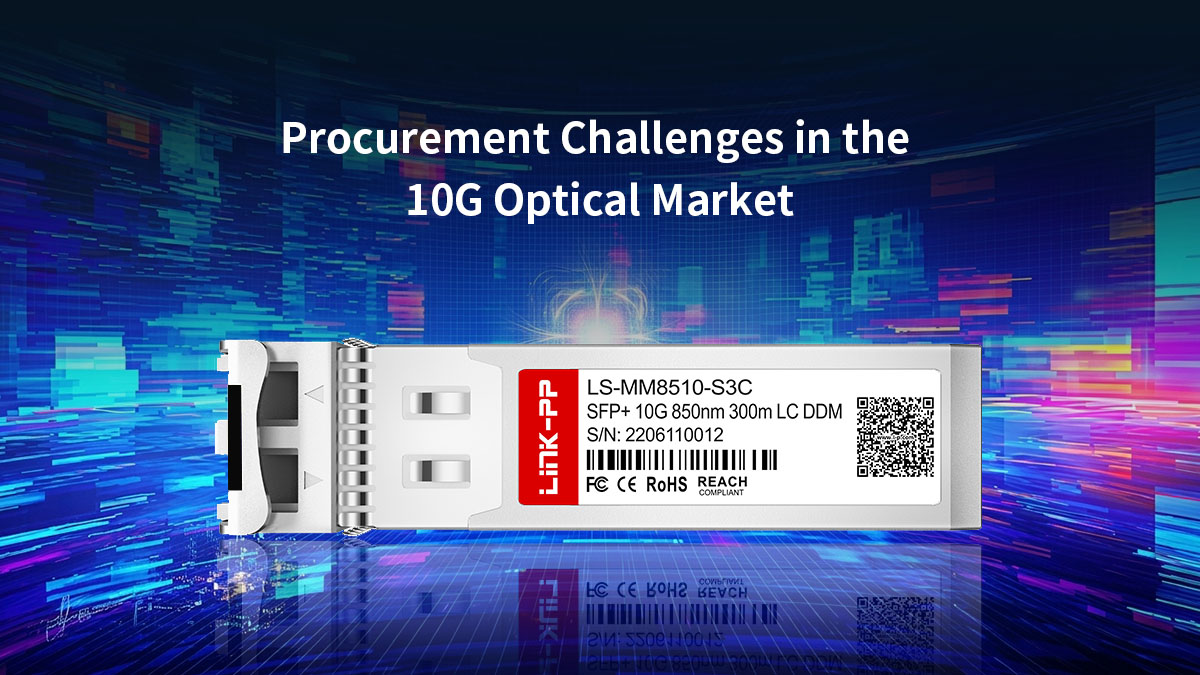
Procurement of HPE 10GB SR SFP+ modules is often more complex than it appears because the 10G optical market is influenced by supply variability, compatibility sensitivity, and quality inconsistencies. These factors can directly affect deployment stability and long-term operational efficiency, making procurement planning a critical part of network design rather than a simple purchasing activity.
Supply Chain Volatility
Supply chain volatility is a major challenge in the 10G optical market because component availability and manufacturing capacity can fluctuate based on global demand cycles. This affects lead times, inventory planning, and deployment schedules.
Key challenges include:
- Unpredictable lead times for optical transceiver production
- Periodic shortages of key semiconductor components used in optics
- Regional distribution imbalances affecting availability
- Difficulty maintaining consistent stock levels for large-scale deployments
These fluctuations can delay infrastructure expansion projects or force organizations to adjust deployment timelines. As a result, procurement planning must account for buffer inventory and long-term forecasting to maintain continuity in network rollouts.
Inconsistent Compatibility Across Suppliers
Compatibility inconsistency is another significant challenge because not all optical modules are programmed or validated in the same way, even when they share identical specifications. This can lead to unpredictable behavior in HPE environments.
Common issues include:
- Variations in EEPROM coding affecting device recognition
- Differences in firmware-level compatibility with HPE switches
- Inconsistent behavior across hardware revisions
- Unstable link initialization in mixed module deployments
These inconsistencies can result in intermittent connectivity issues or modules not being recognized at all. Therefore, compatibility validation becomes a critical step in procurement to ensure reliable operation across all network devices.
Quality Variations Between Optical Modules
Quality variation is a key risk in the 10G optical market because manufacturing standards can differ significantly between suppliers. Even small deviations in optical performance can affect signal integrity and network stability.
Typical quality-related risks include:
- Variation in optical output power affecting link margins
- Higher bit error rates under sustained traffic loads
- Reduced lifespan of laser components
- Inconsistent performance under temperature fluctuations
These issues may not always appear during initial testing but can surface under real-world operating conditions. This makes consistent quality assurance and testing essential before large-scale deployment.
Hidden Operational Costs
Beyond upfront procurement considerations, hidden operational costs can significantly impact the total cost of ownership for HPE 10GB SR SFP+ deployments. These costs are often underestimated during initial planning.
Key hidden cost drivers include:
- Time spent diagnosing compatibility or link issues
- Labor required for module replacement and troubleshooting
- Network downtime affecting productivity and services
- Ongoing maintenance and inventory management overhead
When these factors accumulate, they can exceed the initial savings from lower-cost procurement options. Therefore, procurement strategy should consider not only unit cost but also long-term operational efficiency and maintenance impact.
↪️ How to Build an Effective HPE 10GB SR SFP+ Procurement Strategy
An effective procurement strategy for HPE 10GB SR SFP+ modules is built around aligning technical requirements, operational expectations, and long-term scalability needs. The key idea is to treat optical module selection as part of overall network architecture planning rather than an isolated purchasing decision. This approach helps ensure consistent performance, simplified maintenance, and predictable expansion.
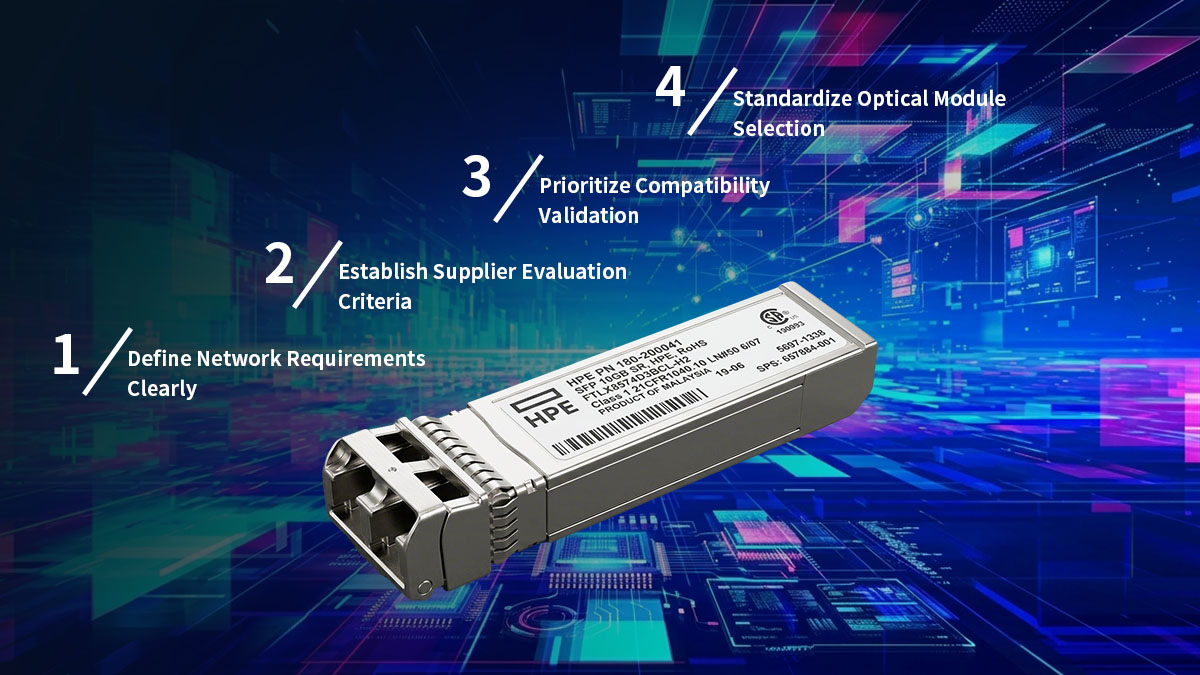
Define Network Requirements Clearly
Clear definition of network requirements is the foundation of any procurement strategy because it directly determines the type, quantity, and performance level of optical modules needed. Without precise planning, deployments can become fragmented and difficult to scale.
A structured requirement definition typically includes:
- Identification of port density across switches and servers
- Expected traffic growth over short-term and long-term horizons
- Physical distance between network nodes and racks
- Redundancy and failover design requirements
These inputs ensure that HPE 10GB SR SFP+ modules are deployed in a way that matches real workload demands. A well-defined requirement baseline also reduces the risk of overprovisioning or underestimating future expansion needs.
Establish Supplier Evaluation Criteria
Supplier evaluation is essential because optical module performance consistency depends heavily on manufacturing quality, testing processes, and long-term support capability. A structured evaluation framework helps ensure reliable sourcing decisions.
Key evaluation criteria include:
- Stability and consistency of product quality across batches
- Transparency of optical testing and validation procedures
- Responsiveness of technical support and issue resolution
- Ability to maintain long-term inventory availability
These criteria help distinguish between suppliers that can support enterprise-scale deployments and those that may introduce variability or supply uncertainty. Strong supplier selection contributes directly to operational stability.
Prioritize Compatibility Validation
Compatibility validation is a critical step in procurement because even technically identical modules can behave differently depending on firmware and hardware environments. Testing before full-scale deployment reduces operational risk.
Important validation practices include:
- Conducting lab testing on representative HPE switches and servers
- Verifying module recognition across firmware versions
- Testing interoperability in mixed-module environments
- Running pilot deployments before large-scale rollout
This process ensures that potential compatibility issues are identified early, preventing costly disruptions in production environments. It also improves confidence in large-scale deployment decisions.
Standardize Optical Module Selection
Standardization simplifies network management by reducing complexity in inventory, troubleshooting, and maintenance. When fewer module variations are used, operational consistency improves significantly.
Key benefits of standardization include:
- Reduced complexity in spare part management
- Faster fault isolation during troubleshooting
- More consistent optical performance across the network
- Simplified documentation and lifecycle tracking
Standardizing on specific HPE 10GB SR SFP+ configurations helps create a more predictable and manageable infrastructure environment, especially in large-scale deployments.
Develop Risk Mitigation Plans
Risk mitigation planning ensures network resilience even when supply or operational issues arise. A proactive strategy helps minimize downtime and maintain service continuity.
Common risk mitigation measures include:
- Maintaining multi-source procurement options to avoid dependency on a single supplier
- Establishing buffer inventory for critical network components
- Preparing replacement strategies for high-priority infrastructure links
- Planning for emergency deployment scenarios in case of hardware failure
These measures reduce operational vulnerability and ensure that network performance remains stable even under unexpected conditions. A well-prepared procurement strategy is therefore not only about efficiency but also about resilience and continuity.
↪️ Comparing Original HPE Optics and Compatible Alternatives
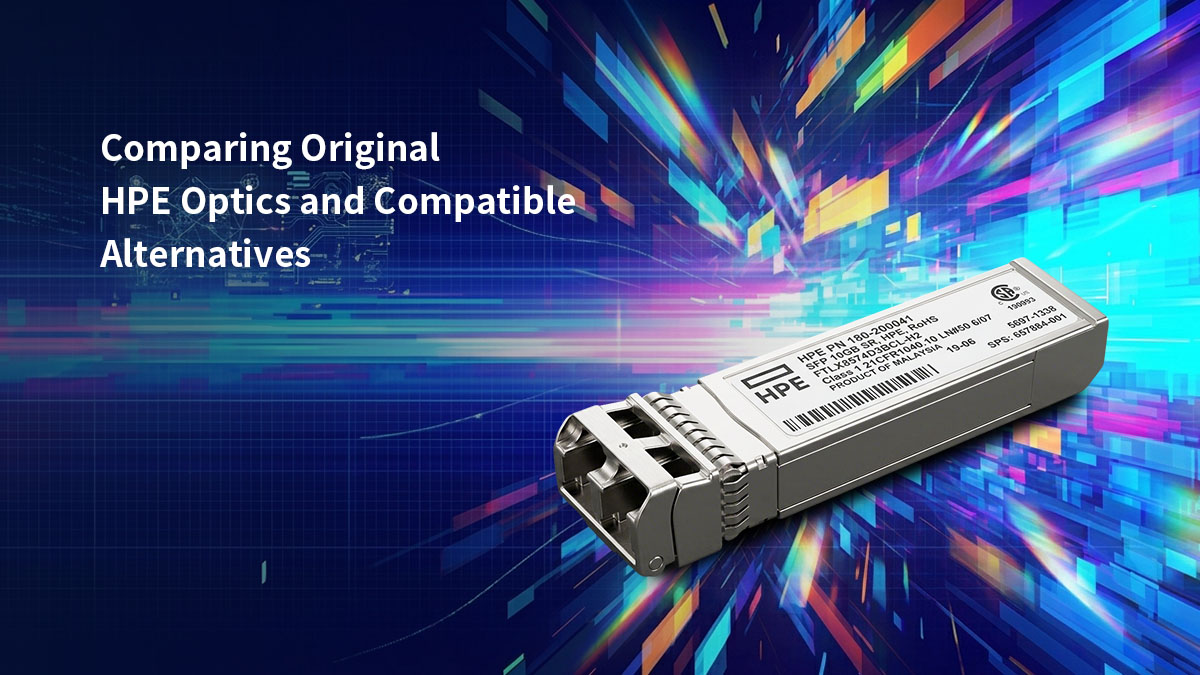
Understanding the differences between original HPE optical modules and compatible alternatives is essential for making informed procurement decisions. The key point is that both options can operate in 10Gbps SR environments, but they differ in compatibility behavior, validation depth, sourcing flexibility, and long-term operational consistency.
Understanding the Differences
The main difference between original HPE optics and compatible alternatives lies in firmware validation, branding control, and ecosystem integration. While both are designed to support 10GBASE-SR transmission, their integration behavior within HPE environments can vary depending on coding and certification levels.
To clearly illustrate these differences, the comparison below highlights the most relevant technical and operational dimensions:
| Evaluation Dimension | Original HPE Optics | Compatible Alternatives |
|---|---|---|
| Firmware & EEPROM Coding | Fully HPE-validated and locked | Vendor-programmed, varies by supplier |
| Device Recognition | Native compatibility guaranteed | May require compatibility validation |
| Availability | Controlled supply channels | Broader market availability |
| Testing Standards | HPE-certified testing processes | Supplier-dependent validation levels |
| Ecosystem Integration | Fully aligned with HPE platforms | Generally compatible with verification |
This comparison shows that while both options can technically support the same optical function, their operational behavior in enterprise environments may differ depending on validation and integration depth.
Performance and Stability Considerations
Performance consistency and stability are key evaluation points because optical modules operate continuously in mission-critical environments. The important insight is that both original and compatible modules can achieve similar theoretical performance, but real-world stability depends on manufacturing consistency and validation rigor.
Key performance considerations include:
- Signal integrity consistency under sustained 10Gbps traffic loads
- Error rate behavior during long-duration operation
- Thermal stability in high-density switch environments
- Interoperability consistency across firmware versions
In well-validated compatible modules, performance can closely match original optics under normal operating conditions. However, variations in manufacturing quality or firmware coding may introduce subtle differences in stability, especially in large-scale deployments.
Operational Flexibility Advantages
Operational flexibility is a major factor where compatible alternatives often provide advantages, particularly in environments that require scalable deployment strategies. The key point is that flexibility in sourcing and deployment can significantly simplify infrastructure expansion.
Typical flexibility advantages include:
- Easier access to broader inventory availability across multiple suppliers
- Reduced dependency on single-vendor supply constraints
- Faster response to scaling requirements in growing networks
- Greater adaptability in mixed hardware environments
These advantages make compatible options attractive in scenarios where deployment speed and inventory agility are important. However, flexibility must still be balanced with validation to ensure consistent network behavior.
Cost Structure Analysis
Cost structure differences between original HPE optics and compatible alternatives extend beyond initial unit pricing and must be evaluated in terms of long-term operational impact. The key idea is that total cost of ownership includes both direct and indirect operational factors.
Important cost considerations include:
- Initial acquisition cost differences between sourcing options
- Maintenance and troubleshooting effort over time
- Potential downtime costs caused by compatibility issues
- Inventory scaling efficiency in large deployments
While compatible alternatives may offer more flexible cost structures, overall efficiency depends on deployment quality, compatibility validation, and operational consistency. In many enterprise environments, the most significant cost driver is not the module itself but the operational overhead associated with instability or inconsistency.
↪️ Future Trends Impacting HPE 10GB SR SFP+ Procurement
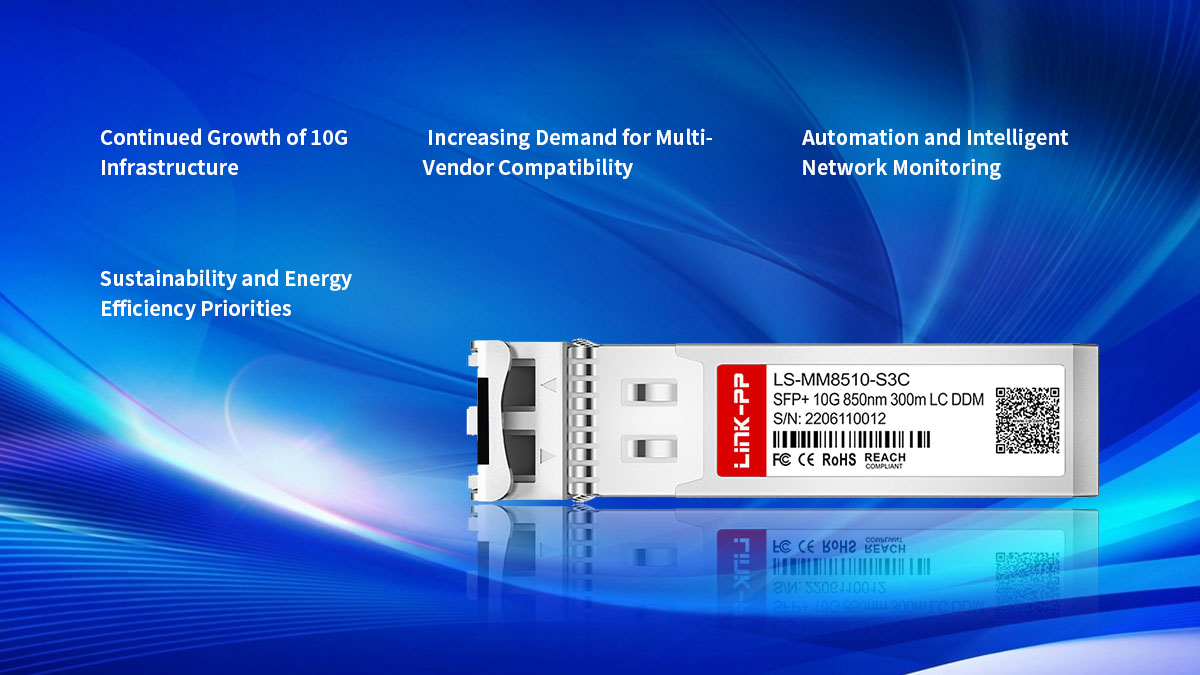
The procurement landscape for HPE 10GB SR SFP+ modules continues to evolve as enterprise networks modernize, automation expands, and data traffic patterns become increasingly complex. Although 10G remains widely deployed, its role is shifting from cutting-edge bandwidth to a stable backbone layer in hybrid and multi-speed network architectures. These changes directly influence how optical modules are sourced, evaluated, and managed over time.
Continued Growth of 10G Infrastructure
10G infrastructure remains highly relevant because many enterprise and campus networks still rely on it as a standard access and aggregation layer. The key trend is not replacement, but coexistence with higher-speed technologies.
This continued growth is driven by several factors:
- Expansion of virtualization platforms increasing baseline bandwidth demand
- Ongoing upgrades from legacy 1G networks to 10G backbones
- Increased east-west traffic within distributed applications
- Stable cost-performance balance of 10G optical links
As a result, procurement strategies must continue to support 10G module availability while also preparing for mixed-speed environments where 10G SFP+, 25G SFP28, and other high-speed modules coexist within the same infrastructure.
Increasing Demand for Multi-Vendor Compatibility
Modern network environments are moving toward more open and flexible architectures, which increases the importance of interoperability across different hardware and optical ecosystems. The key trend is a shift away from strict single-vendor dependency toward broader compatibility requirements.
Key drivers of this trend include:
- Adoption of heterogeneous networking equipment in large-scale environments
- Demand for flexible sourcing to support global deployments
- Need for faster infrastructure expansion without vendor constraints
- Growing emphasis on standardized optical form factors like SFP+
This trend places greater emphasis on compatibility validation during procurement, ensuring that HPE 10GB SR SFP+ modules operate consistently across mixed environments without compromising stability.
Automation and Intelligent Network Monitoring
Network operations are increasingly supported by automation and intelligent monitoring systems that improve visibility into optical performance. This shift is changing how optical modules are managed throughout their lifecycle.
Key developments include:
- Use of telemetry data to monitor optical signal health in real time
- Automated alerts for degradation in optical power or error rates
- Predictive maintenance based on performance trend analysis
- Integration of optical diagnostics into centralized network management systems
These capabilities reduce manual troubleshooting effort and allow procurement decisions to be informed by actual performance data. Over time, this improves accuracy in lifecycle planning and replacement forecasting.
Sustainability and Energy Efficiency Priorities
Sustainability is becoming a growing consideration in network infrastructure design, influencing both hardware selection and operational strategies. Optical modules, including HPE 10GB SR SFP+, are increasingly evaluated not only for performance but also for energy efficiency and environmental impact.
Key sustainability trends include:
- Development of lower-power optical transceivers
- Optimization of data center cooling and airflow efficiency
- Reduction of unnecessary hardware redundancy through smarter design
- Extension of hardware lifecycle to reduce electronic waste
These trends encourage procurement strategies that prioritize long-term efficiency and responsible infrastructure scaling. As a result, energy-efficient and stable optical deployments are becoming a standard expectation in modern enterprise environments.
↪️ Conclusion
The procurement and deployment of HPE 10GB SR SFP+ modules is not simply a hardware selection task, but a strategic decision that directly influences network stability, scalability, and long-term operational efficiency. Throughout modern enterprise environments, 10G optical infrastructure continues to serve as a foundational layer that supports virtualization, cloud workloads, and high-density data traffic, making careful planning essential.
The most critical insights can be summarized as follows:
- Compatibility and firmware alignment are essential for stable HPE platform integration
- Fiber infrastructure quality directly impacts transmission distance and signal integrity
- Procurement strategy influences long-term scalability and operational cost efficiency
- Consistent module quality reduces troubleshooting effort and network instability
- Lifecycle planning ensures sustainable and predictable infrastructure growth
These factors collectively define whether a 10G optical deployment remains stable under continuous enterprise workloads or becomes difficult to manage over time.
Organizations that adopt structured procurement and deployment practices are better positioned to:
- Maintain stable performance across expanding network layers
- Reduce operational disruptions caused by optical inconsistencies
- Support seamless upgrades and hybrid infrastructure models
- Improve long-term cost efficiency and resource planning
This makes disciplined optical module management a core element of modern network strategy rather than a secondary technical consideration.
For organizations planning or expanding 10G optical infrastructure, working with a reliable and technically consistent supply ecosystem is essential for maintaining long-term network stability. Platforms such as the LINK-PP Official Store provide access to a wide range of optical transceiver solutions designed to support enterprise-grade deployment requirements, compatibility alignment, and scalable infrastructure planning.
By combining structured procurement practices with dependable sourcing channels, enterprises can build a more resilient, efficient, and future-ready 10G networking foundation that supports both current operational needs and long-term growth objectives.