The demand for high-speed optical connectivity continues to grow rapidly across enterprise networks, data centers, and storage systems. As infrastructure evolves toward higher bandwidth and lower latency, optical transceiver modules have become critical components in ensuring stable and scalable Ethernet performance. In this context, understanding the technical details behind each module through its datasheet is essential for accurate deployment decisions and long-term network reliability.
The Finisar FTLX8574D3BCV is widely recognized as a dual-rate SFP+ transceiver supporting both 1000BASE-SX and 10GBASE-SR standards over multimode fiber. This dual-speed capability makes it particularly relevant in mixed-speed environments where networks transition gradually from Gigabit Ethernet to 10 Gigabit Ethernet. As a result, it is often evaluated not only for its optical performance but also for its flexibility in supporting evolving infrastructure requirements.
This article provides a structured breakdown of the Finisar FTLX8574D3BCV datasheet, covering its key specifications, dual-rate operation principles, fiber compatibility, and deployment considerations. It also explores compatibility factors, common use scenarios, and operational best practices. The goal is to offer a clear technical reference that helps you understand how this module performs in real-world network environments and how it fits into modern optical connectivity strategies.
⏰ What Is Finisar FTLX8574D3BCV?
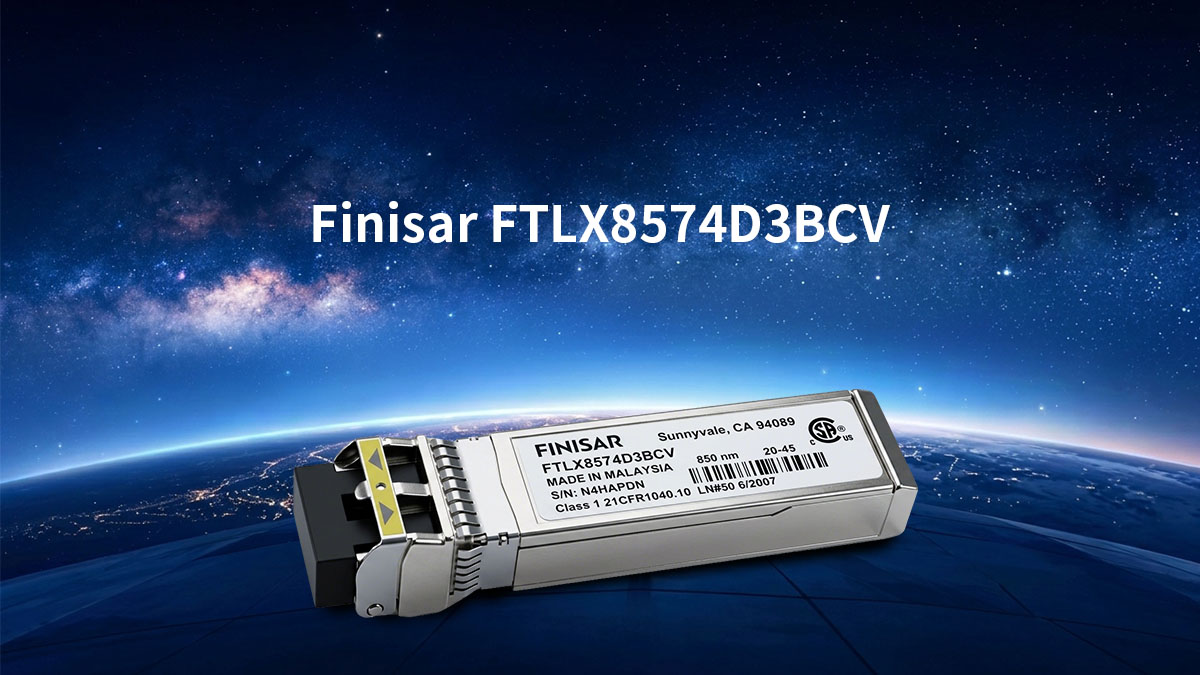
The Finisar FTLX8574D3BCV is a dual-rate SFP+ optical transceiver designed for short-reach multimode fiber networks, supporting both 1000BASE-SX and 10GBASE-SR Ethernet standards. In practical terms, it is a flexible optical module that allows a single device to operate in either 1Gbps or 10Gbps environments depending on the host system configuration. This dual-rate capability makes it particularly valuable in mixed-speed network infrastructures where gradual upgrades from Gigabit Ethernet to 10 Gigabit Ethernet are required without immediate changes to existing fiber cabling.
Overview of the Optical Transceiver
The Finisar FTLX8574D3BCV is designed to provide backward and forward operational compatibility across different Ethernet speeds while maintaining stable multimode fiber performance. It is widely used in SFP+ port environments where network devices must support both legacy 1G and higher-speed 10G connections. This flexibility helps reduce infrastructure complexity in environments undergoing phased network upgrades.
To better understand its functional positioning in optical networks, the following key characteristics define its role:
- Dual support for 1000BASE-SX (1Gbps) and 10GBASE-SR (10Gbps) operation
- Short-reach transmission over multimode fiber infrastructure
- Hot-pluggable SFP+ form factor for flexible deployment and replacement
- Designed for use in switches, routers, and high-density networking equipment
These points highlight its role as a transitional optical module that bridges different generations of Ethernet standards within a single hardware ecosystem.
Key Technology Characteristics
The Finisar FTLX8574D3BCV is built on 850nm VCSEL (Vertical Cavity Surface Emitting Laser) technology, which is commonly used in multimode optical communication systems. This enables efficient short-range signal transmission with stable performance across both supported data rates.
Beyond its optical transmission design, the module integrates several core technical features that define its operational behavior:
- 850nm VCSEL optical source optimized for multimode fiber transmission
- Duplex LC connector interface for standardized fiber connectivity
- Hot-swappable SFP+ mechanical design for operational flexibility
- Digital Diagnostic Monitoring (DDM/DOM) for real-time performance tracking
These characteristics ensure that the module can maintain stable operation in dense networking environments while also providing visibility into key parameters such as optical power levels, temperature, and voltage conditions.
Typical Network Environments
The Finisar FTLX8574D3BCV is commonly deployed in environments where network speed diversity and infrastructure evolution must be balanced. Its dual-rate design allows it to function effectively in both legacy and modern Ethernet systems.
Typical application scenarios include:
- Enterprise campus networks transitioning from SFP 1G to SFP+ 10G infrastructure
- Data center access and aggregation layers with mixed-speed switching
- Storage area networks requiring stable multimode optical links
- High-density switching environments requiring flexible port utilization
These use cases demonstrate its practical value in environments where network expansion must be gradual, cost-efficient, and compatible with existing multimode fiber infrastructure.
⏰ Finisar FTLX8574D3BCV Datasheet Specifications Explained
The Finisar FTLX8574D3BCV datasheet specifications define a dual-rate optical transceiver that operates across both 1000BASE-SX and 10GBASE-SR standards with consistent multimode fiber performance. In practical terms, these specifications determine how the module behaves in real network environments, including transmission distance, optical power levels, and electrical operating conditions. Understanding these parameters is essential for ensuring compatibility, stable link performance, and proper deployment in mixed-speed Ethernet systems.
Dual-Rate Transmission Specifications
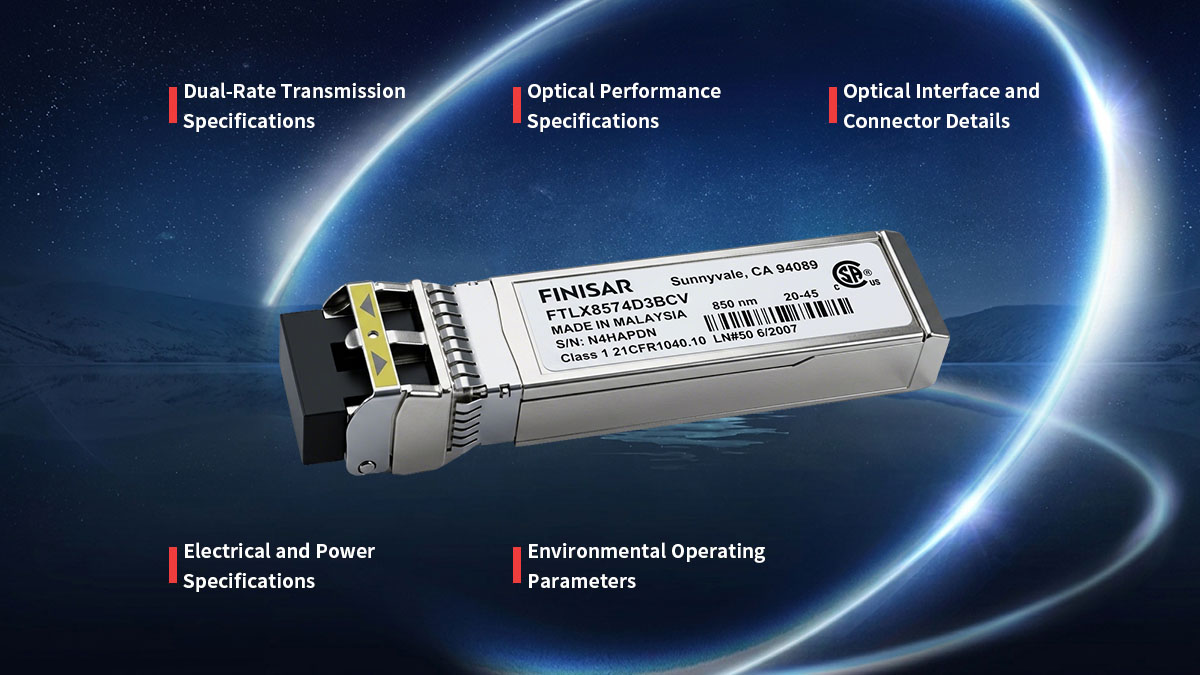
The most important characteristic of the Finisar FTLX8574D3BCV is its dual-rate capability, allowing it to support both 1Gbps and 10Gbps Ethernet transmission over multimode fiber. This flexibility enables it to adapt to different network speeds without changing physical infrastructure.
To better understand its operational range, the key transmission specifications can be summarized as follows:
- 1Gbps operation compliant with 1000BASE-SX standard
- 10Gbps operation compliant with 10GBASE-SR standard
- 850nm wavelength optimized for multimode fiber transmission
- Support for short-reach connectivity in enterprise and data center environments
These parameters highlight that the module is designed to function across multiple Ethernet generations while maintaining stable optical performance. The dual-rate behavior depends on host system configuration and network negotiation.
| Mode | Standard | Data Rate | Wavelength | Fiber Type | Typical Reach |
|---|---|---|---|---|---|
| 1G Operation | 1000BASE-SX | 1Gbps | 850nm | OM2/OM3/OM4 MMF | Up to ~550m (OM3) |
| 10G Operation | 10GBASE-SR | 10Gbps | 850nm | OM3/OM4 MMF | Up to ~300m (OM3) |
This comparison shows how the same physical module supports different performance levels depending on system speed and fiber quality.
Optical Performance Specifications
The optical performance of the Finisar FTLX8574D3BCV is centered around stable signal transmission and efficient light coupling over multimode fiber. These parameters directly impact link quality and maximum achievable distance.
Key optical characteristics include:
- 850nm VCSEL-based optical transmitter and receiver design
- Defined transmit and receive power ranges for signal stability
- Multimode fiber optimization for short-distance communication
- Low dispersion characteristics suitable for high-speed data transmission
These specifications ensure reliable performance in environments where signal integrity must be maintained across multiple network nodes, especially in high-density switching architectures.
Optical Interface and Connector Details
The physical connectivity of the module is based on standardized optical interface design, ensuring compatibility with common multimode fiber infrastructure. This simplifies integration into existing network systems.
Core interface specifications include:
- Duplex LC connector interface for bidirectional optical transmission
- Multimode fiber support across OM2, OM3, and OM4 standards
- Industry-standard SFP+ mechanical form factor for switch compatibility
These interface features allow the module to be easily deployed in both legacy and modern optical networking environments without requiring specialized cabling systems.
Electrical and Power Specifications
Electrical performance defines how the module interacts with host systems and how efficiently it operates under load. The Finisar FTLX8574D3BCV is designed for low-power operation while maintaining high-speed performance.
Key electrical characteristics include:
- Standard SFP+ operating voltage range (typically 3.3V system supply)
- Low power consumption optimized for high-density deployments
- Hot-pluggable electrical interface for live system integration
- Support for Digital Diagnostic Monitoring (DDM/DOM) functions
These attributes make the module suitable for large-scale deployments where power efficiency and thermal stability are critical factors.
Environmental Operating Parameters
Environmental specifications define the conditions under which the module can operate reliably over time. These parameters are essential for ensuring long-term stability in enterprise and data center environments.
Key environmental characteristics include:
- Commercial operating temperature range suitable for standard IT environments
- Defined storage temperature limits for safe handling and logistics
- Stable performance under continuous high-load network conditions
These specifications ensure that the module maintains consistent performance in controlled indoor networking environments, where temperature and humidity are managed within standard operating ranges.
⏰ Understanding Dual-Rate 1000BASE-SX and 10GBASE-SR Technology
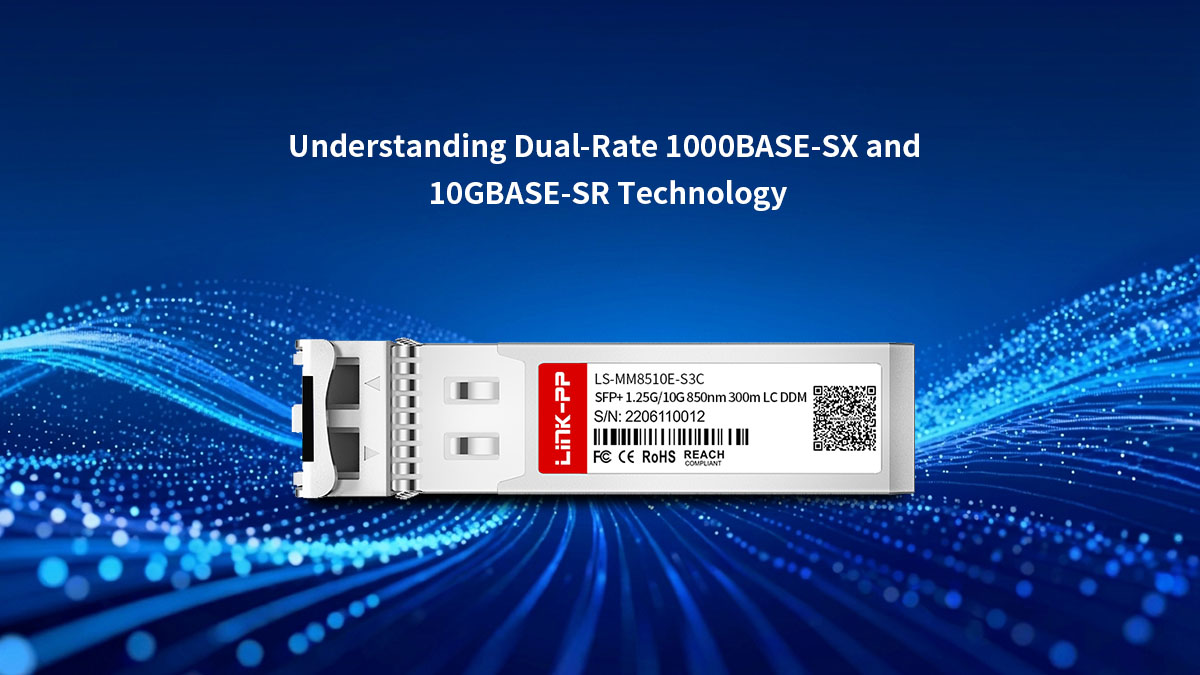
The dual-rate design of the Finisar FTLX8574D3BCV is based on its ability to operate under both 1000BASE-SX and 10GBASE-SR Ethernet standards using the same multimode fiber infrastructure. In practical terms, this means a single optical module can support both Gigabit and 10 Gigabit transmission modes depending on the host device configuration. This capability is especially important in networks that require gradual upgrades without replacing existing cabling systems.
How 1000BASE-SX Operates
1000BASE-SX is a Gigabit Ethernet optical standard designed for short-distance transmission over multimode fiber. It is widely used in enterprise access networks and internal switch connections where high speed and low cost are required.
At its core, 1000BASE-SX uses 850nm wavelength light to transmit data over multimode fiber, typically supporting distances up to several hundred meters depending on fiber grade. Its operation is optimized for stability and cost efficiency in short-range environments.
Key operational characteristics of 1000BASE-SX include:
- 1Gbps transmission rate for Gigabit Ethernet networks
- 850nm VCSEL-based optical signaling
- Optimized for OM2, OM3, and OM4 multimode fiber
- Common use in enterprise LAN and access layer connectivity
These features make 1000BASE-SX a foundational technology for legacy and still widely deployed Gigabit Ethernet infrastructures.
How 10GBASE-SR Operates
10GBASE-SR is a short-reach 10 Gigabit Ethernet optical standard designed for high-bandwidth data transmission over multimode fiber. It is commonly used in data centers and high-performance enterprise networks.
This standard also operates at 850nm wavelength but supports significantly higher data throughput compared to 1G, making it suitable for bandwidth-intensive applications such as virtualization, cloud computing, and storage traffic.
Key operational characteristics of 10GBASE-SR include:
- 10Gbps high-speed Ethernet transmission
- 850nm VCSEL-based optical architecture
- Optimized for OM3 and OM4 multimode fiber performance
- Widely used in data center leaf-spine architectures
These characteristics allow 10GBASE-SR to deliver high-capacity short-range connectivity while maintaining compatibility with existing multimode fiber infrastructure.
Advantages of Dual-Rate Optical Modules
The dual-rate functionality of the Finisar FTLX8574D3BCV provides significant operational advantages in environments where network speed transitions are gradual rather than immediate. Instead of requiring separate modules for 1G and 10G systems, a single transceiver can support both modes depending on network configuration.
To better understand its practical value, the key advantages include:
- Simplified migration from Gigabit to 10 Gigabit Ethernet
- Reduced need for maintaining separate inventory of optical modules
- Improved flexibility in mixed-speed network environments
- Better utilization of existing multimode fiber infrastructure
These advantages make dual-rate modules particularly useful in enterprise networks where infrastructure evolution occurs in stages rather than full-scale replacement cycles.
⏰ Fiber Compatibility and Cabling Requirements
The Finisar FTLX8574D3BCV relies on multimode fiber infrastructure to deliver stable performance across both 1000BASE-SX and 10GBASE-SR modes. In practical deployment, fiber type and cabling quality directly determine transmission distance, signal integrity, and overall link reliability. Understanding compatible fiber standards and proper cabling practices is essential for achieving expected datasheet performance in real-world environments.
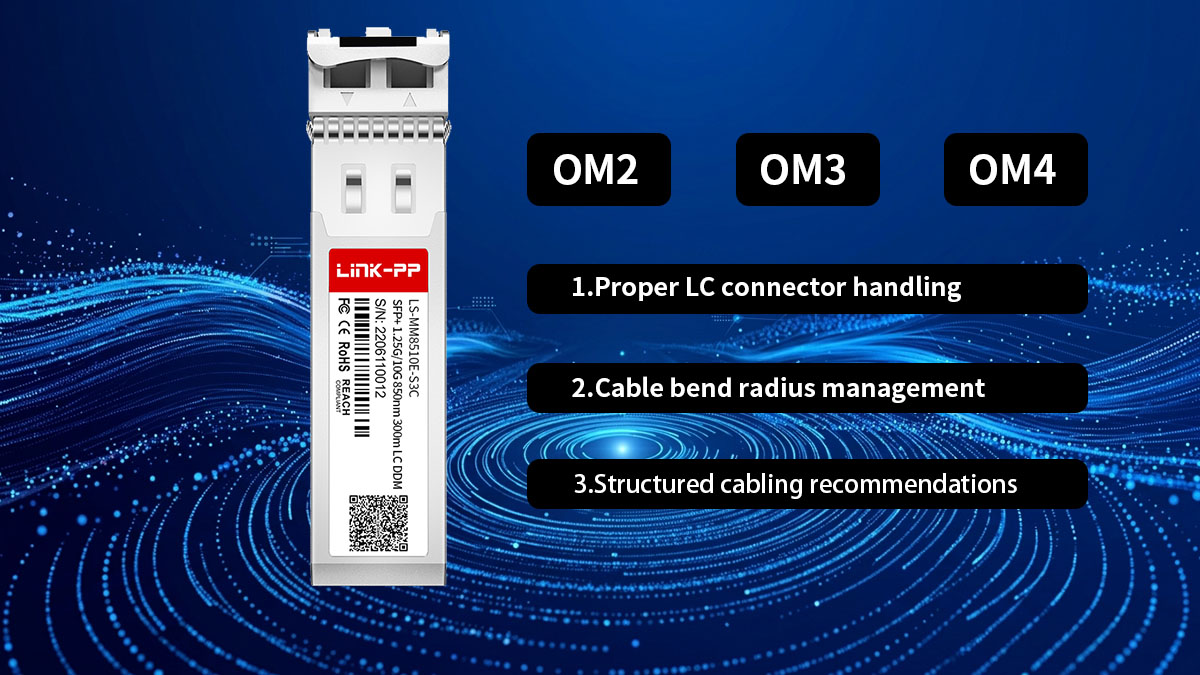
Supported Multimode Fiber Types
The Finisar FTLX8574D3BCV is designed for multimode fiber operation at 850nm, with compatibility across common industry fiber grades. Different fiber types directly affect achievable transmission distance and signal quality, especially at 10G speeds.
To clarify its supported fiber compatibility, the key fiber types include:
- OM2 multimode fiber for legacy Gigabit deployments
- OM3 laser-optimized multimode fiber for extended reach
- OM4 high-bandwidth multimode fiber for improved 10G performance
These fiber types provide increasing levels of bandwidth and reach capability, with OM3 and OM4 being the most commonly used in modern 10GBASE-SR environments. The module maintains backward compatibility with lower-grade fiber, but performance may vary depending on attenuation and link conditions.
Distance Specifications by Fiber Type
Transmission distance is determined primarily by fiber grade and operating speed mode. The Finisar FTLX8574D3BCV supports different reach capabilities depending on whether it is operating in 1G or 10G mode.
| Fiber Type | 1G (1000BASE-SX) Reach | 10G (10GBASE-SR) Reach |
|---|---|---|
| OM2 | Up to ~220m | Up to ~82m |
| OM3 | Up to ~550m | Up to ~300m |
| OM4 | Up to ~550m | Up to ~400m |
This comparison shows that higher-grade multimode fiber significantly improves performance, especially under 10G operation where signal dispersion and loss become more critical. In most modern deployments, OM3 and OM4 are preferred for ensuring stable high-speed connectivity.
Cabling Best Practices
Proper cabling practices are essential to ensure that the Finisar FTLX8574D3BCV operates within its expected performance range. Even high-quality optical modules can experience degradation if installed in poorly managed fiber environments.
To maintain stable performance, the following best practices should be applied:
- Use LC duplex connectors that are clean and properly seated
- Maintain proper bend radius to avoid microbending losses in fiber cables
- Ensure consistent polarity alignment between transmit and receive paths
- Use structured cabling layouts to reduce physical strain on fiber links
These practices help minimize insertion loss and reflection issues, ensuring that both 1G and 10G signals remain stable across the entire optical link.
Common Cabling Mistakes to Avoid
Incorrect cabling practices can significantly reduce link performance and lead to intermittent connectivity issues. In dual-rate environments, these problems may be more difficult to diagnose due to mixed-speed operation.
Common issues to avoid include:
- Mixing incompatible fiber grades within the same link path
- Allowing excessive physical stress or tight bends on fiber cables
- Using contaminated or unclean LC connectors
- Improper polarity configuration between transceiver pairs
These mistakes can result in increased attenuation, higher bit error rates, or complete link failure. Careful installation and inspection practices are essential for maintaining long-term optical stability.
⏰ Compatibility Considerations for Finisar FTLX8574D3BCV
The Finisar FTLX8574D3BCV is designed for broad interoperability in SFP+ ports that support dual-rate operation, but actual compatibility depends on host equipment support, firmware validation, and vendor coding behavior. In practical deployments, ensuring compatibility is just as important as optical performance, because even fully compliant modules may be restricted by platform-level recognition rules or software policies.
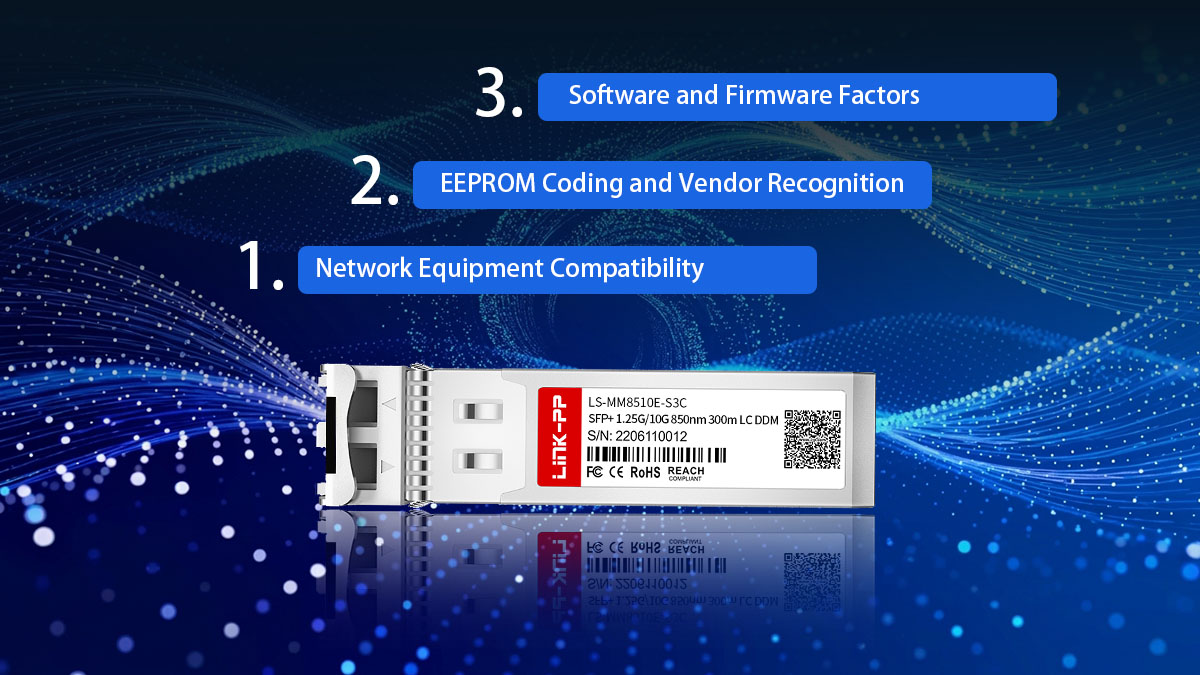
Network Equipment Compatibility
The Finisar FTLX8574D3BCV is generally used in switches, routers, and optical transport platforms that support SFP+ interfaces with 1G/10G flexibility. Its dual-rate capability allows it to function in environments where both Gigabit and 10 Gigabit Ethernet ports coexist.
To better understand its compatibility scope, typical supported environments include:
- Enterprise access and aggregation switches with SFP+ ports
- Data center switches operating in mixed-speed architectures
- Routing platforms supporting multimode optical uplinks
- Legacy-to-modern migration environments with 1G and 10G coexistence
These deployment scenarios highlight its role as a transitional optical module that can operate across different network generations, provided the host system supports dual-rate SFP+ optics.
EEPROM Coding and Vendor Recognition
Compatibility is not determined only by physical interface standards but also by how the module is identified through EEPROM coding. The Finisar FTLX8574D3BCV contains programmed identification data that allows network equipment to recognize its type, speed capability, and operational parameters.
Key aspects of EEPROM and vendor recognition include:
- Standardized SFP+ identification structure for module detection
- Host-device validation based on vendor and part identification
- Dual-rate capability signaling for 1G and 10G operation modes
- Platform-dependent acceptance rules in enterprise networking systems
These factors can influence whether the module is fully accepted, partially supported, or requires explicit compatibility configuration in certain hardware environments.
Software and Firmware Factors
Beyond hardware recognition, compatibility is also influenced by the firmware and software stack running on network devices. Different vendors implement varying levels of strictness in optical module validation and monitoring.
Important software-related considerations include:
- Operating system recognition of dual-rate SFP+ modules
- Firmware restrictions that may limit third-party or non-native optics
- DOM/DDM data support for real-time diagnostics and monitoring
- Configuration requirements for enabling 1G or 10G mode operation
These factors determine how transparently the Finisar FTLX8574D3BCV integrates into the network management ecosystem. In some cases, firmware updates or manual configuration may be required to ensure full functionality across both supported rates.
⏰ Common Deployment Scenarios
The Finisar FTLX8574D3BCV is widely used in network environments where both Gigabit and 10 Gigabit Ethernet must coexist over multimode fiber infrastructure. Its dual-rate capability allows it to function as a flexible transition component, enabling incremental upgrades without requiring immediate changes to physical cabling or full hardware replacement. In practice, this makes it suitable for phased modernization strategies in enterprise and data center networks.
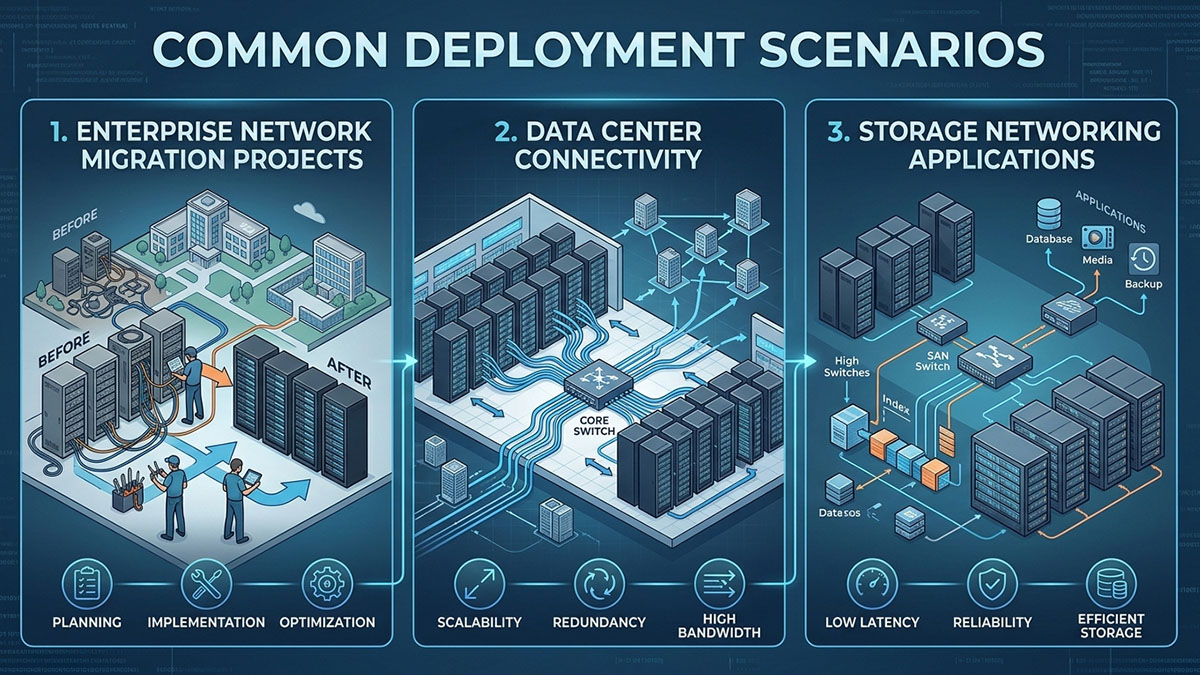
Enterprise Network Migration Projects
In enterprise environments, the transition from 1Gbps to 10Gbps is typically gradual, driven by increasing bandwidth demands and budget planning cycles. The Finisar FTLX8574D3BCV plays an important role in this migration process by supporting both speed tiers within the same optical link infrastructure.
Typical usage patterns in migration projects include:
- Gradual replacement of 1G switch uplinks with 10G connections
- Reuse of existing OM2/OM3 multimode fiber infrastructure during upgrades
- Mixed deployment of legacy and upgraded network segments
- Reduced need for immediate full-scale hardware replacement
This approach allows organizations to scale performance step by step while maintaining operational continuity across existing network layers.
Data Center Connectivity
In data center environments, the Finisar FTLX8574D3BCV is commonly deployed in short-reach high-density switching architectures where flexible port utilization is required. Its dual-rate functionality supports both legacy servers and modern high-performance computing nodes.
Key deployment roles in data centers include:
- Top-of-rack (ToR) switch uplink connectivity
- Leaf-spine architecture interconnection links
- Server-to-switch connections in mixed-speed environments
- Temporary bridging between 1G and 10G infrastructure layers
These use cases highlight its ability to simplify optical layer management in environments where device generations and performance requirements vary across racks and clusters.
Storage Networking Applications
Storage Area Networks (SAN) and other storage-focused infrastructures require stable, low-latency, and high-reliability optical connections. The Finisar FTLX8574D3BCV supports these requirements by delivering consistent performance across both supported Ethernet speeds.
Common storage networking applications include:
- SAN inter-switch connectivity using multimode fiber links
- Redundant optical paths for storage cluster resilience
- Mixed-speed storage migration environments
- High-availability storage fabric interconnections
In these scenarios, the module helps maintain consistent access to storage resources while supporting gradual infrastructure upgrades without disrupting service continuity.
⏰ Installation and Operational Best Practices
The Finisar FTLX8574D3BCV is designed for stable performance in dual-rate 1G/10G multimode environments, but real-world reliability depends heavily on correct installation and ongoing operational handling. Proper procedures help maintain optical signal quality, prevent link instability, and extend module lifespan in high-density networking environments.
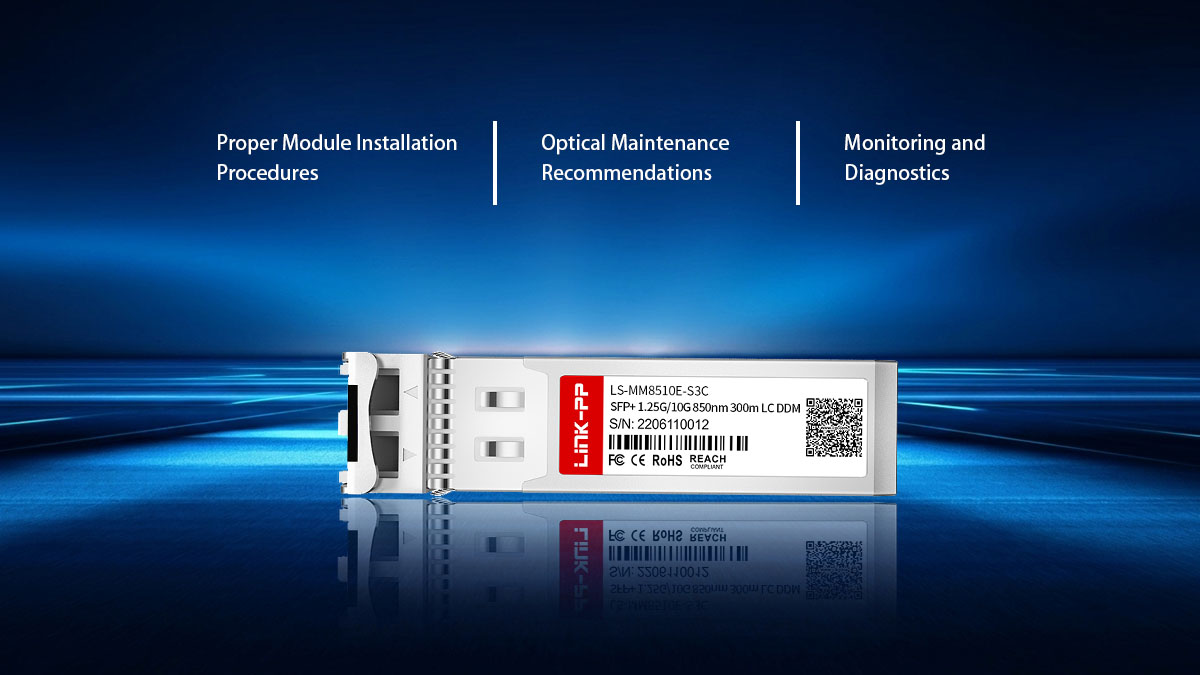
Proper Module Installation Procedures
Correct installation of the Finisar FTLX8574D3BCV ensures that both electrical and optical interfaces operate within expected parameters from the moment of activation. Since SFP+ modules are hot-pluggable, they can be installed without shutting down the system, but careful handling is still required.
Before and during installation, the following practices are essential:
- Ensure the SFP+ port is clean and free of dust or debris
- Align the module correctly before insertion to avoid connector damage
- Apply proper ESD (electrostatic discharge) protection when handling the module
- Confirm that the host port supports dual-rate operation (1G/10G)
These steps help prevent physical damage and ensure that the module is correctly recognized by the network device upon insertion.
Optical Maintenance Recommendations
Maintaining optical cleanliness and monitoring signal quality are critical for sustaining stable performance over time. Even minor contamination on LC connectors can significantly degrade signal transmission quality in multimode fiber systems.
To maintain optimal performance, the following practices are recommended:
- Clean LC connectors using approved fiber cleaning tools before connection
- Inspect fiber ends regularly for dust, scratches, or contamination
- Monitor optical power levels using DOM/DDM diagnostics
- Replace damaged or high-loss patch cables promptly
These measures help ensure that both 1000BASE-SX and 10GBASE-SR modes operate within their intended optical power ranges, reducing the risk of intermittent link degradation.
Monitoring and Diagnostics
One of the key advantages of the Finisar FTLX8574D3BCV is its support for Digital Diagnostic Monitoring (DDM/DOM), which provides real-time visibility into module operating conditions. This capability is essential for proactive maintenance and early fault detection in production networks.
Important diagnostic parameters to monitor include:
- Optical transmit and receive power levels
- Module operating temperature
- Supply voltage stability
- Laser bias current conditions
Regular monitoring of these values helps identify early signs of degradation, such as fiber attenuation, overheating, or power instability. This enables network operators to address potential issues before they escalate into service disruptions.
⏰ Troubleshooting Common Issues
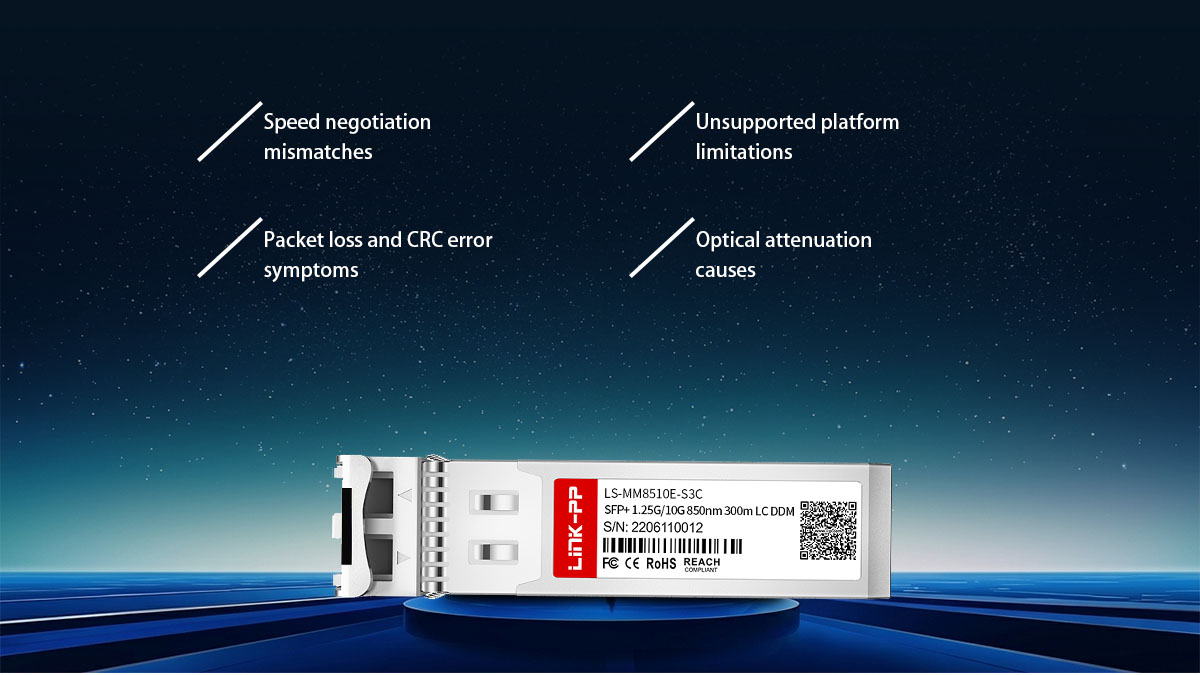
The Finisar FTLX8574D3BCV operates in dual-rate 1G/10G environments, so issues can arise not only from the optical module itself but also from fiber quality, host compatibility, and configuration mismatches. In practical deployments, most problems are related to link negotiation, optical signal loss, or physical layer inconsistencies. Understanding how to systematically identify these issues is essential for maintaining stable network performance.
Link Initialization Problems
When the Finisar FTLX8574D3BCV fails to establish a link, the issue is typically related to speed mismatch, platform limitations, or fiber polarity errors. Because the module supports both 1000BASE-SX and 10GBASE-SR, correct host-side configuration is critical.
Common causes and checks include:
- Host port does not support dual-rate SFP+ operation
- Speed configuration mismatch between 1G and 10G modes
- Incorrect fiber polarity (Tx/Rx reversed connection)
- Unsupported or restricted transceiver recognition by platform firmware
These issues often result in no link light or persistent link flapping. Verifying port configuration and physical fiber alignment is usually the first step in resolution.
Performance and Stability Problems
Even when a link is established, performance issues such as packet loss or unstable throughput may occur. These are often related to optical signal degradation or environmental conditions affecting transmission quality.
Typical performance-related symptoms include:
- CRC errors or frame corruption under load
- Intermittent packet loss on high-traffic links
- Reduced throughput compared to expected 1G or 10G performance
- Link instability during temperature fluctuations
To address these issues, attention should be given to fiber quality, connector cleanliness, and optical power levels. In many cases, degraded performance is caused by excessive insertion loss or contaminated LC connectors rather than module failure.
Diagnostic and Verification Methods
The Finisar FTLX8574D3BCV supports Digital Diagnostic Monitoring (DDM/DOM), which provides real-time insights into optical and electrical operating conditions. These diagnostics are essential for identifying root causes of link instability.
Effective troubleshooting methods include:
- Checking DOM values for transmit and receive optical power levels
- Verifying temperature and voltage readings for abnormal conditions
- Performing optical loopback tests to isolate transmitter/receiver faults
- Testing with known-good fiber cables to eliminate cabling issues
These methods help distinguish between module-related issues, fiber infrastructure problems, and host device limitations. In most cases, systematic elimination of variables leads to quick identification of the root cause.
⏰ Conclusion
The Finisar FTLX8574D3BCV datasheet highlights a dual-rate optical transceiver designed to support both 1000BASE-SX and 10GBASE-SR over multimode fiber, making it a practical solution for mixed-speed enterprise and data center environments. Its ability to operate across 1G and 10G Ethernet standards provides strong flexibility for infrastructure that is gradually evolving rather than undergoing full replacement.
Across its specifications, several core strengths consistently stand out:
- Dual-rate operation enabling both Gigabit and 10 Gigabit Ethernet support
- 850nm VCSEL-based multimode fiber compatibility for short-reach links
- LC duplex interface designed for standardized optical deployment
- Strong suitability for migration, hybrid networks, and phased upgrades
These characteristics make it particularly effective in environments where network continuity, scalability, and infrastructure reuse are critical requirements.
From a technical perspective, understanding the datasheet is essential for ensuring proper deployment and long-term stability. Parameters such as fiber type compatibility, optical power ranges, and host system support directly influence real-world performance. As enterprise networks continue to evolve toward higher speeds, dual-rate modules like the Finisar FTLX8574D3BCV remain important transitional components that bridge legacy systems and modern architectures.
In addition, selecting reliable optical components from trusted sources is equally important for maintaining network stability and compatibility. For organizations seeking consistent quality and professional-grade optical transceivers, the LINK-PP Official Store provides a wide range of compatible solutions designed for enterprise and data center applications.