Modern enterprise and data center networks rely heavily on reliable fiber connectivity to deliver high-speed data transmission across buildings, campuses, and metropolitan areas. As Gigabit Ethernet continues to serve as a foundational networking standard, selecting the right optical transceiver module becomes essential for ensuring stable and efficient communication over fiber links.
Among the many Gigabit SFP modules available today, GLC-LH-SMD stands out as a widely deployed option designed for long-distance optical transmission over single-mode fiber. This module supports the 1000BASE-LX/LH standard, making it suitable for backbone connections, inter-building links, and other network segments that require dependable Gigabit connectivity across extended distances. This article dives into the details of what makes the GLC-LH-SMD unique, explains its technical characteristics, and explores how it fits within modern high-performance networks.
⏳ What Is GLC-LH-SMD
The GLC-LH-SMD is a Cisco Small Form-factor Pluggable (SFP) optical transceiver module designed for Gigabit Ethernet communication over fiber optic cabling. It supports long-distance transmission using the 1000BASE-LX/LH standard, enabling reliable data transfer across single-mode fiber links.
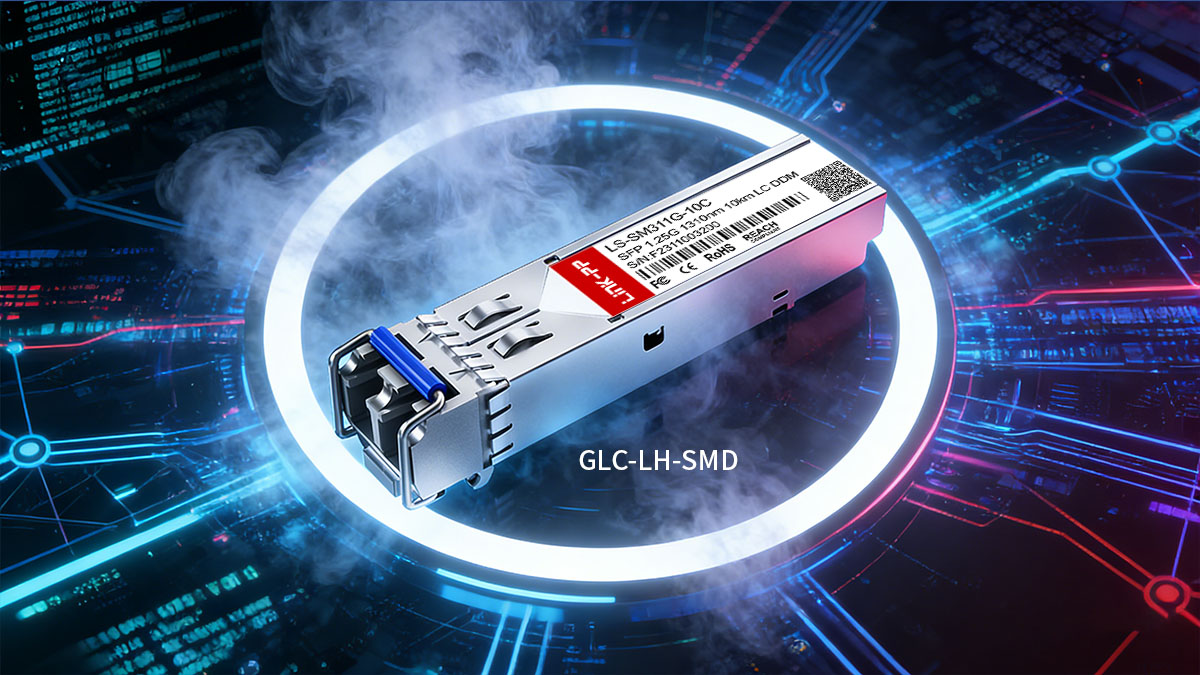
Definition of the GLC-LH-SMD SFP
GLC-LH-SMD is a hot-swappable 1 Gigabit SFP transceiver module that enables network switches and routers to transmit and receive optical signals through fiber optic cables. It operates at a wavelength of 1310nm and is primarily intended for single-mode fiber (SMF) connections.
This module is commonly used in Cisco networking equipment but is also available in compatible versions for third-party networking platforms. Because it follows the standard SFP (Small Form-factor Pluggable) interface, the module can be easily inserted into SFP ports on switches, routers, or media converters without powering down the device.
In practical deployments, the GLC-LH-SMD provides a cost-effective way to extend network connectivity beyond the limitations of copper cabling while maintaining Gigabit data rates.
Role of GLC-LH-SMD in Gigabit Ethernet Networks
Within Gigabit Ethernet infrastructures, the GLC-LH-SMD serves as a crucial component that bridges networking hardware with fiber optic transmission media. It converts electrical signals from network devices into optical signals that can travel through fiber cables over long distances.
This capability makes the module particularly valuable in scenarios such as:
- Campus network backbones connecting multiple buildings
- Data center uplinks between switches and aggregation layers
- Long-distance fiber connections between network distribution points
By enabling fiber-based Gigabit communication, the GLC-LH-SMD helps improve network reliability, reduce electromagnetic interference, and support longer transmission distances compared with traditional copper connections.
Overview of 1000BASE-LX/LH Technology
The 1000BASE-LX/LH standard is part of the IEEE 802.3 Gigabit Ethernet specification designed for optical communication over fiber optic cables. It typically operates using a 1310nm laser source and supports transmission distances of up to 10km over single-mode fiber.
While primarily optimized for single-mode fiber, 1000BASE-LX/LH can also operate on multimode fiber when a mode conditioning patch cable is used to prevent signal distortion. This flexibility allows network administrators to integrate LX/LH transceivers into mixed fiber environments when necessary.
By leveraging this technology, the GLC-LH-SMD provides stable, long-reach Gigabit connectivity suitable for enterprise, carrier, and data center networking environments.
⏳ GLC-LH-SMD Technical Specifications at a Glance
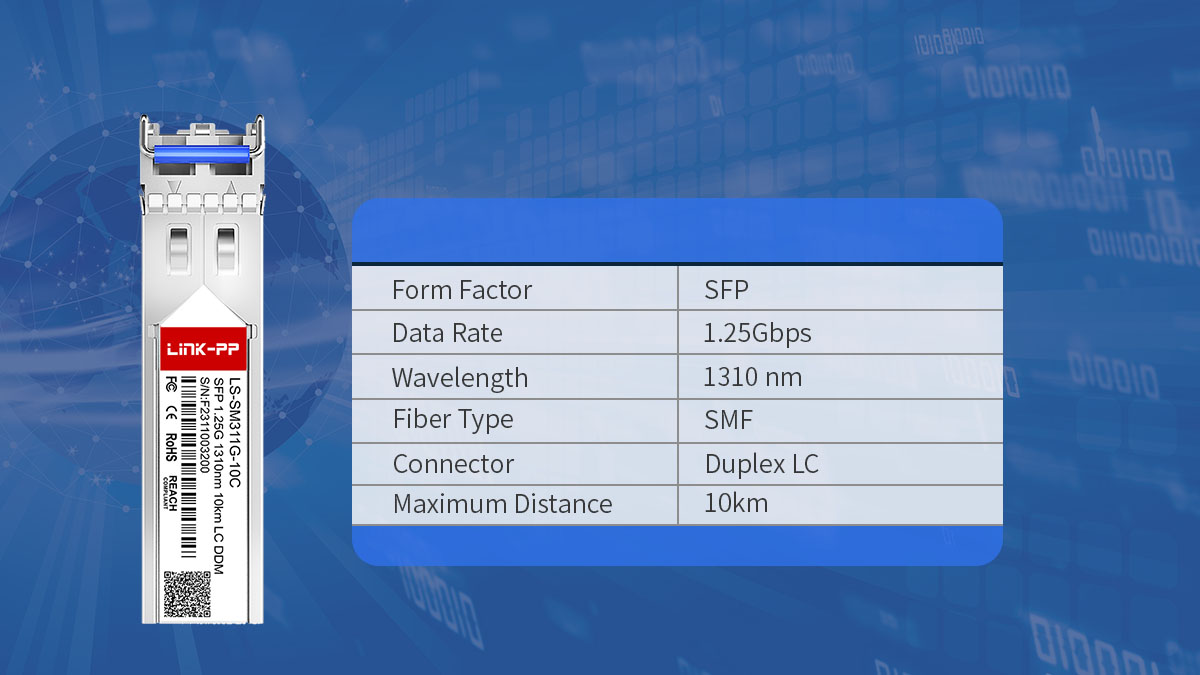
Understanding the technical specifications of the GLC-LH-SMD is essential for evaluating whether this 1000BASE-LX/LH SFP module fits your network requirements. Its operating parameters — including wavelength, transmission distance, fiber compatibility, and power consumption — determine how effectively it performs in real-world Gigabit Ethernet deployments.
Operating Wavelength and Transmission Distance
The GLC-LH-SMD SFP transceiver operates at a 1310nm wavelength, which is commonly used for long-distance optical communication in Gigabit Ethernet networks. This wavelength allows signals to travel efficiently through fiber optic cables while minimizing attenuation and signal degradation.
In terms of transmission distance, the module supports links of up to 10km over single-mode fiber (SMF) under standard operating conditions. This makes it suitable for connecting switches across buildings, campuses, or distributed network facilities.
Although primarily designed for single-mode fiber, the GLC-LH-SMD can also function with multimode fiber (MMF) when a mode conditioning patch cable (MCP) is used. This adapter helps prevent differential mode delay, ensuring stable signal transmission in multimode environments.
Supported Fiber Type and Connector Interface
The GLC-LH-SMD is designed to support both single-mode fiber (SMF) and multimode fiber (MMF), although single-mode fiber remains the recommended option for achieving maximum transmission distance.
Key fiber and interface characteristics include:
- Primary Fiber Type: Single-mode fiber (SMF)
- Optional Compatibility: Multimode fiber with a mode conditioning cable
- Connector Type: Duplex LC connector
- Interface Format: Standard Small Form-factor Pluggable (SFP)
The LC duplex connector allows separate transmit (Tx) and receive (Rx) optical paths, ensuring efficient bidirectional communication over two fiber strands. Because the module follows the standard SFP form factor, it can be installed in a wide range of switches and routers that support SFP interfaces.
Power Consumption and Operating Condition
Another important aspect of the GLC-LH-SMD is its energy efficiency and stable operation across typical networking environments. The module is designed for low power consumption, helping reduce heat generation and overall energy usage within high-density network equipment.
Typical operating characteristics include:
- Power Consumption: Usually below 1 watt
- Operating Temperature Range: Approximately 0°C to 70°C (32°F to 158°F) for commercial-grade environments
- Hot-pluggable Design: Allows installation or replacement without shutting down the network device
- Digital Optical Monitoring (DOM) Support: Enables real-time monitoring of parameters such as temperature, voltage, transmit power, and receive power
These specifications allow the GLC-LH-SMD to operate reliably in enterprise switches, aggregation devices, and data center networking equipment while providing administrators with visibility into transceiver performance.
⏳ How GLC-LH-SMD Works in Gigabit Ethernet Infrastructure
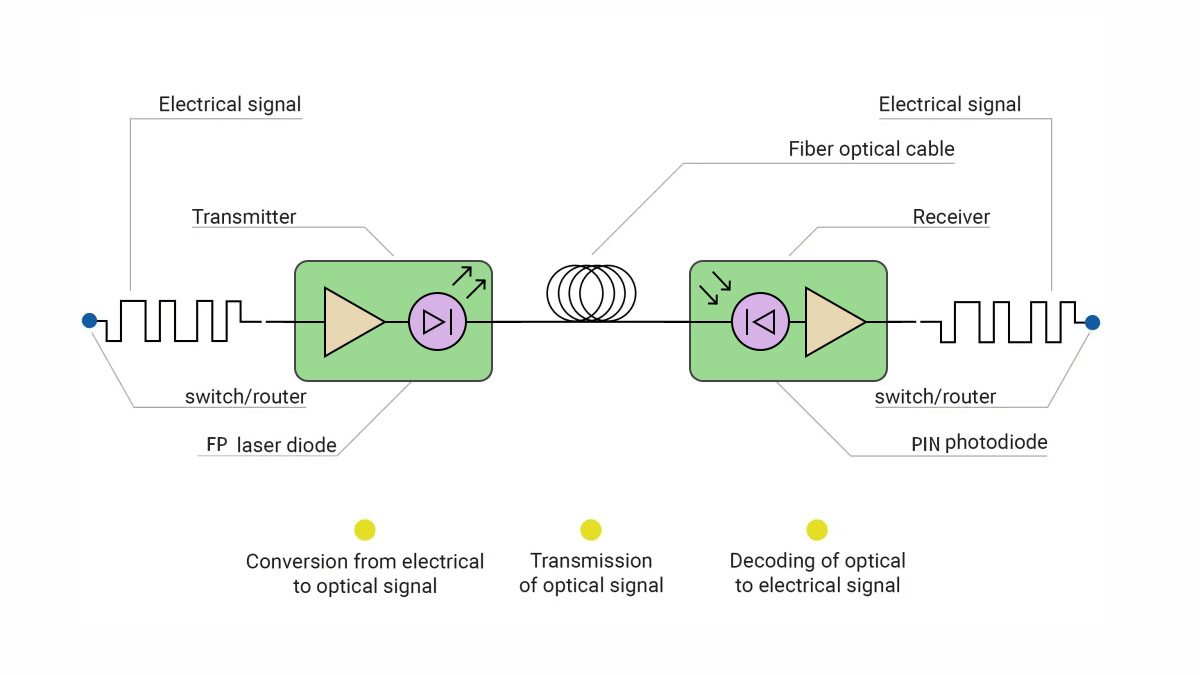
To understand the value of the GLC-LH-SMD optical transceiver, it is helpful to look at how it operates within a Gigabit Ethernet network. This module plays a key role in converting electrical network data into optical signals and transmitting them reliably over fiber optic links.
Optical Signal Conversion Process
The core function of the GLC-LH-SMD is to convert electrical data signals from a network device into optical signals that can travel through fiber optic cables. This process enables high-speed communication over distances far beyond what copper cables can support.
Inside the transceiver, two main components handle the conversion process:
- Laser transmitter (Tx): Converts electrical signals into optical pulses using a 1310nm laser.
- Photodiode receiver (Rx): Detects incoming optical signals and converts them back into electrical signals.
When a switch sends data to the SFP module, the electrical signal is first processed by the transmitter. The laser generates precise light pulses representing the digital data stream. These pulses travel through the fiber cable to the receiving device, where the photodiode converts the light back into electrical signals for further processing.
This bidirectional conversion enables seamless communication between networking devices connected via fiber infrastructure.
Interaction between SFP Modules and Network Switches
The GLC-LH-SMD works closely with the networking hardware in which it is installed. Most enterprise switches and routers include SFP ports that allow administrators to insert optical transceiver modules depending on the required transmission medium.
When the module is inserted into an SFP port:
- The switch detects the transceiver through its hardware interface.
- The device firmware identifies the module type and supported data rate.
- The port is configured to operate in Gigabit Ethernet mode (1000Mbps).
Because the module is hot-swappable, it can be installed or replaced without shutting down the switch. Once installed, the switch and the SFP module work together to manage signal transmission, link negotiation, and monitoring of operational parameters such as optical power and temperature.
This modular design allows network engineers to easily adapt switch ports for different fiber types and transmission distances.
Signal Transmission over Single-Mode Fiber
The GLC-LH-SMD is optimized for communication over single-mode fiber (SMF), which is designed to carry optical signals over long distances with minimal signal loss. Single-mode fiber uses a small core diameter that allows light to travel in a single propagation path, reducing dispersion and maintaining signal integrity.
When deployed in a Gigabit Ethernet link:
- The transmitting device sends optical signals through one fiber strand.
- The receiving device detects signals through a separate strand using the duplex LC connector.
- Data travels at 1 Gbps while maintaining stable signal quality over distances up to 10km.
This long-reach capability makes the GLC-LH-SMD ideal for connecting network segments that are physically separated, such as campus buildings, aggregation switches, or remote network facilities.
⏳ GLC-LH-SMD Deployment Scenarios in Real-World Networks
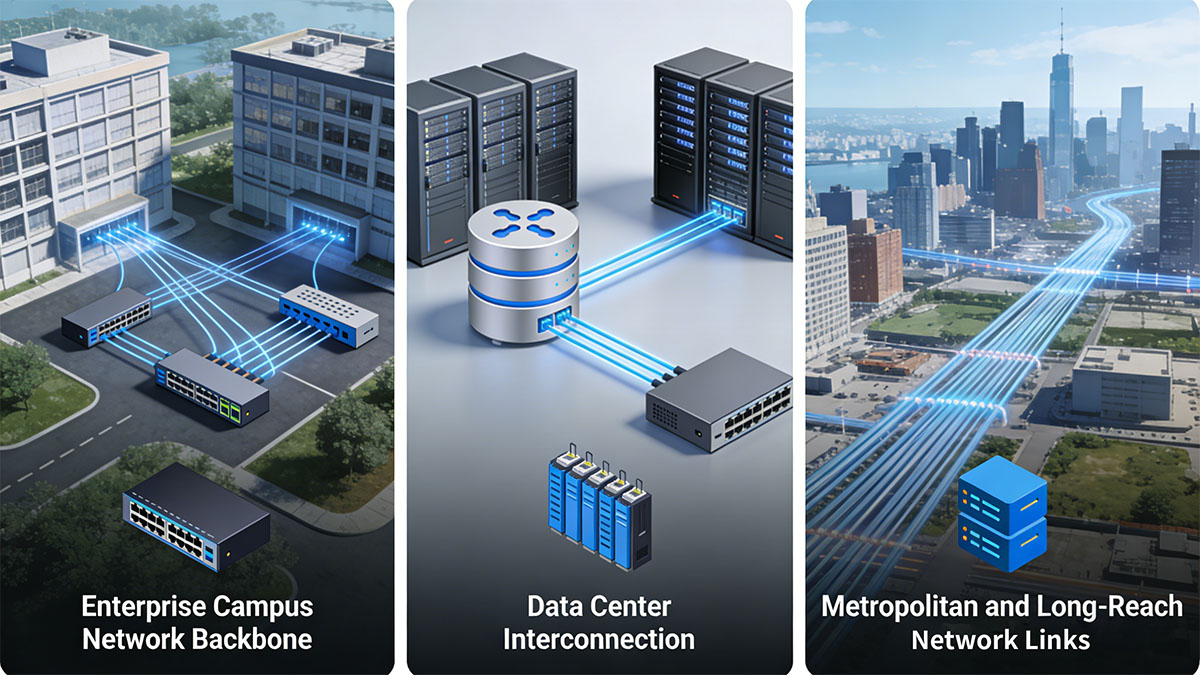
Because of its long transmission distance and stable Gigabit performance, the GLC-LH-SMD 1000BASE-LX/LH SFP transceiver module is widely used across many network infrastructures. From enterprise environments to metropolitan connectivity, it provides a reliable fiber solution for extending network links.
Enterprise Campus Network Backbone
One of the most common deployment scenarios for the GLC-LH-SMD is within enterprise campus networks, where multiple buildings must be connected through a centralized backbone infrastructure.
In large organizations such as universities, corporate campuses, or government facilities, network switches are often distributed across different buildings. Using single-mode fiber links equipped with GLC-LH-SMD modules, administrators can connect access switches to aggregation or core switches over distances of several kilometers.
Typical campus backbone use cases include:
- Connecting building distribution switches to a central core network
- Providing high-speed fiber uplinks between network layers
- Supporting stable communication across geographically dispersed facilities
By enabling long-distance Gigabit Ethernet connectivity, the GLC-LH-SMD helps ensure reliable and scalable communication throughout the campus network.
Data Center Interconnection
The GLC-LH-SMD is also frequently deployed in data center environments, particularly for connecting switches located in different rooms, halls, or nearby facilities.
In modern data centers, switches are organized in hierarchical architectures that include access, aggregation, and core layers. Fiber-based connections are essential for maintaining high bandwidth and low latency between these layers. The GLC-LH-SMD allows network operators to establish reliable links between switches using single-mode fiber.
Common data center deployment examples include:
- Interconnecting aggregation and core switches
- Linking network equipment between separate data center halls
- Establishing fiber uplinks between top-of-rack switches and distribution switches
Because the module is hot-swappable and energy efficient, it fits well into high-density data center environments where flexibility and reliability are critical.
Metropolitan and Long-Reach Network Links
Beyond campus and data center networks, the GLC-LH-SMD can also support metropolitan or long-reach network connections where fiber infrastructure spans larger geographic areas.
Service providers, municipal networks, and enterprise WAN environments often require fiber links that connect remote offices, branch sites, or network distribution points. With its ability to transmit up to 10km over single-mode fiber, the GLC-LH-SMD provides an economical option for these medium-distance connections.
Typical metropolitan deployment scenarios include:
- Linking branch offices to a central headquarters network
- Connecting metro access nodes or distribution points
- Supporting long-distance fiber uplinks in regional network infrastructures
In these situations, the GLC-LH-SMD offers a dependable Gigabit optical solution that balances performance, distance capability, and cost efficiency for extended network connectivity.
⏳ GLC-LH-SMD vs Other Gigabit SFP Modules: Key Differences
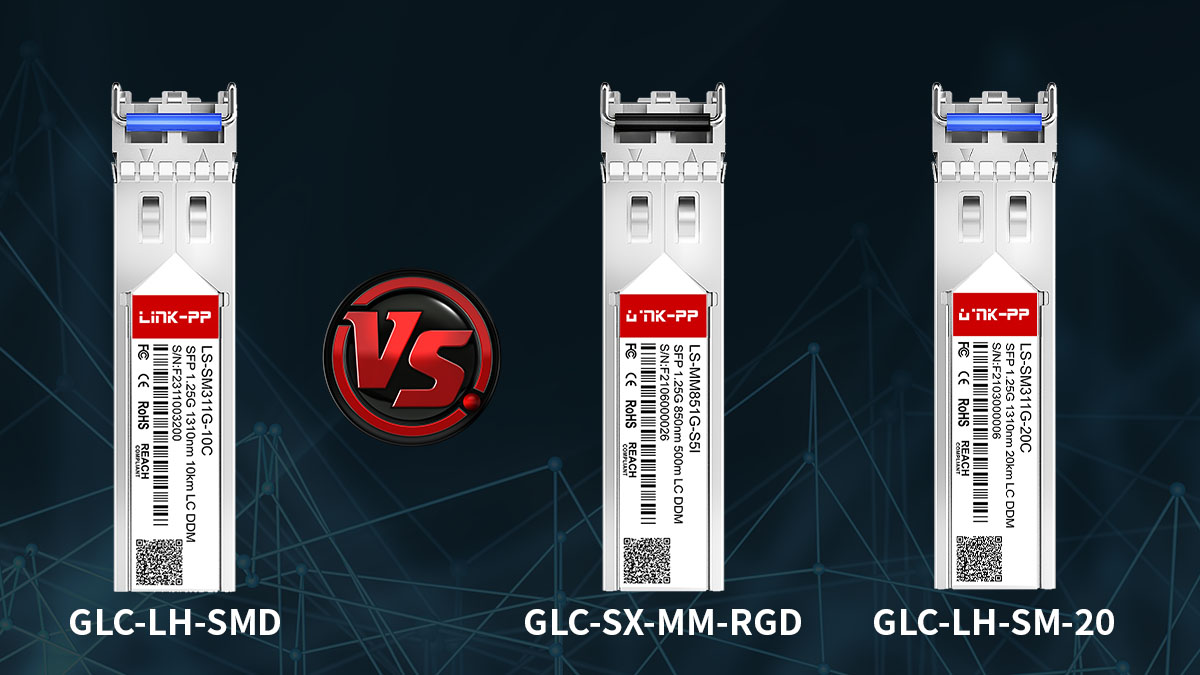
Although the GLC-LH-SMD is a popular Gigabit SFP transceiver, it is not the only option available for 1G fiber-based Ethernet connections. Different Gigabit SFP modules are designed for specific fiber types, transmission distances, and operating environments, making it important to understand how they compare.
The table below highlights the key differences between GLC-LH-SMD, GLC-SX-MM-RGD, and GLC-LH-SM-20, three commonly used Cisco Gigabit SFP modules.
| Feature |
GLC-LH-SMD |
GLC-SX-MM-RGD |
GLC-LH-SM-20 |
| Ethernet Standard |
1000BASE-LX/LH |
1000BASE-SX |
1000BASE-LX |
| Operating Wavelength |
1310nm |
850nm |
1310nm |
| Fiber Type |
Single-Mode Fiber (SMF), optional MMF with MCP |
Multimode Fiber (MMF) |
Single-Mode Fiber (SMF) |
| Maximum Transmission Distance |
Up to 10km |
Up to 550m |
Up to 20km |
| Operating Temperature |
0°C to 70°C |
-40°C to 85°C |
0°C to 70°C |
| Primary Use Case |
Enterprise and data center backbone |
Industrial and short-range fiber links |
Long-distance metropolitan or inter-campus links |
GLC-LH-SMD vs GLC-SX-MM-RGD
The GLC-LH-SMD and GLC-SX-MM-RGD are designed for very different networking environments, mainly due to differences in wavelength, fiber compatibility, and transmission distance.
The GLC-SX-MM-RGD operates at an 850nm wavelength and is intended for multimode fiber (MMF) networks. It supports transmission distances of up to 550m, making it suitable for short-distance links within industrial facilities, factory networks, or localized infrastructure.
In contrast, the GLC-LH-SMD operates at 1310nm and is primarily designed for single-mode fiber (SMF) connections. It supports distances of up to 10km, making it better suited for campus backbones, building-to-building connections, and enterprise network uplinks.
Another notable difference is environmental durability. The GLC-SX-MM-RGD is typically built as a ruggedized industrial module with an extended temperature range of -40°C to 85°C, allowing it to function in harsh conditions. The GLC-LH-SMD, however, is optimized for standard enterprise environments with controlled operating conditions.
GLC-LH-SMD vs GLC-LH-SM-20
The GLC-LH-SMD and GLC-LH-SM-20 are more closely related because both are designed for single-mode fiber communication using a 1310nm wavelength. They follow similar optical standards and are commonly used for long-distance Gigabit Ethernet connectivity.
The key difference lies in transmission reach. The GLC-LH-SMD typically supports distances of up to 10km, while the GLC-LH-SM-20 extends this capability to approximately 20km over single-mode fiber. This extended reach makes the GLC-LH-SM-20 module suitable for longer metropolitan links, remote site connections, or distributed enterprise networks.
Because of the increased optical power required to reach longer distances, the GLC-LH-SM-20 is usually selected when network segments exceed the standard 10km range supported by typical 1000BASE-LX/LH SFP modules.
Choosing the Right Gigabit SFP Module for Your Network
After comparing GLC-LH-SMD with GLC-SX-MM-RGD and GLC-LH-SMD with GLC-LH-SM-20, it becomes clear that the best SFP module largely depends on the fiber type, transmission distance, and deployment environment of the network.
If the network infrastructure uses multimode fiber and only requires short-distance connectivity, the GLC-SX-MM-RGD is a practical choice. Its design supports short links of up to 550m, and its ruggedized construction makes it suitable for industrial or harsh operating environments where wider temperature tolerance is required.
For networks that rely on single-mode fiber and require extended reach, both GLC-LH-SMD and GLC-LH-SM-20 are viable options. The key difference lies in transmission distance. The GLC-LH-SMD supports links of up to 10km, which is sufficient for most enterprise campus networks, inter-building connections, and data center uplinks. In contrast, the GLC-LH-SM-20 extends the reach to approximately 20km, making it more suitable for longer metropolitan or remote site connections.
For the majority of enterprise and campus networking scenarios, the GLC-LH-SMD remains the most commonly recommended option. It provides a reliable balance of distance capability, compatibility with networking equipment, and cost efficiency, making it well-suited for standard Gigabit Ethernet fiber deployments. However, organizations should still evaluate their fiber infrastructure, link distance requirements, and environmental conditions before selecting the most appropriate SFP module.
⏳ GLC-LH-SMD Installation and Maintenance Best Practices
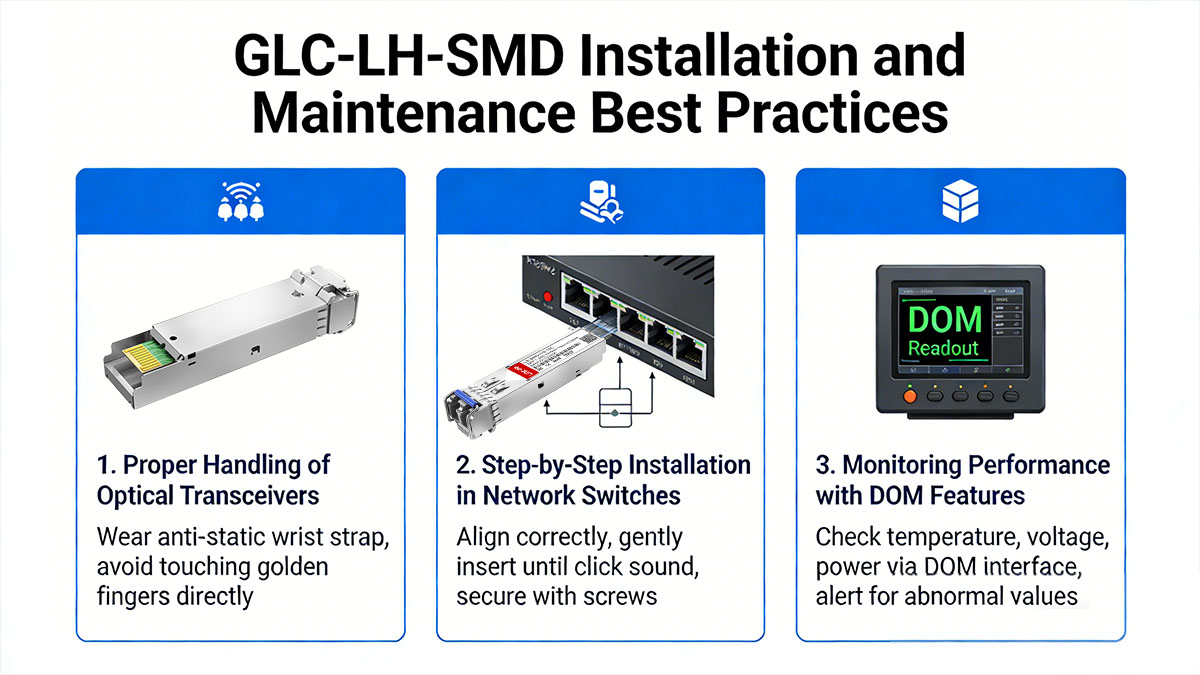
Proper installation and maintenance play a crucial role in ensuring the long-term performance and reliability of the GLC-LH-SMD transceiver. Following best practices minimizes connection errors, extends the module’s lifespan, and helps maintain consistent optical signal quality across network operations.
Proper Handling of Optical Transceivers
Optical transceivers are sensitive electronic and optical components, so they should always be handled carefully during installation or replacement. Improper handling may damage the internal laser or contaminate the optical interfaces, which can affect signal quality.
To ensure safe handling of the GLC-LH-SMD, consider the following best practices:
- Avoid touching the optical connectors to prevent dust, oil, or fingerprints from contaminating the fiber interface.
- Use protective dust caps on both the SFP module and fiber connectors when they are not in use.
- Handle the module by its sides, rather than pressing on the optical port or electrical contacts.
- Store spare transceivers in anti-static packaging to protect them from electrostatic discharge (ESD).
Maintaining clean optical connections is especially important in fiber networks because even small amounts of contamination can lead to signal loss or link instability.
Step-by-Step Installation in Network Switches
The GLC-LH-SMD is designed with a hot-swappable SFP interface, allowing administrators to install or replace the module without powering down the network device. However, following the correct installation steps helps ensure the module is properly recognized by the switch.
A typical installation process includes:
- Verify compatibility between the GLC-LH-SMD module and the target switch or router.
- Remove the protective cap from the SFP module.
- Insert the module into the SFP port on the network device, ensuring it is aligned correctly.
- Gently push the module until it clicks into place, indicating it is securely seated.
- Connect the duplex LC fiber cable to the transmit (Tx) and receive (Rx) ports.
- Check the port status on the switch to confirm that the optical link has been successfully established.
After installation, network administrators can use the device’s management interface or command-line tools to verify link status and ensure proper operation.
Monitoring Performance with DOM Features
GLC-LH-SMD transceivers support Digital Optical Monitoring (DOM), a feature that allows administrators to monitor the real-time operating conditions of the module.
DOM provides valuable diagnostic information, such as:
- Transceiver temperature
- Supply voltage
- Transmit optical power
- Receive optical power
- Laser bias current
By monitoring these parameters through network management software or switch command-line interfaces, administrators can detect potential problems early, such as signal degradation, overheating, or fiber attenuation.
Regular monitoring of DOM data helps maintain network stability and allows proactive maintenance before performance issues affect the fiber link.
⏳ GLC-LH-SMD Troubleshooting: Common Issues and Solutions
Even with proper installation, network administrators may occasionally encounter issues when deploying the GLC-LH-SMD SFP module. Understanding common problems and their potential causes can help quickly restore connectivity and maintain stable network performance.
Diagnosing Fiber Link Failures
One of the most common issues with fiber optic transceivers is a link failure, where the switch port does not detect an active optical connection. This problem can occur due to incorrect cabling, damaged fiber, or improper module installation.
To diagnose fiber link failures, administrators should first verify that the fiber cables are correctly connected to the transmit (Tx) and receive (Rx) ports. Since fiber connections require separate strands for transmitting and receiving data, reversing these connections can prevent the link from establishing.
Additional troubleshooting steps include:
- Checking whether the SFP module is fully inserted into the switch port.
- Ensuring the fiber cable type matches the module specification (e.g., single-mode fiber for GLC-LH-SMD).
- Inspecting fiber connectors for dust, scratches, or contamination.
- Testing the fiber cable using optical test equipment or a known working cable.
By systematically verifying these elements, most link failures can be quickly identified and resolved.
Checking Optical Power and Signal Quality
Another common troubleshooting task involves checking the optical power levels of the transceiver. If the transmitted or received optical signal is too weak, the network link may become unstable or fail entirely.
Many switches that support Digital Optical Monitoring (DOM) allow administrators to view real-time information about transmit and receive power levels. These readings can help determine whether the signal is within the normal operating range.
When diagnosing signal quality issues, administrators should:
- Review DOM readings for abnormal transmit or receive power levels.
- Check for excessive fiber attenuation caused by long cable runs or poor splicing.
- Ensure fiber connectors are clean and properly aligned.
- Confirm that the link distance does not exceed the module’s supported range.
Maintaining proper optical power levels is essential for ensuring reliable communication across fiber links.
Avoiding Compatibility and Configuration Problems
Compatibility issues can also cause the GLC-LH-SMD module to malfunction or fail to establish a link. Some switches only support specific SFP models or require compatible firmware versions to recognize the module correctly.
To avoid compatibility and configuration problems, administrators should:
- Verify that the GLC-LH-SMD is supported by the network device.
- Ensure the switch firmware or operating system is up to date.
- Confirm that the correct port configuration is applied for Gigabit Ethernet operation.
- Avoid mixing incompatible fiber modules or unsupported third-party transceivers.
In many cases, reviewing device documentation and compatibility lists can help prevent configuration-related issues before deployment.
⏳ Conclusion: Key Takeaways about GLC-LH-SMD 1000BASE-LX/LH SFP Transceiver
The GLC-LH-SMD 1000BASE-LX/LH SFP transceiver remains a widely used solution for extending Gigabit Ethernet connectivity over fiber optic infrastructure. With its 1310nm operating wavelength, support for single-mode fiber, and transmission distances of up to 10km, it provides a reliable and cost-effective option for enterprise campus networks, data center interconnections, and medium-range metropolitan links.
For network administrators planning or upgrading fiber connectivity, choosing a high-quality and compatible transceiver is essential to ensure stable performance and long-term reliability. If you are looking for reliable GLC-LH-SMD Cisco compatible SFP modules or other optical transceiver solutions, you can visit the LINK-PP official store to find SFP modules suitable for your network deployment.