As enterprise networks, data centers, industrial Ethernet systems, and campus infrastructures continue to evolve, Gigabit Ethernet remains one of the most widely deployed networking standards worldwide. Although higher-speed technologies such as SFP+ 10G and SFP28 25G are becoming more common in core networks, 1G SFP copper connectivity still plays a critical role in edge access, server connections, office switching, and legacy infrastructure integration. Because of its balance between performance, affordability, and deployment simplicity, 1000 BASE T technology continues to be highly relevant across modern Ethernet environments.
Among the various Gigabit Ethernet standards, 1000 BASE T is one of the most recognized and commonly implemented solutions for copper-based network transmission. It enables Gigabit-speed communication over standard twisted-pair Ethernet cabling and is widely used with RJ45 interfaces and copper SFP modules. However, many network administrators and IT teams still have questions about how 1000 BASE T works, how it differs from fiber optics, what types of modules are available, and which deployment scenarios are most suitable for Gigabit copper networking.
This article explains the fundamentals of 1000 BASE T technology and provides practical guidance for network deployment and compatibility planning. The following topics will be covered:
- The definition and working principles of 1000 BASE T
- How Gigabit copper SFP modules operate
- Differences between copper and fiber Ethernet modules
- Common applications in enterprise and industrial networks
- Important compatibility and deployment considerations
- How to select suitable 1000 BASE T modules for different environments
- Future trends of Gigabit copper Ethernet technologies
By understanding these areas, network professionals can better evaluate when 1000 BASE T remains the right solution and how to deploy Gigabit copper modules more efficiently in modern networking environments.
☑️ Understanding 1000 BASE T Technology
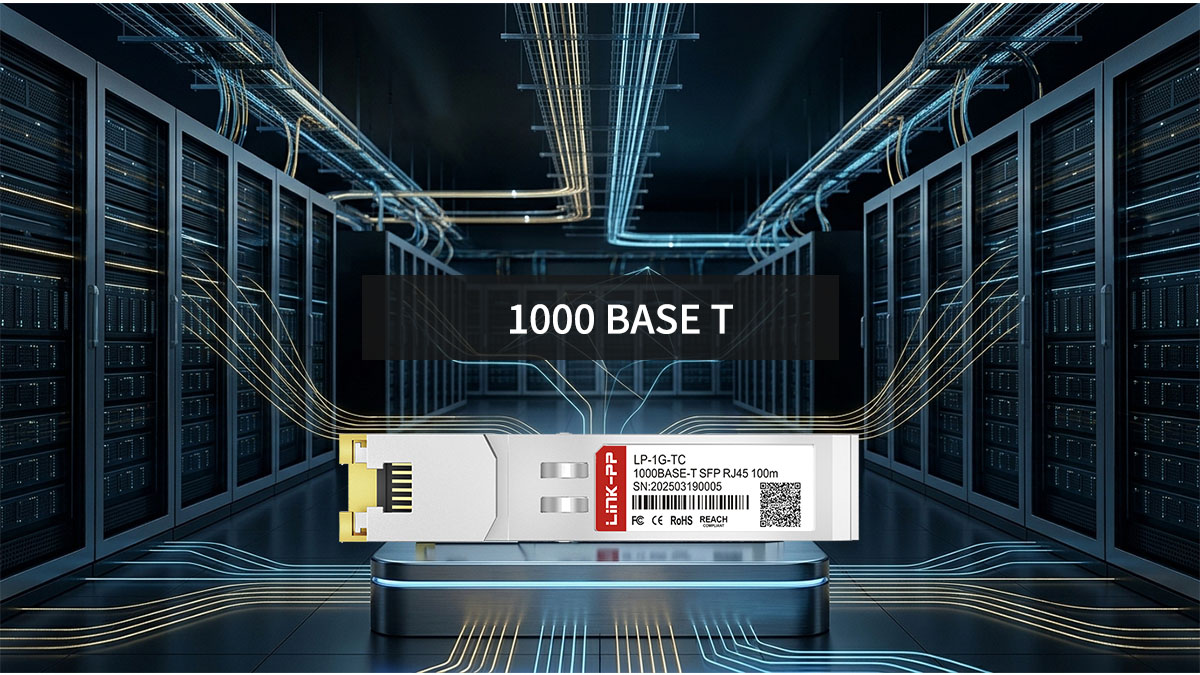
1000 BASE T is a Gigabit Ethernet standard designed for high-speed data transmission over copper twisted-pair cabling. It became one of the most important Ethernet technologies because it allowed organizations to achieve 1Gbps network performance without replacing existing copper infrastructure. Today, 1000 BASE T remains widely deployed in enterprise access networks, SMB environments, industrial Ethernet systems, and server connectivity applications.
What Does 1000 BASE T Mean?
1000 BASE T refers to the IEEE 802.3ab standard for Gigabit Ethernet transmission over copper twisted-pair cabling. The naming structure itself explains the core characteristics of the technology.
The term can be broken down into the following components:
- 1000
- Represents a transmission speed of 1000Mbps
- Equivalent to 1Gbps Ethernet connectivity
- Provides ten times the bandwidth of traditional 100BASE T Fast Ethernet
- BASE
- Refers to baseband signaling technology
- Indicates that the entire cable bandwidth is used for a single communication channel
- Commonly used in Ethernet networking standards
- T
- Stands for twisted-pair copper cabling
- Supports standard Ethernet cable types such as Cat5e and Cat6
- Uses RJ45 connectors for physical connectivity
This standard was introduced to address the increasing demand for higher-speed LAN connectivity while preserving the large installed base of copper Ethernet infrastructure. Instead of requiring fiber optic deployment in every environment, 1000 BASE T enabled organizations to upgrade to Gigabit networking using familiar copper cabling systems.
How 1000 BASE T Works
1000 BASE T achieves Gigabit-speed transmission by using advanced signaling techniques over four pairs of copper wires simultaneously. Unlike older Ethernet standards that relied on fewer wire pairs, Gigabit Ethernet maximizes the efficiency of twisted-pair cabling to increase throughput without dramatically changing cabling infrastructure.
The technology operates through several important mechanisms:
- Full-duplex communication
- Enables simultaneous sending and receiving of data
- Improves overall network efficiency
- Reduces collision-related performance limitations
- Four-pair transmission
- Uses all four twisted pairs inside Ethernet cables
- Allows bidirectional data flow on each pair
- Increases aggregate bandwidth capacity
- PAM-5 encoding
- Uses five voltage levels for data representation
- Improves transmission efficiency compared to older encoding methods
- Supports higher data density over copper media
- Auto-negotiation support
- Automatically determines compatible speed settings
- Simplifies interoperability between networking devices
- Helps reduce manual configuration requirements
- Automatic MDI/MDIX
- Eliminates the need for crossover cables
- Detects cable orientation automatically
- Simplifies switch and endpoint connections
These technologies allow 1000 BASE T to deliver stable Gigabit Ethernet performance across standard copper infrastructure while maintaining broad compatibility with Ethernet switches, routers, servers, and network interface cards.
Supported Cabling Standards
1000 BASE T is designed to operate over standardized twisted-pair Ethernet cabling, making cable quality and installation practices important factors for network reliability and performance. While Gigabit Ethernet can function on several cable categories, proper cabling selection helps ensure stable transmission and minimizes packet loss or signal degradation.
The following cable types are commonly associated with 1000 BASE T deployments:
| Cable Type | Gigabit Support | Maximum Distance | Typical Usage |
|---|---|---|---|
| Cat5 | Limited/Conditional | Up to 100m | Legacy networks |
| Cat5e | Fully Supported | Up to 100m | Standard Gigabit Ethernet |
| Cat6 | Fully Supported | Up to 100m | Enterprise deployments |
| Cat6a | Fully Supported | Up to 100m | High-interference environments |
Among these options, Cat5e became the most widely adopted standard for Gigabit Ethernet because it provides reliable 1Gbps transmission while remaining cost-efficient for large-scale deployments.
☑️ What Are 1000 BASE T SFP Modules?
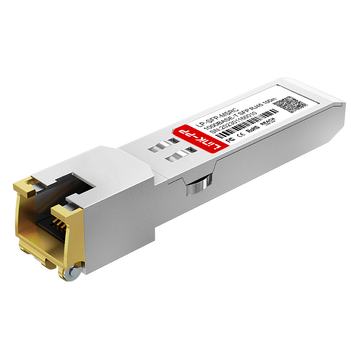
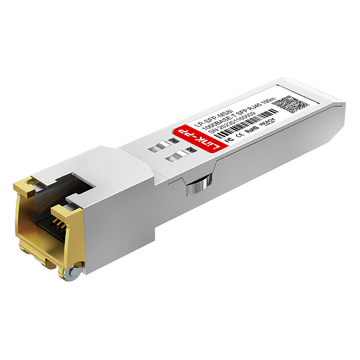
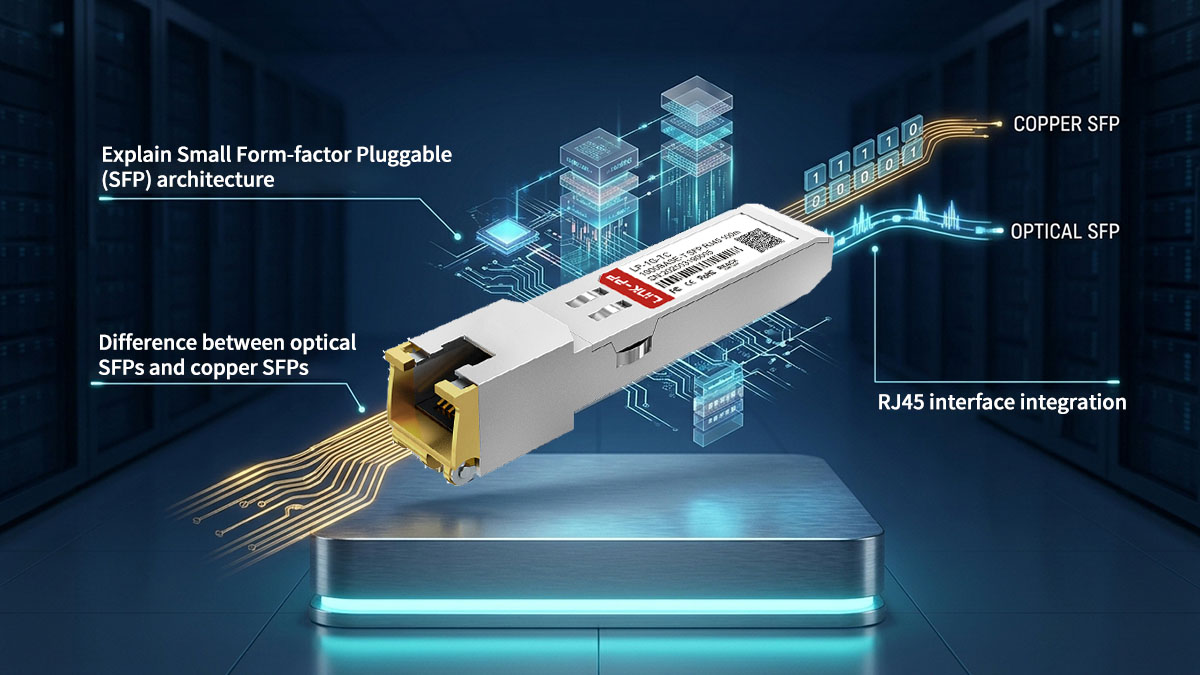
1000 BASE T SFP modules are compact Gigabit Ethernet transceivers designed to provide 1Gbps network connectivity over standard copper Ethernet cabling. These modules combine the flexibility of SFP interfaces with the convenience of RJ45 copper networking, allowing switches, routers, servers, and other networking equipment to support Gigabit Ethernet connections without requiring fixed copper ports.
Definition of Gigabit Copper SFP Modules
A 1000 BASE T SFP module is a Small Form-factor Pluggable transceiver that converts electrical Ethernet signals into a format suitable for transmission over twisted-pair copper cables. Unlike optical SFP modules that use fiber optics and laser transmission, copper SFP modules communicate through RJ45 Ethernet interfaces.
These modules are commonly installed in:
- Ethernet switches
- Enterprise routers
- Industrial networking devices
- Firewalls and security appliances
- Servers with SFP expansion ports
The core purpose of a 1000 BASE T SFP module is to provide flexible copper Ethernet connectivity while maintaining the modular advantages of SFP-based network hardware.
Key Technical Specifications
1000 BASE T SFP modules are designed around standardized Gigabit Ethernet requirements, but specifications may vary slightly depending on manufacturer design, operating environment, and compatibility coding.
Several technical characteristics are particularly important when evaluating these modules:
| Specification | Typical Value |
|---|---|
| Ethernet Speed | 1Gbps |
| Ethernet Standard | IEEE 802.3ab |
| Connector Type | RJ45 |
| Maximum Distance | 100m |
| Cable Support | Cat5e/Cat6/Cat6a |
| Operating Mode | Full Duplex |
| Form Factor | SFP |
| Hot-Swappable | Supported |
Understanding these technical specifications helps network engineers determine whether a 1000 BASE T SFP module is suitable for a particular deployment scenario.
Common Types of 1000 BASE T Modules
Although all 1000 BASE T SFP modules support Gigabit Ethernet over copper cabling, different module categories are optimized for specific networking environments and operational requirements.
The most common types include:
- Standard commercial modules (like Cisco GLC-T)
- Designed for office and enterprise environments
- Suitable for typical indoor temperature ranges
- Commonly used in switches and routers
- Industrial-grade modules (like Cisco GLC-T-RGD)
- Support extended operating temperatures
- Designed for factory automation and outdoor cabinets
- Improved durability in harsh environments
- Multi-vendor compatible transceivers
- Programmed for interoperability across different switch brands
- Reduce vendor lock-in concerns
- Widely used in mixed-network environments
- Vendor-certified modules
- Specifically validated for certain networking platforms
- Often optimized for firmware compatibility
- Common in highly standardized enterprise infrastructures
- Low-power copper SFP modules
- Optimized for improved thermal efficiency
- Useful in high-density switch deployments
- Help reduce heat accumulation inside networking equipment
Different deployment scenarios may require different module characteristics. For example, industrial Ethernet systems prioritize temperature stability and durability, while enterprise access networks may focus more on compatibility flexibility and simplified deployment.
☑️ 1000 BASE T vs Fiber Optic Modules
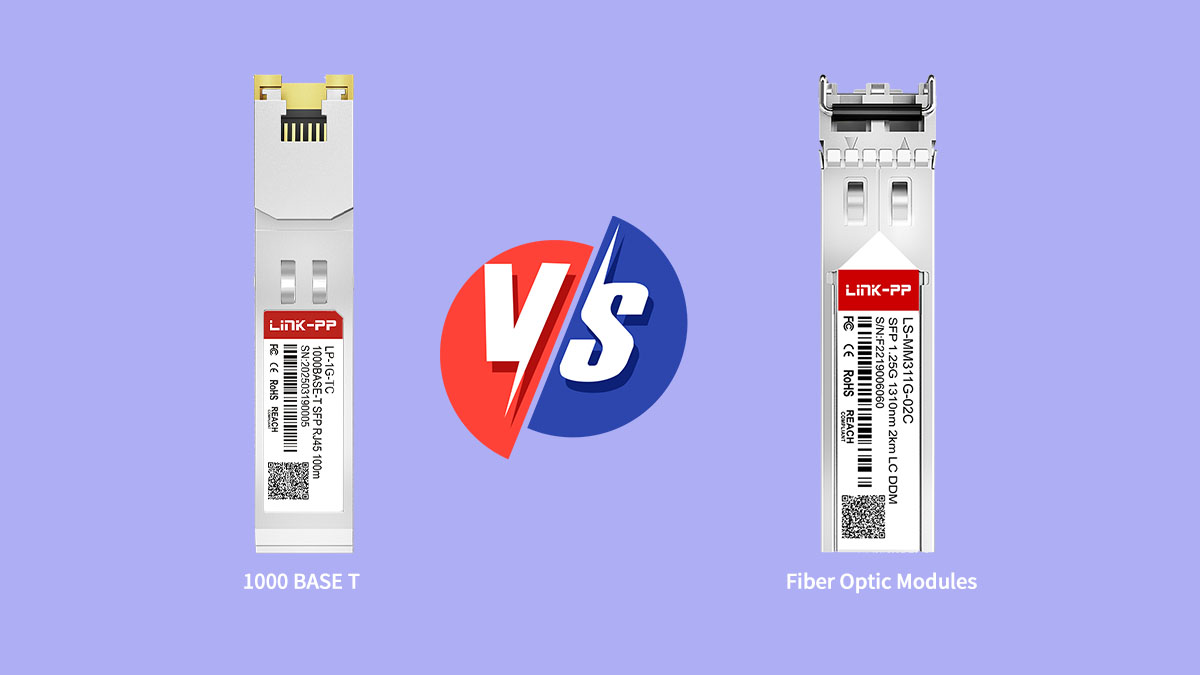
Both 1000 BASE T copper modules and fiber optic transceivers are widely used for Gigabit Ethernet connectivity, but they are designed for different networking requirements. Copper-based Gigabit modules prioritize compatibility with existing Ethernet cabling and simplified deployment, while fiber optic modules focus on long-distance transmission, low latency, and electromagnetic interference resistance.
Core Technology Differences
1000 BASE T modules and fiber optic transceivers use fundamentally different transmission methods. Copper modules transmit electrical signals through twisted-pair Ethernet cables, while fiber modules use optical signals transmitted through glass fiber.
The following comparison highlights the major technical differences between the two technologies:
| Feature | 1000 BASE T | Fiber Optic Modules |
|---|---|---|
| Transmission Medium | Copper twisted-pair cable | Optical fiber |
| Connector Type | RJ45 | LC/SC |
| Typical Distance | Up to 100m | Hundreds of meters to kilometers |
| Signal Type | Electrical | Optical |
| EMI Resistance | Moderate | Excellent |
| Latency | Slightly higher | Lower |
| Power Consumption | Higher | Lower in many cases |
| Cable Flexibility | Higher | Moderate |
| Deployment Complexity | Lower | Higher |
These differences directly affect deployment strategies in enterprise, industrial, and data center environments.
Advantages of 1000 BASE T
1000 BASE T remains one of the most practical Gigabit Ethernet solutions because it allows organizations to use widely available copper cabling while maintaining reliable 1Gbps connectivity.
One of its biggest advantages is infrastructure compatibility. Many buildings and enterprise environments already contain Ethernet copper cabling, making Gigabit copper deployment simpler and more cost-efficient than large-scale fiber installation.
The main advantages of 1000 BASE T include:
- Simplified deployment
- Uses familiar RJ45 Ethernet interfaces
- Easier installation for IT teams
- No fiber splicing or optical cleaning required
- Broad infrastructure compatibility
- Works with Cat5e, Cat6, and Cat6a cables
- Integrates easily with existing LAN environments
- Compatible with most Ethernet networking devices
- Lower initial infrastructure cost
- Copper cabling is widely available
- Reduced installation complexity lowers labor requirements
- Existing copper networks can often be reused
- Flexible network expansion
- Supports modular SFP-based deployments
- Simplifies access-layer upgrades
- Useful in mixed copper-fiber environments
- Easier troubleshooting
- Copper Ethernet tools are widely available
- RJ45 connectivity is familiar to most technicians
- Cable testing procedures are relatively straightforward
These advantages make 1000 BASE T particularly valuable in enterprise access networks, SMB deployments, campus environments, and short-range interconnection scenarios.
Limitations Compared to Fiber
Despite its advantages, 1000 BASE T also has several technical limitations compared to fiber optic networking technologies. These limitations become more significant in high-performance, long-distance, or high-density networking environments.
The most important limitations include:
- Distance restrictions
- Maximum standard transmission distance is 100m
- Longer-distance deployments require repeaters or fiber uplinks
- Not suitable for metro or campus backbone connections
- Higher power consumption
- Copper SFP modules typically consume more power
- Increased heat generation can affect switch density
- Thermal management becomes important in dense deployments
- Greater EMI sensitivity
- Electrical signaling is vulnerable to electromagnetic interference
- Industrial environments may introduce signal instability
- Shielded cabling may be required in noisy environments
- Larger cable size
- Copper Ethernet cables are bulkier than fiber
- Cable management can become more difficult
- High-density rack deployments may experience airflow limitations
- Lower scalability potential
- Fiber infrastructure supports much higher bandwidth evolution
- Data centers increasingly prioritize fiber-based architectures
- Future network upgrades may favor optical transmission
These limitations explain why fiber optics are often preferred for core networking, long-distance connectivity, and hyperscale data center environments.
☑️ Common Applications of 1000 BASE T Modules
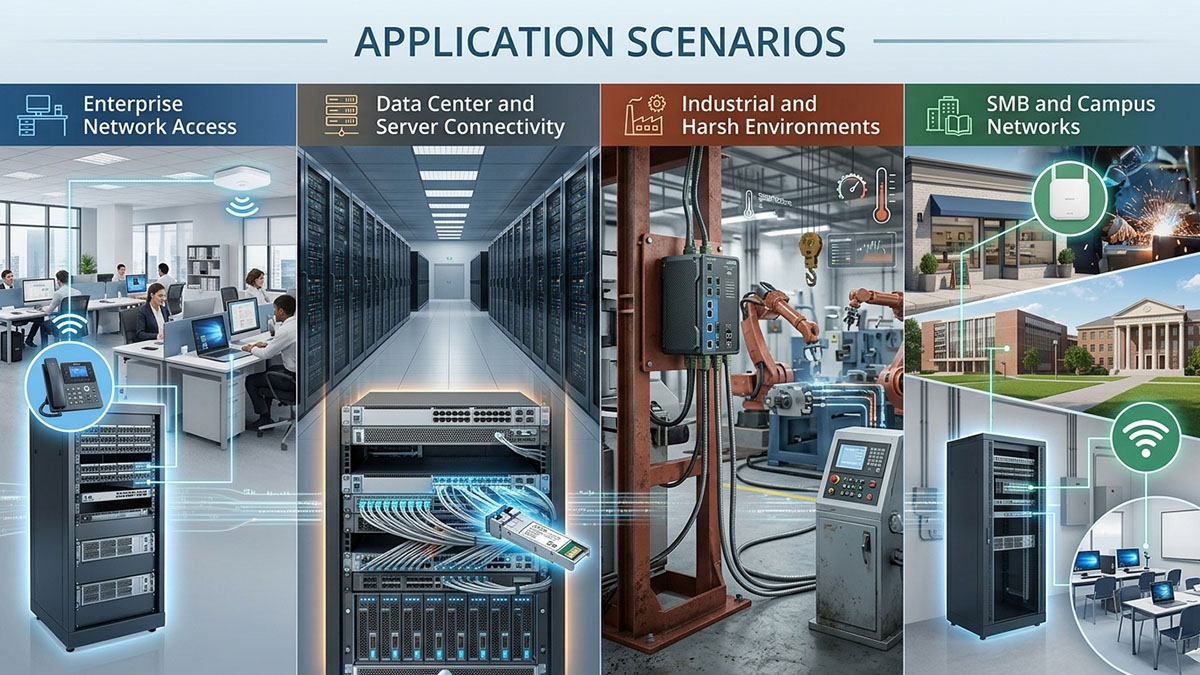
1000 BASE T SFP modules are widely used across enterprise, industrial, and commercial networking environments because they provide reliable Gigabit Ethernet connectivity over standard copper cabling. Their ability to integrate with existing RJ45 infrastructure makes them especially valuable in networks where flexibility, cost efficiency, and simplified deployment are important.
Enterprise Network Access
One of the most common uses of 1000 BASE T modules is enterprise access-layer networking. Many office buildings and business environments already rely on structured copper cabling systems, making Gigabit copper deployment straightforward and efficient.
In enterprise networks, these modules are commonly used for:
- Desktop and workstation connectivity
- Connecting users to Gigabit Ethernet switches
- Supporting stable wired LAN access
- Improving bandwidth for productivity applications
- Conference room networking
- Linking VoIP systems and collaboration devices
- Supporting video conferencing infrastructure
- Enabling stable low-latency communication
- Wireless access point backhaul
- Connecting Wi-Fi access points to switches
- Supporting enterprise wireless deployments
- Simplifying edge network expansion
- Branch office connectivity
- Extending Gigabit Ethernet to distributed offices
- Reusing existing Cat5e or Cat6 cabling
- Reducing infrastructure replacement requirements
Because enterprise access networks typically operate within the 100m distance limitation of copper Ethernet, 1000 BASE T modules remain highly practical in these scenarios.
Data Center and Server Connectivity
Although modern hyperscale data centers increasingly rely on fiber optics for high-speed interconnects, 1000 BASE T modules still maintain important roles in many server and rack-level networking environments.
These modules are frequently deployed for:
- Top-of-rack (ToR) connectivity
- Connecting nearby servers to access switches
- Supporting short-distance Ethernet links
- Simplifying copper-based rack integration
- Management network connections
- Providing out-of-band management access
- Connecting IPMI or management interfaces
- Supporting monitoring infrastructure
- Legacy server integration
- Enabling compatibility with older Ethernet hardware
- Preserving existing copper infrastructure
- Supporting phased network upgrades
- Lab and testing environments
- Simplifying temporary network deployments
- Reducing optical infrastructure requirements
- Improving flexibility during system validation
In smaller data centers and enterprise server rooms, Gigabit copper modules often remain sufficient for management traffic, low-bandwidth applications, and legacy Ethernet systems.
Industrial and Harsh Environments
Industrial Ethernet systems frequently use 1000 BASE T modules because copper cabling can provide practical deployment advantages in factory automation and field networking environments.
Industrial-grade Gigabit copper modules are typically designed to support wider operating temperatures and improved environmental durability.
Common industrial applications include:
- Factory automation systems
- Connecting industrial switches and controllers
- Supporting programmable logic controllers (PLCs)
- Enabling machine-to-machine communication
- Transportation infrastructure
- Railway networking systems
- Intelligent traffic management
- Roadside Ethernet equipment
- Energy and utility environments
- Smart grid communication systems
- Monitoring and control equipment
- Remote cabinet networking
- Outdoor industrial cabinets
- Rugged Ethernet deployments
- Industrial surveillance systems
- Environmental monitoring applications
In industrial environments, shielded Ethernet cabling and hardened transceivers are often used to improve resistance against electromagnetic interference and temperature fluctuations.
SMB and Campus Networks
Small and medium-sized businesses (SMBs), schools, healthcare facilities, and campus environments are also major users of 1000 BASE T modules because these networks often prioritize affordability, ease of deployment, and compatibility with existing Ethernet infrastructure.
Typical SMB and campus applications include:
- Educational institutions
- Classroom Ethernet connectivity
- Administrative office networking
- Campus access-layer switching
- Healthcare environments
- Hospital workstation connectivity
- Medical device networking
- Administrative data transmission
- Hospitality and retail
- Point-of-sale system connectivity
- Guest network infrastructure
- Security camera networking
- Small business networks
- Office LAN expansion
- Printer and storage connectivity
- Basic server interconnection
These environments often benefit from the operational simplicity of RJ45-based networking because maintenance procedures are familiar and copper Ethernet infrastructure is widely available.
☑️ Important Deployment Considerations
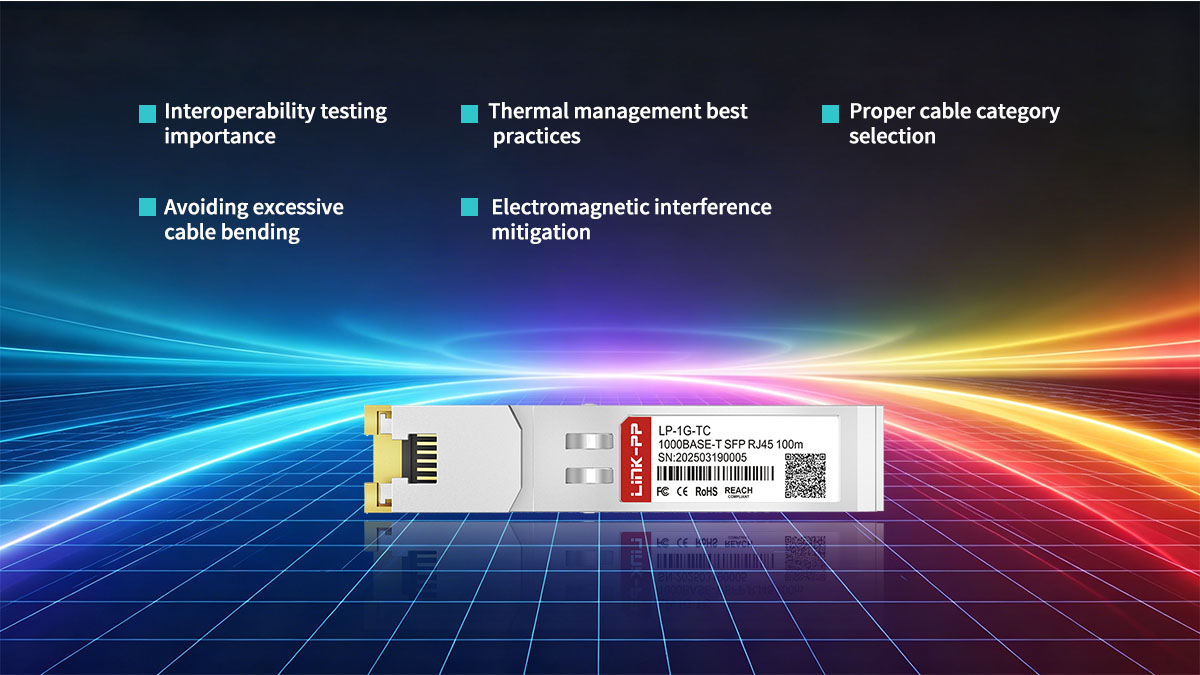
Deploying 1000 BASE T SFP modules requires more than just ensuring Gigabit speed support. In real-world networks, performance, compatibility, thermal behavior, and cabling conditions all directly influence stability and long-term reliability. Careful planning at the deployment stage helps avoid common interoperability issues and ensures consistent network performance across different environments.
Compatibility Verification
Compatibility is one of the most important factors when deploying 1000 BASE T SFP modules in multi-vendor networking environments. Even though these modules follow IEEE Ethernet standards, SFP interoperability is often influenced by vendor-specific firmware and hardware recognition rules.
Proper compatibility planning typically involves:
- Switch platform validation
- Confirming supported SFP types in switch datasheets
- Checking whether RJ45 copper SFPs are officially supported
- Reviewing port power limitations per SFP slot
- Vendor coding alignment
- Ensuring correct EEPROM programming for target devices
- Matching module coding with switch brand requirements
- Avoiding unrecognized or unsupported module errors
- Firmware compatibility checks
- Updating switch firmware when necessary
- Verifying known compatibility lists from vendors
- Testing modules in staging environments before full deployment
- Multi-vendor interoperability testing
- Validating modules across different switch brands
- Ensuring stable link negotiation and speed detection
- Reducing risks in heterogeneous network environments
Careful compatibility verification helps prevent link instability, port disablement, and unexpected module rejection in production networks.
Heat and Power Consumption
1000 BASE T SFP modules generally consume more power than optical transceivers because they require additional electrical processing for copper signal transmission. This increased power usage directly impacts heat generation inside network switches.
Key thermal considerations include:
- Higher power draw per module
- Copper SFPs typically consume more energy than fiber SFPs
- Power consumption increases with link activity
- Dense deployments amplify total thermal load
- Switch port density limitations
- Some switches restrict the number of copper SFPs per chassis
- Power budgets may limit full-port utilization
- High-density environments require careful planning
- Heat accumulation risks
- Multiple copper modules increase internal chassis temperature
- Poor airflow can reduce overall system stability
- Thermal hotspots may form near SFP cages
- Cooling strategy requirements
- Proper rack ventilation improves module longevity
- Airflow direction should align with switch design
- Environmental temperature control enhances stability
Understanding power and thermal behavior is essential for maintaining stable long-term operation, especially in environments with many active Gigabit copper links.
Cable Quality and Installation
Cable infrastructure plays a critical role in ensuring reliable 1000 BASE T performance. Even though the technology supports Gigabit transmission over standard Ethernet cables, poor cabling practices can significantly degrade signal quality.
Important cabling considerations include:
- Cable category selection
- Cat5e is the minimum recommended standard for Gigabit Ethernet
- Cat6 provides improved noise resistance and performance stability
- Cat6a is preferred in high-interference environments
- Cable length limitations
- Maximum supported distance is typically 100 meters
- Exceeding recommended length may result in packet loss or errors
- Signal repeaters or fiber conversion may be required for longer runs
- Installation quality
- Improper termination can introduce transmission errors
- Excessive bending reduces cable performance
- Poor shielding increases electromagnetic interference risk
- Environmental protection
- Industrial environments may require shielded twisted-pair (STP) cables
- Cable routing should avoid high-power electrical equipment
- Structured cabling improves maintainability and reliability
A well-designed cabling infrastructure ensures that 1000 BASE T modules can operate at full Gigabit capacity without performance degradation.
Network Performance Optimization
Beyond physical installation, proper configuration and monitoring are essential for maintaining optimal performance in 1000 BASE T deployments. Even though Gigabit Ethernet is generally plug-and-play, several factors can influence long-term stability.
Key optimization practices include:
- Auto-negotiation validation
- Ensuring correct speed and duplex settings
- Preventing mismatched link configurations
- Maintaining full-duplex operation for optimal throughput
- Port monitoring and diagnostics
- Tracking error rates and packet loss
- Monitoring link stability over time
- Identifying cable or module-related issues early
- Traffic load balancing
- Avoiding congestion on copper access ports
- Distributing network load across multiple switches
- Ensuring consistent performance during peak usage
- Firmware and system updates
- Keeping switch software up to date
- Applying vendor-recommended stability patches
- Maintaining compatibility with newer modules
When combined, these optimization practices help ensure that 1000 BASE T networks maintain stable Gigabit performance under varying operational conditions.
☑️ How to Select the Right 1000 BASE T Module
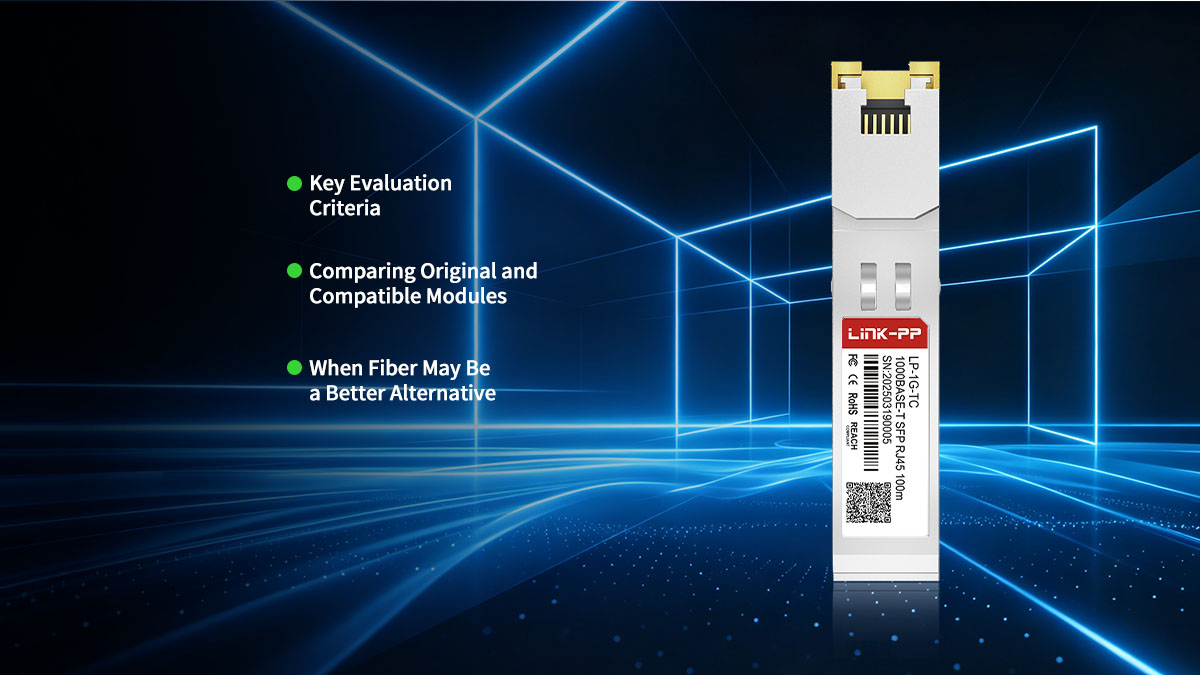
Selecting the right 1000 BASE T SFP module is essential for ensuring stable Gigabit Ethernet performance, long-term compatibility, and efficient network operation. Although these modules share the same basic IEEE standard, real-world performance can vary depending on vendor implementation, hardware compatibility, thermal design, and deployment environment.
Key Evaluation Criteria
Choosing a suitable 1000 BASE T module starts with evaluating several core technical and operational factors. These criteria directly affect how well the module integrates into existing network infrastructure.
Important selection factors include:
- Compatibility with network equipment
- Confirm support for RJ45 copper SFP in the switch or router
- Verify vendor compatibility lists or tested modules
- Ensure proper recognition by device firmware
- Electrical and thermal performance
- Check power consumption per module
- Evaluate heat output in high-density environments
- Ensure switch power budget supports multiple copper SFPs
- Environmental requirements
- Determine if commercial or industrial temperature range is needed
- Consider humidity, vibration, and EMI exposure
- Select rugged modules for harsh environments
- Transmission performance stability
- Confirm support for full Gigabit throughput
- Evaluate error rate performance under load
- Ensure stable auto-negotiation behavior
These factors help ensure that the selected module can operate reliably under expected network conditions while maintaining consistent performance across all connected devices.
Comparing Original and Compatible Modules
In many deployments, network operators choose between original vendor-branded modules and compatible third-party alternatives. Both options can support 1000 BASE T functionality, but they differ in cost structure, testing scope, and deployment flexibility.
A structured comparison helps clarify their characteristics:
| Factor | Original Modules | Compatible Modules |
|---|---|---|
| Vendor Certification | Fully validated by equipment manufacturer | Tested for multi-vendor compatibility |
| Device Recognition | Native firmware integration | Requires correct coding for recognition |
| Availability | Limited to specific brand channels | Broad multi-source availability |
| Deployment Flexibility | Best within single-vendor ecosystems | Suitable for mixed network environments |
| Cost Structure | Higher pricing level | More flexible deployment cost model |
Original modules are typically preferred in highly standardized enterprise environments where strict vendor validation is required. Compatible modules, on the other hand, are often used in multi-vendor networks where flexibility and broader interoperability are more important.
When Fiber May Be a Better Alternative
Although 1000 BASE T modules provide strong flexibility and ease of deployment, there are scenarios where fiber optic solutions offer more suitable performance characteristics. Understanding these cases helps prevent suboptimal design decisions in network planning.
Fiber optics may be preferable in the following situations:
- Long-distance transmission requirements
- Connections beyond 100 meters
- Campus backbone or inter-building links
- Metropolitan network extensions
- High electromagnetic interference environments
- Industrial facilities with heavy machinery
- Power plants and utility stations
- Environments with strong electrical noise
- High-density data center architectures
- Large-scale switch aggregation layers
- High-bandwidth server interconnects
- Energy-efficient large port deployments
- Future scalability planning
- Anticipated bandwidth growth beyond 1Gbps
- Migration toward 10G or higher speeds
- Long-term infrastructure investment planning
In these scenarios, fiber optic modules offer advantages such as lower latency, reduced power consumption, and significantly higher scalability potential.
☑️ Conclusion
1000 BASE T continues to play a foundational role in modern Ethernet networking by enabling reliable Gigabit connectivity over widely deployed copper infrastructure. It offers a practical balance between performance, compatibility, and deployment simplicity, making it suitable for enterprise access networks, SMB environments, industrial systems, and short-range data center connections.
Across different deployment scenarios, several key insights consistently define its value:
- It delivers stable 1Gbps transmission over standard twisted-pair copper cabling
- It integrates easily with existing RJ45-based Ethernet infrastructure
- It supports flexible SFP-based architectures for mixed copper and fiber networks
- It remains highly relevant in cost-sensitive and edge network deployments
At the same time, effective deployment depends on careful attention to compatibility, thermal behavior, cabling quality, and switch platform limitations. These factors ensure that 1000 BASE T modules operate reliably under real-world network conditions without unexpected performance degradation.
For organizations planning Gigabit Ethernet deployments or upgrades, selecting properly tested and compatible copper SFP solutions is essential for long-term stability and operational efficiency. Reliable sourcing and validated module compatibility can significantly reduce deployment risks and simplify network maintenance.
To explore a wide range of Gigabit copper transceiver solutions, including 1000 BASE T SFP modules designed for different network environments, the LINK-PP Official Store provides application-focused options that support enterprise, industrial, and data center networking requirements.