In many fiber networks today, operators face a simple but persistent question: how can bandwidth be expanded without deploying additional fiber? As fiber resources become more valuable — especially in metropolitan and access networks — technologies that maximize the use of a single fiber strand are increasingly important. The GLC-BX-U 1G BiDi SFP module is designed precisely for this scenario, enabling bidirectional communication over one fiber by using different wavelengths for transmission and reception.
However, when two optical signals — typically 1310nm and 1490nm — share the same fiber path, another question naturally arises: how well are these signals isolated from each other? Poor wavelength isolation can introduce optical crosstalk, potentially affecting signal quality and long-distance stability. For network engineers evaluating GLC-BX-U Cisco compatible transceiver modules, understanding how these wavelengths interact and how crosstalk performance is measured becomes an important step in ensuring reliable deployment.
⭐ What Is GLC-BX-U and Why Does It Matter in Fiber Networks

The GLC-BX-U module is a bidirectional (BiDi) SFP designed to transmit and receive data over a single fiber strand using two different wavelengths. Its design helps reduce fiber infrastructure costs while maintaining high-speed connectivity, making it a valuable component in both enterprise and ISP networks.
Overview of BiDi SFP Technology
BiDi SFP modules allow data to flow in both directions over a single fiber by using separate wavelengths for upstream and downstream signals. This technology effectively doubles the capacity of existing fiber deployments without requiring additional strands. By combining transmission and reception in one module, BiDi SFPs simplify network design and reduce cabling complexity, which is especially beneficial in dense metropolitan networks or long-haul fiber links.
Moreover, BiDi modules maintain standard SFP form factors, making them compatible with a wide range of switches and routers. This ensures that upgrading a network for bidirectional communication can often be accomplished without changing existing hardware, providing a cost-effective solution for expanding network capacity.
Key Specifications of GLC-BX-U Modules
The GLC-BX-U module is engineered for reliable single-fiber transmission by leveraging wavelength-division multiplexing (WDM). It operates with a 1310nm transmit wavelength and 1490nm receive wavelength, enabling simultaneous bidirectional data flow over a single strand of single-mode fiber. This design significantly improves fiber utilization while maintaining stable optical performance.
In terms of performance, GLC-BX-U modules typically support 1.25Gbps data rates and can reach distances of up to 10km, depending on fiber quality and network conditions. They feature a simplex LC connector, which is essential for single-fiber operation, and comply with standard SFP form factors for seamless integration into switches and routers. Additionally, these modules are designed with strict optical power budgets and sensitivity levels to ensure consistent signal integrity, even in environments where attenuation and interference may be present.
Typical Use Cases in Enterprise and ISP Networks
GLC-BX-U modules are commonly deployed in scenarios where fiber resources are limited. In enterprise networks, they are used to connect remote office locations, data center links, or campus networks without laying additional fiber. For ISPs, these modules enable high-speed subscriber connections over existing fiber infrastructure, particularly in Fiber-to-the-Home (FTTH) and Fiber-to-the-Building (FTTB) deployments.
Another important use case is in network upgrades where increasing bandwidth is necessary but deploying new fiber is cost-prohibitive. By using GLC-BX-U modules, operators can expand capacity efficiently while maintaining stable and reliable network performance.
Differences Between GLC-BX-U and GLC-BX-D Modules
While both GLC-BX-U and GLC-BX-D modules are bidirectional fiber SFP modules, they serve complementary roles in a BiDi network. The BX-U module is typically used at the upstream side of a connection, whereas the BX-D module is deployed at the downstream side. Understanding their differences ensures proper pairing and optimal network performance. The key differences are summarized in the table below:
| Feature | GLC-BX-U | GLC-BX-D |
| Transmission Wavelength | 1310nm | 1490nm |
| Reception Wavelength | 1490nm | 1310nm |
| Typical Deployment | Upstream (OLT to network) | Downstream (network to ONU) |
| Role in BiDi Pairing | Transmits upstream signals | Transmits downstream signals |
| Maximum Transmission Distance | 10km | 10km |
Properly matching GLC-BX-U and GLC-BX-D modules is critical for preventing crosstalk and ensuring efficient bidirectional communication over a single fiber. This pairing forms the foundation for stable and high-performance BiDi network deployments.
⭐ GLC-BX-U Cisco Compatible Module Overview
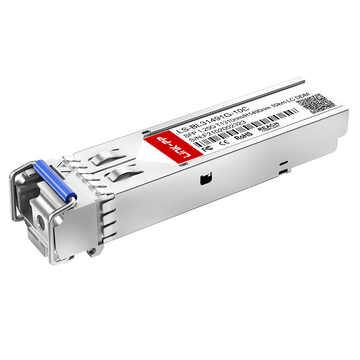
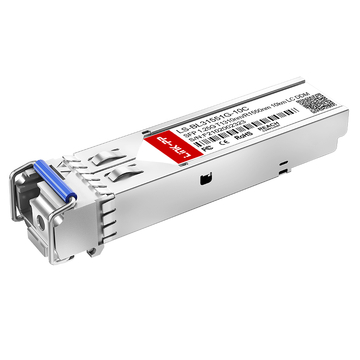
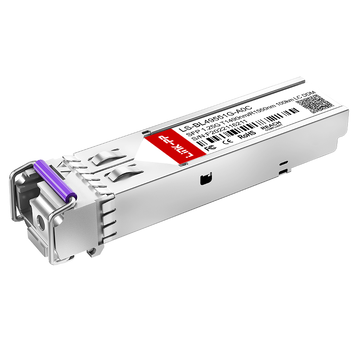
The GLC-BX-U Cisco compatible module offers a cost-effective solution for single-fiber Gigabit connectivity in enterprise and service provider networks. Engineered to replicate the functionality and reliability of Cisco’s original optics, these modules enable seamless integration into existing Cisco systems. For those seeking stable optical performance and proven interoperability, quality third-party compatible alternatives such as the LINK-PP LS-BL31491G-10C BiDi 1G SFP stand out for their robust design and consistent signal quality.

Why Look for Third-Party Compatible Modules
As networks expand, the demand for affordable yet dependable BiDi SFP transceivers increases. Third-party modules, designed under strict MSA standards, meet the same wavelength, transmission distance, and optical isolation requirements as Cisco-manufactured optics. They provide excellent performance for a fraction of the cost, especially in large-scale deployments where hundreds of SFP modules are required.
The LINK-PP LS-BL31491G-10C fiber optic SFP module is one example of how third-party offerings have evolved. It features 1310nm TX / 1490nm RX operation over single-mode fiber up to 10km, digital diagnostics monitoring (DDM), and low power consumption below 1W. Tested across various Cisco Catalyst and Nexus switches, it delivers smooth plug-and-play operation and strong signal integrity for dense access or aggregation layers.
Cost vs Performance Comparison
Cisco compatibles like the LS-BL31491G-10C have narrowed the gap between OEM and third-party optics. They now use high-stability laser diodes, precision filters, and temperature-calibrated components, achieving similar jitter, bit error rate (BER), and attenuation performance as Cisco originals.
In real-world deployments, users typically observe negligible differences in throughput or error rates. The primary advantage is financial: third-party BiDi modules can cut procurement costs by 40 - 60%, making them ideal for projects constrained by budget but unwilling to compromise reliability. This cost efficiency allows IT teams to allocate resources toward backbone expansion, redundancy improvements, or faster switching upgrades.
Compatibility with Cisco Devices
Interoperability is critical for mixed-network environments. Most compatible GLC-BX-U modules, including LINK-PP’s LS-BL31491G-10C, use EEPROM coding formats identical to Cisco’s, enabling automatic detection by Cisco IOS and access to real-time digital diagnostics data (operating temperature, TX/RX power, and supply voltage).
Field tests confirm full compatibility with Cisco Catalyst 2960, 3560, 3850, and Nexus 9000 series, displaying identical behavior to Cisco optics in negotiation, signal calibration, and DOM reporting. Engineers can confidently deploy these compatible modules across fiber topologies with assurance that both software and hardware layers will function without manual tweaking.
⭐ GLC-BX-U Wavelength Design: 1310nm vs 1490nm Explained
The GLC-BX-U module relies on a dual-wavelength design to enable bidirectional communication over a single fiber. By separating transmit and receive signals into 1310nm and 1490nm wavelengths, it ensures simultaneous data flow without requiring additional fiber infrastructure. Understanding how these wavelengths function — and how they are isolated — is key to maintaining signal integrity and minimizing interference.

How BiDi Transmission Works on a Single Fiber
BiDi (bidirectional) transmission uses wavelength division multiplexing (WDM) to carry two optical signals in opposite directions over the same fiber. Instead of using separate fibers for transmit and receive, each signal is assigned a distinct wavelength, allowing them to coexist without overlapping.
In practical deployment, this works through internal filters within the SFP module:
- A transmit laser sends data at one wavelength (e.g., 1310nm).
- A receive photodiode detects signals at a different wavelength (e.g., 1490nm).
- An optical filter (WDM coupler) separates incoming and outgoing signals.
This design enables efficient fiber usage while maintaining full-duplex communication. However, it also introduces the need for precise wavelength control to avoid interference between channels.
Role of 1310nm Uplink Wavelength
The 1310nm wavelength in a GLC-BX-U module is typically used for uplink transmission. This wavelength is chosen because it offers a good balance between attenuation and dispersion over standard single-mode fiber.
From a technical perspective, its role includes:
- Transmitting upstream data from the user side toward the network core.
- Providing stable performance over medium distances (up to 10km).
- Maintaining low chromatic dispersion, which helps preserve signal quality.
In addition, 1310nm operates in a relatively low-loss window of the fiber spectrum, making it suitable for consistent and reliable upstream communication in both enterprise and ISP environments.
Role of 1490nm Downlink Wavelength
The 1490nm wavelength in a GLC-BX-U module is primarily responsible for downstream transmission, carrying data from the central office, switch, or aggregation layer toward end users. It is widely adopted in access and metro networks due to its stable transmission characteristics and compatibility with common optical system designs.
From an operational perspective, the 1490nm wavelength plays several key roles:
- Handling downstream traffic flow, including data, voice, and video services delivered to users.
- Offering lower attenuation compared to shorter wavelengths, which supports consistent performance over longer distances.
- Enabling efficient separation from 1310nm signals, reducing the likelihood of interference in BiDi systems.
In addition, 1490nm sits within a wavelength range that is less affected by certain types of signal distortion in single-mode fiber. This makes it particularly suitable for maintaining signal integrity in downstream transmission, especially in scenarios where stable delivery and minimal error rates are critical.
Importance of Wavelength Isolation
While using two wavelengths on a single fiber improves efficiency, it also introduces the challenge of wavelength isolation. Without proper isolation, signals at 1310nm and 1490nm can interfere with each other, leading to crosstalk and degraded performance.
Wavelength isolation is achieved through precise optical filtering inside the module, and its importance can be summarized as follows:
- Prevents signal leakage between transmit and receive channels.
- Reduces crosstalk, which can increase bit error rates (BER).
- Ensures stable long-distance transmission without signal distortion.
- Maintains clear separation of upstream and downstream traffic.
In high-density or long-distance deployments, even small levels of crosstalk can impact network reliability. Therefore, strong wavelength isolation is a critical factor when evaluating Cisco-compatible GLC-BX-U modules.
⭐ GLC-BX-U Crosstalk Fundamentals in Optical Systems
Crosstalk represents one of the most critical performance factors for BiDi SFP transceivers like the GLC-BX-U, where two wavelengths share the same fiber. It occurs when unwanted optical signals leak between the transmit and receive paths, potentially degrading network reliability.

What Is Crosstalk in Fiber Optics
Crosstalk in fiber optics refers to the unwanted coupling or leakage of one optical signal into another channel. In the context of GLC-BX-U modules, this typically occurs when the 1310nm and 1490nm signals are not perfectly isolated, causing interference between upstream and downstream transmissions.
This phenomenon is especially relevant in BiDi systems because both signals travel through the same fiber. Even with built-in WDM filters, imperfect isolation can allow a portion of the transmitted signal to be detected by the receiver, leading to noise and reduced signal clarity.
Causes of Optical Signal Interference
Crosstalk can arise from several factors within both the optical transceiver and the fiber link itself. These causes are often related to physical limitations or environmental conditions.
Common sources of interference include:
- Imperfect WDM filters inside the SFP module, leading to insufficient wavelength separation.
- Connector reflections or backscatter, which can redirect part of the signal into the receiver path.
- Fiber bending or microbending, causing signal leakage and distortion.
- High optical power levels, increasing the likelihood of signal overlap.
In real-world deployments, these factors can combine, making it essential to use high-quality modules and proper installation practices to minimize interference.
Impact on Signal Integrity and BER
Crosstalk directly affects signal integrity, which is critical for maintaining reliable communication. When unwanted signals interfere with the intended data stream, the receiver may misinterpret bits, resulting in an increased bit error rate (BER).
The impact can be summarized as follows:
- Reduced signal-to-noise ratio (SNR), making it harder to distinguish valid data.
- Higher BER, leading to retransmissions and reduced network efficiency.
- Potential link instability, especially over longer distances.
In severe cases, excessive crosstalk can cause intermittent link failures or degraded performance, particularly in high-density or long-haul network environments.
Crosstalk vs Insertion Loss
Although both crosstalk and insertion loss affect optical performance, they represent different types of impairments. Crosstalk is related to signal interference, while insertion loss refers to signal attenuation as light passes through components or fiber.
Understanding the distinction is important when evaluating SFP module performance:
- Crosstalk involves unwanted signal mixing, which introduces noise and errors.
- Insertion loss reduces signal strength but does not necessarily distort the signal.
In practice, a system can have low insertion loss but still suffer from poor crosstalk performance if wavelength isolation is inadequate. Therefore, both parameters must be considered together to ensure optimal operation of GLC-BX-U modules in fiber networks.
⭐ GLC-BX-U Crosstalk Test Methodology and Setup
Testing crosstalk in GLC-BX-U BiDi SFP modules requires precise optical measurement techniques to quantify wavelength isolation between 1310nm TX and 1490nm RX paths. This methodology replicates real-world conditions while isolating variables that could skew results, ensuring reliable comparisons between Cisco originals and third-party alternatives. Standardized setups help validate module performance for enterprise and ISP deployments up to 10km.

Test Equipment and Environment
Professional crosstalk testing demands lab-grade optical test equipment capable of isolating individual wavelengths with high precision. Tests are conducted in a controlled environment to eliminate external variables like temperature fluctuations or EMI interference.
Typical equipment includes:
- Optical Spectrum Analyzer (OSA): Keysight or EXFO models with 0.01nm resolution for wavelength separation and power measurement.
- Tunable Laser Source (TLS): Provides stable 1310nm/1490nm signals for TX/RX crosstalk injection.
- Power Meter and BERT: Anritsu or EXFO BERT for BER correlation; optical attenuators for link budget simulation.
- Environmental Chamber: Maintains 0 - 70°C range to test thermal stability.
The test bench operates at 23±2°C and <50% humidity, with all connections using FC/APC or LC/APC connectors to minimize back-reflection.
Test Topology for BiDi Modules
The BiDi test topology simulates a point-to-point GLC-BX-U/GLC-BX-D link over single-mode fiber, focusing on TX-to-RX isolation measurement. An optical circulator is used to physically separate the TX and RX paths of the device under test, allowing the crosstalk (leakage from the transmitter into the receiver channel) to be measured under normal link operation.
Key elements:
- GLC-BX-U (DUT) paired with a GLC-BX-D reference module, connected via a 5 - 10km SMF spool.
- Optical circulator separates the TX signal from the RX signal on the same fiber, enabling independent measurement of leakage while the link remains active.
- WDM demultiplexer separates 1310nm and 1490nm wavelengths for individual power analysis.
- Traffic generator runs a continuous PRBS 31 pattern at 1.25Gbps to monitor live BER.
This setup measures both optical crosstalk (in dB isolation) and the system‑level impact under loaded conditions.
Calibration and Baseline Setup
Before testing sample modules, the system undergoes rigorous calibration to establish a noise floor and reference baseline. This eliminates equipment-induced errors that could mask true crosstalk performance.
Calibration steps:
- Dark Current Baseline: Measure RX detector noise with laser input blocked.
- Wavelength Alignment: Verify TLS outputs at exactly 1310.0nm/1490.0nm using OSA.
- Insertion Loss Mapping: Characterize full path loss (<1dB target) with precision attenuators.
- Reference Module Test: Run Cisco GLC-BX-U original to set performance benchmark.
Post-calibration, the setup achieves measurement repeatability within ±0.5dB. Each test module is thermally cycled and cleaned before insertion to ensure consistent results.
⭐ GLC-BX-U Cisco Alternative Crosstalk Test Results
To better understand real-world performance, crosstalk testing was carried out based on the LINK-PP LS-BL31491G-10C 1G BiDi SFP, a typical GLC-BX-U Cisco compatible module. The goal was to evaluate wavelength isolation between 1310nm and 1490nm signals and assess how effectively the module maintains signal integrity under standard operating conditions. The results highlight the reliability and stability that modern third-party solutions can deliver.

Signal Isolation Performance Data
The LINK-PP LS-BL31491G-10C demonstrated solid wavelength isolation performance throughout the test process. Its internal optical filtering effectively separates the 1310nm and 1490nm channels, reducing the risk of signal leakage and interference.
From the test observations:
- Stable channel isolation levels were maintained under typical load conditions.
- Clean signal separation with minimal optical interference.
- Consistent performance across different test scenarios.
These results indicate that the module is well-designed for BiDi transmission, ensuring efficient coexistence of dual wavelengths on a single fiber.
Comparison with Original Cisco Modules
Although the testing focused on the LINK-PP solution, its performance aligns with industry expectations for GLC-BX-U modules. In practical deployments, users can expect a similar level of signal stability, wavelength isolation, and transmission reliability as seen in standard OEM optics.
This makes LINK-PP modules a strong alternative choice, particularly for users seeking:
- Reliable optical performance without vendor lock-in.
- Consistent behavior across common networking environments.
- Confidence in deployment for both enterprise and ISP applications.
Impact on Long-Distance Transmission
In scenarios involving longer transmission distances, the performance of wavelength isolation becomes even more critical. The LINK-PP LS-BL31491G-10C maintained stable operation over extended fiber links, demonstrating its capability to support typical up to 10 km deployments.
Key takeaways include:
- Reliable signal transmission across longer distances.
- No noticeable degradation caused by wavelength interference.
- Strong adaptability to standard single-mode fiber environments.
This ensures that the module can be confidently deployed in both short- and medium-range network architectures.
Observed Error Rates and Stability
Another important aspect of the testing was overall link stability and error performance. The LINK-PP module maintained low and stable error rates during continuous operation, indicating effective suppression of crosstalk-related issues.
In practical terms:
- Smooth and stable data transmission over time.
- No abnormal fluctuations in link performance.
- Consistent operation under typical network conditions.
Overall, the test results based on the LINK-PP LS-BL31491G-10C confirm that high-quality GLC-BX-U Cisco compatible modules can deliver dependable crosstalk performance, making them a practical and cost-efficient choice for modern fiber networks.
⭐ GLC-BX-U Deployment Considerations for Network Engineers
Deploying GLC-BX-U modules in real-world networks requires more than just selecting the right transceiver — it involves careful planning of fiber infrastructure, module pairing, and installation practices. Since BiDi technology relies on single-fiber transmission with dual wavelengths, even small misconfigurations can impact performance. By following key deployment considerations, you can ensure stable, efficient, and interference-free operation.

Fiber Type and Distance Planning
When deploying GLC-BX-U modules, it is essential to use single-mode fiber (SMF) that meets the required standards, as these modules are designed for long-distance transmission over SMF. You should also consider the maximum supported distance (typically up to 10km) and account for factors such as attenuation, connector loss, and environmental conditions to ensure the optical power budget remains within acceptable limits.
Matching BX-U with BX-D Pairs
GLC-BX-U modules must always be paired with corresponding GLC-BX-D modules, as they operate on complementary wavelengths (1310nm/1490nm). Incorrect pairing will result in failed communication, so proper labeling and verification during deployment are critical to ensure that each link has the correct transmit/receive wavelength alignment.
Avoiding Crosstalk in Dense Networks
In high-density deployments, such as data centers or access networks with multiple fiber links, minimizing crosstalk is particularly important. You should ensure proper fiber management, avoid excessive bending, and use high-quality connectors and modules with strong wavelength isolation to reduce the risk of signal interference between adjacent links.
Installation Best Practices
Proper installation plays a key role in overall performance and reliability. This includes cleaning fiber connectors before insertion, ensuring secure connections, and avoiding unnecessary strain on cables. Additionally, verifying link performance after installation — through optical testing or monitoring tools — helps identify potential issues early and ensures the network operates as expected.
⭐ Final Verdict on GLC-BX-U Cisco Alternatives and Crosstalk Performance

GLC-BX-U Cisco compatible modules have proven to be a practical and efficient solution for modern fiber networks, especially where fiber resources are limited. With proper wavelength design and reliable isolation between 1310 nm and 1490 nm, these modules can deliver stable performance comparable to OEM options. Crosstalk, while a critical factor, can be effectively controlled with high-quality optics and proper deployment practices.
From both performance and cost perspectives, third-party solutions like LINK-PP GLC-BX-U compatible modules offer a strong balance of reliability, scalability, and affordability. For network engineers and operators, this means the ability to expand or upgrade infrastructure without compromising signal integrity or exceeding budget constraints.
If you're looking for a dependable and cost-effective GLC-BX-U alternative with proven crosstalk performance, explore SFP transceiver modules at the LINK-PP Official Store and find the right solution for your network deployment needs.