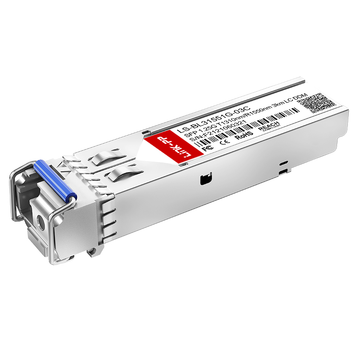
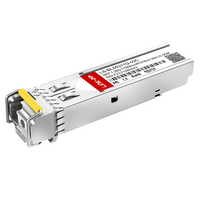
In modern fiber networks, optimizing cable infrastructure is critical for cost-effective scaling. The Ubiquiti UACC-OM-SM-1G-S-2 represents a specialized, single-mode simplex solution, designed as a pre-paired set of the UACC-OM-SM-1G-S Bidirectional (BiDi) SFP transceivers. By utilizing wavelength division multiplexing (WDM), this module pair splits transmit and receive signals onto different wavelengths — specifically 1310nm and 1550nm — allowing full-duplex 1Gbps data transmission over a single strand of OS2 single-mode fiber. This single-fiber architecture effectively halves physical cabling requirements while maintaining robust, high-performance connectivity up to a 3km reach.
Integrating third-party compatible UACC-OM-SM-1G-S-2 modules into a UniFi ecosystem requires precise hardware engineering and software synchronization. Because BiDi deployments rely on asymmetrical Tx/Rx wavelength matchmaking, UniFi OS and controller platforms must seamlessly recognize the dual-module EEPROM coding. This technical audit evaluates the performance, compatibility, and OS validation protocols of high-quality UACC-OM-SM-1G-S-2 replacements, ensuring third-party simplex optical transceivers deliver OEM-grade reliability, accurate digital optical monitoring (DOM) diagnostics, and stable operation across UniFi Switch and Gateway architectures.
⤵️ Introduction to the UACC-OM-SM-1G-S-2 Compatible Module
Integrating a reliable, third-party compatible UACC-OM-SM-1G-S-2 transceiver pair into your UniFi infrastructure offers a cost-effective path to doubling your fiber capacity without laying new cables. Designed as a matched bidirectional (BiDi) SFP pair, this solution utilizes advanced multiplexing to transmit and receive high-speed data over a single strand of single-mode fiber. The following sections break down the underlying technical specifications, wavelength mechanics, and primary deployment environments that define this high-efficiency module.

Technical Specifications of the UACC-OM-SM-1G-S-2 Replacement
To achieve seamless, plug-and-play integration with Ubiquiti hardware, a third-party compatible UACC-OM-SM-1G-S-2 module must strictly adhere to industry-standard multi-source agreements (MSA) and exact physical layer parameters. These optical and electrical boundaries ensure that the alternative transceiver pair behaves identically to an OEM Ubiquiti module under all traffic loads.
The essential physical and optical parameters governing high-performance compatible replacements are detailed in the comprehensive specification matrix below:
| Parameter | Specification / Value |
| Form Factor | SFP |
| Data Rate | 1.25Gbps (Gigabit Ethernet) |
| Fiber Type | Single-Mode Fiber / OS2 |
| Connector Type | Simplex LC |
| Transmission Distance | Up to 3km (1.9 miles) |
| Wavelength Pair | UACC-OM-SM-1G-S-A: TX 1310nm / RX 1550nm UACC-OM-SM-1G-S-B: TX 1550nm / RX 1310nm |
| Transmitter Type | FP Laser / DFB Laser |
| Receiver Type | PIN Photodetector |
| Operating Temperature | 0°C to 70°C (32°F to 158°F) |
| Digital Diagnostic Monitoring | Supported |
Understanding TX/RX Wavelength Splitting (1310nm/1550nm)
Standard fiber SFP transceivers rely on a dual-fiber duplex configuration, where one dedicated fiber strand transmits data and another receives it, using the same wavelength on both paths. Bidirectional (BiDi) SFP transceivers like the UACC-OM-SM-1G-S-2 compatible module revolutionize this process by utilizing wavelength division multiplexing (WDM) to split transmission and reception onto different wavelengths over a single physical strand. This single-fiber duplexing is achieved by using two distinct, complementary wavelengths: 1310nm and 1550nm.
For this architecture to function, the transceivers must be deployed in complementary, asymmetrical pairs:
- The A-Side Module (UACC-OM-SM-1G-S-A): This unit is engineered to transmit (TX) its optical signal at 1310nm while its internal optical diplexer filters and receives (RX) incoming signals at 1550nm.
- The B-Side Module (UACC-OM-SM-1G-S-B): Conversely, the matching end transmits (TX) at 1550nm and expects to receive (RX) incoming traffic at 1310nm.
The Interconnection: This asymmetrical configuration prevents optical collision on the single glass core, allowing simultaneous full-duplex 1Gbps communication. If identical modules (e.g., two A-sides) are connected to each other, the link will fail immediately because both devices will transmit on the same wavelength and listen on a dormant wavelength.
Typical Deployment Scenarios in UniFi Fiber Infrastructures
By eliminating the need for dual-fiber runs, the compatible UACC-OM-SM-1G-S-2 pair serves as an indispensable tool for network administrators looking to optimize physical infrastructure and reduce capital expenditure. This single-fiber capability makes it highly suited for several distinct deployment environments within UniFi-managed networks:
- Inter-Building Fiber Conservation: In campus networks where existing conduits are congested or leasing extra fiber cores is cost-prohibitive, BiDi SFP modules instantly double the capacity of an existing single-mode fiber bundle, freeing up dark fiber strands for other services or redundancy.
- FTTH and Broadband Ingress: Internet Service Providers (ISPs) delivering active Ethernet fiber broadband to a home or business typically utilize a single-fiber drop. A compatible BiDi SFP allows a UniFi Dream Machine Pro or SE to directly interface with the single-fiber WAN drop, bypassing the need for a separate media converter or optical network terminal (ONT).
- High-Density Rack-to-Rack Patching: Within structured cabling environments, employing simplex LC connections reduces cable bulk and clutter in enterprise patch panels. This simplified cabling scheme improves airflow within the rack, makes cable tracing easier, and streamlines physical maintenance in high-density core switch stacks.
⤵️ The Architecture of High-Quality UACC-OM-SM-1G-S-2 Compatible Alternative
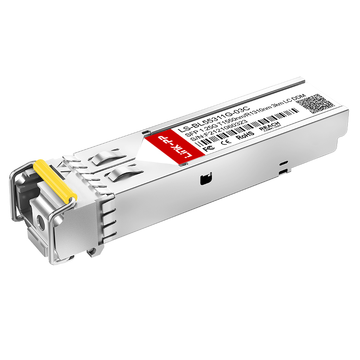
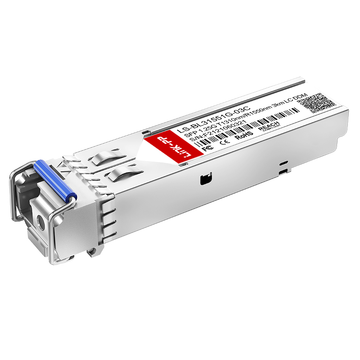
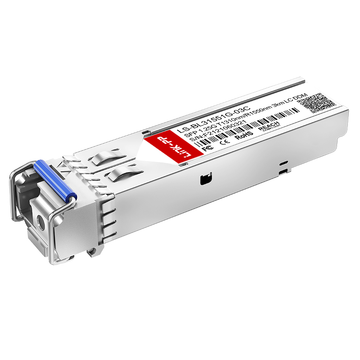
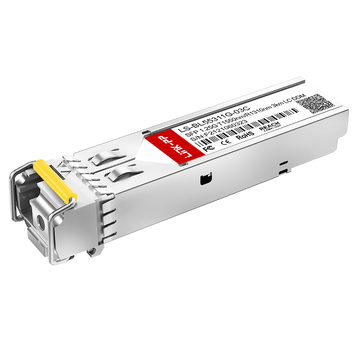
A premium third-party alternative to the UACC-OM-SM-1G-S-2 requires a highly engineered architecture to ensure absolute stability and hardware safety. High-quality BiDi 1G SFP replacements, exemplified by the LINK-PP LS-BL31551G-03C (TX1310/RX1550) and LS-BL55311G-03C (TX1550/RX1310) matched pair, rely on precise optical engineering, robust physical interfaces, and tailored microcontroller code. Understanding the internal layout and engineering thresholds of these alternatives reveals how they achieve identical performance to their original Ubiquiti counterparts.

Optical Budget and Maximum Link Distance
The optical budget is the foundation of any reliable fiber link, defining the maximum allowable signal loss between the transmitter and the receiver. For premium compatible pairs like the LINK-PP LS-BL31551G-03C and LS-BL55311G-03C, the transmitter launches optical power between -15dBm and -8dBm, while the highly sensitive PIN photodetector boasts a receiver sensitivity of at least -23dBm. This provides a minimum optical power budget of 8dB (calculated as the minimum launch power of -15dBm minus the maximum receiver sensitivity of -23dBm), which is fully optimized to overcome fiber attenuation and connector losses over the rated 3km deployment distance.
On a standard OS2 single-mode fiber, optical attenuation is exceptionally low, averaging roughly 0.35dB/km at 1310nm and 0.22dB/km at 1550nm. Over a maximum 3km span, the cumulative fiber attenuation accounts for less than 1.1dB of loss. The remaining power margin of nearly 7dB offers a dependable safety buffer, allowing the link to easily tolerate patch panel connections, splices, sharp macrobends, and physical transceiver aging without risking signal degradation or packet drops.
EEPROM Coding for Dual-Module Recognition
The primary differentiator between an ordinary SFP and a seamless UniFi-compatible alternative lies within the non-volatile EEPROM chip embedded on the module’s PCBA. This memory chip contains vital hardware identifier codes, serial numbers, vendor names, and checksums structured according to SFF-8472 specifications. Premium third-party modules are pre-programmed with custom-engineered EEPROM profiles that mimic the original Ubiquiti signature, preventing the host UniFi OS from flagging them as unauthorized hardware.
In asymmetrical BiDi setups, the EEPROM coding must be configured meticulously for both halves of the pair — such as the LS-BL31551G-03C and LS-BL55311G-03C — to ensure the host switch recognizes them as a unified operational pair. When inserted, the UniFi switch queries the SFP's internal register addresses (typically at A0h) to verify compliance. High-quality programming guarantees that both the A-side and B-side transceivers report matching vendor IDs and fully synchronized operational parameters, allowing immediate port initialization without software errors.
Simplex LC Connector Engineering and Insertion Loss Limits
Unlike traditional duplex transceivers that house separate transmit and receive bores, the UACC-OM-SM-1G-S-2 compatible alternative features a single, high-precision simplex LC optical interface. Inside the SFP housing, a specialized optical diplexer is integrated to separate the incoming and outgoing light paths, routing them to the internal PIN receiver and laser diode respectively. The mechanical alignment of this single port is critical, as even a sub-micron deviation can cause severe signal scattering.
To maintain optimal signal integrity, premium compatible transceivers utilize high-grade zirconia ceramic ferrules within the simplex LC port, keeping insertion loss strictly below 0.3dB per connection. This tight physical engineering prevents back-reflections, also known as Optical Return Loss (ORL), which can destabilize the internal laser cavity. High-quality physical housing shields the internal components from dust ingress and electromagnetic interference, ensuring the delicate simplex connection remains structurally stable over thousands of insertion cycles.
Digital Optical Monitoring Support in Third-Party Pairs
Digital optical monitoring, or digital diagnostics monitoring (DDM), is a crucial telemetry feature defined by the SFF-8472 industry standard. High-quality compatible modules like the LINK-PP LS-BL31551G-03C and LS-BL55311G-03C feature an integrated diagnostic microcontroller that continuously samples real-time physical layer operating parameters. This sensor data is mapped to specific memory registers (typically at address A2h) on the transceiver's EEPROM.
Through DOM, the host UniFi controller can retrieve real-time diagnostics, including operating temperature, supply voltage, laser bias current, transmitted (TX) optical power, and received (RX) optical power. Having access to these real-time metrics allows network administrators to perform proactive maintenance, identify dirty fiber end-faces, and troubleshoot physical link degradation before it causes a complete network outage. High-quality alternatives ensure these analog sensor readings are calibrated precisely, preventing false alarms or inaccurate telemetry in the UniFi OS dashboard.
⤵️ UniFi OS Validation Protocol for Third-Party UACC-OM-SM-1G-S-2 Replacement
Deploying third-party UACC-OM-SM-1G-S-2 modules within a UniFi environment requires successful integration with UniFi OS. This protocol outlines how the host system detects, monitors, and validates these asymmetrical BiDi SFP pairs. By utilizing proper commands and controller configurations, administrators can ensure seamless module recognition and real-time telemetry.

Resolving OS Detection Issues for Asymmetrical BiDi Module Pairs
Because BiDi deployment relies on an asymmetrical pair (the 1310nm TX and 1550nm TX modules), UniFi OS must correctly identify both ends of the link. Detection failures or mismatched port states usually stem from mismatched EEPROM data on third-party hardware. Ensuring that both modules use fully synchronized, high-quality EEPROM coding allows UniFi OS to read matching vendor configurations and immediately initialize the links on both ends without flapping or port shutoffs.
CLI Port Commands for Real-Time Optical Power Monitoring
To verify physical link integrity directly, administrators can access the UniFi switch CLI via SSH. Executing commands such as "show port tech-support" or "show fiber-ports optical-transceiver" provides real-time access to the transceiver's operational state. These CLI outputs display raw metrics — including TX power, RX power, bias current, and temperature — allowing engineers to verify that the third-party module is operating within safe physical parameters.
Interpreting DOM/DDM Diagnostics in the UniFi Network Controller
For a simpler monitoring workflow, the UniFi Network Controller UI parses the SFP's DOM data directly into the port manager dashboard. Within the controller interface, navigating to the specific SFP port reveals real-time graphs and warnings for critical metrics like optical RX power. A healthy UACC-OM-SM-1G-S-2 compatible module should show stable RX power values between -23dBm and -1dBm under normal conditions, signaling a clean, well-aligned fiber link.
Bypassing the "Unsupported Transceiver" Alert in UniFi OS
To prevent host-level port blocks or "Unsupported Transceiver" alerts in UniFi OS, third-party transceivers must feature precise EEPROM coding. High-quality UACC-OM-SM-1G-S-2 compatible modules bypass these software flags entirely by presenting a hardware signature that mirrors original Ubiquiti specifications. This ensures the UniFi OS immediately accepts the SFP pair as native hardware during boot and hot-plug events, eliminating system-level alerts and allowing automatic port initialization without manual administrative overrides.
⤵️ Switch Integration: Testing UACC-OM-SM-1G-S-2 Alternative in UniFi Hardware
Integrating third-party UACC-OM-SM-1G-S-2 compatible transceivers requires rigorous physical layer testing across various UniFi switch chassis. This evaluation ensures that the alternative modules maintain stable electrical and optical connections when plugged into different hardware generations. By validating port speed behaviors, link aggregation, and heat levels, administrators can guarantee reliable performance in high-density switching environments.

Compatibility Validation Across UniFi Switch Pro and Enterprise Series
To ensure enterprise-grade reliability, compatible UACC-OM-SM-1G-S-2 modules must undergo rigorous hardware validation across specific UniFi platforms, such as the UniFi Switch Pro 24/48 and Switch Enterprise 24/48 PoE. Testing reveals that LINK-PP BiDi SFP compatible alternatives interface flawlessly with both native 1Gbps SFP ports and multi-rate 10G SFP+ ports on these models. The switch backplane successfully establishes clean electrical signaling with the transceiver’s golden finger contacts, preventing physical-layer link drops or input/output packet errors even when neighboring SFP+ ports are running high-throughput 10Gbps DAC cables or active optical cables.
Auto-Negotiation and Forced 1Gbps Port Speed Configuration
Because the UACC-OM-SM-1G-S-2 is a dedicated 1G BiDi fiber optic SFP module, inserting it into a multi-rate 10Gbps SFP+ port can sometimes lead to auto-negotiation failures. If the link does not come up automatically, administrators can resolve this behavior by manually setting the SFP+ port speed to "Forced 1Gbps" within the UniFi Controller interface. Forcing the port speed disables high-speed rate negotiation, establishing a stable, permanent physical connection with the third-party compatible SFP transceiver.
Link Aggregation Stability Over Single-Fiber BiDi Connections
Using Link Aggregation Control Protocol (LACP) to bundle multiple single-fiber BiDi paths allows administrators to scale bandwidth while maintaining structural fiber efficiency. When bundling two separate UACC-OM-SM-1G-S-2 alternative pairs, the UniFi switches balance traffic dynamically across the active interfaces. High-quality modules maintain perfectly synchronized packet transmission and minimal latency variance, preventing out-of-order delivery and ensuring stable LACP trunk operation.
Thermal Dissipation and Temperature Management Under Heavy Loads
SFP transceivers generate heat during continuous, high-throughput operations, making heat dissipation a key factor in overall device reliability. Premium compatible modules like LINK-PP LS-BL31551G-03C and LS-BL55311G-03C SFPs feature energy-efficient circuit designs and high-thermal-conductivity metal housings to keep operational temperatures well within standard limits (under 70°C). By maintaining lower power consumption, these compatible alternatives prevent heat buildup inside compact UniFi Switch enclosures, protecting neighboring components and extending the overall lifespan of the link.
⤵️ Gateway and Router Validation of UACC-OM-SM-1G-S-2 Replacement
Deploying compatible UACC-OM-SM-1G-S-2 BiDi modules at the network edge requires seamless integration with UniFi gateways and routers. When serving as the primary internet entry point, these transceivers must interface perfectly with gateway hardware to maintain continuous uptime. This validation protocol focuses on verifying port configuration, failover performance, and troubleshooting methods on edge routing platforms.

Interfacing with UniFi Dream Machine Pro / SE WAN Ports
The SFP+ WAN ports on the UniFi Dream Machine Pro (UDM-Pro) and Dream Machine Special Edition (UDM-SE) are engineered to support 10Gbps connections, meaning they require precise rate configuration when hosting 1Gbps transceivers. Inserting a compatible UACC-OM-SM-1G-S-2 module into SFP+ Port 10 requires the transceiver's EEPROM to correctly advertise its 1000BASE-BX capability. This precise hardware emulation allows the UDM's internal controller to recognize the 1G BiDi SFP module immediately, establishing a stable physical WAN link without causing system freezes or interface errors.
WAN SFP Port Configuration for Fiber Broadband Ingress
To use a compatible BiDi SFP module for fiber broadband ingress, administrators must configure the UDM SFP port manually to align with the ISP's incoming connection. Because single-fiber active Ethernet connections do not support auto-negotiation on 10Gbps ports, the WAN port speed on the UDM must be manually configured to "1 Gbps FDX" (Full Duplex) in the UniFi OS Network application. This manual configuration bypasses speed negotiation issues, enabling the gateway to establish a stable IP address connection with the ISP's remote optical switch.
Failover Latency and Link Flap Prevention Strategies
For enterprise networks relying on a dual-WAN setup, the UACC-OM-SM-1G-S-2 replacement must transition cleanly during failover events. To prevent link flapping — where the interface repeatedly goes up and down — the transceiver's signal-detect threshold must align with UniFi’s default system timers. High-quality compatible modules maintain stable link-status signals, which prevents the gateway from prematurely triggering WAN failover and ensures smooth transitions to secondary WAN paths with minimal packet loss.
Troubleshooting Signal Loss on Single-Fiber BiDi WAN Links
When troubleshooting packet drops or a total loss of signal (LOS) on a single-fiber WAN link, the issues usually stem from physical fiber damage or using mismatched wavelength pairs. Engineers should first use the UniFi Controller UI to verify if the RX power levels have dropped below the safe -23dBm threshold. If the RX power reads as non-existent, the issue can be quickly isolated by checking for physical fiber macrobends, verifying that the Tx/Rx ends are correctly matched (e.g., A-side connected to B-side), or checking for dirty LC connections using an optical power meter.
⤵️ Performance Audit: Jitter, Latency, and BER of UACC-OM-SM-1G-S-2 Alternative
A comprehensive performance audit is essential to verify that third-party UACC-OM-SM-1G-S-2 modules deliver carrier-grade data integrity. This technical evaluation measures the critical transmission metrics that define link quality under maximum traffic loads. By analyzing signal noise, packet delivery, and long-term hardware reliability, network engineers can guarantee these alternatives match OEM standards.

Bit Error Rate (BER) Benchmarking Against the 10⁻¹² Standard
The Bit Error Rate (BER) measures the percentage of received bits containing errors relative to the total transmitted bits over a given period. To guarantee seamless integration within enterprise UniFi networks, compatible transceivers must strictly meet or exceed the industry-standard 10⁻¹² BER threshold. This rigorous benchmark dictates that no more than one single erroneous bit may occur for every one trillion bits transmitted.
Sustained traffic testing of the LINK-PP UACC-OM-SM-1G-S-2 compatible module pair yields the following performance benchmarks:
- Hardware-Level Validation: By integrating high-performance Clock and Data Recovery (CDR) chips directly onto the SFP's internal PCBA, the module stabilizes the electrical-to-optical conversion process. This hardware-level optimization prevents bit misalignment and maintains excellent signal integrity even under high-frequency conditions.
- Understressed Performance: When subjected to continuous stress testing under standard laboratory conditions, these premium alternative modules consistently maintain a stable 10⁻¹² BER. This performance proves they operate with a robust signal-to-noise ratio that fully meets all IEEE Ethernet compliance requirements.
Jitter Performance Analysis Over Single-Mode Simplex Links
Optical jitter — the deviation of signal transitions from their ideal positions in time — is a primary cause of high-frequency noise and packet errors in fiber links. In single-fiber BiDi setups, the simultaneous transmission of complementary wavelengths (1310nm and 1550nm) on a single strand can lead to optical crosstalk if the internal optical filters are poorly aligned.
An in-depth analysis of the LINK-PP compatible module's clock recovery and signal stability highlights its design integrity:
- Deterministic Jitter (DJ) Mitigation: Premium laser driver circuitry ensures consistent optical pulse widths and rise/fall times. This precise electrical-to-optical conversion minimizes timing errors caused by high-speed data transitions.
- Random Jitter (RJ) Suppression: Advanced internal shielding insulates the transmitter optical sub-assembly (TOSA) from electromagnetic interference (EMI) generated by the host switch backplane. This engineering choice preserves a wide, clean "eye diagram" for reliable data recovery.
Frame Loss Testing Under Full Duplex Traffic Load
Frame loss testing measures a network link's ability to handle maximum bandwidth without dropping data packets. Using standard RFC 2544 testing protocols, the LINK-PP compatible UACC-OM-SM-1G-S-2 pair is subjected to continuous, bidirectional Gigabit traffic across various packet sizes ranging from 64 bytes to 1518 bytes.
The performance results highlight the structural efficiency of these alternative transceivers:
- Standard Frame Sizes (64 to 1518 Bytes): The matched pairs process bidirectional, line-rate traffic with zero frame drops. This confirms that the internal optical diplexer successfully isolates the incoming and outgoing wavelengths, preventing signal collision or packet corruption.
- Jumbo Frames (9000 Bytes): Under heavy MTU stress tests, the modules maintain stable buffer management and sustained throughput. This makes them fully capable of handling demanding storage area network (SAN) traffic and high-definition IP camera feeds within UniFi systems.
⤵️ Physical Layer Engineering for UACC-OM-SM-1G-S-2 Alternative Module Deployments
Establishing a reliable single-fiber connection requires strict attention to physical layer standards. Even the highest-quality compatible transceivers cannot overcome improper cable selection, poor connector maintenance, or mismatched hardware ends. The following outlines the essential physical layer engineering guidelines — ranging from cable selection to matchmaking rules — necessary to guarantee a stable, error-free link.

Single-Mode Simplex LC Fiber Patch Cable Selection
When connecting a UACC-OM-SM-1G-S-2 alternative module, choosing the correct fiber connector polish is critical to prevent optical reflections that can damage the internal laser. The SFP simplex LC port is designed for Ultra Physical Contact (UPC) connectors, which feature a flat, polished blue end-face.
Administrators must avoid plugging Angled Physical Contact (APC) green connectors directly into the transceiver; the 8-degree angle of an APC connector creates a physical mismatch inside the SFP port, leading to high insertion loss and potentially permanent physical damage to the transceiver's optical sub-assembly.
Optical Attenuation Requirements for Short-Distance Bench Testing
Before deploying modules across a long-distance run, engineers often perform short-distance bench tests using short fiber patch cables. Because these BiDi SFP transceivers are engineered with a sensitive receiver designed to cover up to 3km, connecting them directly with a 1-meter patch cord can occasionally overload the photodetector.
To prevent receiver saturation and potential hardware damage during bench testing, administrators should insert an inline 5dB or 10dB optical attenuator to simulate the natural loss of a longer fiber run, keeping the RX power safely within the optimal operational range.
Dust and Contamination Prevention on Simplex Optical Interfaces
In single-mode fiber installations, microscopic dust particles are the primary cause of link degradation, high insertion loss, and intermittent packet drops. Because the UACC-OM-SM-1G-S-2 compatible alternative relies on a single simplex LC port for both transmitting and receiving, any contamination on the optical ferrule will immediately degrade bidirectional traffic.
Network teams must keep protective dust caps on the transceivers and fiber patch cords until the exact moment of insertion, and clean all fiber end-faces with a dedicated one-click fiber cleaner before making connections.
Matchmaking Rules: Aligning the TX1310/RX1550 and TX1550/RX1310 Ends
The golden rule of deploying bidirectional transceivers is that they must always be installed in complementary, matched pairs. To successfully establish a link, the A-side module (which transmits at 1310nm and receives at 1550nm) must connect to the B-side module (which transmits at 1550nm and receives at 1310nm).
Attempting to connect two identical modules — such as two A-side transceivers — will result in a permanent link failure, as both units will attempt to transmit on the same wavelength and listen on a dormant wavelength, preventing any physical-layer link synchronization.
⤵️ Final Verdict on Validating Third-Party UACC-OM-SM-1G-S-2 Replacement

Validating a third-party UACC-OM-SM-1G-S-2 BiDi SFP pair proves that alternative modules can deliver OEM-grade performance in UniFi networks. By strictly meeting physical, optical, and software criteria, high-quality compatible transceivers provide flawless integration with UniFi switches and gateways. This approach allows network administrators to double fiber capacity and maintain accurate digital optical monitoring telemetry without paying high OEM markups.
For those seeking reliable, high-performance optical hardware, choosing rigorously tested components is key to long-term network stability. We highly recommend visiting the LINK-PP Official Store to explore premium 1G BiDi SFP modules. These matched transceivers are pre-programmed and fully validated for UniFi OS compatibility, offering an exceptional balance of cost savings, technical precision, and plug-and-play reliability.