





























For network architects managing brownfield environments, upgrading a facility from 1 Gigabit to 10 Gigabit Ethernet often introduces a severe physical and financial hurdle: the existing cabling infrastructure. Throughout the late 1980s and 1990s, enterprise networks were predominantly wired with FDDI-grade fiber—specifically 62.5/125μm core multimode fiber, known today as OM1.
Because these legacy optical fibers suffer from high modal dispersion, standard 10G multimode transceivers (such as the 10GBASE-SR) fail to push a reliable signal beyond 33 meters. To solve this physical limitation, the networking industry developed the SFPP-10GE-LRM (Long Reach Multimode) optic.
However, successfully deploying an SFPP-10GE-LRM module is rarely a simple plug-and-play operation. A critical, yet frequently overlooked failure point in modern deployments is switch-level hardware compatibility. Many contemporary network switches have deprecated the internal Electronic Dispersion Compensation (EDC) chips required to decipher heavily dispersed LRM signals. Without this chip, the link will fail to initialize, regardless of the transceiver's quality.
In this engineering-focused guide, we will analyze the technical mechanics of the SFPP-10GE-LRM and provide an actionable framework for executing legacy fiber upgrades. Key topics include:
- Fiber Matrix: Compatibility differences across FDDI-grade, OM1, OM2, OM3, and OM4 cables.
- Hardware Verification: How to audit your switch datasheet for mandatory EDC chip support.
- Signal Conditioning: Defining when a Mode-Conditioning Patch (MCP) cord is strictly required.
- Procurement Strategy: Analyzing cost-to-reliability ratios between OEM and third-party SFP+ alternatives.
🚩 What is the SFPP-10GE-LRM Transceiver?
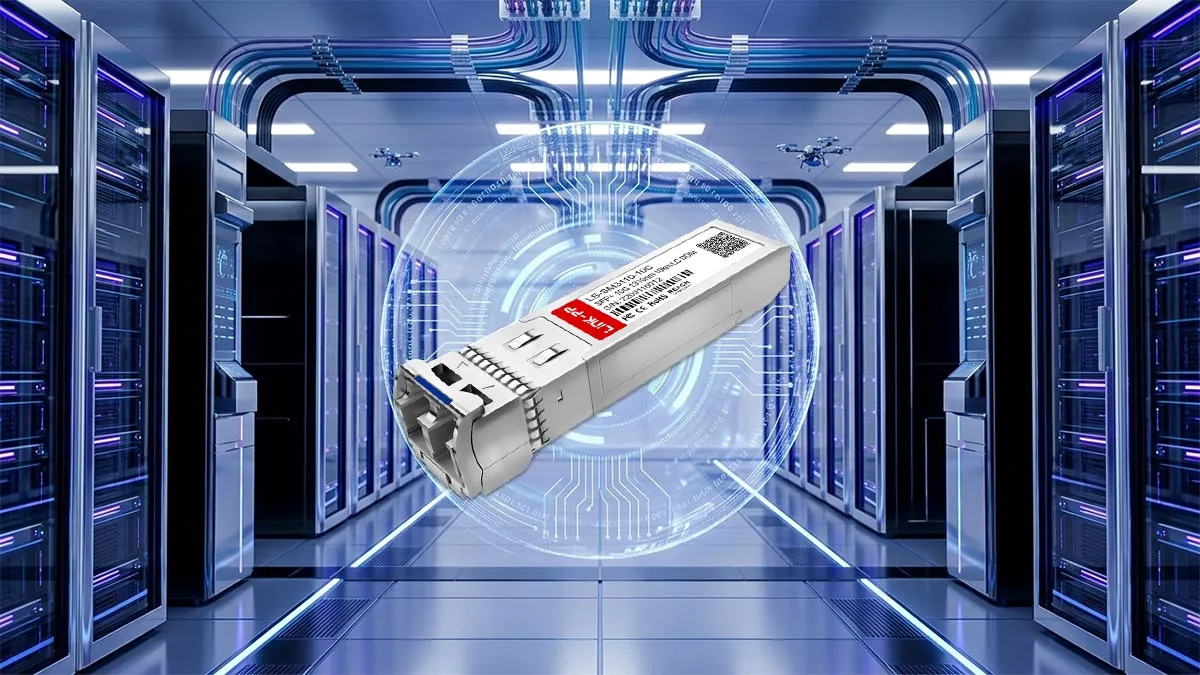
To fully grasp the utility of the SFPP-10GE-LRM, we must look at the physical limitations of standard 10G optics. A conventional 10GBASE-SR (Short Reach) transceiver uses an 850nm VCSEL (Vertical-Cavity Surface-Emitting Laser). When this 850nm light is injected into the wide 62.5μm core of legacy OM1 fiber, it suffers from severe modal dispersion—a phenomenon where different light paths (modes) arrive at the receiver at different times, effectively scrambling the data at high speeds.
The SFPP-10GE-LRM circumvents this physical barrier by shifting the transmission wavelength to 1310nm and implementing complex mathematical signal recovery. Instead of a VCSEL, it typically utilizes a Fabry-Perot (FP) or Distributed Feedback (DFB) laser, which provides a much narrower and more focused light beam.
Core Technical Specifications of SFPP-10GE-LRM
For network engineers verifying bill of materials (BOM) requirements, the SFPP-10GE-LRM adheres to the following precise technical parameters:
| Parameter | Specification |
|---|---|
| Industry Standard | IEEE 802.3aq (10GBASE-LRM) |
| Form Factor | SFP+ (Small Form-factor Pluggable Plus) |
| Data Rate | 10.3125 Gbps (10 Gigabit Ethernet) |
| Wavelength | 1310nm |
| Connector Type | Duplex LC PC/UPC |
| Maximum Distance (OM1/OM2) | 220 meters (721 feet) |
| Maximum Distance (OS2 SMF) | 300 meters (984 feet) |
| Diagnostic Monitoring (DOM/DDM) | Supported (SFF-8472 compliant) |
| Breakout Capable | No |
Technical Nuance: While primarily designed for multimode fiber, the IEEE 802.3aq standard also permits the LRM optic to operate over standard Single-Mode Fiber (SMF/OS2) up to 300 meters. This dual-capability makes the SFPP-10GE-LRM a highly versatile optic in mixed-fiber campus environments.
Ultimately, the SFPP-10GE-LRM acts as a translation layer. It takes modern 10G electrical signals, applies advanced optical formatting via its 1310nm laser, and relies on the host switch's internal architecture to digitally clean the incoming signal, thereby rescuing legacy FDDI-grade networks from obsolescence.
🚩 The Challenge of Legacy FDDI-Grade Fiber (OM1 & OM2)
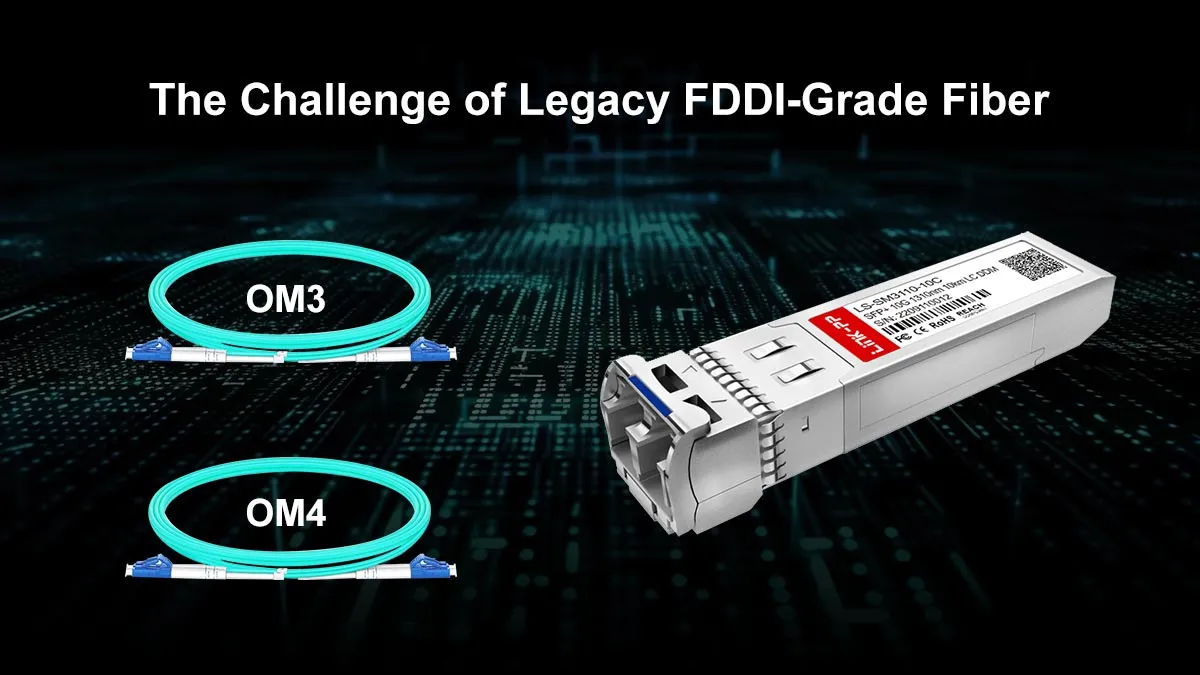
To understand why the SFPP-10GE-LRM is a critical component for brownfield network upgrades, we must examine the specific physical and financial constraints imposed by legacy optical infrastructure. Fiber installed in enterprise backbones during the 1980s and 1990s was never designed to handle Gigabit, let alone 10-Gigabit, traffic.
The Physics of Modal Dispersion and DMD
Legacy multimode fibers are primarily categorized as OM1 (62.5/125μm) and early OM2 (50/125μm). Originally, these cables were deployed to support the FDDI (Fiber Distributed Data Interface) standard, which operated at a maximum of 100 Mbps using wide-beam LED light sources.
When modern network switches attempt to push 10Gbps data through these old cables using standard 850nm lasers (like those found in 10GBASE-SR modules), the network encounters a fatal physical barrier known as Differential Mode Delay (DMD).
- Differential Mode Delay (DMD): Because the core of OM1 fiber is exceptionally wide (62.5μm), the laser light splits into multiple independent paths, or "modes." Light traveling straight down the center arrives faster than light bouncing in zig-zags off the outer cladding.
- Inter-Symbol Interference (ISI): At 10Gbps, millions of light pulses are fired per second. Because of DMD, the delayed pulses overlap with the subsequent pulses. The receiver on the other end can no longer distinguish between a binary "1" and "0," resulting in a complete link failure.
- Low Bandwidth Capacity: In technical terms, OM1 fiber has an Overfilled Launch (OFL) bandwidth of merely 200 MHz·km at 850nm. This severely restricts standard 10G transmission to an unusable 33 meters.
The Financial Reality of Brownfield Upgrades
From an engineering perspective, the obvious solution to DMD is to rip out the legacy OM1 cable and install modern, laser-optimized OM4 (Aqua or Erika Violet) or OS2 Single-Mode fiber. However, from a procurement and project management standpoint, this is often unfeasible.
In older facilities—such as hospitals, university campuses, and historic enterprise headquarters—replacing backbone fiber involves:
- Exorbitant labor costs for pulling cable through congested conduits.
- Complex fire-stopping and building code compliance.
- Potential asbestos abatement in plenum spaces.
- Unacceptable network downtime for mission-critical operations.
This is exactly the challenge the IEEE 802.3aq standard was created to solve. By leveraging the 1310nm wavelength and advanced chip-level signal processing, the SFPP-10GE-LRM effectively bypasses the physics problems of FDDI-grade fiber, extending the functional lifespan of legacy cables and saving organizations tens of thousands of dollars in infrastructure replacement CapEx.
🚩 Which FDDI Fiber Types Work with SFPP-10GE-LRM?
When auditing an existing fiber plant for a 10G upgrade, network architects must accurately identify the installed cable types. Because the SFPP-10GE-LRM utilizes a 1310nm wavelength—unlike the 850nm wavelength used by standard 10GBASE-SR optics—it interacts with the optical core of various fiber generations in very specific ways.
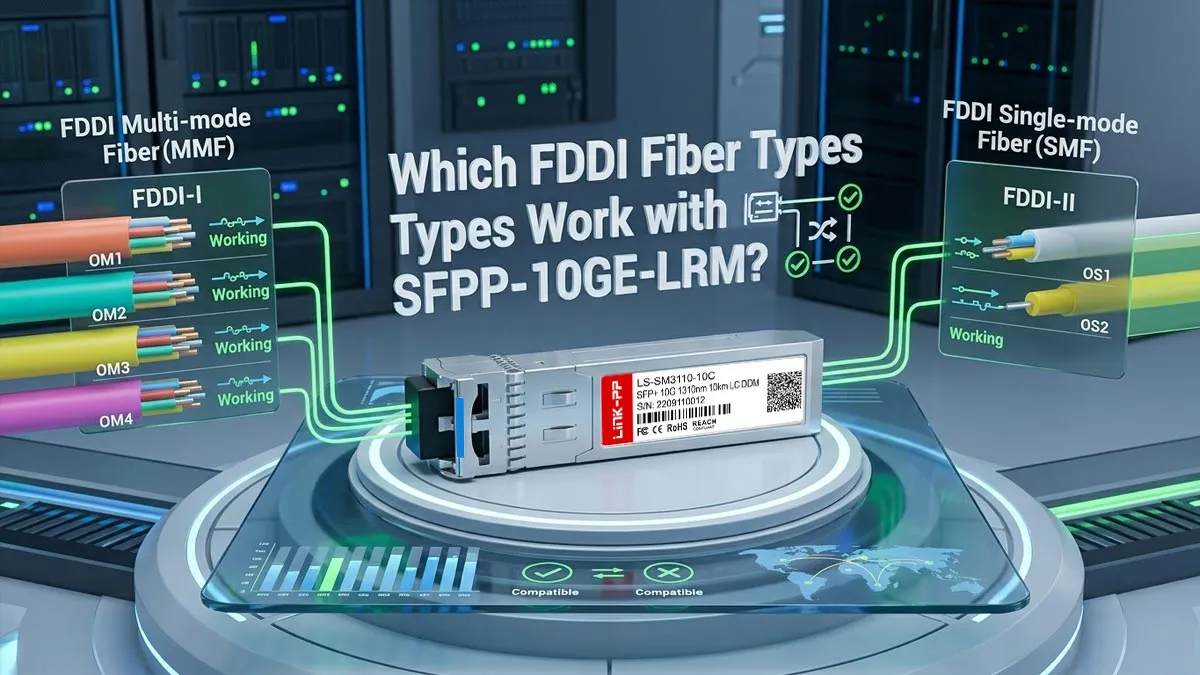
Below is the definitive compatibility matrix for the SFPP-10GE-LRM across all major enterprise fiber standards:
| Fiber Standard | Core Diameter | Legacy Jacket Color | SFPP-10GE-LRM Distance | 10GBASE-SR Distance (For Contrast) |
|---|---|---|---|---|
| OM1 (FDDI-Grade) | 62.5/125μm | Orange | 220 meters | 33 meters |
| OM2 | 50/125μm | Orange | 220 meters | 82 meters |
| OM3 (Laser-Optimized) | 50/125μm | Aqua | 220 meters | 300 meters |
| OM4 (Laser-Optimized) | 50/125μm | Aqua / Erika Violet | 220 meters | 400 meters |
| OS2 (Single-Mode) | 9/125μm | Yellow | 300 meters | Not Supported |
FDDI-Grade OM1 (62.5μm) and OM2 (50μm)
These two fiber types represent the exact use case the SFPP-10GE-LRM was invented for. Because these older cables were optimized for 1300nm LED light sources, the 1310nm laser of the LRM module aligns perfectly with the fiber's physical characteristics. When paired with EDC technology on the host switch, LRM modules can reliably push 10Gbps traffic to 220 meters over these legacy backbones.
Laser-Optimized OM3 and OM4 (50μm)
A common point of confusion among IT procurement teams is whether they should use LRM modules on newer OM3 or OM4 networks. While the SFPP-10GE-LRM is technically compatible with OM3 and OM4, it does not gain any distance advantages.
- The Technical Reality: OM3 and OM4 are specifically engineered to provide massive bandwidth at the 850nm wavelength (used by VCSEL lasers in SR modules). Their bandwidth at the 1310nm wavelength is actually quite low—comparable to standard OM2.
- Engineering Verdict: If your building is wired with OM3 or OM4, you should purchase standard 10GBASE-SR optics. They are significantly cheaper, consume less power, and will transmit further (up to 400 meters on OM4) than the LRM module.
The Hidden Bonus: Single-Mode Fiber (OS2)
One of the most valuable, yet least discussed, features of the SFPP-10GE-LRM is its ability to transmit over standard Single-Mode Fiber (SMF). Because it uses a 1310nm laser—the same wavelength used by 10GBASE-LR (Long Reach) single-mode optics—the LRM module can drive a 10G signal up to 300 meters over OS2 cable. This dual-personality makes the SFPP-10GE-LRM an excellent "universal spare" to keep in the data center, capable of patching both legacy multimode and short-run single-mode connections.
🚩 Crucial Warning: EDC Chip Switch Compatibility
If you search IT communities like Reddit’s r/networking, you will find countless threads from frustrated engineers who purchased LRM modules only to find the ports showing a "Link Down" or "Unsupported Transceiver" status. In almost every case, the fiber is fine, and the optic is fine—the failure lies in the switch hardware architecture.
The Role of the EDC Chip
Because legacy FDDI-grade OM1 and OM2 fibers severely distort high-speed light pulses (due to Differential Mode Delay), the optical receiver inside the SFPP-10GE-LRM cannot process a clean binary signal on its own. Instead, it passes a "dirty," overlapping electrical signal into the switch.
The switch must use an Electronic Dispersion Compensation (EDC) chip—a specialized Digital Signal Processor (DSP)—to mathematically filter out the noise and reconstruct the 10Gbps data stream.
How to Check Switch Compatibility Before You Buy
To avoid costly procurement mistakes and network downtime, follow these mandatory verification steps before authorizing a purchase order for LRM optics:
- Verify the Hardware Datasheet: Do not assume that an SFP+ port supports LRM just because it supports 10G. For example, older Cisco Catalyst 3850/9300 series often support LRM, but many ports on newer Cisco Nexus 9000 series, Ubiquiti UniFi switches, or standard MikroTik routers do not have EDC chips. You must look for explicit mention of "10GBASE-LRM" in the vendor's optical compatibility matrix.
- Check for Vendor Lock-in (EEPROM Coding): Major OEMs like Cisco, Juniper, and HPE use proprietary firmware coding on their optics. If you plug an uncoded or incorrectly coded third-party SFPP-10GE-LRM into a Cisco switch, the switch will throw an err-disable state. Ensure your third-party vendor guarantees specific platform compatibility and offers a coding guarantee.
- Confirm DOM/DDM Support: Digital Optical Monitoring (DOM) is critical for troubleshooting legacy fiber links, allowing you to monitor Tx/Rx power levels. Ensure the LRM module complies with the SFF-8472 standard. Note that some switches will disable DOM data if they do not natively recognize the transceiver's firmware.
- Examine Power Constraints: Because of the intense signal processing required, LRM modules and the associated EDC chips consume more power (often up to 1.5W) compared to standard SR modules (typically <1W). Ensure your switch's power budget and cooling capacity can handle fully populating a line card with LRM optics.
Expert Tip: If your switch does not support EDC, but you absolutely must use the legacy OM1 fiber in your walls, you cannot use an LRM module. Your only alternative is to deploy a media converter or an optical transponder that has built-in EDC capabilities, though this significantly increases deployment costs and latency.
🚩 OEM vs. Third-Party SFPP-10GE-LRM Alternatives
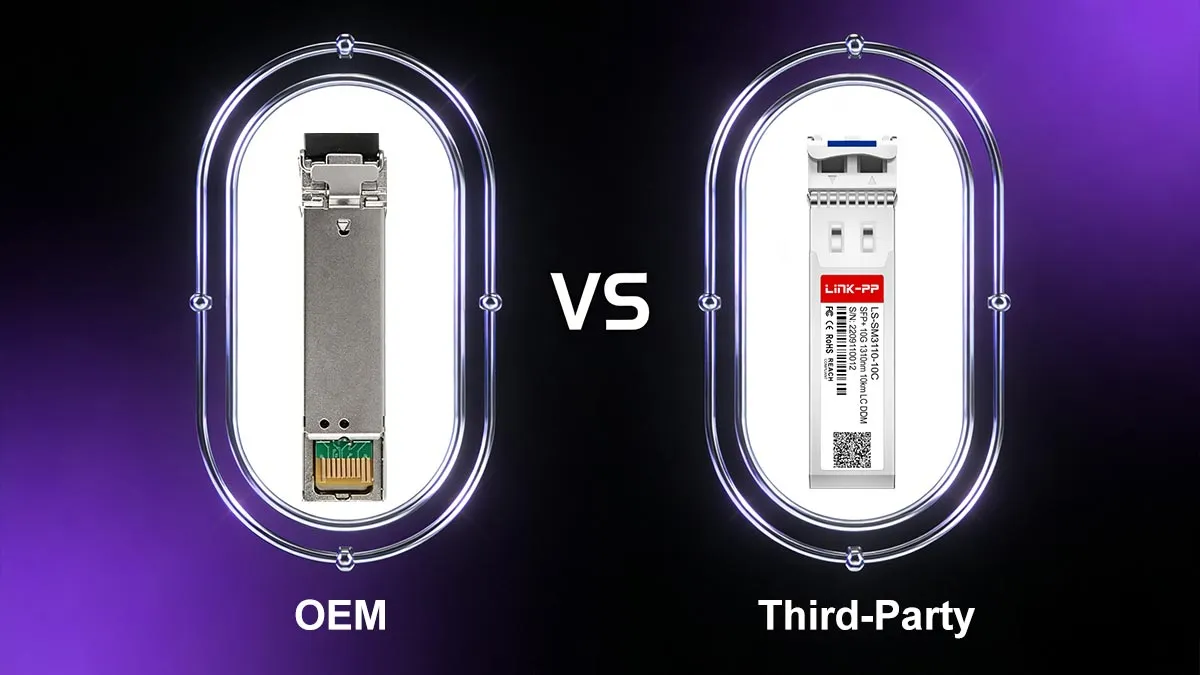
Because the SFPP-10GE-LRM is deployed primarily to salvage legacy infrastructure and avoid capital expenditure (CapEx), spending premium budget on the optical transceivers themselves is counterintuitive. This reality forces network architects to evaluate third-party optical alternatives against original equipment manufacturer (OEM) modules.
The "Secret" of Optical Manufacturing: The MSA Standard
To make an informed procurement decision, buyers must understand how optical transceivers are manufactured. Major networking vendors (like Cisco, Arista, and HPE) rarely manufacture their own optical lasers or housings. Instead, they purchase bare modules from specialized optical manufacturers (such as Finisar, Avago, or Lumentum) that adhere to the Multi-Source Agreement (MSA).
The MSA is a strict industry standard that dictates the physical dimensions, electrical interfaces, and signaling protocols of the SFP+ module. Once an OEM purchases these MSA-compliant modules, they write a proprietary cryptographic code to the transceiver's EEPROM chip. When plugged into an OEM switch, the switch reads this EEPROM; if the proprietary code is missing, the switch flags the optic as "unsupported."
Reputable third-party vendors bypass this vendor lock-in by writing the exact same OEM-specific EEPROM codes onto identical MSA-compliant hardware, ensuring 100% plug-and-play compatibility and full Digital Optical Monitoring (DOM) support.
Procurement Matrix: OEM vs. Third-Party LRM Optics
Below is a comparative analysis based on current market trends and enterprise procurement data:
| Vendor Category | Est. Price (USD) | Pros | Cons |
|---|---|---|---|
| OEM (Cisco, Juniper, Arista) | $400 – $900+ |
|
|
| Premium Third-Party (ProLabs, AddOn) | $80 – $150 |
|
|
| Direct Third-Party (L-P.com, 10Gtek) | $20 – $50 |
|
|
Strategic Recommendation for IT Buyers
For mission-critical core switches where strict service level agreements (SLAs) dictate OEM-only hardware, purchasing the branded SFPP-10GE-LRM may be unavoidable. However, for the vast majority of enterprise edge, distribution, and campus deployments, purchasing high-quality third-party optics is the industry norm.
Expert Tip: If you utilize third-party optics, implement a "spare strategy." Keep one or two official OEM LRM modules in your IT locker. If you ever face a complex port-level issue and need to open a support ticket with your switch vendor, swap in the OEM optic first to prevent the TAC engineer from blaming the third-party transceiver.
🚩 FAQ About SFPP-10GE-LRM Compatibility
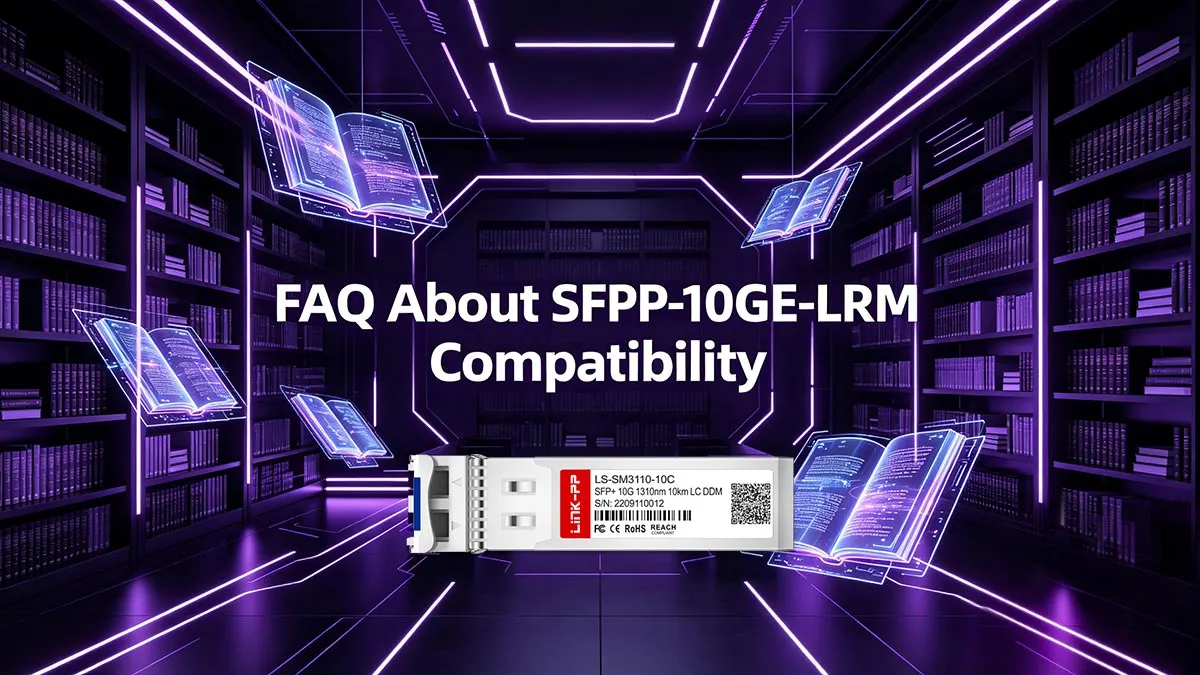
To assist network administrators in troubleshooting and deploying legacy 10G links, we have compiled the most frequently asked technical questions regarding SFPP-10GE-LRM compatibility.
1. Do You Need a Mode-Conditioning Patch (MCP) Cord?
Verdict: Highly Recommended for OM1 and OM2.
While some engineers report getting a successful link status using standard duplex LC patch cables on short runs, relying on standard cables introduces a high risk of intermittent port flapping and bit errors. If you want to guarantee a stable 10G connection up to the rated 220 meters, you must use a Mode-Conditioning Patch (MCP) cord.
- The Engineering Reason: The SFPP-10GE-LRM uses a 1310nm single-mode laser. If you inject this highly focused laser directly into the dead-center of a wide 62.5μm multimode core (OM1), it triggers severe Differential Mode Delay (DMD), splitting the signal.
- How MCP Works: An MCP cord contains a microscopic, precision-offset splice. It takes the single-mode laser and shifts it slightly off-center before it enters the multimode fiber. This creates an "overfilled launch" that conditions the light to travel smoothly down the legacy cable, effectively neutralizing DMD.
Note: If you are using the SFPP-10GE-LRM over Single-Mode Fiber (OS2), an MCP cord is not required. You simply use standard single-mode LC/UPC patch cables.
2. Can I connect an SFPP-10GE-LRM to a 10GBASE-SR or 10GBASE-LR module?
Verdict: No. Optics must be paired LRM-to-LRM.
Optical transceivers must match wavelengths and signaling protocols on both ends of the link. You cannot mix transceiver types, even if the speed (10Gbps) matches.
- LRM vs. SR: A 10GBASE-SR module uses an 850nm wavelength, while the LRM uses 1310nm. Because the receivers are tuned to different spectrums of light, they will be completely blind to each other.
- LRM vs. LR: While both use the 1310nm wavelength, the 10GBASE-LR is designed strictly for single-mode fiber and does not utilize the complex Electronic Dispersion Compensation (EDC) algorithms required for multimode transmission. Linking an LRM to an LR over multimode fiber will fail.
3. Does the SFPP-10GE-LRM support auto-negotiation down to 1G?
Verdict: No, it operates strictly at 10Gbps.
Unlike copper RJ-45 connections (10GBASE-T) which can auto-negotiate down to 1000Mbps or 100Mbps, fiber optic SFP+ standards do not natively support optical auto-negotiation. The SFPP-10GE-LRM utilizes 64B/66B encoding specific to 10 Gigabit Ethernet. Both the local and remote switches must have their port speeds hardcoded or defaulted to 10Gbps. If the remote end is a legacy 1G SFP module, the link will not establish.
4. Can I use an SFPP-10GE-LRM in an SFP28 (25G) port?
Verdict: Yes, but it depends on the switch configuration.
SFP28 ports are physically identical to SFP+ ports and are generally backwards compatible. However, to use an SFPP-10GE-LRM in an SFP28 port, the switch must allow the port to be manually clocked down to 10Gbps, and—most crucially—that specific SFP28 port must still feature the legacy EDC chip. Many modern 25G/100G data center switches have dropped EDC support entirely, making LRM compatibility on newer hardware extremely rare.
🚩 Final Verdict on SFPP-10GE-LRM Modules
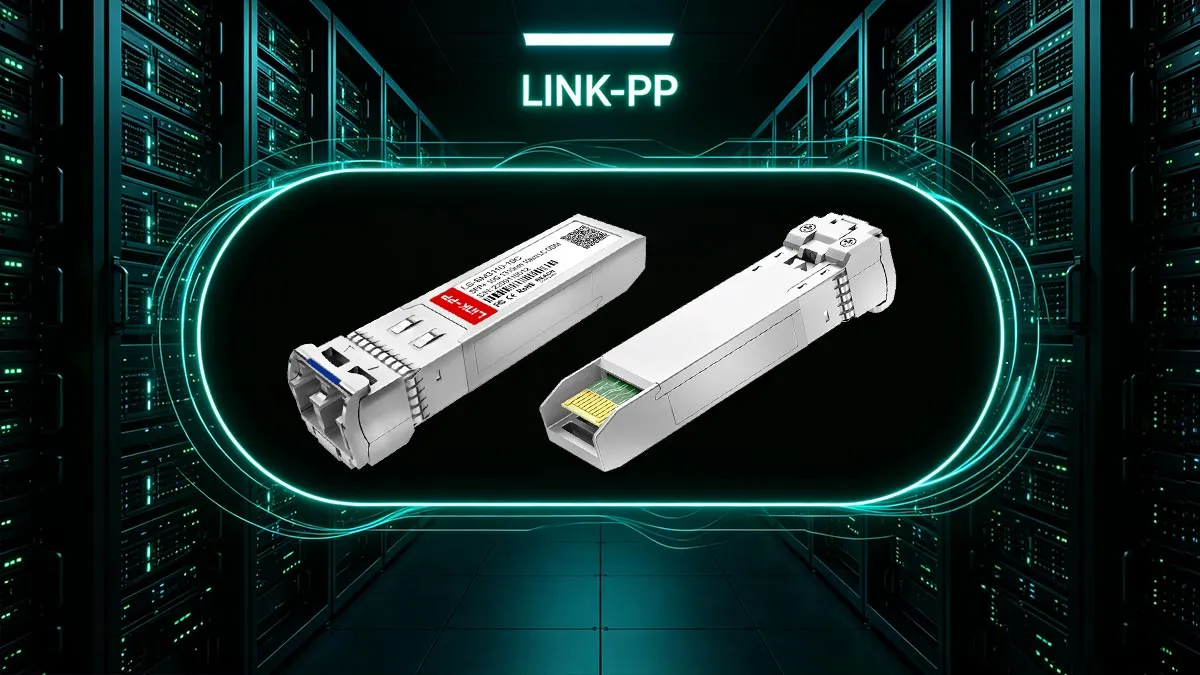
As enterprise networks increasingly migrate to 25G, 40G, and 100G backbones, the 10GBASE-LRM standard is undeniably a bridge technology. Yet, for thousands of hospitals, universities, and industrial facilities trapped with legacy 62.5μm fiber in their walls, it is an absolutely indispensable tool.
To ensure a flawless brownfield 10G upgrade, network architects should adhere to this final deployment checklist:
- Audit the Physical Layer: Confirm you are actually dealing with OM1 or OM2 fiber. If your infrastructure utilizes OM3 or OM4, default to standard 10GBASE-SR optics instead.
- Verify the Silicon: Scrutinize your switch’s datasheet. If the SFP+ port lacks an Electronic Dispersion Compensation (EDC) DSP chip, the LRM optic will fail to initialize.
- Condition the Signal: Do not compromise on link stability. Budget for and deploy Mode-Conditioning Patch (MCP) cords to neutralize Differential Mode Delay (DMD).
- Optimize Procurement: Avoid the exorbitant markup of OEM-branded optics. Leverage third-party vendors that provide exact EEPROM coding for your specific switch platform.
Streamlining Your Optical Procurement
Ultimately, the success of your network upgrade relies on the quality of the physical components. Because LRM optics require complex signal processing and precise 1310nm lasers, utilizing rigorously tested, MSA-compliant hardware is critical.
For IT directors and procurement teams looking to source high-reliability optical transceivers without the inflated OEM price tags, exploring direct-from-manufacturer solutions is the industry best practice. If you require custom-coded, DOM-supported transceivers guaranteed to seamlessly integrate with your existing routing and switching hardware, you can browse the comprehensive catalog of optical solutions at the LINK-PP Official Store. By sourcing directly from established hardware manufacturers, you ensure enterprise-grade stability while maximizing your IT infrastructure budget.