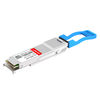
In modern optical networking environments, 10Gbps connectivity remains a foundational requirement for enterprise, data center, and metro access infrastructures. Among commonly deployed SFP+ modules, the SFPP-10G-LRT2-C is widely used for long-reach single-mode fiber transmission, typically supporting links up to 10km. As network architectures become increasingly multi-vendor and cost-sensitive, interoperability between optical transceivers and networking equipment has become a critical consideration for engineers and procurement teams.
Within this context, the SFPP-10G-LRT2-C is not only evaluated based on its optical performance, but also on how well it operates across different switch platforms and how reliably it integrates with third-party equivalent modules. Vendor lock-in mechanisms, EEPROM coding restrictions, and firmware-level compatibility checks often create challenges when deploying mixed-brand environments. As a result, understanding real-world interoperability behavior and the feasibility of third-party alternatives has become essential for maintaining both flexibility and cost efficiency in network design.
This article provides a structured analysis of SFPP-10G-LRT2-C interoperability, focusing on cross-vendor compatibility, technical constraints, and practical deployment considerations. It also examines the role of third-party equivalent transceivers, comparing their performance, reliability, and compatibility characteristics in real network scenarios. By the end, you will gain a clear framework for evaluating compatibility risks and selecting suitable optical modules for scalable and vendor-flexible 10G network deployments.
📋 Understanding SFPP-10G-LRT2-C Specifications
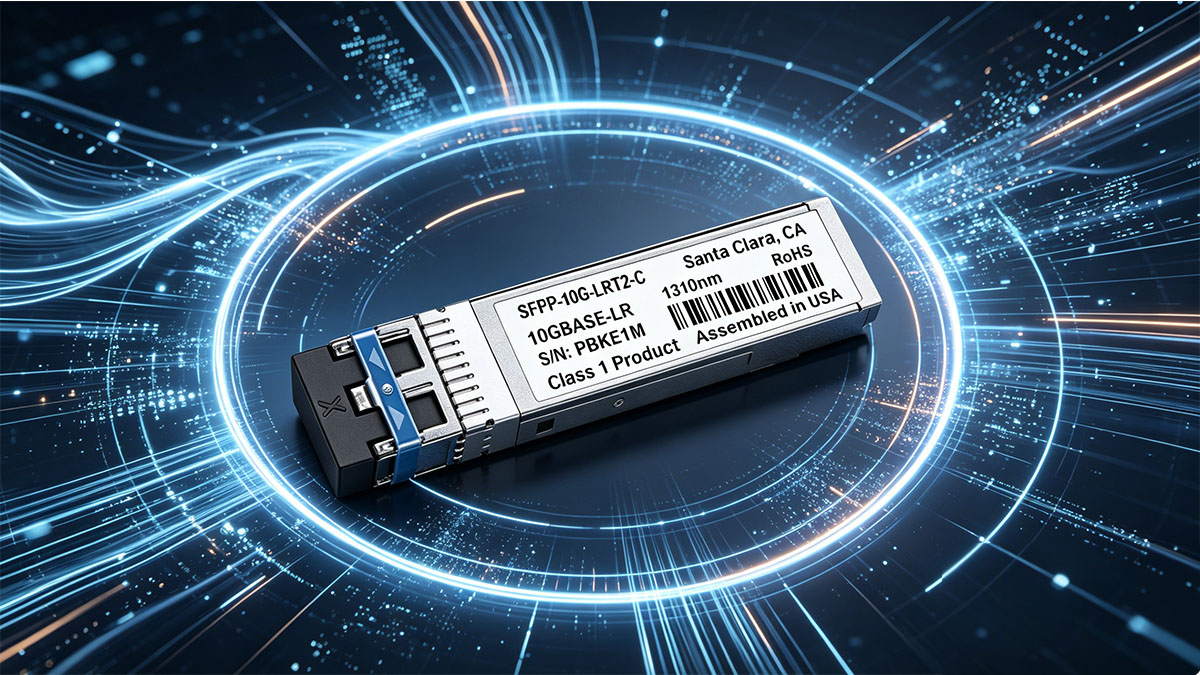
The SFPP-10G-LRT2-C is a 10Gbps SFP+ optical transceiver designed for long-reach Ethernet transmission over single-mode fiber. In practical deployments, its specifications determine not only physical transmission capability but also interoperability behavior across different networking platforms. A clear understanding of its core parameters is essential for evaluating compatibility, planning link budgets, and selecting equivalent third-party modules.
Core Technical Parameters
At its foundation, the SFPP-10G-LRT2-C follows the 10GBASE-LR optical standard, which defines its operation for 10Gbps Ethernet over long-distance single-mode fiber links. These parameters are commonly used as the baseline for compatibility and interoperability assessment.
To better understand its functional profile, the key technical specifications can be summarized as follows:
| Parameter |
Typical Value |
Industry Role |
| Data Rate |
10Gbps |
Supports 10G Ethernet transmission |
| Wavelength |
1310nm |
Standard for long-reach SMF communication |
| Transmission Distance |
Up to 10km |
Enables metro and campus connectivity |
| Fiber Type |
Single-mode fiber (SMF) |
Ensures low attenuation over distance |
| Connector Type |
LC duplex |
Standard optical interface in SFP+ modules |
These parameters collectively define the module's operational envelope. In real deployments, ensuring fiber type alignment and distance compliance is just as important as matching data rate and wavelength, especially in mixed-vendor environments.
Optical Performance Characteristics
Beyond basic specifications, the optical performance characteristics of the SFPP-10G-LRT2-C directly influence link stability and interoperability behavior. These characteristics determine how well the module can tolerate signal loss, noise, and variations across different hardware platforms.
A key aspect of performance is the transmitter and receiver design. The module typically uses a 1310nm DFB laser for signal transmission, which provides stable output power suitable for long-distance propagation. On the receiving side, the sensitivity threshold plays a critical role in maintaining signal integrity, especially when link attenuation approaches the maximum budget limit.
In addition, digital diagnostics monitoring (DDM or DOM) support allows real-time tracking of parameters such as temperature, optical power, bias current, and voltage. This feature is particularly important in interoperability scenarios, as it helps identify whether performance issues originate from the module, the fiber plant, or the host device configuration.
Typical Deployment Scenarios
The SFPP-10G-LRT2-C is commonly deployed in network environments where stable long-distance 10Gbps connectivity is required without upgrading to higher-speed optics. Its specification profile makes it suitable for a range of infrastructure use cases.
Typical deployment scenarios include:
- Enterprise campus backbone interconnections between buildings
- Data center interconnect (DCI) links within metropolitan distances
- Aggregation layer uplinks in service provider access networks
- High-speed point-to-point connections in structured cabling systems
In these scenarios, the module's 10km reach and 1310nm wavelength make it a practical choice for balancing performance and infrastructure simplicity. However, its actual interoperability success still depends heavily on host device compatibility rules and vendor-specific acceptance policies, which will be explored in later sections.
📋 What Does Interoperability Mean for SFPP-10G-LRT2-C?
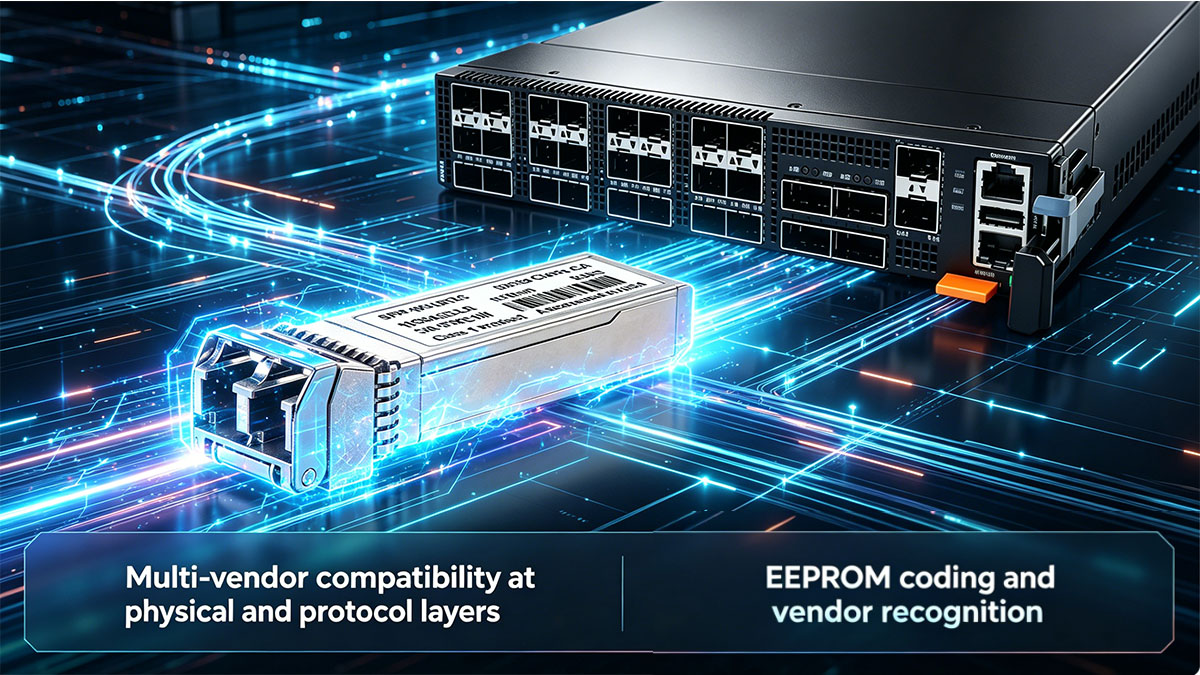
In practical optical networking, interoperability for the SFPP-10G-LRT2-C refers to its ability to operate correctly across different vendor devices while maintaining stable 10Gbps transmission performance. In most real-world deployments, this means the module must be recognized by the host switch, pass physical layer link validation, and sustain compliant optical performance without triggering compatibility alarms or port restrictions.
Definition of Optical Transceiver Interoperability
At its core, interoperability describes how well an optical transceiver can function in multi-vendor environments without requiring proprietary alignment. For SFPP-10G-LRT2-C, this involves both physical compatibility and logical recognition by the host system.
From a technical standpoint, interoperability can be broken down into two main layers:
| Layer |
Focus Area |
What It Ensures |
| Physical Layer |
Optical signal transmission |
Correct wavelength, power, and fiber compatibility |
| System Layer |
Device recognition |
EEPROM coding, vendor ID validation, and port acceptance |
Even if two modules share identical optical specifications, system-level incompatibility can still prevent proper operation. This is why SFPP-10G-LRT2-C interoperability is not solely determined by optical performance but also by how host devices interpret module identity and configuration data.
Key Factors Affecting Compatibility
Several technical and policy-driven factors influence whether the SFPP-10G-LRT2-C can operate seamlessly across different network platforms. In most cases, compatibility is determined at the firmware and hardware validation layers of the switch or router.
The most influential factors include:
- EEPROM coding structure: The module must contain compatible vendor identification data for the host device to accept it
- MSA compliance adherence: Strict adherence to Multi-Source Agreement standards improves cross-vendor operability
- DOM/DDM calibration alignment: Inconsistent diagnostic reporting can trigger warnings or disable monitoring features
- Host firmware restrictions: Some network vendors enforce whitelist-based module validation
These factors often interact with each other. For example, even if a module is MSA-compliant, a strict firmware policy may still reject it based on EEPROM signature mismatches.
Real-World Interoperability Challenges
In actual network deployments, interoperability issues rarely arise from optical transmission limitations alone. Instead, they are typically caused by vendor-controlled validation mechanisms or inconsistent implementation of standards across platforms.
Common real-world challenges include:
- Port disabling or warning messages when using non-approved modules
- Reduced diagnostic visibility when DOM functions are partially supported
- Inconsistent behavior after firmware upgrades, which may introduce stricter compatibility checks
- Mixed-vendor environments requiring manual override or coding adjustments
These challenges highlight that SFPP-10G-LRT2-C interoperability is not a fixed property but a dynamic condition influenced by both hardware design and software policy. Understanding these limitations is essential for designing stable and flexible 10G networks, especially when integrating third-party or cross-vendor optical solutions.
📋 Vendor Compatibility Analysis
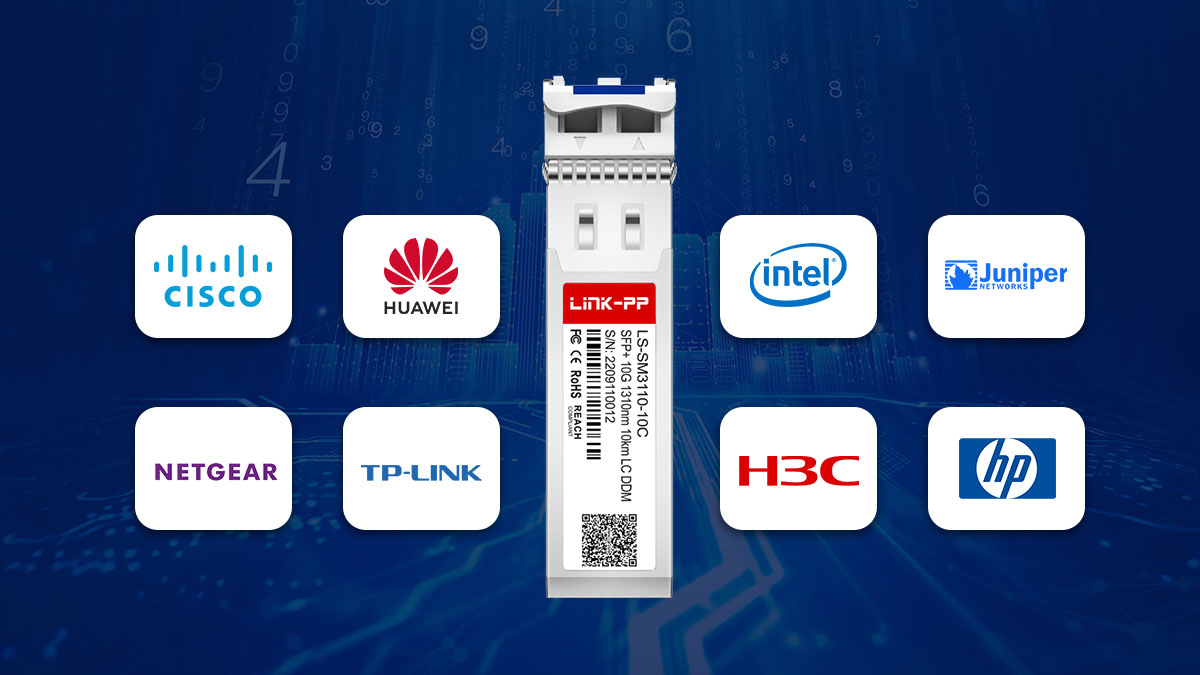
In real network deployments, the interoperability of SFPP-10G-LRT2-C is largely determined by how different vendors implement module validation policies and optical acceptance rules. While the module follows standardized 10GBASE-LR optical specifications, its actual compatibility varies across switch platforms due to differences in firmware restrictions, EEPROM verification, and proprietary coding mechanisms.
Compatibility with Major Network Brands
The same SFPP-10G-LRT2-C module can behave differently depending on the host platform. This is primarily because each vendor defines its own acceptance logic for optical modules, even when physical specifications are identical.
| Vendor Platform |
Compatibility Behavior |
Key Consideration |
| Cisco |
Often requires vendor-coded EEPROM |
Strict ID validation and possible warning states |
| Juniper |
Generally more flexible with MSA-compliant optics |
Better acceptance of standard coding profiles |
| Arista |
High compatibility in open networking environments |
Strong support for third-party modules in many models |
| Huawei |
Mixed behavior depending on OS version |
Firmware-level restrictions may apply |
| H3C |
Moderate compatibility with validation checks |
May require specific coding or validation alignment |
These differences show that interoperability is not universal but instead highly dependent on the host system's acceptance policy. Even when optical performance is identical, module recognition at the system level can vary significantly.
Coding and EEPROM Customization
One of the most critical factors influencing compatibility is EEPROM coding, which defines how the module identifies itself to the host device. The SFPP-10G-LRT2-C must present valid identification data such as vendor name, part number, and compliance codes to ensure successful initialization.
In practice, there are two main coding approaches:
- Fixed OEM coding: Modules are pre-coded for specific vendors and are typically optimized for guaranteed compatibility within that ecosystem
- Programmable or generic coding: Modules can be re-coded to match different vendor profiles, improving cross-platform usability
While programmable EEPROM increases flexibility, incorrect or inconsistent coding can lead to link failures, warning states, or complete port rejection. Therefore, accurate coding alignment is often as important as optical specification matching in multi-vendor deployments.
Firmware and OS Impact
Beyond hardware-level compatibility, firmware and operating system versions play a decisive role in determining whether SFPP-10G-LRT2-C modules are accepted. Network vendors frequently update their OS to refine module validation policies, which can directly impact previously functional optics.
Key firmware-related impacts include:
- Introduction of stricter whitelist checks that block unapproved module IDs
- Changes in DOM interpretation, affecting diagnostic reporting accuracy
- Behavioral differences between firmware versions on the same hardware model
- Temporary incompatibility after major software upgrades requiring revalidation
In many cases, a module that works perfectly on one firmware version may trigger warnings or be disabled after an update. This makes firmware lifecycle management a critical part of maintaining stable interoperability in production networks, especially in environments relying on third-party or cross-vendor optical modules.
📋 Third-Party Equivalent Modules Explained
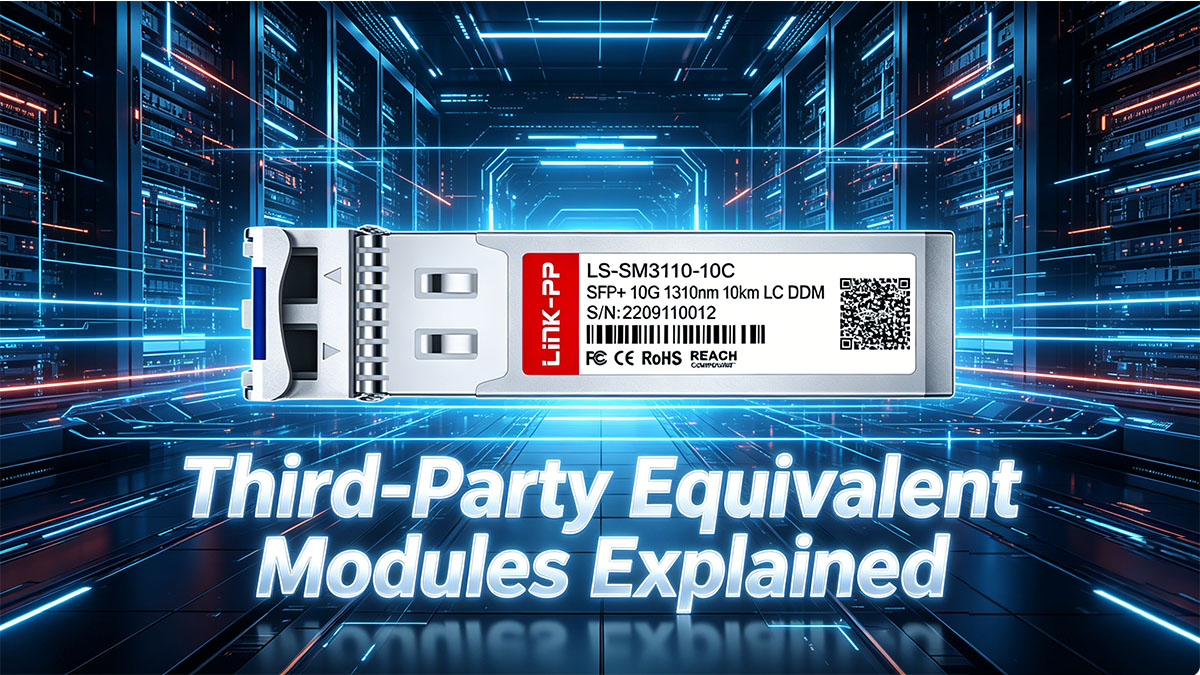
In modern 10Gbps network deployments, third-party equivalent modules for SFPP-10G-LRT2-C have become a widely adopted option for organizations seeking flexible sourcing and reduced dependency on OEM ecosystems. These alternatives are designed to match the same optical and electrical specifications as original modules, while offering broader compatibility across multi-vendor environments when properly implemented.
What Are Third-Party Optical Transceivers?
Third-party (like LINK-PP) optical transceivers are non-OEM modules manufactured by independent vendors that follow the same industry standards as branded counterparts. For SFPP-10G-LRT2-C equivalents, this means adherence to 10GBASE-LR specifications while replicating key optical characteristics such as wavelength, transmission distance, and form factor.
From a functional perspective, these modules aim to achieve identical network behavior under the same operating conditions, even though they are not produced by the original equipment manufacturer. Their interoperability depends heavily on MSA compliance and correct EEPROM coding, which determines whether host devices accept them as valid optics.
Key Advantages of Equivalent Alternatives
Third-party SFPP-10G-LRT2-C equivalents are widely used not only for cost considerations but also for operational flexibility in large-scale network environments. Their advantages extend beyond pricing into supply chain resilience and deployment efficiency.
The main benefits include:
- Cost efficiency: Typically significantly lower acquisition cost compared to OEM modules while maintaining similar optical performance
- Multi-vendor flexibility: Ability to support different switch brands through appropriate coding and configuration
- Supply chain availability: Easier sourcing in large volumes, especially for global or distributed deployments
- Deployment scalability: Simplifies expansion of 10G links without being constrained by single-vendor procurement cycles
These advantages make third-party modules particularly attractive for enterprise and service provider networks where scale and operational agility are critical.
Potential Risks and Limitations
Despite their benefits, third-party SFPP-10G-LRT2-C equivalents also introduce certain risks that must be carefully evaluated during network planning. These risks are typically not related to optical physics but to system-level integration and vendor policy enforcement.
Common limitations include:
- Quality variability: Performance consistency may differ between manufacturers, especially in power stability and signal integrity
- Compatibility uncertainty: Some switches may reject or partially support non-OEM modules depending on firmware policies
- Diagnostic limitations: DOM/DDM functionality may be reduced or inconsistently reported in certain environments
- Support constraints: Limited technical support from original equipment vendors in case of interoperability issues
These factors do not necessarily prevent successful deployment, but they require careful validation before large-scale implementation. In practice, organizations often mitigate these risks through pre-deployment testing, vendor qualification processes, and controlled rollout strategies, ensuring that third-party modules meet both performance and operational expectations in real network conditions.
📋 How to Identify Reliable SFPP-10G-LRT2-C Alternatives
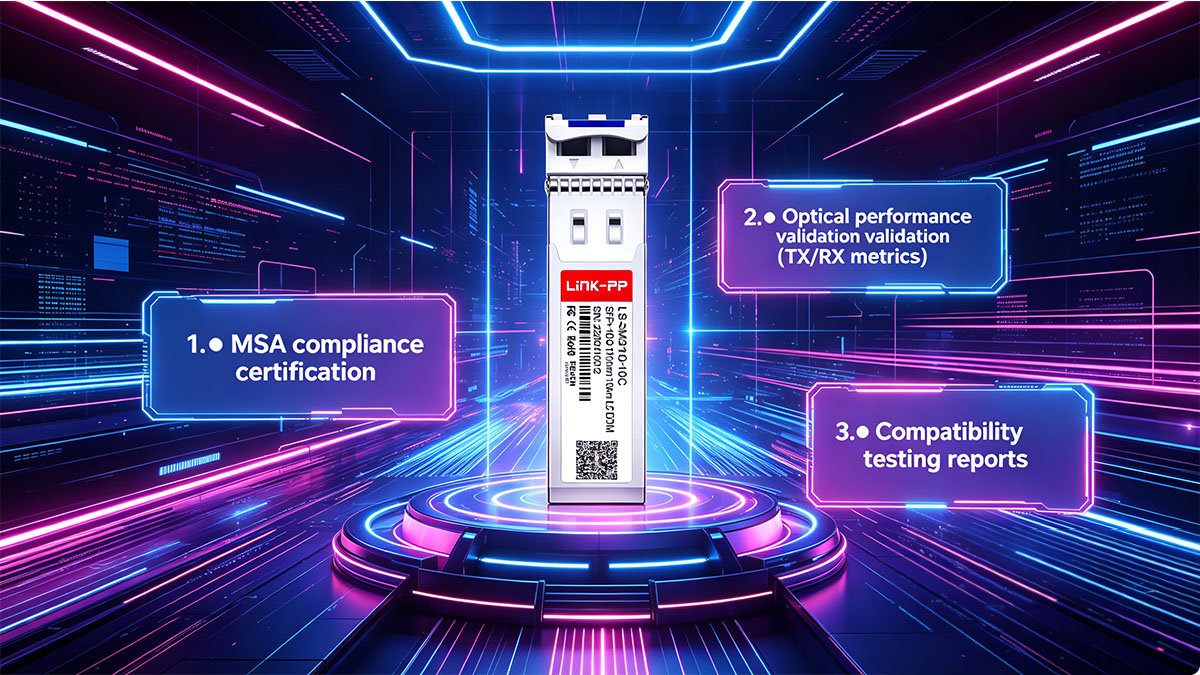
Selecting a reliable third-party equivalent for SFPP-10G-LRT2-C is not only about matching optical specifications. In real network environments, reliability is determined by a combination of standards compliance, interoperability testing, and vendor engineering quality. A structured evaluation process helps ensure stable performance across multi-vendor deployments and reduces the risk of link instability or compatibility failures.
Critical Selection Criteria
A dependable SFPP-10G-LRT2-C alternative must first meet strict technical and protocol-level requirements. These criteria ensure that the module behaves consistently under real transmission conditions and is recognized correctly by host devices.
Key evaluation factors include:
- MSA compliance verification: Ensures adherence to Multi-Source Agreement standards for SFP+ form factors and optical signaling
- Optical performance consistency: Stable output power, receiver sensitivity, and link budget alignment with 10GBASE-LR requirements
- DOM/DDM accuracy: Reliable reporting of temperature, voltage, and optical power for real-time monitoring
- Cross-platform compatibility evidence: Demonstrated operation across multiple switch vendors and firmware versions
These criteria help distinguish engineered, standards-compliant modules from generic or unverified alternatives that may only function in limited environments.
To further clarify key technical benchmarks, the following comparison table highlights typical validation dimensions:
| Evaluation Metric |
Reliable Alternative |
Low-Quality Alternative |
| Optical Stability |
Consistent TX/RX power |
Fluctuating signal levels |
| Standards Compliance |
Full MSA adherence |
Partial or unclear compliance |
| Interoperability |
Multi-vendor tested |
Single-platform limited |
| Diagnostics (DOM) |
Accurate real-time data |
Missing or inconsistent reporting |
This comparison shows that reliability is defined not just by specification matching, but by consistent real-world behavior across environments.
Importance of Vendor Reputation
Beyond technical compliance, the manufacturer's engineering capability and quality control processes play a major role in determining long-term reliability. Established third-party vendors typically invest in optical calibration systems, compatibility labs, and firmware optimization processes to ensure consistent performance.
Important indicators of a trustworthy supplier include:
- Documented compatibility matrices across major switch vendors
- In-house optical testing facilities for power and sensitivity validation
- Long-term production consistency for the same module model
- Availability of technical support for troubleshooting and deployment guidance
In contrast, low-transparency suppliers may provide limited documentation, making it difficult to predict behavior in complex or mixed-vendor environments. For mission-critical networks, vendor reliability is often as important as the module's raw optical specifications.
Testing and Validation Best Practices
Even when a module appears fully compliant on paper, real-world validation is essential before large-scale deployment. Controlled testing helps identify subtle compatibility issues that may not appear during specification review.
A practical validation workflow typically includes:
- Initial bench testing in a controlled lab environment with representative switch models
- Cross-vendor interoperability testing to confirm multi-platform recognition
- Long-duration stress testing to evaluate thermal stability and signal degradation
- DOM monitoring over time to detect fluctuations in optical performance
After deployment, continuous monitoring is equally important. Tracking DOM metrics such as optical power drift or temperature variation can help detect early signs of degradation or incompatibility. This proactive approach ensures that SFPP-10G-LRT2-C alternatives remain stable throughout their operational lifecycle, especially in high-density or mission-critical network infrastructures.
📋 Performance Comparison: OEM vs Third-Party Modules
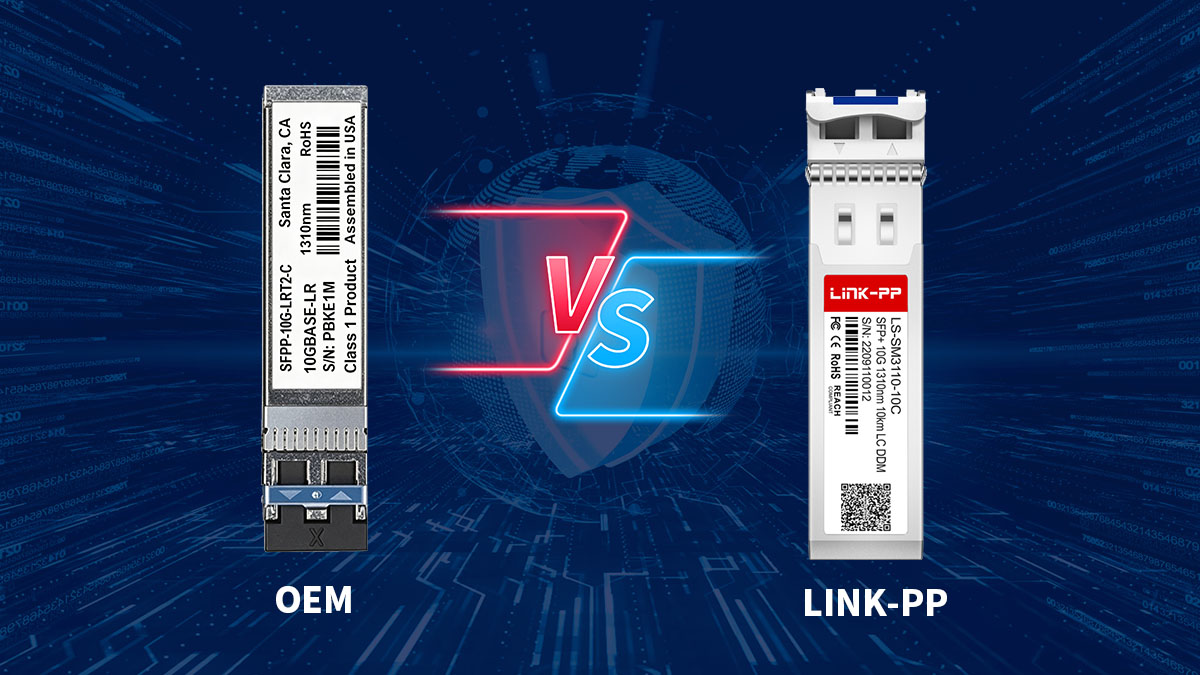
When evaluating SFPP-10G-LRT2-C in real network deployments, the comparison between OEM and third-party modules is not limited to cost differences. The more important dimension is how each performs under identical optical, environmental, and interoperability conditions. In practice, both categories can achieve similar baseline transmission results, but differences emerge in consistency, diagnostics behavior, and long-term operational stability.
Optical Signal Performance
From a pure transmission perspective, OEM and high-quality third-party SFPP-10G-LRT2-C modules are often closely aligned because both are designed around the same 10GBASE-LR optical standard. However, variations can appear in calibration precision and component sourcing.
The following table summarizes typical performance characteristics:
| Performance Metric |
OEM Modules |
Third-Party Modules |
| Output Power Stability |
Highly consistent |
Varies by manufacturer quality |
| Receiver Sensitivity |
Strictly validated |
Generally compliant, minor variance possible |
| Bit Error Rate (BER) |
Optimized for platform |
Standard compliance level |
| Link Stability |
Excellent in native ecosystems |
Dependent on compatibility tuning |
In most controlled environments, both module types can successfully maintain 10Gbps links over 10km SMF. The key difference lies in margin consistency—OEM modules tend to offer tighter tolerance ranges, which can improve predictability in large-scale deployments.
Reliability and Long-Term Operation
Reliability is where differences between OEM and third-party modules become more visible over time. While both categories can operate continuously under standard conditions, their performance under stress scenarios such as temperature variation, port density load, and firmware upgrades may differ.
Typical long-term operational characteristics include:
- OEM modules: Generally exhibit higher consistency in thermal behavior and long-duration stability due to tighter manufacturing calibration
- Third-party modules: Reliability varies depending on vendor engineering quality and component sourcing strategies
- Environmental tolerance: OEM modules often have more predictable performance across full operating temperature ranges
- Failure predictability: OEM failures tend to be rare but systematic, while third-party failures may be more variable depending on production batch quality
These differences are particularly relevant in carrier-grade or high-availability environments, where even minor instability can impact service continuity.
Cost-to-Performance Ratio
One of the primary reasons organizations consider third-party SFPP-10G-LRT2-C modules is the overall cost-to-performance balance. While OEM modules offer strong consistency, third-party alternatives often provide comparable performance at a significantly lower cost, especially in large-scale deployments.
A simplified comparison of total cost considerations is shown below:
| Cost Factor |
OEM Modules |
Third-Party Modules |
| Unit Cost |
High |
Moderate to Low |
| Large-Scale Deployment Cost |
Significant |
Highly optimized |
| Maintenance Cost |
Predictable but higher baseline |
Variable depending on quality |
| Replacement Frequency |
Lower |
Slightly higher in low-tier vendors |
In many enterprise and data center environments, the reduced acquisition cost of third-party modules can translate into substantial savings at scale. However, these savings must be balanced against potential risks in compatibility management and lifecycle support.
Ultimately, the choice between OEM and third-party SFPP-10G-LRT2-C modules depends on network priorities. Environments that prioritize maximum stability and vendor assurance may favor OEM solutions, while cost-sensitive or multi-vendor infrastructures often benefit from carefully validated third-party alternatives.
📋 Deployment Best Practices for Mixed-Vendor Environments
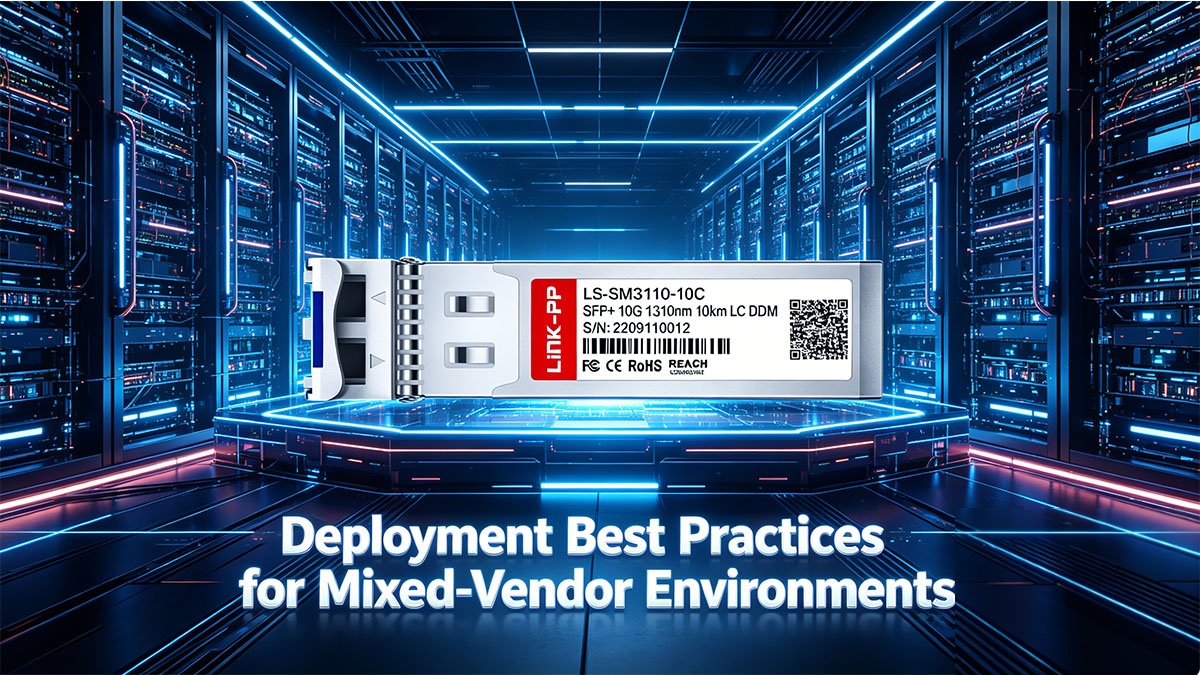
In modern 10Gbps network architectures, mixed-vendor deployments using SFPP-10G-LRT2-C and its equivalents are increasingly common. While this approach improves procurement flexibility and reduces vendor dependency, it also introduces complexity in compatibility management, performance consistency, and long-term maintenance. A structured deployment strategy is essential to ensure stable operation across heterogeneous environments.
Network Design Considerations
A stable mixed-vendor environment starts at the design stage, where interoperability risks should be minimized through architectural planning rather than reactive troubleshooting.
Key design principles include:
- Standardizing on MSA-compliant optics across all platforms to reduce baseline compatibility issues
- Segmenting network layers (access, aggregation, core) to isolate potential interoperability impacts
- Avoiding unnecessary vendor mixing within critical link paths where maximum stability is required
- Maintaining consistent optical specifications (wavelength, reach, fiber type) across all deployed modules
These principles help ensure that SFPP-10G-LRT2-C modules and third-party equivalents operate within predictable optical and system-level boundaries, even when deployed across different hardware ecosystems.
Compatibility Testing Workflow
Before full-scale deployment, systematic testing is essential to validate interoperability across all target platforms. This process reduces the risk of unexpected link failures or port-level restrictions in production environments.
A recommended validation workflow includes:
- Initial device-level verification
- Confirm module recognition on each switch platform
- Check for warnings, alarms, or port disablement behavior
- Optical performance validation
- Measure TX/RX power levels using DOM data
- Verify link stability under normal traffic load
- Cross-platform testing
- Test the same module type across different vendors
- Identify firmware-specific behavior differences
- Stress and endurance testing
- Run extended uptime tests under full link utilization
- Monitor temperature and optical drift over time
This structured approach ensures that compatibility is validated not only at initialization but also under sustained operational conditions.
Troubleshooting Common Issues
Even in well-designed environments, interoperability issues may still occur due to firmware updates, coding mismatches, or optical inconsistencies. Understanding common failure patterns helps reduce downtime and improve resolution speed.
Typical issues include:
- Link failure immediately after installation, often caused by EEPROM coding mismatch or vendor validation rejection
- Intermittent connectivity due to marginal optical power levels or fiber attenuation issues
- DOM reporting inconsistencies between different vendor platforms
- Port shutdown or warning states triggered by firmware-level compatibility enforcement
Effective troubleshooting typically involves verifying module coding alignment, reviewing DOM parameters, and cross-checking firmware versions against known compatibility baselines. In some cases, replacing or re-coding the module resolves the issue without requiring changes to the switching infrastructure.
By applying disciplined design, testing, and troubleshooting practices, organizations can successfully deploy SFPP-10G-LRT2-C modules and third-party equivalents in mixed-vendor environments while maintaining both performance stability and operational flexibility.
📋 Future Trends in Optical Module Interoperability
As optical networks continue to evolve toward higher speeds and more flexible architectures, interoperability for modules like SFPP-10G-LRT2-C is shifting from a hardware-centric concern to a software- and standards-driven ecosystem issue. The increasing adoption of multi-vendor strategies, open networking, and disaggregated infrastructure is reshaping how compatibility is defined, tested, and enforced.
Increasing Adoption of Open Networking
The rise of open networking is one of the most significant drivers of improved interoperability. In traditional architectures, switch hardware and optical modules were tightly coupled within a single vendor ecosystem. Today, that model is gradually being replaced by disaggregated designs where hardware, operating systems, and optics are independently selected.
Key developments in this direction include:
- Wider adoption of white-box switches supporting standard SFP+ modules
- Increased reliance on open network operating systems (NOS) that reduce vendor lock-in
- Standardized optical module behavior based on MSA specifications rather than proprietary coding
- Greater acceptance of third-party optics in large-scale data center environments
In this environment, SFPP-10G-LRT2-C and its equivalents benefit from improved baseline compatibility, provided they adhere strictly to optical and electrical standards.
Evolution of Optical Standards
Interoperability is also being influenced by the continuous evolution of optical standards, especially as networks transition beyond 10Gbps into higher-speed generations. While SFPP-10G-LRT2-C remains relevant in legacy and aggregation layers, newer standards are redefining how compatibility is maintained across speed tiers.
Key trends include:
- Expansion from 10G to 25G, 100G, and 400G optical modules with backward compatibility considerations
- More strict definition of power budgets and signal integrity requirements in higher-speed optics
- Increased use of advanced modulation formats, requiring more precise interoperability alignment
- Standardized diagnostic frameworks to improve cross-platform monitoring consistency
These advancements reduce ambiguity in module behavior, making interoperability more predictable across different vendors and system architectures.
Role of Third-Party Vendors in the Ecosystem
Third-party optical vendors (such as LINK-PP) are playing an increasingly important role in shaping interoperability trends. Rather than operating as simple alternatives to OEM modules, they are becoming key contributors to compatibility validation, testing infrastructure, and supply chain optimization.
Their evolving role includes:
- Building extensive compatibility matrices across major switch vendors and firmware versions
- Investing in automated optical testing systems to improve consistency and reduce variability
- Supporting large-scale deployment models where cost efficiency and flexibility are critical
- Driving innovation in EEPROM coding flexibility and cross-platform recognition techniques
As interoperability frameworks become more standardized, the gap between OEM and high-quality third-party modules is expected to narrow further, particularly in terms of functional compatibility and diagnostic visibility.
📋 Conclusion
SFPP-10G-LRT2-C remains a widely deployed 10Gbps SFP+ optical transceiver in long-reach single-mode fiber networks, and its interoperability plays a decisive role in multi-vendor infrastructure design. The key takeaway is that while the module is built on standardized 10GBASE-LR specifications, real-world performance and compatibility depend heavily on host device policies, EEPROM coding behavior, and firmware-level validation rules. In this context, both OEM and third-party equivalent SFPP-10G-LRT2-C modules can achieve stable operation when properly matched and validated, making interoperability and equivalent selection a critical part of modern optical network planning.
To summarize the most important insights from this article:
- SFPP-10G-LRT2-C performance is primarily defined by 10Gbps 1310nm long-reach optical standards over single-mode fiber up to 10km
- Interoperability is influenced more by vendor firmware, EEPROM coding, and validation rules than by optical transmission capability alone
- Third-party equivalents can deliver comparable performance when they are MSA-compliant and properly tested across target platforms
- OEM modules typically offer higher consistency, while third-party options provide greater cost efficiency and deployment flexibility
- Rigorous compatibility testing and vendor qualification are essential for stable operation in mixed-vendor environments
For organizations planning scalable 10G deployments, the most effective approach is to balance compatibility assurance with operational flexibility. By carefully evaluating both OEM and third-party SFPP-10G-LRT2-C options, network teams can optimize performance, reduce procurement constraints, and maintain long-term infrastructure stability.
For more information on compatible optical transceivers and reliable third-party equivalent solutions, visit the LINK-PP Official Store to explore a wide range of tested and interoperable 10G optical modules designed for modern multi-vendor network environments.