
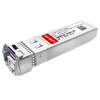



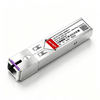
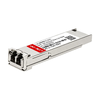

























In modern data center and enterprise network environments, SFP+ 10G optical connectivity has become a foundational requirement for supporting high-bandwidth applications such as virtualization, cloud computing, and storage aggregation. Among short-reach multimode solutions, 850nm transceiver modules remain widely deployed due to their balance of cost efficiency, performance stability, and compatibility with existing OM3/OM4 fiber infrastructures. In this context, the Ruijie XG-SFP-SR-MM850 plays a significant role as a standardized 10Gbps optical module designed for reliable short-distance transmission.
While many users focus primarily on data rate and transmission distance, the underlying optical characteristics of a transceiver often determine real-world link stability. Two of the most critical engineering factors are the VCSEL laser used in the transmitter and the receiver sensitivity on the photodetector side. VCSEL technology directly influences modulation efficiency, power consumption, and beam quality at 850nm wavelength, while receiver sensitivity defines the minimum optical power required to maintain acceptable bit error performance. Understanding how these two parameters interact is essential for evaluating overall link performance.
This article provides a structured and in-depth analysis of the Ruijie XG-SFP-SR-MM850 optical module, with a focus on VCSEL technology and receiver sensitivity characteristics. It will explain how VCSEL lasers function in short-reach multimode transmission, how receiver sensitivity impacts link budget and transmission reliability, and how these factors together influence deployment decisions in real network scenarios. The goal is to help readers build a clearer technical understanding of optical module performance beyond basic specifications.
🔰 Overview of Ruijie XG-SFP-SR-MM850 Optical Module
The Ruijie XG-SFP-SR-MM850 is a 10Gbps short-reach optical transceiver designed for high-density multimode fiber networks. Its primary role is to enable reliable 10 Gigabit Ethernet transmission over short distances using 850nm wavelength and LC duplex multimode fiber interfaces. In practical deployments, it is widely used where high bandwidth and low latency are required within racks or across adjacent network equipment.

Key Technical Specifications
The core value of this module lies in its standardized design aligned with 10GBASE-SR optical requirements. It is optimized for multimode fiber environments where VCSEL-based transmission provides efficient and stable signal output. The specification set is tightly aligned with short-reach data center connectivity needs.
| Parameter | Typical Value | Description |
|---|---|---|
| Data Rate | 10Gbps | Supports 10G Ethernet transmission |
| Wavelength | 850nm | Optimized for multimode fiber operation |
| Fiber Type | MMF (OM3/OM4) | Compatible with high-bandwidth multimode cabling |
| Reach Distance | Up to 300m–400m | Depends on OM3 or OM4 fiber grade |
These specifications indicate that the module is optimized for short-range but high-performance environments. The use of 850nm wavelength ensures compatibility with VCSEL-based transmission, which is widely adopted in modern 10G SR optics due to its efficiency and cost-effectiveness.
Beyond the basic parameters, the design also ensures stable optical output under typical data center conditions. This includes controlled power levels and standardized optical budgets, which are essential for predictable network behavior across different vendor equipment.
Typical Deployment Scenarios
The Ruijie XG-SFP-SR-MM850 is most commonly deployed in environments where high-speed communication is required over limited distances. Its design makes it particularly suitable for structured cabling systems in enterprise and data center networks.
Typical use cases include:
- Server-to-switch connectivity within data center racks
- Switch-to-switch uplinks in adjacent equipment rows
- High-bandwidth aggregation layers in enterprise campus networks
- Virtualization and cloud infrastructure backhaul connections
These scenarios share a common requirement: stable 10G throughput over short distances with minimal signal degradation. The module's multimode compatibility allows it to integrate seamlessly into existing OM3 and OM4 fiber infrastructures without requiring major cabling upgrades.
In practical deployments, engineers often select this module when balancing performance and deployment cost within high-density environments. Its standardized 10G SR design ensures interoperability while maintaining predictable optical behavior across different network topologies.
🔰 Understanding VCSEL Technology in XG-SFP-SR-MM850
The VCSEL (Vertical-Cavity Surface-Emitting Laser) used in the Ruijie XG-SFP-SR-MM850 is the core optical component responsible for generating the 850nm light signal. In short-reach multimode transmission, VCSEL is widely adopted because it delivers efficient modulation, stable output power, and cost-effective high-speed performance. For 10Gbps SR modules, it is the dominant laser technology due to its suitability for VCSEL-optimized multimode fiber channels.

What is a VCSEL Laser?
A VCSEL is a semiconductor laser that emits light perpendicular to the surface of the chip, rather than from the edge as in traditional laser diodes. This structural difference allows for better wafer-level testing, lower production cost, and improved beam uniformity.
The vertical emission structure is particularly important in multimode fiber systems because it produces a circular and well-controlled beam profile, which improves coupling efficiency into optical fiber. This directly reduces insertion loss and enhances signal stability in short-distance links.
In practical terms, VCSELs are designed to operate efficiently at 850nm wavelength, which matches the optimal transmission window for multimode fiber used in 10GBASE-SR applications.
Why VCSEL is Used in 850nm Transceivers
The selection of VCSEL technology in the XG-SFP-SR-MM850 is not arbitrary; it is driven by both physical fiber characteristics and system-level efficiency requirements. Multimode fiber has a limited bandwidth-distance product, and VCSELs are specifically engineered to operate within these constraints.
Key reasons for using VCSEL in 850nm SR modules include:
- Efficient coupling into multimode fiber cores, reducing optical loss
- Low power consumption compared to edge-emitting lasers
- High modulation speed capability suitable for 10Gbps signaling
- Cost-effective mass production for large-scale data center deployment
These advantages make VCSEL an ideal match for short-reach optical links where scalability and density matter more than long-distance transmission capability.
In addition, VCSEL-based systems align well with parallel optical architectures used in modern high-speed networking, where multiple short-reach lanes are combined to achieve higher aggregate throughput.
Performance Advantages of VCSEL in XG-SFP-SR-MM850
In real-world network environments, VCSEL technology contributes directly to link stability and energy efficiency. One of its key strengths is the ability to maintain consistent optical output with relatively low threshold current, which reduces thermal stress and improves long-term reliability.
From a performance perspective, the main advantages include:
- Stable optical power output under typical data center temperature ranges
- Reduced power consumption, improving port density efficiency
- Strong modulation response enabling clean 10Gbps signal transitions
- High reliability due to simplified laser cavity structure
These characteristics are especially important in dense switch environments, where heat dissipation and power budgets are critical design constraints. VCSEL-based modules like the XG-SFP-SR-MM850 are therefore preferred in large-scale deployments that require predictable performance across hundreds or thousands of optical links.
Limitations of VCSEL Technology
Despite its advantages, VCSEL technology also has inherent limitations that define its application scope. These limitations are not design flaws but physical constraints of multimode short-range optics.
The main constraints include:
- Limited transmission distance due to multimode dispersion effects
- Sensitivity to fiber alignment and modal noise in older cabling systems
- Performance variation under extreme temperature conditions
- Unsuitability for long-haul single-mode transmission environments
Because of these factors, VCSEL-based modules like the XG-SFP-SR-MM850 are intentionally optimized for short-reach applications only. When network requirements exceed a few hundred meters or require higher signal integrity over long distances, alternative laser technologies such as DFB become necessary.
🔰 Deep Dive into Receiver Sensitivity
Receiver sensitivity is one of the most critical parameters in evaluating the real-world performance of the Ruijie XG-SFP-SR-MM850 optical module. While transmit power defines how strongly a signal is launched into the fiber, receiver sensitivity determines how weak a signal can become before it can no longer be correctly interpreted. In short-reach 10Gbps links, this parameter directly impacts link reliability, margin design, and overall system stability.

What is Receiver Sensitivity?
Receiver sensitivity refers to the minimum optical power level required at the photodetector input for the receiver to correctly recover data with an acceptable bit error rate (BER). It is typically expressed in dBm, where lower (more negative) values indicate better sensitivity.
In practical terms, a more sensitive receiver can successfully decode weaker incoming optical signals, which increases the overall tolerance of the link to losses caused by fiber attenuation, connectors, and splices.
To understand its role in system design, it is useful to view receiver sensitivity as the lower boundary of the optical power window:
| Parameter | Role in Link | Typical Unit |
|---|---|---|
| Transmit Power | Signal launch strength | dBm |
| Receiver Sensitivity | Minimum detectable signal | dBm |
| Link Budget Margin | Available loss tolerance | dB |
This relationship defines whether a given fiber link can operate reliably under real installation conditions.
Typical Receiver Sensitivity of XG-SFP-SR-MM850
For 10GBASE-SR-class multimode transceivers like the Ruijie XG-SFP-SR-MM850, receiver sensitivity typically falls within a well-defined range based on IEEE 802.3ae standards and vendor-level optimization. While exact values may vary slightly between implementations, the typical range is:
| Parameter | Typical Range | Notes |
|---|---|---|
| Receiver Sensitivity | -9.9dBm to -11.1dBm | Measured at BER ≤ 10⁻¹² |
| Operating Wavelength | 850nm | VCSEL-compatible range |
| Receiver Type | PIN photodiode | Common in SR modules |
This sensitivity range ensures that the module can reliably receive attenuated signals over OM3 and OM4 multimode fiber links, even when accounting for connector losses and patch panel transitions.
In engineering practice, the receiver sensitivity is always evaluated together with transmit power to determine whether a safe optical budget exists for deployment.
Why Receiver Sensitivity Matters in Network Design
Receiver sensitivity is not just a theoretical specification; it directly influences how optical networks are designed and validated. A more sensitive receiver increases the allowable loss in the link, which translates into greater deployment flexibility.
Its importance can be understood through several key impacts:
- It defines the maximum allowable insertion loss in the optical path
- It determines feasible transmission distance under a given fiber type
- It affects how many connectors and patch panels can be included in a link
- It influences overall Bit Error Rate (BER) stability under load
In dense data center environments, even small improvements in sensitivity can significantly increase design margin, especially when multiple interconnect points are involved.
Factors Affecting Receiver Sensitivity
Although receiver sensitivity is defined at the component level, real-world performance is influenced by multiple environmental and physical factors. These factors determine whether the theoretical sensitivity can be fully realized in deployment.
Key influencing factors include:
- Fiber quality and modal bandwidth limitations
- Connector cleanliness and insertion loss variation
- Optical noise introduced by neighboring channels or EMI conditions
- Aging of photodiode and transimpedance amplifier components
- Temperature fluctuations affecting receiver circuitry stability
Each of these factors contributes to reducing the effective sensitivity margin in a live network. For example, contaminated connectors alone can introduce enough loss to push the received signal close to the sensitivity threshold, leading to intermittent errors.
For this reason, engineers often design with additional safety margin above the theoretical receiver sensitivity to ensure long-term stability.
🔰 Link Budget Analysis for XG-SFP-SR-MM850
Link budget analysis is the foundation of reliable optical network design, especially for 10G multimode systems like the Ruijie XG-SFP-SR-MM850. It determines whether the transmitted optical signal has enough power to travel through the fiber channel and still be detected correctly by the receiver. In practical deployments, link budget is the key factor that connects theoretical module specifications with real-world transmission stability.

Components of Link Budget
The optical link budget is primarily defined by the relationship between transmit power, receiver sensitivity, and total channel losses. A properly designed budget ensures that the received optical signal remains above the receiver sensitivity threshold under all operating conditions.
The main components can be summarized as follows:
| Component | Function | Unit |
|---|---|---|
| Transmit Power (Tx Power) | Optical signal output from VCSEL | dBm |
| Receiver Sensitivity | Minimum detectable input power | dBm |
| Channel Loss | Total fiber + connector + splice loss | dB |
From an engineering perspective, the available link budget is the difference between transmit power and receiver sensitivity. This defines how much loss the optical signal can tolerate before communication fails.
In the case of the XG-SFP-SR-MM850, VCSEL-based transmitters provide stable output at 850nm, while the receiver is optimized to maintain detection performance under low-power conditions, ensuring a balanced optical power window for short-reach links.
Calculating Maximum Reach
To estimate the maximum transmission distance, engineers use a simplified link budget equation:
Link Budget (dB) = P_{Tx} - P_{Rx Sensitivity}
Where:
- P_{Tx} is the transmitter optical power
- P_{Rx Sensitivity} is the receiver sensitivity threshold
In practical deployment scenarios, this budget must also cover all losses introduced by the physical infrastructure. A more complete evaluation includes fiber attenuation and connector losses.
For example, in an OM4 multimode fiber system:
- Fiber attenuation is typically very low at 850nm
- Connector losses usually dominate the channel budget
- Each connection point introduces measurable insertion loss
When applying these factors, the XG-SFP-SR-MM850 is typically capable of supporting:
- Up to ~300m over OM3 fiber
- Up to ~400m over OM4 fiber
However, these values assume a controlled environment with properly maintained connectors and minimal additional loss points.
Practical Considerations
While theoretical calculations provide a baseline, real-world optical networks require additional safety margins to ensure long-term stability. Engineers typically design with a buffer beyond the minimum required link budget.
Key practical considerations include:
- A safety margin of 2–3dB is commonly added to absorb unexpected losses
- Patch panels and cross-connects can significantly reduce available margin
- Bending radius violations in fiber can introduce additional attenuation
- Aging of connectors may gradually increase insertion loss over time
It is also important to consider that multimode fiber systems are sensitive to modal distribution. Even when total power is within budget, poor modal conditioning can still affect signal integrity at higher speeds like 10Gbps.
For this reason, network designers often validate links using optical power meters and BER testing rather than relying solely on theoretical calculations.
🔰 VCSEL vs Other Laser Technologies
Understanding how VCSEL compares with other laser technologies is essential for evaluating why the Ruijie XG-SFP-SR-MM850 uses 850nm VCSEL as its primary light source. In optical transceiver modules, laser selection directly affects transmission distance, modulation efficiency, cost structure, and overall system compatibility. VCSEL is widely used in short-reach multimode systems, but it is not the only laser technology available.

VCSEL vs DFB (Distributed Feedback Laser)
DFB lasers are commonly used in long-distance single-mode optical communication systems, while VCSELs dominate short-reach multimode applications. The key difference lies in their emission structure and spectral purity, which directly impacts transmission performance over distance.
| Parameter | VCSEL (XG-SFP-SR-MM850) | DFB Laser |
|---|---|---|
| Wavelength Range | 850nm | 1310nm / 1550nm |
| Fiber Type | Multimode (MMF) | Single-mode (SMF) |
| Transmission Distance | Short (≤400m) | Long (10km–80km+) |
| Cost Level | Lower | Higher |
| Beam Characteristics | Wide, circular mode | Narrow, highly coherent |
VCSEL is optimized for multimode fiber coupling, where multiple light paths exist within the fiber core. Its broader beam profile actually improves coupling efficiency in this environment. In contrast, DFB lasers produce a highly coherent and narrow beam, which is necessary for minimizing dispersion over long distances in single-mode fiber.
From a system design perspective, VCSEL is preferred in data centers where density and cost efficiency are more important than long-haul transmission capability.
VCSEL vs FP (Fabry-Perot Laser)
Fabry-Perot (FP) lasers are an earlier generation of multimode laser technology. While they also operate in short-reach optical systems, their performance characteristics differ significantly from VCSELs.
Key differences include:
- FP lasers emit light from the edge of the chip, resulting in less uniform beam profiles
- VCSELs provide more controlled and circular emission patterns, improving fiber coupling efficiency
- FP lasers typically exhibit wider spectral width, which increases dispersion effects
- VCSELs offer better power efficiency and thermal stability in high-density environments
In modern 10G SR applications like the XG-SFP-SR-MM850, FP lasers are largely replaced by VCSELs due to their superior performance consistency and manufacturability advantages.
Choosing the Right Laser Type
The selection of laser technology is not about which is universally better, but about matching physical properties to application requirements. Each laser type is optimized for a specific transmission environment.
In practical network design, the decision framework typically follows these considerations:
- Use VCSEL when:
- Operating in multimode fiber environments
- Transmission distance is within a few hundred meters
- High port density and cost efficiency are required
- 10G short-reach connectivity is the target use case
- Use DFB when:
- Single-mode long-distance transmission is required
- Signal integrity must be maintained over kilometers
- Higher spectral purity is necessary to reduce dispersion effects
- Use FP only in legacy or low-cost short-reach systems where performance requirements are less strict
For the Ruijie XG-SFP-SR-MM850, VCSEL is the optimal choice because it aligns with the fundamental design goal of 10G short-reach multimode transmission. It provides the best balance between power efficiency, coupling performance, and manufacturing scalability.
🔰 Optimizing Performance of XG-SFP-SR-MM850 Links
Optimizing the performance of a Ruijie XG-SFP-SR-MM850 optical link is not only about meeting basic connectivity requirements, but also about ensuring long-term signal stability, low bit error rate, and sufficient optical margin. In real deployments, even when VCSEL output power and receiver sensitivity are within specification, improper fiber handling or poor infrastructure design can still degrade overall link quality. Therefore, optimization focuses on both physical layer design and operational best practices.

Fiber Selection Best Practices
The performance of the XG-SFP-SR-MM850 is strongly dependent on the type and quality of multimode fiber used. Since it operates at 850nm using VCSEL technology, the modal bandwidth of the fiber directly determines achievable distance and signal integrity.
Before selecting fiber, it is important to understand how different OM grades affect transmission performance:
| Fiber Type | Bandwidth @850nm | Typical Reach for 10G | Application Suitability |
|---|---|---|---|
| OM3 | 2000 MHz·km | Up to ~300m | Standard data center links |
| OM4 | 4700 MHz·km | Up to ~400m | High-density modern DC |
| OM5 | Extended BW support | Similar to OM4 for 10G | Future-ready short reach |
OM3 and OM4 remain the most widely deployed in 10G SR environments because they provide a reliable balance between cost and performance. OM4 is generally preferred in newer installations due to its higher modal bandwidth, which improves signal stability under high utilization conditions.
In practice, selecting higher-grade fiber increases tolerance to modal dispersion, which becomes more important as link complexity increases.
Installation and Maintenance Tips
Even with optimal fiber selection, physical installation quality plays a decisive role in maintaining stable performance of the XG-SFP-SR-MM850. Small installation errors can significantly impact optical power levels and receiver margin.
Key installation practices include:
- Ensure all LC connectors are properly cleaned before insertion
- Avoid tight bending radius to prevent micro-bending losses
- Maintain consistent patch panel labeling for easier troubleshooting
- Use dust caps when modules are not actively connected
- Verify secure seating of transceivers in SFP+ ports
Beyond installation, maintenance is equally important. Over time, dust accumulation or connector wear can introduce additional insertion loss. Regular inspection and cleaning can prevent gradual degradation of optical performance.
In high-density environments, even a small increase in connector loss can reduce available link budget margin, potentially pushing the signal closer to receiver sensitivity limits.
Monitoring and Troubleshooting Signal Issues
Once the link is deployed, continuous monitoring helps ensure that performance remains stable under real operating conditions. The XG-SFP-SR-MM850 supports DOM/DDM (Digital Optical Monitoring), which provides real-time visibility into key optical parameters.
Common monitoring parameters include:
- Transmit optical power (Tx Power)
- Receive optical power (Rx Power)
- Temperature of the module
- Supply voltage levels
When performance issues arise, systematic troubleshooting is required. Typical diagnostic approaches include:
- Low Rx power: check fiber attenuation, dirty connectors, or excessive loss points
- High bit error rate: verify link budget margin and inspect modal dispersion issues
- Intermittent link drops: investigate physical layer instability or temperature fluctuations
- No signal detection: confirm wavelength compatibility and transceiver seating
In complex environments, optical power meters and loopback testing are often used to isolate whether issues originate from the transceiver, fiber infrastructure, or switch ports.
🔰 Conclusion
The Ruijie XG-SFP-SR-MM850 demonstrates how 10Gbps short-reach optical performance is fundamentally shaped by VCSEL laser technology and receiver sensitivity design. VCSEL enables efficient 850nm multimode transmission with stable coupling and low power consumption, while receiver sensitivity defines the minimum optical threshold required to maintain reliable signal detection. Together, these two parameters determine the real-world link budget, reach capability, and overall stability of XG-SFP-SR-MM850 deployments in modern data center and enterprise networks.
From a technical and deployment perspective, the key takeaways of the XG-SFP-SR-MM850 can be summarized as follows:
- VCSEL-based 850nm design ensures efficient multimode fiber transmission with optimized short-reach performance
- Receiver sensitivity range provides sufficient margin for stable 10Gbps operation under typical OM3/OM4 conditions
- Proper link budget planning guarantees reliable distance coverage up to 300m–400m depending on fiber grade
- System performance is highly dependent on fiber quality, connector integrity, and installation practices
- Continuous monitoring through DOM/DDM helps maintain long-term optical stability and troubleshooting efficiency
For network engineers and infrastructure planners, understanding these core optical principles is essential to achieving predictable and scalable 10G SR deployments. A well-balanced combination of VCSEL efficiency, receiver sensitivity margin, and disciplined link design ensures that the XG-SFP-SR-MM850 performs consistently across demanding environments.
For more high-quality optical modules and compatible networking solutions, you can explore professional-grade options at LINK-PP Official Store, where a wide range of 10G to high-speed transceivers is available to support modern data center and enterprise connectivity requirements.