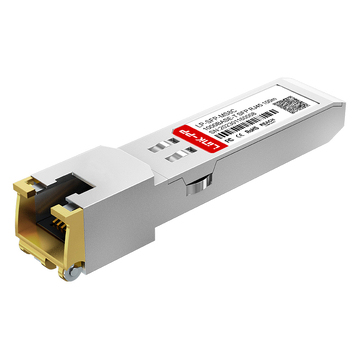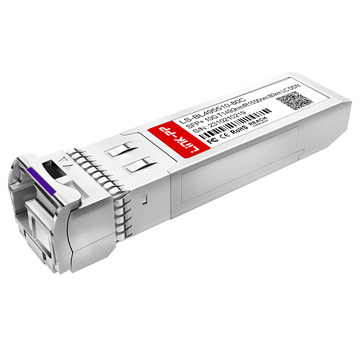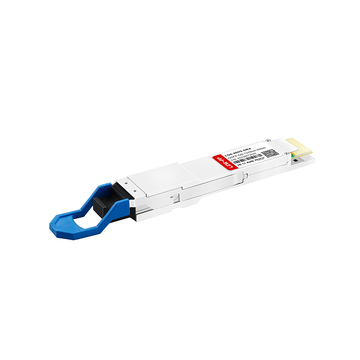
In modern data center and enterprise network environments, the demand for high bandwidth, low latency connectivity continues to grow as applications such as cloud computing, virtualization, and big data processing become increasingly prevalent. 40G Ethernet has emerged as a critical solution for meeting these performance requirements, enabling faster data transmission between switches, servers, and storage systems. Within this ecosystem, both direct attach copper (DAC) cables and optical transceivers play essential roles in building efficient and scalable network infrastructures.
Among these solutions, the QSFP-H40G-CU5M stands out as a widely used 40G DAC cable designed for short-range interconnections. However, many network engineers and IT decision-makers face a common question: how does this copper-based solution integrate with or complement 40G optical modules in real-world deployments? Understanding the compatibility between DAC cables and optical transceivers is essential for designing flexible, cost-effective, and high-performance hybrid networks that can adapt to varying distance and bandwidth requirements.
This article explores the compatibility of QSFP-H40G-CU5M with 40G optical modules, focusing on how these technologies coexist within modern network architectures. It examines their technical characteristics, interoperability, deployment strategies, and performance considerations. By providing a structured analysis, the goal is to help readers make informed decisions when planning or optimizing 40G network infrastructures.
? Understanding QSFP-H40G-CU5M and Its Core Specifications
The QSFP-H40G-CU5M is a short-range 40G connectivity solution designed for high-density environments where low latency, low power consumption, and cost efficiency are critical. It uses passive copper cabling with QSFP+ connectors to deliver stable 40Gbps transmission over distances up to 5 meters, making it particularly suitable for intra-rack and adjacent rack connections.
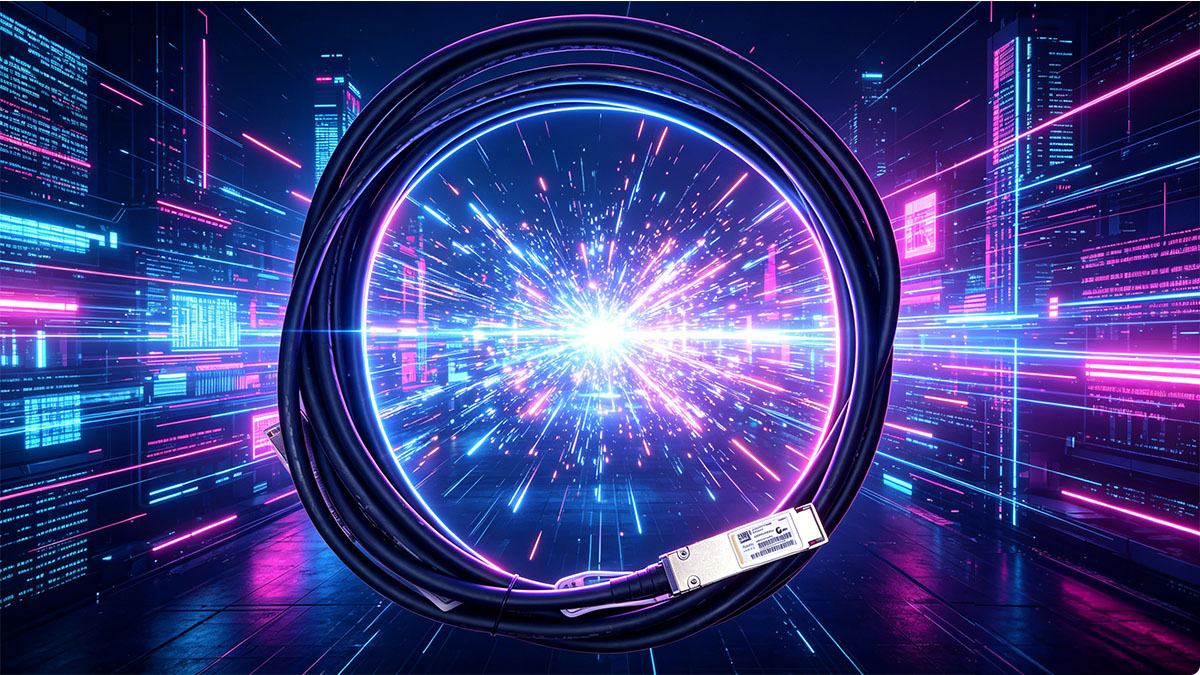
What Is QSFP-H40G-CU5M?
The QSFP-H40G-CU5M is a passive direct attach copper (DAC) cable that integrates QSFP+ connectors on both ends, enabling direct electrical connections between network devices without the need for separate optical transceivers or fiber cables. It is commonly deployed in Top-of-Rack (ToR) architectures, where switches and servers are located within close physical proximity.
To better understand its role, the following points highlight its defining characteristics:
- Passive copper cable with no onboard signal amplification
- Fixed length (5 meters) designed for short-distance links
- Pre-terminated QSFP+ connectors for plug-and-play deployment
- Optimized for high-density switch environments
These characteristics make it a practical choice for reducing both hardware complexity and operational overhead in tightly packed network infrastructures.
Key Technical Specifications
The QSFP-H40G-CU5M is engineered to meet the requirements of 40G Ethernet standards while maintaining efficiency in short-range communication. Its specifications directly influence performance, compatibility, and deployment scenarios.
Below is a summary of its core technical parameters:
| Parameter | Specification | Description |
|---|---|---|
| Data Rate | 40Gbps | Supports 40G Ethernet transmission |
| Cable Length | 5m | Suitable for short-range connections |
| Connector Type | QSFP+ | Standardized interface |
| Cable Type | Passive Copper | No external power required |
These specifications indicate that the QSFP-H40G-CU5M is optimized for simplicity and efficiency rather than long-distance transmission, making it ideal for localized connectivity within racks or between nearby racks.
Advantages of DAC Over Optical Modules
For short-distance applications, the QSFP-H40G-CU5M offers several advantages compared to optical transceivers. These benefits are particularly relevant in environments where cost control and power efficiency are priorities.
Key advantages include:
- Lower power consumption due to the absence of optical components
- Reduced latency from direct electrical signal transmission
- Simplified deployment with integrated cable and connectors
- Lower total cost compared to optical modules and fiber infrastructure
While DAC cables are limited in reach, their efficiency and simplicity make them an essential component in hybrid network designs where both copper module and optical module solutions are strategically combined.
? Overview of 40G Optical Modules
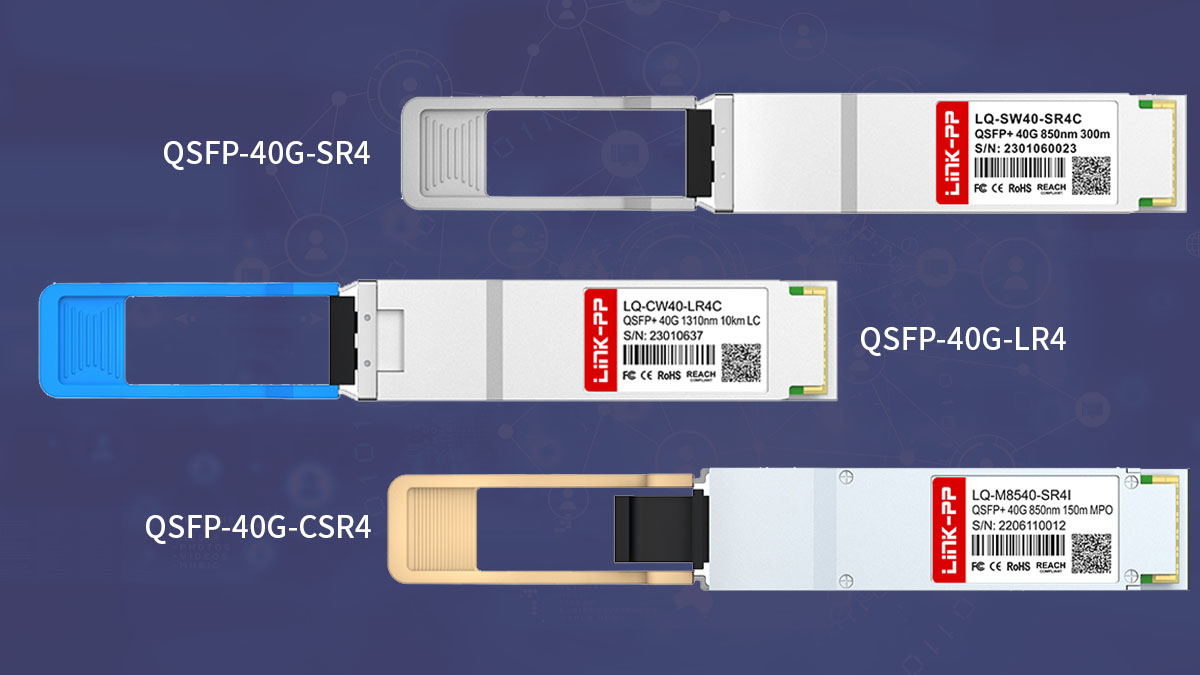
40G QSFP+ optical modules are designed for medium- to long-distance data transmission, providing high bandwidth over fiber infrastructure where copper-based solutions are no longer practical. Compared to DAC cables like QSFP-H40G-CU5M, optical transceivers enable greater flexibility in network design, especially across rows, rooms, or even between buildings.
Common Types of 40G Optics
Different types of 40G optical modules are optimized for specific transmission distances and fiber types. Selecting the appropriate module depends on deployment requirements such as reach, cabling infrastructure, and cost considerations.
The table below outlines several commonly used 40G QSFP+ optical modules:
| Module Types | Fiber Type | Typical Reach | Use Case |
|---|---|---|---|
| QSFP-40G-SR4-S | Multimode (MMF) | Up to 100m | Short-range data center links |
| QSFP-40G-LR4 | Single-mode (SMF) | Up to 10km | Long-distance interconnects |
| QSFP-40G-ER4 | Single-mode (SMF) | Up to 40km | Extended long-range connections |
These modules enable network designers to extend connectivity beyond the physical limitations of copper cables, supporting a wide range of deployment scenarios from within data centers to metropolitan networks.
Key Differences Between DAC and Optical Modules
Although both DAC cables and optical modules support 40G transmission, they differ significantly in terms of medium, performance characteristics, and deployment flexibility. Understanding these differences is essential for selecting the right solution.
The following comparison highlights their key distinctions:
| Feature | DAC (QSFP-H40G-CU5M) | Optical Modules |
|---|---|---|
| Transmission Media | Copper | Fiber (MMF/SMF) |
| Maximum Distance | Up to 5m | 100m to 10km+ |
| Power Consumption | Low | Moderate |
| Cost Structure | Lower | Higher |
From this comparison, it becomes clear that DAC cables are ideal for short-range, cost-sensitive deployments, while optical modules are better suited for longer distances and scalable network architectures.
Typical Deployment Scenarios
40G optical modules are widely used in scenarios where distance, scalability, and structured cabling are key requirements. They play a crucial role in modern network infrastructures that extend beyond a single rack or localized environment.
Common deployment scenarios include:
- Data center spine-leaf architectures requiring inter-rack connectivity
- Enterprise campus networks with building-to-building links
- High-performance computing environments with distributed resources
- Cloud infrastructure requiring scalable and long-distance interconnects
In these scenarios, short-range optics and long-range optical modules complement DAC solutions by providing the reach and flexibility needed to build robust, high-performance 40G networks.
? QSFP-H40G-CU5M Compatibility with 40G Optics
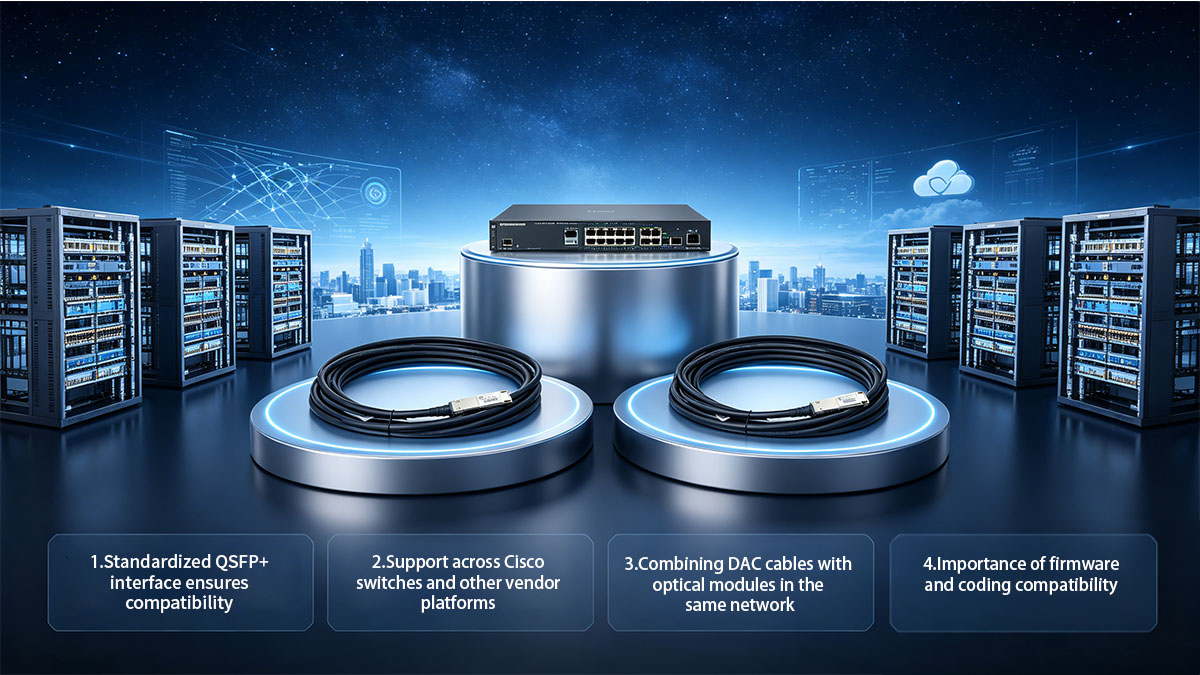
The QSFP-H40G-CU5M is fully compatible with 40G optical modules at the interface level, as both are based on the standardized QSFP+ form factor. While they do not directly interconnect with each other, they can seamlessly coexist within the same network infrastructure, enabling flexible hybrid deployments that combine short-range copper and long-range fiber connectivity.
Interoperability with QSFP+ Ports
The primary reason QSFP-H40G-CU5M can work alongside optical modules lies in the standardized QSFP+ interface used across 40G networking equipment. Most switches and routers are designed with QSFP+ ports that support both DAC cables and optical transceivers, allowing interchangeable use depending on the connection requirement.
Key interoperability characteristics include:
- Shared QSFP+ physical interface across DAC and optical modules
- Automatic port recognition in most modern switches
- Support for hot-swappable installation
- Compatibility with a wide range of 40G Ethernet standards
This interoperability ensures that network operators can deploy QSFP-H40G-CU5M and optical modules on the same switch without requiring additional adapters or interface conversions.
Mixed Deployment Environments
QSFP-H40G-CU5M and 40G optical modules are commonly used together in hybrid network environments, where different link distances and performance requirements must be addressed within a single architecture. Rather than replacing each other, these technologies complement one another.
Typical hybrid deployment patterns include:
- DAC cables used for intra-rack or adjacent rack connections
- Optical modules used for inter-rack or cross-row connections
- Spine switches connected via optical fiber, while leaf switches use DAC for server links
- Gradual migration strategies where copper links are replaced with fiber over time
This mixed approach allows organizations to optimize both cost and performance by using the most appropriate medium for each segment of the network.
Vendor Compatibility Considerations
Although QSFP+ is a standardized interface, compatibility can still be influenced by vendor-specific implementations, firmware, and coding requirements. Ensuring proper interoperability requires attention to these factors, especially in multi-vendor environments.
The table below summarizes key compatibility considerations:
| Factor | DAC (QSFP-H40G-CU5M) | Optical Modules | Impact on Deployment |
|---|---|---|---|
| Coding/EEPROM | Vendor-specific | Vendor-specific | Affects device recognition |
| Firmware Support | Required | Required | May limit interoperability |
| Multi-vendor Support | Varies | Varies | Impacts flexibility |
To avoid compatibility issues, it is important to verify device support lists, ensure firmware alignment, and consider validated third-party solutions when building heterogeneous networks. Proper planning in this area ensures stable operation and reduces the risk of link failures in production environments.
? Deployment Strategies for Hybrid 40G Networks
A hybrid 40G network that combines QSFP-H40G-CU5M and optical modules delivers the best balance of cost, performance, and scalability. The key strategy is to use DAC cables for short-range, high-density connections while reserving optical modules for longer-distance links, ensuring each segment of the network is optimized for its specific requirements.
When to Use QSFP-H40G-CU5M
QSFP-H40G-CU5M is best suited for short-distance connections where efficiency and simplicity are priorities. Its passive copper design makes it particularly effective in environments with tightly packed equipment.
The following scenarios highlight when DAC cables are the preferred choice:
- Intra-rack connections between switches and servers
- Adjacent rack interconnects within a 5m range
- High-density deployments where minimizing power consumption is critical
- Cost-sensitive environments that require large-scale port connectivity
These use cases demonstrate how DAC cables can significantly reduce both capital and operational expenses while maintaining reliable high-speed performance.
When to Use Optical Modules Instead
Optical modules become the better option when network links exceed the physical limitations of copper cables or when structured cabling is required for scalability.
Typical conditions where optical modules are more suitable include:
- Inter-rack connections beyond 5m distance
- Spine-to-leaf architecture spanning multiple rows
- Data center interconnects requiring long-distance transmission
- Environments with pre-installed fiber infrastructure
In these scenarios, optical transceivers provide the reach and flexibility necessary to maintain performance across larger physical spaces.
Designing a Hybrid Connectivity Strategy
An effective hybrid deployment strategy involves carefully balancing DAC and optical solutions based on distance, cost, and future scalability. Rather than choosing one over the other, the goal is to integrate both technologies in a complementary manner.
The table below outlines a simplified decision framework:
| Deployment Scenario | Recommended Solution | Key Consideration |
|---|---|---|
| Intra-rack (<5m) | QSFP-H40G-CU5M | Cost and power efficiency |
| Adjacent rack (≤5m) | QSFP-H40G-CU5M | Low latency |
| Inter-rack (>5m) | Optical Modules | Distance scalability |
| Cross-row / long reach | Optical Modules | Structured cabling support |
This framework helps guide deployment decisions while maintaining flexibility for future network expansion. By aligning connectivity choices with physical topology and performance requirements, organizations can build efficient and scalable 40G infrastructures that adapt to evolving demands.
? Performance Considerations and Limitations
When planning a 40G network that includes both QSFP-H40G-CU5M and optical modules, understanding performance characteristics and inherent limitations is essential. These factors influence signal reliability, latency, power consumption, and long-term scalability.
Signal Integrity and Distance Constraints
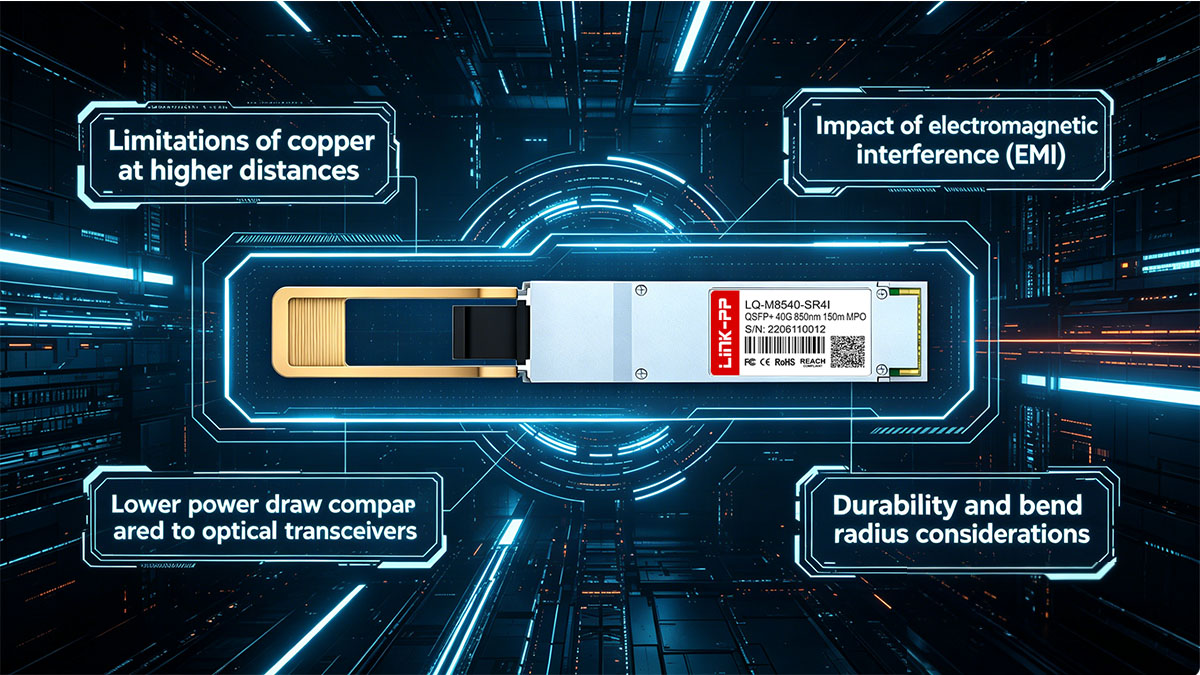
QSFP-H40G-CU5M, as a passive copper DAC, is optimized for short distances up to 5 meters. Beyond this range, signal degradation can occur due to copper resistance and electromagnetic interference (EMI). This limits its use to intra-rack or adjacent-rack connections, whereas optical modules excel in longer-distance scenarios.
Key points regarding signal integrity:
- Copper cables are susceptible to EMI in high-density racks
- Signal attenuation increases with cable length, reducing effective bandwidth
- Optical modules maintain stable signal quality over tens to thousands of meters
Understanding these limitations helps network designers decide where DAC cables are appropriate and where fiber optics must be deployed to ensure reliable 40G transmission.
Thermal and Power Efficiency
A major performance advantage of QSFP-H40G-CU5M lies in its low power consumption. Without active optical components, these DAC cables generate less heat, which is particularly beneficial in high-density deployments where thermal management is critical.
Considerations include:
- Passive DAC cables consume minimal power per port
- Reduced heat load decreases cooling requirements for switches and racks
- Optical modules typically draw more power due to laser components and associated electronics
Balancing power efficiency with distance requirements is crucial for achieving both energy savings and consistent network performance.
Reliability in High-Density Environments
Deploying QSFP-H40G-CU5M in high-density racks offers advantages in simplicity, but proper management is necessary to maintain reliability. Cable routing, bend radius, and connector integrity all influence long-term performance.
Factors affecting reliability:
- Tight cable bundles can increase crosstalk if not managed properly
- Maintaining manufacturer-specified bend radius prevents signal degradation
- Regular inspection ensures connectors remain seated and undamaged
While DAC cables are highly reliable within their intended range, careful physical design and cable management practices are essential to avoid performance issues in dense 40G network environments.
In summary, QSFP-H40G-CU5M provides efficient, low-latency 40G connectivity over short distances, with advantages in power and thermal performance. However, its distance limitations and susceptibility to interference necessitate careful planning. Optical modules complement DAC cables by extending reach and maintaining signal integrity over longer spans, making a hybrid deployment strategy the most practical approach for scalable 40G networks.
? Common Challenges and Troubleshooting
Even with standardized 40G technologies like QSFP-H40G-CU5M and optical modules, network deployments can encounter operational challenges. Identifying potential issues and understanding troubleshooting approaches helps maintain stable network performance and reduces downtime.
Compatibility Issues
Although QSFP-H40G-CU5M and optical modules share the QSFP+ interface, differences in vendor implementations, firmware, and coding can lead to recognition or interoperability problems.
Common compatibility challenges include:
- DAC cables or optical modules not recognized by certain switches
- Mismatched firmware or driver versions causing port errors
- Vendor-specific coding that prevents cross-platform interoperability
To address these challenges, network administrators should verify vendor compatibility lists, ensure firmware updates are applied, and test new components in controlled environments before production deployment.
Performance Degradation
Signal quality may degrade if cables or modules are improperly selected, installed, or maintained. Performance degradation can manifest as reduced bandwidth, intermittent connectivity, or link errors.
Typical causes of performance issues:
- Exceeding maximum cable length for DAC connections
- Improper handling leading to bent or damaged copper cables
- Electromagnetic interference (EMI) from nearby high-power devices
- Dirty or damaged fiber connectors in optical links
Regular inspection and adherence to installation best practices are critical for maintaining optimal performance in hybrid 40G networks.
Best Practices for Troubleshooting
Structured troubleshooting reduces the time required to identify and resolve network issues. Effective approaches for hybrid 40G deployments include:
- Verifying that all components (DAC or optical modules) are on validated compatibility lists
- Testing with known-good cables and transceivers to isolate faulty components
- Monitoring link performance using switch diagnostic tools and error counters
- Ensuring proper cable management, including bend radius and separation from EMI sources
By proactively addressing these factors, administrators can ensure that QSFP-H40G-CU5M and optical modules perform reliably together, minimizing disruptions and maintaining consistent 40G network throughput.
In conclusion, most challenges in hybrid 40G networks arise from compatibility, signal integrity, and installation practices. Applying systematic troubleshooting and adherence to vendor guidelines ensures that DAC and optical components function optimally, supporting high-density and high-performance network infrastructures.
? Future Trends in 40G and Beyond Connectivity
As data center demands continue to grow, 40G networking remains relevant while higher-speed technologies such as 100G QSFP28 and 400G QSFP-DD are becoming increasingly adopted. Understanding future trends helps network planners design infrastructures that can scale efficiently without frequent costly upgrades.
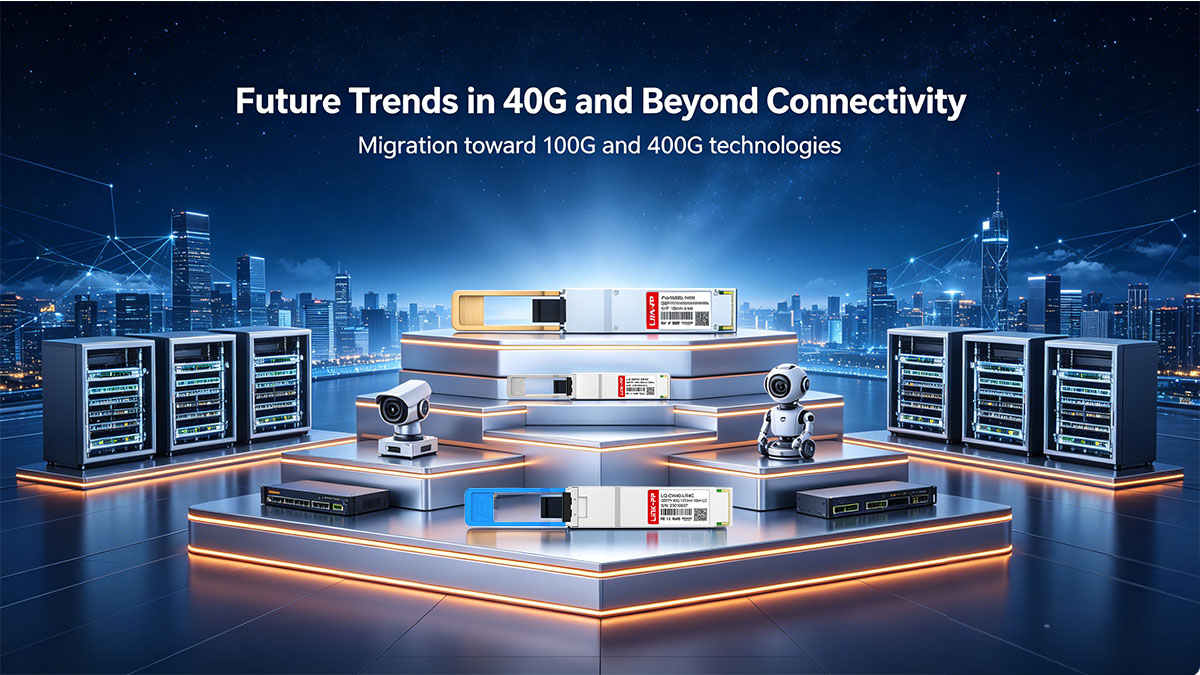
Transition to Higher Speeds
While QSFP-H40G-CU5M and 40G optical modules serve current high-performance applications, many organizations are beginning to migrate to higher-speed Ethernet standards.
Key points in this transition include:
- 100G QSFP28 and 400G QSFP-DD Ethernet adoption is accelerating for spine-leaf and data center interconnects
- Existing 40G deployments can often be upgraded incrementally using hybrid strategies
- Backward compatibility considerations allow phased migrations without complete infrastructure replacement
This trend underscores the continued relevance of 40G technologies in the short term, particularly for intra-rack and adjacent rack connections, while preparing for next-generation network demands.
Evolution of DAC Technology
DAC cables like QSFP-H40G-CU5M are also evolving to meet future networking requirements. Innovations focus on extending reach, improving signal integrity, and reducing power consumption.
Emerging developments include:
- Shielding and material enhancements to reduce crosstalk and EMI
- Active DAC variants with integrated signal conditioning for longer distances
- Hybrid copper-optical solutions that combine DAC simplicity with optical reach
These advancements allow DAC cables to remain a cost-effective and low-latency option even as networks scale in density and complexity.
Integration with Modern Data Center Architectures
Future 40G connectivity must align with modern data center designs that emphasize flexibility, efficiency, and AI-driven management. Both DAC and optical solutions are being adapted to support these trends.
Key considerations include:
- Support for high-density spine-leaf and hyper-scale architectures
- Integration with AI and cloud-based monitoring for predictive maintenance
- Energy-efficient designs to reduce overall operational costs
- Modular deployment strategies that allow easy scaling from 40G to 100G or 400G
By aligning deployment strategies with these architectural trends, organizations can maximize the lifespan and efficiency of existing 40G infrastructure while preparing for higher-speed networking demands.
In summary, 40G networking technologies such as QSFP-H40G-CU5M and optical modules continue to play a critical role in current data center operations. Future developments in DAC technology, higher-speed Ethernet standards, and modern data center integration ensure that these solutions remain relevant while providing a bridge toward scalable, high-performance 100G and beyond networks.
? FAQs
Q1: Can QSFP-H40G-CU5M directly connect to a 40G optical module?
No, DAC cables like QSFP-H40G-CU5M cannot directly connect to optical modules. They can coexist on the same switch ports but require separate fiber connections for optics.
Q2: What is the maximum reach of QSFP-H40G-CU5M?
The maximum reach is 5 meters. Beyond this distance, signal degradation may occur.
Q3: Are QSFP-H40G-CU5M cables hot-swappable?
Yes, QSFP-H40G-CU5M supports hot-swapping, allowing installation or replacement without powering down devices.
Q4: How does QSFP-H40G-CU5M compare to 40G SR optical modules in latency?
DAC cables typically offer lower latency due to direct electrical signaling, while optical modules introduce minimal additional delay from optical-electrical conversion.
Q5: Can multi-vendor switches be used with QSFP-H40G-CU5M?
Compatibility varies. Always check vendor support lists and ensure firmware alignment to prevent recognition issues.
Q6: Is QSFP-H40G-CU5M energy-efficient compared to optical modules?
Yes, passive DAC cables consume less power and generate less heat than optical transceivers, making them ideal for high-density deployments.
Q7: What are common reasons for link errors with QSFP-H40G-CU5M?
Link errors are often caused by exceeding cable length limits, improper handling (bent cables), or electromagnetic interference in high-density racks.
Q8: Can QSFP-H40G-CU5M be used in long-distance deployments?
No, for distances beyond 5 meters, optical modules are recommended to maintain signal integrity and reliability.
Q9: How should DAC and optical modules be integrated in hybrid networks?
Use DAC cables for intra-rack or short-range links and optical modules for inter-rack or longer-distance connections to optimize cost, performance, and scalability.
? Conclusion
QSFP-H40G-CU5M provides a reliable, low-latency solution for short-range 40G connectivity, while optical modules extend the reach of network links beyond the limitations of copper cables. By understanding their technical characteristics, interoperability, and deployment strategies, network planners can design hybrid 40G infrastructures that balance performance, cost, and scalability. Proper consideration of compatibility, signal integrity, and future upgrade paths ensures stable operation and prepares data centers for evolving high-speed demands.
For those looking to equip their network with high-quality 40G connectivity solutions, the LINK-PP Official Store offers a range of certified QSFP-H40G-CU5M compatible DAC cables and optical modules, providing reliable performance and seamless integration into modern 40G networks.