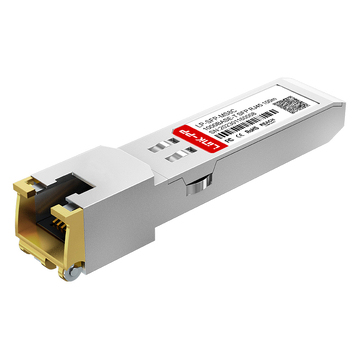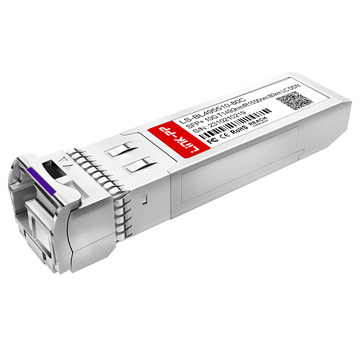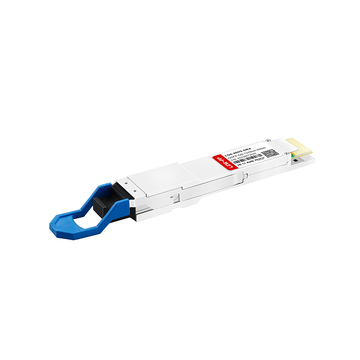
In modern enterprise and data center networks, the demand for high-speed connectivity continues to grow. Organizations increasingly rely on 25G Ethernet to support bandwidth-intensive applications, including cloud computing, virtualization, and high-performance storage. The MikroTik CCR2216-1G-12XS-2XQ router has emerged as a robust solution for these environments, offering multiple SFP28 and QSFP28 ports that deliver scalable throughput for both aggregation and core network deployments.
However, deploying such high-speed networking solutions often involves evaluating multiple optical transceiver options. While official MikroTik SFP28 modules are available, network operators frequently explore third-party alternatives to achieve cost efficiency, interoperability across multi-vendor environments, and flexible supply chain management. Selecting compatible SFP28 modules requires understanding technical standards, optical performance parameters, and the specific requirements of the CCR2216 platform.
This article provides a comprehensive guide for IT professionals and network engineers who need to evaluate Mikrotik SFP28 alternatives for CCR2216 interoperability. Readers will gain insights into:
- The hardware and optical interface characteristics of the CCR2216-1G-12XS-2XQ
- Key technical standards and interoperability considerations for 25G SFP28 modules
- Types of third-party SFP28 alternatives and their deployment use cases
- Best practices for testing, deployment, and long-term network scalability
By following this guide, network teams can make informed decisions that balance performance, reliability, and operational efficiency in modern 25G network infrastructures.
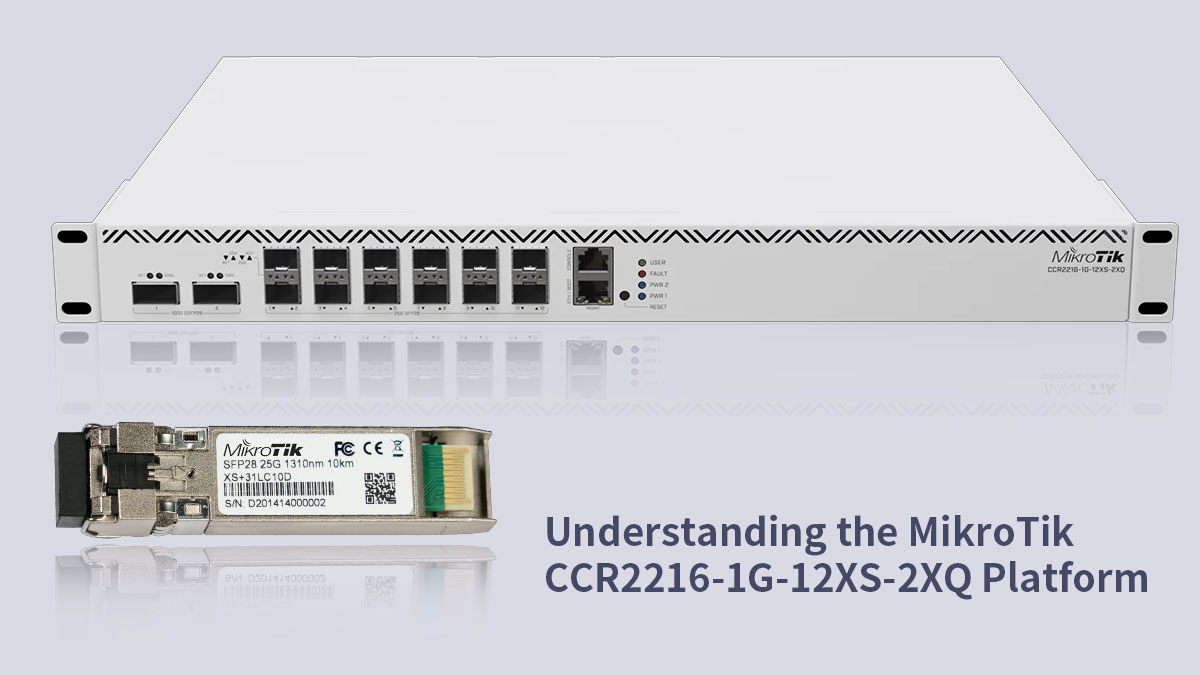
📨 Understanding the MikroTik CCR2216-1G-12XS-2XQ Platform
The MikroTik CCR2216-1G-12XS-2XQ is designed as a high-performance routing and aggregation platform suitable for modern enterprise and data center environments. It provides extensive 25G and 100G connectivity while ensuring low latency, high throughput, and flexible deployment options. Its hardware and optical interface design allow seamless integration with multi-vendor network architectures, supporting both short-range and long-range optical modules.
Hardware Architecture and Port Configuration
The CCR2216 platform delivers a high-density port configuration that balances performance and scalability. The device is equipped with:
- 12× SFP28 ports for 25G connectivity
- 2× QSFP28 ports capable of 100G uplinks
- Multi-core CPU architecture optimized for line-rate packet processing
- Redundant power supply support and efficient thermal management
This configuration enables:
- Aggregation of multiple 25G access links into high-capacity uplinks
- Low-latency routing suitable for core and edge deployments
- Flexibility to support both spine-leaf and traditional hierarchical network topologies
Supported Optical Interfaces
The CCR2216 supports a wide range of optical modules, ensuring adaptability across various deployment scenarios. Its interface capabilities include:
- Native 25G SFP28 support with automatic link detection
- Compatibility with SFP+ modules for legacy 10G infrastructure
- Support for both single-mode and multimode fiber connections
- Transmission distances ranging from short-range (≤100m) to long-range (up to 10km) depending on module type
These interface options allow network designers to optimize cost, performance, and distance requirements while maintaining interoperability with multi-vendor environments.
Typical Deployment Scenarios
The CCR2216 excels in scenarios that require high throughput and reliable routing. Common applications include:
- ISP aggregation networks where multiple 25G customer links converge
- Enterprise core switching for bandwidth-intensive internal applications
- Data center spine-leaf architectures supporting high-density rack-to-rack connectivity
- Edge computing deployments demanding low-latency packet processing
Its combination of hardware performance, flexible optical interfaces, and high port density makes the CCR2216 a versatile solution for organizations aiming to scale 25G networks efficiently.
📨 What Makes Mikrotik SFP28 Alternatives Important
Choosing the right SFP28 alternatives for the CCR2216-1G-12XS-2XQ is critical for cost management, network interoperability, and operational flexibility. While official MikroTik modules guarantee compatibility, high-volume deployments and multi-vendor networks often require evaluating third-party transceivers that meet the same technical standards without compromising performance.

Cost Efficiency in Large-Scale Deployments
Third-party SFP28 modules can significantly reduce deployment costs, especially in environments with dozens or hundreds of high-speed ports. Organizations can achieve scalable network expansion without exceeding operational budgets. Key advantages include:
- Lower per-unit cost compared to official modules
- Ability to deploy high-density 25G networks within financial constraints
- Extending the lifecycle of existing CCR2216 hardware without expensive upgrades
By selecting compatible alternatives, IT teams can balance budget constraints while maintaining network performance and reliability.
Multi-Vendor Network Interoperability
In mixed-brand network environments, compatibility with multiple vendors’ devices is crucial. Mikrotik SFP28 alternatives allow seamless integration across switches, routers, and optical equipment from different manufacturers. Benefits include:
- Cross-platform optical module support for heterogeneous networks
- Avoidance of vendor lock-in while maintaining high-speed links
- Simplified network design for multi-vendor deployments
Ensuring interoperability reduces operational complexity and enables smooth scaling across diverse network infrastructures.
Supply Chain Flexibility
Relying solely on official modules may cause delays due to limited availability or long lead times. Third-party alternatives enhance supply chain flexibility by:
- Offering multiple sourcing options to meet urgent deployment schedules
- Ensuring consistent inventory levels for large-scale rollouts
- Mitigating risks associated with vendor-specific shortages
Flexible sourcing strategies help network operators maintain uptime and adhere to deployment timelines without compromising standards compliance.
📨 Key Technical Standards Behind SFP28 Compatibility
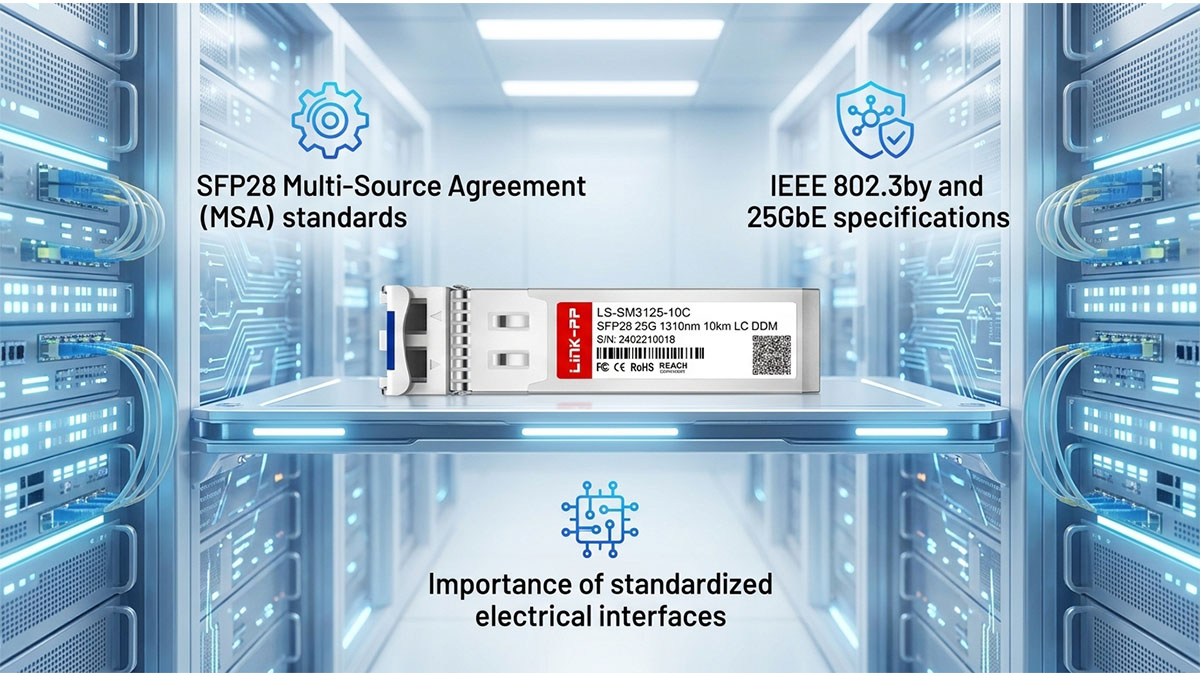
SFP28 compatibility in MikroTik CCR2216 environments is fundamentally determined by a combination of IEEE Ethernet standards, Multi-Source Agreement (MSA) specifications, and optical signaling requirements. These standards ensure that 25GbE transceivers can operate reliably across different vendors while maintaining consistent link performance and diagnostic visibility.
IEEE and MSA Compliance Fundamentals
The foundation of SFP28 interoperability lies in strict adherence to industry standards that define both electrical and optical behavior. These standards ensure that a 25G module can be recognized and operated correctly by the CCR2216 platform.
Key standards include:
- IEEE 802.3by, which defines 25GbE Ethernet operation over fiber and copper media
- SFP28 MSA specifications, which define form factor, electrical interface, and module behavior
- Standardized lane architecture for single-lane 25G transmission
These standards collectively ensure that different vendors can produce compatible modules that function consistently across compliant networking equipment.
In practice, adherence to these standards allows MikroTik devices to establish stable links with third-party SFP28 optics as long as electrical signaling and optical budgets remain within specification.
Optical Encoding and Signal Integrity
At 25GbE speeds, maintaining signal integrity becomes a critical factor for stable network operation. SFP28 modules rely on defined encoding and transmission mechanisms to reduce errors and ensure reliable data delivery.
Core technical aspects include:
- NRZ (Non-Return-to-Zero) encoding for efficient single-lane transmission
- Strict optical power budgets to prevent signal degradation over distance
- Controlled jitter and noise thresholds to maintain bit error rate (BER) stability
- Equalization techniques to compensate for channel loss in high-speed links
These mechanisms ensure that even at high data rates, optical signals remain stable across supported fiber types and distances.
Proper signal integrity directly impacts link reliability in CCR2216 deployments, especially in high-density environments where multiple 25G links operate simultaneously.
EEPROM Coding and Vendor Recognition
Beyond physical transmission standards, SFP28 modules must also be correctly identified by the host device through EEPROM programming. MikroTik systems rely on this information to validate and initialize transceivers.
Important EEPROM-related factors include:
- Vendor identification codes stored in the module firmware
- Compatibility flags that determine whether a module is accepted or restricted
- Digital diagnostic monitoring (DDM/DOM) data reporting for real-time metrics
- Standardized memory maps defined by the SFP MSA
When EEPROM data is correctly formatted, the CCR2216 can fully recognize third-party modules and enable monitoring features such as temperature, optical power, and voltage readings.
However, inconsistencies in EEPROM coding are one of the most common causes of compatibility warnings or link initialization issues in mixed-vendor environments.
📨 Types of Mikrotik SFP28 Alternatives for CCR2216 Interop
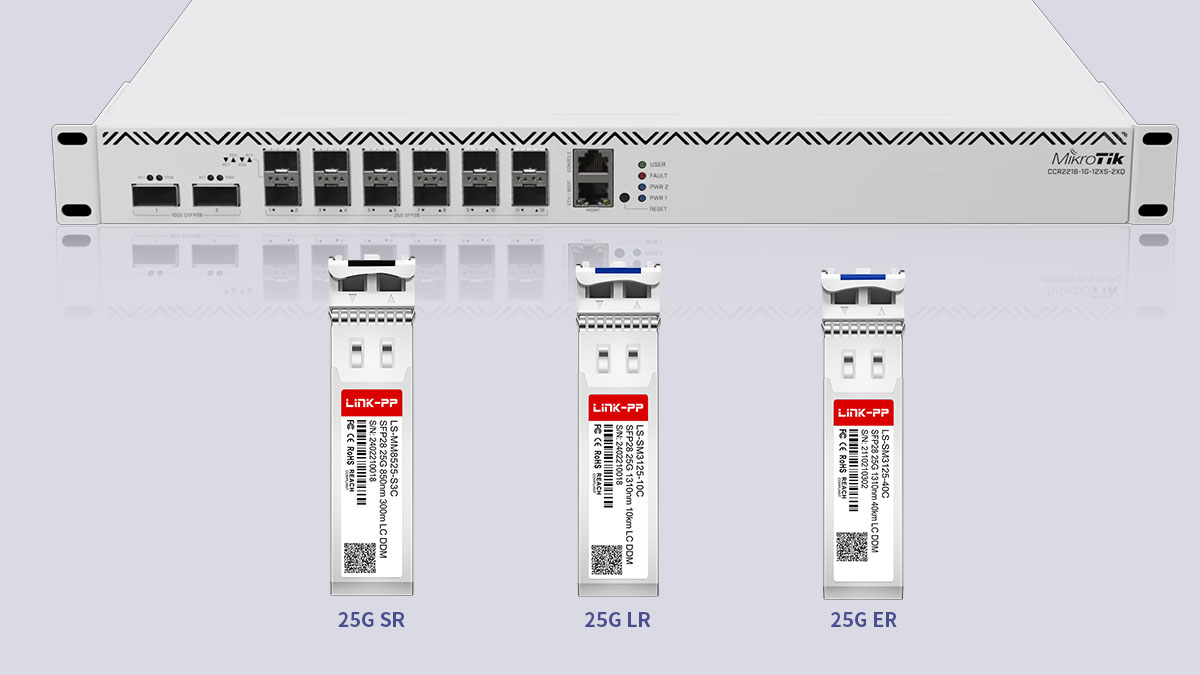
SFP28 alternatives for the CCR2216-1G-12XS-2XQ are typically categorized based on optical reach, fiber type, and environmental design. Selecting the correct type is essential to ensure stable 25GbE performance, proper link budget alignment, and long-term interoperability in mixed-vendor networks.
25G SR Multimode Optical Modules
Short-range (SR) SFP28 modules are the most commonly used option in data center and enterprise rack-to-rack connections. They are optimized for high-density, low-latency environments where transmission distances are relatively short.
Key characteristics include:
- Designed for multimode fiber (OM3/OM4) infrastructure
- Typically used for intra-rack or inter-rack connectivity
- Optimized for low power consumption and high port density
- Ideal for leaf-spine data center architectures
These modules are widely preferred in CCR2216 deployments where high port density and short-distance 25G links are required. Their simplicity and efficiency make them suitable for scalable internal network fabrics.
25G LR Single-Mode Optical Modules
Long-range (LR) SFP28 modules are designed for extended-distance transmission over single-mode fiber, making them suitable for campus and metro-scale deployments.
Key characteristics include:
- Operates over single-mode fiber (OS2)
- Standard reach up to 10km under normal link budgets
- Uses 1310nm wavelength for stable long-distance transmission
- Commonly deployed in campus backbone or distributed enterprise networks
These modules are essential when CCR2216 devices are used across geographically separated network sites or building interconnects requiring stable 25G links over longer distances.
25G ER and Extended-Reach Alternatives
Extended-reach (ER) SFP28 modules are used in scenarios where standard LR distances are insufficient. They provide enhanced optical budgets for more demanding fiber paths.
Key characteristics include:
- Designed for long-distance transmission beyond standard 10km ranges
- Requires precise optical budget planning for stable operation
- Typically used in metro aggregation or ISP backbone networks
- More sensitive to fiber quality and dispersion effects
These modules are typically deployed in large-scale carrier or service provider infrastructures where CCR2216 routers function as aggregation nodes across wide-area optical networks.
Industrial and Hardened SFP28 Modules
Industrial-grade SFP28 alternatives are engineered for environments where standard commercial optics may not provide sufficient durability or stability. They are optimized for harsh operating conditions.
Key characteristics include:
- Wide operating temperature ranges for outdoor or industrial use
- Enhanced resistance to vibration, dust, and environmental stress
- Suitable for edge computing and telecom cabinet deployments
- Designed for 24/7 continuous operation in non-data-center environments
These modules are commonly used in edge aggregation points, remote sites, and industrial networking deployments where CCR2216 devices are exposed to variable environmental conditions.
📨 Interoperability Between CCR2216 and Third-Party SFP28 Modules
Ensuring interoperability between the MikroTik CCR2216-1G-12XS-2XQ and third-party SFP28 modules is essential for maintaining stable 25GbE links. Proper selection and validation of compatible modules prevent connectivity issues, link instability, and unexpected network downtime.
Compatibility Validation Process
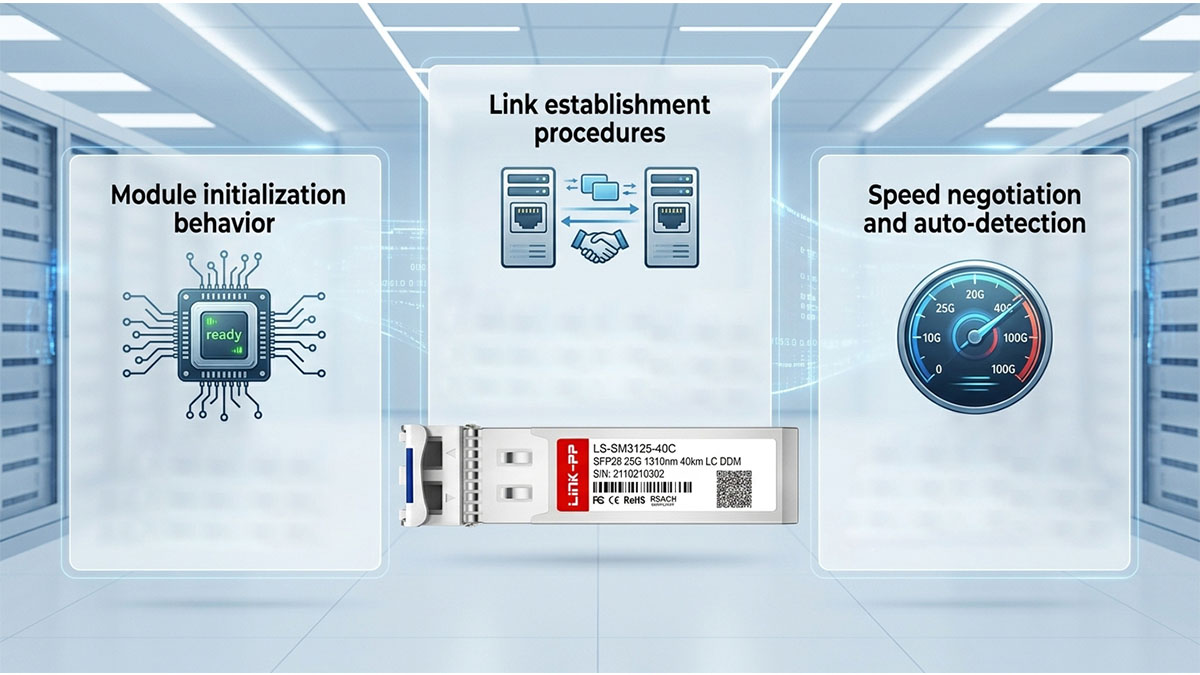
Before deploying third-party SFP28 modules, it is critical to verify that they are recognized and fully functional with CCR2216 devices. Key steps in the validation process include:
- Testing module initialization and link establishment on CCR2216 ports
- Verifying automatic speed negotiation and duplex settings
- Monitoring module behavior under load conditions for consistent throughput
Performing this validation ensures that third-party modules operate reliably and meet the technical requirements of the CCR2216 platform.
Common Interoperability Challenges
Link Flapping and Port Instability
Link flapping is a frequent issue when modules are not fully compatible or when optical parameters are mismatched. Common causes include:
- Variations in optical power calibration between module and switch
- Inconsistent fiber type or patch cable quality
- Firmware-related limitations on module negotiation
Addressing these factors reduces port instability and prevents packet loss across high-speed 25G connections.
EEPROM Recognition Errors
EEPROM coding inconsistencies can prevent CCR2216 devices from properly recognizing third-party modules. Key considerations are:
- Vendor identification codes must match expected MSA standards
- Modules should support DOM/DDM for real-time diagnostics
- Incorrect or incomplete EEPROM data can trigger unsupported transceiver warnings
Ensuring proper EEPROM configuration is crucial for enabling full monitoring and diagnostic features on CCR2216 ports.
Thermal and Power Consumption Constraints
High-density SFP28 deployments may encounter thermal or power limitations. Considerations include:
- Maintaining adequate airflow and cooling in dense port environments
- Ensuring individual module power draw remains within CCR2216 specifications
- Monitoring temperature trends to prevent link degradation
Proper thermal management and power monitoring prevent module shutdowns or reduced performance during continuous operation.
Testing Methodologies for Stable Operation
To guarantee long-term interoperability, systematic testing is recommended. Common practices include:
- Performing burn-in testing to verify reliability over extended periods
- Cross-platform testing to simulate multi-vendor network conditions
- Monitoring optical performance metrics such as received power, temperature, and signal integrity
By implementing these testing methodologies, network engineers can confidently deploy third-party SFP28 modules with CCR2216 routers while minimizing risk of link failures.
📨 Comparing Official MikroTik Modules and Compatible Alternatives
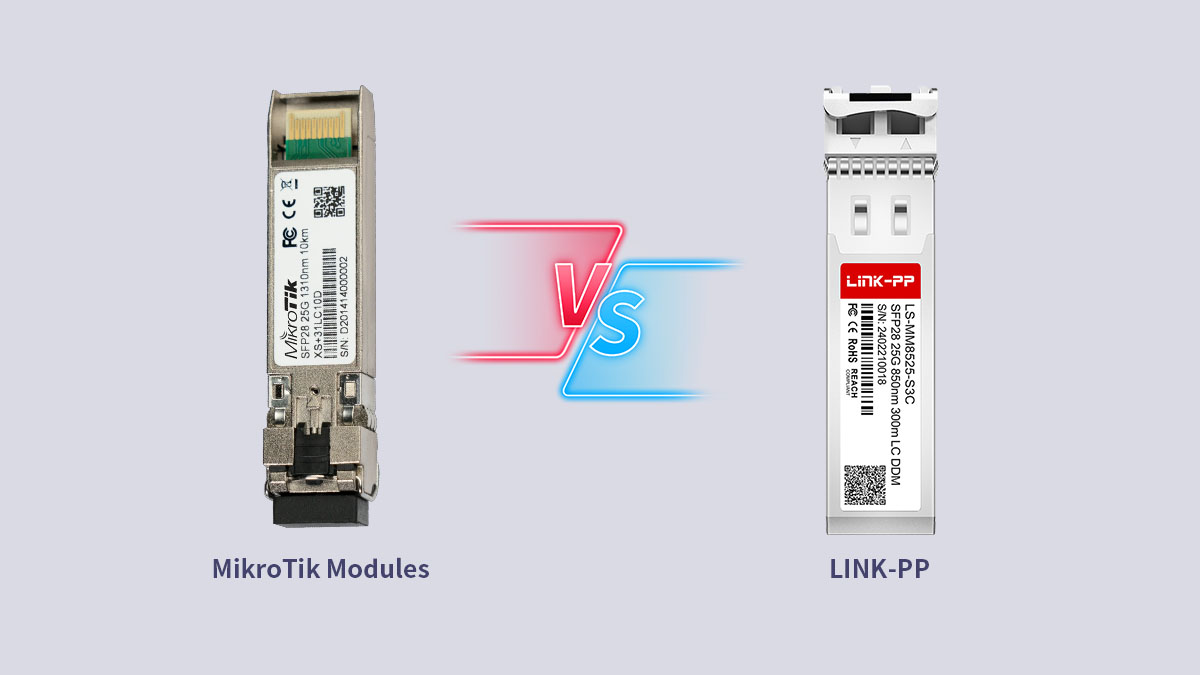
Selecting between official MikroTik SFP28 modules and third-party compatible alternatives for the CCR2216-1G-12XS-2XQ requires evaluating performance consistency, diagnostics behavior, and long-term deployment scalability. While both categories are built to support IEEE 802.3by 25GbE standards, their operational characteristics differ in real-world network environments.
Performance and Optical Stability
Both official and compatible SFP28 modules are capable of delivering stable 25GbE transmission when deployed within correct fiber and power budgets. However, differences emerge in calibration consistency and cross-environment behavior.
Key observations include:
- Official modules are tightly validated for consistent optical output across MikroTik platforms
- Compatible modules may vary slightly in transmit power and receiver sensitivity depending on manufacturer design quality
- High-grade third-party modules can match official performance in most CCR2216 deployments
- Environmental factors such as temperature and fiber quality impact both equally
In stable infrastructure designs, performance differences are typically minimal when using reputable compatible optics.
Technical Comparison Overview
A structured comparison highlights the most relevant operational differences between official MikroTik SFP28 modules and compatible alternatives used in CCR2216 environments.
| Category | Official MikroTik SFP28 Modules | Compatible SFP28 Alternatives |
|---|---|---|
| Optical Performance Consistency | Highly standardized and validated | Varies by manufacturer quality |
| RouterOS Compatibility | Full native support | Generally compatible, may vary by firmware |
| DOM/DDM Monitoring | Fully supported and stable | Supported on most high-quality modules |
| Cost Efficiency | Higher cost per module | Lower cost in large-scale deployments |
| Supply Availability | Dependent on MikroTik channels | Multiple sourcing options available |
| Deployment Flexibility | Optimized for MikroTik ecosystem | Strong multi-vendor interoperability |
This comparison shows that official modules prioritize predictability and ecosystem integration, while compatible alternatives emphasize flexibility and scalability.
Diagnostic and Monitoring Capabilities
Operational visibility is critical in 25GbE networks, especially when monitoring hundreds of ports on CCR2216 platforms. Differences in diagnostic behavior can influence long-term maintenance efficiency.
Key points include:
- Official modules provide consistent DOM/DDM telemetry aligned with RouterOS expectations
- Compatible modules often include full optical diagnostics such as TX/RX power, temperature, and voltage
- Some lower-tier alternatives may expose incomplete or less accurate monitoring data
- Both module types support interface-level statistics when properly recognized by the system
Reliable telemetry is essential for proactive fault detection and optical performance tracking in production networks.
Firmware Behavior and System Integration
RouterOS plays a central role in how SFP28 modules are identified and managed. Compatibility behavior is influenced by both firmware version and EEPROM encoding.
Key considerations include:
- Official modules rarely trigger compatibility warnings or system alerts
- Compatible modules may require newer RouterOS versions for full recognition
- Firmware updates can expand compatibility with a wider range of third-party optics
- Some modules may function normally but appear as “unsupported” in system logs
Maintaining consistent firmware across CCR2216 deployments improves interoperability and reduces operational friction.
Deployment Scalability and Operational Strategy
In large-scale CCR2216 environments, scalability and operational efficiency often determine the optimal mix of optical modules.
Key deployment strategies include:
- Using official modules in critical core or backbone links for maximum stability
- Deploying compatible modules in access or aggregation layers for cost efficiency
- Standardizing on a limited set of compatible models to simplify inventory management
- Balancing procurement flexibility with long-term operational consistency
A hybrid deployment model is commonly adopted to optimize both reliability and cost control in high-density 25G networks.
📨 Fiber Infrastructure Considerations for 25G Deployments
Fiber infrastructure plays a critical role in determining the stability, scalability, and overall performance of 25GbE networks built around the CCR2216-1G-12XS-2XQ platform. Selecting the correct fiber type, connector standard, and cabling strategy ensures reliable interoperability between MikroTik SFP28 modules and third-party alternatives.
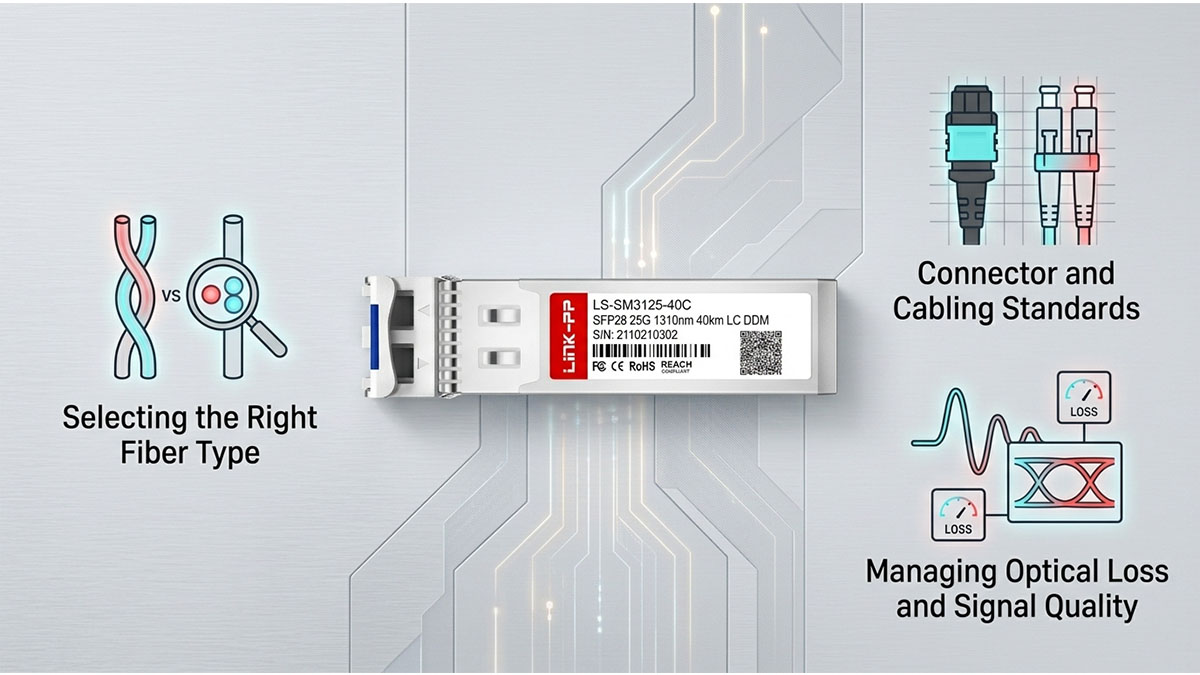
Selecting the Right Fiber Type
The choice between multimode and single-mode fiber directly affects transmission distance, deployment cost, and future scalability. Different 25G SFP28 modules are optimized for specific fiber standards and deployment environments.
The following comparison highlights the most commonly used fiber types in 25G deployments:
| Fiber Type | Typical Module Type | Common Distance | Wavelength | Typical Deployment Scenario |
|---|---|---|---|---|
| OM3 Multimode Fiber | 25G SR | Up to 70m | 850nm | Short-range data center links |
| OM4 Multimode Fiber | 25G SR | Up to 100m | 850nm | High-density enterprise networks |
| OS2 Single-Mode Fiber | 25G LR | Up to 10km | 1310nm | Campus and metro networks |
These fiber options allow network architects to balance infrastructure cost and long-term bandwidth requirements based on deployment scale and physical distance.
When planning CCR2216 networks, selecting the proper fiber type also helps reduce signal loss, improve interoperability, and simplify future migration toward higher-speed architectures such as 100G.
Connector and Cabling Standards
Proper connector selection and cable management are essential for maintaining optical signal quality in 25G environments. Poor cabling practices can introduce insertion loss and instability even when compatible SFP28 modules are used.
Key infrastructure considerations include:
- LC duplex connectors are the standard interface for most SFP28 optical modules
- High-quality patch panels help maintain consistent optical alignment
- Proper fiber polarity management prevents transmit/receive mismatches
- Structured cabling reduces troubleshooting complexity in dense deployments
Consistent cabling standards improve deployment efficiency and reduce the likelihood of intermittent link failures in CCR2216 infrastructures.
Managing Optical Loss and Signal Quality
Signal quality becomes increasingly important as network speeds move from 10G to 25G and beyond. Even small levels of contamination or excessive attenuation can impact link stability.
Key practices for minimizing optical loss include:
- Cleaning fiber connectors before installation
- Avoiding excessive patch panel connections along the optical path
- Monitoring insertion loss during deployment validation
- Maintaining proper cable bend radius to reduce attenuation
- Using certified fiber infrastructure compatible with 25GbE requirements
These practices help maintain stable optical power levels and reduce the risk of CRC errors, packet retransmissions, and link instability.
📨 Best Practices for Deploying Mikrotik SFP28 Alternatives
Deploying Mikrotik SFP28 alternatives in CCR2216-1G-12XS-2XQ environments requires careful planning across optical compatibility, operational consistency, and long-term scalability. Proper deployment practices help ensure stable 25GbE performance while minimizing interoperability risks in multi-vendor networks.
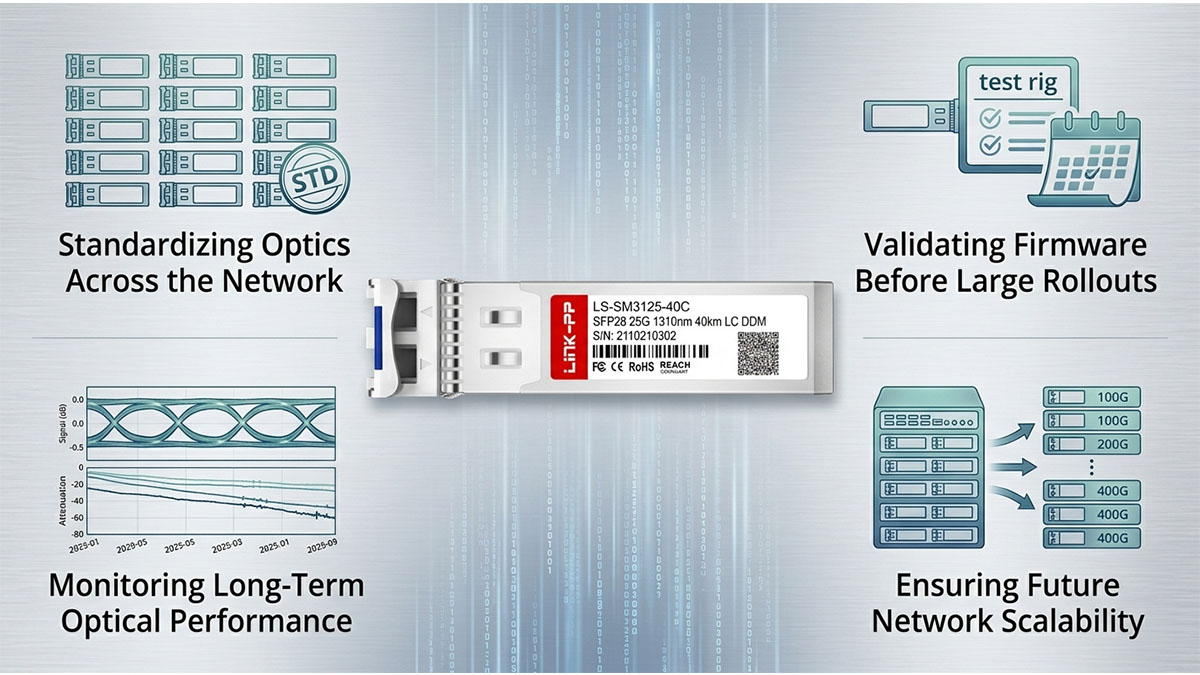
Standardizing Optical Modules Across the Network
Consistency in SFP28 module selection is one of the most effective ways to reduce operational complexity and prevent interoperability issues. Mixed or inconsistent optics can lead to unpredictable link behavior and harder troubleshooting.
Recommended standardization practices include:
- Using a limited set of validated third-party SFP28 models
- Ensuring consistent module specifications (wavelength, reach, and fiber type)
- Aligning optical choices across access, aggregation, and core layers
- Avoiding unnecessary mixing of SR, LR, and ER modules in the same segment
Standardization improves predictability in CCR2216 deployments and simplifies long-term maintenance by reducing variability across network links.
Validating Firmware Before Large Rollouts
RouterOS behavior directly impacts how SFP28 modules are detected and managed. Firmware validation is essential before deploying large-scale optical upgrades.
Key validation steps include:
- Testing selected SFP28 modules on target RouterOS versions
- Verifying DOM/DDM telemetry accuracy under real traffic conditions
- Checking system logs for compatibility warnings or interface anomalies
- Ensuring stable link negotiation across reboot and failover scenarios
Performing controlled validation reduces the risk of unexpected incompatibility when scaling deployments across multiple CCR2216 devices.
Monitoring Long-Term Optical Performance
Continuous monitoring of optical parameters is essential for maintaining stable 25GbE infrastructure performance. Even high-quality SFP28 modules may degrade over time due to environmental or physical factors.
Important monitoring practices include:
- Tracking RX/TX optical power trends over time
- Monitoring module temperature and voltage stability
- Setting threshold alerts for signal degradation or abnormal values
- Analyzing interface error counters such as CRC or frame drops
These metrics help identify early signs of fiber degradation, dirty connectors, or failing transceivers before they impact network performance.
Ensuring Future Network Scalability
25GbE networks are often part of a broader evolution toward higher-speed architectures. Planning SFP28 deployments with scalability in mind helps protect long-term infrastructure investments.
Key scalability strategies include:
- Designing CCR2216 deployments with clear migration paths to 100G uplinks
- Using modular fiber infrastructure compatible with both 25G and 100G optics
- Avoiding overly rigid vendor dependencies in optical sourcing
- Aligning current SFP28 deployment choices with future spine-leaf expansion plans
By considering future growth during initial deployment, network operators can reduce redesign costs and simplify transitions to next-generation high-speed networking architectures.
📨 Troubleshooting Mikrotik SFP28 Interoperability Issues
Interoperability issues between Mikrotik CCR2216-1G-12XS-2XQ and third-party SFP28 modules typically originate from physical layer problems, configuration mismatches, or module identification behavior. Effective troubleshooting focuses on isolating whether the issue is optical, electrical, or system-level.
Diagnosing Physical Layer Problems
Physical layer faults are among the most common causes of unstable or non-operational SFP28 links. These issues often appear as no-link conditions, intermittent connectivity, or degraded throughput.
Key diagnostic actions include:
- Inspecting fiber connectors for dust, contamination, or scratches
- Verifying correct LC duplex polarity between transmit and receive pairs
- Checking fiber type compatibility (OM3/OM4 for SR, OS2 for LR/ER)
- Measuring optical power levels using DOM/DDM readings
When optical power is outside expected thresholds, the link may fail to establish or may operate with high error rates. Cleaning connectors and replacing damaged patch cables often resolves these issues quickly.
Identifying Configuration Mismatches
Incorrect interface configuration can also prevent stable SFP28 operation on the CCR2216 platform. Even when optics are physically compatible, mismatched settings can block proper link negotiation.
Common configuration-related issues include:
- Speed mismatch between 25G interface and connected device
- Incorrect or missing Forward Error Correction (FEC) settings
- Inconsistent auto-negotiation behavior across vendors
- VLAN or routing misconfigurations affecting perceived connectivity
Ensuring consistent 25GbE configuration on both ends of the link is essential for stable operation. In many cases, manually enforcing speed and FEC settings improves interoperability with third-party modules.
Using RouterOS Diagnostic Tools
RouterOS provides built-in tools that are essential for identifying SFP28-related issues on CCR2216 devices. Proper use of these tools helps isolate whether failures are module-related or system-related.
Key diagnostic methods include:
- Monitoring interface status for link-up/link-down transitions
- Reviewing system logs for transceiver warnings or unsupported module messages
- Checking real-time optical parameters such as TX/RX power and temperature
- Observing packet error counters including CRC errors and drops
Consistent analysis of these metrics allows engineers to detect early signs of instability and differentiate between hardware faults and configuration issues.
Resolving Module Compatibility Warnings
In some cases, third-party SFP28 modules may function correctly but still generate system warnings or be flagged as unsupported. These situations require careful validation rather than immediate replacement.
Typical resolution approaches include:
- Updating RouterOS to the latest stable version for improved module recognition
- Re-testing the module across different CCR2216 ports
- Verifying EEPROM programming compliance with SFP28 MSA standards
- Replacing inconsistent modules with validated alternatives from the same batch
In many deployments, compatibility warnings do not necessarily indicate functional failure, but they should always be monitored closely in production environments.
📨 Conclusion
Deploying Mikrotik SFP28 alternatives for the CCR2216-1G-12XS-2XQ enables network operators to achieve high-performance 25GbE connectivity while maintaining flexibility, cost-efficiency, and multi-vendor interoperability. By understanding the platform’s capabilities, technical standards, and best practices for optical deployment, IT teams can confidently integrate third-party SFP28 modules without compromising stability or long-term scalability.
Key takeaways from this guide include:
- Compatibility and Standards: Adhering to IEEE 802.3by and SFP28 MSA ensures reliable interoperability between CCR2216 routers and alternative SFP28 modules.
- Deployment Best Practices: Standardizing optical modules, validating firmware, monitoring optical performance, and managing fiber infrastructure are essential for consistent 25GbE operation.
- Troubleshooting Insights: Common issues such as link flapping, EEPROM recognition errors, and configuration mismatches can be mitigated through systematic diagnostics and RouterOS tools.
- Scalability and Future-Proofing: Planning for future 100G upgrades and maintaining modular, high-quality fiber infrastructure ensures the network remains adaptable and resilient.
For organizations seeking reliable SFP28 solutions for CCR2216 networks, exploring high-quality alternatives alongside official MikroTik modules can optimize both cost and operational flexibility. To access a range of fully compatible, tested SFP28 modules suitable for 25G deployments, visit the LINK-PP Official Store, which offers a broad selection designed for seamless integration with MikroTik CCR2216 platforms.