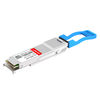
The HPE 455883-B21 is a dedicated HPE BladeSystem c-Class 10Gb SFP+ SR transceiver designed to provide stable 10 Gigabit Ethernet optical links over short-distance multimode fiber connections. As a member of HPE’s enterprise SFP+ optical family, this module is widely used in BladeSystem enclosures, Virtual Connect uplinks, HPE server adapters, and other 10Gb network interfaces that require reliable low-latency data transmission.
Although it belongs to the standard 10GBASE-SR category, choosing the correct transceiver for an HPE environment is not simply a matter of matching speed.
In real deployments, administrators must also verify:
-
hardware platform support,
-
optical connector type,
-
multimode fiber compatibility,
-
transmission distance,
-
and interoperability with related HPE or third-party networking equipment.
Even when multiple SFP+ SR optics share similar specifications, firmware coding, host recognition, and switch validation can create very different installation results. A module that appears identical in wavelength and bandwidth may still trigger unsupported transceiver warnings or fail to establish a stable optical link if the compatibility details are overlooked.
This is especially important in BladeSystem infrastructures where network uptime, enclosure communication, and Virtual Connect stability depend heavily on properly matched optical components.
For that reason, understanding HPE 455883-B21 compatibility means looking beyond the datasheet and examining where this transceiver is officially supported, what fiber environments it is designed for, which HPE alternatives are interchangeable, and what technical factors should be checked before deployment.
In this guide, we will provide a complete compatibility-focused analysis of HPE 455883-B21, including supported HPE platforms, SR optical specifications, equivalent replacement options, common interoperability concerns, and practical steps to ensure successful installation in your 10Gb BladeSystem network.
🟦 What Is 455883-B21 HPE BLC 10G SFP+ SR Transceiver?
455883-B21 is the official HPE part number for the HPE BladeSystem c-Class 10Gb SFP+ SR Transceiver, a short-reach optical module developed to provide 10 Gigabit Ethernet transmission over multimode fiber in HPE enterprise networking environments.

As an HPE-certified 10GBASE-SR SFP+ transceiver, this module is commonly installed in:
-
HPE BladeSystem c-Class enclosures,
-
Virtual Connect Ethernet modules,
-
HPE server network adapters,
-
10Gb storage uplinks,
-
and other HPE-compatible SFP+ optical interfaces.
Its primary role is to convert high-speed electrical Ethernet signals into optical signals and transmit them through 850 nm multimode fiber cabling using a duplex LC connector. Because it belongs to the Short Reach (SR) optical category, the module is designed for short-distance high-bandwidth interconnections inside data centers, server rooms, and enterprise switching infrastructures where stable 10Gb optical communication is required.
Key Technical Specifications of HPE 455883-B21
|
Specification
|
Details
|
|
HPE Part Number
|
455883-B21
|
|
Product Name
|
HPE BladeSystem c-Class 10Gb SFP+ SR Transceiver
|
|
Form Factor
|
SFP+
|
|
Optical Standard
|
10GBASE-SR
|
|
Data Rate
|
10 Gbps
|
|
Wavelength
|
850 nm
|
|
Fiber Type
|
Multimode Fiber (MMF)
|
|
Connector Type
|
Duplex LC
|
|
Typical Reach
|
Up to 300m on OM3 / 400m on OM4
|
|
Deployment Type
|
Short-range optical Ethernet links
|
These specifications make the module suitable for high-density short-range 10Gb fiber deployments, particularly in BladeSystem architectures where fast uplink communication and low-latency data exchange are essential.
What Makes HPE 455883-B21 Different from a Standard Generic 10GBASE-SR Optic?
Although the optical standard itself is based on the common 10GBASE-SR SFP+ specification, HPE 455883-B21 is not treated as a simple universal SR transceiver in enterprise installations.
This module is manufactured and coded specifically for HPE host recognition, which means its EEPROM identification, firmware validation, and approved hardware profile are aligned with HPE networking platforms. In HPE BladeSystem and Virtual Connect deployments, that coding layer is often just as important as the optical speed specification.
As a result, administrators usually need to verify more than just:
-
10Gb speed,
-
SR wavelength,
-
or LC connector type.
They must also ensure that the transceiver is correctly recognized by the target HPE hardware and that it can establish a validated optical link without module rejection, warning prompts, or interoperability limitations.
Typical Application of 455883-B21 in BladeSystem Networks
Within an HPE BladeSystem environment, the 455883-B21 transceiver is mainly used to create short-distance 10Gb optical uplinks between servers, enclosure interconnect modules, and external switching equipment.
Its common deployment roles include:
-
BladeSystem enclosure to aggregation switch uplinks,
-
Virtual Connect module to data center core switch links,
-
HPE server NIC to optical backbone connections,
-
short-range SAN or LAN optical interconnects,
-
and rack-to-rack multimode 10Gb communication.
Because of its low power consumption, hot-pluggable SFP+ form factor, and stable multimode fiber performance, it remains a practical short-reach optic for legacy and still-active HPE 10Gb infrastructures.
🟦 HPE 455883-B21 Compatibility Overview
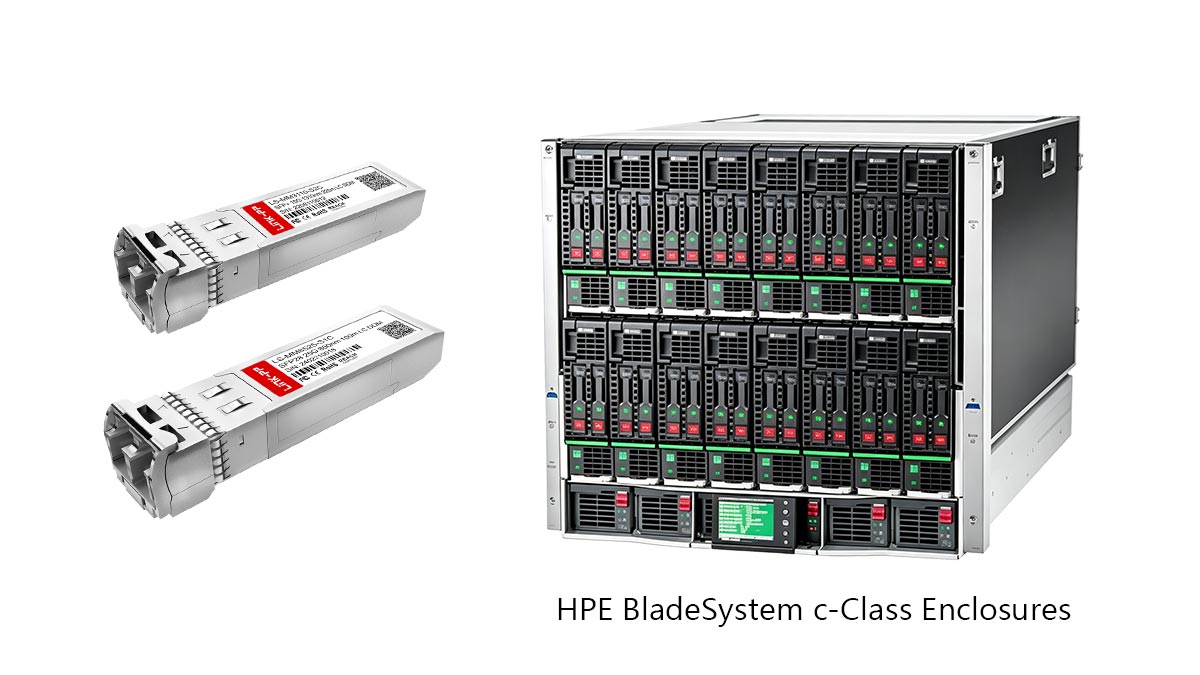
Because the HPE 455883-B21 is a BladeSystem-focused 10GBASE-SR SFP+ optical transceiver, its compatibility is primarily centered on HPE enterprise server enclosures, Virtual Connect interconnect modules, HPE SFP+ network adapters, and selected 10Gb switching platforms equipped with supported SFP+ ports.
Although the module follows the standard SFP+ physical form factor, actual deployment compatibility depends on two layers working together:
-
Physical optical compatibility — whether the host device accepts a 10Gb SR SFP+ module with LC multimode optics.
-
Firmware/EEPROM platform validation — whether the HPE device recognizes the coded transceiver as an approved module.
This distinction is important because not every generic 10GBASE-SR optic that fits physically into an SFP+ cage will provide the same installation result in HPE hardware.
Core HPE Platforms Commonly Compatible with 455883-B21
The HPE 455883-B21 is most commonly deployed in the following HPE infrastructure categories:
1. HPE BladeSystem c-Class Enclosures
This transceiver was originally developed for HPE BladeSystem c-Class networking environments, where high-density server blades require fast optical uplink connectivity to the external network.
Within these chassis, 455883-B21 is typically used for:
-
enclosure uplink aggregation,
-
interconnect module optical expansion,
-
short-distance 10Gb Ethernet backbone links.
Its SFP+ SR profile makes it especially suitable for internal data center multimode fiber runs between BladeSystem cabinets and nearby top-of-rack or end-of-row switches.
2. HPE Virtual Connect Ethernet Modules
One of the most common applications for this optic is installation inside HPE Virtual Connect Flex-10 / FlexFabric / 10Gb Ethernet modules that provide network virtualization and uplink management for BladeSystem environments.
In these deployments, 455883-B21 serves as:
-
Virtual Connect uplink SR transceiver,
-
short-range LAN aggregation optic,
-
Blade enclosure to core network fiber link.
Because Virtual Connect modules often perform optical module validation at the firmware level, using an HPE-coded SR optic such as 455883-B21 helps maintain stable module recognition and minimizes unsupported transceiver notifications.
3. HPE Server SFP+ Network Adapters
The module is also widely used in HPE 10Gb SFP+ server NICs and converged network adapters installed in rack servers and BladeSystem servers.
Typical examples include:
As long as the server adapter supports 10GBASE-SR optical signaling and recognizes HPE-coded optics, the 455883-B21 can be used for short-range server-to-switch multimode links.
4. HPE 10Gb Ethernet Switches with Supported SFP+ Slots
Selected HPE enterprise switches equipped with SFP+ uplink slots can also support this transceiver when running standard 10Gb SR optical Ethernet connections.
These deployments commonly include:
-
switch uplink to BladeSystem enclosure,
-
switch-to-switch multimode 10Gb interconnect,
-
storage network optical extension.
Compatibility at this level generally depends on whether the switch firmware accepts BladeSystem-coded HPE SR optics within the same approved optical family.
Commonly Compatible Deployment Environments at a Glance
|
HPE Environment
|
Compatibility Level
|
Typical Use of 455883-B21
|
|
BladeSystem c-Class Enclosures
|
High
|
Internal/external 10Gb optical uplinks
|
|
Virtual Connect Ethernet Modules
|
High
|
VC uplink SR fiber connections
|
|
HPE SFP+ Server NICs / CNAs
|
High
|
Server-to-switch multimode links
|
|
HPE 10Gb Ethernet Switches
|
Moderate to High
|
Optical aggregation/uplink
|
|
HPE Storage 10Gb Interfaces
|
Conditional
|
Short-range SAN/LAN fiber links
|
Can HPE 455883-B21 Work in Non-HPE or Mixed HPE Networks?
In some cases, yes.
Because the optic itself follows the standard 10GBASE-SR optical transmission format, it can establish a normal 10Gb multimode optical link when the remote device uses:
-
another standard SR SFP+ optic,
-
a compatible Aruba-coded SR module,
-
or a third-party MSA-compliant 10Gb SR transceiver.
However, successful optical signal transmission does not automatically mean full host-side compatibility.
The HPE side still determines whether the module is accepted at initialization, and some third-party or mixed-vendor systems may apply their own transceiver validation policies. For this reason, mixed deployments should always be checked at both ends: host recognition compatibility, and optical standard interoperability.
Why Compatibility Verification Matters Before Installation
Even though 455883-B21 belongs to a standard optical category, successful installation depends on matching:
A transceiver can meet the correct 10Gb SR optical specification yet still fail to deploy properly if one of these layers is ignored.
That is why the next step is to look more closely at the physical transmission side of compatibility—fiber type, LC connector requirements, wavelength, and supported short-reach distance.
🟦 Supported Fiber Type, Connector, and Reach
In addition to host hardware support, successful deployment of HPE 455883-B21 also depends on whether the optical cabling environment matches the module’s physical transmission specifications.
As a standard 10GBASE-SR SFP+ transceiver, this optic is designed specifically for short-range multimode fiber communication and should be used only within its intended connector, wavelength, and distance limits.
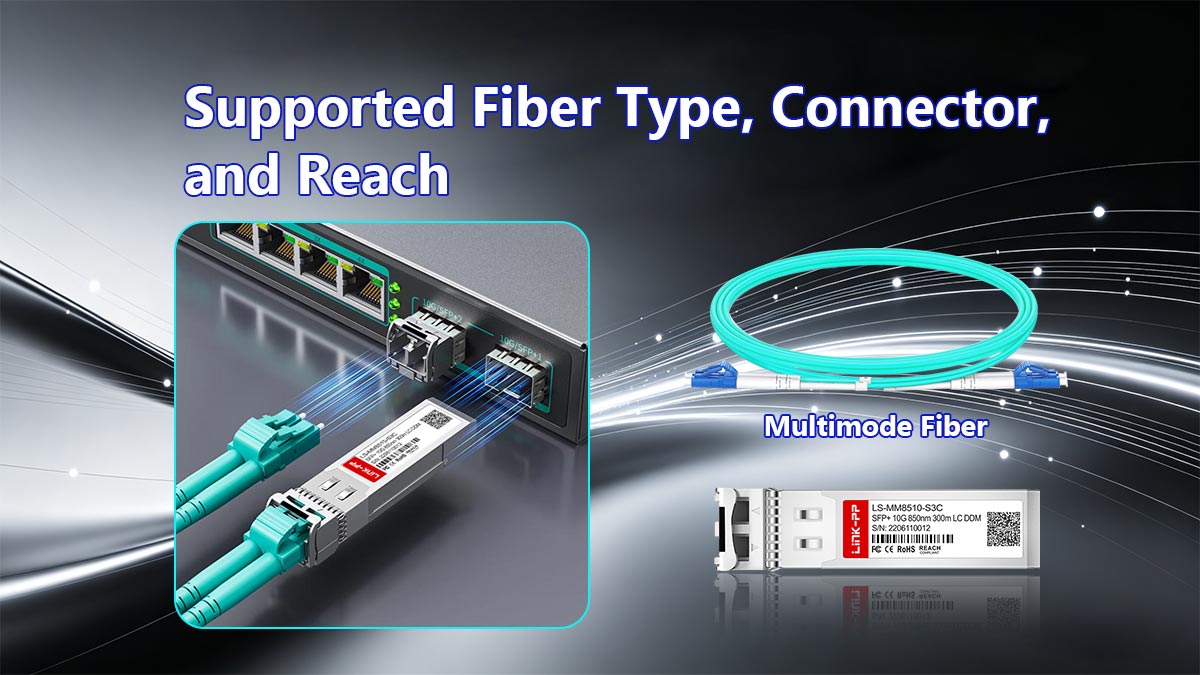
LC Duplex Connector
HPE 455883-B21 uses a duplex LC connector, the standard interface for most enterprise SFP+ optical modules.
This means:
-
one fiber channel transmits data,
-
one fiber channel receives data,
-
both fibers operate together for full-duplex 10Gb Ethernet communication.
For installation, an LC-LC duplex multimode patch cable is required.
Multimode Fiber Requirement
This transceiver is built for multimode fiber (MMF) only and is commonly used with:
It is not intended for single-mode fiber or long-distance optical links.
Because the module uses 850 nm VCSEL optical signaling, it performs best in short-distance data center and server room cabling where low-latency 10Gb fiber transmission is needed.
Typical Optical Reach
The achievable transmission distance depends on the multimode fiber grade:
|
Fiber Type
|
Maximum Reach
|
|
OM2
|
Up to 82 m
|
|
OM3
|
Up to 300 m
|
|
OM4
|
Up to 400 m
|
These reach values make HPE 455883-B21 ideal for:
-
BladeSystem uplinks,
-
server-to-switch fiber runs,
-
rack-to-rack 10Gb interconnects,
-
short-range enterprise optical backbones.
For deployments beyond these distances, an HPE long-range optical transceiver should be considered instead.
Matching the correct LC duplex connector, multimode fiber type, and SR distance range is essential to ensure stable optical performance before moving on to host-side compatibility verification.
🟦 HPE 455883-B21 vs. Similar HPE SR Optics
Although HPE 455883-B21 is a standard 10GBASE-SR SFP+ transceiver, it is often compared with several other HPE 10Gb SR optical modules that share similar speed and fiber specifications.
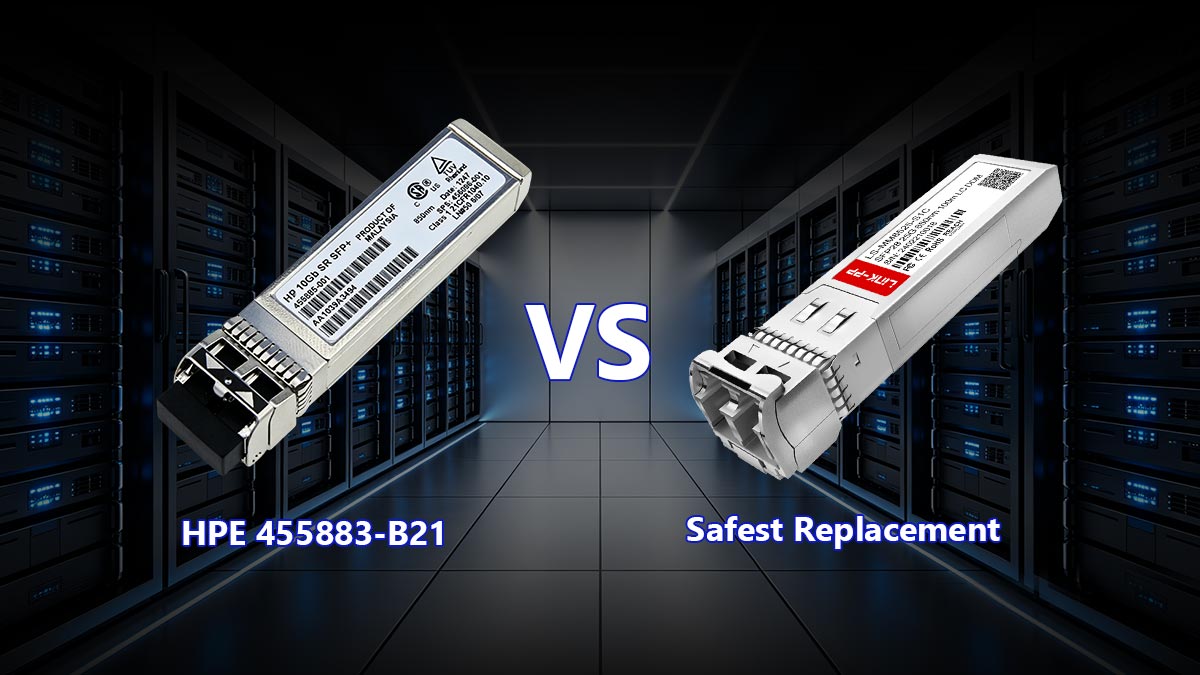
These alternatives typically offer the same:
-
SFP+ form factor,
-
10Gb transmission rate,
-
850 nm wavelength,
-
duplex LC connector,
-
multimode fiber support.
However, identical optical specifications do not always mean identical hardware compatibility. The main difference usually lies in platform coding, approved host family, and firmware recognition.
Common HPE 10G SR Alternatives Compared
|
Part Number
|
Product Family
|
Typical Platform
|
Optical Specs
|
|
455883-B21
|
BladeSystem c-Class SR
|
BladeSystem / Virtual Connect
|
10G SR, 850nm, LC, MMF
|
|
J9150A
|
X132 SFP+ SR
|
HPE Networking Switches
|
10G SR, 850nm, LC, MMF
|
|
J9150D
|
Aruba SFP+ SR
|
Aruba Switches
|
10G SR, 850nm, LC, MMF
|
|
JD092B
|
X130 SFP+ SR
|
FlexNetwork / FlexFabric
|
10G SR, 850nm, LC, MMF
|
|
455885-001
|
HPE Spare SR Optic
|
Replacement Service Channel
|
10G SR, 850nm, LC, MMF
|
From the table, it is clear that these modules belong to the same short-range 10Gb optical family, but they are assigned to different HPE networking ecosystems.
455883-B21 vs. J9150A
J9150A is one of the closest HPE alternatives because it also uses:
-
10Gb SR multimode optics,
-
850 nm VCSEL transmission,
-
LC duplex connector,
-
up to 300m short-range reach.
The difference is that J9150A is more commonly associated with HPE networking switch platforms, while 455883-B21 is primarily aligned with BladeSystem and Virtual Connect environments.
In many standard SR links they may appear technically interchangeable, but host-side approval should still be verified before substitution.
455883-B21 vs. J9150D
J9150D is the Aruba-branded 10G SR version used mainly in Aruba switch families.
Its optical performance is similar, but it is coded for Aruba platform recognition. For mixed HPE-Aruba multimode optical links, it can often work as the remote-side transceiver, though it is not typically selected as the primary BladeSystem-side replacement.
455883-B21 vs. Other HPE SR Modules
Modules such as JD092B and 455885-001 also provide the same 10Gb short-reach multimode transmission profile, but they belong to different HPE product channels or switch generations.
Because HPE systems may validate transceivers by approved part family, replacing 455883-B21 with another SR optic should not be based on optical specs alone.
Which Module Is the Safest Replacement?
For:
-
BladeSystem c-Class enclosures,
-
Virtual Connect uplinks,
-
legacy HPE blade networking,
455883-B21 remains the most direct native-match option.
Other HPE SR optics can serve as alternatives in certain platforms, but the final choice should always be based on host hardware support rather than wavelength and speed alone.
🟦 Common 455883-B21 Compatibility Scenarios
Although HPE 455883-B21 is primarily designed for HPE BladeSystem short-range 10Gb optical networking, its real-world compatibility depends heavily on the host environment where the module is installed.
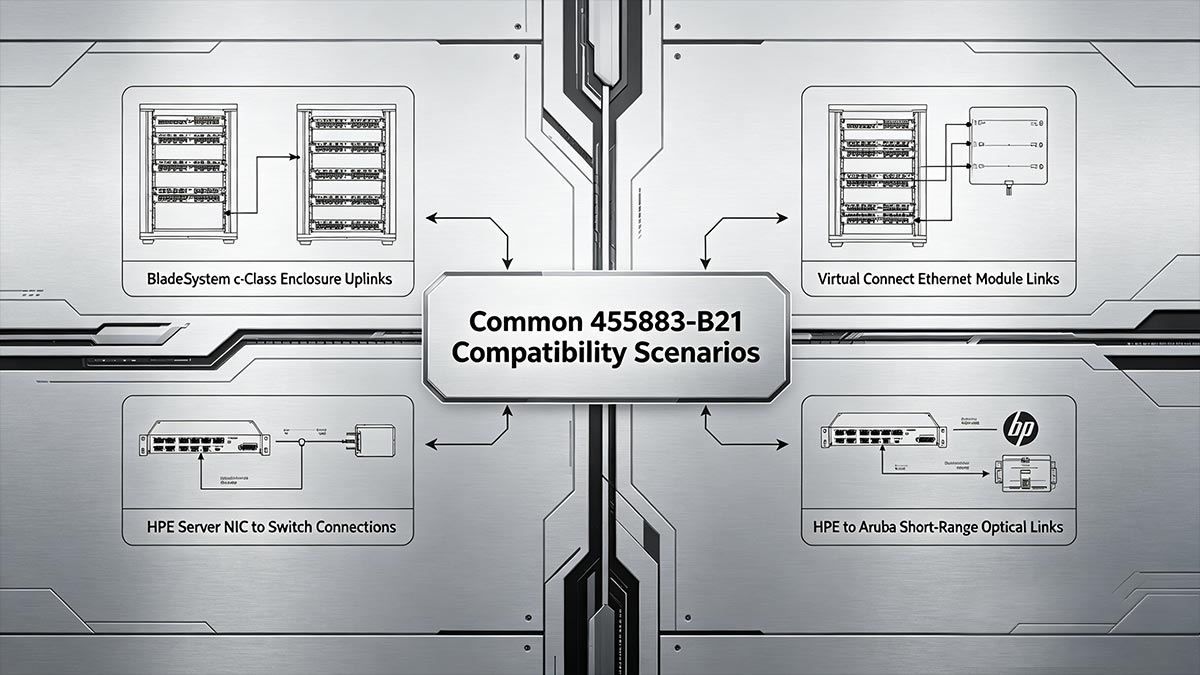
Below are the most common deployment scenarios where this transceiver is used and the compatibility considerations that matter in each case.
BladeSystem c-Class Enclosure Uplinks
This is the most direct and native application for HPE 455883-B21.
In BladeSystem c-Class enclosures, the module is commonly installed in interconnect bays to provide:
-
10Gb Ethernet uplinks to aggregation switches,
-
enclosure-to-core network optical links,
-
short-range multimode backbone communication.
Because the part number was originally developed for BladeSystem c-Class infrastructure, compatibility in this environment is typically straightforward as long as the connected switch side also uses standard 10GBASE-SR optics.
Recommended use level: Excellent native compatibility
Virtual Connect Ethernet Module Links
HPE Virtual Connect Flex-10, FlexFabric, and related Ethernet modules are another common host platform for 455883-B21.
In these environments, the optic is usually deployed as:
-
Virtual Connect uplink fiber module,
-
BladeSystem LAN aggregation optic,
-
enclosure virtualization network output.
Since Virtual Connect modules can be sensitive to optical module coding and firmware validation, using the BladeSystem-coded 455883-B21 generally provides more predictable host recognition than generic SR transceivers.
Recommended use level: High compatibility
HPE Server NIC to Switch Connections
The 455883-B21 can also be used in HPE SFP+ server network adapters when creating short-distance multimode optical links from server NICs to top-of-rack or data center switches.
Typical examples include:
-
HPE dual-port SFP+ NIC uplinks,
-
FlexFabric server adapters,
-
10Gb PCIe optical Ethernet cards.
As long as the server adapter accepts HPE-coded SFP+ SR modules, the optic can deliver stable OM3/OM4 10Gb fiber connectivity.
Recommended use level: High compatibility, verify NIC firmware generation
HPE to Aruba Short-Range Optical Links
In mixed HPE enterprise networks, one common question is whether 455883-B21 can link successfully to Aruba SFP+ SR optics on the remote switch side.
From an optical protocol standpoint, the answer is generally yes.
Because both sides still operate under the same:
the physical optical link can usually establish normally when the Aruba side uses an approved Aruba SR module such as J9150D.
The key requirement is that each host device accepts its locally installed transceiver.
Recommended use level: Good, provided both ends use host-approved optics
Mixed-Vendor 10Gb SFP+ Deployments
Some users deploy 455883-B21 in environments where the opposite device is not HPE at all, such as:
At the optical layer, standard SR multimode transmission usually works without issue.
However, mixed-vendor compatibility always depends on two independent checks:
-
whether the HPE side accepts 455883-B21 normally,
-
whether the remote vendor accepts its own installed optic.
In most cases, optical signaling itself is not the problem—the host EEPROM approval policy is.
This means successful mixed-vendor deployment is often possible, but should be verified device by device.
Recommended use level: Conditional compatibility
Quick Compatibility Scenario Summary
|
Deployment Scenario
|
Compatibility Assessment
|
|
BladeSystem c-Class uplinks
|
Excellent
|
|
Virtual Connect Ethernet modules
|
High
|
|
HPE SFP+ server NIC links
|
High
|
|
HPE to Aruba SR fiber links
|
Good
|
|
Mixed-vendor SFP+ SR links
|
Conditional
|
As shown above, HPE 455883-B21 performs best in native HPE BladeSystem infrastructures, while broader interoperability depends mainly on host transceiver validation at each end of the optical link.
Before installation, the safest approach is still to confirm one final step: how to verify whether your exact hardware platform officially accepts this transceiver.
🟦 How to Check Whether HPE 455883-B21 Will Work in Your System
Before purchasing or installing HPE 455883-B21, it is important to confirm that the module matches not only the optical specification of your network, but also the recognition requirements of the host hardware.
A quick compatibility check can usually prevent common issues such as unsupported transceiver warnings, link failure, or unnecessary replacement costs.
The following checklist provides the key points that should be verified.
1. Confirm the Host Device Has an SFP+ 10Gb Port
HPE 455883-B21 is a 10Gb SFP+ optical transceiver, so the target hardware must provide:
It should not be installed into:
-
1G SFP ports,
-
QSFP/QSFP+ ports,
-
RJ45 copper interfaces.
Always verify the port type on:
-
BladeSystem interconnect modules,
-
Virtual Connect uplink slots,
-
HPE server NICs,
-
or switch SFP+ uplink ports.
2. Verify the Hardware Platform Family
Because this module is primarily aligned with BladeSystem c-Class and HPE 10Gb enterprise optical environments, users should confirm that the host platform belongs to an HPE family that supports HPE-coded SR optics.
The most common compatible categories are:
-
BladeSystem c-Class enclosures,
-
Virtual Connect Ethernet modules,
-
HPE SFP+ network adapters,
-
selected HPE 10Gb switches.
If the target device belongs to a different switch family or a non-HPE platform, additional validation may be required.
3. Check Fiber Infrastructure
The module requires:
Before installation, confirm that the existing cabling is:
-
OM2, OM3, or OM4 multimode fiber,
-
properly terminated with LC-LC patch cords,
-
within supported optical distance limits.
Using single-mode fiber or incorrect patch cable types can cause immediate link problems.
4. Review Firmware or Transceiver Approval Policy
Some HPE systems and certain third-party switches validate optical modules at boot or link initialization.
For this reason, it is wise to check:
-
whether the current firmware version has transceiver restrictions,
-
whether the device requires approved vendor-coded optics,
-
whether unsupported module alarms are known on that platform.
This is especially relevant in older BladeSystem and managed switch environments.
5. Confirm the Remote Link Side Uses Compatible SR Optics
Even if the HPE side is correct, the remote device must also be configured with:
-
a 10GBASE-SR compatible SFP+ module,
-
multimode LC optical cabling,
-
matching 10Gb port settings.
Optical links fail when one side uses SR multimode and the other side uses a different optical standard.
Quick Pre-Deployment Checklist
Before using HPE 455883-B21, confirm the following:
-
SFP+ 10Gb host port available
-
BladeSystem / HPE optical platform support confirmed
-
LC duplex multimode fiber installed
-
OM2/OM3/OM4 distance within SR limits
-
firmware accepts vendor-coded optics
-
remote side uses matching 10GBASE-SR transceiver
If all six points are satisfied, the module is generally ready for stable deployment.
The final step is understanding what issues may still appear after installation and how to solve them efficiently.
🟦 Common 455883-B21 Problems and Fixes
Even when HPE 455883-B21 is installed in a seemingly compatible 10Gb environment, several practical issues can still prevent the link from operating normally.
Most deployment failures are not caused by the optic itself, but by host validation, cabling mismatch, or physical optical signal loss.

Below are the most common problems and the recommended fixes.
▶ Unsupported Transceiver Warning
Problem:
The host device detects the module physically, but reports an unsupported or non-approved transceiver message.
Common Cause:
-
host firmware validates approved optical part numbers,
-
target platform does not recognize the installed optic family,
-
switch OS applies vendor transceiver restrictions.
Fix:
-
confirm the host belongs to a supported HPE BladeSystem or SFP+ platform,
-
update firmware if the platform has known transceiver validation changes,
-
verify whether an alternative HPE-coded optic is required for that hardware generation.
▶ Link Does Not Come Up After Installation
Problem:
The module is accepted, but the optical port remains down.
Common Cause:
-
wrong fiber polarity,
-
remote side not using matching 10GBASE-SR optic,
-
duplex LC connector not fully seated,
-
port speed manually configured incorrectly.
Fix:
-
swap Tx/Rx fiber polarity if needed,
-
confirm both ends use SR multimode SFP+ modules,
-
reseat LC patch cord firmly,
-
ensure both ports are operating in 10Gb Ethernet mode.
▶ Wrong Fiber Type Used
Problem:
The optic initializes but the signal is unstable or absent.
Common Cause:
-
single-mode fiber used instead of multimode,
-
low-grade legacy fiber beyond SR tolerance,
-
incorrect patch cable inserted.
Fix:
-
use OM2, OM3, or OM4 multimode LC duplex fiber only,
-
avoid single-mode OS fiber with SR modules,
-
replace questionable patch leads with certified MMF jumpers.
▶ Dirty or Damaged LC Endfaces
Problem:
Intermittent link drops, CRC errors, or low optical signal.
Common Cause:
Fix:
-
inspect and clean all LC optical endfaces,
-
use fiber cleaning tools before reinsertion,
-
replace worn patch cords if optical loss persists.
▶ Distance Beyond SR Optical Budget
Problem:
Link appears unstable, frequently drops, or never reaches full signal quality.
Common Cause:
-
OM2/OM3/OM4 run exceeds supported SR distance,
-
too many patch panel insertion losses,
-
excessive attenuation in the optical path.
Fix:
-
confirm total fiber length remains within SR limits,
-
reduce unnecessary couplers and patch points,
-
migrate to LR optics if longer reach is required.
▶ Vendor Lock or Mixed-Platform Recognition Issues
Problem:
The optical link works on one side but the other device rejects the transceiver.
Common Cause:
-
vendor EEPROM coding mismatch,
-
strict switch transceiver approval list,
-
mixed-brand firmware limitations.
Fix:
-
use host-approved optics at each end,
-
do not assume same optical specs guarantee host recognition,
-
verify the remote platform’s accepted SR transceiver family.
Quick Troubleshooting Summary
|
Common Issue
|
Main Cause
|
Recommended Fix
|
|
Unsupported warning
|
Host validation restriction
|
Check approved HPE optic family
|
|
Port stays down
|
Fiber polarity or remote mismatch
|
Verify both ends and reseat LC
|
|
No stable signal
|
Wrong fiber type
|
Use OM2/OM3/OM4 MMF
|
|
CRC/intermittent drops
|
Dirty LC connectors
|
Clean or replace patch cords
|
|
Unstable long link
|
Distance too long
|
Keep within SR range or use LR
|
|
One side rejects optic
|
Vendor coding issue
|
Use approved optics on both ends
|
By checking these common fault points, most HPE 455883-B21 deployment problems can be resolved quickly without replacing the transceiver unnecessarily.
🟦 FAQs About HPE 455883-B21 Compatibility

1. What is HPE 455883-B21 used for?
HPE 455883-B21 is a 10Gb SFP+ SR optical transceiver used to provide short-range 10 Gigabit Ethernet connections over multimode fiber in HPE BladeSystem, Virtual Connect, server NIC, and enterprise switch environments.
2. Is HPE 455883-B21 compatible with BladeSystem c-Class?
Yes. HPE 455883-B21 was originally designed for HPE BladeSystem c-Class networking applications and is commonly used for enclosure uplinks and internal 10Gb optical interconnects.
3. Can HPE 455883-B21 work in Virtual Connect modules?
Yes. It is widely used in HPE Virtual Connect Ethernet modules for short-range multimode fiber uplink connections, provided the module is installed in a supported SFP+ optical slot.
4. What fiber does HPE 455883-B21 require?
HPE 455883-B21 requires duplex LC multimode fiber and supports standard OM2, OM3, and OM4 multimode cabling.
5. What is the maximum distance of HPE 455883-B21?
The typical supported reach is:
- up to 82 meters on OM2,
- up to 300 meters on OM3,
- up to 400 meters on OM4.
It is designed only for short-range SR optical deployments.
6. Is HPE 455883-B21 the same as J9150A?
Not exactly. Both are 10Gb SR SFP+ multimode optics with similar optical specifications, but they belong to different HPE product families and host compatibility should be verified before replacement.
7. Can HPE 455883-B21 connect to Aruba switches?
Yes, in many cases it can establish a normal 10GBASE-SR optical link to Aruba switches when the Aruba side uses an approved SR SFP+ optic and both devices accept their locally installed modules.
8. Why is my HPE 455883-B21 showing unsupported transceiver warnings?
This usually happens when the host device applies firmware-based transceiver validation or the optic is installed in a platform outside its approved hardware family.
9. Can I use HPE 455883-B21 with single-mode fiber?
No. HPE 455883-B21 is an 850 nm multimode SR transceiver and should only be used with multimode fiber cabling.
10. How do I know if HPE 455883-B21 will work in my system?
You should verify:
- SFP+ 10Gb port type,
- HPE platform support,
- LC multimode fiber compatibility,
- SR transmission distance,
- and host firmware transceiver acceptance.
🟦 Final Recommendation: Is HPE 455883-B21 the Right Choice?
If your network infrastructure is built around HPE BladeSystem c-Class, Virtual Connect Ethernet modules, or existing HPE 10Gb SFP+ server uplinks, then HPE 455883-B21 remains one of the most reliable native-match short-range optical transceivers for maintaining stable 10Gb multimode connectivity.

Its biggest advantage is not simply that it delivers standard 10GBASE-SR performance—many optics can do that.
Its real value lies in:
-
HPE-oriented host recognition,
-
BladeSystem-focused deployment stability,
-
LC duplex multimode compatibility,
-
proven short-range 10Gb uplink performance,
-
and reduced risk of unsupported transceiver issues in legacy HPE environments.
For administrators who want the safest plug-in replacement with minimal compatibility uncertainty, 455883-B21 is usually the preferred option.
When Should You Choose an Alternative Instead?
An alternative HPE SR optic may be worth considering when:
-
your target hardware is Aruba or HPE switch-focused rather than BladeSystem-focused,
-
broader cross-platform deployment is required,
-
the original HPE module price is significantly higher than equivalent coded replacements,
-
or you are sourcing optics for a mixed-vendor SFP+ network.
In those cases, part numbers such as J9150A or other properly coded compatible SR modules may offer a more economical solution—provided host compatibility has been verified in advance.
The key buying logic is simple: choose 455883-B21 when BladeSystem-native support and installation certainty matter most; choose alternatives only when platform flexibility or budget savings outweigh original HPE part matching.
A Smarter Way to Source HPE 455883-B21 Compatible Optics
Because many original HPE transceivers are now purchased for maintenance, expansion, or legacy infrastructure replacement, buyers are increasingly looking for:
This is where a professionally coded compatible module becomes a practical option.
At LINK-PP Official Store, enterprise users can source HPE 455883-B21 compatible 10GBASE-SR SFP+ transceivers engineered for BladeSystem, Virtual Connect, HPE server adapters, and broader multimode 10Gb optical deployments.
Each compatible module is built for:
-
reliable HPE platform recognition,
-
strict DOM and EEPROM programming,
-
OM3/OM4 multimode SR performance validation,
-
and cost-effective enterprise optical replacement.
So if you need a dependable alternative to aging OEM stock without sacrificing deployment confidence, LINK-PP offers a straightforward sourcing path for tested HPE-compatible optics.
Choosing the right transceiver is never just about matching 10Gb speed on paper—it is about matching the right platform, coding, fiber environment, and long-term operational reliability.
For BladeSystem short-range optical networking, HPE 455883-B21 continues to be a proven and practical solution when selected from a trusted compatibility-focused supplier.