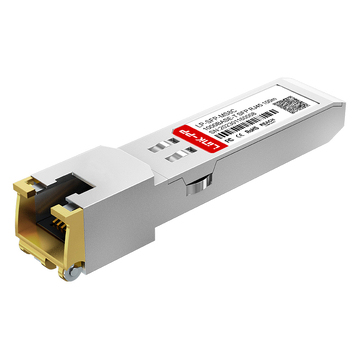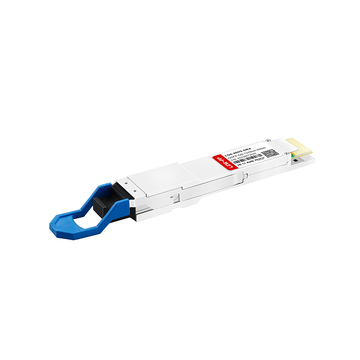
The growing demand for high-speed data transmission and increasingly complex network infrastructures has made transceiver modules a critical component in modern networks. Cisco-branded modules have long been a standard choice for enterprises and data centers, offering proven performance and reliability. However, the high cost of these modules and the potential for vendor lock-in have led organizations to explore alternative solutions that provide comparable functionality without compromising network stability.
This has brought the concept of Cisco alternatives for optical transceiver into focus. Network engineers and IT managers are now evaluating third-party modules that are compatible with Cisco equipment, including SFP, SFP+, and QSFP series. Understanding the performance, interoperability, and compliance of these alternatives is essential for making informed decisions and ensuring seamless network operations.
This article aims to provide a comprehensive guide to Cisco-compatible fiber optic SFP module alternatives. Readers will gain insights into key considerations for selection, deployment scenarios, performance validation strategies, and future trends in optical networking. By exploring these aspects, organizations can achieve cost efficiency, flexibility, and high-performance networking while maintaining operational reliability.
?️? Understanding the Need for Cisco Alternatives
The primary reason organizations consider alternatives to Cisco optical modules is to achieve cost efficiency and flexibility without sacrificing performance or compatibility. While Cisco modules are reliable, their high price and vendor-specific restrictions can limit network design options, especially in multi-vendor or large-scale environments. Exploring alternatives enables organizations to reduce dependency on a single vendor and adapt their networks to evolving demands.
Market Drivers
Organizations are increasingly motivated to seek alternatives due to several key market factors:
- High module costs, particularly for large-scale deployments.
- Vendor lock-in that restricts flexibility in network upgrades.
- Growing adoption of multi-vendor network environments to optimize performance and cost.
- Rising demand for high-density networks requiring scalable, compatible optical solutions.
These factors collectively push network teams to evaluate third-party modules that match Cisco’s performance and compliance standards while offering more flexible procurement and deployment options.
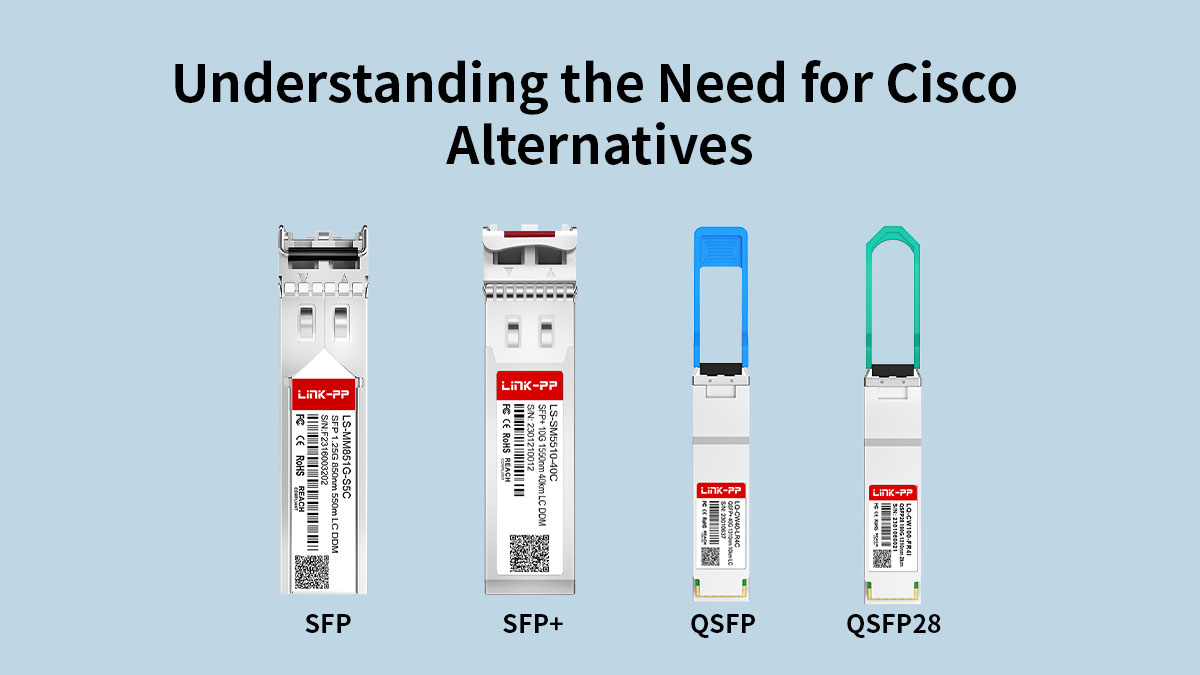
Types of Optical Modules in Focus
When considering Cisco alternatives, it is important to understand the types of optical modules most commonly deployed in enterprise and data center environments:
| Module Types | Typical Use Case | Key Characteristics |
|---|---|---|
| SFP 1G | 1G short-reach connections | Compact, widely supported, low power consumption |
| SFP+ 10G | 10G short- to medium-reach | High-speed, low-latency, backward compatible with SFP transceiver |
| QSFP+ 40G | 40G and 100G connections | Aggregated bandwidth, high-density deployment support |
| QSFP28 100G | 100G and beyond | High throughput, supports data center spine-leaf architectures |
These modules vary in speed, reach, and physical form factor, but all must meet stringent performance and interoperability requirements to function reliably in networks originally designed for Cisco modules. Understanding the specific type of module needed is essential for selecting a compatible alternative that does not compromise network reliability.
?️? Key Considerations When Choosing Alternatives
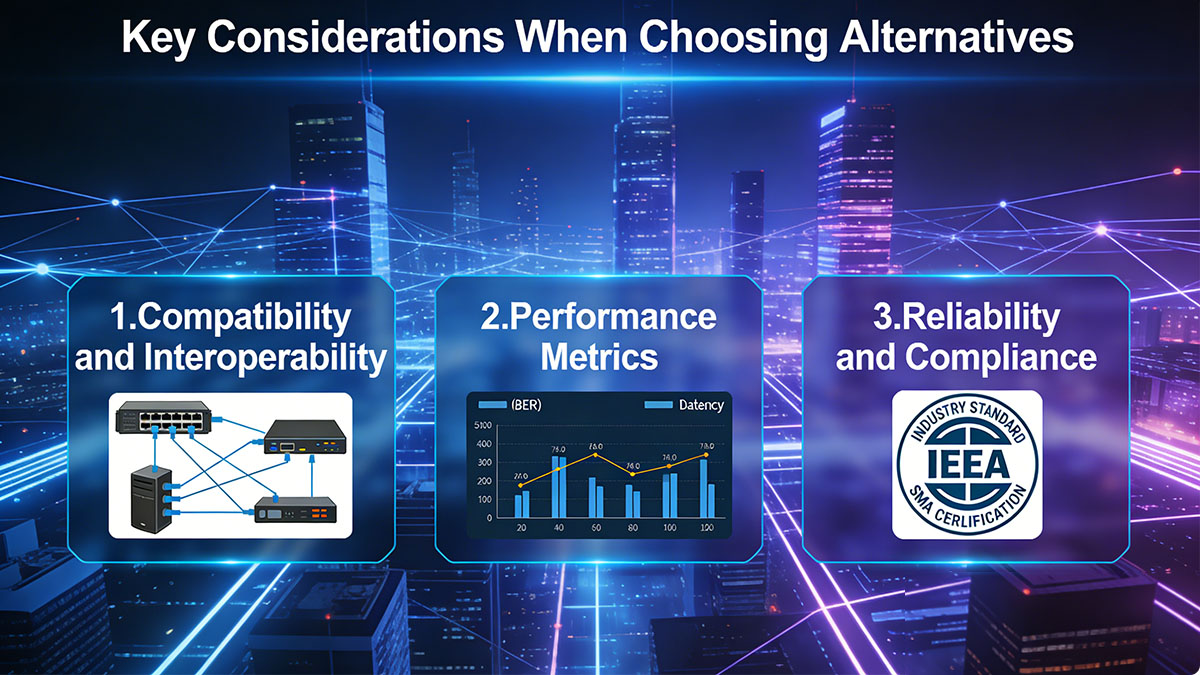
Selecting a Cisco-compatible optical module alternative requires careful evaluation of compatibility, performance, and reliability. Choosing the wrong module can lead to link failures, reduced throughput, or even network downtime. By focusing on interoperability, performance metrics, and compliance, organizations can confidently integrate third-party modules into their networks.
Compatibility and Interoperability
Ensuring compatibility with existing network hardware is the first step when considering an alternative module. Incompatible modules can fail to establish a link or may cause erratic behavior in network switches. Key considerations include:
- Verification against vendor-specific compatibility matrices to confirm the module works with Cisco switches and routers.
- Firmware and software version alignment, as some modules may require specific firmware to function properly.
- Physical and electrical interface standards, including SFP/SFP+/QSFP pinouts and power requirements.
A systematic compatibility check can prevent deployment issues and maintain stable network operations.
Performance Metrics
Performance should match or closely approximate the specifications of the Cisco module being replaced. Core metrics to evaluate include:
| Metric | Recommended Standard | Notes |
|---|---|---|
| Bit Error Rate (BER) | ≤ 10^-12 | Ensures reliable data transmission |
| Latency | ≤ 1 µs for 10G | Critical for time-sensitive applications |
| Reach | Varies by module (e.g., 10km for SFP-10G-LR) | Must suit the deployment environment |
| Power Consumption | Match OEM specifications | Prevents overheating and maintains efficiency |
Evaluating these metrics helps ensure that the alternative module will provide equivalent network performance and maintain service-level agreements.
Reliability and Compliance
Even if a module is compatible and meets performance specifications, it must also be reliable under typical operating conditions and meet industry standards:
- Adherence to IEEE standards and Multi-Source Agreements (MSA) ensures interoperability across vendors.
- Environmental tolerances, including operating temperature, humidity, and shock resistance, are critical for data center or outdoor deployments.
- Modules with consistent manufacturing quality reduce the risk of premature failures and maintain uptime.
Reliability and compliance evaluation safeguards the network from unexpected failures and ensures that third-party modules operate on par with Cisco originals.
?️? Leading Third-Party Optical Module Vendors
Several third-party vendors provide Cisco-compatible optical modules that combine performance, reliability, and cost-effectiveness. Choosing reputable vendors helps ensure seamless integration, reduces operational risk, and allows multi-vendor network flexibility.
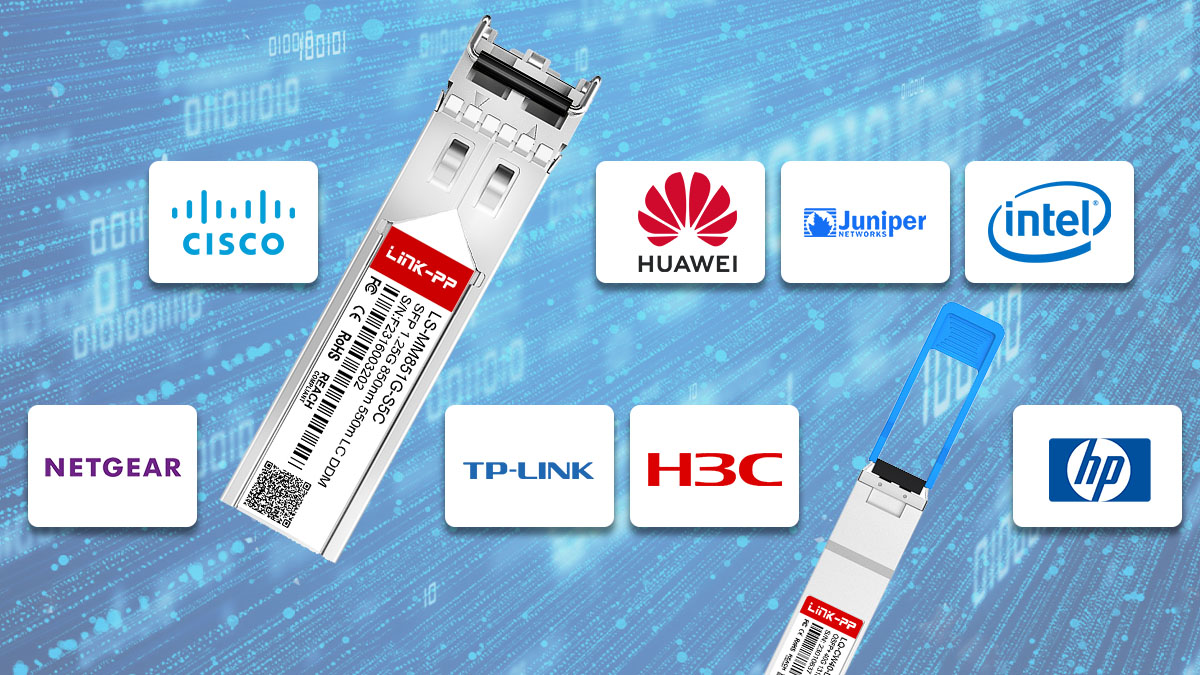
Finisar and VIAVI Modules
Finisar and VIAVI are widely recognized for high-quality, enterprise-grade optical modules. They offer cross-vendor certifications and maintain strict adherence to industry standards, ensuring reliable performance in Cisco environments. Key strengths include:
- Consistent manufacturing quality and low failure rates
- Broad support for SFP, SFP+, QSFP, and QSFP28 modules
- Enterprise-grade certifications and compliance with IEEE and MSA standards
Huawei and HPE Compatible Modules
Huawei and HPE provide cost-effective alternatives that are compatible with Cisco hardware for many deployment scenarios. These modules are often chosen for high-density data center deployments due to their competitive pricing and wide availability. Notable features include:
- Full line of short-range optics and long-reach modules
- Compatibility testing with major Cisco switch and router models
- Effective balance between performance, cost, and energy efficiency
Lesser-Known Vendors with Strong Compatibility
Emerging or niche vendors such as FS.com, ProLabs, and others offer alternatives with reliable Cisco interoperability while sometimes providing extended warranty or support options. Advantages include:
- Competitive pricing for large-scale deployments
- Vendor neutrality, supporting multi-vendor network designs
- Flexible support options and faster procurement cycles
| Vendor | Transceiver Types | Key Advantages | Typical Deployment |
|---|---|---|---|
| Finisar | SFP/SFP+/QSFP/QSFP28 | High reliability, cross-vendor certification | Enterprise & data center |
| VIAVI | SFP/SFP+/QSFP | Low BER, standardized compliance | High-performance networks |
| Huawei | SFP/SFP+/QSFP | Cost-effective, high-density support | Data centers, campus networks |
| HPE | SFP/SFP+/QSFP | Energy-efficient, tested compatibility | Mixed-vendor environments |
| LINK-PP | SFP/SFP+/QSFP/QSFP28 | Vendor-neutral, flexible support | Budget-conscious or multi-vendor networks |
Selecting a vendor depends on the specific deployment scenario, required module type, and balance between cost and performance. Understanding the strengths of each vendor allows network engineers to make informed decisions that ensure operational stability while optimizing expenditure.
?️? Cost Efficiency and Total Cost of Ownership
Integrating Cisco-compatible alternatives can significantly reduce network expenditures while maintaining performance and reliability. By carefully evaluating both direct and operational costs, organizations can achieve cost savings without compromising network stability.

Direct Cost Savings
Third-party optical modules typically offer a lower upfront price compared to Cisco-branded modules, making them particularly attractive for large-scale deployments. These savings can be especially significant in high-density environments where multiple modules are required. Key points include:
- Price differences per module can range from 30% to 60% compared to Cisco OEM.
- Bulk purchases amplify cost reduction in data centers or campus networks.
- Lower module costs do not necessarily equate to lower quality if the vendor maintains compliance with IEEE/MSA standards.
| Module Type | Cisco OEM Cost | Third-Party Cost | Estimated Savings |
|---|---|---|---|
| SFP-10G-SR | $$ | $ | 40% |
| QSFP-40G-LR4 | $$$ | $$ | 40% |
| QSFP-100G-LR4-I | $$$$ | $$$ | 39% |
This table illustrates that third-party modules can deliver substantial cost reductions while supporting equivalent performance for most deployment scenarios.
Operational and Maintenance Benefits
Beyond upfront cost, total cost of ownership also includes maintenance, support, and operational flexibility:
- Reduced dependency on a single vendor allows for easier inventory management and module replacement.
- Flexibility to mix and match modules from multiple vendors supports phased network upgrades without hardware constraints.
- Consistent quality and compliance from reputable third-party vendors minimize network downtime and maintenance overhead.
By considering both acquisition and operational costs, organizations can optimize budget allocation while preserving high network performance. These advantages make third-party Cisco-compatible modules a viable alternative for cost-conscious IT teams managing large-scale or multi-vendor networks.
?️? Deployment Scenarios and Use Cases
Cisco-compatible optical module alternatives are suitable for a variety of deployment scenarios, ranging from data centers to campus networks and carrier-grade applications. Careful selection ensures performance, reliability, and cost efficiency across diverse network environments.

Data Centers
Third-party modules are particularly effective in high-density data center deployments. They support high-bandwidth links while maintaining interoperability with Cisco switches and routers.
Key benefits include:
- High-density 10G SFP+, 25G SFP28, 40G QSFP+, and 100G QSFP28 deployments with lower module costs
- Redundant link configurations to prevent single points of failure
- Flexibility to implement multi-vendor network designs
Example deployment considerations:
| Network Type | Module Type | Typical Reach | Use Case |
|---|---|---|---|
| Spine-Leaf | QSFP28 100G | 2 km | High-throughput spine connections |
| Top-of-Rack | SFP+ 10G | 300 m | Server uplinks and aggregation |
| Core Switching | QSFP+ 40G | 10 km | Inter-rack or inter-building links |
These configurations demonstrate how alternatives can integrate seamlessly into both high-density and high-performance environments while reducing cost per port.
Campus Networks
In campus or enterprise networks, alternatives enable cost-effective upgrades and backward compatibility with legacy Cisco infrastructure. Benefits include:
- Smooth integration with existing fiber infrastructure
- Support for both short-reach (SR) and long-reach (LR) applications
- Budget-conscious deployment for edge and aggregation layers
Key deployment approaches:
- Replacing aging SFP+ modules with compatible alternatives to extend equipment life
- Using a mix of OEM and third-party modules for phased upgrades
- Implementing redundant uplinks to ensure consistent performance
Carrier and Telecom Applications
Carrier-grade environments require modules with extended reach and high reliability. Third-party alternatives can meet these demands while offering cost and operational flexibility.
Considerations include:
- Long-haul optical transmission (LR4, ER4 modules like ) for inter-city or metro networks
- Compliance with telco-grade standards, such as IEEE, RoHS, and MSA
- Integration with existing multi-vendor network equipment to ensure continuity
Example carrier deployment:
| Application | Module Type | Reach | Critical Considerations |
|---|---|---|---|
| Metro Ethernet | 40G QSFP LR4 | 10 km | Low latency, BER ≤ 10^-12 |
| Regional Backbone | 100G QSFP28 ER4 | 40 km | Compliance, thermal tolerance |
| Edge Aggregation | 10G SFP+ LR | 10 km | Compatibility, energy efficiency |
By understanding the deployment environment and matching module specifications, organizations can leverage third-party alternatives to achieve both high performance and cost efficiency.
?️? Performance Validation and Testing Strategies
Validating the performance of Cisco-compatible optical module alternatives is essential to ensure network reliability and prevent potential downtime. Proper testing confirms that the modules meet performance standards, interoperability requirements, and environmental tolerances before full-scale deployment.

Lab Testing for Interoperability
The first step in validation is controlled lab testing. Lab tests verify that modules function correctly with Cisco hardware and other network devices under simulated conditions. Key testing practices include:
- Confirming module recognition and link establishment on Cisco switches and routers
- Measuring bit error rate (BER) and signal integrity under different load conditions
- Testing across firmware versions to ensure stability and compatibility
A structured lab testing matrix can help track module performance:
| Test Parameter | Target Standard | Notes |
|---|---|---|
| BER | ≤ 10^-12 | Ensures reliable data transmission |
| Link Stability | 24–72 hours continuous | Detects intermittent connectivity issues |
| Latency | ≤ 1 µs for 10G | Critical for time-sensitive applications |
| Environmental Tolerance | -5°C to 70°C | Confirms performance under temperature variations |
Lab testing allows organizations to identify potential issues before deployment, reducing the risk of network disruptions and ensuring consistent performance.
Field Testing
Field testing is the next step and involves deploying the modules in the production environment on a limited scale. The focus is on real-world performance, network load handling, and interoperability with other modules and devices. Core practices include:
- Monitoring network performance under peak traffic conditions
- Verifying module operation in different network topologies, such as spine-leaf or core-edge configurations
- Identifying signal degradation or link instability caused by cabling or environmental factors
Field validation ensures that the modules not only meet lab specifications but also perform reliably in operational conditions, providing confidence for larger-scale deployment.
Continuous Monitoring and Maintenance
After deployment, ongoing monitoring is critical to maintain network reliability. Effective strategies include:
- Implementing network monitoring tools to track link status, errors, and latency
- Regularly reviewing firmware updates and module certifications
- Maintaining a spare module inventory for rapid replacement in case of failures
Continuous monitoring and proactive maintenance reduce downtime risks and maximize the longevity and performance of third-party optical modules.
?️? Troubleshooting Common Issues with Alternatives
Even when using reputable Cisco-compatible alternatives, certain issues can arise due to compatibility nuances, environmental factors, or network configurations. Proactive troubleshooting ensures minimal downtime and maintains consistent network performance.
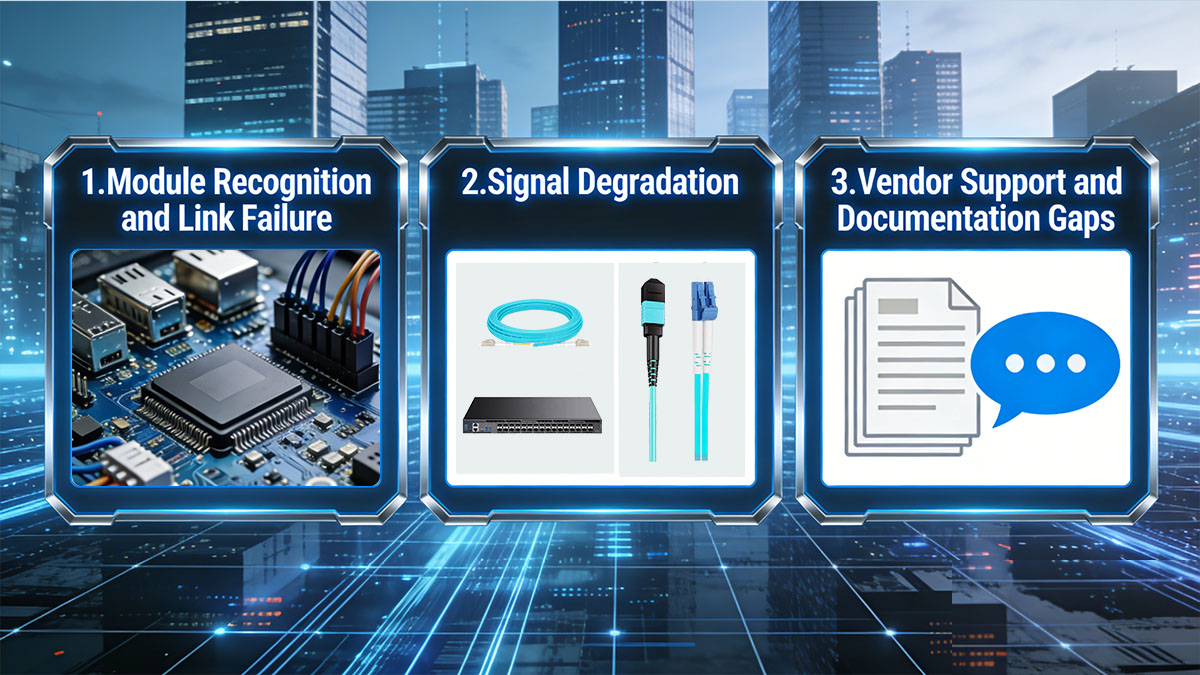
Module Recognition and Link Failure
Failure of a module to be recognized by Cisco equipment is one of the most frequent issues. Identifying the cause early can prevent prolonged network downtime. Common troubleshooting steps include:
Before testing, confirm that the issue is isolated to the module and not caused by other network components. Key actions to resolve recognition and link problems include:
- Verify module compatibility with the specific Cisco switch or router and its firmware version
- Update switch firmware if required to support third-party modules
- Test the module in a lab environment to confirm hardware functionality
Applying these steps ensures that module recognition issues are addressed systematically, reducing operational disruption.
Signal Degradation and Performance Loss
Signal degradation or increased errors can impact network performance, but identifying the root cause allows for targeted resolution. The main factors contributing to performance loss include cabling issues, distance limitations, or environmental conditions.
Common causes and corrective actions include:
- Inspect fiber cables and connectors for damage or contamination
- Ensure that the module’s reach matches the deployment distance
- Check for environmental factors such as temperature fluctuations or vibration
Addressing these issues promptly helps maintain consistent link quality and prevents unexpected network failures.
Common Issues Summary Table
The table below summarizes key issues encountered with third-party modules, their likely causes, and recommended corrective actions. Understanding these can streamline troubleshooting processes:
| Issue | Likely Cause | Recommended Action |
|---|---|---|
| Link not established | Firmware mismatch or incompatible module | Verify compatibility, update switch firmware |
| High BER / signal errors | Cabling issues or exceeding module reach | Inspect fiber, ensure distance compliance |
| Intermittent connectivity | Environmental stress or improper insertion | Check operating temperature, reseat module |
| Unexpected latency | Module or network congestion | Test in lab, monitor traffic patterns |
By systematically addressing each issue with these strategies, IT teams can ensure that third-party modules operate reliably and integrate smoothly with existing Cisco network infrastructure.
Vendor Support and Documentation Gaps
Another common challenge is the limited technical support and documentation provided by some third-party vendors. Being proactive can minimize the impact of this limitation.
Effective approaches include:
- Maintaining internal testing and validation records for all deployed modules
- Establishing vendor contact points for technical support before full deployment
- Implementing monitoring systems to quickly detect anomalies and isolate affected modules
These measures help organizations maintain operational continuity and quickly resolve problems even when vendor resources are limited.
?️? Regulatory Compliance and Safety Standards
Ensuring that Cisco-compatible optical module alternatives meet regulatory and safety standards is critical for reliable operation and long-term network stability. Compliance guarantees interoperability, reduces risk of equipment failure, and ensures adherence to industry and legal requirements.

Industry Certifications
Before deployment, modules should be evaluated for compliance with industry standards. These certifications confirm that modules can operate safely and consistently in network environments, regardless of vendor.
Key certifications to verify include:
- IEEE standards compliance to ensure interoperability across devices and vendors
- Multi-Source Agreement (MSA) adherence for standardized module design and performance
- RoHS (Restriction of Hazardous Substances) and CE markings for environmental and safety compliance
Confirming these certifications before deployment reduces the risk of unexpected failures and ensures modules meet internationally recognized operational benchmarks.
Environmental Ratings
Optical modules must maintain performance under various environmental conditions. Understanding and validating environmental tolerances is essential to prevent premature failures and network downtime.
Critical environmental factors to consider include:
- Operating temperature ranges appropriate for data center or outdoor deployments
- Humidity tolerance to prevent condensation and corrosion
- Resistance to vibration and shock during installation or operation
These factors help ensure that modules remain reliable even in demanding operational scenarios.
Compliance Summary Table
The following table provides an overview of key regulatory and safety requirements, illustrating the primary areas that affect module selection and deployment:
| Compliance Area | Standard | Importance for Deployment |
|---|---|---|
| Interoperability | IEEE / MSA | Ensures modules work with Cisco and multi-vendor switches |
| Environmental Safety | RoHS / CE | Prevents hazardous material exposure, ensures legal compliance |
| Thermal & Mechanical | Operating temp, shock, vibration | Maintains module stability and prevents link failures |
By systematically validating modules against these standards, organizations can confidently integrate third-party optical modules without compromising network safety or performance.
Best Practices for Compliance
Maintaining compliance goes beyond initial deployment. Ongoing monitoring and validation help ensure modules continue to meet standards over time.
Recommended practices include:
- Periodically verifying module certifications against current industry standards
- Documenting environmental conditions and module performance for audits or troubleshooting
- Coordinating with vendors to confirm updates or changes in regulatory compliance
Following these best practices ensures operational safety, legal compliance, and long-term reliability of Cisco-compatible optical modules in production networks.
?️? Future Trends in Optical Module Alternatives
The landscape of optical module alternatives is evolving rapidly, driven by the growing demand for higher speeds, multi-vendor flexibility, and smarter network management. Organizations adopting Cisco-compatible modules must stay informed about emerging trends to ensure long-term scalability and performance.

Multi-Vendor Ecosystem Growth
One major trend is the expansion of multi-vendor ecosystems, where organizations integrate modules from different vendors without sacrificing network reliability. This shift reduces dependency on a single supplier and fosters competition, which improves cost efficiency.
Key aspects of this trend include:
- Increased acceptance of vendor-neutral optical modules across enterprise and carrier networks
- Standardization efforts through IEEE and MSA to improve cross-vendor compatibility
- More widespread use of validation tools to ensure interoperability before deployment
By embracing multi-vendor ecosystems, organizations can implement scalable, flexible networks that are resilient to supply chain constraints and pricing fluctuations.
High-Speed Evolution
Network traffic demands continue to accelerate, prompting a shift toward higher-speed optical modules. Modules supporting 200GBASE, 400GBASE, and even 800GBASE connections are emerging as viable alternatives for next-generation data centers.
Before exploring specific speed tiers, it is important to understand that higher-speed modules often require careful attention to power, thermal management, and form factor compatibility to ensure seamless integration.
Considerations for high-speed transceivers adoption include:
- Enhanced power efficiency and thermal management for dense deployments
- Backward compatibility with existing 10G, 25G, and 100G infrastructures
- Adoption of new form factors like QSFP-DD and OSFP to support higher bandwidth
To illustrate the deployment scenarios and benefits of different speed tiers, the table below provides a summary of typical modules and their emerging advantages:
| Speed Tier | Typical Module | Key Deployment Scenario | Emerging Advantage |
|---|---|---|---|
| 200G | QSFP56 | Spine-leaf high-capacity links | High-density support, reduced cabling |
| 400G | QSFP-DD / OSFP | Data center core and metro | Future-proof bandwidth, lower latency |
| 800G | OSFP / custom | Hyperscale networks | Extreme throughput, optimized for AI/ML workloads |
The table highlights how each speed tier addresses specific network needs and prepares organizations for future data growth, while maintaining compatibility with existing Cisco infrastructure.
AI-Assisted Network Optimization
Artificial intelligence and machine learning are increasingly used to manage optical networks. AI-assisted tools can optimize module usage, predict failures, and automate configuration, enhancing performance and reliability.
Implementation trends include:
- Predictive failure detection using historical module performance data
- Dynamic allocation of optical links based on real-time traffic patterns
- Automated module configuration to simplify network management and reduce human error
The integration of AI technologies ensures that Cisco-compatible alternatives not only meet current network requirements but also adapt to future operational demands.
?️? Conclusion
Cisco-compatible optical module alternatives offer a practical solution for organizations seeking cost efficiency, flexibility, and high performance without compromising network reliability. By carefully evaluating compatibility, performance metrics, environmental tolerances, and vendor credibility, network teams can confidently integrate third-party modules into enterprise, data center, and carrier networks.
From high-density data center deployments to campus and carrier applications, these alternatives provide scalable solutions that align with evolving network demands. Performance validation, troubleshooting best practices, and adherence to regulatory standards ensure that third-party modules operate seamlessly alongside Cisco equipment, reducing operational risk while supporting multi-vendor network strategies.
For those looking to explore a reliable selection of Cisco-compatible optical modules, the LINK-PP Official Store offers a comprehensive range of tested alternatives that meet industry standards and performance expectations. Leveraging these solutions can help organizations achieve cost-effective, flexible, and high-performance networking with confidence.