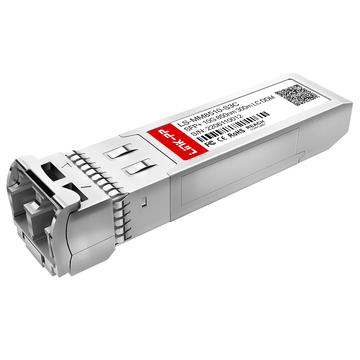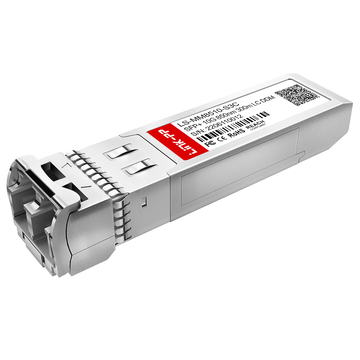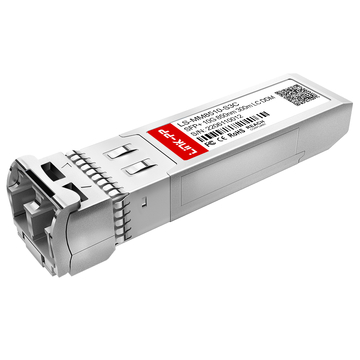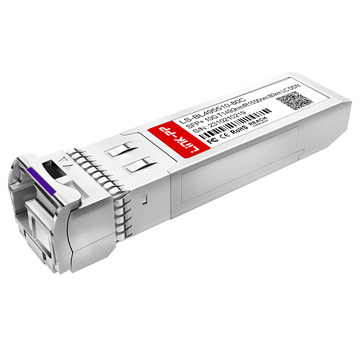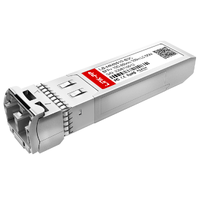





























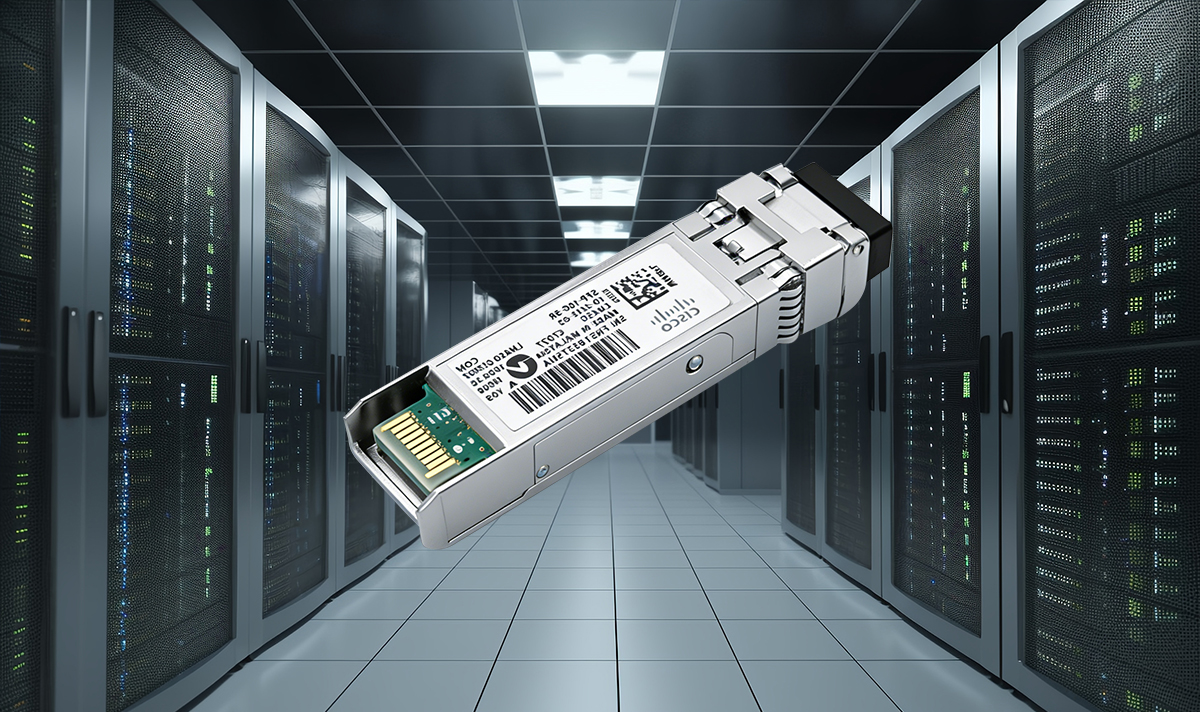
Cisco SFP-10G-SR modules are widely used in enterprise and data center networks, as well as in modern telecom infrastructures, where high-speed, reliable, and cost-effective optical connections are critical. These 10GBASE-SR transceivers provide fast multimode fiber (MMF) connectivity, supporting link lengths ranging from short FDDI-grade fibers to extended distances over OM3 and OM4 cables.
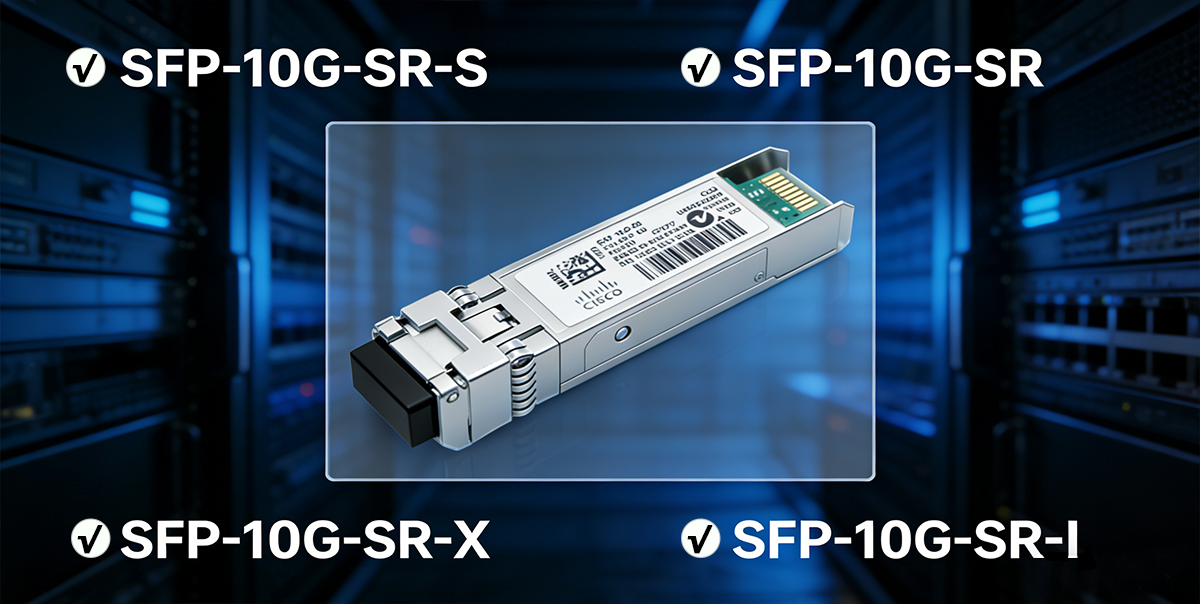
Understanding the differences among various Cisco SFP-10G-SR module types—including SFP-10G-SR-S, SFP-10G-SR, SFP-10G-SR-X, and SFP-10G-SR-I—is essential for network engineers and IT professionals who aim to optimize performance, ensure compatibility, and select the right module for specific environments. This article provides a detailed comparison of module types, highlights their key features, link capabilities, and application scenarios, and offers practical guidance for choosing the most suitable SFP-10G-SR module for enterprise, industrial, or telecom deployments.
1️⃣ What is Cisco SFP-10G-SR?
Overview and Applications
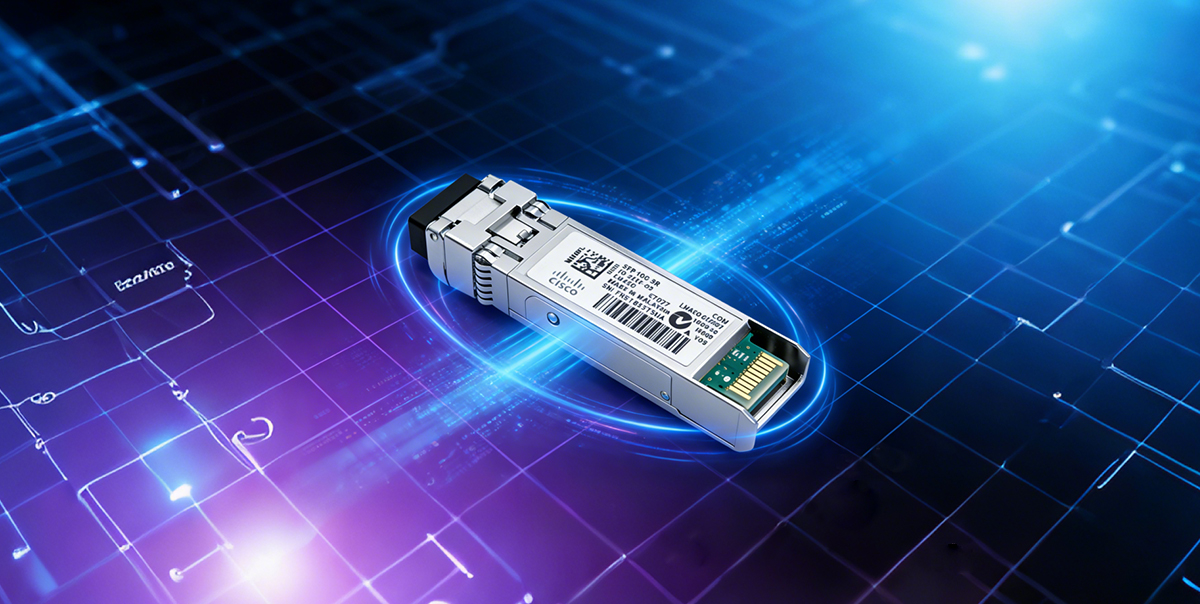
A Cisco SFP-10G-SR is a 10GBASE-SR Transceiver designed to deliver 10 Gigabit Ethernet connectivity over multimode fiber (MMF). Operating at an 850nm wavelength, this module follows the IEEE 802.3ae 10GBASE-SR standard and is built in the SFP+ form factor, allowing hot-swappable installation in compatible Cisco switches and routers.
Cisco SFP-10G-SR modules are widely used in enterprise networks, data center environments, and telecom access networks, where short-reach, high-bandwidth optical links are required. In enterprise LANs, these modules are commonly deployed for switch uplinks and backbone connections. In data centers, they support server-to-switch and switch-to-switch links within the same rack, row, or data hall. In telecom and service provider networks, SFP-10G-SR optics are often used for short-distance aggregation and access-layer connectivity.
Compared with long-reach optical modules, 10GBASE-SR transceivers offer a balance of high performance, lower power consumption, and cost efficiency, making them a preferred choice for high-density 10G Ethernet deployments where transmission distances remain within multimode fiber limits.
Supported Fiber Types and Link Lengths
Cisco SFP-10G-SR modules are specifically optimized for multimode fiber (MMF) and support several standardized fiber types commonly found in enterprise and data center cabling infrastructures:
-
FDDI-grade multimode fiber (62.5 μm core)
Supports link lengths of up to 26 meters, typically used in legacy cabling environments. -
OM3 multimode fiber (2000 MHz·km bandwidth)
Enables transmission distances of up to 300 meters, making it suitable for most modern data center and campus network deployments. -
OM4 multimode fiber (4700 MHz·km bandwidth)
Extends the maximum link length to 400 meters, providing greater flexibility for larger data halls and higher-density switching environments.
These distance specifications reflect practical deployment scenarios for 10GBASE-SR optics, where multimode fiber offers lower installation costs and easier handling compared to single-mode fiber. However, because SFP-10G-SR modules are designed exclusively for short-reach transmission, they are not intended for long-distance links or single-mode fiber applications, which require alternative optics such as 10GBASE-LR or 10GBASE-ER.
Why SFP-10G-SR Remains a Standard Choice for 10G Networks
Despite the availability of higher-speed optics, Cisco SFP-10G-SR modules continue to be widely deployed due to their mature ecosystem, broad compatibility, and proven reliability. Many existing enterprise and data center networks are already cabled with OM3 or OM4 multimode fiber, allowing organizations to upgrade bandwidth without reworking physical infrastructure.
In addition, the standardized nature of the SFP-10G-SR interface ensures interoperability across a wide range of Cisco platforms and supports scalable network designs, especially when paired with compatible third-party transceivers that meet MSA and Cisco coding requirements.
2️⃣ Key Types of Cisco SFP-10G-SR Modules
Cisco offers several variants of the 10GBASE-SR Module to address different operational requirements, including commercial deployments, extended-temperature environments, and industrial or telecom use cases. While all variants share the same short-reach multimode fiber capabilities, they differ significantly in protocol support, operating temperature range, and application scope.
SFP-10G-SR-S (S-Class)
The Cisco SFP-10G-SR-S is an S-Class commercial-grade 10GBASE-SR transceiver, designed for cost-sensitive enterprise and data center environments where advanced protocol support is not required.
From an optical perspective, the SR-S module provides the same transmission performance as standard SR modules, supporting:
-
26m over FDDI-grade multimode fiber
-
300m over OM3 multimode fiber (2000 MHz·km)
-
400m over OM4 multimode fiber (4700 MHz·km)
However, an important engineering limitation is that SFP-10G-SR-S does not support FCoE (Fibre Channel over Ethernet). This makes it unsuitable for converged network environments where Ethernet and Fibre Channel traffic share the same infrastructure.
Typical application boundary:
-
Enterprise LANs
-
Standard data center Ethernet switching
-
Cost-optimized deployments without storage convergence
SFP-10G-SR
The Cisco SFP-10G-SR is the standard 10GBASE-SR optical module and represents the baseline implementation of short-reach 10G Ethernet optics within the Cisco ecosystem.
It supports the same multimode fiber link distances as the SR-S variant:
-
26 m (FDDI-grade MMF)
-
300 m (OM3 MMF)
-
400 m (OM4 MMF)
Unlike the S-Class version, the standard SR module is typically selected for general-purpose enterprise and data center deployments, where broader feature compatibility is expected. While it remains a single-rate 10GBASE-SR module, it is widely deployed due to its maturity, interoperability, and predictable behavior across Cisco switching platforms.
Typical application boundary:
-
Enterprise core and distribution layers
-
Data center top-of-rack (ToR) switching
-
General Ethernet aggregation
SFP-10G-SR-X
The Cisco SFP-10G-SR-X is a multirate short-reach transceiver designed for environments that require protocol flexibility and extended operating temperature support.
Protocol and Rate Support
Depending on the hardware revision, the SR-X module supports:
-
10GBASE-SR
-
10GBASE-SW
-
OTU2 / OTU2e
(Note: Version 1 supports only 10GBASE-SR)
Optical Performance
Despite its additional capabilities, the optical reach remains consistent with other SR variants:
-
26 m (FDDI-grade MMF)
-
300 m (OM3)
-
400 m (OM4)
The key differentiator of the SR-X module is its extended operating temperature range, making it suitable for deployments where environmental conditions exceed standard commercial specifications.
Typical application boundary:
-
Extended-temperature network environments
-
Transport and aggregation systems
-
Mixed Ethernet and optical transport platforms
SFP-10G-SR-I
The Cisco SFP-10G-SR-I is the most feature-rich variant in the SR family, engineered for industrial and telecom-grade applications.
Protocol and CPRI Support
In addition to supporting:
-
10GBASE-SW
-
OTU2 / OTU2e
the SR-I module also supports CPRI data rates:
-
Options 3, 4, 5, 6, 7, 7a, and 8
This makes the SR-I module particularly suitable for mobile fronthaul and radio access network (RAN) architectures.
Optical Reach
The supported link distances are identical to other SR variants:
-
26m (FDDI-grade MMF)
-
300m (OM3 MMF)
-
400m (OM4 MMF)
Combined with its industrial operating temperature range, SR-I modules are designed for deployment in outdoor cabinets, base stations, and other harsh environments.
Typical application boundary:
-
Industrial Ethernet systems
-
Telecom access and fronthaul networks
-
CPRI-based wireless infrastructure
Engineering Comparison Overview
| Module Type | Protocol Support | CPRI Support | Temperature Class | Typical Use Case |
|---|---|---|---|---|
| SFP-10G-SR-S | 10GBASE-SR | No | Commercial | Cost-sensitive enterprise |
| SFP-10G-SR | 10GBASE-SR | No | Commercial | Standard enterprise & DC |
| SFP-10G-SR-X | SR / SW / OTU2 | No | Extended Temp | Transport & mixed networks |
| SFP-10G-SR-I | SR / SW / OTU2 | Yes (3–8) | Industrial | Telecom & industrial systems |
Why These Differences Matter in Practice
From an engineering and procurement perspective, all Cisco SFP-10G-SR variants deliver identical optical reach. The real differentiation lies in protocol versatility, environmental tolerance, and application boundaries. Selecting the wrong variant may not cause immediate link failure, but it can introduce long-term limitations in interoperability, scalability, or environmental reliability.
3️⃣ How to Choose the Right SFP-10G-SR Module?
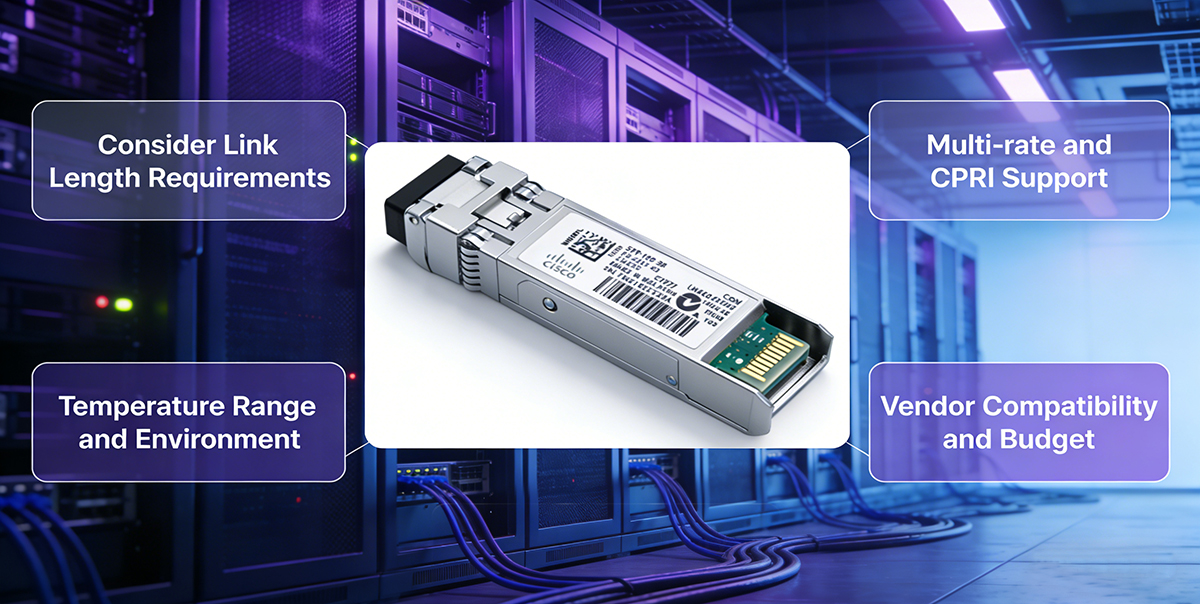
Selecting the correct Cisco SFP-10G-SR module is not just about matching speed. Network engineers and procurement teams should evaluate link distance, operating environment, protocol requirements, and ecosystem compatibility to avoid performance bottlenecks or long-term reliability risks.
Consider Link Length Requirements
All Cisco SFP-10G-SR variants are based on the 10GBASE-SR standard (IEEE 802.3ae) and operate at 850 nm over multimode fiber, but practical deployment still requires careful distance planning.
Supported distances (common across SR variants):
-
26m on FDDI-grade MMF
-
300m on OM3 (2000 MHz·km)
-
400m on OM4 (4700 MHz·km)
Engineering guidance:
-
For in-rack or row-to-row connections, OM3 is usually sufficient.
-
For large data halls or spine-leaf designs, OM4 provides additional margin and future flexibility.
-
Exceeding these limits may result in increased bit error rates (BER) and link instability.
⚠️ Note: SFP-10G-SR modules are not suitable for single-mode fiber (SMF) or long-reach links. In those cases, LR or ER optics should be considered.
Temperature Range and Environment
Operating temperature is a key differentiator between SR variants and often overlooked during procurement.
| Module Type | Typical Temperature Class | Suitable Environments |
|---|---|---|
| SR / SR-S | Commercial (0 °C to 70 °C) | Data centers, enterprise wiring closets |
| SR-X | Extended temperature | Transport nodes, edge sites |
| SR-I | Industrial temperature | Outdoor cabinets, telecom, industrial sites |
Why this matters:
-
Commercial optics may throttle or fail prematurely in uncontrolled or outdoor environments.
-
Industrial-grade modules use hardened components to ensure signal stability under temperature extremes.
Multi-rate and CPRI Support
Not all SFP-10G-SR modules are limited to standard Ethernet.
-
SFP-10G-SR / SR-S
-
Single-rate 10GBASE-SR
-
Designed purely for Ethernet switching
-
-
SFP-10G-SR-X
-
Multi-rate support: 10GBASE-SR, 10GBASE-SW, OTU2 / OTU2e
-
Common in transport and aggregation networks
-
-
SFP-10G-SR-I
-
Multi-rate + CPRI data rates 3–8
-
Widely used in 5G fronthaul, RAN, and telecom infrastructure
-
Selection tip:
If your network involves Fronthaul, DWDM transport, or legacy telecom protocols, SR-X or SR-I is mandatory. Standard SR modules will not meet these requirements.
Vendor Compatibility and Budget
Cisco optics are tightly integrated with Cisco platforms, but compatibility and cost must be balanced.
Key considerations:
-
Ensure the module matches the Cisco platform’s supported optics list (hardware + software version).
-
Cisco OEM modules offer guaranteed support but come at a higher cost.
-
Third-party compatible SFP+ 10G SR Modules (e.g., MSA-compliant, Cisco-coded optics) can significantly reduce CapEx while maintaining performance—especially in large-scale deployments.
Best practice:
-
For mission-critical core networks, OEM optics may be preferred.
-
For access, aggregation, or scale-out data centers, certified compatible modules provide better ROI.
Decision Summary
Choose your SFP-10G-SR module based on:
-
✔ Required link distance and fiber type
-
✔ Environmental temperature range
-
✔ Need for multi-rate, OTU, or CPRI support
-
✔ Platform compatibility and total cost of ownership
A well-matched optic not only ensures link stability today but also reduces maintenance risk and upgrade costs over the network lifecycle.
4️⃣ Benefits of Cisco SFP-10G-SR Modules
Cisco SFP-10G-SR modules are designed around the 10GBASE-SR standard, offering a balanced combination of performance, cost efficiency, and deployment flexibility. These advantages make them a preferred choice for enterprise, data center, and telecom access networks.
Cost-Effective 10G High-Speed Connectivity
One of the primary benefits of 10GBASE-SR optics is their lower total deployment cost compared to long-reach alternatives.
-
Uses multimode fiber (MMF), which is widely available and less expensive than single-mode fiber.
-
Lower laser power requirements reduce both module cost and power consumption.
-
Ideal for high-density switch ports in access and aggregation layers.
Typical data rate:
-
10.3125 Gbps (10G Ethernet line rate)
Optimized for Short-Range, High-Density Networks
Cisco SFP-10G-SR modules are specifically optimized for short-reach interconnects, where most data center traffic occurs.
Key link characteristics:
-
26 m on FDDI-grade MMF
-
300 m on OM3
-
400 m on OM4
These distances align perfectly with:
-
In-rack and row-to-row cabling
-
Leaf–spine data center architectures
-
Campus backbone interconnections
Mature and Proven 10GBASE-SR Standard
10GBASE-SR is a well-established IEEE standard, ensuring interoperability and long-term reliability.
-
Fully compliant with IEEE 802.3ae
-
Interoperable across compliant switches and NICs
-
Stable performance with predictable optical characteristics
This maturity reduces integration risks compared to emerging or proprietary interfaces.
Low Power Consumption and Thermal Efficiency
10Gbase SR SFP+ 850nm 300m modules typically consume less power than long-reach or tunable optics.
Engineering benefits:
-
Reduced thermal load on switch line cards
-
Improved airflow efficiency in dense deployments
-
Lower operational costs over time
This is especially important in large-scale data centers where power and cooling are tightly managed.
Flexible Module Variants for Different Environments
Cisco extends the standard SR platform with multiple variants to address diverse operating conditions:
-
SR-S: Cost-optimized, commercial-grade deployments
-
SR: Standard enterprise and data center use
-
SR-X: Extended temperature and multi-rate support
-
SR-I: Industrial-grade with CPRI and telecom capabilities
This modular approach allows engineers to maintain consistent optical architecture while adapting to environmental or protocol-specific needs.
Seamless Integration with Cisco Network Platforms
Cisco SFP-10G-SR modules are designed to integrate smoothly with Cisco switching and routing ecosystems.
-
Accurate DOM/DDM monitoring for temperature, voltage, and optical power
-
Predictable behavior across Cisco IOS / NX-OS platforms
-
Simplified troubleshooting and lifecycle management
For organizations standardizing on Cisco infrastructure, this consistency reduces operational complexity.
Strong Return on Investment (ROI)
By combining:
-
Lower fiber and optic costs
-
Proven reliability
-
Broad availability and scalability
Cisco SFP-10G-SR modules deliver a strong price-to-performance ratio, especially for networks transitioning from 1G to 10G architectures.
In summary, Cisco SFP-10G-SR modules provide a reliable, efficient, and scalable foundation for short-range 10G optical networking—balancing performance and cost while supporting a wide range of enterprise, data center, and telecom applications.
5️⃣ Installation and Operational Considerations for Cisco SFP-10G-SR
Proper installation and operation are critical to ensuring long-term stability and performance of 10Gbase SR SFP Module. Although 10GBASE-SR optics are relatively easy to deploy, several engineering best practices should be followed to avoid link degradation or unexpected failures.
Fiber and Connector Selection Best Practices
Cisco SFP-10G-SR modules operate at 850nm over multimode fiber, making fiber quality and connector cleanliness essential.
Key recommendations:
-
Use OM3 or OM4 multimode fiber for optimal performance and future scalability.
-
Ensure connectors are LC duplex, properly polished, and free from dust or oil.
-
Always clean connectors before insertion; contamination is one of the leading causes of high insertion loss.
Engineering note: Even minor contamination can introduce sufficient attenuation to cause intermittent link errors, especially near maximum supported distances.
Proper Module Insertion and Handling
Incorrect handling during installation can damage optical components or reduce module lifespan.
Best practices include:
-
Insert and remove modules using the bail latch, not the fiber cable.
-
Avoid touching the optical interface or exposing it to open air for extended periods.
-
Keep protective dust caps on until the fiber is ready to be connected.
For industrial variants (SR-X, SR-I), ensure modules are fully seated to maintain mechanical stability in vibration-prone environments.
Temperature and Airflow Management
Although different SR variants support different temperature ranges, adequate airflow remains critical.
-
Verify that switch airflow direction matches rack design (front-to-back or back-to-front).
-
Avoid blocking ventilation around high-density SFP+ ports.
-
Monitor module temperature using Digital Diagnostic Monitoring via the switch OS.
Excessive heat can lead to:
-
Increased bit error rates
-
Reduced optical output power
-
Shortened component lifespan
Link Budget and Cable Length Validation
Before deployment, confirm that the planned fiber length falls within the supported range:
-
26 m on FDDI-grade MMF
-
300 m on OM3
-
400 m on OM4
Avoid using unnecessary patch cords or couplers, as each connection adds insertion loss. Maintaining adequate optical margin improves long-term reliability.
Software Compatibility and Platform Support
Cisco SFP-10G-SR modules must be supported by both hardware and software versions of the target platform.
Operational checklist:
-
Verify supported optics in Cisco hardware compatibility lists.
-
Ensure switch firmware (IOS, IOS-XE, or NX-OS) supports the specific SR variant.
-
For third-party compatible modules, confirm proper EEPROM coding and DOM functionality.
Ongoing Monitoring and Maintenance
Once installed, continuous monitoring helps detect issues early.
-
Track Tx/Rx optical power, temperature, and voltage via DOM.
-
Investigate gradual power drops, which may indicate fiber degradation or contamination.
-
Replace modules proactively if operating consistently near thermal or optical limits.
In summary, careful attention to fiber quality, environmental conditions, and operational best practices ensures that Cisco SFP-10G-SR modules deliver stable, predictable performance throughout their service life—whether deployed in enterprise data centers or demanding industrial environments.
6️⃣ FAQs About 10GBASE-SR Transceiver
① What is the difference between SR, SR-S, SR-X, and SR-I?
The main differences between Cisco SFP-10G-SR variants lie in operating temperature range, supported protocols, and target applications.
-
SFP-10G-SR-S (S-Class)
-
Commercial-grade module
-
Optimized for cost-sensitive deployments
-
Supports 10GBASE-SR only
-
Does not support FCoE
-
-
SFP-10G-SR
-
Standard enterprise-grade 10GBASE-SR module
-
Designed for data centers and campus networks
-
Broad compatibility across Cisco platforms
-
-
SFP-10G-SR-X
-
Multi-rate support: 10GBASE-SR, 10GBASE-SW, OTU2 / OTU2e
-
Extended operating temperature range
-
Suitable for transport and edge network environments
-
-
SFP-10G-SR-I
-
Industrial-grade module
-
Supports CPRI data rates 3 to 8, in addition to Ethernet and OTU
-
Designed for telecom, RAN, and industrial applications
-
② Can SFP-10G-SR support FCoE or CPRI?
Support depends on the specific module variant:
-
FCoE (Fibre Channel over Ethernet)
-
Supported by standard 10GBASE-SR Transceiver
-
Not supported by SFP-10G-SR-S
-
-
CPRI
-
Supported only by SFP-10G-SR-I
-
Required for mobile fronthaul and radio access networks
-
If your deployment involves storage networking or telecom fronthaul, selecting the correct SR variant is essential.
③ How far can a 10GBASE-SR transceiver transmit on OM3 and OM4 fiber?
Cisco SFP-10G-SR modules support the following maximum link distances:
-
OM3 multimode fiber: up to 300 meters
-
OM4 multimode fiber: up to 400 meters
-
FDDI-grade MMF: up to 26 meters
Actual achievable distance may vary depending on connector quality, splice loss, and overall link budget.
④ Is SFP-10G-SR backward compatible with 1G SFP ports?
No. SFP-10G-SR modules are SFP+ devices, which require SFP+ ports to operate at 10 Gbps. They cannot function in standard 1G SFP slots, and attempting to do so will prevent the link from establishing. For mixed-speed environments, ensure that the switch port type matches the transceiver specification.
⑤ Can SFP-10G-SR be used with OM2 fiber?
Technically, 10Gbase SR SFP Module may operate over OM2 multimode fiber for very short distances. However:
-
OM2 has lower modal bandwidth (≤500 MHz·km) compared to OM3/OM4.
-
Using OM2 for 10G links reduces optical margin and increases the risk of errors.
-
Cisco officially recommends OM3 or OM4 fiber for reliable 10GBASE-SR performance.
Engineering tip: Only consider OM2 if distance is extremely short (a few meters) and no OM3/OM4 fiber is available. Otherwise, use OM3 or OM4 to ensure link stability.
⑥ Do SFP-10G-SR modules support Digital Optical Monitoring (DOM)?
Yes. All Cisco SFP-10G-SR modules support Digital Optical Monitoring (DOM/ DDM), which provides real-time diagnostic information:
-
Transmit and receive optical power
-
Module temperature and supply voltage
-
Laser bias current
DOM is accessible via switch CLI or network management software and is essential for proactive monitoring, troubleshooting, and maintaining reliable high-speed optical links.
⑦ Can I use third-party compatible modules on Cisco switches?
Yes, third-party compatible SFP 10Gbase SR modules can be used on many Cisco switches, provided they are properly coded and tested.
Key considerations:
-
Modules must be MSA-compliant and correctly programmed for Cisco platforms.
-
DOM/DDM functionality should be fully supported.
-
Some Cisco switches may require configuration commands to allow non-Cisco optics.
For large-scale deployments, certified compatible modules can significantly reduce cost without compromising performance when sourced from reputable vendors.
7️⃣ Conclusion

Cisco SFP-10G-SR modules—including SR-S, SR, SR-X, and SR-I—offer reliable, short-reach 10G connectivity across enterprise networks, data centers, and telecom environments. Each variant is designed for specific deployment needs, differing in protocol support, operating temperature range, and multi-rate or CPRI capabilities. Understanding these distinctions helps network engineers and procurement teams select the right module for link length requirements, environmental conditions, and budget constraints, ensuring optimal performance, stability, and cost-efficiency. By choosing the appropriate SFP-10G-SR module, organizations can maintain high-speed network reliability, simplify maintenance, and maximize return on investment across diverse networking scenarios.
Summary of Types and Applications
| Module Type | Typical Application | Key Features |
|---|---|---|
| SFP-10G-SR-S | Cost-sensitive enterprise, standard data centers | Commercial-grade, 10GBASE-SR only, does not support FCoE |
| SFP-10G-SR | Enterprise core, data center aggregation | Standard 10GBASE-SR, broad Cisco platform support |
| SFP-10G-SR-X | Extended-temperature environments, transport | Multi-rate (SR/SW/OTU2), extended temperature range |
| SFP-10G-SR-I | Industrial, telecom, fronthaul | Multi-rate + CPRI support, industrial temperature, ruggedized |
All variants share the same optical reach:
-
26 m on FDDI-grade MMF
-
300 m on OM3
-
400 m on OM4
Selection should focus on protocol support, environmental requirements, and application type, rather than link distance.
Recommended Modules for Different Scenarios
-
Enterprise LANs and standard data centers: SFP-10G-SR or SR-S for cost-effective 10G connectivity
-
Extended or harsh environments: SFP-10G-SR-X for extended temperature and transport flexibility
-
Telecom or industrial networks: SFP-10G-SR-I for CPRI support and industrial-grade reliability
-
Mixed or multi-protocol networks: SR-X or SR-I to handle multiple rates (Ethernet + OTU2/2e)
Using the correct module ensures stable 10G connectivity, minimal link errors, and longer operational lifespan.
For organizations seeking high-quality, cost-effective compatible SFP-10G-SR modules, LINK-PP offers fully tested options that are MSA-compliant and Cisco-compatible, supporting reliable deployment in enterprise, data center, and telecom environments.
Explore LINK-PP high-quality compatible SFP-10G-SR modules here:
? LINK-PP SFP-10G-SR Modules