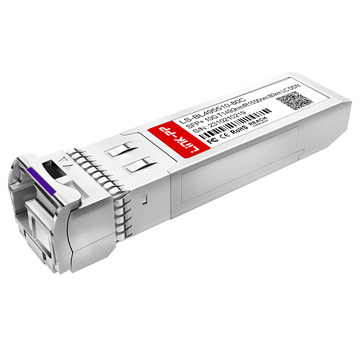
Cisco 10G ZR optical technology is widely used in long-distance 10GbE network deployments where stable transmission over metro and regional fiber links is required. As enterprise and carrier networks continue to expand across geographically distributed sites, the demand for reliable 80km optical connectivity has become increasingly important. In this context, Cisco 10G ZR modules play a critical role in supporting high-performance data transport across single-mode fiber infrastructure.
However, as network architectures evolve and interoperability requirements become more complex, many organizations begin evaluating Cisco 10G ZR replacement solutions that can deliver comparable 80km long-haul performance. These alternatives are often assessed based on optical budget, compatibility, link stability, and overall deployment flexibility within mixed-vendor environments and existing Cisco-based infrastructures.
This article provides a structured overview of Cisco 10G ZR and its replacement options, focusing on real-world 80km long-haul performance considerations. It covers key technical and deployment aspects, including:
- Core operating principles and specifications of 10G ZR optics
- Long-distance transmission behavior over single-mode fiber
- Compatibility and interoperability across network platforms
- Deployment practices, performance optimization, and troubleshooting factors
- Comparative insights into alternative 10G long-haul optical solutions
Together, these sections help clarify how Cisco 10G ZR-based systems and their compatible replacements can be effectively evaluated and deployed in modern optical networks where distance, stability, and efficiency remain critical requirements.
📁 Understanding Cisco 10G ZR Optical Technology
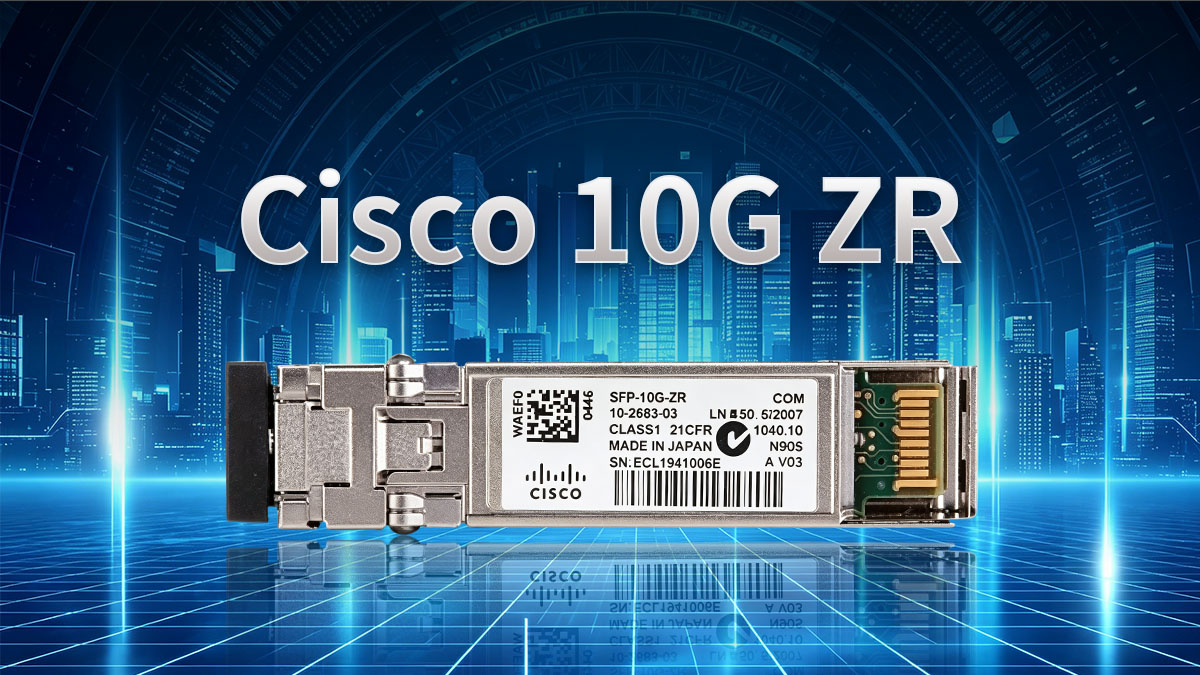
Cisco 10G ZR optical technology is designed to enable stable 10GbE transmission over long distances, typically reaching up to 80km on single-mode fiber. It is widely used in metro aggregation, enterprise interconnection, and carrier edge networks where high-capacity links must span geographically separated sites. The key value of 10G ZR lies in its ability to maintain signal integrity over extended fiber paths while supporting standard 10Gbps Ethernet services.
What Is Cisco 10G ZR?
Cisco 10G ZR refers to a class of 10GbE optical transceivers built for extended-reach applications using DWDM-like transmission characteristics. These modules are typically deployed in scenarios where shorter-reach optics such as SR or LR are insufficient for end-to-end connectivity.
The core function of Cisco 10G ZR can be summarized as follows:
- Enables 10Gbps Ethernet transmission over long-distance single-mode fiber links
- Supports approximately 80km reach under ideal link conditions
- Operates in the 1550nm wavelength region for low attenuation performance
- Designed for point-to-point metro and regional fiber connections
These characteristics make it suitable for inter-building links, data center interconnects, and telecom aggregation layers where distance exceeds standard 10G optical limits.
Key Technical Specifications of Cisco 10G ZR
Cisco 10G ZR modules are defined by a set of optical and electrical parameters that ensure predictable long-haul performance. These specifications directly impact link design, compatibility, and deployment reliability.
Typical technical parameters include:
| Parameter | Specification |
|---|---|
| Data Rate | 10Gbps |
| Wavelength | ~1550nm |
| Reach Distance | Up to 80km (SMF) |
| Connector Type | Duplex LC |
| Fiber Type | Single-mode fiber (OS1/OS2) |
These values define the operational boundaries of the module and serve as the foundation for link budget calculations in long-distance deployments.
How 80km Long-Haul Transmission Works
Long-haul transmission in Cisco 10G ZR systems is achieved through carefully balanced optical power budgets and high-quality single-mode fiber infrastructure. The signal must travel across multiple attenuation points while preserving sufficient strength at the receiver end.
The process typically involves several key physical and optical factors:
- Optical attenuation gradually reduces signal strength over distance
- Connector and splice losses accumulate along the fiber route
- Dispersion effects can distort signal timing and waveform integrity
- Link budget design ensures transmit power compensates for total losses
To maintain stable performance over 80km, network designers carefully evaluate total insertion loss and ensure adequate margin between transmitter output and receiver sensitivity. In practical deployments, this margin is critical to prevent bit errors and ensure consistent 10GbE throughput across long-distance links.
📁 Why Organizations Seek Cisco 10G ZR Replacement Solutions
Organizations seek Cisco 10G ZR replacement solutions primarily to maintain long-distance 10GbE connectivity while improving deployment flexibility, interoperability, and infrastructure efficiency. As enterprise and metro networks continue evolving, many operators require optical solutions that can integrate seamlessly into existing environments without disrupting established fiber architectures.
Long-haul 10GbE infrastructure remains widely deployed across data centers, telecom aggregation layers, and regional enterprise networks. In these environments, Cisco 10G ZR replacement modules are often evaluated as part of broader strategies focused on operational continuity, network scalability, and multi-vendor interoperability.
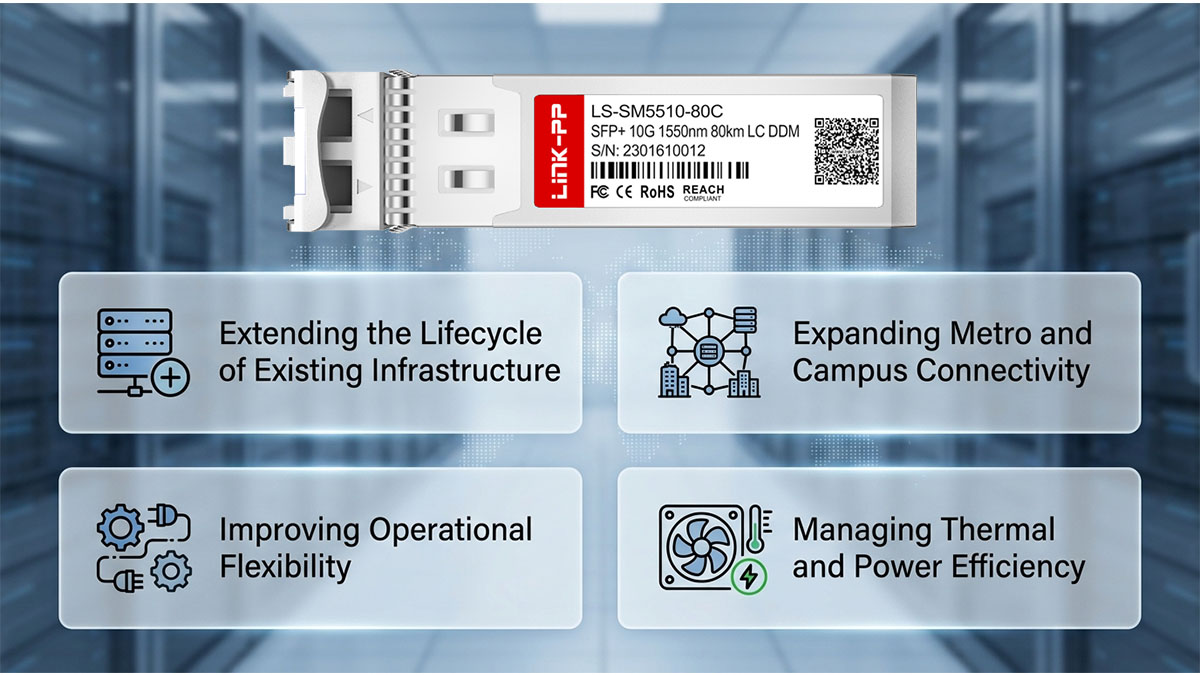
Extending the Lifecycle of Existing Infrastructure
Many organizations continue operating stable 10GbE platforms that still meet bandwidth and reliability requirements for metro and regional connectivity. Replacing the entire switching or routing infrastructure is often unnecessary when existing systems remain operationally effective.
Cisco 10G ZR replacement modules help extend infrastructure lifespan through several practical advantages:
- Maintaining compatibility with deployed Cisco networking hardware
- Supporting long-distance fiber links without redesigning optical architecture
- Preserving existing OS1 and OS2 single-mode cabling infrastructure
- Allowing gradual network upgrades instead of large-scale hardware transitions
This approach enables organizations to continue leveraging established 10GbE environments while delaying costly infrastructure migration projects.
Expanding Metro and Campus Connectivity
Long-distance 10GbE links remain essential for connecting distributed enterprise facilities, regional campuses, and metropolitan network nodes. Cisco 10G ZR replacement solutions are frequently deployed in environments where standard LR optics cannot provide sufficient reach.
Common deployment scenarios include:
- Interconnecting headquarters and remote office facilities
- Supporting regional disaster recovery sites
- Linking data centers across metropolitan fiber routes
- Extending carrier Ethernet services between aggregation points
These deployments benefit from the ability to maintain stable 80km optical transmission while supporting high-bandwidth Ethernet traffic over existing single-mode fiber infrastructure.
Improving Operational Flexibility
Operational flexibility has become increasingly important as organizations adopt mixed-vendor network environments. Many enterprises and service providers now prioritize optical interoperability to simplify deployment planning and infrastructure management.
Cisco 10G ZR replacement solutions can improve operational flexibility in several ways:
- Supporting interoperability across multiple switching and routing platforms
- Simplifying optical inventory management
- Reducing dependency on single-vendor optical ecosystems
- Allowing more consistent deployment strategies across distributed sites
These advantages are particularly valuable in environments where network expansion occurs gradually across different hardware generations and vendor platforms.
Managing Thermal and Power Efficiency
Thermal performance and power consumption are important considerations in dense optical deployments, especially within data center and telecom environments where airflow and rack efficiency directly affect operational stability.
Several factors influence the thermal behavior of long-haul 10G optics:
- Higher optical output power typically increases module heat generation
- Dense switch populations can create localized thermal hotspots
- Airflow direction impacts transceiver cooling efficiency
- Power supply stability affects long-term optical performance consistency
Because 80km optics generally operate at higher power levels than shorter-reach modules, organizations often evaluate replacement solutions based on their ability to maintain stable operation within existing thermal and electrical infrastructure limitations.
📁 Evaluating 80km Long-Haul Performance
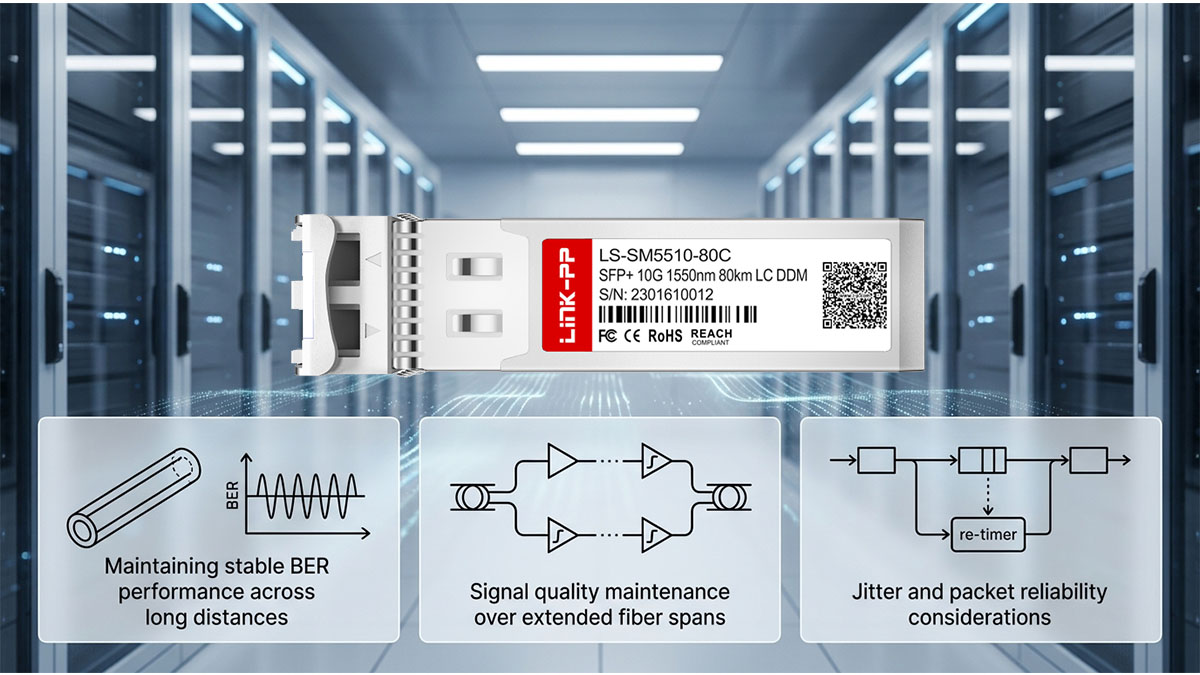
Evaluating 80km long-haul performance requires more than simply verifying transmission distance. Stable Cisco 10G ZR operation depends on optical budget accuracy, signal integrity, environmental stability, and real-world interoperability across the entire fiber path. In long-distance 10GbE deployments, even small variations in attenuation, temperature, or connector quality can significantly affect overall link reliability.
Optical Budget and Link Stability
Optical budget is one of the most important factors in determining whether an 80km 10GbE link can operate reliably. It defines the allowable amount of total signal loss between the transmitter and receiver while still maintaining acceptable bit error rates.
Several elements contribute to total optical loss within a long-haul fiber link:
- Fiber attenuation across the full transmission distance
- Connector insertion loss at patch panels and cross-connects
- Splice loss introduced during fiber joining
- Aging-related degradation in optical infrastructure
The following table highlights common optical loss contributors in 80km deployments:
| Loss Factor | Typical Impact |
|---|---|
| Fiber Attenuation | Distance-related signal reduction |
| Connector Loss | Small but cumulative insertion loss |
| Splice Loss | Signal degradation at fusion points |
| Dirty Interfaces | Increased reflection and attenuation |
| Aging Fiber | Reduced transmission efficiency over time |
A properly designed Cisco 10G ZR link maintains sufficient margin between transmitter output power and receiver sensitivity. This additional margin helps preserve stable performance even when environmental conditions or infrastructure quality fluctuate over time.
Latency and Signal Integrity in Long-Haul Links
Long-distance fiber transmission naturally introduces propagation delay, but signal integrity is often a greater concern than raw latency in 80km optical networks. Stable packet delivery depends on maintaining clean optical waveforms across the entire transmission path.
Several factors influence long-haul signal quality:
- Chromatic dispersion affecting pulse alignment
- Optical noise accumulation over extended distances
- Reflection caused by poor connector quality
- Timing instability resulting from degraded optical signals
Although fiber latency over 80km is relatively predictable, signal degradation can introduce retransmissions, packet errors, and inconsistent throughput if optical conditions are not carefully controlled.
Environmental Reliability Factors
Environmental stability plays a major role in long-distance optical performance because temperature fluctuations can directly affect laser output power, receiver sensitivity, and overall module behavior.
Important environmental considerations include:
- Operating temperature range of the transceiver
- Rack airflow efficiency in dense switch deployments
- Humidity and dust exposure within telecom facilities
- Power supply consistency during continuous operation
The table below outlines several environmental factors that commonly influence long-haul optical stability:
| Environmental Factor | Potential Impact |
|---|---|
| High Temperature | Reduced optical output stability |
| Poor Airflow | Increased thermal accumulation |
| Dust Contamination | Connector signal degradation |
| Power Instability | Intermittent transmission behavior |
Maintaining stable environmental conditions is particularly important for 80km optics because higher transmission power levels typically generate more heat than short-reach modules.
Testing and Validation Procedures
Real-world validation is essential before deploying Cisco 10G ZR replacement modules into production environments. Even when specifications appear compatible on paper, long-distance optical links should always undergo physical testing and interoperability verification.
Common validation procedures include:
- Measuring Tx and Rx optical power levels
- Verifying DOM/DDM telemetry accuracy
- Performing loopback and continuity testing
- Monitoring bit error rates under sustained traffic loads
- Confirming interoperability across target switch platforms
These testing processes help identify hidden issues such as excessive attenuation, unstable optical power, or compatibility inconsistencies before the link is placed into active service.
📁 Cisco 10G ZR Replacement Compatibility Considerations
Compatibility is one of the most critical factors when evaluating Cisco 10G ZR replacement solutions for long-haul 10GbE deployments. Even when optical specifications appear similar, interoperability can vary depending on switch firmware, EEPROM validation mechanisms, fiber infrastructure quality, and digital monitoring support. In enterprise and carrier environments, reliable compatibility directly affects deployment stability, troubleshooting efficiency, and long-term operational consistency.

Compatibility with Cisco Networking Platforms
Cisco 10G ZR replacement modules are commonly deployed across a wide range of Cisco switches and routers that support 10GbE long-haul optics. However, platform behavior may vary depending on operating system versions, hardware generations, and transceiver validation policies.
Several platform-related factors influence compatibility:
- Supported transceiver identification profiles
- IOS and NX-OS firmware recognition behavior
- DOM/DDM telemetry support capabilities
- Port initialization and link training mechanisms
The following table summarizes common compatibility considerations within Cisco environments:
| Compatibility Factor | Deployment Impact |
|---|---|
| Firmware Validation | Determines transceiver recognition |
| EEPROM Encoding | Affects module identification |
| DOM Support | Enables optical diagnostics visibility |
| Port Hardware Design | Influences signal stability |
These factors explain why interoperability testing is often recommended before deploying Cisco 10G ZR replacement optics into production networks.
Multi-Vendor Interoperability
Modern enterprise and telecom networks frequently include equipment from multiple vendors, making interoperability an important requirement for long-distance optical deployments. Cisco 10G ZR replacement solutions are often evaluated based on their ability to operate consistently across heterogeneous network environments.
Typical interoperability scenarios include:
- Cisco-to-Juniper long-haul fiber links
- Cisco-to-Arista data center interconnects
- Mixed enterprise campus backbone deployments
- Regional carrier Ethernet infrastructure integration
In these environments, MSA-based optical design principles help improve compatibility across different switching and routing platforms.
The table below highlights several common interoperability considerations:
| Interoperability Area | Importance |
|---|---|
| MSA Compliance | Standardized optical behavior |
| Wavelength Consistency | Stable signal reception |
| Optical Power Alignment | Reduced link instability |
| DOM Standardization | Easier monitoring integration |
Consistent interoperability simplifies operational management and reduces deployment complexity in large-scale optical networks.
Fiber Infrastructure Requirements
Stable 80km optical transmission depends heavily on the quality and design of the underlying fiber infrastructure. Even fully compatible Cisco 10G ZR replacement modules can experience degraded performance if the physical fiber environment introduces excessive attenuation or reflection.
Several infrastructure factors must be carefully evaluated:
- Use of OS1 or OS2 single-mode fiber
- Connector cleanliness and insertion loss control
- Fiber splice quality across long-distance routes
- Patch panel density and cross-connect design
The following table outlines key infrastructure considerations for 80km deployments:
| Infrastructure Element | Performance Influence |
|---|---|
| OS2 Single-Mode Fiber | Lower attenuation over long distance |
| Connector Cleanliness | Improved signal integrity |
| Fusion Splicing | Reduced optical loss |
| Patch Panel Quality | Better transmission consistency |
Proper infrastructure validation helps maintain stable optical margins and minimizes unexpected transmission errors across long-haul links.
Digital Optical Monitoring (DOM) Features
Digital Optical Monitoring plays a major role in maintaining operational visibility within long-distance optical networks. DOM capabilities allow network operators to monitor real-time optical conditions and identify potential issues before service degradation occurs.
Key monitoring metrics typically include:
- Transmit optical power
- Receive optical power
- Module operating temperature
- Supply voltage levels
- Laser bias current status
These telemetry values provide valuable insight into long-haul optical health and help simplify troubleshooting during deployment and operation.
📁 Cisco 10G ZR vs Other Long-Distance 10G Optical Modules
Cisco 10G ZR modules are designed for extended 10GbE transmission over single-mode fiber, but they are not the only option available for long-distance optical networking. Different 10G optical standards address different reach requirements, network architectures, and operational priorities. As a result, organizations often compare Cisco 10G ZR with ER optics, DWDM solutions, and newer high-speed long-haul technologies when planning metro or regional network infrastructure.
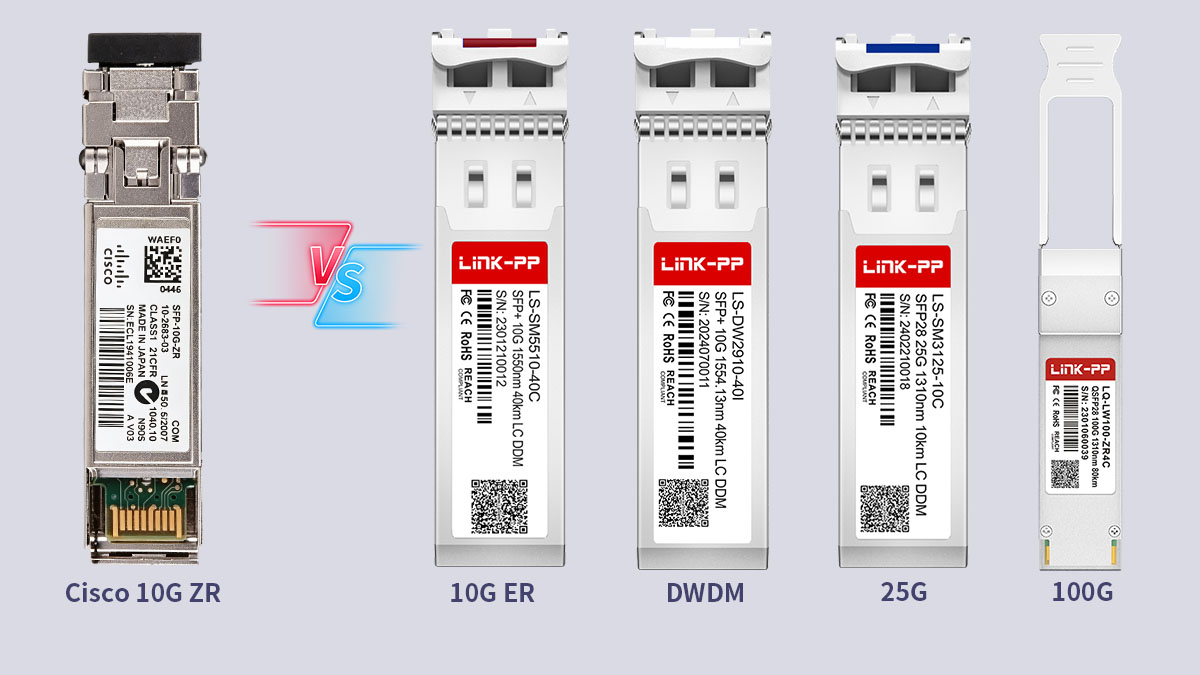
Understanding the differences between these optical categories helps network operators determine which solution best aligns with transmission distance, scalability, and infrastructure design goals.
Cisco 10G ZR vs 10G ER
Cisco 10G ZR and 10G ER are both designed for long-distance single-mode fiber transmission, but they target different deployment distances and optical power requirements. The most significant difference is transmission reach, with ER typically supporting up to 40km while ZR extends connectivity to approximately 80km.
The following table highlights the primary technical differences between these two optical standards:
| Feature | 10G ER | Cisco 10G ZR |
|---|---|---|
| Typical Reach | Up to 40km | Up to 80km |
| Wavelength | 1550nm | 1550nm |
| Fiber Type | Single-mode fiber | Single-mode fiber |
| Optical Power | Lower | Higher |
| Deployment Focus | Enterprise backbone | Metro and regional links |
Because Cisco 10G ZR operates over greater distances, it generally requires a larger optical budget and stricter attenuation management than ER deployments.
Cisco 10G ZR vs DWDM Coherent Solutions
DWDM coherent optical systems represent a more advanced category of long-haul networking technology compared to traditional 10G ZR optics. While Cisco 10G ZR focuses on relatively straightforward point-to-point Ethernet transport, coherent DWDM platforms are designed for ultra-long-distance, high-capacity carrier environments.
Several operational differences separate these technologies:
- Coherent optics support significantly higher bandwidth densities
- DWDM platforms enable wavelength multiplexing across shared fiber infrastructure
- Coherent systems use advanced digital signal processing techniques
- Cisco 10G ZR deployments are generally simpler to implement and manage
The following table compares key characteristics of both approaches:
| Feature | Cisco 10G ZR | DWDM Coherent Optics |
|---|---|---|
| Typical Speed | 10Gbps | 100G and higher |
| Complexity | Moderate | High |
| Deployment Type | Point-to-point Ethernet | Carrier transport networks |
| Distance Scalability | Metro/regional | Ultra-long-haul |
| DSP Processing | Limited | Advanced coherent DSP |
Although coherent DWDM systems provide superior scalability, Cisco 10G ZR remains relevant for environments where stable 10GbE connectivity is sufficient and infrastructure simplicity is preferred.
Cisco 10G ZR vs Modern 25G/100G Long-Haul Optics
As network bandwidth demands continue increasing, many operators are evaluating migration paths from 10GbE to higher-speed optical technologies such as 25G, 40G, and 100G long-haul solutions. However, Cisco 10G ZR still maintains practical value in many enterprise and metro deployments.
Several factors contribute to the continued use of 10G ZR infrastructure:
- Existing 10GbE architectures remain operationally stable
- Many workloads do not require immediate high-speed migration
- Long-haul 10G links continue supporting critical enterprise connectivity
- Upgrading entire optical ecosystems may require significant infrastructure redesign
The table below compares long-haul optical generations:
| Feature | Cisco 10G ZR | 25G Long-Haul | 100G Long-Haul |
|---|---|---|---|
| Speed | 10Gbps | 25Gbps | 100Gbps |
| Infrastructure Complexity | Lower | Moderate | Higher |
| Power Consumption | Moderate | Higher | Significantly Higher |
| Deployment Cost | Relatively Controlled | Moderate | High |
| Typical Use Case | Metro 10GbE | Modern aggregation | Hyperscale backbone |
For many organizations, Cisco 10G ZR remains a practical option where bandwidth requirements are stable and existing fiber infrastructure continues meeting operational needs.
📁 Deployment Best Practices for 80km 10G Networks
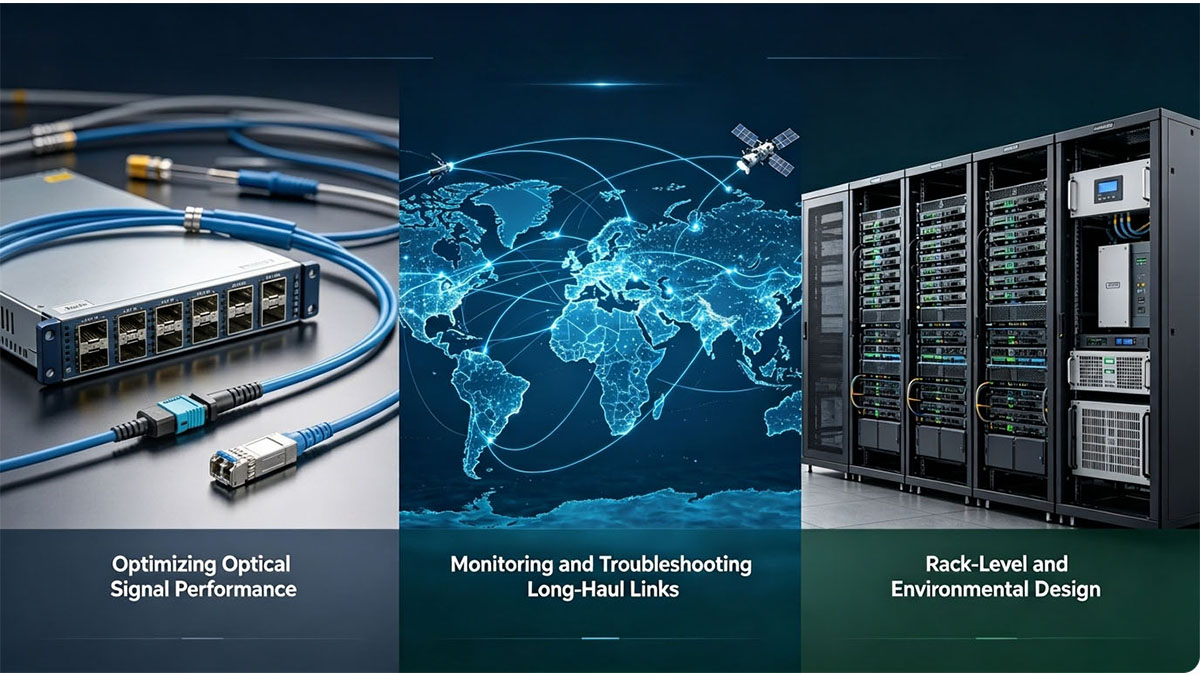
Deploying stable 80km 10GbE connectivity requires more than simply installing Cisco 10G ZR optics into compatible switches. Long-haul optical transmission depends on proper fiber planning, signal integrity management, environmental control, and continuous monitoring. Because attenuation and optical instability accumulate over distance, deployment quality directly affects long-term network reliability.
Planning Long-Distance Fiber Routes
Accurate fiber route planning is one of the most important steps in successful 80km optical deployment. The total link distance alone does not determine transmission stability; connector density, splice quality, and infrastructure design also affect the available optical margin.
Several factors should be evaluated before deployment:
- Total end-to-end fiber attenuation across the route
- Number of patch panels and cross-connect points
- Quality of fusion splicing throughout the fiber path
- Availability of redundant fiber routes for failover protection
- Compatibility of existing OS1 or OS2 single-mode infrastructure
Careful route validation helps ensure that total insertion loss remains within the supported optical budget of the Cisco 10G ZR link.
Optimizing Optical Signal Performance
Stable optical performance is critical in 80km deployments because signal degradation becomes more noticeable as transmission distance increases. Maintaining clean optical interfaces and minimizing reflection sources help preserve long-haul signal integrity.
Several deployment practices improve optical signal quality:
- Inspect and clean all LC connectors before installation
- Use low-loss single-mode patch cables
- Minimize excessive patch-panel transitions
- Verify transmit and receive optical power during commissioning
- Maintain sufficient optical margin for long-term stability
These practices help reduce insertion loss and improve overall transmission consistency across extended fiber links.
Monitoring and Troubleshooting Long-Haul Links
Continuous monitoring is essential for maintaining stable 10GbE long-haul operation. Optical conditions can gradually change due to temperature fluctuations, connector contamination, fiber aging, or infrastructure modifications.
Effective monitoring strategies typically include:
- Tracking DOM telemetry values regularly
- Monitoring Rx optical power trends for attenuation changes
- Identifying CRC errors and packet retransmissions
- Comparing live optical readings against deployment baselines
- Verifying thermal conditions inside switch chassis
These monitoring practices help network operators detect potential problems before they affect production traffic.
Rack-Level and Environmental Design
Environmental stability directly influences Cisco 10G ZR performance because long-haul optics generally operate at higher optical power levels than short-reach transceivers. Heat accumulation and airflow inconsistency can gradually affect laser stability and module efficiency.
Several environmental best practices help maintain reliable operation:
- Maintain consistent front-to-back airflow within network racks
- Avoid excessive transceiver density in confined chassis areas
- Ensure stable and redundant power delivery to switching platforms
- Monitor rack temperature continuously in dense deployments
- Keep fiber management organized to reduce cable stress and contamination risks
These environmental considerations become increasingly important in metro aggregation and data center environments where multiple long-haul optics operate simultaneously.
📁 Common Challenges in Cisco 10G ZR Deployments
Deploying Cisco 10G ZR modules over 80km links introduces several operational challenges that can affect link stability, performance, and long-term reliability. These challenges often relate to optical loss, compatibility, signal quality, and environmental factors. Proactively addressing these issues is essential for maintaining consistent 10GbE connectivity in metro and regional networks.
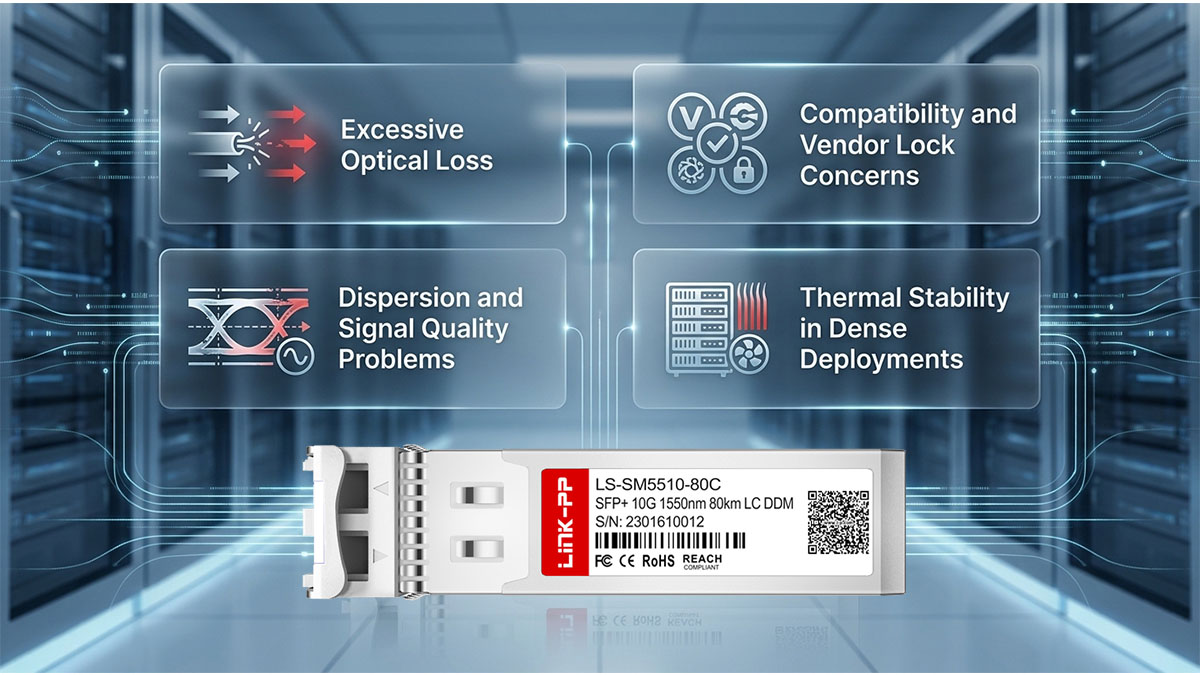
Excessive Optical Loss
Optical loss accumulates across long-distance fiber routes and can compromise the stability of 80km Cisco 10G ZR links. Even minor connector or splice degradation can reduce the optical margin below the threshold needed for error-free transmission.
Common sources of excessive optical loss include:
- Dirty or damaged LC connectors
- Poor-quality fiber splicing
- Multiple patch panels or cross-connects along the route
- Aging or high-attenuation fiber segments
Maintaining a well-documented optical budget and regularly testing insertion loss helps ensure stable performance over extended distances.
Compatibility and Vendor Lock Concerns
Cisco 10G ZR modules may face compatibility challenges when deployed in mixed-vendor environments or when replacement optics are considered. Firmware validation and transceiver restrictions can create operational complexities.
Key compatibility considerations include:
- Firmware validation restrictions that prevent recognition of certain modules
- Risks of unsupported optics behavior, such as intermittent link drops
- Operational planning requirements for mixed-vendor deployments, ensuring proper interoperability and DOM telemetry visibility
Proactive interoperability testing and careful module selection are necessary to avoid unexpected service disruptions.
Dispersion and Signal Quality Problems
Over an 80km single-mode fiber link, chromatic dispersion can degrade signal integrity, potentially increasing error rates and reducing throughput. Managing dispersion is critical for maintaining high-quality 10GbE performance.
Common approaches to addressing dispersion include:
- Evaluating chromatic dispersion impact along the fiber route
- Implementing dispersion compensation techniques where necessary
- Monitoring error rates continuously to detect early signs of signal degradation
Effective dispersion management ensures that long-haul links maintain stable optical waveforms and consistent packet delivery.
Thermal Stability in Dense Deployments
High-density switch chassis and long-haul optical modules generate significant heat, which can impact both module performance and link reliability. Thermal instability is a frequent challenge in metro aggregation and data center environments.
Thermal management considerations include:
- Heat accumulation in high-density chassis affecting optical output power
- Temperature-induced variations in transceiver laser performance
- Monitoring module operating conditions to detect thermal stress early
Proper rack design, airflow management, and continuous temperature monitoring are critical to preserving long-term stability in dense 80km 10GbE deployments.
📁 Conclusion
Cisco 10G ZR replacement solutions play a critical role in enabling stable 80km long-haul 10GbE connectivity across modern metro, enterprise, and carrier networks. As demonstrated throughout this article, Cisco 10G ZR remains a key reference point for long-distance optical design, while compatible alternatives help extend deployment flexibility, improve interoperability, and support evolving network infrastructures without compromising transmission stability.
To summarize the most important insights covered in this guide:
- Cisco 10G ZR is designed for reliable 80km single-mode fiber transmission in metro and regional networks
- Long-haul performance depends heavily on optical budget control, fiber quality, and dispersion management
- Compatibility factors such as firmware validation, DOM support, and multi-vendor interoperability significantly influence deployment success
- Proper planning, monitoring, and thermal management are essential for maintaining stable 10GbE links over long distances
These points highlight that successful long-distance optical networking is not only about module selection, but also about end-to-end system design and operational discipline.
In real-world deployments, the most stable 80km 10G networks are achieved when optical modules, fiber infrastructure, and monitoring practices are designed as a unified system rather than independent components. Careful attention to link budget, environmental stability, and compatibility ensures consistent performance across long-haul Ethernet connections.
For organizations planning to optimize or expand their 10GbE long-distance infrastructure, exploring well-matched Cisco 10G ZR replacement solutions can provide a balanced approach between performance, interoperability, and lifecycle efficiency. Resources from LINK-PP Official Store can further support deployment planning by offering compatible optical solutions designed for stable long-distance networking environments.