As modern data centers continue to scale to support cloud computing, virtualization, AI workloads, and high-density server environments, the demand for faster and more reliable network connectivity has never been greater. High-speed interconnects between servers, switches, and storage systems are essential to ensure efficient data flow and maintain optimal performance across the entire infrastructure.
Among the many optical connectivity solutions available today, 10G SR (10Gigabit Short Range) modules have become one of the most widely deployed options for short-distance, high-bandwidth communication inside data centers. Designed to transmit data over multimode fiber, 10G SR modules provide a cost-effective and reliable way to support 10Gbps Ethernet links across racks, rows, and network aggregation layers.
In this article, we will explore what 10G SR is, and why it plays a crucial role in high-speed data center networking. You will also learn about its technical specifications, deployment scenarios, differences compared with other 10G SFP modules, compatibility considerations, cabling requirements, and common troubleshooting tips — helping you better understand how to select and deploy the right 10G SR solution for your network.
? What is 10G SR
Before deploying optical transceivers in a data center network, it is important to understand the technology behind them. 10G SR is one of the most common optical standards used for short-range 10-Gigabit Ethernet connections, especially in high-density switching environments.
Definition of 10G SR
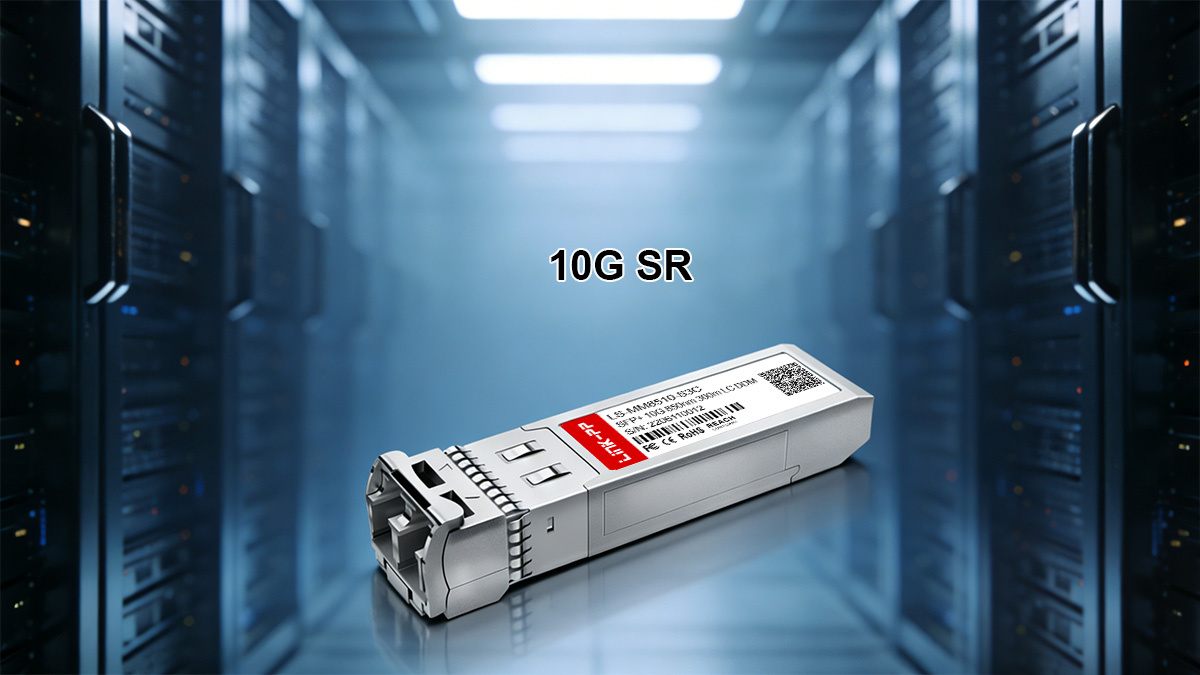
10G SR, short for 10 Gigabit Short Range, is a type of optical transceiver designed to transmit data at 10 gigabits per second (10Gbps) over multimode fiber (MMF). It is defined by the IEEE 802.3ae standard for 10GBASE-SR Ethernet and is primarily used for short-distance links within data centers, enterprise networks, and high-performance computing environments.
10G SR modules typically operate at a wavelength of 850nm and use vertical-cavity surface-emitting laser (VCSEL) technology to transmit optical signals through multimode fiber cables such as OM3 or OM4. Because multimode fiber is more cost-effective and easier to deploy for short distances compared to single-mode fiber, 10G SR has become a preferred solution for intra-data-center connectivity.
In most implementations, the technology is delivered through SFP+ (Small Form-Factor Pluggable Plus) transceivers, which are hot-swappable modules that can be easily inserted into compatible switches, routers, and network interface cards. This modular design allows network engineers to scale and upgrade infrastructure without replacing entire devices.
Technical Specifications of 10G SR SFP
A typical 10G SR SFP+ module includes several technical characteristics that make it suitable for high-speed short-range communication.
First, the module supports a data rate of up to 10Gbps, allowing it to handle large volumes of traffic generated by modern applications such as cloud services, big data analytics, and virtualization platforms.
Second, it operates at a wavelength of 850nm, which is optimized for multimode fiber transmission. This wavelength works efficiently with VCSEL-based transmitters, enabling reliable optical signal generation with relatively low power consumption.
Third, the transmission distance depends on the type of multimode fiber used. For example:
- Up to 300 meters over OM3 fiber
- Up to 400 meters over OM4 fiber
These distances are ideal for typical data center layouts, where network equipment is often located within the same rack, row, or data hall.
Additionally, most 10G SR SFP+ modules support Digital Diagnostic Monitoring (DDM) or DOM, which allows network administrators to monitor real-time parameters such as temperature, voltage, optical transmit power, and receive power. This feature helps improve network visibility and simplifies troubleshooting.
Role of 10G SR in High-Speed Data Transmission
10G SR modules play a critical role in enabling fast and efficient short-distance data transmission within modern network infrastructures. Data centers rely heavily on high-speed interconnections between servers, storage arrays, and switching equipment, and 10G SR provides a reliable solution for these connections.
Because of its low latency and high bandwidth, 10G SR is commonly used for server-to-switch links, switch-to-switch aggregation, and other short-range communication scenarios. These connections are essential for maintaining smooth data flow across compute clusters, virtualization environments, and distributed storage systems.
Another key advantage of 10G SR is its cost efficiency. Multimode fiber infrastructure is generally less expensive than single-mode fiber for short distances, and 10G SR modules themselves are often more affordable than long-range optical transceivers. This makes them an attractive option for organizations looking to scale their data center networks without significantly increasing infrastructure costs.
? How 10G SR Enhances Data Center Connectivity
Modern data centers require network solutions that can deliver high throughput, minimal delay, and reliable communication between densely deployed devices. 10G SR modules are specifically designed to meet these requirements by providing efficient short-range optical connectivity within data center environments.
Through high bandwidth, low latency, and dependable short-distance communication, 10G SR helps optimize network performance for server clusters, storage systems, and switching infrastructures.

High Bandwidth for Server-to-Switch Links
One of the primary ways 10G SR enhances data center connectivity is by providing high bandwidth connections between servers and switches. As modern workloads such as cloud computing, virtualization, big data processing, and containerized applications generate large volumes of data traffic, traditional lower-speed connections may become bottlenecks in the network.
With a 10Gbps transmission rate, 10G SR modules enable servers to transmit and receive large amounts of data quickly and efficiently. This high bandwidth capacity ensures that applications can run smoothly without experiencing delays caused by network congestion. For example, in a virtualization environment where multiple virtual machines share the same physical server, high-speed server-to-switch links are essential to maintain consistent performance across workloads.
In many data centers, Top-of-Rack (ToR) switches connect dozens of servers within the same rack. Using 10G SR modules with multimode fiber allows these connections to support high throughput while maintaining cost efficiency. As a result, network administrators can scale server deployments without sacrificing network performance.
Low Latency Benefits of 10G SR
Low latency is another key advantage of using 10G SR modules in data center networks. Latency refers to the time it takes for data to travel from one point in the network to another, and even small delays can impact performance in latency-sensitive applications such as real-time analytics, financial trading platforms, and distributed computing systems.
Because 10G SR modules operate over short distances using multimode fiber, they can deliver extremely fast signal transmission with minimal delay. Optical communication inherently offers faster and more stable data transmission compared to many electrical alternatives, reducing the time required for packets to move between devices.
Additionally, the high data rate of 10Gbps helps reduce buffering and queuing within the network infrastructure. This means data can move more efficiently between servers, switches, and storage systems, improving the overall responsiveness of the data center environment.
Reliable Short-Range Communication in Rack Environments
Data center environments often consist of densely packed racks containing servers, switches, and storage equipment. In these environments, reliable short-range connectivity is essential to ensure consistent communication between devices located within the same rack or across nearby racks.
10G SR modules are specifically optimized for short-distance optical communication, typically supporting transmission distances of up to 300m over OM3 multimode fiber and up to 400m over OM4 fiber. These distances are more than sufficient for most data center layouts, where devices are often located within tens of meters of each other.
Another advantage of 10G SR in rack environments is its resistance to electromagnetic interference (EMI). Unlike copper cables, optical fiber is immune to electrical noise generated by high-density server equipment and power systems. This ensures stable signal transmission even in complex and electrically noisy environments.
? 10G SR vs Other 10G Optical Modules: Key Differences
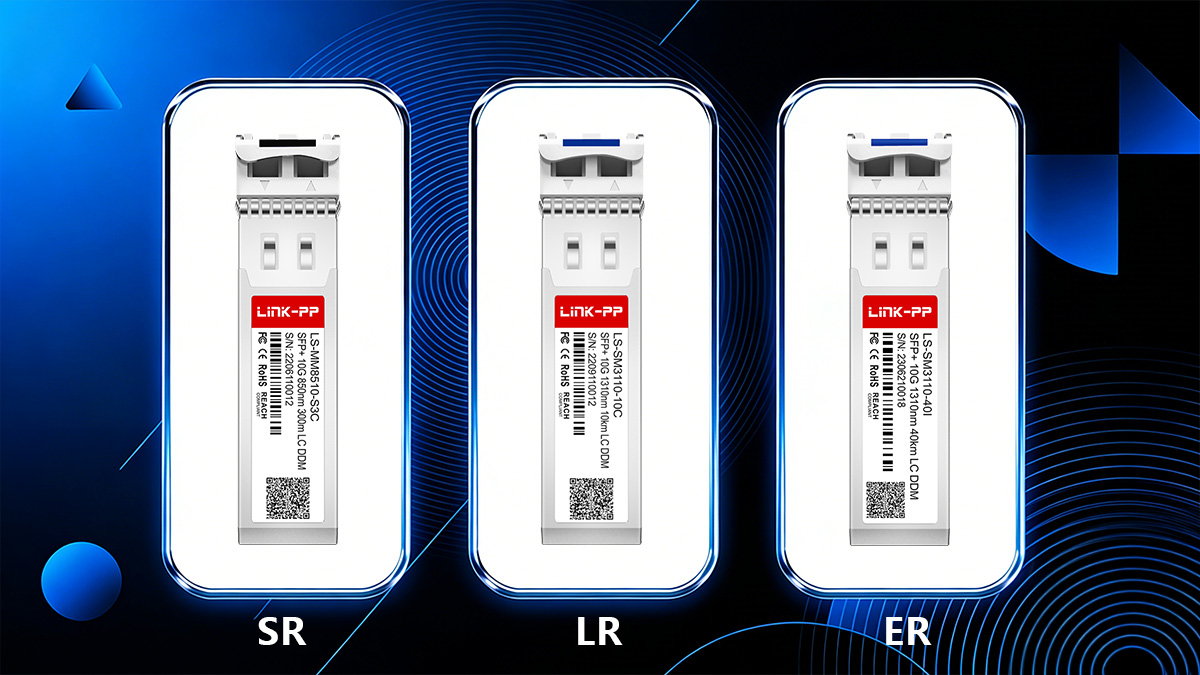
While 10G SR is widely used for short-range data center connections, it is not the only optical module available for 10Gbps networking. Other modules, such as 10G LR (Long Range) and 10G ER (Extended Range), are designed for longer transmission distances and different networking scenarios.
Understanding the differences between these modules helps network engineers select the most appropriate solution based on distance requirements, fiber type, cost considerations, and deployment environments.
Key Differences Among 10G SR, LR & ER SFP Modules:
| Feature |
10G SR |
10G LR |
10G ER |
| Operating Wavelength |
850nm |
1310nm |
1550nm |
| Fiber Type |
Multimode Fiber (MMF) |
Single-Mode Fiber (SMF) |
Single-Mode Fiber (SMF) |
| Transmission Distance |
Up to 300m (OM3) / 400m (OM4) |
Up to 10km |
Up to 40km |
| Laser Type |
VCSEL |
DFB Laser |
DFB/EML Laser |
| Typical Application |
Intra–data center, rack-to-rack links |
Campus networks, metro connections |
Long-haul network interconnects |
| Deployment Cost |
Lower |
Medium |
Higher |
10G SR vs 10G LR
The main difference between 10G SR and 10G LR lies in their transmission distance and fiber type. While 10G SR is optimized for short-range communication inside data centers, 10G LR is designed for longer-distance links typically found in campus or metropolitan networks.
10G SR modules use multimode fiber (MMF) and operate at an 850nm wavelength, which makes them ideal for short-distance connections such as server-to-switch links, switch aggregation within racks, or connections between nearby rows of equipment. Because multimode fiber infrastructure is generally more affordable and easier to install for short distances, 10G SR solutions tend to have lower deployment costs.
In contrast, 10G LR modules operate at a wavelength of 1310nm and use single-mode fiber (SMF), allowing them to transmit data over distances of up to 10 kilometers. This makes them suitable for building-to-building connections, campus networks, and larger enterprise environments where devices are located far apart.
Another difference is the laser technology used. 10G SR typically uses VCSEL lasers, which are cost-effective and energy-efficient, while 10G LR modules use DFB (Distributed Feedback) lasers, which are capable of maintaining signal quality over longer distances but come at a higher cost.
As a result, 10G SR is generally the preferred option for intra-data-center connectivity, whereas 10G LR is better suited for inter-building or campus-scale networking.
10G SR vs 10G ER
The difference between 10G SR and 10G ER becomes even more significant when considering transmission range and application scenarios. While 10G SR is designed for short-distance data center connections, 10G ER modules support much longer communication distances.
10G ER operates at a 1550nm wavelength and uses single-mode fiber, enabling transmission distances of up to 40km. This extended reach makes it suitable for metropolitan area networks (MANs), service provider infrastructure, and long-distance enterprise network links.
Compared to 10G SR modules, 10G ER transceivers require more powerful laser technology, often using DFB or electro-absorption modulated laser (EML) to maintain signal integrity across long fiber spans. Because of this, 10G ER modules typically have higher power consumption and higher costs.
? Deployment Scenarios for 10G SR in Data Centers
Because of its balance between performance, cost, and ease of deployment, the 10G SR transceiver fits seamlessly into a wide range of data center architectures. Its short-range, high-speed capabilities make it particularly suitable for environments where dense server connections and low latency are crucial.

Top-of-Rack (ToR) Architectures with 10G SR
In Top-of-Rack (ToR) network designs, a switch is installed at the top of each rack to connect all servers within that rack using short multimode fiber cables. 10G SR modules are ideal here because most connections are limited to a few meters.
This setup minimizes cabling complexity, improves airflow efficiency, and simplifies maintenance. The low power consumption and compact form factor of SR SFP+ modules also make them perfect for high-density ToR deployments, allowing each rack to achieve reliable 10G performance without high cost.
End-of-Row (EoR) and Middle-of-Row (MoR) Applications
In End-of-Row (EoR) and Middle-of-Row (MoR) configurations, switches are placed at the ends or middle of server rows, aggregating connections from multiple racks. The slightly longer cable runs in these architectures — often 50m to 100m — still fall within the effective range of 10G SR when using OM3 or OM4 fiber.
These setups benefit from the scalability and easy management provided by 10G SR, which supports high port density and consistent transmission performance. By using SR connections, data centers can interconnect multiple racks efficiently while maintaining a clean, structured cabling layout.
Spine-Leaf Network Designs Using 10G SR
Modern data centers frequently use a spine-leaf architecture, where each leaf switch connects to every spine switch, enabling predictable performance and non-blocking traffic flow. In this design, 10G SR transceivers often form the links between leaf switches and server nodes, or between closely located spine and leaf devices.
Their low latency and high reliability make them suitable for the numerous short connections typical of this layout. By deploying 10G SR modules throughout the spine-leaf network, operators can achieve a fully redundant, high-throughput architecture that efficiently balances performance and cost.
? Compatibility and Interoperability of 10G SR Modules
Ensuring broad compatibility and seamless interoperability is critical for the effective deployment of 10G SR modules in modern data centers. These capabilities guarantee that the modules can operate reliably across a wide range of network equipment and environments.
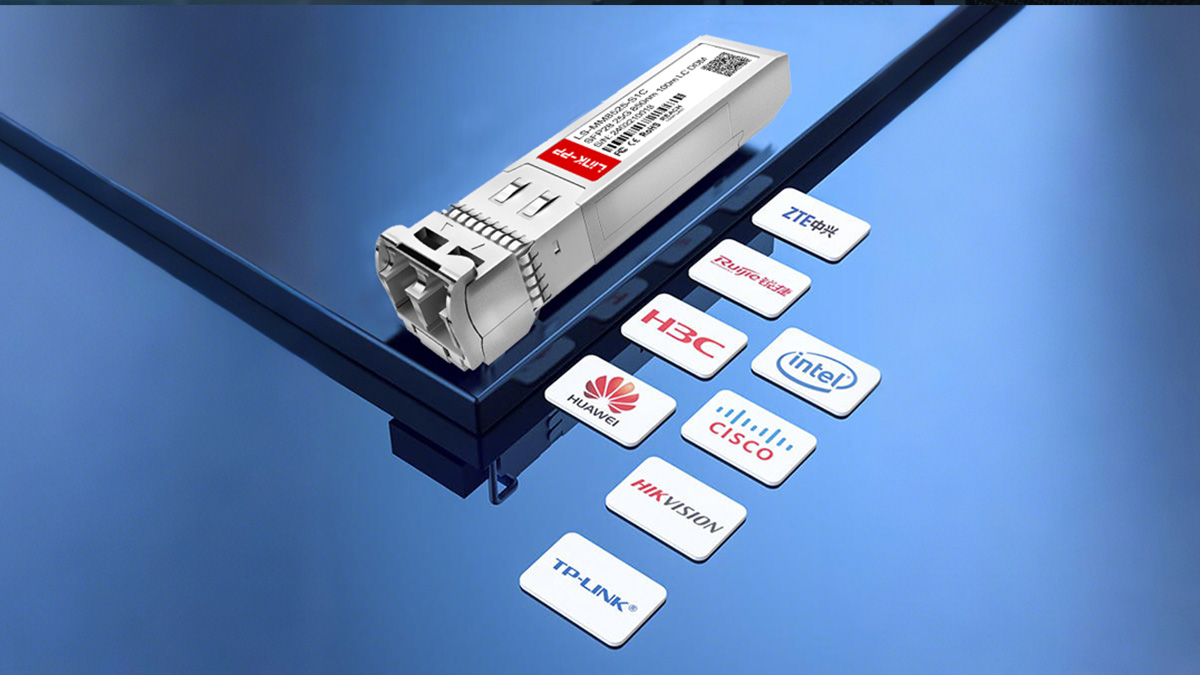
Compatibility with Major Switch Vendors
10G SR modules are engineered for universal application and are widely compatible with networking equipment from all major vendors, including Cisco, Juniper, Arista, and Dell. While many network operators utilize original equipment manufacturer (OEM) transceivers to ensure seamless integration and warranty support, a vast market of third-party, or "compatible" 10G SR modules exists.
These third-party compatible modules are designed to be functionally identical to their OEM counterparts, encoding vendor-specific security codes to ensure they are recognized and accepted by the host switch. This compatibility allows network architects the flexibility to manage costs and supply chains without being locked into a single vendor's transceiver offerings.
MSA Compliance and Industry Standards
The cornerstone of 10G SR interoperability is its strict compliance with the Multi-Source Agreement (MSA), specifically the SFP+ MSA standard (SFF-8431). This agreement defines the module's physical dimensions, electrical interface, and management specifications, ensuring that any MSA-compliant 10G SR module will physically and electrically fit into any SFP+ port, regardless of the manufacturer.
Furthermore, conformance to IEEE 802.3ae standards dictates the optical characteristics, such as wavelength (850nm) and power budgets, guaranteeing that the module communicates correctly over multimode fiber. This adherence to open standards is what enables the plug-and-play nature of 10G SR optics in modern networks.
Interoperability Testing for 10G SR
Before reaching the market, most 10G SR modules undergo rigorous interoperability testing to confirm cross-vendor functionality and dependable performance under real-world network conditions. These tests include link stability assessments across different switch models, eye-diagram measurements for signal integrity, and bit-error rate (BER) tests over varying types of multimode fiber.
Verified interoperability not only reduces deployment risks but also simplifies scaling in large, heterogeneous data center networks where mixed vendor equipment is common.
? Cabling Considerations for 10G SR Deployment
Proper cabling is critical to achieving the full performance of a 10G SR SFP module. The choice of fiber type, cable quality, and overall infrastructure design directly affects transmission distance, reliability, and installation cost.
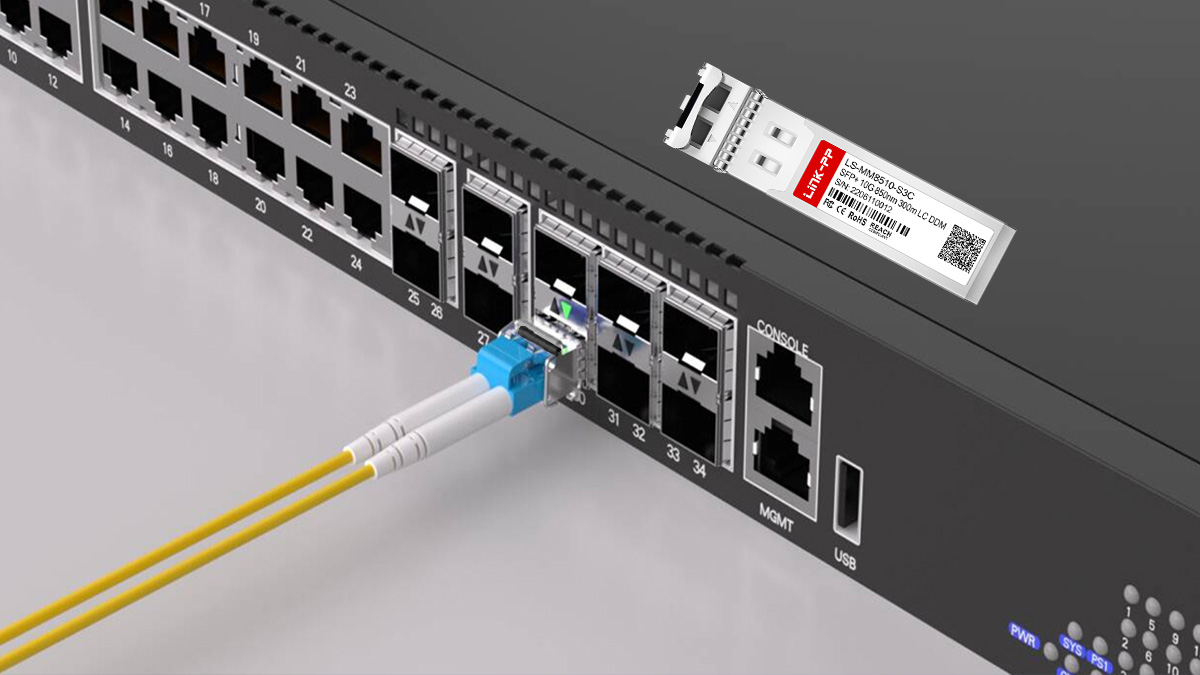
Multimode Fiber Requirements for 10G SR
10G SR modules are engineered to operate exclusively over multimode fiber (MMF), which features a larger core diameter than single-mode fiber, typically 50µm. This larger core allows for the use of lower-cost Vertical-Cavity Surface-Emitting Lasers (VCSELs) at the 850nm wavelength.
The use of multimode fiber is essential not only for maintaining the proper modal dispersion characteristics required for short-range transmission but also for ensuring cost-effectiveness within the data center. Attempting to use single-mode fiber with a 10G SR optical module would result in significant signal loss and an inability to link because the light from the VCSEL cannot be efficiently coupled into the smaller core of the single-mode fiber.
Choosing Between OM3 and OM4 for 10G SR
When deploying 10G SR, network architects typically choose between Laser-Optimized Multimode Fiber (LOMMF) of types OM3 and OM4, with the primary differentiator being the supported reach. OM3 fiber, often identified by its aqua color, is capable of supporting 10Gigabit Ethernet up to 300m. OM4 fiber (typically violet or aqua) offers a higher modal bandwidth (EMBc), extending the reach of 10G SR to 400m.
The decision hinges on the specific distance requirements of your links: OM3 is generally sufficient for most intra-rack and adjacent-rack connections, making it a highly cost-effective choice. But in bigger data centers, where you need to connect equipment that is farther apart, OM4 is a better option. It can handle longer distances and keep the signal strong, so you don't need extra equipment to boost the signal or switch to a different type of fiber.
? Common Challenges and Troubleshooting 10G SR Connections
While 10G SR modules are designed for reliable performance in short-range environments, network administrators may occasionally encounter issues that disrupt connectivity. Understanding these common challenges and knowing how to systematically troubleshoot them is essential for maintaining optimal data center operations.
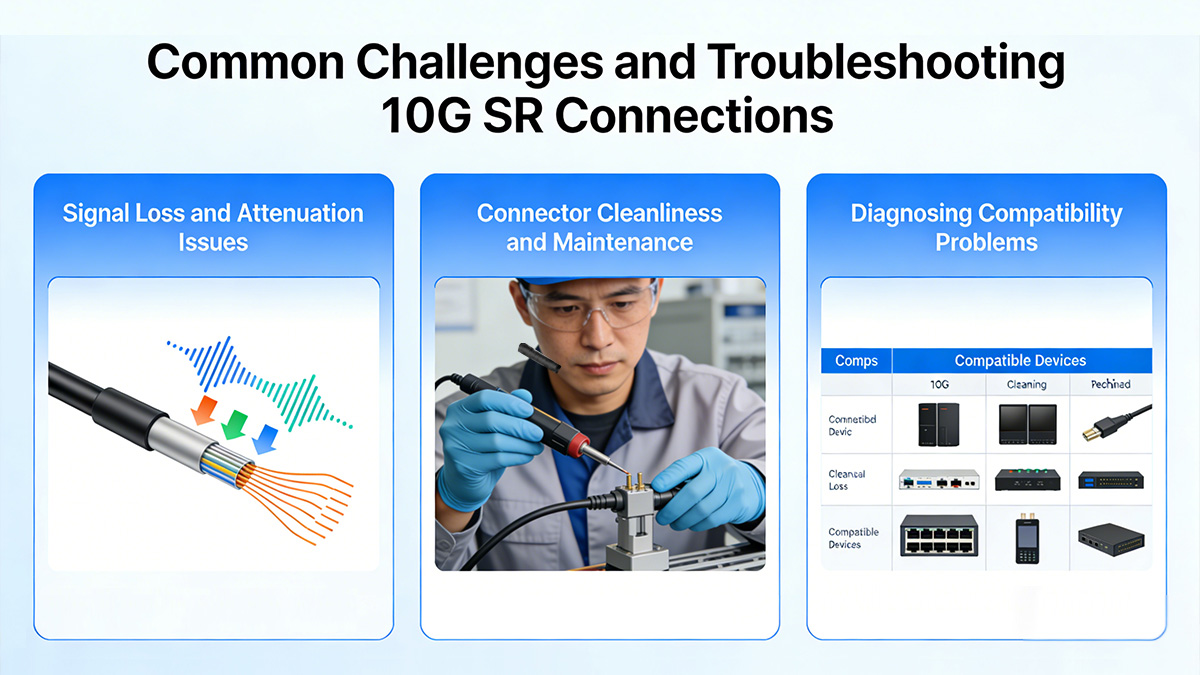
Signal Loss and Attenuation Issues
Signal loss, or attenuation, is one of the most frequent obstacles in 10G SR deployments, often manifesting as a high bit error rate or a complete link failure. This issue typically arises when the optical signal power drops below the receiver’s sensitivity threshold due to factors such as excessive cable length, tight bends in the fiber, or using the wrong type of multimode fiber.
To troubleshoot, technicians should first verify the link length against the 10G SR specification (typically 300m on OM3 or 400m on OM4) and use an optical power meter to measure the received signal strength, ensuring it falls within the acceptable range defined by the module’s specifications.
Connector Cleanliness and Maintenance
Dust, oil residue, or microscopic debris on fiber connectors can severely affect optical performance and increase bit error rates. For reliable 10G SR communication, it’s vital to inspect and clean connectors regularly using approved lint-free wipes and fiber cleaning tools.
Before inserting modules into ports, ensure both the transceiver interface and patch cable connectors are completely free of contaminants. Implementing a standardized cleaning routine across all equipment can help maintain consistent connection quality and prevent unpredictable link failures.
Diagnosing Compatibility Problems
Even with MSA compliance, compatibility issues can arise when integrating 10G SR modules with equipment from different vendors or legacy hardware. This can result in the module not being recognized by the switch, link flapping, or the inability to establish a connection at the expected speed.
A structured diagnostic approach involves checking the switch’s hardware compatibility list, updating the device’s firmware to the latest version, and if the problem persists, testing the module in a known working port to isolate whether the issue lies with the transceiver or the host device.
?Conclusion: Selecting the Best 10G SR Solution for Your Network
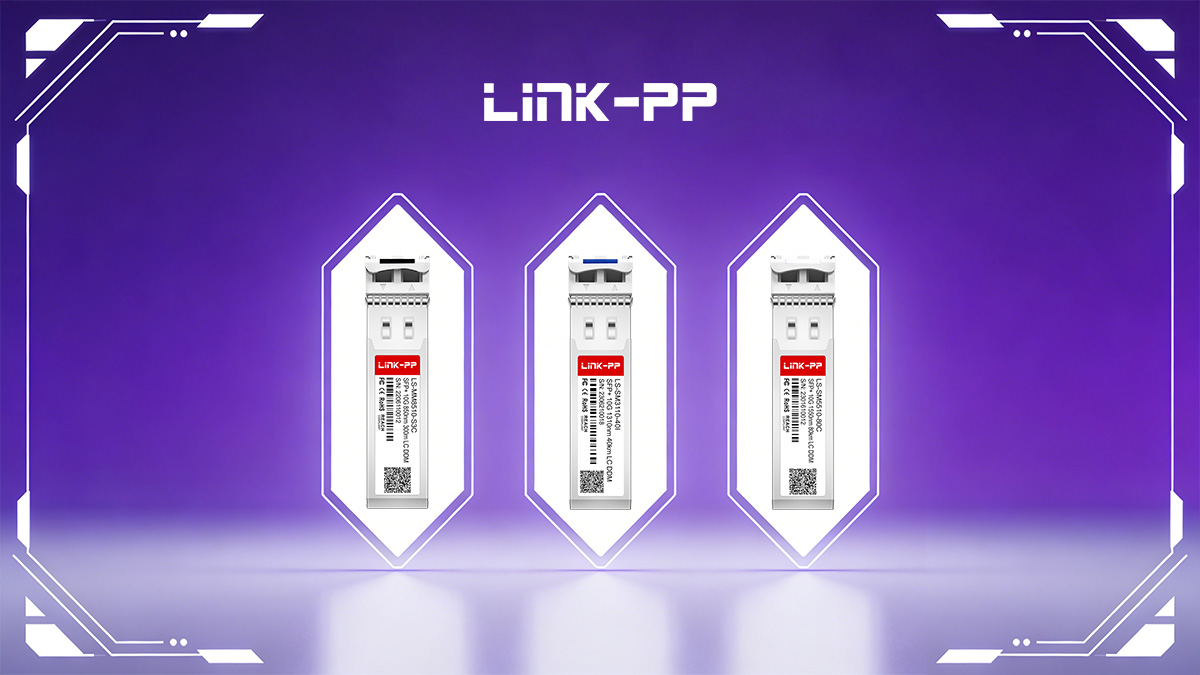
Choosing the right 10G SR module is about balancing performance, reliability, and compatibility with your existing infrastructure. Evaluate factors such as transmission distance, switch compatibility, fiber type, and budget before making a purchasing decision. Investing in high-quality, MSA-compliant modules ensures low latency, strong signal integrity, and long-term scalability for evolving data center demands.
For dependable and cost-effective optical modules that meet industry standards, explore the wide selection available at the LINK-PP Official Store — your trusted partner in high-speed network connectivity solutions.