As enterprise networks, data centers, and campus infrastructures continue to expand, the demand for reliable and cost-effective Gigabit Ethernet solutions remains strong. Among the various optical standards available, 1000BASE-SX has long been a popular choice for short-distance fiber connectivity. Designed for high-speed data transmission over multimode fiber, 1000BASE-SX strikes a balance between performance, affordability, and ease of deployment, making it a staple in many LAN and access-layer network architectures.
In particular, 1000BASE-SX SFP modules offer flexibility and scalability for network operators. These small form-factor pluggable transceivers enable Gigabit Ethernet links over short distances—typically within buildings or across campus environments—while supporting hot-swappable installation and broad compatibility with switches, routers, and network interface cards. Because of their widespread use and mature technology, 1000BASE-SX modules are often purchased in large quantities for new deployments, upgrades, or ongoing maintenance.
This article provides a comprehensive guide to purchasing 1000BASE-SX SFP modules in bulk. It covers the fundamentals of the 1000BASE-SX standard, key technical specifications to evaluate before purchasing, pricing and cost considerations, and the advantages of bulk procurement. You’ll also find a comparison between OEM and third-party options—such as LINK-PP—along with practical tips to ensure device compatibility and reliability. Whether you’re planning a large-scale network rollout or optimizing procurement costs, this guide will help you make informed bulk-buying decisions.
✏️Understand The Basics of 1000BASE-SX
Before selecting or procuring 1000BASE-SX SFP modules in bulk, it is important to understand what the 1000BASE-SX standard is and its typical use cases in modern networks. A solid grasp of the basics helps ensure proper module selection, compatibility, and long-term network reliability.
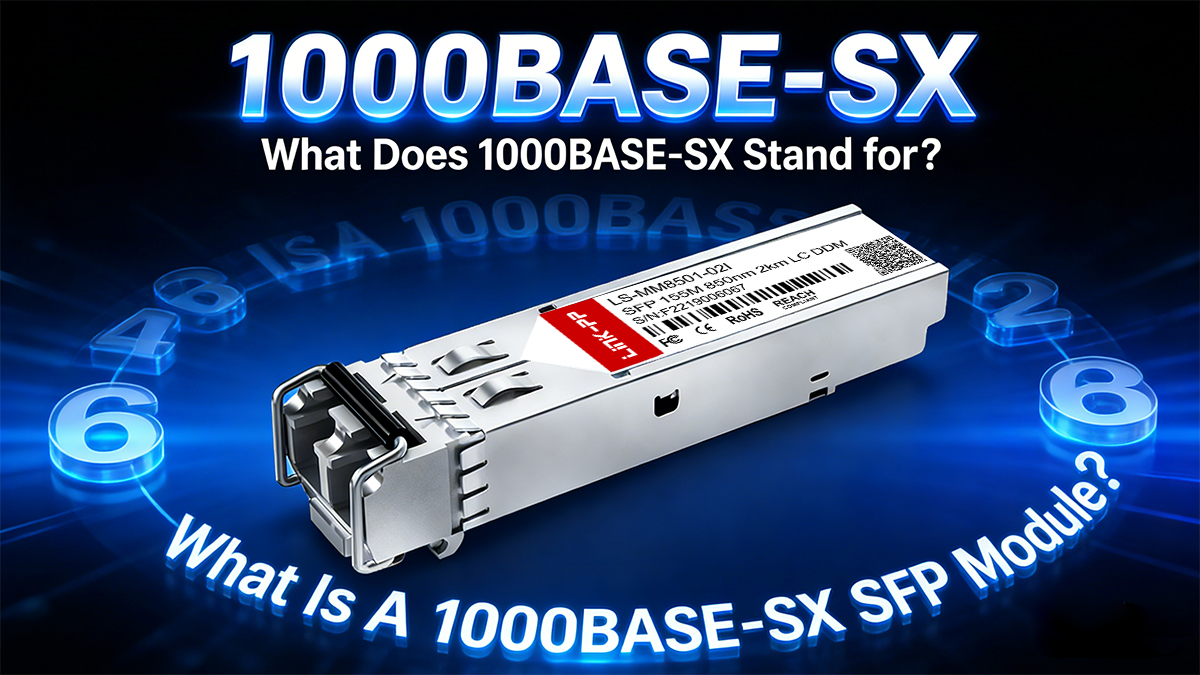
What Does 1000BASE-SX Stand for
1000BASE-SX is an IEEE 802.3z standard for Gigabit Ethernet over multimode fiber optic cables. The “1000” refers to the transmission speed of 1 gigabit per second (Gbps), “BASE” stands for baseband signaling, and “SX” indicates short wavelength—typically centered around 850nm.
In practical terms, 1000BASE-SX enables high-speed data transmission over relatively short distances, generally between 300m and 550m. It offers a cost-effective and reliable solution for local area networks (LANs), enterprise data centers, and campus connections where short-range, high-bandwidth communication is required.
The transmission distance of a 1000BASE-SX link is largely determined by the multimode fiber type. The following table highlights how the range, bandwidth, and performance of 1000BASE-SX connections depend on the fiber type, with OM3 and OM4 fibers providing superior transmission quality and distance.
| Fiber Type | Core Size | Bandwidth | Max Distance (at 850nm) |
| OM1 | 62.5µm | 200MHz·km | 300m |
| OM2 | 50µm | 500MHz·km | 550m |
| OM3 | 50µm (Laser-optimized) |
2000MHz·km | 550m |
| OM4 | 50µm (Laser-optimized) |
4700MHz·km | 550m |
What Is A 1000BASE-SX SFP Module
A 1000BASE-SX SFP (also called SFP-1G-SX) module is a compact, hot-swappable optical transceiver that implements the 1000BASE-SX standard in network devices such as switches, routers, and servers. It converts electrical signals from networking equipment into optical signals for transmission over multimode fiber and vice versa, enabling stable Gigabit Ethernet connectivity.
Key functions of a 1000BASE-SX SFP module include:
- Optical Conversion: It houses an 850nm VCSEL (Vertical-Cavity Surface-Emitting Laser) transmitter and a corresponding photodiode receiver to perform the essential conversion between electrical and optical signals.
- Data Transmission: It facilitates full-duplex Gigabit Ethernet data transmission over two strands of multimode fiber (one for transmit, one for receive).
- Hot-Swappability: The SFP form factor allows for modules to be inserted or removed without powering down the host device, minimizing network downtime.
- Digital Diagnostics Monitoring (DDM/DOM): Some quality SFP modules support this feature, providing real-time monitoring of parameters like optical power, temperature, laser bias current, and transceiver supply voltage for proactive network management.
Common Applications for 1000BASE-SX SFP Module
The 1000BASE-SX optical transceiver module is a workhorse in numerous network scenarios where high bandwidth over relatively short distances is required. Its primary role is to provide reliable, high-speed interconnections within short-reach network environments.
Typical application scenarios include:
- Data Center Inter-Rack Connectivity: Linking top-of-rack (ToR) switches to aggregation or core switches within the same data center hall.
- Building Backbone Networks: Connecting networking closets across different floors of an office building to form a high-capacity backbone.
- Server-to-Switch Connections: Providing high-throughput links between servers and the network infrastructure in server farms or enterprise data centers.
- Intra-Campus Links: Establishing connections between adjacent buildings within a corporate or university campus where multimode fiber is already deployed.
✏️Key Specifications to Check Before 1000BASE-SX Bulk Procurement
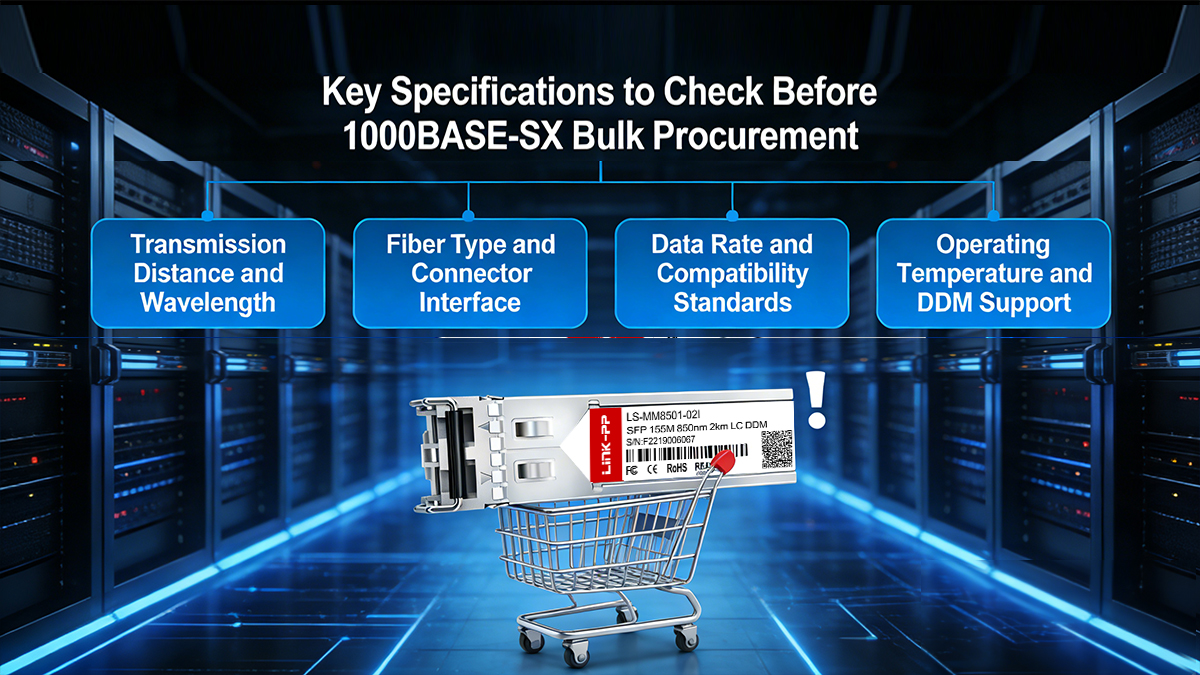
Before purchasing 1000BASE-SX SFP modules in bulk, it’s crucial to review their technical specifications to ensure network reliability and compatibility. The following parameters directly affect performance, installation flexibility, and long-term interoperability across various network devices.
Transmission Distance and Wavelength
1000BASE-SX SFP optical module typically operates at an 850nm wavelength using VCSEL transmitters, optimized for short-range communication. Its maximum transmission distance ranges from 300m on 62.5/125µm fiber to up to 550m on 50/125µm multimode fiber, depending on optical quality and modulation efficiency.
Fiber Type and Connector Interface
These 1000BASE-SX modules are designed exclusively for multimode fiber and commonly use LC duplex connectors per SFP MSA standard. Verify fiber core size, OM rating, and connector type to avoid insertion loss, reflection issues, or the need for additional patch adapters during installation.
Data Rate and Compatibility Standards
1000BASE-SX supports a 1Gbps line rate with 1.25Gbaud signaling and 8b/10b encoding as specified by IEEE 802.3z. It is important to verify compliance with SFP MSA standards and ensure switch compatibility, including vendor-specific EEPROM coding and firmware recognition, to guarantee stable operation across different networking platforms and hardware vendors.
Operating Temperature and DDM Support
Check whether your 1000BASE-SX modules meet commercial (0 °C to 70 °C) or industrial (–40 °C to 85 °C) temperature requirements for your environment. DDM/DOM support per SFF-8472 enables real-time monitoring of receiver (RX) power, transmitter (TX) power, operating temperature, and laser bias current for proactive maintenance.
✏️Cost Factors That Impact 1000BASE-SX Bulk Pricing
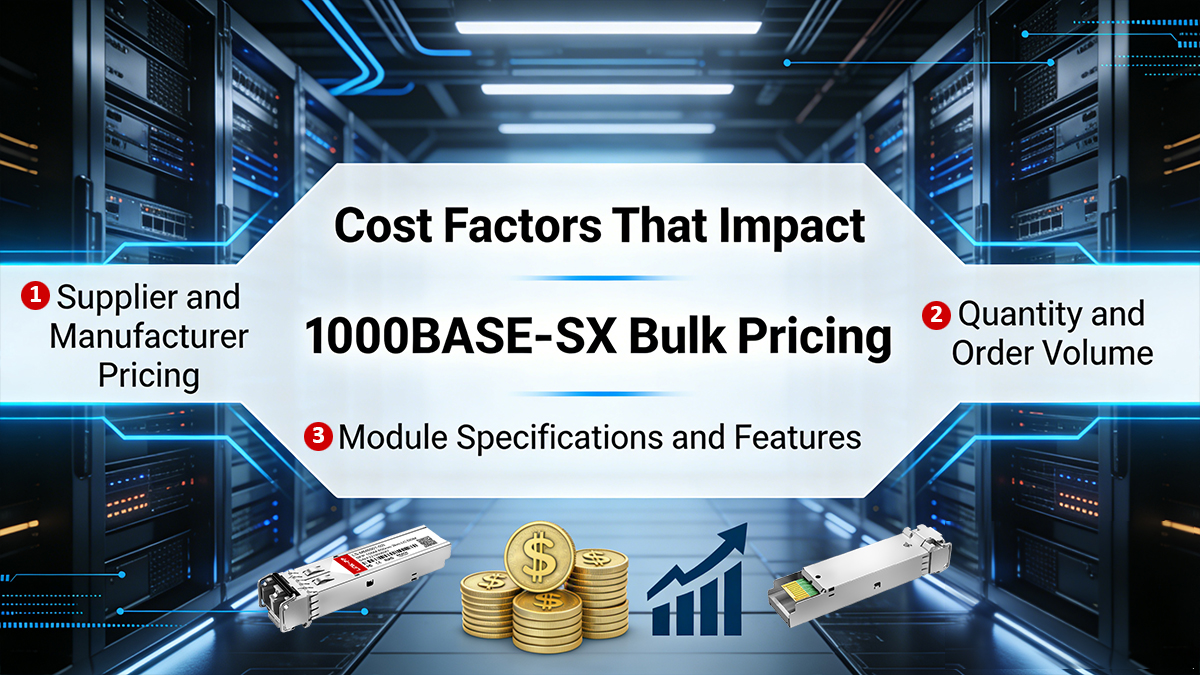
Several elements directly influence the overall pricing of 1000BASE-SX SFP modules when purchased in large quantities. Understanding these cost factors helps buyers plan more effectively and secure the best value for large-scale network deployments.
Supplier and Manufacturer Pricing
Pricing varies significantly depending on whether modules are sourced directly from OEMs or third-party suppliers. Brand reputation, production scale, and supply chain stability all affect base pricing. Established OEMs may charge a premium for brand reputation, while third-party suppliers may offer lower pricing but require careful evaluation of certifications and performance consistency.
Quantity and Order Volume
Order volume plays a key role in determining unit cost. Larger bulk purchases typically lead to lower per-unit pricing because of economies of scale and supplier discounts. Many suppliers also provide tiered pricing models, where reaching certain volume thresholds unlocks additional savings and more favorable shipping or warranty terms.
Module Specifications and Features
The technical configuration of a 1000BASE-SX SFP module has a measurable impact on price. Features such as extended operating temperature ranges, industrial-grade components, DDM/DOM support, and strict compatibility coding increase production complexity. Optical transceivers designed for specialized environments or multi-vendor networks generally cost more than standard commercial-grade versions.
✏️Advantages of 1000BASE-SX SFP Bulk Order
Ordering 1000BASE-SX SFP modules in bulk offers significant strategic and operational benefits for network deployments with scale. It helps organizations control costs, simplify sourcing, and maintain consistency across large-scale network infrastructure deployments.
Cost Savings in Bulk Purchases
Purchasing 1000BASE-SX modules in bulk allows organizations to benefit from volume-based discounts, lowering the per-unit cost significantly. Suppliers often offer better pricing tiers for large orders, helping businesses reduce total capital expenditure on network equipment. Additionally, bulk orders minimize repeated shipping and transaction costs, further improving long-term cost efficiency.
Streamlined Procurement Process
A bulk order simplifies the entire procurement workflow by consolidating multiple small purchases into one large transaction. This approach reduces administrative overhead, shortens lead times, and facilitates consistent delivery scheduling. Large-scale buyers can also negotiate customized terms with suppliers, ensuring a smoother supply chain and fewer disruptions during network expansion.
Uniform Quality Across Network Deployments
Ordering all 1000BASE-SX SFP modules in a single batch guarantees consistency in specifications, firmware versions, and manufacturing standards. This uniformity is critical for maintaining stable network performance, especially in enterprise environments that require seamless interoperability between devices. Using identical modules also simplifies maintenance, troubleshooting, and firmware management across the entire network infrastructure.
✏️OEM vs. Third-Party LINK-PP 1000BASE-SX for Bulk Purchases
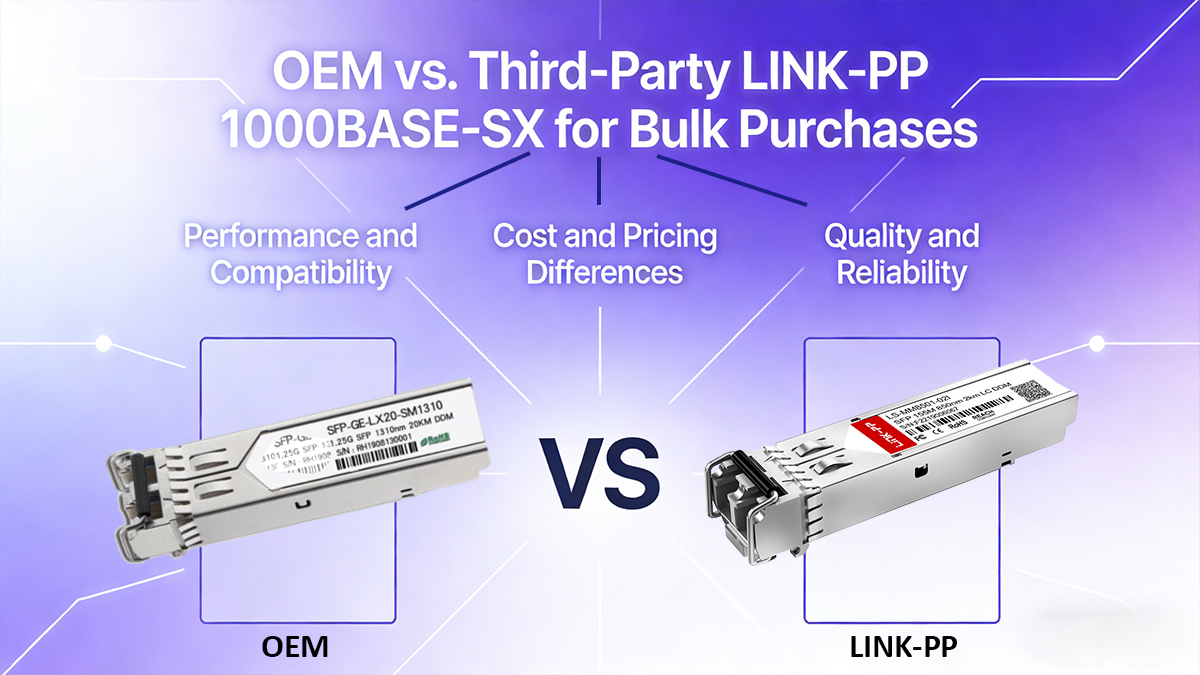
When sourcing 1000BASE-SX SFP modules in large quantities, a fundamental decision lies between OEM-branded modules and those from third-party suppliers like LINK-PP. Both can meet performance needs, but they differ in pricing, compatibility, and long-term support, which may influence large-scale network deployment decisions.
Performance and Compatibility
Performance and compatibility are often the primary concerns when considering third-party modules against OEM options. Reputable third-party suppliers like LINK-PP engineer their SFP modules to meet standard IEEE 802.3z specifications, ensuring baseline performance parity with OEMs for data rate, distance, and wavelength.
The critical differentiator is compatibility coding. While OEMs design modules exclusively for their own equipment, third-party providers use programmable chips to emulate these codes, aiming for seamless integration with a wide range of switch and router brands. The following table summarizes the key contrasts:
| Feature | OEM 1000BASE-SX | LINK-PP 1000BASE-SX |
| Optical Engine Quality | OEM-grade | Enterprise-grade |
| Standard Compliance | IEEE 802.3z, SFP MSA | IEEE 802.3z, SFP MSA |
| Data Rate | 1.25Gbps | 1.25Gbps |
| Wavelength | 850nm | 850nm |
| Transmission Distance | Up to 550m over MMF | Up to 550m over MMF |
| EEPROM Validation | Native Encoding | Customized EEPROM Encoding |
| Device Compatibility | Limited to OEM-approved Devices | Broad Multi-vendor Compatibility |
Cost and Pricing Differences
Cost is one of the most significant factors driving bulk procurement decisions. OEM 1000BASE-SX SFP modules often carry a substantial price premium due to branding, licensing, and vendor-specific validation processes that guarantee compatibility within their system. This premium, while offering peace of mind, can lead to steep procurement costs when scaling across hundreds or thousands of network ports.
In contrast, third-party LINK-PP 1000BASE-SX SFP modules provide a highly cost-efficient alternative without compromising on quality or compliance. They adhere to global MSA and IEEE standards, ensuring consistent interoperability across multiple switch and router brands. For large-scale network deployments, campus rollouts, or hyperscale data center builds, the cost difference between OEM and third-party SFP modules can translate into considerable overall savings.
Quality and Reliability
Quality and reliability are essential in bulk deployments, since even small inconsistencies across modules can lead to network instability or increased maintenance workload. While OEM optics are validated through the original vendor’s certification process, this does not automatically mean they deliver better real-world performance in standard 1000BASE-SX applications. In many cases, both OEM and third-party modules rely on similar optical components and must meet the same industry compliance requirements.
LINK-PP 1000BASE-SX SFP modules are produced under controlled manufacturing standards and typically undergo strict testing for signal integrity, interoperability, and operational stability before delivery. This ensures consistent quality across large orders, which is especially important for enterprises rolling out modules across multiple switches, access layers, or data center environments. For buyers focused on dependable long-term operation without OEM price premiums, LINK-PP provides a balanced solution combining reliability with procurement flexibility.
✏️Purchasing 1000BASE-SX SFP in Bulk at LINK-PP
Choosing the right supplier is crucial for a successful bulk procurement of 1000BASE-SX SFP modules. LINK-PP stands out as a reliable third-party SFP transceiver module supplier, offering a combination of quality, value, and service tailored for large-scale network deployments.
Why Choose LINK-PP as Your 1000BASE SX SFP Supplier
LINK-PP is a trusted supplier of optical transceiver modules, offering enterprise-grade 1000BASE-SX SFP solutions. Purchasing directly from LINK-PP ensures better control over product quality, supply continuity, and technical support.
Key advantages of sourcing from LINK-PP include:
- Stable Bulk Supply Capacity: LINK-PP is capable of handling high-volume procurement with consistent production output, ensuring bulk shipments arrive on time for critical network rollouts.
- Cost-Effective Pricing for Procurement: Bulk purchasing through LINK-PP reduces per-unit cost while maintaining enterprise-grade performance standards.
- Strict Quality Control and Testing: Each 1000BASE-SX SFP module is tested for optical performance, compatibility, and reliability before shipment.
- Wide Compatibility Across Network Equipment: LINK-PP SFP modules are designed to work with mainstream switches, routers, and networking platforms.
- Support for OEM and Custom Requirements: LINK-PP provides labeling, coding, and packaging customization for large-scale deployments.
Recommended SFP Modules for 1000BASE SX
LINK-PP offers multiple 1000BASE-SX SFP transceiver options to match different operating environments and deployment needs. The following recommended modules are optimized for Gigabit Ethernet over multimode fiber, providing stable short-range transmission and high compatibility for bulk network rollouts.
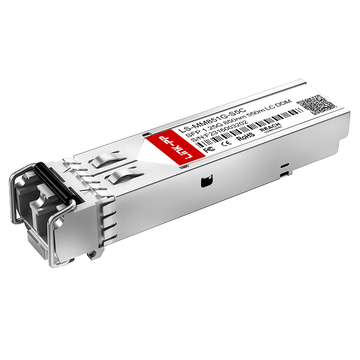
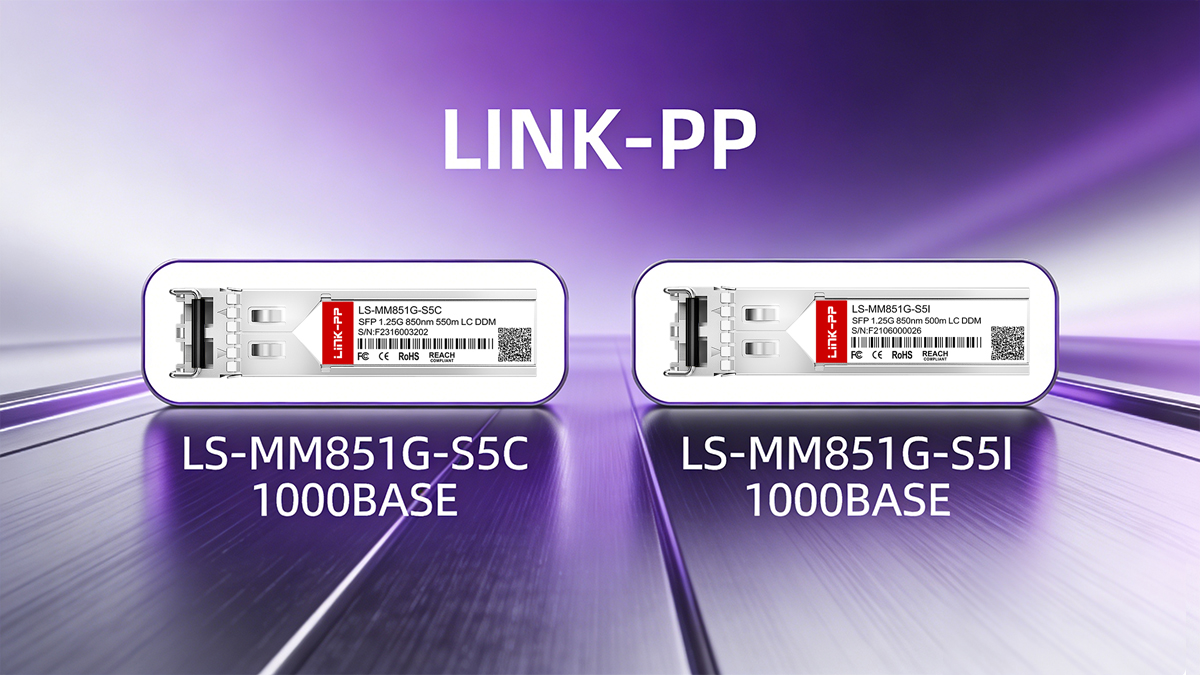
LS-MM851G-S5C 1000BASE SX SFP Module
The LS-MM851G-S5C is a commercial-grade 1000BASE SX SFP module designed for short-reach Gigabit Ethernet transmission over multimode fiber. It follows the IEEE 802.3z standard and is widely used for enterprise backbone connections and data center switch interconnects.
This module operates at an 850nm VCSEL laser source, delivering stable optical performance for high-density fiber deployments. With a typical reach of up to 550m over multimode fiber, it is well-suited for in-building networks where cost-efficient fiber uplinks are required.
Key technical characteristics include:
- 1.25Gbps maximum data rate, supporting standard Gigabit Ethernet traffic.
- LC duplex connector interface, compatible with most fiber patch systems.
- Hot-pluggable SFP form factor, allowing quick replacement without shutting down network equipment.
- Low power consumption, making it suitable for high-port-count switch environments.
- Designed for standard commercial operating temperature ranges in controlled indoor installations.
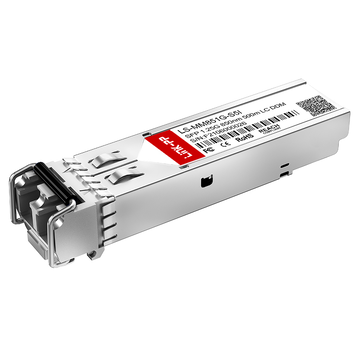
LS-MM851G-S5I 1000BASE SX SFP Transceiver
The LS-MM851G-S5I is an industrial-grade 1000BASE SX SFP transceiver engineered for Gigabit fiber links in harsh or temperature-sensitive environments. While maintaining the same 850nm multimode transmission standard as commercial 1000BASE-SX modules, this model is built with enhanced component stability for demanding deployments.
It supports 1.25Gbps Gigabit Ethernet connectivity over multimode fiber and is commonly applied in industrial Ethernet switches, transportation systems, outdoor base stations, and factory automation networks where standard modules may not provide sufficient durability.
Detailed features include:
- Industrial operating temperature design, ensuring stable performance in extreme heat or cold conditions.
- 850nm multimode optics with reliable signal integrity for short-range backbone links.
- LC duplex connector, enabling standardized fiber cabling in industrial infrastructures.
- Hot-swappable SFP package for simplified maintenance in mission-critical networks.
- Suitable for long-term continuous operation where environmental resilience and uptime are priorities.
✏️How to Ensure 1000BASE-SX Module Compatibility with Your Device
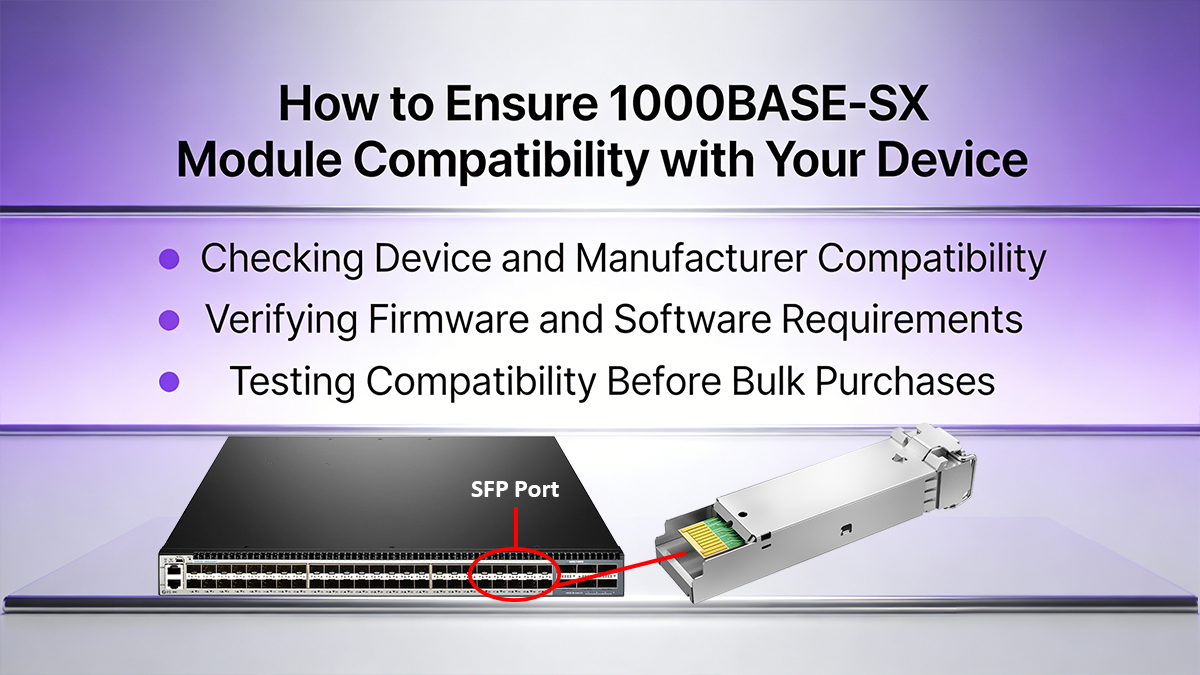
Before placing a bulk order of 1000BASE-SX SFP modules, ensuring compatibility with your network equipment is essential to avoid installation issues and unexpected downtime. By verifying device specifications, firmware requirements, and real-world performance in advance, you can confidently deploy modules across your network.
Checking Device and Manufacturer Compatibility
The first step in ensuring compatibility is confirming that your switch, router, or server supports 1000BASE-SX SFP transceivers. Although 1000BASE-SX is an industry-standard interface, many equipment manufacturers implement additional vendor-specific restrictions.
Key points to check include:
- SFP Slot Type: Make sure the device supports standard SFP (not only SFP+).
- Supported Optical Standards: Confirm the device explicitly lists 1000BASE-SX support.
- Vendor Coding Requirements: Some brands require modules to be coded or approved, otherwise the port may reject the transceiver.
- Compatibility Lists: Manufacturers often provide official transceiver compatibility matrices—these should be reviewed before procurement.
Verifying Firmware and Software Requirements
Even if the hardware supports 1000BASE-SX, firmware and operating software can affect whether the module is recognized properly. Network vendors frequently update transceiver validation rules through firmware upgrades.
To ensure smooth deployment:
- Check minimum firmware versions required for third-party module support.
- Confirm DOM/DDM monitoring support, since some systems require firmware-enabled diagnostics for optical modules.
- Avoid outdated software that may cause false incompatibility warnings or prevent link initialization.
Testing Compatibility Before Bulk Purchases
Before committing to a high-volume order, it is strongly recommended to conduct compatibility testing with sample modules. This minimizes procurement risk and confirms real-world interoperability.
A practical testing process includes:
- Installing a test module in the target device model.
- Verifying the module is correctly detected in the system interface.
- Confirming link establishment with the intended fiber type (typically MMF with LC connectors).
- Checking stability under normal traffic load.
- Validating DOM/DDM readings if monitoring is required.
✏️1000BASE-SX — Frequently Asked Questions Answered

What is the difference between 1000BASE-SX and 1000BASE-LX?
The 1000BASE-SX uses 850nm wavelength over multimode fiber and supports shorter transmission distances, typically up to 550m. In contrast, 1000BASE-LX operates at 1310nm wavelength and is designed for long-distance transmission up to 10km over single mode fiber.
Can a 1000BASE-SX module work with single mode fiber?
No, a standard 1000BASE-SX module is not designed to work with single-mode fiber. It is optimized for multimode fiber, and using it with single-mode fiber will result in a failure to establish a link or significant signal loss due to core diameter and wavelength mismatch.
What is the maximum distance of a 1000BASE-SX connection?
The maximum reach depends on the type of multimode fiber used. On the 50/125µm multimode fiber, 1000BASE-SX can achieve up to 550m. When using the 62.5/125µm multimode fiber, the maximum distance is typically reduced to 300m.
How do I know if my device supports 1000BASE-SX?
You can check the device’s hardware specifications or official compatibility list provided by the manufacturer. Most Gigabit Ethernet switches and routers with SFP ports support 1000BASE-SX, but firmware compatibility should also be confirmed.
Are third-party 1000BASE-SX SFP modules reliable for campus networks?
Yes, reputable 1000BASE-SX modules from third-party suppliers like LINK-PP can be highly reliable and cost-effective for campus networks. They are manufactured to meet industry standards, ensuring full compatibility and performance comparable to OEM modules, often with robust warranty support.
Does 1000BASE-SX support DDM/DOM?
Yes, certain high-quality 1000BASE-SX SFP modules—such as the LINK-PP 1000BASE-SX—support Digital Diagnostic Monitoring (DDM), also known as Digital Optical Monitoring (DOM). This feature enables real-time tracking of key parameters such as temperature, optical power, and laser bias current, making it invaluable for proactive network management.
✏️Conclusion: Key Takeaways on 1000BASE-SX Bulk Procurement

Bulk procurement of 1000BASE-SX SFP modules remains a smart and proven strategy for building backbone, data centers, and campus networks that require reliable short-reach Gigabit fiber connectivity. To ensure a successful deployment at scale, buyers should focus on core specifications such as 850nm wavelength, multimode fiber support (OM1–OM4), LC duplex interface, 1.25Gbps data rate compliance, and optional features like DDM/DOM monitoring. Just as importantly, verifying device compatibility, firmware recognition, and conducting sample testing before large orders helps reduce risk, prevent link issues, and maintain consistent network performance across hundreds or thousands of ports.
When comparing sourcing options, OEM modules may offer native validation but often come with significantly higher costs in large-volume projects. In contrast, reliable third-party solutions like LINK-PP 1000BASE-SX deliver strong performance, broad interoperability, and better cost efficiency for long-term scaling. If you’re planning a new rollout, upgrading access layers, or preparing spare inventory for ongoing maintenance, choosing a supplier with stable production capacity and strict quality control is essential. For competitive bulk pricing and dependable enterprise-grade optical transceivers, explore the LINK-PP Official Store to find the right 1000BASE-SX module for your network.