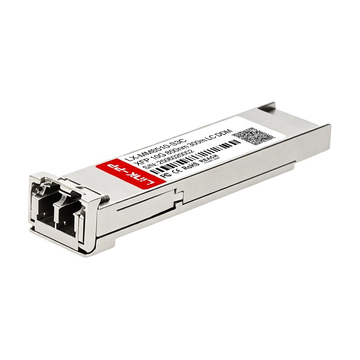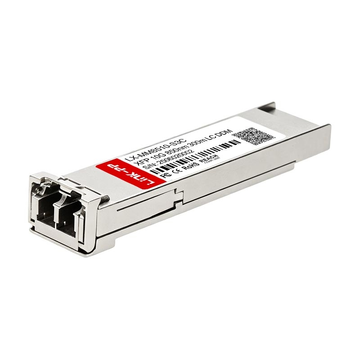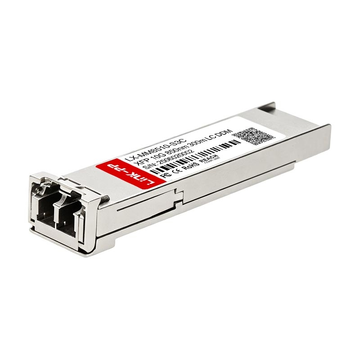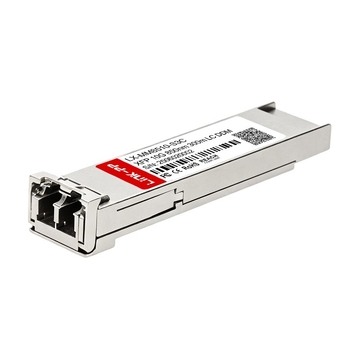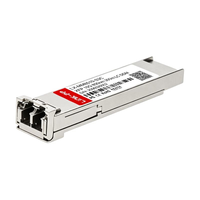
The 10GB XFP transceiver is one of the foundational optical modules used in early and mid-generation 10 Gigabit Ethernet networks. Designed as a hot-swappable, protocol-independent 10G optical interface, XFP transceiver modules support a wide range of applications, including Ethernet, Fibre Channel, and SONET/SDH. Depending on the optical variant, they operate at 850nm, 1310nm, or 1550nm wavelengths, enabling transmission distances from short-reach multimode links to long-distance carrier-grade connections.
Despite the industry’s shift toward smaller form factors such as SFP+ and QSFP, XFP modules remain highly relevant in legacy enterprise infrastructure, telecom transport networks, and installed base upgrade scenarios. Many network engineers still encounter XFP ports in older switches, routers, and optical transport equipment, making compatibility understanding essential for maintenance, expansion, and cost-effective upgrades.
In practice, most challenges with 10GB XFP transceivers are not related to speed or protocol limitations, but rather compatibility constraints—including vendor coding restrictions, switch support matrices, fiber type mismatches (MMF vs SMF), and incorrect wavelength selection. These issues frequently appear in real-world troubleshooting discussions, where engineers attempt to mix XFP with SFP+ environments or deploy optics across unsupported platforms.
This guide is designed to help network engineers, IT buyers, and system integrators clearly understand how XFP compatibility works in real deployments, what factors determine whether a module will function correctly in a given device, and how to avoid common interoperability failures.
By the end of this article, you will be able to confidently evaluate:
- Whether a 10GB XFP module is supported by your switch or router
- How fiber type and wavelength affect link success
- Why XFP and SFP+ are not directly interchangeable
- And how to select the correct module for stable 10G performance in production networks
This practical compatibility-focused approach reflects how XFP is actually used in modern environments—where legacy infrastructure meets evolving 10G upgrade requirements.
🌐 What is a 10GB XFP transceiver?
A 10GB XFP transceiver is a standardized optical module used to transmit and receive data at 10 Gigabits per second (10G) over fiber optic networks. The term XFP stands for “10 Gigabit Small Form Factor Pluggable”, referring to a hot-swappable optical transceiver designed specifically for high-speed communication links.
Unlike earlier fixed optical interfaces, XFP modules are designed as independent, protocol-agnostic components, meaning they can support multiple networking standards such as 10G Ethernet, Fibre Channel, and SONET/SDH. This flexibility made XFP a widely adopted solution during the early expansion of 10G infrastructure.
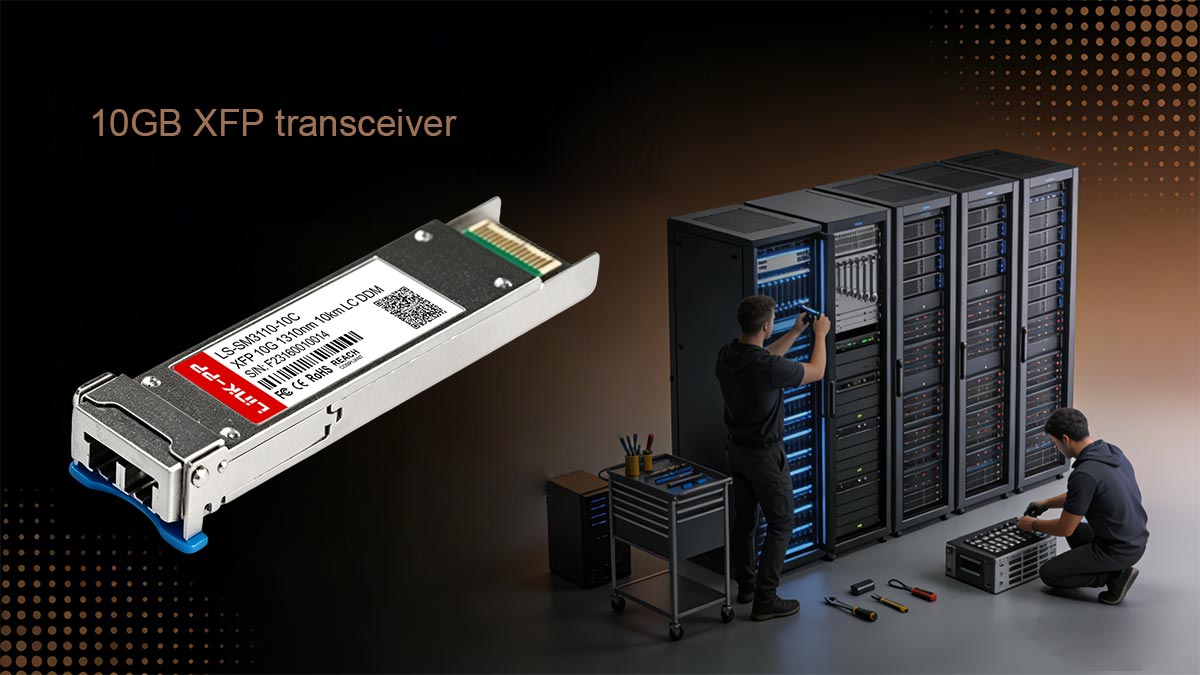
Core Functionality and Working Principle
A 10GB XFP transceiver converts electrical signals from a networking device into optical signals for transmission over fiber, and then converts incoming optical signals back into electrical form on the receiving side. This enables high-speed data transmission across different types of fiber networks, typically using:
- 850nm (SR – short reach, multimode fiber)
- 1310nm (LR – long reach, single-mode fiber)
- 1550nm (ER/ZR – extended and ultra-long reach, single-mode fiber)
Depending on the specification, XFP modules can support distances ranging from a few hundred meters up to approximately 80 km, making them suitable for both campus networks and metropolitan optical transport systems.
Although newer form factors have largely replaced XFP in modern data centers, it still plays an important role in several environments:
- Legacy enterprise networks running older 10G switches and routers
- Telecom transport networks using SONET/SDH or early OTN systems
- Metro Ethernet links requiring medium to long-distance optical transmission
- Industrial and carrier-grade infrastructure where equipment lifecycles are long
- Upgrade scenarios where existing XFP ports must be maintained rather than replaced
In these cases, XFP remains a cost-effective option because replacing entire chassis or line cards is often more expensive than simply sourcing compatible transceivers.
Why XFP is Still Relevant Today
Even though the industry has largely transitioned to smaller and more power-efficient modules like SFP+ and QSFP+, XFP continues to appear in real-world deployments for several practical reasons:
- Installed base longevity
Many enterprise and telecom systems built in the 10G era still operate reliably, and replacing them is not always economically justified. - Long-distance optical requirements
XFP modules, especially 10GBASE-ER and 10GBASE-ZR variants, are still widely used for long-haul fiber links up to tens of kilometers, where stable optical performance is critical. - Higher optical power handling
The larger XFP form factor allows for more robust optical components, which historically made it suitable for higher-power or long-reach designs. - Protocol flexibility in transport networks
In telecom environments, XFP modules were often preferred due to their support for multiple transmission protocols beyond Ethernet.
Position in Modern 10G Ecosystems
Today, XFP is best understood as a legacy but still mission-critical 10G optical standard. It is not typically used in new data center designs, but it remains essential for maintaining and expanding existing infrastructure.
In real deployments, engineers often encounter XFP during upgrade planning, interoperability testing, or mixed-environment troubleshooting, which is why understanding its behavior and compatibility constraints is still highly relevant for network design and operations teams.
🌐 10GB XFP Transceiver Compatibility Basics
Understanding 10GB XFP transceiver compatibility is essential because most real-world issues are not caused by the optical standard itself, but by platform limitations, vendor restrictions, and physical layer mismatches. In practice, a working XFP link depends on whether the module is properly recognized, electrically supported, and validated by the host device.
Switch Support And Platform Limitations
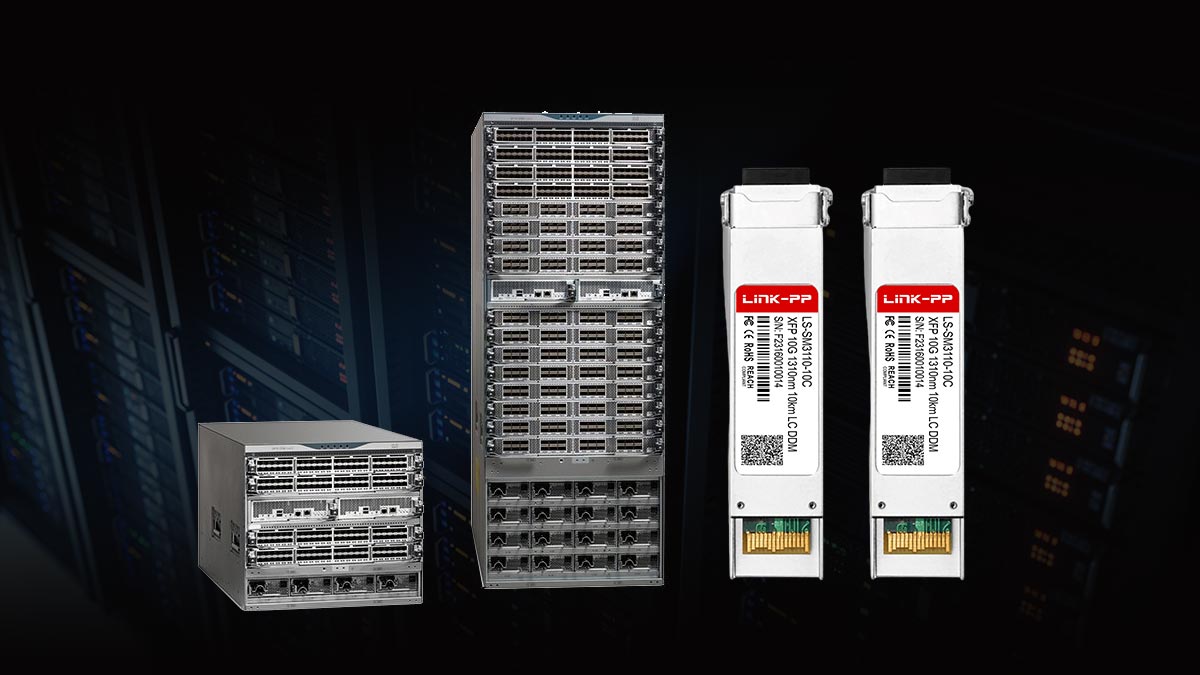
The first compatibility factor is whether the switch, router, or line card supports XFP modules. XFP is primarily found in legacy 10G networking equipment, such as early data center switches, carrier-grade routers, and telecom transport systems.
Even within the same vendor ecosystem, support can vary significantly. Some platforms support both XFP and SFP+ via different slots, while others are strictly limited to one form factor. If the device does not explicitly support XFP, the module may physically fit (in rare cases of similar cages or adapters), but it will not operate correctly.
Vendor Coding And Compatibility Restrictions
A major factor affecting XFP usability is vendor coding (EEPROM or firmware validation).
Many networking vendors such as Cisco or Juniper implement compatibility checks to ensure only approved optics are used. As a result:
- The device may block third-party XFP modules
- A warning such as “unsupported transceiver” may appear
- The port may remain administratively up but operationally down
Although many third-party modules are electrically identical to OEM versions, software-level restrictions often determine whether they function in production environments.
Module Detection And EEPROM Communication
When a 10GB XFP transceiver is inserted, the host system performs an EEPROM-based identification handshake. This process allows the device to read:
- Module type (SR, LR, ER, ZR)
- Wavelength (850nm, 1310nm, 1550nm)
- Supported transmission distance
- Vendor identification data
If this communication fails or returns incompatible data, the system may:
- Disable the port
- Prevent link establishment
- Display compatibility warnings in logs
This is one of the most common hidden causes of XFP link failure in real deployments.
Port Requirements And Physical Constraints
XFP modules require a dedicated XFP port (cage) designed specifically for 10G optical signaling. They are not interchangeable with SFP+ or X2 interfaces.
Key physical requirements include:
- Correct XFP form factor slot
- Adequate power delivery from the host system
- Proper thermal design for high-power optics (especially ER/ZR modules)
High-power long-reach XFPs may generate significantly more heat, requiring proper airflow to maintain stable performance.
Common Reasons A 10GB XFP Fails To Link
In real-world troubleshooting scenarios, XFP link failures typically fall into a few repeatable categories:
- Unsupported Device Or Port Type
The switch or router does not support XFP optics. - Vendor Lock Or Incompatible Coding
The module is rejected due to EEPROM or firmware validation. - Fiber Type Mismatch
Using multimode (MMF) optics on single-mode fiber (SMF), or vice versa. - Wavelength Mismatch
Incorrect pairing of SR, LR, ER, or ZR optics. - Dirty Or Damaged Fiber Connectors
Contamination can significantly reduce optical signal quality. - Power Or Thermal Limitations
Especially relevant for ER/ZR long-range transceivers with higher power consumption.
Key Takeaway
At the compatibility level, a 10GB XFP transceiver is not a plug-and-play universal module. It depends on a combination of hardware support, vendor firmware validation, optical specifications, and fiber infrastructure alignment. Ensuring all of these layers are correctly matched is the key to achieving stable 10G performance in production networks.
🌐 XFP vs. SFP+: What Is The Difference?
The comparison between XFP and SFP+ transceivers is one of the most common questions in 10G networking because both support 10 Gigabit Ethernet, but they differ significantly in design philosophy, physical size, power consumption, and deployment strategy. Understanding these differences is essential for planning upgrades, ensuring compatibility, and optimizing port density in modern networks.
Form Factor And Physical Size
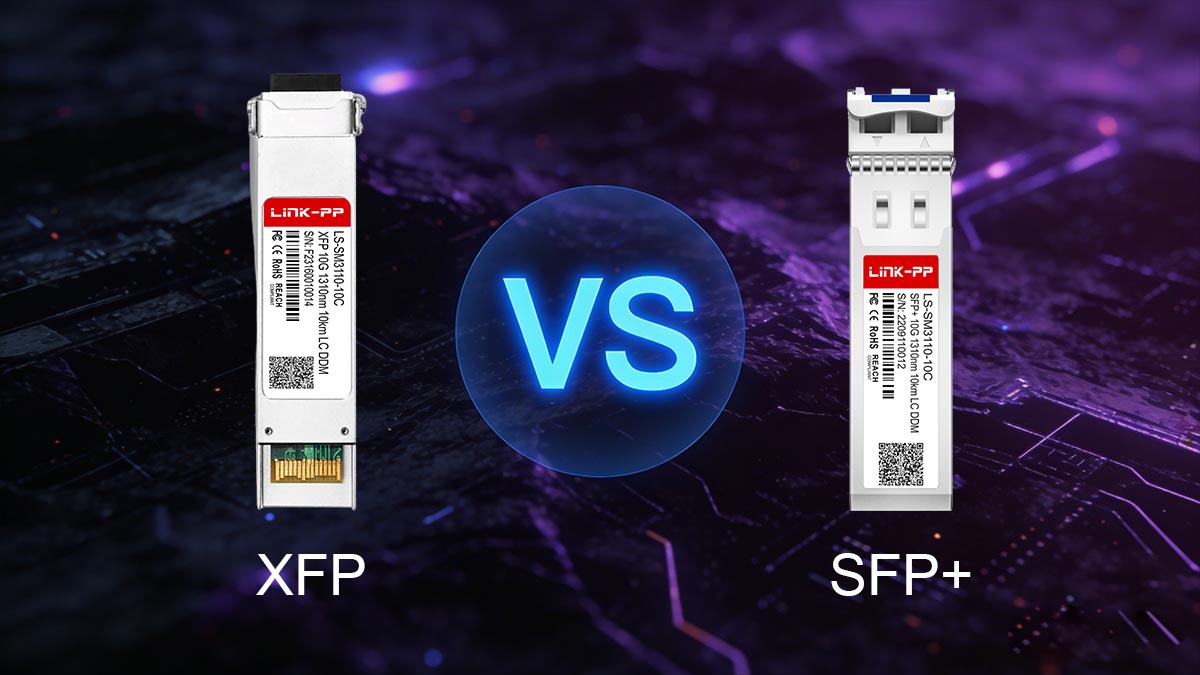
The most visible difference is the physical form factor.
- XFP modules are larger and more robust, designed in the early 10G era when integration was less compact.
- SFP+ modules are significantly smaller and evolved from the earlier SFP standard, optimized for high-density data center environments.
This size difference directly impacts how many ports can be placed on a single switch or line card.
Power Consumption And Thermal Design
XFP modules typically consume more power than SFP+ modules due to older internal architecture and less integration.
- XFP: Higher power draw, especially in long-reach (ER/ZR) optics
- SFP+: Lower power consumption, optimized for dense deployments
This makes SFP+ more suitable for modern data centers where thermal efficiency and energy savings are critical design factors.
Port Density And Network Scalability
Port density is one of the key reasons the industry transitioned from XFP to 10G SFP+ modules.
- XFP: Lower port density due to larger module size
- SFP+: High-density designs allow many more 10G ports per switch
In modern leaf-spine architectures, SFP+ dominates because it enables scalable bandwidth expansion without increasing chassis size.
Real-World Upgrade Considerations
From an operational perspective, the choice between XFP and SFP+ is rarely about performance alone. Instead, it depends on:
- Existing hardware infrastructure (legacy XFP ports vs modern SFP+ cages)
- Budget constraints (full switch replacement vs optics upgrade)
- Fiber plant compatibility (MMF/SMF already deployed)
- Long-term scalability requirements
In many cases, organizations still using XFP are focused on maintenance and lifecycle extension, while SFP+ users are typically in growth and expansion phases.
XFP vs. SFP+ Comparison Table
| Feature | XFP Transceiver | SFP+ Transceiver |
|---|---|---|
| Form Factor | Larger, early 10G design | Smaller, compact design |
| Speed | 10Gbps | 10Gbps |
| Power Consumption | Higher | Lower |
| Port Density | Lower density per switch | High-density deployment |
| Thermal Efficiency | Moderate to lower | High efficiency |
| Typical Use Case | Legacy 10G, telecom, long-haul | Data centers, enterprise 10G |
| Compatibility Era | Older 10G platforms | Modern 10G networks |
| Upgrade Preference | Maintenance of legacy systems | New deployments and scaling |
While both XFP and SFP+ support 10G speeds, they serve different generations of network design. XFP is primarily a legacy long-distance and carrier-grade solution, while SFP+ is the modern standard optimized for density, efficiency, and scalability. For most new deployments, SFP+ is preferred, but XFP remains critical in maintaining existing infrastructure without costly hardware replacement.
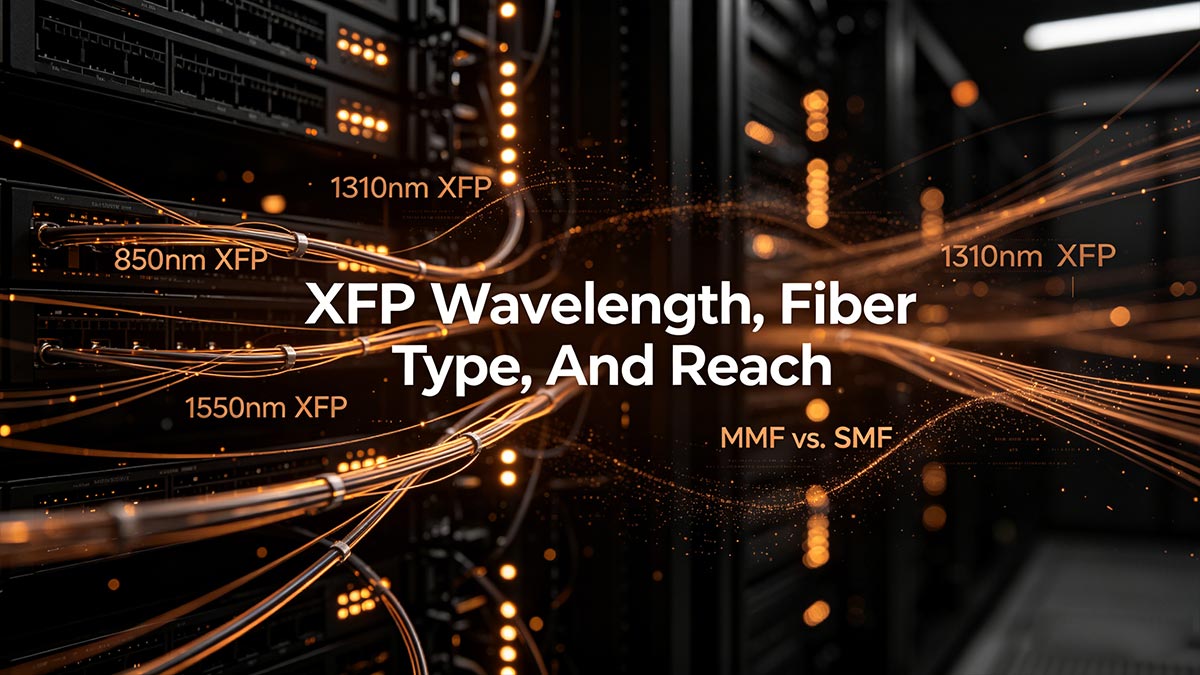
🌐 XFP Wavelength, Fiber Type, And Reach
The performance of a 10GB XFP transceiver is largely determined by its wavelength, fiber type compatibility, and optical reach class. These three factors define how far data can travel, what type of fiber must be used, and whether the link will operate reliably in a real-world environment.
In practice, most XFP deployment issues come from mismatching these parameters—especially confusing multimode and single-mode fiber or selecting the wrong reach type (SR, LR, ER, ZR).
850nm XFP (Short Reach - SR)
850nm XFP SR modules are designed for short-distance transmission over multimode fiber (MMF).
- Typical fiber type: OM2 / OM3 / OM4 multimode fiber
- Common connector: LC duplex
- Typical reach:
- ~26m (OM1 legacy MMF)
- ~300m (OM3)
- ~400m (OM4 optimized MMF)
These modules are commonly used in:
- Data center racks
- Short inter-switch connections
- Campus-level high-speed links
Because of their short reach, short-range optics are not suitable for long-distance or carrier-grade transport.
1310nm XFP (Long Reach - LR)
1310nm XFP LR modules are the most widely deployed type in enterprise and metro networks.
- Fiber type: Single-mode fiber (SMF, OS2)
- Connector: LC duplex
- Typical reach: up to 10 km
LR modules are commonly used for:
- Building-to-building connections
- Campus backbone links
- Metro Ethernet access layers
This category represents a balance between cost, performance, and distance, making it one of the most practical XFP options in real deployments.
1550nm XFP (Extended And ZR Reach)
1550nm XFP modules are designed for long-distance optical transmission and are typically categorized as ER (Extended Reach) or ZR (Ultra Long Reach).
- Fiber type: Single-mode fiber (SMF, OS2)
- Connector: LC duplex
- Typical reach:
- ER: up to ~40 km
- ZR: up to ~80 km (depending on link conditions)
These modules are commonly used in:
- Metropolitan area networks (MAN)
- Carrier backbone infrastructure
- Long-haul interconnect links between data centers
Due to higher optical power requirements, ER/ZR modules often require stricter thermal and power budget considerations.
MMF vs. SMF Compatibility Overview
A critical compatibility rule for XFP deployment is understanding fiber type matching:
- Multimode fiber (MMF) → used with 850nm SR optics
- Single-mode fiber (SMF) → used with 1310nm LR and 1550nm ER/ZR optics
Incorrect pairing is one of the most common causes of link failure. For example:
- SR optics on SMF → signal degradation or no link
- LR optics on MMF → unstable or non-functional connection
XFP Reach And Application Summary
| Optical Type | Wavelength | Fiber Type | Typical Reach | Common Use Case |
|---|---|---|---|---|
| SR (Short Reach) | 850nm | MMF | Up to 400m | Data centers, short links |
| LR (Long Reach) | 1310nm | SMF | Up to 10km | Campus networks, metro access |
| ER (Extended Reach) | 1550nm | SMF | Up to 40km | Metro aggregation |
| ZR (Ultra Reach) | 1550nm | SMF | Up to 80km | Carrier backbone, long-haul |
The wavelength and fiber type of a 10GB XFP transceiver directly determine its real-world usability. SR is optimized for short multimode links, LR for standard single-mode campus and metro distances, and ER/ZR for long-haul carrier-grade transport. Correctly matching wavelength, fiber type, and reach is essential for achieving stable and loss-free 10G optical performance.
🌐 Common XFP Compatibility Problems And Fixes
In real-world deployments, most 10GB XFP transceiver issues are not caused by the optical standard itself, but by compatibility mismatches between the module, switch, fiber infrastructure, and vendor firmware policies. Below are the most common failure scenarios engineers encounter, along with practical troubleshooting approaches.

Unsupported Optics Or “Transceiver Not Supported” Error
This is one of the most frequent issues when installing third-party or non-approved XFP modules.
Symptoms:
- Port stays down after insertion
- System logs show “unsupported transceiver”
- Interface is detected but cannot link
Root causes:
- Vendor firmware blocking non-coded optics
- Device only supports OEM-branded modules
- Incompatible XFP revision or model mismatch
Fixes:
- Verify device compatibility matrix for XFP support
- Use vendor-approved or correctly coded compatible optics
- Upgrade switch firmware (in some cases improves compatibility)
Wrong Coding Or EEPROM Mismatch
Even if the hardware is correct, incorrect EEPROM coding can prevent proper recognition.
Symptoms:
- Module detected but flagged as invalid
- Incorrect module type shown in CLI output
- Intermittent link behavior
Root causes:
- Third-party module not properly coded for vendor
- EEPROM data mismatch with host system expectations
Fixes:
- Re-code or replace module with correctly programmed version
- Use trusted optical suppliers with vendor-specific coding options
- Confirm module matches required XFP type (SR/LR/ER/ZR)
Mismatched Fiber Type (MMF vs. SMF)
A classic physical-layer mistake that leads to immediate link failure.
Symptoms:
- No link light (LOS condition)
- Extremely high error rates
- Intermittent connectivity
Root causes:
- 850nm SR optics used on single-mode fiber (SMF)
- 1310nm/1550nm optics used on multimode fiber (MMF)
Fixes:
- Match SR optics with MMF (OM3/OM4)
- Match LR/ER/ZR optics with SMF (OS2)
- Verify fiber labeling before deployment
Port Speed Or Interface Mismatch
Although XFP is designed for 10G, configuration errors can still cause failures.
Symptoms:
- Interface stays administratively up but no traffic passes
- Auto-negotiation failure (on some platforms)
- Inconsistent link behavior
Root causes:
- Port configured for incorrect speed (e.g., 1G or auto mismatch)
- Mixed configuration on multi-rate ports
- Line card not properly initialized for 10G mode
Fixes:
- Manually set interface speed to 10G where required
- Ensure correct interface mode (XFP vs SFP+)
- Reset or reload line card configuration
Optical Power Budget Exceeded
Long-distance optics (especially ER/ZR) are sensitive to power levels.
Symptoms:
- Link comes up but drops intermittently
- High bit error rate (BER)
- Weak RX signal alarms
Root causes:
- Distance exceeds module specification
- Excessive patching or connector loss
- Dirty or damaged fiber connectors
Fixes:
- Verify optical budget vs actual link distance
- Clean and inspect fiber connectors
- Reduce link loss or use optical amplification if required
Dirty Or Damaged Fiber Connectors
A surprisingly common but often overlooked issue.
Symptoms:
- Flapping link
- High error rates
- Poor optical signal quality
Root causes:
- Dust contamination on LC connectors
- Scratched fiber end faces
- Poor handling during installation
Fixes:
- Clean connectors using proper fiber cleaning tools
- Replace damaged patch cables
- Follow strict fiber handling procedures
Key Takeaway: Most 10GB XFP compatibility problems fall into a small number of predictable categories: vendor restrictions, coding mismatches, fiber type errors, configuration issues, or optical power limitations. A structured troubleshooting approach—starting from physical layer checks and moving up to firmware and configuration—can resolve the majority of XFP link failures efficiently in production environments.
🌐 Best Use Cases For 10GB XFP Transceivers
Although newer form factors like SFP+ dominate modern data center design, the 10GB XFP transceiver still has clear and practical value in specific real-world scenarios. Its continued relevance comes mainly from installed base compatibility, long-reach optical performance, and telecom-grade deployment history.
Understanding where XFP still makes sense helps network teams avoid unnecessary hardware replacement and extend the lifecycle of existing infrastructure.

▶ Legacy Enterprise Switch And Router Environments
One of the most common use cases for XFP today is in legacy enterprise networking equipment.
These include:
- Older 10G core or aggregation switches
- Early-generation enterprise routers
- Modular line cards with dedicated XFP slots
In these environments, replacing the entire platform is often costly and disruptive. Instead, organizations continue to use compatible XFP modules to maintain or expand existing 10G links.
Typical scenarios include:
- Adding new uplinks between legacy switches
- Replacing failed optics in production systems
- Maintaining stable backbone connections without hardware upgrades
▶ Telecom And Carrier Transport Networks
XFP was widely adopted in carrier-grade optical transport systems, and it still appears in many active telecom deployments.
Common applications include:
- SONET/SDH transport systems
- Early OTN (Optical Transport Network) platforms
- Metro Ethernet aggregation layers
- Inter-office long-distance links
In these environments, XFP remains valuable because it supports:
- Stable long-distance transmission
- Multiple wavelengths (1310nm and 1550nm ranges)
- Robust performance in optical transport scenarios
Carrier networks often prioritize stability and lifecycle continuity over form factor modernization, which keeps XFP relevant.
▶ Long-Reach And Metropolitan Area Networks (MAN)
Another strong use case is metro-scale fiber connectivity, where distances exceed typical data center limits.
XFP modules—especially LR, ER, and ZR variants—are commonly used for:
- Building-to-building connections
- Campus-to-campus backbone links
- City-wide metro aggregation networks
Typical reach scenarios:
- LR: up to ~10 km
- ER: up to ~40 km
- ZR: up to ~80 km
These capabilities make XFP a reliable choice when long-distance 10G transmission is required without upgrading to newer transport optics.
▶ Industrial And Specialized Network Environments
XFP also appears in non-traditional or specialized networking environments, where equipment lifecycles are long and upgrade cycles are slow.
Examples include:
- Industrial automation networks
- Utility and energy infrastructure (power grid communication systems)
- Transportation and rail control networks
- Government or defense legacy systems
In these cases, XFP is valued for:
- Proven long-term stability
- Compatibility with ruggedized or proprietary systems
- Minimal need for infrastructure redesign
▶ Maintenance And Extension Of Existing 10G Infrastructure
Perhaps the most practical modern use of XFP is not new deployment, but infrastructure maintenance and extension.
Organizations still rely on XFP when:
- Replacing failed transceivers in active systems
- Extending fiber links without replacing switches
- Supporting mixed-generation 10G environments
This is especially common in networks where migration to SFP+ or higher speeds is planned but not yet implemented, making XFP a bridging technology.
Key Takeaway: The 10GB XFP transceiver is no longer the default choice for new network designs, but it remains highly relevant in legacy enterprise systems, telecom transport networks, and long-distance 10G deployments. Its continued use is driven not by modern efficiency, but by installed base compatibility, proven reliability, and cost-effective lifecycle extension strategies.
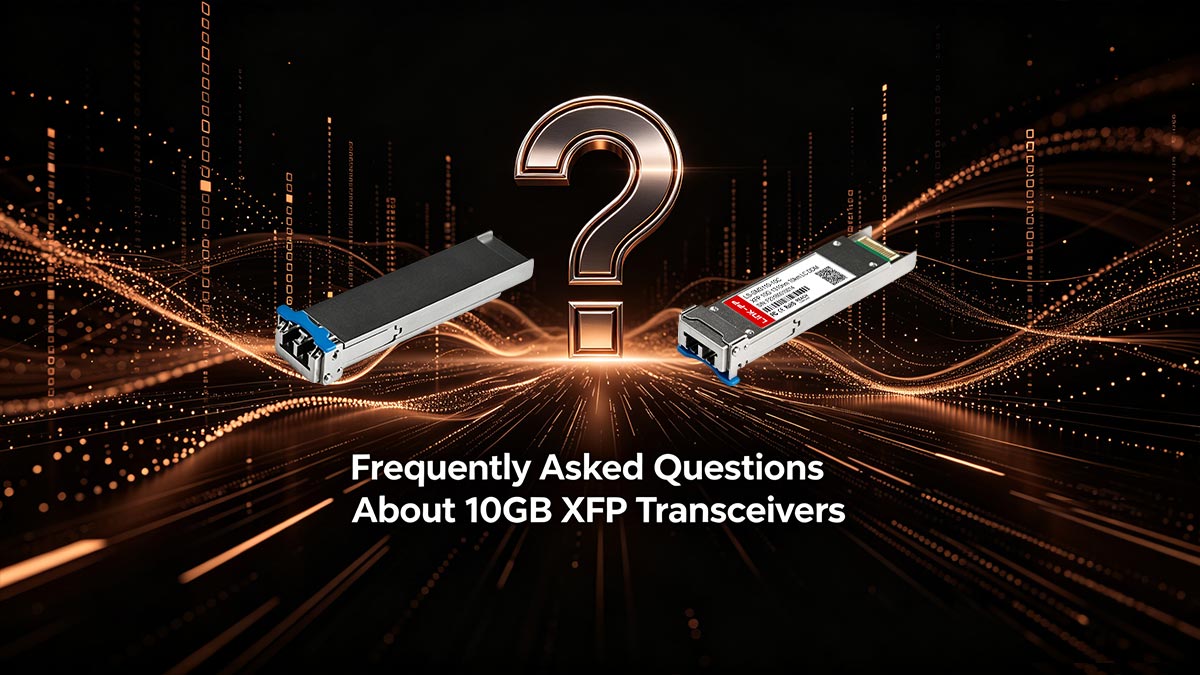
🌐 Frequently Asked Questions About 10GB XFP Transceivers
This section answers the most common real-world questions engineers and buyers ask when working with 10GB XFP transceivers, especially around compatibility, usage, and selection.
1. What Does XFP Mean In Networking?
XFP stands for 10 Gigabit Small Form Factor Pluggable. It is a hot-swappable optical transceiver standard designed for 10Gbps data transmission over fiber networks, supporting Ethernet, Fibre Channel, and SONET/SDH protocols.
2. Is XFP Still Used Today?
Yes, but mainly in legacy enterprise networks, telecom transport systems, and long-distance 10G fiber links. It is less common in new data center deployments, where SFP+ and QSFP modules are preferred.
3. Can XFP Work In An SFP+ Port?
No. XFP and SFP+ are not physically or electrically compatible.
- XFP uses a larger form factor and different electrical interface
- SFP+ uses a smaller, more integrated design
Even though both support 10G speeds, they require different ports and hardware support.
4. What Is The Difference Between XFP And SFP+?
The key differences are:
- XFP: Larger, higher power consumption, common in older 10G systems
- SFP+: Smaller, lower power, higher port density, widely used in modern networks
SFP+ is the modern standard, while XFP is primarily a legacy format.
5. What Distance Can A 10GB XFP Transceiver Support?
It depends on the optic type:
- XFP SR (850nm, MMF): up to ~300–400m
- XFP LR (1310nm, SMF): up to ~10km
- XFP ER (1550nm, SMF): up to ~40km
- XFP ZR (1550nm, SMF): up to ~80km
The actual distance may vary depending on fiber quality and link conditions.
6. What Fiber Type Should Be Used With XFP?
- Multimode Fiber (MMF) → used with 850nm SR optics
- Single-Mode Fiber (SMF) → used with 1310nm LR and 1550nm ER/ZR optics
Using the wrong fiber type is one of the most common causes of link failure.
7. Why Is My XFP Not Working In My Switch?
Common reasons include:
- Switch does not support XFP modules
- Vendor lock or unsupported coding
- Wrong fiber type or wavelength mismatch
- Port not configured for 10G operation
- Dirty or damaged fiber connectors
8. Can I Mix Different Vendors’ XFP Modules?
Sometimes yes, but it depends on the switch.
- Some devices accept third-party optics without restriction
- Others require vendor-coded or approved modules
Compatibility should always be checked against the switch’s optical support list.
🌐 How To Choose The Right 10G XFP Module
Selecting the right 10GB XFP transceiver is not just a matter of matching speed. In real deployments, the correct choice depends on a combination of distance requirements, existing fiber infrastructure, switch compatibility, vendor constraints, and application environment. A structured selection process helps avoid costly link failures and ensures stable long-term performance in 10G networks.
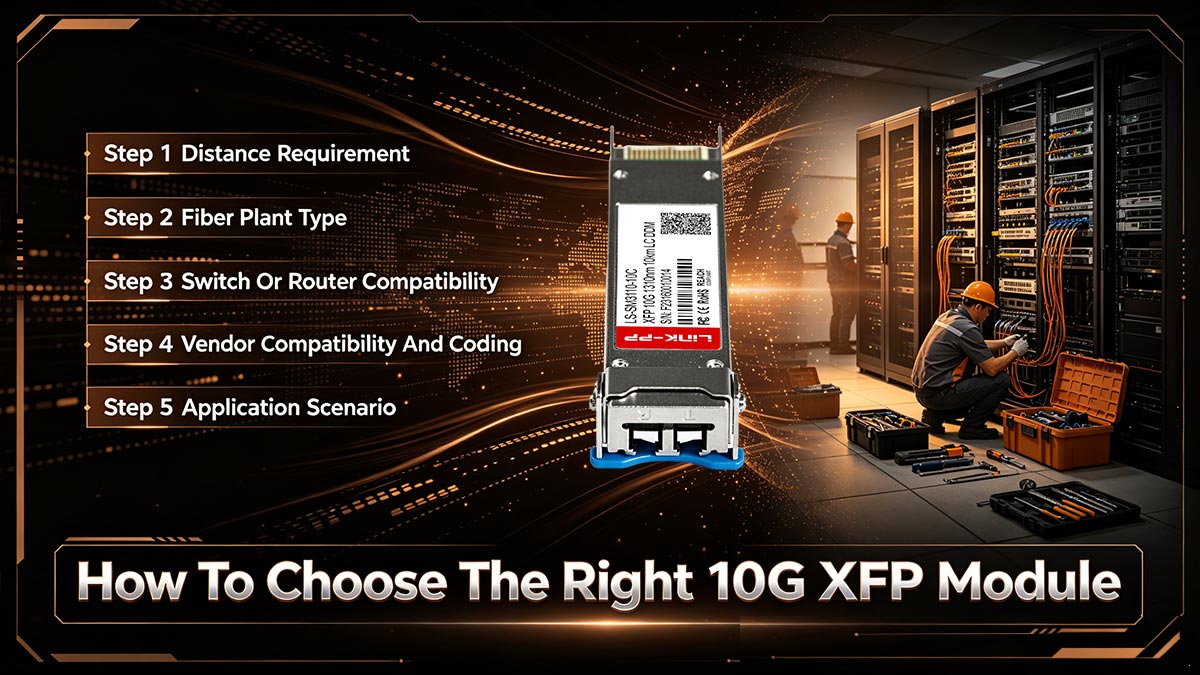
Step 1 Distance Requirement
The first and most important decision factor is link distance.
- Short distance (up to 300–400m): Choose XFP SR (850nm, MMF)
- Medium distance (up to 10km): Choose XFP LR (1310nm, SMF)
- Long distance (up to 40km): Choose XFP ER (1550nm, SMF)
- Ultra-long distance (up to 80km): Choose XFP ZR (1550nm, SMF)
If distance is underestimated, the link may work intermittently or fail completely under load.
Step 2 Fiber Plant Type
Your existing fiber infrastructure determines which XFP modules are physically compatible.
- Multimode Fiber (MMF, OM3/OM4) → Only compatible with SR optics
- Single-Mode Fiber (SMF, OS2) → Required for LR, ER, and ZR optics
Incorrect fiber matching is one of the most common causes of “no link” issues in XFP deployments.
Step 3 Switch Or Router Compatibility
Not all 10G devices support XFP modules, even if they support 10G Ethernet.
Before selecting a module, confirm:
- The device has a dedicated XFP port or line card
- The platform explicitly supports the desired XFP type (SR/LR/ER/ZR)
- The operating system firmware supports third-party or OEM-coded optics (if applicable)
Ignoring platform compatibility often leads to “unsupported transceiver” errors.
Step 4 Vendor Compatibility And Coding
Vendor policies can significantly impact whether an XFP module will function.
- OEM-coded optics (Cisco, Juniper, etc.) ensure maximum compatibility
- Third-party modules may work, but depend on firmware restrictions
- Some systems block non-approved EEPROM signatures
For production networks, matching vendor requirements reduces operational risk and troubleshooting time.
Step 5 Application Scenario
Finally, consider the actual network use case:
- Enterprise backbone (legacy 10G) → LR or SR depending on fiber
- Metro network or ISP transport → ER or ZR modules
- Data center legacy switches → SR or LR depending on rack distance
- Industrial or specialized systems → Typically LR for stability and simplicity
Choosing based on application ensures long-term reliability rather than just technical compatibility.
Key Takeaway
The right 10GB XFP transceiver is always the result of aligning four factors: distance, fiber type, platform support, and vendor compatibility. When these elements are correctly matched, XFP provides stable and efficient 10G connectivity—even in legacy or long-haul environments.
For engineers and procurement teams looking to source reliable and compatible optical modules, you can explore tested solutions at the LINK-PP Official Store, where a wide range of 10G XFP transceivers are available for different vendor platforms and deployment scenarios.