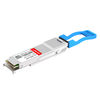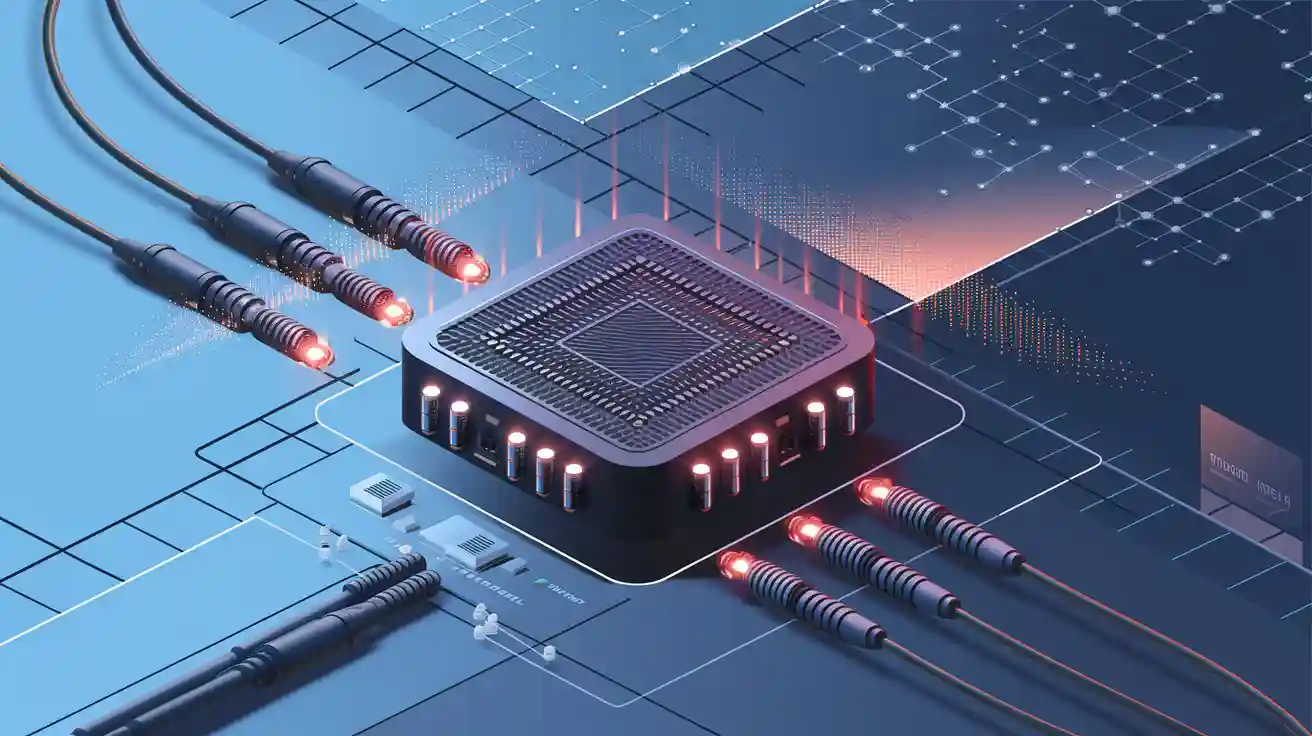
BiDi optics has emerged as a critical innovation in modern optical networking, enabling efficient data transmission over a single fiber through wavelength division multiplexing (WDM). Unlike traditional duplex optics that require separate fibers for transmit and receive signals, BiDi optics uses distinct wavelengths to carry bidirectional traffic on the same strand. This approach not only optimizes fiber utilization but also addresses the growing demand for scalable, high-speed connectivity in data centers, telecommunications, and enterprise networks.
At the core of BiDi optics lies the integration of WDM design principles, which allow multiple optical signals to coexist without interference. By carefully pairing wavelengths and managing signal separation, BiDi systems achieve reliable, high-performance communication while reducing infrastructure costs. As network bandwidth requirements continue to rise, understanding the architecture and design principles behind BiDi optics becomes essential for deploying efficient and future-ready optical networks.
☀️ Introduction to BiDi Optics in Modern Networks
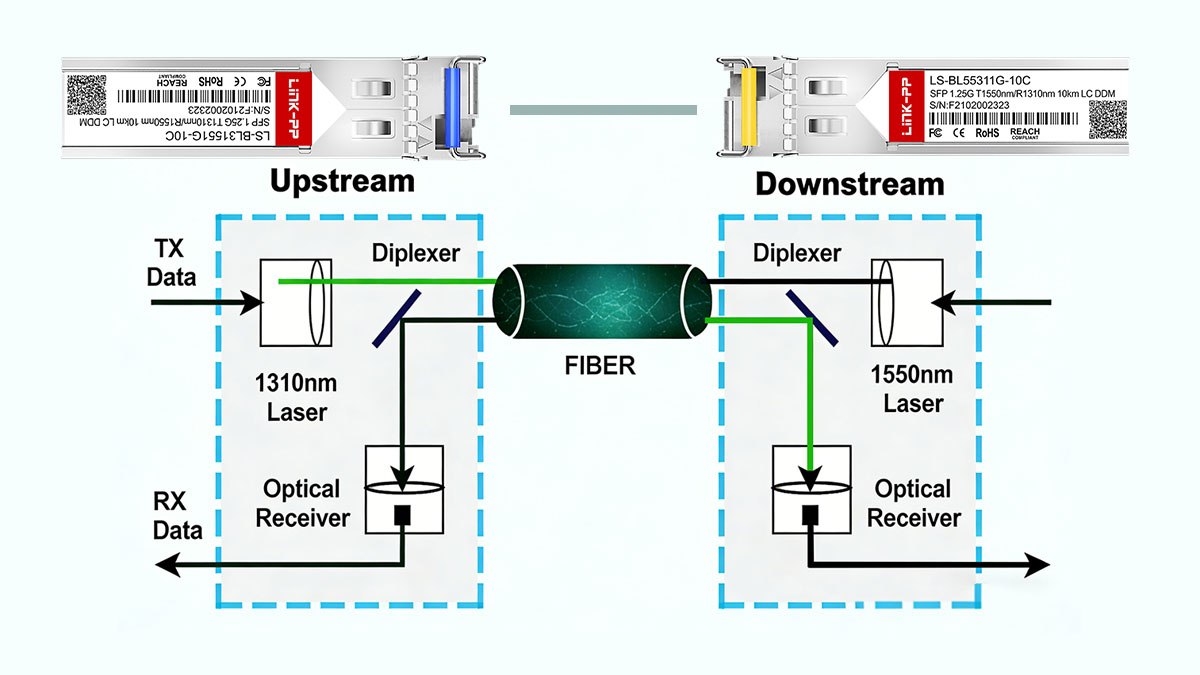
BiDi optics represent a transformative approach in optical networking, enabling high-speed data transmission over a single fiber. By leveraging wavelength division multiplexing (WDM), BiDi systems allow simultaneous upstream and downstream communication, significantly improving fiber utilization. These optical modules are increasingly deployed in modern data centers, access networks, and enterprise infrastructures to meet growing bandwidth demands while reducing operational complexity.
What Are BiDi Optical Modules
BiDi optical transceiver modules are designed to simultaneously handle both transmitting (TX) and receiving (RX) signals over one optical fiber. Instead of requiring two separate fibers — one for each direction — they use distinct wavelengths for upstream and downstream traffic. Internally, a BiDi module integrates elements such as a laser transmitter, photodetector, and wavelength-specific filters that separate and combine signals seamlessly, achieving full-duplex communication through a single port interface.
Role of WDM in BiDi Systems
Wavelength Division Multiplexing (WDM) lies at the heart of BiDi operation. Each BiDi pair functions on two specific wavelengths — one for sending and one for receiving. For instance, one BiDi SFP module might transmit at 1270nm and receive at 1330nm, while its counterpart does the reverse. This wavelength pairing ensures that bidirectional signals travel simultaneously without interference. By leveraging WDM, BiDi modules maximize fiber bandwidth efficiency and simplify optical link management.
Key Advantages Over Duplex Optics
When compared with traditional duplex optical links, BiDi optics deliver a range of performance and deployment benefits that directly address modern network constraints. Duplex systems transmit and receive signals using separate fibers, which is simple but inefficient when fiber resources are limited or expensive. In contrast, BiDi optics transmit both directions of data over a single fiber, reducing physical infrastructure demands while maintaining full-duplex capacity. This innovation translates into easier scalability, simplified cabling, and significantly lower operational costs.
To illustrate these differences more clearly, the table below highlights the key distinctions between BiDi and duplex optical architectures across major technical and operational parameters:
| Feature / Aspect |
BiDi Optics |
Duplex Optics |
| Fiber Requirement |
Single fiber for both TX and RX |
Two separate fibers (one for TX, one for RX) |
| WDM Utilization |
Uses two distinct wavelengths over one fiber |
Typically one wavelength per fiber |
| Infrastructure Cost |
Lower — reduces need for additional fiber runs |
Higher — double fiber usage per link |
| Installation Complexity |
Simplified cabling, fewer physical connections |
More complex cable routing and management |
| Maintenance Overhead |
Reduced due to fewer connection points |
Increased with more connectors and patch cords |
☀️ Core Concepts of BiDi Optics and WDM Technology
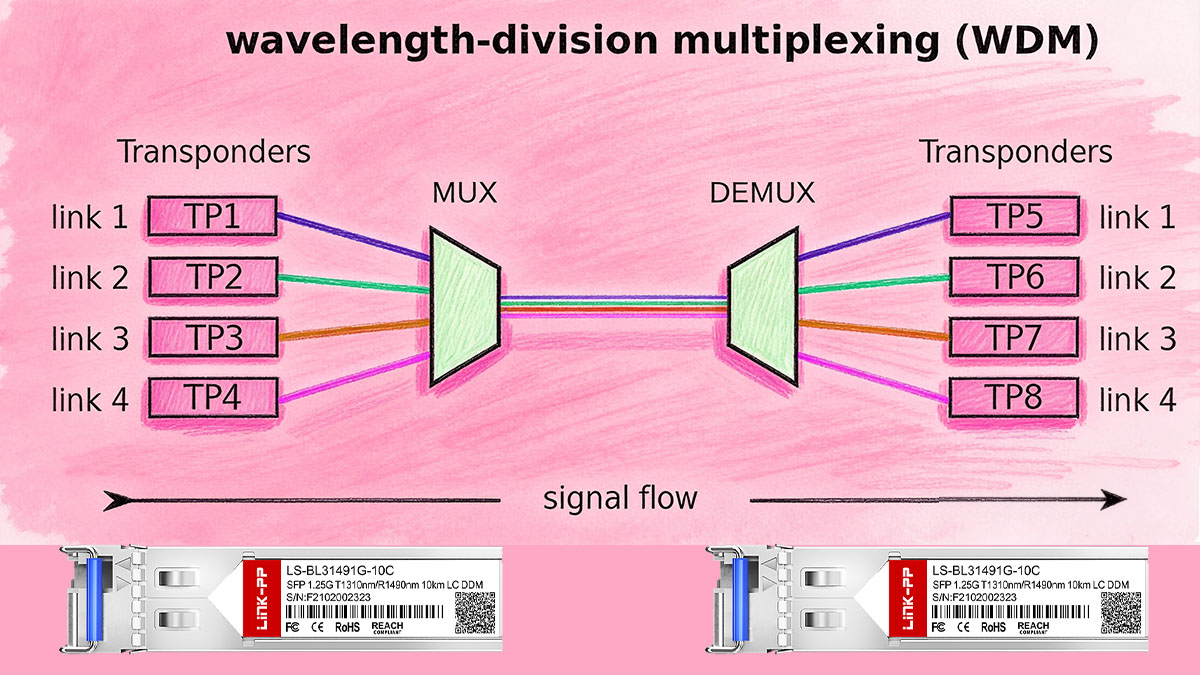
The operational efficiency of BiDi optics relies on a deep integration of optical physics and precise hardware engineering. At its core, the technology exploits the fact that different wavelengths of light can travel through the same fiber independently. By strictly segregating these wavelengths through WDM principles, BiDi systems maintain high signal integrity even over long distances.
Fundamentals of Wavelength Division Multiplexing
Wavelength Division Multiplexing (WDM) is the technique of transmitting multiple optical signals over a single fiber by assigning each signal a distinct wavelength of light. These signals are combined at the transmitter using optical multiplexers and then separated at the receiver using demultiplexers. In BiDi systems, WDM operates on a simpler scale — typically using just two wavelengths to establish bidirectional communication.
Single-Fiber Bidirectional Communication Explained
In single-fiber bidirectional transmission, one wavelength carries data upstream (from user to network), while another carries data downstream (from network to user). A BiDi transceiver uses optical filters or circulators to direct light correctly: one component merges outgoing signals, and another separates incoming ones. This configuration enables continuous two-way communication without needing two fibers or additional switching hardware.
Upstream vs Downstream Wavelength Allocation
For a BiDi link to function, the two connected transceiver modules must be complementary. This is known as wavelength pairing. For example, in a common 10G BiDi setup, modules such as SFP-10G-BXU and SFP-10G-BXD operate as complementary wavelength pairs. The "Upstream" module (A) might transmit at 1270nm and receive at 1330nm, while the "Downstream" module (B) must be designed to transmit at 1330nm and receive at 1270nm. If two identical "A" modules are connected to each other, the link will fail because both transmit on the same wavelength while listening on a wavelength that neither end is using.
Optical Signal Separation Techniques
To prevent interference between upstream and downstream signals on a single fiber, BiDi optics employ specialized optical components like WDM filters, circulators, and dichroic mirrors. These devices selectively route each wavelength to its respective receiver or transmitter, maintaining clear signal paths and high communication reliability even in dense or long-reach networks.
☀️ BiDi Optics Architecture Overview
The architecture of BiDi optics is engineered to combine bidirectional transmission and precise wavelength control within a compact transceiver form factor. This architecture allows simultaneous sending and receiving of optical signals through a single fiber core, relying on intricate internal optical paths, miniature filtering structures, and integrated laser and detector components.

Key Components in BiDi Transceivers
A typical BiDi SFP transceiver contains several essential components that work together to enable bidirectional communication on one fiber.
Laser Transmitter
- Generates the outgoing optical signal at a specified wavelength.
- Common laser types include DFB lasers for longer reach and high wavelength stability.
- The transmit wavelength must precisely match the paired module’s receive window.
Photodetector / Receiver
- Detects the incoming optical signal carried on a different wavelength.
- Usually implemented with a PIN or APD photodiode depending on sensitivity and reach requirements.
- Must distinguish weak incoming signals while rejecting leakage from the local transmitter.
WDM Filter or Diplexer
- The core optical element that combines and separates two wavelengths.
- Directs the transmit wavelength toward the fiber while routing the receive wavelength toward the detector.
- Its insertion loss and isolation performance strongly affect total link quality.
Optical Coupling Interface
- Couples the internal optical path to the external fiber connector, typically LC simplex.
- Requires accurate alignment to minimize coupling loss and reflection.
- Mechanical stability is important because misalignment can reduce received power.
Transimpedance Amplifier (TIA) and Laser Driver
- The TIA amplifies weak electrical signals converted from incoming light.
- The laser driver controls the modulation current and output stability of the transmitter.
- Together, they determine receiver sensitivity and transmitter signal quality.
Digital Diagnostics and Control Circuitry
- Supports functions such as temperature monitoring, bias current reading, TX power, and RX power reporting.
- Helps operators monitor module health and identify degradation trends.
- Often implemented under SFF diagnostic monitoring standards.
Internal Optical Path Design
The internal optical path design in BiDi optics is critical for ensuring the efficiency and reliability of bidirectional communication. Wavelength division multiplexers (WDM) are used within the optical transceiver to split and recombine light signals for upstream and downstream transmission.
This optical path design ensures that data can be transmitted and received simultaneously on the same fiber while maintaining low signal degradation. Careful routing and alignment of optical fibers and components within the transceiver are essential for minimizing losses and preventing crosstalk between the TX and RX channels.
Integration of TX and RX on One Fiber
The integration of both transmission and reception functions on a single optical fiber is the key feature of BiDi optics. Using WDM, different wavelengths are allocated for transmitting and receiving data, allowing two-way communication over a single fiber.
This integration greatly reduces the need for additional fibers in the network, simplifying the overall deployment and improving network density. Efficient coupling mechanisms such as microlenses or fiber collimators are used to direct the light into and out of the fiber, maintaining signal quality and optimizing space inside the transceiver module.
Common Form Factors and Standards
BiDi optics transceivers come in a variety of form factors, common SFP types including 1G SFP, 10G SFP+, 25G SFP28, 40G QSFP+, 50G SFP56 and 100G QSFP28 modules. These form factors are standardized for compatibility across different equipment vendors and allow for flexible integration into various networking devices like switches, routers, and optical transport systems.
The standards, such as those defined by the IEEE (Institute of Electrical and Electronics Engineers) and MSA (Multi-Source Agreement), ensure interoperability and reliable performance across different BiDi optics implementations.
☀️ WDM Design Principles in BiDi Optics Systems
WDM (Wavelength Division Multiplexing) enables BiDi optics to transmit and receive signals over a single fiber by using two different wavelengths. The design principles of WDM in BiDi systems focus on separating these wavelengths cleanly and efficiently to ensure stable, high-performance communication.
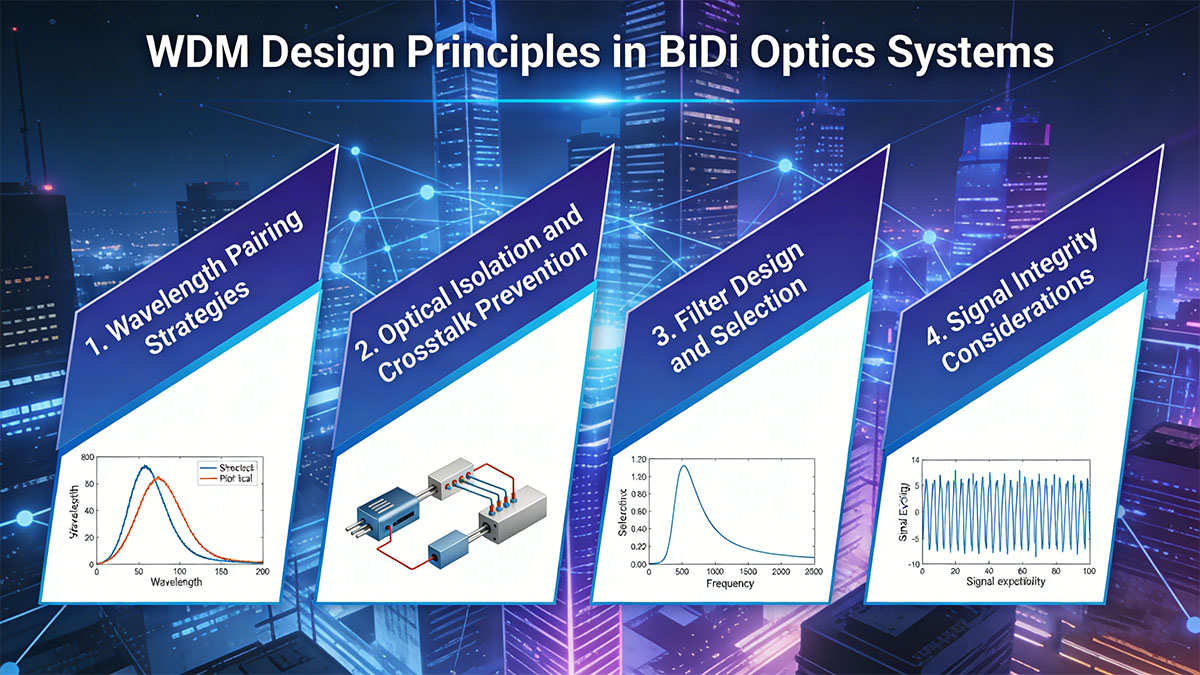
Wavelength Pairing Strategies
- Complementary Wavelengths: One module transmits on one wavelength (e.g., 1270nm) while the other receives on a different wavelength (e.g., 1330nm). The opposite happens at the other end.
- Adequate Spacing: The two wavelengths should be spaced far enough apart to avoid interference but not too far to increase cost or complexity.
- Simple Pairing Management: BiDi SFP modules must be used as matched pairs, with one module designed to work with the other based on the wavelength assignments.
Optical Isolation and Crosstalk Prevention
- Prevent Signal Interference: The transmit signal should not leak into the receiver path, as it could reduce signal quality or cause errors.
- Use of WDM Filters: WDM filters keep the two wavelengths separated, blocking one wavelength from interfering with the other.
- Minimize Reflections: Reflective surfaces within the module must be avoided, as reflected signals can interfere with the receiver’s ability to detect incoming signals clearly.
Filter Design and Selection
- Precise Wavelength Separation: The WDM filter should pass one wavelength and block the other effectively, ensuring the TX and RX signals stay distinct.
- Low Insertion Loss: The filter should introduce minimal signal loss so that the signal strength remains strong through the transmission path.
- Stable Performance: The filter should perform consistently under different temperatures and environmental conditions to maintain the reliability of the link.
Signal Integrity Considerations
- Power Budget Management: Proper calculation of optical losses (from fiber, connectors, filters) ensures that both the transmitted and received signals remain within the acceptable limits for quality communication.
- Wavelength Stability: Ensuring that the transmit wavelength remains consistent is critical for effective wavelength separation and preventing signal degradation.
- Control of Backscatter: Avoiding reflections and backscatter is important to maintain signal clarity and reduce noise within the system.
☀️ Advantages of BiDi Optics in Network Deployment
BiDi optics offer a highly efficient approach to modern network deployment by enabling bidirectional data transmission over a single fiber strand. This architecture reduces physical infrastructure requirements while maintaining high performance, making it particularly attractive for scalable and cost-sensitive environments. As networks continue to expand, BiDi solutions provide both operational and economic advantages.

Fiber Infrastructure Optimization
BiDi optics significantly reduce fiber usage by transmitting and receiving signals over a single strand instead of the traditional duplex pair. This is especially valuable in environments where fiber availability is limited or expensive to deploy, such as metropolitan networks or legacy buildings. By maximizing the utilization of existing fiber assets, operators can expand network capacity without the need for additional cabling.
Cost Efficiency in Large-Scale Networks
The reduction in fiber count directly translates into lower capital expenditures (CapEx), particularly in large-scale deployments like data centers and telecom backbones. Fewer fibers mean reduced costs for cabling, patch panels, and physical infrastructure. Additionally, operational expenditures (OpEx) are lowered due to simplified management and reduced space requirements in cable trays and conduits.
Simplified Cabling and Installation
BiDi optics streamline cabling by eliminating the need for paired fiber connections, which reduces installation complexity and potential human error. This simplicity accelerates deployment timelines and minimizes the risk of incorrect fiber polarity connections. As a result, network installation and upgrades become faster, cleaner, and more manageable, especially in high-density environments.
☀️ Challenges and Limitations of BiDi Optics
While BiDi optics can significantly improve fiber efficiency, they introduce tighter optical design constraints and operational nuances. Because TX and RX share the same fiber, deployments must carefully manage wavelength pairing, reflection control, and power budgets. In addition, interoperability and troubleshooting can be more complex than with conventional duplex links, especially in mixed-vendor or legacy environments.
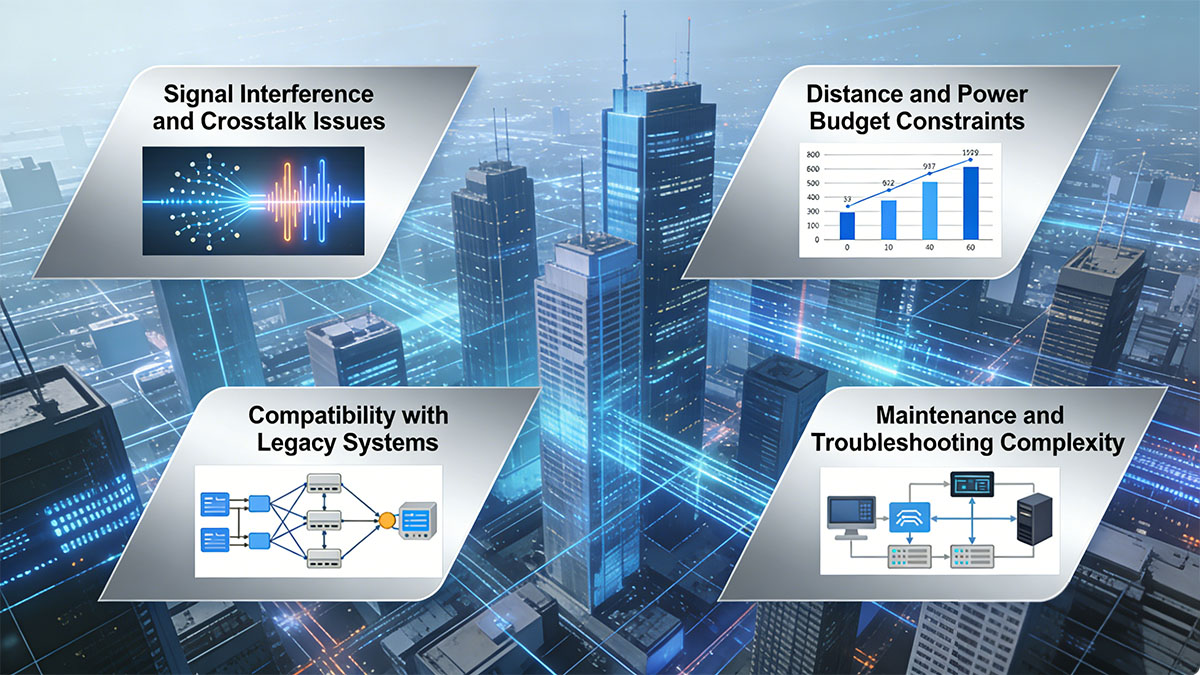
Signal Interference and Crosstalk Issues
- Wavelength Leakage and Imperfect Isolation: BiDi relies on internal WDM components (filters/diplexers) to separate two wavelengths. If isolation is insufficient, TX energy can leak into RX, raising the receiver noise floor and increasing error rates.
- Back-reflection Sensitivity: Single-fiber bidirectional links can be more affected by connector reflectance, dirty endfaces, or poor splices. Reflections can re-enter the receiver path and behave like interference, particularly at higher speeds.
- Environmental Drift and Component Tolerances: When temperature changes or parts vary slightly, filter behavior and laser wavelength can shift, so signals may not line up with the filter as intended. When these small errors add up, link margin drops and intermittent issues can appear.
Distance and Power Budget Constraints
- Tighter Link Budgets in Practice: Sharing one fiber doesn’t inherently reduce reach, but the extra optical components (WDM filters) add insertion loss, and reflection/crosstalk risk often forces operators to maintain more conservative margin.
- Asymmetric Performance: Upstream and downstream wavelengths may experience different attenuation characteristics depending on fiber type and components, so one direction may hit the limit first.
- More Sensitivity to Physical Link Quality: Because BiDi links have less “headroom” in their power budget, connector contamination, poor splices, or small unexpected losses can more quickly push the link over its limit and cause errors or outages.
Compatibility with Legacy Systems
- Must Match Wavelength Pairs and “A/B” Polarity: Many BiDi ecosystems use complementary module pairs (often informally called BiDi A and BiDi B) where TX/RX wavelengths are swapped between ends. Mixing the wrong pair results in a link that won’t come up.
- Interoperability is Less Forgiving: Duplex optics are often simpler to mix across vendors if they follow the same standard. BiDi implementations can vary by wavelength set, filter design, and diagnostic reporting, making multi-vendor compatibility more sensitive.
- Limited Flexibility for Mixed Deployments: Legacy duplex equipment cannot directly connect to BiDi transceivers without wavelength converters or parallel fiber runs, requiring careful network segmentation and transition planning during upgrades.
Maintenance and Troubleshooting Complexity
- Troubleshooting Requires Wavelength Awareness: With duplex links, a tech can often isolate TX vs RX fiber quickly. With BiDi, both directions share the same strand, so fault isolation depends more on optical power readings, DOM telemetry, and endpoint swapping.
- Testing Tools and Procedures may Need Adjustment: Common OLTS/OTDR workflows may require bidirectional testing plans, attention to launch conditions, and interpretation that accounts for WDM behavior and reflections.
- Operational Pitfalls (Inventory + Labeling): Organizations often struggle not with the optics themselves, but with process: stocking correct A/B pairs, preventing accidental swaps, and ensuring patch cords are routed and labeled so the wavelength pairing remains consistent.
☀️ BiDi Optics Use Cases Across Industries
BiDi optics have become increasingly relevant across a wide range of industries due to their ability to maximize fiber efficiency while maintaining high-speed performance. By enabling bidirectional transmission over a single fiber, they provide scalable and cost-effective solutions for modern network demands. Their versatility makes them suitable for both core infrastructure and edge deployments.

Data Center Interconnects
In modern data centers, BiDi optics are commonly used for short- and medium-range interconnects, such as spine-leaf architectures, rack-to-rack connections, and inter-building links within a campus. By using a single fiber instead of duplex pairs, operators can effectively double fiber capacity, which is especially beneficial in high-density environments where cable pathways and patch panels are already congested. This also simplifies cable management and reduces airflow obstruction, contributing to better thermal efficiency.
Beyond infrastructure optimization, BiDi optics support rapid scalability in hyperscale and cloud data centers. As traffic patterns grow increasingly east-west due to distributed computing and microservices, BiDi modules enable seamless upgrades to higher data rates (e.g., 40G, 100G, using QSFP+/QSFP28) without requiring new fiber deployments. This reduces downtime during upgrades and allows operators to scale bandwidth incrementally while maintaining operational continuity.
Telecommunications and Access Networks
Telecommunications providers deploy BiDi optics extensively in metro aggregation, mobile fronthaul/backhaul, and access networks where fiber resources are often scarce or expensive to expand. In 5G deployments, for example, the need to connect a large number of small cells to centralized units creates significant pressure on fiber infrastructure. BiDi optics alleviate this by enabling two-way communication over a single strand, effectively halving fiber requirements while still meeting stringent latency and bandwidth demands.
Additionally, BiDi fiber SFP solutions integrate well with WDM-based network planning, allowing operators to assign different wavelength pairs across multiple links for efficient spectrum utilization. This flexibility supports incremental network expansion and service differentiation without major physical upgrades. As a result, service providers can improve ROI on existing fiber assets while accelerating time-to-market for new services.
Enterprise and Campus Networks
In enterprise and campus environments, BiDi optics are often used to upgrade legacy networks where fiber availability is limited or installation of new cabling is impractical. Many organizations have pre-existing single-fiber links or constrained conduit space, and BiDi fiber optic SFP modules allow them to achieve higher speeds — such as upgrading from 1G BiDi SFP to 10G BiDi SFP+ or beyond — without re-cabling. This significantly reduces both capital expenditure and deployment time.
Furthermore, BiDi optics simplify network design and maintenance in large-scale campuses, including universities, hospitals, and industrial facilities. By reducing the number of fibers required per link, IT teams can streamline patching, labeling, and troubleshooting processes. This leads to improved operational efficiency and minimizes the risk of configuration errors, especially in complex multi-building network topologies.
FTTH and Broadband Applications
In FTTH and broadband deployments, BiDi optics are fundamental to enabling efficient last-mile connectivity. They are widely used in passive optical network (PON) architectures, where upstream and downstream signals are transmitted over different wavelengths on a single fiber. This approach allows service providers to deliver high-speed internet, IPTV, and voice services while minimizing fiber consumption across large residential areas.
Moreover, BiDi technology supports scalable broadband expansion in both urban and rural environments. In densely populated areas, it helps maximize the utilization of existing fiber infrastructure, while in rural deployments, it reduces the cost barrier associated with laying new fiber over long distances. This makes it a key enabler for bridging the digital divide and delivering reliable high-speed connectivity to underserved regions.
☀️ Conclusion: Future Outlook for BiDi Optics in High-Speed Networks
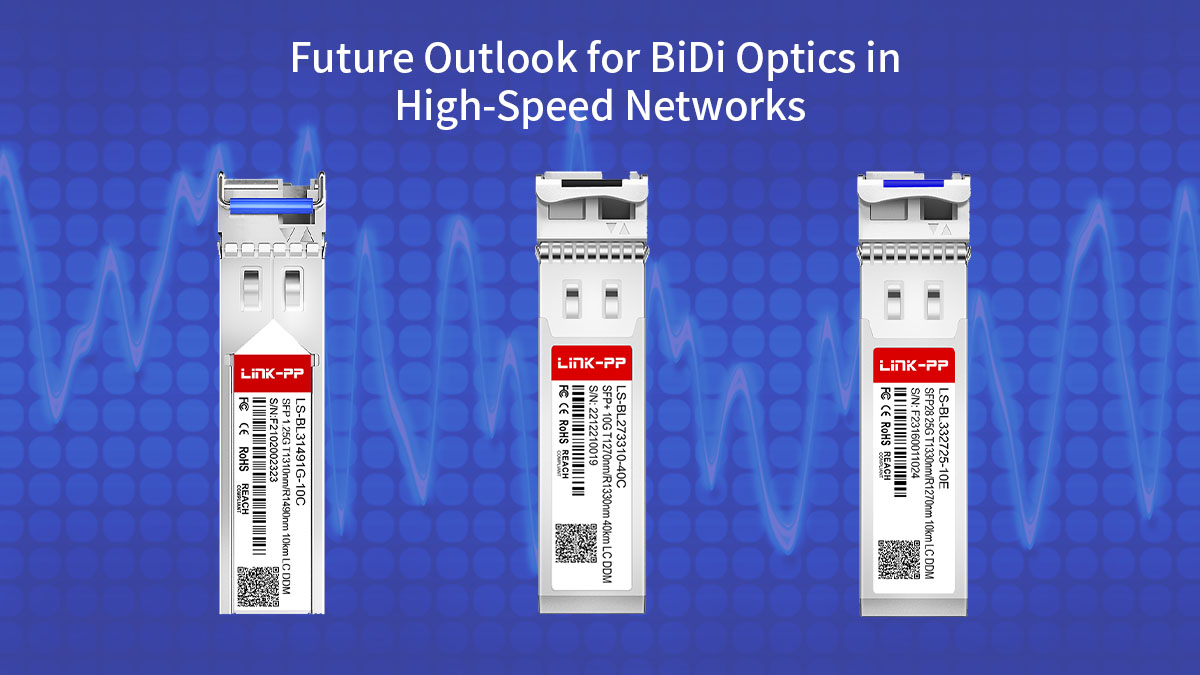
BiDi optics are becoming an important solution for modern high-speed networks because they allow more data to be transmitted using fewer fiber resources. As technologies like cloud computing, 5G, and AI continue to grow, networks need to scale quickly without significantly increasing infrastructure costs. BiDi modules help meet this demand by offering a simple and efficient way to upgrade capacity while making the most of existing fiber.
As optical technologies continue to improve, BiDi solutions will support even higher speeds and more flexible network designs. This makes them a smart choice for organizations planning future upgrades. If you're considering optimizing your network with reliable BiDi optics, you can explore available options at the LINK-PP Official Store to find solutions that fit your network needs.