




























In enterprise and data center networks, the QSFP-40G-CSR-S module is commonly deployed to deliver 40G connectivity over multimode fiber, especially in high-density and short-reach scenarios. While Cisco-compatible versions of the QSFP-40G-CSR-S offer a cost-effective alternative to original modules, their real-world performance can vary depending on manufacturing quality, component selection, and compatibility tuning. This makes consistency and reliability a growing concern for network operators.
As network workloads become more demanding and uptime requirements more stringent, the stability of QSFP-40G-CSR-S compatible modules has become a key factor in infrastructure evaluation. Enterprises are no longer focused solely on basic connectivity, but also on how these modules perform under continuous operation, fluctuating temperatures, and heavy traffic conditions. Against this backdrop, conducting a stability audit is essential to ensure that compatible solutions can meet long-term operational expectations.
🔅 Understanding QSFP-40G-CSR-S Cisco-Compatible Modules
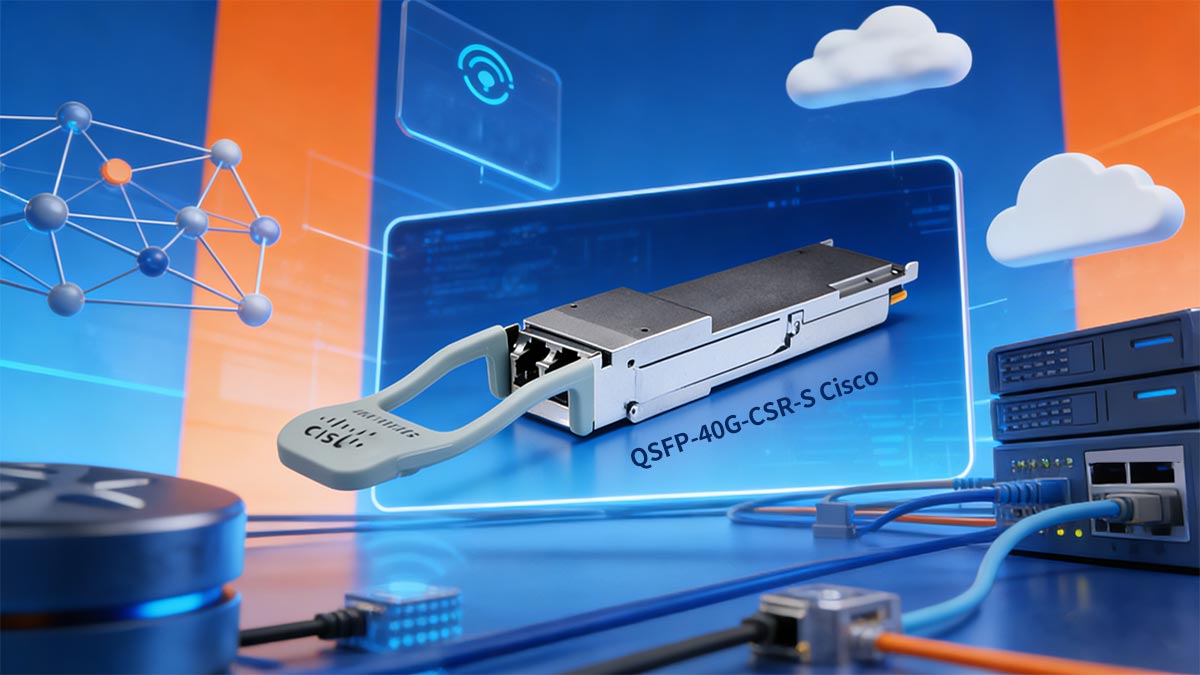
The QSFP-40G-CSR-S Cisco compatible module is designed to provide reliable 40G connectivity while ensuring interoperability with Cisco networking equipment. As enterprises increasingly adopt cost-effective alternatives to original vendor modules, understanding how compatibility and performance are achieved becomes essential.
What Makes a Module “Cisco-Compatible”
A module is considered “Cisco-compatible” when it can function seamlessly within Cisco devices without triggering compatibility errors or performance issues. This involves both hardware and software-level alignment.
- EEPROM Programming: Encoded to match Cisco’s identification parameters, allowing the host device to recognize the module as valid.
- Compliance with MSA Standards: Built according to Multi-Source Agreement (MSA) specifications to ensure physical and electrical interoperability.
- Firmware Optimization: Tuned to align with Cisco system requirements for stable communication.
- Interoperability Testing: Verified across multiple Cisco platforms to ensure consistent operation.
In practice, not all compatible modules deliver the same level of reliability. Variations in component quality and encoding accuracy can directly impact performance and long-term stability.
Key Features of QSFP-40G-CSR-S
The QSFP-40G-CSR-S is a 40GBASE-SWDM4 optical module designed for short-reach transmission over duplex multimode fiber. Unlike traditional parallel optics, it uses wavelength division multiplexing (WDM) technology to transmit four channels over a single pair of fibers, improving fiber utilization and simplifying cabling.
Key characteristics include:
- 40Gbps Data Rate: Delivers high-speed connectivity by multiplexing four 10Gbps wavelengths into a single 40G link.
- Duplex LC Interface: Uses standard LC connectors, enabling compatibility with existing duplex fiber infrastructure and reducing deployment complexity.
- SWDM4 Technology: Operates across multiple wavelengths (typically 850–940 nm), allowing transmission over OM3 and OM4 multimode fiber with extended reach.
- Enhanced Fiber Efficiency: Eliminates the need for MPO cabling, making it ideal for environments upgrading from 10G SFP+ to 40G QSFP+ without major infrastructure changes.
- Hot-Swappable and Energy Efficient: Supports live insertion and removal while maintaining relatively low power consumption for dense network deployments.
These features make the QSFP-40G-CSR-S particularly suitable for data centers seeking to scale bandwidth while preserving existing fiber investments.
Typical Applications in Enterprise Networks
The QSFP-40G-CSR-S is commonly used in enterprise networks where there is a need to increase bandwidth without replacing existing duplex fiber infrastructure. Its SWDM4 design makes it especially practical for environments transitioning from 10G SFP+ to 40G QSFP+, allowing smoother upgrades with minimal disruption.
In real-world deployments, it is often found in data center spine-leaf architectures, where it supports high-speed communication between switches and handles large volumes of east-west traffic. It is also widely used for switch-to-switch connections in aggregation or core layers, particularly in high-density setups where efficient cabling and port utilization are important.
Another common scenario is in server aggregation, where top-of-rack switches require higher-capacity uplinks to keep up with growing workloads in virtualized or cloud environments. Additionally, the QSFP-40G-CSR-S can be used in campus backbone networks to provide stable, short- to medium-distance 40G links between buildings or network segments, all while leveraging existing LC-based cabling systems.
Why Stability Matters in High-Speed Networks
At 40G speeds, even minor fluctuations in module performance can have a noticeable impact on network behavior. Issues such as signal degradation, intermittent link drops, or increased error rates can disrupt data transmission and reduce overall efficiency.
Stable operation is especially important in environments with continuous traffic and high utilization. Under such conditions, the QSFP-40G-CSR-S must maintain consistent signal integrity and thermal balance to avoid performance degradation over time. This makes stability a critical factor when evaluating Cisco-compatible modules for long-term deployment.
🔅 Comparing QSFP-40G-CSR-S with Third-party Cisco-Compatible Modules
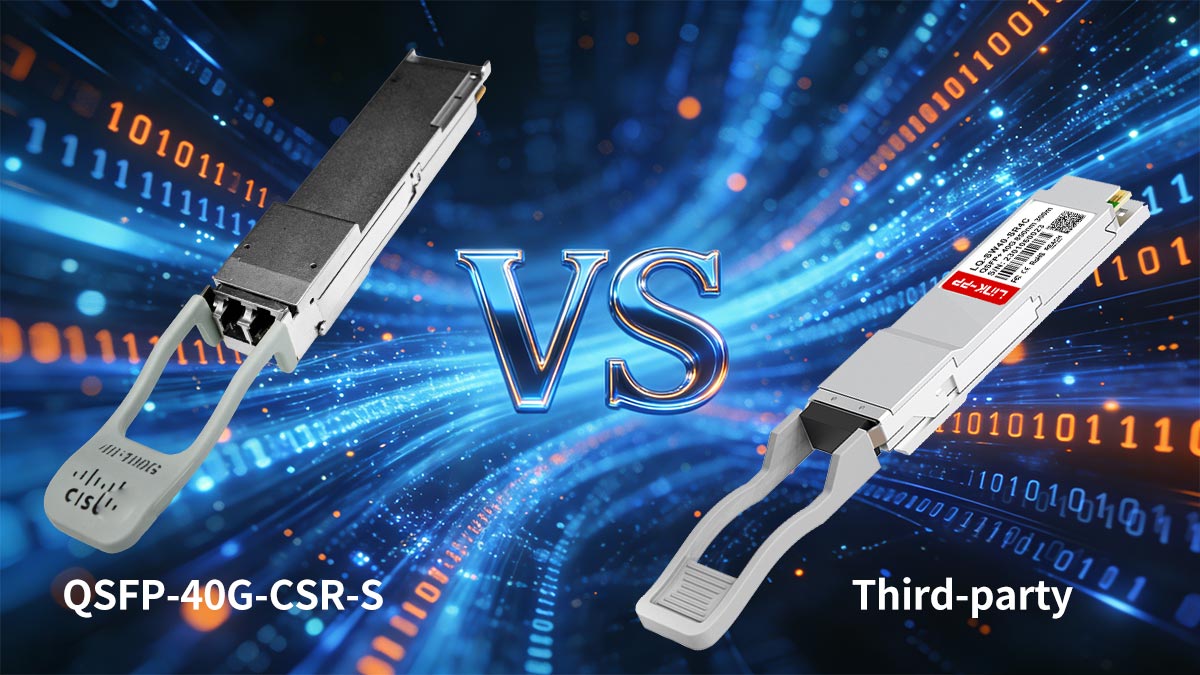
Cisco QSFP-40G-CSR-S module delivers proven stability and seamless integration for enterprise networks, supporting extended multimode fiber distances up to 400m. Third-party compatible modules, such as LINK-PP LQ-SW40-SR4C 40G QSFP+, offer similar high-performance capabilities at competitive pricing, with strong Cisco interoperability. Both options meet rigorous 40GBASE-SR4 standards, enabling enterprises to choose based on budget, deployment scale, and specific network needs.
The table below summarizes their key attributes for quick reference:
| Aspect | Cisco QSFP-40G-CSR-S | Third-party (e.g., LINK-PP LQ-SW40-SR4C) |
| Data Rate | 40Gbps | 40Gbps (Compliant with QSFP+ MSA, SWDM MSA, IEEE 802.3ba) |
| Transmission Distance | 300 - 400m | 300 - 400m |
| Compatibility | Native Cisco switch integration | Optimized for Cisco systems with precise alignment |
| Performance | Consistent performance in Cisco environments | Comparable performance with mature design and testing |
| Flexibility | Primarily tailored for Cisco ecosystems | More adaptable to mixed-vendor networks |
| Cost | Premium for OEM assurance | Cost-effective with equivalent features |
Real-World Performance Differences
QSFP-40G-CSR-S shines in Cisco ecosystems, delivering consistent 40G throughput with low latency across high-density traffic. Its IEEE-compliant design ensures predictable results in demanding applications like video streaming or virtualization clusters. This makes it a go-to for environments needing zero-compromise performance.
High-quality third-party modules like LINK-PP LQ-SW40-SR4C 40G SWDM4 match these metrics, offering plug-and-play efficiency in mixed-vendor setups. In contrast, lower-quality alternatives may exhibit slight inconsistencies in jitter under peak loads. LINK-PP’s advanced optical transceivers provide enterprise-grade reliability at a fraction of the cost.
Stability under Extended Operation
The QSFP-40G-CSR-S excels in long-term stability, leveraging Cisco firmware for proactive error correction and thermal control. It handles 24/7 operations flawlessly, minimizing downtime in core network spines. Regular diagnostics further enhance its endurance over years of service.
High-end third-party options, such as LINK-PP LQ-SW40-SR4C, deliver comparable stability with robust heat dissipation and self-monitoring features. Lower-quality modules might require more frequent checks due to variable component tolerances. Reputable vendors like LINK-PP ensure consistent performance matching OEM standards.
Cost vs Reliability Assessment
QSFP-40G-CSR-S offers unmatched reliability through Cisco’s ecosystem, backed by comprehensive warranties and support. Its premium pricing reflects assured integration and minimal maintenance, ideal for high-stakes deployments. This investment pays off in reduced operational risks over time.
Premium third-party modules like LINK-PP LQ-SW40-SR4C provide equivalent reliability at 40-60% lower cost, enabling budget flexibility. Inferior options can increase long-term expenses via higher failure rates or compatibility tweaks. Choosing vetted third-party suppliers like LINK-PP balances savings with proven dependability.
Module Selection Criteria for Enterprises
For Cisco QSFP-40G-CSR-S, prioritize it in unified environments where seamless support and future-proofing are key. Its native compatibility simplifies management in large-scale data centers or campuses. Vendor ecosystem alignment makes it a strategic long-term choice.
High-quality third-party modules like LINK-PP LQ-SW40-SR4C suit diverse networks seeking value without sacrificing performance—verify via certifications and reviews. Avoid unproven low-end options that risk integration hurdles. Pilot testing and vendor reputation guide optimal enterprise selections.
🔅 Setting up A QSFP-40G-CSR-S Compatible Module Stability Audit
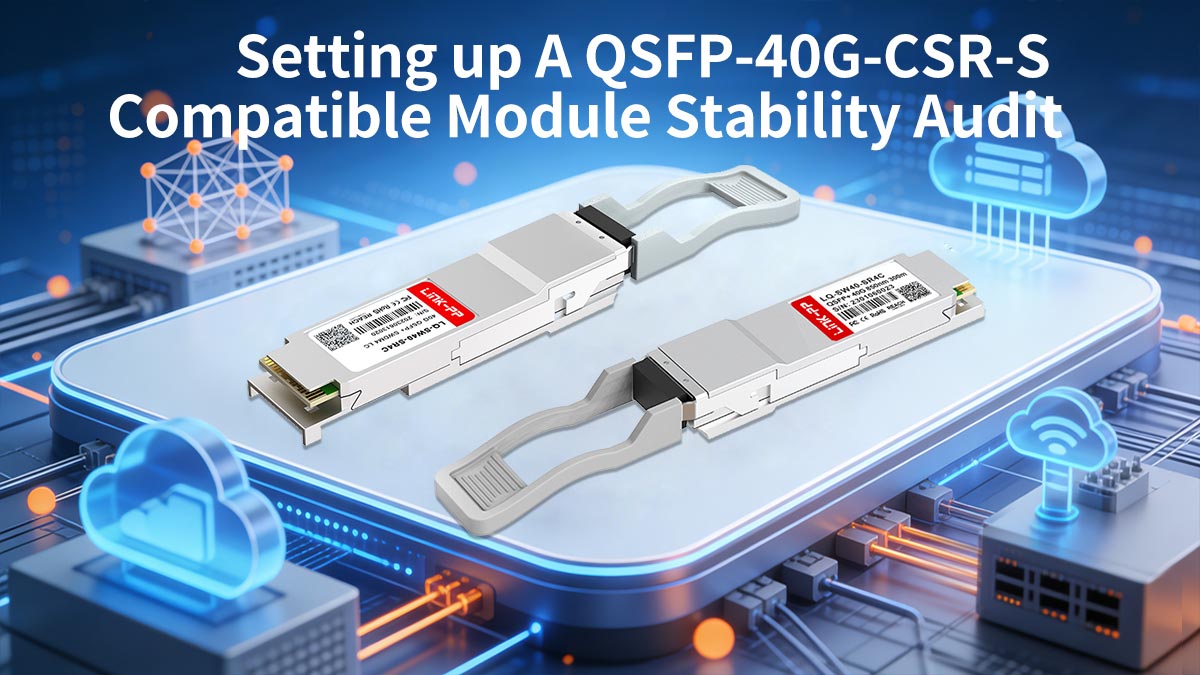
A stability audit ensures that both Cisco devices and third-party QSFP-40G-CSR-S compatible modules maintain consistent data transmission, signal integrity, and thermal balance under varied conditions. Proper setup is critical to capture accurate results, prevent misread metrics, and enhance long-term reliability. The following guidelines outline a structured approach to preparing, testing, and validating audit processes effectively.
Preparing the Testing Environment
A reliable audit begins with a well-prepared testing environment that closely reflects production conditions. Without this foundation, even the most advanced testing tools may produce misleading results.
To achieve this, several key aspects should be aligned:
- Standardized Infrastructure: Use consistent switches, fiber types (e.g., OM3/OM4), and port configurations to eliminate variability across tests.
- Controlled Environmental Conditions: Maintain stable temperature and airflow, as optical modules are sensitive to thermal fluctuations.
- Baseline Device Configuration: Ensure firmware versions, interface settings, and network policies are consistent and documented before testing begins.
- Realistic Traffic Readiness: Prepare the environment to simulate real workloads, including peak utilization and mixed traffic patterns, so results reflect actual operational scenarios.
When these elements are properly coordinated, the testing environment becomes a reliable foundation for meaningful stability evaluation.
Required Tools and Software
Performing a stability audit requires professional-grade testing tools and specialized software to collect and analyze optical and data performance data.
Essential components include:
- Optical Power Meter and Light Source: To assess signal strength and attenuation over fiber links.
- Bit Error Rate (BER) Tester: Measures error resilience across prolonged transmission.
- Thermal Sensor and Power Meter: Monitors module heat and consumption patterns.
- Network Analyzer or Switch CLI Interface: Captures throughput and latency data.
- Audit Management Software (e.g., NMS or SNMP platforms): Aggregates results for multi-module analysis.
When testing third-party QSFP-40G-CSR-S compatible modules, ensure firmware support for standard commands and interoperability with Cisco network management tools.
Step-by-Step Audit Workflow
With both environment and tools in place, a structured workflow ensures that the audit is systematic, repeatable, and easy to analyze. Rather than running isolated tests, the process should follow a logical progression from validation to long-term observation.
A typical workflow can be organized as follows:
- Initial Validation: Confirm that the module is properly recognized, links are established, and no immediate compatibility issues exist.
- Baseline Testing: Measure standard metrics such as throughput, latency, and error rates under normal conditions to establish a reference point.
- Stress and Load Testing: Introduce high traffic volumes, burst patterns, and sustained loads to evaluate how the module behaves under pressure.
- Thermal and Power Observation: Continuously monitor temperature and power usage during testing to detect instability or abnormal spikes.
- Extended Duration Testing: Run the system over long periods (24 - 72 hours or more) to uncover intermittent faults or gradual degradation.
- Result Analysis: Compare collected data against baseline metrics and predefined thresholds to identify deviations and potential risks.
Following this sequence ensures that both immediate and long-term stability characteristics are thoroughly assessed.
Common Setup Pitfalls to Avoid
Even with a well-designed audit, certain common mistakes can compromise the accuracy of the results. Recognizing and avoiding these pitfalls is just as important as the testing process itself.
Key issues to watch for include:
- Inconsistent Testing Conditions: Variations in hardware, cabling, or environment can lead to non-repeatable and unreliable outcomes.
- Firmware Mismatches: Using incompatible or outdated firmware may introduce issues unrelated to the module’s actual performance.
- Insufficient Testing Duration: Short test cycles often fail to reveal intermittent errors or long-term instability.
- Lack of Data Analysis: Collecting metrics without proper interpretation can cause critical warning signs — such as rising error rates — to be missed.
- Unrealistic Traffic Models: Oversimplified traffic patterns do not reflect real network behavior, reducing the audit’s practical value.
By proactively addressing these challenges, organizations can ensure that their stability audit delivers accurate, actionable insights rather than misleading conclusions.
🔅 Performance Metrics for QSFP-40G-CSR-S Compatible Modules
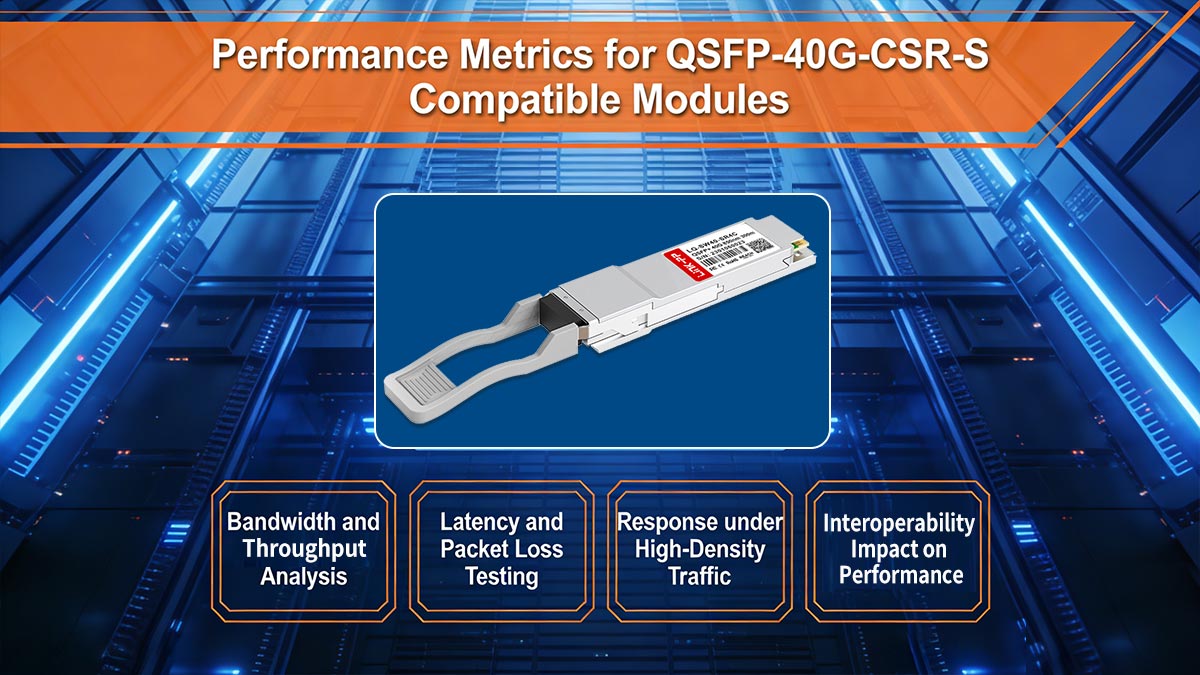
Measuring performance metrics provides a clear view of how QSFP-40G-CSR-S compatible modules operate under various network conditions. Core parameters such as bandwidth, latency, packet integrity, traffic responsiveness, and interoperability collectively define the module’s overall stability and efficiency. Consistent evaluation of these metrics helps enterprises ensure every transceiver performs at optimum levels across sustained workloads.
Bandwidth and Throughput Analysis
Bandwidth and throughput determine how effectively a QSFP-40G-CSR-S module transports data across fiber links. Cisco modules typically achieve near-maximum 40Gbps throughput with minimal signal degradation, while high-quality third-party options like LINK-PP LQ-SW40-SR4C QSFP 40G SWDM4 offer comparable output under equal conditions. Accurate measurement through network analyzers or performance software validates that the module can sustain peak capacity without bottlenecks, ensuring scalability in enterprise deployments.
Latency and Packet Loss Testing
Latency reflects the time delay between transmission and reception, while packet loss reveals data integrity under transit. A low-latency, near-zero-loss profile is critical for real-time applications such as video conferencing or cloud synchronization. Regular benchmarking using ICMP, TCP load tests, and traffic generators can help identify micro-delays or transmission inefficiencies. Both Cisco and reliable third-party compatible modules maintain stable latency profiles across consistent workloads when properly calibrated.
Response under High-Density Traffic
In dense environments where thousands of packets move simultaneously, module performance is influenced by data queuing and signal processing rates. QSFP-40G-CSR-S modules demonstrate predictable behavior even under congestion, thanks to their optimized internal buffering. Similarly, high-end third-party modules maintain strong response times by balancing transmission speed and signal integrity. Testing under simulated stress scenarios reveals how effectively modules manage high data concurrency without causing throughput drops.
Interoperability Impact on Performance
Interoperability ensures a module communicates effectively with switches, routers, and mixed-vendor systems without error or configuration conflict. QSFP-40G-CSR-S integrates naturally within Cisco architectures, while trusted compatible modules like LINK-PP LQ-SW40-SR4C are designed to mirror this seamless interaction through multi-platform firmware alignment. Evaluating interoperability performance helps validate compatibility consistency, reducing risks of handshake delays or protocol mismatches in large heterogeneous networks.
🔅 Thermal and Power Stability in QSFP-40G-CSR-S Compatible Module
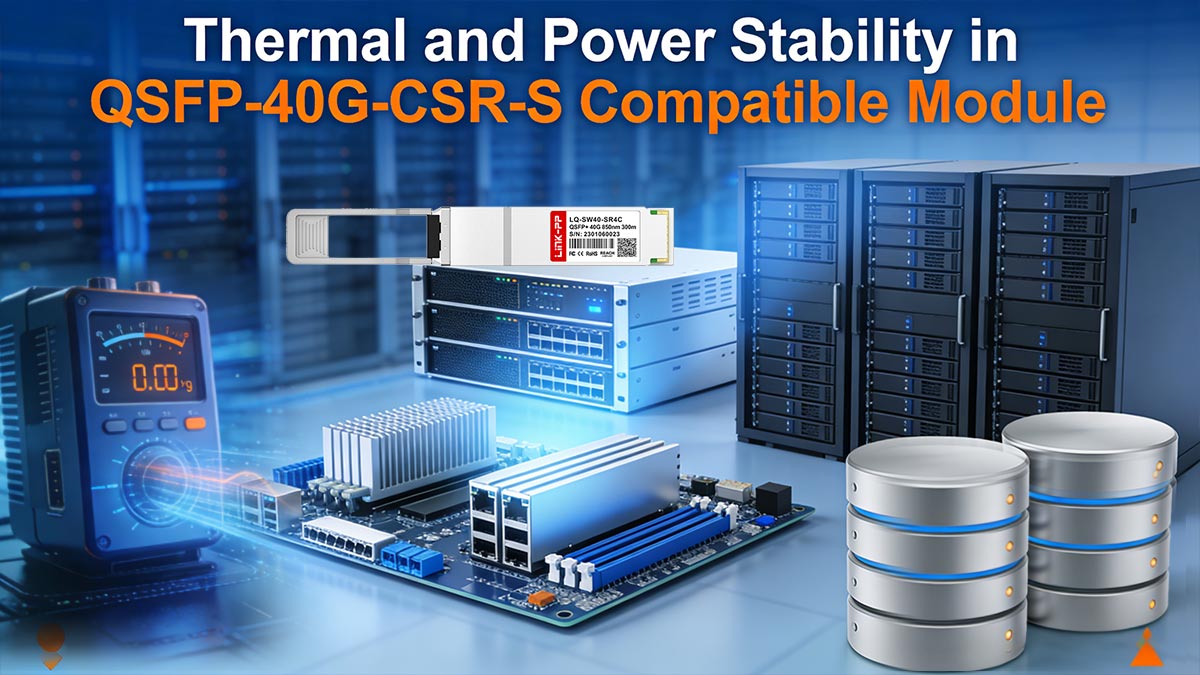
Thermal and power stability are fundamental factors that directly influence the reliability and lifespan of QSFP-40G-CSR-S compatible modules. In high-density network environments, even minor fluctuations in temperature or power consumption can lead to performance degradation or unexpected failures. A thorough evaluation of these aspects ensures that modules operate safely and consistently under varying workload conditions.
Temperature Thresholds and Monitoring
Cisco QSFP-40G-CSR-S modules are designed to operate within a defined temperature envelope of roughly 0°C to 70°C, providing automatic thermal feedback through digital diagnostics monitoring (DDM). High-quality third-party modules such as LINK-PP LQ-SW40-SR4C employ similar sensors that continuously report internal temperature to host switches, enabling proactive management of heat accumulation. Accurate temperature monitoring helps prevent optical power drift and ensures predictable performance even under fluctuating data loads.
Power Consumption Patterns
QSFP-40G-CSR-S modules typically consume between 3.5W and 4W during full operation, maintaining a consistent draw across varying transmission loads. Power efficiency directly impacts rack density planning and cooling strategies in enterprise environments. Third-party options also follow comparable consumption levels, optimizing performance within standard QSFP+ limits. Tracking these power patterns across time allows administrators to detect anomalies such as voltage instability or component degradation before faults occur.
Heat Management in Data Centers
Effective heat management is essential when deploying multiple 40G QSFP modules in high-density racks. Proper airflow design, front-to-back cooling, and adequate spacing between transceiver ports significantly reduce localized hotspots. Cisco and credible third-party vendors alike employ materials and components designed for efficient thermal dissipation, minimizing temperature variance during continuous operations. Integrating environmental sensors and intelligent cooling controls further stabilizes large-scale network infrastructures.
Effects of Overheating on Reliability
Excessive heat can amplify signal attenuation, accelerate component aging, and increase bit error rates, all of which compromise module stability. Sustained operation above rated temperatures may cause shifts in laser output power or receiver sensitivity, leading to network interruptions. Both Cisco and high-grade compatible modules incorporate automated thermal shutdown or throttling features to mitigate damage. Maintaining proper airflow and adhering to manufacturer guidelines ensures consistent performance and extends the lifecycle of the optical module.
🔅 Signal Integrity and Error Resilience in QSFP-40G-CSR-S Compatible Module
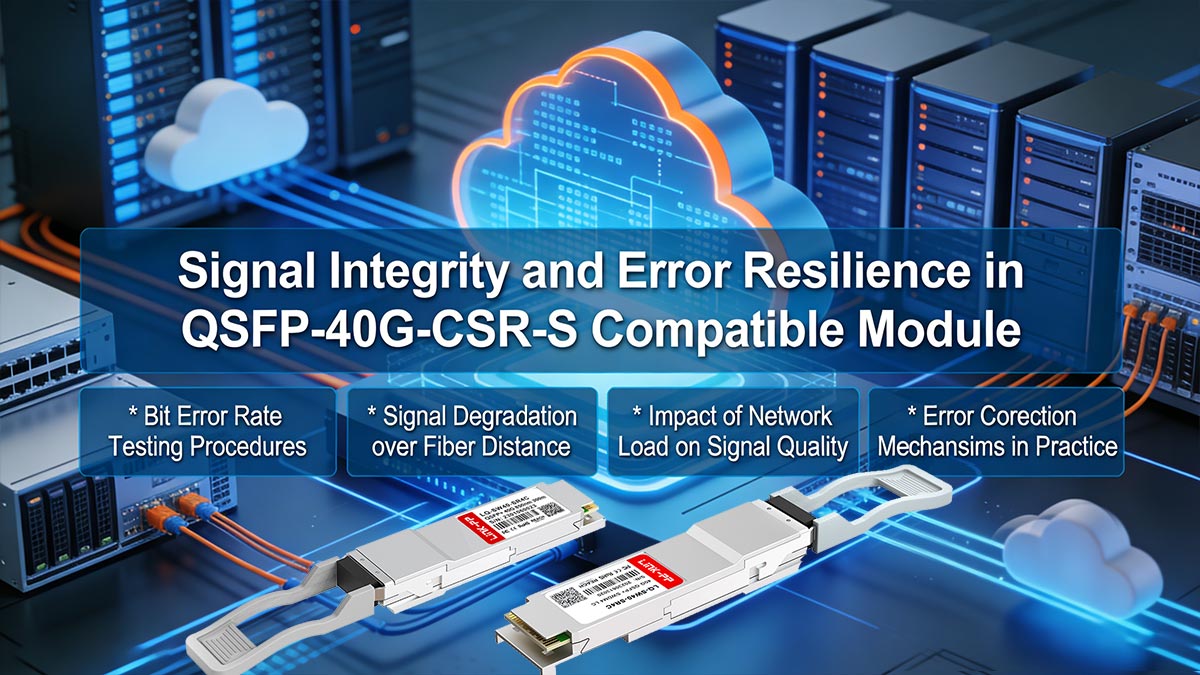
Signal integrity ensures clean data transmission across optical channels, while error resilience protects against bit errors in high-speed 40G networks. QSFP-40G-CSR-S compatible modules maintain these qualities through precise laser alignment, robust receivers, and forward error correction (FEC).
Bit Error Rate Testing Procedures
Bit Error Rate (BER) testing measures transmission accuracy, targeting rates below 1×10⁻¹² for QSFP-40G-CSR-S modules under IEEE 802.3ba standards. Use BERT instruments to generate pseudo-random bit sequences, transmit through the module-fiber link, and compare received data against expected patterns. This procedure reveals subtle errors from crosstalk or noise, confirming that Cisco compatible modules sustain low BER across full 40G loads.
Signal Degradation over Fiber Distance
As optical signals travel through multimode fiber, attenuation and modal dispersion can degrade signal quality, especially near the maximum supported distance of QSFP-40G-CSR-S modules (typically up to 400m on OM4 fiber). This degradation manifests as reduced signal-to-noise ratio (SNR) and increased jitter, which can compromise data integrity. Proper fiber selection, connector quality, and adherence to distance specifications are essential to maintaining consistent signal performance across deployments.
Impact of Network Load on Signal Quality
High network loads increase crosstalk and jitter, potentially degrading signal-to-noise ratios in 40G QSFP+ channels. QSFP-40G-CSR-S modules handle this through balanced 4x10G lane equalization, preserving quality even at peak throughput. Testing under bursty or sustained traffic confirms that compatible modules like LINK-PP LQ-SW40-SR4C resist load-induced distortions, supporting stable enterprise operations.
Error Correction Mechanisms in Practice
Forward Error Correction (FEC) in QSFP-40G-CSR-S modules detects and corrects bit errors transparently, achieving post-FEC BER below 1x10⁻¹⁵ without protocol overhead. This Reed-Solomon based mechanism activates automatically on Cisco and compatible hardware, compensating for fiber imperfections or minor impairments. In practice, it enables reliable long-haul multimode links, with DDM providing visibility into correction rates for proactive maintenance.
🔅 Long-Term Reliability and Lifecycle Audit of QSFP-40G-CSR-S Compatible Module
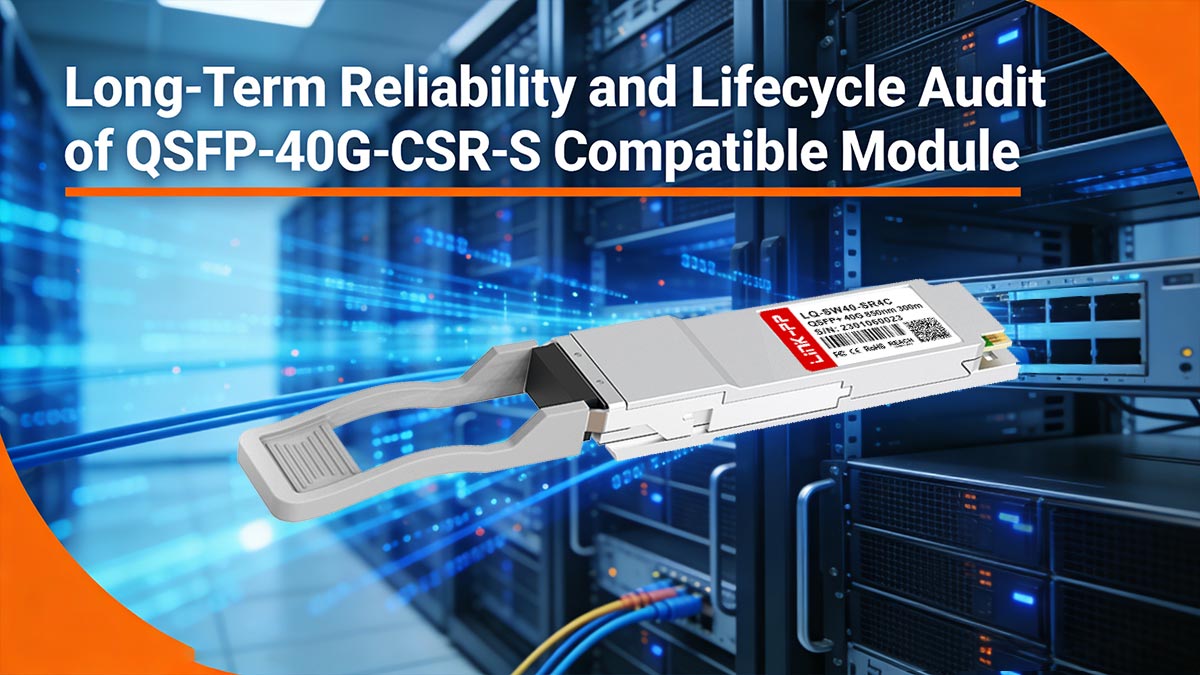
Ensuring long-term reliability is essential for maintaining consistent network performance and minimizing unexpected downtime. A lifecycle audit evaluates how QSFP-40G-CSR-S compatible modules perform over extended periods under real-world conditions. By tracking degradation patterns and planning maintenance proactively, enterprises can optimize both operational stability and cost efficiency.
Tracking Performance Degradation over Time
Over time, optical components such as lasers and photodiodes may experience gradual wear, leading to reduced output power and sensitivity. This degradation can manifest as increased error rates, reduced link margins, or intermittent connectivity issues. Regular performance benchmarking — comparing current metrics like BER, optical power levels, and latency against baseline values — helps identify early signs of decline before they impact production environments.
Predictive Maintenance Strategies
Predictive maintenance leverages historical performance data and real-time monitoring to anticipate potential failures before they occur. By integrating telemetry from network devices, such as temperature readings, voltage levels, and error counters, IT teams can establish thresholds that trigger alerts. This proactive approach reduces unplanned outages and allows for scheduled interventions, improving overall network reliability and operational efficiency.
Replacement vs Upgrade Decision Factors
Deciding whether to replace or upgrade a QSFP-40G-CSR-S compatible module depends on multiple factors, including performance trends, compatibility requirements, and evolving bandwidth demands. If a module shows consistent degradation or fails to meet current network needs, replacement is justified. However, in scenarios where network upgrades (e.g., migration to 100G QSFP28, 400G QSFP-DD) are planned, investing in other high-speed transceivers may provide better long-term value than maintaining legacy infrastructure.
🔅 Final Insights on QSFP-40G-CSR-S Cisco-Compatible Module Stability
Achieving stable performance with QSFP-40G-CSR-S Cisco compatible modules requires more than just meeting basic specifications — it depends on how well the module performs under real operational conditions. Factors such as signal integrity, thermal control, and long-term reliability all work together to determine whether a network can sustain high-speed data transmission without interruptions. A well-executed stability audit helps uncover hidden risks and ensures that transceiver modules consistently meet performance expectations.
Ultimately, selecting the right compatible module involves balancing performance, reliability, and cost while ensuring seamless interoperability with existing systems. Enterprises that adopt a proactive approach — combining rigorous testing, continuous monitoring, and strategic planning — are better positioned to maintain resilient and scalable networks.
For organizations looking for dependable, high-quality QSFP-40G-CSR-S compatible modules, choosing a trusted supplier is essential. Visit the LINK-PP Official Store to explore reliable 40G QSFP solutions designed to deliver enterprise-grade performance and long-term stability.