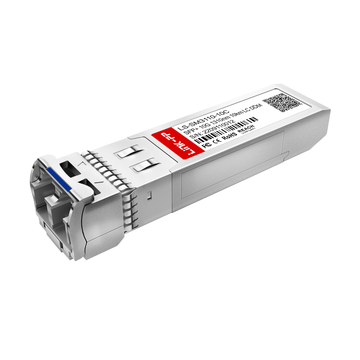
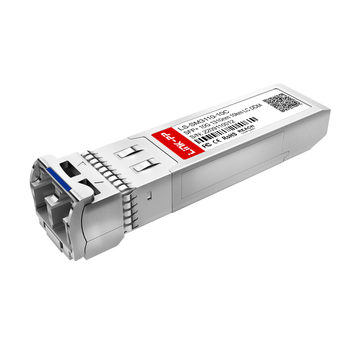
Ubiquiti UF-SM-10G is a widely used 10G SFP+ single-mode transceiver, but it is not the only reliable option for Ubiquiti networks.
For enterprises and service providers deploying Ubiquiti switches at scale, fully compatible third-party SFP+ modules can deliver the same performance, stability, and interoperability—often at a significantly lower cost.
As network deployments expand, many buyers face common challenges such as original module pricing, supply constraints, and long lead times. These factors make UF-SM-10G compatible alternatives an increasingly practical choice, provided that compatibility, firmware recognition, and link stability are fully guaranteed.
This article focuses on LINK-PP’s UF-SM-10G compatible SFP+ solution, explaining how it matches the original module’s specifications, works seamlessly with Ubiquiti devices, and supports real-world enterprise and ISP deployments. By the end, you will have a clear framework to evaluate compatibility, reduce procurement risk, and choose a cost-effective replacement without compromising network reliability.
📚What Is Ubiquiti UF-SM-10G?
Ubiquiti UF-SM-10G is a 10G SFP+ single-mode optical transceiver designed for Ubiquiti switches, providing stable short- to mid-range fiber connectivity in enterprise and ISP networks. It is commonly used where 10Gbps bandwidth, single-mode fiber, and predictable interoperability with Ubiquiti hardware are required.

Key Technical Specifications of UF-SM-10G
The UF-SM-10G follows standard 10GBASE-LR SFP+ specifications, making it suitable for most single-mode 10G uplinks.
| Parameter | UF-SM-10G Specification |
|---|---|
| Form Factor | SFP+ |
| Data Rate | 10Gbps |
| Fiber Type | Single-mode (OS2) |
| Wavelength | 1310nm |
| Max Distance | Up to 10km |
| DOM/DDM | Supported |
These specifications align with industry-standard 10G SFP+ single-mode optics, which is why compatibility can be achieved when coding and testing are properly implemented.
Typical Deployment Scenarios
UF-SM-10G is typically deployed in environments where Ubiquiti switches require reliable 10G single-mode uplinks without complex configuration.
-
Aggregation links between access and core switches
-
Campus or enterprise backbone fiber connections
-
Data center ToR to aggregation links (short to medium reach)
-
ISP edge or distribution layer deployments
In these scenarios, UF-SM-10G is valued for its plug-and-play behavior within Ubiquiti ecosystems, rather than for any proprietary optical technology.
Why UF-SM-10G Is Often Considered a Baseline Reference
UF-SM-10G is widely treated as a reference module because its specifications and behavior closely follow open SFP+ standards.
This standardization is precisely what enables fully compatible alternatives—as long as the transceiver matches the optical parameters and is correctly coded for Ubiquiti devices.
📚Why Look for a UF-SM-10G Compatible Alternative?
Looking for a UF-SM-10G compatible alternative is primarily driven by cost efficiency, supply stability, and scalability—without sacrificing performance or compatibility. For many enterprises and service providers, the original module is not a technical requirement, but a procurement default.

Cost and Budget Efficiency
The original UF-SM-10G often carries a price premium that is difficult to justify in large-scale deployments.
When dozens or hundreds of 10Gbps links are required, transceiver cost becomes a significant portion of the overall network budget.
| Decision Factor | Original UF-SM-10G | Compatible Alternative |
|---|---|---|
| Unit Cost | Higher | Lower |
| Performance at 10Gbps | Equivalent | Equivalent |
| Optical Specs | Standard | Standard |
| Cost per Link | High | Optimized |
In most real-world deployments, performance remains the same, making cost-effective compatible modules a rational choice rather than a compromise.
Supply Chain and Availability Constraints
Original-brand modules may face limited availability or extended lead times, especially during large rollout projects.
This can delay deployments or force unplanned design changes.
-
More stable stock availability for third-party modules
-
Faster delivery for bulk orders
-
Reduced dependency on single-vendor supply chains
For projects with tight timelines, availability often outweighs brand preference.
Scalability for Enterprise and ISP Networks
As networks scale, consistency and predictability become more important than brand labeling.
Using compatible UF-SM-10G alternatives allows teams to standardize optics across multiple sites while keeping procurement flexible.
| Scaling Aspect | Original Module | Compatible Module |
|---|---|---|
| Bulk Deployment | Costly | Cost-efficient |
| Multi-site Rollout | Limited flexibility | High flexibility |
| Replacement Speed | Vendor-dependent | Readily available |
Technical Standardization Enables Compatibility
UF-SM-10G is based on industry-standard 10G SFP+ single-mode specifications rather than proprietary optics.
As long as a transceiver matches key parameters—such as 10Gbps data rate, 1310nm wavelength, and 10km reach—and is properly coded, it can function identically in Ubiquiti devices.
This standardization is the technical foundation that makes LINK-PP’s UF-SM-10G compatible solution viable in production networks.
📚Key Specifications to Match UF-SM-10G Compatibility
To achieve true UF-SM-10G compatibility, a third-party SFP+ module must fully align with Ubiquiti’s optical, electrical, and protocol-level requirements—not just headline speed and distance. Matching these specifications ensures stable link establishment, correct device recognition, and long-term operational reliability.

Core Specifications That Must Match
| Specification | UF-SM-10G Requirement | Why It Matters |
|---|---|---|
| Data rate | 10Gbps | Ensures native SFP+ port negotiation |
| Wavelength | 1310nm | Matches Ubiquiti SMF transmission standard |
| Max reach | 10km | Fits typical enterprise and ISP link distances |
| Fiber type | Single-mode fiber | Required for 1310nm optics |
These parameters define the baseline physical-layer compatibility and must be matched without deviation.
Electrical and Protocol-Level Compatibility
Beyond optical parameters, UF-SM-10G compatibility also depends on electrical signaling and protocol compliance.
A compatible module must adhere to the SFP+ MSA and support standard 10Gbps line encoding to ensure clean signal transmission over Ubiquiti hardware.
Key requirements include:
-
Stable TX/RX power levels within Ubiquiti port tolerances
-
Compliance with IEEE 802.3ae standards
-
No forced auto-negotiation conflicts at 10Gbps
EEPROM Coding and Device Recognition
Ubiquiti devices rely on EEPROM data to identify and validate inserted optical modules.
A UF-SM-10G compatible SFP+ must use Ubiquiti-recognizable EEPROM coding, allowing the switch or router to accept the module without warnings or disabled ports.
This directly affects:
-
Port activation at boot
-
Accurate DOM/DDM reporting
-
Compatibility across firmware updates
Thermal and Power Considerations
Thermal stability is often overlooked but critical in dense switch environments.
UF-SM-10G compatible modules must operate within Ubiquiti’s power and temperature envelopes to avoid link flapping or premature aging.
Practical considerations:
-
Power consumption aligned with UF-SM-10G class optics
-
Stable operation in high-density SFP+ cages
-
Consistent performance under continuous 10Gbps load
Why Specification Matching Matters in Practice
Even small deviations from UF-SM-10G specifications can lead to intermittent link drops, DOM misreporting, or firmware-level incompatibility.
For this reason, compatibility-certified solutions like LINK-PP focus on full-spec alignment rather than partial matching.
📚UF-SM-10G Compatible LINK-PP SFP+ Solution
LINK-PP provides a fully compatible replacement for Ubiquiti UF-SM-10G, delivering the same 10Gbps single-mode performance with reliable device recognition and long-term link stability. The solution is designed for production networks where compatibility, consistency, and procurement efficiency are equally critical.

Specification Alignment with UF-SM-10G
LINK-PP UF-SM-10G compatible modules strictly match the original transceiver’s core optical and electrical parameters.
| Specification | LINK-PP Compatible SFP+ |
|---|---|
| Form Factor | SFP+ |
| Data Rate | 10Gbps |
| Fiber Type | Single-mode (OS2) |
| Wavelength | 1310nm |
| Max Distance | 10km |
| DOM/DDM | Supported |
This alignment ensures functional equivalence at the physical and transmission layer, which is the baseline requirement for safe replacement.
Ubiquiti-Specific Coding and Device Recognition
Compatibility is not achieved by specifications alone—correct Ubiquiti coding is essential.
LINK-PP programs and validates EEPROM parameters to ensure smooth recognition across Ubiquiti switch platforms.
-
Pre-coded for Ubiquiti SFP+ ports
-
Proper vendor identification and transceiver fields
-
No unsupported transceiver alerts in standard deployments
-
Immediate 10Gbps link negotiation
This enables true plug-and-play behavior, minimizing deployment and troubleshooting effort.
DOM/DDM Visibility in UniFi Environments
LINK-PP compatible modules fully support DOM/DDM monitoring, maintaining operational visibility within UniFi management tools.
| Monitoring Item | Operational Status |
|---|---|
| Temperature | Normal reporting |
| Voltage | Normal reporting |
| TX Optical Power | Visible |
| RX Optical Power | Visible |
This allows network teams to monitor optical health, detect degradation early, and maintain SLA-level reliability, just as with original modules.
Production-Level Testing and Reliability Validation
Each LINK-PP UF-SM-10G compatible module is validated for real-world deployment stability.
-
Link initialization and negotiation testing
-
Thermal stability under continuous operation
-
Error-free transmission at sustained 10Gbps
-
Compatibility verification on Ubiquiti platforms
Testing focuses on long-term behavior, not just initial link-up, which is critical for enterprise and ISP environments.
Designed for Scalable and Cost-Controlled Deployments
LINK-PP’s UF-SM-10G compatible solution is optimized for networks that scale beyond a few links.
-
Suitable for bulk procurement
-
Consistent performance across multiple sites
-
Reduced per-link cost without performance trade-offs
This makes it a practical option for enterprise backbone expansion, campus networks, and ISP aggregation layers.
📚LINK-PP vs Original Ubiquiti UF-SM-10G
LINK-PP UF-SM-10G compatible SFP+ modules deliver the same core optical performance and device compatibility as the original Ubiquiti UF-SM-10G, while offering significantly better cost efficiency and supply flexibility. For most enterprise and ISP deployments, functional differences are minimal, making compatibility-certified alternatives a practical choice.

Key Differences at a Glance
| Comparison Factor | LINK-PP Compatible | Original Ubiquiti |
|---|---|---|
| Optical specifications | Matches UF-SM-10G (10Gbps, 1310nm, 10km) | Native UF-SM-10G specs |
| Device recognition | Ubiquiti-compatible EEPROM | Native recognition |
| Interoperability | Tested across Ubiquiti SFP+ ports | Limited to Ubiquiti ecosystem |
| Cost efficiency | Lower total cost per link | Higher OEM pricing |
From a network design perspective, both modules meet the same transmission requirements; the differences mainly impact procurement strategy and long-term scalability.
Performance and Transmission Reliability
In real-world operation, LINK-PP compatible UF-SM-10G modules are engineered to match the optical budget, wavelength stability, and signal integrity of the original Ubiquiti module.
When deployed within the standard 10km single-mode fiber range, there is no measurable performance degradation in throughput or latency.
This makes them suitable for:
-
Continuous 10Gbps traffic loads
-
Enterprise backbone and aggregation links
-
ISP access and distribution layers
Compatibility and Network Integration
Both LINK-PP compatible and original UF-SM-10G modules are recognized by Ubiquiti devices at the firmware level.
LINK-PP achieves this through Ubiquiti-compatible coding, ensuring normal link negotiation, DOM monitoring, and port status reporting.
From an operational standpoint:
-
No additional configuration is required
-
Firmware upgrades do not affect optical recognition
-
Mixed deployment with original modules is supported
Cost, Availability, and Supply Flexibility
One of the most significant differences lies in procurement and lifecycle management rather than technical capability.
LINK-PP compatible modules offer:
-
More predictable lead times
-
Easier bulk deployment for large-scale networks
-
Lower cost per 10Gbps link, especially in multi-site rollouts
For organizations planning network expansion or refresh cycles, this flexibility can translate into meaningful long-term savings.
Which Option Makes More Sense?
Choosing between LINK-PP compatible and original Ubiquiti UF-SM-10G modules depends on deployment scale and cost sensitivity, not on performance.
-
For small, single-link deployments, either option works equally well.
-
For enterprise, ISP, or campus networks with multiple 10Gbps links, compatible modules often provide better overall value.
-
For environments with strict OEM-only policies, original modules may still be preferred.
📚Real-World Use Cases for UF-SM-10G Compatible Modules
UF-SM-10G compatible SFP+ modules are best suited for short-to-medium reach 10Gbps single-mode links where Ubiquiti devices require vendor-compatible optics without the original price premium. They are commonly deployed across enterprise, ISP, and campus environments with predictable link distances and stable traffic patterns.

Typical Deployment Scenarios at a Glance
| Deployment Scenario | Typical Distance | Key Requirement |
|---|---|---|
| Enterprise core–aggregation links | Up to 10km | Stable 10Gbps SMF connectivity |
| ISP access and distribution | 2–10km | Cost-efficient scalability |
| Campus backbone connections | 1–5km | High compatibility with Ubiquiti switches |
| Data center inter-rack links | ≤10km | Low latency, reliable optics |
These scenarios highlight where UF-SM-10G compatible modules deliver the best balance of performance, compatibility, and cost.
Enterprise Networks and Aggregation Layers
In enterprise environments, UF-SM-10G compatible modules are often used between core and aggregation switches where single-mode fiber is already deployed.
LINK-PP compatible optics allow IT teams to standardize 10Gbps links across multiple buildings while avoiding vendor lock-in, without compromising link stability or device recognition.
Key advantages in enterprise use:
-
Predictable 10km reach aligns with most building-to-building links
-
Seamless interoperability with Ubiquiti aggregation switches
-
Reduced long-term maintenance and replacement costs
ISP and WISP Access Networks
For ISPs and WISPs, UF-SM-10G compatible SFP+ modules are widely used in access and distribution layers, especially where Ubiquiti equipment is deployed at scale.
The ability to deploy large quantities of compatible optics significantly lowers CAPEX while maintaining consistent optical performance.
Typical ISP-focused benefits:
-
Easier network expansion without OEM optical constraints
-
Consistent DDM monitoring for remote diagnostics
-
Reliable performance in outdoor or edge deployments
Campus and Multi-Building Networks
Educational campuses, industrial parks, and hospital networks often rely on short-to-mid distance single-mode links.
UF-SM-10G compatible modules are well suited for these environments because link distances are usually fixed and well within the 10km optical budget.
This makes them ideal for:
-
Backbone connections between buildings
-
Redundant fiber paths for high availability
-
Gradual network upgrades from 1G to 10Gbps
Data Center and Edge Computing Scenarios
Although not designed for long-haul transmission, UF-SM-10G compatible modules are frequently deployed in small-to-mid-sized data centers and edge facilities where single-mode fiber is preferred for flexibility.
Common use cases include:
-
Inter-rack connections using SMF
-
Edge data centers supporting ISP or enterprise workloads
-
Hybrid environments combining Ubiquiti switching with third-party optics
📚UF-SM-10G Compatibility with Ubiquiti Switch Models
UF-SM-10G compatible SFP+ modules are designed to work seamlessly across Ubiquiti switches that support standard 10Gbps SFP+ interfaces.
When properly coded and tested, compatibility depends more on port specifications and firmware behavior than on individual switch models.

Ubiquiti Switch Categories Commonly Using UF-SM-10G
Most Ubiquiti switches equipped with SFP+ ports can support UF-SM-10G compatible modules.
| Switch Category | Compatibility Status |
|---|---|
| UniFi Aggregation Switches | Supported |
| UniFi Core Switches | Supported |
| UniFi Enterprise Access Switches | Supported |
| EdgeSwitch Series (SFP+) | Supported |
Rather than targeting a single device, UF-SM-10G compatibility applies at the platform level, which simplifies deployment planning.
LINK-PP Compatibility Validation Scope
LINK-PP validates UF-SM-10G compatible modules against common Ubiquiti switch environments to ensure predictable behavior.
| Validation Area | Expected Result |
|---|---|
| SFP+ Port Detection | Immediate recognition |
| Link Negotiation | Stable at 10Gbps |
| DOM/DDM Visibility | Fully readable |
| Long-Term Operation | No link flapping |
This approach focuses on real-world operating conditions, not just initial link-up tests.
Firmware and UniFi OS Considerations
Firmware version differences do not typically affect UF-SM-10G compatible module operation when proper coding is applied.
-
No special configuration required after firmware upgrades
-
Normal operation across common UniFi OS versions
-
No recurring unsupported transceiver warnings
-
Stable behavior after reboot or reload
From an operational standpoint, firmware upgrades do not introduce additional risk when using tested compatible modules.
Deployment Best Practices Across Ubiquiti Devices
Consistent deployment practices further reduce compatibility risks across different switch models.
-
Use OS2 single-mode fiber for all links
-
Keep link distance within 10km
-
Ensure both link ends use matched 10Gbps optics
-
Maintain clean fiber connectors to avoid signal degradation
These practices apply equally to original and compatible UF-SM-10G modules, reinforcing their functional equivalence.
📚How to Ensure Compatibility with Ubiquiti Devices
Ensuring compatibility with Ubiquiti devices depends on correct transceiver coding, parameter matching, and consistent deployment practices—not on brand selection alone. When these conditions are met, UF-SM-10G compatible modules operate reliably in production networks.

Verify Core Optical and Electrical Parameters
Compatibility starts with matching UF-SM-10G’s fundamental specifications.
| Parameter | Required Match |
|---|---|
| Form Factor | SFP+ |
| Data Rate | 10Gbps |
| Wavelength | 1310nm |
| Fiber Type | Single-mode (OS2) |
| Max Distance | 10km |
Any deviation from these parameters can result in link instability or failure to establish a connection, regardless of vendor.
Confirm Ubiquiti-Specific Coding
Proper EEPROM coding is critical for smooth recognition by Ubiquiti switches.
-
Ubiquiti-compatible identification fields
-
Correct vendor and transceiver information
-
Normal SFP+ port detection at boot
-
No unsupported transceiver alerts
Without correct coding, even technically compliant modules may behave unpredictably.
Check DOM/DDM Visibility After Installation
DOM/DDM visibility confirms both compatibility and optical health.
| Monitoring Item | Expected Outcome |
|---|---|
| Temperature | Visible and stable |
| Voltage | Within range |
| TX Power | Normal |
| RX Power | Normal |
Missing or inaccurate DOM/DDM data often indicates coding or firmware-level issues.
Apply Consistent Deployment Practices
Operational consistency reduces compatibility risks across different Ubiquiti platforms.
-
Use OS2 single-mode fiber end-to-end
-
Keep link distance within 10km
-
Match optics on both sides of the link
-
Clean connectors before installation
These practices are especially important in multi-site or large-scale deployments.
Validate Behavior After Firmware Updates
A compatible module should remain stable after UniFi OS or firmware upgrades.
-
Confirm link status post-upgrade
-
Check for warning messages
-
Verify DOM/DDM data continuity
Stable behavior after updates indicates true production-level compatibility, not just initial success.
📚FAQs About UF-SM-10G Compatible SFP+ Modules

Is a UF-SM-10G compatible SFP+ safe to use with Ubiquiti switches?
Yes, a properly coded UF-SM-10G compatible SFP+ module is safe to use with Ubiquiti switches.
As long as the module matches 10Gbps data rate, 1310nm wavelength, 10km reach, and uses Ubiquiti-compatible coding, it will operate normally in supported SFP+ ports.
Will a compatible UF-SM-10G trigger “unsupported transceiver” warnings?
No, correctly coded compatible modules do not trigger unsupported transceiver warnings under normal conditions.
Warnings usually appear only when EEPROM coding or identification fields are incorrect.
Does using a compatible module affect network performance or stability?
No, performance and stability remain equivalent when specifications and coding match the original UF-SM-10G.
At 10Gbps over single-mode fiber, link quality depends on optical parameters and fiber conditions—not the brand label.
Can UF-SM-10G compatible modules be used for bulk or multi-site deployments?
Yes, compatible modules are commonly used in bulk and multi-site deployments.
They offer consistent specifications, stable availability, and predictable behavior, making them suitable for large-scale rollouts.
Is DOM/DDM supported on UF-SM-10G compatible SFP+ modules?
Yes, full DOM/DDM support is available on production-grade UF-SM-10G compatible modules.
This allows real-time monitoring of temperature, voltage, and optical power within UniFi management interfaces.
Do firmware or UniFi OS updates affect compatibility?
No, firmware or UniFi OS updates do not typically affect compatibility when proper coding is used.
A truly compatible module remains stable after upgrades, reboots, and configuration changes.
📚Conclusion: A Smarter Alternative to Ubiquiti UF-SM-10G
UF-SM-10G compatible SFP+ modules provide a practical and reliable alternative for Ubiquiti networks without introducing technical or operational risk. When optical specifications, Ubiquiti-specific coding, and deployment practices are properly aligned, compatible modules deliver the same 10Gbps single-mode performance, stability, and visibility as the original transceiver.
For enterprises and service providers managing scalable networks, compatibility is ultimately a matter of standards compliance and validation—not brand dependency. Cost control, availability, and deployment flexibility increasingly drive transceiver decisions, especially in multi-site and long-term network expansion scenarios.
LINK-PP’s UF-SM-10G compatible SFP+ solution is built to meet these real-world requirements, offering verified compatibility, stable DOM/DDM monitoring, and predictable behavior across Ubiquiti platforms.
For teams seeking a dependable replacement without compromising network reliability, LINK-PP provides a well-tested option available through the LINK-PP Official Store.