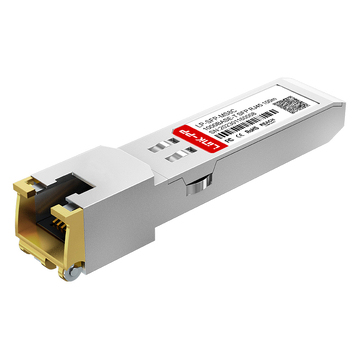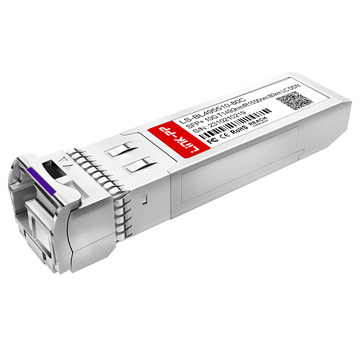
In modern 10Gbps fiber-optic networks, optical transceivers play a critical role in ensuring stable, high-speed data transmission across enterprise, data center, and service provider infrastructures. Among these components, the Mikrotik S+31DLC10D is widely used for single-mode 10km links operating at 1310nm wavelength, where link stability depends heavily on precise optical performance parameters. As network demands increase, understanding how optical signal characteristics influence real-world performance has become essential for engineers and network designers.
One of the most important but often misunderstood parameters in this context is RX sensitivity, which defines the minimum optical power required for the receiver to correctly interpret incoming signals without significant errors. In practical deployments, even small variations in RX sensitivity can determine whether a link remains stable or experiences intermittent failures, especially in longer-distance or higher-loss fiber environments. This makes RX sensitivity a key factor when evaluating the performance boundaries of the Mikrotik S+31DLC10D module.
This article provides a detailed, structured explanation of Mikrotik S+31DLC10D RX sensitivity, including its technical meaning, specification interpretation, optical power budget calculations, and real-world impact on network performance. It also covers monitoring methods, common troubleshooting scenarios, and optimization strategies for stable deployment. By the end, you will have a clear, practical understanding of how RX sensitivity affects 10Gbps optical links and how to design more reliable fiber connections using this module.
✅ What Is RX Sensitivity in Optical Transceivers?
RX sensitivity is one of the most fundamental parameters that determines whether an optical transceiver can correctly receive and decode incoming signals in a fiber optic network. In 10Gbps systems such as those using the Mikrotik S+31DLC10D, it directly defines the lower limit of optical signal strength required for stable communication. When the received signal falls below this threshold, data errors increase rapidly and the link may eventually fail.
Definition and Technical Meaning
RX sensitivity is the minimum optical power required for error-free signal detection at the receiver side of optical modules. In practical terms, it represents the weakest light signal level that a module can still interpret correctly without exceeding an acceptable Bit Error Rate (BER).
This parameter is expressed in dBm, a logarithmic unit that measures optical power relative to 1 milliwatt. Using dBm allows engineers to easily calculate optical budgets and compare power levels across different components in a fiber link. Because optical signals attenuate over distance, RX sensitivity becomes a critical boundary condition in link design.
The relationship between RX sensitivity and BER is direct and highly sensitive. When the received optical power is above the sensitivity threshold, the BER remains within acceptable limits (typically 10⁻¹² or lower for Ethernet systems). However, once the received power drops below this threshold, the receiver can no longer reliably distinguish between logical 0s and 1s, resulting in a sharp increase in transmission errors.
Why RX Sensitivity Matters in 10Gbps Networks
In 10Gbps optical networks, RX sensitivity plays a decisive role in determining both transmission reliability and maximum achievable distance. High-speed signals are more susceptible to degradation, meaning even small losses in optical power can significantly affect link quality.
In data center and enterprise environments, where 10Gbps links are commonly used for aggregation and backbone connectivity, RX sensitivity ensures that inter-switch and inter-rack connections remain stable under varying infrastructure conditions. It provides the necessary tolerance for real-world imperfections such as connector loss, fiber bending, and aging components.
For long-distance single-mode fiber links, RX sensitivity becomes even more critical. Since optical signals weaken over kilometers of fiber, the receiver's ability to detect low-power signals directly determines whether a 10km link can operate reliably. Without sufficient sensitivity margin, even properly designed fiber routes may experience intermittent connectivity issues.
RX Sensitivity vs Other Optical Parameters
RX sensitivity does not operate in isolation; it must be understood in relation to other optical parameters that define the overall performance of a fiber link. The most important comparison is with TX power, which represents the output optical signal strength of the transmitter.
Together, TX power and RX sensitivity define the optical power budget of a link. This budget determines how much total loss (from fiber attenuation, connectors, and splices) can be tolerated while still maintaining reliable communication.
The relationship can be summarized as follows:
- TX power provides the starting signal strength
- RX sensitivity defines the minimum acceptable receiving threshold
- The difference between them defines usable loss margin
In real deployments, this margin is consumed by physical factors such as fiber attenuation (typically around 0.35–0.4dB/km at 1310nm), connector insertion loss, and splice losses. If total losses exceed the available budget, the received signal will fall below RX sensitivity, leading to degraded performance or link failure.
Chromatic dispersion also interacts indirectly with RX sensitivity by spreading optical pulses over distance, making signal detection more difficult at the receiver. While sensitivity itself does not change, the effective signal quality required for error-free detection increases as dispersion and attenuation accumulate along the fiber path.
✅ Mikrotik S+31DLC10D Technical Specifications Overview
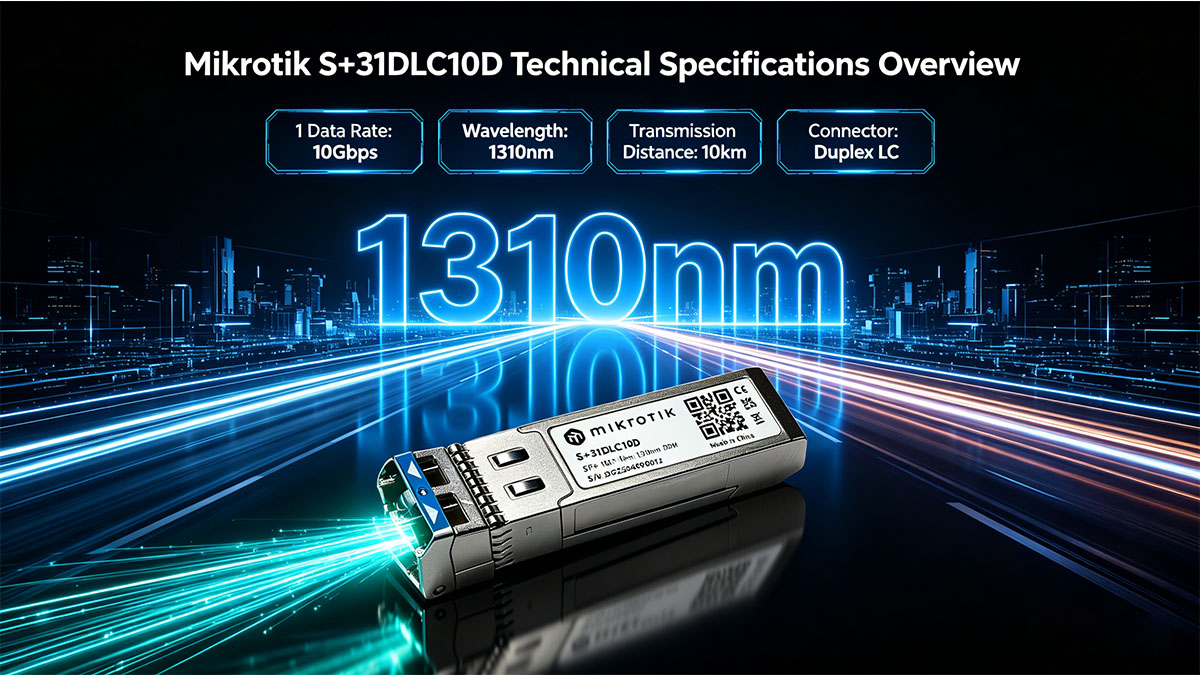
The Mikrotik S+31DLC10D is a 10Gbps SFP+ optical transceiver and one of the commonly deployed single mode transceivers designed for single-mode fiber communication over medium-range distances up to 10km. Its performance is defined by a balanced combination of optical parameters, where RX sensitivity, TX power, wavelength, and fiber type collectively determine real-world link stability. Understanding these specifications is essential before evaluating how the module behaves in different network environments.
Key Optical Parameters
The core specifications of the S+31DLC10D define its intended use case in 10GbE single-mode fiber deployments. These parameters determine how far and how reliably the module can transmit data under standard operating conditions.
A structured overview of its main optical characteristics is shown below.
| Parameter | Specification | Functional Role | Deployment Impact |
|---|---|---|---|
| Data Rate | 10Gbps | Transmission speed | Supports 10G Ethernet links |
| Wavelength | 1310nm | Optical transmission band | Optimized for low-loss SMF transmission |
| Distance | Up to 10km | Maximum reach | Depends on optical budget and fiber quality |
| Connector Type | LC duplex | Physical interface | Standardized for high-density fiber links |
| Fiber Type | Single-mode fiber (SMF) | Transmission medium | Enables long-distance, low-attenuation links |
These parameters collectively position the S+31DLC10D as a standard solution for enterprise backbone links, campus interconnects, and service provider access networks. However, actual achievable distance is always influenced by real-world loss factors such as splicing, patch panels, and cable quality.
RX Sensitivity Specification
RX sensitivity is one of the most critical parameters in the S+31DLC10D specification because it defines the minimum optical signal level required for stable reception. For this module class, the typical RX sensitivity is around -14.4dBm, which aligns with 10GBASE-LR standards used in long-reach single-mode optical transmission.
In practice, RX sensitivity should be interpreted as a threshold boundary rather than a fixed operating point. Performance stability depends not only on meeting this minimum value but also on maintaining sufficient margin above it to account for environmental and infrastructure variability.
| Metric | Typical Value | Interpretation | Network Significance |
|---|---|---|---|
| RX Sensitivity | ~ -14.4dBm | Minimum detectable signal | Defines maximum allowable link loss |
| Operating Margin | 2–3dB recommended | Safety buffer | Ensures stable long-term operation |
| BER Target | ≤ 10⁻¹² | Error performance standard | Maintains Ethernet reliability |
A key point in real deployments is that RX sensitivity must always be evaluated together with link budget calculations. Even if a link appears to meet minimum sensitivity requirements, insufficient margin can still lead to instability under temperature variation or fiber aging conditions.
TX Power Range
The TX power of the S+31DLC10D defines the strength of the optical signal transmitted into the fiber, and it directly influences the total available link budget. For 10Gbps 1310nm modules in this class, the typical TX output range is approximately -8.2dBm to 0.5dBm, depending on manufacturing tolerance and operating conditions.
This range is intentionally designed to balance signal reach and receiver safety. If TX power is too low, the link may fail to reach the required distance; if too high, it may overload the receiver and degrade signal quality.
The role of TX power becomes especially important when calculating end-to-end optical budgets:
- Higher TX power increases maximum achievable distance
- Lower TX power reduces risk of receiver saturation
- Combined with RX sensitivity, it defines usable link margin
In practical network design, engineers must ensure that TX power and RX sensitivity remain within a compatible range after accounting for fiber attenuation, connector losses, and other passive components. This balance is what ultimately determines whether a 10km link remains stable under real-world conditions.
✅ Understanding S+31DLC10D RX Sensitivity in Real-World Deployments
In real network environments, RX sensitivity of the Mikrotik S+31DLC10D is not evaluated as an isolated specification but as part of a complete optical link system. While datasheet values define theoretical limits, actual deployment performance depends on how optical power budget, fiber quality, and environmental factors interact across the entire transmission path. Understanding this relationship is essential for building stable 10Gbps single-mode fiber links.
Optical Power Budget Calculation
In practical fiber link design, the optical power budget determines whether a link can operate reliably over a given distance. It is calculated by comparing the transmitter output power with the receiver's sensitivity threshold, and then subtracting all expected losses in the transmission path.
The basic calculation principle is:
- Optical Budget = TX Power – RX Sensitivity
- Available Margin = Optical Budget – Total Link Loss
A typical 10km single-mode link using S+31DLC10D can be evaluated using a simplified example:
| Component | Value (dB) | Description |
|---|---|---|
| TX Power | -2.0dBm | Example transmitter output level |
| RX Sensitivity | -14.4dBm | Minimum required receive power |
| Theoretical Budget | 12.4dB | Maximum allowable loss |
| Fiber + Connector Loss | ~6–9dB | Real-world attenuation estimate |
After accounting for fiber attenuation and connector/splice losses, a remaining margin of approximately 2–4dB is typically considered healthy. This margin is critical because it absorbs unexpected variations such as temperature changes, aging fiber, or installation imperfections. Without sufficient margin, even a technically "valid" link can become unstable over time.
Fiber Loss and Environmental Factors
Optical fiber transmission is affected by multiple physical factors that gradually reduce signal strength as distance increases. Even though single-mode fiber is optimized for low attenuation, real-world conditions introduce additional losses that must be considered when evaluating RX sensitivity requirements.
The most common contributors include:
- Fiber attenuation: Typically around 0.35–0.4dB/km at 1310nm
- Connector insertion loss: Usually 0.2–0.5dB per connector pair
- Splice loss: Approximately 0.05–0.2dB per splice point
When combined over a full link, these losses can significantly reduce the received optical power, pushing it closer to the RX sensitivity threshold.
Environmental conditions also play a role in long-term stability. Temperature fluctuations can slightly affect transmitter output power and fiber characteristics, while mechanical stress such as bending or improper cable management can introduce additional attenuation. Over time, aging components and dust accumulation on connectors can further degrade signal quality.
Compatibility with Network Equipment
Beyond physical layer considerations, RX sensitivity performance also depends on how well the S+31DLC10D integrates with network hardware such as switches, routers, and media platforms. Compatibility issues rarely stem from protocol-level mismatches but are often related to optical power mismatches or monitoring limitations.
One of the most important tools in this context is Digital Diagnostics Monitoring (DDM/DOM), which provides real-time visibility into RX power levels, TX output, temperature, and voltage. By monitoring RX power trends, engineers can detect early signs of degradation before they lead to link failure.
Key compatibility considerations include:
- Ensuring RX power stays within the receiver's operating window
- Verifying that DDM readings are supported by network equipment
- Confirming that vendor-specific thresholds do not trigger false alarms
In mixed-vendor environments, slight variations in optical calibration can also affect perceived RX sensitivity behavior. While the physical specification remains consistent, monitoring accuracy and threshold interpretation may differ between platforms.
✅ How RX Sensitivity Affects Network Performance
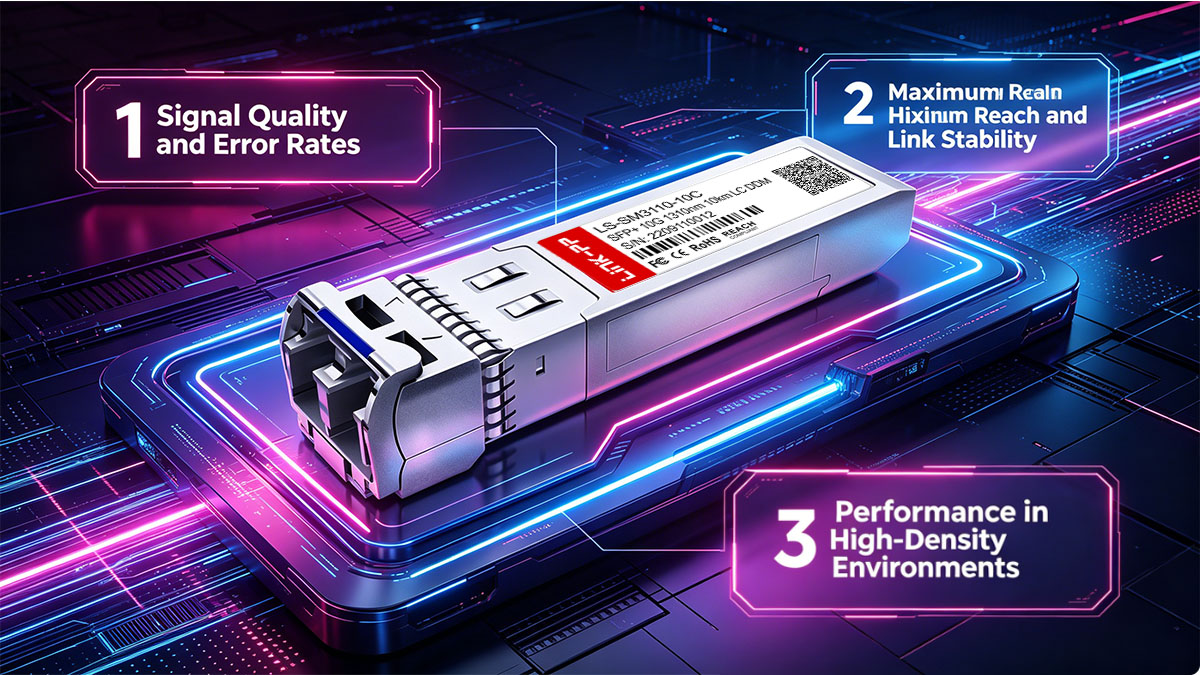
RX sensitivity has a direct and measurable impact on overall optical network performance because it defines how effectively a receiver can interpret weak incoming signals. In the case of the Mikrotik S+31DLC10D operating at 10Gbps, even small variations in received optical power can significantly influence error rates, transmission stability, and maximum achievable distance. Understanding this relationship is essential for designing reliable fiber links in both enterprise and carrier-grade environments.
Signal Quality and Error Rates
The most immediate effect of RX sensitivity is reflected in signal quality and Bit Error Rate (BER). When the received optical power remains above the sensitivity threshold, the receiver can accurately distinguish between logical states, maintaining a stable and error-free data stream. However, once the signal approaches or falls below this threshold, noise begins to dominate the detection process.
This degradation typically follows a predictable pattern:
- Stable region: RX power comfortably above sensitivity → minimal BER
- Marginal region: RX power near sensitivity threshold → intermittent errors
- Failure region: RX power below sensitivity → severe BER increase or link loss
As BER increases, higher-layer protocols are forced to retransmit packets, which introduces latency and reduces effective throughput. In high-speed 10Gbps networks, even minor increases in error rates can have noticeable impacts on performance-sensitive applications such as storage replication, virtualization traffic, or real-time data processing.
Maximum Reach and Link Stability
RX sensitivity also plays a critical role in determining the maximum usable distance of a fiber link. While the S+31DLC10D is rated for up to 10km, the actual achievable range depends on whether the received signal remains above the sensitivity threshold after accounting for all losses in the optical path.
A simplified relationship can be understood as follows:
- Higher RX sensitivity (more negative dBm value) → better ability to detect weak signals
- Lower RX sensitivity margin → shorter reliable transmission distance
- Adequate margin above threshold → stable long-term operation
In practice, network stability is not determined solely by whether a link "comes up," but by whether it remains stable under varying conditions such as temperature changes, fiber aging, and physical stress. A link operating too close to RX sensitivity may appear functional initially but can suffer from intermittent drops or flapping over time.
Performance in High-Density Environments
In high-density environments such as data centers or aggregation layers, RX sensitivity becomes even more important due to the complexity and scale of fiber infrastructure. These environments typically involve large numbers of parallel 10Gbps links, where consistent optical performance is required across many endpoints.
Key performance impacts include:
- Data center environments: Stable RX sensitivity ensures consistent inter-rack and spine-leaf connectivity with minimal packet loss under heavy traffic loads
- Enterprise backbone networks: Reliable sensitivity margins reduce risk of service disruption across distributed sites
- High cable density scenarios: Small variations in connector quality or patching can significantly affect received power levels
Additionally, optical links benefit from inherent immunity to electromagnetic interference (EMI), which is especially valuable in environments with high electrical noise. However, this advantage only holds when RX sensitivity margins are properly maintained. If the signal is too close to the detection threshold, even minor physical or optical variations can lead to performance degradation despite the EMI resistance of fiber itself.
✅ How to Measure and Monitor RX Sensitivity
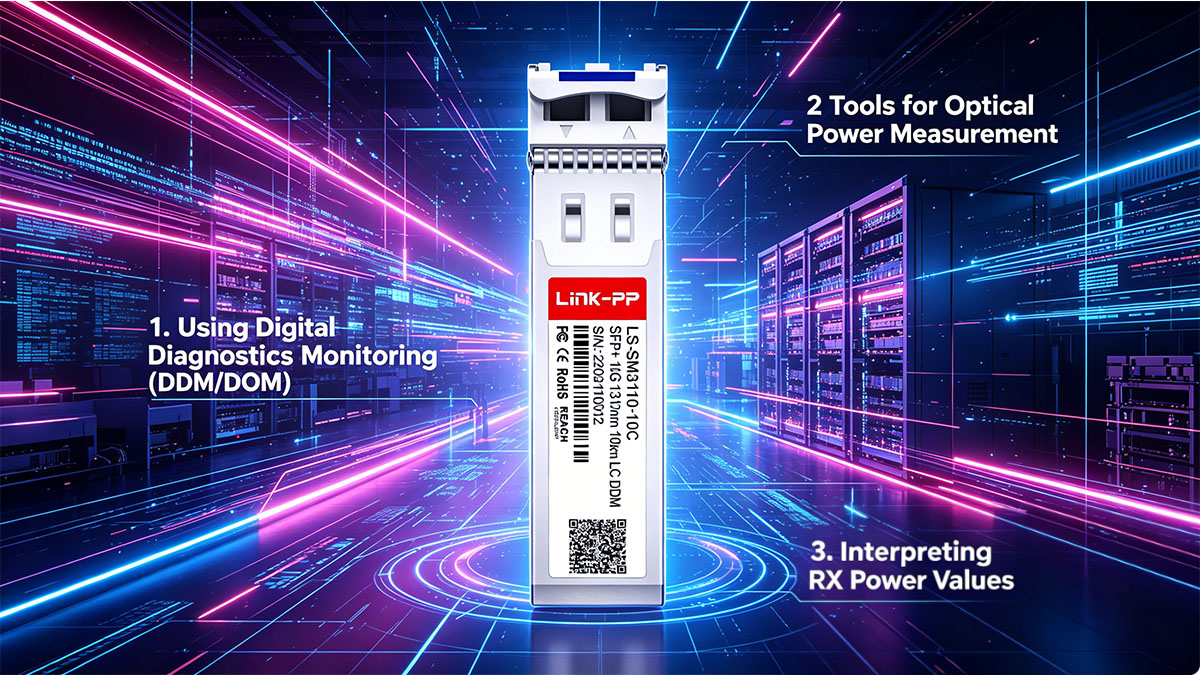
In real-world optical networks, RX sensitivity itself is a fixed hardware characteristic, but its practical impact is continuously observed through received optical power levels. For modules such as the Mikrotik S+31DLC10D, engineers do not "measure sensitivity directly" during operation; instead, they monitor RX power and compare it against the known sensitivity threshold to evaluate link health. This approach is essential for maintaining stable 10Gbps fiber performance over time.
Using Digital Diagnostics Monitoring (DDM/DOM)
The most practical and widely used method for monitoring RX performance is Digital Diagnostics Monitoring (DDM), also known as DOM (Digital Optical Monitoring). This built-in feature in SFP+ modules provides real-time visibility into optical parameters without requiring external test equipment.
DDM typically provides the following key readings:
| Parameter | Function | Network Insight |
|---|---|---|
| RX Power | Received optical signal strength | Direct indicator of link margin |
| TX Power | Transmitted optical output | Confirms transmitter stability |
| Temperature | Module operating temperature | Indicates thermal stress |
| Voltage | Supply voltage level | Detects power irregularities |
The most important value for RX sensitivity analysis is RX power. By comparing RX power with the known sensitivity threshold (for example, around -14.4dBm for S+31DLC10D-class optics), engineers can determine how close the link is to its operational limit.
In practice, a healthy link should maintain RX power comfortably above the sensitivity threshold to ensure stability under environmental fluctuations such as temperature drift or fiber aging.
Tools for Optical Power Measurement
While DDM provides in-band monitoring, external tools are often used during installation, troubleshooting, or certification of fiber links. These tools offer higher accuracy and are not dependent on the transceiver itself.
Common instruments include:
- Optical power meter: Measures absolute optical power at specific points in the fiber link
- Light source + power meter set: Used together for end-to-end insertion loss testing
- OTDR (Optical Time-Domain Reflectometer): Analyzes fiber integrity, detects breaks, and locates high-loss events
These tools are especially useful when verifying whether a link design stays within the optical budget. For example, if a 10km link is experiencing instability, an OTDR can help identify whether excessive loss is caused by a specific connector, splice point, or fiber segment rather than the transceiver itself.
External measurement is particularly important in large-scale deployments where multiple patch panels and distributed fiber routes make it difficult to pinpoint performance issues using only DDM data.
Interpreting RX Power Values
Understanding RX power readings in relation to RX sensitivity is key to diagnosing network health. Instead of focusing on absolute values alone, engineers evaluate whether sufficient margin exists between received power and the sensitivity threshold.
A practical interpretation model can be summarized as follows:
- Safe operating range: RX power significantly above sensitivity threshold, stable and low-error operation
- Warning range: RX power approaching sensitivity threshold, increased risk under environmental variation
- Critical range: RX power near or below sensitivity threshold, high probability of errors or link instability
For example, if a S+31DLC10D link shows RX power close to -13dBm, and the sensitivity threshold is around -14.4dBm, the link may still function but operates with limited margin. Any additional loss from dust accumulation, temperature variation, or slight fiber bending could push it into the unstable region.
In contrast, a link operating several dB above the threshold provides a safety buffer that absorbs real-world variability, ensuring consistent performance even under non-ideal conditions.
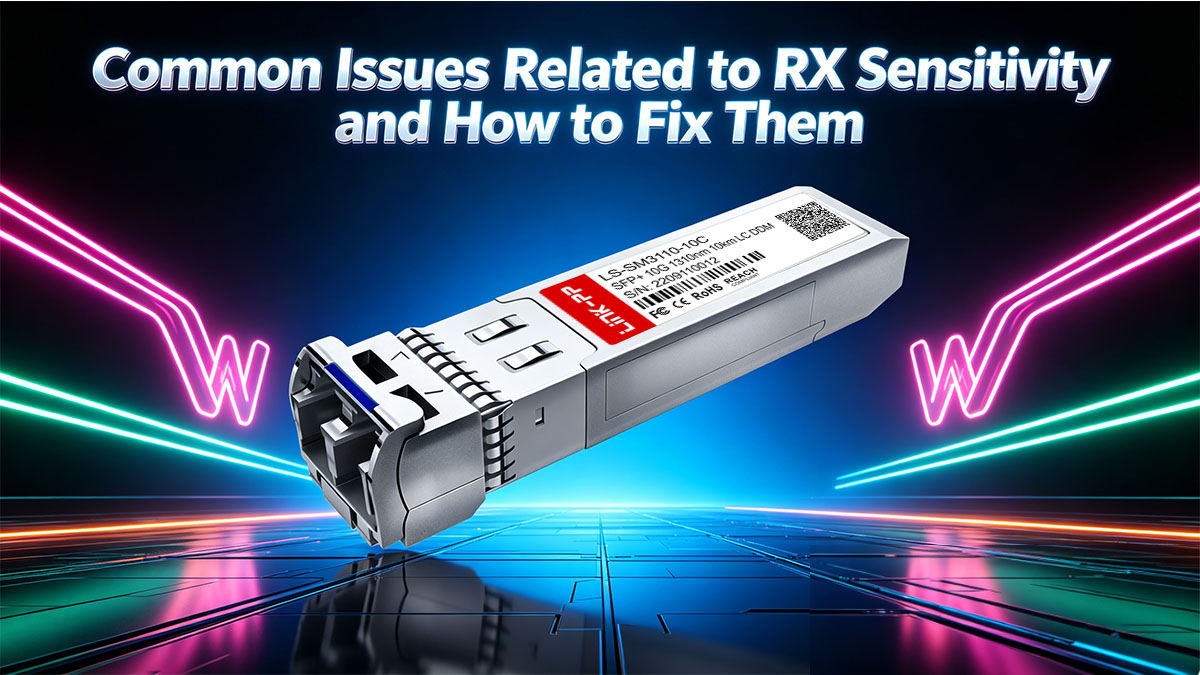
✅ Common Issues Related to RX Sensitivity and How to Fix Them
In practical deployments of the Mikrotik S+31DLC10D, many optical link problems are not caused by protocol or configuration errors, but by RX power levels drifting too close to the receiver's sensitivity threshold. When this happens, the link becomes unstable even if it appears operational at first. Understanding the most common RX sensitivity-related issues helps engineers quickly isolate root causes and restore stable 10Gbps performance.
Low RX Power Problems
One of the most frequent issues in fiber networks is low received optical power, where the RX signal approaches or falls below the sensitivity threshold of the transceiver. In this condition, the receiver struggles to correctly interpret incoming data, leading to intermittent errors or complete link failure.
Typical causes of low RX power include:
- Excessive fiber attenuation due to long distance or poor-quality cable
- Dirty or contaminated LC connectors increasing insertion loss
- Unplanned bends or micro-bending in fiber routes
- Too many patch panels or splice points in the optical path
These issues often develop gradually, especially in environments where fiber infrastructure is frequently reconfigured or physically disturbed.
Common symptoms observed in the network include:
- Link flapping or intermittent disconnections
- Increased packet loss under load
- Rising Bit Error Rate (BER) reported via DDM
- RX power readings consistently near sensitivity threshold
In many cases, the link may still "come up," but performance degradation becomes noticeable under real traffic conditions.
Troubleshooting Steps
When low RX power is detected, a structured troubleshooting approach helps isolate and resolve the issue efficiently. The goal is to restore sufficient optical margin above the RX sensitivity threshold.
A practical troubleshooting sequence includes:
- Cleaning fiber connectors
- Use proper fiber cleaning tools or lint-free wipes
- Remove dust or oil contamination from LC interfaces
- Re-seat connectors to ensure proper alignment
- Checking fiber integrity
- Inspect for sharp bends or physical damage along the cable path
- Verify that patch cords are within minimum bend radius specifications
- Replace suspect fiber segments if attenuation is abnormal
- Verifying link budget
- Recalculate total optical loss across the entire path
- Compare measured RX power against expected values
- Ensure sufficient margin above RX sensitivity threshold
- Replacing or testing transceiver modules
- Swap SFP+ modules between endpoints to rule out hardware issues
- Confirm TX power output is within expected range
- Test with known-good reference modules if available
After completing these steps, RX power levels should return to a stable range that provides adequate safety margin above the sensitivity threshold.
Overpower (Too High RX Power) Issues
Although less common than low power scenarios, excessive RX power can also negatively affect performance. This occurs when the received signal is stronger than the receiver is designed to handle, potentially causing saturation.
Overpower conditions typically arise in short-distance links where high TX power is combined with minimal fiber loss. In such cases, the receiver may operate outside its optimal linear range.
Common indicators of RX overpower include:
- Unexpected link instability despite short fiber distance
- High error rates even with strong signal readings
- DDM showing RX power significantly above recommended operating range
To resolve this issue, optical attenuation must be introduced into the link.
A structured mitigation approach includes:
- Using fixed or variable optical attenuators to reduce RX power
- Selecting lower TX power optics where appropriate
- Increasing fiber path length slightly in controlled environments (if feasible)
By bringing RX power back into the optimal operating window, signal distortion is reduced and the receiver can operate within its designed linear range.
✅ Optimization Tips for S+31DLC10D Optical Links
Optimizing optical performance for the Mikrotik S+31DLC10D requires a combination of careful planning, disciplined installation practices, and standardized fiber infrastructure. Since this module operates close to strict optical limits in long-reach 10km-class links, maintaining adequate RX margin is essential to ensure stable and error-free 10Gbps transmission.
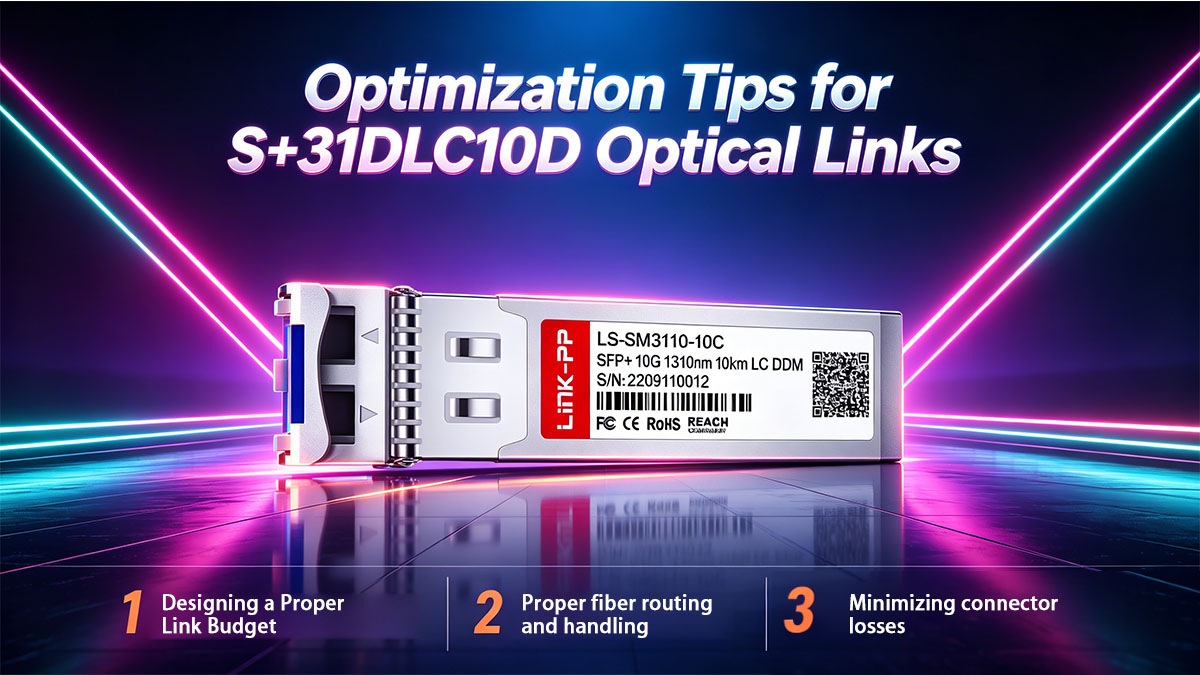
Designing a Proper Link Budget
A reliable optical network always starts with a well-calculated link budget. This ensures that the received optical power remains safely above the RX sensitivity threshold under all operating conditions.
Adding safety margins (typically 2–3dB)
A critical best practice is to include a safety margin of 2–3dB beyond the theoretical minimum requirements. This buffer compensates for real-world variables such as:
- Fiber aging and gradual attenuation increase
- Temperature-induced performance variations
- Slight connector misalignment over time
- Unexpected insertion loss from additional patching points
Without this margin, a link may appear stable during deployment but become unreliable as environmental or physical conditions change. A properly engineered margin ensures that RX power remains comfortably within the optimal operating range of the S+31DLC10D.
Planning for future scalability
Link budget design should not only focus on current requirements but also anticipate future network expansion. Additional patch panels, rerouted fibers, or network extensions can all introduce extra loss.
To support scalability:
- Reserve extra dB headroom for future modifications
- Avoid designing links at the edge of RX sensitivity limits
- Consider potential upgrades in network topology (e.g., added switches or rerouting)
This forward-looking approach prevents costly redesigns and minimizes service disruption when the network evolves.
Best Practices for Installation
Even a well-designed optical link can fail if installation practices introduce unnecessary losses or instability. Proper handling during deployment is essential to preserve optical integrity.
Proper fiber routing and handling
Physical fiber management has a direct impact on RX performance stability. Improper routing can introduce micro-bending or stress, which increases attenuation.
Best practices include:
- Maintaining proper bend radius at all times
- Avoiding tight cable ties that compress fiber jackets
- Separating fiber routes from power cables to reduce interference risk
- Using structured cable trays or raceways for organized routing
Careful handling during installation ensures that the optical path remains consistent and predictable over time.
Minimizing connector losses
Connectors are one of the most common sources of avoidable optical loss. Even small imperfections can significantly reduce RX power margin in long-reach links.
To minimize connector-related losses:
- Always clean LC connectors before installation
- Ensure connectors are fully seated and properly aligned
- Avoid excessive mating cycles that degrade connector quality
- Use high-quality patch cords with certified low insertion loss
Reducing connector losses helps maintain stronger RX power levels, improving overall link reliability and reducing the risk of sensitivity-related failures.
Selecting Compatible Fiber Infrastructure
The performance of the S+31DLC10D is heavily dependent on the quality and compatibility of the underlying fiber infrastructure. Choosing the right components ensures that the optical budget remains stable and predictable.
Choosing high-quality SMF
Single-mode fiber (SMF) is essential for long-distance 1310nm transmission used by the S+31DLC10D. However, not all SMF is equal in quality.
Key considerations include:
- Use OS2-grade single-mode fiber for low attenuation performance
- Ensure consistent manufacturing standards across all fiber segments
- Avoid mixing fiber grades in the same link to prevent uneven loss characteristics
High-quality SMF reduces baseline attenuation, allowing more RX margin to be preserved for real-world variables.
Ensuring connector standardization
Consistency in connector types and polishing standards is often overlooked but critical for maintaining stable optical performance.
To ensure standardization:
- Use the same connector type (typically LC/UPC) throughout the network
- Avoid mixing APC and UPC connectors within the same link
- Standardize patch cord quality across all installations
- Maintain consistent cleaning and inspection procedures
Standardized connectors reduce reflection losses and insertion variability, which directly improves RX stability and overall signal integrity.
✅ FAQs
What is RX sensitivity in the S+31DLC10D?
RX sensitivity is the minimum optical power level required for the receiver to correctly decode data. If received power drops below this level, the link may become unstable or fail.
Can the S+31DLC10D operate below its RX sensitivity?
It may still show a link in some cases, but performance will degrade quickly. You can expect higher packet loss, errors, and possible link flapping when operating below the sensitivity threshold.
How do I check RX power on the S+31DLC10D?
RX power can be monitored using DDM/DOM diagnostics available on compatible switches and routers. It provides real-time optical power readings without external tools.
What causes low RX power in fiber links?
Common causes include fiber attenuation over distance, dirty connectors, excessive bending, or too many connection points in the optical path.
What is a safe RX power range for stable operation?
A safe range is typically several dB above the RX sensitivity limit. Maintaining at least a small margin ensures stability under temperature changes and fiber aging.
Can fiber connectors affect RX sensitivity performance?
Yes. Poorly cleaned or misaligned connectors can introduce insertion loss, reducing RX power and pushing the link closer to the sensitivity limit.
Does fiber type affect RX sensitivity performance?
Yes. Using the correct single-mode fiber (such as OS2) ensures lower attenuation and helps maintain sufficient RX power over long distances.
What is the most effective way to improve RX performance?
Improving RX performance is usually achieved by reducing insertion loss, cleaning connectors, and ensuring proper link budget design with adequate safety margin.
✅ Conclusion
Understanding Mikrotik S+31DLC10D RX Sensitivity and its relationship with signal strength is essential for building reliable 10Gbps fiber networks. While RX sensitivity defines the minimum receiving capability of the module, real-world stability depends on maintaining sufficient optical margin, proper link design, and consistent signal quality across the entire transmission path. In practice, RX sensitivity is not just a specification—it is a key performance boundary that directly influences network reliability and uptime.
Key points for practical deployment
- Maintain sufficient optical margin above RX sensitivity to ensure long-term stability
- Design a proper link budget that accounts for real-world fiber losses and future expansion
- Reduce insertion loss by improving fiber routing and minimizing connector points
- Use high-quality single-mode fiber (OS2) to ensure predictable attenuation performance
- Continuously monitor RX power via DDM to detect early degradation trends
These principles work together to keep S+31DLC10D optical links stable, scalable, and resilient in demanding network environments.
Optimizing RX sensitivity performance is ultimately about engineering discipline—combining accurate planning, proper installation, and ongoing monitoring to ensure consistent optical health. When these practices are applied correctly, the S+31DLC10D becomes a highly reliable component in long-distance 10Gbps networks.
For high-quality compatible optical transceivers and professional-grade fiber connectivity solutions, you can explore the LINK-PP Official Store to find stable, cost-effective options designed for real-world network performance requirements.