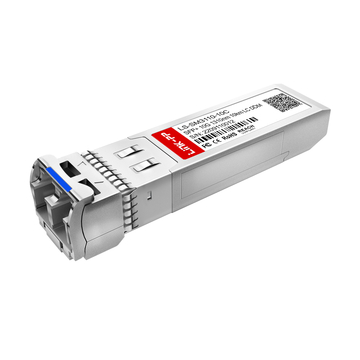


























As modern data centers rapidly expand to accommodate soaring digital demands, the need for robust, ultra-reliable network infrastructures has never been more critical. Serving as a benchmark for next-generation network architecture, the Austin Cloud Campus Deployment Project faced the complex challenge of establishing flawless, high-density 10G connectivity across its expansive core. Specifically, the facility required high-performance optical solutions capable of operating flawlessly within a stringent Cisco Nexus switch environment without compromising latency or throughput. The ultimate solution that guaranteed the project's seamless execution was the strategic integration of LINK-PP’s LS-MM8510-S3C 10.3Gbps SFP+ transceivers, delivering the uncompromised data integrity and enterprise-grade reliability required to power this state-of-the-art facility.
The Austin Cloud Campus Deployment Project Overview
The successful rollout of the Austin Cloud Campus stands as a testament to meticulous network engineering and forward-thinking infrastructure design. To support regional technological growth and intensive enterprise operations, the project required a foundational architecture capable of sustaining unparalleled traffic volumes without bottlenecking. This comprehensive deployment overview highlights the critical bandwidth challenges faced by the engineering team and the strategic decision to center the network topology around industry-leading routing equipment.

Meeting Surging Bandwidth Demands
At the inception of the Austin facility, network architects immediately identified that traditional gigabit infrastructure would be insufficient for their projected operational scale. The core challenge was constructing a resilient backbone designed specifically to process relentless data streams while maintaining absolute signal integrity. The engineering requirements for the campus network were centered around several critical performance indicators.
-
Massive Data Throughput: The facility required physical hardware capable of consistently managing multi-terabit traffic across thousands of active enterprise server nodes.
-
Intensive Cloud Computing Workloads: With clients relying on heavy virtualization and real-time data processing, the fiber infrastructure had to support dynamic, high-load cloud computing environments without packet dropping.
-
Ultra-Low Latency Connectivity: To ensure seamless database synchronization and application responsiveness, the transmission delay between distribution and core network layers had to be kept to an absolute minimum.
Fulfilling these rigorous bandwidth demands meant that every single component within the fiber optic pathway had to perform at maximum efficiency. This baseline of extreme operational requirements directly influenced the rigorous selection process for all active networking hardware and optical links utilized in the campus deployment.
The Role of the Cisco Nexus Switch Core
To effectively route and manage the anticipated surge in enterprise network traffic, the deployment team selected Cisco Nexus switches to serve as the uncompromising heart of the data center. While these premium switches provide exceptional high-density routing capabilities, populating their extensive ports required optical modules that could meet exact operational thresholds. The team evaluated networking components against an incredibly strict set of integration parameters to protect the integrity of the Cisco ecosystem.
-
Strict Hardware Compatibility: The chosen optics had to interface flawlessly with Cisco's operating systems, ensuring immediate recognition without triggering unsupported module errors or interface resets.
-
Sustained Performance Standards: Each localized optical link was mandated to maintain stable 10G link states under continuous, heavy-traffic workloads without generating bit errors.
-
High-Density Thermal Management: The integrated transceivers had to adhere strictly to the specific power draw limits and thermal dissipation profiles required by the densely packed Nexus switch chassis.
Navigating these stringent integration criteria demanded an optical connectivity solution crafted with uncompromising precision and proven enterprise-grade stability. Ultimately, this rigorous evaluation phase paved the way for the adoption of specialized third-party components, setting the stage for LINK-PP's critical contribution to the entire routing architecture.
Engineering Excellence: The LINK-PP LS-MM8510-S3C Advantage
Overcoming the rigorous hardware demands of the Cisco Nexus switch core required an optical transceiver built on uncompromising technical standards. The LINK-PP LS-MM8510-S3C emerged as the definitive choice for the Austin Cloud Campus project by delivering exceptional transmission stability and advanced health-tracking features. By combining state-of-the-art photonics with precise manufacturing, these transceivers provided the exact engineering excellence necessary to guarantee uninterrupted, high-speed data flow across the enterprise network.
High-Speed Optical Transmission Capabilities
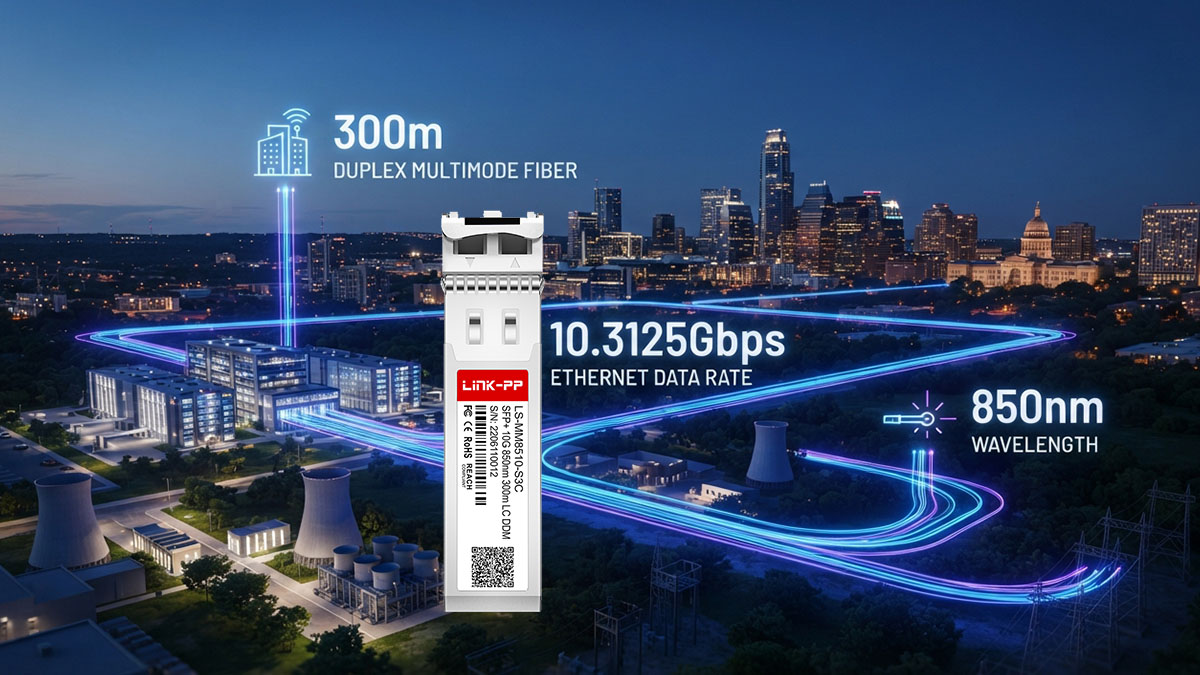
At the core of the deployment's success was the module's ability to maintain pristine signal integrity at exceptionally high data rates. The LINK-PP LS-MM8510-S3C is meticulously engineered for short-reach applications, utilizing premium optical components to facilitate robust data transfer across the expansive data center floor.
| Technical Parameter | LINK-PP LS-MM8510-S3C Specification |
| Supported Data Rate | Up to 10.7Gbps (Optimized for 10.3125Gbps 10GBASE-SR) |
| Transmitter Wavelength | 850nm |
| Optical Components | VCSEL laser transmitter and PIN photodiode receiver |
| Maximum Transmission Reach | Up to 300 meters via OM3-MMF (Multi-Mode Fiber) |
| Power Supply Requirement | Single +3.3V |
By leveraging the advanced 850nm VCSEL laser and PIN photodiode integrated with a trans-impedance preamplifier (TIA), this module ensures minimal signal degradation over multimode fiber. This precise optical configuration allowed the Austin Cloud Campus network engineers to confidently bridge the essential 300-meter distances between their Cisco Nexus distribution and core racks, ensuring every physical link operated at peak 10GBASE-SR capacity without suffering from structural bottlenecks.
Real-Time Digital Diagnostic Monitoring (DDM)
Beyond pure transmission speed, maintaining enterprise network reliability requires proactive visibility into the physical health of the optical infrastructure. To prevent unexpected network outages, the LINK-PP LS-MM8510-S3C features comprehensive, real-time Digital Diagnostic Monitoring (DDM) fully compliant with the SFF-8472 standard. This vital capability grants network administrators deep, continuous insights into the operating conditions of each localized port on the Cisco switch.
-
Operating Temperature Tracking: Continuously monitors the internal module heat within the standard 0 to +70°C operating range (maintaining an accuracy of ±3°C), which is critical for preventing thermal throttling in high-density switch environments.
-
Supply Voltage and Bias Current Monitoring: Ensures the module receives a stable voltage input from the host device and tracks the laser bias current, immediately flagging internal power fluctuations that could compromise signal quality.
-
Tx and Rx Optical Power Metrics: Accurately measures both transmitted (Tx) and received (Rx) optical power levels, enabling engineering teams to detect microscopic fiber degradation before it escalates into a complete connection failure.
Through the standard 2-wire serial interface, the Austin Cloud Campus IT team can seamlessly extract this diagnostic data directly into their central network management software. By continuously analyzing these internal calibration metrics, administrators successfully transitioned from reactive troubleshooting to proactive infrastructure maintenance, dramatically increasing the overall uptime and resilience of the entire data center operation.
Achieving Seamless Network Integration
Integrating new optical hardware into an active, high-density core demands a solution that eliminates configuration friction and hardware conflicts. For the Austin Cloud Campus, achieving seamless network integration was just as crucial as raw transmission speed. The LINK-PP LS-MM8510-S3C transceivers facilitated a flawlessly executed rollout, marrying standardized physical design with rigorous protocol interoperability to ensure the Cisco Nexus switches embraced the new links without a single dropped connection.
Plug-and-Play Efficiency for Rapid Deployment
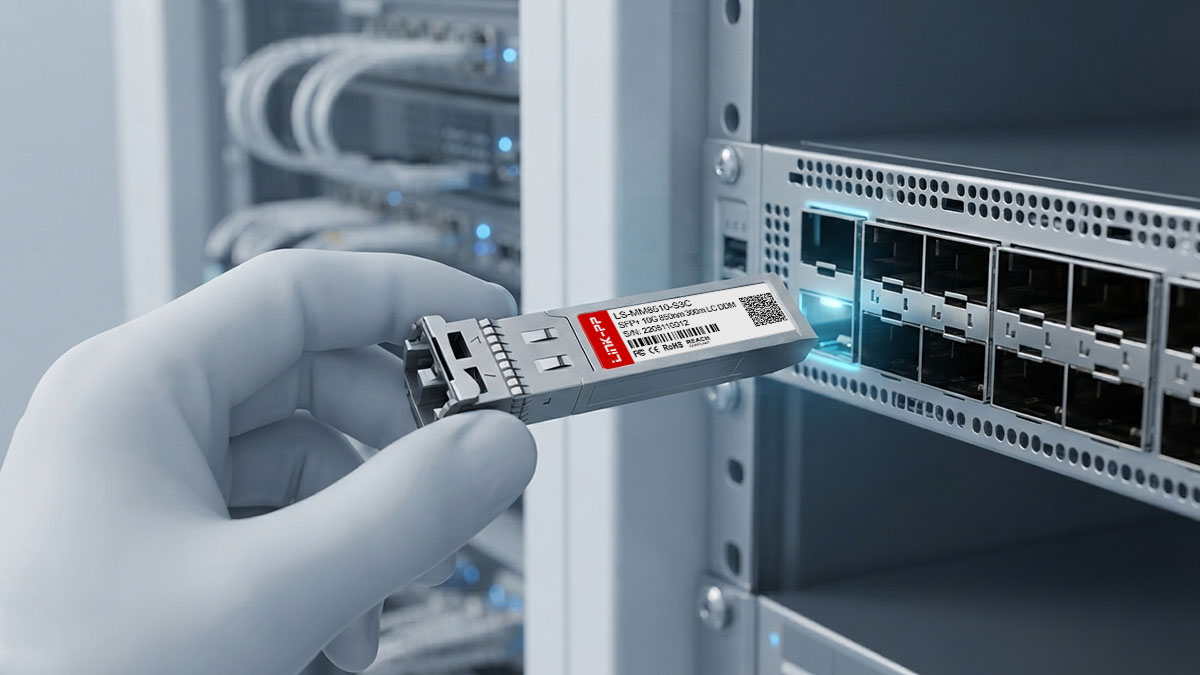
Time is a critical asset in enterprise data center expansions, making rapid, non-disruptive installation a mandatory requirement for physical networking components. The LINK-PP modules delivered exceptional plug-and-play efficiency, allowing the on-site engineering team to aggressively scale their network architecture without forcing maintenance downtime on already active switch chassis.
-
Hot-Pluggable SFP+ Footprint: This crucial design feature allowed technicians to insert, test, and activate the transceivers dynamically while the Cisco Nexus switches remained fully powered and processing data.
-
Duplex LC Receptacle: By utilizing the universally adopted duplex LC interface, the modules perfectly aligned with the facility's existing OM3-MMF cabling infrastructure, completely bypassing the need for complex cable restructuring.
This intelligent physical design dramatically accelerated the Austin Cloud Campus installation timeline. Network architects were able to seamlessly populate the high-density distribution racks and bring new 10GBASE-SR links online instantly, completely avoiding the operational paralysis typically associated with large-scale data center upgrades.
MSA Compliance and Unshakable Stability
Premium enterprise routing ecosystems like the Cisco Nexus series operate under strict hardware recognition protocols, often rejecting non-standard optical components. The LINK-PP LS-MM8510-S3C guaranteed an unshakable handshake with the host equipment by adhering strictly to the industry’s most demanding universal manufacturing agreements, ensuring flawless interoperability.
-
SFP+ Multi-Source Agreement (MSA): Strict adherence to the SFP+ MSA ensures the transceiver’s exact physical dimensions and internal EEPROM coding perfectly match the host switch's expectations, enabling instant, error-free port recognition.
-
SFF-8472 Compliance: Full compliance with this digital diagnostic standard guarantees that the module's MCU control unit correctly and securely passes critical health data to the Cisco operating system.
-
Optimized Electrical Architecture: Operating on a reliable single +3.3V power supply with a maximum operating current (Icc) of just 260mA, the modules impose a negligible electrical load on the host switch's internal power distribution.
By meeting and exceeding these rigorous industry baselines, the LINK-PP modules completely eliminated the compatibility bottlenecks that often plague third-party optic deployments. For the Austin Cloud Campus, this unified compliance translated into zero packet loss, zero interface reset errors, and a rock-solid optical foundation that remains stable under continuous enterprise workloads.
Elevating Enterprise Network Reliability with LINK-PP
The successful deployment at the Austin Cloud Campus underscores the transformative impact of selecting superior optical components for critical data center infrastructure. By partnering with LINK-PP, enterprise architectures confidently scale their networks, knowing the underlying physical layer is built for absolute resilience. The integration of the LS-MM8510-S3C modules not only resolved immediate connectivity challenges but also established a future-proof foundation defined by uncompromising safety, industry-standard compliance, and long-term operational stability.

A Proven Track Record in High-Density Environments
The seamless execution of the Austin Cloud Campus network rollout solidifies LINK-PP’s reputation as a trusted provider for complex, high-density IT environments. When engineering teams are tasked with bridging premium routing hardware like Cisco Nexus switches, they require component partners that consistently deliver reliable, high-performance results. By sourcing optical transceivers directly through the LINK-PP Official Store, network architects guarantee they are deploying authentic, precisely engineered modules that meet rigorous enterprise specifications without introducing network vulnerabilities.
LINK-PP continuously solves real-world enterprise networking challenges by focusing on key manufacturing and operational advantages:
-
Stringent Quality Control: Every SFP+ transceiver undergoes rigorous internal calibration and testing to ensure flawless performance under demanding multi-terabit workloads.
-
Cost-Effective Scalability: By delivering tier-one transmission capabilities directly to facility operators, organizations can maximize their IT infrastructure budgets while maintaining top-tier component reliability.
-
Seamless Ecosystem Integration: The meticulous EEPROM coding and MSA compliance ensure these modules act as universal bridges across highly diverse, enterprise-grade server rooms.
This proven track record gives network architects the absolute confidence to deploy these solutions across their most mission-critical network distribution layers. The Austin project serves as a clear blueprint for how large-scale facilities can achieve flawless 10.3Gbps synchronization while seamlessly optimizing their sourcing and overall infrastructure frameworks.
Commitment to Quality and Sustainability
Modern enterprise data centers are increasingly evaluated not just on their digital throughput, but on their commitment to environmental responsibility and workplace safety. LINK-PP aligns with these global priorities by manufacturing optical transceivers that meet the highest international safety standards while minimizing overall environmental impact. The LS-MM8510-S3C is meticulously engineered to protect both the network administrators handling the equipment and the global ecosystem at large.
This dedication to sustainable and safe manufacturing is reflected in the strict operational certifications satisfied by all modules deployed within the Austin facility:
-
Class I Laser Safety Requirements: The integrated 850nm VCSEL transmitters are rigorously engineered to ensure optical emissions remain well below hazardous thresholds, guaranteeing safe physical handling for technicians during hot-plugging and maintenance.
-
Full RoHS Compatibility: The modules are constructed without harmful heavy metals, adhering strictly to the Restriction of Hazardous Substances directive to support the data center's overarching green IT initiatives.
-
Optimized Power Efficiency: Operating strictly within a low power consumption profile driven by the single +3.3V supply, the transceivers actively reduce the total energy overhead and cumulative cooling requirements of the switch chassis.
Through these stringent safety standards and eco-friendly manufacturing practices, LINK-PP demonstrates an unwavering dedication to responsible technological advancement. By delivering optical solutions that are exceptionally safe, environmentally conscious, and uncompromising in performance, LINK-PP ensures that flagship facilities like the Austin Cloud Campus are perfectly equipped to power the future of global cloud computing.