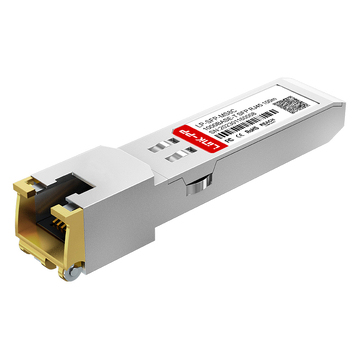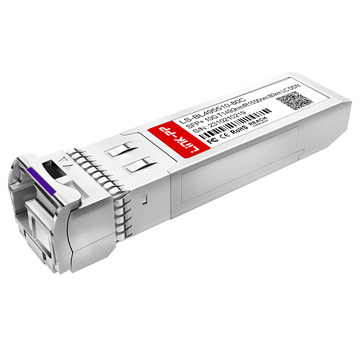






























The Cisco GLC-LX-SMD is a widely deployed 1000BASE-LX optical transceiver designed for reliable 1G connectivity over single-mode fiber. It operates at 1310nm and supports transmission distances up to 10km, making it a common choice in enterprise networks, campus backbones, and metro access environments. Despite its maturity, evolving network requirements have increased the need for enhanced visibility into optical link performance.
Modern network operations increasingly rely on Digital Diagnostics Monitoring (DDM), also known as Digital Optical Monitoring (DOM), to provide real-time insights into transceiver health. Enabled by the SFF-8472 standard, these diagnostics allow administrators to monitor key parameters such as temperature, voltage, transmit power, and receive power. This capability plays a critical role in proactive maintenance, faster troubleshooting, and overall network stability.
As organizations seek cost-effective and flexible alternatives, GLC-LX-SMD replacement transceiver modules with full SFF-8472 DDM/DOM support have become a practical solution. These compatible transceivers are designed to match the performance of original modules while offering enhanced monitoring capabilities and broader interoperability across multi-vendor environments.
This article explores the technical specifications of GLC-LX-SMD replacements, explains how SFF-8472-based diagnostics work, and provides practical guidance on compatibility, deployment, and real-world usage scenarios.
? Overview of GLC-LX-SMD and Its Core Specifications
The Cisco GLC-LX-SMD is a standard 1000BASE-LX SFP transceiver designed for stable, medium-distance transmission over single-mode fiber. It provides a balance between performance, reliability, and deployment flexibility, making it one of the most commonly used 1G SFP modules in enterprise and access networks.
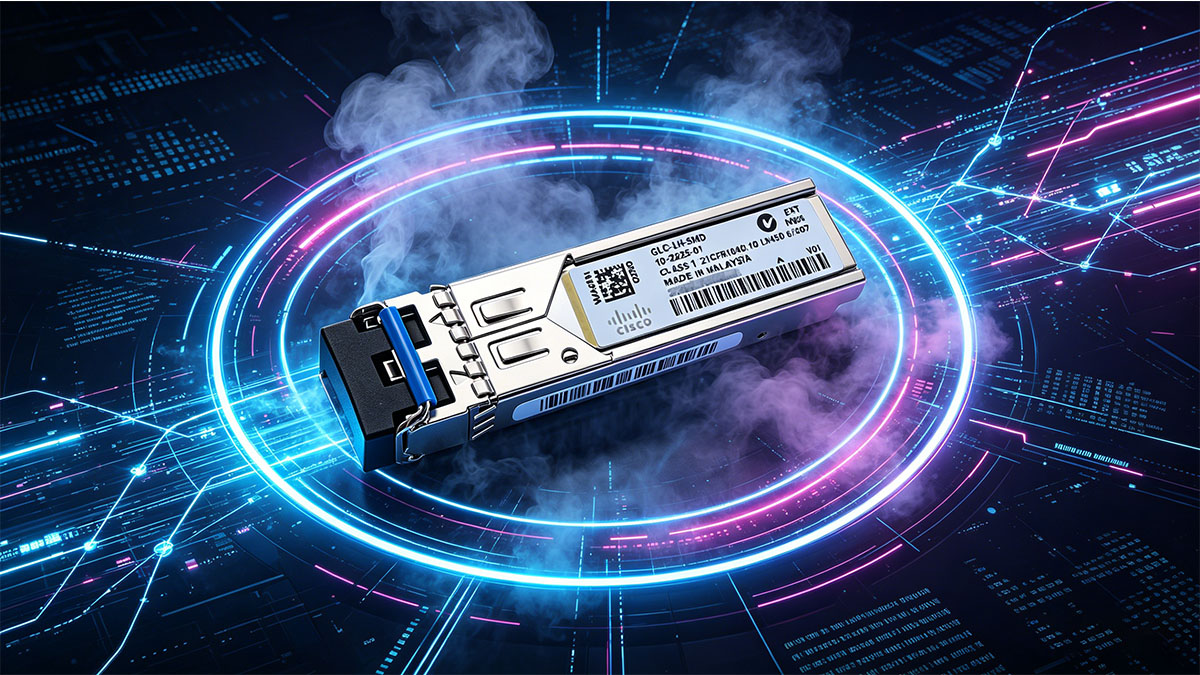
Key Technical Characteristics
The GLC-LX-SMD follows widely adopted optical specifications that ensure interoperability and predictable performance in most networking environments. Its core parameters define both its transmission capability and deployment boundaries.
| Parameter | Value | Description |
|---|---|---|
| Data Rate | 1Gbps | Supports Gigabit Ethernet (1000BASE-LX) |
| Wavelength | 1310nm | Optimized for single-mode fiber transmission |
| Max Distance | 10km | Typical reach over SMF |
| Connector Type | Duplex LC | Standard interface for fiber patching |
These specifications make the module suitable for stable point-to-point connections where consistent signal integrity is required. The 1310nm wavelength minimizes attenuation over longer distances compared to multi-mode alternatives, while the LC interface ensures compatibility with common fiber infrastructure.
In practical deployments, these parameters should always be evaluated alongside link budget calculations and fiber quality to ensure optimal performance.
Typical Deployment Scenarios
The GLC-LX-SMD is most effective in environments where moderate-distance fiber links and high reliability are required. Its widespread compatibility makes it a default choice across various network layers.
- Enterprise campus networks
- Used for building-to-building connections
- Supports aggregation layer uplinks
- Data center interconnect (short-to-medium range)
- Suitable for connecting separate data halls
- Often used in spine-leaf architectures for legacy 1G links
- Metro access networks
- Deployed in last-mile or aggregation segments
- Provides stable connectivity between access nodes
These scenarios highlight the module's versatility. While newer high-speed technologies exist, 1G LX modules remain relevant due to their cost efficiency and compatibility with existing infrastructure.
Limitations of Legacy Modules
Although the GLC-LX-SMD is reliable, older deployments may expose certain limitations, especially when compared to modern transceiver capabilities.
- Limited or absent diagnostic visibility in early versions
- Some legacy modules do not fully support SFF-8472
- Reduces ability to monitor real-time optical performance
- Vendor lock-in constraints
- OEM-coded modules may restrict third-party compatibility
- Limits flexibility in multi-vendor environments
- Lifecycle and scalability challenges
- Aging hardware may show performance drift
- Not optimized for integration with modern monitoring systems
These limitations are a key reason why many network operators consider replacement modules that support full DDM/DOM functionality. By upgrading to SFF-8472-compliant alternatives, organizations can significantly improve visibility, troubleshooting efficiency, and long-term operational stability without changing existing fiber infrastructure.
? Understanding SFF-8472 and DDM/DOM Functionality
SFF-8472 defines the standardized interface that enables Digital Diagnostics Monitoring (DDM/DOM) in fiber optic SFP module, allowing real-time visibility into transceiver operating conditions. In practical terms, it provides network engineers with critical data needed to monitor performance, detect anomalies early, and maintain link stability without physical inspection.

What Is SFF-8472?
SFF-8472 is an extension of the SFP Multi-Source Agreement (MSA) that introduces a digital interface for accessing internal transceiver diagnostics. It enables devices such as switches and routers to read live operating data directly from the optical module via the I2C interface.
The core capabilities defined by this standard include:
- Real-time monitoring of optical and electrical parameters
- Internal calibration and external calibration support
- Alarm and warning threshold definitions
- Standardized memory map for consistent data access
These features make SFF-8472 a foundational element for modern optical monitoring. Without it, administrators would rely on indirect indicators such as link loss or error rates, which often appear only after performance degradation has already occurred.
In essence, SFF-8472 transforms optical modules from passive components into actively monitored elements within the network.
Key DDM/DOM Parameters Explained
DDM/DOM provides several critical metrics that reflect both the health of the transceiver and the quality of the optical link. Understanding these parameters is essential for accurate diagnostics and performance tuning.
| Parameter | Unit | Operational Insight |
|---|---|---|
| Temperature | °C | Indicates thermal stability of the module |
| Voltage | V | Reflects power supply consistency |
| TX Bias Current | mA | Shows laser drive strength and aging status |
| TX Output Power | dBm | Measures transmitted optical signal strength |
| RX Optical Power | dBm | Indicates received signal quality |
These parameters work together to provide a comprehensive view of link health. For example, a gradual increase in TX bias current combined with decreasing TX power may indicate laser degradation, while low RX power could point to fiber attenuation or connector contamination.
Accurate interpretation of these metrics allows engineers to identify issues before they impact network performance.
Why DDM/DOM Matters in Network Operations
DDM/DOM is not just a monitoring feature—it is a critical tool for maintaining reliable and scalable network infrastructure. Its value becomes evident in both day-to-day operations and long-term maintenance strategies.
- Predictive maintenance
- Detects early signs of component degradation
- Helps schedule replacements before failures occur
- Real-time performance visibility
- Enables continuous monitoring of optical links
- Provides immediate insight into abnormal conditions
- Faster and more accurate troubleshooting
- Reduces guesswork in diagnosing link issues
- Pinpoints root causes such as fiber loss or hardware faults
These benefits directly translate into reduced downtime and improved operational efficiency. In environments where uptime is critical, such as data centers and enterprise backbones, the ability to monitor optical parameters in real time is essential.
As a result, when evaluating a Cisco GLC-LX-SMD replacement, full compliance with SFF-8472 and reliable DDM/DOM functionality should be considered a baseline requirement rather than an optional feature.
? GLC-LX-SMD Replacement Modules with SFF-8472 Support
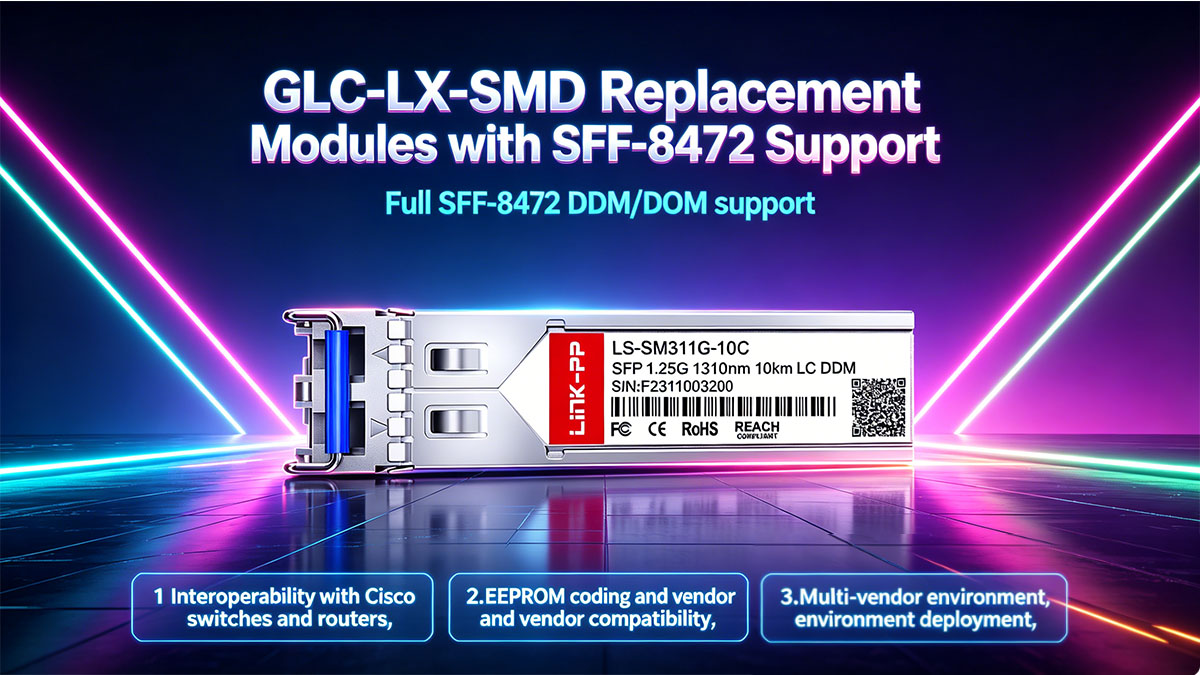
GLC-LX-SMD replacement modules with SFF-8472 support are designed to deliver equivalent optical performance while adding full DDM/DOM visibility and broader interoperability. In most deployments, these replacements can match the functionality of the Cisco GLC-LX-SMD while improving monitoring capabilities and reducing operational constraints associated with vendor-specific modules.
Compatibility Considerations
Ensuring compatibility is the most critical step when selecting a replacement module. Even if optical specifications match, differences in coding and firmware behavior can affect whether the module is accepted and operates correctly in a given device.
Key compatibility factors include:
- Device interoperability
- Support across Cisco switches and routers
- Behavior in mixed-vendor environments
- EEPROM coding and vendor identification
- Proper encoding to match expected vendor profiles
- Avoidance of "unsupported transceiver" errors
- Firmware alignment
- Compatibility with specific OS versions
- Stability across firmware upgrades
These factors determine whether the module will function seamlessly or require additional configuration. In most cases, high-quality replacement modules are pre-coded and tested for compatibility, minimizing deployment risks.
It is recommended to validate compatibility in a controlled environment before large-scale deployment to avoid unexpected issues.
Key Features of Modern Replacement Modules
Modern GLC-LX-SMD replacements are not simply functional equivalents—they often introduce enhancements that improve reliability and observability.
| Feature | Description | Operational Benefit |
|---|---|---|
| SFF-8472 Support | Full DDM/DOM diagnostics | Real-time monitoring of optical parameters |
| Calibration Accuracy | Internal or external calibration | More precise diagnostic readings |
| Extended Temperature Range | Industrial-grade options available | Suitable for harsh environments |
| Multi-Vendor Compatibility | Pre-tested across platforms | Greater deployment flexibility |
These features enable network operators to gain deeper insight into link performance while maintaining consistent operation across different hardware platforms.
In particular, accurate calibration ensures that DOM readings reflect real conditions, which is essential for making reliable maintenance decisions.
Performance Parity vs Original Modules
A key concern when adopting replacement modules is whether they can match the performance of original OEM optics. In most cases, well-designed replacements achieve comparable results across all critical metrics.
Performance comparison typically includes:
- Optical transmission stability
- Consistent TX/RX power levels within expected ranges
- Stable operation over extended periods
- Signal integrity
- Low bit error rates under normal operating conditions
- Compliance with IEEE 1000BASE-LX standards
- Long-term reliability
- Resistance to thermal variation and aging effects
- Predictable behavior in continuous operation
These factors demonstrate that replacement modules can achieve performance parity when sourced from reliable manufacturers. The addition of SFF-8472 diagnostics further enhances their value by providing visibility that may not be fully utilized in older deployments.
Ultimately, the combination of equivalent optical performance and enhanced monitoring makes SFF-8472-enabled replacements a practical and scalable choice for modern network environments.
? How to Verify DDM/DOM Functionality in Practice
Verifying DDM/DOM functionality ensures that a replacement module correctly reports real-time diagnostics and integrates properly with network devices. In practice, this involves checking CLI outputs, validating monitoring system data, and confirming that reported values are accurate and consistent with expected link conditions.

CLI Commands on Cisco Devices
The most direct way to verify DDM/DOM functionality is through device CLI commands, which display real-time transceiver diagnostics. On Cisco platforms, these commands allow administrators to quickly confirm whether SFF-8472 data is accessible and functioning correctly.
Common verification steps include:
- Access the device CLI and identify the target interface
- Run diagnostic commands to display transceiver details
- Check whether DOM fields such as temperature and optical power are populated
- Compare values against expected operating ranges
Typical commands used:
show interfaces transceiver detailshow interfaces statusshow inventory
These commands should return detailed metrics if the module supports SFF-8472. Missing or zeroed values often indicate lack of support, compatibility issues, or firmware limitations.
After retrieving the data, it is important to interpret the results correctly. For example, unusually low RX power may indicate fiber loss, while abnormal temperature readings could signal environmental or hardware issues.
Monitoring via Network Management Systems
Beyond CLI access, DDM/DOM data can be integrated into network management systems (NMS) for continuous monitoring and alerting. This approach is essential in larger environments where manual checks are not scalable.
Typical monitoring workflow:
- Collect DOM data via SNMP polling
- Map parameters such as TX/RX power and temperature
- Visualize trends over time using dashboards
- Configure alerts based on predefined thresholds
These systems provide several operational advantages:
- Centralized visibility across multiple devices
- Historical trend analysis for performance evaluation
- Automated alerts for proactive maintenance
When properly configured, NMS platforms transform raw DOM data into actionable insights, helping operators detect gradual degradation before it impacts service.
Common Issues When Reading DOM Data
In some cases, DDM/DOM data may not be available or may appear inconsistent. Identifying the root cause is essential to ensure reliable diagnostics.
| Issue Type | Possible Cause | Resolution Approach |
|---|---|---|
| No DOM Data | Module lacks SFF-8472 support | Use compliant replacement module |
| Partial Data | Firmware limitations | Upgrade device OS or firmware |
| Inaccurate Readings | Calibration mismatch | Verify module calibration type |
| Fluctuating Values | Optical instability | Inspect fiber and connectors |
These issues often stem from compatibility gaps or physical layer problems rather than the monitoring system itself.
To ensure reliable operation, it is important to validate both the module capability and the surrounding infrastructure. Consistent and accurate DOM readings are a strong indicator that the optical link and transceiver are functioning as expected.
? Deployment Best Practices for GLC-LX-SMD Replacements
Deploying GLC-LX-SMD replacement modules successfully requires careful validation of compatibility, proper fiber infrastructure planning, and effective use of DDM/DOM data. Following best practices ensures stable operation, accurate diagnostics, and long-term reliability in production environments.
Ensuring Compatibility Before Deployment
Compatibility validation should always be completed before introducing replacement modules into a live network. Even when a module matches the specifications of the Cisco GLC-LX-SMD, differences in device behavior or firmware can affect performance.
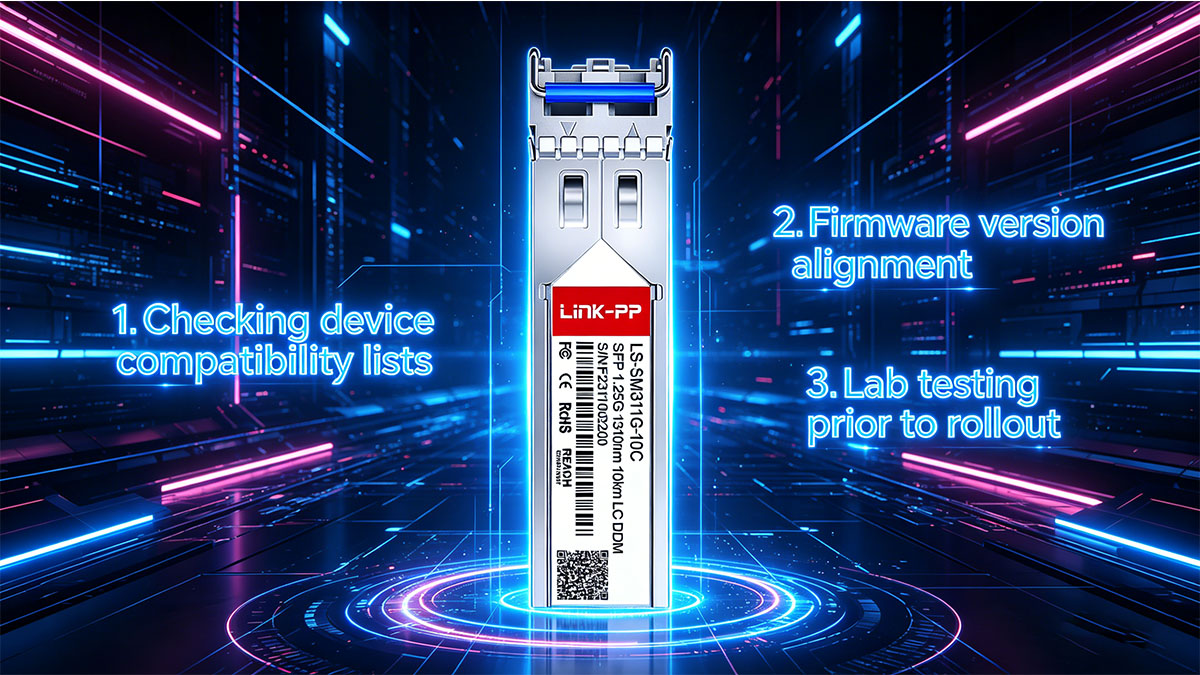
A structured validation process typically includes:
- Verify device compatibility
- Check switch/router model support
- Review vendor compatibility matrices
- Align firmware and software versions
- Ensure the network OS supports DOM features
- Avoid known compatibility issues with older firmware
- Conduct lab testing
- Validate link establishment and stability
- Confirm DDM/DOM data availability and accuracy
This approach reduces the risk of deployment failures and ensures that the replacement module behaves as expected under real conditions.
In environments with strict uptime requirements, pre-deployment validation is critical to maintaining service continuity.
Optimizing Fiber Infrastructure
The performance of any optical module depends heavily on the quality and configuration of the fiber link. Proper infrastructure planning ensures that the module operates within its designed parameters.
| Factor | Recommendation | Impact |
|---|---|---|
| Fiber Type | Use single-mode fiber (SMF) | Ensures optimal performance at 1310nm |
| Connector Quality | Clean and inspect LC connectors | Reduces insertion loss and signal degradation |
| Link Budget | Calculate total attenuation | Prevents underpowered or unstable links |
| Patch Management | Minimize excessive connections | Improves signal consistency |
These factors directly influence optical signal quality and, by extension, DOM readings. Poor fiber conditions can lead to misleading diagnostics, making troubleshooting more difficult.
Regular inspection and maintenance of fiber infrastructure are essential to sustaining long-term network performance.
Leveraging DOM Data for Maintenance
DDM/DOM data should not only be verified during deployment but also actively used for ongoing maintenance. Proper utilization of this data enables proactive network management.
Key practices include:
- Establish baseline metrics
- Record normal operating values for temperature and optical power
- Use baselines for future comparison
- Configure alert thresholds
- Set warning and critical limits for key parameters
- Trigger alerts for abnormal deviations
- Perform periodic reviews
- Analyze trends in TX bias and RX power
- Identify gradual degradation over time
These practices allow network operators to move from reactive troubleshooting to predictive maintenance. For example, a steady decline in RX power over time may indicate fiber aging or connector contamination before a link failure occurs.
By integrating DOM data into regular operational workflows, organizations can significantly improve network stability and reduce unplanned downtime.
? Common Challenges and Troubleshooting
Even when using high-quality GLC-LX-SMD replacement modules with SFF-8472 DDM/DOM support, network operators may encounter certain issues. Understanding these challenges and how to address them ensures reliable operation and minimizes service disruptions.

DOM Data Not Available or Incomplete
A common issue is the absence of DOM readings or incomplete diagnostic data. This often occurs due to module limitations or device-side restrictions.
Primary causes and troubleshooting steps include:
- Non-compliant modules
- Verify that the module fully supports SFF-8472
- Replace non-compliant optics with certified replacements
- Firmware or OS limitations
- Check whether the device firmware version supports DOM access
- Upgrade to a version with known DDM/DOM support
- I2C interface errors
- Inspect cabling and port connections
- Reset interfaces if necessary to reinitialize communication
Accurate DOM visibility is critical for predictive maintenance. Ensuring module compliance and device readiness is the first step in troubleshooting missing diagnostics.
Inconsistent Optical Power Readings
Fluctuating or unexpected TX/RX optical power values can lead to misinterpretation of link health. Common contributing factors include:
- Fiber attenuation
- Verify the type and length of fiber; SMF is required for 1310nm LX modules
- Measure end-to-end loss to ensure it is within module specifications
- Connector contamination
- Inspect and clean LC connectors to reduce insertion loss
- Avoid repeated mating without proper cleaning
- Hardware aging or calibration drift
- Compare readings across multiple modules of the same type
- Replace modules showing consistent deviation outside tolerance
By correlating optical power readings with physical inspection and fiber measurements, operators can distinguish between module issues and link-related factors.
Link Instability Despite Normal DOM Values
In some cases, links may appear unstable even when DOM metrics are within expected ranges. Possible causes include:
- Environmental influences
- Extreme temperatures can affect transceiver performance
- Electromagnetic interference (EMI) can induce intermittent errors
- Firmware or software bugs
- Review vendor release notes for known issues
- Apply recommended patches or workarounds
- Multi-vendor interoperability challenges
- Confirm that replacement modules are fully compatible with the device model
- Test in a controlled environment to ensure stable operation
Addressing link instability often requires combining DOM analysis with network monitoring tools and physical layer inspection. This integrated approach allows engineers to pinpoint root causes more efficiently.
? Future Trends in 1G Optical Modules and Diagnostics
Even as network speeds continue to increase beyond 10G (SFP+), 25G (SFP28), 40G(QSFP+), 1G SFP optical modules like GLC-LX-SMD remain widely used in enterprise, campus, and metro networks. The future of these modules is shaped by evolving monitoring standards, integration with intelligent systems, and the need for multi-vendor interoperability.
Evolution of Monitoring Standards
The SFF-8472 standard has long provided a foundation for DDM/DOM functionality, but ongoing innovation is expanding what diagnostics can deliver. Future trends include:
- Enhanced monitoring protocols
- Extensions to existing standards for higher precision
- Integration with optical transport monitoring (OTN) and telemetry
- Real-time analytics and predictive alerts
- AI-driven monitoring can detect anomalies before link degradation
- Enables automated network response based on transceiver metrics
- Standardization across form factors
- Consistent diagnostics across fiber SFP/SFP+ modules, and even QSFP+/QSFP28 modules
- Simplifies monitoring in mixed-speed environments
These advancements aim to move from reactive maintenance to predictive and automated network management, increasing uptime and operational efficiency.
Continued Relevance of 1G LX Modules
Despite the proliferation of higher-speed modules, 1G LX optics remain relevant due to several practical advantages:
- Legacy system support
- Many enterprise and campus networks still rely on 1G uplinks
- Replacement modules extend the lifecycle of existing infrastructure
- Cost-effective connectivity
- Lower acquisition cost compared to other high-speed transceivers
- Useful in access networks where ultra-high bandwidth is unnecessary
- Stability and maturity
- Proven reliability over decades of deployment
- Well-understood operational characteristics
As a result, investing in SFF-8472-compliant 1G modules ensures both compatibility and operational efficiency in mixed-speed environments.
Increasing Demand for Multi-Vendor Compatibility
Open networking trends are driving demand for modules that work reliably across different vendor platforms. Key considerations include:
- Vendor-agnostic DDM/DOM support
- Ensures consistent diagnostics regardless of switch brand
- Reduces operational complexity in multi-vendor deployments
- Standardized EEPROM coding and calibration
- Prevents "unsupported transceiver" errors
- Enables seamless integration with existing monitoring systems
- Flexibility for network scaling
- Replacement modules can be deployed in legacy links while upgrading other segments to higher-speed optics
- Simplifies phased network upgrades
The combination of multi-vendor support, predictive diagnostics, and operational stability ensures that GLC-LX-SMD replacements will continue to be a practical choice in the years ahead.
? Conclusion
GLC-LX-SMD replacement modules with full SFF-8472 DDM/DOM support provide a practical and reliable solution for maintaining 1G fiber networks. They deliver equivalent optical performance to original Cisco modules while offering enhanced real-time diagnostics, improved monitoring accuracy, and broader multi-vendor compatibility. By validating compatibility, optimizing fiber infrastructure, and leveraging DOM data for proactive maintenance, network operators can ensure stable, high-performing links and minimize downtime.
For organizations looking to upgrade or expand their 1G connectivity while retaining full monitoring capabilities, exploring certified replacement options can extend the lifecycle of existing infrastructure without sacrificing reliability.
Discover a range of compatible GLC-LX-SMD replacement modules and full SFF-8472 support at LINK-PP Official Store.