



































Industrial networks increasingly demand reliable long-distance connectivity to ensure uninterrupted data flow in harsh environments. The SFP-1FESLC-T SFP transceiver addresses this need by providing 100Mbps transmission over distances up to 40 kilometers using single-mode fiber. Such extended-reach optical transceiver modules are crucial in applications where network reliability directly impacts operational safety and efficiency, including power substations, railway communication systems, oil and gas monitoring, and remote industrial automation.
While the module’s long-distance capability enables robust connectivity, it also exposes the optical transceiver to higher risks from electrostatic discharge (ESD) and electrical surges. These electrical events can compromise link stability, reduce component lifespan, and cause unexpected network failures. Therefore, evaluating the ESD and surge protection design of SFP-1FESLC-T compatible modules is essential for maintaining high reliability in industrial deployments.
This article provides a comprehensive audit of ESD and surge protection in SFP-1FESLC-T compatible modules. It examines technical specifications, protection mechanisms, testing methodologies, and deployment best practices to help network engineers and industrial operators ensure that extended-distance optical links remain stable and resilient under challenging conditions.
✅ Overview of SFP-1FESLC-T and Its Industrial Use Cases
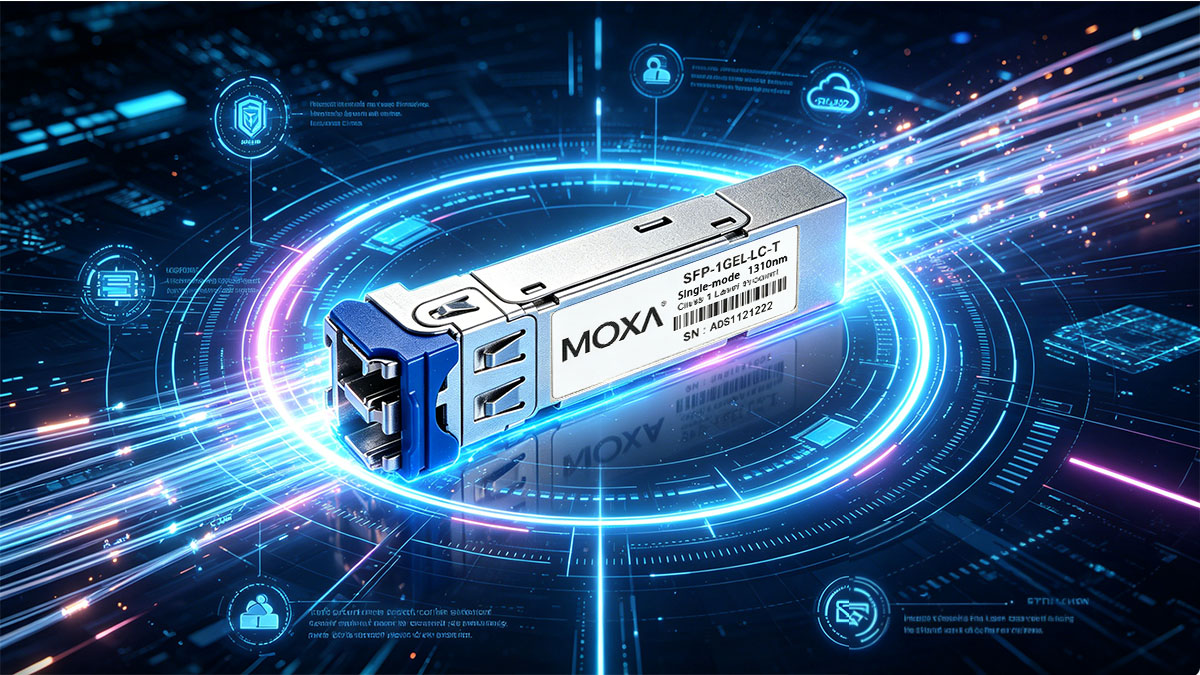
The SFP-1FESLC-T fiber SFP module is specifically designed for long-distance industrial Ethernet applications, delivering reliable 100Mbps transmission over distances up to 40 kilometers. Its extended-reach design ensures stable connectivity in harsh environments where standard short-range optics cannot maintain signal integrity. Selecting the right fiber optic SFP module for such deployments is crucial to prevent network instability, data loss, or unplanned downtime.
Key Specifications of SFP-1FESLC-T
The SFP-1FESLC-T combines long-distance capability with industrial-grade robustness. Unlike standard short-range 100M SFP modules, it supports transmission distances of up to 40km over single-mode fiber. The following table highlights its primary technical parameters:
| Parameter | Specification |
|---|---|
| Transmission Speed | 100Mbps optical Ethernet |
| Fiber Type | Single-mode fiber (SMF) |
| Connector | LC duplex |
| Maximum Distance | 40km |
| Operating Temperature | -40°C to +85°C |
| Typical Power Consumption | ≤1.5W |
These specifications demonstrate that the SFP module is optimized for extended-distance deployments, supporting single-mode LC connectivity while maintaining low power consumption. Its industrial temperature tolerance enables operation in outdoor and unconditioned facilities without compromising performance.
Typical Deployment Scenarios
SFP-1FESLC-T modules are widely applied in industrial networks where stable, long-haul optical connectivity is essential. Key deployment scenarios include:
- Remote industrial Ethernet links connecting distributed control systems
- Power grid and substation monitoring networks with fiber runs spanning several tens of kilometers, similar to infrastructures historically built around SONET/SDH transport systems
- Railway backbone communication, including signaling and passenger information systems
- Oil and gas pipelines requiring reliable long-distance monitoring links
- Smart city infrastructure, including surveillance, traffic management, and automation networks
These scenarios emphasize the need for modules that not only support 40km transmission but also offer consistent performance under extreme temperatures, electromagnetic interference, and mechanical stress.
Protocol Positioning and Compatibility Considerations
Although the module provides 100Mbps transmission over 40km, it does not adhere to standard 100BASE-FX distance limitations. Extended-reach operation requires careful evaluation of compatibility to ensure network stability. Critical considerations include:
- Ensuring the PHY on connected switches supports long-reach signaling
- Verifying link stability under 40km transmission, accounting for optical attenuation and dispersion
- Selecting compatible vendors with proven industrial-grade quality and rigorous testing experience across Ethernet and Fibre Channel modules
By addressing these factors, network operators can deploy SFP-1FESLC-T modules with confidence, achieving both long-distance coverage and reliable industrial performance.
✅ Fundamentals of ESD and Surge Protection in Optical Modules
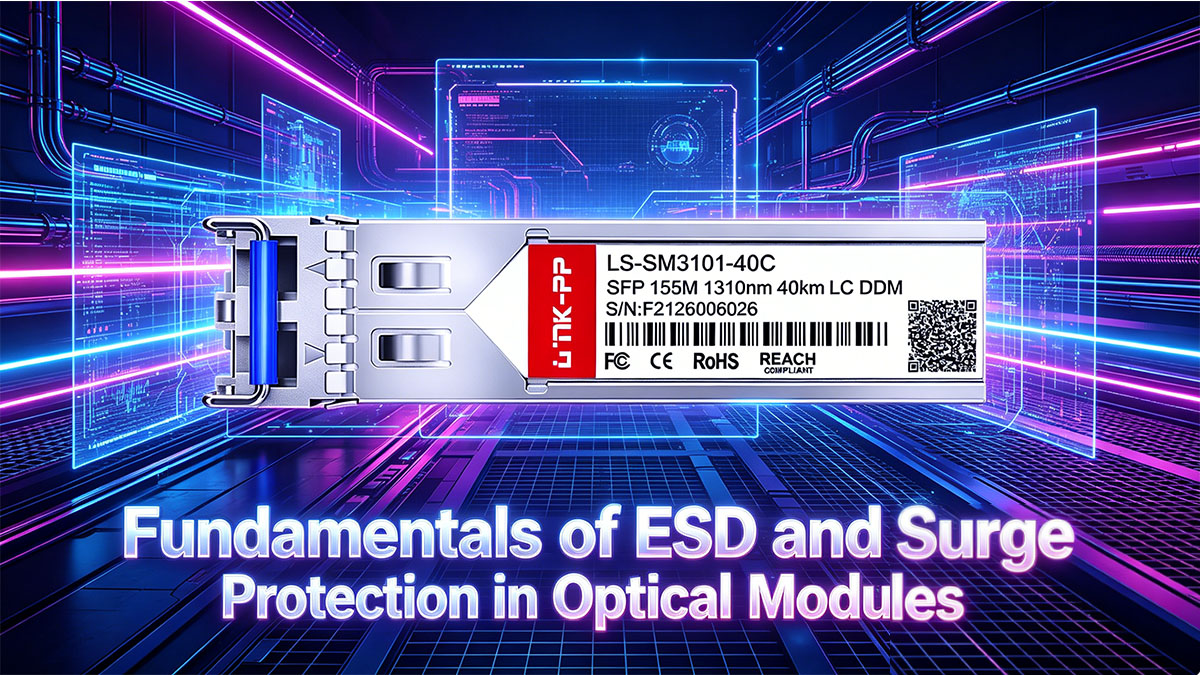
Effective ESD and surge protection is critical for maintaining the reliability of long-distance optical modules such as the SFP-1FESLC-T. In industrial deployments, electrostatic discharges and transient voltage surges are common and can lead to immediate component failure or gradual degradation of transceiver performance. Properly designed protection mechanisms prevent network interruptions, reduce maintenance costs, and extend module lifespan.
What is Electrostatic Discharge (ESD)?
Electrostatic discharge occurs when a sudden flow of electricity jumps between objects of differing electrical potential. Optical modules are particularly sensitive to ESD events due to the delicate nature of their integrated circuits and laser diodes. In industrial environments, ESD can be caused by:
- Human handling during installation or maintenance
- Contact with conductive surfaces or metallic enclosures
- Indirect discharge from machinery or moving equipment
ESD tolerance is typically evaluated using standardized models:
| Model | Description | Typical Test Voltage |
|---|---|---|
| Human Body Model (HBM) | Simulates static discharge from human contact | 2kV – 8kV |
| Machine Model (MM) | Simulates direct discharge from equipment or tools | 200V – 400V |
Modules without sufficient ESD protection are prone to IC damage, increased bit error rates, or complete link failure. Extended-distance modules like SFP-1FESLC-T are particularly vulnerable since signal integrity can be disrupted more easily over long fiber runs.
Understanding Surge Protection
Electrical surges are sudden voltage spikes that exceed normal operating voltage levels, often originating from switching operations, lightning strikes, or long cable induction. Surges can propagate through both power and signal lines, causing permanent damage to the transceiver or connected network equipment.
Surge events in industrial optical networks can be classified as follows:
- External surges: Lightning strikes or utility grid fluctuations
- Internal surges: Switching events, relay operations, or motor startup in industrial systems
- Induced surges: Voltage transients coupled into long fiber runs or grounding loops
The primary objective of surge protection is to absorb or divert excess energy away from sensitive components. Effective design ensures the module continues to operate without degradation during or after transient events.
Industry Standards and Compliance Requirements
To quantify protection capabilities, industrial optical modules are tested against international standards:
- IEC 61000-4-2: Specifies immunity to ESD events, covering both contact and air discharge levels
- IEC 61000-4-5: Defines surge immunity, including voltage, current, and waveform characteristics for network devices
Compliance with these standards guarantees that SFP-1FESLC-T compatible modules can withstand typical industrial ESD and surge conditions. Modules lacking certification may still function under ideal conditions but carry a high risk of failure in real-world deployments.
In summary, understanding ESD and surge fundamentals is essential for evaluating module reliability. Electrostatic discharge and transient voltage events are inevitable in industrial networks, and robust protection mechanisms are required to maintain uninterrupted communication over long distances. Extended-reach modules must incorporate both internal circuit and interface-level protection to ensure consistent performance in harsh environments.
✅ ESD Protection Design Audit for SFP-1FESLC-T Compatible Modules
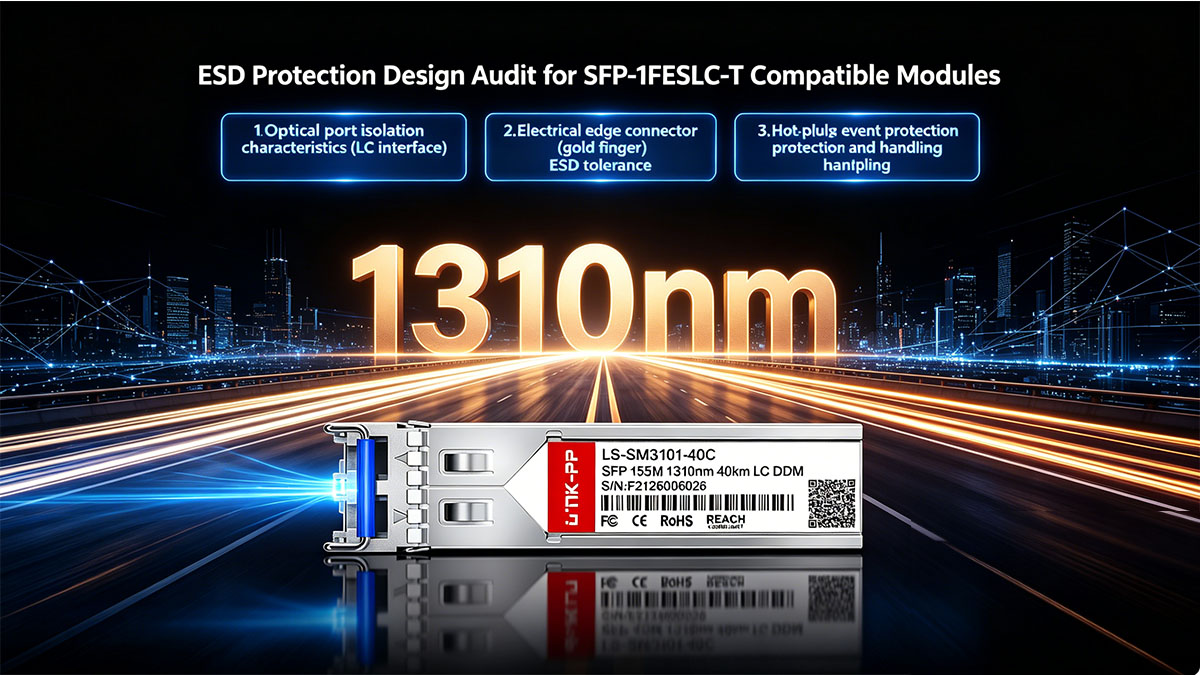
ESD protection is a critical design aspect for SFP-1FESLC-T compatible modules, as long-distance optical links are particularly vulnerable to electrostatic events during installation, maintenance, and daily operation. Modules with well-engineered protection mechanisms can maintain link stability, reduce failure rates, and extend operational lifespan in industrial environments.
Internal Circuit Protection Mechanisms
The reliability of a module begins at the internal circuitry. SFP-1FESLC-T compatible modules implement multiple layers of protection to safeguard sensitive ICs and laser diodes:
- Transient Voltage Suppression (TVS) diodes are strategically placed to absorb voltage spikes before they reach critical components.
- PCB layout optimization ensures proper grounding and minimizes the risk of discharge propagation.
- Shielded enclosures reduce susceptibility to external electromagnetic interference and provide an additional layer of ESD mitigation.
These mechanisms collectively ensure that the module can withstand repeated electrostatic discharges without degradation in performance.
Interface-Level Protection
In addition to internal protection, the optical and electrical interfaces are designed to handle ESD events:
- LC optical connectors are inherently isolated, reducing the risk of electrostatic transfer through the fiber interface.
- Electrical edge connectors, or "gold fingers," interact directly with SFP cages during hot-plug operations and are reinforced with discharge paths to handle hot-plug events and contact discharges.
- Proper hot-swappable design ensures that modules can be inserted or removed without introducing transient currents into the system.
These interface-level protections are essential in industrial scenarios where modules are frequently replaced or serviced.
Failure Modes Without Proper ESD Protection
Modules lacking sufficient ESD protection exhibit predictable failure patterns. Understanding these modes highlights the importance of design diligence:
- Permanent damage to PHY or laser driver circuits due to voltage spikes
- Increased bit error rates leading to unstable link performance
- Intermittent network failures in long-distance transmission
- Accelerated component aging under repeated electrostatic events
The table below summarizes typical failure modes versus protection measures:
| Failure Mode | Cause | Protection Measure |
|---|---|---|
| PHY IC burnout | Direct ESD contact | TVS diode and PCB grounding |
| Laser degradation | Induced voltage spike | Shielded enclosure and isolation |
| Link instability | Contact discharge during hot-swap | Edge connector discharge paths |
| Component aging | Repeated low-level ESD | Layout optimization and proper shielding |
Properly implemented protection mechanisms directly mitigate these failure modes, ensuring long-term operational stability over the module’s 40km transmission range.
✅ Surge Protection Capability Assessment
Surge protection is critical for SFP-1FESLC-T compatible modules, especially in long-distance industrial deployments where voltage transients from lightning, switching operations, or induced currents can compromise network stability. Proper surge mitigation ensures continuous operation, prevents component damage, and maintains link integrity over 40km fiber runs.
Power Supply and Signal Line Protection
The first line of defense against surges is the module’s power and signal circuitry. Effective designs incorporate:
- Voltage clamping devices such as TVS diodes to absorb transient spikes.
- Filtering and decoupling capacitors to smooth sudden voltage changes.
- Electrical isolation between optical and electrical domains to prevent surge propagation.
These mechanisms collectively reduce the energy reaching sensitive transceiver components, ensuring reliable operation even under harsh electrical conditions.
Surge Immunity Testing Methodology
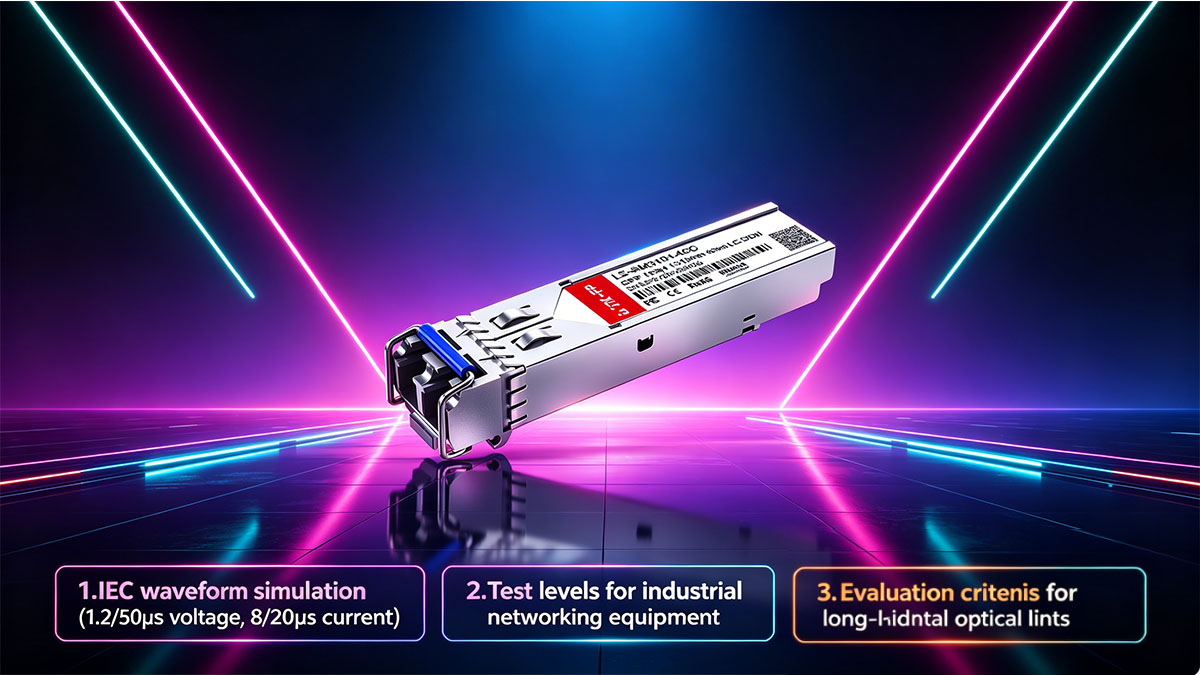
To validate surge protection, compatible modules undergo standardized testing that simulates real-world transients. Key testing practices include:
- Simulating IEC-compliant surge waveforms, such as 1.2/50µs voltage and 8/20µs current pulses.
- Applying test voltage levels consistent with industrial networking equipment standards.
- Evaluating link stability, component integrity, and signal quality under repeated surge events.
The following table summarizes typical test parameters used for industrial optical modules:
| Test Parameter | Description | Typical Value |
|---|---|---|
| Waveform Type | Voltage/current surge waveform | 1.2/50µs, 8/20µs |
| Test Voltage | Simulated transient magnitude | 1kV – 4kV (line-to-ground) |
| Pulse Count | Number of repeated surges | 3–5 pulses per port |
| Evaluation Metric | Criteria for pass/fail | Signal continuity, BER, IC integrity |
Standardized testing ensures modules can withstand electrical surges without permanent damage, maintaining consistent 100Mbps performance over 40km links.
Real-World Surge Scenarios
Understanding actual operational environments helps explain why surge protection is essential:
- Outdoor fiber runs spanning tens of kilometers are exposed to potential lightning-induced voltage differences.
- Substations and industrial plants generate high electromagnetic interference through switching operations or heavy machinery.
- Long-distance fiber links may experience induced surges from nearby high-voltage lines or ground loops.
In these scenarios, modules lacking adequate surge protection are susceptible to link failures, data corruption, and accelerated component degradation. Implementing comprehensive surge mitigation ensures that SFP-1FESLC-T compatible modules can maintain stable operation in real-world industrial conditions.
✅ Comparative Analysis: Original vs Compatible Modules
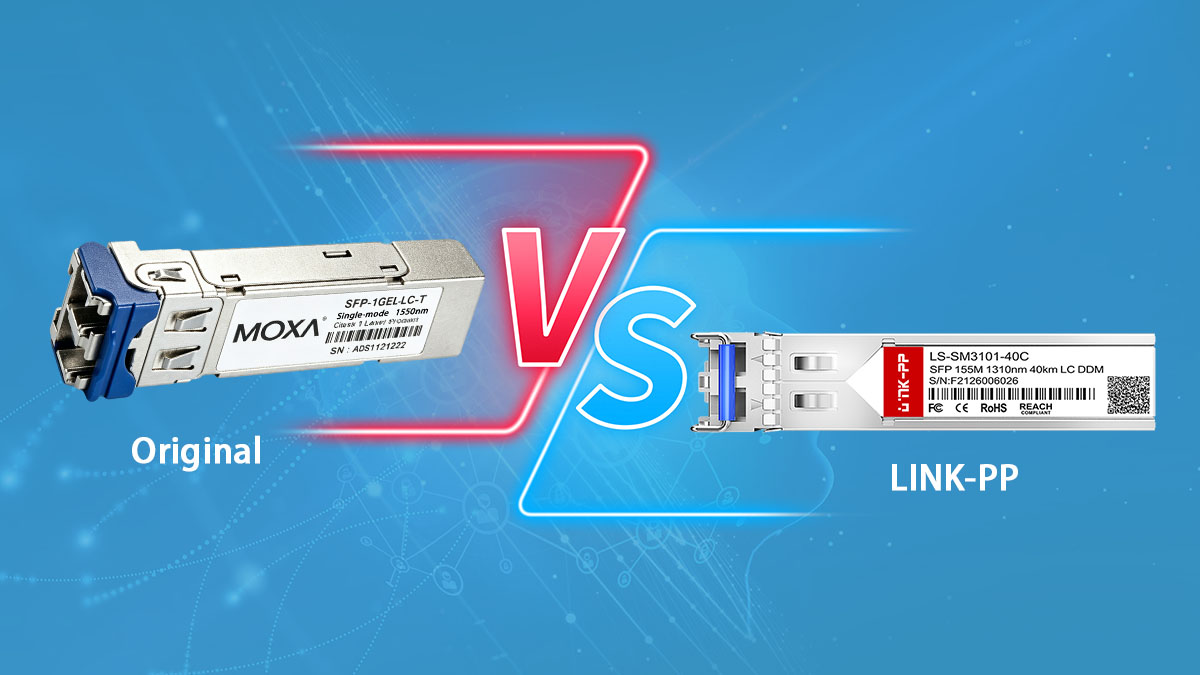
Choosing reliable SFP-1FESLC-T compatible modules requires understanding how they compare with original manufacturer modules, particularly in terms of ESD and surge protection. A thorough comparison highlights differences in design quality, protection effectiveness, and long-distance performance.
Protection Design Differences
Compatible modules may implement varying levels of protection depending on vendor design. Key differences include:
- TVS diode ratings and placement: Original modules often use higher-rated TVS diodes positioned to protect both the PHY and laser driver circuits, while some compatible modules may use lower-rated diodes or fewer protection points.
- PCB layout optimization: Original modules typically feature trace routing and grounding optimized to minimize ESD propagation, whereas compatible modules may have simplified layouts.
- Enclosure shielding: Original modules often have full metallic shielding to reduce EMI and additional discharge protection, while some compatible modules rely on partial shielding.
These design differences directly influence the module’s ability to withstand industrial ESD and surge events over extended fiber runs.
Test Result Comparison
Lab testing provides quantifiable insights into module reliability. Common evaluation metrics include ESD tolerance, surge withstand capability, and link stability under long-distance transmission:
| Test Category | Original Module | Compatible Module | Notes |
|---|---|---|---|
| ESD Tolerance | 8kV HBM, 4kV MM | 6kV HBM, 2kV MM | Original modules show higher robustness in repeated discharges |
| Surge Withstand | 4kV line-to-ground | 3kV line-to-ground | Compatible modules can handle standard surges but may fail under extreme conditions |
| Link Stability | Stable 40km transmission, BER < 10^-9 | Stable under normal conditions, BER occasionally higher | Minor performance fluctuations may occur in compatible modules |
These results indicate that while compatible modules can perform adequately, original modules generally provide higher reliability under repeated stress events and extreme environments.
Key Factors Influencing Compatibility Quality
Selecting a high-quality compatible module requires attention to several critical factors:
- Vendor expertise and industrial design capability: Modules from experienced manufacturers are more likely to implement effective protection measures.
- Quality control and burn-in testing: Proper testing ensures modules meet both transmission and protection standards.
- Availability of compliance documentation: IEC ESD and surge certification or internal validation reports indicate that modules have been verified for industrial-grade reliability.
By evaluating these factors, network operators can select compatible modules that approach the protection and performance standards of original SFP-1FESLC-T modules, minimizing the risk of network instability over 40km fiber links.
✅ Best Practices for Selecting Reliable Compatible Modules
Selecting a reliable SFP-1FESLC-T compatible module is essential for maintaining stable 100Mbps transmission over 40km fiber links. Proper selection minimizes downtime, prevents component failures, and ensures long-term operational reliability in industrial environments.

Key Technical Criteria to Evaluate
When evaluating compatible modules, focus on technical specifications and protection features that directly affect performance:
- Extended-distance support: Verify that the module reliably supports 40km single-mode fiber transmission.
- ESD and surge protection: Confirm the presence of IEC-compliant protection, including TVS diodes, shielding, and grounding.
- Industrial temperature tolerance: Modules should operate across -40°C to +85°C for outdoor and harsh environment deployments.
- Interface and PHY compatibility: Ensure the module is compatible with the intended switches and network devices for long-reach optical signaling.
The table below summarizes essential evaluation parameters:
| Feature | Recommendation | Rationale |
|---|---|---|
| Transmission Distance | 40km | Ensures full link coverage without signal degradation |
| Protection Rating | IEC 61000-4-2, IEC 61000-4-5 | Guarantees ESD and surge resilience |
| Operating Temperature | -40°C to +85°C | Maintains performance in industrial conditions |
| Vendor Verification | Compliance and test reports | Confirms design reliability and compatibility |
Deployment and Handling Recommendations
Proper handling and deployment are as important as selecting the right module:
- Use ESD-safe procedures during installation and maintenance to prevent accidental discharges.
- Ensure proper grounding of switches, enclosures, and fiber infrastructure to reduce transient risks.
- Plan fiber routes to avoid high-voltage lines and electromagnetic interference sources.
- Follow hot-swappable insertion guidelines to prevent connector-induced transients.
Implementing these practices reduces the likelihood of ESD or surge-related failures and maintains stable link performance across extended fiber distances.
Validation and Testing Before Deployment
Before large-scale deployment, compatible modules should undergo field and lab validation:
- Laboratory testing: Simulate long-distance fiber attenuation, repeat ESD and surge events, and monitor BER and link stability.
- Field validation: Test modules on actual fiber runs under normal operational conditions to confirm signal integrity and environmental resilience.
- Performance monitoring: Continuous monitoring after deployment helps identify any degradation in transmission or protection effectiveness.
Following these best practices ensures that SFP-1FESLC-T compatible modules deliver consistent long-distance performance while minimizing operational risk.
✅ Future Trends in Industrial Optical Module Protection
Industrial optical networks are evolving rapidly, and SFP-1FESLC-T compatible modules must adapt to increasingly stringent reliability and protection requirements. Future trends indicate a move toward smarter, more resilient designs that combine traditional ESD and surge protection with advanced monitoring and predictive capabilities.
Enhanced Protection Integration
Next-generation industrial optical modules are expected to integrate multiple protection mechanisms into a compact footprint:
- Multi-layer ESD protection: Combining TVS diodes, polymer-based suppressors, and PCB-level shielding to enhance resilience.
- Integrated surge absorbers: High-capacity components capable of handling both line-to-line and line-to-ground transients.
- Thermal-aware designs: Protection circuits designed to maintain performance under simultaneous ESD, surge, and extreme temperature stress.
These enhancements aim to ensure consistent performance even in highly unpredictable industrial environments.
Predictive Monitoring and Diagnostics
Emerging modules will increasingly incorporate self-monitoring features that detect and respond to potential electrical threats:
- Digital diagnostics monitoring (DDM/DOM) that tracks voltage spikes, current anomalies, and temperature excursions.
- Alert systems integrated with industrial management platforms to flag early signs of potential failure.
- Predictive maintenance insights derived from historical surge and ESD event data to schedule proactive interventions.
These capabilities allow operators to maintain long-distance fiber links proactively, reducing unplanned downtime and maintenance costs.
Standardization and Compliance Evolution
Future industrial optical protection will likely see updates in international standards to reflect evolving threats:
| Trend | Impact on Optical Modules |
|---|---|
| Higher surge tolerance requirements | Modules must withstand more extreme transient events |
| Extended ESD testing scenarios | Testing protocols will cover repeated, multi-point discharges |
| Integration with smart network management | Modules provide real-time protection data to NMS systems |
As standards evolve, manufacturers and operators must ensure compatible modules not only meet current requirements but are future-proofed for more demanding industrial applications.
Focus on Reliability and Longevity
Ultimately, the goal of these trends is to extend the operational lifespan of modules like SFP-1FESLC-T over long-distance links:
- Reduction of component failures due to combined ESD, surge, and environmental stress.
- Enhanced performance stability for extended 40km fiber deployments.
- Improved overall ROI through lower maintenance frequency and fewer network interruptions.
By aligning with these trends, operators can deploy compatible modules with confidence, knowing that both current and future industrial protection standards are addressed.
✅ FAQs
Q1: What is the maximum transmission distance of SFP-1FESLC-T?
A1: The module supports 100Mbps transmission over single-mode fiber up to 40km.
Q2: Does SFP-1FESLC-T require any special switch compatibility?
A2: Yes, switches must support long-reach signaling for 40km single-mode links to ensure stable operation.
Q3: How does ESD affect SFP-1FESLC-T modules?
A3: Electrostatic discharge can damage internal ICs and laser diodes, leading to link instability or permanent failure.
Q4: Are all compatible modules equally reliable for industrial deployments?
A4: No, reliability varies based on vendor design, protection implementation, and testing quality.
Q5: What surge events are most critical for industrial fiber links?
A5: Lightning-induced transients, switching operations in plants, and induced voltage from nearby high-voltage lines are the primary risks.
Q6: How can operators ensure module protection over time?
A6: By selecting modules with IEC-compliant ESD/surge protection, following ESD-safe handling, and performing field validation and monitoring.
Q7: Will future SFP-1FESLC-T modules include predictive diagnostics?
A7: Yes, next-generation modules are expected to integrate real-time monitoring of voltage spikes, temperature, and current anomalies for proactive maintenance.
Q8: Can compatible modules meet the same protection standards as original modules?
A8: High-quality compatible modules can approach original module protection levels if they meet IEC 61000 series standards and have verified test reports.
✅ Conclusion
The SFP-1FESLC-T module remains a critical solution for industrial networks requiring 100Mbps transmission over 40km single-mode fiber. Its extended-reach capability, combined with robust ESD and surge protection, ensures reliable long-distance connectivity in harsh environments. Selecting SFP-1FESLC-T compatible modules with verified protection design allows operators to maintain network stability while minimizing downtime and equipment failures.
Key value points of SFP-1FESLC-T and compatible modules include:
- Reliable 100Mbps transmission over distances up to 40km
- Comprehensive ESD protection, including TVS diodes and PCB grounding
- Surge resilience against industrial transients such as lightning and switching events
- Industrial temperature tolerance from -40°C to +85°C for outdoor and unconditioned environments
- Compatibility with switches and network devices supporting long-reach optical signaling
For operators seeking dependable industrial optical modules, choosing high-quality SFP-1FESLC-T compatible products is essential. Explore a curated selection of tested and certified modules at LINK-PP Official Store to ensure extended-distance performance, robust protection, and long-term network reliability.







