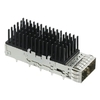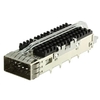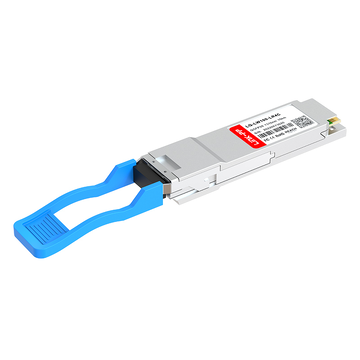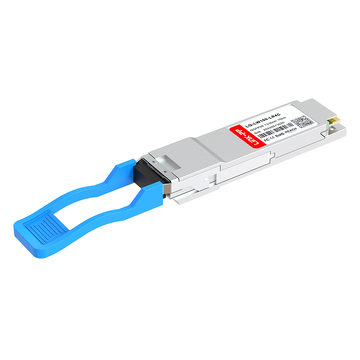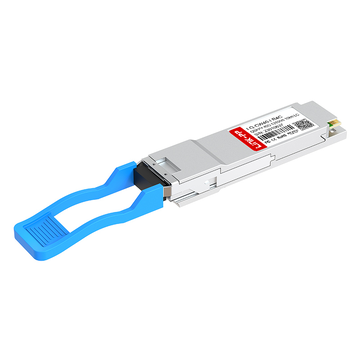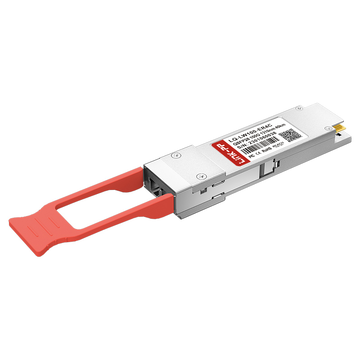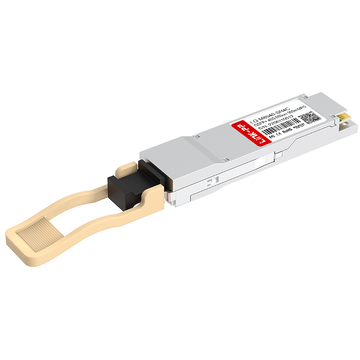
As data centers scale to 40G, 100G, and beyond, the choice of optical interface becomes just as important as the switch port speed. Many teams start with “QSFP” as the form factor decision, but quickly discover that connector type — especially LC vs MPO — shapes everything from cabling design to upgrade flexibility.
That’s where QSFP LC comes in: it combines the high-density QSFP footprint with familiar duplex LC fiber connectivity, making it a practical path to high-speed links without overcomplicating fiber management. In this article, we will detail the definition of QSFP LC transceivers, different types of QSFP LC transceivers available, and how to select the right module for your fiber network.
? What Are QSFP LC Transceivers
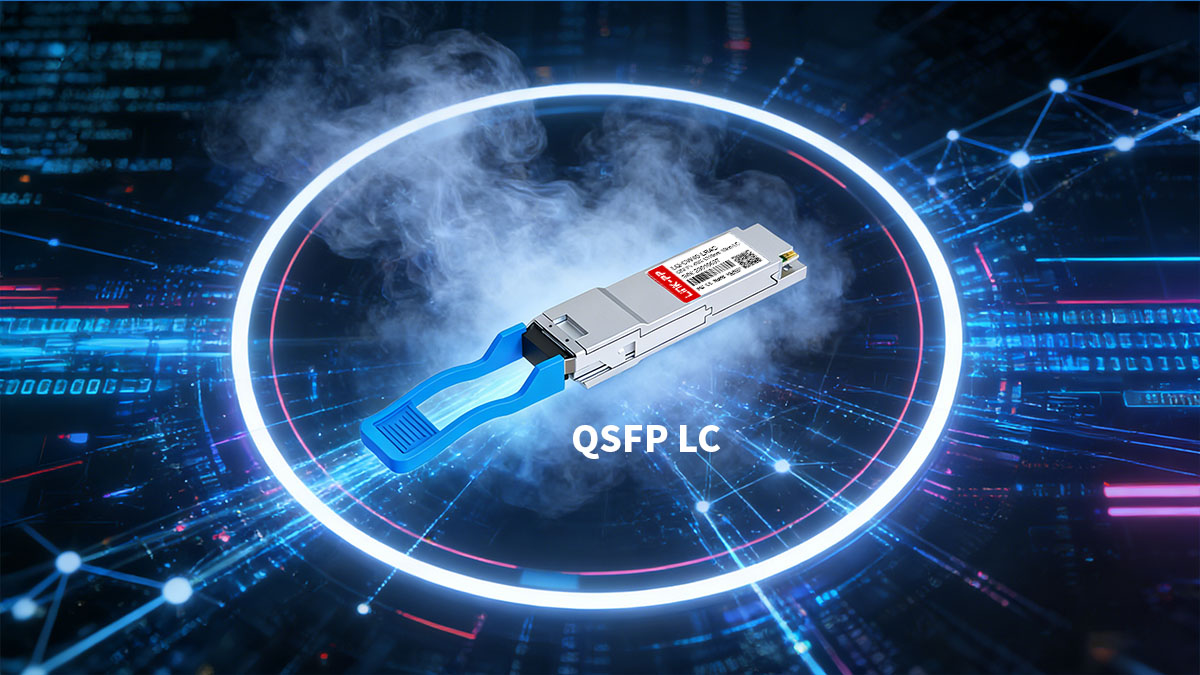
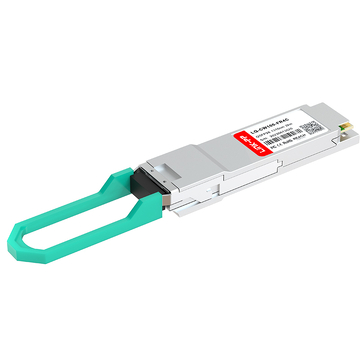
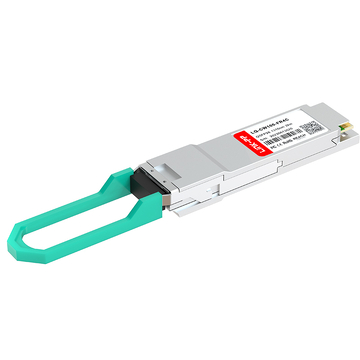
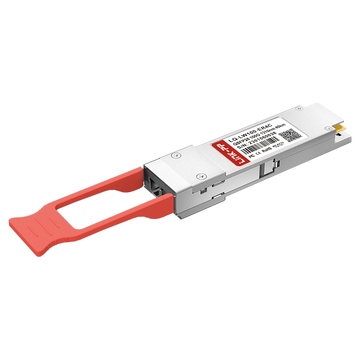
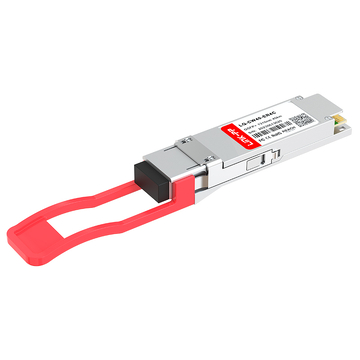
QSFP LC transceivers are hot-pluggable optical modules that use the QSFP form factor (such as QSFP+/QSFP28) while terminating on LC connectors for fiber patching. In simple terms, they deliver high-speed optical transmission through a compact QSFP port, but keep deployment straightforward by using duplex LC connectivity. This combination is common in leaf-spine data center links, DCI runs, and enterprise backbones where teams want high bandwidth with manageable cabling.
Definition of QSFP and LC Interface
QSFP (Quad Small Form-factor Pluggable) refers to a high-density transceiver form factor designed to support multi-lane electrical and optical signaling. Depending on the generation, QSFP modules may support different speeds — such as QSFP+ for 40G (like QSFPP-40GBASE-SR4), and QSFP28 for 100G (like QSFP28-ER4) — while maintaining a compact footprint that fits high port-count switches.
LC (Lucent Connector) is a widely used small-form-factor fiber connector that typically supports duplex cabling (two fibers: one transmit, one receive). LC connectors are popular because they’re easy to handle, work well with structured cabling, and are widely compatible with patch panels and existing fiber infrastructure. When you see “QSFP LC,” it means the QSFP module’s optical interface is designed to connect using LC-terminated fiber jumpers rather than multi-fiber MPO/MTP cables.
How QSFP LC Modules Work in Fiber Networks
In a fiber link, a QSFP LC transceiver converts high-speed electrical signals from a switch/router into optical signals for transmission over fiber, then converts incoming optical signals back into electrical form on the receive side. The LC connector provides the physical path to the fiber plant — often duplex single-mode fiber for longer distances (such as LR4/ER4) or duplex fiber over short- to medium-reach optics, depending on the application.
Many QSFP LC designs achieve high data rates by using multiple optical wavelengths (WDM) on a duplex pair — sending several lanes of data on different wavelengths over the same two fibers. This is why QSFP LC modules are often chosen for 40G/100G single-mode links: they can deliver high bandwidth while keeping cabling simple (two fibers instead of an 8/12-fiber trunk).
Key Components inside QSFP LC Transceivers
A QSFP LC transceiver typically includes several internal elements that work together to maintain signal integrity and reliable operation:
- Optical Sub-assembly (Tx/Rx): This is the “light engine” that includes the transmitter (laser) and receiver (photodiode). In WDM-based modules, this part may integrate multiple lasers and receivers tuned to specific wavelengths.
- MUX/DEMUX Optics: For modules such as LR4, ER4, or CWDM4, internal multiplexers combine multiple wavelengths onto one fiber for transmit, while demultiplexers separate wavelengths on the receive side. This is the key reason duplex LC can carry multi-lane traffic efficiently.
- DSP/CDR (Depending on Module Type): Some modules include digital signal processing or clock and data recovery to improve performance over distance, compensate for dispersion, and reduce bit errors — especially at higher speeds and longer reaches.
- Electrical Interface and Control Logic: This section handles communication with the host device (switch/router), supports monitoring (DOM/DDM), and enables functions like module identification, alarms, and power management.
- Thermal Design Elements: Heat sinks, module casing, and temperature sensors help manage power and ensure stable optical output — critical in dense switch environments where airflow and port spacing are limited.
? Different Types of QSFP LC Transceivers Available
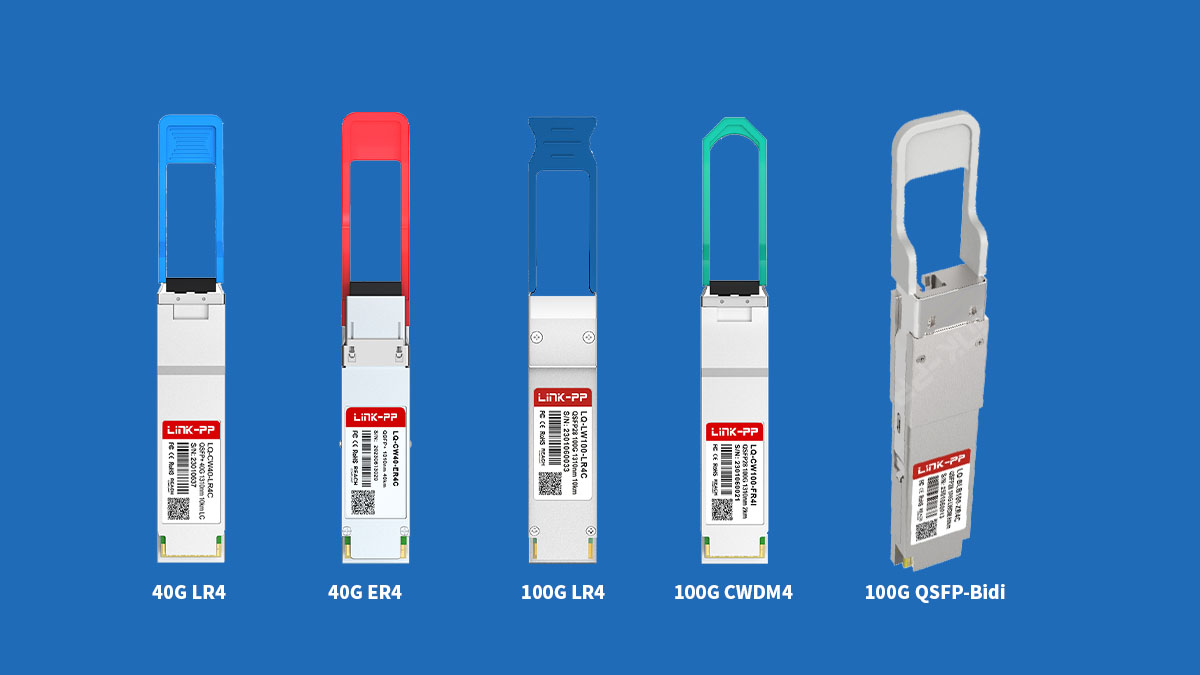
QSFP LC transceivers come in several module types that support different transmission distances, data rates, and fiber types. Each provides unique optical characteristics optimized for specific networking scenarios — from short‑reach data center links to ultra‑long‑haul backbone connections. The following table compares the most common QSFP LC transceiver types and their key specifications.
| Module Type |
Data Rate |
Transmission Distance |
Center Wavelength |
Fiber Type |
Typical Application |
| QSFP 40G LR4 |
40G |
Up to 10km |
1330nm |
SMF |
Aggregation and enterprise distribution |
| QSFP 40G ER4 |
40G |
Up to 40km |
1330nm |
SMF |
Metro and long‑distance connections |
| QSFP28 100G LR4 |
100G |
Up to 10km |
1330nm |
SMF |
Core and inter‑data center links |
| QSFP28 100G CWDM4 |
100G |
Up to 2km |
1271–1331nm |
SMF |
Short‑range data center connectivity |
| 100G QSFP-BiDi |
100G |
Up to 80km |
1330nm |
SMF |
Metro networks and long‑haul backbone transmission |
QSFP+ 40G LR4 and ER4 Modules
QSFP+ 40G LR4 and QSFP+ 40G ER4 are two common long-reach 40G options that keep deployment simple with duplex LC on single-mode fiber (OS2). Both typically use four wavelengths (4×10G lanes) multiplexed onto the same fiber pair, which allows high bandwidth without moving to multi-fiber MPO cabling. The key difference is where they fit best: LR4 for enterprise aggregation layers, and ER4 for metro-scale distance.
- 40G LR4 (like QSFP-40G-LR4): The LR4 is often selected for aggregation and enterprise distribution links where 40G is used to connect distribution-to-core layers, aggregation switches to routers, or to span larger campuses. It offers a practical balance of reach, availability, and operational simplicity — especially when you want reliable 40G over structured OS2 cabling with standard duplex LC patching.
- 40G ER4 (like QSFP-40G-ER4): The ER4 is designed for metro and long-distance connections, supporting longer spans and higher link-loss environments such as metro rings, regional backbones, or longer data center interconnect routes. Because it targets extended reach, ER4 deployments typically demand tighter optical budget planning and may come with higher cost and power/thermal considerations compared to LR4 — making it best suited when the extra distance is truly required.
How to choose between 40G LR4 and ER4:
If your design target is enterprise aggregation/distribution and your spans are within LR4’s budget, LR4 is usually the more economical standard. If you’re building metro or long-distance 40G where attenuation and distance exceed typical campus requirements, ER4 provides the headroom to keep links stable.
QSFP28 100G LR4 and CWDM4 Modules
When selecting a 100G QSFP LC transceiver, the decision frequently comes down to QSFP28 LR4 and QSFP28 CWDM4. Both support 100G on OS2 single-mode with duplex LC patching, yet they’re built for different tiers — LR4 for longer-reach core/DCI routes, and CWDM4 for economical short-range links inside the data center.
- 100G LR4 (like QSFP28-LR4): The LR4 is a strong fit for core and inter-data center links, where longer distances and higher overall link loss (patch panels, splices, cross-connects) are more likely. It’s commonly used to connect core switches/routers, backbone segments, and DCI routes that need additional optical budget margin while keeping the simplicity of duplex LC cabling.
- 100G CWDM4 (like QSFP-100G-CWDM4): The CWDM4 is designed for short-range data center connectivity, typically covering intra-DC runs such as leaf-to-spine uplinks, switch-to-switch trunks, or connections across rows/rooms where OS2 is available but distances are relatively modest. Because it targets shorter reach, CWDM4 is often chosen to reduce overall optics cost and power compared with longer-reach alternatives — while still using the familiar LC duplex patching model.
Practical selection tip:
If the link is within a data center and comfortably under a couple of kilometers, CWDM4 is often the more efficient choice. If you’re building core/backbone paths or inter-data center connections where distance and link-loss margin matter, LR4 is typically the safer transceiver module.
100G QSFP-BiDi LC Optical Modules
100G QSFP-BiDi LC transceiver modules are designed for high-capacity transmission over long distances while minimizing fiber usage. These modules use bidirectional wavelengths to send and receive data on the same fiber strand, making them a highly efficient solution for fiber-constrained environments.
They are particularly well-suited for metro networks and long-haul backbone transmission, where long distances and fiber optimization are key considerations. By enabling 100G transmission without the need for additional fiber pairs, BiDi modules help reduce deployment costs and simplify fiber management, making them ideal for networks that require both reach and efficiency.
? Key Features to Consider When Choosing QSFP LC Transceivers
Selecting the right QSFP LC transceiver is essential for ensuring optimal network performance, reliability, and scalability. Different applications demand varying specifications, so understanding the key features helps align the transceiver with your network’s technical and operational requirements. Below are the most important factors to evaluate before making a decision.
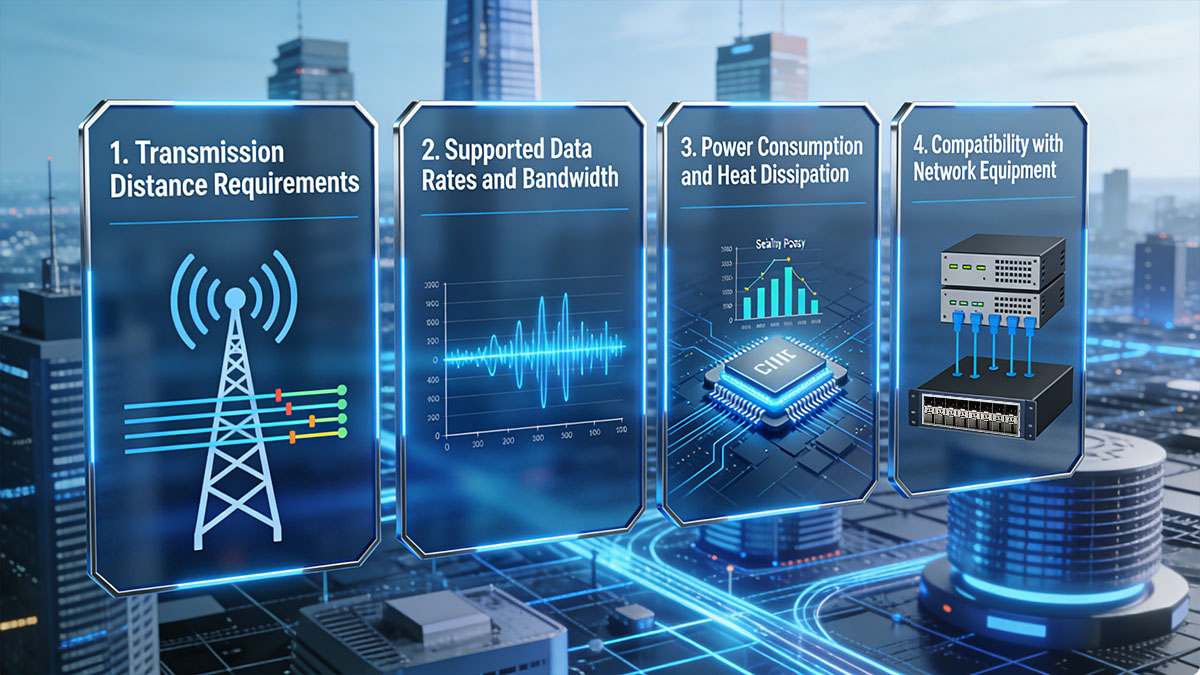
Transmission Distance Requirements
Transmission distance is one of the most critical factors when choosing QSFP LC transceivers, as it directly determines whether the module can support your network layout. Different modules are designed for specific ranges — for example, QSFP LR4 modules (like 100G-QSFP28-LR4-10KM) typically support up to 10km, while QSFP ER4 modules (like QSFP-100G-ER4L) can reach up to 40km. For shorter distances, transceiver options like QSFP CWDM4 modules (such as QSFP-100G-CWDM4-S) are more cost-effective and energy-efficient. Selecting a QSFP+ LC transceiver with an appropriate reach ensures signal integrity and avoids unnecessary costs associated with over-specification.
Supported Data Rates and Bandwidth
QSFP LC transceivers are available in various data rates, such as 40G (QSFP+) and 100G (QSFP28), each suited for different network capacities. It is important to match the transceiver’s bandwidth capabilities with your current and projected traffic demands. Higher data rates enable faster data transmission and support bandwidth-intensive applications like cloud computing and data center interconnects. Additionally, considering forward compatibility can help future-proof your network infrastructure.
Power Consumption and Heat Dissipation
Power efficiency plays a significant role in large-scale deployments, especially in data centers where hundreds or thousands of transceivers may be in use. Lower power consumption reduces operational costs and minimizes heat generation, which in turn decreases the burden on cooling systems. LC transceivers such as QSFP28 are generally designed with improved energy efficiency compared to QSFP+ models. Proper heat dissipation ensures stable performance and extends the lifespan of the equipment.
Compatibility with Network Equipment
Ensuring compatibility with switches, routers, and other networking devices is crucial for seamless integration. Not all QSFP LC transceivers are universally compatible, as some vendors implement proprietary coding or firmware restrictions. It is important to verify that the transceiver is supported by your equipment, whether through OEM modules or certified third-party compatible alternatives. Compatibility also affects features like digital diagnostics monitoring (DDM), which can be vital for network management and troubleshooting.
? QSFP LC Transceivers vs MPO-Based Optical Modules
QSFP LC transceivers and MPO-based optical modules are both widely used in high-speed fiber networks, but they differ significantly in connector type, deployment flexibility, and application scenarios. Understanding these differences is essential for selecting the right solution based on network architecture, scalability needs, and budget constraints.
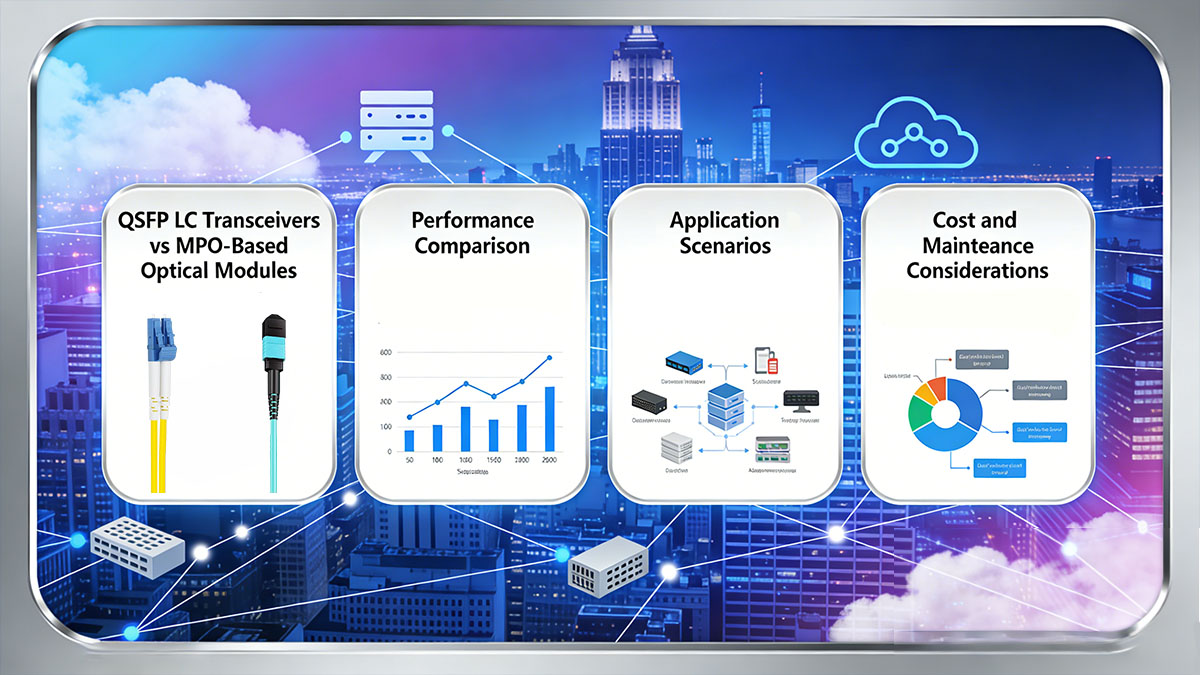
Differences between LC and MPO Connectors
LC (Lucent Connector) interfaces are duplex connectors that pair two fibers — one for transmit and one for receive — making them suitable for serial transmission formats like 40GBASE-LR4 or 100GBASE-LR4.
In contrast, MPO (Multi-Fiber Push-On) connectors contain 8, 12, or 24 fibers in a single rectangular ferrule. This design supports parallel optical transmission, as used in 40GBASE-SR4 and 100GBASE-SR4 modules(like QSFPP-40GBASE-SR4 and QSFP-100G-SR4), allowing multiple lanes of data to be transmitted simultaneously over multiple fibers.
Deployment Scenarios for Each Interface
QSFP LC transceivers are typically deployed for long-reach and single-mode fiber connections — such as inter-building links or data center interconnects — where minimal fiber count and long transmission distances are key.
MPO-based optical modules, on the other hand, are ideal for short-reach, high-density environments like data center spine-leaf architectures, where many parallel connections are required in limited space. Their plug-and-play design simplifies large-scale deployment within racks and patch panels.
Cabling Complexity and Fiber Count
Using LC connectors results in a simpler cabling infrastructure since they rely on two-fiber duplex connections. This simplifies cable routing and reduces the chance of polarity issues.
MPO systems, however, manage higher fiber counts, which can increase cabling complexity. Proper polarity mapping, connector alignment, and cleaning are essential to maintain optimal signal quality, especially when connecting multiple trunk cables in large patching fields.
Cost and Maintenance Considerations
LC transceiver setups generally involve lower initial cabling costs and easier maintenance, as duplex connectors are more familiar and less prone to alignment issues. However, they may require more transceivers for scaling high-port-count networks.
MPO-based systems offer better port density and long-term scalability but come with higher upfront costs for multi-fiber cables, patch panels, and cleaning tools. Regular maintenance is also more challenging, as multi-fiber connectors are sensitive to contamination and mechanical stress.
? Cost Factors When Buying QSFP LC Transceivers
When selecting QSFP LC transceivers, cost is a critical consideration that goes beyond the initial purchase price. Factors such as module type, vendor choice, and long-term operational expenses all contribute to the total cost of ownership. Understanding these elements helps organizations make cost-effective decisions without compromising performance or reliability.
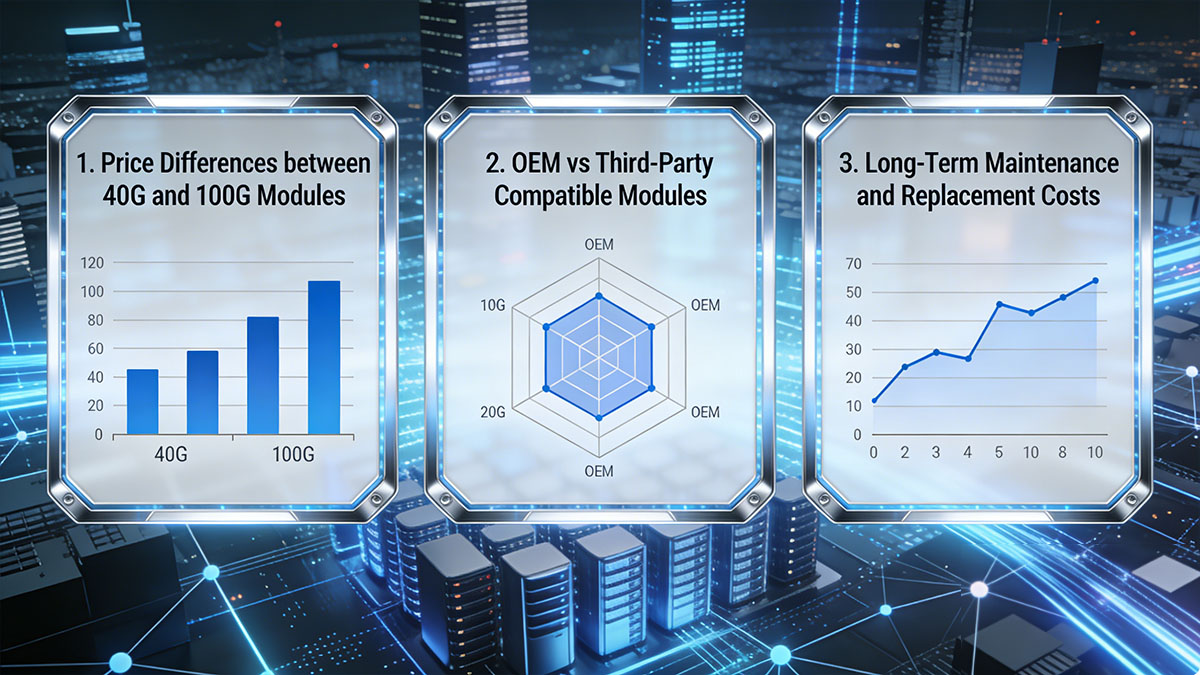
Price Differences between 40G and 100G Modules
The most noticeable cost gap comes from data speed. 40G QSFP+ modules generally cost less due to mature technology and lower component complexity. In contrast, 100G QSFP28 modules feature advanced signal processing and tighter tolerance optical components, raising their price. However, the cost per gigabit is often lower at 100G speeds, making them more efficient for data centers undergoing bandwidth upgrades or high-density deployments.
OEM vs Third-Party Compatible Modules
Another key cost factor is whether you buy OEM-branded or third-party compatible transceivers. OEM modules from major network equipment vendors can guarantee full vendor support and firmware alignment, but they typically come at a significant premium — sometimes two to three times the cost of compatible alternatives.
By contrast, third-party QSFP LC transceivers — such as those offered by LINK-PP — provide equivalent optical performance and reliability at much lower prices. LINK-PP is known for producing high-quality compatible modules that undergo strict optical and compatibility testing, making them a smart choice for enterprises aiming to optimize budgets without sacrificing performance or compliance. These optical transceiver modules can seamlessly integrate with leading switches and routers, supporting QSFP+ and QSFP28 standards.
Long-Term Maintenance and Replacement Costs
Beyond initial purchase, maintenance, replacement, and scalability play a long-term role in total cost. Lower-priced transceivers may reduce upfront spending but could introduce compatibility or warranty-related challenges later. Investing in reputable vendors — whether OEM or trusted third-party suppliers — helps ensure steady availability of replacements, simplified vendor management, and predictable lifecycle costs. Factoring energy efficiency and module durability into your decision can also reduce operating expenses over time.
? How to Choose the Right QSFP LC Transceiver for Your Network
Selecting the right QSFP LC transceiver is essential to ensure optimal performance, reliability, and cost-efficiency in high-speed fiber networks. The decision should be based on a clear understanding of your network requirements, including performance goals, link distance, and hardware compatibility. By evaluating these factors carefully, you can avoid performance bottlenecks and unnecessary expenses.
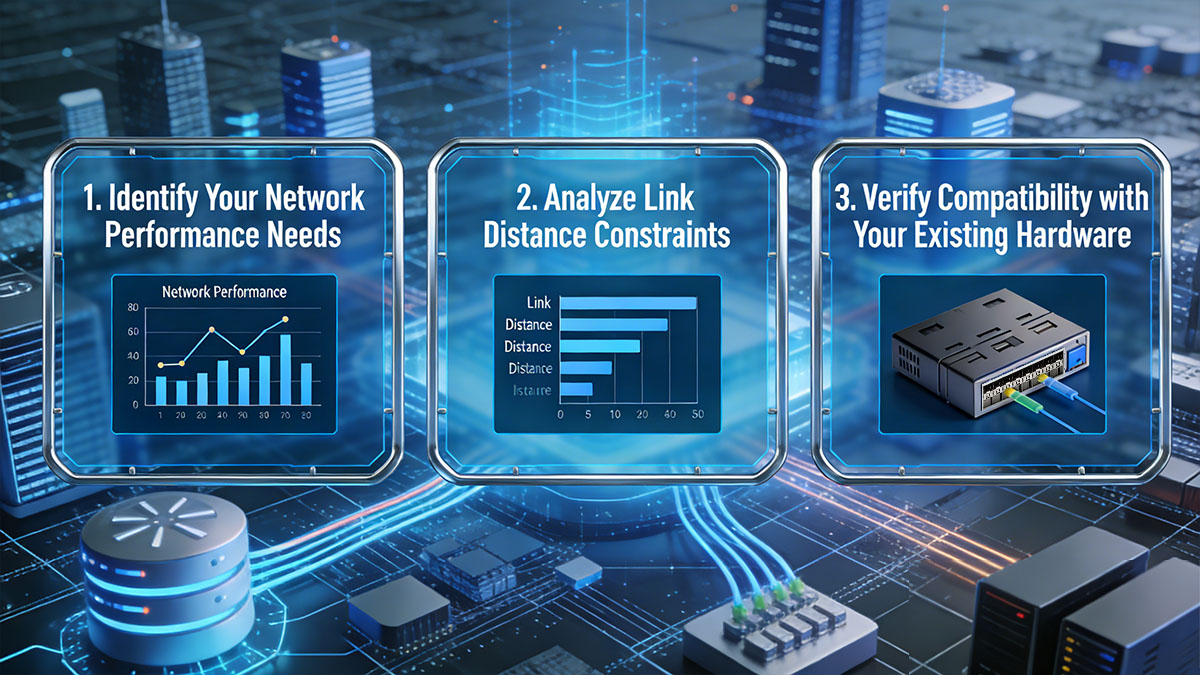
Identify Your Network Performance Needs
Start by defining the primary goals of your network. Consider whether your infrastructure supports 40G, 100G, or higher speeds, and evaluate how much bandwidth your core switches, routers, or servers require. For instance, data centers handling large-scale cloud applications or high-frequency trading will benefit from 100G QSFP28 LR4 modules, while enterprise networks with moderate throughput might find 40G QSFP+ LR4 sufficient. It’s also important to anticipate future traffic growth to avoid premature upgrades.
Analyze Link Distance Constraints
When choosing a QSFP LC transceiver, it’s important to match the module’s optical reach with your network’s physical layout. LC transceivers are typically used with single-mode fiber and are suited for medium to long distances. For instance, LR4 modules support transmission up to 10km, while ER4 modules can extend reach to 40km, making them ideal for campus or metro connections. Evaluating your fiber length, optical loss budget, and dispersion characteristics ensures stable performance and optimal signal integrity across all links.
Verify Compatibility with Your Existing Hardware
Before deploying a QSFP LC transceiver, always confirm that it is coded correctly for your network equipment. Most switches and routers recognize transceivers through vendor-specific firmware or EEPROM coding, meaning even third-party compatible modules must use the right programmable code to ensure full functionality.
Using a transceiver with the incorrect coding can cause recognition errors, port shutdowns, or reduced performance. To avoid these issues, source modules from reputable vendors who provide proper coding for your device model and firmware version, and verify compatibility through interoperability testing.
? Common Issues with QSFP LC Transceivers and How to Troubleshoot
Even high‑quality QSFP LC transceivers can occasionally encounter performance issues that affect network stability. These problems are often related to physical connections, compatibility, or environmental conditions. Understanding common issues and their solutions can help minimize downtime and maintain optimal network performance.
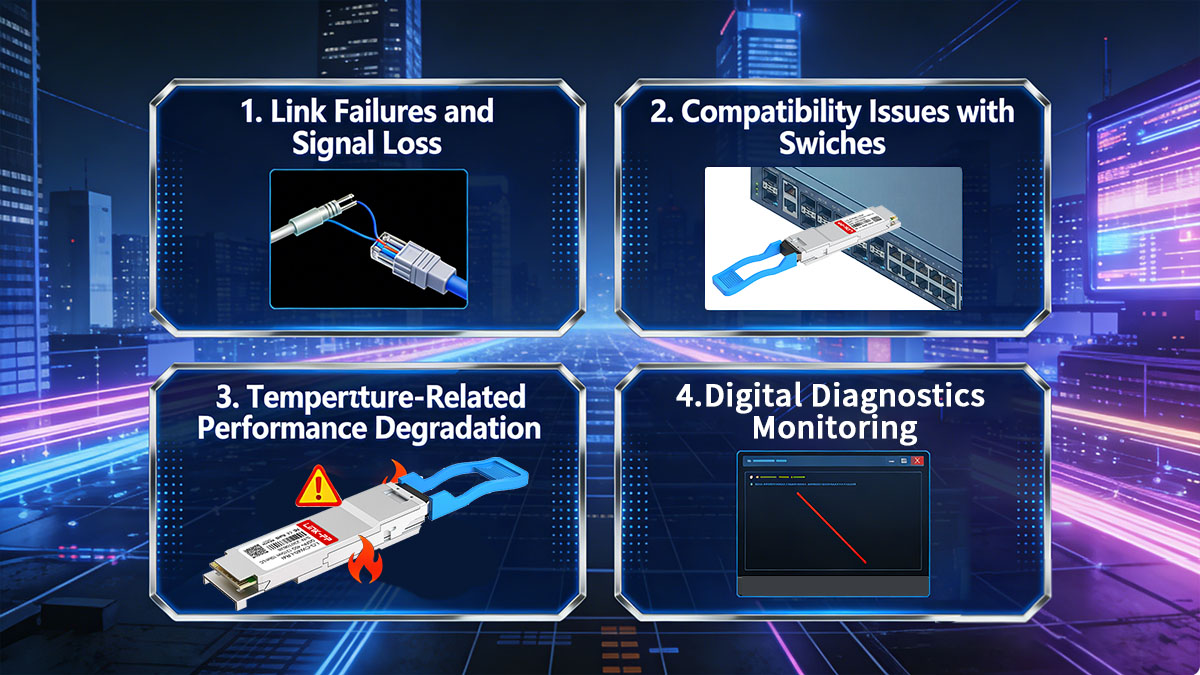
Link Failures and Signal Loss
Link failures or degraded signal quality are among the most common issues in fiber networks. These problems are often caused by dirty or damaged LC connectors, fiber bends, or excessive link distance beyond the module’s specifications. To troubleshoot, inspect and clean connectors using proper fiber cleaning tools, verify that the fiber type (single-mode or multimode) matches the transceiver, and ensure that the link distance does not exceed the module’s supported range.
Compatibility or Recognition Issues
If a transceiver is not recognized by the host device, the root cause is often coding incompatibility. All third‑party compatible QSFP LC transceivers require specific vendor‑based coding to communicate correctly with switches or routers. To fix this, ensure that your transceiver is programmed with the correct firmware code for your equipment model. Checking the network device’s approved compatibility list and updating the switch firmware can also prevent recognition errors.
Overheating and Power Problems
Excessive heat or unstable power supply can degrade module performance over time. Common causes include inadequate airflow, high ambient temperature, or devices exceeding their standard operating range. To mitigate these issues, ensure proper ventilation and spacing, monitor module temperature via Digital Diagnostic Monitoring (DDM), and replace transceivers showing persistent thermal alarms. Using modules that meet your system’s power class reduces the risk of overheating or premature failure.
Diagnostic Tools and Testing Methods
Most quality QSFP LC modules support DDM/DOM features that enable real‑time monitoring of critical parameters such as optical output, input power, temperature, and voltage. Combine these diagnostics with loopback tests or power-level verification to isolate network faults effectively. Regular testing ensures that transmission quality remains consistent and helps detect degradation before it impacts performance.
? Conclusion: Matching QSFP LC Transceivers to Your Network Needs
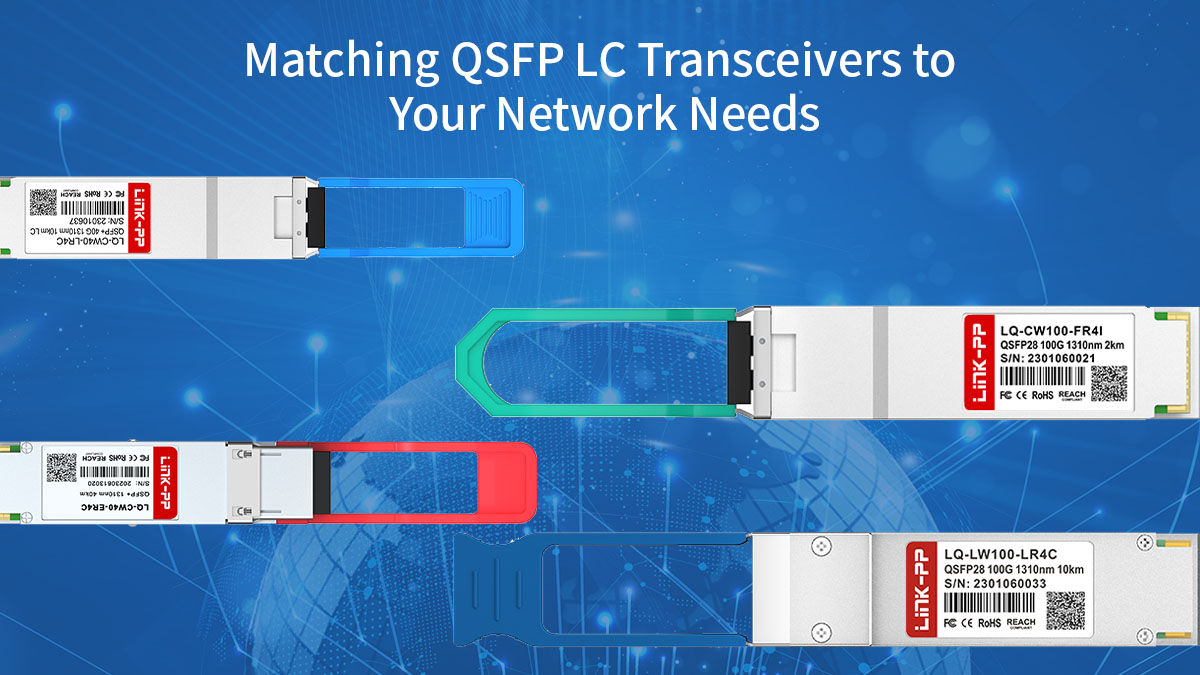
Choosing the right QSFP LC transceiver requires balancing performance, distance, compatibility, and cost considerations. By understanding the different module types, evaluating key features, and addressing potential issues proactively, you can build a more efficient and reliable high-bandwidth fiber network infrastructure.
Whether you are upgrading an existing infrastructure or deploying a new network, selecting high-quality transceivers from a trusted supplier is essential. Explore a wide range of cost-effective QSFP LC optical transceiver solutions at the LINK-PP Official Store to ensure long-term network reliability and sustained high-speed performance.