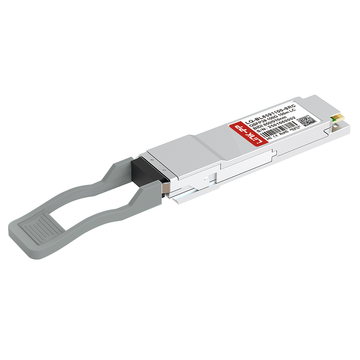
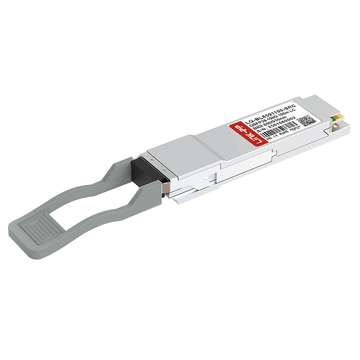
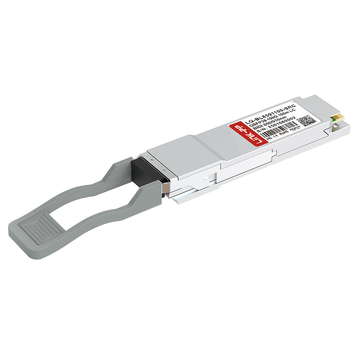
The 100G and 40GBASE SR BIDI QSFP transceiver is one of the most practical solutions for modern data center networks that need to scale bandwidth without rebuilding existing fiber infrastructure. Designed for short-reach, high-speed communication over duplex multimode fiber (MMF), this transceiver allows engineers to run 40G and 100G Ethernet over the same LC fiber pair—eliminating the need for costly MPO cabling upgrades.
Unlike traditional parallel optics such as SR4, which require multi-fiber ribbon cables, SR-BiDi technology uses bidirectional transmission over two fibers by leveraging different wavelengths. This makes it especially valuable for organizations upgrading from 10G or 40G to 100G, where reusing existing LC cabling can significantly reduce both capital expenditure (CAPEX) and deployment complexity.
However, despite its growing adoption, many users still have critical questions:
- Is SR-BiDi the same as SWDM4?
- Can one module really support both 40G and 100G?
- Will it work across different switch vendors like Cisco or Juniper?
- When should you choose SR-BiDi over SR4?
This guide is built to answer those exact questions—clearly and practically. Based on real deployment scenarios and common engineering concerns, you’ll gain a complete understanding of how 100G and 40GBASE SR-BiDi QSFP transceivers work, their key specifications, compatibility considerations, and how to choose the right solution for your network.
What You’ll Learn in This Guide
By reading this article, you will:
- Understand what a 100G and 40G SR-BiDi QSFP transceiver is and how it works
- Learn the difference between SR-BiDi, SR4, and SWDM4 optics
- Discover how to reuse existing LC fiber for 100G upgrades
- Identify key compatibility and deployment considerations
- Choose the right transceiver for your data center or enterprise network
Whether you’re a network engineer planning an upgrade, a procurement specialist comparing options, or simply researching high-speed transceivers, this guide will help you make informed, cost-effective decisions aligned with real-world networking needs.
🚩 What Is a 100G and 40GBASE SR BIDI QSFP Transceiver?
A 100G and 40GBASE SR BIDI QSFP transceiver is a high-speed optical transceiver designed to transmit data over short distances using duplex multimode fiber (MMF) with a standard LC connector interface. In simple terms, it allows network devices—such as switches and routers—to send and receive large volumes of data at either 40Gbps or 100Gbps over just two fibers, instead of requiring multiple fiber strands.

Think of this transceiver as a fiber-saving upgrade solution:
- Traditional 40G/100G optics (like SR4) need 8 or more fibers (MPO)
- SR-BiDi uses only 2 fibers (LC duplex)
- You get high-speed performance without rewiring your infrastructure
This makes it especially useful in data centers where existing LC-based cabling is already deployed and replacing it would be expensive or disruptive.
What Does “Dual-Rate BiDi” Mean?
The term “dual-rate BiDi” combines two important concepts:
1. Dual-Rate (40G + 100G in One Module)
- The transceiver can operate at either 40G or 100G speeds
- It automatically adjusts based on the connected equipment
- This provides flexibility for mixed-speed environments or phased upgrades
2. BiDi (Bidirectional Transmission)
- Data is transmitted in both directions over the same fiber pair
- Achieved using different wavelengths for transmit (Tx) and receive (Rx)
- Eliminates the need for separate transmit and receive fibers per direction
Result: Maximum bandwidth with minimal fiber usage
How It Works (Simplified)
Instead of splitting data across multiple fibers like SR4, the SR-BiDi module:
- Uses two wavelengths on each fiber
- Sends and receives signals simultaneously
- Combines optical signals using internal multiplexing technology
This design enables full-duplex communication over a simple LC duplex cable, which is why it’s often referred to as a “2-fiber 100G solution.”
Why It’s Designed for Short-Reach Links
The “SR” (Short Reach) in the name indicates that this transceiver is optimized for short-distance communication, typically:
- Up to ~70m on OM3 (100G)
- Up to ~100m on OM4 (100G)
- Longer distances possible at 40G speeds
This makes it ideal for:
- Data center Top-of-Rack (ToR) to End-of-Row (EoR) connections
- Switch-to-switch interconnects
- High-density server environments
Because it uses multimode fiber (MMF) instead of single-mode fiber, it offers:
- Lower cost optics
- Easier installation
- Sufficient performance for short-range deployments
Why Engineers Choose SR-BiDi QSFP Transceivers
The main reason this transceiver exists is simple:
To upgrade network speed without replacing existing fiber infrastructure
Key advantages include:
- Reuses LC duplex MMF cabling (no MPO migration required)
- Supports both 40G and 100G (future-proof design)
- Reduces cabling complexity and cost
- Ideal for incremental upgrades in live data centers
Key Takeaway: A 100G and 40GBASE SR BIDI QSFP transceiver is not just another optical module—it’s a strategic upgrade tool. It bridges the gap between legacy fiber infrastructure and modern high-speed networking by delivering dual-rate performance over minimal fiber resources.
In the next section, we’ll break down exactly how SR-BiDi technology works at the optical level, including wavelength design and how it differs from SR4 and SWDM4.
🚩 How 40G and 100G SR-BiDi Technology Works
At a technical level, SR-BiDi (Short-Reach Bidirectional) transceivers achieve high-speed data transmission by combining wavelength division multiplexing (WDM) with a duplex LC fiber design. The goal is simple: deliver full-duplex communication over just two fibers, without the complexity of parallel optics.

1. Transmit and Receive on Different Wavelengths
The core principle behind SR-BiDi is that transmit (Tx) and receive (Rx) signals use different wavelengths on the same fiber.
- Each fiber carries two optical signals simultaneously
- One wavelength is used for transmitting
- Another wavelength is used for receiving
- Internal optical filters separate these signals at each end
For example (simplified concept):
- Tx: ~850 nm
- Rx: ~900+ nm
This allows bidirectional communication over a single fiber strand, meaning a full link only requires a duplex LC pair (2 fibers total).
This is fundamentally different from traditional optics where:
- One fiber = transmit
- One fiber = receive
2. Duplex LC Design (Why Only 2 Fibers Are Needed)
SR-BiDi transceiver modules use a standard LC duplex connector, which is already widely deployed in data centers.
Each of the two fibers:
- Handles both Tx and Rx simultaneously (via different wavelengths)
- Eliminates the need for fiber separation by direction
This design enables:
- Simple cabling (LC instead of MPO)
- Easy migration from SFP+ 10G/SFP28 25G infrastructure
- Reduced fiber count without sacrificing bandwidth
3. How 40G and 100G Data Is Carried
Even though the fiber count is reduced, the transceiver still needs to handle very high data rates:
For 40G SR-BiDi:
- Typically implemented as 4 × 10G channels internally
- Multiplexed into two wavelengths over two fibers
For 100G SR-BiDi:
- Typically implemented as 4 × 25G channels internally
- Combined and transmitted using wavelength multiplexing
The module internally converts these electrical lanes into optical signals and maps them onto two bidirectional optical paths.
Engineers don’t need to manage this complexity—the module handles it transparently.
4. SR-BiDi vs SR4 (Parallel Fiber Optics)
The biggest difference is how data is physically transmitted across fibers:
| Feature | SR-BiDi (LC) | SR4 (MPO) |
|---|---|---|
| Fiber type | Duplex MMF | Parallel MMF |
| Connector | LC (2 fibers) | MPO (8–12 fibers) |
| Transmission | Bidirectional (WDM) | Parallel lanes |
| Cabling complexity | Low | High |
| Upgrade flexibility | High (reuse fiber) | Low (requires MPO) |
Key takeaway:
- SR4 spreads data across many fibers
- SR-BiDi compresses data onto fewer fibers using wavelengths
5. Why This Design Matters in Real Networks
From an engineering perspective, SR-BiDi solves a practical problem:
How do you increase bandwidth without increasing fiber count?
By using wavelength multiplexing on duplex fiber, SR-BiDi:
- Avoids costly MPO infrastructure upgrades
- Simplifies cable management in high-density racks
- Enables incremental upgrades without downtime
6. Important Technical Considerations
While SR-BiDi is efficient, engineers should be aware of:
- Wavelength dependency → requires matched modules on both ends
- Compatibility constraints → not all vendors implement BiDi identically
- Short reach limitation → designed for ≤100m environments
Key Takeaway: SR-BiDi technology works by using multiple wavelengths over a duplex LC fiber pair to deliver high-speed, bidirectional data transmission.
It replaces the need for parallel fiber optics like SR4 by combining WDM + lane multiplexing, making it a compact, cost-efficient solution for short-reach 40G and 100G networking.
Next, we’ll look at the key specifications, transmission distances, and fiber requirements, so you can determine whether SR-BiDi is the right fit for your deployment.
🚩 Key Specifications, Reach, and Fiber Requirements
When evaluating a 100G and 40GBASE SR BIDI QSFP transceiver, the most important factors are transmission distance, fiber type, connector interface, and power characteristics. These specifications directly determine whether the module will work reliably in your existing data center environment.

♦ Transmission Distance (OM3 vs OM4)
SR-BiDi transceivers are designed for short-reach multimode fiber (MMF) links, with distance depending on both the data rate and fiber grade:
| Speed | OM3 Fiber | OM4 Fiber |
|---|---|---|
| 100G SR-BiDi | ~70 meters | ~100 meters |
| 40G SR-BiDi | ~100 meters | ~150 meters |
Key insights:
- OM4 provides better performance and longer reach due to lower modal dispersion
- 100G operation has shorter reach than 40G because of higher signaling rates
- These distances align with typical data center link lengths (<100m)
♦ Connector Type and Interface
Unlike traditional 100G SR4 modules that require MPO connectors, SR-BiDi uses:
- Connector: Duplex LC
- Fiber count: 2 fibers (Tx/Rx combined via wavelengths)
- Cable type: Multimode fiber (OM3 or OM4)
Practical advantage:
- Fully compatible with existing LC-based infrastructure
- No need to install MPO trunks or breakout cables
- Simplifies cable management in dense racks
♦ Power Consumption and Thermal Considerations
SR-BiDi modules are designed for efficiency but still operate at high data rates:
- Typical power consumption: ~3.5W to 5W (varies by vendor and generation)
- Form factor: QSFP+ (40G) / QSFP28 (100G)
- Cooling requirement: Standard switch airflow is usually sufficient
What engineers should consider:
- Ensure switch ports support QSFP power class requirements
- High-density deployments may require thermal planning
- Lower power than some long-reach optics (e.g., LR4), but higher than SR4 in some cases
♦ Fiber Type and Cable Plant Requirements
To achieve optimal performance, your cabling infrastructure must meet specific criteria:
Supported Fiber Types:
- OM3 (50/125 µm MMF)
- OM4 (50/125 µm MMF)
Key Requirements:
- Clean, low-loss fiber connections
- Properly terminated LC connectors
- Avoid excessive patch panels or poor-quality jumpers
Best practices:
- Use OM4 fiber for new deployments to maximize reach and future-proofing
- Keep total link loss within the module’s optical budget
- Regularly inspect and clean connectors to prevent signal degradation
♦ Optical Performance Considerations
Even though SR-BiDi simplifies cabling, performance still depends on:
- Insertion loss across connectors and splices
- Signal integrity at higher speeds (especially 100G)
- Proper wavelength alignment between paired modules
Important:
SR-BiDi modules must be used in matched pairs, as both ends rely on synchronized wavelength transmission.
♦ Real-World Deployment Fit
These specifications make SR-BiDi ideal for:
- Top-of-Rack (ToR) to aggregation switch links
- Leaf-spine architectures in data centers
- Short-distance interconnects (<100m)
- Upgrades where LC cabling already exists
Key Takeaway: A 100G and 40GBASE SR BIDI QSFP transceiver is optimized for short-range, high-speed links over duplex multimode fiber, offering:
- Predictable reach: 70–150 meters depending on fiber and speed
- Simple connectivity: LC duplex instead of MPO
- Efficient deployment: minimal changes to existing cabling infrastructure
In the next section, we’ll compare SR-BiDi with SR4 and SWDM4, helping you determine which transceiver type best fits your network design and upgrade strategy.
🚩 100G SR-BiDi vs. 40G SR-BiDi vs. SR4 vs. SWDM4
Choosing the right transceiver is not just about speed—it’s about fiber infrastructure, cost efficiency, compatibility, and long-term scalability. Most users searching this topic are trying to answer one key question:
Should I choose SR-BiDi, SR4, or SWDM4 for my network—and why?
The answer depends heavily on whether you are working with existing LC fiber (brownfield) or building a new MPO-based infrastructure (greenfield).

Quick Decision Logic
- Already have LC duplex MMF? → Choose SR-BiDi or SWDM4
- Building new data center with MPO? → Choose SR4
- Need lowest module cost? → SR4
- Need lowest total upgrade cost (reuse fiber)? → SR-BiDi
- Need longer reach over MMF? → SWDM4
Side-by-Side Comparison Table
| Feature | 100G SR-BiDi | 40G SR-BiDi | 100G SR4 | 100G SWDM4 |
|---|---|---|---|---|
| Data Rate | 100G | 40G | 100G | 100G |
| Fiber Type | Duplex MMF | Duplex MMF | Parallel MMF | Duplex MMF |
| Connector | LC | LC | MPO/MTP | LC |
| Fiber Count | 2 fibers | 2 fibers | 8 fibers | 2 fibers |
| Technology | BiDi (WDM) | BiDi (WDM) | Parallel optics | WDM (4 wavelengths) |
| Typical Reach (OM4) | ~100m | ~150m | ~100m | ~100–150m |
| Cabling Complexity | Low | Low | High | Low |
| Module Cost | Medium–High | Medium | Low | High |
| Total Deployment Cost | Low (reuse fiber) | Low | High (new cabling) | Medium |
| Best Use Case | 100G upgrade over LC | 40G LC networks | New MPO deployments | LC upgrade + longer reach |
1. SR-BiDi vs. SR4: Fiber vs. Cost Tradeoff
The biggest real-world decision is usually between SR-BiDi and SR4.
- SR4 advantages:
- Lower transceiver cost
- Standardized and widely supported
- Ideal for new builds with MPO cabling
- SR-BiDi advantages:
- Uses only 2 fibers instead of 8
- Works with existing LC infrastructure
- Reduces cabling complexity dramatically
Industry insight:
- SR4 uses parallel optics across multiple fibers, while BiDi compresses data using wavelengths
- This makes SR4 cheaper per module, but more expensive at the infrastructure level
Conclusion:
- Choose SR4 for new data centers
- Choose SR-BiDi for upgrades
2. SR-BiDi vs. SWDM4: Similar Goal, Different Approach
Both SR-BiDi and SWDM4:
- Use LC duplex fiber
- Reduce fiber count
- Target short-reach MMF links
But their internal technology differs:
- SR-BiDi:
- Uses 2 wavelengths (Tx/Rx)
- Simpler design
- SWDM4:
- Uses 4 wavelengths multiplexed together
- Slightly longer reach (especially with OM5)
- More complex and typically higher cost
Technical fact:
- SWDM4 combines four wavelengths (850–940 nm) onto one fiber pair
Conclusion:
- Choose SR-BiDi for cost-effective upgrades
- Choose SWDM4 if you need extra reach or future OM5 scalability
3. 40G SR-BiDi vs. 100G SR-BiDi: When to Use Each
This decision is simpler:
- 40G SR-BiDi
- Legacy or transitional deployments
- Longer reach (~150m OM4)
- Lower cost than 100G
- 100G SR-BiDi
- Modern data center standard
- Higher bandwidth density
- Future-proof architecture
Real-world trend:
- Many engineers treat 40G as a transitional step, moving directly to 100G for scalability (also reflected in industry discussions)
Real-World Engineer Insight
From real deployment discussions:
“BiDi can basically reuse the current LC-LC cabling infrastructure”
“Optic price is generally the deciding factor”
What this means:
- SR-BiDi = lower infrastructure cost
- SR4 = lower module cost
This tradeoff is exactly what drives most purchase decisions.
Final Recommendation
If you are deciding today:
- Choose 100G SR-BiDi if:
- You already have LC fiber
- You want minimal disruption
- You prioritize total cost savings
- Choose 100G SR4 if:
- You are building new infrastructure
- MPO cabling is already in place
- You want lowest transceiver cost
- Choose SWDM4 if:
- You need longer reach on MMF
- You plan to adopt OM5 fiber
- Budget is less sensitive
There is no “one-size-fits-all” optic:
SR-BiDi wins on fiber efficiency and upgrade simplicity
SR4 wins on upfront cost in new deployments
SWDM4 sits in between with extended reach and flexibility
In the next section, we’ll dive into compatibility and vendor support, helping you avoid one of the biggest real-world risks: interoperability issues between different network platforms.
🚩 Compatibility: Which Switches, Vendors, and Platforms Support It?
Compatibility is one of the most critical—and often misunderstood—factors when deploying a 100G and 40GBASE SR-BiDi QSFP transceiver. While these modules are physically standardized (QSFP+/QSFP28), real-world interoperability depends on vendor support, firmware, encoding, and optical behavior.

Are SR-BiDi QSFP Transceivers Standardized?
Unlike SR4 optics, SR-BiDi is not a fully open IEEE standard. Instead, it is:
- Based on MSA (Multi-Source Agreement) specifications
- Implemented slightly differently by vendors
- Often tied to specific firmware and platform validation
Key implication:
Two SR-BiDi modules may look identical—but may not behave identically across vendors.
Major Vendor Part Numbers and Platforms
Here are the most commonly referenced SR-BiDi modules:
- Cisco: QSFP-40/100-SRBD
- Juniper: QSFP-100G-SR1.2 (SR-BiDi equivalent)
- Arista / Dell / HPE: Compatible or third-party coded modules
Many third-party vendors produce MSA-compliant compatible modules that are programmed for specific platforms.
Important fact:
- Compatible modules are often pre-coded for specific switches and tested for interoperability across multiple systems
Cross-Vendor Compatibility (Cisco, Juniper, Arista, etc.)
① What Usually Works
- Same-vendor connections (e.g., Cisco ↔ Cisco) → high success rate
- MSA-compliant third-party optics → often work across platforms
- LC duplex MMF infrastructure → universally supported
Example:
- Compatible SR-BiDi modules are verified to work with Cisco, Juniper, Dell, and Arista switches in many deployments
② What Often Causes Problems
Real-world deployments frequently encounter issues due to:
♦ Vendor Lock / EEPROM Coding
- Some switches check for vendor-specific coding
- Unsupported modules may show as:
- “unsupported transceiver”
- “NON-JNPR” or similar flags (seen in Juniper environments)
♦ FEC (Forward Error Correction) Mismatch
- Different vendors may use different FEC modes
- Mismatch can prevent link establishment
♦ Dual-Rate Behavior (40G vs. 100G)
- Ports must be manually set to the correct speed in some cases
- Auto-negotiation is not always reliable
Real-World Feedback (From Engineers)
From actual deployment discussions:
“Cisco advised us to remove LC 100G BiDi connections to third parties”
Insight:
- Cisco often recommends same-vendor links for guaranteed compatibility
Another case:
“optics show up as ‘NON-JNPR’”
Insight:
- Third-party optics may work, but require:
- Manual configuration
- Compatibility verification
Configuration Considerations
To ensure interoperability, engineers should verify:
Port Configuration
- Manually set speed: 40G or 100G
- Disable auto-negotiation if needed
FEC Settings
- Match FEC mode on both ends
- Some platforms require FEC disabled for BiDi links
Optics Pairing
- Use matched SR-BiDi modules on both ends
- Avoid mixing BiDi with SR4 or SWDM4
Best Practices for Reliable Deployment
To minimize risk:
- ✔ Use same-vendor optics for critical links
- ✔ Choose tested compatible modules with validation reports
- ✔ Check vendor compatibility tools before deployment
- ✔ Validate:
- Switch model support
- OS/firmware version
- Optical power levels
Key insight:
Compatibility is less about the fiber—and more about software, coding, and standards alignment
Key Takeaway
A 100G and 40GBASE SR-BiDi QSFP transceiver can work across multiple vendors, but:
- It is not fully standardized like SR4
- Compatibility depends on:
- Vendor implementation
- Firmware and configuration
- Optics coding and testing
In practice:
Same-vendor = safest
Tested compatible modules = cost-effective alternative
Cross-vendor without validation = highest risk
In the next section, we’ll explore real-world use cases and deployment scenarios, helping you understand where SR-BiDi delivers the most value in modern data center networks.
🚩 Common Use Cases and Deployment Scenarios
The 100G and 40GBASE SR BIDI QSFP transceiver is not just a technical solution—it’s a deployment strategy. Its real value becomes clear in environments where fiber infrastructure already exists and upgrading bandwidth must be done quickly, cost-effectively, and with minimal disruption.

Below are the most common real-world scenarios where SR-BiDi delivers the strongest advantage.
1. Data Center Short-Reach Interconnects (<100m)
SR-BiDi is purpose-built for short-distance, high-density connections inside data centers.
Typical applications:
- Top-of-Rack (ToR) to Leaf switches
- Leaf-to-Spine architecture links
- Switch-to-switch aggregation connections
Why SR-BiDi fits:
- Most data center links are under 100 meters
- LC duplex cabling is already widely deployed
- High port density requires simple cable management
Result:
- Clean, scalable architecture without MPO complexity
- Reduced cable congestion in racks
2. Upgrading from 10G/40G to 100G Without Re-Cabling
One of the biggest drivers for SR-BiDi adoption is seamless upgrade capability.
The problem:
- Legacy networks use LC duplex MMF (10G/25G/40G)
- Traditional 100G SR4 requires MPO fiber (8–12 cores)
- Migrating to MPO means:
- New cabling
- Downtime
- Higher installation cost
The SR-BiDi solution:
- Reuse existing LC fiber infrastructure
- Upgrade directly to 100G speeds
- No need to redesign the physical layer
This aligns with how vendors position SR-BiDi:
A practical way to increase bandwidth while preserving existing duplex MMF cabling
3. Cost-Sensitive Data Center Expansion
In many real deployments, the decision is not about performance—but budget.
Cost comparison logic:
- SR4 modules = cheaper optics
- SR-BiDi = cheaper overall deployment
Why?
- No MPO trunks or patch panels required
- No labor cost for re-cabling
- No disruption to running systems
In brownfield environments:
SR-BiDi often delivers the lowest total cost of ownership (TCO)
4. Fiber-Constrained Environments
Some facilities simply don’t have spare fiber capacity.
Common cases:
- Older buildings with limited cable trays
- High-density racks with no room for MPO expansion
- Colocation environments with fixed infrastructure
SR-BiDi advantage:
- Uses 2 fibers instead of 8
- Maximizes bandwidth per fiber strand
Result:
- Extends the life of existing infrastructure
- Avoids physical expansion constraints
5. Incremental and Phased Network Upgrades
Not every organization upgrades everything at once.
SR-BiDi supports:
- Gradual migration from 40G to 100G
- Mixed-speed environments
- Step-by-step deployment without full redesign
Example scenario:
- Phase 1: Upgrade core links to 100G
- Phase 2: Upgrade aggregation
- Phase 3: Upgrade access layer
Benefit:
- No need for a “big bang” migration
- Lower risk and better budget control
6. When NOT to Use SR-BiDi
SR-BiDi is powerful—but not universal.
Avoid it when:
- You are building a new greenfield data center with MPO
- You need longer reach beyond ~100m
- Your environment requires strict standardization (SR4 preferred)
7. Real-World Deployment Insight
Across real deployments, a clear pattern emerges:
- SR4 dominates new builds
- SR-BiDi dominates upgrades
This reflects a simple truth:
Infrastructure decisions matter more than optics pricing
Key Takeaway
The 100G and 40GBASE SR BIDI QSFP transceiver is best suited for:
- Short-reach data center links
- Upgrading existing LC-based networks
- Cost-sensitive or fiber-limited environments
- Phased migration strategies
Its core value is not just speed—but: Delivering higher bandwidth without changing your fiber infrastructure
In the next section, we’ll walk through a practical guide, helping you choose the right SR-BiDi module based on your network requirements, compatibility needs, and budget.
🚩 How to Choose the Right SR-BiDi Module
Selecting the right 100G and 40GBASE SR BIDI QSFP transceiver is not just about matching speed—it requires evaluating your existing infrastructure, switch compatibility, optical performance, and future upgrade plans. Making the wrong choice can lead to link failures, wasted budget, or limited scalability.

Here’s a practical, engineer-focused checklist to help you choose the right module with confidence.
▶ Start with Your Required Data Rate (40G vs. 100G)
The first decision is straightforward:
- Choose 40G SR-BiDi if:
- You are maintaining or extending an existing 40G network
- Budget is limited
- Reach requirements are slightly longer
- Choose 100G SR-BiDi if:
- You are building or upgrading to modern data center standards
- You need higher bandwidth density
- You want a future-proof solution
- Choose dual-rate (40G/100G) if:
- You expect mixed-speed environments
- You want flexibility during phased upgrades
Best practice:
Most new deployments today go directly to 100G, skipping 40G as a transitional step.
▶ Verify Switch Compatibility and Platform Support
Before purchasing any module, confirm:
- Switch model compatibility
- Supported transceiver types (QSFP+ vs QSFP28)
- Firmware/OS version requirements
Check:
- Vendor datasheets
- Compatibility tools (Cisco, Juniper, etc.)
- Third-party validation reports
Important:
Even if the optics are physically compatible, software support determines whether they will actually work.
▶ Understand Vendor Coding and Interoperability
SR-BiDi modules often depend on EEPROM coding to be accepted by switches.
Options:
- OEM optics (Cisco, Juniper, etc.)
- Highest compatibility
- Highest cost
- Third-party compatible optics
- Lower cost
- Must be properly coded for your platform
Recommendation:
- Use tested compatible modules for cost efficiency
- Avoid mixing vendors unless interoperability is verified
▶ Check Reach and Fiber Type (OM3 vs OM4)
Ensure your cabling matches the module’s supported distance:
- OM3:
- ~70m (100G)
- ~100m (40G)
- OM4:
- ~100m (100G)
- ~150m (40G)
Key tip: If your links are close to the limit, choose OM4 for better signal margin
▶ Evaluate Optical Budget and Link Quality
Even within supported distances, performance depends on:
- Total insertion loss
- Connector quality
- Patch panel count
Checklist:
- Keep total loss within the module’s optical budget
- Clean all fiber connectors
- Avoid excessive intermediate connections
Practical insight: Many “link issues” are caused by poor fiber quality—not the transceiver itself.
▶ Confirm Your Cabling Strategy (LC vs MPO)
Ask yourself:
- Do you already have LC duplex fiber installed? → Choose SR-BiDi
- Are you building a new data center with MPO? → Consider SR4 instead
Key decision logic:
SR-BiDi = best for reuse
SR4 = best for new builds
▶ Balance Cost vs. Long-Term Value
Your decision should consider total cost of ownership (TCO):
| Factor | SR-BiDi | SR4 |
|---|---|---|
| Module Cost | Higher | Lower |
| Cabling Cost | Low | High |
| Deployment Cost | Low | High |
Insight:
- SR-BiDi is often more economical in brownfield upgrades
- SR4 may be cheaper in greenfield deployments
▶ Final Recommendation
To choose the right 100G and 40GBASE SR BIDI QSFP transceiver, you should:
- Match speed (40G vs 100G) to your network roadmap
- Verify switch compatibility and vendor coding
- Ensure your fiber (OM3/OM4) supports the required reach
- Evaluate optical link quality and loss budget
- Align with your cabling strategy (LC reuse vs MPO deployment)
If you’re planning a deployment or upgrade and want tested, cost-effective, and fully compatible SR-BiDi modules, explore the LINK-PP Official Store.
You’ll find:
- A full range of 100G and 40G SR-BiDi QSFP transceivers
- Compatibility with major platforms (Cisco, Juniper, Arista, and more)
- Engineering support to help you select the right model for your network
Start optimizing your data center upgrade today with the right SR-BiDi solution.