



































SFP port fiber has become a fundamental component in modern high-speed networking, enabling reliable data transmission across switches, routers, and data centers. As network demands continue to grow, SFP port fiber solutions provide the flexibility, scalability, and bandwidth required to support increasingly complex infrastructures. By leveraging fiber optic technology, these ports deliver superior performance compared to traditional copper connections, particularly in environments where speed and distance are critical.
At the same time, ensuring high-speed signal integrity and managing electromagnetic interference (EMI) are essential for maximizing the performance of SFP port fiber. Signal degradation, noise, and environmental factors can directly impact data accuracy and transmission efficiency. Understanding how SFP port fiber systems are designed to maintain signal quality while meeting strict EMI specifications is key to building robust, high-performance networks.
✴️ Introduction to SFP Port Fiber Technology
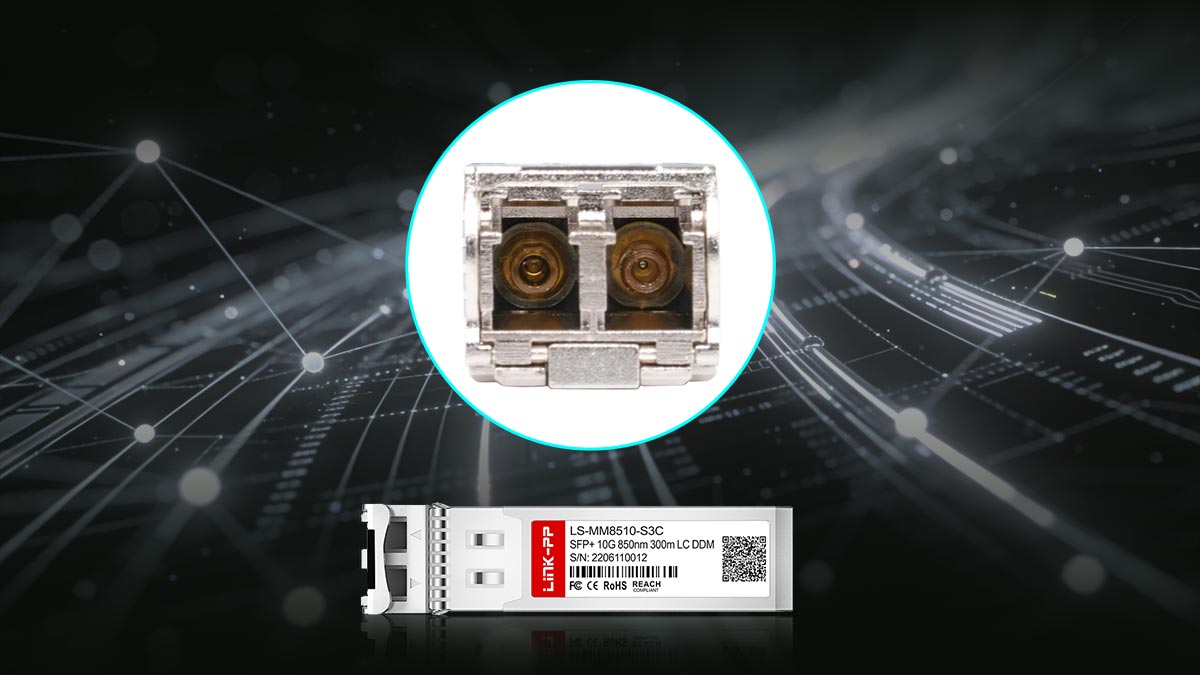
SFP port fiber technology plays a critical role in enabling high-speed, flexible, and scalable network connectivity. It allows network devices to support different transmission media and speeds through interchangeable modules. As modern networks demand higher bandwidth and reliability, SFP port fiber has become a standard solution for efficient data communication.
Overview of SFP Port Fiber
An SFP port fiber is a standardized interface used to connect optical transceivers to network equipment such as switches, routers, and network interface cards. Its modular design allows engineers to easily swap or upgrade transceivers based on distance, wavelength, or required data rate, without replacing the entire networking device. This flexibility makes SFP ports a preferred choice for scalable fiber optic infrastructures.
Technically, SFP ports support both single-mode fiber (SMF) and multi-mode fiber (MMF) connections, enabling data rates ranging from 100 Mbps to 100 Gbps, depending on the transceiver standard used (e.g., SFP, SFP+, SFP28, QSFP+, or QSFP28). The hot-pluggable nature of transceiver modules allows for seamless maintenance and system upgrades, minimizing network downtime during deployment or modification.
Key Benefits of SFP Port Fiber in Networking
The main advantage of SFP port fiber lies in its balance of performance, versatility, and cost-effectiveness. It enables high-speed optical communication over significant distances while maintaining low signal attenuation and latency — key factors in ensuring reliable data transmission. Its compact form factor also optimizes rack space, a valuable feature for dense network environments such as data centers.
Beyond speed and efficiency, SFP port fiber also enhances network adaptability. Because it supports various fiber types, wavelengths, and transmission distances, network administrators can design infrastructures tailored to specific needs. This modular approach simplifies network expansion, facilitates maintenance, and lowers long-term operational costs.
Evolution of Fiber Optic Technology
The development of fiber optic technology has transformed connectivity over the past few decades. Initially used for long-haul telecommunications, optical fibers have now become commonplace in enterprise networking and cloud infrastructure, supporting exponentially higher data rates and broader bandwidth capacities. This evolution has driven innovations like SFP and its enhanced variants (SFP+, SFP28, QSFP+, QSFP28, and QSFP-DD), meeting the ever-increasing demand for faster, more stable connections.
Today’s SFP port fiber technology integrates advanced optical components and signal processing techniques to meet modern high-speed requirements. With ongoing improvements in signal integrity, EMI resistance, and thermal management, the latest generation of SFP-based systems ensures optimal performance even in demanding environments. As network speeds continue to escalate, these innovations will remain critical for enabling the next wave of high-speed, fiber-based communications.
✴️ Importance of High-Speed Signal Integrity in SFP Port Fiber
Maintaining high-speed signal integrity in SFP port fiber is essential to ensuring efficient data transfer and reliable network performance. Signal integrity refers to the preservation of data quality as it travels through the fiber optic cables, without degradation or distortion. In high-speed applications, even the slightest loss in signal quality can lead to data errors or slower transmission speeds, undermining the entire network.
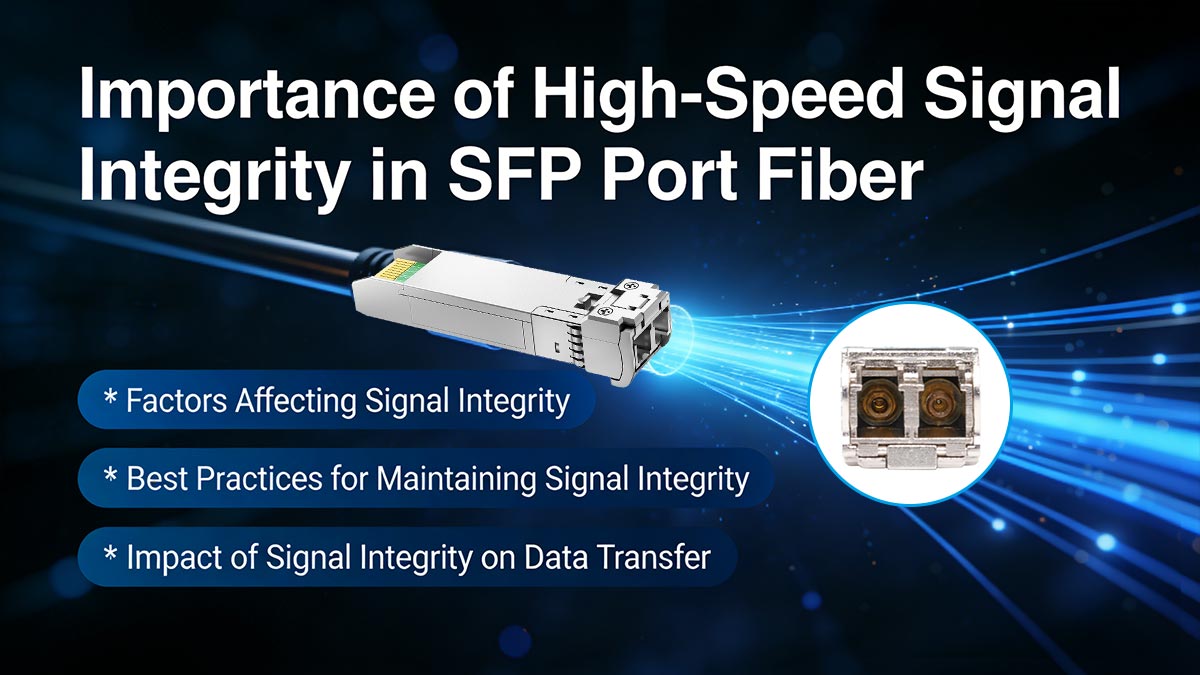
Factors Affecting Signal Integrity
Signal integrity in SFP port fiber systems is influenced by multiple physical and environmental variables that can degrade optical signals over distance or time. These factors include dispersion, attenuation, noise, and impedance mismatches, all of which become more pronounced as data rates increase. Identifying and mitigating these challenges is essential for achieving optimal performance in high-speed applications.
The following table summarizes the primary factors affecting signal integrity, their causes, and their typical impact on SFP port fiber performance:
| Factor | Cause | Impact on SFP Port Fiber |
| Chromatic Dispersion | Different wavelengths travel at varying speeds | Pulse broadening, increased bit error rates |
| Modal Dispersion | Multiple light paths in multimode fiber | Signal spreading, reduced bandwidth capacity |
| Attenuation | Fiber impurities, bending losses | Signal power loss, shorter transmission range |
| Reflections | Connector mismatches, air gaps | Return loss, signal distortion |
| Jitter | Clock timing variations | Timing errors, increased packet loss |
Best Practices for Maintaining Signal Integrity
Engineers can significantly improve SFP port fiber signal integrity through careful design and maintenance practices. Start by selecting high-quality optical transceiver modules and fiber optic cables that meet or exceed industry standards like IEEE 802.3. Proper cable management, including avoiding tight bends and excessive lengths, also prevents unnecessary signal loss.
Regular testing and monitoring further enhance reliability. Use tools like optical time-domain reflectometers (OTDRs) and bit error rate testers (BERTs) to identify degradation early. Additionally, maintaining clean connectors and adhering to proper installation protocols minimizes contamination-related losses, ensuring long-term performance stability.
Impact of Signal Integrity on Data Transfer
Poor signal integrity directly undermines the efficiency of SFP port fiber data transfer, leading to higher error rates and reduced effective throughput. Even minor degradation can trigger forward error correction (FEC) mechanisms, consuming additional bandwidth and increasing latency. In high-speed environments, these issues compound quickly, potentially causing network congestion or complete link failures.
Conversely, robust signal integrity enables SFP port fiber systems to achieve their full rated capacity, supporting seamless data transfer for bandwidth-intensive applications like 5G backhaul, cloud computing, and AI workloads. By minimizing retransmissions and maintaining low bit error rates (typically below 10⁻¹²), networks deliver consistent performance and scalability essential for modern digital infrastructure.
✴️ Understanding EMI (Electromagnetic Interference) in SFP Port Fiber
Electromagnetic interference (EMI) poses a significant threat to SFP port fiber systems, even though fiber optics transmits light rather than electrical signals. EMI can disrupt the electrical components within fiber SFP transceivers and connected network equipment, leading to signal errors and performance degradation. Understanding EMI sources and mitigation strategies is crucial for ensuring reliable high-speed connectivity.
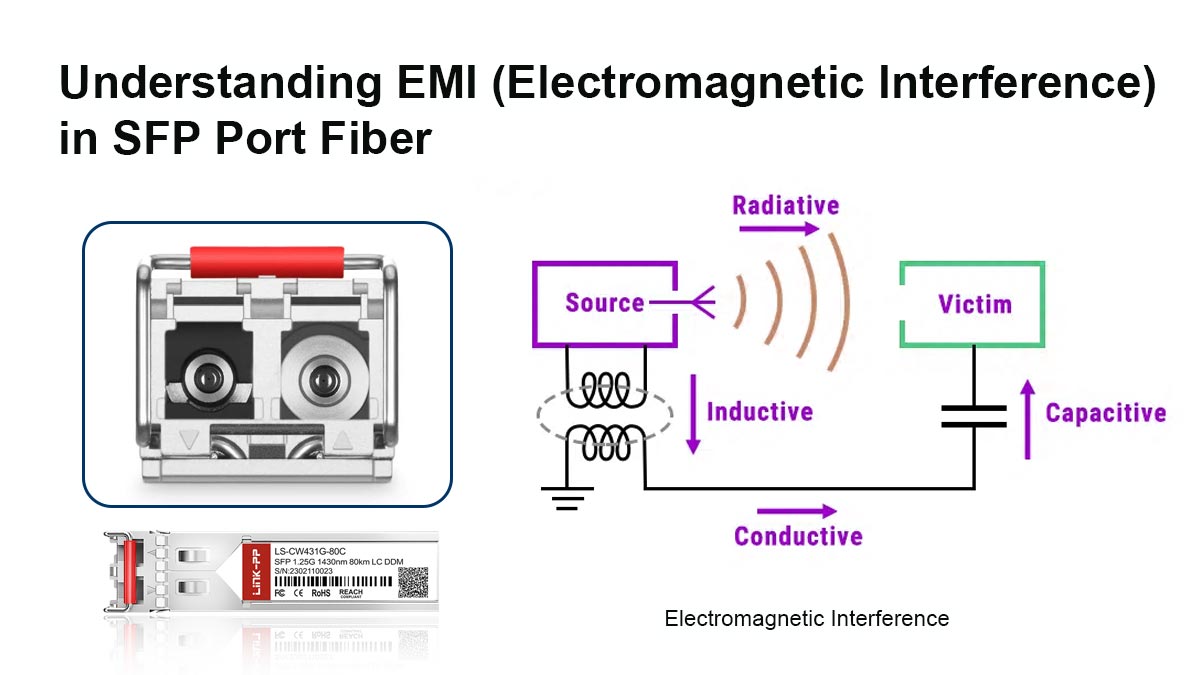
What is EMI and Why Does It Matter
EMI refers to unwanted electromagnetic energy that interferes with the operation of electronic devices, including the electrical circuitry in SFP port fiber transceivers. While the optical signal itself is immune to EMI, the transceiver’s driver circuits, amplifiers, and digital interfaces remain vulnerable, potentially causing bit errors, jitter, or complete link failures.
In high-speed SFP port fiber applications, EMI matters because even minor disruptions can cascade into significant data loss or system downtime. Compliance with EMI standards like FCC Part 15 or CISPR 22 ensures interoperability and prevents regulatory violations, while proper EMI management maintains the integrity of high-bandwidth data streams critical for modern networks.
Common Sources of EMI in Fiber Optic Networks
Several environmental and equipment-related factors generate EMI that affects SFP port fiber systems. Here are the most prevalent sources:
- Power Supplies: Switching power supplies in network equipment produce high-frequency noise that couples into SFP transceiver circuits.
- Adjacent Cabling: Unshielded copper Ethernet cables running parallel to fiber runs induce crosstalk through electromagnetic coupling.
- Wireless Devices: Wi-Fi access points, cellular base stations, and microwave links emit RF interference that penetrates equipment enclosures.
- Motors and HVAC Systems: Industrial environments with electric motors, fluorescent lighting, or HVAC equipment generate strong electromagnetic fields.
- Grounding Issues: Poor grounding or ground loops create common-mode noise that propagates through SFP port fiber electrical interfaces.
Solutions to Mitigate EMI in SFP Ports
Mitigating EMI in SFP port fiber systems involves a combination of design, installation, and operational strategies:
- Shielding: Using metallic enclosures and EMI shields around transceivers and circuit boards reduces susceptibility to external interference.
- Proper Grounding: Ensuring all equipment is correctly grounded helps dissipate unwanted electromagnetic energy.
- Cable Management: Maintaining separation between fiber and high-speed copper cables reduces the risk of radiated EMI affecting SFP electronics.
- Filtering Components: Integrating EMI filters in power supply lines and critical circuits can prevent transient noise from disrupting operations.
By applying these strategies, network designers can ensure that SFP port fiber systems maintain high-speed performance even in environments with significant electromagnetic activity.
✴️ SFP Port Fiber: Design Considerations for High-Speed Applications
When designing an SFP port fiber system for high-speed use, the goal is not only to reach the target data rate, but also to keep the link stable, efficient, and easy to maintain. Key factors such as bandwidth, signal loss, and environmental conditions all influence how well the connection performs in real-world deployments.
A good design balances performance and reliability. By matching the right fiber type, transceiver, and operating conditions, network engineers can reduce errors and support consistent high-speed transmission over time.
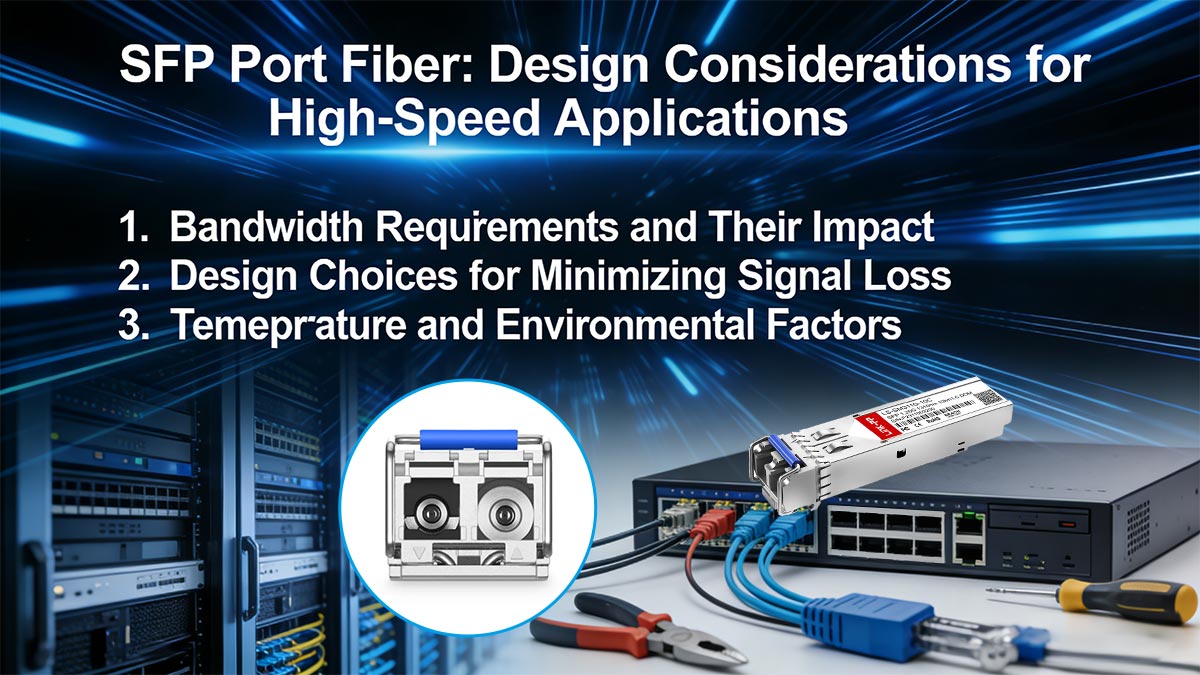
Bandwidth Requirements and Their Impact
Bandwidth is one of the first considerations in any high-speed SFP port fiber design because it determines how much data the link can carry without congestion or degradation. As network traffic grows, the selected fiber optic SFP module and fiber type must support the required throughput while leaving enough margin for future expansion.
- Higher bandwidth supports faster data transmission and lower latency.
- The chosen transceiver standard must match the target speed, such as 1G SFP, 10G SFP+, 25G SFP28, 40G QSFP+, 100G QSFP28 or higher.
- Fiber type also affects bandwidth performance, especially in short-reach multimode applications.
- Insufficient bandwidth can cause bottlenecks, retransmissions, and reduced application performance.
In practice, bandwidth planning should reflect both current traffic and long-term network growth. A well-sized SFP port fiber link helps avoid frequent upgrades and supports smoother scaling in data centers and enterprise environments.
Design Choices for Minimizing Signal Loss
Reducing signal loss is essential for maintaining strong performance in SFP port fiber systems. Loss can come from connector issues, excessive cable length, poor splicing, or using the wrong fiber grade for the application.
Common design choices that help minimize loss include:
- Selecting high-quality optical modules and certified fiber cables.
- Keeping cable runs as short and direct as possible.
- Avoiding sharp bends and physical stress on the fiber.
- Using clean, properly seated connectors to reduce insertion loss.
- Matching fiber type and wavelength to the intended transmission distance.
These choices improve optical efficiency and help maintain a stronger link budget. In high-speed environments, even small losses can affect overall stability, so careful installation and component matching are critical.
Temperature and Environmental Factors
Temperature and environmental conditions can have a significant impact on the performance of SFP port fiber systems. Extreme temperatures may affect the optical components within transceivers, leading to variations in signal output and potential instability. High humidity, dust, or mechanical stress can also degrade fiber performance over time.
To address these challenges, SFP port fiber systems should be designed with environmental resilience in mind. This includes using industrial-grade components when necessary, ensuring proper ventilation and cooling, and protecting cables from physical damage. By accounting for environmental factors during the design phase, network operators can ensure long-term reliability and consistent high-speed performance.
✴️ High-Speed Signal Integrity Challenges in SFP Port Fiber
As data rates continue to rise, maintaining signal integrity in SFP port fiber becomes more difficult. Even small losses, distortions, or interference can affect the quality of transmission and reduce overall network reliability.
These challenges are especially important in high-speed environments, where links must remain stable under heavy traffic and demanding operating conditions. Understanding the main risks helps engineers design and maintain more dependable fiber optic networks.
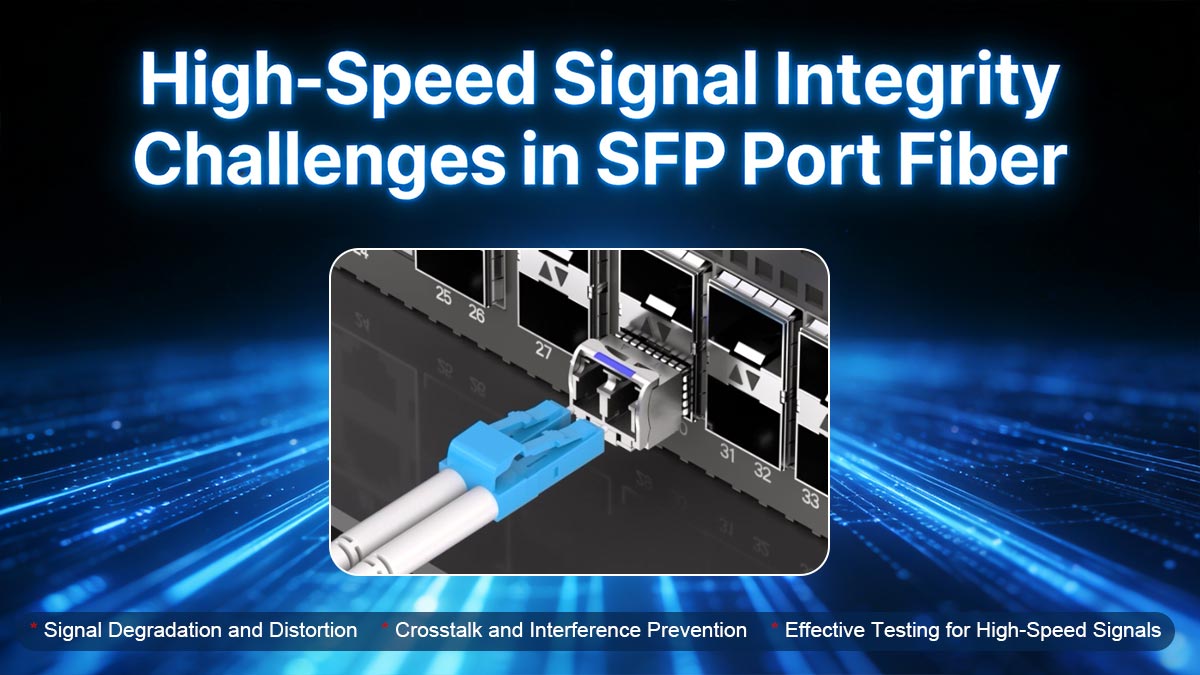
Signal Degradation and Distortion
Signal degradation is one of the most common challenges in high-speed SFP port fiber systems. As optical signals travel through fiber, they can experience attenuation and dispersion, which weaken and spread the signal over distance. This can result in reduced signal clarity and increased bit error rates, especially in long-distance or high-bandwidth applications.
Distortion can also occur due to imperfections in transceivers or mismatched components. For example, chromatic dispersion and modal dispersion can alter the shape of the signal, making it harder for the receiver to interpret data accurately. Using high-quality transceivers and selecting the correct fiber type are key strategies to minimize these effects.
Crosstalk and Interference Prevention
Although fiber optics are inherently resistant to electromagnetic interference, crosstalk can still occur within densely packed networking environments. This is especially true at the transceiver and circuit board level, where signals from adjacent channels or components may interfere with each other. Poor shielding or inadequate spacing can increase the risk of such interference.
Preventing crosstalk requires careful system design and layout. Proper isolation of signal paths, high-quality shielding within SFP modules, and optimized PCB design all help reduce interference. Additionally, maintaining proper cable organization and avoiding overcrowded installations can further enhance signal integrity in high-density deployments.
Effective Testing for High-Speed Signals
Accurate testing is essential to identify and resolve signal integrity issues in SFP port fiber systems. High-speed signals require advanced testing methods, such as eye diagram analysis, bit error rate (BER) testing, and optical time-domain reflectometry (OTDR). These tools help detect signal degradation, noise, and faults within the network.
Regular testing and monitoring ensure that performance remains within acceptable limits over time. Proactive diagnostics allow network operators to identify potential issues before they lead to failures or downtime. By implementing comprehensive testing strategies, organizations can maintain reliable, high-speed data transmission and extend the lifespan of their network infrastructure.
✴️ EMI Specifications for SFP Port Fiber Connections
SFP port fiber connections must meet strict EMI specifications to prevent interference with other electronic systems while ensuring reliable high-speed operation. These standards focus on both emissions (outgoing noise) and immunity (resistance to incoming noise) from the transceiver's electrical components. Compliance is non-negotiable for deployment in regulated environments like data centers and telecom facilities.
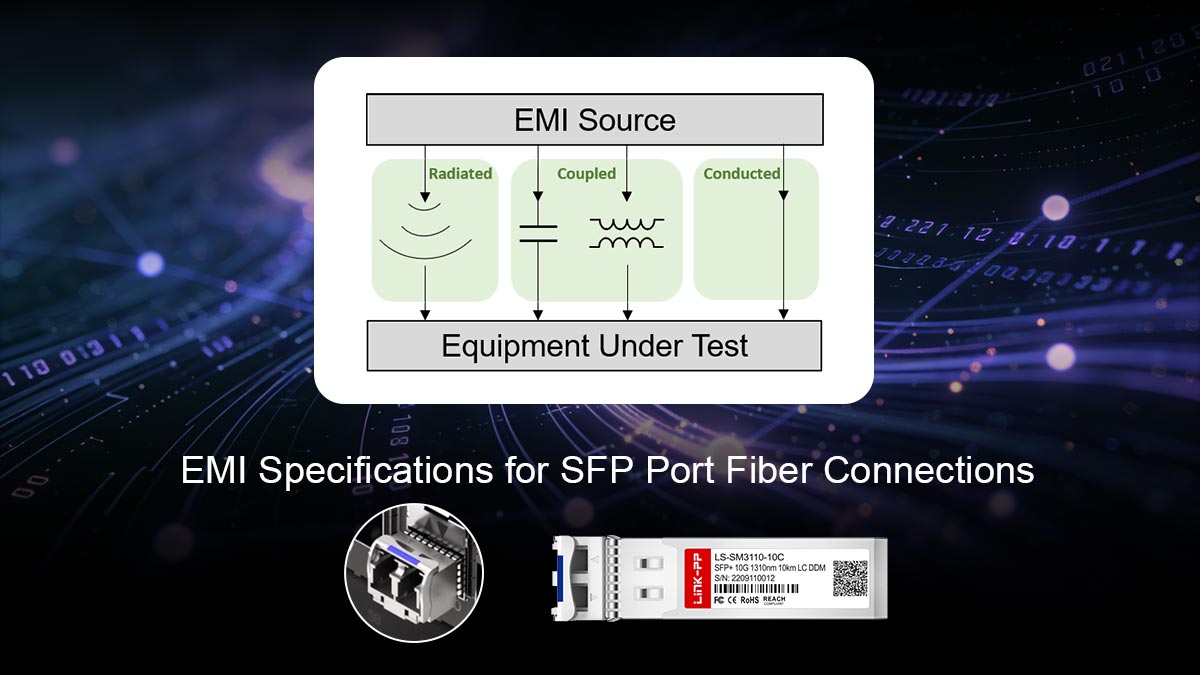
Regulatory Standards for EMI in Fiber Optic Networks
SFP port fiber systems must comply with electromagnetic compatibility (EMC) regulations to ensure that electronic components neither emit excessive interference nor are easily affected by it. These standards are essential for maintaining stable operation in environments with multiple electronic devices and high-density networking equipment.
Key regulatory frameworks include:
- FCC Part 15 (USA): Defines limits for electromagnetic emissions from digital devices to prevent interference with communication systems.
- EN 55032 / EN 55035 (EU): Covers emission and immunity requirements for multimedia and networking equipment under CE compliance.
- CISPR 32 & CISPR 35: International standards that specify emission limits and immunity performance for IT and telecom devices.
- IEC 61000 Series: Provides detailed guidelines on electromagnetic immunity, including resistance to electrostatic discharge (ESD), radiated fields, and electrical fast transients.
Meeting these standards ensures reliable operation, reduces the risk of interference with other equipment, and enables global deployment across different regulatory environments.
EMI Shielding Techniques for SFP Ports
Effective EMI shielding is critical to protect SFP port fiber systems from external interference and to limit emissions from internal components. Several design and implementation techniques are commonly used:
- Metal Enclosures: SFP modules are typically housed in conductive metal casings that block external electromagnetic fields.
- PCB Shielding Design: Proper grounding and layout techniques on printed circuit boards help minimize radiated emissions.
- Connector Shielding: Shielded connectors reduce EMI leakage at connection points.
- Grounding Strategies: Ensuring consistent and low-resistance grounding paths helps dissipate unwanted electromagnetic energy.
These techniques work together to create a controlled electromagnetic environment, improving both signal integrity and overall system reliability.
Comparing EMI Performance across Different Fiber Types
While the optical signal in SFP port fiber is EMI-immune, transceiver performance varies by fiber type due to electrical design differences:
| Fiber Type | Typical EMI Profile | Strengths | Challenges |
| Single-Mode Fiber (SMF) | Low emissions; DFB laser | Long reach, stable | Higher power draw increases conducted noise |
| Multi-Mode Fiber (MMF) | Moderate emissions; VCSEL laser | Short-reach, efficiency | Higher modal noise in dense setups |
SMF generally offers superior EMI performance for enterprise use, while MMF excels in cost-sensitive data centers. Selection depends on the environment and compliance needs.
✴️ SFP Port Fiber: Integration with Other Network Components
SFP port fiber plays a vital role in connecting various network devices, enabling seamless communication across infrastructure layers. Proper integration ensures optimal performance, compatibility, and scalability in both enterprise and data center environments. Understanding how SFP modules interact with switches, routers, and different fiber types is key to building efficient networks.
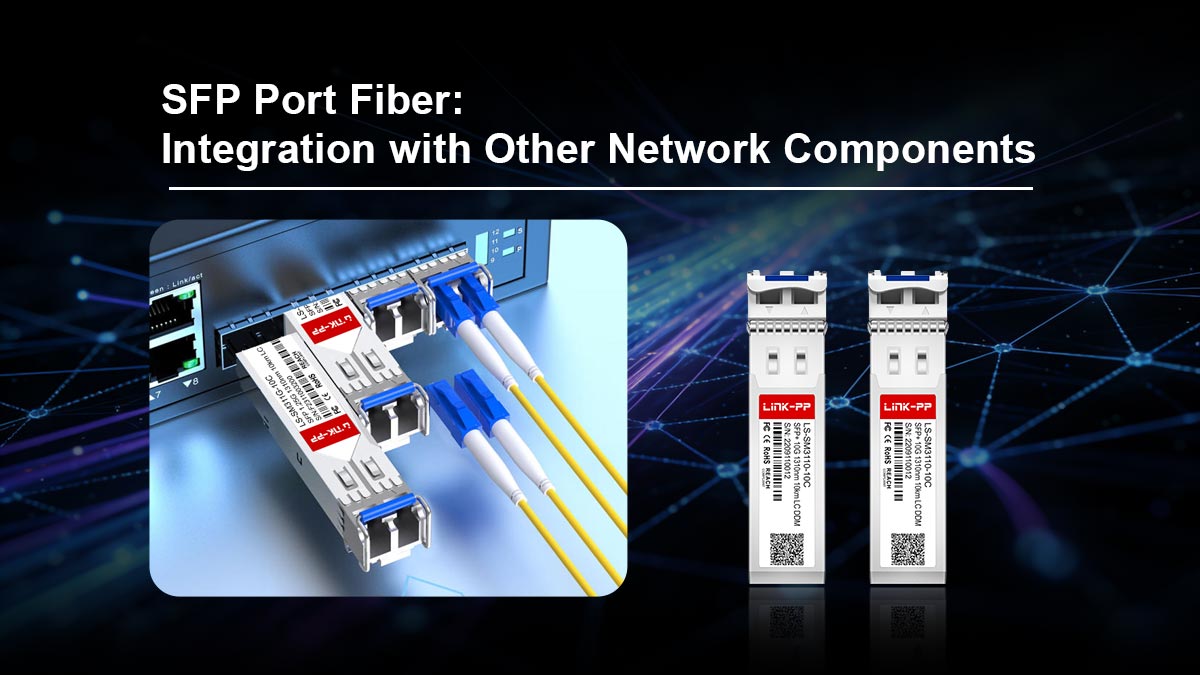
Connecting SFP Port Fiber with Switches and Routers
SFP port fiber connects to switches and routers through standardized transceiver modules inserted into compatible SFP ports. These modules convert electrical signals from the device to optical signals for fiber transmission, supporting distances from hundreds of meters to tens of kilometers depending on the module type.
Key connection steps include:
- Verify the switch/router supports the target SFP standard (SFP, SFP+, etc.) and data rate.
- Insert the appropriate transceiver (e.g., SFP 1G SX module for short-range, SFP 1G LX module for long-range) into the SFP port.
- Attach the matching fiber optic patch cable (LC duplex is standard) and secure connections.
- Monitor link status via device LEDs or management interface for successful negotiation.
Compatibility with Different Fiber Types
SFP port fiber supports both single-mode fiber (SMF) for long distances and multi-mode fiber (MMF) for shorter runs, but matching the transceiver to the fiber type is critical. SMF uses DFB or FP lasers at 1310nm or 1550nm for 10+ km reaches, while MMF pairs with VCSELs at 850nm for up to 550m.
Compatibility guidelines:
- SMF: Use with single mode transceivers; avoids modal dispersion for high-speed links.
- MMF: Pair with multimode SFP transceiver modules; cost-effective for data centers.
- Hybrid links: Possible with mode-conditioning patch cords, but introduces loss.
- Always check wavelength and core size (e.g., 9μm for SMF, 50/62.5μm for MMF).
Troubleshooting Common Compatibility Issues
Despite standardization, compatibility issues can still arise in SFP port fiber deployments. These problems often stem from mismatched modules, unsupported configurations, or poor installation practices.
- Unrecognized Modules: Caused by vendor restrictions or unsupported SFP types.
- Link Failure: Often due to mismatched wavelengths, incorrect fiber type, or faulty cables.
- Intermittent Connectivity: May result from dirty connectors, poor alignment, or hardware defects.
- Speed Mismatch: Occurs when connected devices do not share the same supported data rate.
Regular inspection, proper cleaning of connectors, and using certified components can significantly reduce these issues and improve network reliability.
✴️ Final Thoughts on SFP Port Fiber: Ensuring High-Speed Integrity & EMI Compliance
SFP port fiber technology is essential for building modern, high-performance networks that demand speed, reliability, and flexibility. From maintaining signal integrity to addressing EMI challenges, every aspect of design, deployment, and integration plays a critical role in overall network performance. By selecting high-quality transceivers and following best practices, organizations can ensure stable and efficient data transmission.
As network requirements continue to evolve, investing in reliable SFP port fiber solutions becomes increasingly important. Whether you're upgrading existing infrastructure or designing new systems, choosing the right products and partners can make a significant difference. Check out the LINK-PP Official Store for high-quality fiber optic transceiver solutions — designed to deliver both high-speed performance and EMI compliance for your network.







