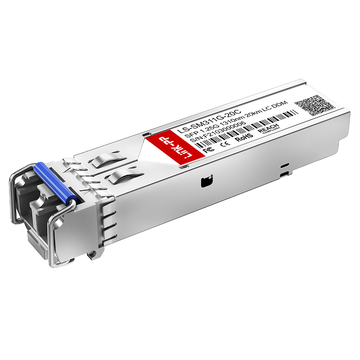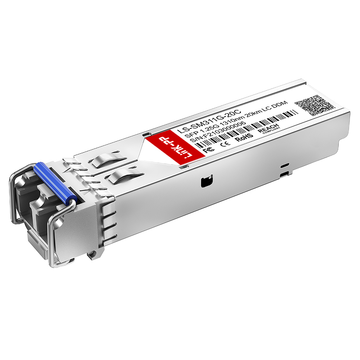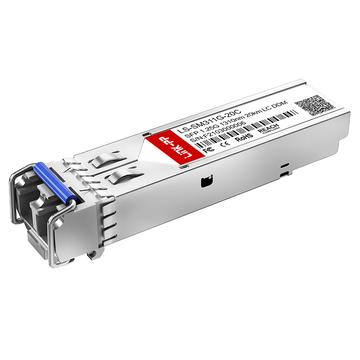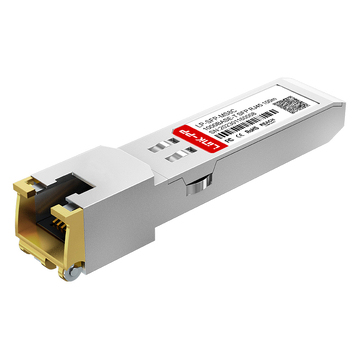
Modern enterprise networks, campus infrastructures, and access networks often require reliable optical links that extend well beyond typical short-range connections. In these scenarios, SFP 20km transceivers provide a practical solution for Gigabit Ethernet deployments that need stable long-distance transmission without introducing unnecessary complexity or cost. Operating primarily at a 1.25Gbps data rate over single-mode fiber, these optical modules are widely used to connect buildings, aggregation switches, and distributed network nodes across distances of up to 20 kilometers.
Although 1G optical technologies have existed for many years, they remain an essential part of many network architectures. Access networks, industrial control systems, and infrastructure monitoring platforms often prioritize reliability, compatibility, and long service lifecycles over extremely high bandwidth. As a result, 1G SFP 20km modules continue to play a key role in extending Gigabit Ethernet connectivity across metropolitan access layers, enterprise campuses, and remote facilities.
However, selecting the right SFP 20km transceiver involves more than simply matching the distance specification. Network engineers must also consider factors such as wavelength, optical power budget, fiber compatibility, connector types, and platform interoperability. These technical characteristics directly influence link stability, deployment flexibility, and long-term network performance.
This guide explains the key specifications that matter when evaluating 1G SFP 20km transceivers, along with practical considerations for compatibility and deployment. By understanding these parameters, network planners can make more informed decisions when designing or upgrading long-distance Gigabit optical links.
🌷What Is an SFP 20km Transceiver?
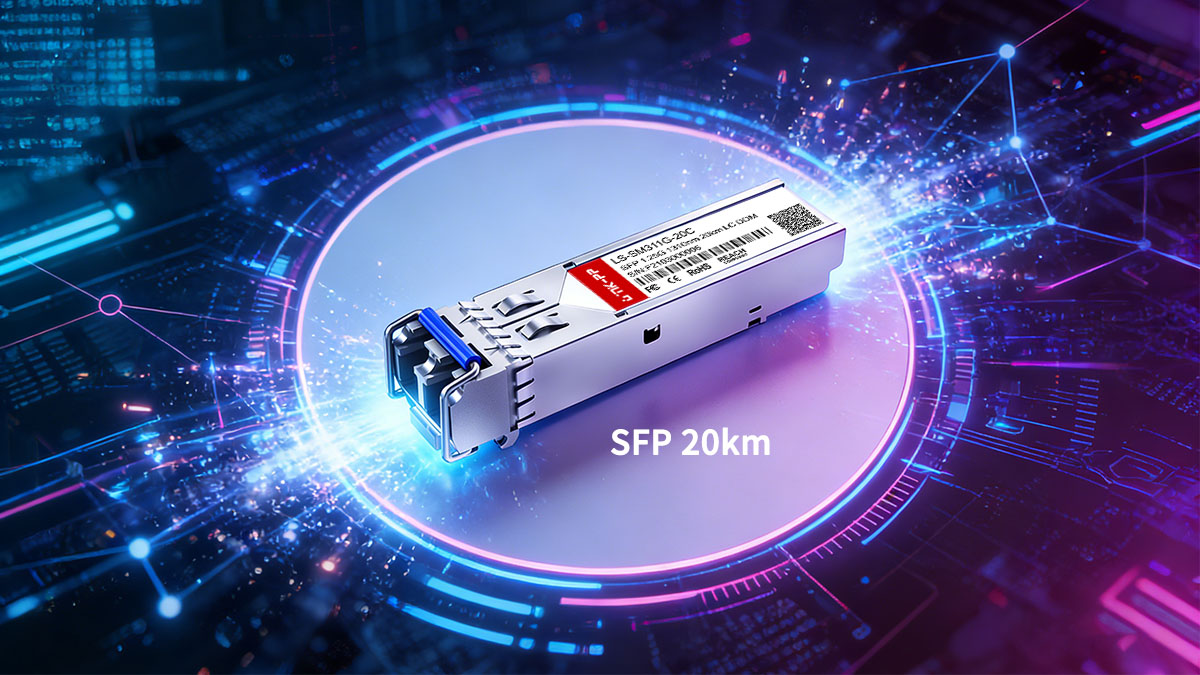
An SFP 20km transceiver is a small form-factor pluggable optical module designed to transmit Gigabit Ethernet signals over distances of up to 20 kilometers using single-mode fiber. These modules typically operate at a 1.25Gbps data rate and use a 1310nm wavelength to deliver stable long-distance communication between switches, routers, and other network devices.
In practical deployments, SFP 20km modules are commonly used in enterprise campus networks, metropolitan access networks, and infrastructure monitoring systems where links must extend far beyond the reach of short-range optics. Their compact hot-pluggable design allows network equipment to support flexible optical connectivity without replacing the entire device.
Basic Definition of SFP 20km Modules
SFP 20km modules belong to the broader SFP optical transceiver family and are optimized for medium-to-long distance Gigabit Ethernet transmission. They convert electrical signals from network equipment into optical signals for transmission through fiber, and then convert incoming optical signals back into electrical data at the receiving end.
Several characteristics define this category of optical module:
-
Support for Gigabit Ethernet transmission at approximately 1.25Gbps
-
Designed for single-mode fiber links up to 20km
-
Duplex optical transmission using separate transmit and receive fibers
-
Hot-pluggable interface compatible with standard SFP ports
Because these modules operate within the standardized SFP form factor, they can be easily installed or replaced without interrupting the operation of the host device.
Typical Performance Specifications
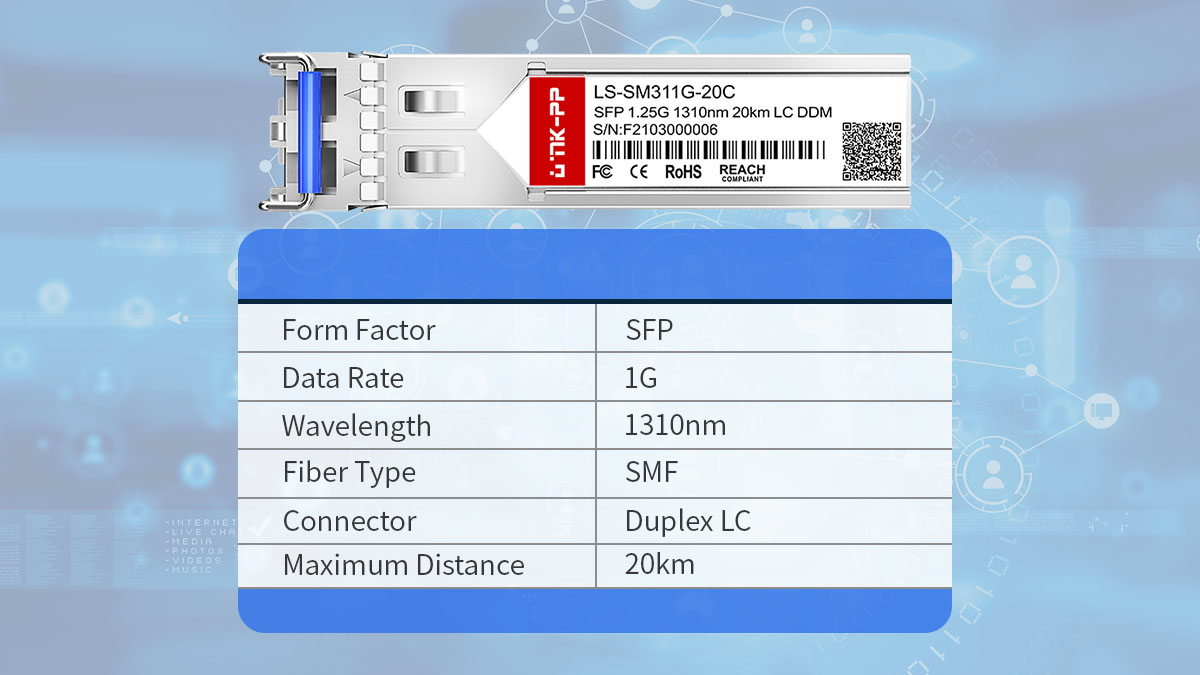
Most 1G SFP 20km modules share a similar set of technical specifications that ensure interoperability across network environments. These specifications define transmission speed, optical wavelength, connector interface, and supported fiber type.
The following table summarizes common performance characteristics found in typical 1G 20km SFP transceivers.
| Specification | Typical Value | Description |
|---|---|---|
| Data Rate | 1.25Gbps | Supports Gigabit Ethernet transmission |
| Transmission Distance | Up to 20km | Designed for long-distance SMF links |
| Wavelength | 1310nm | Optimized for stable single-mode transmission |
| Connector Type | Duplex LC | Standard interface for fiber patch cords |
| Fiber Type | Single-mode fiber | Typically OS1 or OS2 fiber |
These specifications allow SFP 20km modules to maintain reliable signal integrity over extended fiber runs while remaining compatible with standard Gigabit Ethernet hardware.
Common Standards for 1G 20km SFP Modules
Although the term “SFP 20km” is widely used in product descriptions, these modules are generally derived from the Gigabit Ethernet optical standards defined by IEEE. Many 20km optics are based on extended-reach versions of the 1000BASE-LX specification, which uses a 1310nm wavelength for transmission over single-mode fiber.
In addition to IEEE alignment, most modules follow the Multi-Source Agreement (MSA) for SFP transceivers. MSA compliance ensures that the mechanical interface, electrical signaling, and management functions remain consistent across manufacturers.
In practice, this standards alignment provides several advantages:
-
Interoperability across different network platforms
-
Consistent electrical and optical interface definitions
-
Support for common monitoring features such as digital diagnostics
Because of these standardized characteristics, SFP 20km modules can be integrated into a wide range of Gigabit Ethernet environments without requiring specialized hardware designs.
🌷Typical Applications of 1G SFP 20km Modules
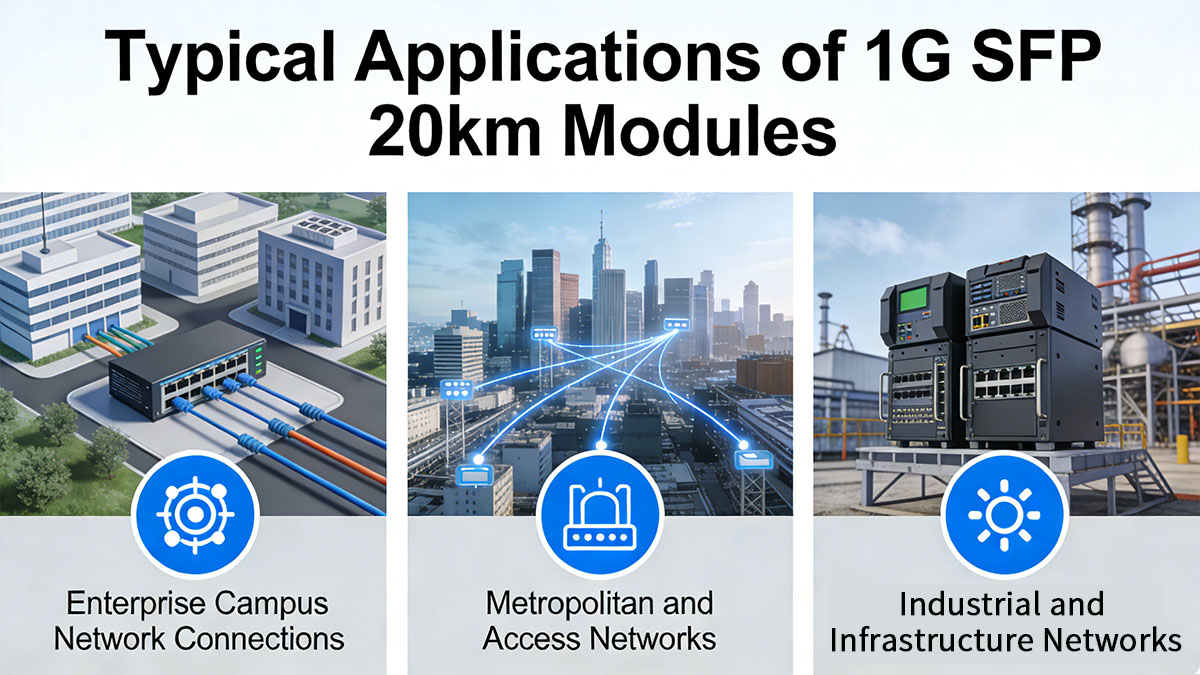
1G SFP 20km modules are commonly deployed in network environments that require stable Gigabit connectivity across medium-to-long fiber distances. Their ability to support transmission over single-mode fiber up to 20km makes them suitable for connecting distributed network segments without requiring higher-cost long-haul optics.
In practice, these transceivers are widely used in enterprise infrastructure, metropolitan access networks, and industrial communication systems where reliability and compatibility are more important than ultra-high bandwidth.
Enterprise Campus Network Connections
SFP 20km modules are frequently used to interconnect buildings within large enterprise campuses, universities, and business parks. When the distance between network nodes exceeds the range of short-reach optics, 20km modules provide sufficient link margin to maintain stable connectivity.
Typical campus scenarios include:
-
Interconnecting core switches between multiple buildings
-
Linking campus distribution layers across long fiber runs
-
Extending network access to remote campus facilities
-
Creating redundant fiber paths for network resilience
The following table illustrates how different campus network distances typically map to optical transceiver types.
| Deployment Distance | Common Optics | Typical Use Case |
|---|---|---|
| Up to 550m | 1000BASE-SX | Short campus or data room connections |
| Up to 10km | 1000BASE-LX | Medium campus links |
| Up to 20km | 1G SFP 20km | Large campus or multi-building networks |
In many enterprise deployments, the additional optical power budget of a 20km module provides valuable headroom for fiber attenuation and connector losses.
Metropolitan and Access Networks
Metropolitan access networks often require Gigabit optical links between aggregation switches, access nodes, and distribution points spread across a city or regional infrastructure. In these environments, SFP 20km modules provide a practical balance between transmission reach and operational simplicity.
Typical metro and access network deployments include:
-
Aggregation links between access switches and regional nodes
-
Fiber connections between ISP access cabinets and aggregation routers
-
Gigabit backhaul links for small service provider networks
-
Distribution links in fiber-to-the-building (FTTB) architectures
Because many access network segments fall within the 10–20km range, these transceivers can support reliable connectivity without the complexity of higher-power long-haul optics.
Industrial and Infrastructure Networks
Industrial environments and public infrastructure systems often rely on long-distance fiber connections to link monitoring equipment, control systems, and remote facilities. In these deployments, network equipment may be distributed across large geographic areas such as transportation systems, energy grids, or water management facilities.
Common infrastructure scenarios include:
-
Communication links between substations in power networks
-
Monitoring systems in transportation corridors and rail networks
-
Industrial automation networks across manufacturing campuses
-
Remote surveillance and environmental monitoring stations
These environments benefit from the predictable performance and stable optical characteristics of 1G SFP 20km modules. When combined with industrial-grade switches and appropriate environmental ratings, they provide reliable connectivity for systems that must operate continuously over long periods.
Across these application scenarios, SFP 20km modules continue to serve as a practical optical solution for extending Gigabit Ethernet connectivity beyond the limits of short-range fiber optics.
🌷Key Technical Specifications to Evaluate in SFP 20km Modules
Selecting an SFP 20km module requires evaluating several technical parameters that directly affect link stability and long-distance performance. While many 1G SFP Module shares a similar form factor, differences in fiber compatibility, optical power levels, monitoring capabilities, and connector interfaces can significantly influence deployment outcomes.
Understanding these specifications helps ensure that the optical transceiver matches the fiber infrastructure, network equipment, and transmission requirements of the target environment.
Transmission Distance and Fiber Type
SFP 20km modules are designed to support Gigabit Ethernet transmission over single-mode fiber with a maximum reach of approximately 20 kilometers. This distance rating assumes a typical fiber attenuation environment and proper connector quality across the link.
The fiber type used in the network plays a critical role in determining achievable transmission distance and signal stability.
| Fiber Type | Typical Attenuation | Suitability for 20km Links |
|---|---|---|
| OS1 | ~1.0 dB/km | Often used in indoor structured cabling |
| OS2 | ~0.4 dB/km | Preferred for long-distance outdoor links |
| Multimode Fiber | Higher dispersion | Not suitable for 20km transmission |
In most modern deployments, OS2 single-mode fiber is commonly used for longer links because its lower attenuation allows greater optical margin across extended distances. Fiber optic connectors, patch panels, and splicing points also contribute to total link loss and should be considered during planning.
Operating Wavelength
Most 1G SFP 20km modules operate at a wavelength of 1310nm, which provides a reliable balance between transmission distance and signal stability in single-mode fiber networks.
Several factors make the 1310nm wavelength well suited for medium-distance optical links:
-
Low chromatic dispersion in standard single-mode fiber
-
Stable transmission characteristics over long fiber runs
-
Compatibility with common Gigabit Ethernet optical standards
-
Efficient optical component design for 1G transceivers
Compared with shorter wavelengths typically used in multimode optics, 1310nm signals experience lower distortion when traveling through single-mode fiber over many kilometers. This helps maintain signal integrity and reduces error rates across extended links.
Optical Power Budget
The optical power budget defines the maximum amount of signal loss that a transceiver pair can tolerate while still maintaining reliable communication. It is calculated based on the difference between transmitter output power and receiver sensitivity.
For typical 1G SFP 20km modules, the optical power parameters generally fall within the following ranges.
| Parameter | Typical Range | Purpose |
|---|---|---|
| Transmit Power | −5 dBm to 0 dBm | Optical signal launched into fiber |
| Receiver Sensitivity | Around −23 dBm | Minimum detectable signal |
| Optical Power Budget | ~18–20 dB | Maximum allowable link loss |
The optical power budget must be sufficient to cover all sources of signal loss in the fiber link, including:
-
Fiber attenuation across distance
-
Connector insertion loss
-
Patch panel losses
-
Fiber splices and aging effects
Maintaining adequate link margin ensures the network remains stable even as fiber conditions change over time.
Digital Diagnostic Monitoring (DDM)
Many modern SFP 20km modules include Digital Diagnostic Monitoring (DDM), a feature that provides real-time insight into the operating status of the optical transceiver.
DDM allows network administrators to monitor several key parameters directly from the host device, including:
-
Module temperature
-
Supply voltage
-
Transmit optical power
-
Received optical power
-
Laser bias current
These diagnostic capabilities are particularly valuable for long-distance fiber links because they allow engineers to detect abnormal signal levels, environmental conditions, or gradual degradation before service disruptions occur.
Connector Type and Interface
Most SFP 20km modules use a duplex LC optical interface, which has become the industry standard for Gigabit Ethernet optical connections.
The LC connector design offers several advantages in modern network environments:
-
Compact form factor suitable for high-density switch ports
-
Secure latch mechanism for reliable connections
-
Wide compatibility with standard single-mode patch cords
-
Efficient cable management in dense rack environments
| Interface Type | Fiber Configuration | Typical Use |
|---|---|---|
| LC Duplex | Two fibers (TX/RX) | Standard 1G optical links |
| SC Duplex | Two fibers | Older optical systems |
| BiDi LC | Single fiber | Wavelength multiplexed links |
In most current deployments, LC duplex connectors provide the most straightforward and widely supported interface for 1G SFP 20km modules, allowing easy integration into existing optical infrastructure.
🌷Compatibility Considerations for SFP 20km Modules
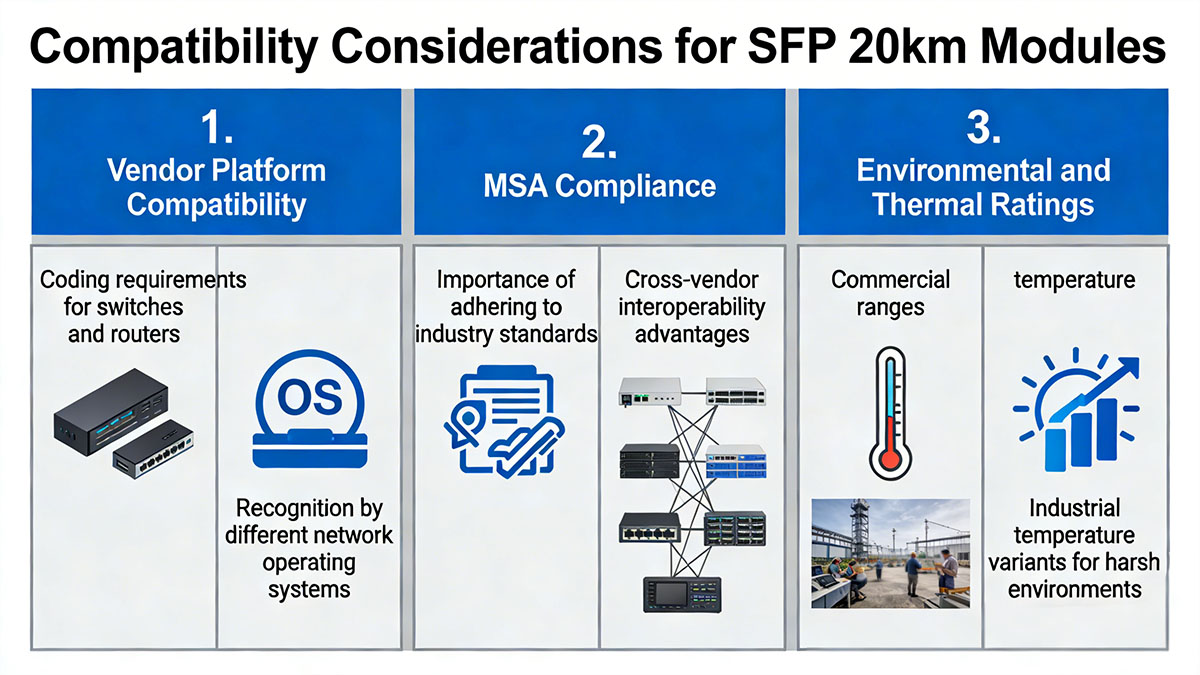
Ensuring compatibility is an essential step when selecting SFP 1G 20km modules for Gigabit Ethernet networks. Although fiber transceivers follow standardized form factors, practical interoperability depends on several factors, including vendor platform requirements, standards compliance, and environmental operating conditions.
Evaluating these aspects before deployment helps prevent issues such as module recognition failures, unstable links, or operational limitations in specific network environments.
Vendor Platform Compatibility
Network switches and routers often include firmware mechanisms that verify whether an installed sfp fiber module is recognized and supported by the system. As a result, SFP connectors may require specific vendor coding to operate correctly with certain networking platforms.
Different network equipment vendors implement compatibility checks in slightly different ways, which makes proper module coding important for reliable operation.
| Network Platform Type | Compatibility Behavior | Deployment Consideration |
|---|---|---|
| Vendor-specific systems | May require coded modules | Module EEPROM must match platform expectations |
| MSA-based systems | Accept standard SFP modules | Greater interoperability across vendors |
| Mixed-vendor networks | Varies by device firmware | Testing recommended before deployment |
In large network environments where equipment from multiple vendors is used, selecting modules that support appropriate coding profiles can simplify integration and reduce the likelihood of compatibility warnings.
MSA Compliance
Most modern SFP 20km transceivers follow the Multi-Source Agreement (MSA), which defines the electrical interface, mechanical design, and management specifications for SFP modules. Compliance with this industry specification enables modules from different manufacturers to operate within the same network ecosystem.
Key benefits of MSA-compliant modules include:
-
Standardized mechanical dimensions that fit any SFP port
-
Consistent electrical signaling between the module and host device
-
Defined management interface for diagnostics and monitoring
-
Cross-vendor interoperability for many network platforms
Because of these standardized characteristics, MSA-compliant modules help simplify network upgrades and reduce vendor lock-in when expanding optical infrastructure.
Environmental and Thermal Ratings
In addition to electrical and protocol compatibility, SFP 20km modules must also operate reliably within the environmental conditions of the deployment location. Different modules may be designed for commercial, extended, or industrial temperature ranges.
| Temperature Rating | Typical Range | Deployment Environment |
|---|---|---|
| Commercial | 0°C to 70°C | Data centers and enterprise networks |
| Extended | −10°C to 80°C | Semi-controlled environments |
| Industrial | −40°C to 85°C | Outdoor cabinets and harsh conditions |
Choosing the appropriate temperature rating ensures stable optical performance in environments such as roadside network cabinets, utility infrastructure, or industrial facilities where temperature fluctuations are common.
When compatibility across platform requirements, standards compliance, and environmental conditions is carefully evaluated, SFP 20km modules can be integrated into a wide range of Gigabit Ethernet networks while maintaining consistent and reliable operation.
🌷Comparing SFP 20km with Other 1G Optical Transceivers
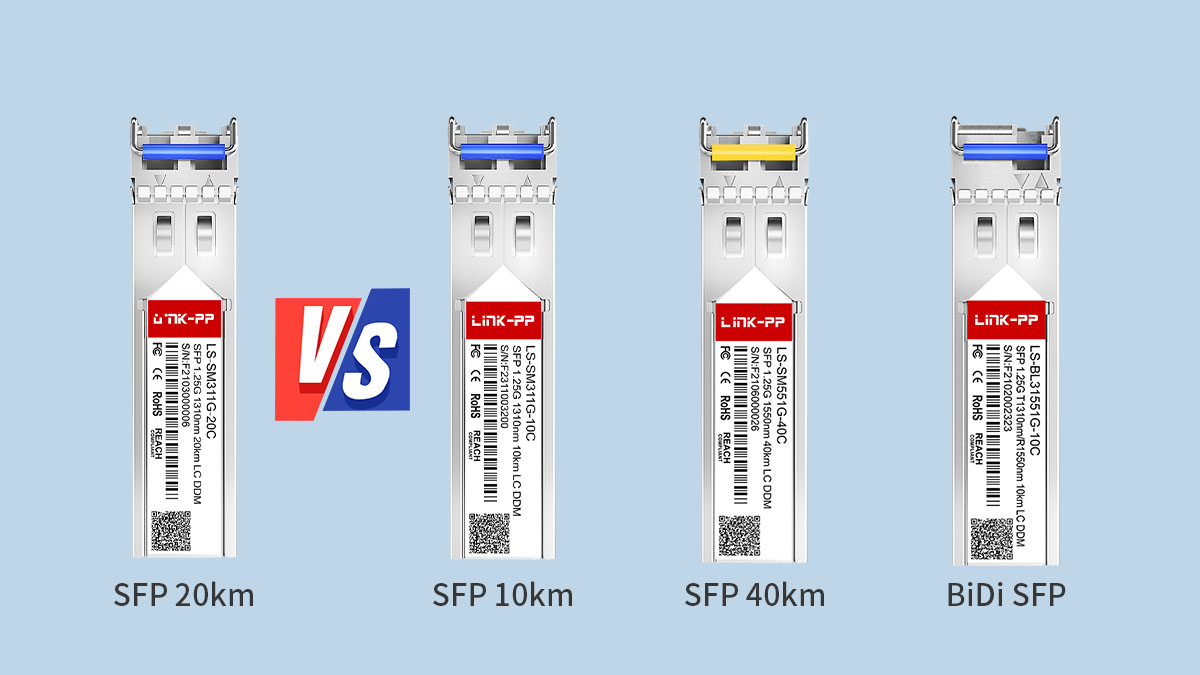
SFP 20km modules represent a middle range within the broader family of 1Gb SFP. While they are designed for medium-to-long distance fiber links, other Gigabit SFP modules support shorter or longer transmission distances depending on their optical design and power budget.
Understanding how SFP 20km optics compare with other gigabit sfp transceiver types helps network planners select the most appropriate module for a specific deployment scenario.
SFP 10km vs SFP 20km
SFP 10km and SFP 20km modules both operate at Gigabit Ethernet speeds and typically use a 1310nm wavelength over single-mode fiber. The primary difference lies in their optical power budget, which determines how much signal loss the link can tolerate.
The following table highlights the key distinctions between these two distance classes.
| Parameter | SFP 10km | SFP 20km |
|---|---|---|
| Typical Standard | 1G-LX | Extended reach LX/LH |
| Maximum Distance | 10km | 20km |
| Optical Power Budget | Lower | Higher |
| Deployment Scenario | Campus links | Long campus or metro links |
Because SFP 20km modules provide additional link margin, they are often selected when fiber paths include multiple connectors, patch panels, or splices that increase attenuation. In contrast, 10km optics are typically sufficient for shorter metropolitan or campus connections.
SFP 20km vs SFP 40km
For networks that extend beyond 20 kilometers, 1GB SFP module designed for 40km transmission are sometimes used. These optics generally operate with higher transmit power and increased receiver sensitivity to support longer-distance fiber links.
| Parameter | SFP 20km | SFP 40km |
|---|---|---|
| Typical Wavelength | 1310nm | Often 1310nm or 1550nm |
| Maximum Reach | 20km | 40km |
| Optical Output Power | Moderate | Higher |
| Typical Use Case | Metro access networks | Long-distance backbone links |
Although 40km optics extend the available reach, they are usually deployed only when required because their stronger optical output may introduce challenges in shorter fiber links. In many environments, 20km modules offer sufficient distance capability without introducing unnecessary optical power.
SFP 20km vs BiDi SFP Modules
BiDi SFP module differs from traditional duplex SFP optics by transmitting and receiving signals over a single fiber strand. They achieve this by using two different wavelengths for upstream and downstream transmission.
| Parameter | Standard SFP 20km | BiDi SFP |
|---|---|---|
| Fiber Requirement | Two fibers (TX and RX) | Single fiber |
| Wavelength Design | Single wavelength per direction | Dual wavelengths |
| Fiber Efficiency | Standard | Higher fiber utilization |
| Deployment Complexity | Simple | Requires matched module pairs |
BiDi transceivers are particularly useful when fiber resources are limited, such as in access networks or older infrastructure with limited fiber availability. However, standard duplex SFP 20km modules remain the most widely used option due to their straightforward deployment and compatibility with common fiber cabling systems.
By comparing these different types of Gigabit module, network engineers can better determine when SFP 20km optics provide the most balanced solution between distance capability, infrastructure requirements, and network simplicity.
🌷Deployment Best Practices for 20km SFP Links
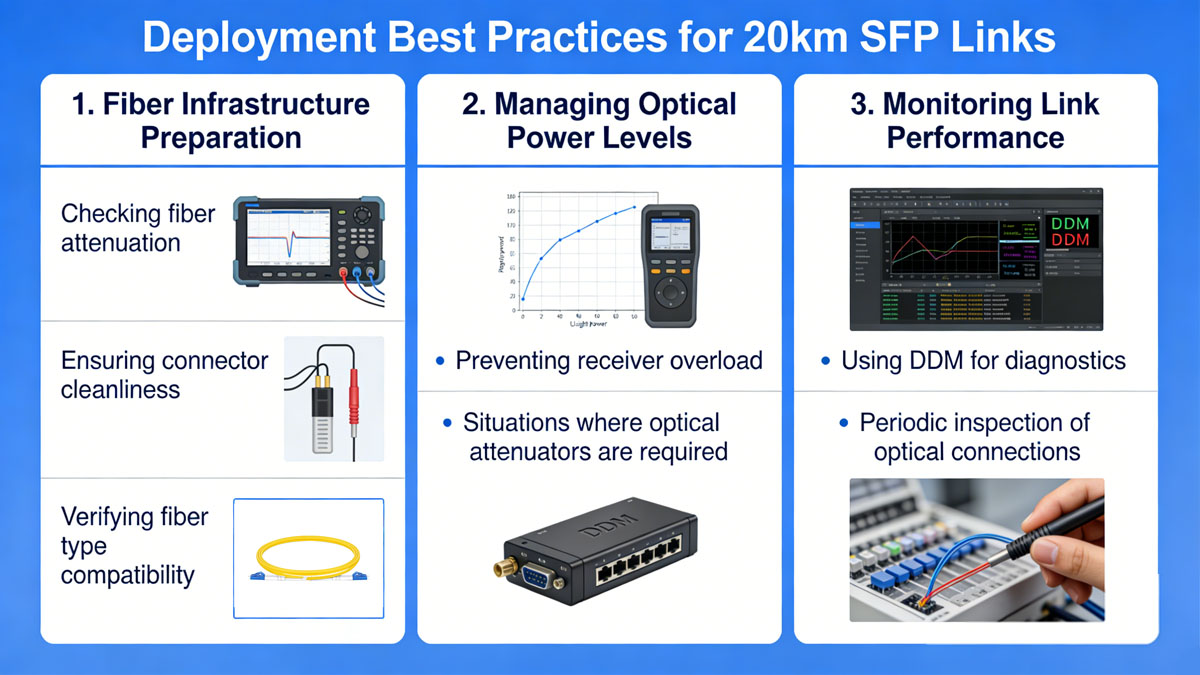
Reliable operation of 20km optical links depends not only on the SFP module itself but also on proper fiber infrastructure planning, optical power management, and ongoing monitoring. Even when the transceiver specifications match the required transmission distance, issues such as excessive attenuation, contaminated connectors, or unstable optical power levels can still affect link performance.
Applying structured deployment practices helps ensure that 1G SFP 20km links maintain stable operation over long periods and across changing environmental conditions.
Fiber Infrastructure Preparation
Before deploying SFP 20km modules, the existing fiber infrastructure should be evaluated to ensure that the link loss remains within the optical power budget supported by the transceivers.
The most important elements affecting fiber link performance include fiber attenuation, connector insertion loss, and splice quality.
| Fiber Component | Typical Loss Range | Impact on 20km Links |
|---|---|---|
| Single-mode fiber | ~0.4 dB/km | Determines base attenuation over distance |
| LC connectors | 0.2–0.5 dB per pair | Adds loss at patch panels |
| Fusion splice | ~0.1 dB | Minimal impact if properly installed |
| Mechanical splice | 0.2–0.75 dB | Higher loss depending on quality |
Before installation, network engineers typically calculate the total expected link loss by summing fiber attenuation, connector losses, and splice losses. Ensuring that the total remains within the module’s optical power budget helps prevent unstable or intermittent connections.
In addition, proper connector cleaning is essential. Dust or contamination on fiber end faces can introduce unexpected signal loss and degrade link performance.
Managing Optical Power Levels
Although SFP 20km modules are designed for longer links, optical power levels must still be monitored to avoid signal issues. In some situations, excessive received power can occur if the link distance is significantly shorter than the module’s designed reach.
The following conditions commonly influence optical power levels:
-
Very short fiber runs using long-distance optics
-
High transmitter output power combined with minimal attenuation
-
Clean, low-loss fiber infrastructure
When these conditions occur, the receiver may experience optical overload, which can lead to unstable link behavior.
To prevent this issue, network engineers may consider the following measures:
-
Selecting optics with distance ratings closer to the actual link length
-
Installing optical attenuators when received power exceeds recommended levels
-
Verifying received optical power using digital diagnostics
Proper optical power management ensures that both the transmitter and receiver operate within their designed signal ranges.
Monitoring Link Performance
Long-distance fiber links benefit from ongoing monitoring to detect early signs of degradation or abnormal operating conditions. Many modern SFP 20km modules support digital diagnostic monitoring, which allows network administrators to track optical parameters directly from the switch or router interface.
Typical parameters available through diagnostics include:
-
Module temperature
-
Transmit optical power
-
Received optical power
-
Supply voltage
-
Laser bias current
By periodically reviewing these values, engineers can identify trends such as gradual signal loss, temperature fluctuations, or abnormal laser behavior.
Regular maintenance practices further improve long-term reliability:
-
Inspecting and cleaning fiber connectors during maintenance cycles
-
Verifying optical power levels after network changes
-
Monitoring environmental conditions in outdoor cabinets or equipment rooms
When these operational practices are followed, SFP 20km modules can maintain stable Gigabit Ethernet connectivity across extended fiber distances while minimizing the risk of unexpected link failures.
🌷Future Role of 1G 20km SFP Modules
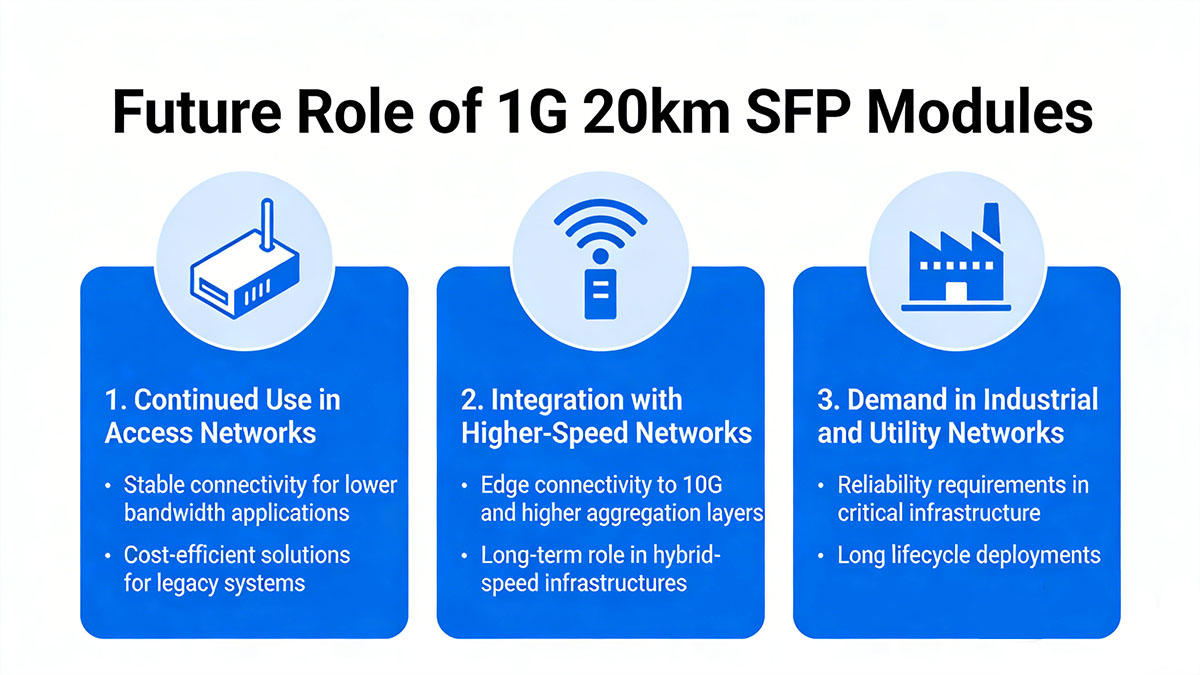
Although higher-speed optical technologies such as 10G, 25G, and 100G have become common in modern network cores, 1G SFP 20km modules continue to play an important role in many network architectures. Their balance of cost efficiency, compatibility, and long-distance transmission makes them well suited for access-layer connectivity and infrastructure networks that do not require high bandwidth.
As networks evolve, these modules are likely to remain relevant in specific deployment scenarios where reliability and long service lifecycles are prioritized over maximum throughput.
Continued Use in Access Networks
Access networks often serve a large number of distributed endpoints such as small business sites, residential access points, and remote network cabinets. In many of these environments, Gigabit Ethernet bandwidth is sufficient to support the required traffic loads.
Several characteristics support the continued use of 1G 20km optics in access networks:
-
Stable long-distance connectivity between access nodes and aggregation switches
-
Compatibility with widely deployed Gigabit Ethernet equipment
-
Lower power consumption compared with higher-speed optical modules
-
Long operational lifecycles for access infrastructure
Because access-layer networks frequently span distances between 10km and 20km, these modules provide a practical transmission range without requiring more complex long-haul optics.
Integration with Higher-Speed Networks
Modern network architectures often combine multiple link speeds across different layers. While the core and aggregation layers may operate at 10G or higher, the access layer may still rely on Gigabit Ethernet connections for cost efficiency and compatibility.
A common network structure includes:
-
High-speed backbone links connecting core switches
-
Aggregation switches handling regional traffic
-
Gigabit access links connecting edge devices or remote nodes
In this layered architecture, 1G SFP 20km modules can serve as reliable access-layer connections that integrate seamlessly with higher-speed aggregation infrastructure. This approach allows organizations to upgrade core capacity while maintaining existing edge connectivity.
Demand in Industrial and Utility Networks
Industrial automation systems, energy infrastructure, and transportation networks often require communication systems that remain operational for many years without major hardware upgrades. In these environments, network stability and equipment longevity are often more important than bandwidth expansion.
Typical sectors that continue to rely on 1G long-distance optics include:
-
Power grid monitoring and substation communications
-
Railway and transportation control networks
-
Oil, gas, and pipeline monitoring systems
-
Water treatment and environmental monitoring infrastructure
These systems often deploy network equipment in remote or harsh environments where long-distance fiber links are required and infrastructure changes occur slowly. Because of this, 1G SFP 20km modules remain a dependable solution for maintaining consistent connectivity across geographically distributed facilities.
As networking technologies continue to advance, the role of 1G sfp transceiver is gradually shifting toward access, infrastructure, and specialized industrial environments. Within these segments, SFP 20km transceivers continue to provide a practical and reliable option for extending Gigabit Ethernet over long-distance fiber links.
🌷FAQs About SFP 20km
What fiber type is required for an SFP 20km transceiver?
SFP 20km transceivers are designed to operate over single-mode fiber. Using multimode fiber typically cannot support the full transmission distance and may lead to unstable link performance.
Can an SFP 20km module work on a 5km or shorter fiber link?
Yes, SFP 20km modules can operate on shorter fiber links. However, if the received optical power becomes too strong due to low attenuation, an optical attenuator may be needed to keep the signal within the receiver’s acceptable range.
What wavelength is typically used in 1G SFP 20km modules?
Most 1G SFP 20km modules operate at a wavelength of 1310nm. This wavelength provides stable signal transmission in single-mode fiber and is widely used for medium-distance Gigabit Ethernet links.
Do SFP 20km modules require two fibers?
Standard SFP 20km modules typically use duplex fiber connections, meaning one fiber for transmission and one fiber for reception. However, bidirectional SFP variants can operate over a single fiber by using different wavelengths for transmit and receive signals.
How can network engineers verify that an SFP 20km link is operating normally?
Network engineers can check link status and optical parameters through digital diagnostic monitoring available in many SFP modules. Key indicators include transmit power, received power, module temperature, and voltage levels.
Are SFP 20km modules interchangeable between different network vendors?
Many SFP modules follow industry standards that allow cross-platform compatibility. However, some network devices require vendor-specific module coding, so compatibility should be verified with the target switch or router platform.
🌷Conclusion
SFP 20km transceivers remain an important component in Gigabit Ethernet networks that require reliable medium-to-long distance fiber connectivity. By supporting transmission over single-mode fiber with stable 1310nm optics and adequate optical power budgets, these modules provide a practical solution for linking campus buildings, access network nodes, and distributed infrastructure systems.
When selecting an SFP 20km module, several technical factors should be evaluated to ensure stable deployment. Key considerations include fiber type compatibility, optical wavelength, power budget margins, connector interfaces, and platform interoperability. Proper planning of fiber infrastructure, along with effective monitoring and maintenance practices, further helps maintain consistent performance across long-distance optical links.
Even as higher-speed networking technologies continue to expand, 1G 20km optics still play a valuable role in access networks, industrial environments, and long lifecycle infrastructure systems. Their balance of reliability, compatibility, and long-distance capability ensures that they remain relevant in many practical deployment scenarios.
For organizations planning Gigabit fiber connections across extended distances, exploring well-tested optical modules and compatibility options can simplify network expansion. A wide range of SFP 20km transceivers and related optical networking solutions are available through the LINK-PP Official Store, providing flexible options for building stable and scalable fiber connectivity.