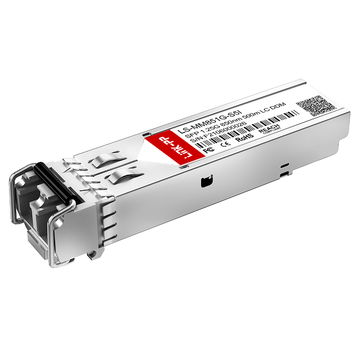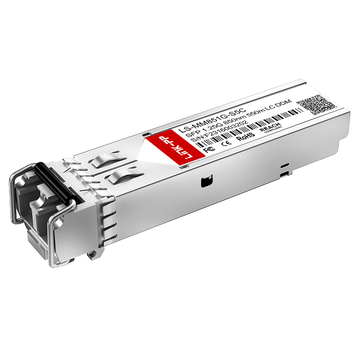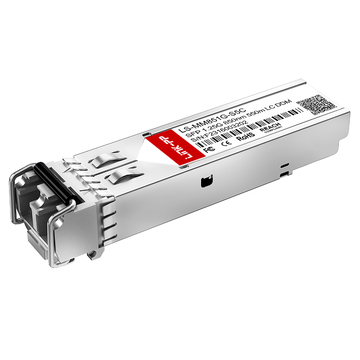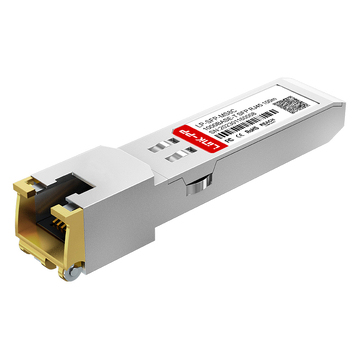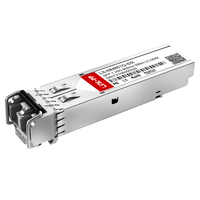





























An 850nm SFP is a short-reach optical transceiver designed for high-speed data transmission over multimode fiber, commonly used in enterprise networks and data centers. It is best known for its low cost, high compatibility, and reliable performance in short-distance applications.
In practical terms, 850nm SFP modules are typically used for switch-to-switch and server-to-switch connections where transmission distances are limited but port density and cost efficiency matter. Compared with single-mode SFPs operating at 1310nm or 1550nm, 850nm SFPs prioritize affordability and ease of deployment rather than long-haul reach.
This article focuses on what an 850nm SFP is, how it works, its key specifications, supported fiber types, and when it is the right choice for your network. By the end of this guide, you will be able to quickly determine whether an 850nm SFP fits your technical requirements and procurement strategy—without unnecessary technical complexity.
🚉What Is an 850nm SFP?
An 850nm SFP is a short-reach optical transceiver that uses an 850nm wavelength laser to transmit data over multimode fiber, primarily for high-density, cost-sensitive network environments.
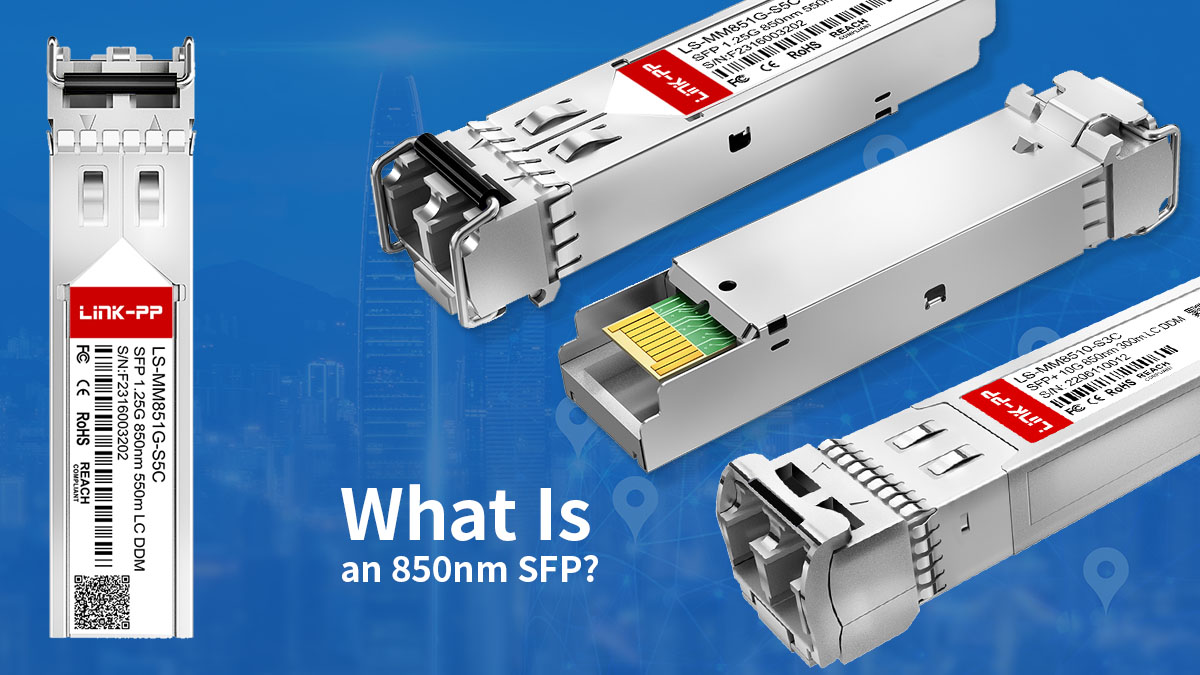
Definition of an 850nm SFP Transceiver
An 850nm SFP (Small Form-factor Pluggable) transceiver is a hot-swappable optical module designed to support Ethernet data transmission over multimode fiber (MMF).
It is most commonly used in 1G SFP and 10G SFP+ applications where link distances are relatively short.
Key characteristics include:
-
Operates at an 850nm wavelength
-
Uses multimode fiber (OM1–OM4)
-
Typically equipped with an LC duplex connector
-
Optimized for short-distance, high-port-density deployments
Why the 850nm Wavelength Matters
The 850nm wavelength is specifically optimized for multimode fiber and plays a direct role in cost and performance balance.
-
Efficient with VCSEL technology
850nm SFPs use VCSEL (Vertical Cavity Surface Emitting Laser), which is more cost-effective than lasers used in longer-wavelength optics. -
Ideal for short-reach transmission
While attenuation is higher than longer wavelengths, 850nm performs reliably within typical MMF distance limits. -
Lower overall deployment cost
Multimode fiber and 850nm optics are generally cheaper than single-mode alternatives, making them ideal for enterprise and data center networks.
850nm SFP vs 1310nm and 1550nm SFPs
The primary difference between these SFP types lies in wavelength, fiber type, and transmission distance.
-
-
Fiber: Multimode fiber
-
Distance: Short-reach
-
Cost: Lower
-
Best for: Data centers, LAN, high-density environments
-
-
-
Fiber: Mainly single-mode fiber
-
Distance: Medium-reach
-
Cost: Moderate
-
Best for: Campus and metro access networks
-
-
-
Fiber: Single-mode fiber
-
Distance: Long-reach
-
Cost: Higher
-
Best for: Long-haul and telecom networks
-
In summary, an 850nm SFP is not designed to replace long-distance optics. Instead, it excels when short distance, low cost, and easy deployment are the top priorities.
🚉How Does an 850nm SFP Work?
An 850nm SFP module works by converting high-speed electrical signals into short-wavelength optical signals using VCSEL technology, transmitting them over multimode fiber, and reconverting them back into electrical signals at the receiving end.
Its design is optimized for short-reach, high-density optical communication.
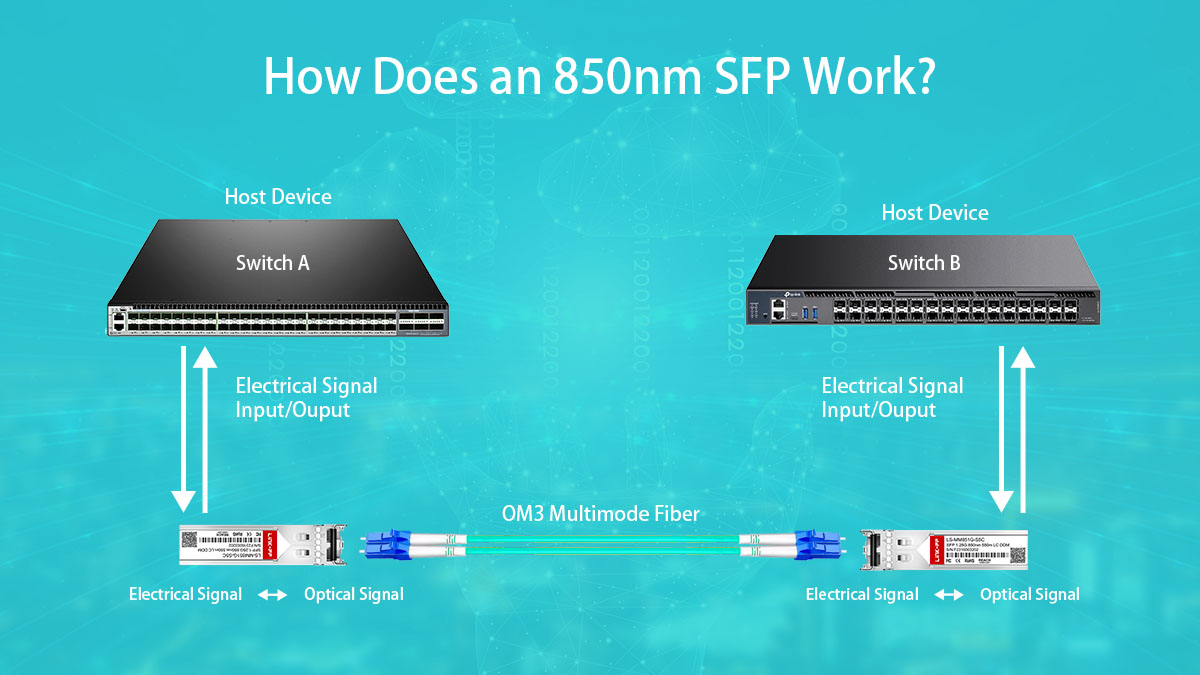
End-to-End Signal Flow Inside an 850nm SFP
From a system perspective, an 850nm SFP follows a clearly defined signal path:
-
Electrical Input from Host Device
-
The switch, router, or NIC sends a high-speed electrical signal to the SFP port
-
Signal characteristics depend on the data rate (155M, 622M, 1G, 10G)
-
-
Electrical-to-Optical Conversion
-
The SFP’s internal laser driver converts the electrical signal into an optical signal
-
A VCSEL operating at 850nm generates modulated light pulses
-
-
Optical Transmission over Multimode Fiber
-
Light propagates through multimode fiber using multiple spatial modes
-
Transmission performance depends on fiber bandwidth and modal dispersion
-
-
Optical-to-Electrical Conversion
-
A photodiode at the receiving end detects the incoming optical signal
-
The signal is converted back into an electrical form for processing by the host device
-
Role of VCSEL Technology in 850nm SFPs
VCSEL (Vertical Cavity Surface Emitting Laser) technology is fundamental to 850nm SFP operation.
-
Optimized for 850nm wavelength
-
Provides stable optical output with low threshold current
-
-
Efficient modulation at multiple data rates
-
Supports legacy speeds (155M, 622M) and high-speed Ethernet (1G, 10G)
-
-
Low power consumption
-
Ideal for high-density switch deployments
-
-
Cost-efficient manufacturing
-
Enables large-scale deployment with predictable performance
-
VCSELs are a key reason why 850nm SFPs remain cost-effective and widely adopted.
Multimode Fiber Transmission Mechanism
Unlike single-mode transmission, multimode fiber supports multiple light propagation paths.
-
Multiple modes
-
Light travels through different paths within the fiber core
-
-
Modal dispersion
-
Different modes arrive at slightly different times
-
Limits maximum distance at higher data rates
-
-
Fiber grade dependency
-
OM3 and OM4 fibers reduce dispersion and extend usable distance
-
This is why higher data rates require higher-grade multimode fiber when using 850nm optics.
Interaction Between the SFP Module and Multimode Fiber
The 850nm SFP and multimode fiber are engineered as a matched system.
-
Optical alignment
-
LC duplex connectors ensure precise TX/RX coupling
-
-
Launch conditions
-
VCSEL emission profile is optimized for MMF core size
-
-
Insertion and return loss
-
Proper fiber quality and connector cleanliness are critical for stable links
-
Using single-mode fiber or poor-quality MMF disrupts this balance and leads to signal degradation or link failure.
Why 850nm SFPs Are Limited to Short Reach
The short-reach nature of 850nm SFPs is a design trade-off, not a flaw.
-
Higher attenuation at shorter wavelengths
-
Modal dispersion inherent to multimode fiber
-
Design optimized for cost, density, and simplicity, not distance
As a result, 850nm SFPs excel in data centers, enterprise LANs, and short interconnects, while longer wavelengths are required for extended reach.
Technical Insight Summary
An 850nm SFP combines VCSEL laser technology, multimode fiber transmission, and compact SFP form factors to deliver a highly efficient short-reach optical solution. Its operation model prioritizes cost efficiency, power savings, and deployment density, which explains its continued dominance in enterprise and data center networking.
🚉Key Specifications of 850nm SFP Modules
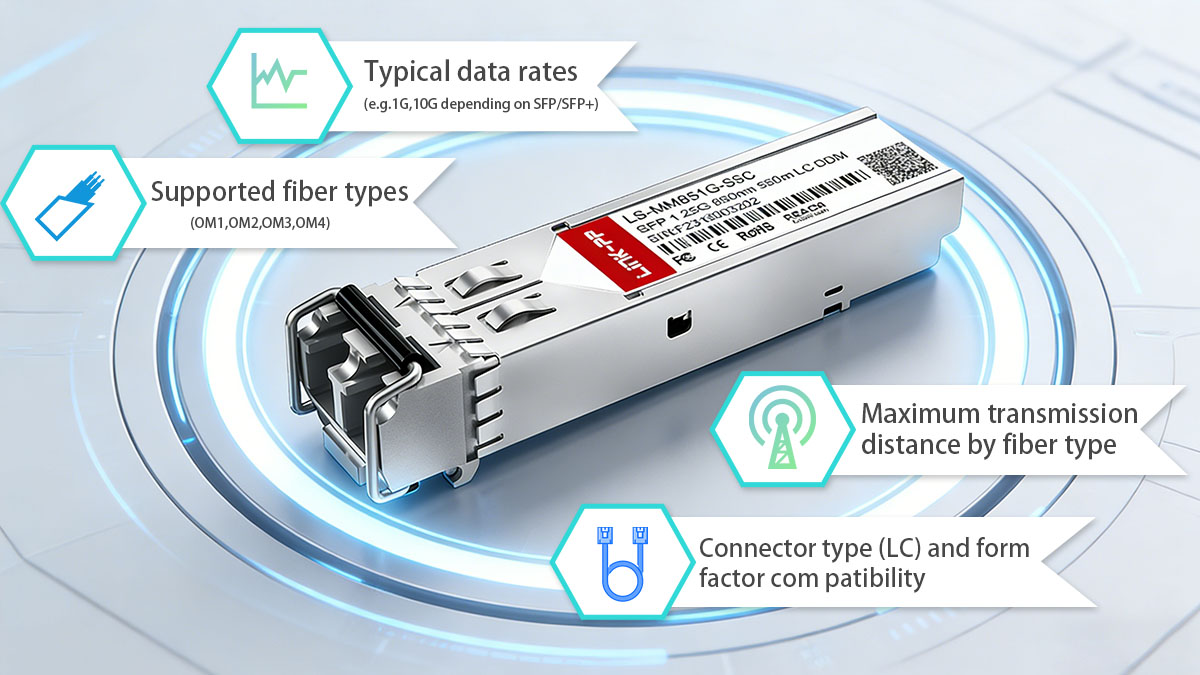
An 850nm SFP module is defined by its data rate, supported fiber type, transmission distance, and physical compatibility, and it is available across multiple speed tiers, not only 1G and 10G.
Supported Data Rates and Standards
850nm SFP modules cover a wide range of legacy and modern network speeds, making them suitable for both new deployments and network upgrades.
-
155M (OC-3 / STM-1)
-
Used in legacy SONET/SDH systems
-
Short-reach multimode optical links
-
Common in industrial and telecom access networks
-
-
622M (OC-12 / STM-4)
-
Higher-speed SONET/SDH applications
-
Multimode fiber-based short-distance transmission
-
-
1G (1000BASE-SX)
-
Standard Gigabit Ethernet over multimode fiber
-
Widely used in enterprise LAN and campus networks
-
-
10G (10GBASE-SR, SFP+)
-
High-speed data center and aggregation links
-
Requires SFP+ ports but still operates at 850nm
-
Key point:
Lower-speed 155M and 622M modules remain relevant in legacy infrastructure, while 1G and 10G dominate modern enterprise and data center environments.
Supported Multimode Fiber Types
850nm SFP modules are designed exclusively for multimode fiber, with performance depending heavily on fiber grade:
-
OM1 – Legacy MMF, limited bandwidth and reach
-
OM2 – Improved bandwidth for short-reach links
-
OM3 – Laser-optimized MMF, common in data centers
-
OM4 – High-bandwidth MMF for extended short-reach distances
Higher-grade fiber directly improves maximum distance and signal stability, especially at higher data rates.
Maximum Transmission Distance by Speed and Fiber Type
The achievable distance varies by both data rate and fiber specification:
-
155M / 622M
-
OM1–OM2: typically up to 2km (vendor-dependent)
-
Designed for stable short-reach SONET/SDH links
-
-
1G (1000BASE-SX)
-
OM1: up to 275m
-
OM2: up to 550m
-
OM3/OM4: up to 1km
-
-
10G (10GBASE-SR)
-
OM1: up to 33m
-
OM2: up to 82m
-
OM3: up to 300m
-
OM4: up to 400m
-
This scaling clearly shows why higher-speed links require higher-grade multimode fiber.
Connector Type and Optical Interface
-
Connector type
-
Standard LC duplex connector
-
Separate fibers for transmit (TX) and receive (RX)
-
-
Optical interface
-
Optimized for 850nm VCSEL-based transmission
-
Designed to minimize modal dispersion in MMF environments
-
Form Factor and Hardware Compatibility
-
Form factors
-
SFP: supports 155M, 622M, and 1G
-
SFP+: required for 10G operation
-
-
Hardware compatibility
-
Works with enterprise switches, routers, and NICs
-
Available as OEM-coded and third-party compatible modules
-
Hot-swappable for simplified maintenance and upgrades
-
Power Consumption and Deployment Density
-
Generally lower power consumption than single-mode optics
-
Reduced heat output, ideal for high-density switch environments
-
Supports large-scale deployments with predictable thermal behavior
Specification Summary Insight
From legacy 155M networks to modern 10G data centers, 850nm SFP modules provide a broad speed range, consistent multimode fiber support, and cost-efficient short-reach performance, making them one of the most versatile optical module categories still in active use.
🚉850nm SFP vs Other SFP Wavelengths
An 850nm SFP is optimized for short-distance, multimode fiber applications, while 1310nm and 1550nm SFPs are designed for longer reach over single-mode fiber. The differences in wavelength directly affect performance, cost, and deployment scenarios.
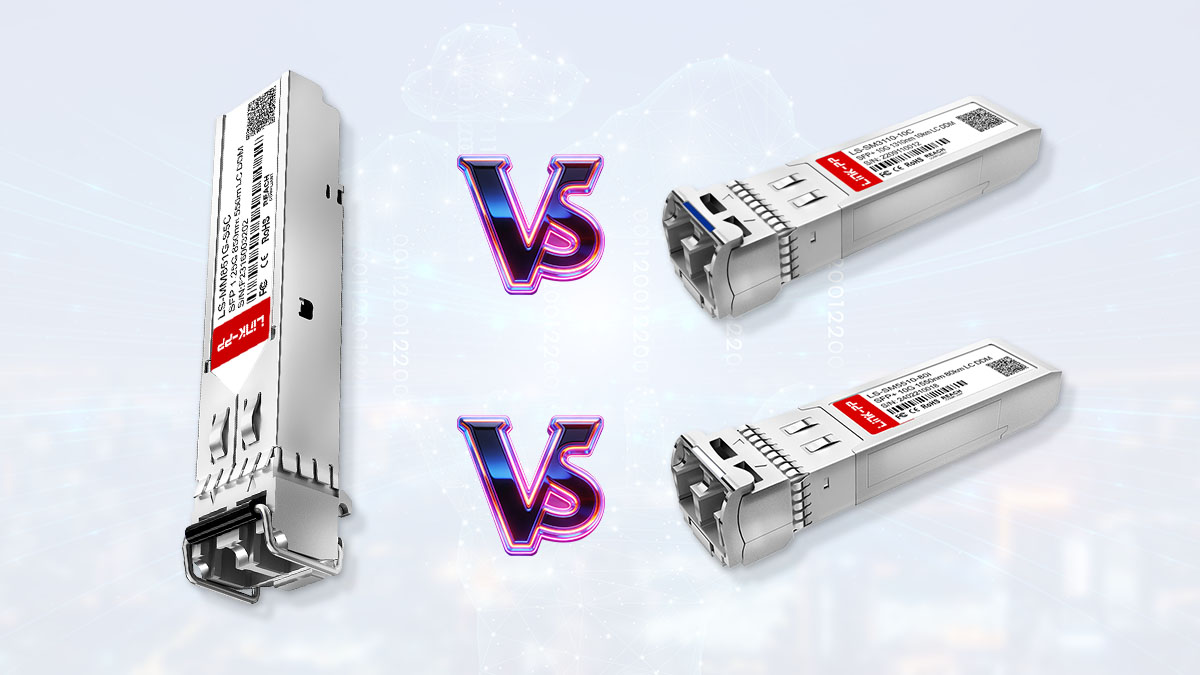
850nm vs 1310nm SFP
| Parameter | 850nm SFP | 1310nm SFP |
|---|---|---|
| Fiber type | Multimode fiber (OM1–OM4) | Mainly single-mode fiber |
| Typical distance | Short-reach | Medium-reach |
| Data rates | 1G, 10G | 1G, 10G and higher |
| Cost level | Lower | Moderate |
| Common use cases | LAN, data centers | Campus networks, metro access |
Key takeaway:
Choose 850nm SFP when multimode fiber is already deployed and link distances are short.
Choose 1310nm SFP when longer reach is required without moving to long-haul optics.
850nm vs 1550nm SFP
| Parameter | 850nm SFP | 1550nm SFP |
|---|---|---|
| Fiber type | Multimode fiber | Single-mode fiber |
| Typical distance | Short-reach | Long-reach |
| Optical loss | Higher | Lower |
| Cost level | Low | Higher |
| Typical deployment | Data centers | Telecom and long-haul networks |
Key takeaway:
850nm SFPs focus on cost efficiency and density, while 1550nm SFPs are designed for maximum distance and signal stability.
Performance, Cost, and Use-Case Comparison
From a practical deployment perspective:
-
Performance
-
850nm SFPs deliver reliable performance within MMF distance limits
-
1310nm and 1550nm SFPs support longer links with lower attenuation
-
-
Cost
-
850nm SFPs and multimode fiber are generally the most economical option
-
Longer-wavelength optics increase both module and cabling costs
-
-
Use cases
-
850nm: High-density, short-reach environments
-
1310nm: Medium-distance enterprise and campus networks
-
1550nm: Long-distance and carrier-grade links
-
When 850nm SFP Is the Better Choice
An 850nm SFP is the better choice when:
-
Link distances are within a few hundred meters
-
Multimode fiber is already installed
-
Cost control and port density are key priorities
-
The network is located in a data center or enterprise LAN
In short, 850nm SFPs excel where short reach, high volume, and cost efficiency matter more than distance.
🚉Common Use Cases for 850nm SFP
An 850nm SFP is best suited for short-reach, high-density network scenarios where multimode fiber is available and cost efficiency is a priority. Below are the most common and practical deployment environments.

Data Centers and Server Rooms
850nm SFP modules are widely used in data centers and server rooms due to their balance of performance and cost.
-
Ideal for top-of-rack to aggregation switch connections
-
Supports high port density with lower power consumption
-
Works efficiently with OM3 and OM4 fiber commonly deployed in modern data centers
For short internal links, 850nm SFPs provide reliable connectivity without the higher cost of single-mode optics.
Enterprise LAN and Campus Networks
In enterprise environments, 850nm SFPs are commonly deployed for building-level and floor-level connections.
-
Suitable for access and distribution layer links
-
Supports Gigabit and 10G Ethernet over existing multimode fiber
-
Simplifies network expansion without major cabling upgrades
These characteristics make 850nm SFPs a practical option for enterprise LAN and campus network designs.
Short-Reach Switch-to-Switch Connections
850nm SFPs are especially effective for short-distance switch interconnections.
-
Commonly used for rack-to-rack or row-to-row links
-
Provides stable performance within defined MMF distance limits
-
Reduces overall deployment cost for frequent interconnects
For networks with many short links, using 850nm SFPs helps maintain consistency and cost control.
High-Density Networking Environments
High-density networking environments benefit significantly from 850nm SFP technology.
-
Lower module cost enables large-scale deployments
-
Reduced heat and power consumption improve thermal management
-
Compact SFP and SFP+ form factors maximize port utilization
As a result, 850nm SFPs are commonly chosen for environments requiring many optical ports within limited physical space.
Overall, 850nm SFP modules are most effective in short-reach, cost-sensitive, and high-density network scenarios, making them a foundational component in modern enterprise and data center infrastructures.
🚉Advantages and Limitations of 850nm SFP
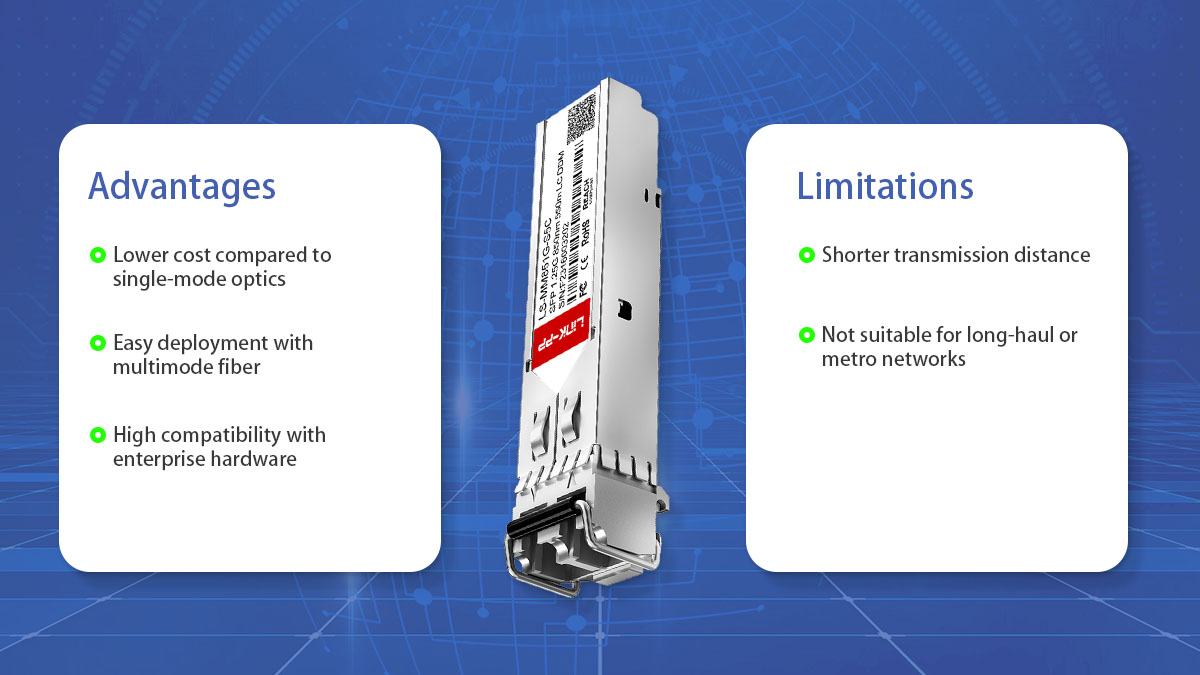
An 850nm SFP offers clear cost and deployment advantages for short-reach networks, but it also has well-defined limitations. Understanding both sides helps avoid misapplication and ensures the right optical choice.
Advantages of 850nm SFP
Lower Cost Compared to Single-Mode Optics
-
850nm SFP modules are generally less expensive than 1310nm and 1550nm single-mode SFPs
-
Multimode fiber and associated components also reduce overall network deployment cost
Easy Deployment with Multimode Fiber
-
Designed specifically for OM1–OM4 multimode fiber, which is common in enterprise environments
-
Simplifies upgrades and expansions where MMF infrastructure already exists
-
Less stringent alignment requirements compared to single-mode links
High Compatibility with Enterprise Hardware
-
Broad compatibility with switches, routers, and NICs from major vendors
-
Widely available in both OEM and third-party compatible versions
-
Supports standard Ethernet protocols such as 1000BASE-SX and 10GBASE-SR
Limitations of 850nm SFP
Shorter Transmission Distance
-
Limited to short-reach applications, typically a few hundred meters depending on fiber type
-
Modal dispersion in multimode fiber restricts scalability beyond defined distance limits
Not Suitable for Long-Haul or Metro Networks
-
Cannot meet the distance requirements of campus backbone, metro, or telecom networks
-
Single-mode optics at 1310nm or 1550nm are required for these scenarios
In summary, 850nm SFPs are highly efficient when used within their design boundaries. They deliver excellent value in short-distance environments but should not be considered a replacement for long-reach optical solutions.
🚉How to Choose the Right 850nm SFP
Choosing the right 850nm SFP transceiver requires more than matching wavelength and speed. The correct choice depends on data rate, fiber infrastructure, transmission distance, hardware compatibility, and procurement strategy, all of which directly affect network stability and total cost of ownership.
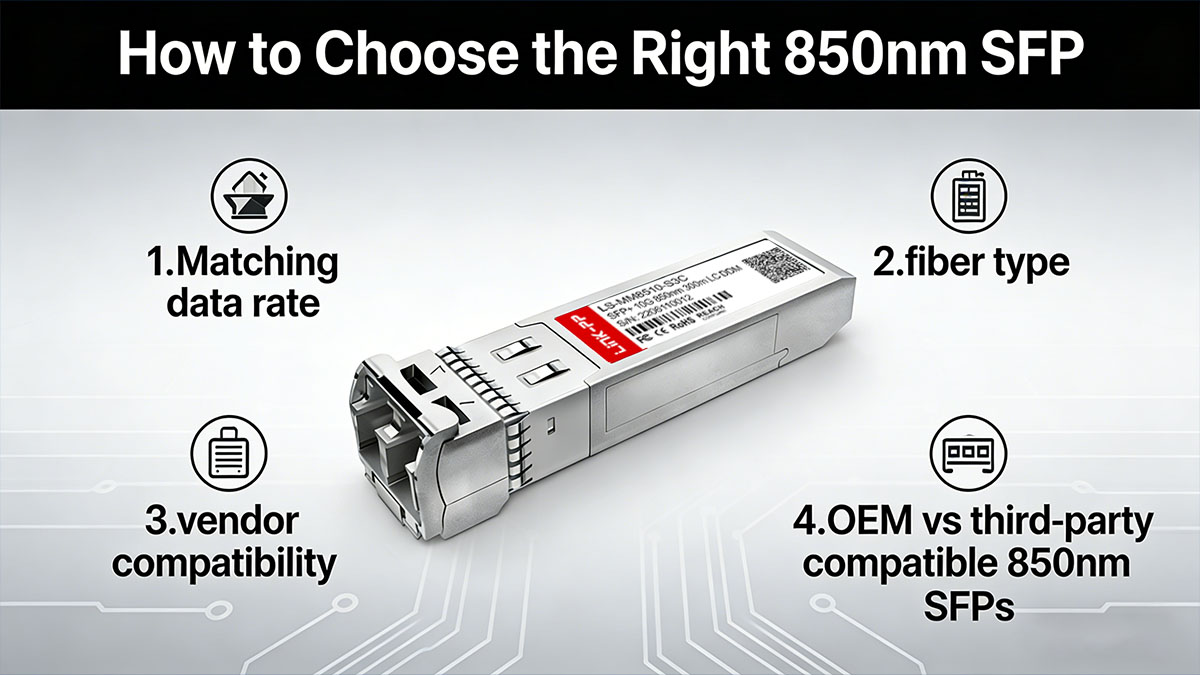
Step 1: Match Data Rate and Network Architecture
Start by confirming the required data rate and port type on your network equipment.
-
155M / 622M
-
Used in legacy SONET/SDH or industrial networks
-
Ensure the host device explicitly supports these rates
-
-
1G (1000BASE-SX)
-
Suitable for access and aggregation layers
-
Requires standard SFP ports
-
-
10G (10GBASE-SR)
-
Designed for high-throughput data center links
-
Requires SFP+ ports and compatible switch ASICs
-
Key rule:
An SFP module cannot operate beyond the maximum speed supported by the port, even if the wavelength matches.
Step 2: Validate Fiber Type, Distance, and Link Budget
Fiber infrastructure directly limits performance at 850nm.
-
Identify existing multimode fiber type (OM1–OM4)
-
Measure or estimate actual link length, including patch cords
-
Confirm the link stays within standards-defined distance limits
Engineering considerations:
-
Higher data rates require higher modal bandwidth
-
OM3 and OM4 significantly reduce dispersion risk
-
Exceeding distance limits often causes intermittent link failures, not immediate outages
Step 3: Ensure Switch and Platform Compatibility
Hardware compatibility is a common failure point in optical deployments.
-
Check the switch vendor’s optical transceiver compatibility list
-
Verify firmware and OS version support
-
Confirm EEPROM coding requirements for vendor-specific platforms
Best practice:
Always test a sample module in the actual production switch before large-scale deployment.
Step 4: Consider Power Consumption and Port Density
In high-density environments, optical power characteristics matter.
-
850nm SFPs generally consume less power than single-mode optics
-
Lower heat output improves thermal stability
-
Important for top-of-rack and aggregation switches with many populated ports
This directly impacts long-term operational reliability and cooling cost.
Step 5: Decide Between OEM and Third-Party Compatible Modules
The choice between OEM and third-party 850nm SFPs affects both cost and flexibility.
-
OEM modules
-
Vendor-certified and fully supported
-
Higher upfront cost
-
Often required in warranty-sensitive environments
-
-
Third-party compatible modules
-
Significantly lower cost
-
Broadly used in enterprise and data center networks
-
Must be fully tested and quality-certified
-
When sourced from a reputable manufacturer (like LINK-PP), third-party compatible 850nm SFPs deliver equivalent performance for most applications.
Step 6: Plan for Scalability and Future Upgrades
Even short-reach networks evolve.
-
Choose OM3 or OM4 fiber where possible to support future speed upgrades
-
Ensure switches support both SFP and SFP+ to allow gradual migration
-
Avoid locking into proprietary optics unless operationally required
Selection Insight Summary
The right 850nm SFP is one that matches your current speed requirements, respects multimode fiber limitations, integrates seamlessly with your hardware platform, and aligns with your cost strategy.
A disciplined selection process minimizes deployment risk and maximizes long-term network value.
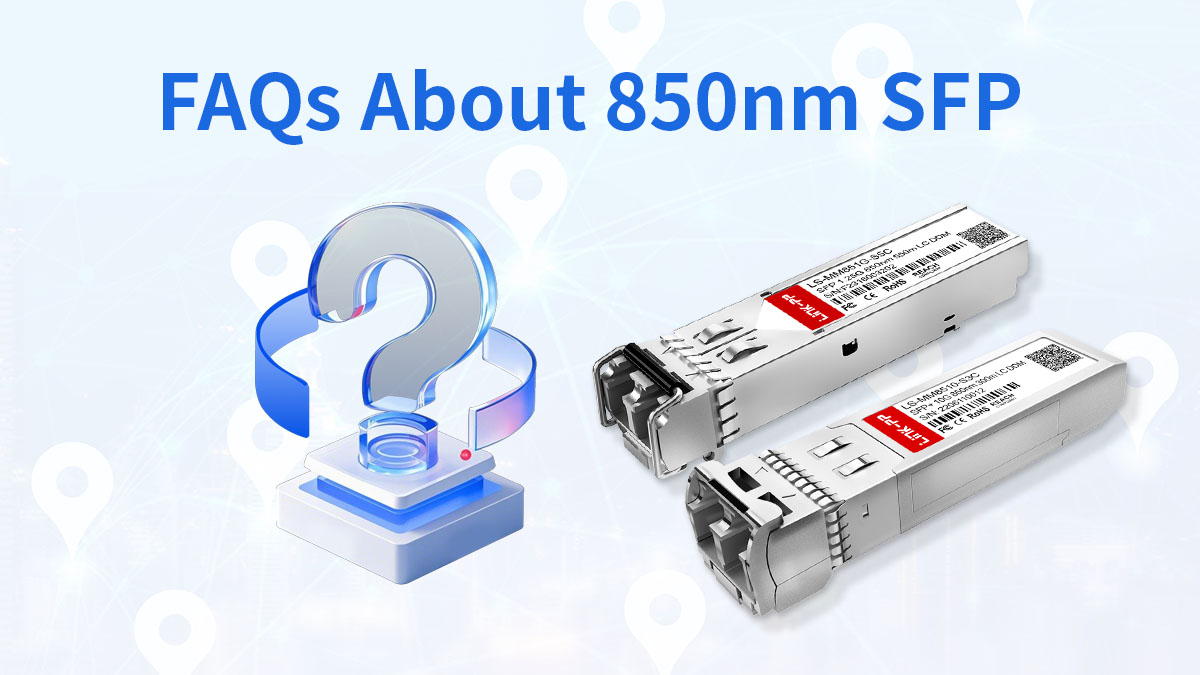
🚉FAQs About 850nm SFP
What fiber is required for an 850nm SFP?
An 850nm SFP requires multimode fiber, including OM1, OM2, OM3, or OM4.
It is specifically designed for multimode transmission and does not support single-mode fiber. For modern networks, OM3 or OM4 is recommended.
How far can an 850nm SFP transmit data?
The transmission distance of an 850nm SFP depends on data rate and fiber type.
-
1G (1000BASE-SX): up to 1km on OM3/OM4
-
10G (10GBASE-SR): up to 300m on OM3, 400m on OM4
Using lower-grade fiber or exceeding these distances may cause link instability.
Can 850nm SFP work with single-mode fiber?
No. 850nm SFPs are not compatible with single-mode fiber.
Single-mode fiber is optimized for 1310nm or 1550nm wavelengths, and using 850nm optics will result in high loss or link failure.
Is 850nm SFP suitable for data centers?
Yes. 850nm SFPs are widely used in data centers for short-reach connections.
They are ideal for:
-
Rack-to-rack and row-to-row links
-
High-density switching environments
-
Cost-sensitive, large-scale deployments
What is the difference between 850nm SFP and 10G SFP+ SR?
The main difference is data rate and form factor, not wavelength.
-
850nm SFP: up to 1G, uses SFP ports
-
850nm SFP+ SR: up to 10G, requires SFP+ ports
Both operate at 850nm and use multimode fiber.
Is an 850nm SFP cheaper than single-mode SFPs?
Yes. 850nm SFPs are generally more cost-effective than single-mode SFPs.
-
Lower module cost
-
Lower multimode fiber cost
-
Easier deployment in short-reach environments
This makes 850nm SFPs a preferred choice for enterprise and data center networks where long distance is not required.
🚉Summary: Is an 850nm SFP Right for Your Network?
An 850nm SFP is the best choice for short-reach optical links that require high port density, low cost, and reliable performance over multimode fiber.
Key Takeaways
-
Operates at 850nm and is designed exclusively for multimode fiber (OM1–OM4)
-
Commonly supports 1G (SFP) and 10G (SFP+) data rates
-
Ideal for data centers, enterprise LANs, and short switch-to-switch links
-
Offers lower cost and easier deployment compared to single-mode optics
When to Choose / When Not to Choose 850nm SFP
Choose an 850nm SFP when:
-
Link distances are within a few hundred meters
-
Multimode fiber is already installed
-
Cost efficiency and port density are key priorities
Do not choose an 850nm SFP when:
-
Long-distance, campus, or metro links are required
-
The network uses single-mode fiber only
-
Future expansion requires distances beyond MMF limits
Final Recommendation
For most enterprise and data center short-reach applications, an 850nm SFP delivers the best balance of performance, cost, and compatibility. When sourced from a trusted supplier and matched correctly with fiber and hardware, it is a dependable optical solution for scalable network design.
If you are planning to deploy or upgrade short-distance optical links, explore 850nm SFP modules available at the LINK-PP Official Store to ensure compatibility, quality, and long-term reliability.