In 10G network design, transmission distance is often the first constraint engineers encounter. Links that exceed multimode limits but do not justify long-haul optics require a solution that balances reach, cost, and deployment simplicity.
This is where 10G SFP+ LR becomes relevant.
In real-world deployments, many 10G links fall into a practical middle range: longer than in-rack or intra-building connections, yet well below metro-scale distances. Choosing an optical module that matches this range directly affects network stability, power consumption, and long-term operational cost.
This article focuses on how 10G SFP+ LR fits into that decision space. Rather than treating it as an isolated specification, we will examine its role within the 10G SFP+ ecosystem, its technical boundaries, and the scenarios where it is — or is not — the most appropriate choice.
By the end of this guide, you will clearly understand:
-
Where 10G SFP+ LR sits among 10G optical transceivers
-
What design problems it is intended to solve
-
How to evaluate whether LR is the right option for your network
🏸What Is 10G SFP+ LR?
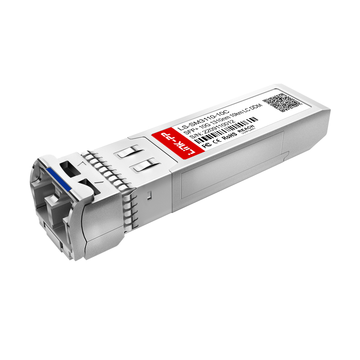
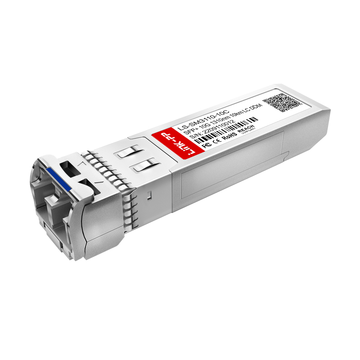
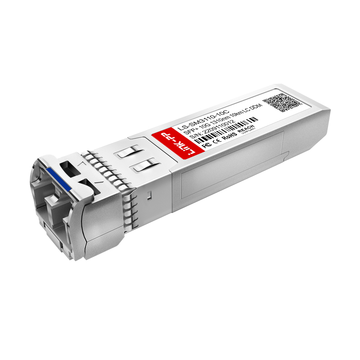
10G SFP+ LR is a standardized 10G optical transceiver designed for single-mode fiber transmission up to 10km using a 1310nm wavelength.
It follows the SFP+ Multi-Source Agreement (MSA) and is widely used to build stable medium-distance 10G links between switches, routers, and servers.
In practical deployments, 10G SFP+ LR is considered the default long-reach option within the 10G SFP+ ecosystem, balancing transmission distance, power consumption, and cross-vendor interoperability.
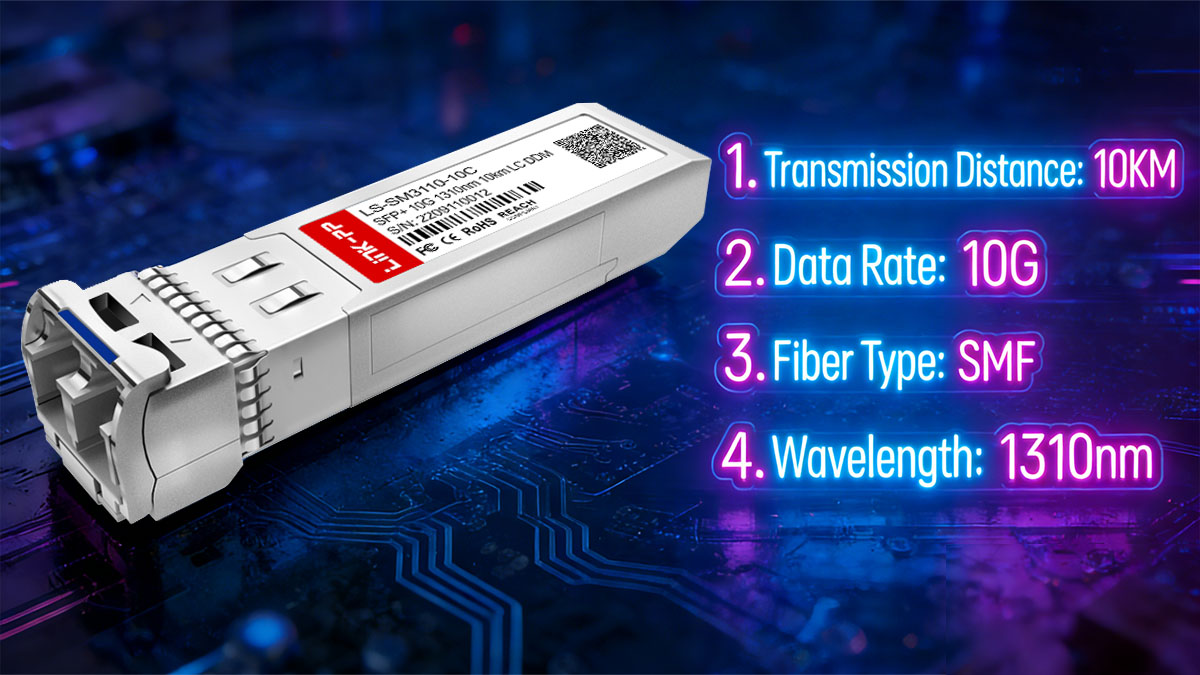
Core Technical Characteristics of 10G SFP+ LR
From an engineering perspective, 10G SFP+ LR is defined by a fixed set of parameters that determine where it can be reliably deployed.
| Parameter | Specification |
|---|---|
| Data Rate | 10.3125Gbps |
| Wavelength | 1310nm |
| Max Distance | 10km |
| Fiber Type | Single-Mode Fiber |
| Connector Type | LC Duplex |
| Transmitter Type | DFB |
| Receiver Type | PIN |
These specifications are standardized across compliant vendors, which is why 10G SFP+ LR modules typically interoperate well in heterogeneous network environments.
Why 10G SFP+ LR Uses 1310nm Single-Mode Optics
The 1310nm wavelength is selected because it offers stable signal transmission over single-mode fiber at medium distances.
At this wavelength, chromatic dispersion remains low enough to maintain signal integrity over 10km links without requiring dispersion compensation.
Single-mode fiber is essential in this design because its narrow core minimizes modal dispersion, enabling reliable 10G transmission beyond the physical limits of multimode fiber.
How 10G SFP+ LR Differs from Other SFP+ Types
The key distinction of 10G SFP+ LR lies in its optimized reach profile rather than its data rate.
While all SFP+ modules operate at 10G speeds, LR is engineered specifically for links that exceed short-reach limits but do not require the higher optical power or stricter link budgets of extended-reach modules.
This positioning makes 10G SFP+ LR a common choice for enterprise backbones, campus networks, and access aggregation networks.
🏸What Does “LR” Mean in 10G SFP+?
In 10G SFP+ modules, “LR” stands for Long Reach and specifically refers to a standardized transmission distance of up to 10km over single-mode fiber. It is not a marketing label, but a distance classification defined by optical power, receiver sensitivity, and link budget constraints.
In engineering terms, LR describes a target reach window, not an absolute limit. The 10km figure represents the maximum supported distance under compliant fiber conditions and standard attenuation assumptions.
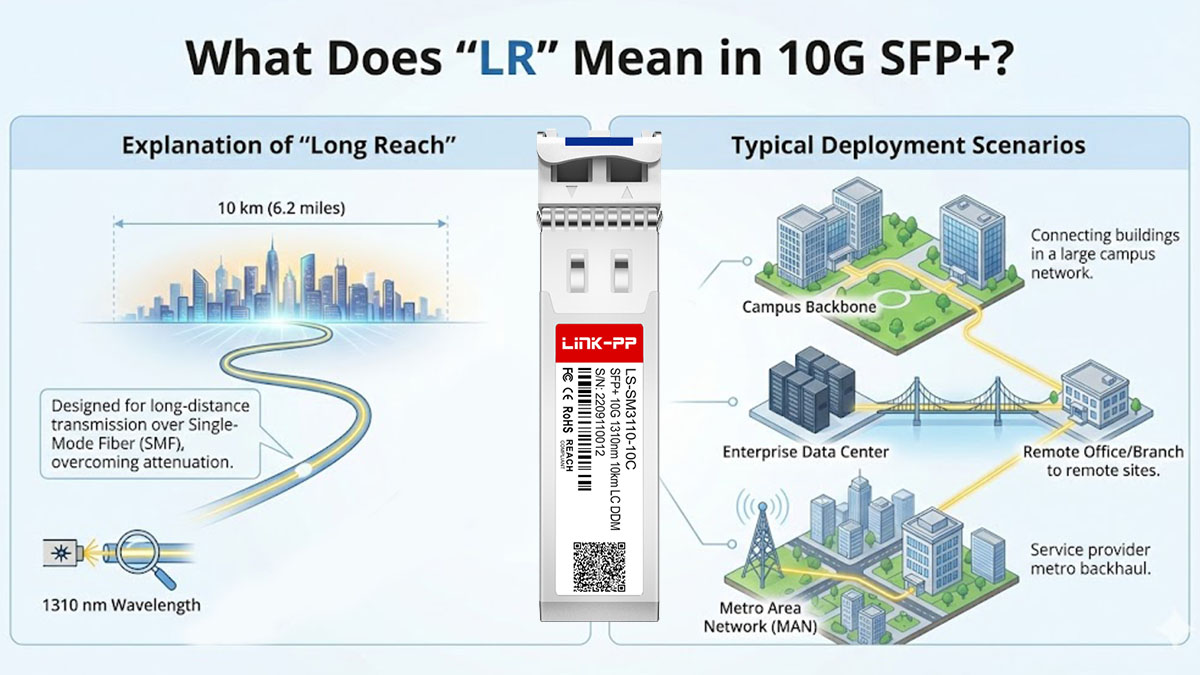
How “Long Reach” Is Defined in Practice
“Long Reach” is defined by optical budget rather than physical distance alone.
For 10G SFP+ LR, the design goal is to maintain sufficient signal margin across typical single-mode fiber links without additional amplification.
| Parameter | Typical Value |
|---|---|
| Nominal Reach | Up to 10km |
| Wavelength | 1310nm |
| Optical Budget | ~6–8dB |
| Fiber Type | Single-Mode Fiber |
This budget accounts for fiber attenuation, connector loss, and splice loss commonly found in enterprise and access networks.
Why LR Is the Most Common Long-Distance 10G Option
LR exists to cover the majority of real-world 10G link distances.
Most enterprise, campus, and access network links fall well within 10km, making LR a practical choice without the added cost and complexity of extended-reach optics.
From a network design perspective, LR provides:
-
Sufficient margin for structured cabling environments
-
Predictable performance across vendors
-
Lower power consumption compared to longer-reach modules
LR Compared to Other Reach Classifications
The meaning of LR becomes clearer when viewed alongside other SFP+ reach types.
| Reach Type | Typical Distance | Fiber Type |
|---|---|---|
| 10GBASE-SR | Up to 300m | Multimode Fiber |
| 10GBASE-LR | Up to 10km | Single-Mode Fiber |
| 10GBASE-ER | Up to 40km | Single-Mode Fiber |
This comparison shows that LR is positioned between short-reach data center links and extended-reach carrier links, both in distance and deployment complexity.
What LR Does Not Imply
“LR” does not guarantee optimal performance beyond its design window.
Using LR modules significantly beyond 10km can lead to unstable links unless fiber conditions are exceptionally clean and attenuation is minimal.
Likewise, LR does not imply compatibility with multimode fiber or copper infrastructure. It is explicitly designed for single-mode fiber environments.
🏸Key Specifications of 10G SFP+ LR
The specifications of 10G SFP+ LR define its operating boundaries and directly determine whether it fits a given 10G link design.
These parameters are standardized to ensure predictable performance and cross-vendor interoperability.
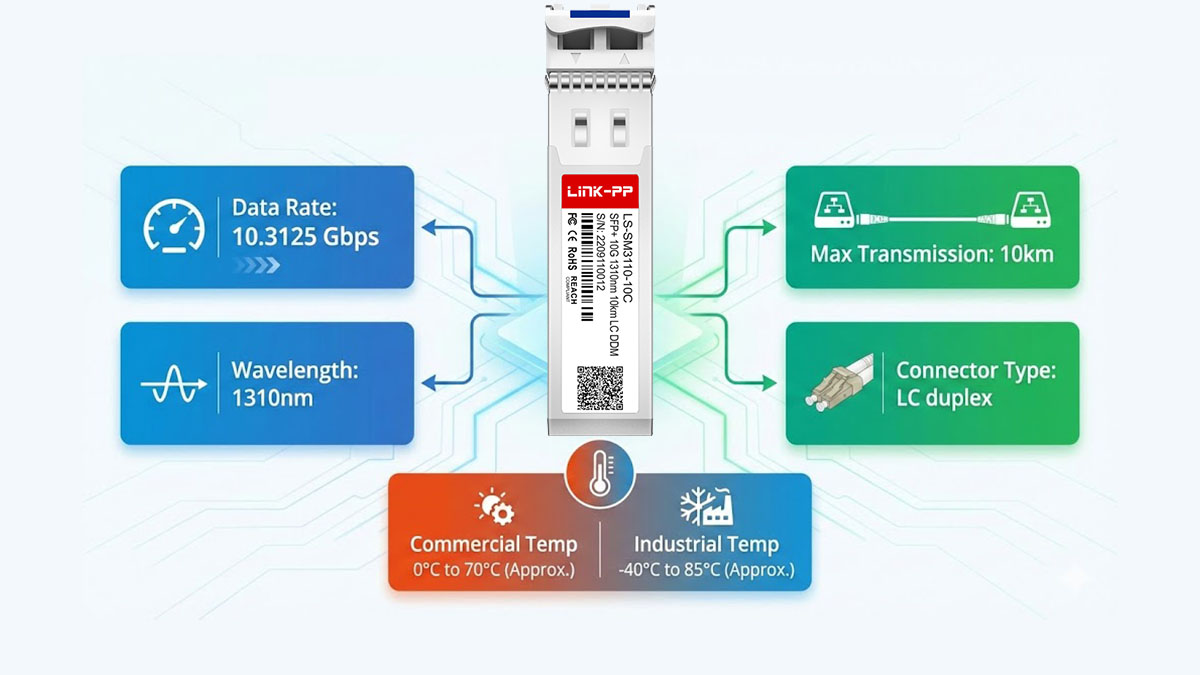
Core Optical and Electrical Parameters
At its core, 10G SFP+ LR is characterized by a fixed set of optical and electrical specifications.
| Specification | Value |
|---|---|
| Data Rate | 10.3125Gbps |
| Wavelength | 1310nm |
| Max Distance | 10km |
| Fiber Type | Single-Mode Fiber |
These values define the fundamental performance envelope of LR modules and remain consistent across compliant implementations.
Optical Power and Link Budget Characteristics
Link stability depends not only on distance, but on the available optical budget.
10G SFP+ LR modules are designed to operate within a moderate budget suitable for structured single-mode fiber deployments.
| Parameter | Typical Range |
|---|---|
| Optical Budget | ~6–8dB |
| Transmit Power | −8 to 0dBm |
| Receiver Sensitivity | ≤ −14dBm |
This budget allows for connector loss and limited splicing while maintaining sufficient margin for reliable operation.
Interface and Physical Form Factor
10G SFP+ LR uses the standard SFP+ form factor, enabling high port density in modern network equipment.
| Parameter | Description |
|---|---|
| Connector Type | LC Duplex |
| Hot-Pluggable | Yes |
| Form Factor | SFP+ |
The hot-pluggable design allows modules to be installed or replaced without interrupting system operation.
Environmental and Power Characteristics
Environmental ratings define where a 10G SFP+ LR module can be safely deployed.
| Parameter | Typical Value |
|---|---|
| Power Consumption | ≤1.5W |
| Operating Temperature | 0°C to 70°C |
| Compliance | SFP+ MSA, IEEE 802.3ae |
Commercial temperature support is sufficient for most data center and enterprise environments, while industrial variants may be available for harsher conditions.
Why These Specifications Matter in Network Design
Understanding these parameters helps avoid over- or under-engineering 10G links.
Selecting LR modules based on standardized specifications ensures predictable performance, simplifies troubleshooting, and reduces compatibility risks in multi-vendor networks.
🏸Transmission Distance and Fiber Requirements
The 10km transmission distance of 10G SFP+ LR is achievable only under defined fiber and loss conditions. In real deployments, actual reach depends on fiber type, attenuation, connector quality, and link design margins.
Understanding these constraints is critical to avoid unstable links or unnecessary module upgrades.
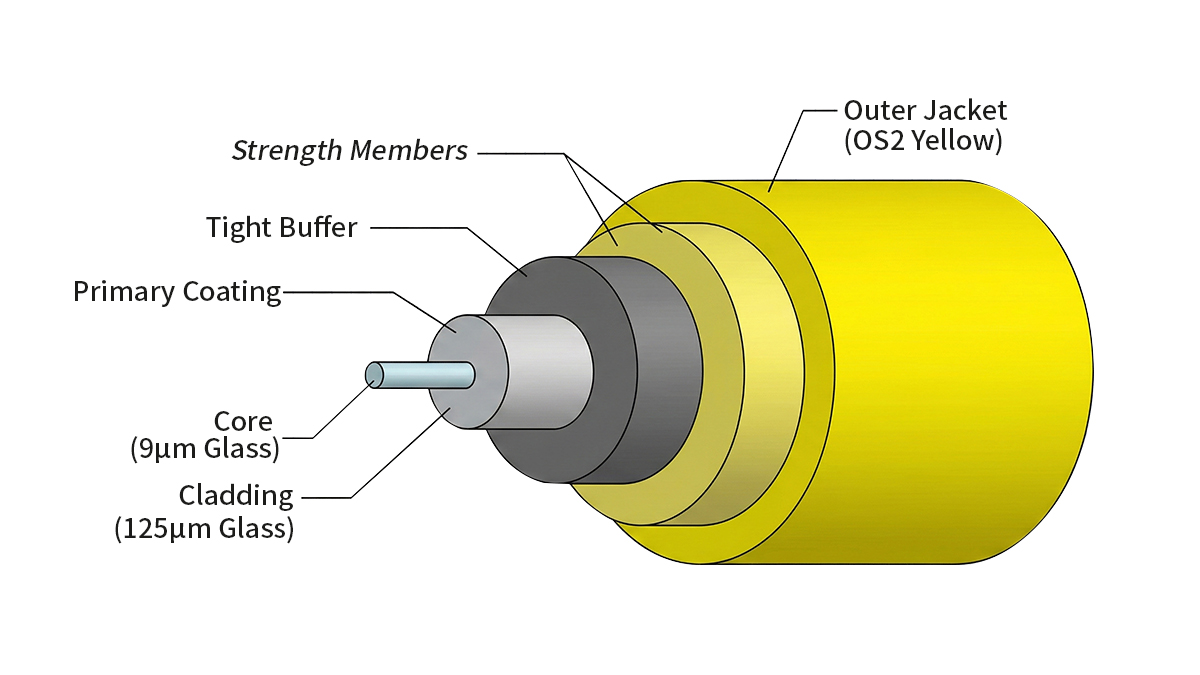
Supported Fiber Type and Standards
10G SFP+ LR requires single-mode fiber and is not compatible with multimode fiber.
| Fiber Parameter | Requirement |
|---|---|
| Fiber Type | Single-Mode Fiber |
| Common Standard | OS2 |
| Core Diameter | 9/125µm |
OS2 single-mode fiber is designed for low attenuation at 1310nm, making it suitable for 10km 10G transmission without optical amplification.
Fiber Attenuation and Distance Calculation
Transmission distance is governed by optical loss rather than physical length alone.
For 10G SFP+ LR, total link loss must remain within the available optical budget.
| Loss Source | Typical Value |
|---|---|
| Fiber Attenuation | ~0.4dB/km |
| Connector Loss | ~0.3dB per pair |
| Splice Loss | ~0.1dB per splice |
As distance increases, accumulated attenuation reduces signal margin, which can limit achievable reach below 10km in heavily patched links.
Practical Distance Expectations in Real Networks
In controlled environments, 10G SFP+ LR typically supports full 10km links without issue.
However, in networks with multiple connectors or splices, practical distance may be slightly shorter unless high-quality fiber management is maintained.
Engineers often design with additional margin to account for aging, contamination, and future reconfiguration.
Why Multimode Fiber Is Not Suitable for LR
Multimode fiber introduces excessive modal dispersion at 10G speeds beyond short distances.
Even though 1310nm light can propagate through multimode fiber, signal distortion makes stable 10G transmission impractical beyond very short links.
This is why SR modules are explicitly paired with multimode fiber, while LR is reserved for single-mode deployments.
Design Recommendations for Stable 10km Links
To maximize link reliability with 10G SFP+ LR:
-
Use OS2 single-mode fiber wherever possible
-
Minimize unnecessary connectors and splices
-
Maintain clean LC interfaces
-
Reserve optical margin for future changes
These practices help ensure that the theoretical 10km reach translates into real-world stability.
🏸How Does a 10G SFP+ LR Module Work?
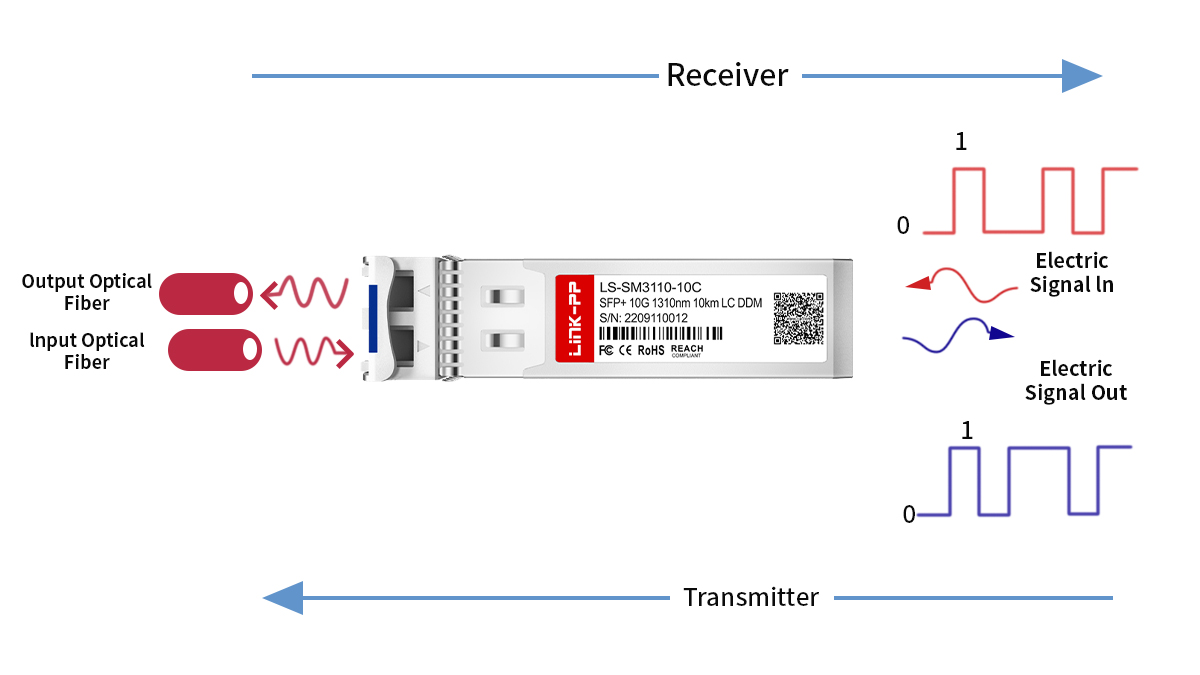
A 10G SFP+ LR module works by converting high-speed electrical signals into 1310nm optical signals for transmission over single-mode fiber, and then converting them back into electrical signals at the receiving end. This process follows a defined optical–electrical signal path optimized for 10G data rates and medium-distance links.
Electrical-to-Optical Signal Conversion
On the transmit side, the module receives a 10G electrical signal from the host device and converts it into light.
The process includes:
-
High-speed electrical input from the switch or router ASIC
-
Laser driver modulation
-
Emission of a 1310nm optical signal into single-mode fiber
This conversion is designed to maintain signal integrity while operating within the optical power limits defined for LR transmission.
Optical Transmission Over Single-Mode Fiber
Once converted, the optical signal propagates through single-mode fiber with minimal dispersion.
The narrow core of single-mode fiber ensures that the signal follows a single propagation path, reducing distortion over distance.
At 1310nm, attenuation and chromatic dispersion remain low enough to support stable 10G transmission across links up to 10km without amplification.
Optical-to-Electrical Signal Conversion
At the receive end, the incoming optical signal is converted back into an electrical signal.
This stage involves:
-
Photodiode detection of the incoming light
-
Signal amplification and conditioning
-
Output of a clean 10G electrical signal to the host device
Receiver sensitivity determines how much optical loss the link can tolerate while still maintaining error-free communication.
Clock Recovery and Signal Integrity
To sustain reliable 10G operation, the module includes clock and data recovery functions.
These functions ensure that timing alignment is preserved despite attenuation and minor signal distortion introduced along the fiber path.
This internal processing allows 10G SFP+ LR modules to interoperate across vendors and platforms while maintaining consistent performance.
Why This Design Is Optimized for 10km Links
The internal architecture of 10G SFP+ LR is intentionally optimized for medium-distance transmission.
It avoids the higher optical power and thermal load of extended-reach modules while offering significantly greater reach than short-reach alternatives.
This balance is what makes LR suitable for enterprise and access-layer deployments where predictable performance and efficiency matter.
🏸Common Applications of 10G SFP+ LR
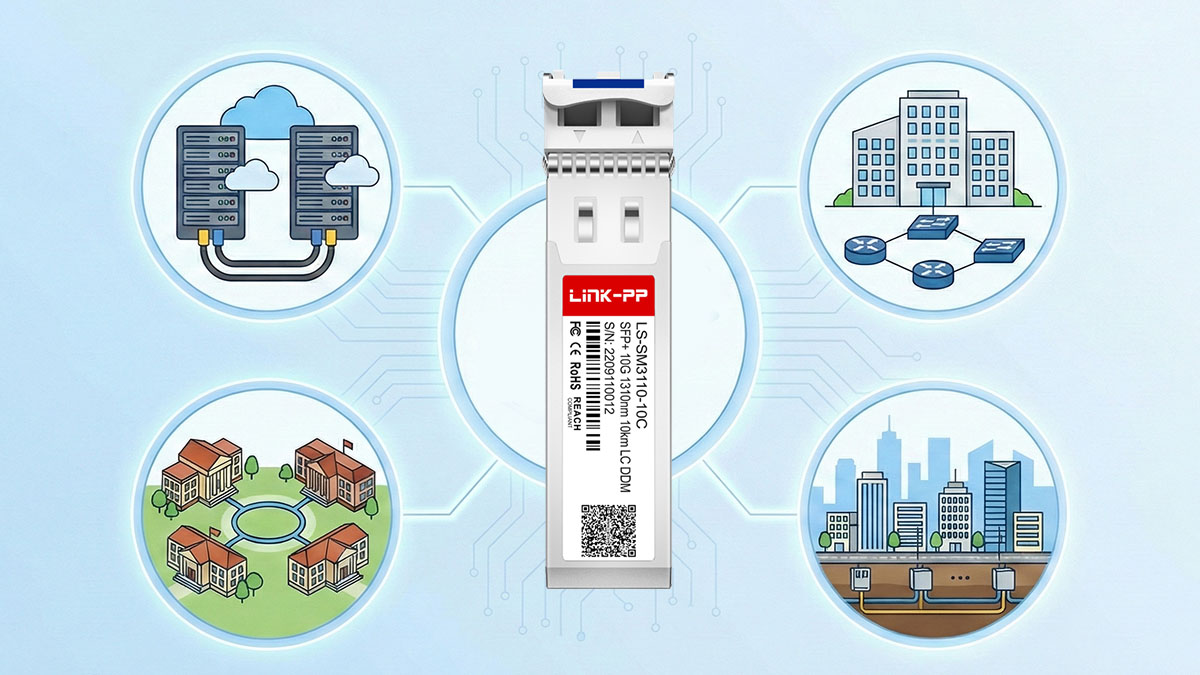
10G SFP+ LR is most commonly used in network segments where 10G links must extend beyond multimode limits while remaining within 10km.
It is a practical choice for medium-distance connections that require stability, interoperability, and predictable performance.
Typical Deployment Scenarios
The following scenarios represent where 10G SFP+ LR is most frequently deployed.
| Application Scenario | Link Distance | Network Role |
|---|---|---|
| Data Center Interconnect | 1–10km | Aggregation / Spine |
| Campus Backbone | 500m–10km | Core / Distribution |
| Enterprise WAN Edge | 2–10km | Uplink / Access |
| Metro Access Network | 5–10km | Aggregation |
These scenarios share a common requirement: reliable 10G throughput over single-mode fiber without the complexity of long-haul optics.
Data Center Interconnection
In data center environments, 10G SFP+ LR is used for inter-building or cross-campus links.
When facilities are separated by hundreds of meters or several kilometers, LR provides sufficient reach while maintaining standard SFP+ port density.
It is typically preferred over SR when:
-
Fiber runs exceed multimode distance limits
-
Single-mode fiber is already installed
-
Power efficiency is a concern in dense switch deployments
Campus and Enterprise Backbone Networks
Campus backbones often span multiple buildings and distribution layers.
10G SFP+ LR supports these layouts by delivering consistent performance across longer fiber paths without requiring additional optical equipment.
This makes LR suitable for:
-
Core-to-distribution links
-
Building-to-building connections
-
Redundant backbone paths
Access and Aggregation Networks
At the access and aggregation layers, LR enables cost-effective 10G uplinks over single-mode infrastructure.
It is commonly used to connect access switches to aggregation nodes where distances are too long for multimode fiber.
In these environments, LR offers:
-
Predictable link budgets
-
Simplified inventory management
-
Broad compatibility across platforms
Where 10G SFP+ LR Is Typically Not Used
Despite its versatility, LR is not optimal for every 10G scenario.
It is generally avoided when:
-
Links are entirely intra-rack or short-reach
-
Only multimode fiber is available
-
Required distance exceeds 10km
In such cases, SR or extended-reach modules are more appropriate.
🏸10G SFP+ LR vs SR vs ER
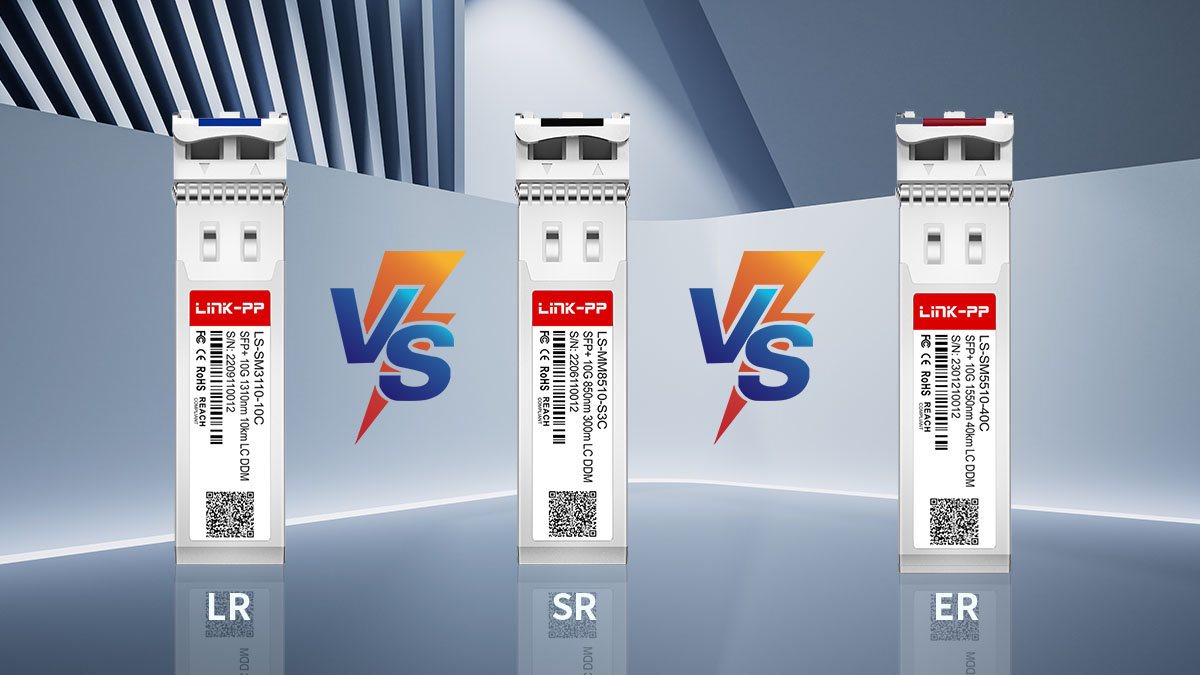
The key difference between SR, LR, and ER lies in transmission distance and fiber requirements, not data rate. All three operate at 10G, but they are optimized for very different link scenarios.
Core Differences at a Glance
Choosing the correct SFP+ type depends on matching reach and fiber type to the actual link design.
| Parameter | SR Transceiver | LR Transceiver | ER Transceiver |
|---|---|---|---|
| Wavelength | 850nm | 1310nm | 1550nm |
| Max Distance | Up to 300m | Up to 10km | Up to 40km |
| Fiber Type | Multimode | Single-Mode | Single-Mode |
| Typical Use | Short reach | Medium reach | Long reach |
This comparison highlights why LR sits in the middle of the SFP+ reach spectrum.
When LR Is the Most Practical Choice
LR is the optimal option when link distance exceeds multimode limits but remains well below long-haul thresholds.
LR is typically chosen when:
-
Single-mode fiber is available
-
Link distance is between several hundred meters and 10km
-
Power consumption and thermal load need to remain moderate
-
Long-reach optical budgets are unnecessary
In these cases, LR offers the best balance between reach and operational efficiency.
SR vs LR: Fiber Availability as the Deciding Factor
The SR vs LR decision is often driven by existing fiber infrastructure.
SR is cost-effective for short links over multimode fiber, but becomes impractical once distance exceeds multimode constraints.
LR, by contrast, is designed specifically for single-mode fiber and maintains signal integrity over much longer distances without requiring higher optical power.
LR vs ER: Avoiding Over-Engineering
ER modules are designed for distances far beyond most enterprise requirements.
Using ER where LR is sufficient often results in unnecessary cost, higher power consumption, and stricter link budget management.
Unless links approach or exceed 10km, LR is usually the more efficient and easier-to-manage option.
Practical Selection Summary
In most enterprise and campus networks, LR represents the default long-distance 10G choice.
SR is reserved for short, multimode links, while ER is applied only when extended reach is a hard requirement.
This tiered approach simplifies optical planning and reduces operational complexity.
🏸Compatibility and Interoperability Considerations
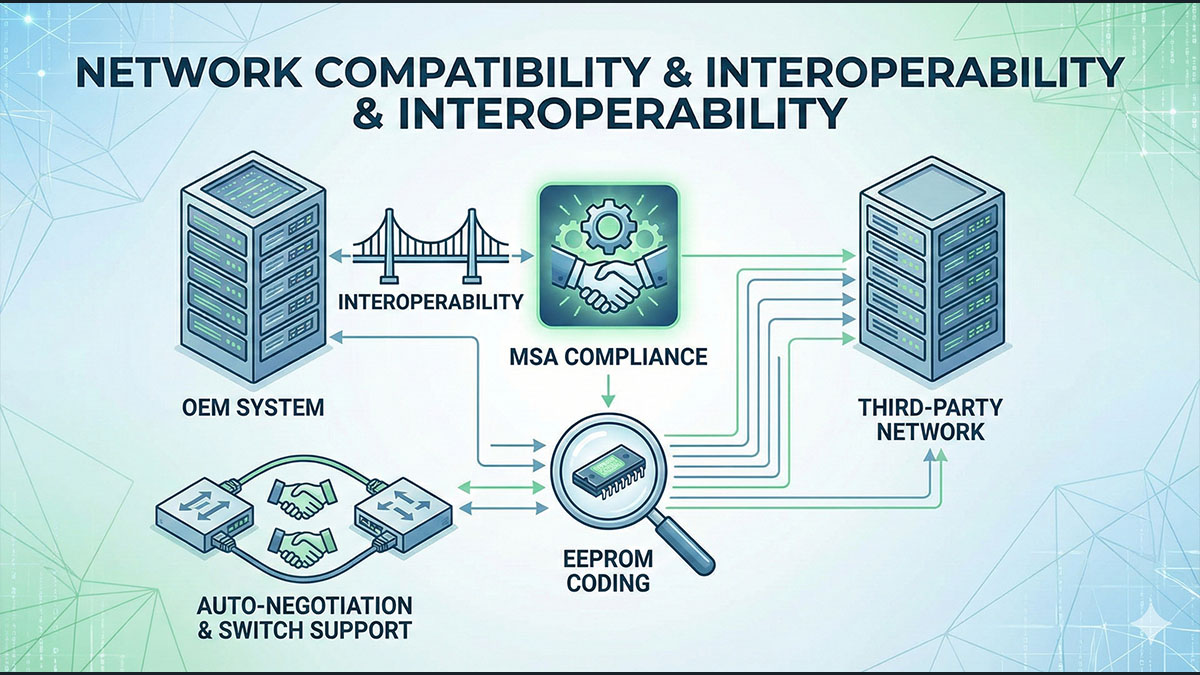
10G SFP+ LR modules are standardized, but real-world compatibility depends on more than matching basic specifications. Interoperability is influenced by standards compliance, platform support, and how modules are identified by network devices.
Standards and MSA Compliance
Compliance with the SFP+ Multi-Source Agreement (MSA) is the foundation of interoperability.
| Compatibility Factor | Requirement |
|---|---|
| Electrical Interface | SFP+ MSA |
| Optical Standard | IEEE 802.3ae |
| Form Factor | SFP+ |
| Management Interface | I2C / DDM |
Modules that follow these standards typically operate correctly across different switch and router platforms.
Vendor Coding and Platform Recognition
Even when optical parameters match, vendor identification can affect compatibility.
Some network devices verify module information stored in EEPROM and may restrict operation based on vendor codes.
Common considerations include:
-
Whether the platform allows third-party optics
-
How strictly vendor checks are enforced
-
Support for programmable or open-coded modules
Understanding platform policy is often as important as optical specifications.
Mixing Different Brands of 10G SFP+ LR
From a protocol and optical standpoint, mixing brands is generally supported.
As long as both modules meet LR specifications and operate within link budget limits, the optical link itself remains standards-compliant.
Potential issues usually arise from:
-
Platform-side vendor restrictions
-
Firmware limitations
-
DDM reporting inconsistencies
These issues are administrative rather than optical in nature.
DDM and Monitoring Compatibility
Digital Diagnostic Monitoring (DDM) provides visibility into module operating conditions.
| DDM Parameter | Typical Availability |
|---|---|
| Optical Power | Yes |
| Temperature | Yes |
| Voltage | Yes |
| Bias Current | Yes |
While DDM data is widely supported, the accuracy and format of reported values can vary slightly between vendors.
Best Practices to Ensure Interoperability
To reduce compatibility risks when deploying 10G SFP+ LR modules:
-
Verify platform support and vendor policies
-
Ensure firmware is up to date
-
Test modules in target devices before large-scale deployment
-
Monitor DDM values after installation
These steps help ensure stable operation across multi-vendor environments.
🏸Power Consumption and Thermal Performance
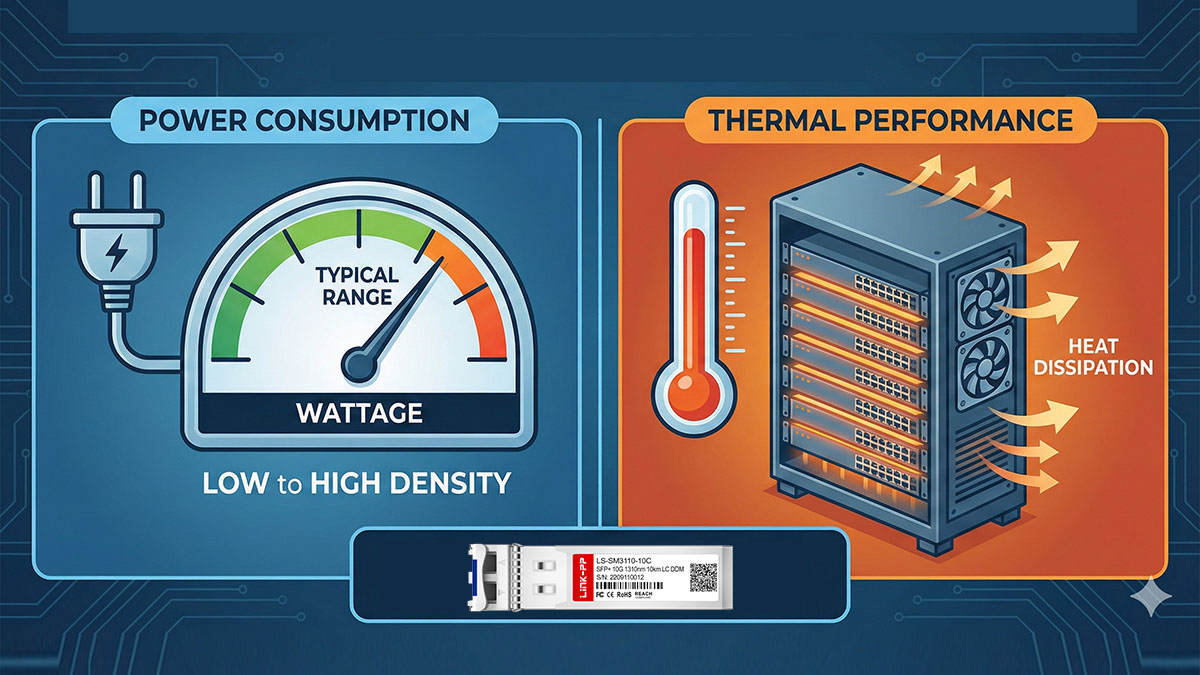
10G SFP+ LR is designed to balance transmission reach with moderate power consumption, making it suitable for dense 10G deployments.
Compared with extended-reach optics, LR modules operate within a controlled thermal envelope that aligns well with standard switch cooling designs.
Typical Power Consumption Range
Power consumption directly affects thermal load and port density.
| Parameter | Typical Value |
|---|---|
| Power Consumption | ≤1.5W |
| Supply Voltage | 3.3V |
| Power Class | SFP+ |
Most 10G SFP+ LR modules stay within this range, allowing multiple ports to operate simultaneously without exceeding platform power budgets.
Thermal Behavior in High-Density Environments
Heat generation scales with both power consumption and port density.
In switches populated with many LR modules, cumulative thermal output becomes a design consideration.
LR modules generate significantly less heat than ER or ZR modules, which is why they are commonly deployed in:
-
Top-of-rack switches
-
Aggregation switches with multiple 10G uplinks
-
Environments with constrained airflow
Operating Temperature Limits
Thermal performance is bounded by the supported operating temperature range.
| Parameter | Typical Range |
|---|---|
| Operating Temperature | 0°C to 70°C |
| Storage Temperature | −40°C to 85°C |
| Cooling Requirement | Passive (platform-dependent) |
Commercial temperature support covers most data center and enterprise use cases. Industrial variants may be required in outdoor or uncontrolled environments.
Impact on Reliability and Longevity
Excessive heat directly affects optical module reliability.
Operating modules near thermal limits can accelerate component aging and increase error rates over time.
Maintaining proper airflow, avoiding blocked vents, and distributing high-power modules evenly across ports helps preserve long-term stability.
Design Considerations for Stable Thermal Performance
To manage power and thermal behavior effectively:
-
Follow platform vendor guidelines for optics placement
-
Avoid clustering higher-power modules in adjacent ports
-
Monitor temperature via DDM after deployment
These practices help ensure that 10G SFP+ LR modules operate reliably throughout their service life.
🏸FAQs About 10G SFP+ LR
1. Is 10G SFP+ LR single-mode or multimode?
10G SFP+ LR is designed exclusively for single-mode fiber.
It uses a 1310nm wavelength and requires SMF to achieve stable transmission up to 10km. It is not suitable for multimode fiber links.
2. Can 10G SFP+ LR be used over short distances?
Yes, 10G SFP+ LR can operate over short distances on single-mode fiber.
Short links do not harm the module as long as the total optical loss stays within the supported link budget.
3. Is 10G SFP+ LR suitable for data center environments?
Yes, 10G SFP+ LR is commonly used in data centers for inter-building or cross-campus links.
It is typically chosen when distances exceed multimode limits but remain within 10km.
4. Can different brands of 10G SFP+ LR modules be mixed?
Optically, mixing different brands is generally supported if modules meet LR specifications.
Compatibility issues, when they occur, are usually related to platform vendor restrictions rather than optical performance.
5. When should I choose LR instead of SR?
Choose LR when link distance exceeds multimode limits or when single-mode fiber is already installed.
SR is more suitable for short links over multimode fiber, while LR supports longer and more flexible deployments.
6. When is LR not the right choice?
LR is not suitable when only multimode fiber is available or when distances exceed 10km.
In these cases, SR or extended-reach modules should be considered instead.
🏸Conclusion: When 10G SFP+ LR Is the Right Choice
10G SFP+ LR is the practical long-reach standard for most 10G single-mode deployments up to 10km. It fills the gap between short-reach multimode optics and extended-reach solutions by offering predictable performance, moderate power consumption, and broad interoperability.
From a network design perspective, LR is best suited for environments where:
-
Link distance exceeds multimode limits
-
Single-mode fiber infrastructure is available
-
Stable 10G throughput is required without long-haul complexity
Understanding its specifications, fiber requirements, and operational boundaries helps avoid over-engineering while ensuring long-term reliability.
If your network design clearly falls within this medium-distance range, 10G SFP+ LR is often the most efficient and widely supported option in the SFP+ ecosystem.
Selection Reference
For readers who have already confirmed that 10G SFP+ LR fits their technical requirements, compatible modules are available from multiple vendors and platforms.
To explore standardized, MSA-compliant 10G SFP+ LR options for real-world deployments, you may refer to the LINK-PP Official Store as a selection reference.