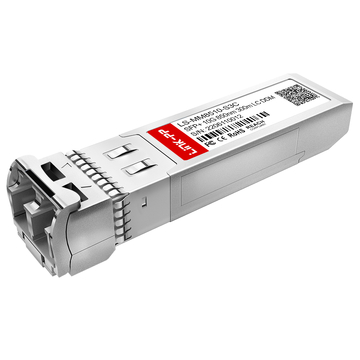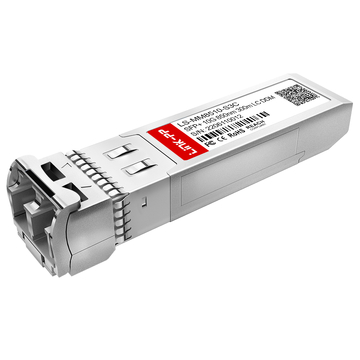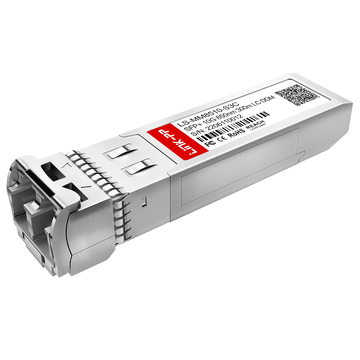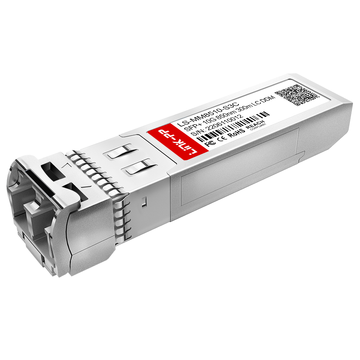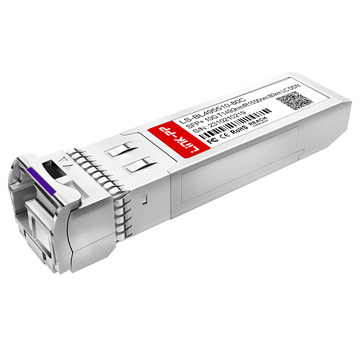




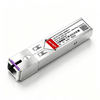
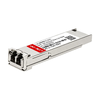

























SR Cisco SFP+ modules are widely used to enable 10GbE short-range optical connectivity over multimode fiber in data center networks. Based on the 10GBASE-SR standard, these modules operate at 850nm and are optimized for high-bandwidth links between servers, switches, and storage systems within the same facility. Because most intra–data center connections fall within a few hundred meters, SR SFP+ optics have become a practical solution for delivering reliable 10Gbps performance while maintaining efficient port density on modern switches.
In typical deployments, the SR Cisco SFP+—such as the widely recognized Cisco SFP-10G-SR—supports up to 300m over OM3 multimode fiber and up to 400m over OM4 fiber. These characteristics make it well suited for top-of-rack networking, leaf-spine architectures, and short-distance switch interconnects. By combining compact SFP+ form factor with multimode fiber infrastructure, organizations can build scalable 10G links that meet the performance requirements of enterprise and cloud data centers.
This article explains how SR Cisco SFP+ modules work, their key specifications, fiber requirements, and common deployment scenarios. It also explores how these optics compare with other 10G connectivity options and outlines practical considerations for reliable multimode data center links.
🌴What Is SR Cisco SFP+?
SR Cisco SFP+ refers to 10GbE short-range optical transceivers designed for multimode fiber networks. These modules follow the 10GBASE-SR optical standard and are optimized for short-distance high-speed connectivity within data centers. Operating at an 850nm wavelength, SR Cisco SFP+ modules typically support distances of up to 300m over OM3 fiber and up to 400m over OM4 fiber, making them suitable for server-to-switch and switch-to-switch links inside the same facility.
The most widely deployed example is the Cisco SFP-10G-SR, which uses the compact SFP+ form factor and a duplex LC optical interface. Its hot-pluggable design allows network administrators to install or replace modules without powering down equipment, helping maintain operational continuity in high-availability environments.

Meaning of SR in Cisco Optical Modules
SR stands for Short Range, indicating that the optical module is designed for high-speed transmission over relatively short distances using multimode fiber (MMF). In Cisco 10G optical interfaces, SR modules provide an efficient way to build dense, high-bandwidth links within racks, rows, or sections of a data center.
Key characteristics of SR optics include:
-
Operation at 850nm wavelength using VCSEL laser technology
-
Designed for multimode fiber types such as OM3 and OM4
-
Optimized for short-distance 10GbE links inside buildings or data centers
-
Use of duplex LC connectors for transmit and receive fibers
-
Support for hot-swappable SFP+ interfaces on switches and routers
These features make SR module a practical choice for environments where link distances are limited but high bandwidth and reliability are essential.
The Cisco SFP-10G-SR Standard
The Cisco implementation of the 10GBASE-SR optical interface is commonly represented by the Cisco SFP-10G-SR module. It is designed to provide stable 10Gbps connectivity across multimode fiber infrastructures widely deployed in enterprise and cloud data centers.
A simplified overview of typical specifications is shown below.
| Parameter | Typical Specification | Notes |
|---|---|---|
| Data Rate | 10Gbps | Supports 10 Gigabit Ethernet |
| Wavelength | 850nm | Short-range multimode transmission |
| Fiber Type | OM3 / OM4 MMF | Optimized for high-bandwidth MMF |
| Connector | Duplex LC | Separate transmit and receive fibers |
| Maximum Distance | 300m (OM3), 400m (OM4) | Depends on fiber grade |
These specifications explain why SR Cisco SFP+ modules are commonly used in top-of-rack networking, aggregation switches, and short-distance data center interconnect. Their combination of high bandwidth, short reach, and compact form factor enables dense switch deployments while maintaining reliable optical performance.
🌴Key Specifications of SR Cisco SFP+ Modules
SR Cisco SFP+ modules are designed to deliver stable 10Gbps optical connectivity over multimode fiber within short-distance network environments. These transceivers follow the 10GBASE-SR standard and are optimized for high-density switching platforms commonly used in enterprise and cloud data centers. Their compact SFP+ form factor, combined with efficient optical performance, allows network operators to deploy high-speed links while maintaining flexible cabling and scalable infrastructure.

Technical Parameters
SR Cisco SFP+ modules operate using short-wavelength multimode optics and support 10GbE transmission across structured fiber networks. A typical implementation can be seen in the widely used Cisco SFP-10G-SR module, which provides reliable 10Gbps optical communication between network devices.
| Parameter | Typical Value | Description |
|---|---|---|
| Data Rate | 10Gbps | Supports 10 Gigabit Ethernet |
| Optical Wavelength | 850nm | Optimized for multimode fiber transmission |
| Connector Type | Duplex LC | Separate transmit and receive channels |
| Form Factor | SFP+ | Compact hot-pluggable transceiver |
| Optical Technology | VCSEL laser | Efficient short-range optical source |
These parameters define how SR Cisco SFP+ modules integrate into modern network equipment. The use of an 850nm VCSEL laser makes them particularly suitable for multimode fiber environments where cost-effective short-distance connectivity is required.
Transmission Distance Over Multimode Fiber
The achievable transmission distance of SR Cisco SFP+ modules depends largely on the type of multimode fiber used in the network infrastructure. Higher-grade fiber types provide better modal bandwidth and allow longer transmission distances.
| Fiber Type | Maximum Distance | Typical Deployment |
|---|---|---|
| OM2 | Up to 82m | Legacy multimode infrastructure |
| OM3 | Up to 300m | Standard data center cabling |
| OM4 | Up to 400m | High-performance data center networks |
In modern data centers, OM3 and OM4 fibers are the most common choices because they support higher bandwidth and longer reach for 10GbE SR links. Network planners often select OM4 when future scalability or higher optical margins are required.
Power Consumption and Efficiency
Cisco SFP+ SR modules are designed with power efficiency in mind, which is important in high-density switching environments where dozens of transceivers may operate within a single chassis.
Typical operational characteristics include:
-
Low power consumption compared with long distance sfp
-
Reduced thermal output, supporting dense switch port layouts
-
Hot-swappable capability for simplified maintenance
-
Compatibility with standard SFP+ interfaces used in enterprise and cloud networking equipment
These efficiency characteristics allow network operators to deploy large numbers of optical links without significantly increasing cooling or power requirements. As a result, SR SFP+ modules remain a common choice for short-range 10GbE connectivity in high-performance data center infrastructures.
🌴Multimode Fiber Infrastructure for 10G SR Links
10GBASE-SR optical links are designed specifically for multimode fiber infrastructure commonly deployed inside data centers. When using SR Cisco SFP+ modules, the overall link performance depends not only on the optical transceiver but also on the quality, type, and layout of the multimode fiber cabling system. Proper fiber selection and structured cabling practices ensure that 10GbE SR connections can achieve stable transmission distances and maintain reliable network performance.

Why Multimode Fiber Is Used for Short-Range 10G Links
Multimode fiber is widely used for short-distance 10GbE links because it offers a practical balance between performance, cost, and ease of deployment within buildings or data center facilities. In environments where most connections are under a few hundred meters, multimode fiber provides sufficient bandwidth while simplifying installation and maintenance.
Several factors explain why multimode fiber is commonly paired with SR Cisco SFP+ modules such as Cisco SFP-10G-SR:
-
Lower optical component cost compared with single-mode long-range optics
-
Simplified cabling installation within racks and patch panels
-
Compatibility with 850nm VCSEL-based short-range transceiver
-
Efficient support for high-density server and switch connections
-
Suitable reach for most intra–data center network links
These characteristics make multimode fiber a practical choice for server access networks, aggregation layers, and internal data center connectivity.
OM3 vs OM4 Multimode Fiber
Different multimode fiber grades support different bandwidth capacities and transmission distances. In modern 10GbE networks, OM3 and OM4 fibers are the most commonly used types for SR fiber transceivers.
| Fiber Type | Typical Maximum Distance | Common Usage |
|---|---|---|
| OM2 | Up to 82m | Older multimode installations |
| OM3 | Up to 300m | Standard 10G data center links |
| OM4 | Up to 400m | High-performance or extended 10G links |
OM3 fiber is widely adopted in many enterprise data centers because it supports typical rack-to-rack distances with sufficient performance margin. OM4 fiber, which offers higher modal bandwidth, is often selected when longer links or future network upgrades are anticipated.
Choosing the correct fiber grade helps ensure that the optical link maintains signal quality while reducing the risk of attenuation or modal dispersion affecting 10GbE transmission.
Typical Link Distances in Data Centers
Most SR optical deployments occur within relatively short physical distances inside the data center. These environments usually involve structured cabling systems that connect network equipment across racks, rows, or switching layers.
Common deployment scenarios include:
-
Server to top-of-rack switch connections within the same rack row
-
Top-of-rack to aggregation switch links across nearby racks
-
Leaf-to-spine connections inside a data center switching fabric
-
Storage system connectivity within the same equipment zone
In these scenarios, link distances typically fall between several meters and a few hundred meters, which aligns well with the transmission capabilities of 10GBASE-SR SFP. By combining SR Cisco SFP+ modules with OM3 or OM4 multimode fiber, network designers can create stable, high-bandwidth connections that support modern data center traffic patterns.
🌴Typical Applications of SR Cisco SFP+
SR Cisco SFP+ modules are widely deployed in environments where 10GbE short-distance optical connectivity is required within the same facility. Because most data center links span only a few meters to several hundred meters, SR optics provide an efficient solution for connecting servers, switches, and storage platforms over multimode fiber. When paired with OM3 or OM4 cabling, modules such as Cisco SFP-10G-SR enable stable 10Gbps transmission across common intra–data center network segments.

Server to Switch Connections
One of the most common uses of SR Cisco SFP+ modules is connecting servers to access or ToR switches. These links carry large volumes of east–west and north–south traffic between compute resources and the rest of the network infrastructure.
Typical characteristics of server-to-switch optical links include:
-
Short physical distances within the same rack or adjacent racks
-
High port density on access switches
-
Consistent 10GbE bandwidth for virtualization platforms and cloud workloads
-
Multimode fiber patch cables used for structured cabling inside racks
In many modern data centers, servers are equipped with network interface cards that support SFP+ optical interfaces, allowing direct fiber connectivity to top-of-rack switches. This architecture simplifies cabling and provides predictable bandwidth for high-performance computing environments.
Switch to Switch Connectivity
SR Cisco SFP modules are also frequently used for switch interconnections inside the switching fabric. These links connect access switches, aggregation switches, or spine nodes that form the core of the data center network topology.
Common switch-to-switch scenarios include:
-
Top-of-rack switches connecting to aggregation or leaf switches
-
Leaf switches linking to spine switches in spine-leaf architecture
-
Cross-rack connections within the same data center row
-
Short-distance uplinks between network layers
Because these links must handle large volumes of east–west traffic, stable 10GbE optical connectivity helps maintain predictable network performance across the switching fabric.
Storage Networking
Storage infrastructure often relies on reliable, low-latency network links, making SR Cisco SFP+ modules suitable for connecting storage systems within the data center.
Typical storage-related deployments include:
-
Connections between storage arrays and storage switches
-
High-throughput backup and replication traffic
-
Network-attached storage environments supporting enterprise applications
-
Internal storage cluster communications
These links benefit from the stable bandwidth and low latency characteristics provided by multimode optical connections. When deployed with properly managed fiber infrastructure, SR SFP+ optics can support consistent data transfer between storage platforms and application servers.
🌴SR Cisco SFP+ vs Other 10G Optical Modules
SR Cisco 10G SFP+ is designed for short-distance 10GbE connections over multimode fiber, but they are not the only option available for 10G networking. Depending on link distance, cabling type, and deployment environment, network designers may also consider other 10G optical or direct-connect solutions. Understanding the differences helps determine when SR optics are the most appropriate choice.

SR vs LR Modules
SR and LR are two common types of 10G sfp+ transceivers, but they are optimized for different transmission distances and fiber infrastructures. SR transceiver is intended for short-range multimode links, while LR modules support much longer distances using single-mode fiber.
| Parameter | SR Cisco SFP+ | 10G LR Optical Module |
|---|---|---|
| Optical Wavelength | 850nm | 1310nm |
| Fiber Type | Multimode (OM3 / OM4) | Single-mode fiber |
| Maximum Distance | 300–400m | Up to 10km |
| Typical Deployment | Data center internal links | Campus or metro connections |
SR modules such as Cisco SFP-10G-SR are commonly used within a single data center where distances are relatively short. LR module, on the other hand, are more suitable for building-to-building connectivity or long-distance enterprise network links.
SR vs DAC Cables
Direct Attach Copper (DAC) cables provide another method for connecting devices at 10GbE speeds. Unlike optical transceiver module, DAC cables integrate the cable and connectors into a single assembly and use copper conductors instead of fiber.
Key differences between SR optics and DAC cables include:
-
DAC cables are typically limited to short distances, usually under 7 meters
-
SR SFP+ modules support significantly longer reach when paired with multimode fiber
-
DAC cables reduce hardware components because the cable and transceiver are integrated
-
Optical SR modules provide greater flexibility in structured cabling environments
In environments where devices are located within the same rack, DAC cables may be sufficient. However, when connections extend across racks or rows, SR optical modules offer greater deployment flexibility.
SR vs AOC Cables
Active Optical Cables (AOC) are another alternative to pluggable optical modules. Similar to DAC cables, AOCs integrate optical transceivers directly into the cable assembly, eliminating the need for separate modules and patch cords.
| Feature | SR Cisco SFP+ with Fiber | AOC Cable |
|---|---|---|
| Cabling Type | Separate optical module and fiber patch cord | Integrated cable assembly |
| Flexibility | High, fiber can be replaced or rerouted | Limited to fixed cable length |
| Maintenance | Individual components can be replaced | Entire cable replaced if damaged |
| Deployment | Structured cabling environments | Fixed-length point-to-point links |
AOCs can simplify short-distance installations because they arrive as pre-assembled optical cables. However, SR SFP+ modules provide more flexibility in large data centers where structured fiber cabling systems allow easier upgrades, maintenance, and reconfiguration of network links.
By comparing these options, network planners can determine whether SR Cisco SFP+ modules are the best fit for their infrastructure or whether copper or integrated optical cable solutions are more appropriate for a particular deployment scenario.
🌴Compatibility Considerations for SR Cisco SFP+
SR Cisco SFP+ transceiver must be compatible with the network hardware, optical interfaces, and fiber infrastructure used in the deployment environment. Proper compatibility ensures stable link establishment, predictable performance, and easier long-term network maintenance. When planning 10GbE multimode connections, it is important to verify switch platform support, optical interoperability, and cabling requirements.

Cisco Switch Platform Support
SR Cisco SFP+ modules are designed to operate with a wide range of Cisco networking platforms that support SFP+ interfaces. These modules are commonly used in data center switches, enterprise aggregation switches, and high-performance routing platforms.
Typical Cisco platforms that support 10G SR optics include:
-
Cisco Nexus Series Switches used in modern data center architectures
-
Cisco Catalyst Series Switches deployed in enterprise networks
-
Cisco data center routers and aggregation devices with SFP+ ports
A commonly deployed module in these environments is the Cisco SFP-10G-SR, which is designed to integrate with Cisco hardware and support standard 10GBASE-SR optical interfaces. Administrators should verify that the switch operating system version and hardware model support the required optical module before deployment.
Interoperability With Third-Party Optics
Many modern networks operate in multi-vendor environments where equipment from different manufacturers must interoperate. In such cases, compatibility between optical modules and switching platforms becomes an important consideration.
Key interoperability factors include:
-
Optical transceiver coding and vendor identification
-
Firmware validation on network switches
-
Compliance with the 10GBASE-SR optical standard
-
Digital diagnostics monitoring (DDM) support for link monitoring
Network operators often evaluate optical module compatibility to ensure that transceivers function correctly across different devices while maintaining stable link performance.
Cabling and Connector Requirements
Correct fiber cabling and connector selection is also essential for reliable SR optical links. SR Cisco SFP+ modules rely on multimode fiber infrastructure and standardized connector interfaces.
| Component | Requirement | Notes |
|---|---|---|
| Fiber Type | OM3 or OM4 multimode fiber | Supports typical 10GbE SR distances |
| Connector Type | Duplex LC | Separate transmit and receive fibers |
| Patch Cable Type | Multimode fiber patch cords | Compatible with structured cabling |
| Link Polarity | Proper Tx/Rx alignment | Required for successful optical communication |
Maintaining clean fiber connectors and correct polarity ensures that the transmit and receive paths align correctly between network devices. In high-density data centers, structured cabling systems with labeled fiber links and organized patch panels help maintain consistent optical connectivity across large numbers of SR SFP+ links.
🌴Deployment Best Practices for SR Cisco SFP+
Reliable performance of SR Cisco SFP+ optical transceiver depends not only on the optical transceiver itself but also on proper installation, fiber management, and network planning. In data center environments where many 10GbE links operate simultaneously, following practical deployment practices helps maintain stable optical performance and reduces the risk of link failures.

Fiber Cable Management
Well-organized fiber cabling is essential for maintaining consistent optical signal quality in high-density data centers. Since SR modules rely on multimode fiber, careful cable routing and handling help prevent attenuation or signal degradation.
Recommended fiber management practices include:
-
Avoid sharp bends that exceed the minimum bend radius of multimode fiber
-
Use structured cable trays or patch panels to organize fiber runs
-
Label fiber connections clearly to simplify troubleshooting and maintenance
-
Separate fiber cabling from power cables to reduce physical interference
-
Maintain consistent cable routing between racks and network rows
These practices help ensure that SR optical links remain stable even when large numbers of fiber connections are deployed across multiple racks.
Maintaining Optical Link Quality
Optical link quality is influenced by factors such as connector cleanliness, signal attenuation, and proper installation of the transceiver module. Ensuring these elements are controlled helps prevent packet loss or intermittent connectivity.
| Maintenance Factor | Recommended Practice | Purpose |
|---|---|---|
| Connector Cleanliness | Clean fiber connectors before insertion | Prevent signal loss from contamination |
| Optical Power Levels | Verify transmit and receive power | Ensure signals remain within operating range |
| Module Installation | Fully seat the SFP+ module in the port | Maintain stable electrical connection |
| Link Testing | Use optical testing tools when deploying | Confirm link integrity before production use |
Routine inspection and testing help identify potential issues early and maintain stable operation across large-scale data center networks.
Planning for Future Network Growth
Although 10GbE SR optics remain widely used, many data centers gradually upgrade to higher-speed technologies. Planning the optical infrastructure with scalability in mind can simplify future network expansions.
Common planning considerations include:
-
Deploy OM4 multimode fiber when longer reach or higher bandwidth may be needed
-
Design structured cabling systems that allow easy addition of new links
-
Maintain spare switch ports and fiber capacity for expansion
-
Consider compatibility with future 25GbE or high-speed optical transceiver
Modules such as Cisco SFP-10G-SR continue to play an important role in many networks, especially for access-layer connectivity and existing 10GbE infrastructure. With proper planning and installation practices, these modules can provide reliable short-range connectivity while supporting gradual upgrades to faster networking technologies.
🌴Future Outlook for Short-Range 10G Optical Links
Short-range 10GbE optical links remain an important part of many enterprise and data center networks. Although higher-speed technologies such as 25GbE, 40GbE, and 100GbE continue to expand, 10G SR optics are still widely used for server access layers, legacy infrastructure, and cost-sensitive deployments. Their compatibility with existing multimode fiber systems allows organizations to maintain reliable connectivity while gradually evolving their network architectures.

Continuing Role of 10G in Data Centers
10GbE connectivity continues to serve as a practical foundation for many network environments. Even as newer standards emerge, 10G SR links remain common in scenarios where bandwidth demand, infrastructure cost, and hardware compatibility must be balanced.
Typical situations where 10G SR links remain relevant include:
-
Enterprise data centers with established 10GbE switching platforms
-
Server access layers where network interface cards still operate at 10Gbps
-
Edge data centers and regional facilities with moderate traffic demand
-
Internal infrastructure links that do not require higher bandwidth
Fiber Optic Transceiver such as Cisco SFP-10G-SR continue to support these environments by providing stable short-distance optical connectivity over multimode fiber.
Transition Toward Higher Speeds
As data center workloads grow, many organizations gradually adopt higher-speed Ethernet standards. These upgrades are often driven by increased east–west traffic, cloud computing workloads, and large-scale data processing.
Common upgrade paths from 10GbE include:
-
Migration from 10GbE to 25GbE server connectivity
-
Deployment of 40GbE or 100GbE for switch uplinks
-
Increased adoption of high-bandwidth optical interconnects in spine layers
-
Integration of faster network interfaces in next-generation servers
While higher-speed technologies offer improved throughput, 10G SR links frequently remain in place for existing infrastructure segments where bandwidth requirements remain stable.
Long-Term Role of Multimode Optics
Multimode fiber optics are expected to continue supporting short-distance connectivity inside data centers for many years. Because many facilities already use structured multimode cabling systems, replacing the entire fiber infrastructure is often unnecessary when upgrading network speeds.
Key advantages of maintaining multimode optical infrastructure include:
-
Compatibility with multiple generations of short-range optical modules
-
Efficient support for high-density switch environments
-
Lower installation complexity within buildings and equipment rows
-
Flexible cabling systems that support incremental upgrades
By combining scalable fiber infrastructure with modular fiber module, network operators can maintain reliable short-range connectivity while gradually integrating higher-speed technologies into their data center architectures.
🌴FAQs About SR Cisco SFP+
What fiber type should be used with SR Cisco SFP+ modules?
SR Cisco SFP+ modules are designed for multimode fiber, typically OM3 or OM4. These fiber types provide sufficient modal bandwidth for 10GbE short-range transmission and are commonly used in structured data center cabling systems.
What connector type is used by SR Cisco SFP+ optics?
SR Cisco SFP+ modules use duplex LC connectors. One fiber strand carries the transmit signal and the other carries the receive signal, forming a bidirectional optical link between two devices.
Do SR Cisco SFP+ modules support digital diagnostics monitoring?
Yes. Many SR Cisco SFP+ modules support digital diagnostics monitoring (DDM), which allows network devices to read operational parameters such as temperature, optical transmit power, receive power, and voltage.
Are SR Cisco SFP+ modules hot-swappable?
Yes. SR Cisco SFP+ modules are hot-pluggable, meaning they can be inserted or removed from compatible network ports without powering down the switch or router.
Can SR Cisco SFP+ modules work with patch panels in structured cabling systems?
Yes. SR Cisco SFP+ modules are commonly used with fiber patch panels and structured cabling infrastructure in data centers. Patch panels help organize multimode fiber connections and simplify cable management.
What wavelength is used by SR Cisco SFP+ optics?
SR Cisco SFP+ modules typically operate at an optical wavelength of 850nm. This wavelength is optimized for short-range transmission using VCSEL-based multimode optical technology.
🌴Conclusion
SR Cisco SFP+ optical module plays a key role in enabling reliable 10GbE connectivity across modern data center infrastructures. Designed for short-range transmission over multimode fiber, these optics provide a practical solution for high-density environments where servers, switches, and storage systems must exchange large volumes of data with low latency. With support for OM3 and OM4 fiber, duplex LC interfaces, and efficient SFP+ form factors, modules such as Cisco SFP-10G-SR continue to support stable network performance in enterprise and cloud facilities.
Even as higher-speed Ethernet standards gradually emerge, 10G SR optics remain widely used in access layers, internal switch interconnects, and legacy network environments. Their compatibility with existing multimode cabling allows organizations to maintain dependable short-distance links while planning future upgrades.
For engineers and network planners evaluating SR Cisco SFP+ optics, understanding their specifications, deployment scenarios, and infrastructure requirements helps ensure consistent performance across data center networks. More technical details and compatible optical solutions can be explored through the LINK-PP Official Store, where a wide range of optical transceiver resources and product information are available for modern networking applications.