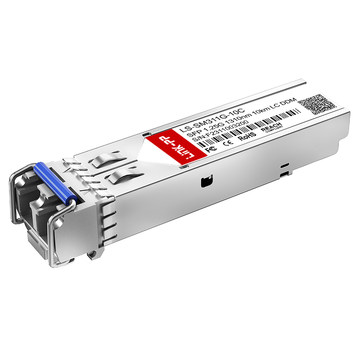
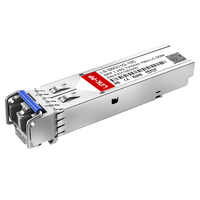
SFP-L modules are widely recognized as 1G single-mode optical transceivers designed for transmission distances up to 10km, making them a practical choice for long-reach connections in enterprise, campus, and access networks. Compared to short-range SFP options, SFP-L modules operating at 1310nm provide a balanced combination of distance, stability, and cost efficiency for Gigabit Ethernet deployments.
In real-world network environments, achieving consistent performance over 10km links depends on more than just the nominal specifications of the module. Factors such as optical power budget, fiber quality, connector loss, and environmental conditions all play a critical role in determining link reliability. Without a structured evaluation, even standard 1G SFP-L deployments may experience signal degradation or unexpected link instability.
This article provides a comprehensive performance audit of SFP-L modules, focusing specifically on their behavior in 1G 10km single-mode applications. It examines key performance metrics, compatibility considerations, deployment strategies, and practical use cases, helping network engineers better understand how to ensure stable and efficient long-reach connectivity.
📺Understanding SFP-L Technology
SFP-L modules are designed specifically for 1G single-mode transmission over distances up to 10km, using 1310nm wavelength optics to ensure stable signal propagation and efficient link performance. In most Gigabit Ethernet deployments, they serve as a reliable solution for medium-distance connections where copper or multimode fiber is insufficient.

Key Features of SFP-L 1G Modules
SFP-L modules focus on standardized 1G performance while optimizing transmission for 10km single-mode fiber links.
| Parameter | Typical Value | Description |
|---|---|---|
| Data Rate | 1Gbps | Supports Gigabit Ethernet |
| Reach Distance | Up to 10km | Designed for SMF long-reach links |
| Connector Type | LC Duplex | Industry-standard interface |
| Form Factor | SFP | Hot-swappable, compact design |
These characteristics make SFP-L modules highly suitable for scalable network environments. The hot-swappable design allows for flexible maintenance, while the LC duplex interface ensures compatibility with standard fiber infrastructure.
In addition, most SFP-L modules comply with IEEE 802.3z Gigabit Ethernet standards, enabling consistent interoperability across switches, routers, and media converters from different vendors.
Optical Wavelength and Transmission
SFP-L modules operate at a 1310nm wavelength, which provides an optimal balance between attenuation and dispersion for 10km single-mode transmission.
| Optical Property | Typical Value | Impact on Performance |
|---|---|---|
| Wavelength | 1310nm | Suitable for medium-distance links |
| Fiber Type | Single-mode | Enables long-distance transmission |
| Attenuation | ~0.35dB/km | Affects total link loss |
| Dispersion | Low | Preserves signal integrity |
The use of 1310nm reduces chromatic dispersion compared to higher wavelengths, which helps maintain signal quality without requiring additional compensation mechanisms.
In practical scenarios, the achievable 10km reach depends on the total optical loss across the link. This includes fiber attenuation, connector insertion loss, and splice loss. Proper link design ensures that the received optical power remains within the sensitivity threshold of the receiver, enabling stable and error-free communication.
📺Performance Metrics for SFP-L
Evaluating SFP-L modules for 1G 10km applications requires focusing on optical power budget, signal quality, and environmental stability. These metrics directly determine whether a link can maintain reliable transmission over single-mode fiber without errors or unexpected degradation.

Optical Power Budget
A sufficient optical power budget is the primary requirement for achieving stable 10km transmission with SFP-L transceivers. It defines the allowable total loss between the transmitter and receiver while maintaining proper signal detection.
| Parameter | Typical Range | Description |
|---|---|---|
| Transmit Power | -9.5 to -3dBm | Optical output from the transmitter |
| Receiver Sensitivity | ≤ -20dBm | Minimum detectable signal level |
| Link Budget | ~10 to 12dB | Total allowable link loss |
| Fiber Attenuation | ~0.35dB/km | Loss over distance (10km ≈ 3.5dB) |
In a standard 10km deployment, fiber attenuation typically consumes around 3–4dB of the budget. The remaining margin must account for connector loss, splices, and potential aging effects. Maintaining a margin of at least 2–3dB helps ensure long-term link stability.
Signal Quality and Bit Error Rate (BER)
Low bit error rate is essential for ensuring data integrity in 1G SFP-L links, especially over longer distances where signal degradation can occur.
| Metric | Typical Value | Impact on Performance |
|---|---|---|
| BER | ≤ 10⁻¹² | Standard for reliable transmission |
| Jitter | Low | Affects signal timing accuracy |
| Signal Stability | High | Ensures consistent link performance |
As transmission distance increases, signal attenuation and noise can lead to higher BER. SFP-L modules are designed to maintain acceptable BER levels over 10km, but real-world factors such as dirty connectors or fiber bends can still introduce errors.
To validate signal quality, common methods include:
-
Optical power measurement to confirm received levels
-
Loopback testing for end-to-end validation
-
Monitoring interface statistics on switches (CRC errors, packet loss)
Environmental Performance
Stable operation under varying environmental conditions is critical for maintaining long-term performance of SFP-L modules.
| Condition | Typical Range | Impact on Operation |
|---|---|---|
| Operating Temp | 0–70°C | Standard commercial range |
| Storage Temp | -40–85°C | Safe handling and transport |
| Humidity | 5%–95% | Non-condensing requirement |
Temperature fluctuations can affect laser output power and receiver sensitivity, especially in outdoor or poorly ventilated environments. Over time, these variations may reduce the effective optical budget.
To ensure consistent performance:
-
Deploy modules within specified temperature ranges
-
Avoid high-humidity or condensation-prone environments
-
Ensure proper airflow in network equipment
📺Compatibility and Interoperability
SFP-L modules are generally interoperable across a wide range of networking equipment, but stable 1G 10km operation depends on both hardware compatibility and firmware support. Ensuring proper matching between optical transceiver modules and devices helps avoid link failures, alarms, or performance inconsistencies.

Vendor-Neutral vs Brand-Specific Modules
Vendor-neutral SFP-L modules can work reliably in most standard SFP ports, but compatibility behavior varies depending on how strictly the network equipment enforces vendor identification.
| Type | Compatibility Scope | Key Consideration |
|---|---|---|
| Vendor-Neutral | Multi-vendor devices | May require coding for recognition |
| Brand-Specific | Single vendor devices | Guaranteed compatibility |
| Programmable SFP | Flexible | Can be adapted for multiple vendors |
Vendor-neutral modules are widely used in enterprise and ISP networks due to flexibility and cost efficiency. However, some switches implement vendor lock mechanisms, requiring EEPROM coding to match approved vendor profiles.
Brand-specific modules are typically pre-validated for certain platforms, reducing the risk of incompatibility but limiting flexibility across mixed-vendor environments.
Network Equipment Compatibility
SFP-L modules must align with the electrical and software requirements of the host device to ensure proper operation.
| Compatibility Factor | Requirement | Impact on Deployment |
|---|---|---|
| Port Type | 1G SFP port | Must match module speed |
| Interface Standard | IEEE 802.3z | Ensures protocol compatibility |
| Digital Diagnostics | Supported (optional) | Enables monitoring and visibility |
| Firmware Recognition | Vendor support | Affects module acceptance |
Most modern switches and routers support standard 1G SFP-L modules, but mismatches can occur if:
-
The port is configured for a different speed (e.g., 10G SFP+ not supporting 1G transceiver fallback)
-
Firmware blocks unsupported transceivers
-
Auto-negotiation or manual configuration is misaligned
To ensure stable deployment:
-
Verify that the switch port explicitly supports 1G SFP modules
-
Check vendor compatibility lists or test with validated modules
-
Ensure firmware is updated to avoid recognition issues
Proper compatibility planning not only prevents link failures but also ensures consistent performance across 10km single-mode connections.
📺Deployment Best Practices
Reliable 1G 10km transmission with SFP-L modules depends on proper link planning, correct installation, and thorough validation. Even when modules meet specifications, poor deployment practices can reduce link margin and lead to instability over time.

Link Planning
Accurate link planning ensures that the total optical loss stays within the SFP-L module’s power budget, which is essential for stable 10km operation.
| Planning Factor | Typical Value | Impact on Link Performance |
|---|---|---|
| Fiber Type | Single-mode (OS2) | Required for 10km transmission |
| Fiber Attenuation | ~0.35dB/km | ~3–4dB loss over 10km |
| Connector Loss | 0.3–0.5dB each | Adds to total link loss |
| Splice Loss | ~0.1dB per splice | Affects overall margin |
To maintain sufficient margin, total link loss should remain below the module’s optical budget, with at least 2–3dB reserved for long-term stability.
Key planning steps include:
-
Calculating total attenuation (fiber + connectors + splices)
-
Verifying that link distance does not exceed 10km
-
Minimizing unnecessary connection points
Installation Guidelines
Proper installation directly affects signal quality and long-term reliability of SFP-L links.
| Installation Aspect | Best Practice | Reason |
|---|---|---|
| Connector Handling | Keep connectors clean | Prevent insertion loss increase |
| Fiber Routing | Avoid sharp bends | Reduce signal attenuation |
| Module Insertion | Secure and properly seated | Ensure stable optical connection |
| Cable Management | Organized routing | Prevent mechanical stress |
Contamination on connectors is one of the most common causes of link degradation. Even small amounts of dust can significantly increase insertion loss.
Recommended practices:
-
Use fiber cleaning tools before connection
-
Maintain proper bend radius for fiber cables
-
Avoid repeated plugging/unplugging when unnecessary
Testing and Validation
Testing confirms that the deployed SFP-L link meets performance expectations before going into full operation.
| Test Method | Purpose | Expected Outcome |
|---|---|---|
| Optical Power Meter | Measure received power | Within receiver sensitivity range |
| OTDR | Identify loss points | Detect bends, splices, faults |
| Interface Monitoring | Check error statistics | No CRC errors or packet loss |
A structured validation process helps identify hidden issues early. Recommended workflow:
-
Measure end-to-end optical power
-
Compare results with calculated link budget
-
Inspect fiber path using OTDR if abnormalities appear
-
Monitor switch interface statistics after activation
Consistent testing and validation ensure that SFP-L modules can deliver stable 1G connectivity across 10km links under real-world conditions.
📺Troubleshooting Common Issues
SFP-L modules used in 1G 10km links typically operate reliably, but issues such as signal loss, unstable links, or intermittent errors can still occur due to physical layer problems or environmental conditions. Most failures are not caused by the module itself, but by fiber infrastructure, installation quality, or external factors.

Signal Degradation
Signal degradation is the most common issue in SFP-L deployments and usually results from excessive optical loss or poor physical connections.
| Cause | Typical Impact | Recommended Action |
|---|---|---|
| Dirty connectors | Increased insertion loss | Clean connectors before use |
| Fiber bends | Signal attenuation | Maintain proper bend radius |
| Excessive distance | Weak received signal | Verify link within 10km limit |
| Poor splicing | Localized signal loss | Inspect and redo splices if needed |
When the received optical power drops below the sensitivity threshold, the link may still come up but experience packet loss or high error rates.
Common troubleshooting steps include:
-
Measuring receive optical power to confirm signal levels
-
Cleaning and reconnecting all fiber interfaces
-
Replacing patch cords to eliminate hidden defects
-
Checking for excessive bending or physical damage
Environmental and Mechanical Factors
Environmental conditions and physical stress on the fiber infrastructure can gradually degrade SFP-L link performance, especially in long-term deployments.
| Factor | Effect on Link | Mitigation Strategy |
|---|---|---|
| Temperature variation | Affects laser stability | Maintain controlled environment |
| High humidity | Risk of condensation | Use proper enclosure protection |
| Vibration | Connector instability | Secure cables and modules |
| Mechanical stress | Fiber micro-bending loss | Improve cable management |
Temperature fluctuations can slightly shift transmit power and receiver sensitivity, reducing available link margin. Over time, this may lead to intermittent disconnections.
To minimize environmental impact:
-
Ensure adequate ventilation in network equipment
-
Avoid deploying fiber in high-stress or high-vibration areas
-
Use proper cable routing and strain relief mechanisms
By systematically identifying whether issues stem from optical loss, physical connections, or environmental conditions, most SFP-L link problems can be resolved quickly and effectively.
📺Practical Applications of SFP-L Modules
SFP-L modules are commonly deployed in scenarios that require stable 1G connectivity over distances up to 10km. Their use of 1310nm optics over single-mode fiber makes them well-suited for medium-range links where reliability and predictable performance are critical.

Data Center Interconnects
SFP-L modules are used to extend 1G links between separate buildings or edge facilities within distributed data center environments.
| Application Scenario | Distance Range | Deployment Benefit |
|---|---|---|
| Building-to-building | 1–10km | Stable long-distance connectivity |
| Backup links | Up to 10km | Redundant path for failover |
| Edge data center links | 2–10km | Extends network beyond core site |
These modules provide a simple and efficient way to maintain consistent throughput without introducing unnecessary complexity, especially in environments where 10km coverage meets design requirements.
Enterprise and Campus Networks
SFP-L modules are widely adopted in campus and enterprise networks to connect multiple buildings and infrastructure nodes over single-mode fiber.
| Use Case | Typical Distance | Key Requirement |
|---|---|---|
| Campus backbone | 1–10km | Stable inter-building connectivity |
| Office park networking | 2–8km | Consistent 1G performance |
| Surveillance networks | 1–10km | Reliable data transmission |
These deployments benefit from the predictable performance of SFP-L modules, especially in environments where fiber runs span large campuses or industrial sites. Their ability to maintain stable links over distance makes them a practical choice for long-term infrastructure.
Service Provider Deployments
In access and metro edge networks, SFP-L modules are used to deliver 1G connectivity between aggregation points and customer access locations.
| Deployment Type | Distance Range | Network Role |
|---|---|---|
| Metro access links | Up to 10km | Connect access nodes to aggregation |
| Fiber-to-the-building | 1–10km | Extend services to enterprise users |
| Aggregation uplinks | 5–10km | Link edge devices to core network |
Service providers rely on SFP-L modules for their balance of reach and stability, especially in scenarios where 1G bandwidth is sufficient and cost-efficient scaling is required.
Across these application scenarios, SFP-L modules provide a consistent and reliable solution for 10km single-mode links, supporting a wide range of network architectures without requiring advanced optical configurations.
📺Cost and Efficiency Considerations
SFP-L modules offer a balanced combination of performance and operational efficiency for 1G 10km deployments. Their relatively low power consumption, long service life, and compatibility with standard single-mode infrastructure make them a practical choice for cost-sensitive network designs.

Energy Consumption
SFP-L modules typically consume low power compared to higher-speed transceivers, making them suitable for dense 1G deployments.
| Parameter | Typical Value | Impact on Network Efficiency |
|---|---|---|
| Power Consumption | ~0.8–1.2W | Low energy usage per port |
| Heat Output | Low | Reduces cooling requirements |
| Port Density Impact | Minimal | Supports high-density deployments |
Lower power consumption directly translates to reduced operating costs, especially in large-scale networks with many active ports. It also helps maintain thermal stability within switches, reducing the need for additional cooling.
In environments such as campus networks or access layers, where dozens or hundreds of SFP ports may be deployed, these efficiency gains become significant over time.
Lifecycle and Maintenance Costs
SFP-L modules are designed for long-term use under standard operating conditions, contributing to predictable maintenance planning and reduced replacement frequency.
| Cost Factor | Typical Expectation | Operational Impact |
|---|---|---|
| Module Lifespan | 5–10 years | Long-term deployment stability |
| Failure Rate | Low | Minimal unexpected replacements |
| Maintenance Effort | Low | Reduced operational overhead |
Because SFP-L modules operate at 1G and do not require complex signal processing, they tend to experience less thermal and electrical stress compared to higher-speed optics such as 10GBASE-LR. This contributes to longer operational lifespans.
Routine maintenance is typically limited to:
-
Periodic inspection of fiber connections
-
Cleaning connectors when needed
-
Monitoring link performance through network interfaces
Network Optimization for ROI
Maximizing return on investment with SFP-L modules involves balancing performance requirements with infrastructure and operational costs.
| Optimization Aspect | Approach | Benefit |
|---|---|---|
| Link Design | Match distance to 10km limit | Avoid over-specifying optics |
| Fiber Infrastructure | Use existing SMF | Reduce deployment cost |
| Port Utilization | Optimize 1G usage | Improve overall efficiency |
Effective cost optimization strategies include:
-
Avoiding higher-cost long-reach modules when 10km is sufficient
-
Reusing existing single-mode fiber infrastructure
-
Standardizing on SFP-L modules for consistent deployment
By aligning network requirements with the capabilities of SFP-L modules, organizations can achieve stable 1G connectivity while maintaining efficient capital and operational expenditure.
📺Future Outlook for SFP-L
SFP-L modules will continue to play a stable role in 1G LR deployments, particularly in networks where reliability, simplicity, and cost efficiency are prioritized over higher bandwidth. While high-speed transceivers are expanding rapidly, 1G 10km modules remain relevant in access, legacy systems, and infrastructure extension scenarios.

Evolving Standards for 1G Long-Reach
SFP-L modules are based on mature Gigabit Ethernet standards, and future developments are expected to focus on incremental improvements rather than fundamental changes.
| Aspect | Current State | Future Direction |
|---|---|---|
| Transmission Distance | Up to 10km | Improved stability within 10km range |
| Optical Performance | Standardized | Better consistency and lower loss |
| Compatibility | Broad | Enhanced multi-vendor support |
Rather than extending distance beyond 10km, innovation is more likely to focus on improving manufacturing quality, tighter optical tolerances, and better consistency across deployments. This helps reduce failure rates and simplifies large-scale network operations.
Integration with Intelligent Network Management
SFP-L modules are increasingly integrated into modern network management systems, enabling better visibility and predictive maintenance.
| Feature | Function | Benefit |
|---|---|---|
| Digital Diagnostics (DDM) | Monitor optical parameters | Real-time performance visibility |
| Remote Monitoring | Centralized management | Faster troubleshooting |
| Predictive Maintenance | Trend analysis | Reduced downtime |
With the support of Digital Diagnostics Monitoring (DDM), network operators can track key parameters such as transmit power, receive power, and module temperature in real time. This allows early detection of degradation before it leads to link failure.
In software-defined and managed network environments, these capabilities enable:
-
Proactive maintenance based on performance trends
-
Faster fault isolation across distributed networks
-
Improved operational efficiency through automation
Although network speeds continue to evolve, SFP-L modules remain a dependable solution for 1G 10km connectivity. Their future lies in enhanced reliability, improved monitoring, and seamless integration into modern network management systems rather than changes in core transmission capabilities.
📺FAQs
What does SFP-L mean in optical modules?
SFP-L typically refers to a 1G single-mode transceiver designed for long-reach transmission up to 10km using 1310nm wavelength.
Can SFP-L modules work with multimode fiber?
No, SFP-L modules are designed for single-mode fiber. Using them with multimode fiber can result in signal mismatch and unstable links.
What is the typical wavelength used by SFP-L modules?
Most SFP-L modules operate at 1310nm, which is optimized for 10km transmission over single-mode fiber with low dispersion.
How can I verify if an SFP-L link is working properly?
You can check receive optical power levels, monitor interface error counters (such as CRC errors), and ensure the link operates within the expected optical budget.
Is it possible to use SFP-L modules in SFP+ ports?
Some SFP+ ports support 1G backward compatibility, but not all. Compatibility depends on the switch hardware and configuration.
What is the maximum distance supported by SFP-L modules?
Under standard conditions, SFP-L modules support up to 10km over single-mode fiber, assuming the total link loss is within the optical budget.
Do SFP-L modules require special configuration?
In most cases, no special configuration is required. However, ensuring correct port speed settings and compatibility with the device firmware is important for stable operation.
What are common signs of SFP-L link issues?
Typical signs include link flapping, increased error rates, and low receive optical power, often caused by fiber issues or connector contamination.
📺Conclusion
SFP-L modules remain a practical and reliable solution for 1G 10km SMF SFP transmission, offering a strong balance between performance, stability, and operational efficiency. By focusing on key factors such as optical power budget, signal integrity, compatibility, and proper deployment practices, network engineers can ensure consistent and long-term link reliability across a wide range of scenarios.
From campus networks to data center interconnects and access layer deployments, SFP-L modules continue to meet the demands of medium-distance connectivity without unnecessary complexity. Careful planning, validation, and maintenance further enhance their performance, making them a dependable choice for stable Gigabit Ethernet infrastructure.
For more detailed specifications, compatibility insights, and deployment guidance on SFP-L modules, you can explore additional resources and product information at the LINK-PP Official Store.