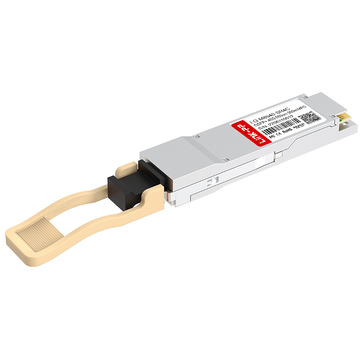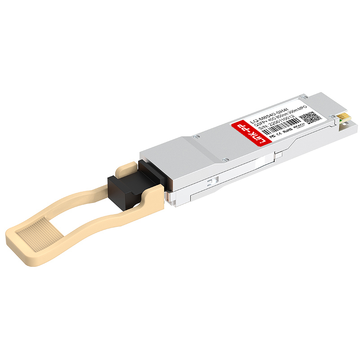
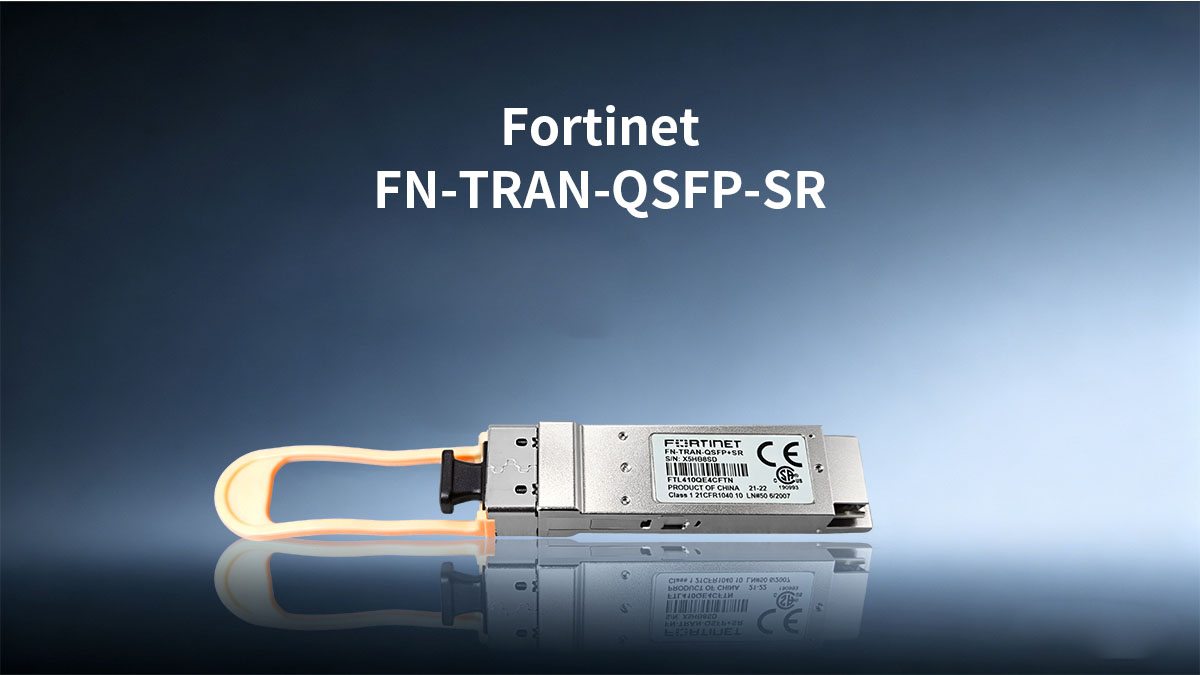
Fortinet FN-TRAN-QSFP+SR is a widely deployed 40Gbps QSFP+ SR4 optical transceiver designed for high-speed, short-reach data center connectivity. It is commonly used in Fortinet switching environments to enable reliable switch-to-switch and switch-to-server links over multimode fiber.
In modern enterprise and cloud-driven networks, demand for 40G optical modules continues to grow due to increasing east-west traffic and virtualization workloads. However, users often face challenges such as high OEM pricing, limited availability, and dependency on a single vendor ecosystem.
As a result, many network operators actively explore compatible transceivers that can deliver similar performance while improving cost efficiency and supply flexibility. The key concern is not only replacing the module, but ensuring full compatibility, stable performance, and long-term reliability within Fortinet infrastructures.
This article provides a structured, decision-focused guide to help you understand how Fortinet FN-TRAN-QSFP+SR works, why alternatives are considered, and most importantly, how to evaluate and select reliable compatible QSFP+ SR4 transceivers without compromising network performance.
🧾 Understanding Fortinet FN-TRAN-QSFP+SR Basics
Fortinet FN-TRAN-QSFP+SR is a 40Gbps QSFP+ SR4 optical transceiver designed for short-range, high-density data center interconnects. It is primarily used in Fortinet switching environments to deliver stable, high-speed optical transmission over multimode fiber.
In practical deployment, its value lies in enabling high bandwidth aggregation and spine-leaf connectivity with low latency and predictable performance.
Core Specifications and Technical Overview
The FN-TRAN-QSFP+SR is built around the QSFP+ SR4 standard, optimized for 40G Ethernet transmission over multimode fiber using parallel optics technology.
Its core specifications define its physical and transmission capabilities, which are essential when evaluating compatibility or alternatives.
| Parameter | Specification |
|---|---|
| Data Rate | 40Gbps (4×10Gbps lanes) |
| Wavelength | 850nm (VCSEL laser) |
| Maximum Distance | 100m (OM3), 150m (OM4) |
| Connector Type | MPO/MTP |
| Fiber Type | Multimode fiber (MMF) |
The key takeaway is that FN-TRAN-QSFP+SR relies on short-reach multimode infrastructure, making it suitable for intra-data center connectivity rather than long-distance transmission.
To better understand its usage context, it is important to see how these specifications translate into real network design decisions.
- Supports parallel 4-lane optical transmission for 40G throughput
- Uses VCSEL technology for cost-efficient short-range signaling
- Designed for high-density switch environments with low power consumption
These characteristics make it a standard choice in structured data center fabrics, especially where predictable low-latency performance is required.
Typical Deployment Scenarios
Fortinet FN-TRAN-QSFP+SR is typically deployed in environments where high-speed, short-distance connectivity is required between network devices within the same data center.
Its usage is strongly tied to architecture design patterns such as spine-leaf topologies and aggregation layers.
- Data center spine-to-leaf interconnects
- Switch-to-switch aggregation links
- High-performance server farm connectivity
- Virtualized infrastructure clusters
- Enterprise core switching environments
To further clarify its operational role, these scenarios can be grouped by functional purpose.
| Deployment Layer | Usage Purpose |
|---|---|
| Core/Aggregation | High-bandwidth switching between core devices |
| Leaf Layer | Server and access switch connectivity |
| Virtualization Clusters | Low-latency east-west traffic handling |
This breakdown highlights that FN-TRAN-QSFP+SR is not limited to a single topology, but rather acts as a flexible interconnect component across multiple layers of a data center.
In addition, its short-reach design ensures optimal performance when used within a controlled physical infrastructure environment, typically within the same rack row or adjacent racks.
Limitations of OEM Modules
While Fortinet FN-TRAN-QSFP+SR offers stable performance within Fortinet ecosystems, it also introduces several practical limitations that influence procurement and deployment strategies.
The most commonly observed constraints relate to cost, flexibility, and sourcing efficiency.
- Higher total cost of ownership compared to third-party alternatives
- Vendor lock-in within Fortinet-certified ecosystems
- Limited global availability during large-scale rollouts
- Longer procurement lead times in supply-constrained scenarios
To better understand the trade-offs, it is useful to compare operational impact dimensions.
| Limitation Area | Operational Impact |
|---|---|
| Cost Structure | Increases overall network deployment budget |
| Supply Chain | Can delay large-scale infrastructure expansion |
| Vendor Dependency | Reduces flexibility in multi-vendor environments |
These limitations do not necessarily affect technical performance, but they significantly influence procurement strategy and scalability planning.
From a network design perspective, this is why many organizations begin evaluating compatible alternatives that maintain similar optical performance while improving sourcing flexibility and cost efficiency.
🧾 Why Consider Alternatives to Fortinet FN-TRAN-QSFP+SR
The main reason organizations evaluate alternatives to Fortinet FN-TRAN-QSFP+SR is to improve cost efficiency and procurement flexibility without sacrificing 40Gbps optical performance. In many real-world deployments, the OEM module performs well technically, but business and operational constraints drive the need for compatible QSFP+ SR4 options.
From a network planning perspective, the decision is rarely about performance limitations. Instead, it is driven by scalability, sourcing strategy, and total lifecycle cost in large-scale environments.
Cost Efficiency Without Performance Loss
Compatible QSFP+ SR4 alternatives are often considered because they can significantly reduce hardware spending while maintaining equivalent 40G transmission performance. This is especially important in data center expansions where hundreds or thousands of transceivers may be required.
To understand this more clearly, the key cost-related advantages can be summarized as follows:
- Lower unit cost compared to OEM Fortinet transceivers
- Reduced total cost of ownership in large deployments
- Budget reallocation toward switching, routing, or security upgrades
- Improved financial scalability for infrastructure growth
To better contextualize the impact, the comparison below highlights typical cost-related differences in deployment planning:
| Factor | OEM Module (FN-TRAN-QSFP+SR) | Compatible Alternative |
|---|---|---|
| Unit Cost | Higher | Lower |
| Large-Scale Deployment Cost | Significant | Optimized |
| Procurement Flexibility | Limited | Flexible |
This comparison shows that while performance remains similar in most cases, the economic efficiency of compatible transceiver modules becomes more apparent as network scale increases.
From an operational standpoint, these savings are not just financial—they also influence how quickly infrastructure can be expanded or upgraded in response to demand.
Flexibility in Multi-Vendor Environments
Another major reason for considering alternatives is the need for interoperability in mixed-network environments. Many organizations no longer operate within a single-vendor ecosystem, which makes flexibility a critical requirement.
In practice, compatibility-focused transceivers provide several operational advantages:
- Seamless integration with multi-vendor switching platforms
- Reduced dependency on Fortinet-specific sourcing channels
- Easier standardization across heterogeneous network infrastructure
- Simplified inventory management for IT teams
This flexibility becomes especially important in hybrid environments where Fortinet equipment coexists with switches from other vendors.
To further clarify the operational impact, the benefits can be grouped as follows:
- Infrastructure consistency: Enables unified optical layer across different vendors
- Operational efficiency: Reduces complexity in procurement and spare management
- Deployment speed: Eliminates delays caused by vendor-specific availability constraints
From a network architecture perspective, this flexibility allows engineers to design based on performance requirements rather than vendor restrictions, which is increasingly important in modern scalable data center environments.
Supply Chain and Availability Advantages
Supply chain reliability is another critical factor influencing the shift toward compatible alternatives. OEM modules like Fortinet FN-TRAN-QSFP+SR can sometimes face procurement delays, especially during large-scale rollouts or global supply fluctuations.
In contrast, compatible modules typically offer broader availability and faster delivery cycles.
Key supply-related advantages include:
- Shorter lead times for large-volume orders
- Wider global distribution channels
- Reduced risk of project delays due to stock shortages
- Easier sourcing for long-term maintenance cycles
To understand the operational difference, it is useful to compare supply chain behavior:
| Factor | OEM Supply | Compatible Supply |
|---|---|---|
| Availability | Region-dependent | Globally distributed |
| Lead Time | Longer in peak demand | Generally shorter |
| Scalability | Limited by vendor stock | Flexible sourcing options |
This difference directly impacts deployment timelines, especially in projects where infrastructure rollout is time-sensitive.
From a strategic standpoint, supply chain resilience has become just as important as technical performance. As a result, many organizations integrate compatible QSFP+ SR4 modules into their procurement strategy to reduce dependency risks and ensure continuous network expansion capability.
🧾 Key Factors When Choosing a Compatible Alternative
Selecting a compatible replacement for Fortinet FN-TRAN-QSFP+SR is not only a cost decision but also a technical validation process. The key objective is to ensure that the alternative QSFP+ SR4 transceiver delivers stable performance, full compatibility, and long-term reliability within Fortinet switching environments.
In practical deployments, failures usually come from poor compatibility or insufficient validation rather than optical performance limits. Therefore, evaluation should focus on interoperability, signal quality, and hardware consistency.
Compatibility and Coding Reliability
Compatibility is the most critical factor when choosing an alternative QSFP+ SR4 module. Even if optical specifications are identical, improper device coding can lead to recognition failures or unstable operation in Fortinet systems.
To ensure reliable integration, the following aspects should be prioritized:
- EEPROM coding aligned with Fortinet device requirements
- Verified interoperability with target switch models
- Stable link establishment during hot-plug operations
- Consistent identification in system diagnostics
To better understand what "compatibility" actually means in practice, it can be broken down into operational validation areas:
- Device recognition: Whether the switch correctly identifies the module
- Link stability: Whether the optical link remains stable under load
- System logging: Whether any compatibility warnings are generated
This ensures the module behaves like an OEM part from a system perspective, not just an optical equivalent.
Performance and Optical Quality
Beyond compatibility, optical performance determines whether the module can sustain 40Gbps transmission under real network conditions. Poor optical quality often results in packet loss, increased latency, or link instability.
Key performance requirements include:
- Compliance with IEEE 802.3ba 40G Ethernet standards
- Low bit error rate (BER) under continuous load
- Stable optical power output across operating temperature range
- High-quality VCSEL laser consistency
To clarify how these factors relate to network behavior, consider the following breakdown:
| Performance Aspect | Network Impact |
|---|---|
| Bit Error Rate (BER) | Data integrity and retransmission rate |
| Optical Power Stability | Link reliability over distance |
| Signal Jitter | Latency and throughput consistency |
This comparison highlights that optical performance is not just a specification issue, but directly affects real-world network stability and efficiency.
From an operational perspective, ensuring consistent optical quality is essential for maintaining predictable performance in high-density environments such as spine-leaf architectures.
Hardware Quality and Manufacturing Standards
Hardware construction quality plays a major role in long-term module reliability. Even when optical performance appears identical on paper, differences in component quality can significantly affect lifespan and stability.
Important manufacturing considerations include:
- Industrial-grade PCB design for signal integrity
- High-quality VCSEL laser components
- Robust heat dissipation structure for dense deployments
- Compliance with MSA (Multi-Source Agreement) standards
To better evaluate hardware reliability, these aspects can be grouped into functional categories:
- Signal integrity design: Ensures minimal interference in high-speed transmission
- Thermal management: Prevents overheating in high-density switch environments
- Component durability: Extends operational lifespan under continuous load
From a deployment perspective, these factors directly influence maintenance frequency and long-term operational stability, especially in 24/7 data center environments.
Digital Diagnostics Monitoring (DDM) Support
DDM functionality is an important feature for managing and troubleshooting optical networks. It allows real-time monitoring of key transceiver parameters, improving visibility and fault detection.
Essential DDM capabilities include:
- Real-time monitoring of temperature and voltage
- Optical transmit and receive power tracking
- Early detection of signal degradation
- Predictive maintenance support
To understand its operational value, DDM can be viewed from a network management perspective:
- Visibility: Provides live insight into module health
- Diagnostics: Helps identify optical issues before failure occurs
- Maintenance efficiency: Reduces downtime through early warnings
This makes DDM support an important factor when selecting compatible alternatives, especially in large-scale deployments where manual monitoring is impractical.
Thermal Performance and Power Efficiency
Thermal and power efficiency directly affect module stability in high-density switching environments. Poor thermal design can lead to performance degradation or reduced lifespan.
Key considerations include:
- Efficient heat dissipation in compact QSFP+ form factor
- Low power consumption under continuous 40G operation
- Stable performance across varying ambient temperatures
- Compatibility with high-density switch airflow designs
To better understand its operational impact:
- Lower power consumption reduces overall data center energy costs
- Better thermal design improves long-term reliability
- Stable temperature control ensures consistent optical output
From a system design perspective, thermal efficiency is not just an environmental factor—it is a core requirement for maintaining predictable 40G network performance at scale.
🧾 Comparing OEM vs Compatible QSFP+ SR4 Modules
Choosing between OEM Fortinet FN-TRAN-QSFP+SR modules and compatible QSFP+ SR4 alternatives is primarily a balance between operational assurance and cost efficiency. Both options are designed to deliver 40Gbps short-reach connectivity, but they differ in procurement flexibility, pricing structure, and ecosystem integration.
In real network deployments, performance differences are often minimal when compatible modules are properly validated. The real differentiation comes from lifecycle cost, supply chain flexibility, and vendor ecosystem constraints.
Feature Comparison Overview
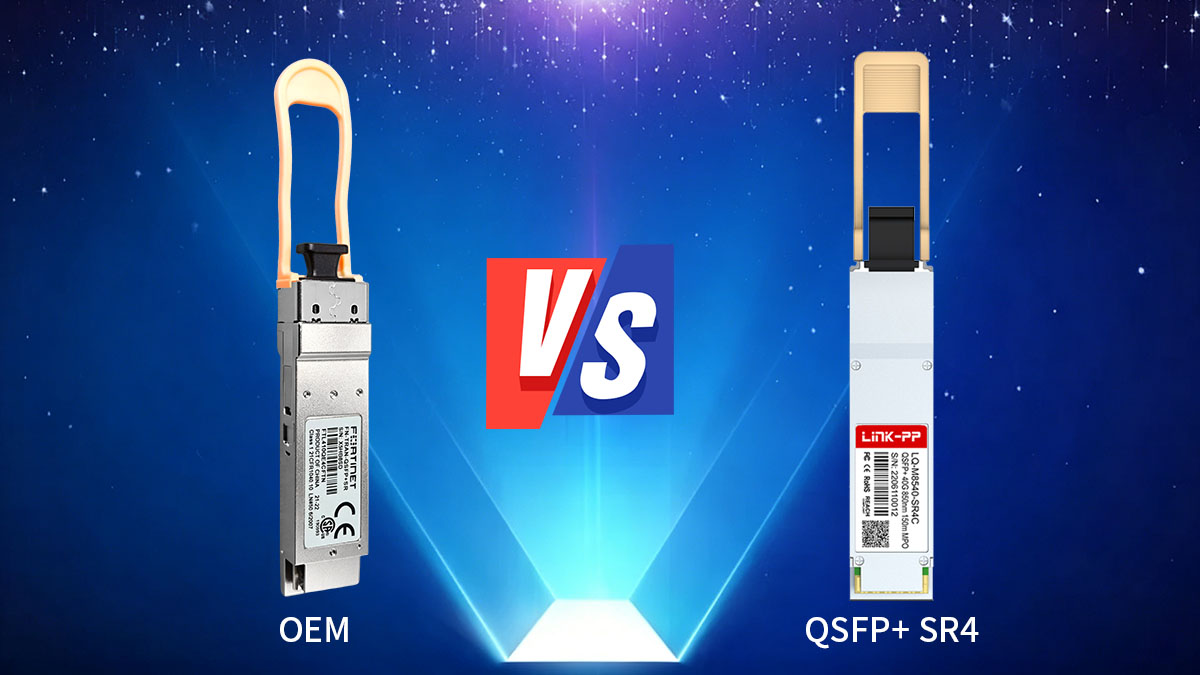
From a technical standpoint, OEM and compatible QSFP+ SR4 modules share the same core optical architecture, including 850nm VCSEL-based transmission and MPO/MTP connectivity. However, their ecosystem behavior and validation levels can differ depending on vendor implementation.
To clarify these differences, the following comparison highlights the most relevant operational aspects:
| Feature | OEM Fortinet FN-TRAN-QSFP+SR | Compatible QSFP+ SR4 Module |
|---|---|---|
| Optical Standard | IEEE 802.3ba compliant | IEEE 802.3ba compliant |
| Transmission Speed | 40Gbps | 40Gbps |
| Wavelength | 850nm | 850nm |
| Device Recognition | Native Fortinet validation | Vendor-coded compatibility |
| Ecosystem Integration | Fully certified | Depends on coding & testing |
This comparison shows that the core optical performance remains aligned, while differences are mainly related to validation, integration behavior, and vendor certification levels.
To better interpret this, it is important to understand how these differences appear in real deployment environments.
- OEM modules typically integrate seamlessly with Fortinet systems out of the box
- Compatible modules rely on proper coding and validation to ensure identical behavior
- Both options can achieve equivalent throughput under correct deployment conditions
- System-level alerts or warnings may vary depending on compatibility implementation
From a practical perspective, these distinctions are more relevant during procurement and troubleshooting than during normal operation.
Cost vs Value Analysis
Cost structure is one of the most significant differentiators between OEM and compatible QSFP+ SR4 modules. While both provide similar optical performance, their pricing models and total lifecycle impact can differ substantially.
The key value considerations include:
- Lower procurement cost for compatible modules at scale
- Reduced total infrastructure expenditure in large deployments
- Ability to allocate budget toward core switching or security layers
- OEM premium associated with brand certification and support assurance
To better illustrate the financial dimension, consider the following structured comparison:
| Cost Factor | OEM Module | Compatible Module |
|---|---|---|
| Unit Price | Higher | Lower |
| Large-Scale Deployment Cost | Significant | Optimized |
| Replacement Cost | Higher | More flexible |
| Lifecycle Budget Impact | Elevated | Reduced |
This comparison highlights that while OEM modules provide strong assurance, compatible alternatives offer measurable cost advantages in scalable environments.
From an operational budgeting perspective, this difference becomes more significant as deployment size increases, especially in cloud data centers or enterprise backbone networks.
Risk Considerations and Mitigation
Although compatible QSFP+ SR4 modules are widely used, they introduce certain risks that must be managed through proper selection and validation. These risks are not typically related to optical limitations but to integration and quality assurance.
Key risk factors include:
- Compatibility mismatch with specific Fortinet firmware versions
- Variation in manufacturing quality across vendors
- Potential absence of formal OEM-level certification
- Differences in technical support coverage
To reduce these risks, organizations typically apply the following mitigation strategies:
- Pre-deployment compatibility testing in controlled lab environments
- Selection of vendors with proven Fortinet interoperability experience
- Verification of EEPROM coding consistency
- Monitoring of DDM data during early deployment phases
From a deployment risk perspective, these measures help ensure that compatible modules operate at a level equivalent to OEM performance in production environments.
Ultimately, the decision is not about eliminating risk entirely, but about managing it through proper validation and vendor selection processes.
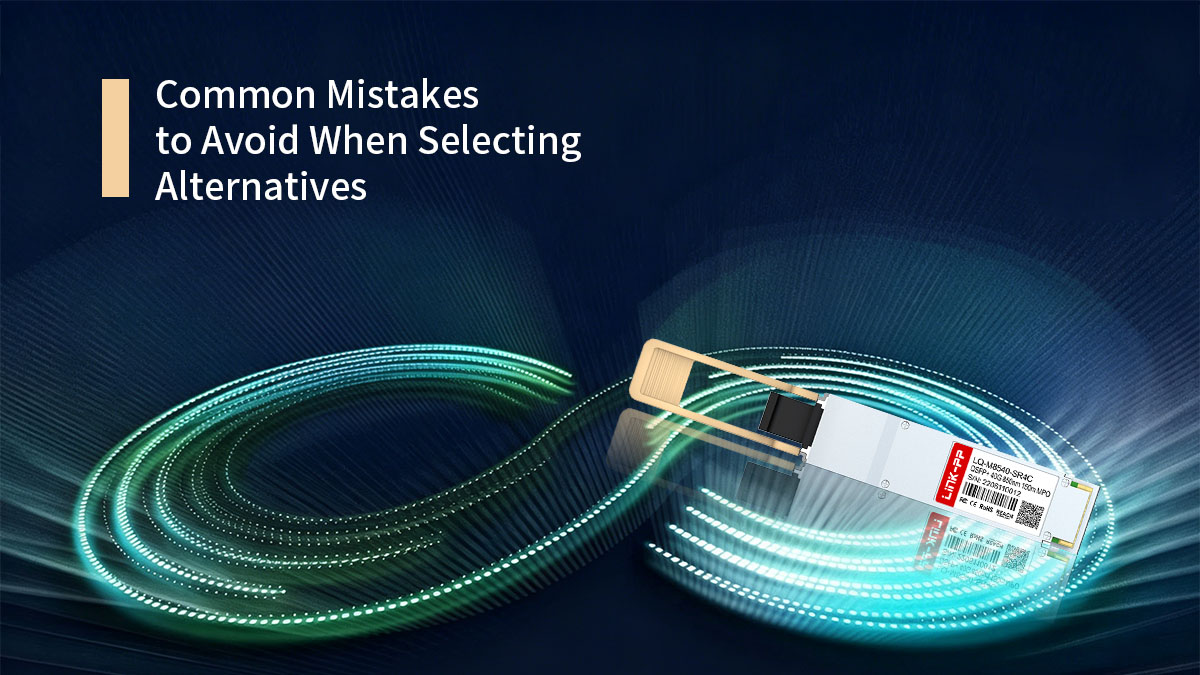
🧾 Common Mistakes to Avoid When Selecting Alternatives
Selecting a compatible alternative for Fortinet FN-TRAN-QSFP+SR is often straightforward on paper, but in real deployments, most issues come from evaluation mistakes rather than the hardware itself. These mistakes usually lead to compatibility failures, unstable links, or unnecessary troubleshooting overhead.
In practical network environments, avoiding these errors is as important as choosing the right module, because optical transceivers directly affect backbone stability and data center reliability.
Ignoring Compatibility Verification
One of the most common mistakes is assuming that all QSFP+ SR4 modules with identical specifications will automatically work with Fortinet devices. In reality, compatibility depends heavily on firmware recognition and EEPROM coding alignment.
To reduce failure risk, the following checks are essential:
- Verify compatibility with specific Fortinet switch models
- Confirm EEPROM coding matches Fortinet system requirements
- Test hot-plug detection behavior before production deployment
- Validate system logs for any optical warnings or mismatches
To better understand the impact of skipping these checks, consider the operational consequences:
- Link may fail to initialize even if optical specs match
- Switch may generate compatibility warnings or disable ports
- Intermittent connectivity issues under load conditions
From an operational standpoint, compatibility validation is not optional—it is a critical step in ensuring stable 40G network performance.
Overlooking Cable and Connector Matching
Another frequent issue is incorrect matching between transceivers and fiber infrastructure. Even when the module itself is fully compatible, mismatched cabling can significantly degrade performance or cause link failure.
Key technical considerations include:
- Ensuring MPO/MTP polarity is correctly configured
- Matching OM3 or OM4 multimode fiber types appropriately
- Verifying fiber cleanliness to avoid signal loss
- Confirming correct patching direction in parallel optics setup
To better organize these risks, the main mismatch types can be grouped as follows:
- Connector mismatch: Incorrect MPO polarity or adapter configuration
- Fiber type mismatch: Using OM2 instead of OM3/OM4
- Physical contamination: Dust or debris affecting optical performance
These issues often appear as intermittent errors, which makes troubleshooting more complex than direct hardware failure.
From a deployment perspective, proper cabling verification is as important as selecting the correct transceiver model.
Choosing Based on Price Alone
A common procurement mistake is selecting compatible modules purely based on the lowest price. While cost efficiency is one of the main reasons to use alternatives, excessive cost focus can lead to poor quality or unreliable performance.
To better evaluate this risk, consider the following trade-offs:
- Lower-priced modules may use inconsistent optical components
- Reduced quality control can increase failure rates under load
- Lack of proper testing may lead to instability in high-density environments
- Short-term savings may result in higher maintenance costs
To clarify the long-term impact, the comparison below highlights typical outcomes:
| Selection Approach | Short-Term Result | Long-Term Impact |
|---|---|---|
| Price-only focus | Lower upfront cost | Higher failure and maintenance risk |
| Balanced evaluation | Stable deployment | Lower total cost of ownership |
This shows that selecting solely based on price often shifts costs from procurement to operations, which is less efficient over time.
From a network reliability perspective, quality consistency is more important than marginal cost reduction, especially in critical data center infrastructure.
🧾 Best Practices for Deployment and Integration
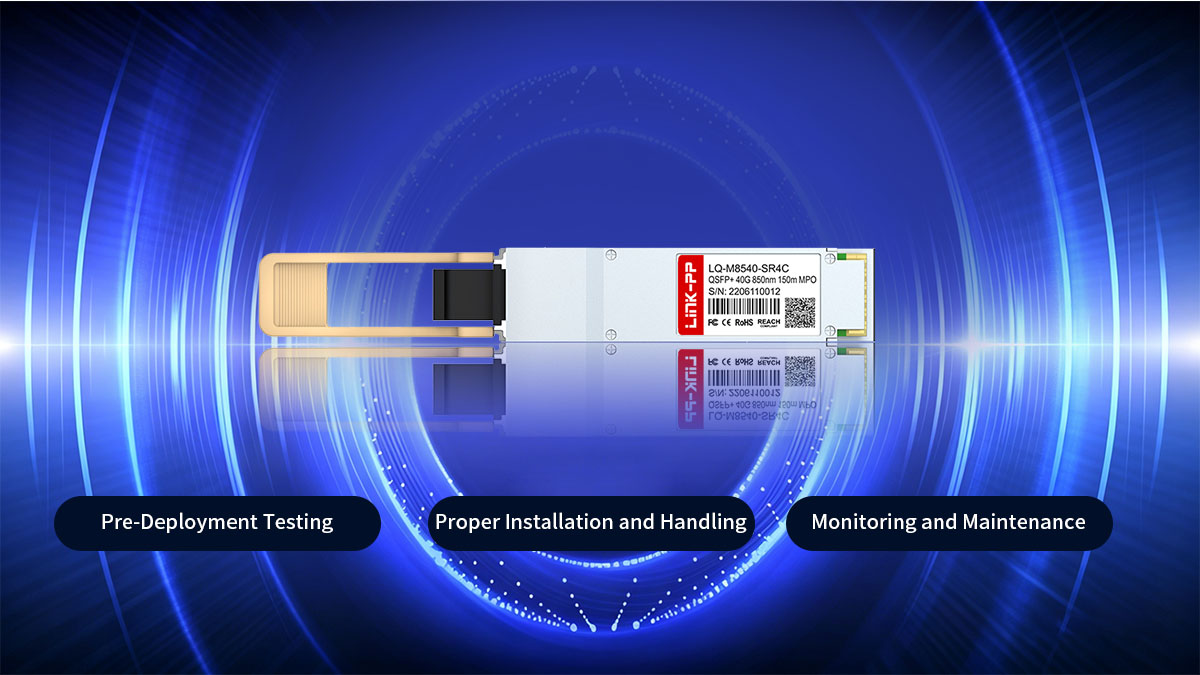
Deploying compatible QSFP+ SR4 modules as replacements for Fortinet FN-TRAN-QSFP+SR requires more than simple installation. In real data center environments, stable performance depends on proper validation, careful handling, and continuous monitoring after integration.
The main goal is to ensure that the optical layer behaves consistently under production traffic conditions, especially in high-density spine-leaf architectures where link stability directly impacts application performance.
Pre-Deployment Testing
Before installing compatible modules into a live Fortinet environment, pre-deployment testing is essential to verify compatibility and stability under controlled conditions.
To ensure reliable validation, the following checks should be performed:
- Confirm module recognition on Fortinet switches during boot and hot-plug
- Validate link establishment between QSFP+ SR4 ports over OM3/OM4 fiber
- Monitor DDM parameters for temperature, voltage, and optical power stability
- Run traffic load tests to evaluate performance under sustained throughput
To better structure the testing process, it can be viewed in stages:
- Compatibility check: Ensures correct system identification
- Link validation: Confirms physical optical connectivity
- Stress testing: Simulates production-level traffic load
This staged approach helps identify potential issues early, reducing the risk of failures in production environments.
From an operational perspective, pre-deployment testing acts as a safeguard that ensures only validated modules enter the live network.
Proper Installation and Handling
Correct physical installation and handling of QSFP+ SR4 modules significantly affects long-term reliability. Even high-quality transceivers can experience performance degradation if improperly handled during deployment.
Key installation practices include:
- Always clean MPO/MTP connectors before insertion
- Avoid touching optical surfaces to prevent contamination
- Ensure correct alignment during hot-plug insertion
- Use proper cable management to avoid fiber stress or bending
To better understand installation risks, consider the following operational impacts:
- Dirty connectors can cause increased insertion loss and packet errors
- Improper alignment may lead to intermittent link failure
- Excessive fiber bending can degrade optical signal quality over distance
From a deployment standpoint, physical handling is just as important as electronic compatibility, since optical systems are highly sensitive to contamination and mechanical stress.
Monitoring and Maintenance
After deployment, continuous monitoring is essential to maintain stable performance of compatible QSFP+ SR4 modules in Fortinet environments. Optical transceivers operate under constant load, making real-time visibility a key factor in long-term reliability.
Effective monitoring practices include:
- Tracking DDM values for early detection of performance drift
- Monitoring optical power levels for signal degradation
- Observing temperature variations in high-density switch environments
- Setting alert thresholds for abnormal link behavior
To organize monitoring focus areas:
- Signal health monitoring: Ensures consistent optical transmission quality
- Environmental monitoring: Tracks temperature and power conditions
- Predictive maintenance: Identifies early signs of potential failure
This proactive approach reduces unexpected downtime and improves overall network resilience.
From an operational perspective, continuous monitoring transforms passive infrastructure into a manageable and predictable system, especially in large-scale 40G deployments.
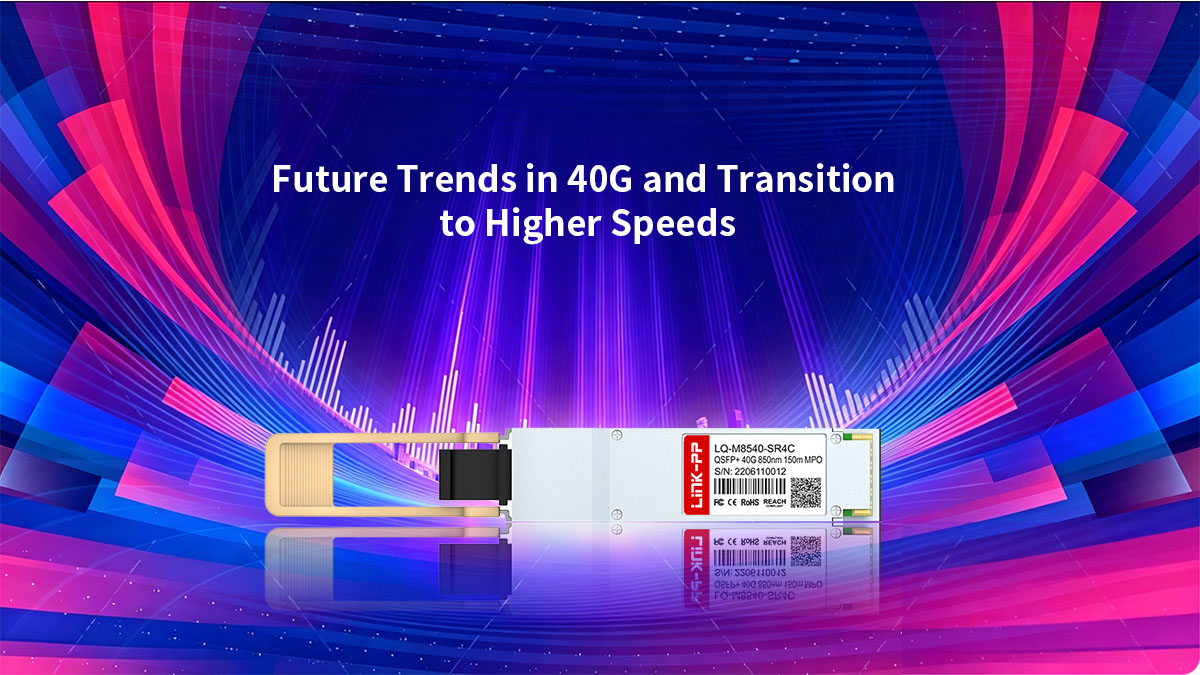
🧾 Future Trends in 40G and Transition to Higher Speeds
The role of 40G QSFP+ SR4 modules such as Fortinet FN-TRAN-QSFP+SR is gradually evolving as data center networks move toward higher bandwidth standards like 100G and 400G. However, 40G is still widely used in many enterprise and aggregation-layer deployments due to its cost-performance balance and existing fiber infrastructure compatibility.
In real-world network planning, the transition is not an immediate replacement but a phased evolution driven by traffic growth, application demand, and infrastructure readiness.
Role of 40G in Modern Network Architectures
Despite the rise of higher-speed Ethernet standards, 40G continues to serve as a stable and cost-efficient solution in many production environments. It remains particularly relevant in aggregation and leaf-layer designs where full migration to 100G is not yet necessary.
Key reasons 40G is still widely used include:
- Mature and stable QSFP+ ecosystem with proven interoperability
- Adequate bandwidth for many enterprise and virtualization workloads
- Lower infrastructure upgrade cost compared to 100G migration
- Existing multimode fiber (OM3/OM4) compatibility
To better understand its position in network design, 40G usage can be categorized as follows:
- Access layer support: Connecting servers to leaf switches
- Aggregation layer transport: Consolidating traffic between switch tiers
- Legacy infrastructure extension: Supporting existing fiber investments
From a practical perspective, 40G acts as a transitional technology that bridges traditional SFP+ 10G environments and newer high-speed architectures.
Migration Path to 100G and Beyond
As network demand continues to grow, organizations are increasingly planning structured migration paths from 40G to 100G and eventually 400G. This transition is typically driven by bandwidth-intensive applications such as cloud computing, AI workloads, and large-scale virtualization.
Common migration considerations include:
- Evaluating whether existing fiber infrastructure can support higher speeds
- Assessing switch hardware upgrade cycles
- Planning phased replacement of QSFP+ modules with QSFP28 or QSFP-DD
- Balancing cost of upgrade vs performance gains
To better structure the transition, typical upgrade paths include:
- 40G QSFP+ SR4 → 100G QSFP28 SR4
- 100G QSFP28 → 400G QSFP-DD or OSFP 800G platforms
- Parallel infrastructure upgrades in high-traffic data center zones
| Transition Stage | Typical Module Type | Key Benefit |
|---|---|---|
| 40G Era | QSFP+ SR4 | Cost-efficient short-reach connectivity |
| 100G Upgrade | QSFP28 SR4 | Higher bandwidth per link |
| 400G Evolution | QSFP-DD / OSFP | Maximum density and scalability |
This staged evolution allows organizations to scale bandwidth without requiring immediate full infrastructure replacement.
From an operational perspective, phased migration reduces disruption while maintaining continuous service availability.
🧾 Conclusion
The evaluation of Fortinet FN-TRAN-QSFP+SR and its compatible QSFP+ SR4 alternatives shows that 40Gbps short-range optics remain a stable and practical choice for modern data center interconnects. While OEM modules provide native integration within Fortinet ecosystems, well-validated compatible options can deliver equivalent optical performance with greater flexibility and cost efficiency.
From a strategic perspective, selecting between OEM and compatible modules is less about raw transmission capability and more about balancing compatibility assurance, deployment scale, and long-term infrastructure planning.
To summarize the key insights from the analysis, the most important considerations can be condensed as follows:
- Fortinet FN-TRAN-QSFP+SR is optimized for 40Gbps short-range multimode fiber connectivity in data center environments
- Compatible QSFP+ SR4 modules can achieve similar performance when properly coded and validated
- Cost efficiency, supply chain flexibility, and multi-vendor interoperability are the main drivers for considering alternatives
- Proper selection requires attention to compatibility, optical quality, and deployment best practices
- 40G technology still plays a critical role in aggregation layers despite the transition toward 100G and 400G networks
This summary highlights that successful deployment depends on technical validation as much as procurement strategy, especially in large-scale or mixed-vendor infrastructures.
For organizations planning 40G infrastructure expansion or optimization, working with a reliable optical transceiver source is essential to ensure consistent performance and deployment stability.
To explore high-quality compatible QSFP+ SR4 solutions that align with Fortinet environments and broader multi-vendor networks, visit LINK-PP Official Store for more product options and technical support resources.