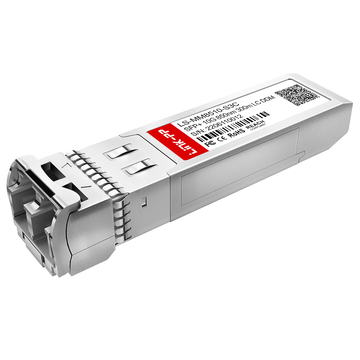
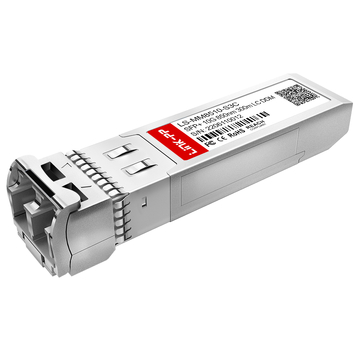
The Fortinet FG-TRAN-SFP-SR is a 10G SFP+ short-range optical transceiver designed to deliver stable, high-speed data transmission over multimode fiber in enterprise and data center environments. It is commonly deployed in Fortinet networking infrastructures, including FortiGate firewalls and FortiSwitch platforms, where reliable 10G connectivity is required for uplinks, server interconnects, and aggregation layers.
In modern network architectures, demand for low latency and high bandwidth links continues to grow, especially with the expansion of cloud services, virtualization, and security-driven traffic inspection. The FG-TRAN-SFP-SR addresses these needs by offering a compact, hot-swappable form factor and standardized 10GBASE-SR compliance, making it suitable for scalable deployments where performance consistency and interoperability are critical.
This guide provides a structured overview of its specifications, compatibility considerations, installation practices, and real-world use cases, helping network engineers and IT decision-makers understand how this module fits into high-performance optical networking environments.
🔳 What is Fortinet FG-TRAN-SFP-SR?
The Fortinet FG-TRAN-SFP-SR is a 10Gbps SFP+ short-range optical transceiver designed for high-speed Ethernet connections over multimode fiber. In practical terms, it serves as a physical interface module that enables Fortinet networking devices to transmit and receive data at 10 gigabits per second over short distances, typically within data centers or enterprise campuses.
At its core, this module is part of the 10GBASE-SR standard, which defines short-range optical communication using an 850nm wavelength. It is widely used in environments where high bandwidth and low latency are required but long-distance transmission is not necessary.

Definition and Core Function
The FG-TRAN-SFP-SR functions as a plug-in optical interface that converts electrical signals from networking equipment into optical signals for transmission over fiber, and vice versa. This allows switches, firewalls, and routers to communicate at high speeds without electromagnetic interference.
To better understand its role, the table below summarizes its key functional characteristics in a structured way:
| Feature Category | Specification | Purpose |
|---|---|---|
| Data Rate | 10Gbps | Supports high-speed Ethernet transmission |
| Wavelength | 850nm | Optimized for multimode fiber operation |
| Form Factor | SFP+ | Enables hot-swappable modular connectivity |
| Transmission Medium | Multimode fiber (MMF) | Short-range optical communication |
These characteristics make it suitable for dense networking environments where performance and flexibility are both required.
Role in Fortinet Networking Ecosystem
Within Fortinet infrastructure, the FG-TRAN-SFP-SR is primarily used to extend high-speed connectivity between devices such as FortiGate firewalls and FortiSwitch units. It helps build a secure and scalable network fabric where data can flow efficiently between security and switching layers.
Typical deployment scenarios include server-to-switch connections in data centers, aggregation uplinks in enterprise networks, and internal backbone links that require consistent 10G throughput.
In addition to performance, its integration within Fortinet's ecosystem ensures compatibility with security-driven architectures, where traffic inspection and policy enforcement must occur without introducing bottlenecks.
🔳 Key Specifications of Fortinet FG-TRAN-SFP-SR
The Fortinet FG-TRAN-SFP-SR is built to support reliable 10Gbps short-range optical connectivity, making its specifications particularly important for network planning and compatibility validation. In practical deployments, understanding its optical, physical, and compliance characteristics helps ensure stable performance and correct integration into Fortinet environments.

Optical and Transmission Parameters
The optical design of the FG-TRAN-SFP-SR determines its performance range, signal quality, and compatibility with fiber infrastructure. These parameters define how the module behaves in real-world transmission scenarios.
In short, it delivers high-speed 10Gbps transmission over short distances using an 850nm wavelength optimized for multimode fiber.
| Parameter | Specification | Description |
|---|---|---|
| Data Rate | 10Gbps | Supports 10 Gigabit Ethernet transmission |
| Wavelength | 850nm | Optimized for multimode fiber operation |
| Maximum Distance | 300m (OM3), 400m (OM4) | Depends on fiber grade |
| Connector Type | LC Duplex | Standard optical interface |
These values show that the module is best suited for intra-building or rack-to-rack communication rather than long-haul transmission. The choice of OM3 or OM4 fiber directly impacts achievable distance.
To further clarify deployment constraints, distance capability is often the primary design consideration when planning short-range optical links.
Physical and Environmental Characteristics
Beyond optical performance, physical design and environmental tolerance determine how the module behaves in dense networking hardware and variable operating conditions.
The FG-TRAN-SFP-SR is designed for flexibility, low power consumption, and hot-swappable operation, which simplifies maintenance and scalability.
| Attribute | Specification | Benefit |
|---|---|---|
| Form Factor | SFP+ | Compact, high-density networking support |
| Hot-Swappable | Yes | Enables replacement without downtime |
| Power Consumption | Low power design | Reduces thermal load in switches |
| Operating Temperature | Commercial range | Suitable for enterprise environments |
In practical use, these characteristics allow network engineers to deploy or replace optical transceiver modules without interrupting active services, which is critical in production environments such as data centers or enterprise backbones.
The low power profile also contributes to improved thermal efficiency, especially in high-density switch configurations where multiple transceivers operate simultaneously.
Compliance and Standards
Compliance ensures that the FG-TRAN-SFP-SR can operate within standardized networking environments and interoperate with other compliant hardware.
This module follows widely adopted industry standards, ensuring predictable behavior across compatible systems.
| Standard Type | Specification | Relevance |
|---|---|---|
| Ethernet Standard | IEEE 802.3ae | Defines 10GBASE-SR operation |
| Multi-Source Agreement | SFP+ MSA | Ensures physical and electrical compatibility |
| Environmental Compliance | RoHS | Restricts hazardous substances |
These standards ensure that the module is not only compatible within Fortinet ecosystems but also capable of functioning in broader multi-vendor environments, provided firmware and compatibility conditions are met.
In enterprise deployments, adherence to these standards is particularly important for reducing interoperability risks and ensuring consistent performance across network layers.
🔳 Compatibility and Interoperability
The Fortinet FG-TRAN-SFP-SR is designed primarily for use within Fortinet networking environments, but its actual usability depends heavily on device compatibility, firmware alignment, and adherence to optical standards. In real-world deployments, interoperability is a key factor because optical transceiver modules must work seamlessly across switches, firewalls, and potentially mixed-vendor infrastructures.

Supported Fortinet Devices
The FG-TRAN-SFP-SR is widely deployed across Fortinet's switching and security product lines. Its compatibility is mainly centered on devices that support SFP+ 10Gbps ports and 10GBASE-SR optical standards.
Before deployment, it is important to confirm whether the target device supports SFP+ SR modules and has available firmware support for optical transceivers.
| Device Category | Typical Examples | Usage Scenario |
|---|---|---|
| Firewalls | FortiGate series | High-speed security inspection links |
| Switches | FortiSwitch series | Aggregation and access layer connectivity |
| Security Fabric | Fortinet integrated systems | Inter-device backbone communication |
In Fortinet environments, these modules are commonly used to connect firewall clusters, build high-speed switching fabrics, or extend secure network segments without introducing latency bottlenecks.
Third-Party Compatibility Considerations
Although the FG-TRAN-SFP-SR is optimized for Fortinet systems, many network environments operate in mixed-vendor setups. In such cases, interoperability depends on adherence to SFP+ MSA standards and device-level acceptance of third-party optics.
To better understand compatibility scenarios, the table below summarizes key factors influencing interoperability:
| Factor | Impact on Compatibility | Notes |
|---|---|---|
| MSA Compliance | High | Ensures baseline interoperability across vendors |
| Vendor Locking Policies | Medium to High | Some Fortinet devices may restrict non-certified modules |
| Firmware Version | High | Updates may enable or block third-party optics |
| Optical Standards | High | 10GBASE-SR compliance required |
In mixed environments, even fully standards-compliant modules may face recognition or warning messages depending on vendor policies. This does not always affect performance but can impact monitoring visibility or support coverage.
Firmware and Software Requirements
Firmware plays a critical role in determining whether the FG-TRAN-SFP-SR is fully recognized and operational within a Fortinet device. Compatibility is not only hardware-based but also software-controlled.
In many cases, firmware updates can either expand compatibility or introduce stricter validation rules for optical modules.
Key considerations include:
- Device firmware must support SFP 10G SR modules
- Optical transceiver databases may require updates for recognition
- Older firmware versions may block or flag third-party optics
- Diagnostic tools may report warnings if module ID is not recognized
From an operational standpoint, ensuring firmware consistency across network devices reduces the risk of unexpected link failures or degraded monitoring accuracy.
🔳 Common Use Cases and Applications
The Fortinet FG-TRAN-SFP-SR is primarily deployed in environments that require stable 10Gbps short-range connectivity with low latency and predictable performance. Its use cases are closely tied to data center architectures, enterprise backbone design, and security-focused networking, where multimode fiber links are commonly used for high-speed interconnects.

Data Center Networking
In data center environments, the FG-TRAN-SFP-SR is most commonly used for high-density, short-range connectivity between servers, switches, and aggregation layers. Its 10Gbps throughput supports modern workloads such as virtualization, cloud services, and distributed applications.
Typical deployment focuses on minimizing latency while maximizing port efficiency in rack-based architectures.
| Use Case Scenario | Connection Type | Benefit |
|---|---|---|
| Server-to-Top-of-Rack (ToR) | Direct fiber link | High-speed access to switching layer |
| ToR-to-Spine Switch | Aggregation uplink | Efficient traffic distribution |
| Inter-rack communication | Multimode fiber link | Reduced latency within data center |
These scenarios highlight how the module supports structured data center designs, particularly in spine-leaf or hierarchical topologies where predictable throughput is essential.
In most cases, OM3 or OM4 multimode fiber is used to maintain optimal signal quality across short distances.
Enterprise Network Infrastructure
Beyond data centers, the FG-TRAN-SFP-SR is widely used in enterprise campus networks where high-speed backbone connectivity is required between buildings, floors, or network distribution points.
The module helps ensure that internal traffic flows efficiently without congestion, especially in environments with heavy application usage or centralized services.
Common enterprise applications include:
- Core-to-distribution layer uplinks
- Building-to-building backbone links
- High-speed aggregation for departmental networks
- Connectivity between network closets and central switches
In these environments, the focus is not only on speed but also on stability and ease of scaling. The SFP+ form factor allows organizations to expand network capacity without replacing entire switching platforms.
Security-Focused Deployments
Within Fortinet ecosystems, the FG-TRAN-SFP-SR plays an important role in security-driven architectures, particularly where traffic inspection and policy enforcement require high-throughput connectivity.
Since Fortinet devices such as FortiGate firewalls often sit in the critical path of network traffic, the quality of interconnects directly affects security processing performance.
| Security Scenario | Role of FG-TRAN-SFP-SR | Operational Benefit |
|---|---|---|
| Firewall clustering | High-speed node interconnects | Ensures synchronized traffic inspection |
| Security Fabric links | Device-to-device communication | Maintains unified security policy enforcement |
| Inline inspection paths | Data forwarding between appliances | Prevents bottlenecks in traffic analysis |
These applications emphasize that optical transceivers are not just connectivity components but also performance enablers for security infrastructure.
In high-security environments, maintaining consistent throughput is essential to avoid delays in threat detection and policy application.
🔳 Advantages of FG-TRAN-SFP-SR
The Fortinet FG-TRAN-SFP-SR is widely adopted in high-speed networking environments because it balances performance, efficiency, and deployment simplicity. In practical use, its advantages are most visible in data center and enterprise networks where short-range 10Gbps links must remain stable under continuous traffic loads.

Performance Benefits
The most significant advantage of the FG-TRAN-SFP-SR is its ability to provide consistent 10Gbps transmission over multimode fiber with low latency. This makes it suitable for time-sensitive applications such as virtualization, real-time analytics, and security inspection.
In short, it ensures that high-bandwidth traffic can move between devices without introducing bottlenecks.
| Performance Aspect | Benefit | Impact on Network |
|---|---|---|
| 10Gbps throughput | High-speed data transfer | Supports modern application demands |
| 850nm wavelength | Optimized short-range transmission | Stable signal quality over MMF |
| Low latency | Reduced transmission delay | Improves application responsiveness |
These performance characteristics make it especially effective in environments where multiple high-traffic links operate simultaneously, such as aggregation layers or spine-leaf architectures.
Cost Efficiency
Another important advantage is cost efficiency, particularly when compared to long-range transceivers. Since the FG-TRAN-SFP-SR is designed for short distances, it requires less complex optical design and lower power consumption.
This translates into more efficient scaling for large deployments.
Key cost-related benefits include:
- Lower cost per port compared to long-range optics
- Reduced fiber infrastructure complexity (multimode fiber usage)
- Lower power consumption across high-density switches
- Efficient scaling in modular network designs
From an infrastructure planning perspective, organizations can deploy more 10G links without significantly increasing operational overhead.
Ease of Deployment
The FG-TRAN-SFP-SR is designed for plug-and-play operation, which simplifies installation and reduces configuration effort. Its SFP+ form factor allows it to be inserted directly into compatible ports without requiring additional setup steps.
This ease of deployment is particularly valuable in environments where rapid scaling or frequent hardware changes occur.
Typical deployment advantages include:
- Hot-swappable design for minimal downtime
- No complex calibration required
- Standard LC duplex connectors for easy fiber integration
- Compatibility with widely used multimode fiber types (OM3/OM4)
In practice, network engineers can replace or upgrade modules without interrupting active services, which is critical in production environments.
🔳 Limitations and Considerations
Although the Fortinet FG-TRAN-SFP-SR performs reliably in short-range 10Gbps optical environments, it is not a universal solution for all network scenarios. Its design is optimized for specific conditions, which means certain technical and environmental limitations must be considered before deployment to avoid performance issues or design mismatches.

Distance Constraints
The most fundamental limitation of the FG-TRAN-SFP-SR is its short transmission range. It is designed specifically for short-distance communication over multimode fiber, making it unsuitable for long-haul or campus-wide backbone links.
This limitation is directly tied to its 850nm short-range optical design.
| Fiber Type | Maximum Distance | Practical Usage |
|---|---|---|
| OM3 MMF | Up to 300m | Standard data center links |
| OM4 MMF | Up to 400m | Optimized high-performance links |
In real deployments, exceeding these distance limits can result in signal degradation, packet loss, or complete link failure. As a result, careful cabling design is required during network planning.
For environments requiring multi-kilometer connectivity, alternative long-range SFP+ modules would be necessary.
Fiber Type Requirements
The FG-TRAN-SFP-SR is strictly designed for multimode fiber (MMF), which introduces another key limitation in terms of infrastructure compatibility.
It cannot operate on single-mode fiber (SMF), which is commonly used for long-distance networking.
Key considerations include:
- Requires OM3 or OM4 multimode fiber for optimal performance
- Incompatible with single-mode fiber infrastructure
- Fiber quality directly impacts signal integrity
- Poor cabling can reduce effective transmission distance
In mixed infrastructure environments, this requirement can increase complexity if both MMF and SMF systems are present. Proper planning ensures that fiber types match the module specification to avoid inefficiencies.
Environmental Factors
While the FG-TRAN-SFP-SR is designed for enterprise-grade reliability, its performance can still be influenced by environmental conditions. These factors are often overlooked but can significantly affect long-term stability.
Common environmental considerations include:
- Operating temperature range must remain within specification
- Dust or contamination on LC connectors can degrade signal quality
- Poor ventilation in high-density switches may increase thermal stress
- Physical cable bending can affect optical signal integrity
In high-density deployments, especially in data centers, thermal management becomes particularly important since multiple transceivers operate simultaneously within confined spaces.
Regular maintenance of fiber connectors is also essential to prevent insertion loss and signal degradation over time.
🔳 Installation and Setup Guide
The Fortinet FG-TRAN-SFP-SR is designed for straightforward deployment, but proper installation and validation are still essential to ensure stable 10Gbps performance. In real-world networks, most issues related to optical modules come from incorrect handling, incompatible fiber, or missing verification steps rather than the hardware itself.

Pre-Installation Checklist
Before inserting the FG-TRAN-SFP-SR into a device, it is important to verify both hardware readiness and environmental conditions. This step ensures compatibility and reduces the risk of link failure after installation.
Key checks include:
- Confirm that the target device supports SFP+ 10G ports
- Verify firmware version compatibility for optical modules
- Ensure multimode fiber (OM3 or OM4) is available
- Inspect LC connectors for dust or physical damage
- Confirm that port is clean and free from previous module residue
These preparation steps are critical because optical performance is highly sensitive to contamination and mismatched fiber types.
Step-by-Step Installation Process
Once preparation is complete, the module can be installed. The FG-TRAN-SFP-SR supports hot-swappable operation, meaning it can be inserted without powering down the device.
A typical installation process includes the following steps:
- Align the SFP+ module with the port
- Gently insert the module until it clicks into place
- Connect LC duplex fiber cables to the module
- Ensure correct polarity (Tx to Rx, Rx to Tx)
- Secure fiber routing to avoid bending or strain
To better illustrate the key installation parameters, the table below summarizes essential physical and operational considerations:
| Step Element | Requirement | Reason |
|---|---|---|
| Module insertion | Firm but gentle alignment | Prevents port damage |
| Fiber type | OM3 or OM4 MMF | Ensures correct signal transmission |
| Connector type | LC duplex | Standard interface compatibility |
| Cable handling | Avoid sharp bends | Maintains optical integrity |
Following these guidelines helps ensure that the module is properly seated and that optical signals are transmitted without loss or misalignment.
Post-Installation Validation
After installation, it is necessary to verify that the module is functioning correctly. This step confirms both physical link establishment and logical network recognition.
Validation typically includes:
- Checking link status LEDs on the device
- Verifying port recognition in the system interface
- Running diagnostic or interface status commands
- Confirming 10Gbps link negotiation
- Monitoring for error counters or signal loss
If the link does not establish correctly, common troubleshooting points include fiber polarity, connector cleanliness, and firmware recognition issues.
In enterprise environments, it is also recommended to monitor the interface over time to ensure stable performance under load conditions.
🔳 Troubleshooting Common Issues
Even though the Fortinet FG-TRAN-SFP-SR is designed for stable 10Gbps short-range operation, issues can still occur in real deployments. Most problems are not caused by the module itself, but by fiber quality, compatibility settings, or physical installation factors. A structured troubleshooting approach helps quickly isolate and resolve these issues.
In practical environments, troubleshooting usually focuses on three areas: link establishment, performance stability, and compatibility behavior.

No Link or Connectivity Issues
When the optical link does not come up, the problem is typically related to physical layer setup or port recognition. This is the most common issue during initial installation.
Typical causes include incorrect fiber polarity, incompatible fiber type, or a misaligned module.
| Possible Cause | Description | Suggested Action |
|---|---|---|
| Fiber polarity mismatch | Tx/Rx connections reversed | Swap fiber connectors |
| Improper seating | Module not fully inserted | Reinsert SFP+ module firmly |
| Wrong fiber type | Single-mode fiber used | Replace with OM3/OM4 MMF |
| Dirty connectors | Dust or contamination present | Clean LC connectors properly |
In most cases, correcting fiber orientation or cleaning connectors resolves the issue immediately. If the module is not detected at all, verifying firmware compatibility and port status is also recommended.
Performance Degradation
In some cases, the link may be active but performance is unstable, showing packet loss, latency spikes, or reduced throughput. This usually indicates signal quality issues rather than complete failure.
Common contributing factors include fiber degradation, excessive bending, or poor cable management.
Key symptoms and causes include:
- Intermittent packet loss → dirty or damaged fiber connectors
- Reduced throughput → excessive cable length or poor-quality MMF
- High latency variation → unstable optical signal strength
- Error counters increasing → signal degradation or interference
To address these issues, a structured inspection approach is recommended:
- Inspect and clean all LC connectors
- Verify fiber cable is within supported distance (OM3/OM4 limits)
- Check for tight bends or physical stress on cables
- Replace suspect fiber patch cords if necessary
Maintaining clean and properly routed fiber is essential for sustained 10Gbps performance.
Compatibility Problems
Compatibility issues typically occur when the module is used with mixed-vendor hardware or outdated firmware. In Fortinet environments, the device may also restrict or flag unsupported transceivers.
Common compatibility scenarios include:
| Scenario | Behavior | Resolution |
|---|---|---|
| Module not recognized | Port shows empty or unknown status | Update firmware or verify module type |
| Warning messages displayed | "Unsupported transceiver" alert | Check Fortinet compatibility list |
| Link down on startup | Auto-negotiation failure | Restart port or device |
| Intermittent detection | Firmware inconsistency | Standardize firmware version |
In many cases, compatibility issues do not affect physical transmission but may limit monitoring visibility or generate system alerts. Ensuring firmware alignment across devices is the most effective preventive measure.
🔳 Future Trends in 10G SFP+ Transceivers
The Fortinet FG-TRAN-SFP-SR represents a mature generation of 10Gbps short-range optics, but the broader SFP+ ecosystem continues to evolve. While 10G remains widely deployed in enterprise and data center networks, new technologies are gradually reshaping how optical connectivity is designed, optimized, and scaled.

Transition Toward Higher-Speed Optical Standards
One of the most significant industry trends is the gradual shift from 10Gbps to higher-speed interfaces such as 25Gbps, 40Gbps, and 100Gbps. These newer standards are increasingly used in spine-layer and high-performance computing environments.
However, 10G SFP+ modules like the FG-TRAN-SFP-SR continue to play a critical role in access and aggregation layers where bandwidth demands remain stable.
| Interface Type | Typical Use Case | Role in Network Evolution |
|---|---|---|
| 10G SFP+ | Access and aggregation layers | Stable baseline connectivity |
| 25G SFP28 | Modern data center scaling | Upgrade path for high-density networks |
| 100G QSFP28 | Core and backbone networks | High-capacity backbone links |
In many real-world deployments, networks are evolving into hybrid environments where 10G links still serve as reliable endpoints while higher-speed links handle core traffic aggregation.
Increasing Focus on Energy Efficiency
Energy efficiency is becoming a key design factor in optical transceiver development. As data centers scale, even small reductions in power consumption per module can lead to significant operational savings.
10G SFP+ modules are already relatively low power, but newer designs continue to optimize thermal performance and energy usage.
Key efficiency trends include:
- Lower power optical chipsets for reduced heat output
- Improved signal processing efficiency
- Better thermal management in high-density switches
- Dynamic power scaling based on traffic load
These improvements are particularly important in large-scale environments where hundreds or thousands of transceivers operate simultaneously.
Growth of Open and Interoperable Networking
Another major trend is the shift toward more open networking ecosystems. Traditionally, optical modules were tightly coupled with vendor ecosystems, but the industry is increasingly moving toward interoperability and standardized hardware models.
This trend directly impacts how modules like FG-TRAN-SFP-SR are deployed.
Important developments include:
- Wider adoption of MSA-compliant optics across vendors
- Increased acceptance of multi-vendor network designs
- Decoupling of hardware and software in network architectures
- Greater flexibility in transceiver sourcing and deployment
In practical terms, this means network operators are less constrained by vendor-specific optics and can design more flexible infrastructure models, especially in hybrid or cloud-integrated environments.
🔳 Conclusion
The Fortinet FG-TRAN-SFP-SR is a reliable 10Gbps short-range SFP+ optical transceiver designed for high-performance connectivity in enterprise and data center environments. It delivers stable 10GBASE-SR transmission over multimode fiber, making it a practical solution for short-distance links within Fortinet-based network infrastructures. When evaluating its Fortinet FG-TRAN-SFP-SR specifications and deployment scenarios, its main value lies in predictable performance, broad Fortinet compatibility, and efficient short-range optical communication.
The essential points of this module can be summarized to support quick technical evaluation and decision-making:
- 10Gbps performance over multimode fiber using 850nm wavelength for short-range transmission
- Designed for Fortinet ecosystems including FortiGate and FortiSwitch platforms
- Supports up to 300m (OM3) and 400m (OM4) distances in typical deployments
- Hot-swappable SFP+ form factor enables flexible and low-downtime installation
- Best suited for data center interconnects, enterprise backbone links, and security fabric architectures
- Performance depends on proper fiber type, installation quality, and firmware compatibility
These points highlight that the FG-TRAN-SFP-SR is not a general-purpose optical module but a targeted solution optimized for stable 10G short-range networking.
In modern network design, selecting the right optical transceiver is essential for maintaining performance consistency and long-term scalability. The Fortinet FG-TRAN-SFP-SR remains a dependable choice for environments where 10Gbps connectivity is sufficient and where integration with Fortinet infrastructure is a priority.
For network engineers and IT teams looking to evaluate compatible alternatives or expand their optical module strategy, exploring verified and standards-compliant options can help ensure both flexibility and long-term network stability. Resources such as the LINK-PP Official Store can provide additional reference points for compatible optical transceiver solutions aligned with enterprise networking requirements.