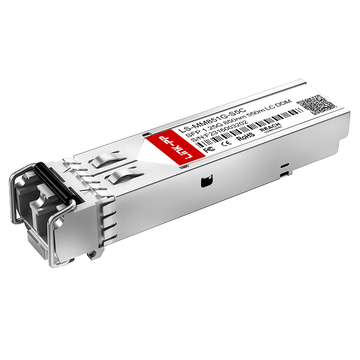
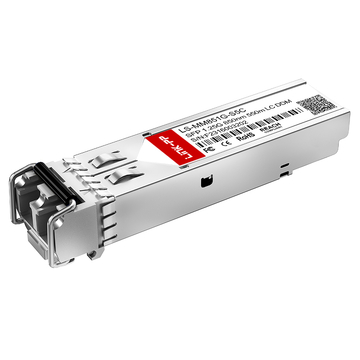
In enterprise network environments where security and uptime are tightly interconnected, even small hardware components can have a measurable impact on overall system reliability. The Palo Alto PAN-SFP-SX, a widely deployed 1G multimode SFP optical transceiver, plays a critical role in ensuring that data moves consistently and securely between network devices. While often viewed as a simple connectivity accessory, its performance directly affects how accurately and reliably security systems—such as firewalls and intrusion prevention platforms—can inspect and manage traffic.
Security reliability is no longer defined solely by software capabilities or policy configurations. Instead, it depends on the stability of the entire data path, including the physical layer. Optical inconsistencies, signal degradation, or hardware incompatibilities can introduce packet loss, latency, or even temporary link failures, all of which weaken the effectiveness of security controls. In this context, the PAN-SFP-SX becomes an essential component for maintaining both data integrity and continuous protection.
This article explores how the Palo Alto PAN-SFP-SX contributes to security reliability from a practical and technical perspective. It examines its core features, identifies common risks in optical networking, and outlines best practices for deploying and maintaining reliable, security-focused connections in modern enterprise infrastructures.
🎯 Understanding Palo Alto PAN-SFP-SX in Secure Network Architectures
The Palo Alto PAN-SFP-SX is a short-range optical transceiver designed to provide stable, high-integrity data transmission within secure network environments. In security architectures, its primary value lies in maintaining consistent link performance, which directly supports accurate traffic inspection and uninterrupted firewall operations.

What is Palo Alto PAN-SFP-SX?
The Palo Alto PAN-SFP-SX is a 1Gbps multimode fiber optic SFP module operating at 850nm, typically used for short-distance fiber connections up to 550m. It is specifically designed to work seamlessly with Palo Alto Networks devices, ensuring reliable link establishment and stable data transmission in enterprise and security-focused deployments.
To better understand its technical positioning, the following table outlines its core specifications:
| Parameter | Specification | Impact on Reliability |
|---|---|---|
| Data Rate | 1Gbps | Supports stable, low-latency links |
| Wavelength | 850nm | Optimized for multimode fiber |
| Transmission Distance | Up to 550m | Suitable for campus and data center links |
| Fiber Type | Multimode (MMF) | Reduces signal attenuation over short distances |
These specifications indicate that the PAN-SFP-SX is optimized for predictable, short-range communication scenarios where stability and low error rates are more critical than long-distance reach.
Role of Optical Transceivers in Security Infrastructure
Optical transceivers like the PAN-SFP-SX serve as the physical interface between network devices, and their reliability directly affects the performance of security systems. In secure architectures, even minor transmission issues can lead to incomplete packet inspection or delayed threat detection.
Their role can be understood across several key functions:
- Maintaining consistent data flow between firewalls, switches, and monitoring systems
- Ensuring signal integrity for accurate deep packet inspection (DPI)
- Supporting real-time traffic analysis without introducing latency or jitter
- Preventing link instability that could disrupt security policy enforcement
These functions highlight that optical modules are not passive components; they actively influence how effectively security mechanisms operate. A stable transceiver ensures that security devices receive complete and accurate data streams, which is essential for maintaining both visibility and control.
In modern network architectures, where security depends on continuous monitoring and rapid response, the reliability of components like the PAN-SFP-SX becomes a foundational requirement rather than an optional consideration.
🎯 Defining Security Reliability in Optical Networking
Security reliability in optical networking refers to the ability of the network to maintain consistent, accurate, and uninterrupted data transmission while supporting security functions such as traffic inspection, threat detection, and policy enforcement. It is not limited to uptime alone, but extends to data integrity, signal stability, and hardware consistency at the physical layer.

What Does Security Reliability Mean?
Security reliability is the combination of stable connectivity, accurate data delivery, and resilience against failures at the physical transmission level. In optical networking, this means ensuring that every packet transmitted through fiber links arrives intact, on time, and without distortion that could affect security analysis.
This concept can be broken down into several core elements:
- Network uptime: continuous link availability without unexpected disconnections
- Data integrity: transmission without corruption, loss, or bit errors
- Signal stability: consistent optical power levels and minimal fluctuation
- Fault tolerance: ability to resist or quickly recover from hardware or environmental issues
These elements work together to ensure that higher-layer security systems receive reliable input data. If any of these factors degrade, the effectiveness of firewalls, intrusion detection systems, and monitoring tools is directly compromised.
In practice, security reliability connects the physical layer with the logical security layer. A failure in optical transmission does not just cause connectivity issues—it can lead to blind spots in security visibility.
Why Security Reliability Matters in Enterprise Networks
Security reliability is essential because enterprise networks depend on continuous and accurate data flows to enforce security policies and detect threats in real time. Any instability at the optical layer can introduce risks that are difficult to detect but potentially severe in impact.
The importance of security reliability becomes clearer when considering typical enterprise scenarios:
- In financial systems, even brief packet loss can interrupt transaction validation or monitoring
- In healthcare networks, unstable links may delay access to critical data or disrupt secure communications
- In cloud environments, high traffic volumes amplify the impact of even minor transmission inconsistencies
To better illustrate the relationship between optical performance and security impact, consider the following comparison:
| Factor | Optical Issue | Security Impact |
|---|---|---|
| Signal attenuation | Weak optical power | Increased packet loss |
| Connector contamination | Signal distortion | Inaccurate traffic inspection |
| Link instability | Intermittent disconnections | Gaps in monitoring and logging |
| Hardware mismatch | Compatibility errors | Firewall link failures |
These examples show that security risks are not always caused by software vulnerabilities; they can originate from physical-layer inconsistencies that disrupt how data is delivered and analyzed.
As enterprise networks grow more complex and security requirements become stricter, ensuring reliability at the optical layer is no longer optional. It is a critical foundation for maintaining trust, visibility, and control across the entire network infrastructure.
🎯 Key Features of Palo Alto PAN-SFP-SX That Enhance Security Reliability
The Palo Alto PAN-SFP-SX enhances security reliability by delivering stable optical performance, seamless compatibility, real-time diagnostics, and strong environmental resilience. These features ensure that data transmission remains consistent and trustworthy, which is essential for accurate security monitoring and uninterrupted network protection.

Stable Optical Performance
The PAN-SFP-SX is designed to provide consistent signal quality, minimizing transmission errors that could affect security operations. Stable optical performance ensures that packets are delivered without distortion, enabling precise traffic inspection and analysis.
Key performance characteristics include:
- Low insertion loss, which helps maintain strong signal levels across the link
- High signal-to-noise ratio, reducing the likelihood of bit errors
- Consistent output power, ensuring predictable link behavior over time
- Minimal packet retransmissions, supporting efficient data flow
These attributes directly contribute to maintaining data integrity. When optical performance is stable, security devices can process traffic without compensating for transmission errors, improving both accuracy and efficiency.
Compatibility and Interoperability
The PAN-SFP-SX is engineered for seamless integration with Palo Alto Networks hardware, reducing the risk of compatibility-related issues that can compromise reliability. Proper interoperability ensures that links are established quickly and remain stable under varying network conditions.
The following table highlights how compatibility influences security reliability:
| Aspect | PAN-SFP-SX Behavior | Reliability Impact |
|---|---|---|
| Device recognition | Immediate and consistent | Faster link initialization |
| Firmware alignment | Fully supported | Reduced risk of link drops |
| Protocol handling | Standards-compliant | Stable data transmission |
| Error handling | Predictable responses | Easier troubleshooting |
By avoiding mismatches between hardware and firmware, the PAN-SFP-SX helps prevent intermittent failures that could disrupt firewall connectivity or create gaps in traffic inspection.
Built-in Diagnostic Capabilities (DDM)
The PAN-SFP-SX supports Digital Diagnostic Monitoring (DDM), enabling real-time visibility into critical operating parameters. This capability allows network administrators to detect and address potential issues before they impact security operations.
DDM provides insight into several key metrics:
- Temperature, indicating thermal stability of the module
- Supply voltage, reflecting power consistency
- Transmit optical power, showing signal output strength
- Receive optical power, indicating signal quality at the receiver
These metrics allow for proactive maintenance. For example, a gradual drop in receive power can signal fiber degradation or connector contamination, enabling corrective action before packet loss occurs.
By identifying issues early, DDM reduces the likelihood of unexpected failures and supports continuous, reliable security monitoring.
Resistance to Environmental Stress
The PAN-SFP-SX is built to operate reliably under a range of environmental conditions, making it suitable for both controlled data centers and more demanding edge deployments. Environmental resilience is essential for maintaining stable links in real-world scenarios.
Key environmental factors and their impact are summarized below:
| Condition | Potential Risk | PAN-SFP-SX Mitigation |
|---|---|---|
| Temperature variation | Signal instability | Stable operation across range |
| Electromagnetic interference | Data corruption | Shielded design reduces impact |
| Physical wear | Connector degradation | Durable construction |
| Dust and contamination | Signal attenuation | Supports maintenance detection |
This level of durability ensures that the module continues to perform reliably even when external conditions are less than ideal. As a result, security systems remain fully operational without being affected by environmental fluctuations.
Overall, these features demonstrate that the PAN-SFP-SX is not just a connectivity component but a reliability enabler. By maintaining stable, observable, and resilient optical links, it supports the consistent operation of security-critical network infrastructure.
🎯 Common Risks Affecting Security Reliability and How PAN-SFP-SX Mitigates Them
Security reliability in optical networks can be compromised by several physical-layer risks, including signal degradation, hardware failure, and compatibility issues. The Palo Alto PAN-SFP-SX mitigates these risks through stable optical design, high-quality components, and system-level compatibility, helping maintain continuous and accurate data transmission.

Signal Degradation and Data Integrity Issues
Signal degradation is one of the most common factors affecting security reliability, as it directly impacts data integrity. When optical signals weaken or become distorted, packet errors and retransmissions increase, reducing the accuracy of traffic inspection and analysis.
The main causes of signal degradation include:
- Fiber attenuation due to distance or poor cable quality
- Contaminated or misaligned connectors
- Excessive bending or physical stress on fiber cables
- Variations in optical power levels
The PAN-SFP-SX addresses these issues through precise optical calibration and consistent output performance. Its stable transmit and receive characteristics help maintain signal clarity, even in environments where minor physical imperfections exist.
Hardware Failures and Network Downtime
Hardware-related failures can lead to link interruptions, which directly affect network uptime and security visibility. In environments where firewalls depend on continuous connectivity, even short disruptions can create gaps in monitoring and enforcement.
The following table outlines typical hardware risks and how the PAN-SFP-SX mitigates them:
| Risk Type | Failure Scenario | PAN-SFP-SX Mitigation |
|---|---|---|
| Component aging | Gradual performance decline | High-quality components extend lifespan |
| Thermal stress | Overheating and instability | Stable operation across temperature range |
| Power fluctuations | Inconsistent voltage supply | Tolerant design with stable performance |
| Mechanical wear | Connector or port damage | Robust construction reduces failure risk |
By reducing the likelihood of sudden or gradual failures, the PAN-SFP-SX helps maintain continuous link availability. This continuity is essential for ensuring that security systems remain active and effective at all times.
Compatibility-Related Vulnerabilities
Compatibility issues can introduce subtle but critical risks, especially in security-sensitive environments. Unsupported or mismatched transceiver modules may cause intermittent link failures, inconsistent performance, or even complete communication breakdowns between devices.
Common compatibility-related risks include:
- Failure to establish stable links with network devices
- Firmware conflicts leading to unexpected behavior
- Inconsistent error handling across different hardware vendors
- Limited visibility into module status and diagnostics
The PAN-SFP-SX mitigates these risks by being specifically designed for Palo Alto Networks platforms. This ensures predictable behavior, proper device recognition, and full support for monitoring features such as DDM.
With consistent interoperability, network administrators can avoid hidden vulnerabilities caused by unreliable connections. This leads to more stable firewall operation, improved traffic visibility, and stronger overall security reliability.
🎯 Deployment Best Practices for Maximizing Security Reliability
Maximizing security reliability with the Palo Alto PAN-SFP-SX depends on proper installation, continuous monitoring, and alignment between hardware and system configurations. Following best practices at each stage of deployment helps ensure stable optical performance and uninterrupted security operations.

Proper Installation and Handling
Correct installation is the foundation of reliable optical performance. Even high-quality transceivers can experience issues if physical handling or setup is not done carefully.
Key installation practices include:
- Cleaning fiber connectors before insertion to prevent signal loss caused by contamination
- Ensuring proper alignment between the SFP transceiver and the port to avoid connection instability
- Avoiding excessive bending of fiber cables, which can increase attenuation
- Using compatible multimode fiber (MMF) that meets required specifications
These steps reduce the risk of initial signal degradation and help establish a stable baseline for network performance. A properly installed module is less likely to introduce errors that could affect security monitoring.
Monitoring and Maintenance Strategies
Ongoing monitoring is essential for maintaining long-term security reliability. The PAN-SFP-SX supports diagnostic features that allow administrators to detect issues early and take corrective action before they impact network operations.
Effective monitoring strategies typically include:
- Tracking DDM metrics such as temperature, voltage, and optical power levels
- Setting thresholds to trigger alerts when parameters deviate from normal ranges
- Performing periodic inspections of fiber connections and physical components
- Recording performance trends to identify gradual degradation over time
These practices enable proactive maintenance rather than reactive troubleshooting. By identifying potential issues early, network teams can prevent disruptions that might otherwise compromise security visibility.
Ensuring Firmware and Hardware Alignment
Consistency between firmware and hardware components is critical for maintaining stable and predictable behavior. Misalignment can lead to compatibility issues, even when using high-quality transceivers.
The following table outlines key alignment considerations:
| Aspect | Recommended Practice | Reliability Impact |
|---|---|---|
| Firmware version | Keep up to date | Reduces unexpected link issues |
| Module compatibility | Use supported transceivers | Ensures stable operation |
| Device recognition | Verify after installation | Confirms proper integration |
| Configuration checks | Validate port settings | Prevents misconfiguration errors |
Maintaining alignment ensures that the PAN-SFP-SX operates within expected parameters and that all features, including diagnostics, function correctly.
🎯 Comparing PAN-SFP-SX with Generic SFP Modules in Security Context
In security-focused network environments, the choice between a vendor-validated transceiver like the Palo Alto PAN-SFP-SX and generic SFP modules can significantly influence overall reliability. While both may provide basic optical connectivity, their behavior under real security workloads differs in stability, predictability, and long-term operational risk.

Reliability Differences
Reliability is the most critical differentiator between PAN-SFP-SX and generic SFP modules. Security systems depend on uninterrupted and consistent data flow, and even minor instability can affect threat detection accuracy.
Generic modules often vary in manufacturing quality and testing standards, which can lead to inconsistent performance across deployments. In contrast, the PAN-SFP-SX is validated for use within Palo Alto environments, ensuring predictable behavior under standard operating conditions.
| Factor | PAN-SFP-SX Behavior | Generic SFP Behavior | Reliability Impact |
|---|---|---|---|
| Quality control | Vendor-validated production | Varies by manufacturer | Consistent vs unpredictable |
| Link stability | Stable under load | Possible intermittent drops | Continuous vs unstable traffic |
| Performance variance | Low deviation | Higher deviation | Predictable vs fluctuating |
| Long-term operation | Designed for sustained use | May degrade faster | Extended vs reduced lifespan |
These differences become more visible in high-security environments where continuous inspection and logging are required. Any inconsistency in optical transmission can translate into gaps in security visibility.
Security Implications
Beyond performance, security implications play a major role in module selection. Optical transceivers are part of the trusted hardware path in a secure network, and unverified components can introduce operational risks that are difficult to detect.
Common security concerns with generic modules include:
- Lack of full compatibility testing with firewall systems
- Potential firmware mismatches leading to unstable behavior
- Reduced visibility into diagnostics and operational metrics
- Increased risk of counterfeit or low-quality components entering the supply chain
The PAN-SFP-SX reduces these risks by operating within a validated ecosystem. It supports full diagnostic visibility and predictable integration with Palo Alto firewalls, ensuring that security systems receive accurate and complete traffic data without interruption.
Cost vs Risk Trade-Off
From an operational perspective, the decision between PAN-SFP-SX and generic modules is not only about initial cost but also about long-term risk exposure and maintenance overhead.
The following comparison highlights the trade-off:
| Consideration | PAN-SFP-SX Focus | Generic SFP Focus | Operational Outcome |
|---|---|---|---|
| Initial cost | Higher relative investment | Lower upfront cost | Short-term vs long-term value |
| Maintenance effort | Lower due to stability | Higher due to variability | Reduced vs increased workload |
| Downtime risk | Minimized through validation | Higher probability of issues | Stable vs disruptive operation |
| Security assurance | Strong ecosystem integration | Limited verification | Trusted vs uncertain behavior |
While generic modules may appear cost-effective initially, they can introduce hidden operational costs through troubleshooting, downtime, and reduced security visibility. In contrast, the PAN-SFP-SX prioritizes predictable performance and reduced risk, which is critical in environments where security reliability is non-negotiable.
🎯 Future Trends in Secure Optical Connectivity
Secure optical connectivity is evolving beyond simple high-speed data transmission toward a more intelligent, monitored, and security-aware infrastructure layer. As enterprise networks become more distributed and threat landscapes more complex, optical components like the Palo Alto PAN-SFP-SX represent an early stage in a broader shift toward reliability-centric and security-integrated hardware design.

Increasing Demand for Secure Hardware Layers
Modern cybersecurity strategies are increasingly extending trust models down to the physical layer. Instead of focusing only on software-defined security policies, organizations are recognizing that unstable or untrusted hardware components can create hidden vulnerabilities in the network stack.
This shift is driving several important changes in optical networking:
- Greater emphasis on vendor-validated transceivers in security-critical environments
- Increased scrutiny of supply chain integrity for network hardware components
- Integration of physical-layer reliability into zero-trust architecture models
- Stronger alignment between network hardware certification and cybersecurity frameworks
In this context, devices like the PAN-SFP-SX illustrate how optical modules are becoming part of the trusted computing base, not just passive transmission elements.
Evolution of Smart Transceivers
Another major trend is the evolution of optical transceivers from simple signal converters into intelligent, telemetry-enabled devices. This shift is driven by the need for deeper visibility into network behavior and earlier detection of potential failures.
Key developments in this area include:
- Enhanced digital diagnostics with higher-resolution monitoring data
- Real-time telemetry streaming for continuous performance analysis
- Predictive maintenance capabilities based on trend analysis
- Integration with centralized network observability platforms
These advancements allow network operators to detect degradation patterns before they impact service or security. For example, gradual changes in optical power or temperature can be correlated with potential fiber issues, enabling preventive action rather than reactive troubleshooting.
As this trend continues, transceivers will play a more active role in maintaining security reliability by acting as early warning sensors within the network infrastructure.
Higher Bandwidth with Security Focus
The continued growth of cloud computing, AI workloads, and data-intensive applications is pushing optical networks toward higher bandwidth standards. However, increasing speed alone is not sufficient; reliability and security must scale alongside performance.
This creates a dual requirement for next-generation optical connectivity:
- Higher transmission rates (10Gbps, 25Gbps, and beyond)
- Maintained or improved signal integrity under higher load conditions
- Stronger resilience against environmental and operational variability
- Continued compatibility with security inspection systems
The challenge lies in ensuring that higher bandwidth does not introduce new instability risks. As data rates increase, even small signal distortions can have amplified effects on packet accuracy and latency, directly impacting security inspection processes.
Future optical modules are expected to address this by combining advanced modulation techniques, improved error correction, and tighter integration with network security systems.
🎯 Conclusion
The Palo Alto PAN-SFP-SX plays a critical role in enhancing security reliability in optical networking by ensuring stable, low-error, and consistent data transmission between security devices. As enterprise environments increasingly depend on continuous traffic inspection and real-time threat detection, the reliability of the optical layer becomes a foundational requirement rather than a supporting detail. In this context, the PAN-SFP-SX helps maintain both data integrity and operational stability across secure network infrastructures.
To better understand its overall value in security-focused deployments, the following points summarize its core contributions:
- Provides stable optical performance that reduces packet loss and transmission errors
- Ensures strong compatibility with Palo Alto security platforms for predictable operation
- Supports real-time diagnostics that enable proactive maintenance and fault detection
- Reduces risks associated with hardware failures, signal degradation, and incompatibility
- Strengthens the physical layer foundation required for consistent security visibility
These elements collectively demonstrate how optical transceivers directly influence the effectiveness of broader cybersecurity systems, especially in environments where uptime and accuracy are critical.
As network architectures continue to evolve toward higher speeds and stricter security requirements, choosing reliable and validated optical components becomes increasingly important for long-term stability. The PAN-SFP-SX represents a practical approach to balancing performance and security reliability at the physical layer, helping organizations maintain consistent protection and operational confidence.
For organizations evaluating or optimizing their optical module strategy, exploring high-quality compatible solutions through the LINK-PP Official Store can further support stable deployment, reduce operational risks, and strengthen overall network reliability in security-critical environments.