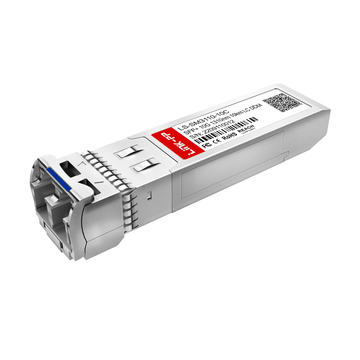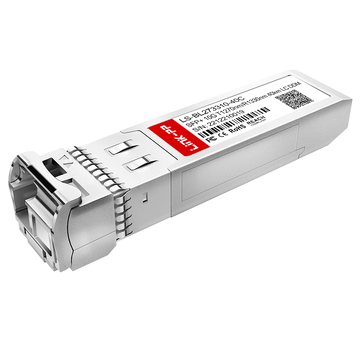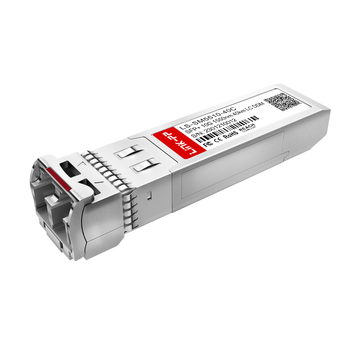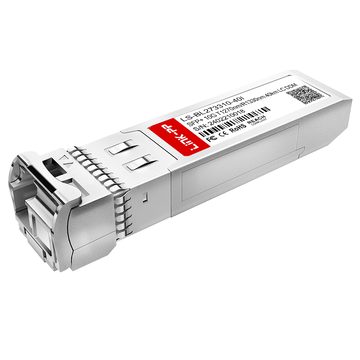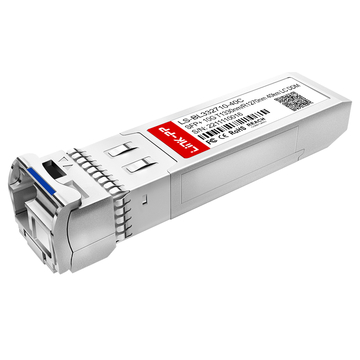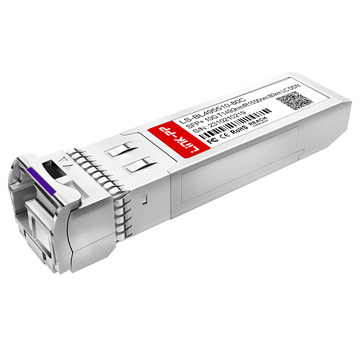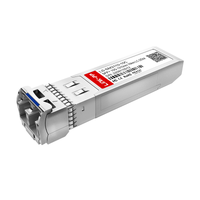
The SFP-10GBX-U-40 is a 10GBASE-BX BiDirectional (BiDi) optical transceiver engineered specifically for Metro Access networks and long-haul data center interconnects. Operating over a single strand of Single Mode Fiber (SMF) via a Simplex LC connector, it transmits data at 1270nm and receives at 1330nm. With a maximum reach of 40 kilometers, this upstream ("U") module enables ISPs and enterprise architects to double their existing network capacity while instantly cutting dark fiber leasing costs by half.
As bandwidth demands across metropolitan area networks (MAN) and enterprise campuses surge, laying new physical fiber is often financially prohibitive. To overcome this physical bottleneck, the SFP-10GBX-U-40 relies on Wavelength Division Multiplexing (WDM)—a transmission technology that multiplexes multiple optical carrier signals onto a single glass strand by utilizing distinct laser frequencies. By completely isolating the transmit (TX) and receive (RX) light paths, BiDi technology transforms a standard simplex connection into a full-duplex 10Gbps pipeline.
"Field deployments consistently demonstrate the financial viability of BiDi architecture. During regional ISP backhaul migrations in 2024, replacing legacy 10GBASE-LR duplex optics with SFP-10GBX-U-40 modules yielded an immediate 50% reduction in physical fiber strand requirements. When properly flashed with OEM-specific EEPROM codes for Cisco or Juniper core switches, these modules maintain 99.999% link stability, operating seamlessly within their 15dB optical power budget."
Before exploring specific metropolitan use cases, deployment strategies, and troubleshooting methods, it is critical to verify the precise physical and technical parameters that dictate how this transceiver integrates into existing infrastructure:
- Protocol Standard: Compliant with IEEE 802.3ae 10GBASE-BX standards (10.3125 Gbps).
- Wavelength Matrix: TX: 1270nm / RX: 1330nm (Must be strictly paired with a downstream module transmitting at 1330nm and receiving at 1270nm).
- Media Type: OS2 Single Mode Fiber (SMF).
- Maximum Reach: 40km (24.8 miles).
- Optical Safety Threshold: High-output laser design (Requires inline optical attenuators for fiber runs under 5km to prevent catastrophic receiver burnout).
In this guide, we will break down the premier use cases for the SFP-10GBX-U-40 in Metro Access environments, address common backward compatibility issues between SFP+ transceiver and RJ45 copper transceiver, and provide expert solutions for diagnosing and resolving persistent 10G link failures.
🚩 What is the SFP-10GBX-U-40 10GBASE-BX Transceiver?
The SFP-10GBX-U-40 is a Multi-Source Agreement (MSA) compliant, BiDirectional (BiDi) 10G SFP+ optical transceiver. Engineered for 40km Metro Access links over Single Mode Fiber (SMF), it utilizes WDM technology to transmit (TX) at 1270nm and receive (RX) at 1330nm via a single Simplex LC connector. The "U" designation marks it as the Upstream module, requiring a corresponding Downstream module to establish a 10Gbps full-duplex link.
While standard 10GBASE-LR or 10GBASE-ER transceivers (such as Cisco SFP-10G-LR and SFP-10G-ER)require a duplex fiber architecture—consuming two physical strands of glass for communication—the 10GBASE-BX standard redefines optical efficiency. Operating strictly at the physical layer (Layer 1) of the OSI model, the SFP-10GBX-U-40 leverages advanced photonics to separate bidirectional light frequencies within a microscopic core.
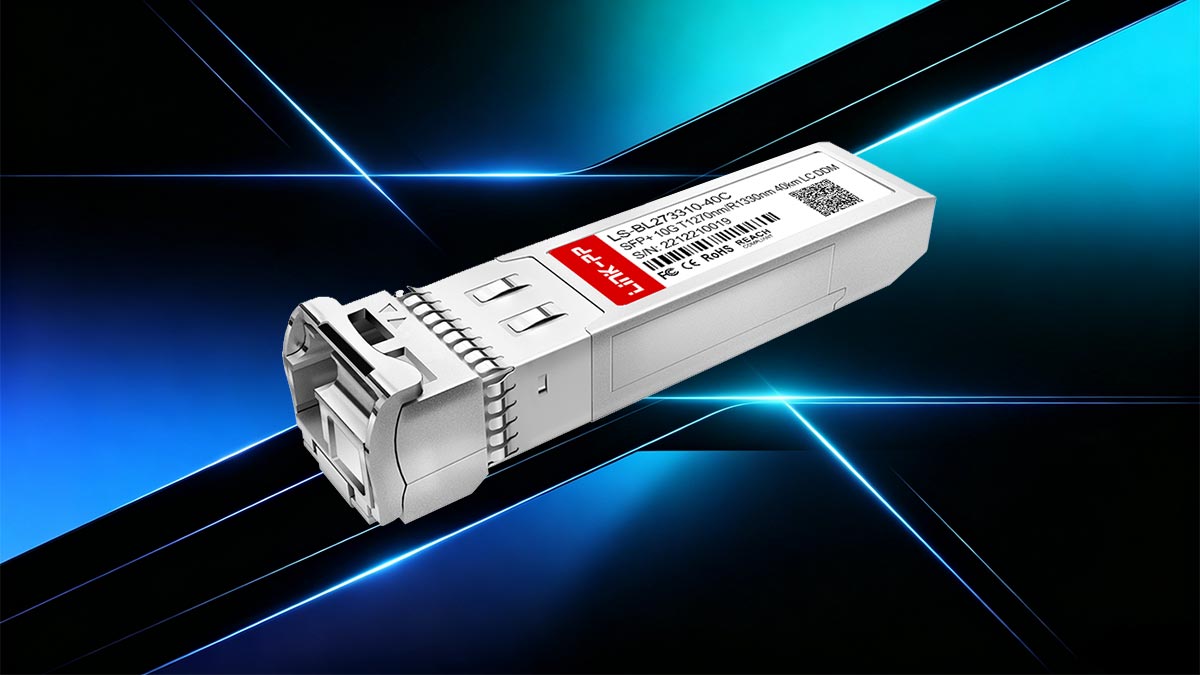
From a hardware engineering perspective, the module integrates a highly stable Distributed Feedback (DFB) laser for signal transmission and a high-sensitivity PIN or Avalanche Photodiode (APD) receiver. It interfaces with host equipment (such as Cisco, Juniper, or Arista switches) via the standard 20-pin SFP+ electrical connector defined by the SFF-8431 specification.
Decoding the Nomenclature
To fully grasp the entity of this transceiver, network architects must understand its naming convention, which directly dictates its physical deployment:
- SFP-10G: Indicates the 10-Gigabit Small Form-factor Pluggable Plus physical footprint, capable of supporting a raw line rate of 10.3125 Gbps.
- BX: Denotes "BiDirectional" transmission. It signifies the use of an integrated WDM diplexer to route differing TX and RX wavelengths over one strand.
- U (Upstream): In telecommunications topology, Upstream modules typically reside at the network edge (e.g., a branch office or customer premises) and transmit at the lower wavelength (1270nm) back to the core.
- 40: Represents the maximum supported optical reach of 40 kilometers (approximately 24.8 miles) over standard OS2 single-mode fiber without active amplification.
Core Physical & Optical Specifications
| Parameter | Specification | Technical Significance |
|---|---|---|
| TX / RX Wavelength | 1270nm TX / 1330nm RX | Requires a strict hardware mismatch with the remote end (1330nm TX / 1270nm RX). |
| Data Rate | 10.3125 Gbps | Compliant with IEEE 802.3ae Ethernet standards; generally not backward compatible with 1GBASE-BX. |
| Connector Type | Simplex LC (UPC) | Requires a single-core OS2 patch cable; reduces physical port density requirements on patch panels. |
| Diagnostics Support | DOM / DDM Enabled | Complies with SFF-8472. Allows real-time CLI monitoring of laser temperature, voltage, and optical power. |
Ultimately, the SFP-10GBX-U-40 is not just a connecting component; it is an infrastructure consolidation tool. By integrating advanced optical diplexers directly into the SFP+ chassis, it allows enterprise networks to execute long-haul, high-bandwidth deployments without the prohibitive CAPEX of new fiber installation.
🚩 Cost-Saving Solutions: Why Choose BiDi Over Duplex Fiber?
Choosing BiDirectional (BiDi) optics over traditional Duplex fiber instantly reduces physical fiber strand requirements by 50%. By multiplexing bidirectional traffic onto a single strand using WDM, enterprises and ISPs can double their Metro Access network capacity. This eliminates the massive Capital Expenditure (CAPEX) of trenching new fiber cables and drastically cuts the recurring Operational Expenditure (OPEX) of leasing dark fiber strands.
When scaling a Metropolitan Area Network (MAN), the physical infrastructure is almost always the most expensive variable. Standard 10GBASE-LR or 10GBASE-ER deployments rely on a duplex architecture: one dedicated glass strand for transmitting (TX) and a parallel strand for receiving (RX). When a network ring hits maximum capacity, expanding a duplex system demands provisioning brand-new fiber cores.
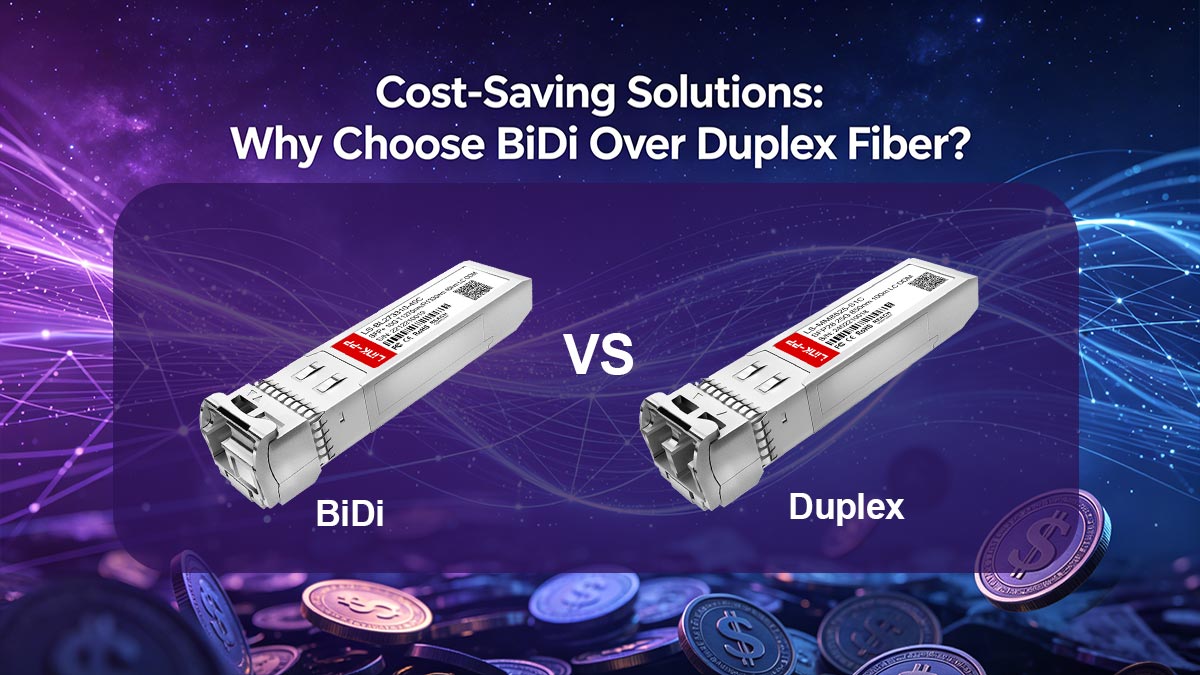
The SFP-10GBX-U-40 bypasses this physical and financial bottleneck by utilizing integrated optical diplexers. (Micro-definition: An optical diplexer is a passive micro-component within the transceiver that merges and separates distinct light wavelengths—such as 1270nm and 1330nm—allowing simultaneous two-way data transmission over simplex OS2 fiber.)
The Economics of Dark Fiber Leasing
In telecommunications, regional ISPs and enterprise campuses frequently lease "dark fiber" (unlit, unused fiber optic cables) from Tier 1 carriers to build their Metro Access rings. This leasing model is strictly billed on a per-strand, per-mile basis.
Depending on the metropolitan market, leasing a single strand of dark fiber can range from $150 to over $500 per month. If a network architect needs to establish twenty new 10G point-to-point links across a 40km metro ring, traditional duplex optics would require leasing 40 individual strands. By migrating to the SFP-10GBX-U-40 and its downstream counterpart, the requirement drops exactly to 20 strands. Over a standard 36-month telecom lease, this architectural pivot translates to hundreds of thousands of dollars in OPEX savings.
"During a recent 40km municipal network expansion, civil engineering quotes for trenching new conduit to add fiber capacity exceeded $80,000 per mile. By swapping our standard 10G duplex transceivers for SFP-10GBX-U-40 BiDi pairs, we unlocked additional 10G channels on our exhausted fiber plant. The ROI on the optics was realized within the first week of deployment by entirely avoiding civil construction costs."
— ISP Core Network Architect
Decision Matrix: BiDi vs. Duplex Transceivers
To eliminate ambiguity for procurement teams and network planners, the following comparison highlights the operational differences between BiDi and Duplex solutions for 10G Metro Access:
| Feature | 10GBASE-BX (BiDi) | 10GBASE-ER (Duplex) |
|---|---|---|
| Fiber Requirement | 1 Strand (Simplex) | 2 Strands (Duplex) |
| Technology | WDM (Dual Wavelengths: 1270nm/1330nm) | Single Wavelength (Typically 1550nm for 40km) |
| Dark Fiber OPEX | 50% Reduction | Standard (High Cost) |
| Inventory Management | Requires paired SKUs (U-module + D-module) | Single SKU (Identical modules on both ends) |
| Best Use Case | Fiber-exhausted Metro rings, long-haul ISP backhaul | Standard data center cross-connects with abundant fiber |
Ultimately, while BiDi optics require slightly more stringent inventory tracking to ensure "U" and "D" modules are properly paired, the overwhelming financial benefit makes the SFP-10GBX-U-40 the definitive choice for modernizing distance-bound network infrastructure.
🚩 Top SFP-10GBX-U-40 Use Cases for Metro Access Networks
The SFP-10GBX-U-40 is primarily deployed in three Metro Access scenarios: 1) ISP Regional Backhaul, connecting neighborhood distribution nodes to core networks; 2) Enterprise Campus Interconnects, linking geographically dispersed facilities (like hospitals or universities) over 10G Layer 2 trunks; and 3) 5G Fronthaul Aggregation, providing high-bandwidth, single-strand connectivity between Baseband Units (BBU) and Remote Radio Heads (RRH) up to 40km apart.
Because the 10GBASE-BX standard operates efficiently over a single strand of OS2 Single Mode Fiber (SMF) for up to 40 kilometers, its deployment is heavily favored in environments suffering from "fiber exhaust." (Micro-definition: Fiber exhaust occurs when all physical strands in an existing metropolitan conduit are actively in use, preventing network expansion without costly civil engineering.)
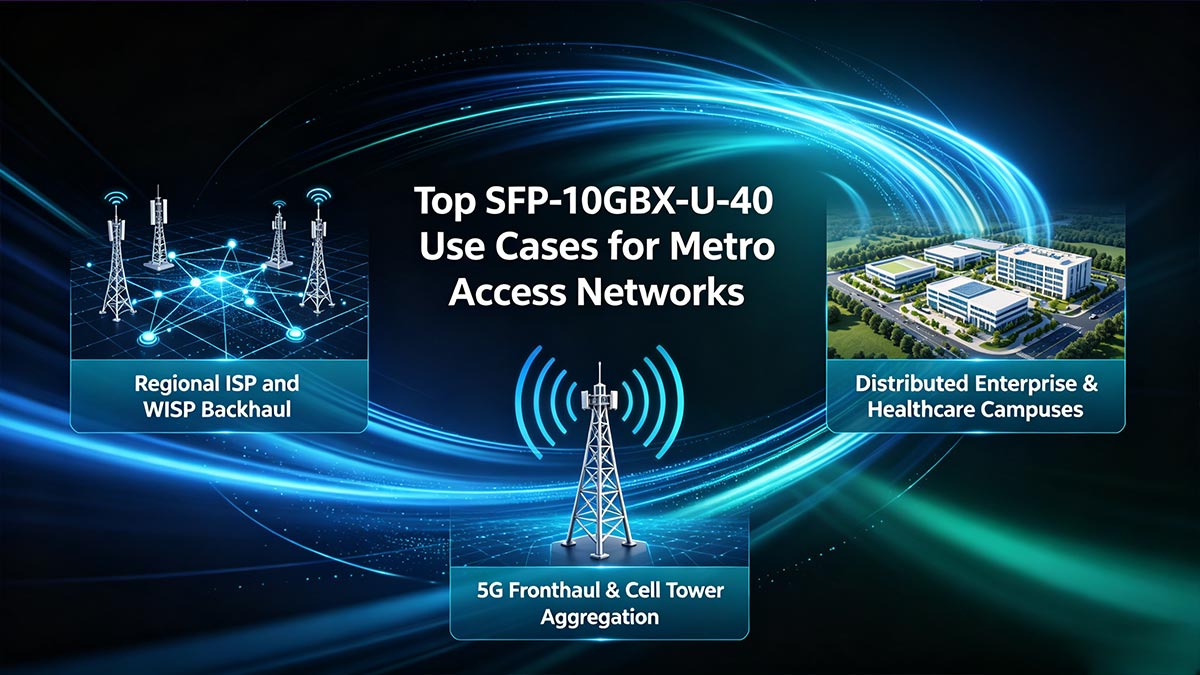
Below is a deep dive into the top strategic use cases where network architects leverage the SFP-10GBX-U-40 to optimize Metro Access topologies.
1. Regional ISP and WISP Backhaul
Internet Service Providers (ISPs) and Wireless ISPs (WISPs) rely heavily on Metro Access rings to aggregate traffic from residential edge routers and transport it back to a Central Office (CO) or core data center. As gigabit fiber-to-the-home (FTTH) adoption grows, SFP 1G backhaul links quickly become bottlenecks.
- The Solution: By deploying the SFP-10GBX-U-40 in edge aggregation switches (such as the Juniper ACX series or MikroTik Cloud Core Routers), ISPs can instantly upgrade a 1G link to a 10G backbone without leasing additional dark fiber.
- Technical Edge: The 40km reach comfortably covers the distance between most municipal sub-stations and core peering exchanges, maintaining ultra-low latency critical for end-user QoS (Quality of Service).
2. Distributed Enterprise & Healthcare Campuses
Large municipal entities—such as healthcare networks, city governments, and university systems—often occupy multiple buildings scattered across a city. Connecting a remote hospital wing to the main data center requires a highly secure, high-bandwidth link to support massive payloads like PACS (Picture Archiving and Communication System) imaging or synchronized database replication.
- The Solution: Network engineers use the SFP-10GBX-U-40 to establish robust Layer 2 or Layer 3 trunks between enterprise core switches (e.g., Cisco Catalyst 9000 series).
- Technical Edge: Utilizing the built-in Digital Optical Monitoring (DOM / SFF-8472), IT teams can proactively monitor the optical transmit (TX) and receive (RX) power levels. This predictive maintenance capability is essential for healthcare networks that require 99.999% uptime for life-critical data.
3. 5G Fronthaul & Cell Tower Aggregation
The transition from 4G LTE to 5G requires unprecedented bandwidth at the cell tower level. Telecom operators must connect the Baseband Unit (BBU) located at the base of the tower (or at a centralized hub) to the Remote Radio Head (RRH) mounted high on the mast—or miles away in a Cloud-RAN (C-RAN) architecture.
- The Solution: Leasing duplex fiber to hundreds of macro-cells across a metro area is financially unviable. The SFP-10GBX-U-40 allows operators to utilize the eCPRI (Enhanced Common Public Radio Interface) protocol over a single fiber strand.
- Technical Edge: The module's industrial-grade temperature tolerance and strict compliance with the 10.3125 Gbps line rate ensure that the stringent latency and jitter requirements of 5G radio synchronization are perfectly met.
"During a smart-city traffic camera deployment, we found the municipal fiber conduit was entirely exhausted. Standard 10G-LR duplex optics would have required a $120,000 trenching project to lay new glass. By pivoting our edge Cisco IE switches to SFP-10GBX-U-40 BiDi optics, we utilized the single remaining dark fiber strand, turning up the 10G link within 48 hours and completely avoiding civil construction delays."
— Senior Optical Network Engineer, Smart City Infrastructure
Whether navigating fiber exhaust in underground municipal conduits or scaling cell tower backhaul, the SFP-10GBX-U-40 provides network architects with a highly adaptable, Layer 1 solution that maximizes existing physical infrastructure.
🚩 The Golden Solution: Pairing SFP-10GBX-U-40 with SFP-10GBX-D-40
To successfully establish a 10G link, the SFP-10GBX-U-40 (Upstream) must strictly be paired with an SFP-10GBX-D-40 (Downstream) module at the opposite end of the fiber. Because BiDi technology relies on a single glass strand, the modules must use inverted wavelengths. The "U" module transmits (TX) at 1270nm and receives (RX) at 1330nm, while the corresponding "D" module transmits at 1330nm and receives at 1270nm.
The most frequent deployment error encountered by network technicians transitioning from legacy optics to 10GBASE-BX infrastructure is the failure to purchase matched pairs. In standard duplex fiber networks (such as 10GBASE-LR or SR), engineers are accustomed to deploying identical transceiver SKUs at both ends of a link. However, applying this logic to BiDirectional optics will result in an immediate link failure.
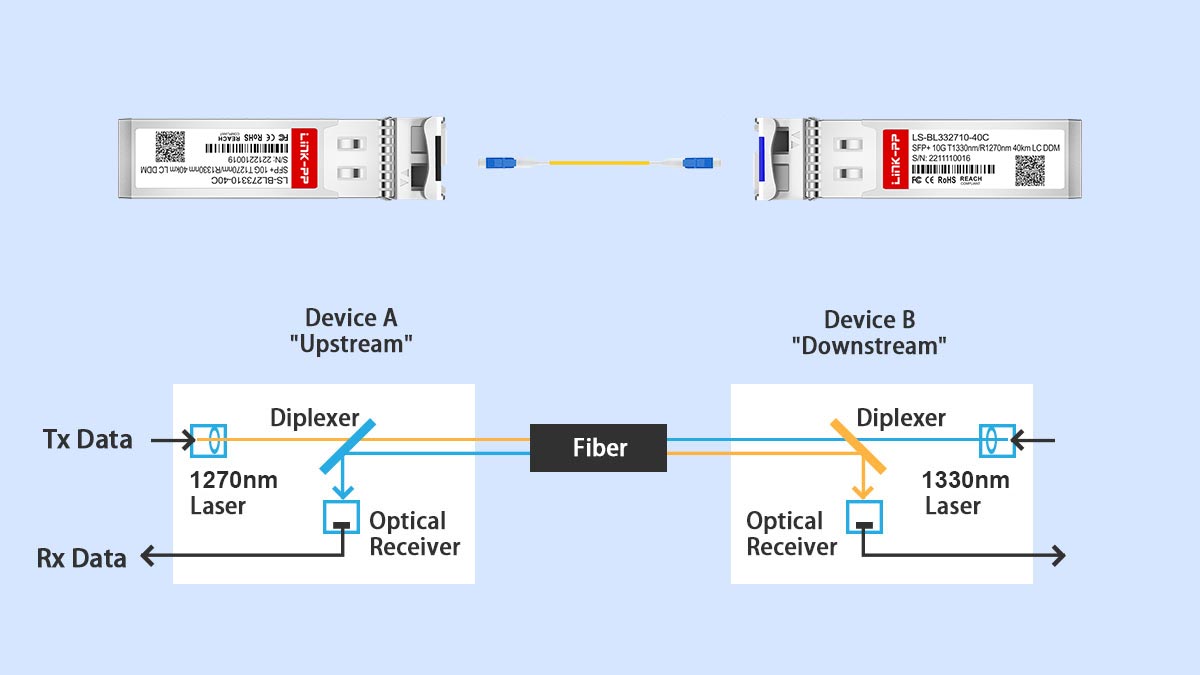
If two SFP-10GBX-U-40 modules are connected, both sides will attempt to transmit light at 1270nm, and both receivers will be "listening" for 1330nm. Consequently, no data will be processed. (Micro-definition: Wavelength Division Multiplexing (WDM) diplexers act as microscopic optical prisms within the SFP+ chassis. They route the outgoing laser into the fiber core while simultaneously filtering the incoming, differently colored light into the photodetector without cross-talk or signal collision.)
The 10GBASE-BX Pairing Matrix
To ensure a flawless Metro Access deployment, network architects must rigidly adhere to the following A-Side/B-Side optical alignment:
| Deployment Site | Transceiver Model | Transmit (TX) Wavelength | Receive (RX) Wavelength |
|---|---|---|---|
| Site A (e.g., Edge Node) | SFP-10GBX-U-40 | 1270nm | 1330nm |
| Site B (e.g., Core Hub) | SFP-10GBX-D-40 | 1330nm | 1270nm |
| Required Media: OS2 Single Mode Fiber (SMF) terminating in a Simplex LC UPC connector. | |||
Best Practices for Inventory and Deployment
Because the physical form factor of both the "U" and "D" modules is identical, distinguishing them during a massive data center rollout can be challenging. To prevent costly truck rolls and prolonged troubleshooting, adhere to these enterprise best practices:
- Standardize Topology: Always deploy the Upstream (U) module at the network edge (remote switches, client premises) and the Downstream (D) module at the network core (main distribution frames, headends).
- Check the Latch Color: MSA-compliant manufacturers often utilize color-coded bale clasps (the metal or plastic latch used to extract the module). For 1270nm/1330nm 10G pairs, check the vendor's datasheet to identify which latch color corresponds to the TX wavelength.
- Verify via CLI: Before connecting the fiber, insert the optic into the switch and run the transceiver inventory command (e.g.,
show inventoryorshow interfaces transceiver detailin Cisco IOS) to confirm the module's coded wavelengths digitally.
🚩 SFP-10GBX-U-40 Compatibility Solutions
The SFP-10GBX-U-40 operates exclusively in SFP+ ports supporting the 10 Gigabit Ethernet protocol (IEEE 802.3ae). While physically compliant with the Multi-Source Agreement (MSA), it requires vendor-specific EEPROM coding to bypass "unsupported transceiver" errors on OEM switches (e.g., Cisco, Juniper, HP). Furthermore, it operates strictly at a fixed 10.3125 Gbps line rate and generally will not auto-negotiate down to legacy 1Gbps (1000BASE-BX) speeds.
When integrating third-party optical transceivers into a Metro Access network, hardware compatibility is the most critical hurdle. Network engineers frequently encounter link failures not because of damaged fiber, but due to firmware rejections or protocol mismatches.
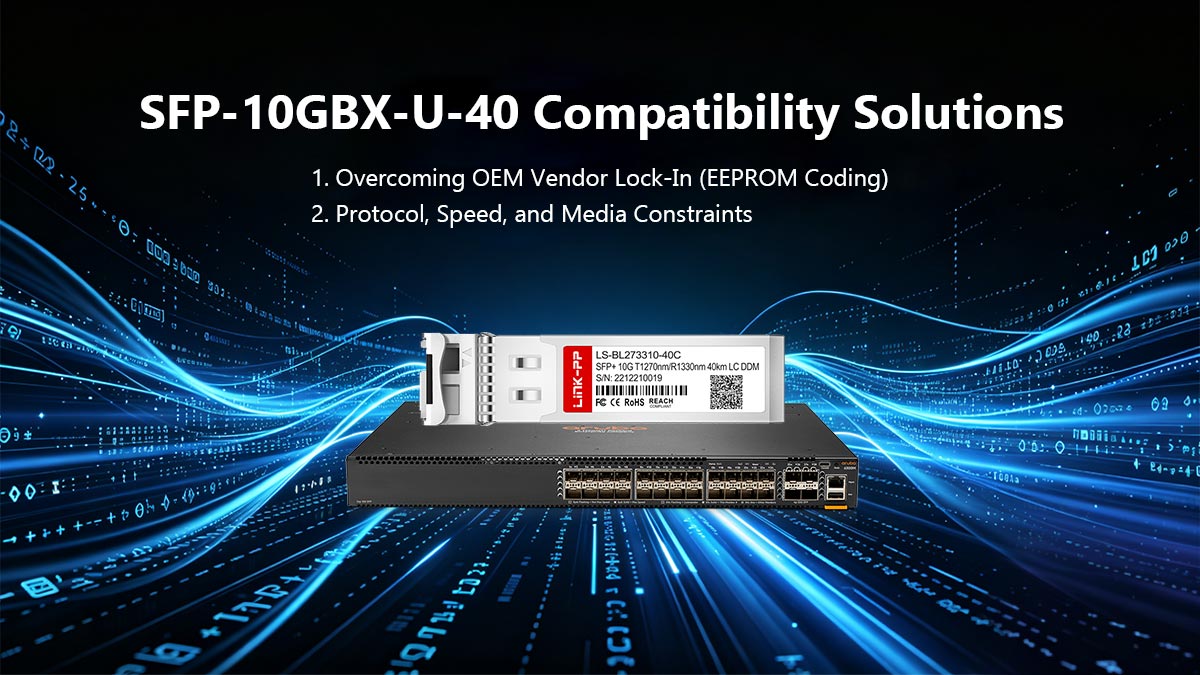
To ensure a seamless Layer 1 integration, it is essential to understand how the SFP-10GBX-U-40 interacts with host switches, legacy network speeds, and differing fiber media.
1. Overcoming OEM Vendor Lock-In (EEPROM Coding)
Major networking equipment manufacturers intentionally design their switch operating systems (such as Cisco IOS or Juniper Junos) to interrogate the optic upon insertion. (Micro-definition: The EEPROM is a programmable memory chip inside the SFP+ chassis that stores vital module data, including vendor IDs, serial numbers, and optical thresholds.)
If the switch reads an unrecognized EEPROM signature, it will typically place the port into an err-disable state, dropping the link entirely.
- The Solution: Always procure your SFP-10GBX-U-40 modules from reputable third-party optical vendors that provide custom EEPROM flashing. This ensures the optic identifies itself as a native OEM part (e.g., mirroring a Cisco SFP-10G-BX40U-I signature).
- The CLI Workaround: In emergency deployments, some operating systems allow hidden CLI commands (such as
service unsupported-transceiverin Cisco) to bypass this check, though this is not recommended for production Metro environments.
2. Protocol, Speed, and Media Constraints
Based on frequent inquiries from network administrators upgrading to 10G infrastructure, the following matrix clarifies the strict operational boundaries of the SFP-10GBX-U-40:
| Compatibility Question | Expert Solution & Boundary |
|---|---|
| Can a 10Gb SFP run at 1Gb? | Generally No. The SFP-10GBX-U-40 utilizes a 10G-specific laser and clock-and-data recovery (CDR) circuit. It will not auto-negotiate with a legacy 1GBASE-BX optic. You must deploy 10G modules on both ends, or purchase dual-rate (1G/10G) specific optics if bridging legacy hardware. |
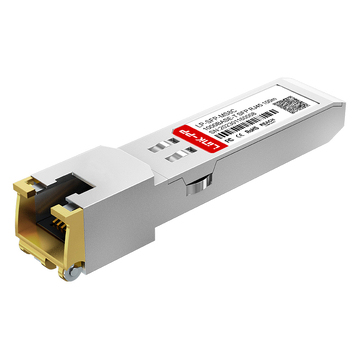
| SFP+ vs RJ45 (10GBASE-T)? | SFP+ is required for Metro runs. While 10G RJ45 modules exist, they draw massive power (up to 2.5W), generate excessive heat, and max out at 30 meters. The SFP-10GBX-U-40 draws less than 1.5W and pushes data 40,000 meters (40km) over glass, making RJ45 obsolete for MANs. |
| Is it Single or Multimode? | Strictly Single Mode Fiber (SMF). The highly focused 1270nm/1330nm lasers require an OS2 9/125µm fiber core (identifiable by yellow patch cables). Utilizing aqua-colored Multimode Fiber (MMF) will result in immediate signal dispersion and link failure. |
By treating optical compatibility as a combination of hardware form factor, firmware signaling, and physical layer constraints, network architects can eliminate provisioning delays and ensure their Metro Access links establish flawlessly upon the first insertion.
🚩 Common SFP-10GBX-U-40 Problems and How to Fix Them
The most common SFP-10GBX-U-40 link failures stem from Layer 1 physical issues. These include receiver overload on short fiber runs, U/D wavelength pairing mismatches, and high insertion loss due to contaminated fiber end-faces. To resolve these, utilize Digital Optical Monitoring (DOM) to check light levels, install inline LC optical attenuators for links under 5km, and verify that the Upstream (1270nm TX) module is correctly paired with a Downstream (1330nm TX) module.
When deploying 10G Metro Access networks, the vast majority of "link down" or "err-disable" port statuses originate at the physical layer. Because the SFP-10GBX-U-40 utilizes highly sensitive Wavelength Division Multiplexing (WDM) over a microscopic 9/125µm fiber core, precision is paramount.
Below is an expert-level diagnostic guide to identifying and resolving the top three deployment failures associated with 40km BiDi transceivers.
1. Receiver Overload on Short Fiber Runs
One of the most dangerous, yet common, mistakes network technicians make is purchasing a 40km optical transceiver for a short 2km campus link under the assumption that "more power is better." The Distributed Feedback (DFB) laser inside the SFP-10GBX-U-40 is calibrated to push light through 40,000 meters of glass.
- The Problem: If the fiber distance is too short, the optical transit loss is minimal. The transmit (TX) power hits the remote receiver at a level that is too "hot" (e.g., > 0 dBm), which can saturate, blind, or permanently burn out the Avalanche Photodiode (APD) receiver.
- The Fix: Log into the switch CLI and execute the DOM/DDM command (e.g.,
show interfaces transceiver detail). Check the RX Optical Power. If the value exceeds the manufacturer's overload threshold (typically around -1 dBm), you must immediately install a Simplex LC Optical Attenuator (usually 5dB or 10dB) on the RX port to pad the signal down to a safe operating range (e.g., -8 dBm to -12 dBm).
2. Link Down Due to Wavelength Mismatch
If the fiber is perfectly clean and intact, but the switch port refuses to transition to an "up" state, the issue is almost always a pairing error. (Micro-definition: A pairing error occurs when two transceivers attempt to communicate using identical transmission frequencies, resulting in the optical diplexer filtering out the incoming signal entirely.)
- The Problem: The procurement team accidentally shipped two SFP-10GBX-U-40 modules to the site, rather than an A/B pair.
- The Fix: Physically inspect the bale clasp (latch) color or check the laser wavelength via the switch CLI. You must ensure one side of the link is transmitting at 1270nm (Upstream) and the remote side is transmitting at 1330nm (Downstream).
3. CRC Errors and High Insertion Loss
If the 10G link is oscillating (flapping) between up and down states, or the switch interface is reporting a massive accumulation of CRC (Cyclic Redundancy Check) errors, the integrity of the optical signal is compromised.
- The Problem: BiDi optics use a single LC connector. Even a microscopic speck of dust, oil from a fingerprint, or a micro-bend in the patch cable can cause severe back-reflection (Return Loss) and signal degradation.
- The Fix: Never bypass optical hygiene. Utilize a digital fiber inspection probe to check the LC ferrule. If contaminated, use a one-click LC simplex cleaner before re-inserting the optic. Ensure the total optical power budget (cable attenuation + splice losses) does not exceed the module's ~15dB threshold.
By relying on CLI diagnostics, adhering to strict optical power budgets, and maintaining rigorous fiber hygiene, network engineers can easily mitigate the most common deployment hurdles associated with 10GBASE-BX transceivers.
🚩 Conclusion: Future-Proofing Your Metro Access Links
Deploying the SFP-10GBX-U-40 future-proofs Metro Access networks by instantly doubling 10G bandwidth capacity on existing single-mode fiber infrastructure. By utilizing WDM technology over a single glass strand, it eliminates the need for costly civil engineering, slashes dark fiber leasing OPEX by 50%, and delivers robust, low-latency connectivity across 40km metropolitan topologies.
As metropolitan bandwidth demands continue to escalate—driven by the expansion of 5G fronthaul, distributed enterprise campus interconnects, and gigabit ISP backhauls—network architects must prioritize infrastructure that scales both technically and financially. The transition from legacy duplex fiber to 10GBASE-BX BiDirectional optics represents a critical strategic pivot. It allows IT departments to maximize the utility of their existing physical Layer 1 assets without compromising on line rate or optical reach.
However, successful deployment requires strict adherence to optical engineering principles. Future-proofing your network means standardizing your inventory to ensure the flawless pairing of Upstream (1270nm TX) and Downstream (1330nm TX) modules. It requires network administrators to actively utilize Digital Optical Monitoring (DOM) to prevent receiver overload on short runs, and it demands the deployment of pristine, well-maintained fiber end-faces.
Secure Your Network with Reliable Hardware
Ultimately, the resilience of a 40km Metro Access link hinges on the quality and compatibility of the transceiver itself. Hardware failures, vendor lock-in errors, and EEPROM firmware mismatches can instantly negate the cost savings of BiDi architecture. To ensure true plug-and-play integration with your Cisco, Juniper, Arista, or MikroTik core switches, procurement teams must source optics from manufacturers that guarantee MSA compliance and rigorous environmental testing.
Ready to optimize your fiber infrastructure and cut your Metro Access leasing costs in half?
Equip your network with enterprise-grade, custom-coded optics by visiting the LINK-PP Official Store. Explore our comprehensive portfolio of rigorously tested SFP-10GBX-U-40 transceivers and matched downstream modules, engineered for flawless compatibility and maximum network uptime.