

























Data centers and enterprise networks are increasingly facing the challenge of handling high-volume data traffic while maintaining efficiency and reliability. As organizations scale their infrastructure to support cloud computing, virtualization, and high-performance applications, the demand for stable and high-speed interconnects has never been greater. Short-reach solutions like direct attach copper modules offer an effective balance of performance, cost, and ease of deployment in densely populated network environments.
Among these solutions, the SFP-10G-CU1M module from Huawei stands out as a practical option for achieving 10Gbps connectivity (fully aligned with 10GBASE-R and 10GBASE-X transmission framing) over short distances. Designed specifically for high-density switch environments, this 1-meter copper module enables rapid deployment, low latency transmission, and seamless integration with Huawei switches. Its compatibility and reliability make it a preferred choice for top-of-rack connections and server-to-switch links in modern data centers.
This article provides a detailed exploration of the SFP-10G-CU1M, covering its specifications, benefits, deployment scenarios, technical performance, and best practices. By reading this guide, network professionals can gain a clear understanding of how to optimize high-density 10G environments, ensure efficient network operation, and make informed decisions about integrating SFP-10G-CU1M modules into their infrastructure.
➡️ Overview of SFP-10G-CU1M
The SFP-10G-CU1M module provides a reliable, low-latency solution for high-density 10G networks, combining simplicity, affordability, and performance. Its compact SFP+ form factor and 1-meter copper connection make it particularly suitable for top-of-rack switch deployments, server interconnects, and short-reach links where speed and stability are critical.
Introduction to the Module
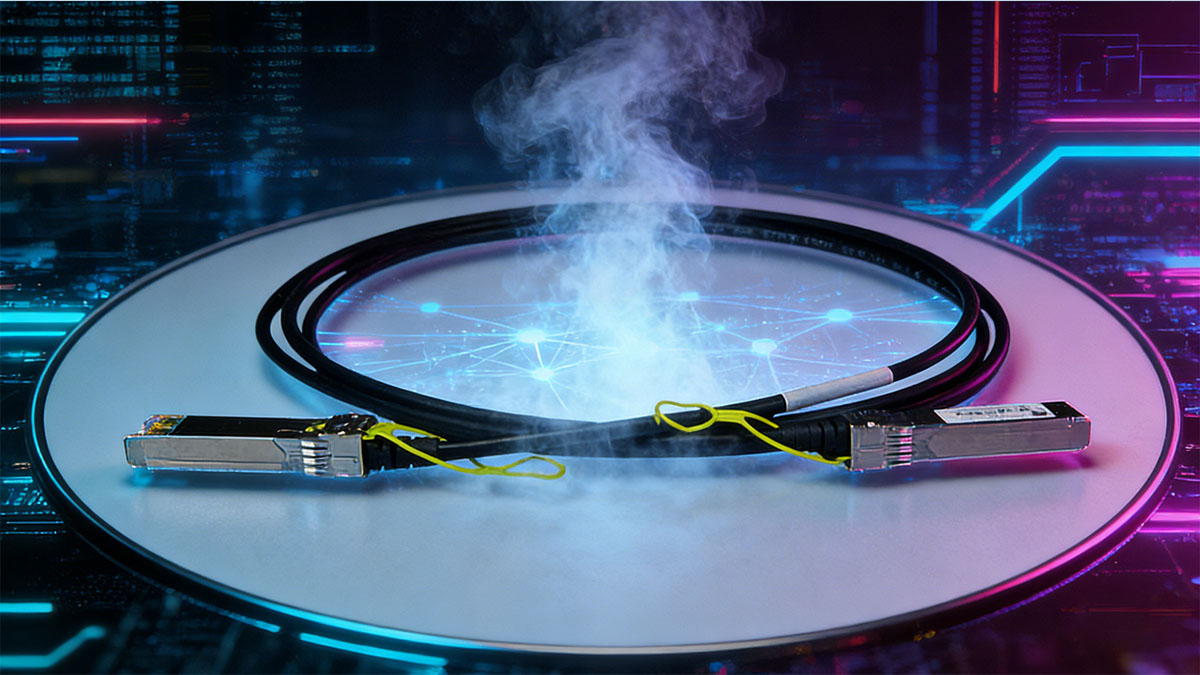
The module is a passive direct attach copper (DAC) cable with an SFP+ interface, allowing 10Gbps full-duplex data transmission over a fixed 1-meter distance. Unlike optical transceiver modules, it does not require additional optics or fiber infrastructure, which reduces installation complexity and operational costs. Its plug-and-play design ensures immediate recognition by Huawei switches, simplifying network upgrades in dense environments.
Key characteristics include:
- Sub-microsecond latency, suitable for low-latency applications such as virtualization and storage networks.
- Compact and robust design, resistant to electromagnetic interference (EMI) common in data center racks.
- Energy-efficient operation, generating minimal heat and reducing cooling requirements.
Key Specifications
Understanding the technical specifications helps network engineers determine the module’s suitability for their deployment. The primary parameters of the SFP-10G-CU1M are summarized below:
| Specification | Value | Notes |
|---|---|---|
| Data Rate | 10Gbps | Full-duplex transmission |
| Cable Length | 1 meter | Fixed passive copper |
| Form Factor | SFP+ | Hot-pluggable for ease of installation |
| Interface Type | Direct Attach Copper | No optics or fiber needed |
| Operating Temp | 0–70°C | Suitable for standard data center environments |
These specifications illustrate the module’s alignment with high-density networking needs. The short, fixed-length copper design ensures signal integrity over its intended distance, while the hot-swappable SFP+ form factor allows rapid maintenance or replacement without network downtime.
Deployment Advantages
By integrating SFP-10G-CU1M modules, data centers can achieve several operational benefits:
- Simplified cabling in dense switch environments
- Reduced power consumption compared to optical 10G transceivers
- Stable 10Gbps links with minimal latency
- Cost-effective solution for short-range connections
This overview establishes SFP-10G-CU1M as a practical choice for organizations looking to expand 10G connectivity while maintaining performance and operational efficiency.
➡️ Benefits of Using SFP-10G-CU1M in Huawei Networks
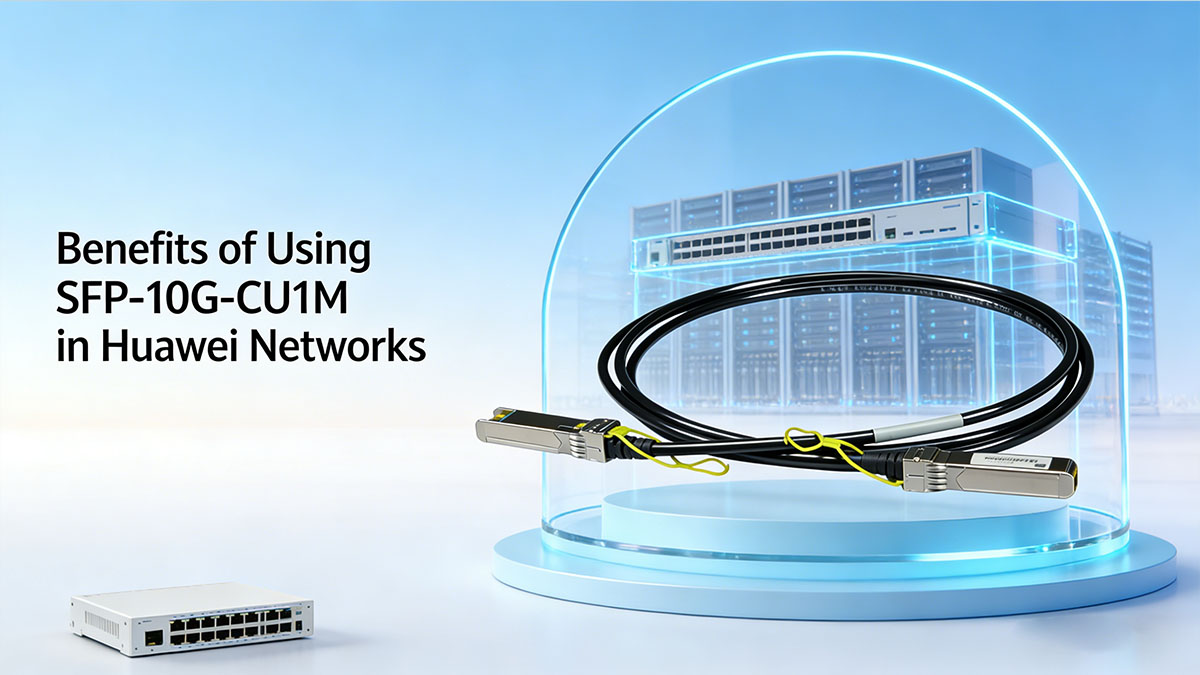
The SFP-10G-CU1M module provides multiple advantages that make it a practical and reliable choice for high-density 10G Huawei networks. Its design optimizes performance, reduces costs, and ensures operational stability in complex network environments.
High-Density Port Support
Deploying SFP-10G-CU1M modules allows network engineers to fully utilize switch port density without compromising link quality. The compact SFP+ form factor and 1-meter DAC length enable efficient cabling and organized rack layouts. Key benefits include:
- Supports dense top-of-rack (ToR) switch configurations.
- Facilitates rapid deployment of multiple 10G links in limited rack space.
- Simplifies cable management and reduces network clutter, improving maintenance efficiency.
Cost Efficiency
SFP-10G-CU1M modules provide a cost-effective solution compared with short-reach multimode transceivers—specifically standard SR transceivers like the Cisco/Huawei SFP-10G-SR—both in initial investment and ongoing operational expenses. The cost advantages are particularly noticeable in large-scale deployments.
| Cost Aspect | SFP-10G-CU1M (Copper DAC) | Optical 10G Module | Notes |
|---|---|---|---|
| Module Cost | Moderate | High | Passive DAC reduces upfront costs |
| Power Consumption | ~0.1–0.2W per port | ~1–2W per port | Lower energy use minimizes heat |
| Cabling Infrastructure | Simple DAC | Fiber & transceiver | Less installation complexity |
| Maintenance Complexity | Low | Moderate | Hot-swappable DAC simplifies upkeep |
This comparison demonstrates that SFP-10G-CU1M minimizes both capital and operational expenditures while delivering consistent 10G performance for short-reach links.
Reliability and Durability
The SFP-10G-CU1M module ensures stable network operation under high workloads. Its passive copper design offers low failure rates, consistent data transfer, and long operational life. Critical reliability features include:
- Sub-microsecond latency stability, ideal for storage networks and virtualization.
- Resistance to electromagnetic interference (EMI) commonly present in dense switch racks.
- Hot-swappable SFP+ connectors allow easy replacement without disrupting network services.
- Durable cable and connector construction suitable for frequent handling.
By combining high-density support, cost efficiency, and operational reliability, the SFP-10G-CU1M enhances Huawei network performance, particularly in data centers or enterprise environments where compact 10G connectivity is essential.
➡️ Deployment Scenarios and Use Cases
The SFP-10G-CU1M module is particularly effective in environments where high-density 10G connectivity is required over short distances. Its design ensures reliable performance, simplified cabling, and rapid deployment across various network scenarios.

Data Center Connectivity
SFP-10G-CU1M modules are ideal for connecting top-of-rack (ToR) switches, aggregation switches, and servers within the data center. Their 1-meter DAC design ensures low-latency links and easy cable management. Typical use cases include:
- Interconnecting multiple ToR switches for server clusters.
- Linking storage nodes to compute racks for virtualization and high throughput applications.
- Creating short, high-speed links for leaf-spine architectures in modern data centers.
Enterprise Network Integration
In enterprise networks, the module simplifies the deployment of 10G connections between core, distribution, and access layers. Benefits in enterprise environments include:
- Connecting high-performance workstations or servers to distribution switches.
- Supporting high bandwidth applications such as video conferencing, CAD design, and cloud services.
- Reducing infrastructure complexity by eliminating the need for additional optics or fiber runs.
Server-to-Switch Links
For server connectivity, SFP-10G-CU1M offers a reliable and cost-effective 10G solution. Key scenarios include:
- Direct connections between database or application servers and network switches.
- Short-reach links in hyper-converged infrastructure or storage clusters.
- Simplified cabling in racks with limited space, minimizing interference and improving airflow.
By addressing these deployment scenarios, the SFP-10G-CU1M module demonstrates versatility across both enterprise and data center networks. Its combination of short-reach performance, ease of installation, and reliable 10G throughput ensures consistent connectivity and operational efficiency in high-density environments.
➡️ Compatibility with Huawei Switches
The SFP-10G-CU1M module offers seamless compatibility with a wide range of Huawei switches, ensuring plug-and-play installation, stable 10G connectivity, and minimal configuration overhead. Its design is optimized for Huawei’s high-density network environments, supporting both enterprise and data center deployments.
Supported Huawei Models
SFP-10G-CU1M modules are compatible with many Huawei S-series and CloudEngine switches. Key supported models include:
- S5720, S5730, S6700, and S6720 series switches for enterprise networks.
- CloudEngine 12800, 8800, and 6800 series for data center environments.
- Leaf-spine deployments where multiple SFP+ ports are required in compact rack layouts.
This broad compatibility allows network administrators to standardize 10G links across diverse Huawei switch models, reducing complexity and ensuring consistent performance.
Interoperability Features
The module is designed to work seamlessly with Huawei switch firmware and interface configurations. Important interoperability considerations include:
- Auto-negotiation support ensures the module is recognized immediately upon insertion.
- Hot-swappable design allows module replacement without disrupting network services.
- Compatibility with Huawei’s network management tools, such as iMaster NCE, for monitoring and diagnostics.
- Firmware awareness to maintain full performance and prevent potential interface errors.
| Feature | Description | Benefit |
|---|---|---|
| Auto-Negotiation | Automatic detection and configuration | Simplifies deployment |
| Hot-Swappable | Module can be inserted/removed without downtime | Reduces maintenance impact |
| Firmware Compatibility | Works with Huawei switch firmware versions | Ensures stable operation |
| Monitoring Integration | Supported by Huawei management tools | Enables easy diagnostics and troubleshooting |
By ensuring strong compatibility and interoperability, the SFP-10G-CU1M module simplifies network deployment and management while maintaining reliable 10G connections across a wide range of Huawei switches. This makes it an ideal choice for both existing infrastructure upgrades and new high-density deployments.
➡️ Technical Performance Analysis
The SFP-10G-CU1M module delivers consistent, low-latency 10G connectivity, making it an ideal choice for high-density Huawei network deployments. Its passive copper design ensures stable signal transmission over short distances while minimizing power consumption and heat generation. Understanding its technical performance helps network engineers optimize deployment and ensure reliable operation.

Latency and Throughput
SFP-10G-CU1M achieves sub-microsecond latency with 10Gbps full-duplex throughput, making it suitable for latency-sensitive applications such as virtualization, storage networks, and high-performance computing clusters. Key points include:
- Maintains low latency even under full network load.
- Supports full-duplex 10Gbps transmission for efficient BiDi data flow.
- Reduces network bottlenecks in high-density switch configurations.
Signal Integrity
Signal integrity is critical in short-reach connections, especially in densely packed data center racks. The SFP-10G-CU1M ensures minimal signal degradation and robust EMI resistance. Highlights include:
- Passive copper design maintains consistent signal quality over 1-meter links.
- EMI shielding reduces interference from nearby switches and cables.
- Stable operation even in environments with multiple high-speed interconnects.
Power Consumption and Thermal Performance
One of the main advantages of SFP-10G-CU1M is its energy efficiency. Unlike optical transceivers, the passive copper design requires minimal power and generates less heat. A comparative summary is shown below:
| Parameter | SFP-10G-CU1M | Typical Optical 10G Module | Notes |
|---|---|---|---|
| Power Consumption | 0.1–0.2 W per port | 1–2 W per port | Lower heat output reduces cooling demands |
| Operating Temperature | 0–70°C | 0–70°C | Suitable for standard data center ranges |
| Heat Generation | Low | Moderate | Supports high-density deployment |
| Reliability under Load | High | High | Stable performance in full-duplex operation |
This table demonstrates that SFP-10G-CU1M not only reduces energy costs but also supports dense rack installations without compromising reliability.
Additional Performance Considerations
- Distance Limitations: Designed for short-reach links up to 1 meter. Exceeding this distance can degrade signal quality.
- Compatibility Impact: Performance is optimal when paired with Huawei-certified switches and updated firmware.
- Redundancy and Failover: Supports link aggregation and network redundancy, ensuring minimal downtime in enterprise and data center deployments.
Overall, the SFP-10G-CU1M module offers a balanced combination of low latency, stable throughput, excellent signal integrity, and energy efficiency. Its performance profile makes it an ideal choice for high-density 10G environments, where short-reach connections, reliable operation, and minimal power consumption are critical factors for optimizing network efficiency.
➡️ Installation and Configuration Best Practices
Proper installation and configuration of the SFP-10G-CU1M module are critical for ensuring reliable 10G connectivity and optimal network performance. Following best practices minimizes downtime, avoids link errors, and extends the operational life of both the module and connected Huawei switches.
Physical Installation
The SFP-10G-CU1M module is designed for plug-and-play deployment, but correct physical handling is essential to maintain signal integrity and prevent hardware damage. Key installation steps include:
- Inspect the module and cable for any visible damage before installation.
- Align the SFP+ connector with the switch port and insert gently until a click is felt.
- Avoid excessive bending of the copper cable; maintain a minimum bend radius of 30 mm.
- Follow electrostatic discharge (ESD) precautions by using grounded wrist straps or ESD mats.
- Ensure adequate airflow in racks to prevent heat accumulation around high-density ports.
Proper installation guarantees consistent low-latency links and reduces the likelihood of intermittent connectivity issues.
Network Configuration
Once physically installed, configuring the module on Huawei switches is straightforward but requires attention to interface settings and link optimization. Best practices include:
- Verify that the interface is recognized by the switch with commands like
display interfaceon Huawei devices. - Configure VLANs and port speeds according to network design requirements, ensuring 10Gbps full-duplex mode is enabled.
- Enable auto-negotiation for plug-and-play compatibility, or manually set parameters in cases of specialized network configurations.
- Apply port security and monitoring policies to detect any unusual traffic patterns or link instability.
- Test link performance using built-in diagnostics or Huawei iMaster NCE to confirm latency and throughput meet expectations.
Maintenance Tips
Regular monitoring and proactive maintenance help preserve performance and prevent potential failures:
- Periodically inspect cable connections for dust or physical wear.
- Update switch firmware to maintain full compatibility with SFP-10G-CU1M modules.
- Replace modules showing signs of degradation, such as link flaps or inconsistent throughput.
- Document module deployment and port assignments for easier troubleshooting and network audits.
Following these installation and configuration best practices ensures that SFP-10G-CU1M modules provide reliable 10G connectivity with minimal downtime, maximizing both operational efficiency and network performance in high-density Huawei environments.
➡️ Monitoring and Troubleshooting
Effective monitoring and timely troubleshooting of SFP-10G-CU1M modules are essential to maintain stable 10G connectivity and ensure high availability in Huawei networks. Proactive diagnostics can prevent network downtime, minimize performance degradation, and extend module lifespan.
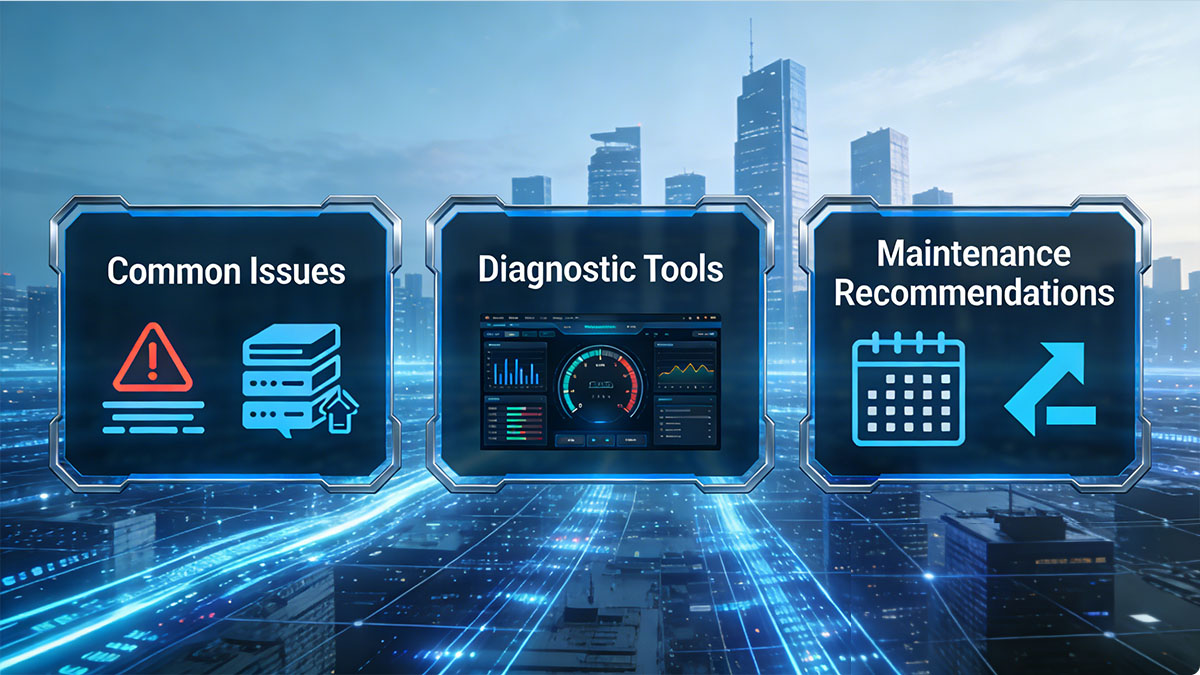
Common Issues
Despite its reliability, SFP-10G-CU1M modules may encounter several operational issues, typically associated with installation, cabling, or network configuration. Key issues include:
- Link flaps caused by loose connections or port misalignment.
- Signal degradation over distances exceeding 1 meter.
- Port errors or intermittent connectivity due to incompatible switch firmware.
- EMI interference in dense rack deployments if cables are improperly routed.
Identifying these issues early helps maintain consistent network performance.
Diagnostic Tools
Huawei switches provide multiple tools to monitor SFP-10G-CU1M modules and diagnose potential problems. Effective use of these tools ensures rapid resolution:
- Display Commands: Commands such as
display interfaceanddisplay transceiverprovide real-time status, link speed, and error statistics. - Switch Logs: Analyze system logs for link drops, port errors, or power-related warnings.
- Huawei iMaster NCE: Offers centralized monitoring of multiple switches, including SFP+ port health, latency, and utilization metrics.
- Loopback Testing: Use loopback tests to isolate faulty cables or ports without impacting production traffic.
Maintenance Recommendations
Routine monitoring and proactive maintenance reduce the likelihood of network issues. Recommended practices include:
- Regularly inspect and clean connector contacts to prevent dust or oxidation buildup.
- Replace any modules exhibiting repeated link flaps or abnormal latency.
- Keep switch firmware up to date to maintain compatibility and avoid intermittent errors.
- Document port usage and cable routing to streamline troubleshooting in high-density environments.
| Issue Type | Potential Cause | Recommended Action |
|---|---|---|
| Link Flap | Loose connector | Reseat module and check port alignment |
| Intermittent Connectivity | Firmware mismatch | Upgrade switch firmware to latest stable version |
| Signal Degradation | Exceeding 1-meter cable length | Ensure cable length adheres to specifications |
| EMI Interference | Dense cabling near power sources | Re-route cables or increase spacing between cables |
By implementing structured monitoring and troubleshooting practices, network administrators can ensure SFP-10G-CU1M modules consistently deliver reliable 10G performance, even in high-density Huawei network deployments. These measures not only preserve link integrity but also enhance overall network resilience and operational efficiency.
➡️ Comparing SFP-10G-CU1M with Other 10G Solutions
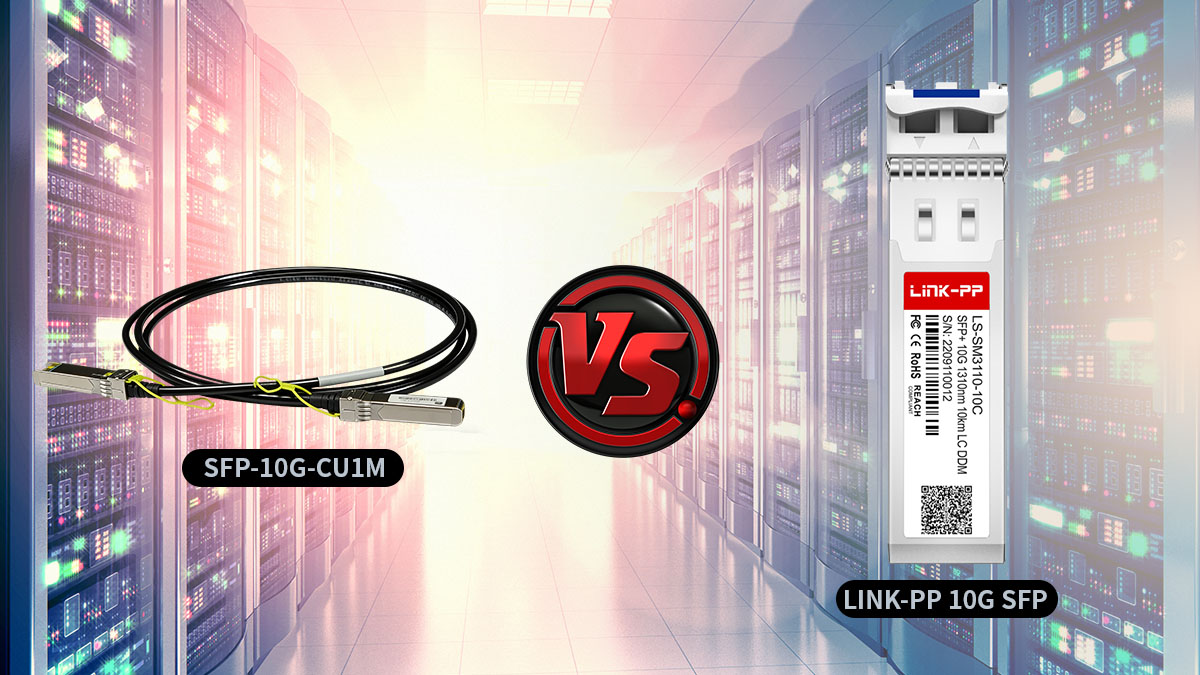
The SFP-10G-CU1M module offers unique advantages in short-reach, high-density deployments, but understanding its performance relative to other 10G solutions helps network engineers make informed decisions. Compared to active DACs, optical transceivers, and alternative copper modules, it balances cost, latency, and deployment simplicity.
Passive vs Active DAC
Passive DACs like SFP-10G-CU1M are ideal for very short links, while active DACs extend distance but require additional power. Key considerations include:
- Passive DAC: Lower cost, minimal power consumption, 1-meter max distance.
- Active DAC: Higher cost, draws more power, supports longer links (up to 7–10 meters).
- Both solutions are plug-and-play and compatible with SFP+ ports, but passive DAC is preferred in high-density racks for reduced heat generation.
Copper vs Optical Modules
Comparing copper modules to optical transceivers highlights trade-offs in installation, cost, and maintenance:
| Parameter | SFP-10G-CU1M (Copper DAC) | Optical 10G Module | Notes |
|---|---|---|---|
| Maximum Distance | 1 meter | 10–40 km | Copper is short-reach only |
| Latency | Sub-microsecond | Slightly higher | Copper offers lower latency |
| Power Consumption | 0.1–0.2 W | 1–2 W | Lower energy use in copper |
| Initial Cost | Moderate | High | Optical modules require transceivers & fiber |
| Installation Complexity | Simple | Higher | Fiber routing and connectors required |
This comparison illustrates that SFP-10G-CU1M is cost-efficient and low-latency for short-reach, high-density environments, whereas optical modules are suitable for long-distance connectivity or campus networks.
Alternative Brands and Third-Party Options
While Huawei-certified SFP-10G-CU1M modules ensure full compatibility, some third-party DACs may offer comparable performance at lower cost. Considerations include:
- Verify vendor compatibility lists to avoid firmware conflicts.
- Evaluate performance metrics such as latency, signal integrity, and thermal characteristics.
- Ensure compliance with Huawei switch specifications to prevent network instability.
Deployment Recommendations
- Use SFP-10G-CU1M for 1-meter links in high-density racks and top-of-rack switch connections.
- Consider active DACs or optical modules only when longer distance or special network topologies are required.
- Prioritize certified modules in production networks to maintain support, warranty, and predictable performance.
By understanding these differences, network administrators can select the most appropriate 10G solution for each scenario, balancing cost, latency, distance, and operational requirements. The SFP-10G-CU1M remains the optimal choice for short-reach, high-density 10G Huawei deployments, delivering reliability, energy efficiency, and simplified installation.
➡️ Environmental and Energy Considerations
The SFP-10G-CU1M module offers significant environmental and energy advantages compared to optical transceivers and active DACs. Its passive copper design minimizes power consumption and heat generation, contributing to lower operating costs and enhanced sustainability in high-density Huawei network deployments.
Power Efficiency
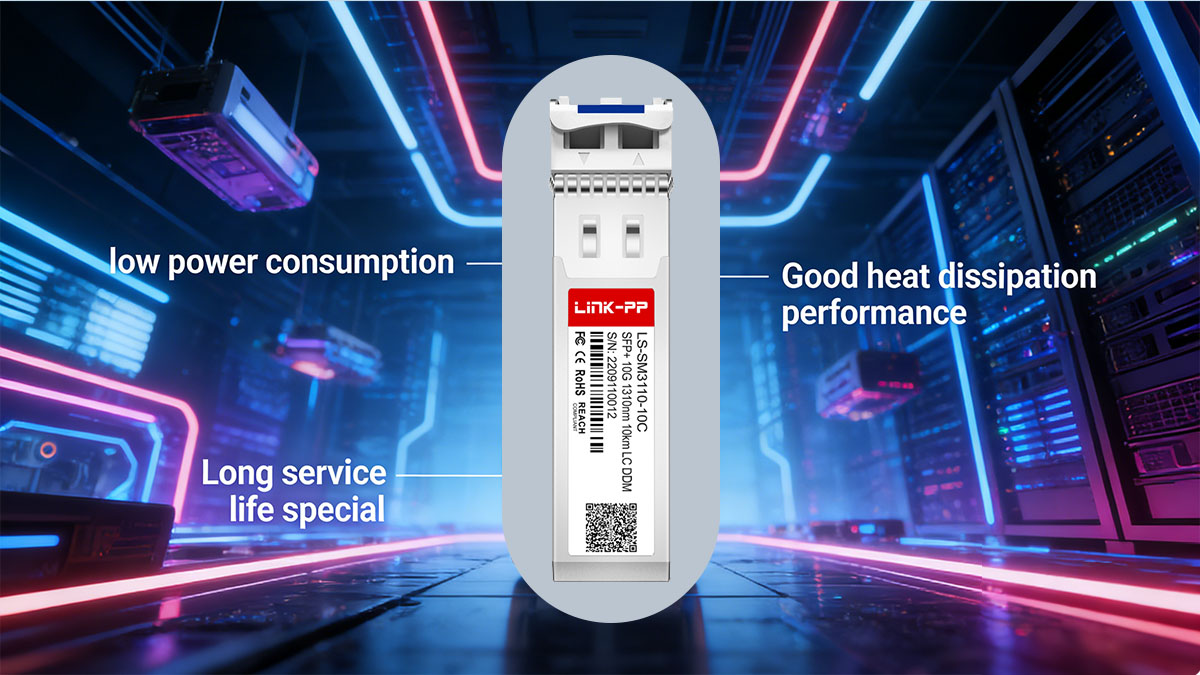
SFP-10G-CU1M modules consume minimal power while delivering full 10Gbps performance. Low energy usage reduces cooling requirements and overall operational expenses. Key points include:
- Power consumption ranges from 0.1 to 0.2 W per port, significantly lower than typical optical 10G modules.
- Low heat generation allows high-density switch deployment without exceeding data center thermal limits.
- Reduced energy requirements contribute to lower carbon footprint and environmentally responsible operations.
Thermal Management
Effective thermal performance is critical in dense rack environments where multiple SFP+ modules operate simultaneously. The SFP-10G-CU1M supports reliable operation under standard data center temperatures. Considerations include:
- Operates reliably in 0–70°C, covering most enterprise and data center environments.
- Low heat output reduces the risk of thermal throttling on switches and adjacent equipment.
- Supports compact top-of-rack deployments without requiring additional cooling infrastructure.
Sustainability and Lifecycle
Using energy-efficient modules like SFP-10G-CU1M aligns with modern sustainability goals. Advantages include:
- Longer operational lifespan due to passive design and reduced thermal stress.
- Lower total energy consumption across large-scale deployments, contributing to reduced operational costs.
- Supports green IT initiatives by minimizing environmental impact of high-density network infrastructure.
| Environmental Metric | SFP-10G-CU1M | Optical 10G Module | Notes |
|---|---|---|---|
| Power Consumption | 0.1–0.2 W per port | 1–2 W per port | Copper modules consume 80–90% less power |
| Heat Output | Low | Moderate | Enables denser rack deployments |
| Operating Temperature Range | 0–70°C | 0–70°C | Suitable for standard data center racks |
| Energy Efficiency Impact | High | Moderate | Supports sustainable, cost-effective operations |
By prioritizing energy-efficient and environmentally friendly solutions like the SFP-10G-CU1M, organizations can reduce operational expenses, maintain high-density 10G deployments, and support sustainable network operations without compromising performance.
➡️ Future Trends in High-Density 10G Networking
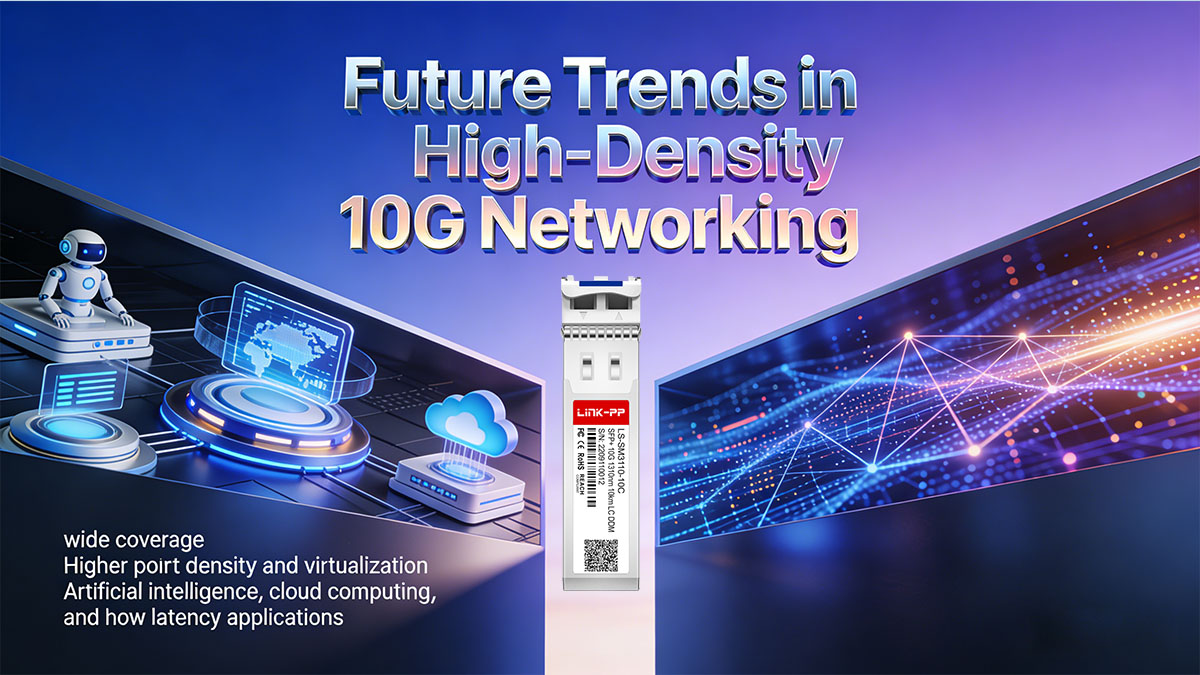
High-density 10G networking is evolving rapidly to meet growing demands for speed, efficiency, and scalability in data centers and enterprise environments. Short-reach solutions like the SFP-10G-CU1M continue to play a key role, but emerging trends are shaping how these modules are deployed and integrated.
Evolution of DAC Technology
Direct Attach Copper (DAC) technology is advancing to meet modern networking requirements, with new designs focusing on longer reach, higher reliability, and hybrid solutions. Key developments include:
- Passive DACs like SFP-10G-CU1M remain highly efficient for links up to 1 meter.
- Active DACs and hybrid copper-optical solutions are extending short-reach connectivity up to 10 meters while maintaining low latency.
- Future DAC designs integrate enhanced shielding and signal conditioning to improve electromagnetic interference (EMI) resilience and maintain signal integrity in dense racks.
These advancements allow DAC modules to support both traditional server-to-switch links and more complex network topologies without compromising performance.
Impact on Data Centers
High-density networking trends are transforming data center design, driving the need for optimized 10G connectivity and compact cabling solutions:
- Switch port densities are increasing, with modern top-of-rack (ToR) switches supporting hundreds of 10G SFP+ ports in a single rack.
- Virtualization and hyper-converged infrastructure place higher demands on short-reach links, making reliable DAC modules essential for predictable performance.
- Efficient cabling and passive modules reduce airflow obstruction and cooling requirements, supporting dense rack configurations.
By leveraging SFP-10G-CU1M in high-density deployments, data centers can maintain low-latency, high-throughput links while minimizing space and energy overhead.
Emerging Network Requirements
Emerging workloads such as AI, cloud computing, and low-latency applications are shaping the requirements for 10G connectivity:
- AI and machine learning workloads require predictable, high-speed interconnects between compute and storage nodes.
- Cloud computing environments demand scalable short-reach links for multi-tenant server racks and virtualized infrastructure.
- Low-latency applications, including financial trading platforms and high-performance databases, rely on stable sub-microsecond transmission, which SFP-10G-CU1M provides for 1-meter links.
Organizations planning for future network growth must consider these requirements when designing high-density 10G networks, ensuring that short-reach DAC modules are complemented by scalable uplink and optical solutions for mixed-speed architectures.
In summary, the evolution of DAC technology, increased data center port densities, and emerging low-latency workloads are shaping the future of high-density 10G networking. Modules like the SFP-10G-CU1M remain relevant for short-reach links, while hybrid and advanced DAC designs provide flexibility to meet expanding performance and scalability demands.
➡️ Conclusion
The SFP-10G-CU1M module offers a reliable, low-latency, and energy-efficient solution for high-density 10G networking environments. From data centers to enterprise networks, it simplifies deployment, reduces power consumption, and ensures consistent performance for server-to-switch and switch-to-switch short-reach links. By understanding its benefits, technical performance, compatibility, and best practices for installation and monitoring, network administrators can maximize operational efficiency while maintaining scalable and resilient infrastructures.
As networking demands evolve, particularly with higher port densities, virtualization, and AI-driven workloads, the SFP-10G-CU1M remains a practical choice for short-reach 10G connections. Its combination of cost-effectiveness, low heat generation, and plug-and-play deployment makes it a dependable option for both current and future network upgrades.
For organizations looking to standardize high-density 10G links or enhance existing Huawei network deployments, exploring certified modules like SFP-10G-CU1M is a strategic step. Discover the full range of compatible SFP-10G-CU1M solutions at the LINK-PP Official Store to ensure optimal performance and reliability for your network infrastructure.