





























The modern enterprise network landscape still includes a large installed base of legacy switching platforms that rely on X2-based 10GbE optical interfaces. Among these, the Cisco X2-10GB-SR module remains widely used for short-reach multimode fiber connectivity in campus backbone layers and early data center architectures. As network traffic demands continue to increase, organizations face the practical challenge of maintaining stable optical links while working within the constraints of existing hardware investments.
In this environment, Cisco X2-10GB-SR compatible optical modules have become an important option for sustaining operational continuity. These solutions are designed to support interoperability with legacy Cisco platforms while enabling reliable 10GbE transmission over multimode fiber. This makes them especially relevant in infrastructures where full hardware replacement is not immediately feasible, yet network performance expectations continue to rise.
This article provides a structured breakdown of Cisco X2-10GB-SR compatible optics and their role in legacy core network support, including:
- Core technical specifications and working principles of X2-10GB-SR
- Compatibility considerations across Cisco switching and routing platforms
- Optical performance characteristics such as transmission quality and link stability
- Fiber infrastructure requirements and deployment constraints
- Operational best practices for installation, validation, and long-term maintenance
- Comparative insights against other 10GbE optical transceiver formats
These topics together will help build a clear understanding of how Cisco X2-10GB-SR compatible modules fit into legacy network environments, and why they remain a practical solution for sustaining stable high-speed optical connectivity in long-life enterprise infrastructures.
🧼 Understanding Cisco X2-10GB-SR Technology
Cisco X2-10GB-SR is a legacy 10GbE short-reach optical transceiver designed for multimode fiber connectivity in Cisco X2-based switching and routing platforms. It is primarily used to enable reliable 10Gbps data transmission over short distances within enterprise campuses and data centers, typically supporting links up to 300m depending on fiber grade. In practical network deployments, it serves as a stable optical interface option for organizations maintaining existing X2 infrastructure.
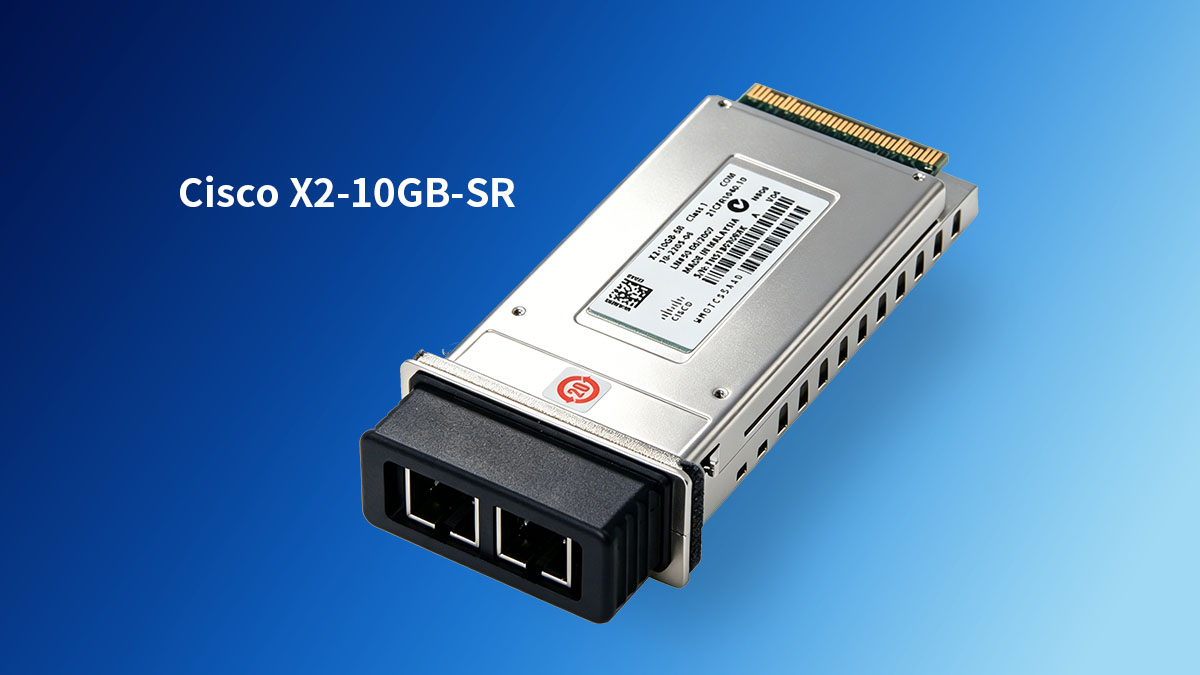
What Is Cisco X2-10GB-SR?
Cisco X2-10GB-SR is a short-reach 10GbE optical transceiver designed for legacy Cisco platforms using the X2 form factor. It is primarily used to enable high-speed data transmission over multimode fiber in short-distance enterprise and data center environments.
At a functional level, it converts electrical 10GbE signals into optical signals and transmits them over 850nm wavelength multimode fiber links. This makes it suitable for intra-building and campus-core connections where distances are typically limited but bandwidth demand is high.
To better understand its role in network design, the key functional characteristics can be summarized as follows:
- Supports 10GbE Ethernet transmission over multimode fiber
- Uses 850nm VCSEL-based optical technology for short-reach links
- Designed for duplex SC fiber connector interfaces
- Optimized for legacy Cisco X2-compatible switch and router platforms
These characteristics make it a foundational component in older high-speed optical architectures that still require stable and predictable performance.
Key Technical Specifications
The Cisco X2-10GB-SR module is defined by a set of standardized optical and physical parameters that determine its compatibility and performance in enterprise networks. These specifications are essential for evaluating deployment feasibility and link stability.
The key technical parameters are outlined below for clarity and quick reference:
| Parameter | Specification |
|---|---|
| Data Rate | 10Gbps |
| Wavelength | 850nm |
| Transmission Distance | Up to 300m over OM3 MMF |
| Fiber Type | Multimode Fiber (OM1/OM2/OM3/OM4) |
| Connector Type | Duplex SC |
| Optical Technology | VCSEL |
These values define how the module performs under standard operating conditions and highlight its focus on short-reach multimode applications.
Typical Deployment Environments
Cisco X2-10GB-SR modules are most commonly deployed in environments where legacy infrastructure continues to play a critical role in core or aggregation traffic handling. These modules are used when organizations prioritize operational continuity over full hardware migration.
Typical deployment environments include:
- Enterprise campus backbone networks connecting multiple buildings
- Data center aggregation layers in earlier-generation 10GbE architectures
- Government and education infrastructures with extended hardware lifecycles
- Financial networks requiring stable internal high-speed connectivity
- Industrial environments with controlled and localized fiber links
These environments often share a similar infrastructure profile, which helps explain continued usage of X2-based optics.
🧼 Why Legacy Core Networks Still Depend on Cisco X2-10GB-SR
Cisco X2-10GB-SR continues to be used in legacy core networks because many enterprise infrastructures still operate stable X2-based switching platforms that were designed for long service lifecycles. In these environments, maintaining existing 10GbE optical connectivity is often more practical than replacing entire core systems, especially when the network still meets performance and reliability requirements.
Long Equipment Lifecycles in Enterprise Networks
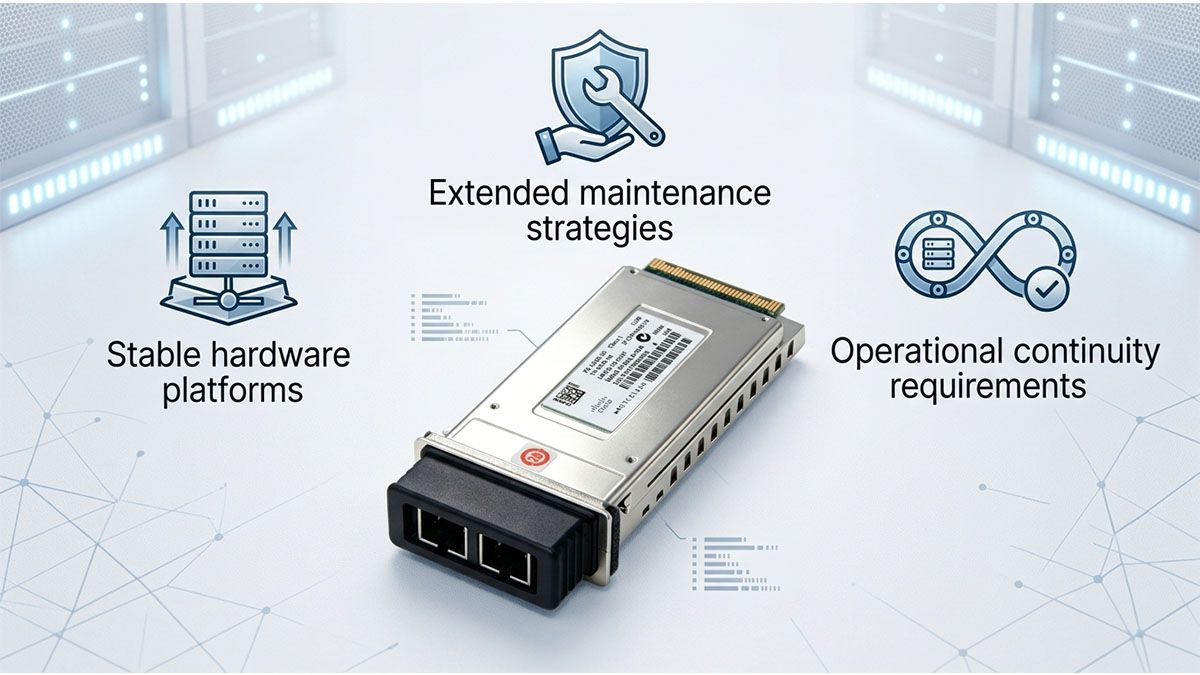
Cisco X2-10GB-SR remains relevant mainly because enterprise networks are built for long-term hardware utilization rather than rapid replacement cycles. Many organizations continue operating X2-compatible switches simply because they still perform reliably under current traffic loads.
In real-world deployments, long lifecycle usage is driven by several structural factors:
- High initial capital investment in core switching infrastructure
- Stable performance of existing 10GbE architectures under controlled workloads
- Extended vendor support cycles for legacy Cisco platforms
- Risk avoidance associated with large-scale network migration
These factors collectively make it common for enterprises to preserve existing optical ecosystems instead of redesigning them entirely.
Common Legacy Platforms Using X2 Interfaces
Cisco X2-10GB-SR is typically deployed on earlier-generation Cisco switching and routing platforms that still support X2 optical modules. These systems often remain in production because they continue to meet internal bandwidth and latency requirements.
Typical platforms and environments include:
- Legacy Cisco Catalyst core and distribution switches
- Early-generation data center switching platforms
- Aggregation-layer routers with X2 optical slots
- Mixed-generation networks where X2 and newer modules coexist
These platforms are often deeply integrated into enterprise network architecture, making replacement complex and disruptive.
Challenges of Maintaining Aging Optical Infrastructure
While legacy core networks continue to rely on Cisco X2-10GB-SR, maintaining these environments introduces several operational challenges that must be managed carefully to ensure stability.
Common challenges include:
- Reduced availability of original OEM optical modules in the supply chain
- Increasing difficulty in sourcing identical replacement parts for aging systems
- Compatibility verification requirements across different firmware versions
- Inventory management complexity for spare modules in long-term operations
Beyond sourcing concerns, technical maintenance also becomes more demanding over time:
- Aging fiber links may introduce higher attenuation and signal degradation
- Dust or contamination on duplex SC connectors can impact link stability
- Older chassis platforms may have stricter power and thermal constraints
These factors make proactive monitoring and controlled maintenance essential to sustaining reliable performance in X2-based network environments.
🧼 Cisco X2-10GB-SR Compatible Optics Explained
Cisco X2-10GB-SR compatible optics are third-party or alternative optical transceivers designed to operate in Cisco X2-based platforms while maintaining functional equivalence with the original Cisco X2-10GB-SR module. In practical deployment scenarios, they are used to extend the usability of legacy 10GbE infrastructure by ensuring continued optical connectivity without requiring changes to existing switching hardware or fiber layouts.

What Makes an Optical Module Compatible?
Compatibility in Cisco X2 environments is determined by both physical and electronic alignment with the host platform. A compatible X2-10GB-SR module must match the optical characteristics and be correctly recognized by the Cisco system.
The core factors that define compatibility include:
- EEPROM programming that allows proper vendor and module identification
- Alignment with Cisco platform expectations for X2 transceiver signaling
- Matching optical parameters such as wavelength, power levels, and modulation type
- Compliance with industry Multi-Source Agreement (MSA) standards
These elements ensure that the module can operate correctly within Cisco hardware while maintaining stable link performance.
From a functional standpoint, compatibility is not only about detection, but also about sustained operational stability under real network load conditions.
Differences Between Original and Compatible Modules
Cisco original X2-10GB-SR modules and compatible alternatives are designed to deliver similar functional outcomes, but they may differ in internal design, manufacturing sources, and management features.
A structured comparison helps clarify these differences:
- Original modules are manufactured and validated directly under Cisco specifications
- Compatible modules are produced by third-party manufacturers following MSA standards
- Optical performance targets are generally aligned, but implementation methods may vary
- Monitoring and diagnostics features (such as DOM reporting) may differ in granularity
Despite these differences, both types of modules are designed to support the same fundamental use case: stable 10GbE short-reach multimode transmission.
Compatibility Testing Methodologies
Ensuring reliable operation of Cisco X2-10GB-SR compatible optics requires systematic testing before and during deployment. This is especially important in legacy core networks where stability is critical.
Common testing methodologies include:
- Platform recognition verification to confirm proper module detection
- Interoperability testing across different Cisco switch models
- Link stability validation under sustained traffic loads
- Environmental testing for temperature and power variations
These procedures help ensure that the optical module performs consistently under real-world operating conditions.
🧼 Technical Performance Analysis of Cisco X2-10GB-SR Compatible Modules
Cisco X2-10GB-SR compatible modules are designed to deliver optical performance that aligns closely with legacy Cisco 10GbE short-reach requirements. In practical deployments, their performance is evaluated not only by raw transmission capability but also by link stability, signal integrity, and long-term operational consistency within existing X2-based network infrastructures.
Optical Transmission Performance
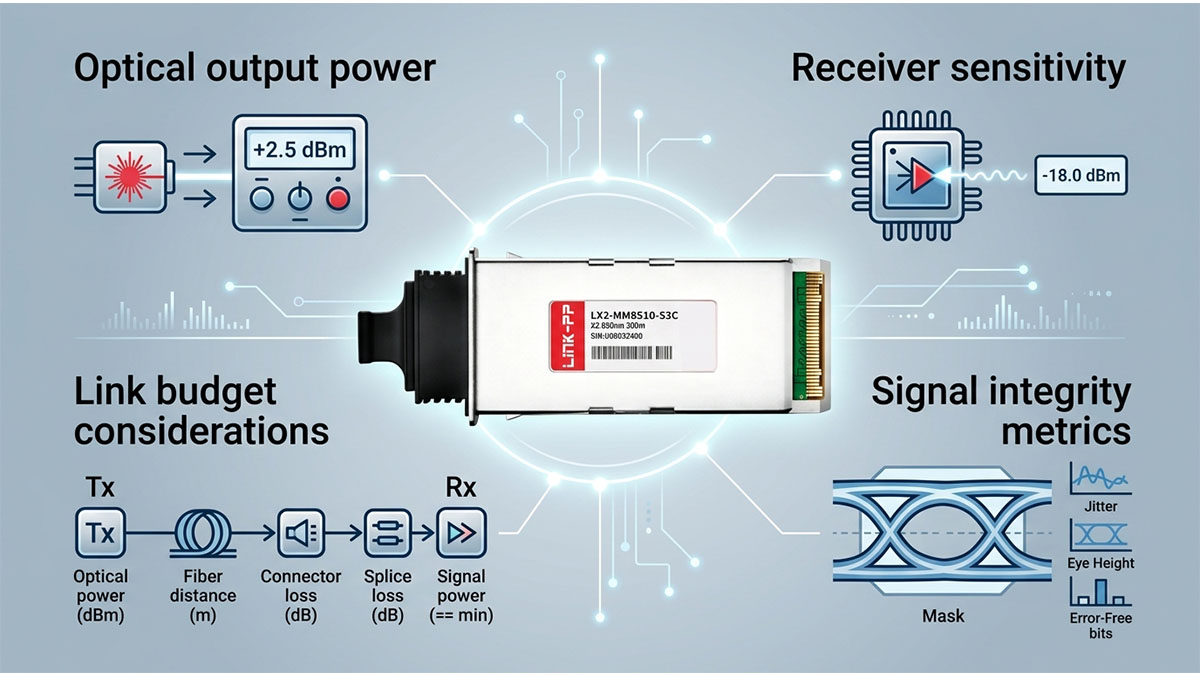
Cisco X2-10GB-SR compatible modules are primarily evaluated based on their ability to maintain stable optical signal transmission over multimode fiber at 10Gbps. In real-world networks, this determines whether the link can sustain consistent throughput without introducing errors or degradation.
The core performance characteristics typically include:
- Stable 10Gbps transmission over 850nm multimode fiber links
- VCSEL-based optical emission for short-reach signal delivery
- Support for link distances up to 300m on OM3 fiber under optimal conditions
- Balanced optical power output to maintain signal integrity across patch panels and cabling
These parameters define how well the module performs in controlled enterprise environments where short-distance high-speed connectivity is required.
Digital Optical Monitoring (DOM) Support
Digital Optical Monitoring (DOM) plays a key role in evaluating and maintaining Cisco X2-10GB-SR compatible modules in production environments. It provides real-time visibility into optical behavior, which is critical for troubleshooting and preventive maintenance.
Typical DOM metrics include:
- Transmit optical power (Tx Power)
- Receive optical power (Rx Power)
- Module temperature
- Supply voltage levels
- Bias current monitoring
These parameters help network operators identify early signs of degradation before they impact link stability.
Network Stability and Reliability
Network stability is one of the most critical evaluation factors for Cisco X2-10GB-SR compatible modules, particularly in legacy core environments where downtime can significantly impact operations.
In stable deployments, these modules are expected to maintain:
- Consistent packet transmission with minimal frame loss
- Low bit error rates under sustained traffic loads
- Stable link negotiation across Cisco X2-based platforms
- Reliable performance under varying temperature conditions
These behaviors ensure predictable network operation in long-term use cases.
Reliability is also influenced by environmental and operational conditions:
- Thermal management within legacy switch chassis affects long-term stability
- Power consistency across modules impacts optical signal consistency
- Aging fiber infrastructure may introduce intermittent performance variations
When properly deployed, compatible X2-10GB-SR modules can provide performance that supports continuous enterprise-grade operation, making them suitable for sustaining legacy 10GbE backbone connectivity without structural network changes.
🧼 Fiber Infrastructure Considerations
Cisco X2-10GB-SR compatible modules depend heavily on the quality and design of the underlying multimode fiber infrastructure. In legacy 10GbE networks, fiber conditions often become the determining factor for whether links achieve stable performance or experience intermittent degradation. Understanding fiber type, connector design, and distance constraints is essential for maintaining reliable X2-based connectivity.

Supported Multimode Fiber Types
Cisco X2-10GB-SR compatible optics are designed for multimode fiber environments operating at 850nm wavelength. The actual transmission distance and signal quality vary significantly depending on the fiber grade deployed in the network.
Typical multimode fiber compatibility includes:
- OM1 fiber supporting short-distance legacy links with higher modal dispersion
- OM2 fiber offering improved performance over OM1 for moderate distances
- OM3 fiber optimized for 10GbE transmission up to approximately 300m
- OM4 fiber extending reach and improving signal quality margins in dense environments
These fiber types directly influence how far and how reliably a 10Gbps signal can be transmitted.
To better illustrate their impact, the relationship between fiber grade and transmission capability can be summarized as follows:
| Fiber Type | Typical 10GbE Reach | Performance Characteristics |
|---|---|---|
| OM1 | Up to 33m | Higher dispersion, legacy environments |
| OM2 | Up to 82m | Improved over OM1, still limited for 10GbE |
| OM3 | Up to 300m | Optimized for short-reach 10GbE |
| OM4 | Up to 400m+ | Enhanced margin and stability |
These values highlight why OM3 and OM4 are preferred in modernized legacy networks where stability is critical.
Duplex SC Connectivity Requirements
Cisco X2-10GB-SR modules use duplex SC connectors, which are a key physical interface standard for multimode 10GbE links in legacy environments. Proper handling and installation of these connectors are critical to ensuring stable optical transmission.
Key characteristics of duplex SC connectivity include:
- Two-fiber design supporting separate transmit and receive paths
- Push-pull locking mechanism for secure physical connection
- Widely used in legacy enterprise fiber patching systems
- Compatibility with structured cabling in campus and data center environments
These properties make SC connectors robust but sensitive to contamination and handling practices.
Distance Planning for Legacy Core Networks
Distance planning is a key design factor when deploying Cisco X2-10GB-SR compatible modules in legacy core networks. While the module supports short-reach transmission, actual achievable distance depends on fiber type, connector quality, and overall link budget.
In typical enterprise environments, distance planning focuses on several common scenarios:
- Campus backbone links connecting multiple buildings
- Intra-building connections between distribution and core switches
- Data center rack-to-rack or row-to-row interconnects
- Controlled industrial or institutional network segments
These use cases generally fall within short-reach design constraints.
🧼 Cisco X2-10GB-SR Compatible vs Other 10G Optical Solutions
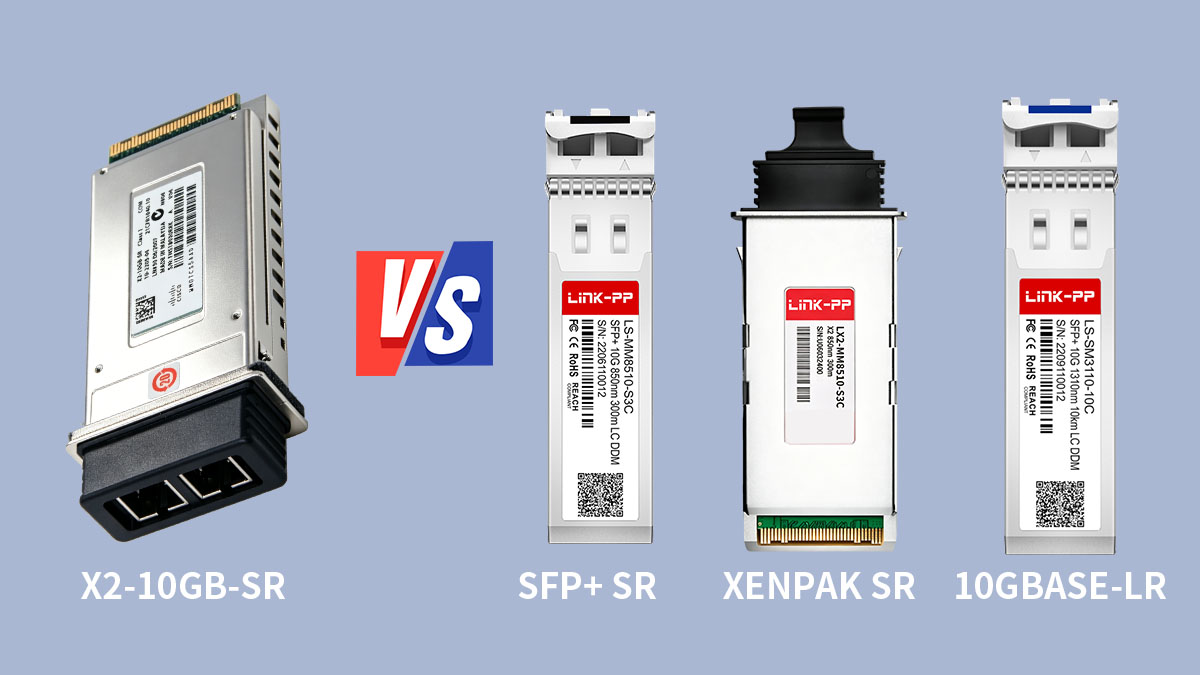
Cisco X2-10GB-SR compatible modules are often evaluated in comparison with other 10G optical form factors because many enterprise networks operate mixed-generation infrastructures. Understanding these differences helps clarify where X2-based optics still fit and how they relate to newer 10GbE connectivity options in real-world deployments.
Cisco X2-10GB-SR vs SFP+ SR
Cisco X2-10GB-SR and SFP+ SR modules both support 10GbE over multimode fiber, but they differ significantly in form factor, power efficiency, and platform generation. In modern networks, SFP+ is generally more common, while X2 remains relevant in legacy Cisco hardware environments.
A structured comparison highlights the key differences:
| Feature | X2-10GB-SR | SFP+ SR |
|---|---|---|
| Form Factor | Larger X2 module | Compact SFP+ module |
| Power Consumption | Higher | Lower |
| Density | Lower port density | Higher port density |
| Platform Usage | Legacy Cisco systems | Modern switch platforms |
| Fiber Type | Multimode fiber | Multimode fiber |
These differences show that while both support similar optical transmission capabilities, they are optimized for different generations of networking hardware.
Cisco X2-10GB-SR vs XENPAK SR
Cisco XENPAK SR is an even earlier 10GbE optical standard compared to X2, representing an older generation of large-form-factor transceivers. While both are considered legacy technologies today, X2 offers improved efficiency and reduced physical footprint.
Key distinctions include:
- XENPAK modules are significantly larger and consume more power
- X2 provides a more compact and efficient design for 10GbE transmission
- Both support multimode fiber but differ in integration density
- X2 represents a transitional evolution between XENPAK and SFP+ architectures
From a deployment perspective:
- XENPAK is mostly found in very early 10GbE core deployments
- X2 is more commonly encountered in mid-generation Cisco infrastructures
- Both are typically replaced in modern networks due to density and efficiency limitations
This comparison highlights the gradual evolution of 10GbE optical technology toward smaller and more energy-efficient designs.
Cisco X2-10GB-SR vs 10GBASE-LR
Cisco X2-10GB-SR and 10GBASE-LR modules differ fundamentally in fiber type and transmission distance, making them suitable for very different network scenarios. SR is designed for short-reach multimode environments, while LR targets long-distance single-mode fiber links.
A clear comparison is shown below:
| Feature | X2-10GB-SR | 10GBASE-LR |
|---|---|---|
| Fiber Type | Multimode fiber | Single-mode fiber |
| Wavelength | 850nm | 1310nm |
| Typical Distance | Up to 300m | Up to 10km |
| Use Case | Campus and data center short links | Metro and long-distance links |
| Connector Type | Duplex SC | Duplex LC |
These differences define their roles in network architecture.
🧼 Deployment Best Practices for Cisco X2-10GB-SR Compatible Modules
Cisco X2-10GB-SR compatible modules can deliver stable 10GbE performance in legacy environments when they are deployed with proper planning and validation. In real-world core networks, most issues are not caused by the module itself, but by improper installation, insufficient fiber quality, or missing pre-deployment checks. A structured deployment approach is therefore essential to ensure consistent optical performance and long-term reliability.

Pre-Deployment Validation
Before installing Cisco X2-10GB-SR compatible modules, it is important to confirm that both the hardware platform and optical environment are fully prepared. This step helps reduce compatibility risks and prevents unexpected link failures after deployment.
Key validation steps typically include:
- Confirming Cisco switch or router X2 port compatibility with the module
- Verifying firmware version support for third-party or compatible optics
- Checking fiber infrastructure type (OM1/OM2/OM3/OM4) for distance requirements
- Evaluating optical budget to ensure sufficient power margin across the link
These checks help establish a stable foundation for deployment.
From an operational perspective, additional considerations are often included:
- Ensuring spare modules are available for redundancy planning
- Reviewing network topology to avoid excessive patching complexity
- Confirming environmental conditions such as temperature and airflow in chassis
Together, these steps reduce the likelihood of post-installation instability and improve deployment predictability.
Installation Guidelines
Proper installation of Cisco X2-10GB-SR compatible modules is critical to achieving optimal optical performance. Even small handling errors can introduce signal degradation or intermittent link issues.
Recommended installation practices include:
- Handling modules with care to avoid contamination of optical interfaces
- Inserting the X2 module firmly into the slot until fully seated
- Connecting duplex SC fibers with correct transmit and receive alignment
- Avoiding unnecessary force during fiber insertion to prevent connector damage
These actions ensure that the physical connection is stable and properly aligned.
In addition, installation environments should follow several best practices:
- Clean fiber connectors before installation using approved cleaning tools
- Avoid sharp bends or stress points in fiber cabling near the port
- Maintain proper cable management inside racks and patch panels
- Label connections clearly to simplify future maintenance operations
A well-executed installation process directly contributes to lower error rates and more stable long-term performance.
Post-Deployment Monitoring
After deployment, continuous monitoring is essential to ensure Cisco X2-10GB-SR compatible modules maintain stable performance under real traffic conditions. This phase focuses on detecting early signs of degradation and ensuring long-term reliability.
Key monitoring activities include:
- Tracking DOM parameters such as Tx/Rx optical power levels
- Monitoring module temperature and voltage stability
- Reviewing interface error counters and packet loss indicators
- Observing link status for any signs of flapping or instability
These metrics provide real-time insight into optical health and network behavior.
To maintain long-term stability, operators typically implement:
- Periodic inspection of fiber connectors for contamination or wear
- Scheduled review of optical power trends over time
- Preventive maintenance based on threshold alerts from monitoring systems
- Documentation of baseline performance values for comparison
This structured monitoring approach helps ensure that potential issues are identified early, allowing corrective actions before they impact production network stability.
🧼 Common Compatibility Issues and Troubleshooting
Cisco X2-10GB-SR compatible modules generally operate reliably in legacy X2-based environments, but compatibility issues can still occur due to platform restrictions, firmware differences, or fiber-related problems. In most real deployments, these issues are not hardware failures, but mismatches between optical, electrical, or system-level conditions. Understanding typical failure patterns helps reduce downtime and speeds up troubleshooting.

Module Recognition Failures
One of the most common issues in Cisco X2 environments is the switch failing to recognize or properly initialize the compatible optical module. This usually appears as a “transceiver not supported” or “unknown module” status in the system logs.
Typical root causes include:
- Platform firmware blocking third-party or non-Cisco-coded modules
- EEPROM coding mismatch between module and device expectations
- Outdated IOS or firmware versions lacking compatibility support
- Strict vendor validation policies on certain enterprise switches
These issues are primarily software- or policy-related rather than optical performance failures.
In troubleshooting scenarios, common resolution steps include:
- Verifying switch firmware version and upgrade compatibility
- Checking whether the platform enforces vendor lock restrictions
- Re-seating the module to ensure proper electrical contact
- Testing the module in an alternate compatible X2 port or device
These actions help isolate whether the issue is platform-related or module-related.
Link Instability Problems
Link instability is another frequent issue in Cisco X2-10GB-SR deployments, especially in environments with aging fiber infrastructure or inconsistent installation practices. This condition may present as intermittent link drops, flapping interfaces, or sporadic packet loss.
Common causes include:
- Dirty or contaminated SC duplex fiber connectors
- Excessive attenuation due to long or poorly maintained fiber runs
- Incorrect polarity between transmit and receive fibers
- Suboptimal fiber quality or mixed-grade multimode cabling
These physical-layer issues directly impact optical signal stability.
Troubleshooting typically involves:
- Cleaning and re-testing fiber connectors using proper cleaning tools
- Verifying correct Tx/Rx fiber orientation across both ends of the link
- Measuring optical power levels using DOM data or external tools
- Replacing suspect patch cables or damaged fiber segments
Addressing these factors often restores stable link behavior without replacing hardware.
Performance Degradation Scenarios
In some cases, Cisco X2-10GB-SR compatible modules do not fail completely but instead show gradual performance degradation. This is often harder to detect because the link remains active while underlying signal quality declines.
Typical contributing factors include:
- Aging multimode fiber increasing attenuation over time
- Thermal stress affecting optical output stability in high-density chassis
- Marginal optical power budget close to link threshold limits
- Accumulated dust or micro-contamination in patch panels
These conditions result in reduced link quality rather than complete failure.
Common symptoms include:
- Increased bit error rates under high traffic loads
- Occasional retransmissions or latency spikes
- Fluctuating DOM power readings near threshold limits
Troubleshooting approaches focus on long-term stabilization:
- Reviewing historical DOM trends to identify gradual decline patterns
- Replacing aging fiber segments in high-risk paths
- Improving airflow and thermal management in switch environments
- Rebalancing optical link budgets where possible
By addressing both environmental and infrastructure factors, performance stability can often be restored without major network redesign.
🧼 Extending the Lifecycle of Legacy Core Networks
Cisco X2-10GB-SR compatible modules play a practical role in extending the operational lifespan of legacy core networks. In many enterprise environments, the core switching infrastructure still performs adequately, and the primary challenge is maintaining stable 10GbE connectivity without triggering a full-scale network redesign. Extending lifecycle in this context focuses on stability, cost control, and incremental modernization rather than immediate replacement.

Cost-Effective Infrastructure Preservation
Extending the lifecycle of legacy core networks is often driven by the need to maximize existing infrastructure value while maintaining acceptable performance levels. Cisco X2-10GB-SR compatible optics support this approach by enabling continued use of installed X2-based hardware.
Key benefits of infrastructure preservation include:
- Maximizing return on investment from existing switching platforms
- Avoiding disruptive core network replacements
- Maintaining operational continuity across critical business systems
- Reducing short-term capital expenditure pressure
These advantages are particularly relevant in environments where core networks are stable but not yet ready for full modernization.
Hybrid Network Upgrade Strategies
In many real-world deployments, legacy X2-based systems coexist with newer 10GbE technologies such as SFP+ or QSFP platforms. Cisco X2-10GB-SR compatible modules help bridge these environments by ensuring stable connectivity within the legacy segment of a hybrid network.
Common hybrid upgrade strategies include:
- Gradual migration from X2-based switches to newer platforms
- Parallel operation of legacy and modern optical systems
- Selective upgrade of high-traffic network segments
- Maintaining X2 links for stable, low-risk core connections
These strategies reduce operational risk during long-term network transformation.
Planning for Long-Term Optical Availability
Long-term availability of Cisco X2-10GB-SR compatible optics is an important consideration in legacy network planning. As original hardware becomes less common, maintaining a stable supply of compatible modules becomes part of infrastructure lifecycle management.
Key planning practices include:
- Maintaining controlled spare inventory for critical network segments
- Standardizing approved compatible optical models across environments
- Establishing vendor qualification criteria for optical components
- Monitoring supply chain stability for legacy form factors
These practices help ensure uninterrupted network operations over extended periods.
🧼 Conclusion
Cisco X2-10GB-SR compatible modules remain a practical and widely used solution for sustaining legacy 10GbE core networks, especially in environments where X2-based switching platforms continue to operate reliably. Their value is not defined by innovation, but by stability, interoperability, and the ability to extend the lifecycle of existing optical infrastructures without requiring disruptive architectural changes.
In most enterprise scenarios, the decision to continue using X2-based optics is driven by operational priorities rather than technical limitations. When properly deployed and maintained, these modules can support consistent performance across multimode fiber networks while integrating smoothly into long-established Cisco environments.
Key takeaways from the overall analysis include:
- Cisco X2-10GB-SR compatible modules provide stable 10GbE short-reach connectivity for legacy platforms
- Performance depends heavily on fiber quality, connector condition, and optical budget design
- Compatibility is influenced by both hardware recognition and firmware-level restrictions
- Proper deployment practices significantly improve long-term reliability and link stability
- Hybrid and phased upgrade strategies allow gradual migration without network disruption
Beyond technical considerations, lifecycle planning remains central to managing legacy infrastructures. Many organizations continue to rely on X2-based networks while gradually introducing newer optical standards, balancing modernization with operational continuity.
For enterprises seeking long-term support strategies for optical connectivity ecosystems, resources such as the LINK-PP Official Store provide additional reference options for compatible optical solutions and lifecycle-oriented network planning approaches.