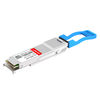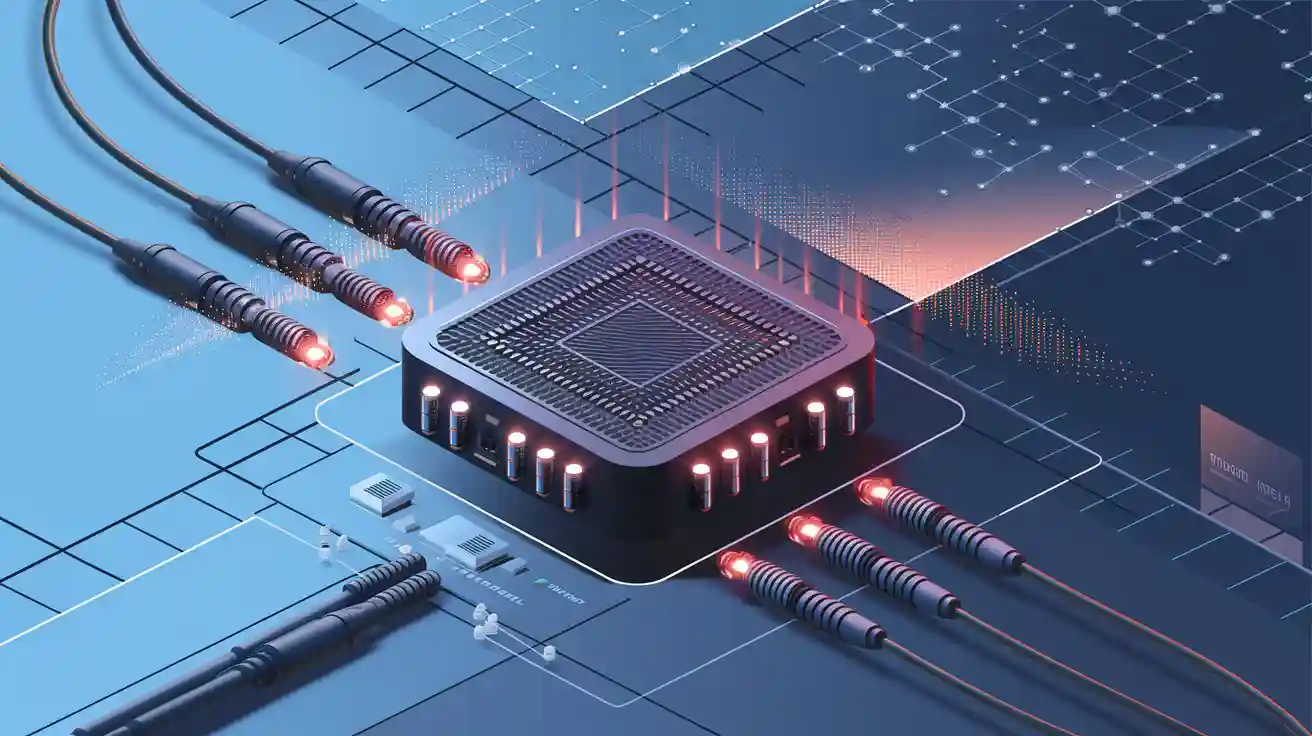
The Finisar FTLX8571D3BCL is a widely deployed 10G SFP+ optical transceiver designed for short-reach multimode fiber connectivity in modern high-speed networks. It is commonly used in data center interconnects, enterprise switching fabrics, and high-bandwidth server links where reliable 10Gbps performance is required over short distances.
As network infrastructures continue to evolve toward higher density and faster throughput, understanding the technical specifications of modules like the FTLX8571D3BCL becomes essential for ensuring compatibility, performance stability, and optimal fiber link design. This module is engineered to operate at an 850nm wavelength using VCSEL technology, making it suitable for cost-efficient short-range optical transmission over multimode fiber such as OM3 and OM4.
From a deployment perspective, this transceiver plays a critical role in enabling scalable 10G Ethernet architectures. Its SFP+ form factor allows hot-swappable installation, while built-in digital diagnostic monitoring supports real-time visibility into optical performance parameters. These characteristics make it a practical choice for environments that demand both flexibility and operational reliability.
In the sections that follow, the specifications of the Finisar FTLX8571D3BCL will be examined in detail, including optical characteristics, electrical behavior, compliance standards, compatibility considerations, and real-world application scenarios.
🏳️🌈 Product Overview of Finisar FTLX8571D3BCL
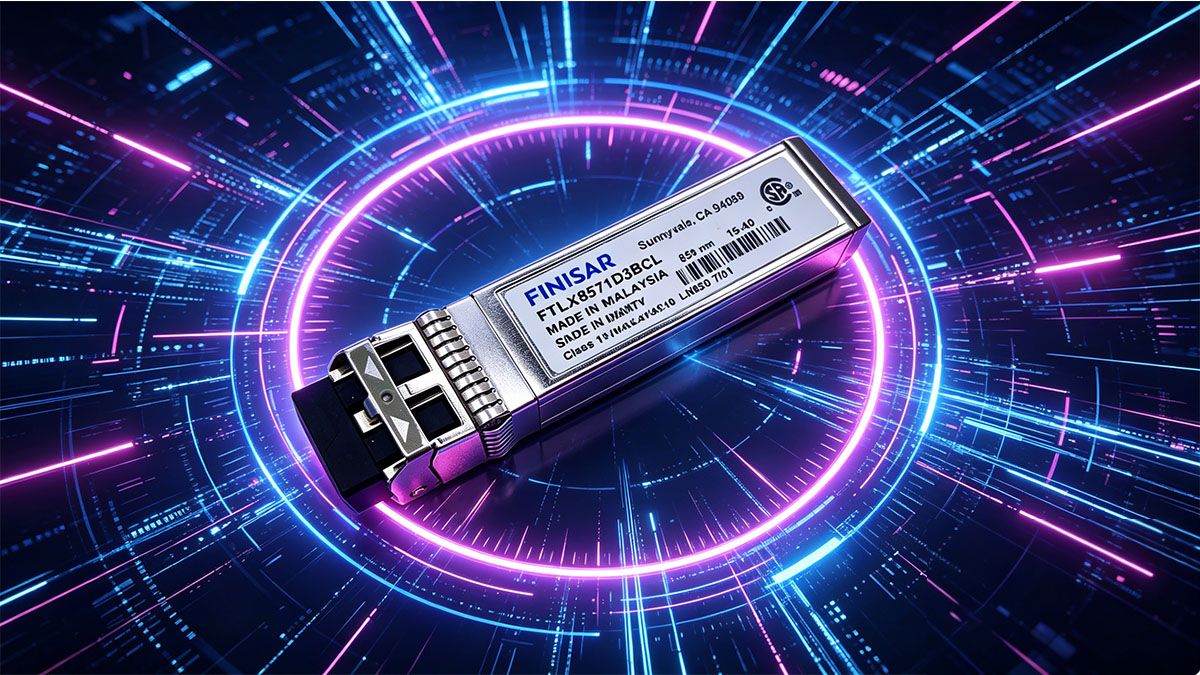
The Finisar FTLX8571D3BCL is a 10G SFP+ short-reach optical transceiver designed for high-speed 10GbE connectivity over multimode fiber, widely used in data centers and enterprise networks where compact, low-latency 10G links are required.
Device Classification and Type
The FTLX8571D3BCL belongs to the short-range optical transceiver category and is optimized for 10Gbps Ethernet transmission over multimode fiber. Its design is standardized to ensure predictable behavior across compatible networking platforms.
Key classification attributes can be summarized as follows:
| Category |
Specification |
| Form Factor |
SFP+ hot-pluggable module |
| Standard |
10GBASE-SR |
| Wavelength |
850nm |
| Fiber Type |
Multimode fiber (MMF) |
| Laser Technology |
VCSEL |
This classification defines its role as a short-distance, high-bandwidth optical interface designed for dense networking environments.
To better understand its positioning, the following functional characteristics are important:
- Designed for short-reach optical transmission (typically within data centers)
- Supports high-density switch and server connectivity
- Built for standardized 10G Ethernet environments
- Optimized for cost-efficient multimode fiber deployment
These attributes make it a common choice for 10G short-range optical links where scalability and consistency are required.
Role in Modern Network Infrastructure
The FTLX8571D3BCL plays a key role in enabling high-speed interconnectivity within modern network architectures, particularly in environments where dense 10G links are required.
Its primary deployment roles include:
- Server-to-switch connections in top-of-rack (ToR) designs
- Leaf-spine architecture interconnects in data centers
- Aggregation layer links in enterprise switching networks
- High-bandwidth communication between storage and compute nodes
In practical network design, it is often selected for scenarios that require:
- Low-latency data transmission between devices
- High port density in compact switch environments
- Scalable 10G Ethernet deployment without long-distance requirements
- Reliable multimode fiber utilization within structured cabling systems
These usage patterns reflect its importance in environments transitioning from 1G to 10G infrastructure or expanding existing 10G capacity.
Standards Compliance Overview
The FTLX8571D3BCL is built to align with widely accepted networking standards, ensuring interoperability and stable performance across different hardware ecosystems.
Its compliance framework includes:
- IEEE 802.3ae standard for 10 Gigabit Ethernet over optical fiber
- 10GBASE-SR specification for short-range multimode transmission
- SFP+ Multi-Source Agreement (MSA) mechanical and electrical standards
These standards define critical aspects of its operation:
- Optical signaling behavior for 10Gbps data transmission
- Physical form factor and hot-swap compatibility requirements
- Electrical interface definitions for host device integration
- Interoperability rules across multi-vendor networking equipment
The practical benefits of this compliance include:
- Seamless integration into existing 10G network infrastructures
- Reduced configuration complexity in heterogeneous environments
- Consistent performance across compliant switches and routers
- Predictable link behavior in standardized optical deployments
Together, these factors make the FTLX8571D3BCL a stable and widely compatible solution for short-reach 10G optical networking applications.
🏳️🌈 Core Technical Specifications
The Finisar FTLX8571D3BCL is designed for 10Gbps short-reach optical transmission over multimode fiber, with a specification set optimized for stable performance, low power consumption, and predictable link behavior in high-density networking environments.
Data Rate and Transmission Speed
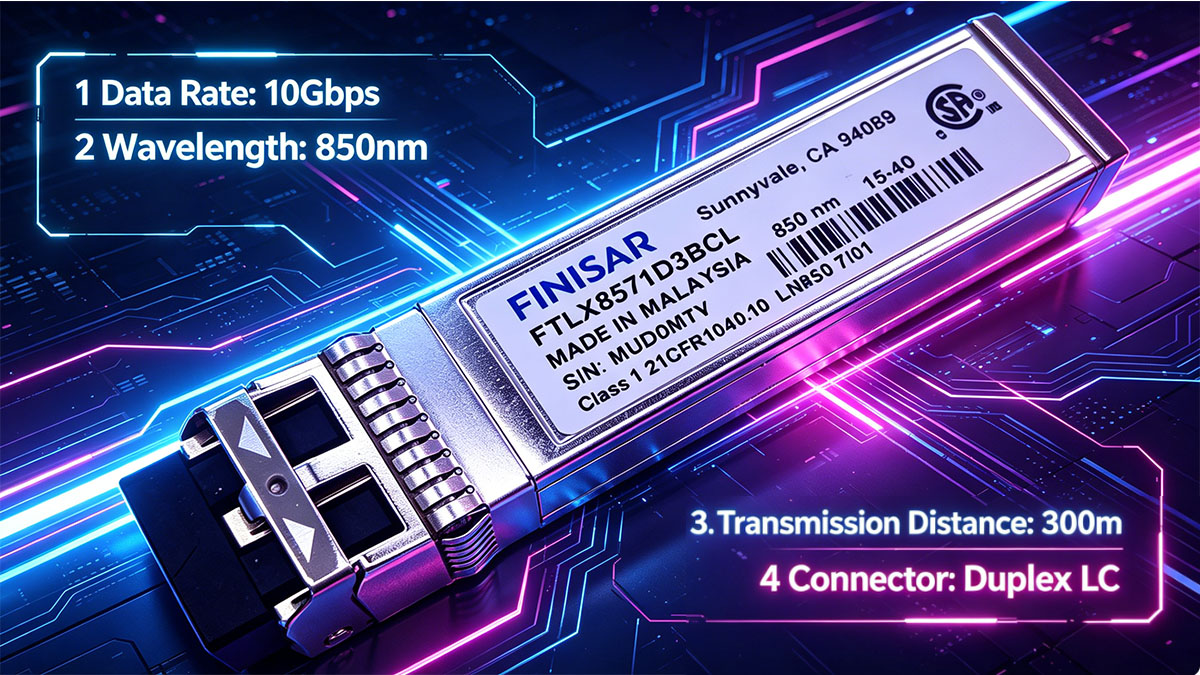
The module supports a fixed 10Gbps-class data rate, specifically designed for 10 Gigabit Ethernet applications. This ensures consistent performance in standardized 10GBASE-SR deployments.
Key transmission characteristics include:
- Nominal data rate: 10.3125Gbps
- Protocol support: 10GbE (10 Gigabit Ethernet)
- Encoding compatibility: 64b/66b Ethernet encoding
- Designed for full-duplex optical transmission
These parameters ensure the module can handle sustained high-throughput workloads such as server aggregation and switch uplinks without bottlenecking at the physical layer.
Optical Wavelength Characteristics
The optical subsystem is built around an 850nm VCSEL laser, which is optimized for multimode fiber transmission and short-distance communication.
A quick breakdown of optical design parameters:
| Parameter |
Specification |
| Wavelength |
850nm |
| Laser Type |
VCSEL |
| Fiber Type |
Multimode (OM3/OM4) |
| Transmission Mode |
Short-range optical link |
This wavelength selection enables efficient coupling with multimode fiber, which is widely used in data center environments due to its cost efficiency and ease of installation.
Key implications of this design include:
- Optimized performance over OM3 and OM4 fiber types
- Reduced signal distortion over short distances
- Efficient energy-to-optical conversion for high-speed links
Transmission Distance Capability
The supported transmission distance depends primarily on the type of multimode fiber used in the deployment environment.
Typical reach characteristics are as follows:
| Fiber Type |
Maximum Distance |
| OM3 |
Up to 300m |
| OM4 |
Up to 400m (typical improved reach) |
These values reflect optimized short-range design intent, making the module suitable for intra-data center connections rather than long-haul transmission.
Important deployment considerations include:
- Higher-grade fiber (OM4) improves signal reach and margin
- Link quality is influenced by connector cleanliness and attenuation
- Distance is optimized for rack-level or row-level connectivity
Connector Interface Type
The module uses a standardized duplex LC connector interface, which is the industry norm for high-speed multimode optical transceivers.
Key interface characteristics:
- Connector type: Duplex LC
- Fiber configuration: Two-strand (Tx/Rx separation)
- Physical alignment: Precision ferrule-based optical alignment
This interface design ensures:
- High compatibility with structured cabling systems
- Stable optical coupling with minimal insertion loss
- Easy integration into existing fiber patch panel infrastructure
In practical deployments, duplex LC connectors are preferred because they balance compact size with reliable optical performance in dense networking environments.
Digital Diagnostic Monitoring (DDM/DOM)
The FTLX8571D3BCL supports Digital Optical Monitoring (DOM), enabling real-time visibility into critical operating parameters.
Monitored parameters typically include:
- Optical transmit power (Tx Power)
- Optical receive power (Rx Power)
- Laser bias current
- Module temperature
- Supply voltage
The practical value of DOM functionality includes:
- Early detection of optical degradation trends
- Simplified troubleshooting of link instability
- Real-time performance validation during deployment
- Improved maintenance planning in large-scale networks
From an operational perspective, DOM data is particularly useful in high-density environments where manual inspection of each link is impractical.
🏳️🌈 Electrical and Optical Parameters
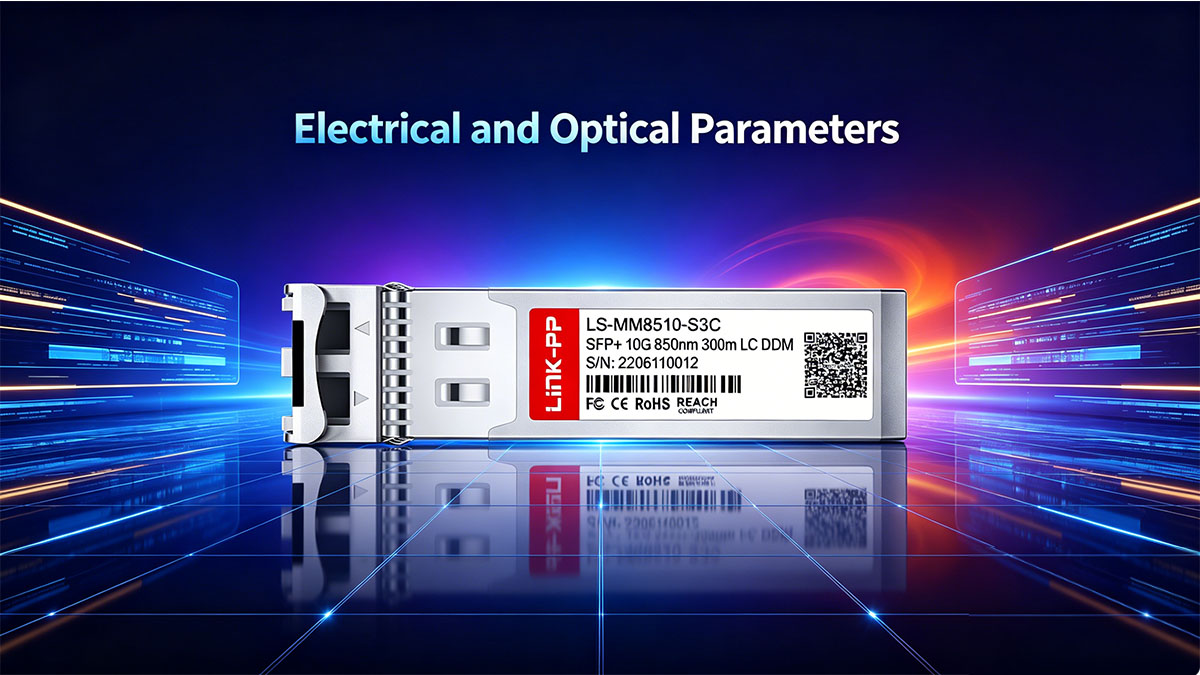
The Finisar FTLX8571D3BCL is engineered to maintain stable 10Gbps performance while keeping power consumption low and optical efficiency high. Its electrical and optical design focuses on predictable signal integrity, efficient VCSEL operation, and reliable behavior across standard data center conditions.
Power Consumption Profile
The module is optimized for low-power operation, which is essential in high-density 10G switching environments where dozens or hundreds of ports may be active simultaneously.
Typical power-related characteristics can be summarized as:
| Parameter |
Specification |
| Supply Voltage |
3.3V (standard SFP+ rail) |
| Power Consumption |
Low-power class (<1W typical) |
| Interface Type |
Electrical SFI (SFP+ electrical interface) |
| Hot-Pluggable |
Yes |
Key design implications:
- Reduced thermal load in dense switch chassis
- Lower energy usage per 10G port
- Compatibility with standard SFP+ power budgets
- Stable operation under continuous full-load traffic
These characteristics make it suitable for environments where energy efficiency and port density are critical design factors.
Transmitter and Receiver Performance
The optical transceiver section is built around a VCSEL-based transmitter and a high-sensitivity PIN photodiode receiver, optimized for short-range multimode fiber communication.
Key performance elements include:
- Transmitter type: 850nm VCSEL laser
- Receiver type: PIN photodiode
- Modulation: High-speed digital optical signaling for 10Gbps Ethernet
- Link direction: Full duplex (separate Tx/Rx channels)
To better understand functional behavior, the design can be broken down into operational roles:
Transmitter side (Tx):
- Converts electrical 10Gbps signals into optical pulses
- Optimized for low jitter and stable optical output
- Designed for consistent launch power into multimode fiber
Receiver side (Rx):
- Converts incoming optical signals back to electrical form
- High sensitivity ensures reliable detection over short-reach links
- Noise filtering optimized for 10G signal environments
These characteristics ensure stable bidirectional communication even in high-traffic switching environments.
Operating Temperature Range
The module is designed to operate reliably within standard commercial temperature ranges used in controlled IT environments such as data centers and enterprise network rooms.
| Parameter |
Specification |
| Operating Temperature |
0°C to 70°C |
| Storage Temperature |
-40°C to 85°C |
| Application Environment |
Data centers / enterprise networking rooms |
Key operational considerations:
- Designed for controlled airflow environments
- Requires proper chassis cooling in high-density deployments
- Performance stability maintained across full operating range
- Not intended for extreme outdoor or industrial temperature exposure
Thermal stability is especially important in stacked switch configurations where multiple transceivers operate simultaneously within confined spaces.
Signal Integrity Characteristics
Signal integrity is a critical factor for maintaining error-free 10Gbps transmission over multimode fiber. The FTLX8571D3BCL is engineered to minimize signal distortion and maintain a low bit error rate under standard operating conditions.
Core signal integrity features include:
- Low Bit Error Rate (BER) performance design
- Controlled jitter in high-speed optical signaling
- Optimized VCSEL modulation stability
- Reduced modal dispersion impact through 850nm operation
Key factors influencing performance in real deployments:
- Fiber quality (OM3 vs OM4 grade differences)
- Connector cleanliness and insertion loss levels
- Overall link budget margin availability
- Proper alignment of duplex LC connectors
In practical use, maintaining clean optical interfaces and appropriate fiber selection is essential to fully realize the signal integrity capabilities of the module.
🏳️🌈 Compatibility and Interoperability
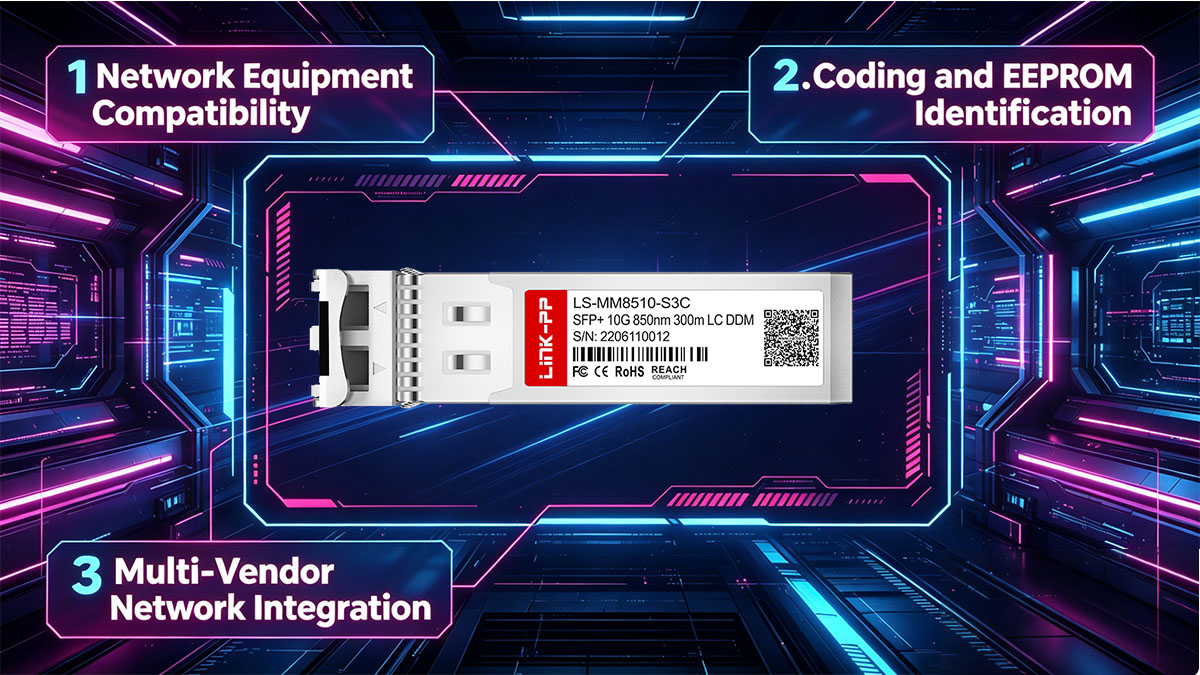
The Finisar FTLX8571D3BCL is designed to operate within standardized SFP+ ecosystems, ensuring broad compatibility across networking platforms. Its interoperability is primarily driven by adherence to SFP+ MSA and IEEE 10GbE standards, which allows it to function in multi-vendor environments without requiring proprietary configuration.
Network Equipment Compatibility
The module is widely compatible with networking devices that support SFP+ 10GBASE-SR interfaces. Its standardized electrical and optical design allows integration into a broad range of switches, routers, and network interface devices.
Typical compatible equipment categories include:
- Data center Ethernet switches (Top-of-Rack and aggregation switches)
- Enterprise core and distribution layer routers
- Network interface cards (NICs) with SFP+ slots
- Storage networking switches supporting 10GbE links
Key compatibility advantages:
| Compatibility Aspect |
Description |
| Interface Standard |
SFP+ MSA compliant |
| Ethernet Support |
10GBASE-SR |
| Electrical Interface |
Standard SFI electrical signaling |
| Optical Interface |
850nm multimode fiber |
These characteristics ensure that the module can be inserted into any compliant SFP+ port and immediately function without requiring custom configuration at the physical layer.
To maintain stable interoperability, the following factors are typically important in deployment:
- Matching port speed configuration (10GbE mode)
- Use of appropriate multimode fiber (OM3/OM4)
- Ensuring firmware support for generic or coded SFP+ modules
- Proper thermal management within host equipment
Coding and EEPROM Identification
The FTLX8571D3BCL includes an onboard EEPROM that stores identification and configuration data used by host devices to recognize the module type and capabilities.
Key EEPROM functions include:
- Module identification (manufacturer and model information)
- Supported data rate and protocol definition
- Optical specification parameters (wavelength, reach class)
- Serial number and revision tracking
How host systems use this information:
- Automatic detection of module type upon insertion
- Validation of compatibility with SFP+ port requirements
- Configuration of port speed and operational mode
- Logging of module inventory in network management systems
This intelligent identification system improves operational efficiency by reducing manual configuration and minimizing the risk of mismatched module deployment in complex network environments.
Multi-Vendor Network Integration
One of the most important strengths of the FTLX8571D3BCL is its ability to function in multi-vendor environments, where switches and routers from different manufacturers coexist in the same network infrastructure.
Key interoperability behaviors include:
- Standardized optical signaling ensures cross-platform communication
- SFP+ MSA compliance guarantees mechanical and electrical compatibility
- 10GBASE-SR adherence ensures protocol-level consistency
- No vendor-specific optical encoding dependencies at physical layer
Typical integration scenarios:
- Mixed-switch environments in enterprise data centers
- Multi-brand leaf-spine architectures in cloud infrastructures
- Gradual network upgrades where legacy and new systems coexist
- Third-party optical module deployments in standardized SFP+ ports
Operational considerations for multi-vendor use:
- Ensuring firmware does not restrict third-party module recognition
- Verifying optical power budgets across different hardware platforms
- Maintaining consistent fiber quality standards across vendors
- Monitoring DOM data for cross-platform performance validation
In practice, this level of interoperability allows the module to be deployed flexibly across heterogeneous network architectures, reducing dependency on a single hardware vendor while maintaining stable 10G optical performance.
🏳️🌈 Typical Applications
The Finisar FTLX8571D3BCL is primarily used in short-reach, high-speed 10GbE environments where multimode fiber connectivity is required. Its 10GBASE-SR design makes it suitable for dense networking architectures that prioritize bandwidth efficiency, low latency, and compact physical deployment.
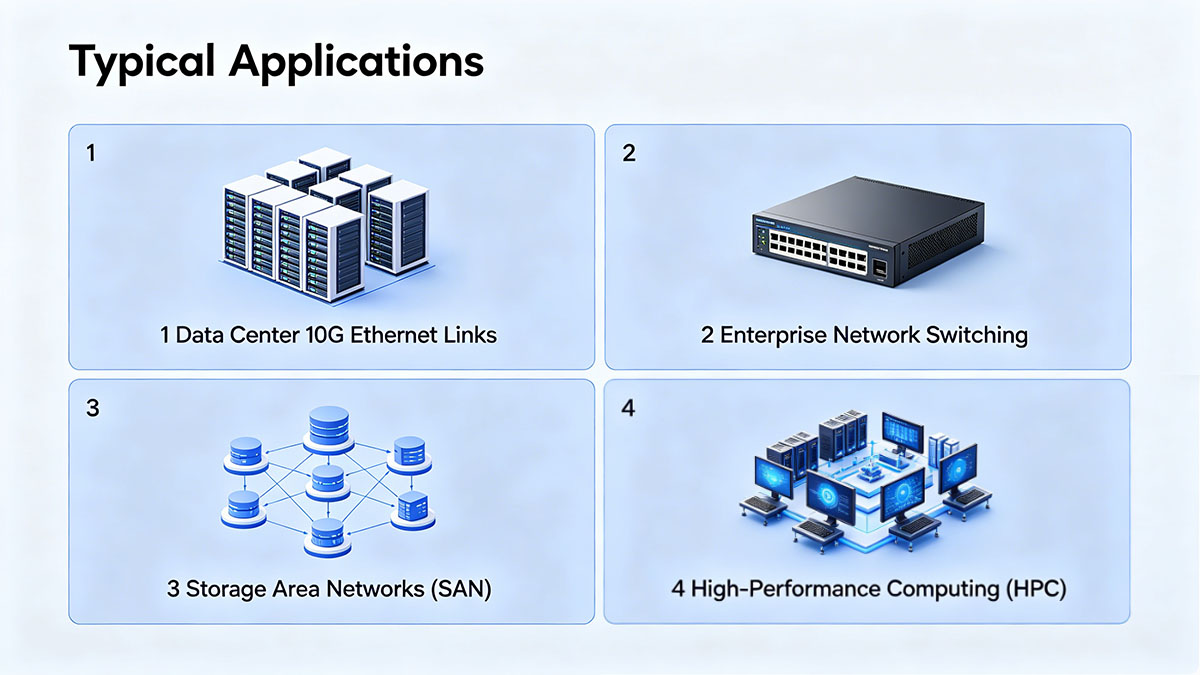
Data Center 10G Ethernet Links
The most common application of the FTLX8571D3BCL is within data center networks, where it supports high-density 10GbE optical links between servers and switching infrastructure.
Typical usage scenarios include:
- Server-to-top-of-rack (ToR) switch connections
- Leaf-to-spine switch interconnects in modern architectures
- Intra-rack and inter-rack short-distance links
- High-speed uplinks for virtualization clusters
These deployments are driven by the need for:
- Low-latency data transfer between compute nodes
- Scalable bandwidth expansion without major cabling redesign
- Efficient use of multimode fiber in structured data center layouts
- High port density in compact switching hardware
In practice, this module is often selected when upgrading from 1G to 10G Ethernet within existing multimode fiber infrastructure.
Enterprise Network Switching
Beyond data centers, the module is widely used in enterprise network environments, particularly in core and distribution layers where high-throughput aggregation is required.
Common enterprise applications include:
- Core switch interconnects within campus networks
- Distribution layer aggregation links
- High-speed backbone connections between network closets
- Department-level high-bandwidth uplinks
Key advantages in enterprise environments:
- Simplifies network scaling from legacy 1G infrastructure
- Supports stable 10Gbps backbone performance
- Integrates easily into mixed vendor environments
- Reduces latency in internal traffic routing
These characteristics make it suitable for organizations upgrading internal network capacity while maintaining structured fiber cabling systems.
Storage Area Networks (SAN)
The FTLX8571D3BCL is also used in storage networking environments where high-speed, low-latency communication between storage systems and compute nodes is critical.
Typical SAN-related applications include:
- Fibre Channel over Ethernet (FCoE) environments
- High-speed NAS and SAN interconnects
- Storage cluster synchronization links
- Backup and replication data pathways
Its relevance in storage networks comes from:
- High throughput capability for large data transfers
- Low latency optical signaling for real-time storage access
- Reliable performance under continuous traffic loads
- Compatibility with converged Ethernet infrastructure
In these environments, stable 10GbE links are essential for maintaining data consistency and minimizing I/O bottlenecks.
High-Performance Computing (HPC)
In high-performance computing environments, the module is used to support fast interconnects between compute nodes, where network latency directly impacts processing efficiency.
Common HPC use cases include:
- Cluster node interconnects for parallel computing workloads
- Scientific simulation and modeling systems
- AI and machine learning training clusters
- Distributed computing environments with high data exchange rates
Key requirements addressed by the module:
- Low-latency optical communication between nodes
- Consistent 10Gbps throughput under sustained load
- High reliability in continuous computation environments
- Scalable deployment in multi-node architectures
These properties make it suitable for environments where network performance directly affects computational output and efficiency.
🏳️🌈 Physical Design and Form Factor
The Finisar FTLX8571D3BCL is built around the standardized SFP+ mechanical architecture, enabling compact deployment, hot-swappable operation, and high-density port usage in modern networking equipment. Its physical design is optimized for space efficiency while maintaining stable optical and electrical performance.
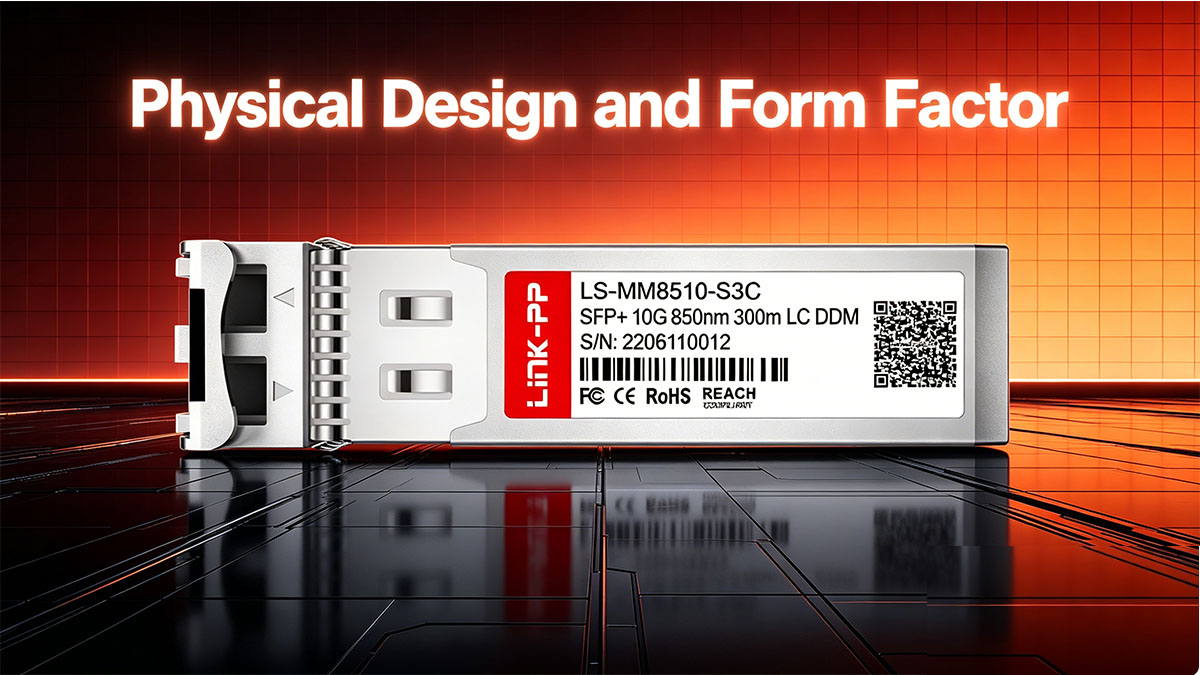
SFP+ Mechanical Structure
The module follows the SFP+ mechanical specification, which defines the physical dimensions, connector layout, and electrical interface alignment required for interoperable deployment across networking equipment.
From a structural perspective, the design is centered on ensuring precise alignment between the transceiver and host system while maintaining mechanical stability under frequent insertion cycles. This makes it suitable for high-density environments where multiple modules operate side by side.
Key structural characteristics include:
- Compact rectangular metal housing for EMI shielding
- Standard SFP+ edge connector for electrical interface
- Integrated LC duplex optical interface at the front end
- Alignment guide for precise insertion into host cages
These structural elements work together to ensure stable mechanical engagement and consistent optical coupling. In addition, they support efficient airflow management in densely populated switch chassis, which is critical for maintaining thermal balance.
To better contextualize the physical design within industry standards, the following summary highlights its core mechanical specifications.
| Design Element |
Specification |
| Form Factor |
SFP+ |
| Housing Material |
Metal enclosure |
| Interface Type |
Electrical + LC duplex optical |
| Hot-Pluggable |
Yes |
This standardized form factor ensures compatibility across a wide range of networking devices while maintaining consistent physical performance characteristics.
SFP+ Mechanical Structure
The module follows the SFP+ mechanical specification, which defines the physical dimensions, connector layout, and electrical interface alignment required for interoperable deployment across networking equipment.
From a structural perspective, the design is centered on ensuring precise alignment between the transceiver and host system while maintaining mechanical stability under frequent insertion cycles. This makes it suitable for high-density environments where multiple modules operate side by side.
Key structural characteristics include:
- Compact rectangular metal housing for EMI shielding
- Standard SFP+ edge connector for electrical interface
- Integrated LC duplex optical interface at the front end
- Alignment guide for precise insertion into host cages
These structural elements work together to ensure stable mechanical engagement and consistent optical coupling. In addition, they support efficient airflow management in densely populated switch chassis, which is critical for maintaining thermal balance.
To better contextualize the physical design within industry standards, the following summary highlights its core mechanical specifications.
| Design Element |
Specification |
| Form Factor |
SFP+ |
| Housing Material |
Metal enclosure |
| Interface Type |
Electrical + LC duplex optical |
| Hot-Pluggable |
Yes |
This standardized form factor ensures compatibility across a wide range of networking devices while maintaining consistent physical performance characteristics.
Hot-Swappable Capability
One of the most important physical design features of the FTLX8571D3BCL is its hot-swappable functionality, which allows the module to be inserted or removed without shutting down the host system.
This capability is particularly important in high-availability environments where continuous network uptime is required. It enables operational flexibility and reduces service interruptions during maintenance or upgrades.
Key operational benefits include:
- Non-disruptive replacement of optical modules
- Flexible scaling of network ports in live systems
- Reduced downtime during hardware maintenance
- Simplified expansion of existing switching infrastructure
In practice, this functionality is widely used in data centers where even short outages can impact large-scale services. It allows network operators to maintain continuous service while performing hardware-level changes.
Additional usage considerations include:
- Proper electrostatic discharge (ESD) handling before insertion
- Ensuring fiber cables are disconnected before module removal
- Automatic detection by host systems via SFP+ interface signaling
- Compatibility with live monitoring systems using DOM data
These operational guidelines ensure safe and reliable use of the hot-swapping feature in production environments.
Labeling and Identification
The module includes standardized labeling and identification features that support operational tracking, inventory management, and compliance verification in large-scale deployments.
These identifiers are essential for managing optical infrastructure across distributed networking environments, especially where hundreds or thousands of modules may be deployed simultaneously.
Key identification elements include:
- Manufacturer part number marking
- Unique serial number for traceability
- Hardware revision code
- Compliance and certification markings
These elements serve multiple operational purposes, such as:
- Asset tracking in data center inventory systems
- Verification of module authenticity and specifications
- Lifecycle management across deployment phases
- Correlation with digital diagnostic monitoring data
In large-scale network environments, these identifiers help ensure that each optical module can be accurately documented, maintained, and replaced when necessary without disrupting network operations.
🏳️🌈 Standards and Compliance
The Finisar FTLX8571D3BCL is designed in accordance with widely adopted industry standards for 10G optical networking. Its compliance framework ensures interoperability, predictable performance, and safe operation across multi-vendor network environments.
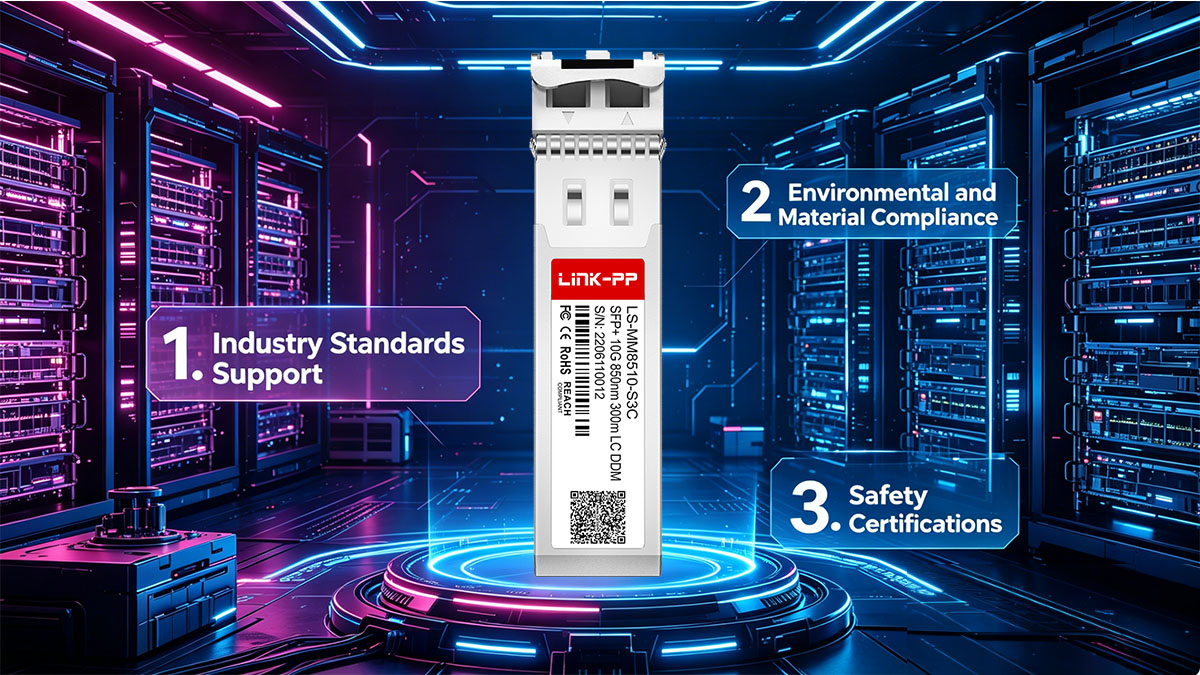
Industry Standards Support
The module is built around established IEEE and SFP+ MSA specifications that govern 10GbE optical transmission. These standards ensure that the transceiver can operate consistently in standardized network environments without requiring proprietary configuration or vendor-specific adjustments.
From a practical deployment perspective, adherence to these standards means the module can be seamlessly integrated into existing 10G infrastructure while maintaining predictable link performance and compatibility across devices.
Key standards include:
- IEEE 802.3ae for 10 Gigabit Ethernet optical transmission
- 10GBASE-SR specification for short-reach multimode fiber operation
- SFP+ Multi-Source Agreement (MSA) for mechanical and electrical interoperability
These standards define the fundamental operating framework of the module, covering signal transmission, physical interface design, and interoperability rules across networking equipment.
To better summarize how these standards translate into real-world deployment requirements, the following table provides a structured overview.
| Standard Type |
Specification |
| Ethernet Standard |
IEEE 802.3ae |
| Optical Interface |
10GBASE-SR |
| Form Factor Standard |
SFP+ MSA |
| Transmission Medium |
Multimode fiber |
This structured compliance ensures that the module can be deployed across a wide range of networking platforms while maintaining consistent behavior, reliable performance, and predictable interoperability in multi-vendor environments.
Environmental and Material Compliance
Beyond electrical and optical standards, the FTLX8571D3BCL also adheres to environmental compliance regulations that govern material safety and sustainability in electronic components.
Key compliance aspects include:
- RoHS compliance (Restriction of Hazardous Substances)
- Lead-free manufacturing processes
- Controlled use of environmentally restricted materials
- Alignment with global electronic waste reduction policies
These requirements ensure that the module meets international environmental safety standards used in enterprise and industrial deployments.
From a practical perspective, this compliance provides several benefits:
- Safe deployment in regulated global markets
- Reduced environmental impact during manufacturing and disposal
- Compatibility with corporate sustainability policies
- Simplified procurement in compliance-driven industries
These factors are especially important for large-scale data center operators that must meet strict environmental governance requirements.
Safety Certifications
The module is also designed with optical and electrical safety standards in mind, ensuring safe operation in high-speed networking environments where laser-based components are used.
Key safety-related characteristics include:
- Laser safety classification compliant with industry optical safety standards
- Controlled optical emission levels for human eye safety
- Built-in protection mechanisms for electrical interface stability
- Compliance with IEC-based safety frameworks for optical transceivers
To better understand its safety design focus, the following points are critical:
- Ensures safe handling during installation and maintenance
- Limits optical output within regulated safety thresholds
- Supports stable operation under continuous transmission conditions
- Reduces risk of hardware damage from electrical irregularities
These safety measures are essential in environments where technicians frequently interact with live optical networking equipment.
🏳️🌈 Performance Considerations
The Finisar FTLX8571D3BCL delivers stable 10Gbps short-reach performance, but its real-world effectiveness depends heavily on link design, fiber quality, and deployment conditions. Understanding these performance factors is essential for maintaining signal integrity and avoiding unnecessary link degradation in 10G networks.
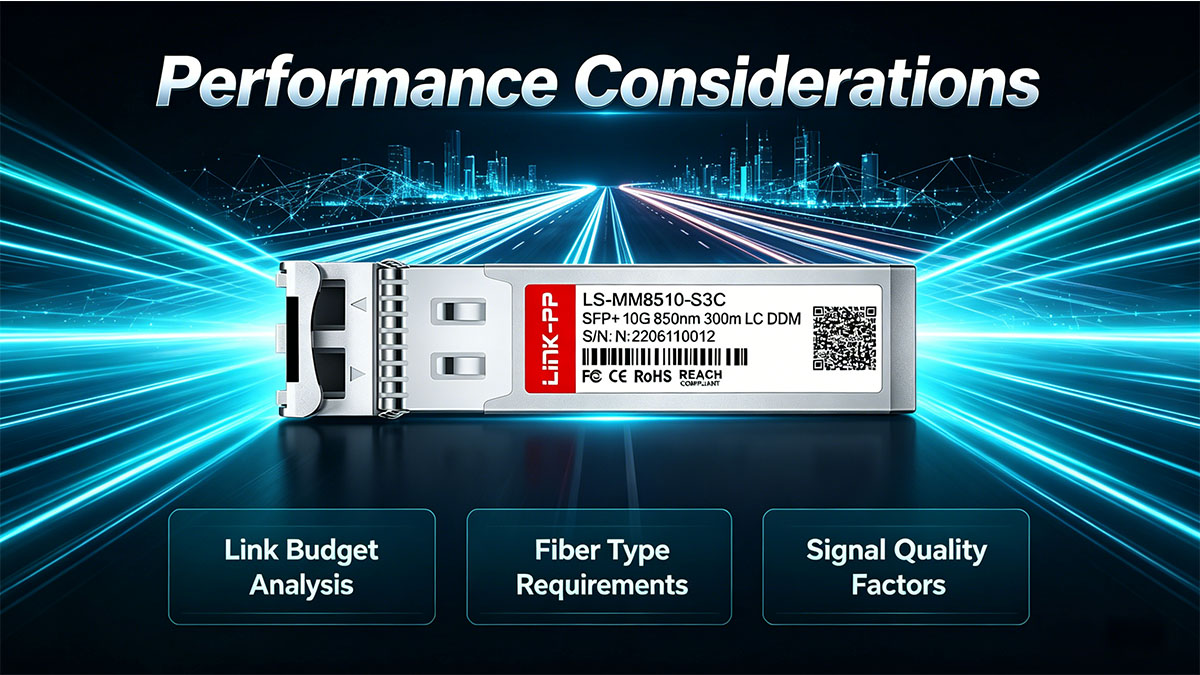
Link Budget Analysis
The optical link budget defines how much signal power is available versus how much is lost across the transmission path. For the FTLX8571D3BCL, maintaining sufficient margin is critical to ensuring error-free 10GbE communication.
Key elements influencing link budget include:
- Transmitter optical output power
- Receiver sensitivity range
- Fiber attenuation characteristics
- Connector and splice losses
A simplified view of typical considerations:
| Parameter |
Impact on Link |
| Tx Optical Power |
Determines initial signal strength |
| Rx Sensitivity |
Defines minimum detectable signal |
| Fiber Attenuation |
Reduces signal over distance |
| Connector Loss |
Adds insertion loss per interface |
Before deployment, it is important to ensure that the total loss in the optical path remains within the supported budget range of short-reach 10GBASE-SR optics. Even small increases in loss can reduce system margin and increase bit error risk.
To maintain optimal performance, the following practices are commonly applied:
- Minimize unnecessary patch panel connections
- Keep fiber runs within recommended distance limits
- Ensure proper alignment of duplex LC connectors
- Regularly validate optical power levels using DOM data
Fiber Type Requirements
The performance of the FTLX8571D3BCL is strongly influenced by the type and quality of multimode fiber used in the network. Since it operates at 850nm wavelength, it is specifically optimized for multimode fiber transmission.
Typical supported fiber types include:
- OM3 multimode fiber
- OM4 multimode fiber
Key differences affecting performance:
| Fiber Type |
Bandwidth Performance |
Typical Reach |
| OM3 |
Standard 10G support |
Up to ~300m |
| OM4 |
Enhanced bandwidth |
Up to ~400m |
The choice of fiber directly impacts signal stability and maximum transmission distance. OM4 fiber generally provides better modal bandwidth, resulting in improved performance margins.
Important deployment considerations include:
- Higher-quality fiber improves signal consistency
- Fiber aging can gradually increase attenuation
- Poor-quality or mixed fiber types reduce link reliability
- Clean connector surfaces are essential for maintaining performance
Signal Quality Factors
Maintaining high signal quality is essential for ensuring low bit error rates and stable 10Gbps operation. The performance of the module is influenced not only by its internal design but also by external physical and environmental conditions.
Key factors affecting signal quality include:
- Modal dispersion in multimode fiber
- Connector cleanliness and contamination
- Mechanical stress on fiber cables
- Variations in optical power levels
To better manage signal integrity, the following operational practices are commonly used:
- Regular cleaning of LC connectors before installation
- Avoiding excessive bending of fiber cables
- Ensuring stable physical routing without tension
- Monitoring DOM readings for early degradation signs
In addition, system-level factors can also impact performance:
- Switch port configuration mismatches (speed or auto-negotiation issues)
- Inconsistent optical power across different transceivers
- Aging infrastructure causing increased insertion loss
- Improper fiber patching or polarity errors
When these factors are properly controlled, the FTLX8571D3BCL is capable of delivering stable, low-latency 10GbE performance suitable for demanding data center and enterprise environments.
🏳️🌈 Troubleshooting and Diagnostics
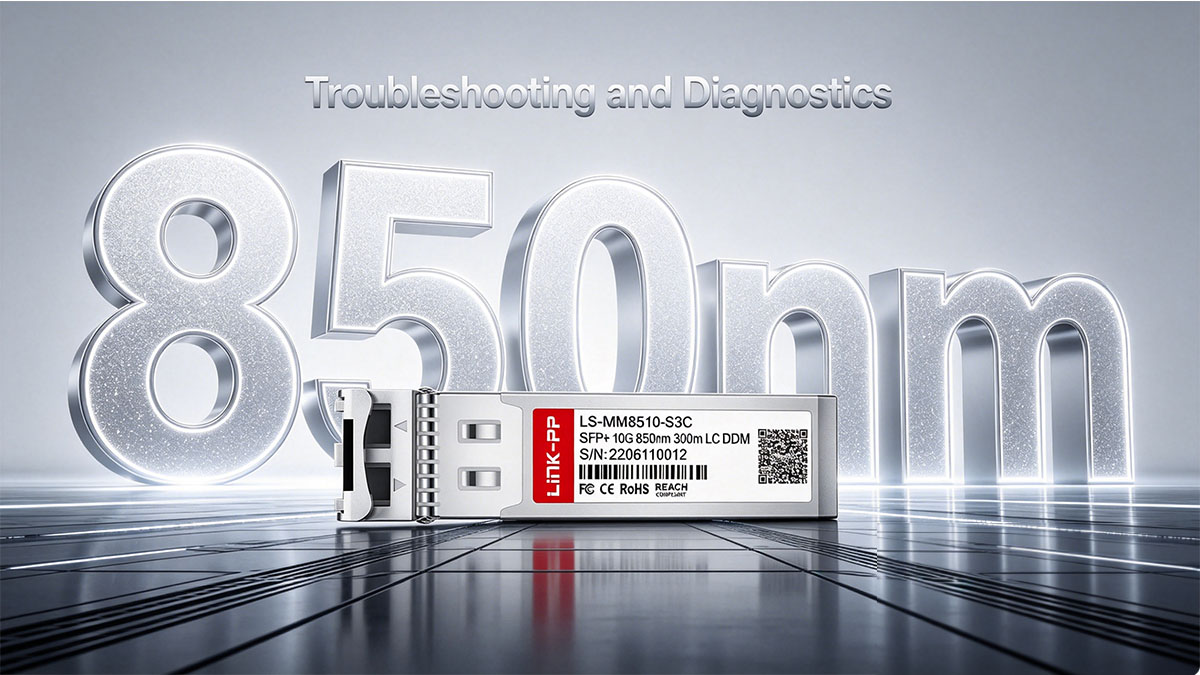
The Finisar FTLX8571D3BCL is designed with diagnostic visibility and predictable optical behavior, but in real deployments, performance issues can still arise due to fiber conditions, configuration mismatches, or physical layer degradation. Effective troubleshooting focuses on isolating whether the issue originates from the module, the fiber link, or the host equipment.
Common Link Failures
Most 10GBASE-SR link issues involving the FTLX8571D3BCL are not caused by the module itself but by external physical layer conditions. Identifying these quickly helps reduce downtime and avoids unnecessary component replacement.
Common failure causes include:
- Incorrect fiber polarity (Tx/Rx swapped)
- Dirty or contaminated LC connectors
- Mismatched speed configuration on switch ports
- Fiber type incompatibility (OM2 used instead of OM3/OM4)
- Excessive fiber bending or physical damage
To better structure troubleshooting, typical symptoms can be mapped as follows:
| Symptom |
Likely Cause |
| No link up |
Fiber polarity or port configuration issue |
| Intermittent connection |
Dirty connectors or loose fit |
| High error rate |
Signal degradation or excessive loss |
| Link down after insertion |
Compatibility or power budget issue |
Before replacing hardware, it is usually recommended to validate physical layer conditions first, since most issues originate from cabling or configuration rather than transceiver failure.
Using Digital Diagnostics (DOM)
The built-in Digital Optical Monitoring (DOM) feature provides real-time visibility into the module's operating conditions, making it a critical tool for troubleshooting.
Key monitored parameters include:
- Optical transmit power (Tx Power)
- Optical receive power (Rx Power)
- Module temperature
- Supply voltage
- Laser bias current
These values help identify early signs of degradation or abnormal operation.
To interpret DOM data effectively:
- Low Rx Power may indicate fiber attenuation or dirty connectors
- High Tx Power fluctuations may suggest transmitter instability
- Elevated temperature can indicate poor airflow or port congestion
- Abnormal bias current may signal laser aging or stress conditions
In operational environments, DOM data is often used to:
- Detect gradual optical degradation before link failure
- Compare performance across multiple transceivers
- Validate link budget compliance in real time
- Support proactive maintenance scheduling
This makes DOM one of the most important diagnostic tools for maintaining long-term network stability.
Maintenance and Cleaning Practices
Proper maintenance of the optical path is essential for ensuring stable performance of the FTLX8571D3BCL, especially in high-density environments where connectors are frequently handled.
Recommended maintenance practices include:
- Regular inspection of LC connectors before insertion
- Cleaning fiber end faces using approved optical cleaning tools
- Avoiding direct contact with connector ferrules
- Replacing damaged or scratched patch cords immediately
To maintain consistent signal quality, the following preventive steps are important:
- Always cap unused fiber connectors to prevent dust contamination
- Avoid repeated unnecessary reconnections of fiber cables
- Ensure fiber routing avoids sharp bends or tension points
- Maintain clean airflow around high-density switch panels
Proper cleaning and handling practices directly impact:
- Insertion loss stability
- Long-term signal integrity
- Reduction in bit error rates
- Overall reliability of 10GbE links
When combined with DOM monitoring, these practices form a complete diagnostic and maintenance approach that helps ensure the FTLX8571D3BCL operates at consistent performance levels throughout its lifecycle.
🏳️🌈 Conclusion
The Finisar FTLX8571D3BCL is a mature and widely deployed 10GBASE-SR SFP+ optical transceiver designed for short-reach multimode fiber applications. It plays a stable and consistent role in modern network infrastructures where reliable 10Gbps connectivity is required across data centers, enterprise switching systems, and storage networks.
Across its design, the module combines standardized 850nm VCSEL optics, IEEE 802.3ae compliance, and SFP+ MSA mechanical compatibility to ensure seamless integration into multi-vendor environments. Its performance is optimized for OM3 and OM4 multimode fiber, making it well-suited for intra-rack and inter-switch connections where low latency and predictable optical behavior are essential.
Key takeaways include:
- Delivers 10Gbps Ethernet over short-reach multimode fiber links
- Fully compliant with IEEE 802.3ae and SFP+ MSA standards
- Supports stable operation in OM3/OM4 fiber-based architectures
- Includes DOM functionality for real-time optical diagnostics
- Designed for high-density deployment in data center environments
In practical deployments, its combination of standardized interoperability, low power consumption, and reliable optical performance makes it a dependable choice for scaling 10G networks efficiently.
For organizations evaluating compatible optical transceiver solutions or expanding existing 10G infrastructure, more technical resources and product options can be explored through the LINK-PP Official Store, which provides a broad range of fiber optic connectivity products aligned with industry standards.